Welcome to the Old Town Rhodes, Greece, a place where centuries of history converge in a single, unforgettable experience. This UNESCO World Heritage Site – one of the most well-preserved medieval cities on earth – affords visitors a journey into the heart of an ancient land, one that has weathered conquests, empires, earthquakes, and time itself.
Here, the cobblestone streets beneath your feet continue to echo the footsteps of knights, traders, aristocrats, and Greek philosophers, mathematicians and poets. The scent of the Mediterranean’s salty ocean air, fresh seafood being grilled, and traditional herbs – oregano, thyme and basil – waft all around you, with the towering stone walls, impressive architecture, and narrow labyrinthine streets calling you to wander these ancient paths.
Whether you’re tracing the ancient city walls, marveling at the Palace of the Grand Master, or sipping a strong Greek coffee at a local cafe near where the mighty Colossus of Rhodes once stood, this fortified city will stir your imagination. Each stone and every building you pass tells a story of yesteryear and invites you in to learn more.
Brace yourselves, fellow wanderers – for you are about to take a step back in time and hopefully lose yourself (as we did!) in one of the most enchanting corners of the Greek islands.
Let’s head on in – and explore all that Rhodes Town has to offer!
Quick Tips
- With its warm climate – and over 300 days of sunshine a year – Rhodes is a popular destination year-round.
- The Old Town of Rhodes covers less than a half square mile and is easily explored on foot.
- Taking a guided walking tour is one of the best ways to enhance one’s understanding of the Old Town.
- The Old Town is divided into two main sections: the northern section and the southern section, each reflecting different eras and influences.
- One of the defining features of the Old Town is its massive medieval walls, which afford visitors incredible views from the top.
- You can enter the Old Town of Rhodes through several well-known gates positioned along the walls.
- During your visit to the Old Town, be sure to walk the city’s famous stone-paved Street of the Knights, one of the best-preserved medieval streets in the world.
- The star of the show in the Old Town is the incredibly well-preserved medieval castle, Palace of the Grand Master.
- Housed within the Palace of the Grand Master, you’ll find the Archaeological Museum.
- The Jewish Quarter is on the eastern side of Rhodes’ Old Town, and stands as a moving testament to resilience and remembrance.
- Other iconic landmarks within the Old Town include the Roloi Clock Tower, the Mosque of Suleiman (Suleymaniye Mosque), the Ancient Acropolis of Rhodes, Ottoman-era public baths, Byzantine churches, and the Modern Greek Art Museum.
- Mandraki Harbor, just a short stroll outside the walls of the Palace of the Grand Master, is famed for its long, rich history, picturesque views, numerous historic landmarks, and unique blend of old and new.
- Mandraki Harbor is believed to have been the site of one of the Seven Wonders of the Ancient World – the legendary Colossus of Rhodes.
- The Old Town of Rhodes offers visitors a diverse mix of shopping opportunities, most well-known for its jewelers, potters and ceramic artists.
- The Old Town’s dining scene is rich and varied: from waterfront tavernas grilling the day’s freshest catch, to fine-dining restaurants boasting excellent wine lists.
Plan Your Trip
Some links below may earn us a small commission at no extra cost to you. We’re truly grateful for your support, as it allows us to continue sharing meaningful travel experiences and practical travel insights with you. Read our full disclosure here.
Planning your visit? We’ve gathered recommended tours and activities, along with trusted travel tools, to help you explore with confidence and ease.
Tours & Experiences
Browse top 15 attractions in Rhodes, Greece.
Travel Essentials
Planning the rest of your trip? These are the platforms we personally use when organizing our travels. For more planning tools, visit our Travel Resources page or browse current promotions on our Travel Deals page.
Best Time to Visit Rhodes
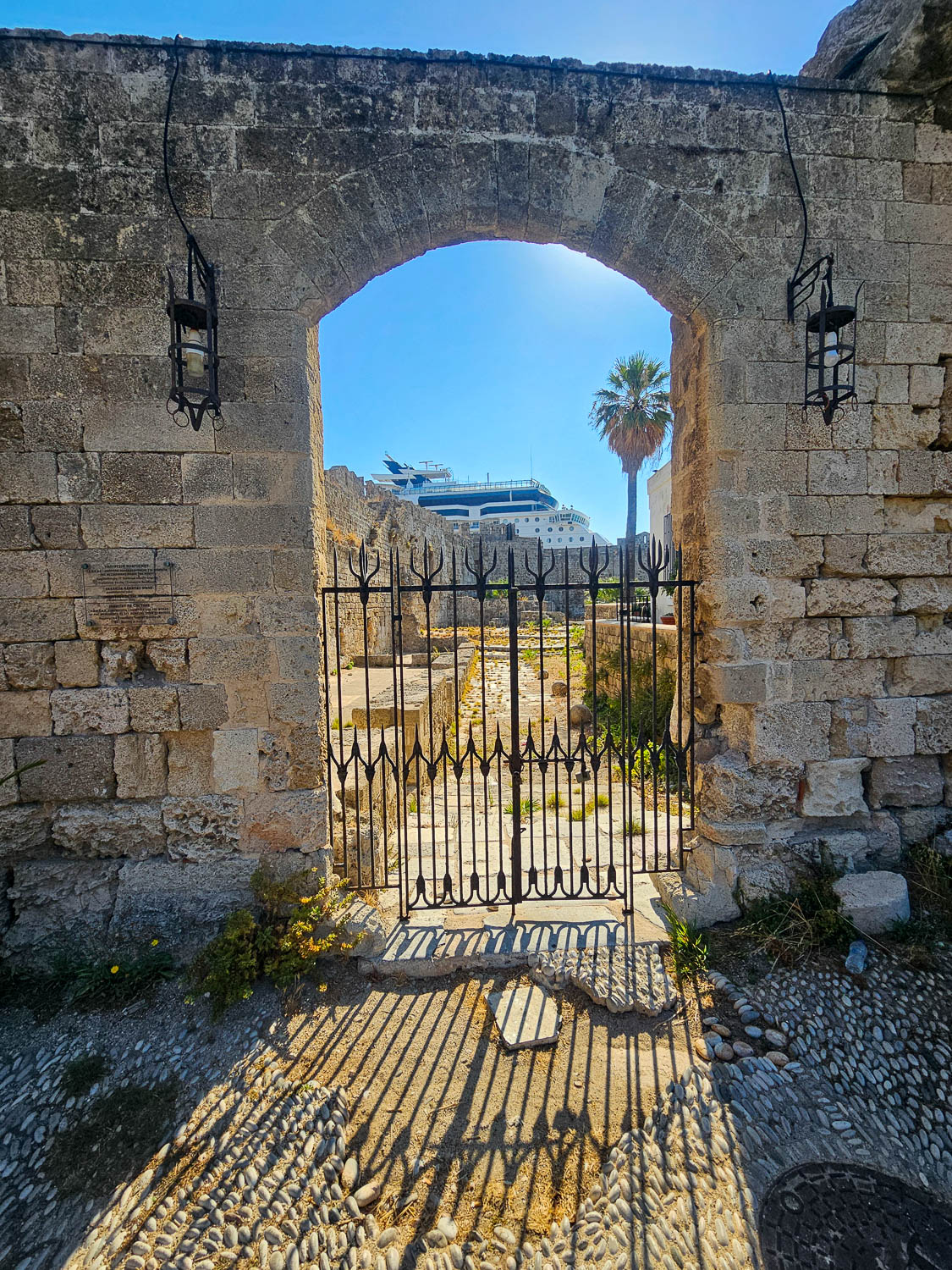
With its warm climate, Rhodes is a popular destination year-round.
Fun fact. The island of Rhodes boasts over 300 days of sunshine a year, giving it the nickname “Island of the Sun”.
Summer
The summer months (June through August) are great if you love hot weather and bright sunshine, but it can also get crowded at this time of year. During the summer, the general atmosphere on the island is buzzing, bright and alive.
The Off Season
Visiting Rhodes during the shoulder or “off” season (April and May, or September and October) can be just as amazing as visiting during the summer. At this time of year you’ll still find plenty of golden sunshine, but also a little more space to breathe (the cruise ship visitors have thinned out by then!) and a slightly more relaxed vibe. It’s also a time when you’re more likely to find better deals on accommodations, and have more time to connect with locals.
Whether you prefer the hustle and bustle and the heat of summer, or the tranquility and charm of the off-season, Rhodes (and indeed the Old City itself) really can be visited at any time of year!
How Best to Explore the Old Town
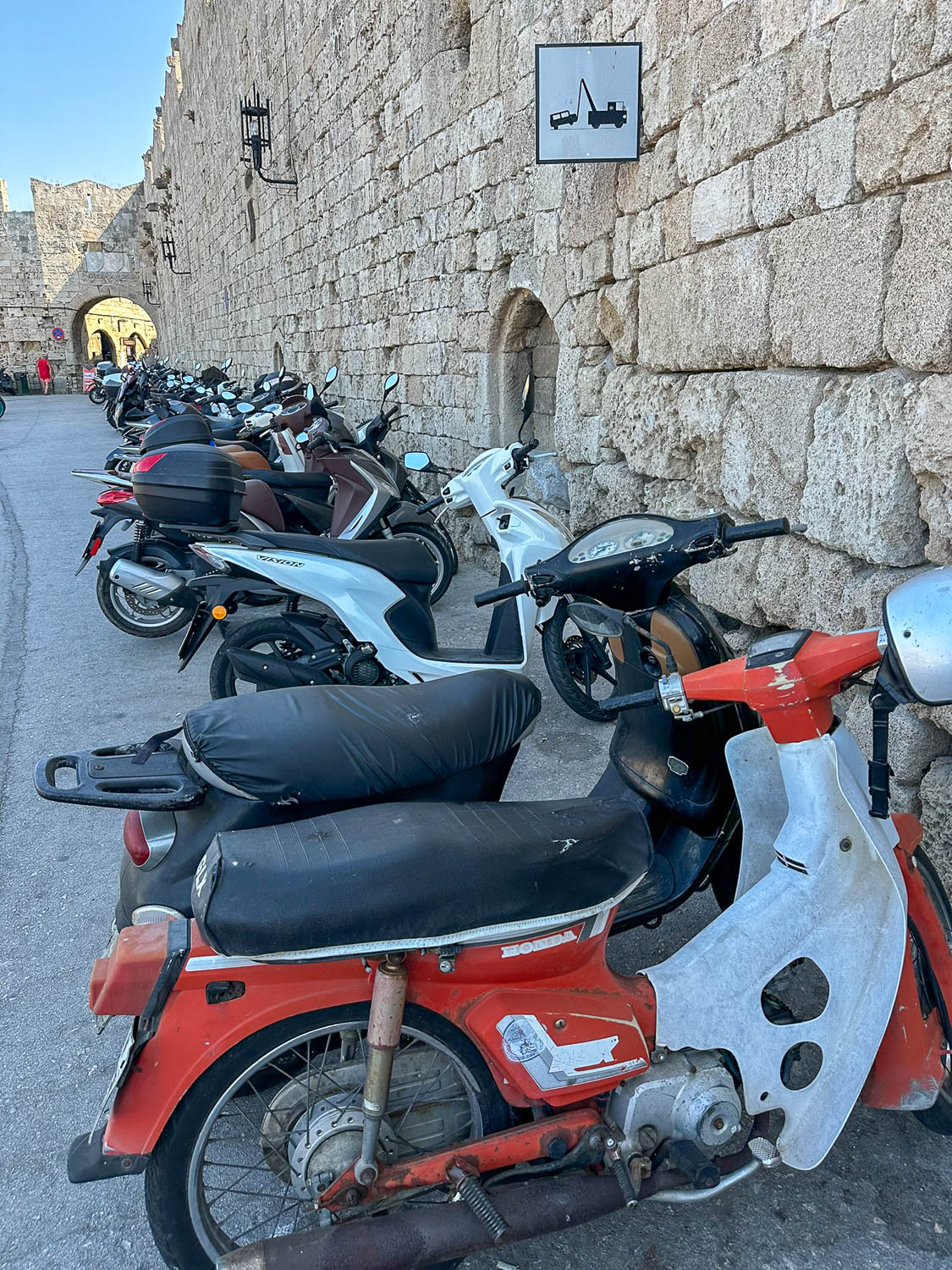
As a living settlement with approximately 6,000 residents, the Old Town of Rhodes covers roughly 150 acres (less than a half square mile), including the outer walls and the 2.5km-long (1.55mi) moat that surrounds the ancient city.
The great news is that, because of its compact size, most attractions in the Old Town are accessible by foot. So walking is the way to go! Enjoy a leisurely stroll through the historic Old Town, exploring its walls, museums, historic streets, and ancient landmarks.
Insider tip. We highly recommend visitors consider booking a guided walking tour, to help enhance one’s understanding of historic buildings, architectural styles, and the history of the city itself.
Orienting Yourself
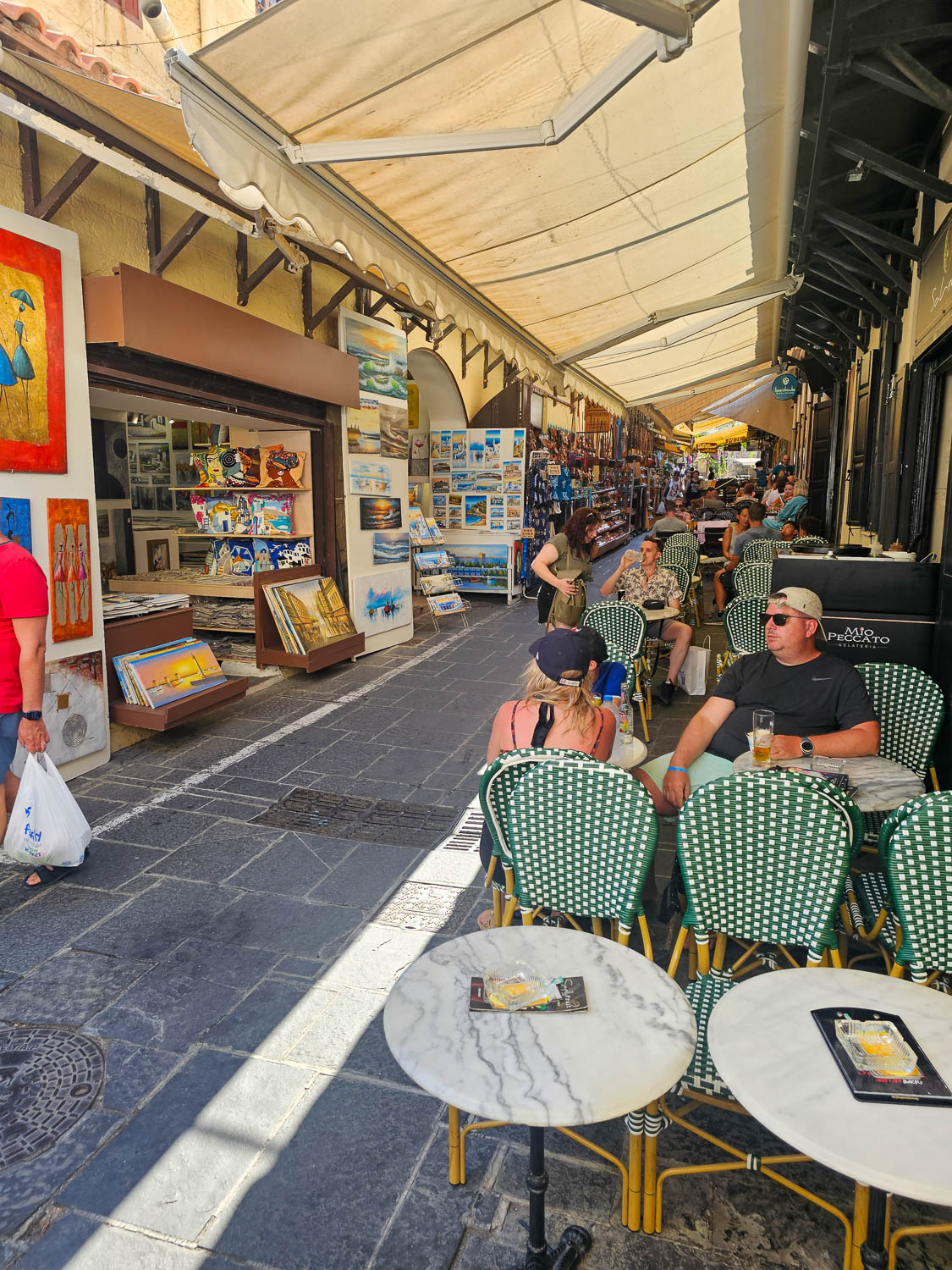
The city is divided into two main sections: the northern section (historically called the Collachio/Kollakio, Castello or High Town), and the southern section (referred to as the Lower Town South-Southwest, Hora or Burgo). Each section reflects different eras and influences: the north generally housed the official buildings and residences of knights (think palaces and inns), whilst the south was the residential and lively market area inhabited by “commoners” (the non-Order Greeks and Europeans).
Discovering the Medieval City: A Living Mosaic of Civilizations
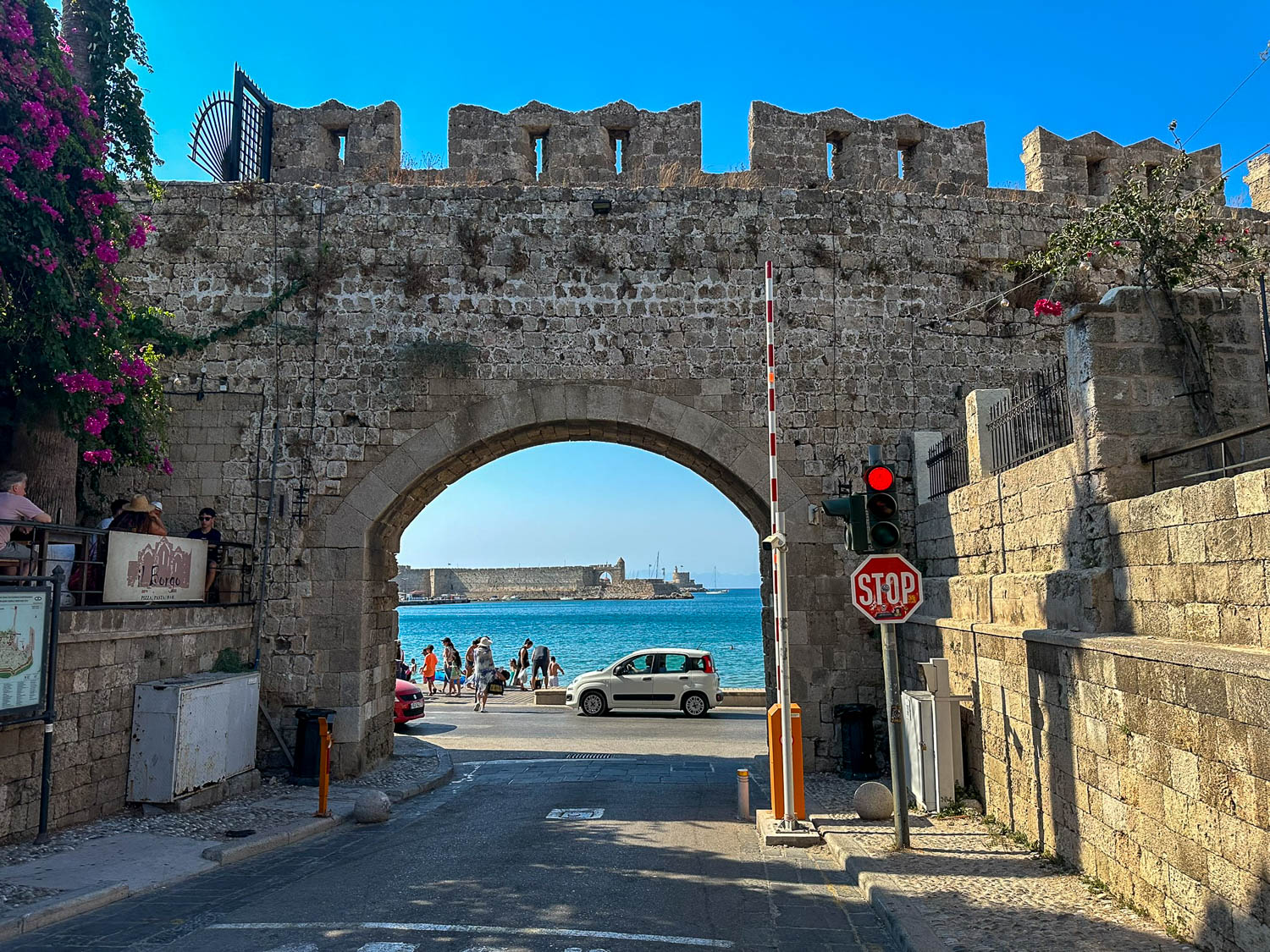
There is no question that a visit to the island of Rhodes would not be complete without a wander through its Old Town. For it is this medieval city that offers visitors an incredible glimpse into the island’s ancient history – indeed, it is this UNESCO World Heritage Site that is the very living testament to its history.
Stepping into Rhodes’ Old Town is like walking through a portal to the Middle Ages. The city was shaped most notably by the Knights of St John, who built massive stone walls, a network of fortifications, and palatial residences that remain to this day. Throughout the centuries, waves of ancient Greeks, Romans, Byzantines, Ottoman Turks, Dorians and Italians – to name but a few – have also left their mark here. The old city’s fascinating, colorful history is indeed a layered one, marked by periods of Greek dominance, foreign occupation, and an eventual reunification with Greece in 1947.
Ancient City Walls: The Genius of Fortification
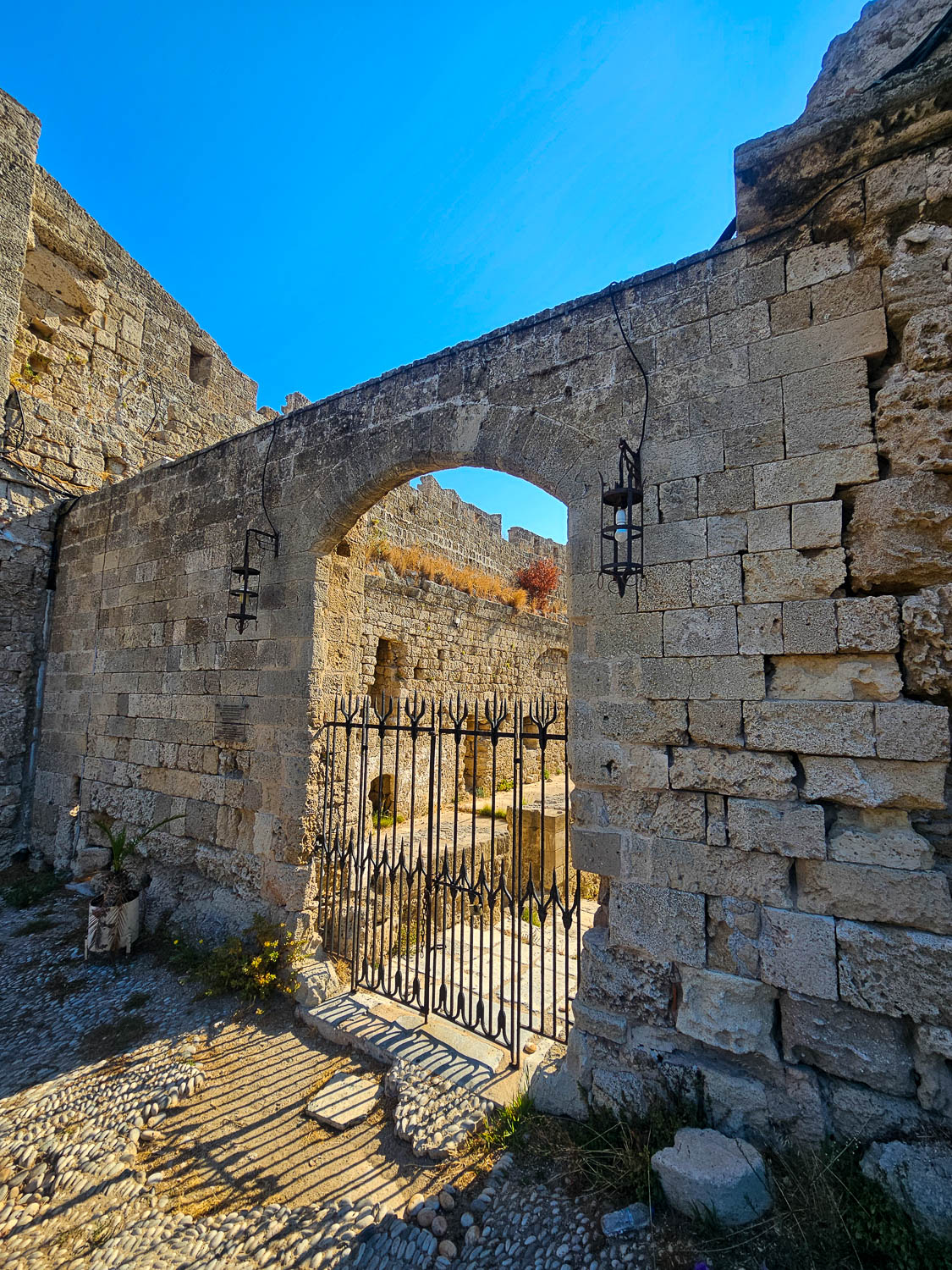
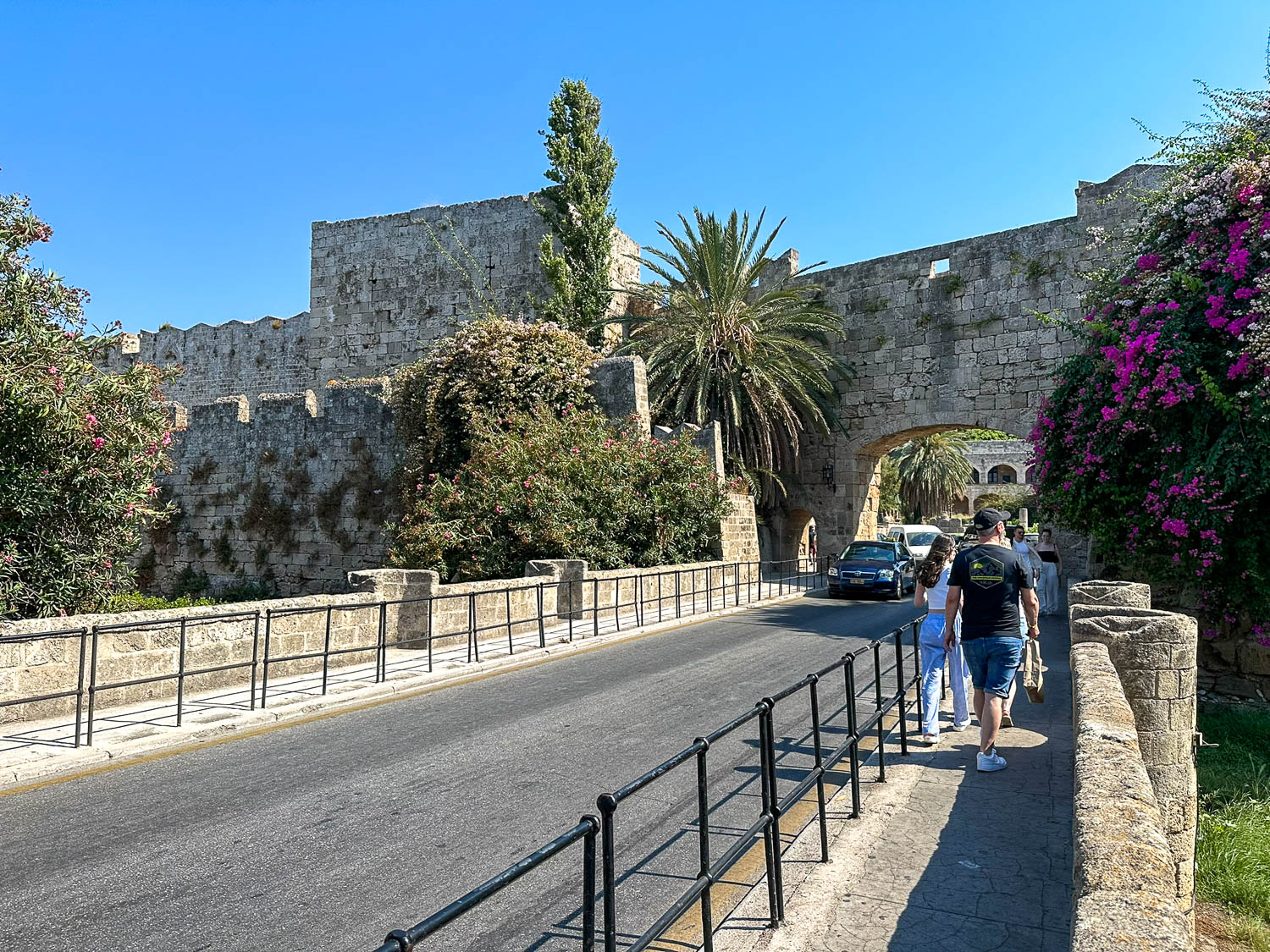
One of the defining features of the Old Town is its massive medieval walls. These walls, stretching over 4km (just under 2.5 miles) and as thick as 12m (almost 40 feet – wow!) in some sections, were designed to repel even the most determined of invaders. Built over several centuries, these ancient walls reveal the changing strategies and technologies of warfare, adapting through the ages from the Byzantine times to the Ottoman period.
You can enter the Old Town of Rhodes through multiple points within the walls, including a number of well-known gates.
Eleftherias Gate (Gate of Freedom or Liberty Gate)
Located in the north-eastern corner of the Old Town, in front of the Temple of Aphrodite in Symi Square. This is one of the main entrances to the Old Town and is one of the oldest gates in Rhodes, constructed in 1478.
Gate d’Amboise (Amboise Gate)
Considered one of the most impressive of all the gates, and once the main entrance to the Old Town for dignitaries.
St John’s Gate
Also known as “Koshkinou” or “Porta Kokkini” – red door – as many men fell in front of this gate during the heavy bloodshed of the 1522 siege of Rhodes. The stones here were said to have been stained red in the blockade.
Marine Gate (also known as the Sea Gate)
Once the main maritime entrance to the city, Marine Gate affords visitors unique views of the port and bustling life within the city.
Fun fact. There are 11 gates in total within the fortified walls of the Old Town, each complete with its own history and tales.
From atop the impressive fortified walls of the city you’ll be afforded incredible views of both the Old Town and the surrounding modern municipality. It’s the perfect opportunity to take in this ancient city from above, and to imagine what it might have looked like centuries ago: armored knights watching from the parapets, worldly merchants approaching in their boats from the water, and locals navigating the winding city streets below, going about their daily village life.
Odos Ippoton: The Street of the Knights
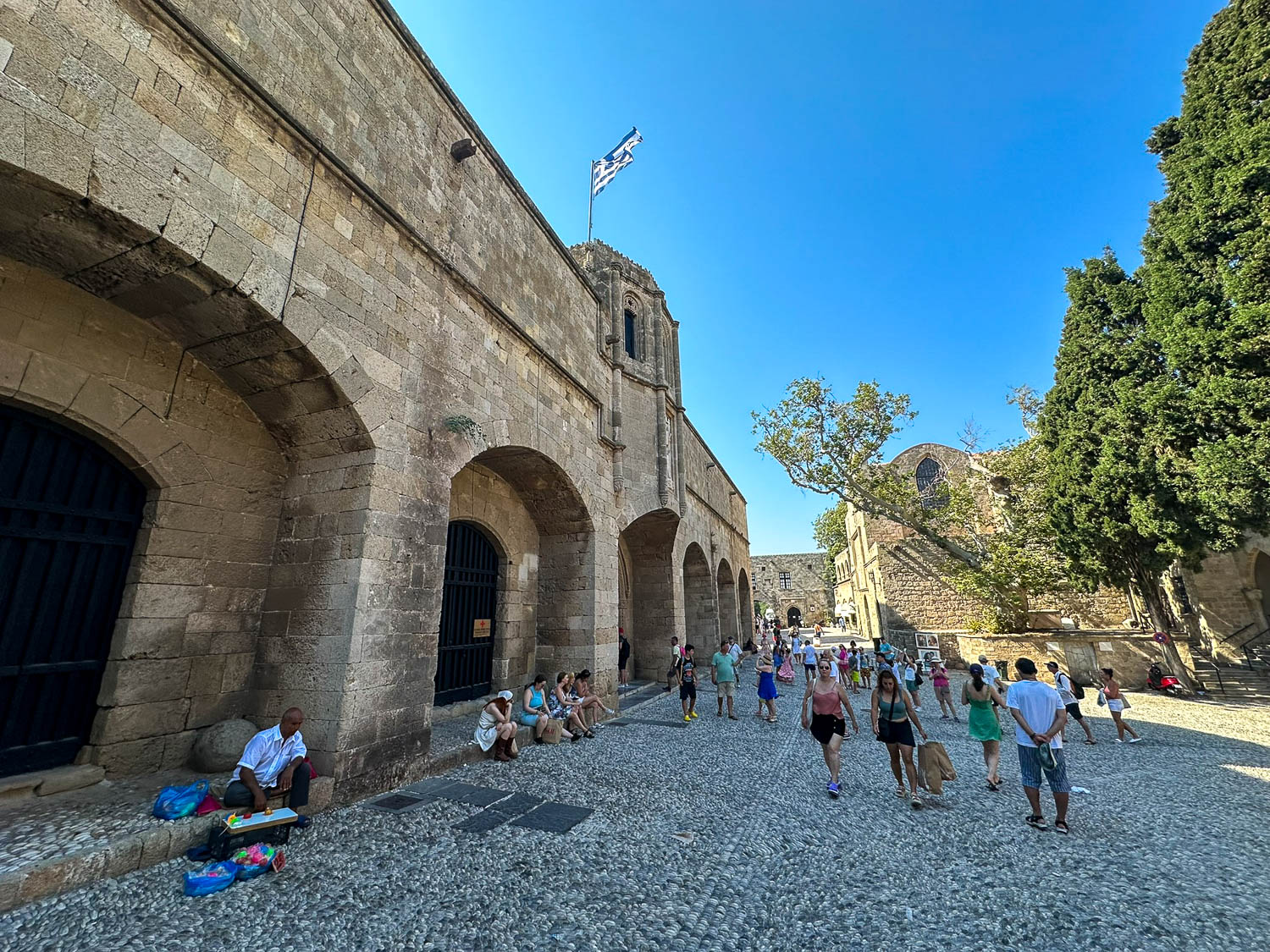
Once inside the Old Town, be sure to walk the city’s famous stone-paved Street of the Knights, one of the best-preserved medieval streets in the world.
Built by the Knights of St John (also known as the Knights Hospitaller) in the 14th century, this 600m-long (0.37mi) street served as the main thoroughfare for the knights and their followers, flanked by inns for the likes of France, Italy and Spain. Today, these buildings still stand tall, coat-of-arms motifs etched proudly over their arched doors – a strong reminder of when Rhodes was an influential city-state, and a cultural hub within the Mediterranean.
Insider tip. The Street of the Knights begins at the Hospital of the Knights and ends at the Palace of the Grand Master. Most organized tours of the Old Town include a stroll along this street.
The Italian Occupation
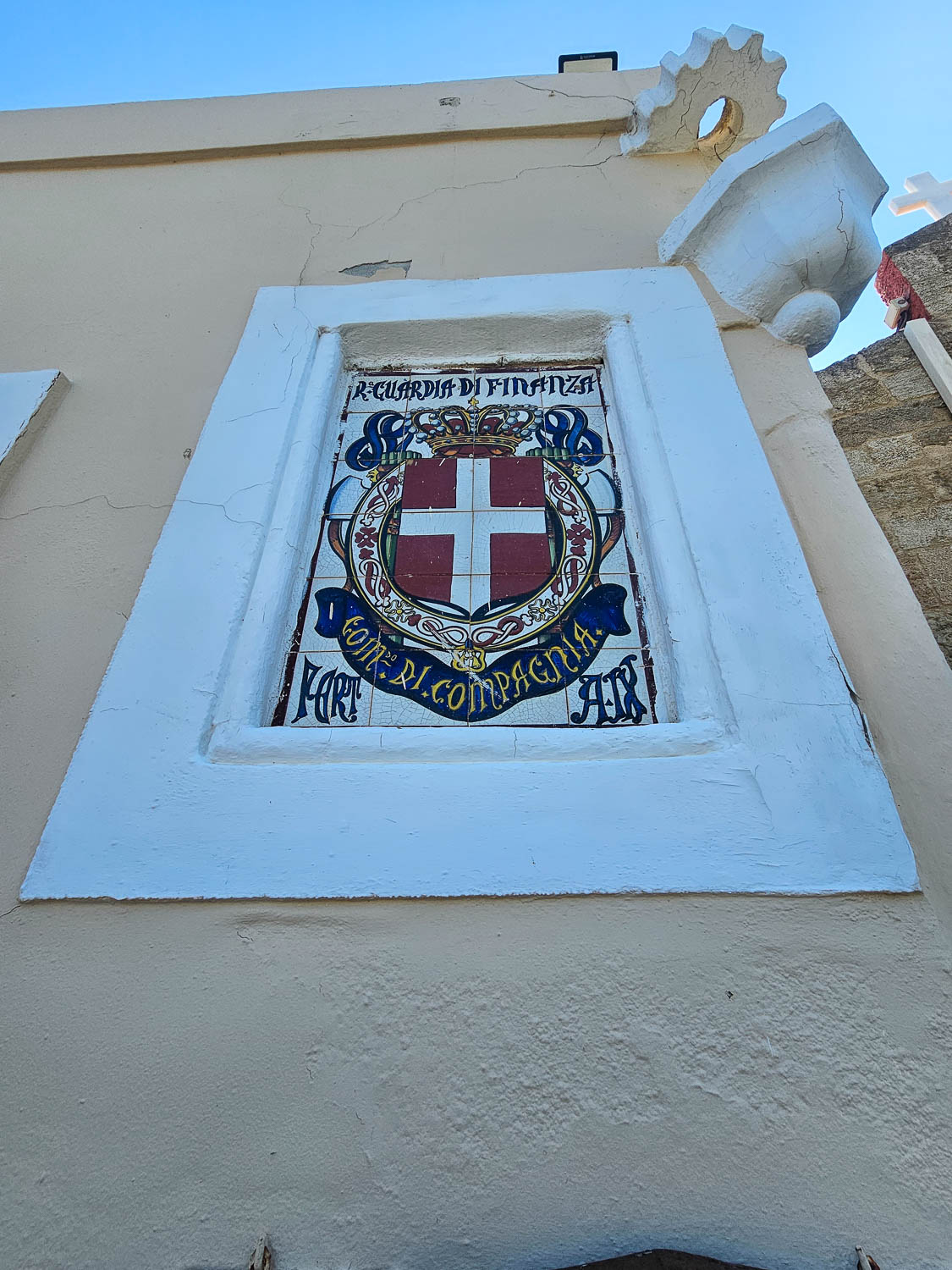
Let’s now fast forward a few centuries. In 1912, Italy seized Rhodes – as well as the other Dodecanese Islands – from Turkey, as part of the Italo-Turkish War. Their occupation lasted for 31 years and left an impressive imprint on the island – especially in the elegant New Town.
Look out for Italian influences in the city’s architecture in particular, including the luxurious and enchanting Grande Albergo delle Rose (Rhodes Casino), the Palazzo del Governatore, the Mercato Nuovo, the Banca d’Italia (now the Bank of Greece), the Palazzo delle Poste, and other grandiose buildings and chic piazzas. Aside the blend of Renaissance, Gothic, Venetian and Baroque architectural styles, notable Italian influences can also be seen in the city’s urban planning.
This cultural blend – the Italian rule that helped shape much of the city as you see it today, together with ornate Byzantine architecture, Ottoman mosques, and modern Greek neoclassical facades – helps give modern-day Rhodes a unique flavor amongst the Greek islands.
Palace of the Grand Master (of the Knights of Rhodes)
Without question, the star of the show in the Old Town of Rhodes is the incredibly well-preserved medieval castle – and another UNESCO World Heritage Site – Palace of the Grand Master.
Located in the very heart of Rhodes Town, and originally erected as a Byzantine citadel in the late 7th century, this historic palace was later transformed by the Knights of St John into an opulent fortress. An awe-inspiring example of Gothic architecture, this magnificent castle-like palace once served as the residence of the Grand Master of the Knights Hospitaller, and the stronghold of the Knights of St John. Ultimately, it wasn’t simply a palace — it was the political and military headquarters for the Order.
Fun fact. There were a total of 61 individuals to have held the title of “Grand Master” in Rhodes. The Grand Master was the head of the Order of the Knights of St John, during their period of influence in Rhodes (approximately 1309 to 1523).
Rebuilt by the Italians during their occupation in the early 20th century, the palace today has been meticulously restored, blending medieval architecture with early modern Italian renovations. Today, wandering the echoing halls, the mosaic-adorned chambers, the polished marble floors, and admiring the high ceilings of the vast rooms of the palace feels like traveling back in time – it’s history you can touch, it’s history you can breathe in. We were struck by the silent grandeur of it all – and we’re confident you will be too.
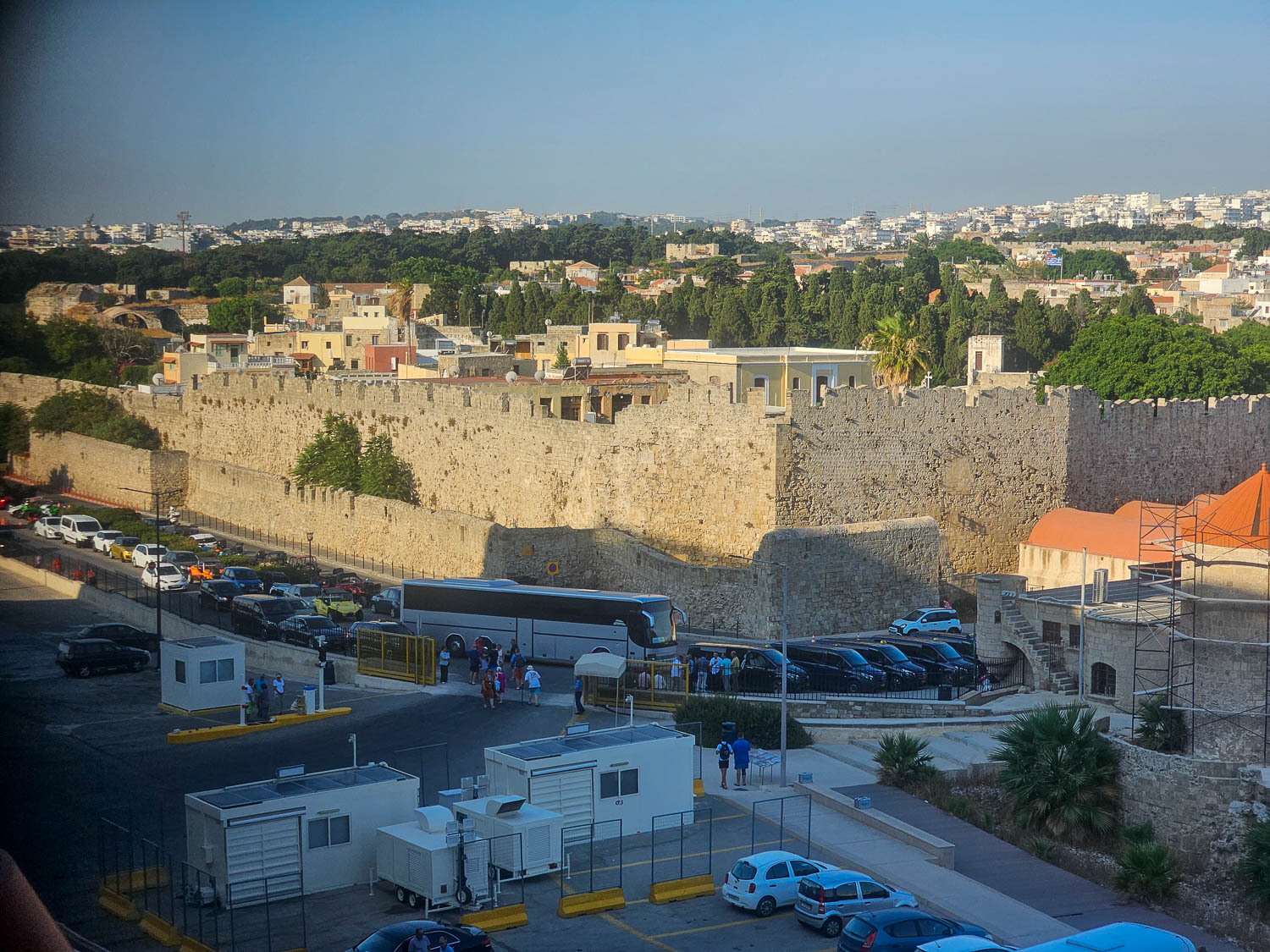
Insider tip: Several of the palace’s towers afford visitors stunning panoramic views of the fortified city, and out toward the Aegean Sea.
Archaeological Museum of Rhodes
Housed within the Palace of the Grand Master, you’ll find the Archaeological Museum. This museum is, simply put, quite something. Showcasing a rich and diverse collection of artifacts from throughout the island’s history, it is also home to a notable collection of statues, as well as other well-preserved finds from the ancient sites of Ialyssos, Kamiros and Lindos. This is the place to visit for a comprehensive overview of Rhodes’ history.
The Jewish Quarter
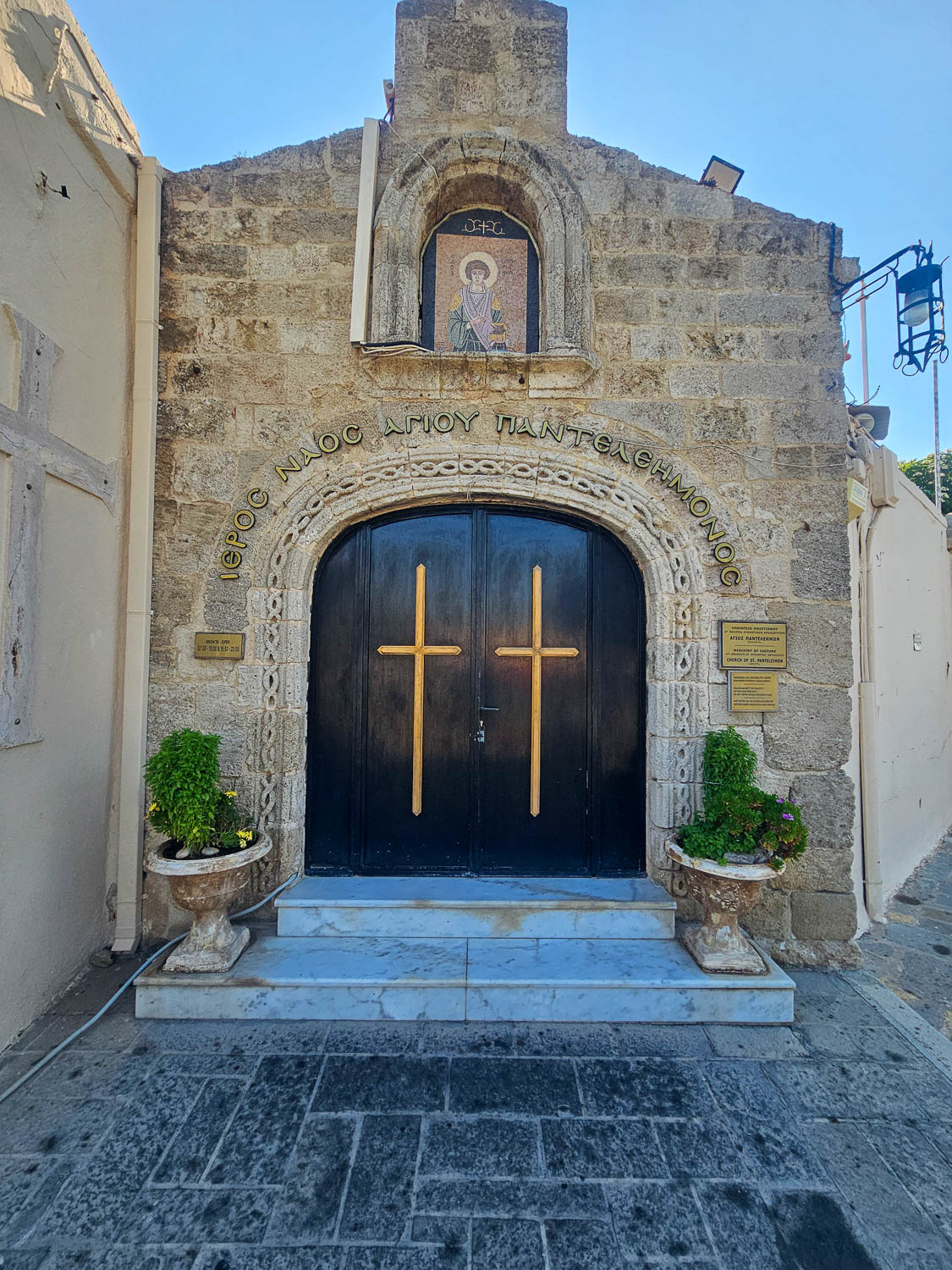
On the eastern side of Rhodes’ Old Town, you’ll find the Jewish Quarter – also known as La Juderia – just a short walk from the cruise ship pier (for those of you arriving in Rhodes by ship!). The Jewish Quarter stands as a moving testament to resilience and remembrance: once a large, vibrant Jewish community, it’s today characterized by narrow, arched lanes and a sense of solitude. Walking these quiet streets you’ll feel a deep, respectful connection to the lives once lived here, and be afforded a silent, yet powerful, reminder once again of the multicultural tapestry that once defined the city of Rhodes.
The Jewish Quarter’s central point is the Square of the Jewish Martyrs (Plateia Evreon Martyron), originally an area full of Jewish homes and small stores. Bombed during World War II, it was replaced with a small park and picturesque square, complete with a holocaust memorial and a small fountain adorned with three seahorses.
The Jewish Quarter also once boasted a total of six synagogues, including Kahal Shalom Synagogue, the only one remaining in use today, and the oldest functioning synagogue in Greece. Kahal Shalom Synagogue is also home to the Jewish Museum of Rhodes, where visitors can better understand the history and cultural contributions of Rhodes’ Jewish heritage, as well as the impact World War II had on this once-vibrant community.
Fun fact. The Jewish community in Rhodes was heavily influenced by the Sephardic Jews, whose cultural and religious traditions originated in present-day Spain and Portugal. Many were forced into exile during the Spanish Inquisition of the late 15th century, fleeing to the likes of the Ottoman Empire at the time.
Not-so-fun fact. The Jewish community in Rhodes faced significant decline during the 20th century, with almost 1,700 Jews deported from the island to Auschwitz during World War II.
Other Iconic Landmarks in the Old Town
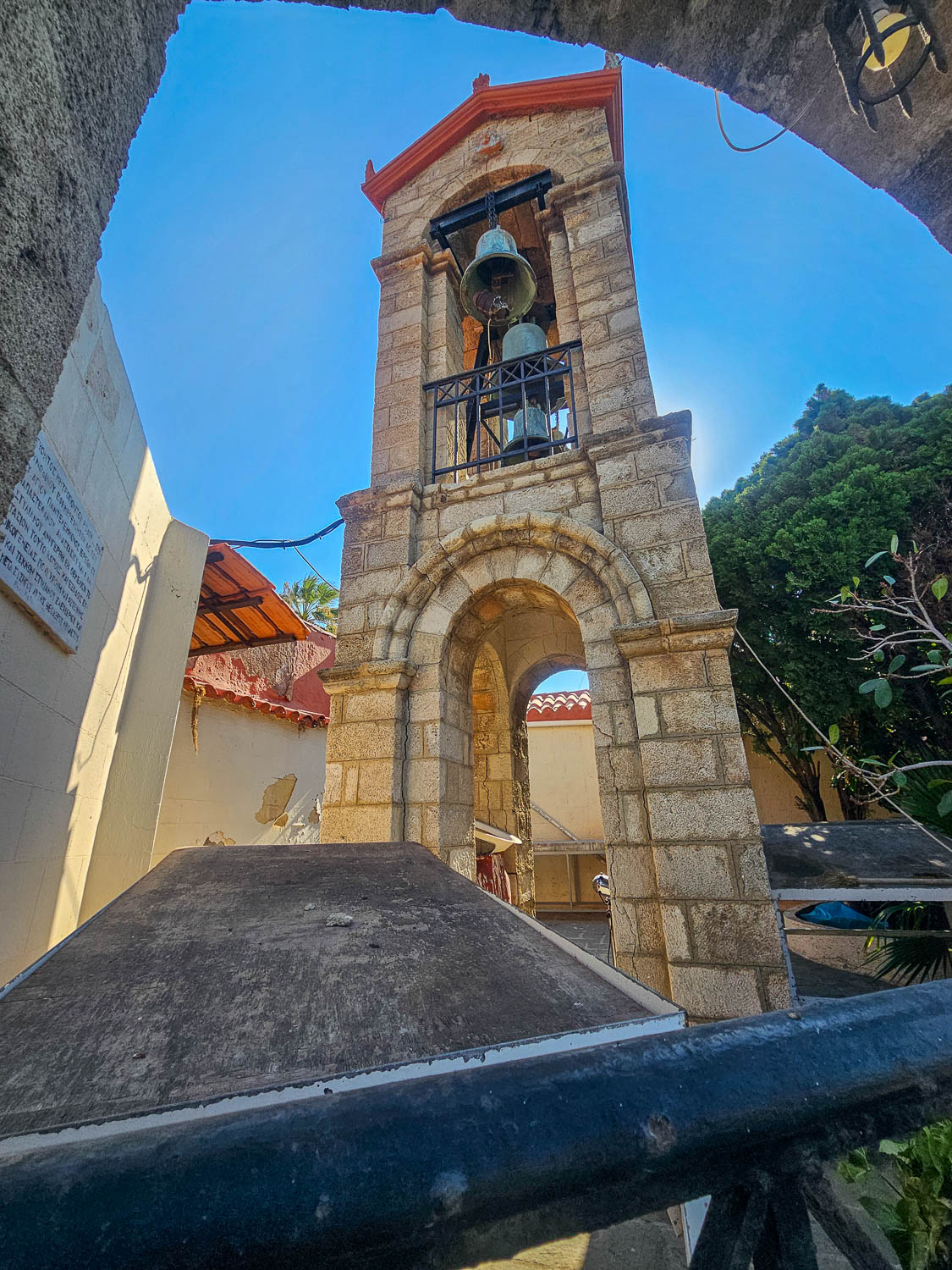
Beyond its gates, churches, medieval walls, and grand avenues, Rhodes’ Old Town reveals a layered landscape of landmarks shaped by centuries of shifting rule. From Ottoman-era influences to remnants of the ancient world, these sites add depth to the long and complex story of a city that has continuously evolved.
The Roloi Clock Tower
Located in the heart of the Old Town, the Roloi Clock Tower (or the Medieval Clock Tower, as it is also sometimes known), is more than simply a timepiece. This Clock Tower is the highest point in the Old City, offering panoramic views over the town and all the way out toward the Aegean Sea.
Insider tip. Climb to the top of the tower for just 5 Euros per person. Your entrance fee includes a free (hot or cold) drink at the charming terraced cafe below the clock, as well as access to their clean toilets and wifi (bonus!).
Mosque of Suleiman (Suleymaniye Mosque)
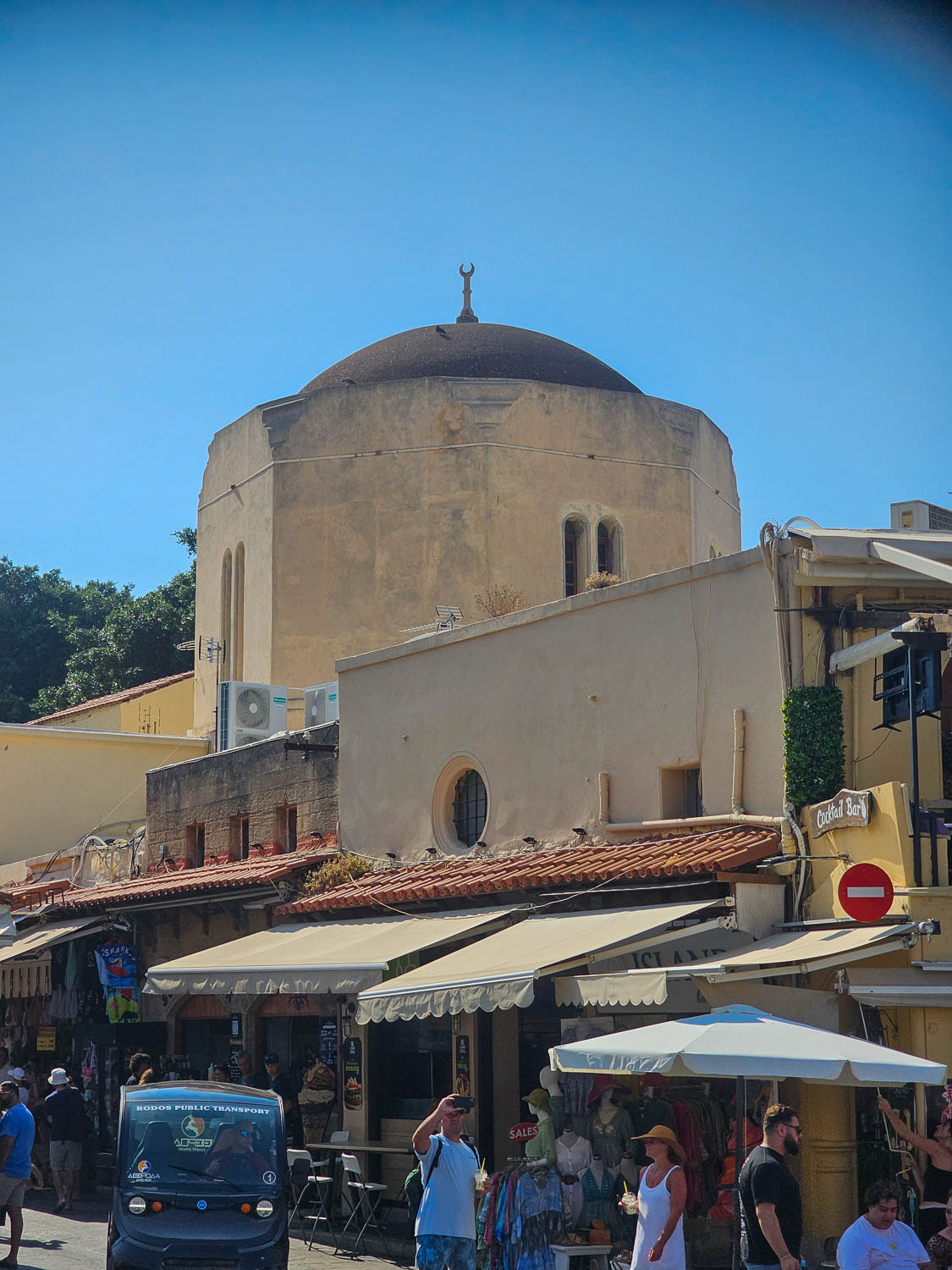
Following the Ottoman conquest of Rhodes in 1522, the Suleymaniye Mosque was the first mosque built on the island. Just a few steps away from the Old Town’s clock tower, it marked the beginning of Ottoman rule and became a physical and religious symbol of Ottoman power and authority in the area. Today, the mosque remains a prominent Ottoman-era landmark and tangible reminder of the island’s rich, layered heritage.
Named after Sultan Suleiman to commemorate his conquest of Rhodes against the occupying knights, the Suleymaniye Mosque is most notable for its architectural style, though it was reconstructed in 1808, and has been restored several times since. Whilst not currently open to the public for tours or sightseeing, it is worth visiting to appreciate its exterior (including its pink walls and striking minaret), its location at the top of Sokratous Street, and, if you happen to visit on specific days, you may just find that the small period-era museum inside the mosque is open.
Insider tip. Are you interested in exploring other Ottoman sites within the Old Town? Consider a visit to the Ibrahim Pasha Mosque, less than a 10-minute walk from the Suleymaniye Mosque. Whilst only open for Friday prayers to serve the Turkish-Muslim community of Rhodes, it is the oldest of all the mosques inside the walls of the Old City.
Ancient Acropolis of Rhodes
A 2km (1.24mi) walk from the Suleymaniye Mosque, you’ll come across another historic landmark in the Old Town: perched atop Monte Smith, the Acropolis of Rhodes – the ancient city’s upper western section – once stood. Today this grassy hilltop is home to a beautifully laid out and well-maintained archaeological site and offers sweeping views over the Aegean Sea and Rhodes Town below.
Head up to the top of Monte Smith to see the Hellenistic remains of this fascinating ancient city, dating back to the 3rd and 2nd centuries BCE. The area has been extensively excavated, with the first excavations conducted between 1912 and 1945, and today reveals some of the best-preserved examples of Greek civic life.
Aside the ruins of a library and several places of worship, two of the most notable features of the Acropolis are the Temple of Pythian Apollo and the ancient stadium, where large athletic contests once took place – including the Alioi Games, part of a major festival in honor of the sun god Helios. A restored Odeon – a small, elegant marble building northwest of the stadium that could once accommodate 800 spectators on its tiered stone seats – can also be found on the site: musical performances, theater, and rhetorical lessons were once held here. Stand here awhile – amongst the golden columns and crumbling temples – and imagine athletes and philosophers walking these very grounds, all those hundreds of years ago.
Fun fact. Unlike most ancient acropoleis, the Acropolis of Rhodes was not fortified. It was instead strategically built on terraces supported by strong retaining walls, and featured a vast area of temples, sanctuaries, public buildings, and hidden places of worship.
Insider tip. Monte Smith – and the Acropolis itself – offers killer sunsets. Don’t miss your chance to witness at least one during your visit! The way the golden light kisses the ruins is really quite something.
The Acropolis of Rhodes is open to the public and is free to visit: you are welcome to explore the ruins at your own pace. Even if you’re not a history buff, the peaceful setting of Monte Smith and the ruins that inhabit it make them ideal for a mid-afternoon stroll.
But wait, there’s more!
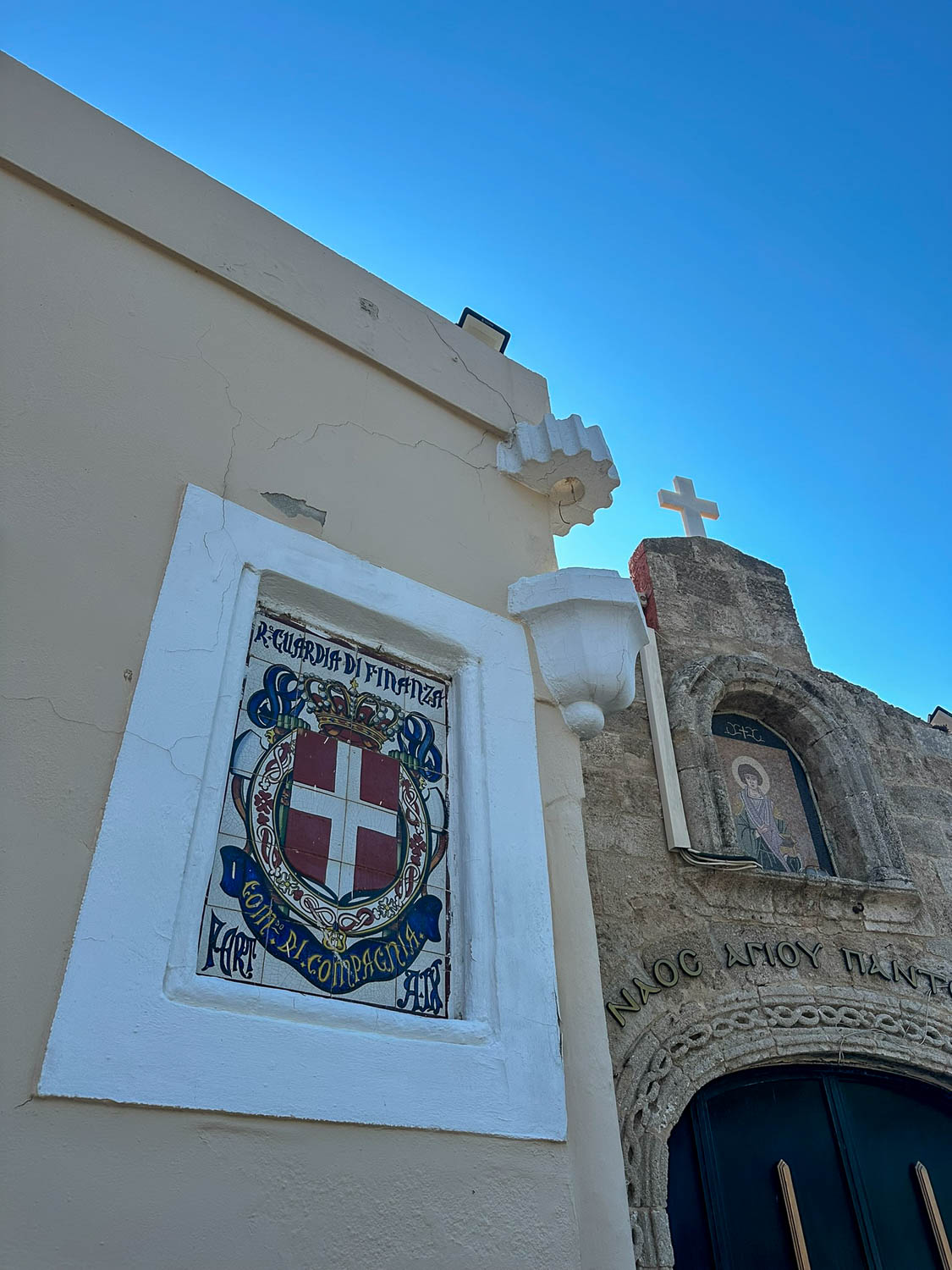
Haven’t yet had your fill of the Old Town? Great, because there’s still so much more to see! Wander off the main, well-trodden paths and you’ll soon uncover some other magical gems.
Ottoman-era Public Baths
Ottoman bathhouses are where rituals of relaxation once took place. Today, the main public bath – the Great Hammam or Yeni Hammam – is located in the heart of the Old Town, in Arionos Square. Built in 1558, the Great Hammam was one of the most significant Ottoman bathhouses of the time: today, the restored building is open to the public for massages, exfoliation, and traditional head-to-toe Turkish baths.
Byzantine Churches
Several ornate churches survived the Ottoman era, some with rare frescoes inside. The two most prominent of these are the Church of Hagios (Saint) Spyridon and the Church of St Mary (Panagia tou Kastrou – also known as the Virgin of the Fort). Both churches were built in the 13th century, with St Mary becoming the first cathedral of the Knights of St John.
Fun fact. The Church of Hagios Spyridon was converted into a mosque during the Ottoman period, before returning to Christian worship.
Modern Greek Art Museum
Technically located in the New Town, in Argyrokastro Square just south of Elli Beach – but definitely still worth a visit! – you’ll find the Modern Greek Art Museum, featuring works that bridge past and present.
This museum houses permanent engravings, paintings, sculptures, as well as temporary exhibits. Notable for focusing its core collection on late 19th-century and 20th-century Greek art, the museum also serves as a cultural hub, engaging the local community by hosting cultural events, educational programs and workshops throughout the year.
The Modern Greek Art Museum is wheelchair accessible and costs 6 Euros for general admission (with discounted concessions available). It’s open November through May from 10am to 6pm on Tuesday through Saturday (closed on Sundays and Mondays), and during the summer (June through October) on the same days, but entry is valid until 9pm.
Insider tip. The museum offers free admission on certain days of the year, including International Museum Day (May 18) and the last weekend in September (European Heritage Days).
Mandraki Harbor
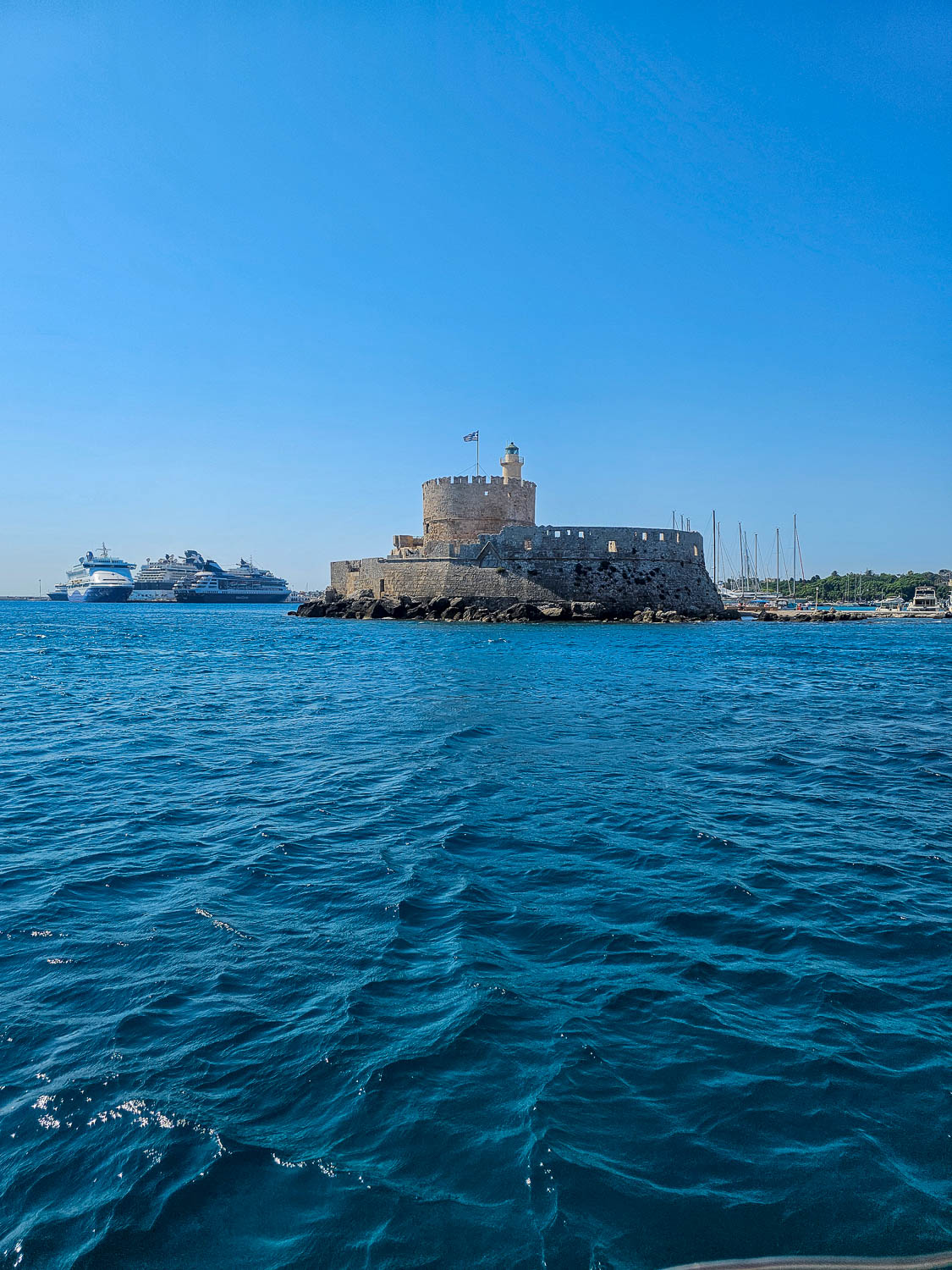
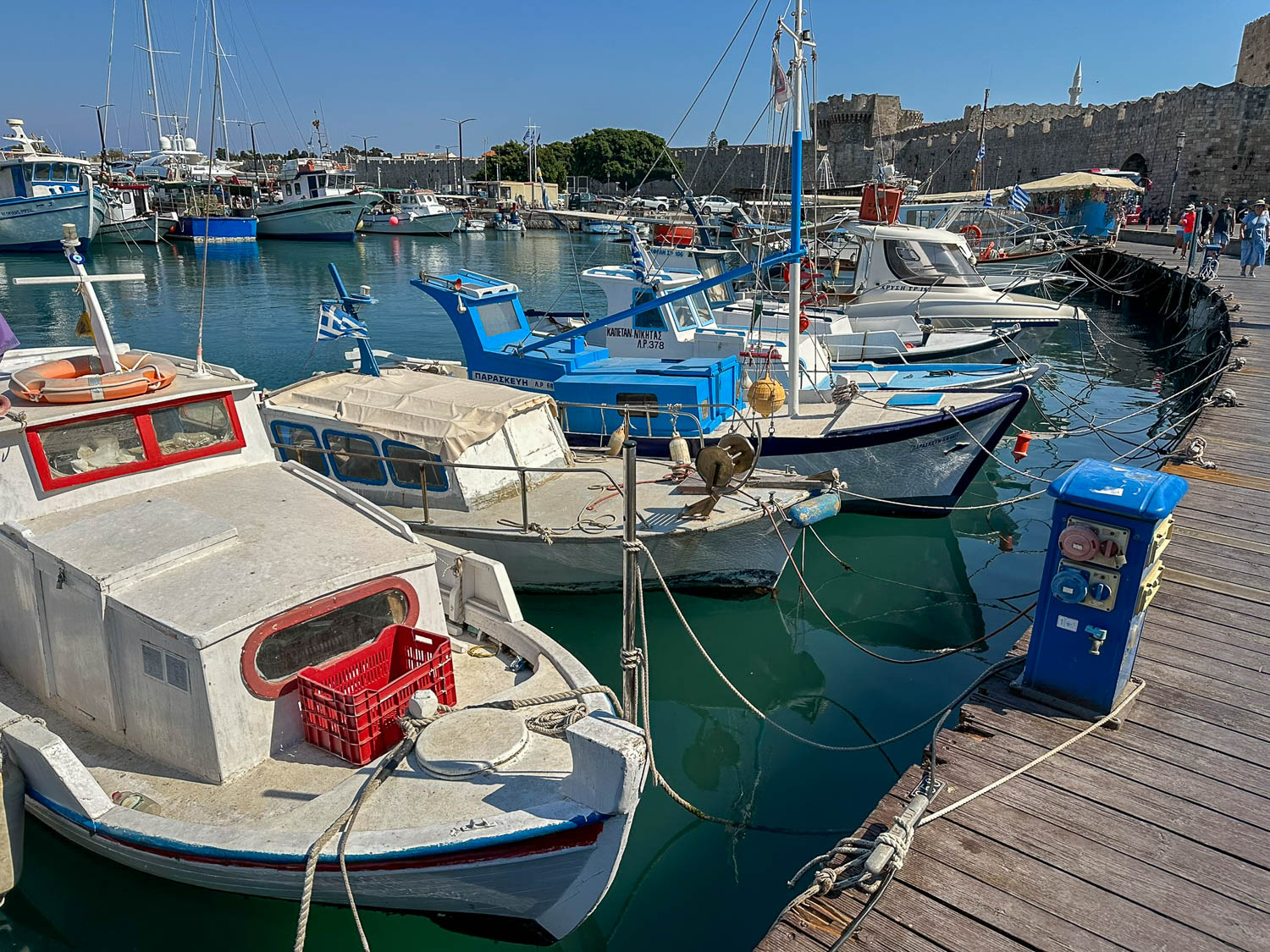
Mandraki Harbor, just a short stroll outside the walls of the Palace, and once the military port of ancient Rhodes, is today most famed for its long, rich history (dating back to ancient times when Rhodes was a powerful maritime city), picturesque views, numerous historic landmarks, and unique blend of old and new.
Today, the harbor is a modern marina, with yachts and fishing boats bobbing in the clear, blue waters, and with cafes, restaurants and shops lining the promenade on its banks. All this creates a charming ambiance – one of those special places to savor a Greek coffee (and yes, also a traditional Greek pastry!) and watch the world go by quietly around you.
At the northern edge of Mandraki’s jetty, you’ll find the stand-alone Fortress of Agios Nikolaos (also known as the Castle of Saint Nicholas). Facing the sea, the land here today operates as a lighthouse, and on your way out there you’ll also see three medieval windmills, once used to grind grain brought in by merchant ships.
But the biggest news of all? Mandraki Harbor is also believed to have been the site of one of the Seven Wonders of the Ancient World: the legendary Colossus of Rhodes.
The Colossus of Rhodes
The Colossus of Rhodes was a giant (okay, humongous!) bronze statue of Helios. Estimated to have stood at a mighty 33m (108 feet), the statue was initially erected to commemorate Rhodes’ victory over Demetrius Poliorcetes (a Macedonian Greek nobleman and military leader) and the city’s successful defense against his siege. Aside a celebration of military triumph, the statue is also understood to be a dedication to Helios himself, the Greek sun god and the patron deity of Rhodes.
Fun fact. The Colossus of Rhodes is believed to have also served as a symbol of the city’s strength and prosperity.
Fun fact. Chares of Lindos, a celebrated Rhodian sculptor, designed and constructed the Colossus. It is believed it took him 12 years to finish the statue, starting in 292 BCE.
Although the exact location remains in debate to this day, the towering bronze statue of Helios is believed by some to have literally straddled the entrance to Mandraki Harbor, whilst others believe Helios stood with his legs together. Most agree Helios was either nude or semi-nude, wearing a crown of solar rays (as he is often depicted), and possibly with one hand shielding his eyes, and the other holding perhaps a torch or a spear.
Sadly, an earthquake in 226 BCE destroyed the statue (supposedly snapping it at the knees – poor Helios!), though the ruins remained in place for some 800 years.
Fun fact (oh my! yes, another!).In 654 CE, Arab forces invaded Rhodes, stealing the ruins of the Colossus and selling the remaining bronze to merchants, who then melted it down for reuse.
Today, the mouth of Mandraki Harbor is adorned by two large pillars, mirroring the location where the feet of the mighty Colossus of Rhodes perhaps once stood. Atop each column you’ll see a bronze statue of a Rhodian deer – Elafos (male) and Elafina (female) – symbols of the island. The legacy of the Colossus of Rhodes clearly remains intact – a significant symbol of ancient Greek art and history.
Shopping in the Old Town
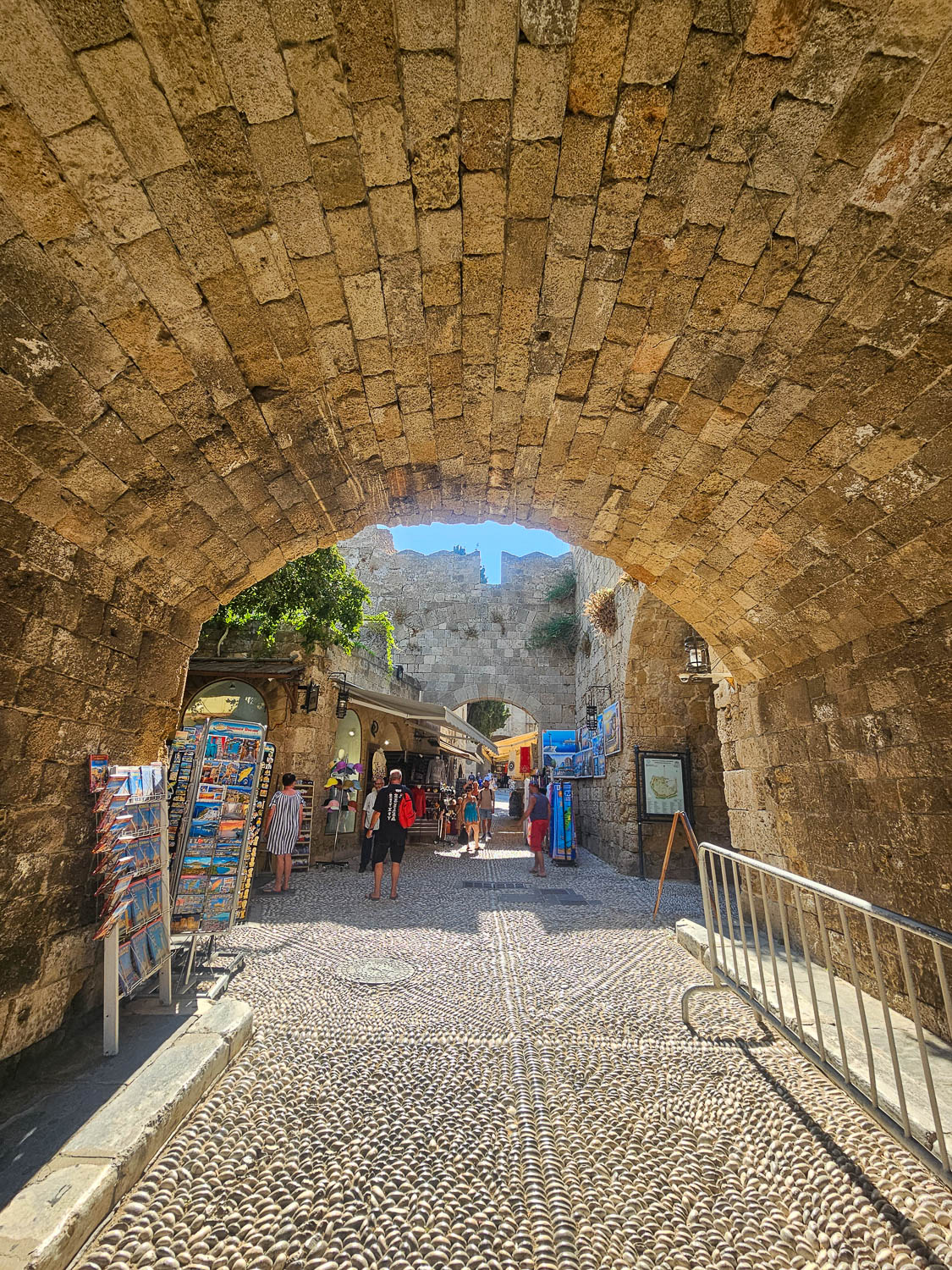
Rhodes offers visitors a diverse mix of shopping opportunities, from artisan shops to traditional markets, and from international stores to modern malls, and is especially well-known for its jewelers, potters and ceramic artists. Many stores are family-run and open from early morning until late at night, providing you plenty of time to wander through them after a full day of exploring the sights.
In the narrow cobblestone streets of the Old Town you’ll easily come across unique souvenirs, handmade jewelry, hand-painted ceramics, carved wooden icons, handwoven scarves, leather goods, and locally-produced soaps, olive oil and wines, as well as other traditional artisanal products. The Old Town is also home to numerous art galleries, affording visitors an opportunity to meet with local artisans on their home turf.
Insider tip. For the best shopping in the Old Town, head straight for Sokratous Street.
Insider tip. Make sure to visit the highly-rated Olive Corner, near the Saint Athanasios Gate at the south-eastern corner of the Old Town. It’s here you’ll find some wonderfully unique souvenirs, with the chance to even personalize many of them!
Dining in the Old Town
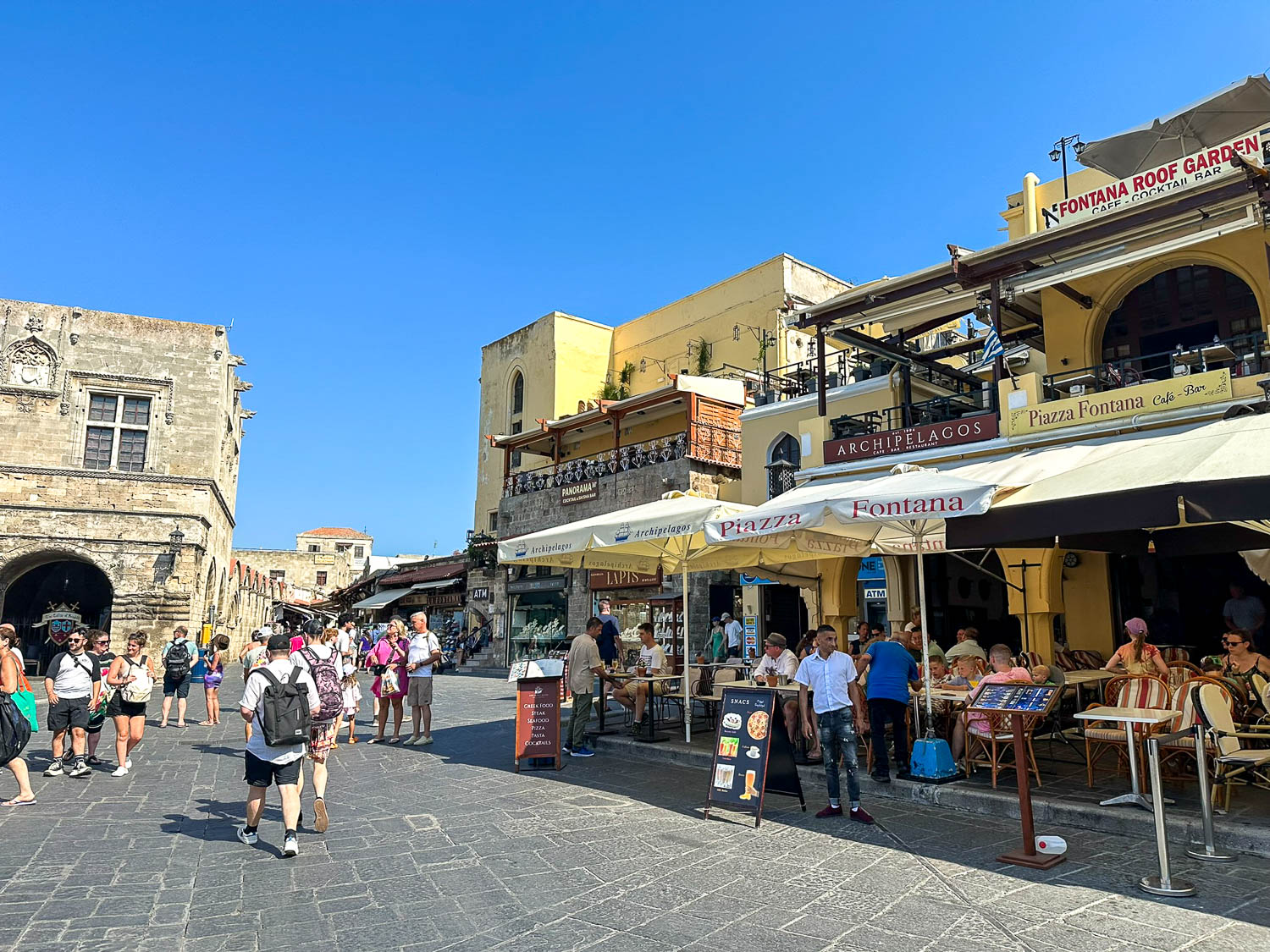
Rhodes sure does know how to serve up unforgettable flavors, with a vibrant dining scene, especially in the Old Town. From waterfront tavernas grilling the day’s freshest catch, to fine-dining restaurants boasting excellent wine lists, the city’s dining scene is an eclectic mix indeed – every corner offers a new delight for the senses. And don’t forget, this is Europe – so many restaurants will offer late-night dining!
Make sure to visit the lively Hippocrates Square (Ippokratous Square) in the heart of the Old Town, a central hub lined with traditional tavernas, bars and other eateries (it has a little something for all tastes!). Whilst you’re there, consider trying something a little different than you might usually select, else perhaps go for one of the following.
- moussaka (a layered casserole made with eggplant, meat, potatoes and a creamy bechamel sauce)
- souvlaki and Greek salad (classic!)
- pitaroudia (a signature dish of Rhodes: big, fluffy chickpea fritters usually flavored with mint, onions and tomato – yum!)
- melekouni (a soft candy made from sesame seeds, almonds, herbs and honey – originating from right here in Rhodes!)
- unique local wines (try Athiri, Amorgiano or Muscat) and desserts (hello baklava and loukoumades!)
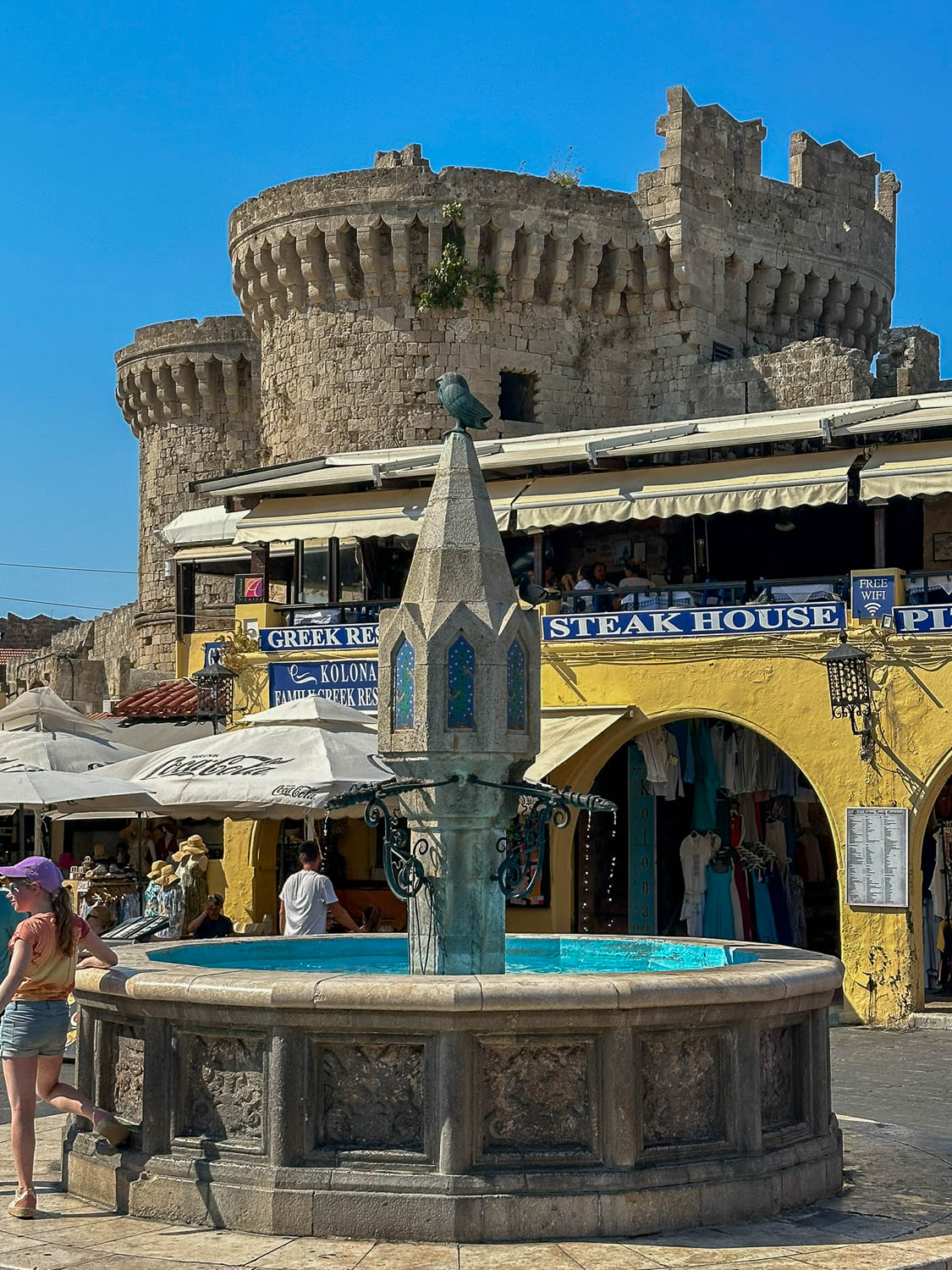
But really, the best way to experience the local cuisine here in the Old Town? Either follow the crowds, or simply follow the smell of fresh bread and grilled seafood to an unmarked alley — you won’t regret it.
Insider tip. Local Rhodian culture and food can perhaps best be experienced at the twice-weekly People’s Street Market (or Iaiki), about a 20-minute walk outside the St John’s Gate (so yes, it’s not exactly in the Old Town, but…). Vendors here sell everything from olive oil and figs to handmade lace and traditional Dodecanese crafts. It’s a great place to witness traditional island life, with farmers and other food producers coming in from across the island each week to sell fresh produce, eggs, pickled food, stuffed vine leaves, and homemade preserves. The market is open from 8am to 2pm on Wednesday and Saturdays.
Final Thoughts
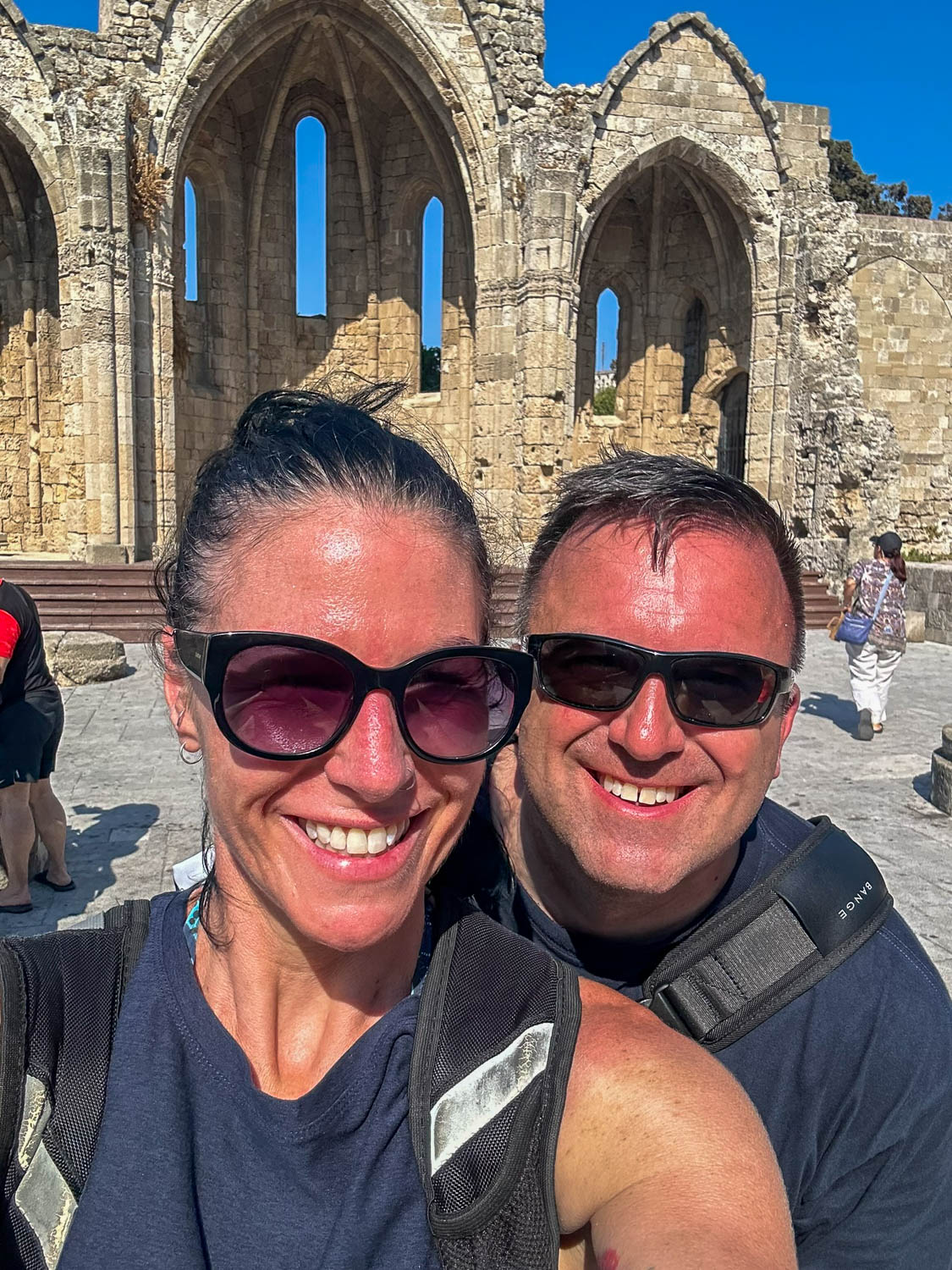
The ancient city of Rhodes offers visitors more than a mere checklist of attractions. Indeed, despite its age, Rhodes’ medieval Old Town is a living city, bustling with artisan shops, private residences, lively tavernas, and welcoming hospitality (and yes, we know there’s a castle or two there too!). It isn’t just one of the best-preserved examples of medieval architecture in Europe — it’s a living storybook. From the chatter of locals in shaded courtyards to the scent of grilled souvlaki in the main squares, the culture here is as alive as the history is deep.
Definitely take your time here. Soak up the subtle blend of the grandeur of the Knights of St John, the legacies of the Ottoman Turks, and the vibrant pulse of modern Greek life. Permit the narrow streets, the soaring old city walls, and the echoes of the Middle Ages to draw you into a world shaped by courage, resilience, culture, and curiosity.
Wander through the Old Town’s tangled alleyways, where history is carved into every stone and each corner of the city tells a new story. Whether you’re into hiking to the top of ancient cities (yes Beck, we know this is what you’re all about!), diving deeper into history through visits to museums, marveling at historical monuments, or simply wiling away some hours at a local cafe with a strong Greek coffee in hand whilst the world passes by in front of you (Mike, we see you people-watching in Hippocrates Square!), we are confident you’ll find it difficult to leave Rhodes.
Step through the gates and into another world. Welcome, fellow wanderers, to the Old Town of Rhodes, Greece. If it too has sparked your curiosity, we’re here to help you begin planning your journey.
FAQs
What is Old Town Rhodes Greece known for?
Old Town Rhodes Greece is known for being one of the best-preserved medieval cities in Europe and a UNESCO World Heritage Site. It features massive stone walls, the Palace of the Grand Master, the Street of the Knights, and a rich mix of Greek, Byzantine, Ottoman, and Italian history within a walkable walled city.
Is Old Town Rhodes worth visiting?
Yes, Old Town Rhodes is absolutely worth visiting. It offers a unique blend of history, architecture, culture, shopping, and dining, all within a compact medieval setting. Visitors can explore ancient landmarks, wander cobblestone streets, and experience one of the most atmospheric destinations in Greece.
What are the best things to do in Old Town Rhodes?
The best things to do in Old Town Rhodes include visiting the Palace of the Grand Master, walking the Street of the Knights, exploring the medieval walls, discovering the Jewish Quarter, climbing the Roloi Clock Tower, and enjoying local food and shopping in Hippocrates Square.
How long do you need in Old Town Rhodes?
Most visitors need at least half a day to explore Old Town Rhodes, but a full day is ideal to fully experience its landmarks, museums, shops, and dining. Its compact, walkable layout makes it easy to explore at a relaxed pace.
Can you walk around Old Town Rhodes?
Yes, Old Town Rhodes is best explored on foot. The entire medieval city is compact and largely pedestrian-friendly, allowing visitors to easily walk between major attractions, historic sites, shops, and restaurants.
Explore More Of Greece
-
Island of Rhodes, Greece: Your Guide for Things To Do
Island of Rhodes, Greece is one of the most diverse Greek islands—home to Rhodes Old Town (UNESCO), Lindos, stunning beaches, and unforgettable day trips. Discover the best things to do for an epic visit.
-
Mykonos Greece Travel Guide: Your Ultimate Escape
Mykonos Greece is a Cyclades island famous for Mykonos Town, Little Venice, iconic windmills, beach clubs, nightlife, and Delos Island, a UNESCO World Heritage Site.
-
Hydra Town Guide: Harbor Life on Hydra Island, Greece
Hydra Town is the main harbor village on Hydra Island, Greece, in the Saronic Gulf near Athens. This guide highlights the best things to do, beaches, museums, and travel tips for visiting this car-free Greek island town.
-
Best Beaches in Hydra, Greece: Island Travel Guide
Hydra, Greece offers secluded coves, sandy Mandraki Beach, and pebbled shores along the Saronic Gulf. This guide highlights the best beaches in Hydra and where to swim, snorkel, and relax on the island.
-
Hydra Island Greece Travel Guide: Best Things To Do
Hydra Island Greece is a car-free island in the Saronic Gulf near Athens, known for Hydra Town, Mount Eros hikes, pebbled beaches, coastal trails, and the fishing village of Kaminia.