
You’ve made it to Grenada. Now comes the tricky part—at least it was for me. How are you actually going to get around?
Rent a car and take on Grenada’s narrow roads and left-side driving? Pay for taxis every time you leave the hotel? Try rideshare? Or take a chance on those little vans flying past that apparently are the local buses?
I’ll admit it—the buses weren’t my first choice.
Looking back, one of the unsung heroes of my trip turned out to be the Grenada buses. Before the trip, I assumed I’d rely on taxis or possibly rent a car. Then I saw Grenada’s very narrow roads, left-side driving, and surprisingly heavy traffic, and renting quickly lost its appeal.
That’s when the buses started to look more interesting—not just as an affordable way to get around, but as a chance to experience how many Grenadians travel around the island every day.
This was a rare Grit moment for me. After some encouragement from Beck, I decided to step outside my comfort zone and give the local buses a try.
After riding Route 1 between the Grand Anse area and St. George’s, the whole system felt much easier—and more enjoyable—than I expected.
Quick Tips

Here are a few insider tips to help you confidently explore the island using Grenada buses.
- Grenada’s buses are privately operated minibuses.
- Most fares range from about EC$2.50 to EC$6.50 EC, depending on the distance. Carry small Eastern Caribbean dollar bills.
- Look for the route number and destination displayed in the front windshield.
- Tell the conductor where you’re headed when you board.
- Use a designated bus stop where one exists, or flag down a bus along the main road.
- Don’t expect a fixed schedule, and keep in mind that service may be limited or unavailable on Sundays and public holidays.
- Route 1 connects the Grand Anse area with St. George’s.
- The main bus terminal is on Melville Street in St. George’s.
- Don’t plan your day around catching the last bus.
Follow these tips, and you’ll be ready to explore Grenada like a local.
Plan Your Trip

Some links below may earn us a small commission at no extra cost to you. We’re truly grateful for your support, as it allows us to continue sharing meaningful travel experiences and practical travel insights with you. Read our full disclosure here.
Best Way To Experience Grenada
The best way to experience Grenada is to anchor your visit around Grand Anse Beach and build outward from there — a morning walk on the sand, an afternoon in St. George’s, and at least one guided trip into the island’s interior to see the side of Grenada most beach days never reach. The island rewards a slower pace than a typical Caribbean checklist; some of the best moments come from conversations and detours, not the itinerary itself.
For first-time visitors, the ideal visit usually includes:
Top Recommended Experiences (At A Glance)
Best Overall Experience:
Annandale Falls was one of our favorite stops on Grenada’s half-day tours, so we like this pairing: the same falls, then on through Grand Etang’s rainforest to float the Balthazar River. Keep an eye out for Mona monkeys along the way.
→ Recommended: Half-Day Grenada River Tubing – Grand Etang & Annandale Falls
Best For First-Time Visitors:
A private guide and an air-conditioned vehicle solve the biggest first-time worry — figuring out logistics on unfamiliar roads — while still covering the highlights, plus a chocolate and rum tasting. Worth the upgrade over a shared group tour if you’d rather move at your own pace.
→ Recommended: Explorer’s Choice: Grenada Private Half Day Island Tour
Best Snorkeling Experience:
The Underwater Sculpture Park at Molinere Bay is one of Grenada’s most photographed attractions, and pairing it with a swim at Flamingo Bay makes for a full, easy half-day on the water. A good fit if you want a beach-and-Grand-Anse trip to include at least one thing besides the sand.
→ Recommended: 4-hour snorkel cruise to Underwater Sculptures
Best Customized Experience:
If a fixed itinerary isn’t your style, a private guide lets you choose your own stops — waterfalls, the chocolate museum, a rum distillery, the spice gardens — and skip anything that doesn’t interest you. Best suited to travelers who’d rather build a day than follow one.
→ Recommended: Private Full-day Tour in Grenada with Pickup
Short On Time? Do This:
Tours & Experiences
Prefer additional options? Click below to discover more incredible experiences tailored just for you!
Browse top attractions in Grenada.
Travel Essentials?
Planning the rest of your trip? These are the platforms we personally use when organizing our travels. For more planning tools, visit our Travel Resources page or browse current promotions on our Travel Deals page.
How Grenada Buses Work

Grenada’s bus system is informal but surprisingly easy once you understand it. The buses themselves are small, privately operated minibuses running established routes around the island.
They can be surprisingly difficult to identify at first—nothing like the public buses you may be picturing. But there’s no reservation, transit card, ticket, or app to worry about. Find the correct route, flag down the bus, tell the conductor where you’re going, and pay your fare in cash.
Finding and Catching the Right Bus
Look for the route number and destination displayed in the windshield. You can use a designated bus stop where one exists, but roadside hailing is common along established routes.
Grenada drives on the left, so make sure you’re waiting on the correct side of the road for the direction you’re traveling. Raise your hand as the bus approaches, and the driver will stop when it’s safe.
Google Maps can help you get a general sense of where you’re headed, but I found the easiest solution was simply telling the conductor my destination once aboard.
Drivers and Conductors
The driver handles the road while the conductor manages passengers, fares, and stops. Tell the conductor where you’re headed, and they’ll help make sure you get off at the right place.
Conductors also actively look for passengers. Don’t be surprised to see one leaning—or even hanging—out of the window calling to people along the road. Ours did exactly that.
Watching the driver and conductor work together on my Route 1 ride into St. George’s felt almost choreographed: a nod, a few words, another passenger aboard, and we were moving again.
Grenada buses typically carry around 15 to 20 passengers. The Route 1 bus I boarded outside the Radisson held closer to 15—and there was just one seat left for me.
Grenada Bus Fares and Payment
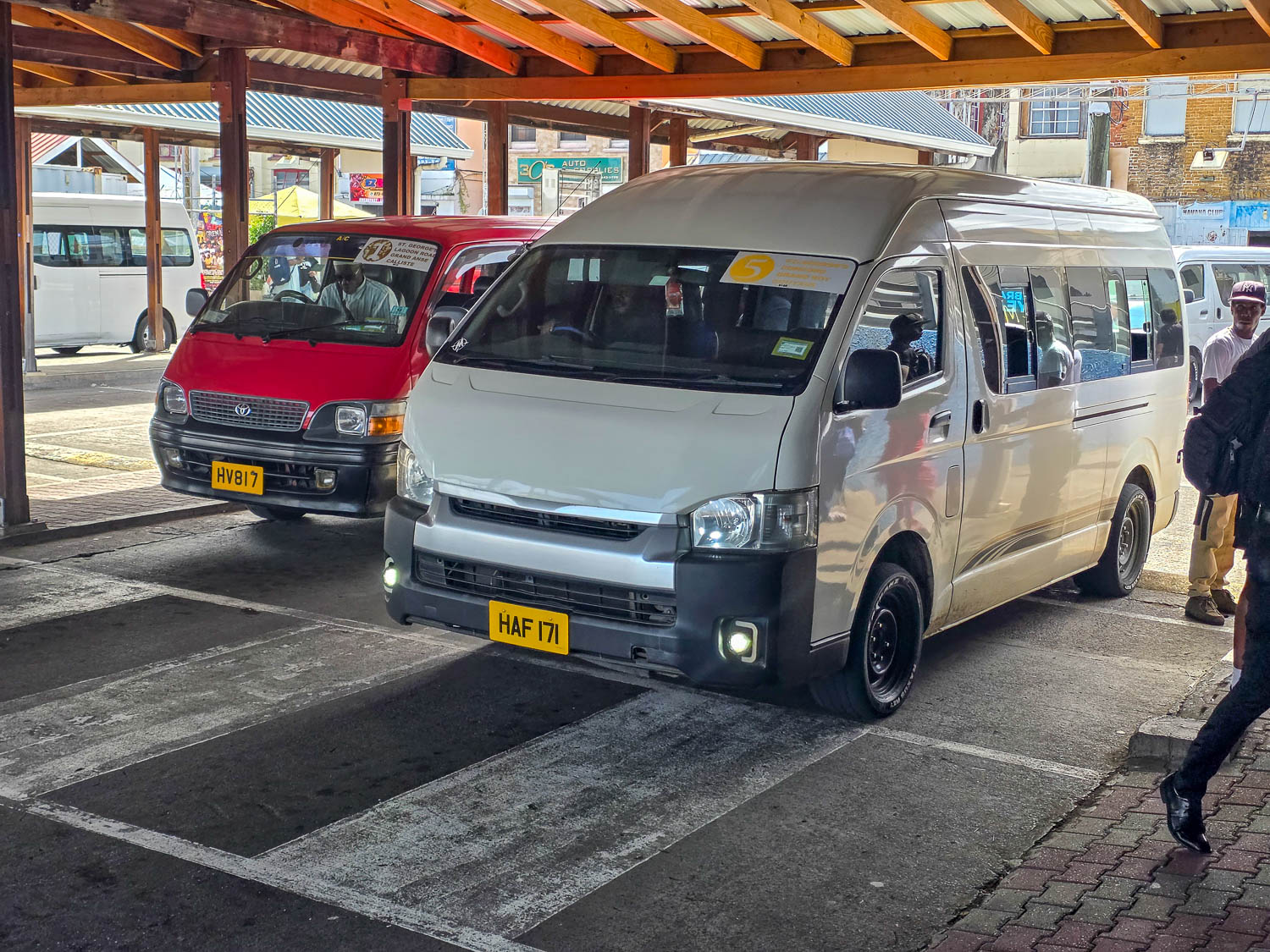
Grenada bus fares are remarkably affordable. According to the Grenada Tourism Authority, fares range from EC$2.50 to EC$6.50, depending on the route.
Carry small Eastern Caribbean dollar bills and pay your fare directly to the conductor.
My Route 1 ride between Grand Anse and St. George’s cost just EC$2.50—about US$1. That’s hard to beat for getting between two of Grenada’s most popular areas.
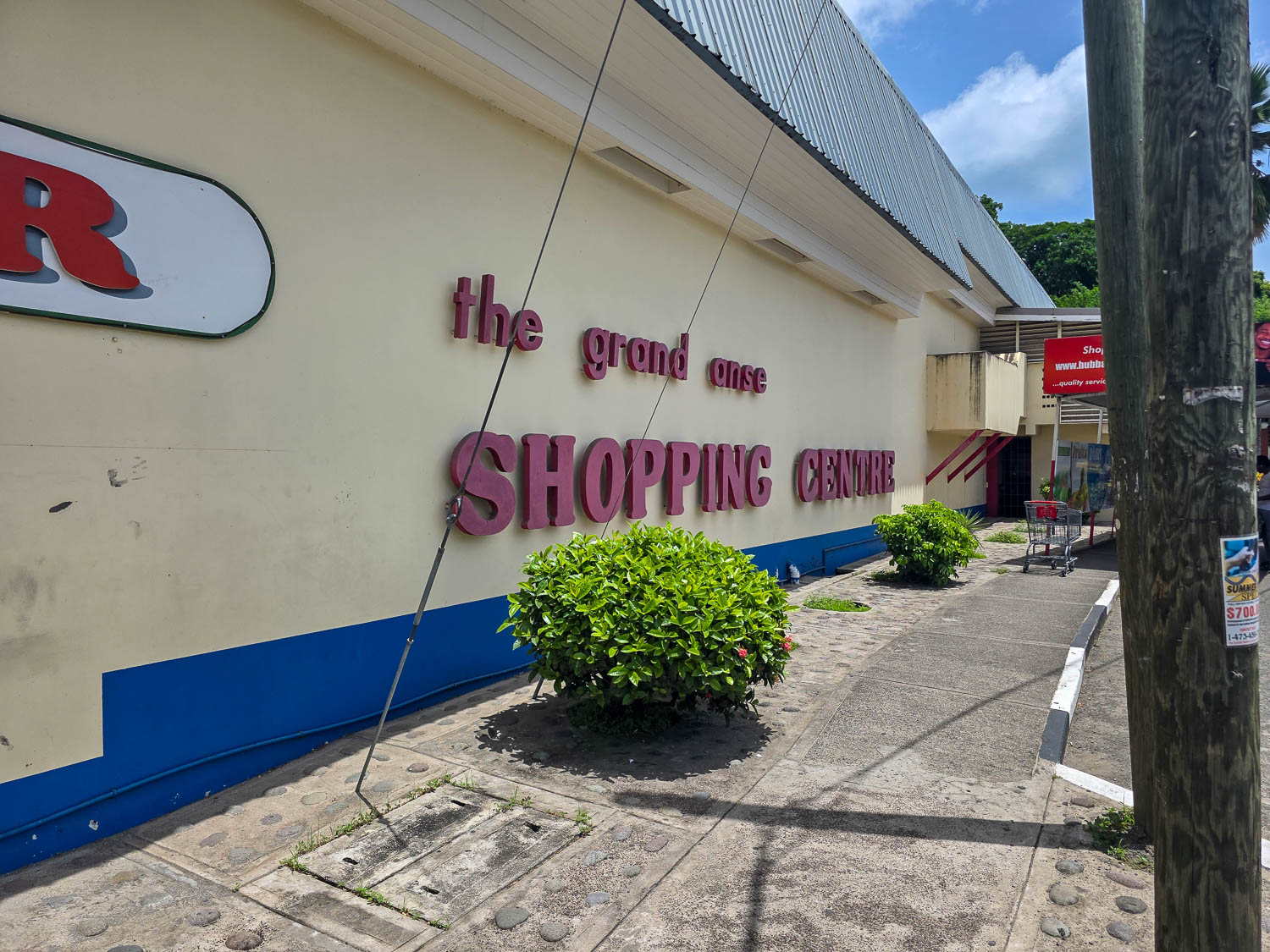
Insider tip: Don’t have Eastern Caribbean dollars yet? Buy something small at a shop like Food Fair and take your change in EC$. I found that much easier than going out of my way to find a bank.
Grenada Bus Routes and Main Terminal
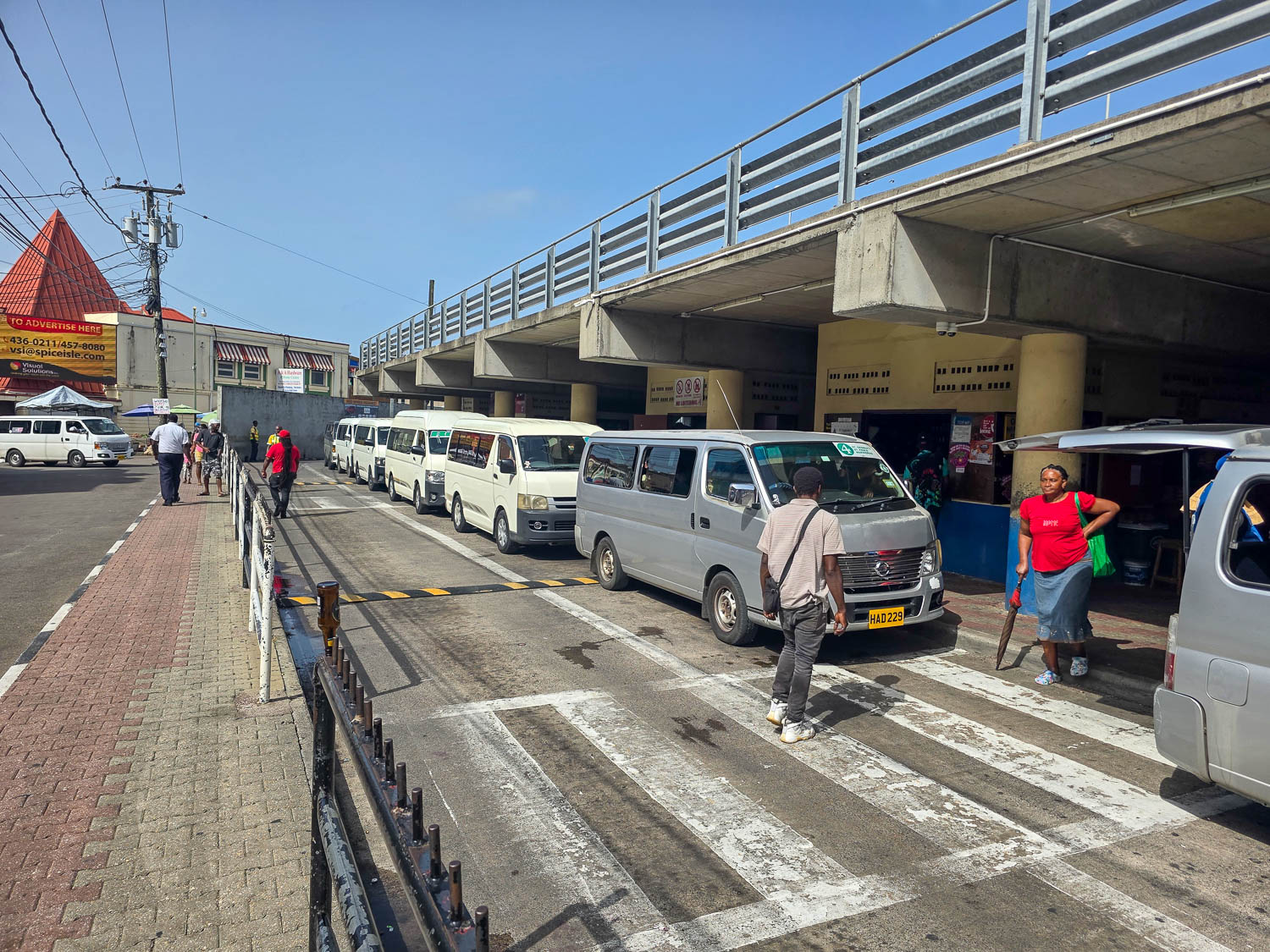
The main Grenada bus terminal is on Melville Street in St. George’s, where numbered routes head toward different parts of the island.
The network extends well beyond the heavily visited south and southwest, reaching communities along Grenada’s east coast and toward the north. For first-time visitors staying around Grand Anse, however, Route 1 is an especially useful introduction.
Route 1 Between Grand Anse and St. George’s
Route 1 connects the Grand Anse area with St. George’s and was the route I used for my own trip into town.
It makes exploring the capital surprisingly easy without worrying about a rental car, parking, or paying for taxis in both directions.
Exploring Beyond Route 1
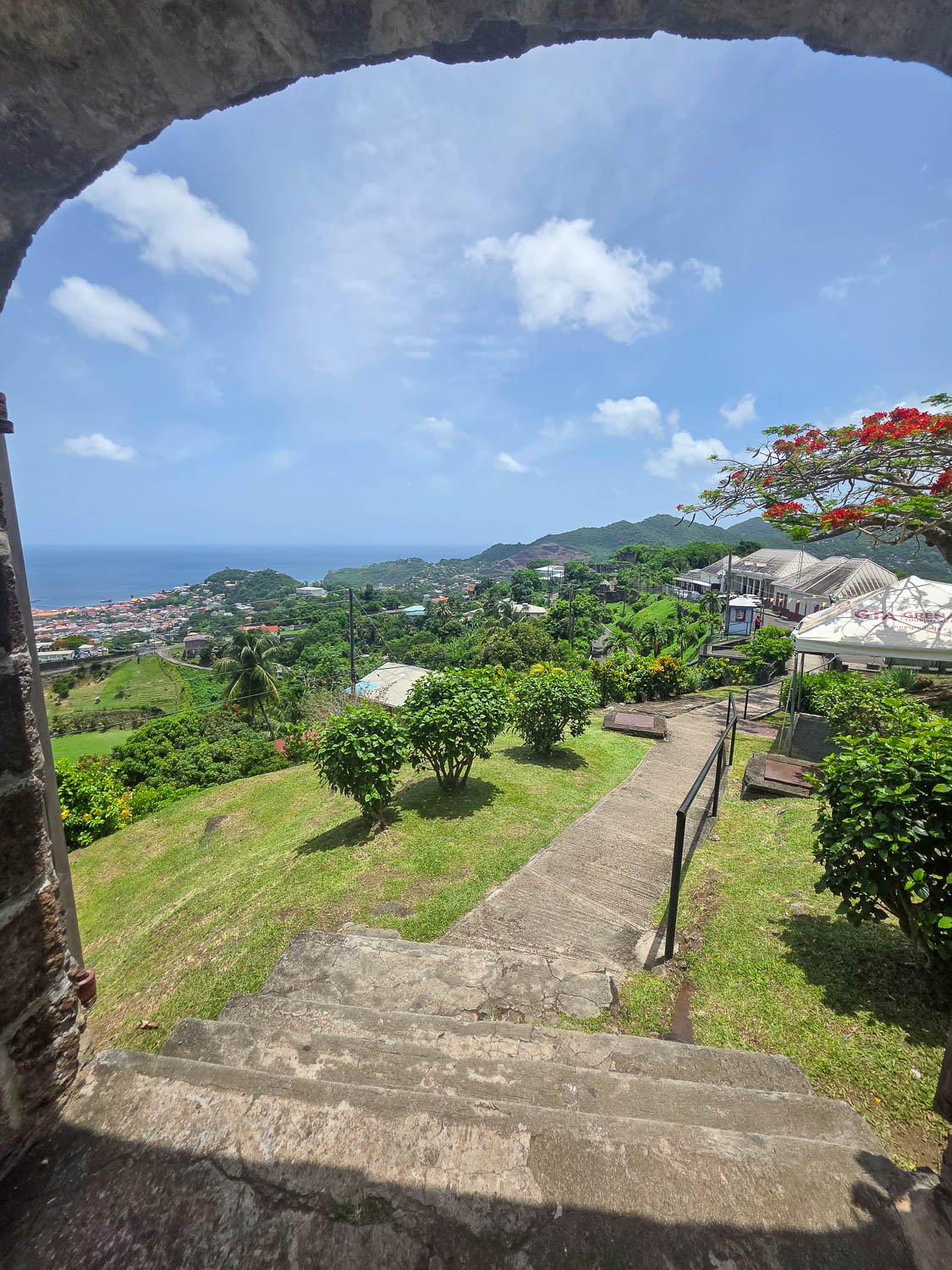
Grenada buses reach communities across much of the island and are ideal for straightforward trips between populated areas.
They’re local transportation, not sightseeing buses. That’s part of what made riding one so interesting for me.
For attractions away from the main road—or a day combining several stops—a guided tour, taxi, or rental car may be more practical.
Grenada Bus Schedules and Operating Hours
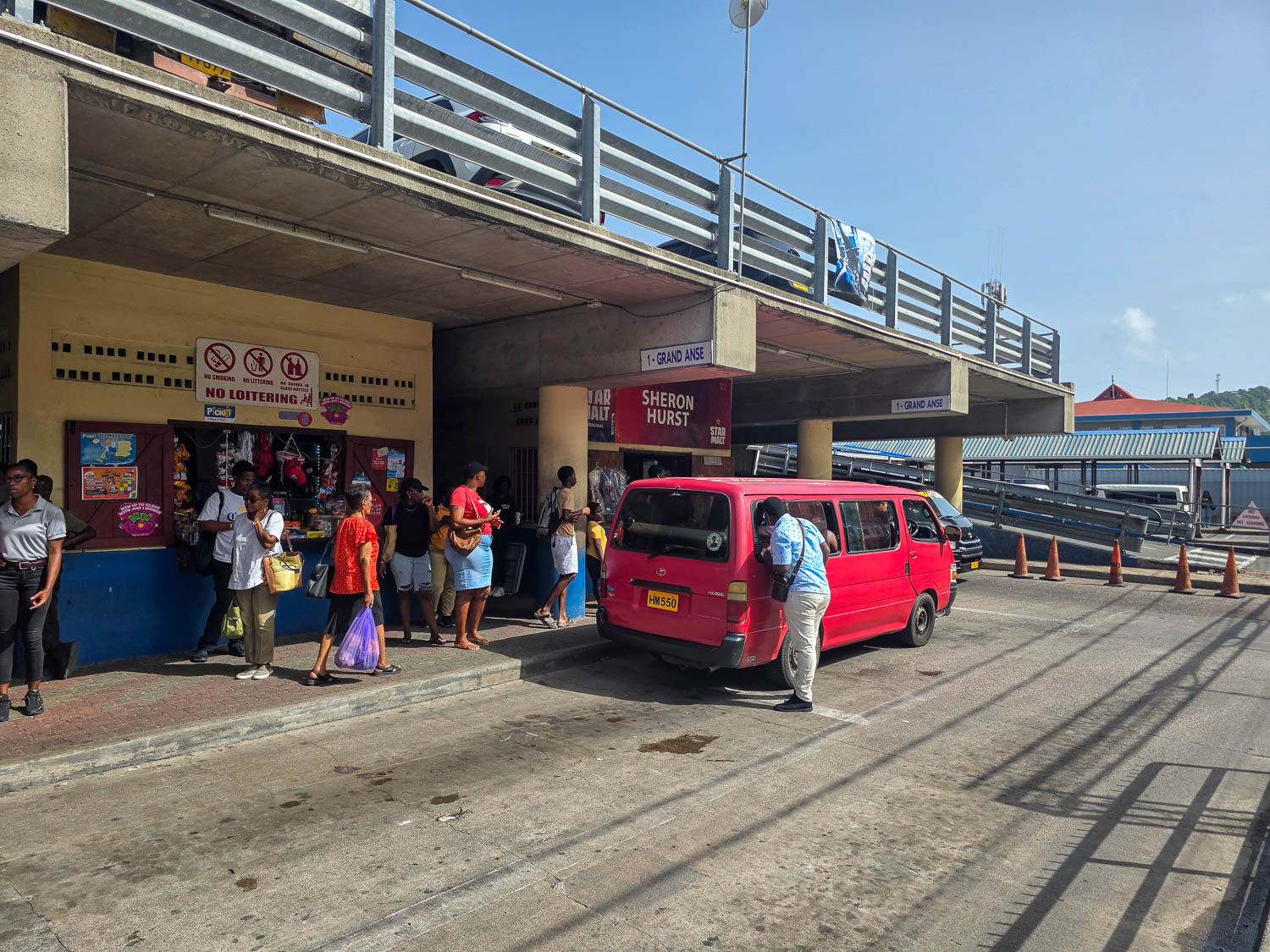
Don’t expect a printed timetable—or a bus arriving at a specific minute.
The Grenada Tourism Authority currently states that local buses operate from 6:00 a.m. to 9:00 p.m., Monday through Saturday. That doesn’t mean you should expect a conventional schedule. Departures are driven more by passenger demand, and a bus at the terminal may wait for additional passengers before leaving.
For most casual trips, that’s easy enough to work around. I still wouldn’t build a tightly timed itinerary around a particular bus or depend on catching the last one of the day.
Sunday and public-holiday service can be much more limited, so have another transportation option available.
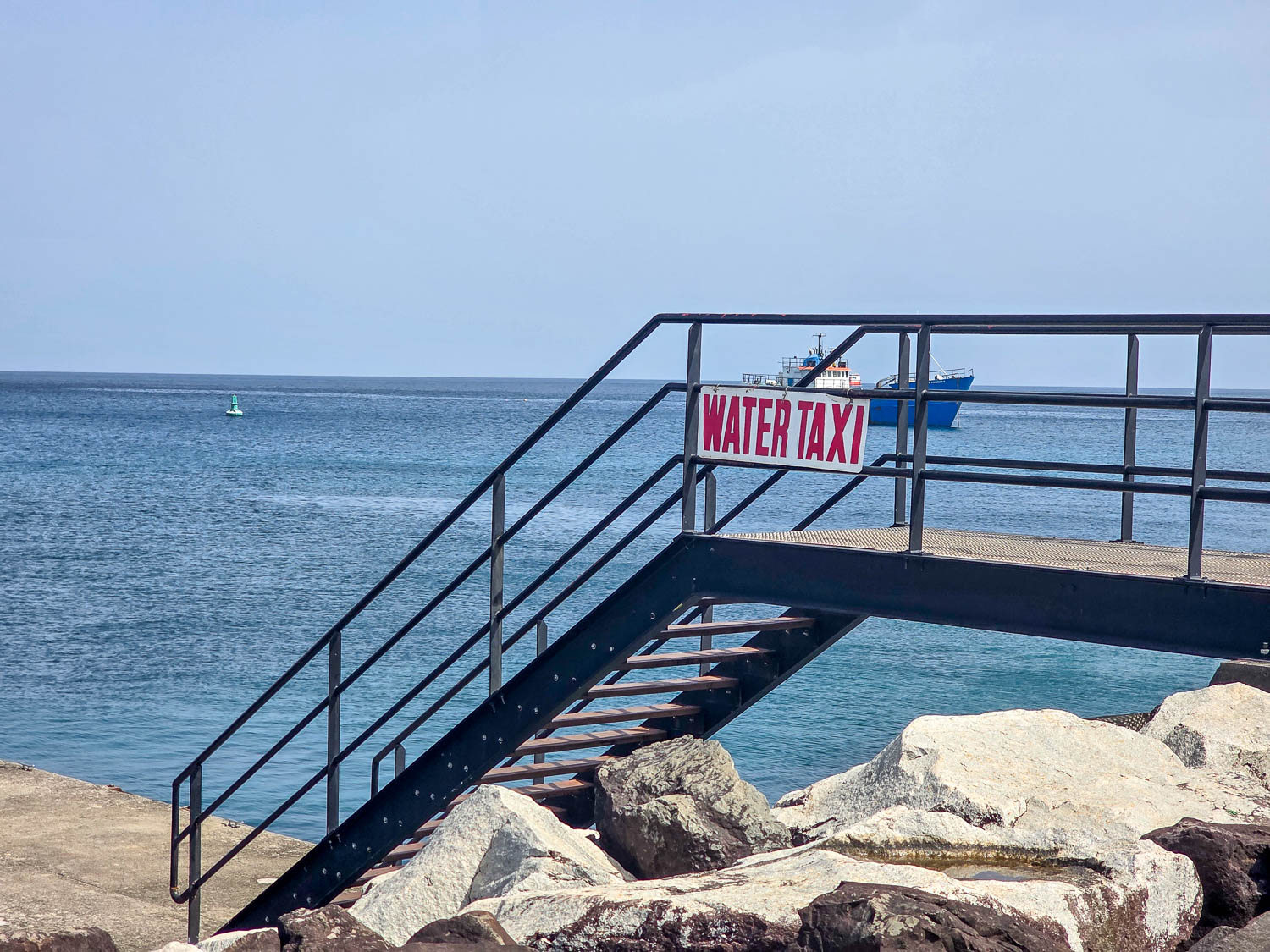
One other possibility between Grand Anse and St. George’s is the water taxi. Availability is much more dependent on cruise traffic and local demand. I visited in July, well outside Grenada’s busiest cruise period, and water-taxi service wasn’t operating when I checked.
During quieter periods, plan on the bus or a taxi and treat the water taxi as a bonus if it’s running.
The Grenada Bus Experience
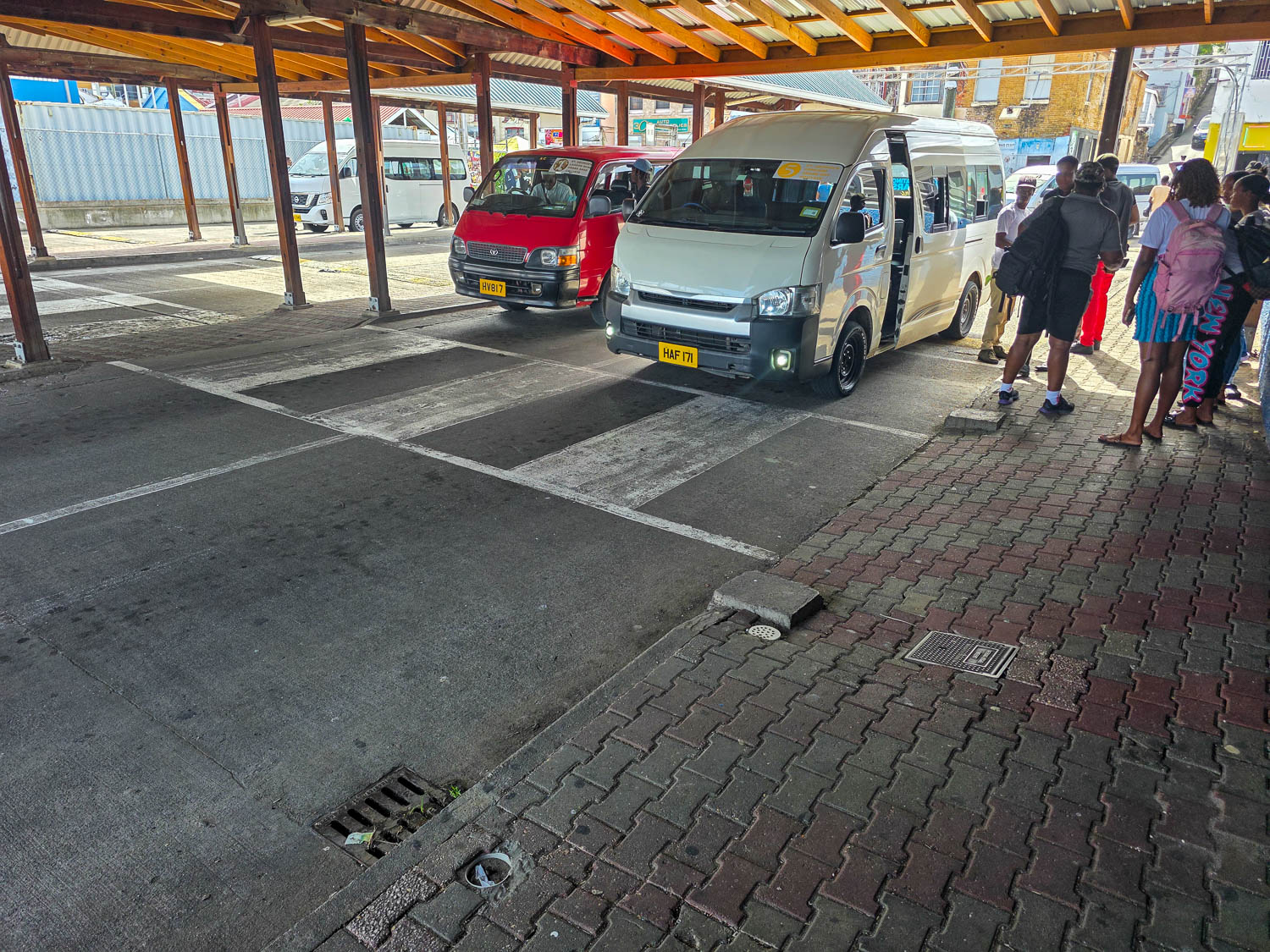
My Route 1 ride felt less like taking public transportation and more like briefly dropping into the rhythm of everyday Grenada.
The reggae was loud. Really loud.
Passengers included schoolkids, shoppers, and commuters, with me mixed in among them. Most people kept to themselves, and with the music playing, there wasn’t much conversation anyway.
What surprised me was how smoothly everything worked. A passenger might tap the side of the bus to request a stop or call out where they wanted to get off, and somehow the driver and conductor caught it all.
Traffic was another story. My morning ride into St. George’s moved easily, while the return trip crawled bumper-to-bumper through afternoon traffic. Even short distances in Grenada can sometimes take longer than expected.
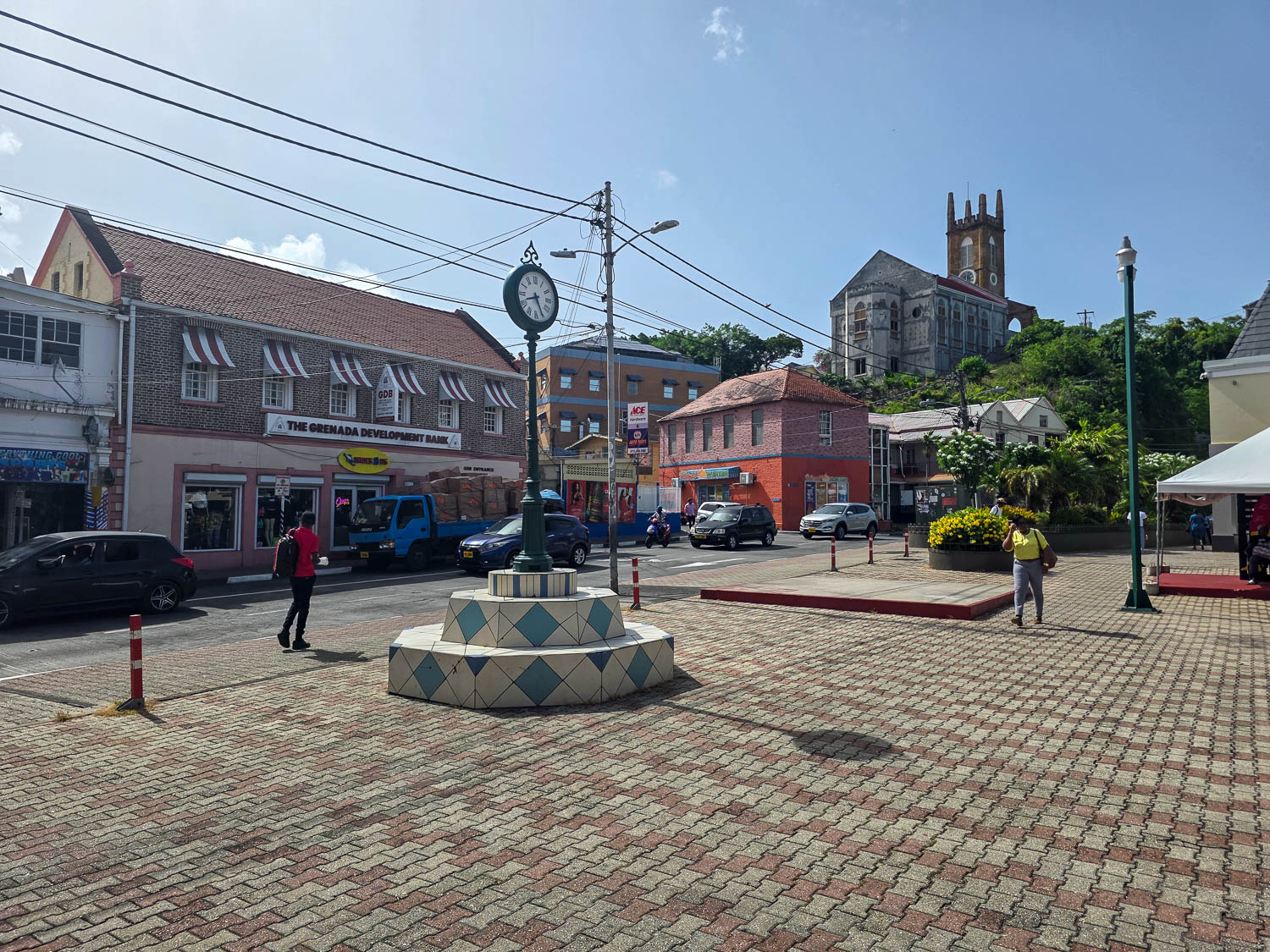
From the roadside, the system can be difficult to read. Once you’re aboard, the rhythm starts making sense remarkably quickly.
Safety and Driver Standards
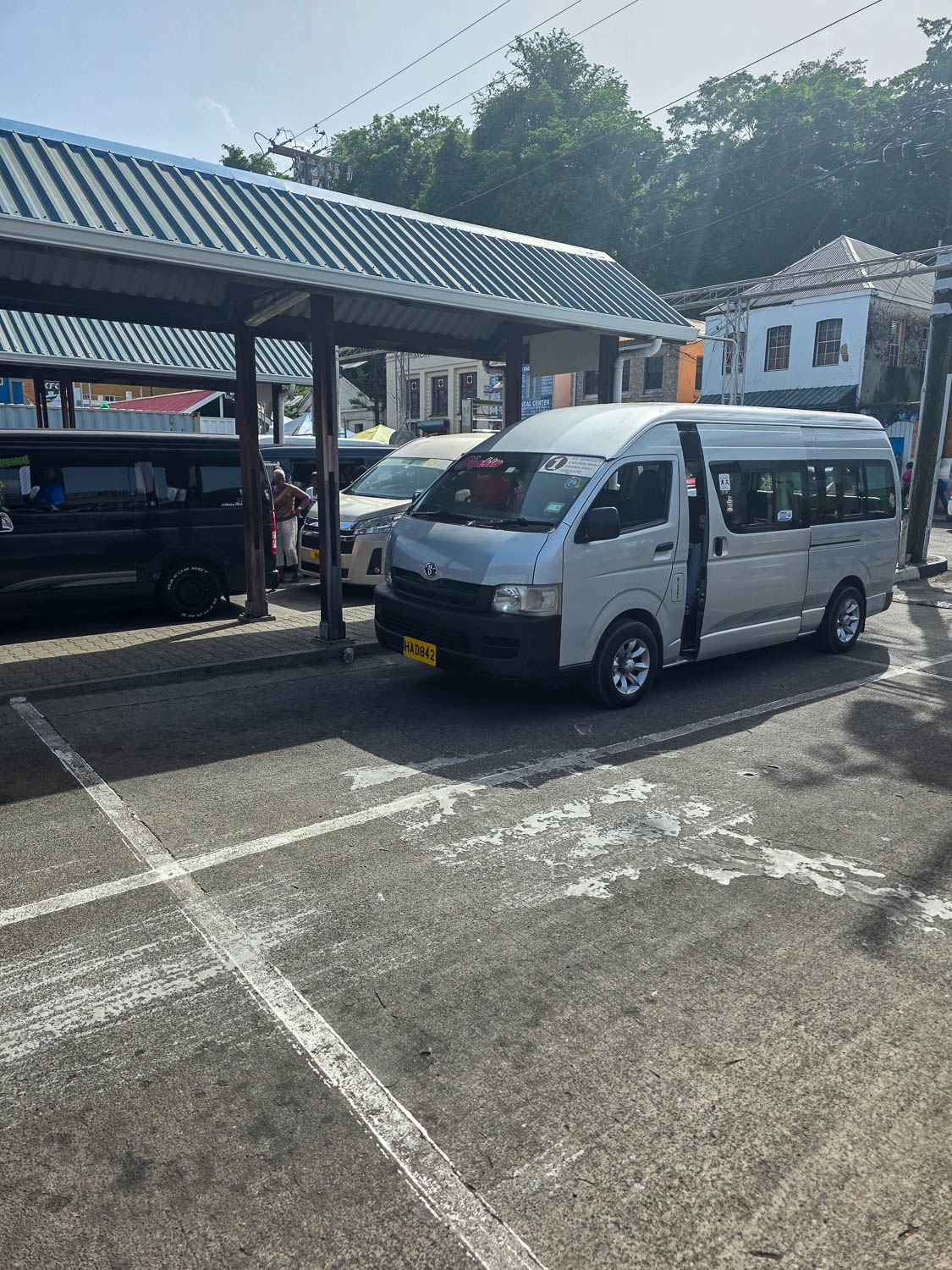
Yes, tourists can use Grenada’s local buses, and my daytime Route 1 experience between Grand Anse and St. George’s felt safe and comfortable.
What impressed me most were the drivers.
Grenada’s roads can be narrow, steep, potholed, and winding, yet the drivers I rode with seemed to anticipate curves, pedestrians, stops, and oncoming vehicles almost instinctively.
Our island guide also spoke at length about the standards and oversight involved in operating public transportation in Grenada. That helped put what I was seeing into perspective. What may initially look fast-paced or even a little chaotic to a first-time visitor is being handled by drivers who navigate these roads every day.
Normal travel awareness still applies. Stay alert while waiting beside the road, keep valuables secure, and make sure the conductor knows where you’re headed.
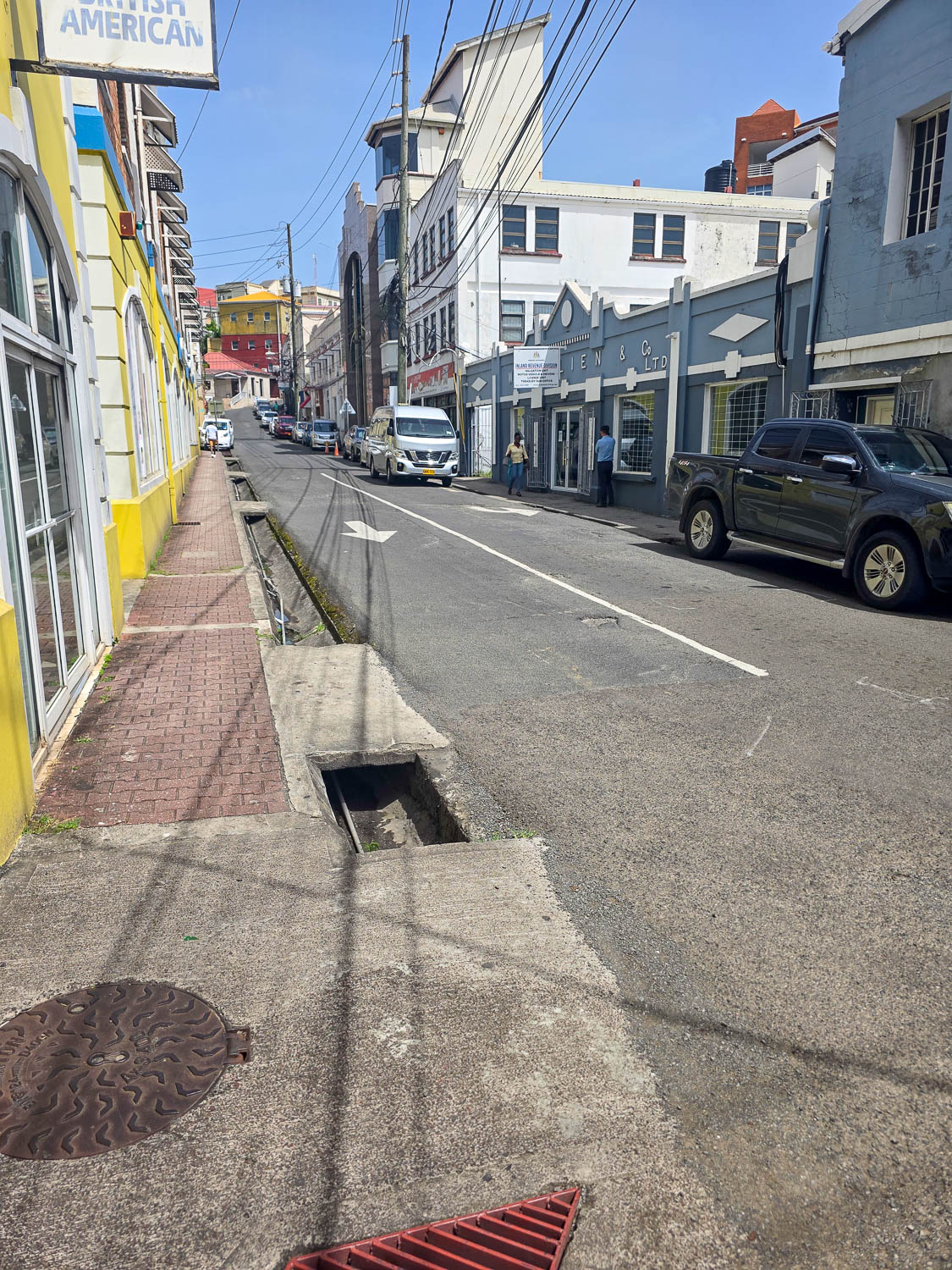
For a daytime trip like Grand Anse to St. George’s, I’d happily use the bus again.
Choosing Between a Bus, Taxi, and Rental Car
If you’re deciding how to get around Grenada, the best choice depends less on which option is “best” and more on the kind of trip you’re making. Here’s how I would choose after experiencing the island firsthand.
Grenada Bus | Taxi | Rental Car | |
|---|---|---|---|
Best for | Short daytime trips | Convenience, luggage, evenings | Independent island exploring |
Typical cost | Very low | Much higher | Highest overall commitment |
Schedule | Informal | On demand/prearranged | Yours |
Navigation | Conductor helps | Driver handles it | You handle it |
Driving required | No | No | Yes—on the left |
G3 take | Great for Grand Anse–St. George’s | Best when convenience matters | Better for confident drivers exploring farther afield |
There’s no single right way to get around Grenada. For me, the bus hit its sweet spot on a simple daytime journey between Grand Anse and St. George’s. For airport transfers with luggage, late-night travel, tightly scheduled plans, or destinations far from established routes, I’d choose another option.
Final Thoughts
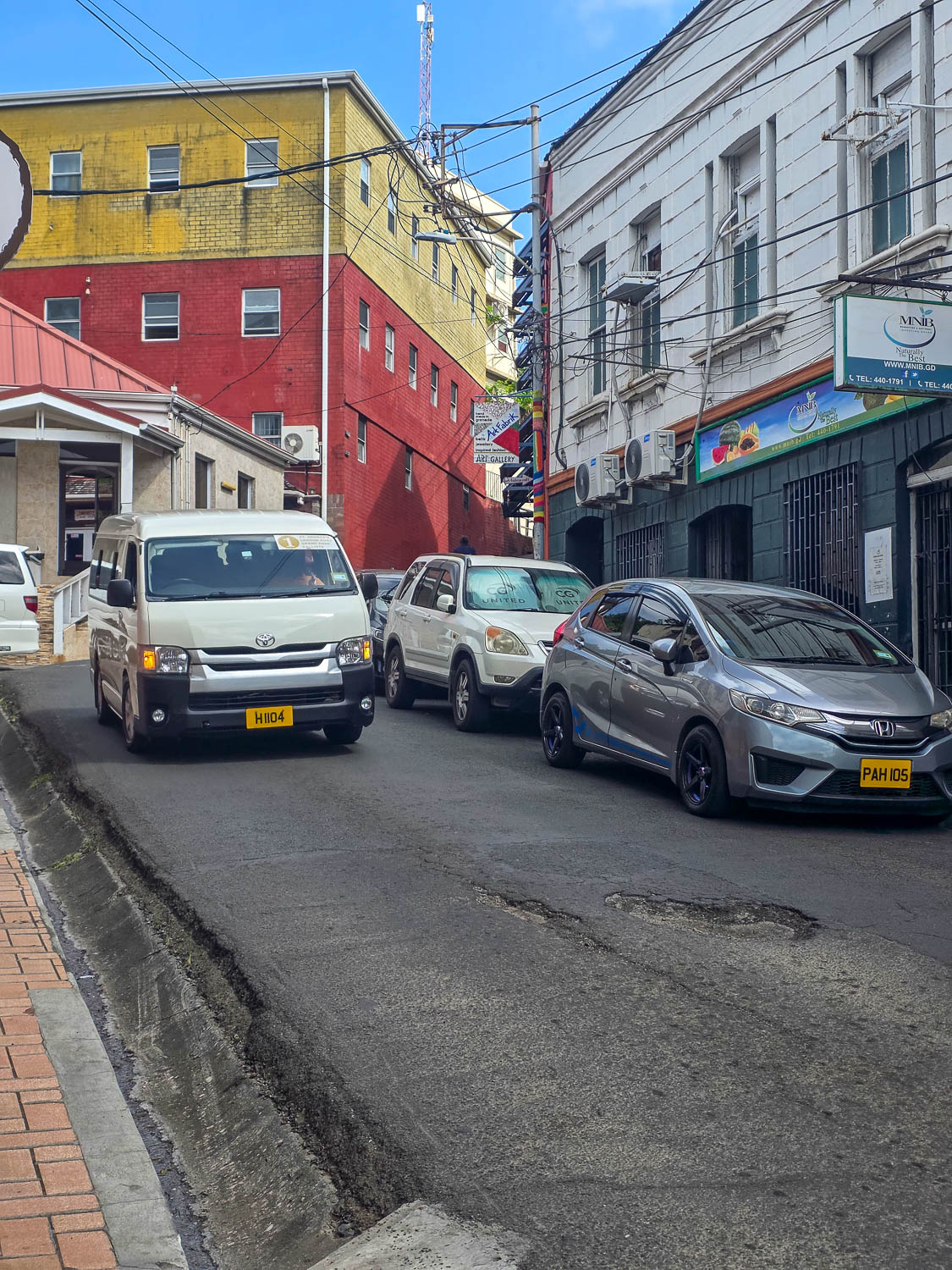
Grenada buses were one of the genuine surprises of my trip.
I went from wondering how anyone was supposed to figure them out to realizing there really wasn’t much to figure out at all. More importantly, riding one gave me something a taxi couldn’t: a brief chance to stop observing Grenada from the outside and become part of everyday Grenadian life, even if only for a few stops.
For me, that’s what made this little Grit adventure worthwhile.
Sometimes getting outside your comfort zone doesn’t require climbing a mountain or jumping from a waterfall.
Sometimes you just have to raise your hand when the bus comes.
Now, let’s go plan your visit!
FAQs
Are Grenada buses safe for tourists?
Yes. Tourists can use Grenada’s local buses, and my daytime experience riding Route 1 between Grand Anse and St. George’s felt safe and comfortable. Use normal travel awareness, keep valuables secure, and tell the conductor where you’re going so they can help you get off at the right stop.
How much do buses cost in Grenada?
Grenada bus fares generally range from EC$2.50 to EC$6.50, depending on the distance traveled. My Route 1 trip between Grand Anse and St. George’s cost EC$2.50—about US$1. Carry small Eastern Caribbean dollar bills to make paying the conductor easy.
How do you catch a bus in Grenada?
Look for the route number and destination displayed in the front windshield. You can wait at a designated bus stop or, along established routes, raise your hand to flag down an approaching bus. Once aboard, tell the conductor where you’re going and they’ll help you know where to get off.
Which bus goes from Grand Anse to St. George’s?
Route 1 connects the Grand Anse area with St. George’s and is one of the most useful routes for visitors staying near Grand Anse Beach. Buses travel along the main road through the Grand Anse area and terminate in St. George’s, making Route 1 an inexpensive alternative to taking a taxi between the two areas.
Do Grenada buses have a schedule?
Grenada buses don’t operate on the kind of fixed timetable many travelers may be accustomed to. The Grenada Tourism Authority states that local buses operate from 6:00 a.m. to 9:00 p.m., Monday through Saturday, but departures are informal and can depend on passenger demand. Sunday and public-holiday service may be much more limited, so don’t rely on catching a specific bus—or the last bus of the day.
Explore More Of Grenada
No posts