I was both excited and nervous when Beck suggested a recent European trip. This would be my first time in Europe, and of course, I immediately thought of France, Italy, or Spain.
But Beck’s travel rule is to visit at least two new countries per year, and with over 140 countries already visited, those options were off the list.
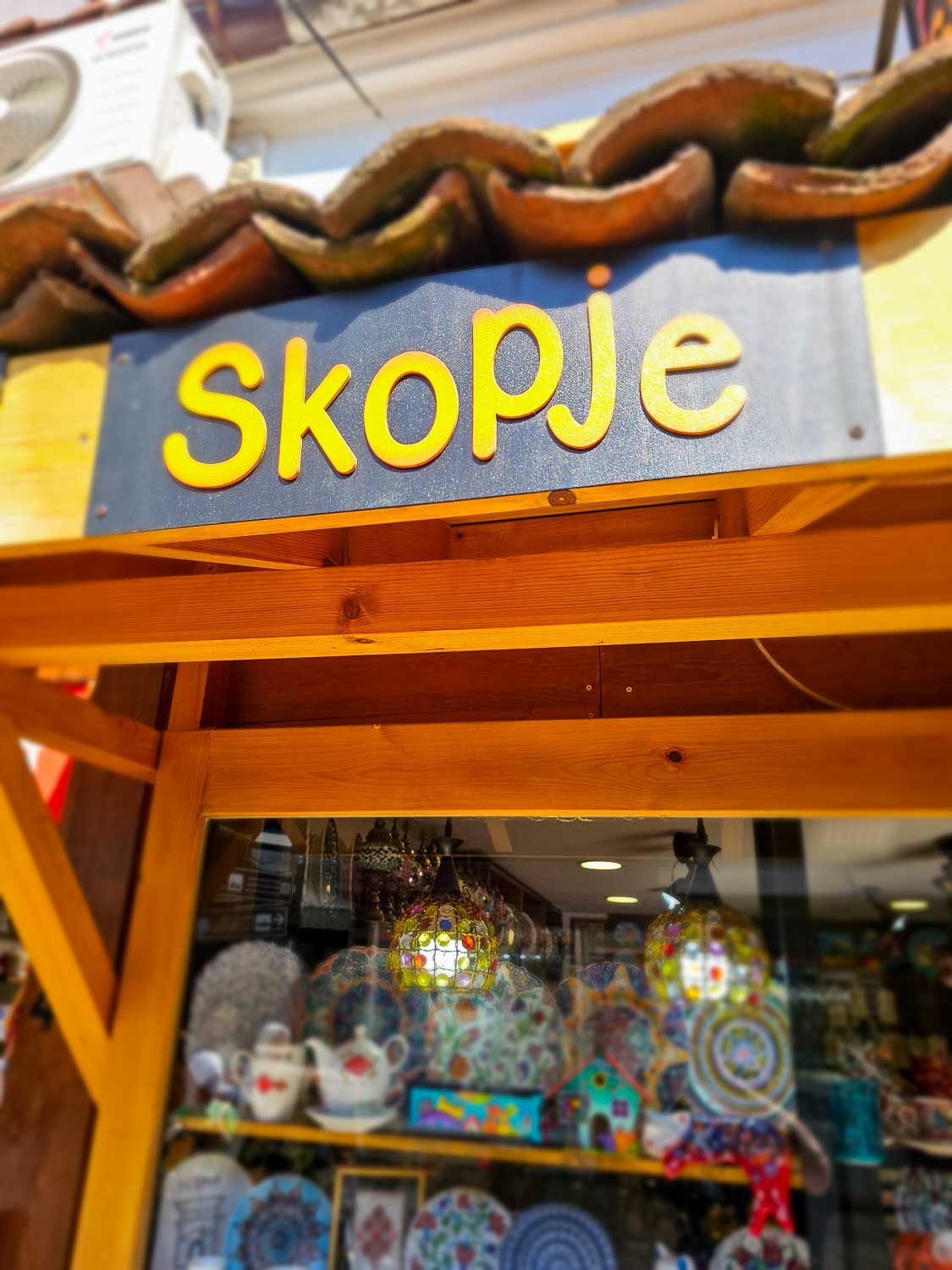
So we went to North Macedonia—an adventure we would never forget. First stop was Skopje, the capital of North Macedonia.
Visit Skopje for history, art and nature no matter your travel style. This guide covers the top things to do, landmarks, day trips, hidden spots and useful travel tips for your trip to this crazy and eccentric city, known as the ‘concrete city.’
Quick Tips
Here are some insider tips to help you make the most of your visit to Skopje
- Walk: The city center is walkable but be prepared for crowds and uneven sidewalks. Walking will help you soak up the atmosphere and find hidden gems. Also walk along the Vardar River.
- Eat Local: Don’t miss local dishes like shopska salad, kebapi and burek. These are the real deal of Macedonian cuisine.
- Old Bazaar: This maze of narrow streets and alleys is full of shops, cafes and restaurants. Perfect place to find unique souvenirs and experience traditional Macedonian hospitality.
- Mother Teresa Memorial House: Take a moment to visit this heartfelt museum honoring Skopje’s own Saint Mother Teresa, and reflect on her compassion and lasting legacy.
- Best time to visit: Spring and autumn are the best time to visit Skopje.
Follow these tips and you’ll be ready to visit Skopje and enjoy.
Plan Your Trip
Some of the links in this post might earn us a small commission if you make a purchase – but don’t worry, it won’t cost you anything extra! Supporting us this way helps us continue sharing our best travel content and tips. See our full disclosures for details. Thanks a million, and happy travels!
Planning to visit Skopje, North Macedonia? Take advantage of the following resources curated just for you.
Book Your Skopje Adventure Now!
Prefer additional options? Click below to discover more incredible experiences tailored just for you!
Choose from top attractions in Skopje, North Macedonia.
Or …
Looking for more travel essentials?
Check out our top picks below. For additional trusted tools, gear, and resources we personally use, visit our Travel Resources page to make planning your adventure effortless.
How to Get to Skopje, North Macedonia
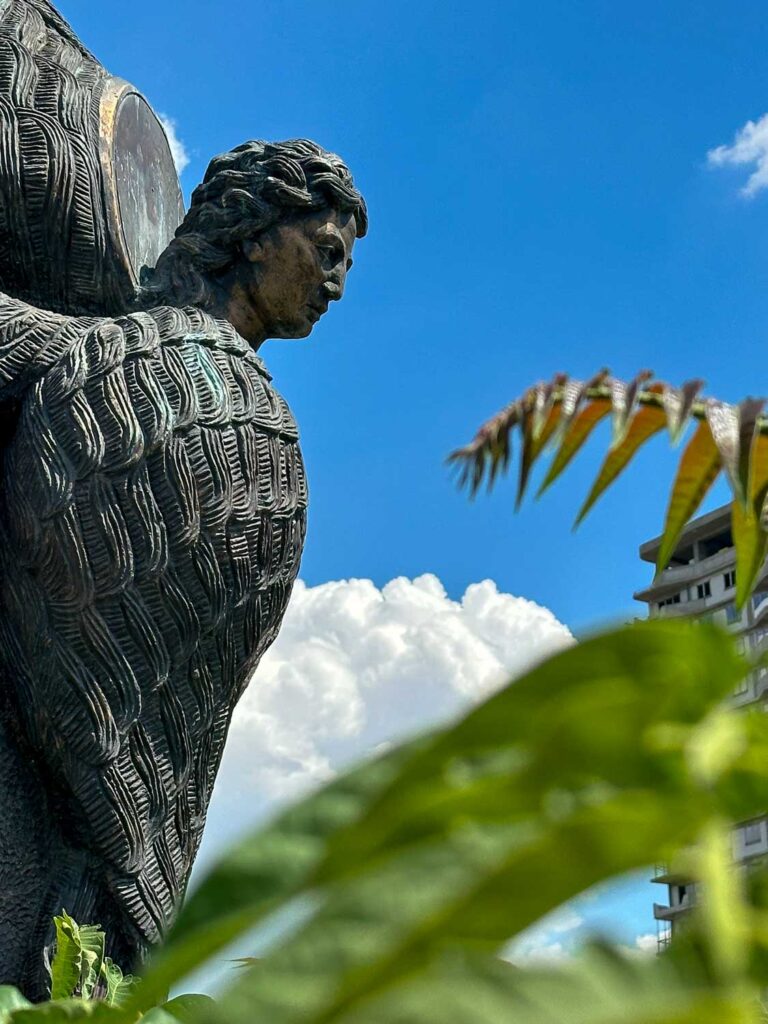
Skopje, the peculiar capital of North Macedonia is easily accessible by air, land or bus. The city is served by Skopje International Airport located about 20 km southeast of the city center. This airport receives flights from major European cities like London, Paris and Amsterdam so it’s a great entry point for international travelers.
If you’re coming from neighboring countries, Skopje is well connected by bus and train. You can take a bus or train from Bulgaria, Serbia or Greece and arrive at the main bus station in the city center. The bus station is a busy hub with frequent services to and from other major cities in North Macedonia so you can easily plan your trip.
Once you’re in Skopje, getting around is easy. The city has a good public transportation system with buses and taxis. But the city center is very walkable with most of the top attractions within walking distance of each other. Walking around Skopje is a pleasure. You can soak up the atmosphere and find hidden gems along the way.
Where to Stay in Skopje
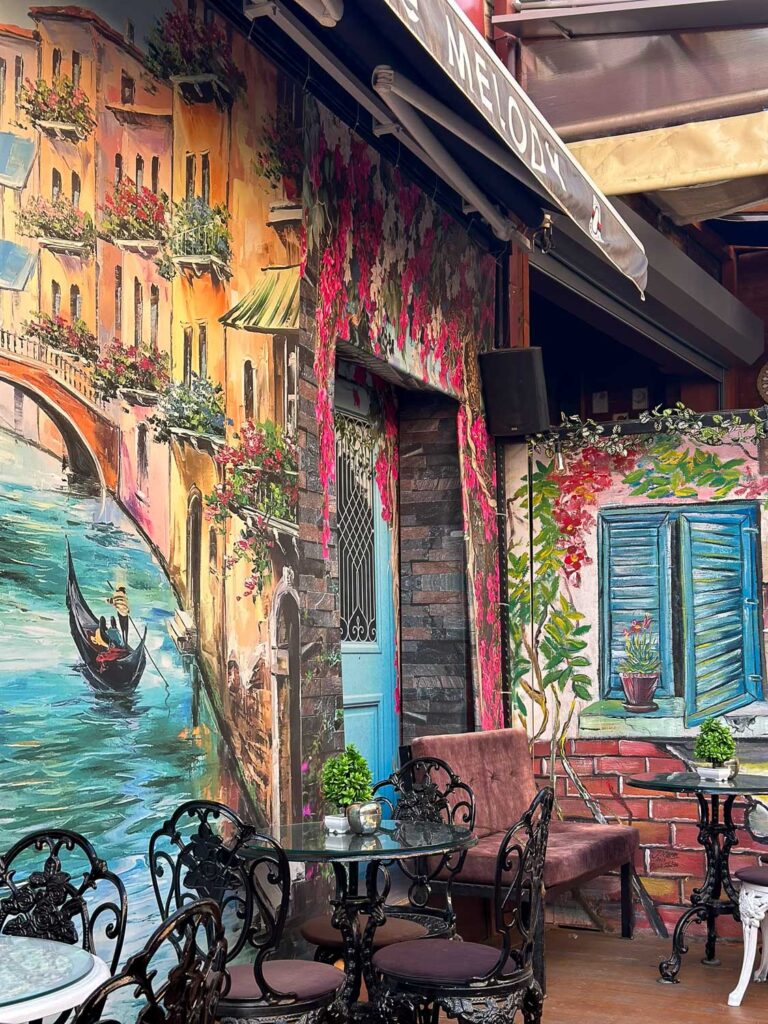
When it comes to accommodations Skopje has something for every budget and taste. Whether you want a luxurious stay or a budget hostel you’ll find something that suits you.
If you want to be in the middle of the action staying in the city center is the way to go. Here you’ll be close to most of Skopje’s main attractions, Macedonia Square and the Old Bazaar. Popular hotels in the city center are Hotel Arka which has stunning panoramic views of the city and Hotel Senigallia a boat shaped hotel located right in the heart of the city.
We highly recommend the DoubleTree by Hilton Skopje. The authentic buffet breakfast was incredible!
If you want a more local experience consider staying in one of Skopje’s surrounding neighborhoods. These areas are quieter and you can experience the city like a local. Hostels and guesthouses are also great for budget travelers, affordable and social accommodations.
No matter where you choose to stay Skopje will make you feel at home.
First Impressions of Skopje
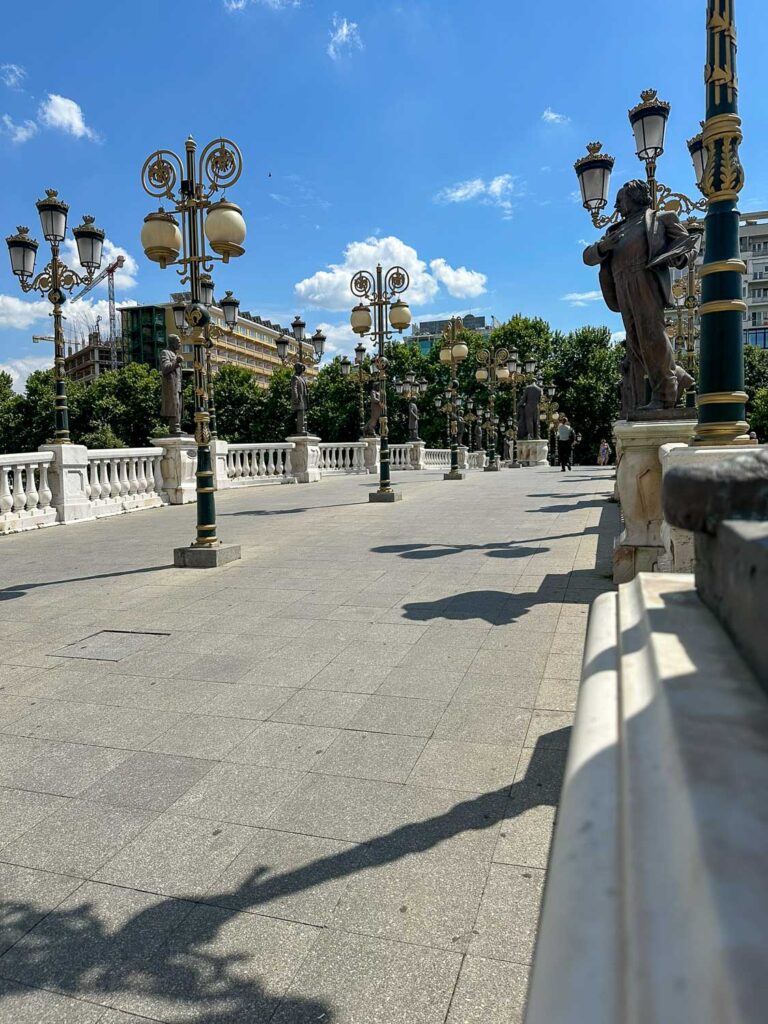
Once we settled in the hotel we decided to head to the city center. Another Beck rule is that if we can walk we will. With the center just a few km away we set off on foot to start our adventure. We exited the back of the hotel and soon found ourselves by the Vardar River.
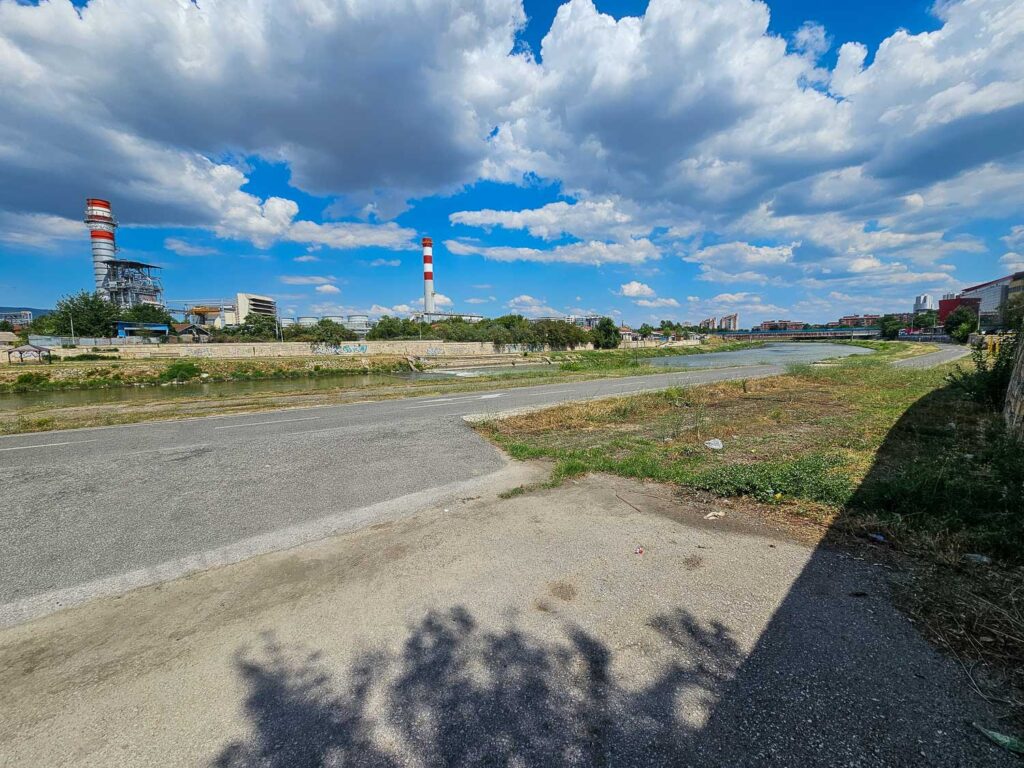
It was rough and unglamorous. The path was deserted with weeds growing along the banks and trash scattered here and there. Unlike the more touristy areas near Macedonia Square this is a local route to get to and from the city.
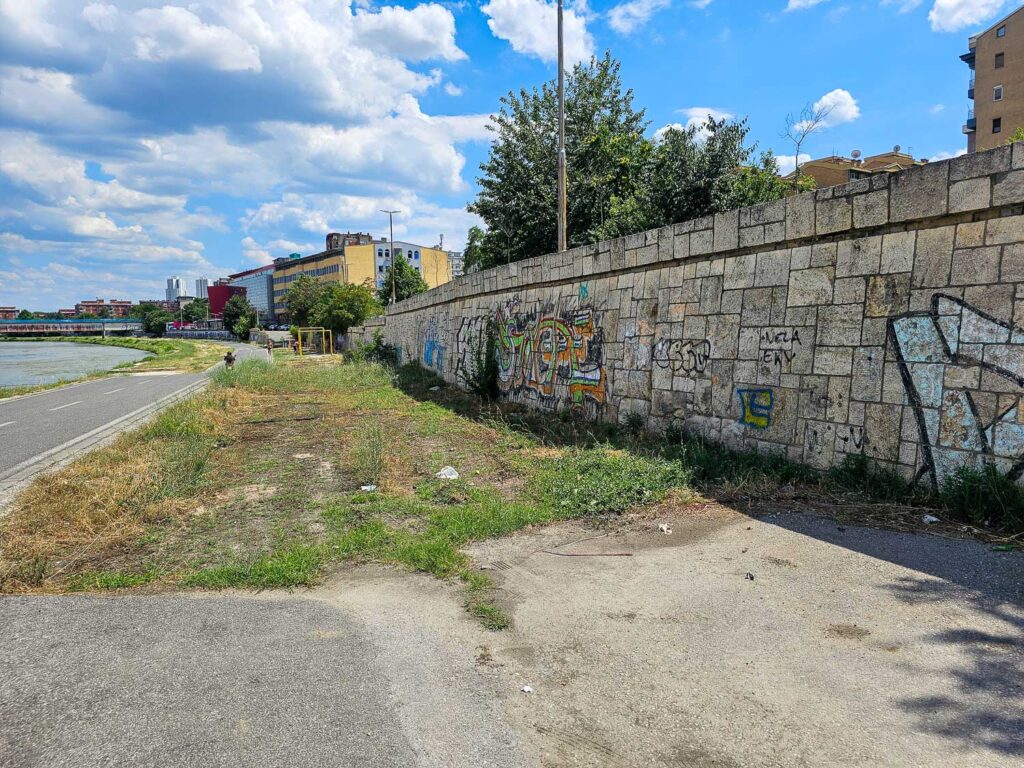
Along the way street art was splashed on the walls, adding some color to the grey landscape. Not listed in any tourist guidebook this path gave us a real Skopje, where the contrasts of the city – old and new, polished and rough – were on full display.
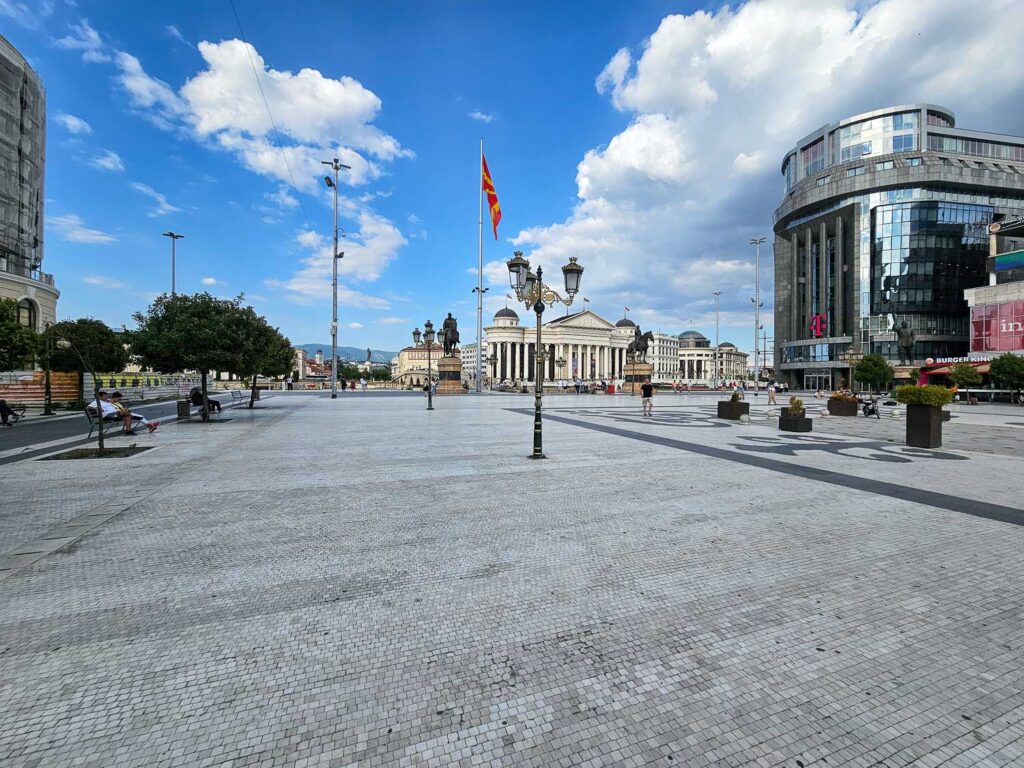
As we arrived in the city center we were amazed and confused. The sudden transition from the grey riverside path to the grandeur of Macedonia Square was exhilarating and disorienting. Statues, fountains and neoclassical buildings surrounded us and we were wondering “What is this?” The monuments and statues, reflecting North Macedonian history, added to the wonder and highlighted the complexity of the city’s story.
Skopje: A City of Contrasts
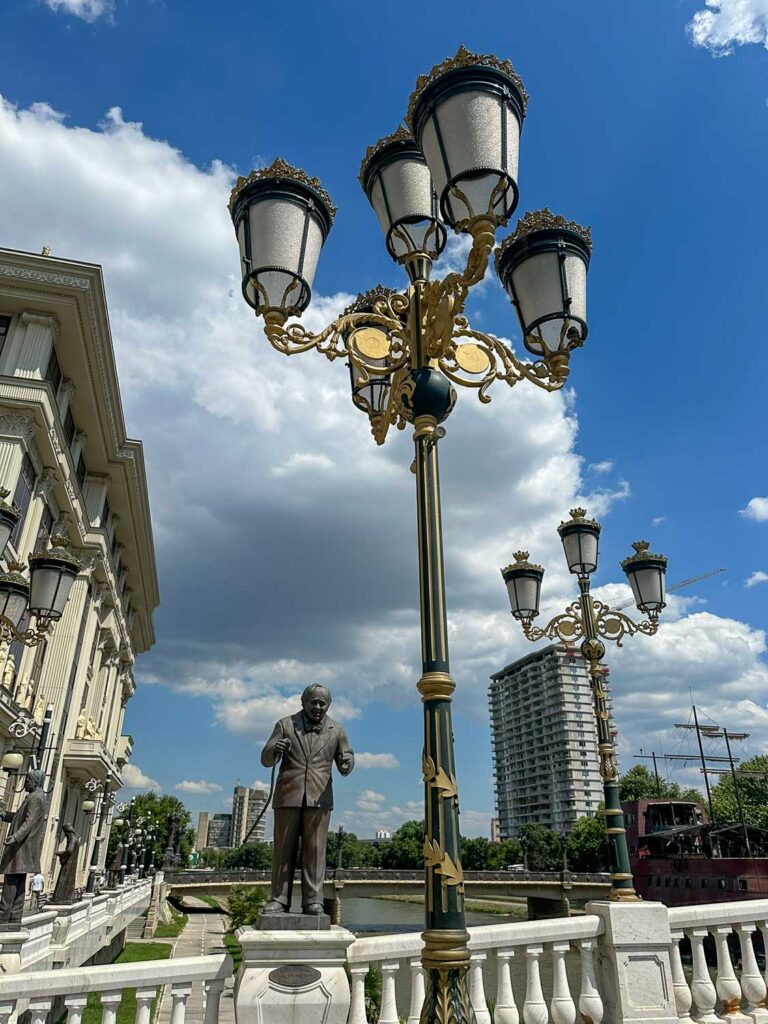
Skopje, the capital of North Macedonia, is where history meets modern life. Ottoman mosques, Byzantine churches, and Yugoslav-era brutalist buildings stand beside sleek new structures from the Skopje 2014 project. Each landmark reveals part of the city’s story. Walking through the center, you’ll find ancient sites, lively cafes, and colorful markets. The marks of the 1963 earthquake remain, yet Skopje continues to reinvent itself—a mix of old and new that captivates every visitor.
Our exploration began here.
Cross the Famous Stone Bridge (Kamen Most)
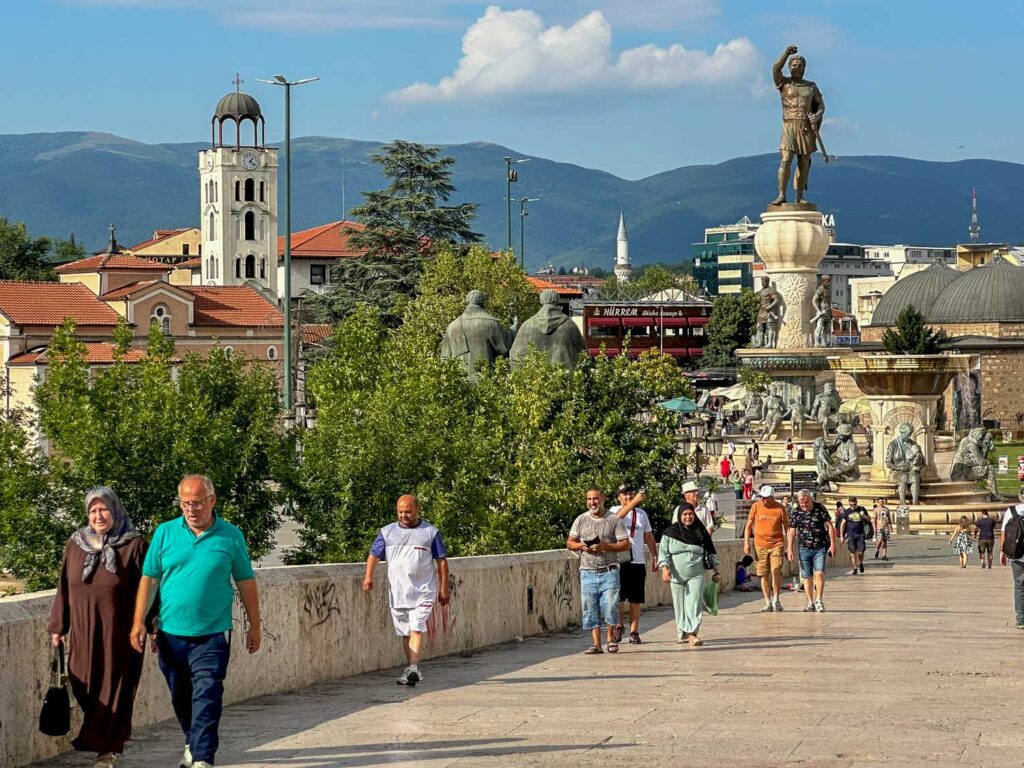
The Stone Bridge was built in the 15th century and is one of Skopje’s symbols. It crosses the Vardar River and connects the old and new part of the city. Walking across the bridge will give you great views of the river banks and the Kale Fortress on the hill above the city, perfect for photography especially at sunset when the minarets and statues turn golden.
The Stone Bridge in Skopje is a crossroads for travelers and offers a choice. On one side is the lively Old Bazaar with its narrow streets, traditional shops and Ottoman heritage; on the other side is the modern Macedonian Square with grand monuments and busy cafes.
For us history won so we started in the Old Bazaar and wandered through its timelessness, culture and — of course — food and shops. Getting lost in the Old Bazaar was the best part of our day.
Skopje’s Old Bazaar: A Living Museum
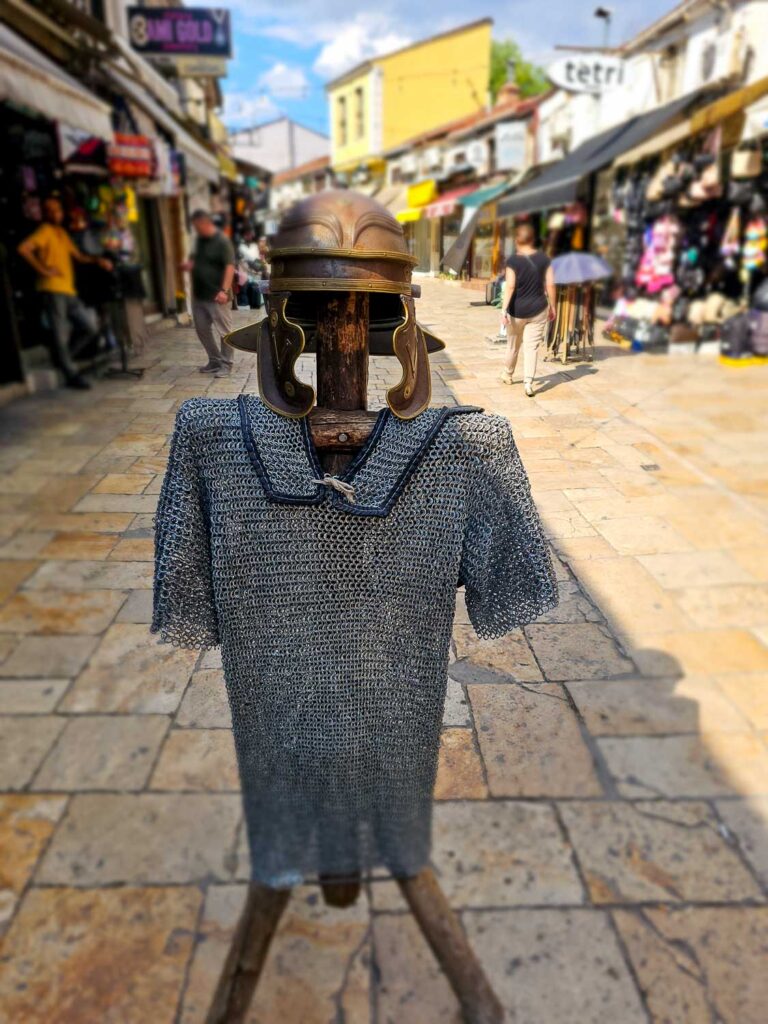
The Old Bazaar in Skopje, one of the largest bazaars in the Balkans, is more than a market: it’s a journey through centuries of history and culture. We spent a lot of time wandering its narrow cobblestone streets which are alive with daily life. The mix of Ottoman and Byzantine is visible in the mosques, ancient hammams and intricately decorated shops that sell everything from traditional crafts to modern goods.
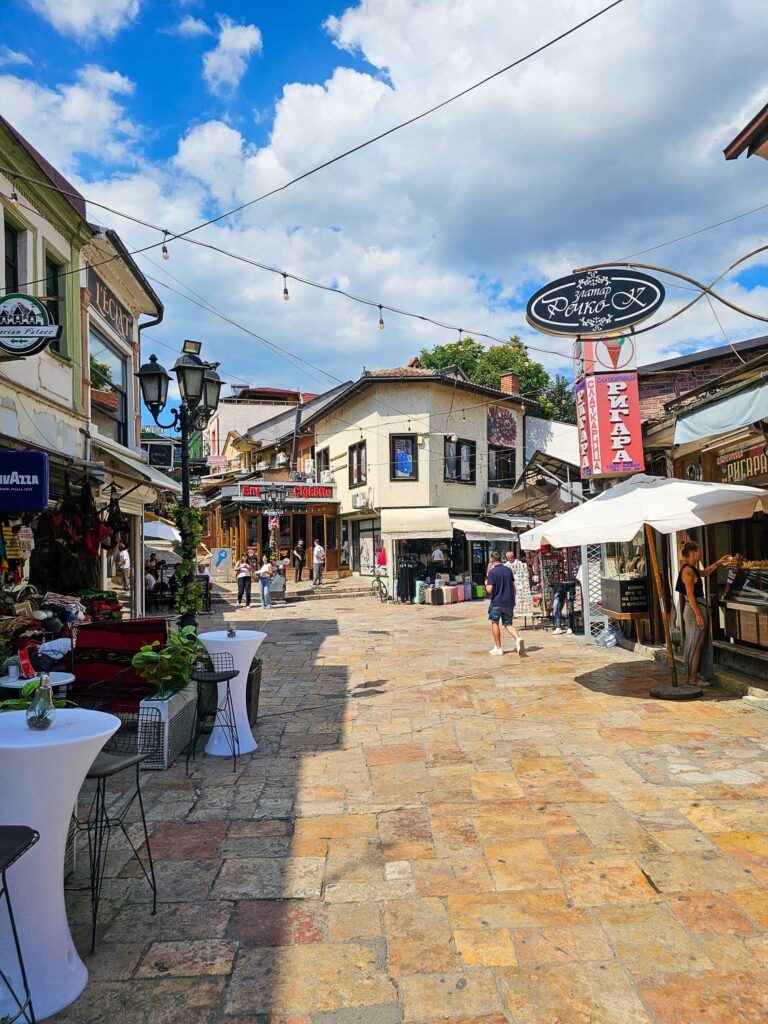
The history of Skopje’s Old Bazaar goes back over seven centuries making it one of the most important and longest standing cultural landmarks in the region. Established during the Ottoman Empire the bazaar was a commercial and social hub where merchants from all over the Balkans and beyond would gather to exchange goods, ideas and traditions. Throughout its long history the bazaar has seen periods of prosperity, earthquakes and reconstruction but has always been at the heart of Skopje’s identity. The mosques, including the Mustapha Pasha Mosque and hammams like the Daut Pasha Hammam are a reminder of the Ottoman legacy that shaped the city’s architecture and culture.
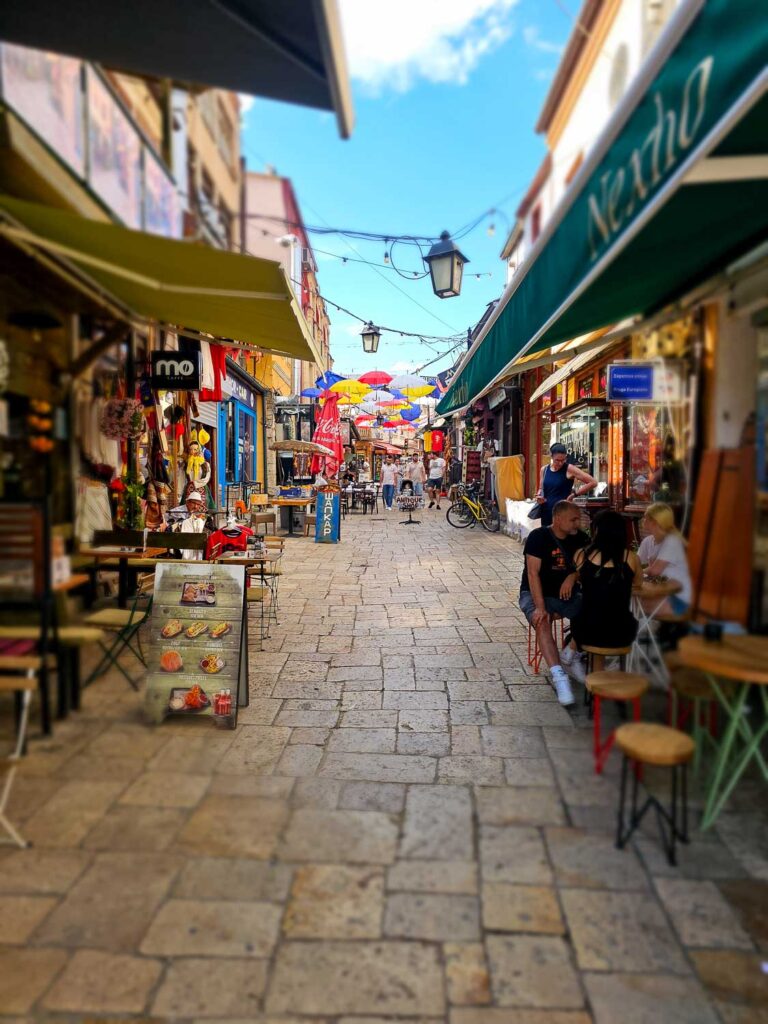
Wandering through the Old Bazaar feels like going back in time where the echoes of past centuries are still alive today. It’s here that visitors can connect with Skopje’s rich and varied heritage.
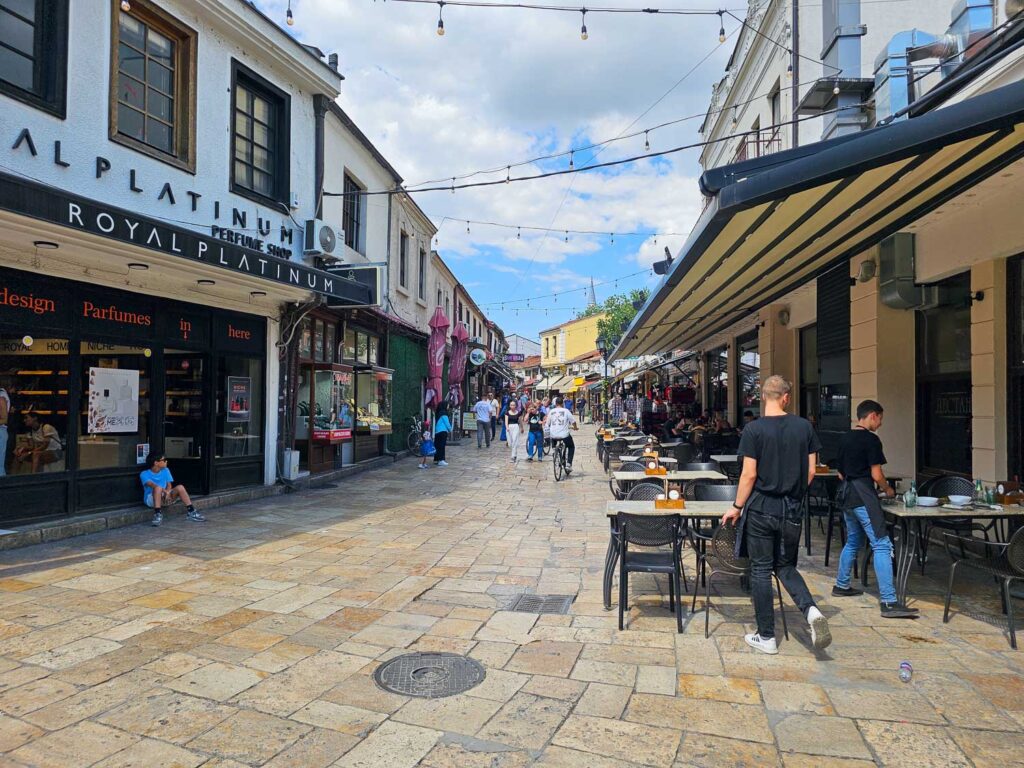
The Old Bazaar is also a sensory experience. We enjoyed the smells of grilled meat and fresh herbs from the local eateries and tried authentic Macedonian dishes like shopska salad, kebapi and tavce gravce. Each bite was a taste of the region’s specialties where fresh and simple ingredients are mixed into flavours that are familiar and new.
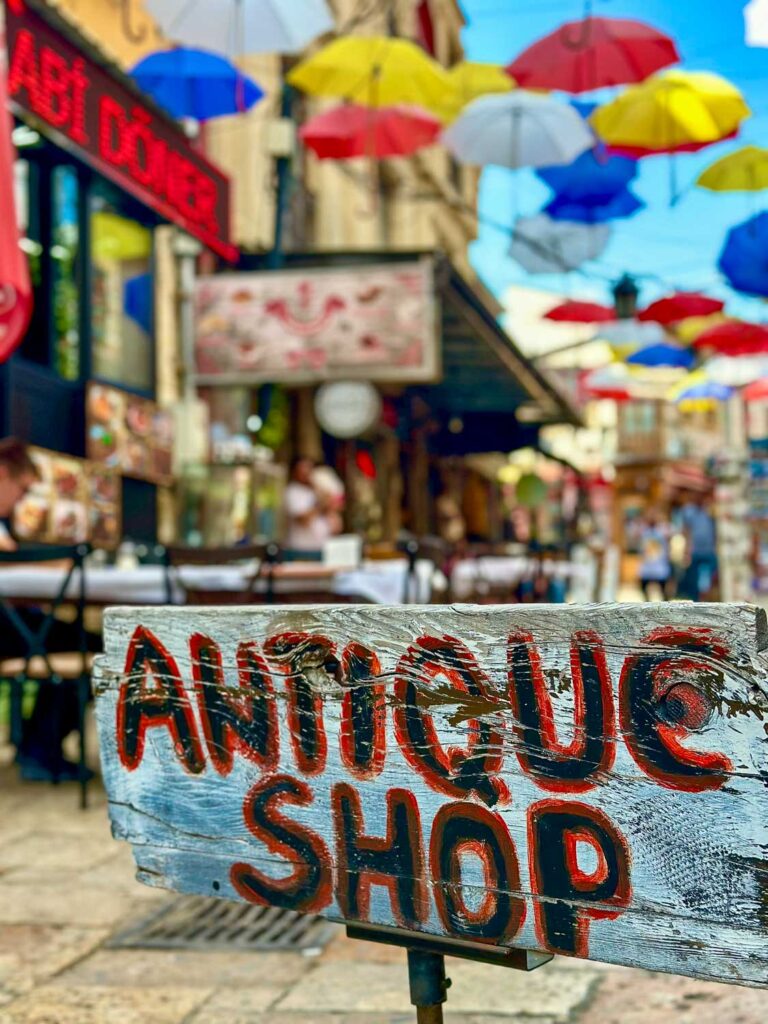
And then there were the artisans with their handmade jewellery, textiles and ceramics – each piece had a story to tell. There’s a sense of timelessness here where past and present coexist. As we wandered through the Old Bazaar we saw the real Skopje: it was immersive and enriching and we took away more than just souvenirs … we took away a piece of the city’s heart.
Skopje’s Traditional Food
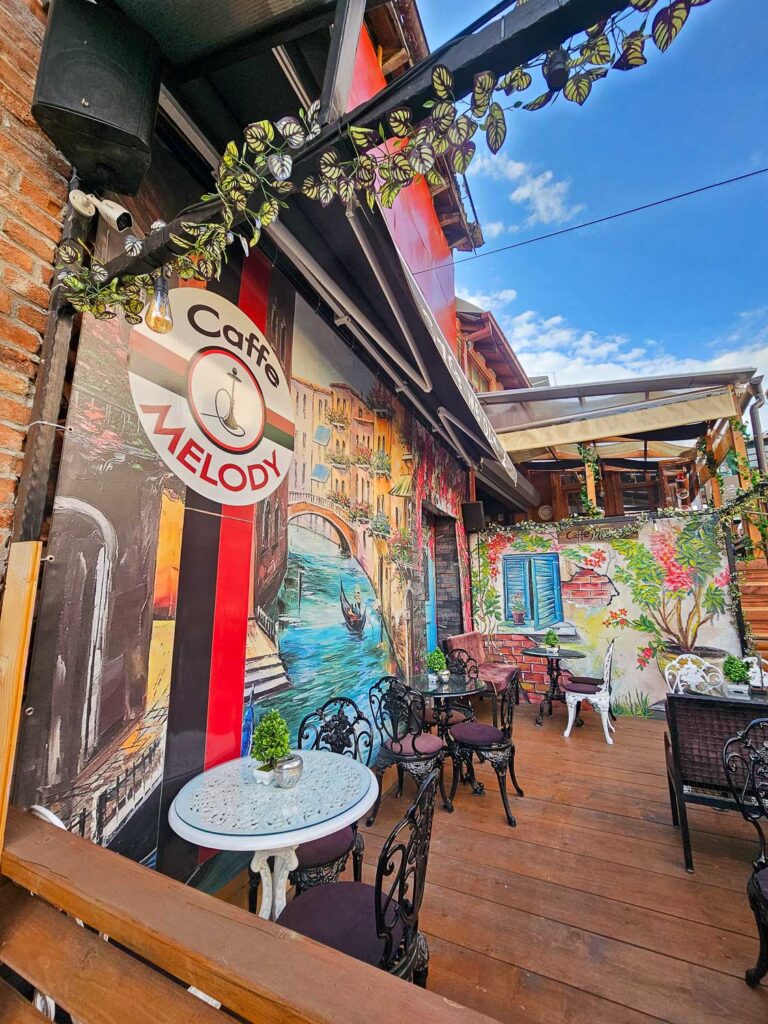
Skopje’s traditional cuisine is a mix of Mediterranean and Balkan flavours with fresh ingredients, herbs and spices. Try shopska salad (a tomato, cucumber and feta cheese mix), tavce gravce (a bean stew with crusty bread) and kebapi (small juicy sausages of grilled beef, pork and lamb). We also tried traditional Macedonian pastries like burek and banitsa filled with cheese, spinach and/or minced meat.
For a true Macedonian culinary experience go to the Old Bazaar where you will find traditional restaurants and cafes serving local food. Don’t forget to wash it down with a glass of rakija, the strong fruit brandy that’s an integral part of Macedonian culture.
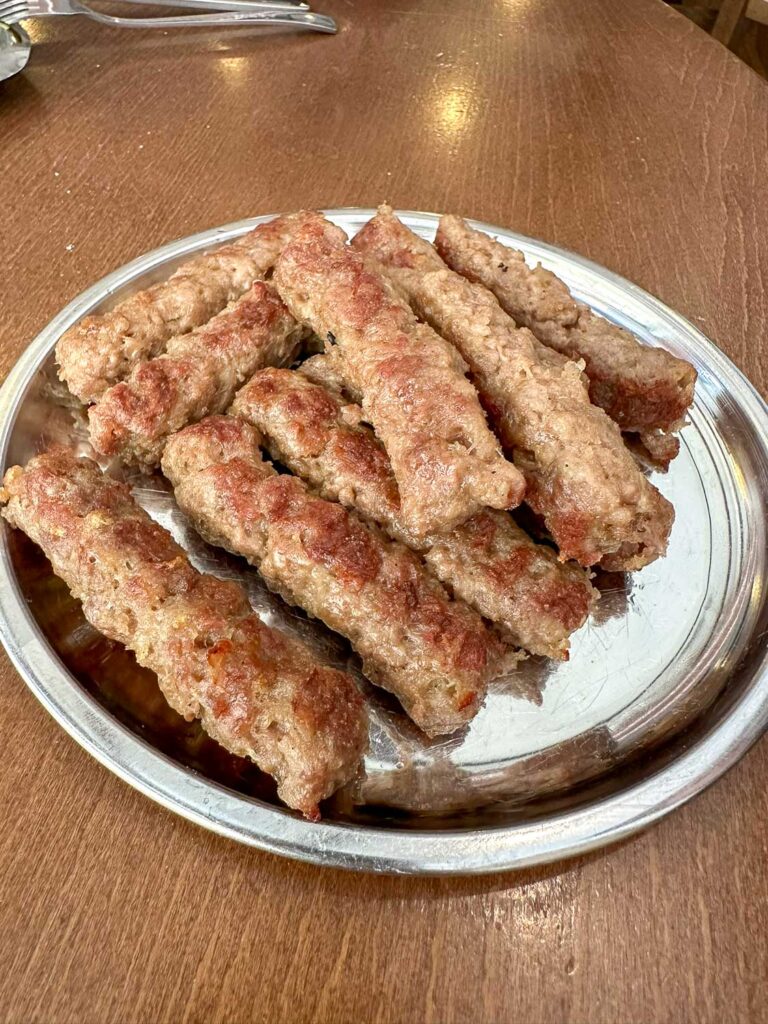
Fun fact: Did you know that the word “kebab” and the type of meat it describes varies from country to country (and sometimes even from region to region)? In Macedonia, kebaps are small homemade sausages traditionally made with beef, lamb and pork and seasoned with paprika, garlic, red pepper flakes and sometimes other spices.
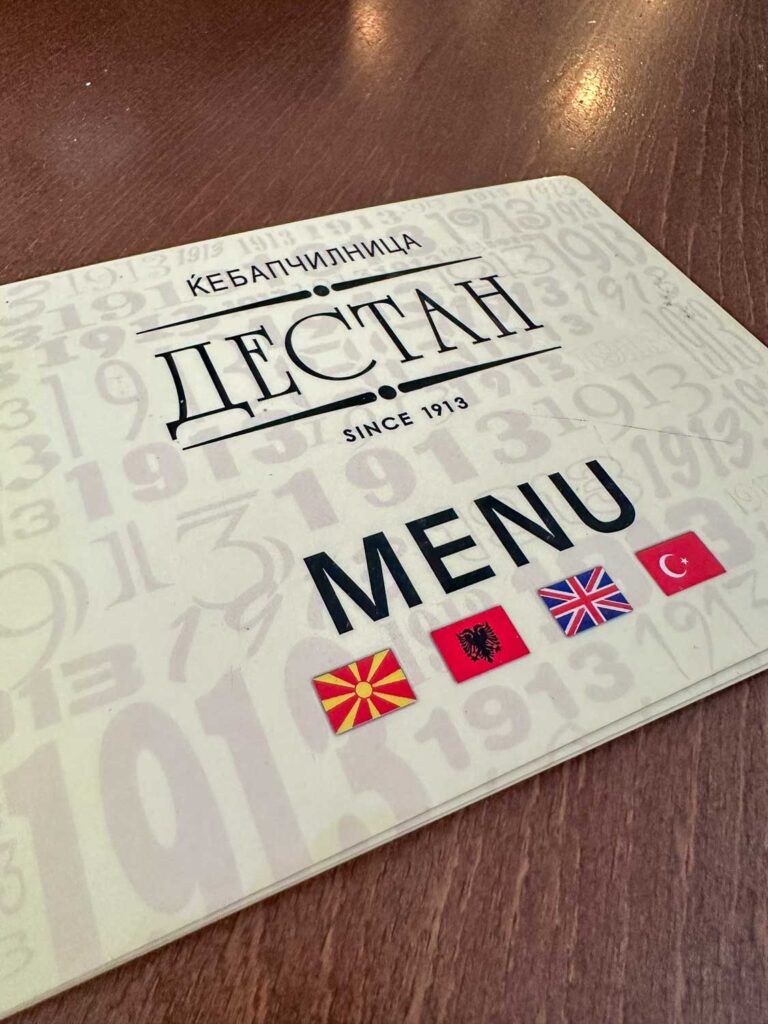
Our first meal in Macedonia was at the Destan Restaurant in the Old Bazaar. We stopped here based on a guidebook recommendation and were greeted by friendly, English-speaking staff. The menu was small but the food and drinks were served quickly. We loved that Destan wasn’t too touristy – locals sat inside and outside the restaurant and went about their daily business. We also enjoyed the music playing overhead.
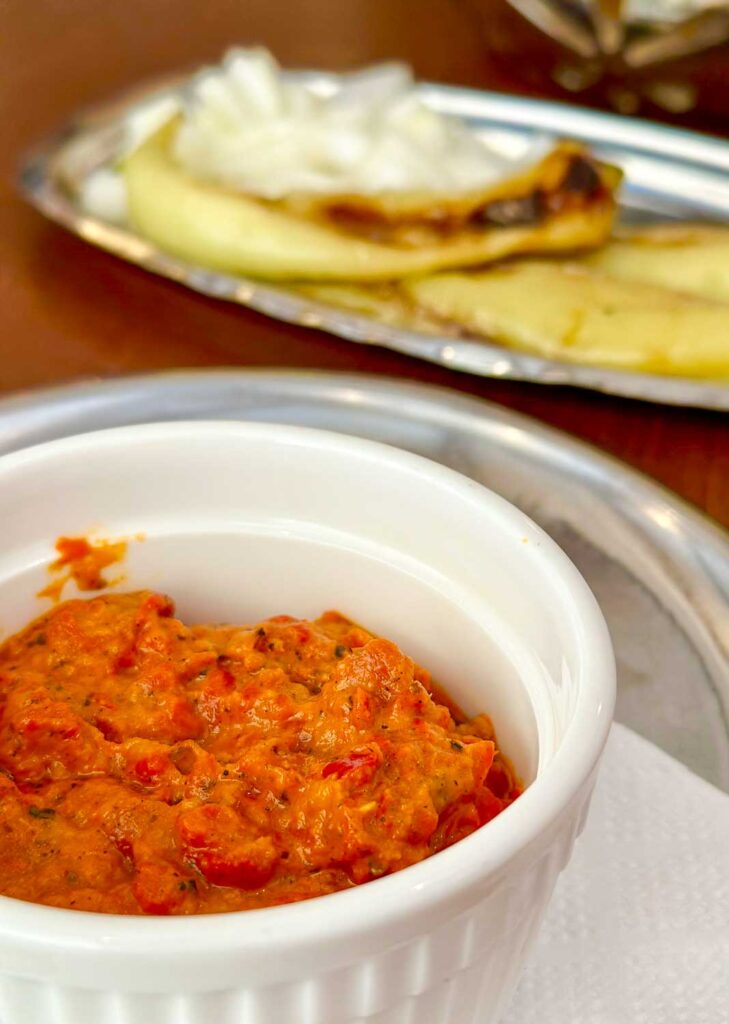
This was our first time trying ayvar, a red pepper relish often made with roasted peppers and eggplant that was served with fresh bread – it was delicious! We loved it so much we went back to the same grocery store as soon as we got home and bought some. Unfortunately it didn’t compare to the fresh, vibrant flavour we had that day in Skopje.
Wherever you eat in Skopje it will leave its mark.
We could have spent more time in the Old Bazaar but it was time to cross the Stone Bridge and head into Macedonia Square.
Macedonia Square and Monuments
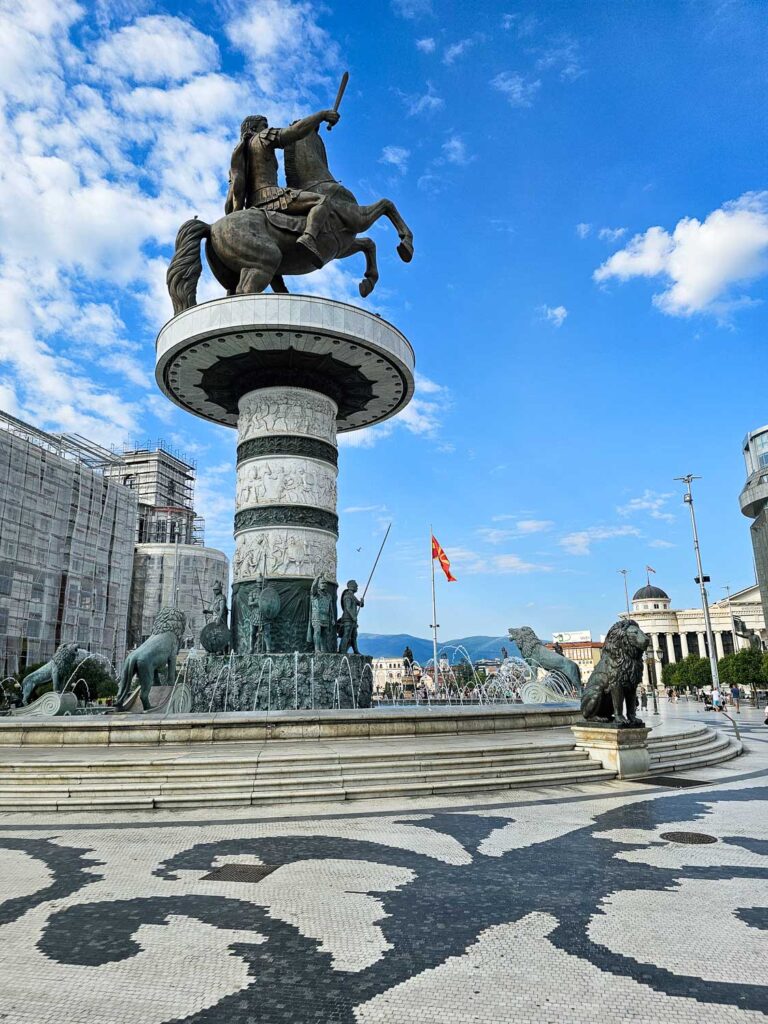
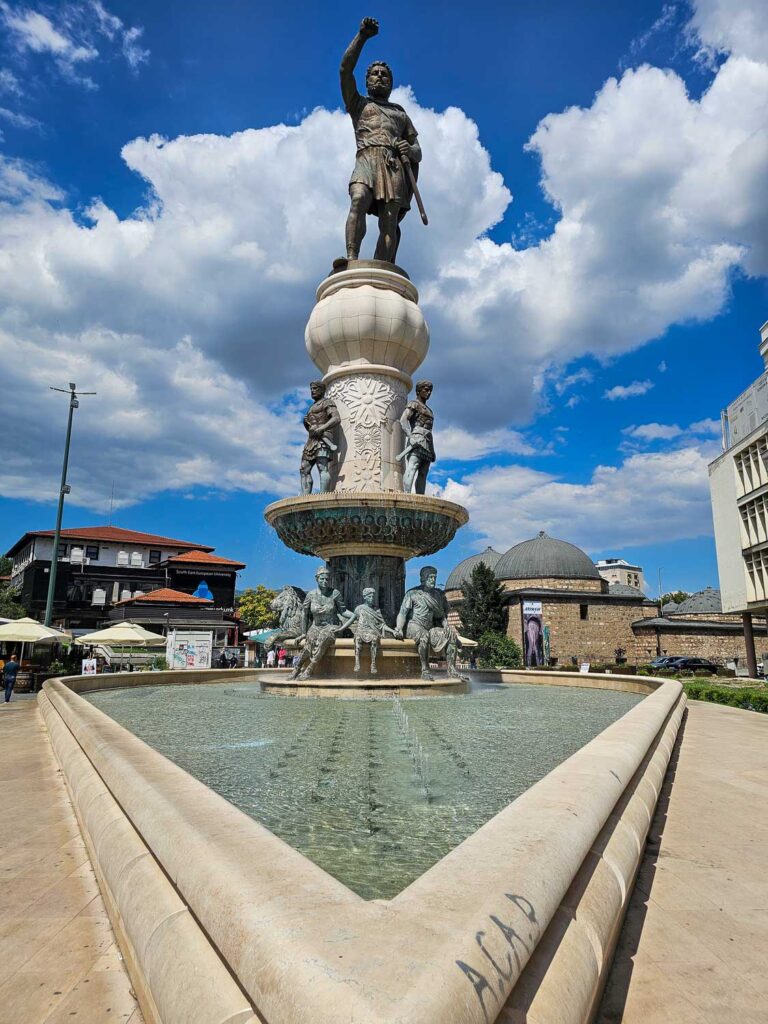
Macedonia Square is the biggest public square in North Macedonia. This is the city’s main meeting point with street performers, cafes and shops for locals and tourists. The main attraction of the square is the giant statue of Alexander the Great — the “warrior on a horse” and a statement about the country’s claims.
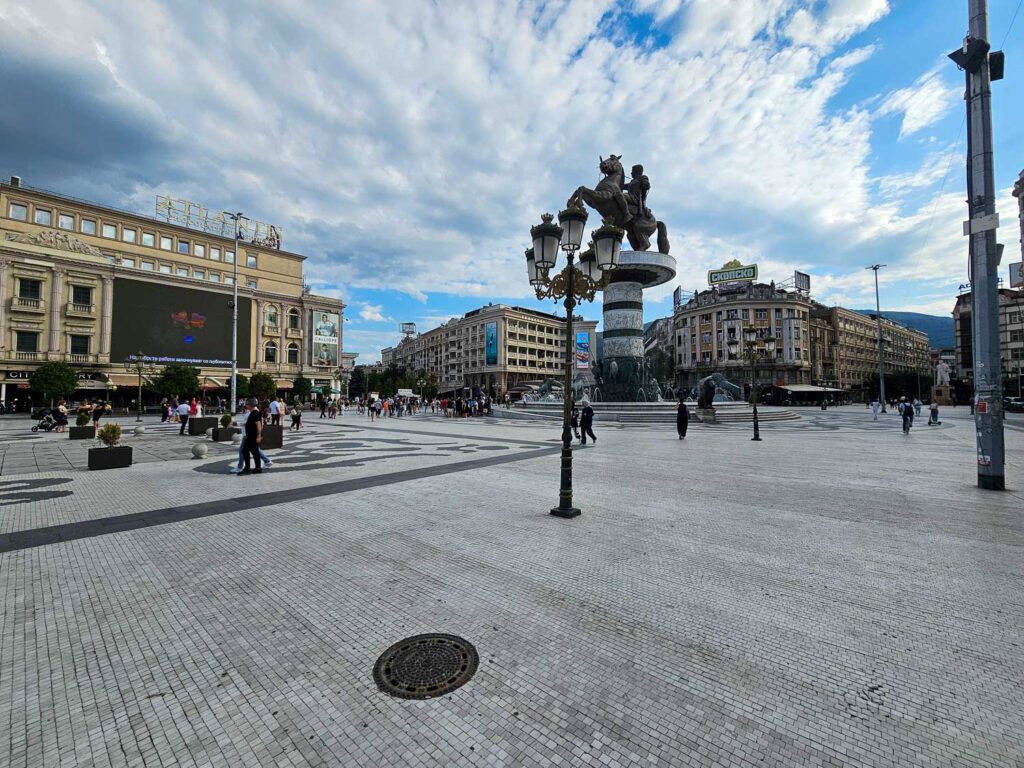
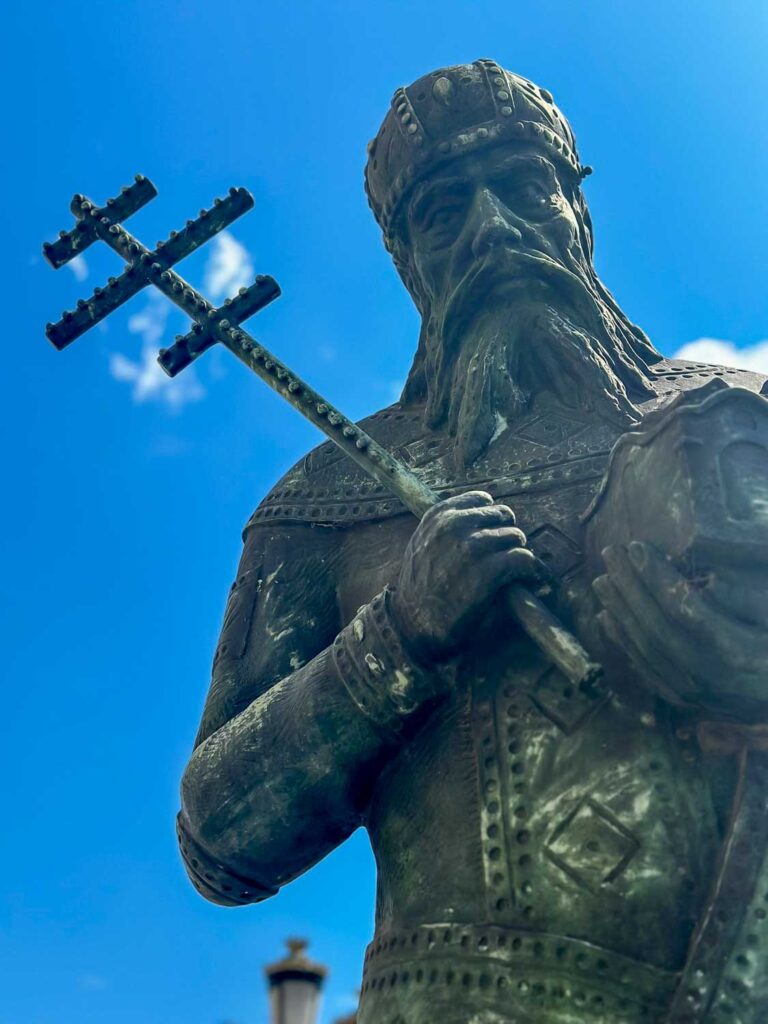
In fact Skopje is called the “City of Statues” and for good reason. Other statues and monuments in the square represent important figures and events and give a sometimes disputed view of the city’s history.
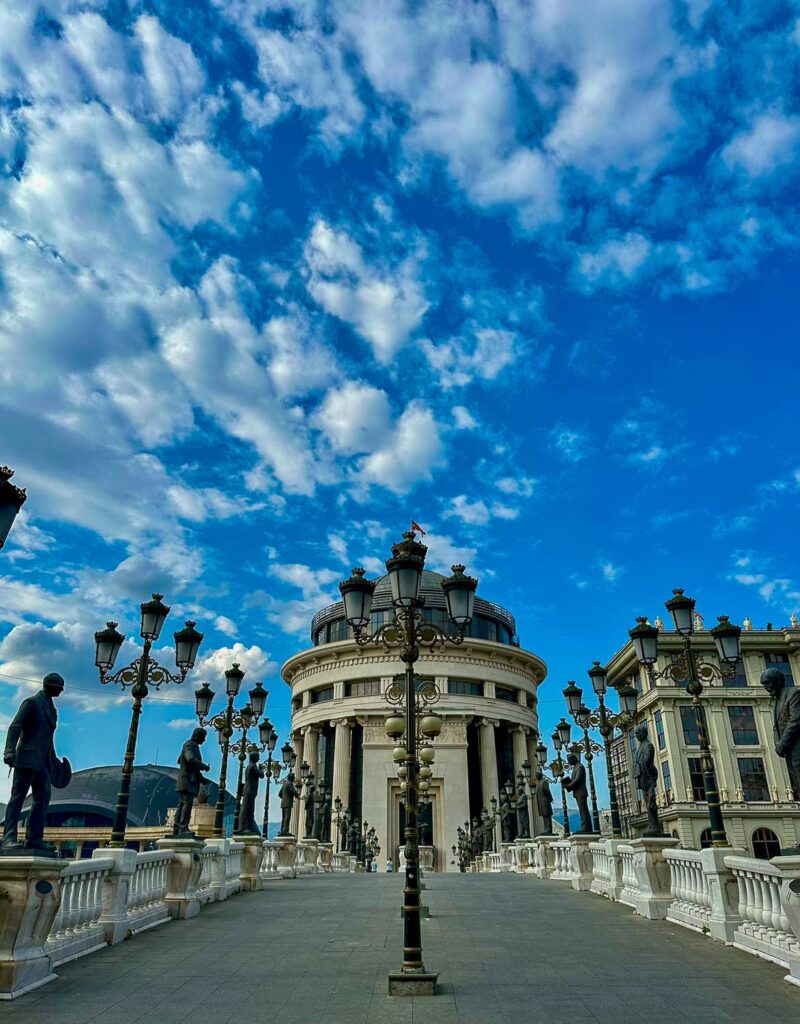
Near the Old Bazaar is the “Monument to the Fallen Heroes of Macedonia” honouring those who fought for the country’s independence. It’s near the Old Bazaar and is a very moving reminder of the nation’s struggles and achievements. Don’t miss the “Art Bridge” with statues of famous Macedonian artists and musicians – a must see for art lovers.
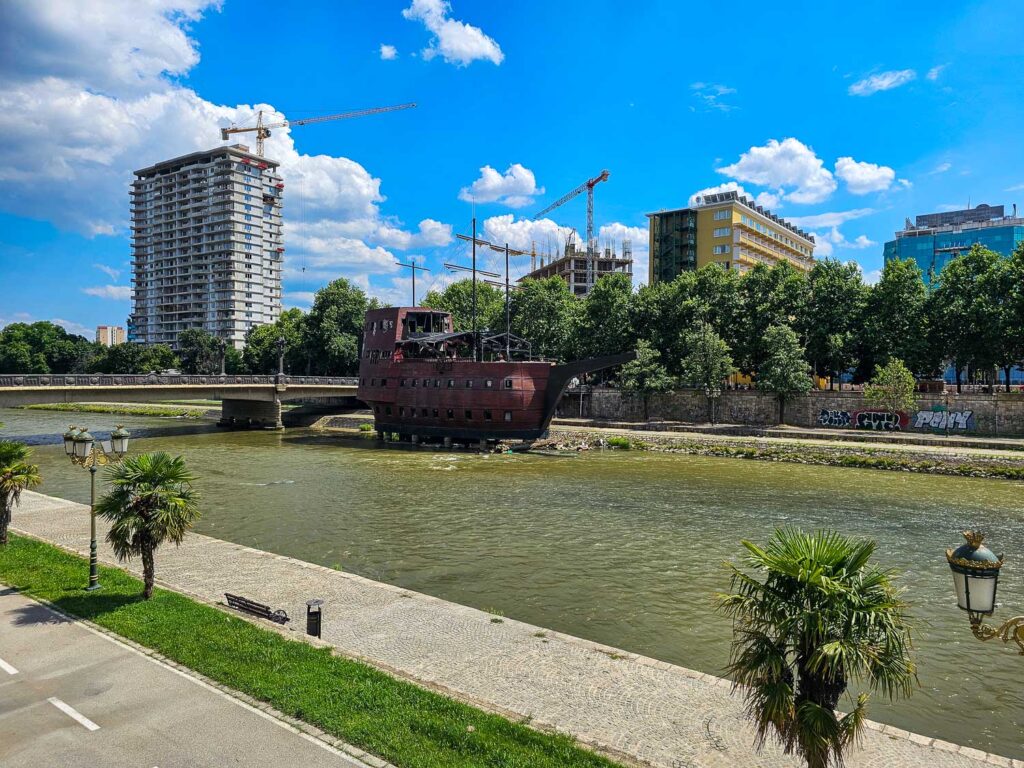
For a laugh check out the “Pirate Ship” restaurant on the Vardar River. Not a statue but a nice addition to the city’s scenery. Whether you’re a history buff or just love quirky art Skopje’s statues have something for everyone.
From the square you can easily access other main attractions; the main bus station and Skopje’s airport are just a short ride away so the square is a central point for visitors.
Skopje Museums
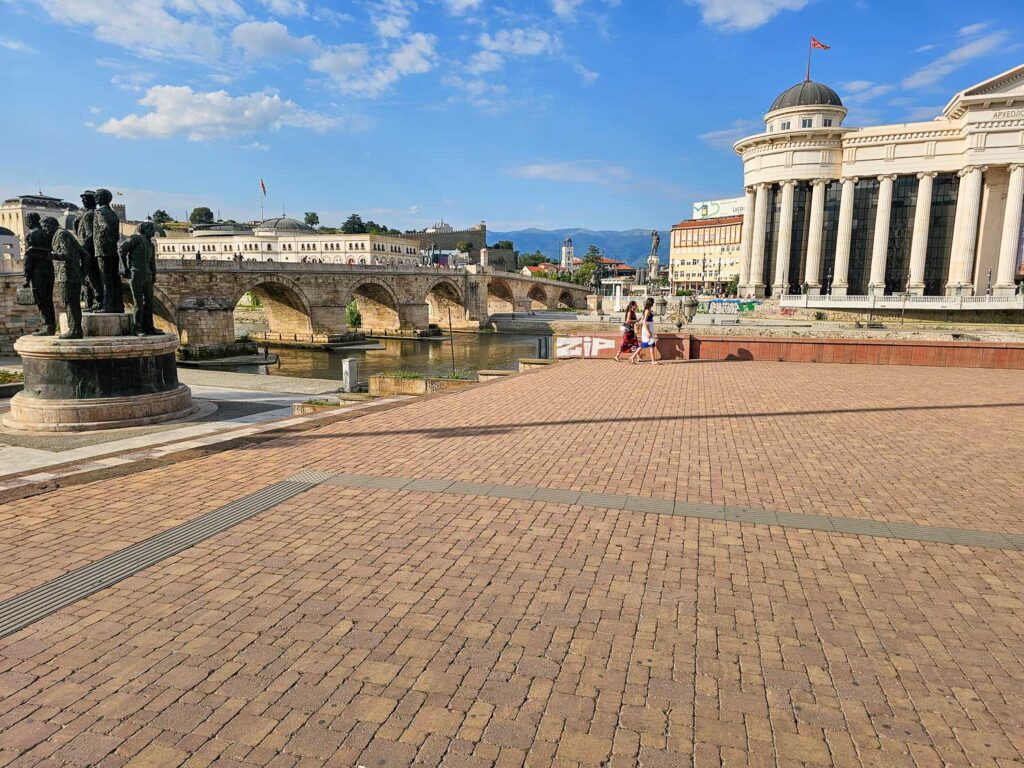
Museum of Macedonian Struggle: This small museum shows the struggle for Macedonia’s independence from breaking free from Ottoman rule to separating from Yugoslavia in 1991. Both guided and self-guided tours are available. Near the Art Bridge this museum also has exhibits about the Ilinden Uprising in 1903 and a powerful visual story of the nation’s fight for freedom.
Holocaust Memorial Center: Behind the Museum of Macedonian Struggle is this museum dedicated to preserving the memory of the Jewish community in Skopje and the tragic fate of the Macedonian Jews during World War II. It tells the story of a once thriving Jewish population, their contribution to the region and the devastation they faced during the Holocaust. It also gives a broader historical context of Macedonia’s role in World War II and the deportation of over 7,000 Macedonian Jews to concentration camps.
Archaeological Museum of Macedonia: In the centre of Skopje this museum takes you on a journey through the region’s history, with ancient artifacts like coins, jewelry, pottery and statues thousands of years old. A great place to get a deeper understanding of Macedonia’s complex past with well curated exhibits. A must see for history lovers.
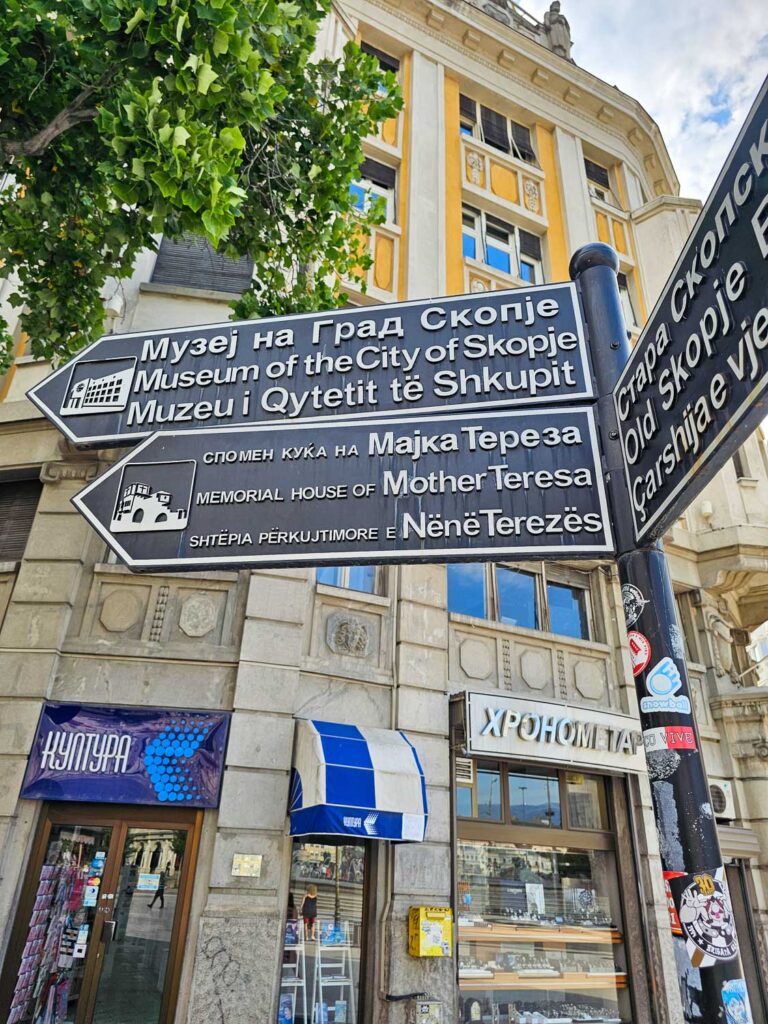
Mother Teresa Memorial House: Also in the centre of Skopje is this tribute to one of the world’s most famous humanitarians. Born in Skopje in 1910 Mother Teresa’s legacy of compassion and service is captured in this museum. As you enter you’ll find a collection of artifacts, photographs and documents about her life from her early years in Skopje to her global humanitarian work. The house also has a small chapel and a multimedia centre.
Skopje’s old train station: Built in 1938 this once busy transportation hub is now a museum of Skopje’s history. Heavily damaged in the 1963 earthquake it now stands as a monument to that disaster.
Fortress Kale: A Landmark
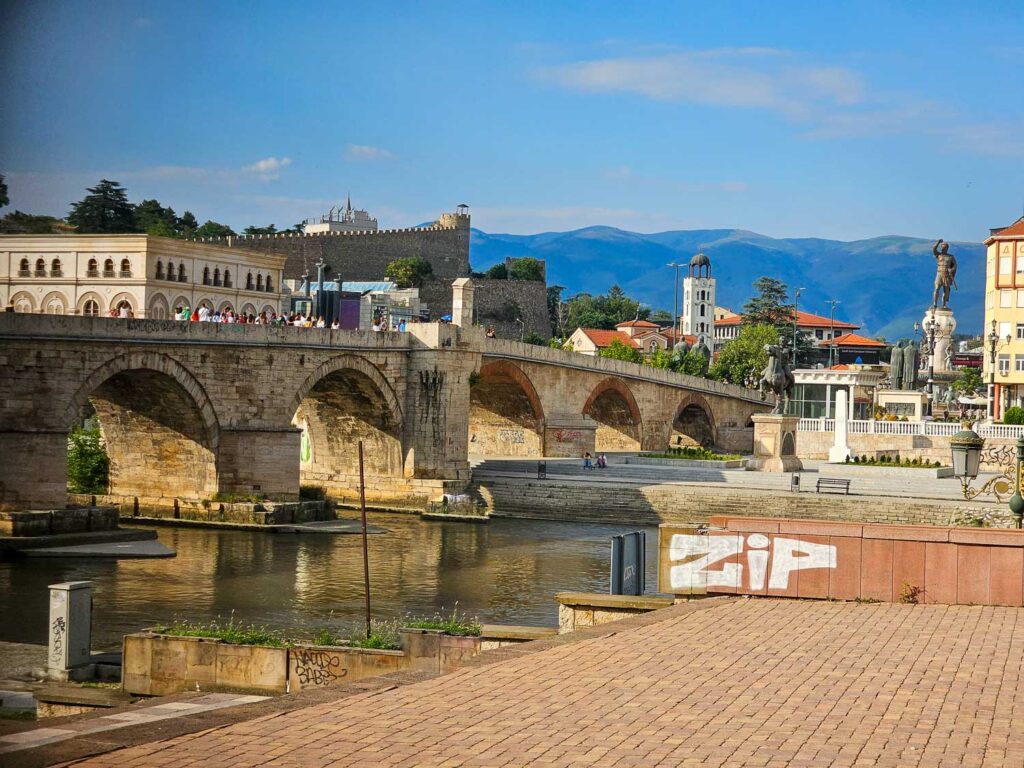
On top of a hill in the old town of Skopje Fortress Kale is a historical landmark you shouldn’t miss. Dating back to the 6th century AD this fortress has been used as a palace and a prison over the centuries.
Today Fortress Kale stands as a symbol of Skopje’s history. You can walk through its old walls and towers and enjoy the views of the city and the mountains. The fortress is a great spot to see the old and the new Skopje.
Inside the fortress there is a museum on site that gives you an insight into its history with artifacts and exhibits that tell the story of the past. Whether you are a history lover or just looking for a place to explore Fortress Kale is a must see.
Mustafa Pasha Mosque: A Treasure
In the old town of Skopje the Mustafa Pasha Mosque is a beautiful example of Ottoman architecture and a cultural landmark of North Macedonia. Built in the 15th century this is one of the oldest and most important mosques in the country.
As you approach the mosque you’ll see the beautiful stone carvings and colourful tiles on the outside. Inside the mosque’s intricate decorations and peaceful atmosphere is a haven from the city chaos.
The Mustafa Pasha Mosque is not only a mosque but also a cultural and spiritual centre. You can learn about its history and significance at the on site museum and get a deeper understanding of the mosque’s role in Skopje’s cultural heritage. Whether you are interested in architecture, history or spirituality a visit to the Mustafa Pasha Mosque is a must see.
Parks and Neighborhoods
Skopje City Park: In the northwest part of the city centre is a green area perfect for relaxing and having fun. This park has playgrounds, a small lake and tennis courts so it’s a favourite among families and outdoor enthusiasts. Here you’ll also find many statues and monuments that add to the park’s beauty.
The park is a peaceful haven from the city madness and has several unique statues including the “Girl with a Bird” which has become a popular spot for photos. The park has gardens, walking trails and you can rent row boats on the lake. The park also hosts various cultural events and festivals throughout the year.
Debar Maalo: Here you’ll find a bohemian neighbourhood with a mix of cafes and restaurants. This is Skopje’s “alternative” part of the city and a great place to chill out after a day of sightseeing.
Whether you want to take a peaceful walk away from the crowds of the city centre, have a local picnic or just want to try some local food Skopje City Park and Debar Maalo are two great options for a green break.
Walking Tours and Cable Cars
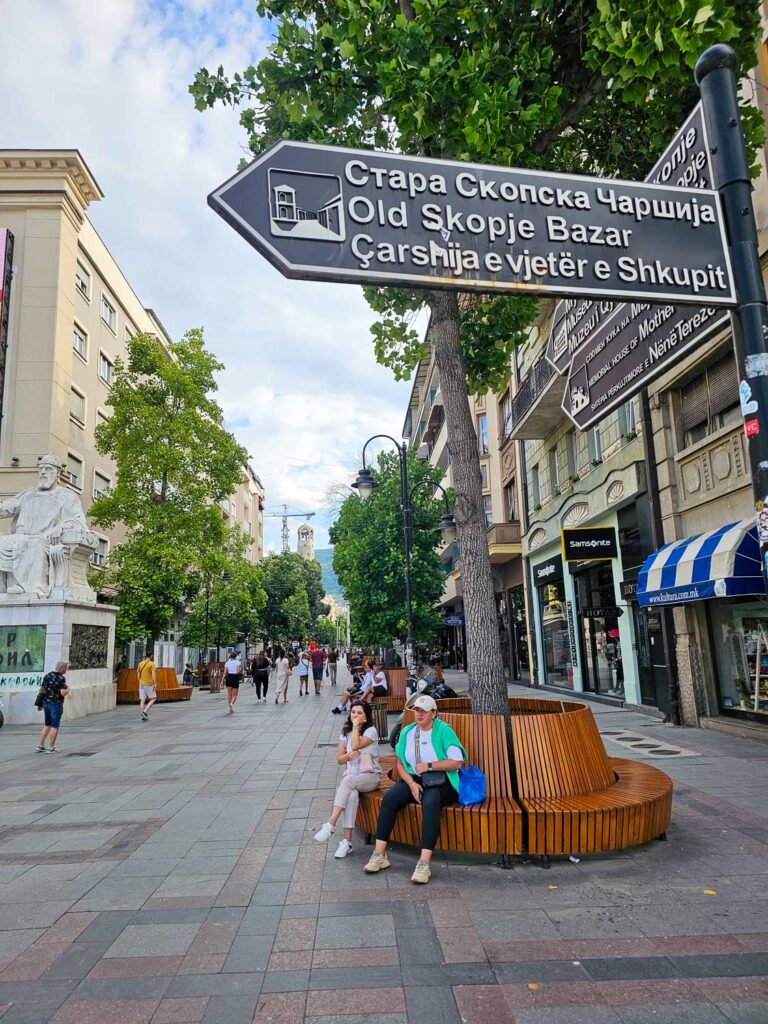
As we mentioned earlier walking is one of the best ways to experience Skopje. You can walk solo or opt for a guided or self guided tour and explore areas like the Old Bazaar and the Kale Fortress. WeGoTrip audio tours can give you a deeper insight into the city and help you discover some hidden gems.
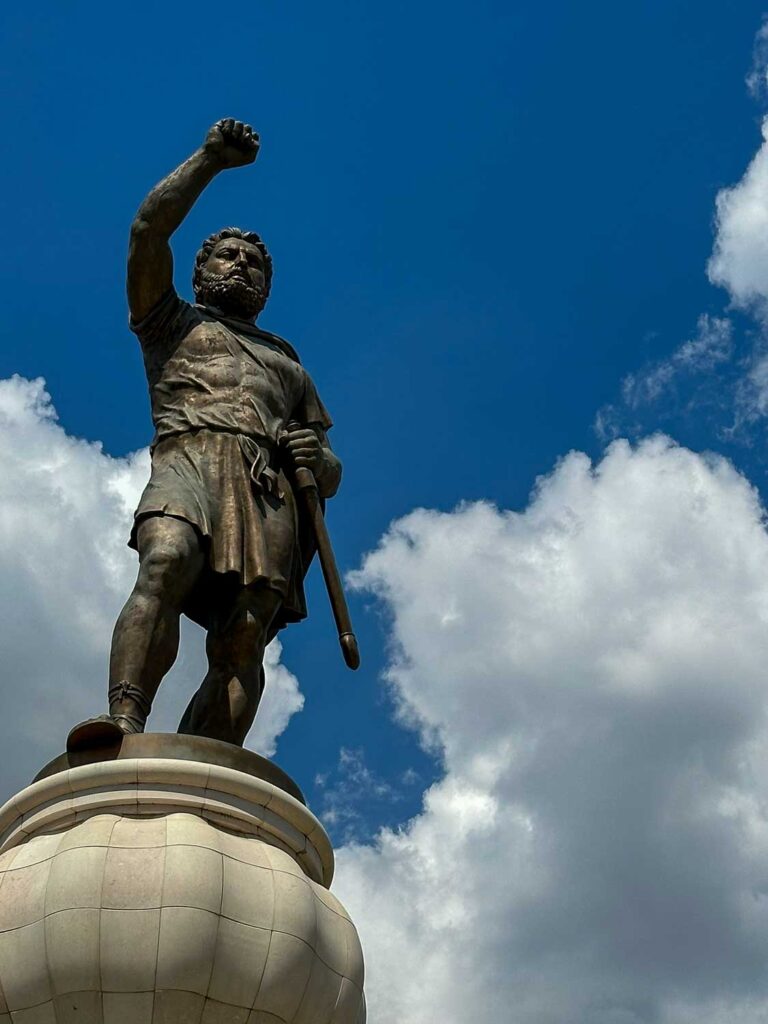
For a panoramic view of Skopje take the cable car to the top of Vodno Mountain, the highest point in Skopje. Starting from the Middle Vodno neighbourhood in the southwest of the city the ride to the top takes 6-8 minutes and offers stunning views of the city and the surrounding mountains. At the top you’ll find the Millennium Cross, a 66 meter high symbol of Christianity. The gondola has 28 standard cars for 8 people each and 2 VIP cars for 4 people each.
Shopping and Markets
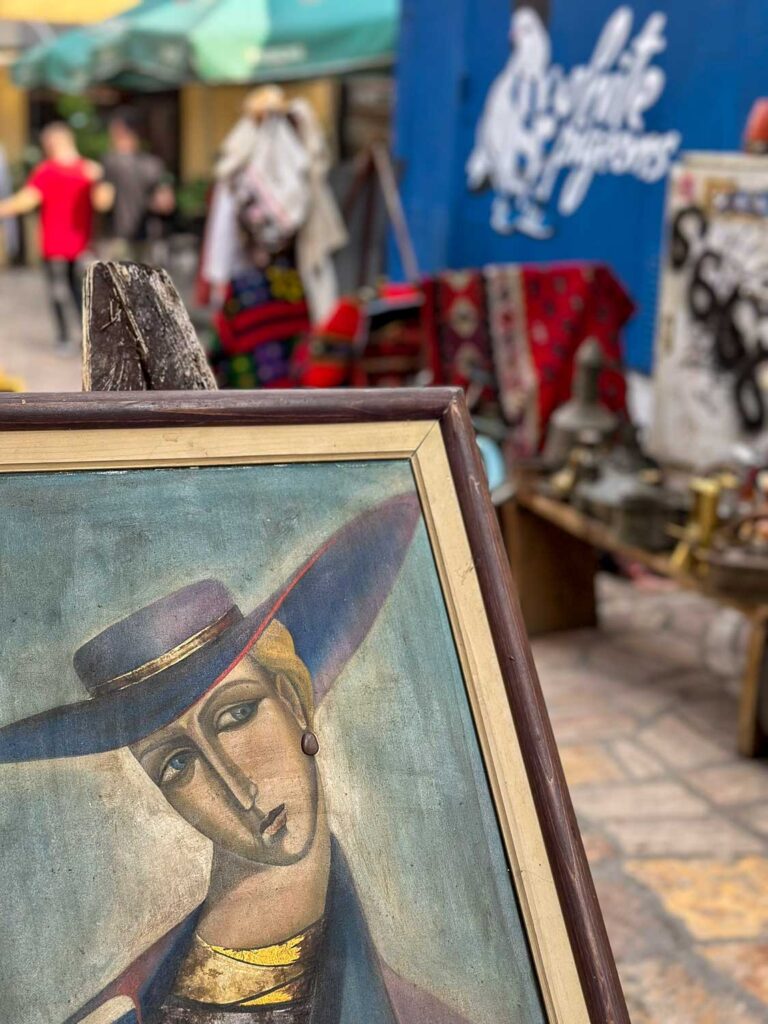
Skopje has plenty of shopping options from traditional markets to modern shopping centres.
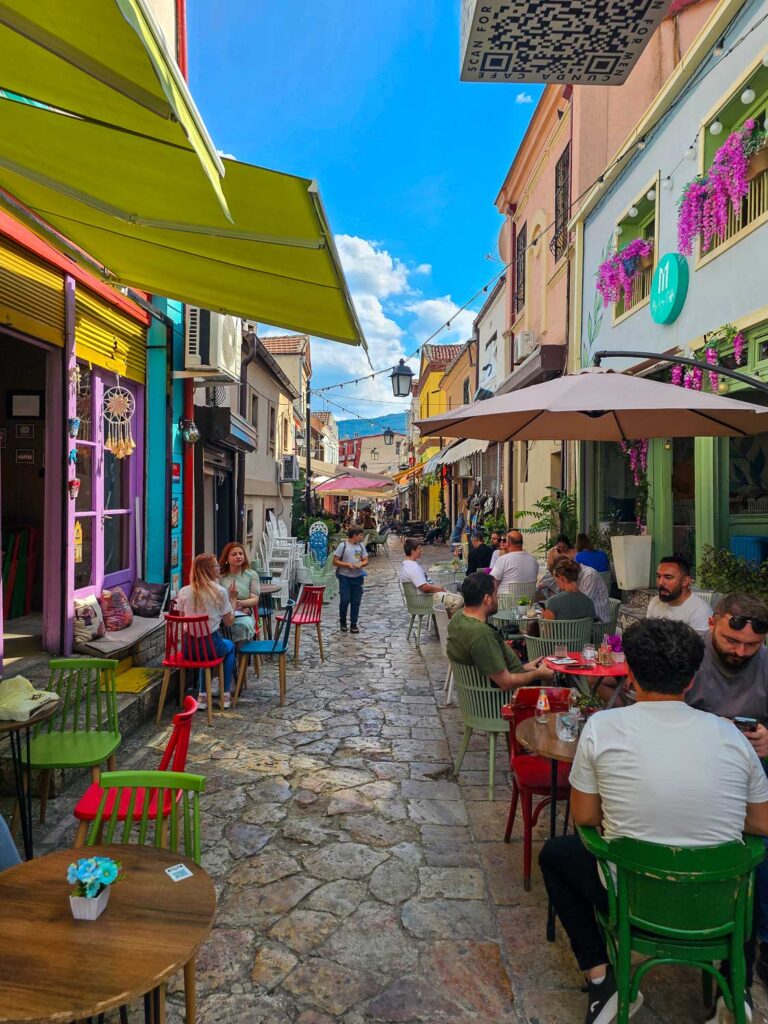
The Old Bazaar is a must see for any traveller with various stalls and shops selling traditional handicrafts, souvenirs and local food. For a bigger market experience go to Bit Pazar at the northern end of Carsija, the biggest market in Macedonia and one of the largest outdoor markets in the Balkans: here you can find everything from fresh produce to spices and toiletries.
If you want a more modern shopping experience the City Trade Center (GTC) is just a 4 minute walk from the Stone Bridge on the southern side of the Vardar River and has international brands and a food court.
Nature and Adventure: Day Trips from Skopje
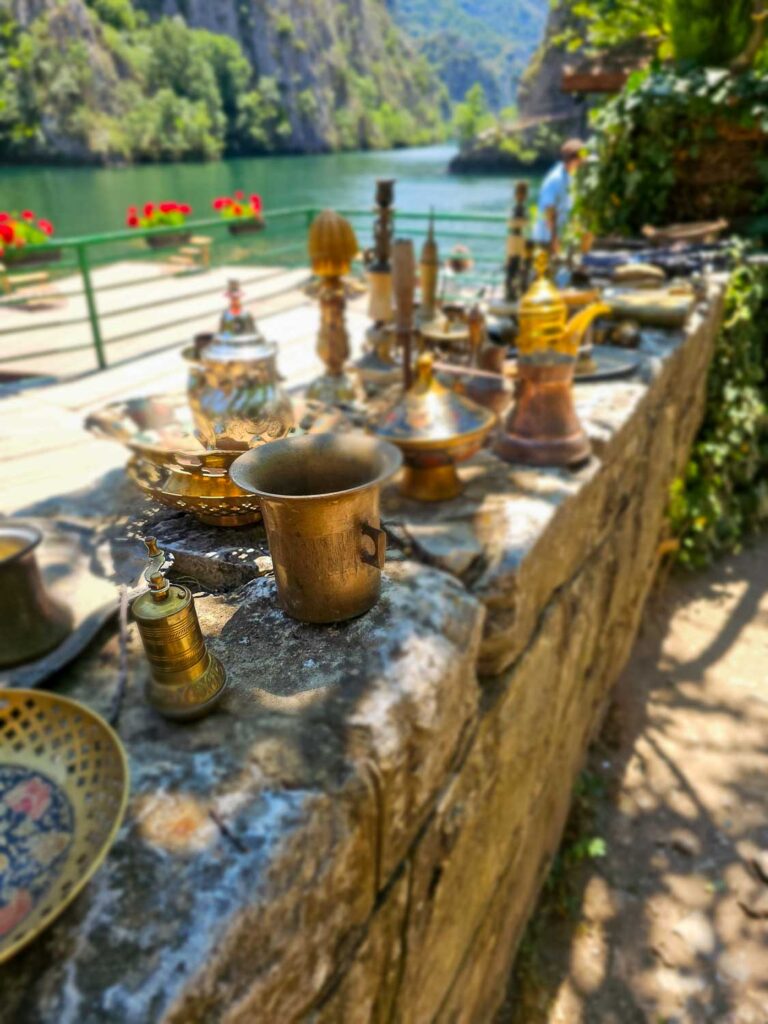
While Skopje has plenty to offer any visitor, going outside the city will reveal even more of North Macedonia’s nature and history.
Matka Canyon: Nature’s Paradise
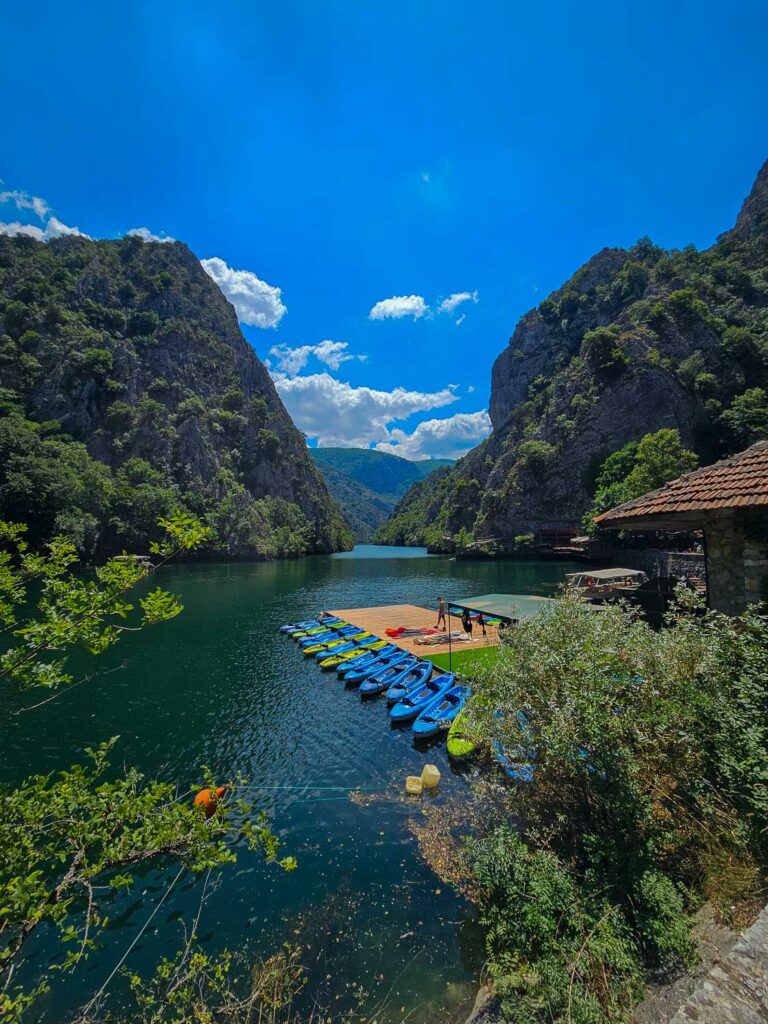
Just 30 minutes from Skopje, Matka Canyon is perfect for day trips and offers hiking, kayaking, and boating activities. You can even visit Vrelo Cave, one of the deepest underwater caves in the world. Hiking and climbing the canyon’s trails is a great way to experience the surroundings. For more about Matka Canyon, see our article Matka Canyon: What You Need To Know Before You Go.
Matka Canyon is a natural wonder that is a perfect escape into nature. This deep and narrow gorge carved by the Treska River is surrounded by high cliffs and lush vegetation, creating beautiful scenery ideal for outdoor activities.
You can explore Matka Canyon by boat or on foot and enjoy the peacefulness of the canyon and its surroundings. The canyon is home to various wildlife, birds, fish, and other animals, so it’s a paradise for nature lovers.
Besides its natural beauty, Matka Canyon is also rich in history. The area has been inhabited by different civilizations throughout the centuries, including the Romans and the Ottoman Empire. The on-site museum, which will give you insights into the cultural and historical significance of the canyon, offers more information.
Whether you hike, kayak, or just gaze at the views, Matka Canyon is a must-see for anyone visiting Skopje and the area.
Stobi
Another North Macedonian gem is the ancient city of Stobi from 3rd century BC. Walk through its well preserved ruins and imagine life in this Roman city as it was.
Bitola and Prilep
Bitola and Prilep should also be part of any visit to North Macedonia, each offering a different perspective on the country’s past and present.
Lake Ohrid: A UNESCO World Heritage Site
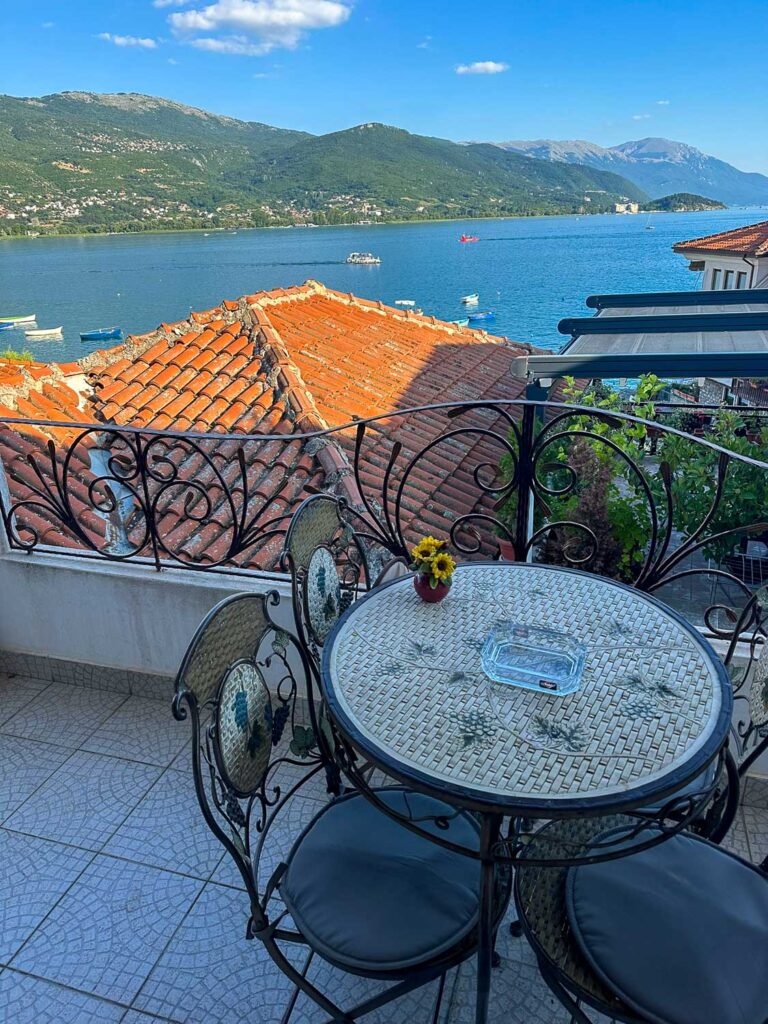
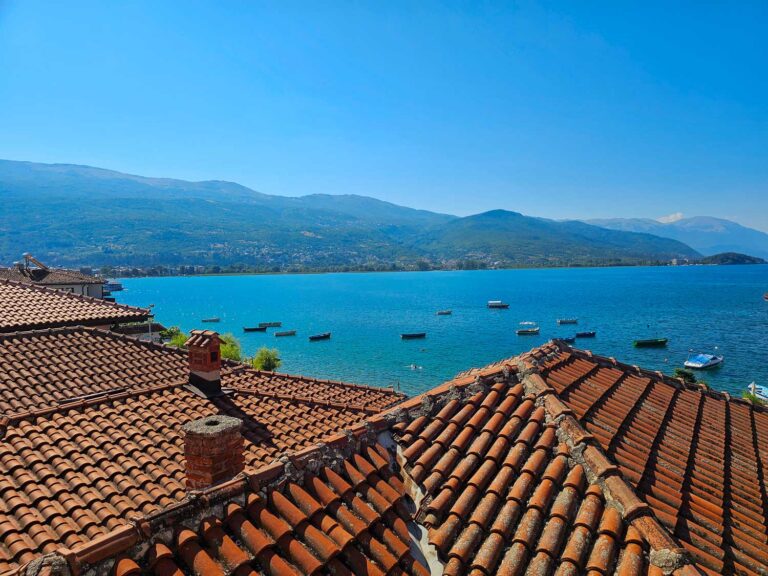
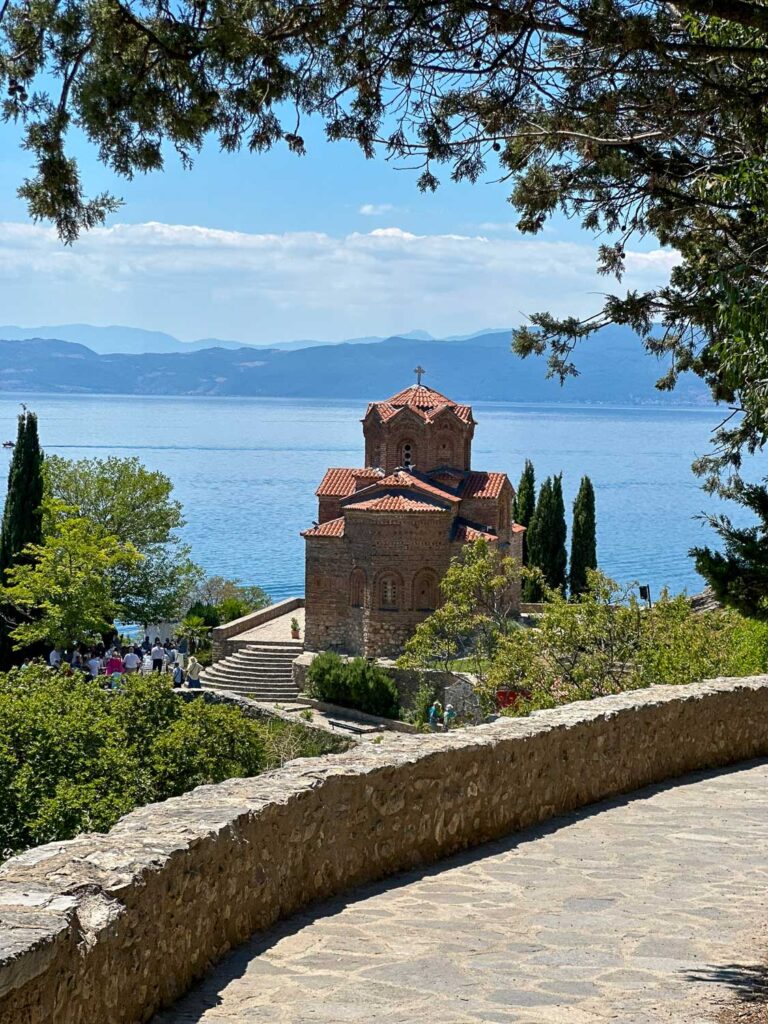
One of the most beautiful places in North Macedonia, Lake Ohrid is a peaceful break from Skopje, surrounded by nature and history. This UNESCO World Heritage site is one of Europe’s oldest and deepest lakes with crystal clear water perfect for swimming, boat rides or just relaxing on the shore.
The area around Lake Ohrid also has charming villages, lively local markets and historical sites that showcase the region’s cultural heritage. Lake Ohrid is a must see for nature and history lovers. Discover more about Ohrid, North Macedonia: A Guide To Your Next Visit.
Kosovo
A day trip to Kosovo, a landlocked country surrounded by Albania, Montenegro, Serbia and North Macedonia is a great chance to experience Balkan culture and history beyond North Macedonia. Visit the capital Pristina to see a mix of modern and traditional landmarks like the Newborn Monument, the National Library and the Ethnographic Museum.
You can also visit Prizren, one of the most beautiful cities in Kosovo. It will charm you with its Ottoman architecture, cobblestone streets, and historical sites. Both cities will give you an authentic taste of Kosovo’s diversity and resilience.
Final Thoughts
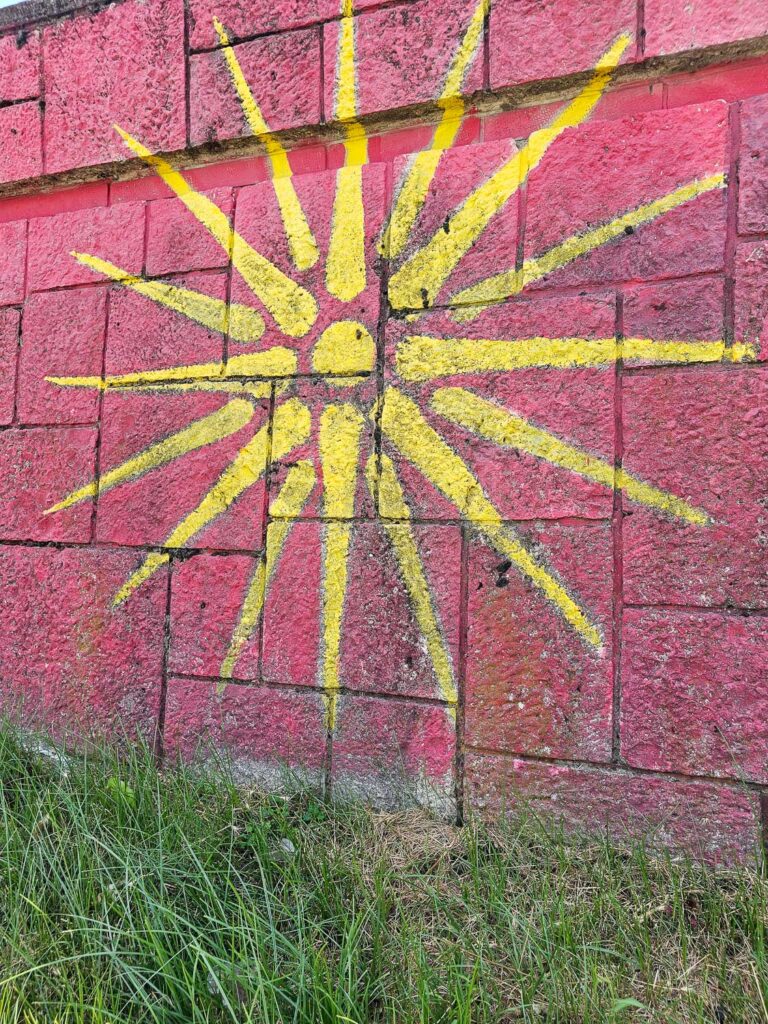
Put Skopje on your list!
Skopje is a mix of history, cultural contrasts and nature. From the old streets of the Old Bazaar to the modern monuments of Macedonia Square this North Macedonian capital has surprises around every corner. Whether you are into art vibe of the museums and street art, the peacefulness of Matka Canyon or the joy of discovering local neighborhoods on foot Skopje is a city that beautifully balances old and new.
Skopje is all about diversity – where tradition meets modernity and everything feels real. Skopje may not be the first European capital that comes to mind — as it wasn’t for Mike — but as we both found out soon enough it should be on your list of places to visit in Europe.
Now … it’s time to plan your trip!
FAQs
Is Skopje worth visiting?
Yes. Skopje offers history, culture, food, museums, markets, and day trips like Matka Canyon. It’s an affordable, walkable Balkan capital with plenty to see and experience.
What are the top things to do in Skopje?
Top things to do include visiting the Old Bazaar, crossing the Stone Bridge, exploring Macedonia Square, touring museums, trying local food, and taking a day trip to Matka Canyon.
What is the best time to visit Skopje?
Spring and autumn are the best times to visit Skopje, with mild weather ideal for sightseeing, walking tours, and day trips. Summers are hot and winters can be cold and snowy.
What is Skopje known for?
Skopje is known for its mix of Ottoman, Byzantine, and modern architecture, the Stone Bridge, Macedonia Square, the Old Bazaar, and unique monuments from the Skopje 2014 project.
How many days do you need in Skopje?
Two to three days is ideal to explore the Old Bazaar, Stone Bridge, Macedonia Square, museums, food scene, and take a short day trip like Matka Canyon or Vodno Mountain.
Explore More Of North Macedonia
-
North Macedonia Travel Guide: A European Itinerary
This guide provides a complete North Macedonia travel overview covering Skopje, Ohrid, Matka Canyon, and Lake Ohrid, with practical tips on culture, history, food, and natural highlights.
-
Lake Ohrid, North Macedonia: Your Ultimate Guide
Explore Lake Ohrid’s crystal-clear waters, unique ecosystem, endemic species, and scenic boat routes. Learn about its history, depth, biodiversity, and conservation efforts.
-
Ohrid, North Macedonia: A Guide To Your Next Visit
Discover the best things to do in Ohrid, North Macedonia from strolling its Old Town to exploring Lake Ohrid, ancient churches, and local cuisine. Plan your perfect visit today.
-
Matka Canyon: What You Need To Know Before You Go
Discover Matka Canyon — North Macedonia’s top nature escape with boat tours, Vrelo Cave, kayaking, hiking, and stunning views only minutes from Skopje.