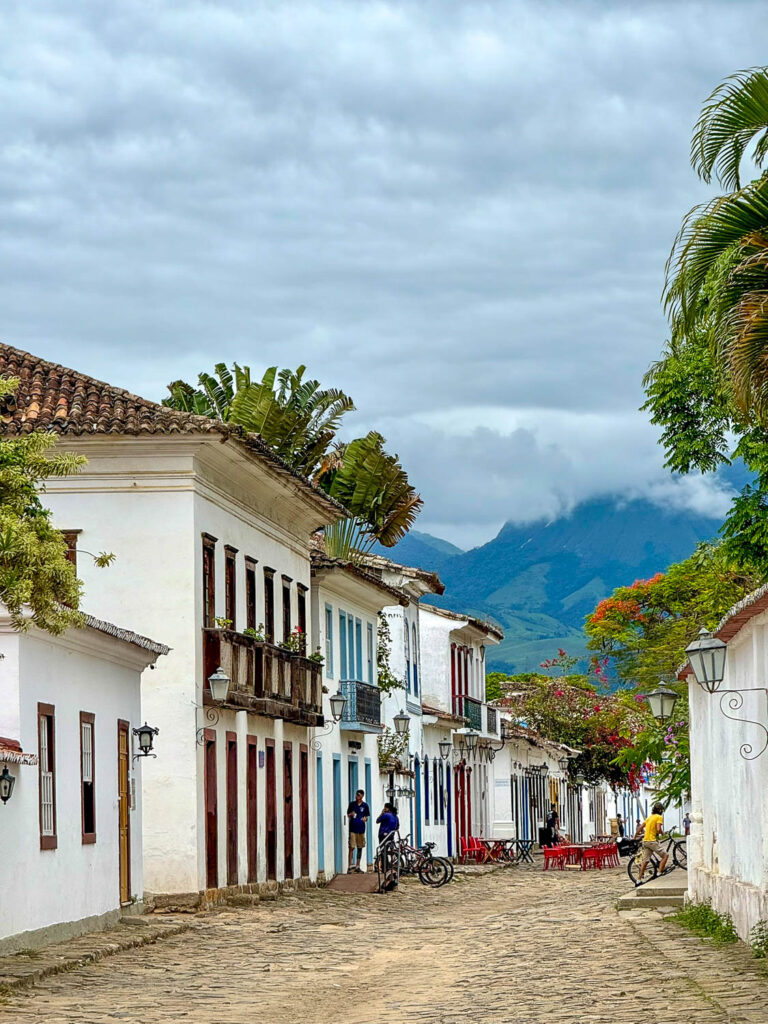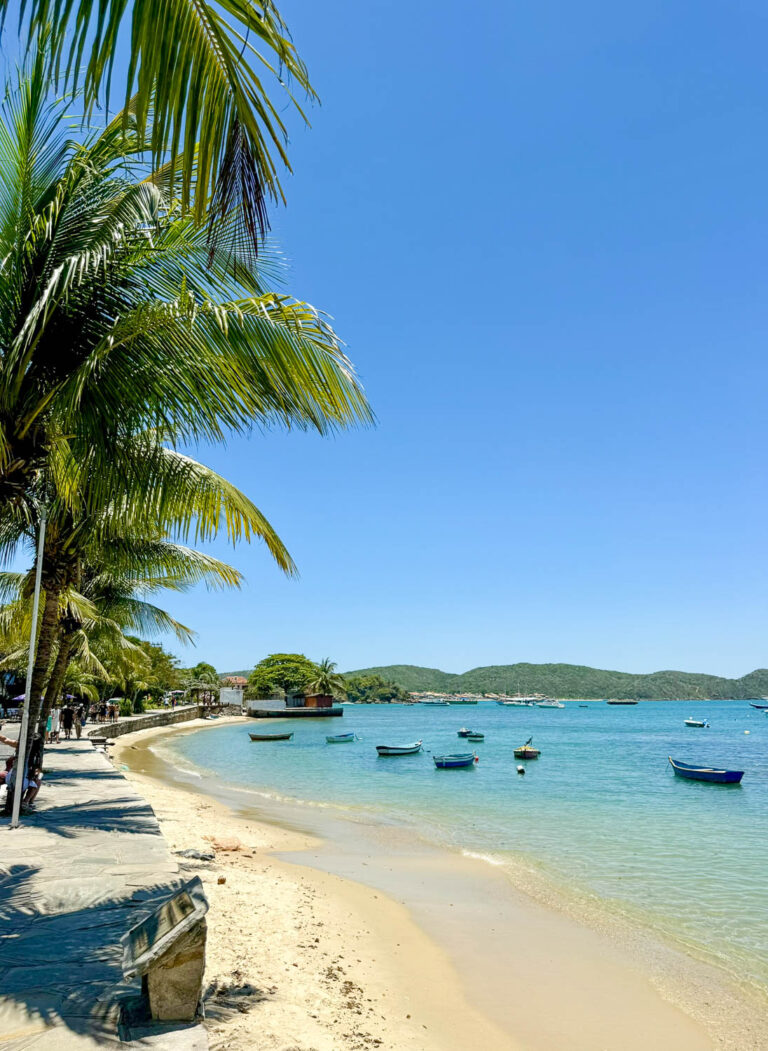
South America

  • Morretes Brazil: Best Things to Do in Paraná’s Gem

    There’s something magical about Morretes — a small historic city tucked into the lush folds of the Atlantic Forest, just over an hour east of the fabulously innovative and green Curitiba, in the Brazilian state of Paraná. Here you’ll discover the instant charm of cobblestone streets meeting riverside cafés: a place where time seems to move at half speed, and where colonial history, natural beauty, and local cuisine come together in an almost too-perfect balance.

    For us, Morretes is the kind of place that captures the soul of southern Brazil — a destination that blends simplicity and sophistication, where you can enjoy a scenic train ride through the Serra da Graciosa mountain range in the morning, and savor a slow-cooked dish of barreado by the Nhundiaquara River in the afternoon.

    If you’re planning a day trip to Morretes from Curitiba – most people end up here by way of the Serra Verde Express train, returning in the late afternoon or evening – or are planning to stay a night or two to explore a little deeper, this small city affords visitors a wonderful combination of scenic landscapes, colonial architecture, and warm hospitality.

    Let’s dive in and see what all the fuss is about, shall we?


    Quick Tips

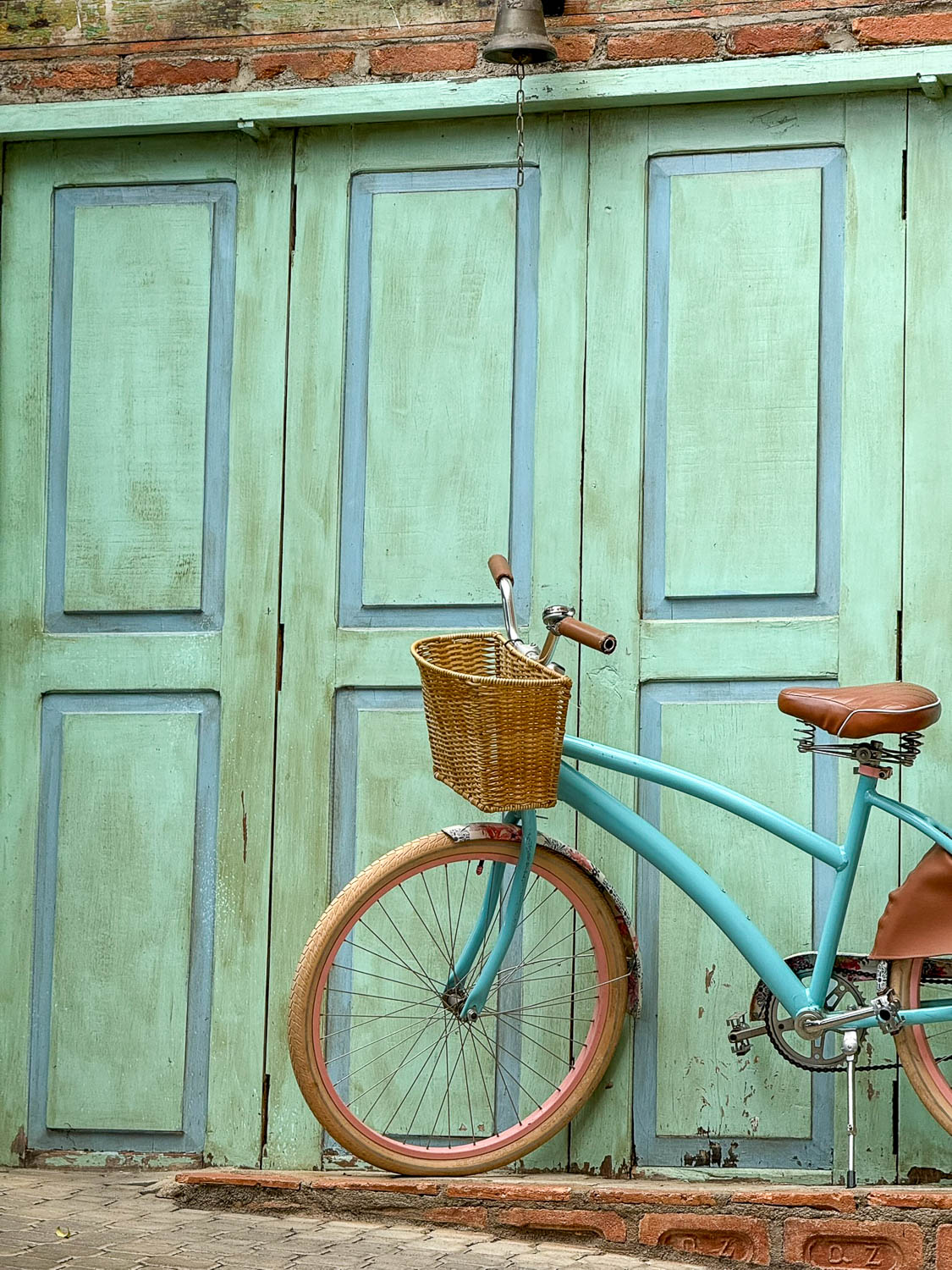
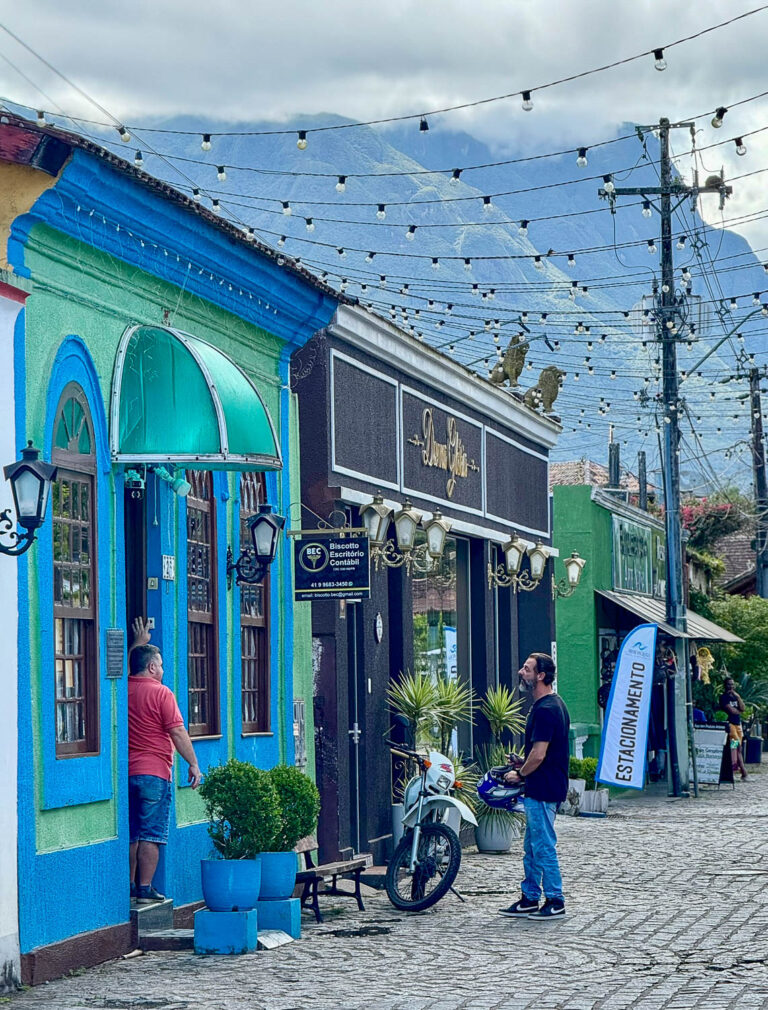
    Colorful colonial doorway along the cobblestoned Rua das Flores in the historic town of Morretes, Paraná, Brazil.
    A perfectly framed door along the cobblestoned Rua das Flores (Morretes, Brazil)
    • Founded in 1733, Morretes is one of the oldest cities in the Brazilian state of Paraná.
    • The seasons shape Morretes in different ways, and deciding when to visit depends on the kind of experience you’re seeking.
    • Most travelers visit Morretes as a day trip from Curitiba, and getting there is half the fun: jump aboard the Serra Verde Express, catch a bus, or take the car along the famous Estrada da Graciosa.
    • Getting around Morretes is refreshingly simple, and most visitors won’t need any form of transport beyond their own two feet.
    • The majority of visitors focus their time on the compact, easy-to-explore area concentrated around the city’s historic core: colorful colonial streets, churches, riverside walks, and everyday life.
    • A day trip is ideal for a visit to Morretes, but there’s also plenty to see and do beyond the city limits, should you wish to extend your stay.
    • Throughout the year, Morretes marks its traditions and celebrates community through a small but varied calendar of local festivals and events (think religious celebrations, craft fairs, music, and cultural gatherings).
    • There are numerous opportunities for shopping in Morretes, a town characterized by small, colonial-era artisan shops and outdoor markets.
    • Dining in Morretes is closely tied to tradition, with the town’s signature dish – barreado – featuring prominently on most menus.

    Plan Your Trip

    View across the Nhundiaquara River flowing through the historic town of Morretes in Paraná, Brazil.
    View across the Nhundiaquara River (Morretes, Brazil)

    Some links below may earn us a small commission at no extra cost to you. We’re truly grateful for your support, as it allows us to continue sharing meaningful travel experiences and practical travel insights with you. Read our full disclosure here.

    Planning your visit? We’ve gathered recommended tours and activities, along with trusted travel tools, to help you explore with confidence and ease.

    Tours & Experiences


    Prefer additional options? Click below to discover more incredible experiences tailored just for you!

    Browse top attractions in Morretes, Brazil.


    Travel Essentials?

    Planning the rest of your trip? These are the platforms we personally use when organizing our travels. For more planning tools, visit our Travel Resources page or browse current promotions on our Travel Deals page.


    History and Overview: A Window into Colonial Paraná

    Scenic view of the Nhundiaquara River in Morretes, Paraná, surrounded by lush Atlantic Forest landscapes.
    The picturesque Nhundiaquara River invites a slower pace of exploration

    Founded in 1733, Morretes is one of the oldest cities in the state of Paraná and still radiates its colonial aura from the era when merchants and farmers traveled by boat along the Nhundiaquara River. This historic town grew prosperous through sugarcane, coffee, and river trade, leaving behind colonial mansions, old bridges, and other charming architecture that continues to define its streetscapes today.

    Considering its age, we found Morretes to be incredibly well-kept. The city center was spotless, the riverside cafés were welcoming, and each turn revealed another pastel-hued façade and another story etched into its colonial buildings. For us, it was the kind of town where even first-time visitors instantly feel at home and every local seems proud to share it.

    Insider tip. One of the absolute highlights of our time in Morretes was chatting with the owner of the D’Giopi Sorvetes Artesanais Loja do Rio in the old town. Be sure to take some time to connect with locals during your visit, to learn a little more about the city and its history.


    Best Time to Visit

    Sunny day in Morretes, Paraná, with blue skies over the historic colonial town surrounded by Atlantic Forest hills.
    Blue skies and bright sunshine during the early summer months in Morretes

    If you’ve had a chance to read other destination articles and guides we’ve written, you’ll know we are big believers that any global destination can be visited at almost any time of year. In Morretes, however, the seasons shape the town in different ways, and deciding when to visit depends on the kind of experience you’re seeking.

    For many, the best time to visit is during the drier, cooler months (anywhere from April through October, with most visitors choosing June through September), when the Atlantic Forest is at its greenest and the Serra Verde Express runs under clear skies. This time of year also sees fewer crowds, cooler evenings, and less rain, ideal for hiking and exploring the nearby mountains and rivers without the intense heat of the summer.

    Brazil’s summer (and also its wet season) runs from November through March. These are the warmest months in Morretes, but also expect heavier rainfall (especially in the afternoons).

    Insider tip. Morretes is located in a rainforest region of Brazil, so expect some rain year-round.

    Cold local beer served at Simples Gastrobar in Morretes, Paraná, a popular riverside restaurant in the historic town.
    A cold glass of local brew will go down a treat during the warmer summer months (Simples Gastrobar, Morretes)

    Insider tip. If you’re planning to take the popular Serra Verde Express (see below for more information on this incredible train journey), be sure to book your tickets well in advance – especially if travelling in November or during holidays or long weekends. Planning ahead also permits you to time your visit outside the region’s heaviest rainy period, making it easier to enjoy both the lush rainforest and the charming town of Morretes itself.

    Another consideration for your visit are local festivals held annually in the region. Check ahead to see if your planned trip to Morretes coincides with any of these, as they can draw larger crowds and increase accommodation expenses – but also offer wonderfully unique cultural experiences!


    Getting To Morretes

    Serra Verde Express scenic train arriving in Morretes, Paraná after traveling through Brazil’s Atlantic Forest from Curitiba.
    There’s nothing quite like arriving into Morretes by train!

    Getting to Morretes is half the adventure, and there are several ways to do so.

    The Serra Verde Express

    The Serra Verde Express – a scenic train journey through the Atlantic Forest that showcases southern Brazil’s rugged beauty – remains the most iconic and popular route for most travellers. The train departs from Curitiba in the morning and arrives into Morretes around midday, allowing plenty of time to explore before most visitors make the return trip by bus or car.

    Insider tip. Unless you choose to arrange everything independently (very doable!), most tour operators will provide transport for your return journey to Curitiba (or to Antonina, if you prefer).

    Be sure to check out our article The Serra Verde Express for more detailed information on this incredible train journey!

    By Bus

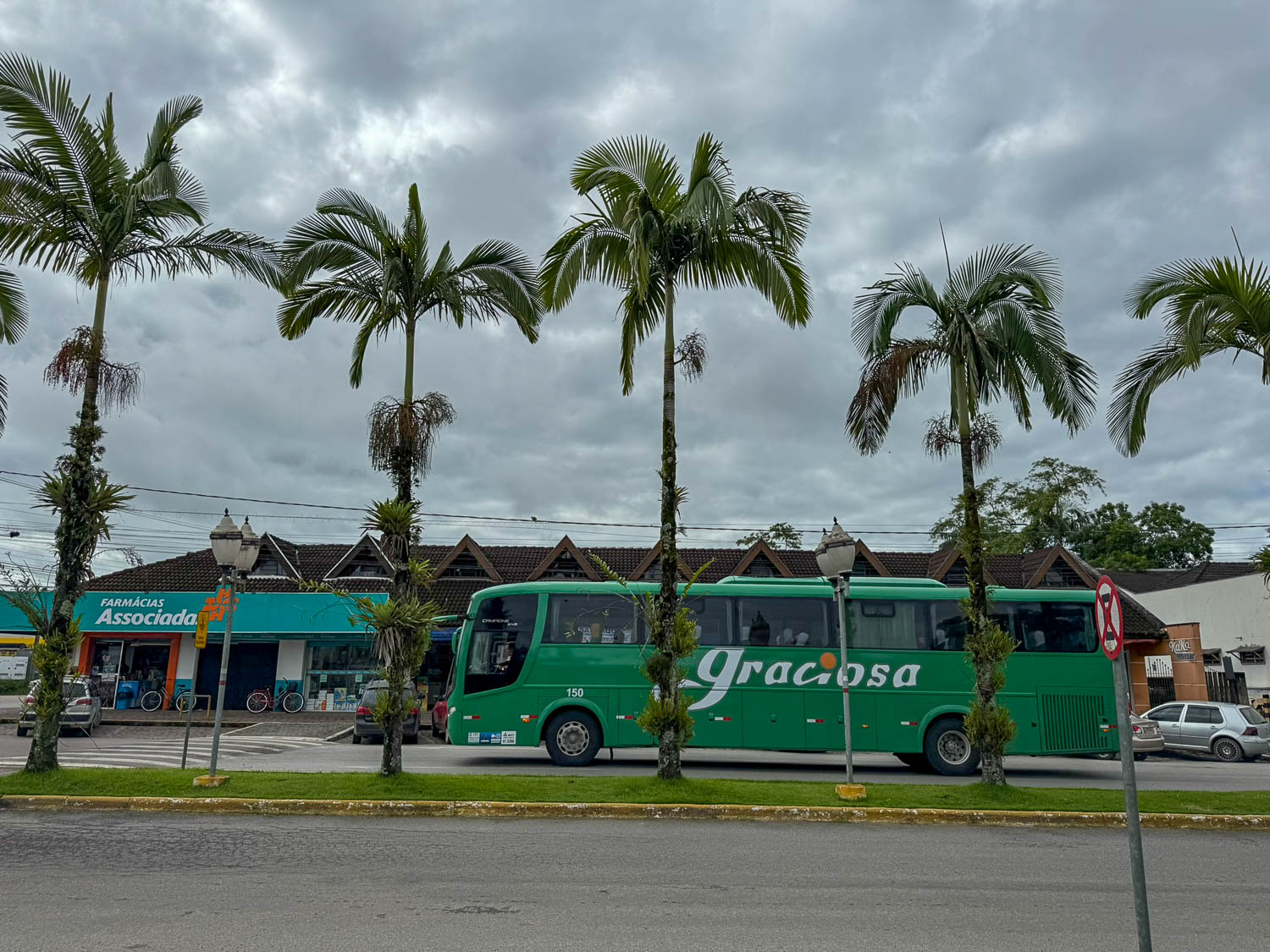
    Intercity bus service connecting Morretes with Curitiba and other destinations across Paraná, Brazil.
    Clean, comfortable intercity buses connect Morretes with other destinations across the region.

    For those who prefer public transport, regular bus services connect Curitiba to Morretes, with the journey taking roughly 75-90 minutes. There are several different bus companies who run this route regularly and we opted to travel with Viação Graciosa, about whom we have no complaints!

    The bus from Curitiba leaves from the Rodoviária de Curitiba (main bus station) – less than a 10-minute drive from downtown Curitiba – and arrives at the Rodoviária de Morretes, within walking distance from the town’s main attractions.

    Insider tip. For those of you seeking to use public transportation within Brazil, we highly recommend using Busbud.com. This English-language booking platform allows travellers to search, compare, and book long-distance bus tickets across Brazil (and beyond). We found it incredibly easy to navigate, with excellent customer service when Beck accidentally booked our first bus (from Curitiba to Morretes) for the wrong date (woops!).

    By Road

    The historic Estrada da Graciosa scenic road winding through the mountains toward Morretes, Paraná, Brazil.
    Taking the Estrada da Graciosa by car to reach Morretes is a popular choice for many visitors

    If you prefer to drive, the Estrada da Graciosa (PR-410 – Gracious Road) is an easy choice – though note it’s not the quickest way to get to Morretes and Google Maps may try to steer you along PR-277 instead.

    The scenic cobblestone Estrada da Graciosa – dating back to the 19th century – winds through the lush Serra da Graciosa mountains, with breathtaking overlooks, waterfalls, rich biodiversity, and picnic areas shaded by native vegetation. The road itself is a popular attraction – a slow, winding, picturesque drive with sharp bends, stone bridges, and mist rolling over the mountain range: think of it like Brazil’s version of a European alpine drive or North America’s Blue Ridge Parkway.

    Fun fact. Parts of the Estrada da Graciosa follow paths first used by Indigenous peoples, long before Europeans arrived in southern Brazil.

    Rental car parked in downtown Morretes, a small historic town in Paraná, Brazil.
    A rental car parked in downtown Morretes

    Fun fact. On foggy days, visibility can drop dramatically, with mist and clouds often appearing suddenly. This is in part because the Estrada da Graciosa descends nearly 900 meters (just under 3,000 feet) from the plateau to the coastal plains.

    Insider tip. If choosing to travel by car, be sure to check weather and road conditions ahead of time, as rain can make this mountainous road slippery. Also make sure to pack snacks and drinks, especially if you plan to stop at several viewpoints or visit nature trails along the way.


    Getting Around Morretes

    Cycling through the quiet streets of Morretes, Paraná, a relaxed way to explore the historic town.
    Why not do as the locals do and ride a bike around town?

    Getting around Morretes is refreshingly simple, and most visitors won’t need any form of transport beyond their own two feet.

    Walking

    Once you arrive in Morretes, getting around is easy. Both the bus and train stations are within walking distance from the city center, and the charming downtown itself is relatively compact, with most main attractions easily explored on foot.

    Taxis, Buses and Bikes

    Taxis and rideshares (Uber and 99) are available for slightly longer trips, or for those with mobility concerns, whilst several local tour operators rent bikes (including ecobikes) for those feeling a tad more energetic. Local buses are also available to help take you to attractions outside the city center, though note their timetables can be sporadic.

    Along the River

    Small wooden boat on the Nhundiaquara River in Morretes, Paraná, offering scenic river tours through the historic town.
    A small wooden boat awaits passengers on the Nhundiaquara River (Morretes, Brazil)

    During your visit to Morretes, consider taking a boat trip (passeio de barco) along the Nhundiaquara River – a wonderful way to see the city from a different perspective on a serene and relaxing journey.


    Exploring Morretes: Local Highlights

    Colonial window along Rua Coronel Rômulo José Pereira in the historic town of Morretes, Paraná, Brazil.
    An open window along Rua Coronel Rômulo José Pereira (Morretes, Brazil)

    Once you’ve arrived in Morretes, most visitors focus their time on the compact, easy-to-explore area concentrated around the city’s historic core. This is where you’ll find the town’s key sights – colonial streets, churches, riverside walks, and everyday life – all sitting side-by-side and easily explored on foot in a few relaxed hours.

    The Historic Center

    Cobblestone streets in the historic center of Morretes, Paraná, lined with colorful colonial buildings.
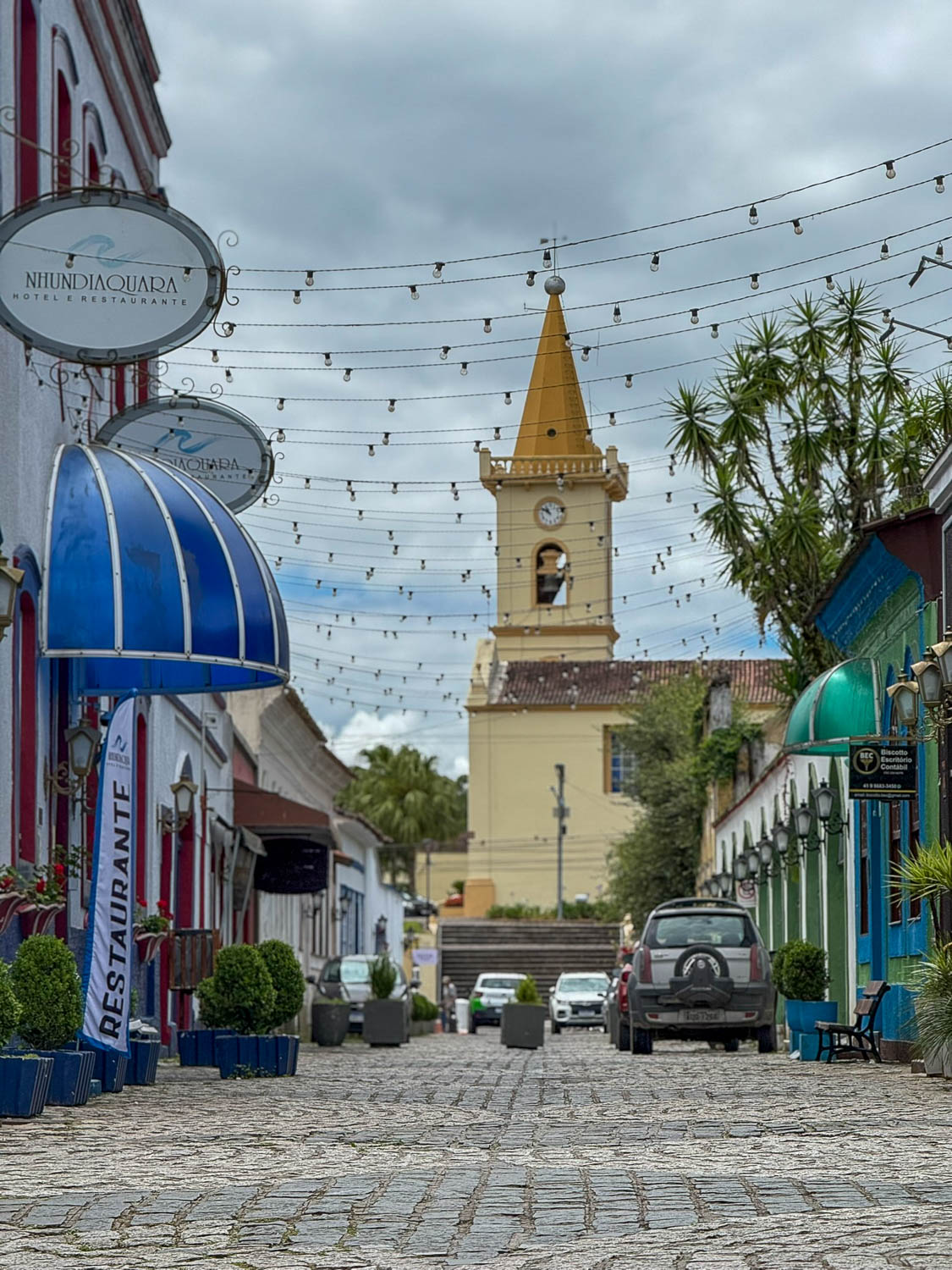
    The charming cobblestone streets of Morretes

    Morretes’ charming downtown is its historic center – a mosaic of colonial architecture, cobblestone alleys, and riverside paths that invite slow exploration. To us, this part of Morretes felt almost like an open-air museum, with old mansions and other buildings dating back to the colonial days when traders navigated the Nhundiaquara River transporting goods between the coast and Paraná state.

    Igreja Matriz de Nossa Senhora do Porto

    Igreja Matriz de Nossa Senhora do Porto, the main historic church in Morretes, Paraná, Brazil.
    Igreja Matriz de Nossa Senhora do Porto (Morretes, Brazil)

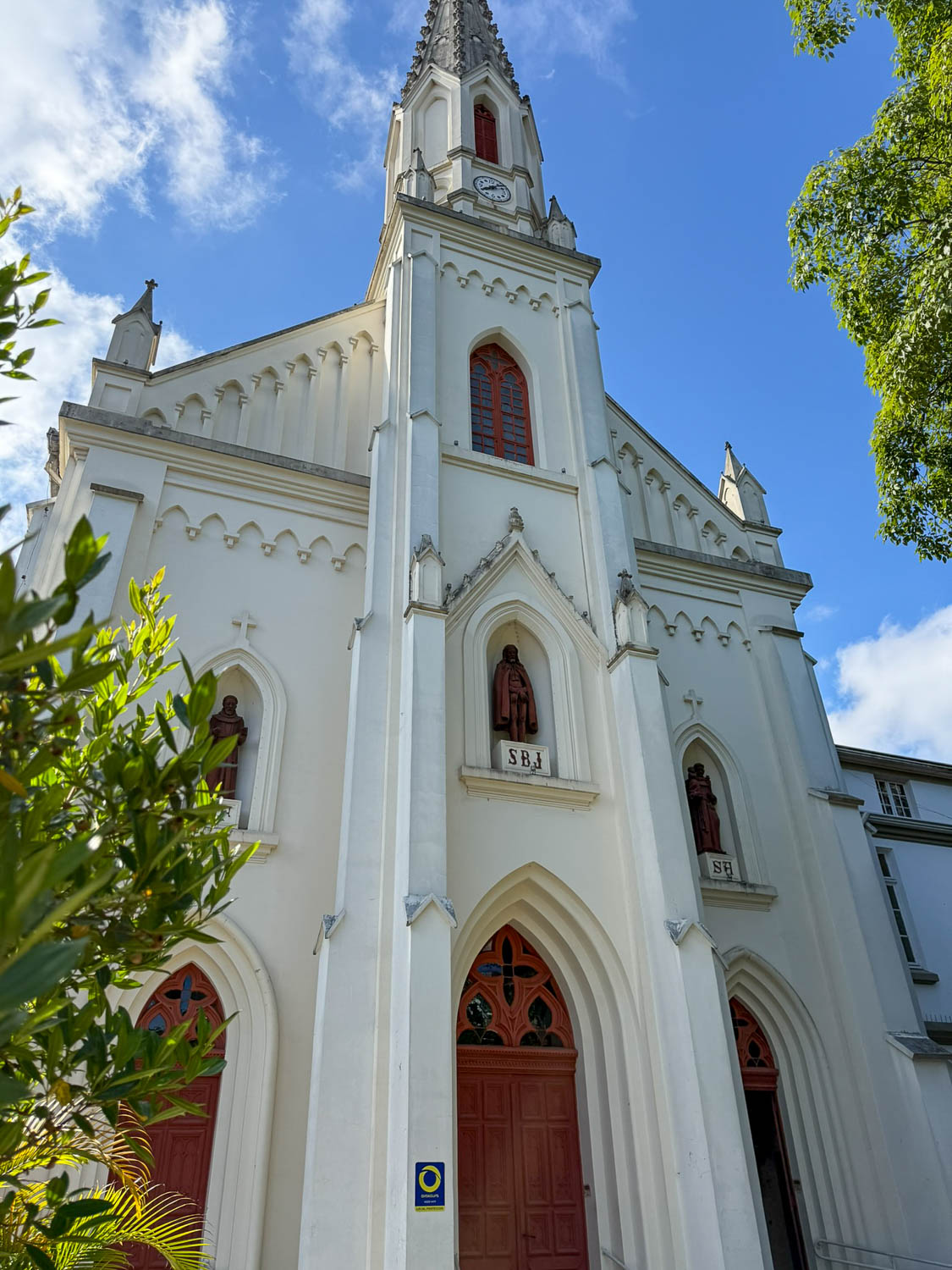
    At the center of Morretes’ historic town you’ll find the Igreja Matriz de Nossa Senhora do Porto, which stands proudly as a spiritual and cultural anchor for the community, and one of the city’s most recognizable landmarks. Built during the 18th century, this large church represents architectural beauty, as well as deep faith: indeed its twin bell towers, tiled terracotta roof, and classic whitewashed walls contrast beautifully against the green mountain range just beyond, symbolizing the harmony found between faith and nature that defines this region of southern Brazil. Today, Igreja Matriz de Nossa Senhora do Porto also acts as a central gathering place for community events and religious festivals.

    Rua das Flores

    Small garden and colonial buildings along Rua das Flores in the historic center of Morretes, Paraná.
    A small garden along Rua das Flores (Morretes, Brazil)

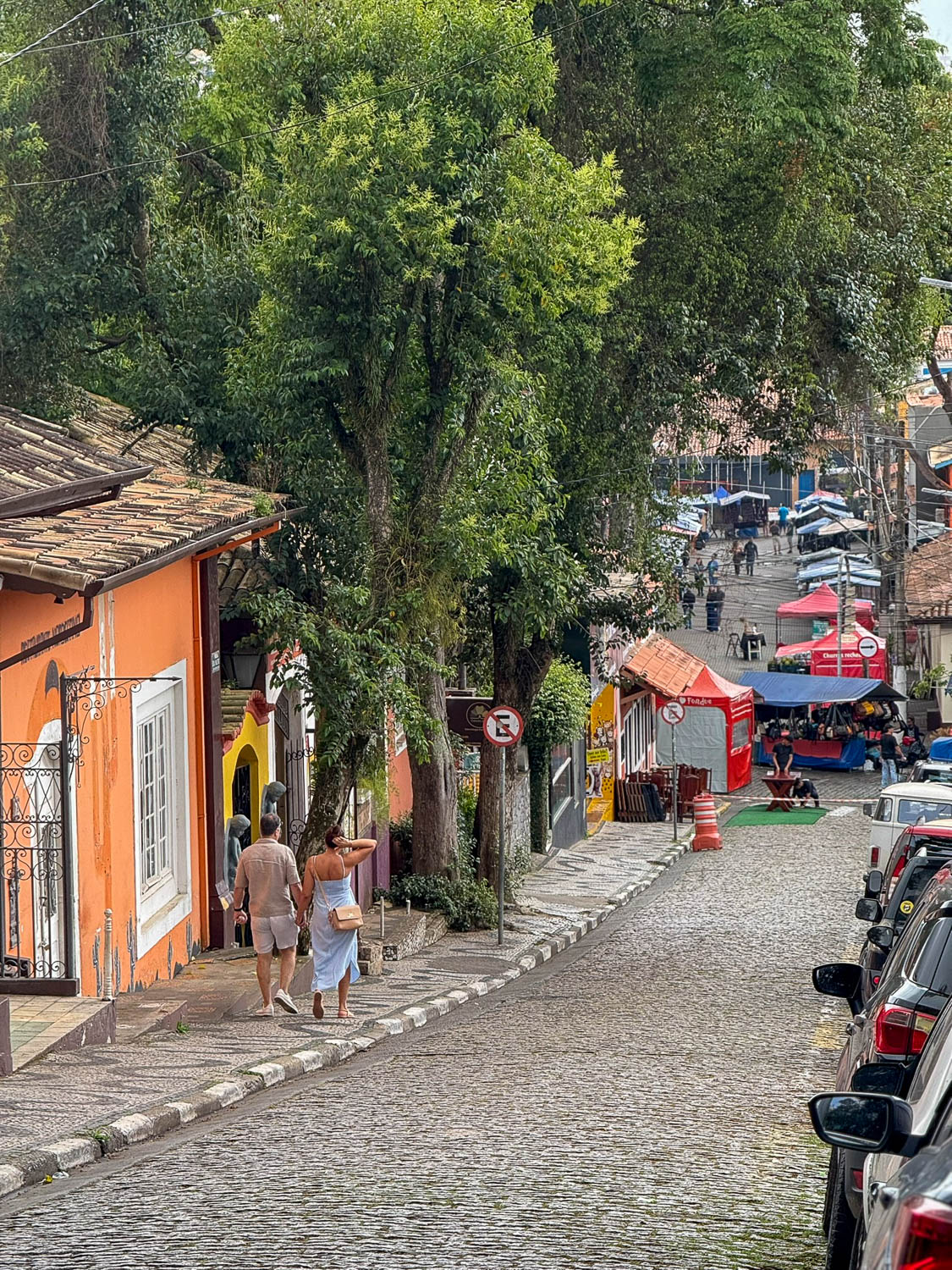
    From the main church in town, cross Rod. Dep. Miguel Bufara and continue your exploration west along the famous Rua das Flores (Flowers Street). And whilst this street may not be famous for literal flowers (though you will see potted plants and floral displays lining some doorways and windows), its charm lies in its preserved cobblestoned, pedestrian-only historic character.

    Insider tip. We must admit we stumbled upon Rua das Flores by accident, as we wandered without a planned route around the historic center. We loved it so much we returned to this street on four separate occasions, lingering a little longer each time!

    Nhundiaquara Hotel, the oldest historic building in Morretes, Paraná, Brazil.
    The Nhundiaquara Hotel is the oldest building in Morretes

    This short, incredibly colorful street is home to a fabulous mix of traditional buildings that today house small shops, cafes and restaurants, artisanal workshops, and private residences, offering visitors a snapshot of everyday life in Morretes and a very “lived in” feel. As you walk along Rua das Flores, you’ll have the Nhundiaquara River to your right (if you started your journey at the main church), and pass by the Nhundiaquara Hotel (the oldest building in town, preserving some of its original walls from the 17th century) and the city’s main square (Largo Theodoro de Namur, surrounded by colonial buildings and restaurants), before arriving at the Coreto Sinibaldo Trombini and Ponte de Ferro.

    Fun fact. You’ll often see flowers arranged in recycled containers along Rua das Flores — a small but charming example of everyday creativity in Morretes.

    Colorful colonial side street near Rua das Flores in the historic town of Morretes, Paraná.
    A colorful side street just off Rua das Flores (Morretes, Brazil)

    Insider tip. As Rua das Flores runs alongside the picturesque Nhundiaquara River, it affords visitors not only scenic views of the water, but also easy access to riverfront activities.

    Insider tip. Make sure you have your camera/smartphone ready as you slowly meander down this street. Its brightly painted façades and strategic location against the river make it a superb place to take photos. It’s definitely one of the most photographed streets in town and Beck got very snap-happy here indeed!

    Ponte de Ferro

    Ponte de Ferro iron bridge crossing the Nhundiaquara River in Morretes, Paraná, Brazil.
    Walking over the Iron Bridge that crosses the Nhundiaquara River (Morretes, Brazil)

    The Ponte de Ferro (Iron Bridge) is one of Morretes’ most iconic landmarks, serving as a picturesque backdrop, as well as a gateway to the natural world beyond. The bridge is also a vital part of the city’s identity, drawing visitors from around the globe to witness an impressive feat of historic engineering – all the while adding to the nostalgic charm of Morretes.

    Insider tip. You may see this bridge listed on maps and signs, or referred to by locals, as Ponte Metálica de Morretes (Metal Bridge). These names – Iron Bridge and Metal Bridge – are used interchangeably, but do refer to the same structure.

    The Iron Bridge dates back to the late 19th century when Morretes was growing as a river-based trading town, with the Nhundiaquara River playing a central role in transporting goods long before roads and railways dominated the region. Today, the bridge is one of Morretes’ most reliable orientation points, with locals often using it as a meeting or reference spot. For visitors, it’s a great place to stop and take photos, enjoy the peaceful river views, spot canoes and kayaks, and witness young kids jumping off the banks of the river into the cool waters below.

    Ponte de Ferro historic iron bridge over the Nhundiaquara River in Morretes, Paraná.
    Ponte de Ferro (Morretes, Brazil)

    Fun fact. The Iron Bridge was prefabricated and assembled on site, a relatively advanced technique for the era.

    Fun fact. Ponte de Ferro is one of the most photographed bridges crossing the Nhundiaquara River.

    Igreja de São Benedito

    Just a block southwest of Ponte de Ferro you’ll find another delightful church, Igreja de São Benedito (São Benedito Church): another historical site recognized for its simplicity and enduring charm. Whilst Igreja Matriz de Nossa Senhora do Porto is Morretes’ main Catholic church, this smaller church is dedicated to São Benedito, a saint especially revered by Afro-Brazilian communities – it’s therefore traditionally associated with the city’s Black and formerly enslaved populations.

    The vibe here is peaceful indeed and we encourage you to take some time to appreciate the intricate wooden altars, frescoes, and small details that bring Igreja de São Benedito to life. Alongside Igreja Matriz de Nossa Senhora do Porto (wow, that really is hard to say three times fast!), these two churches in Morretes’ historic center help tell the story of endurance — of generations who built, rebuilt, and kept their traditions alive.

    Downtown Morretes

    Downtown Morretes in Paraná, Brazil, with colonial buildings and local shops.
    Downtown Morretes

    Just outside the main historic center, you’ll no doubt find yourself at some point in “downtown”, with more art galleries, cafes, restaurants (botecos), and small outdoor markets and boutique shops, as well as general, everyday shops lining Rua 15 de Novembro and Rua Conselheiro Sinimbu.

    The Nhundiaquara River

    Nhundiaquara River flowing through Morretes in Paraná, surrounded by Atlantic Forest scenery.
    The Nhundiaquara River winds its way gracefully through Morretes

    The Nhundiaquara River is the heartbeat of Morretes, winding gently through this small city and helping to shape its rhythm. Once a critical trade route – and Brazil’s first natural highway linking the coast (including towns like Morretes) to the highlands of the Parana plateau – today it serves as a place of recreation and beauty.

    The river’s banks are lined with restaurants, gardens, and walking paths, with its waters offering a refreshing opportunity for a cold-water dip in the warmer summer months. It’s an especially family-friendly option, where it’s possible to enjoy delicious riverside dining before the kids play in the parks and other green spaces nearby.

    Fun fact. The Nhundiaquara River was once rich with gold deposits, which helped to drive early settlement in the area.

    riverside restaurants nhundiaquara river morretes brazil
    Restaurants and cafes line the banks of the Nhundiaquara River (Morretes, Brazil)

    Locals often gather on the banks of the Nhundiaquara River on weekends to socialize, fish, or simply cool off – so it’s an excellent place for people-watching and simply taking in the rhythm of everyday life in Morretes. For those feeling a little more energetic, kayaks are available for rent. Visitors can also take short guided tours along the water, else simply sit by the river on a park bench to relax and take in the natural beauty all around them.

    Fun fact. During periods of heavy rain, watching the river level rise beneath one of the bridges that cross the Nhundiaquara River affords the onlooker a true sense of how powerful this river can be.

    Insider tip. If you’re staying for longer than a day in Morretes, be sure to wander the banks of the Nhundiaquara River later in the day, when the Ponte de Ferro and the colorful houses of the town are reflected in the water – a scene many visitors find mesmerizing.


    Nearby Attractions: Beyond Morretes

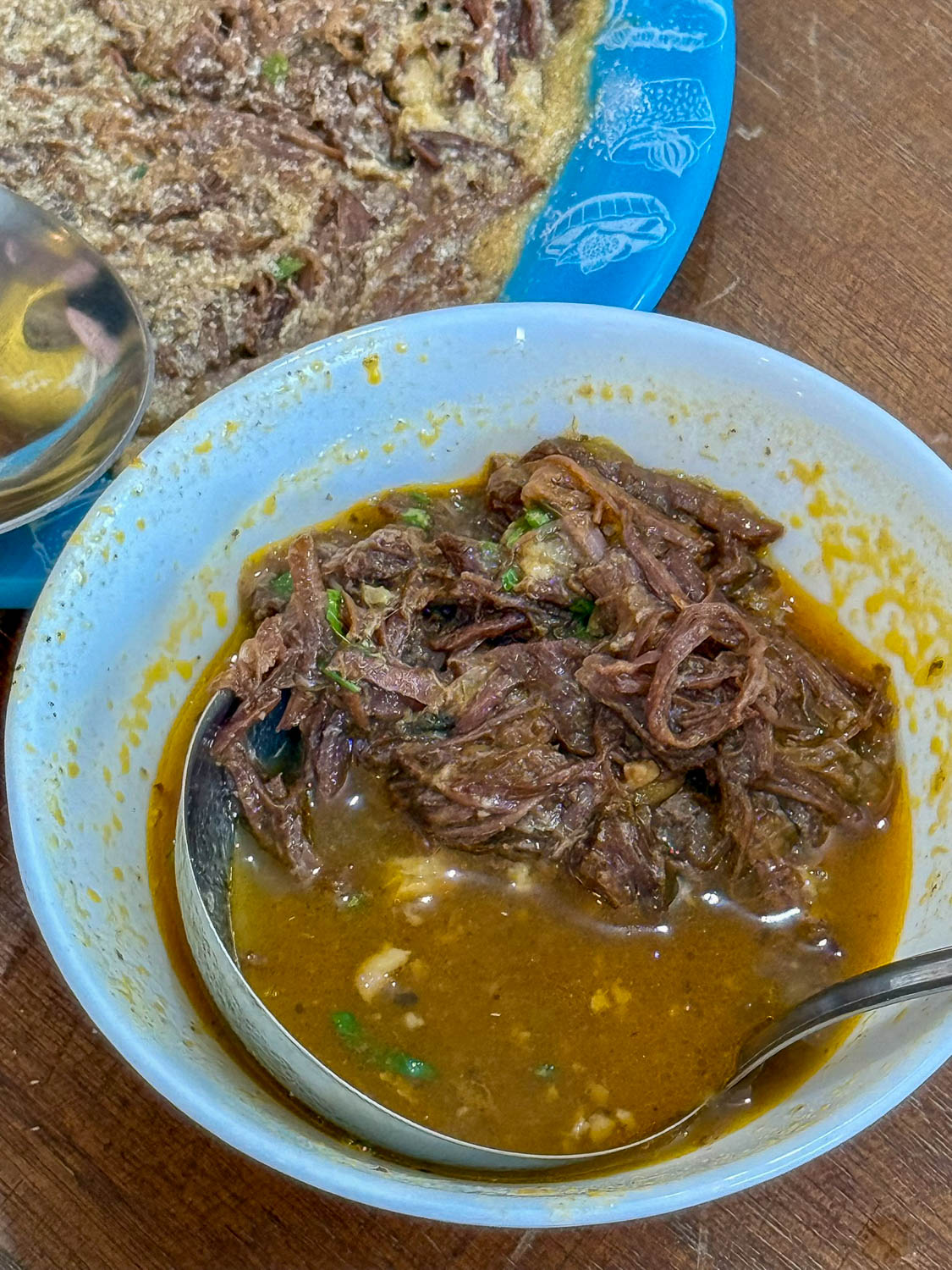
    Traditional barreado stew served at Simples Gastrobar in Morretes, Paraná, Brazil.
    A classic dish of barreado (Simples Gastrobar, Morretes)

    We found the most important attractions within Morretes to be incredibly accessible: everything’s close together, with the city center flat and walkable. You can easily go from a café by the banks of the river to a local art shop or the Igreja de São Benedito within minutes. Indeed, we found a day trip to Morretes ideal, but can absolutely appreciate the appeal in choosing to stay for longer. Staying overnight would permit a more relaxed pace of exploration, the chance to experience the town outside its busiest hours, and provide opportunities to explore some sights beyond the city limits.

    Serra Verde Express scenic train traveling between Curitiba and Morretes through Brazil’s Atlantic Forest mountains.
    Jump aboard the Serra Verde Express to explore the mountains between Morretes and Curitiba

    Whether you choose to take a scenic drive along the Estrada da Graciosa, explore the biodiverse-rich Ekôa Park, head toward the seaside for a few hours in Antonina, or venture inland toward the trails of Pico do Marumbi State Park, any direction you take from Morretes will afford you the opportunity to feel the deep heartbeat of Paraná.

    For detailed insight into any of the above nearby attractions, be sure to check out our sister article, Beyond Morretes.


    Local Events and Festivals

    Local cultural festival atmosphere in Morretes, Paraná, Brazil.
    There’s always something happening in Morretes!

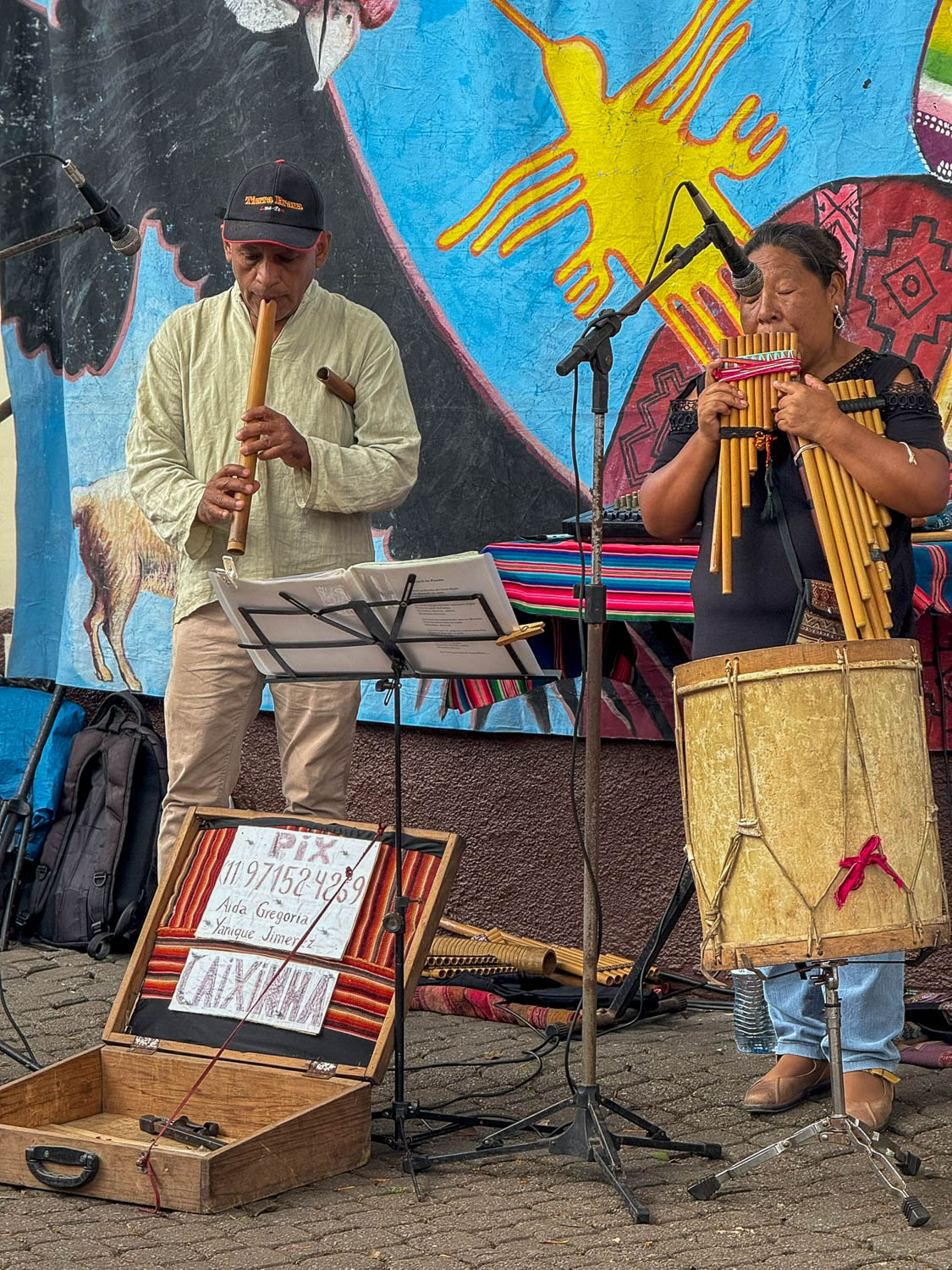
    Throughout the year, Morretes marks its traditions and celebrates community through a small but varied calendar of local festivals and events. These festivities range from religious celebrations and craft fairs, to music and cultural gatherings, many of which take place in and around the historic center. Visiting during these times can be a special occasion indeed, offering visitors a glimpse into the true spirit of Morretes’ character, the air filled with music, culture, heritage, dance and color.

    Some of the highlights of Morretes’ cultural calendar include the following. For detailed insight into these events, be sure to check out our sister article, Morretes: Local Festivals and Events.

    • Adhana Festival: a multi-day music, art, and connection festival, renowned for being a deep, transformative, psychedelic trance gathering.
    • Festa de Nossa Senhora do Porto: one of the most cherished events in Morretes, held each September in honor of the town’s patron saint.
    Historic Igreja Matriz de Nossa Senhora do Porto church in Morretes, Paraná.
    Igreja Matriz de Nossa Senhora do Porto (Morretes, Brazil)
    • Festa Feira Agrícola e Artesanal (Agricultural and Craft Fair): another multi-day celebration with a strong community focus and an opportunity to experience local crafts and food, live cultural performances and music, and agriculture.
    • Litoral Étnico – Mostra Folclórica de Morretes: a folk culture showcase, celebrating the rich ethnic diversity that has helped to shape the Paraná region.
    • Morretes Blues Festival: a free, accessible, open-air music festival with live blues performances by both established and emerging artists.

    Shopping in Morretes

    Cachaça tasting at a street market in Morretes, Paraná, Brazil.
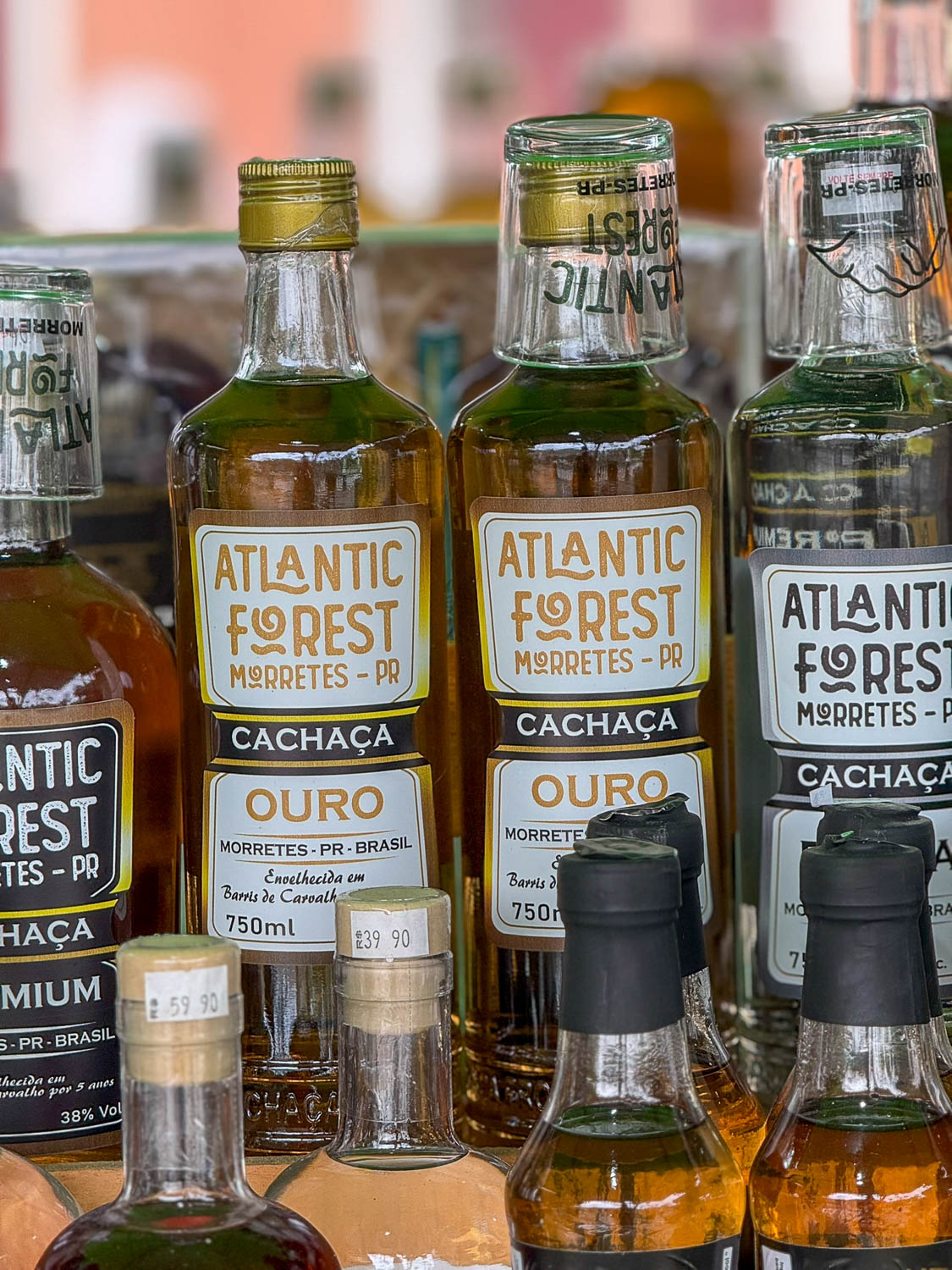
    Taste test some cachaça – a traditional Brazilian sugarcane spirit – at one of the street markets (Morretes, Brazil)

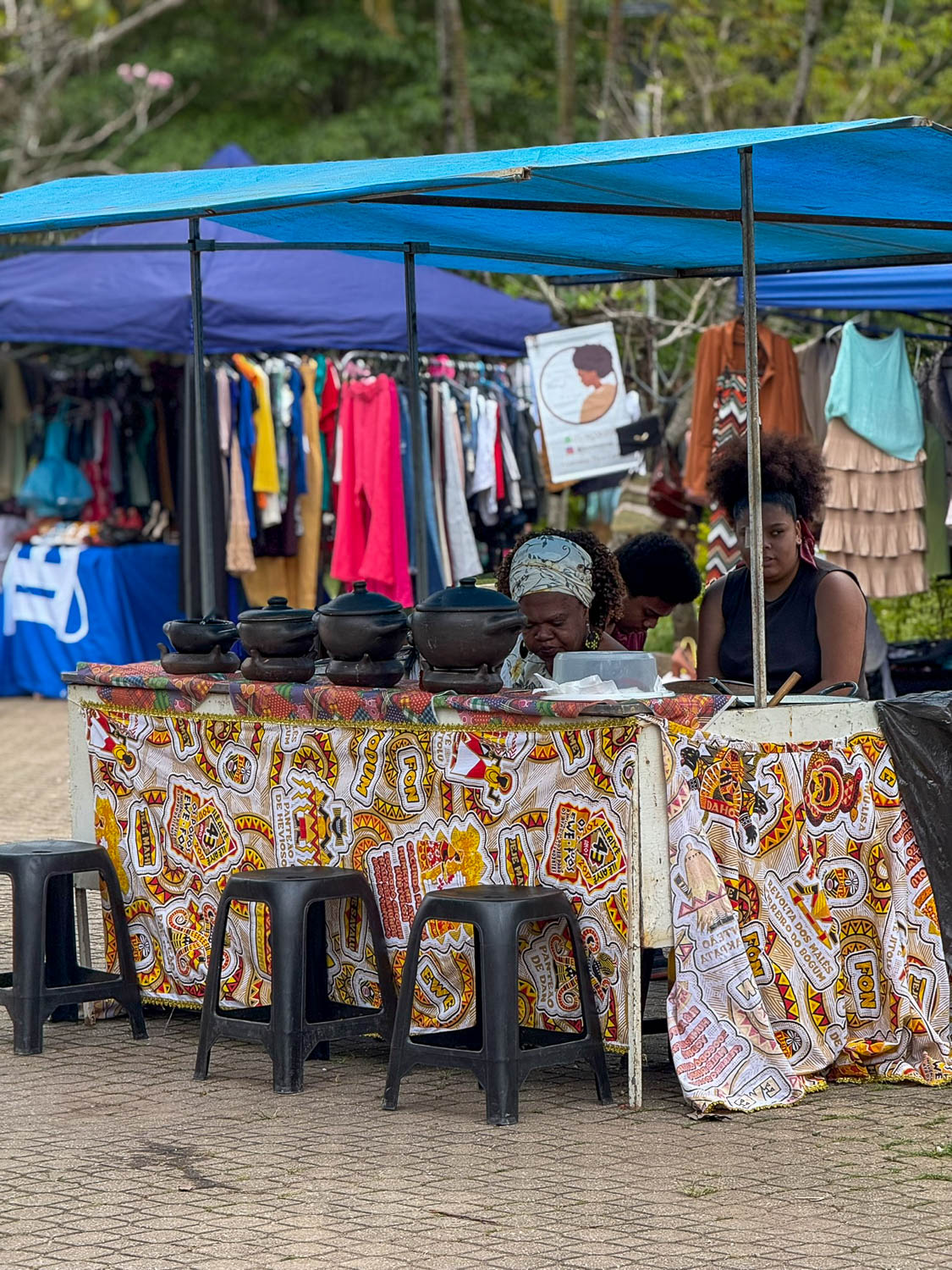
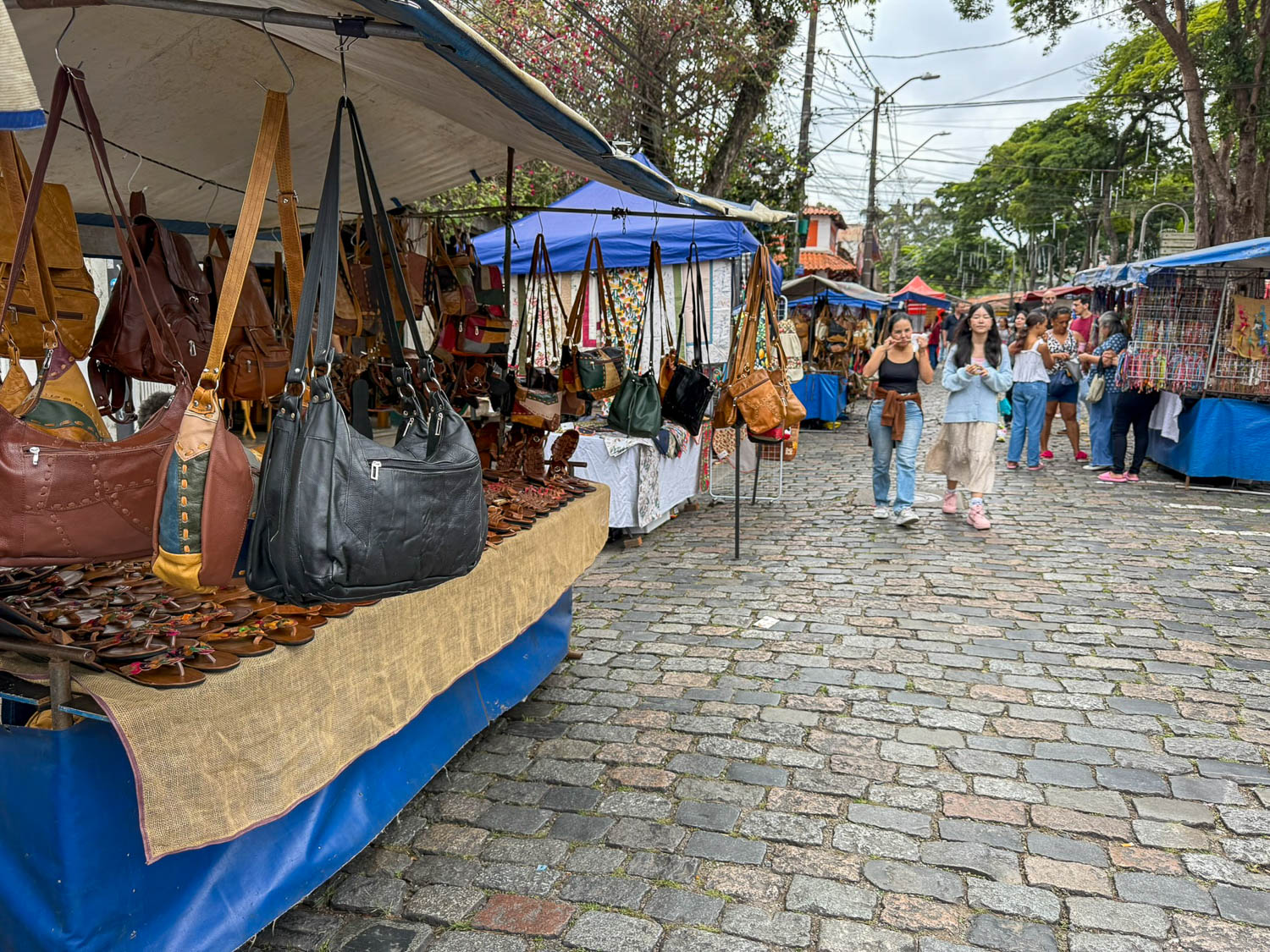
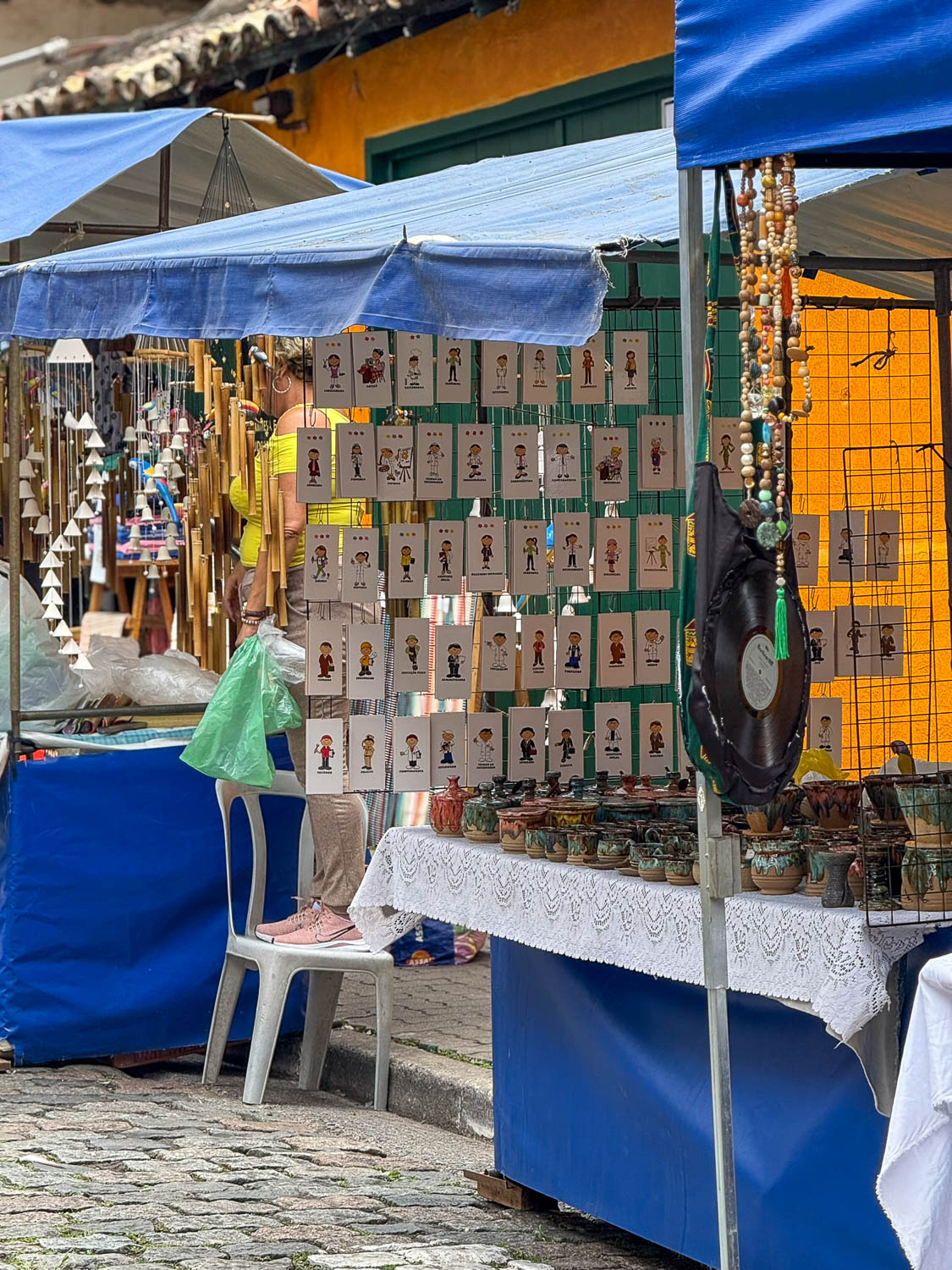
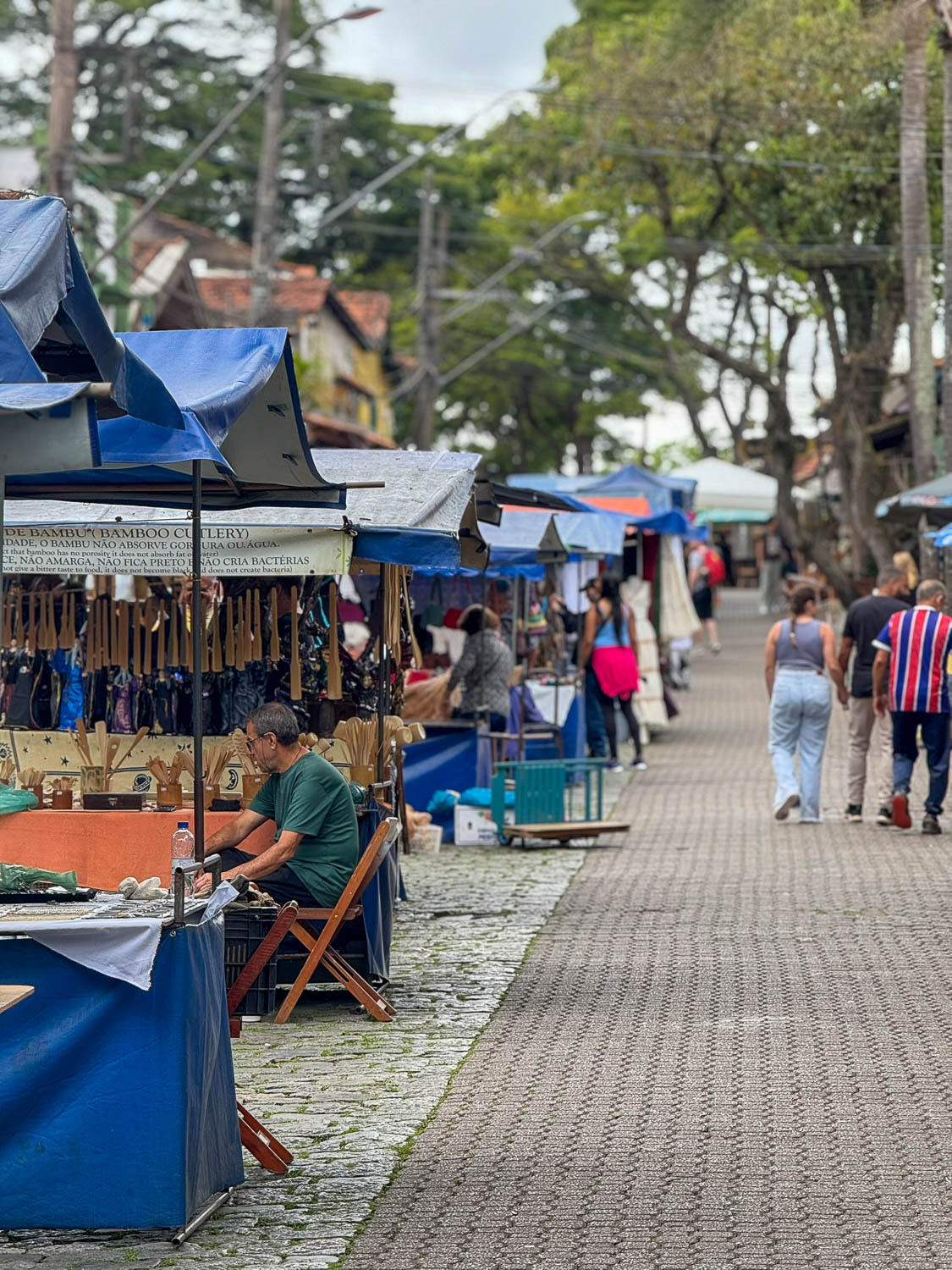
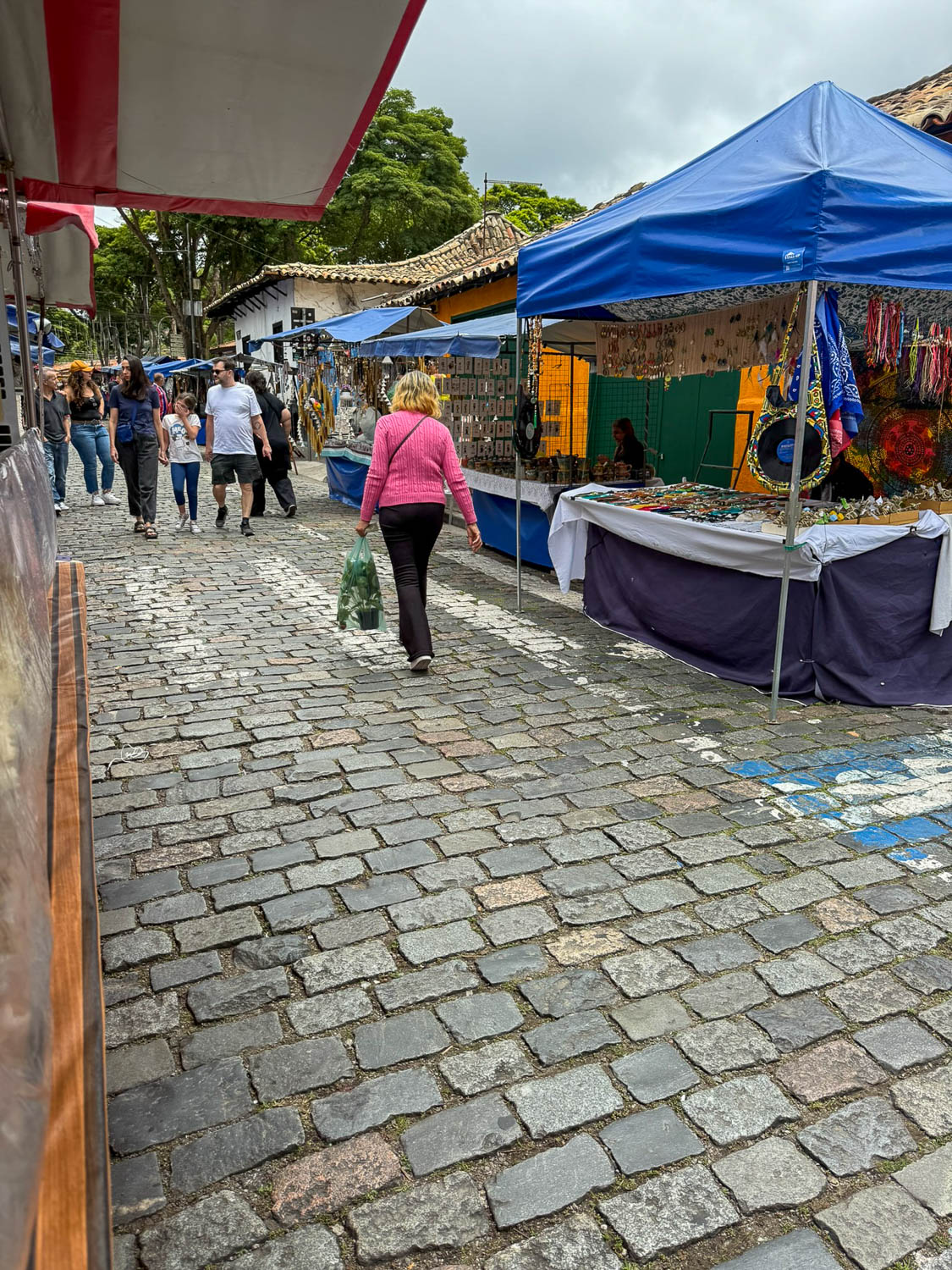
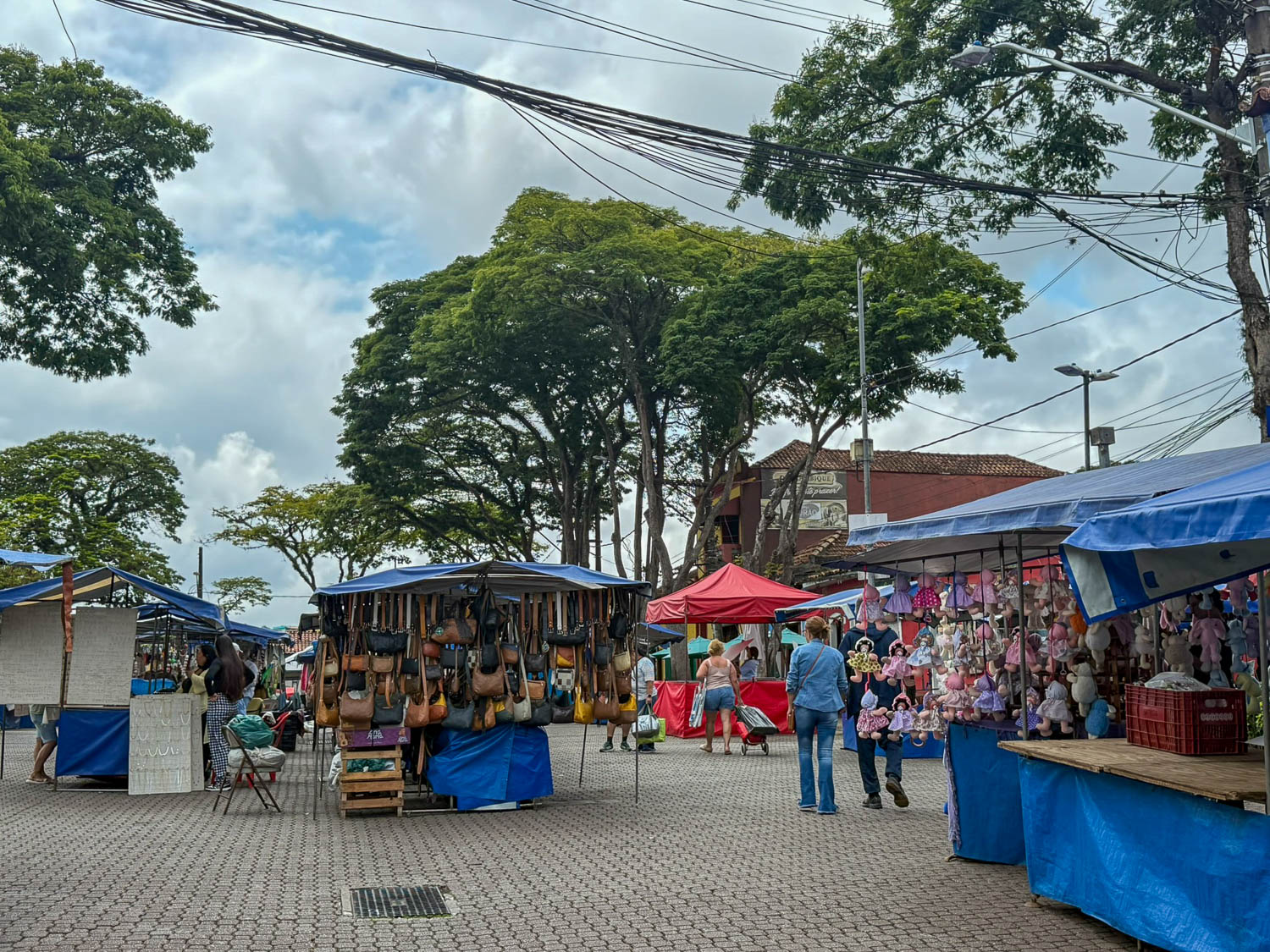
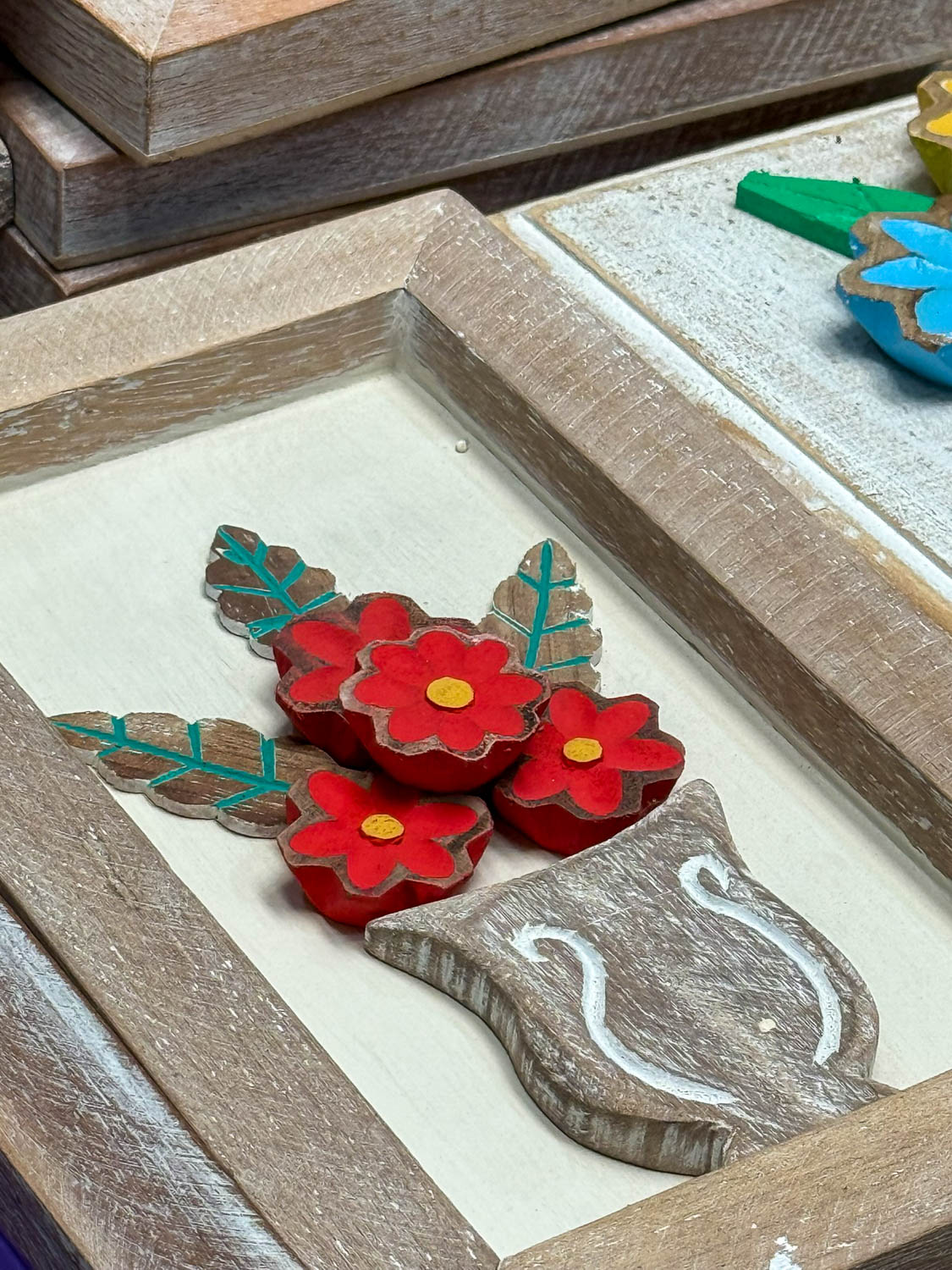
    The historic center of Morretes is characterized by small, colonial-era artisan shops where you can buy everything from handcrafted souvenirs (for example, clay pottery (a favorite of Beck’s!), woven baskets, and products made from banana fiber) to regional food products (look out for homemade jams, sweets, cachaça and chocolates). Along the cobblestone streets – and particularly within the small plazas that punctuate Rua das Flores – you’ll also find small market stalls, with locals selling similar wares, whilst outside of the historic center – in what locals refer to as “downtown Morretes” – you’ll find small department stores, selling everyday items ranging from clothing and shoes, to toys and household goods.

    Insider tip. Need to buy some water? Maybe some snacks for the bus ride home? Or simply need to use a restroom? There’s a large Supermercado Robassa at the northern end of the bridge that crosses the Nhundiaquara River near the Igreja Matriz de Nossa Senhora do Porto.

    Souvenir shopping in artisan shops in Morretes’ historic center in Paraná, Brazil.
    Souvenir-hunting in Morretes

    Insider tip. Many shops within the city limits are open daily, with peak activity on the weekends. That being said, many small shops also follow relaxed opening hours, so keep timing flexible in case the store you really want to visit isn’t open the first time you swing by.

    Fun fact. When shopping in Morretes, be on the lookout for regional specialities. The town is famous for products made from bananas and ginger (yum!), with bananas showing up in an unexpectedly wide range of souvenirs – banana-flavored cachaça (a traditional Brazilian sugarcane spirit) is especially popular!

    Handmade crafts and souvenirs for sale along Rua das Flores in Morretes, Paraná.
    Local handicrafts available for sale along Rua das Flores (Morretes, Brazil)

    On the weekends, the Feira de Artesanato de Morretes (Handicraft Fair) sets up at Praça dos Imigrantes (Immigrants’ Square), halfway along Rua das Flores. This lively artisan fair features unique local textiles, arts, and handicrafts, alongside handmade jewelry, pottery, and colonial-era replicas. Prices are reasonable, with most artisans accepting cash and credit cards, though it’s always wise to carry some Brazilian Reais for smaller purchases.

    Insider tip. We visited Morretes on a Tuesday and were delighted to find several local markets set up throughout the city: one near the southern end of the Ponte de Ferro and another on Rua das Flores, right outside the Pousada da Graciosa.

    The Flavors of Morretes: Barreado and Beyond

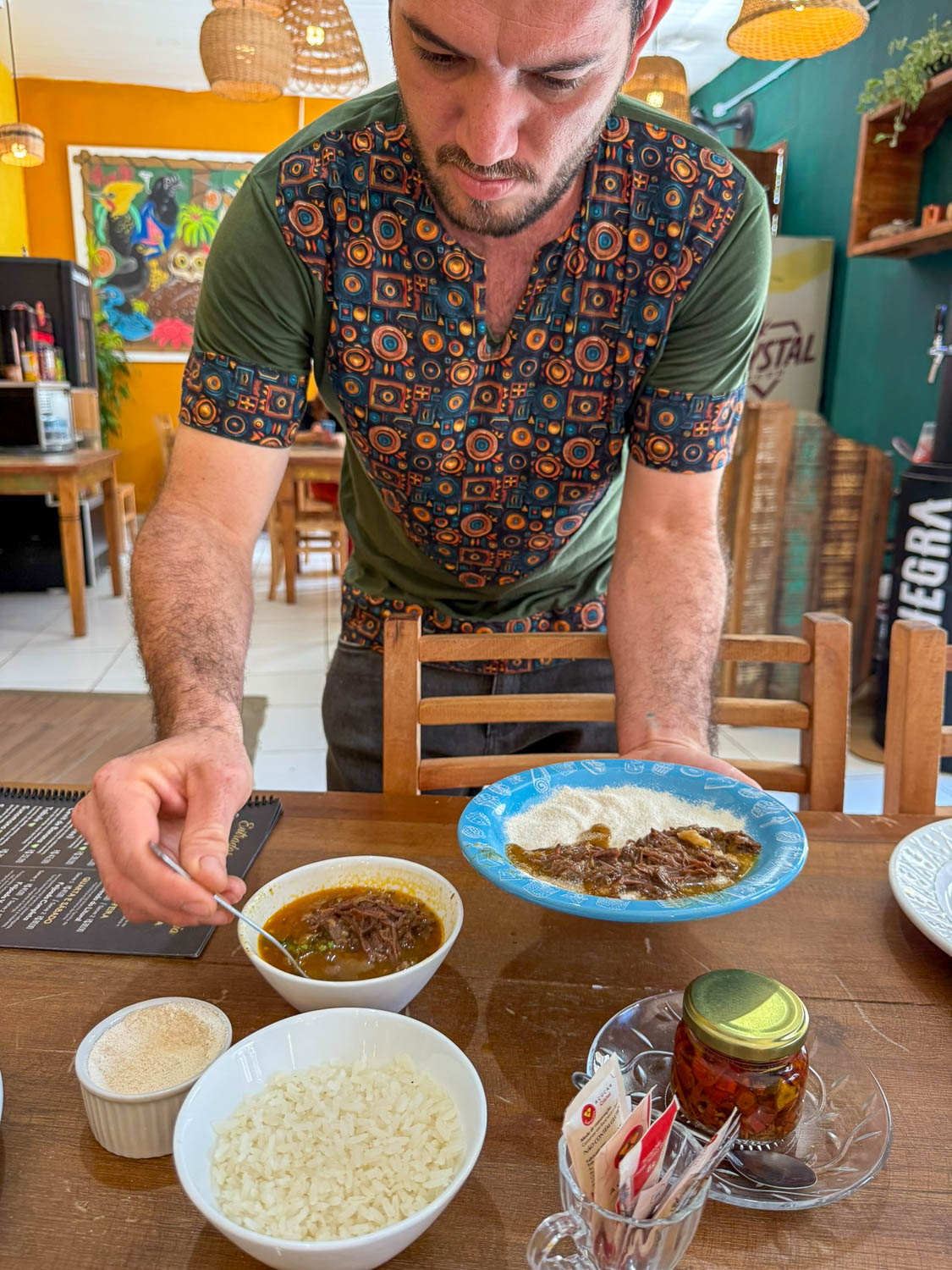
    Server presenting a traditional barreado meal at Simples Gastrobar in Morretes, Paraná.
    A server at the Simples Gastrobar serves us up a classic dish of barreado

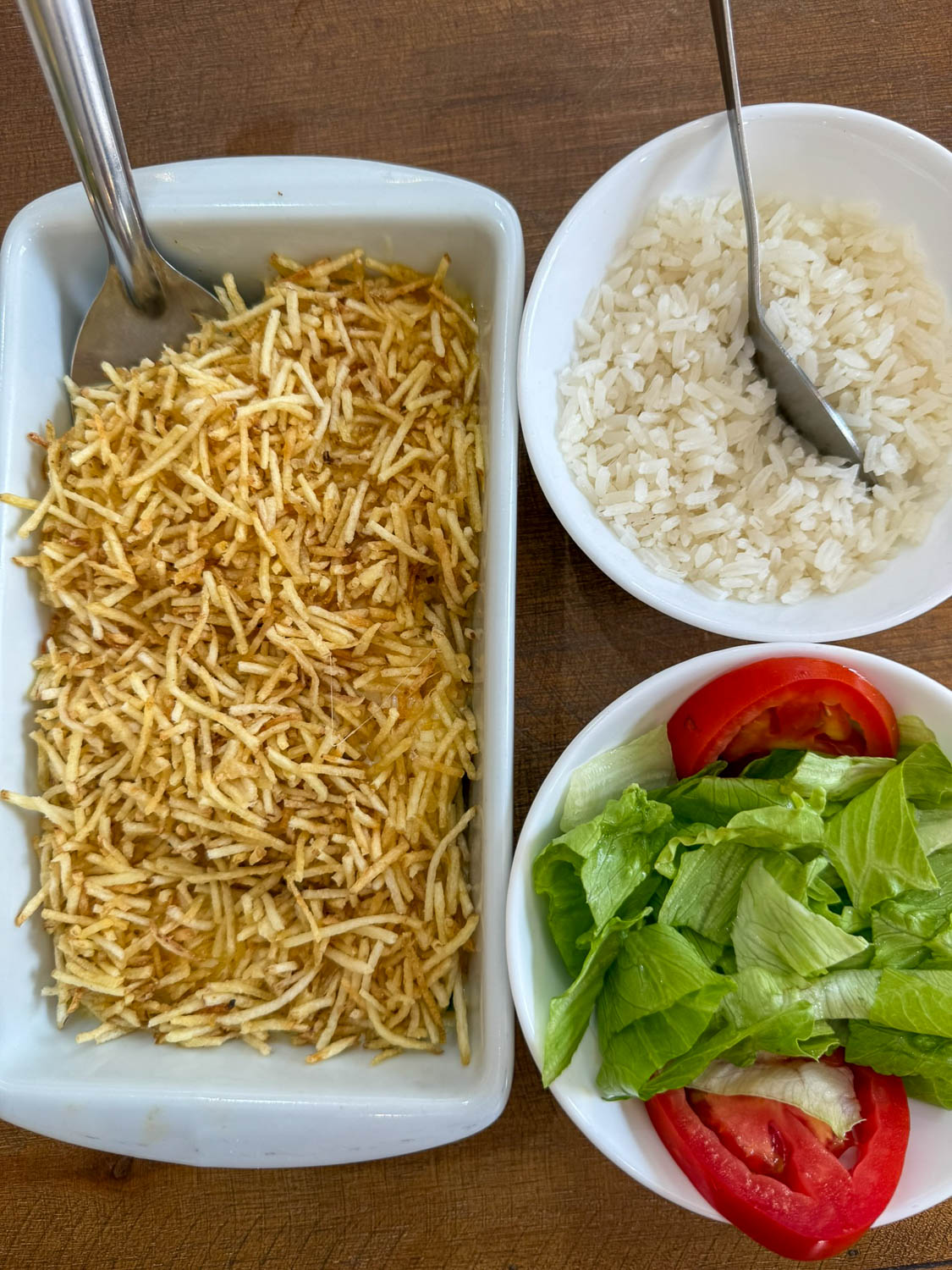
    Dining in Morretes is closely tied to tradition, with the town’s signature dish – barreado – at the center of the grand stage. Rooted in colonial history, this slow-cooked beef stew is served leisurely and often shared communally, reflecting the relaxed pace of local life. We encourage everyone who is up for it, to try it at least once!

    Whilst barreado appears on nearly every menu in Morretes, the town’s culinary scene extends well beyond its most famous dish. Riverside restaurants, neighborhood botecos, and smaller eateries offer fresh fish, regional specialties, local pastries, and banana-infused dishes that highlight the area’s agricultural roots.

    Homemade picolé popsicle sold in Morretes, Paraná, a refreshing Brazilian summer treat.
    Cool down from the hot summer sun with a homemade picolé, a popular Brazilian popsicle

    Insider tip. Lunch is the main event in town, making it an ideal time to settle in and enjoy the town’s flavors at an unhurried pace.

    For a deeper dive into where and what to eat in Morretes, we explore the food scene in this colonial town in our dedicated article The Flavors of Morretes: Barreado and Beyond. And if you’re looking for more information on Brazilian cuisine in general, be sure to check out our sister article, Brazilian Cuisine.


    Practical Information and Safety Tips

    Outdoor artisan market stalls in Morretes, Paraná, where many vendors prefer cash payments.
    Be sure to carry cash if you plan to make purchases at outdoor markets in town

    Whilst Morretes is an easy place to explore and feels refreshingly low-stress, a few practical pointers can enhance your visit even further. From personal safety awareness to what to pack, the general guidance below can help you feel more comfortable, prepared, and confident as you move around town.

    Personal Safety

    Despite its popularity, Morretes maintains its relaxed, small-town vibe. It’s a city that’s safe, welcoming, and easy to navigate. Of course, like any historic town that attracts its fair share of tourists – and even though we never once felt at risk – it helps to stay aware of your surroundings, especially at night or near the river.

    What To Bring

    Walking through the cobblestone streets of Morretes’ historic center in Paraná, Brazil.
    The cobblestone streets of Morretes’ historic center is best explored on foot

    Ensure you wear comfortable shoes during your visit, as you’ll no doubt do lots of walking, often on uneven ground. Don’t forget to also bring sun protection (it sure can get hot in southern Brazil, especially during the summer), a refillable water bottle, and small denominations of Brazilian Reais if you plan to do some souvenir shopping or make purchases at the outdoor market stalls (having cash on hand also makes it’s easier for tipping).

    Also consider bringing a map (or a navigation app – we simply used Google Maps and it worked quite well) to find lesser-known attractions tucked between the narrow streets. We found a translation app (our Portuguese kinda sucks) to be also incredibly useful, and highly recommend Translator Go, which allows users to take a photo of signs and menus (for example) in the local language, and translates them in real time into your preferred language. Game-changer!


    Final Thoughts

    Pastel-colored colonial buildings lining Rua das Flores in Morretes, Paraná, Brazil.
    Pastel colors adorn the walls of buildings along Rua das Flores (Morretes, Brazil)

    Whether you arrive by train on the Serra Verde Express, wind your way down the scenic Estrada da Graciosa on a day trip, or settle in for a quiet weekend by the Nhundiaquara River, Morretes has a way of gently recalibrating your pace. This is a town that reminds you what travel is really all about: the simple pleasures associated with slowing down, appreciating deeper connections, feeding your curiosity, and looking at things a little more closely.

    Set in the heart of the Atlantic Forest, Morretes offers a glimpse into history carved into colorful colonial façades and arched windows, faith expressed in whitewashed churches, and hospitality served with every meal. Historic mansions line cobblestone streets best explored on foot, church bells echo through the valley in the afternoon, and the sounds of birdsong drift in from the surrounding hills. And just when you think this charming town has shown you all it has to offer, the surrounding region quietly surprises you again.

    Festivals, artisan fairs, music-filled evenings, authentic food, and community all play central roles here, especially when a clay pot of freshly unearthed barreado arrives at the table with steam curling into the mountain air, the experience lingering long after the first serving. Morretes isn’t just picturesque (though we know it surely has that going for it too!) – it’s very much alive.

    There’s an energy here that feels both timeless and current. You sense it as you wander along Rua das Flores, chatting with local artists about their work, or standing amongst neighbors during a celebration where laughter, music, and community pride fill the air. Even brief encounters — a shared smile, a story about an old chapel, a casual explanation of a craft — leave a lasting impression.

    If you’re looking to find the soul of this country, you’ll find it alive and well here in Morretes. It’s an energy where everything seems to say “welcome!”. This town doesn’t try to impress. It doesn’t rush. It simply opens its doors and lets you experience life at its own rhythm. It’s the kind of place that doesn’t ask much of you — only that you pay attention. Are you ready to become part of its soul – to listen for whispers of colonial times and breathe in the earthy scent of the Mata Atlântica? If so, it’s time to start planning your trip to the state of Paraná’s very own Morretes!


    FAQs

    Is Morretes worth visiting?

    Yes. Morretes is worth visiting for its colorful colonial architecture, cobblestone streets, riverside restaurants, and lush Atlantic Forest scenery. Many travelers arrive on the Serra Verde Express train from Curitiba and spend the day exploring the historic center and trying the traditional Paraná dish barreado.

    What are the best things to do in Morretes?

    The best things to do in Morretes include exploring the historic center, walking along Rua das Flores, visiting Igreja Matriz de Nossa Senhora do Porto, crossing the Ponte de Ferro, strolling beside the Nhundiaquara River, browsing artisan markets, and enjoying a traditional barreado meal at a riverside restaurant.

    What is the best time of year to visit Morretes?

    The best time to visit Morretes is typically during the cooler, drier months from April to October, when the Atlantic Forest is lush and outdoor exploration is comfortable. Summer months (November–March) are warmer and wetter but still popular with visitors.

    Is Morretes safe for tourists?

    Morretes is generally considered safe for tourists, especially within the historic center where most visitors spend their time. Like anywhere, travelers should stay aware of their surroundings, keep valuables secure, and be cautious at night or in quieter riverfront areas.

    Where is Morretes, Brazil?

    Morretes is a historic colonial town in Paraná, southern Brazil, located about 70 km (45 miles) east of Curitiba in the Atlantic Forest (Mata Atlântica). The town sits along the Nhundiaquara River and is a popular day trip destination from Curitiba.


    Explore More Of Brazil

  • Port Santos, Brazil: Essential Cruise and Travel Guide

    Some journeys to South America begin with a city, others with the arrival at a port. For many travelers arriving by cruise ship, their first glimpse of Brazil interestingly comes not through sun-drenched Rio de Janeiro or the colonial-era Salvador, but by docking at Port Santos — the country’s busiest commercial port.

    Today, the Port of Santos is a large, high-volume port central to Brazil’s maritime trade – think of it as the beating heart of Brazil’s global trade, and its connection to the wider world. But whilst Santos is a port city where commercial operations remain front and center, for cruise passengers it’s a place where modern commerce collides with seaside relaxation, and where the bustling city of Santos itself greets you with beaches, museums, and warm hospitality. All this, with the cosmopolitan energy of São Paulo just a short hop, skip and jump away.

    In this article we share with you more about the Port of Santos and how to make the most of your time here: from walking the cruise docks where history shaped trade and culture across Latin America, to discovering cruise excursions for different travel styles, tasting Brazil’s legendary coffee at its source, and exploring the city and beyond. Follow us, fellow wanderers, as we guide you through Santos!


    Quick Tips

    Forte dos Andradas overlooking the coastline in Santos, Brazil, a historic military fort near the Port of Santos.
    Forte dos Andradas (Santos, Brazil)
    • The Port of Santos, located about 45 miles (70km) directly south of São Paulo, is the largest port in Latin America — and one of the busiest in South America.
    • The port operates 24/7 and is equipped with modern terminals designed to handle a steady flow of vessels, passengers, and cargo simultaneously.
    • The best time to visit Santos is during Brazil’s summer (December–February), when the port hosts the majority of its cruise traffic.
    • Inside the cruise passenger terminals you’ll find clean restrooms, security, ATMs, small souvenir shops and cafes, and ground transportation options.
    • Most people arriving into Santos choose to either explore the city and the port area itself, else take a day trip to São Paulo.
    • Santos offers visitors an historic center, beaches, museums, shopping, adventure activities, lighthouses, historic tram rides, and several open green spaces.
    • Always carry with you at least a small amount of local currency (Brazilian Reais) when going ashore.
    • Santos’ port operations include strong security measures, and the city and port area are generally considered safe and welcoming for tourists.

    Plan Your Trip

    Wide view of the Port of Santos, Brazil’s largest commercial port and a major hub for maritime trade in South America.
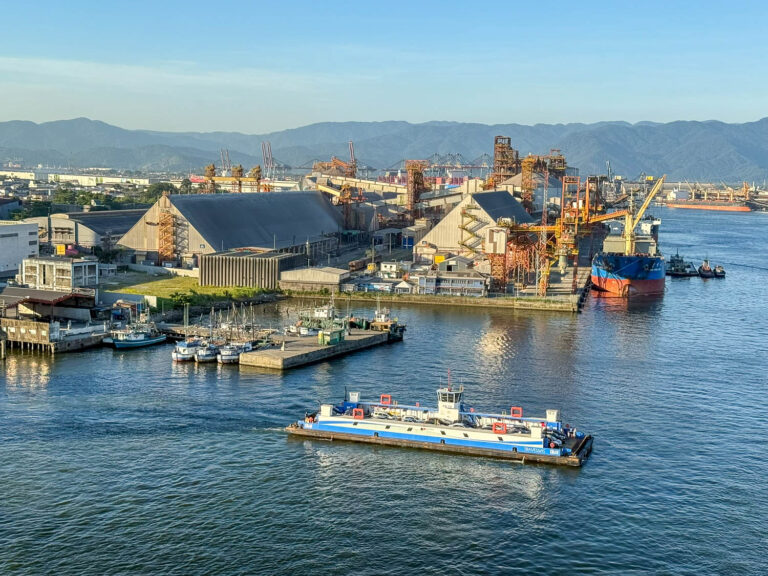
    Port Santos is a large, high-volume port central to Brazil’s maritime trade

    Some links below may earn us a small commission at no extra cost to you. We’re truly grateful for your support, as it allows us to continue sharing meaningful travel experiences and practical travel insights with you. Read our full disclosure here.

    Planning your visit? We’ve gathered recommended tours and activities, along with trusted travel tools, to help you explore with confidence and ease.

    Tours & Experiences


    Prefer additional options? Click below to discover more incredible experiences tailored just for you!

    Browse top attractions in Santos, Brazil.


    Travel Essentials?

    Planning the rest of your trip? These are the platforms we personally use when organizing our travels. For more planning tools, visit our Travel Resources page or browse current promotions on our Travel Deals page.


    The Strategic Role of Port Santos

    The Port of Santos in Brazil, the largest working port in South America, with cargo ships and container terminals visible.
    Port Santos, the largest working port in South America

    When your cruise ship glides into the Port of Santos, you’re docking at the largest port in Latin America — and one of the busiest in South America. Port Santos isn’t just a major maritime facility: it’s a symbol of Brazil’s strategic importance in world trade, an identity shaped by movement on an industrial scale.

    Fun fact. Santos is the busiest port in Latin America by cargo volume, operating across dozens of terminals spread along several kilometers of waterfront.

    A Hub of History and Trade

    View from a cruise ship sailing out of the Port of Santos, showing multiple cargo terminals and active port operations.
    Sailing out of Santos you’ll see many different sections of this working port

    Located in the state of São Paulo along Brazil’s southeastern Atlantic coastline, the Port of Santos lies about 45 miles (70km) directly south of the city of Sao Paulo, Brazil’s largest metropolitan area. And indeed, this sheltered estuary occupies a long-established strategic coastal position.

    Since the 19th century, the Port of Santos has been central to Brazil’s coffee trade (a huge draw for Mike!), funneling beans from the interior through the Serra do Mar mountain crossing, before being shipped onward to international markets.

    Fun fact. The Serra do Mar crossing was once one of the most challenging parts of the coffee production journey, requiring engineered rail solutions to move heavy coffee loads down to the coast.

    The expansion of coffee production in the early 1800s helped shape both the port’s growth and its long-standing role in global trade. Santos soon became Brazil’s primary point of export, with warehouses, rail links, and port infrastructure evolving to support the trade – a role that continues to influence its scale and layout today.

    Cargo operations at the Port of Santos, Brazil, handling containers and bulk goods for import and export.
    Today, the Port of Santos handles all sorts of imported and exported goods

    Fun fact. Coffee warehouses once lined large sections of the port. Today, some historic structures still reflect the storage and inspection needs of the trade — think wide doors, high ceilings, and proximity to rail lines.

    Today, the Port of Santos handles everything from general cargo, container traffic, and liquid bulk, to automobiles, dry bulk (including agriculture commodities), fertilizers, paper and cellulose (to name but a few of its imports and exports!), all whilst welcoming modern cruise passengers eager to explore.

    Fun fact. Much of the port’s bulk cargo today arrives and departs via rail, a legacy of the same transportation corridors first developed for the coffee trade.

    What Does All This Mean for Cruise Passengers?

    Cruise passengers waiting in embarkation lines at the Port of Santos cruise terminal in Brazil.
    Ship embarkation lines may look long, but they move quickly (Port Santos, Brazil)

    For cruise passengers like us, the scale and diversity of operations at the Port of Santos translate into a port environment that is purpose-built for volume and efficiency. Infrastructure here is extensive, the port equipped with modern terminals designed to handle a steady flow of vessels, passengers, and cargo simultaneously.

    As a result, cruise ship arrivals and departures tend to feel orderly and well-managed (this was certainly our experience!), with clearly defined processes and an ease-of-flow shaped by decades of high-volume maritime activity. From the moment you disembark (or begin your embarkation), it’s evident this is a port accustomed to moving people and goods smoothly and professionally through a complex, working environment.

    Fun fact. Despite its industrial scale, cruise ships dock at Port Santos within the same active port zone as commercial vessels, which means passengers arrive amid the day-to-day cargo operations (it’s pretty cool to watch from the deck of your ship!).


    Port Infrastructure, Operations and Logistics

    Buses transporting cruise passengers to the ship’s gangway at the Port of Santos cruise terminal in Brazil.
    Buses await embarking cruise ship passengers to whisk them down to the ship’s gangway (Port Santos, Brazil)

    Behind the scenes, port operations at Santos are orchestrated with precision. The port is home to multiple terminals – including those for ship containers, liquid and dry bulk, and cruise ships – ensuring separate, yet coordinated operations, whilst specialized equipment throughout the port ensures loading and unloading moves at competitive speed.

    Fun fact. Operations at the Port of Santos run 24/7.

    Santos Port Authority

    Cruise ship departing the Port of Santos and sailing along Brazil’s southeastern coastline.
    Departing Santos on a cruise up the coastline

    At the core of efficiency – and indeed much of Santos’ day-to-day port-side rhythm – is the Santos Port Authority, a dedicated governing team responsible for every detail of the port’s operations, from long-term infrastructure planning and projected growth, to security, environmental management, and operational coordination. In managing the daily flow of vessels and enforcing rigorous control protocols, the Santos Port Authority ensures that visitors — from major shipping companies to cruise passengers — experience reliability, comfort and safety. Safety in particular is prioritized, with modern processes and risk management systems in place.

    The role of the Santos Port Authority also extends beyond the docks themselves, accounting for the port’s impact on regional commerce, transportation networks, and daily life in Santos.

    The Cruise Terminals

    Shops inside the Concais cruise passenger terminal at the Port of Santos selling travel essentials and souvenirs.
    Did you forget your sunscreen? What about flip-flops? Not to worry, the cruise passenger terminals have everything you might need!

    Arriving at the modern cruise passenger terminals in Santos – the Concais Passenger Terminals – you’ll immediately see why this is Brazil’s largest port. The port itself stretches for kilometers along a sheltered estuary, with specialized docks, railway lines, warehouses and heavy machinery supporting the constant flow of both industrial cargo operations and passenger arrivals.

    For cruise travelers, the oversight of the port by the Santos Port Authority translates into a port environment that operates with structure and intent, balancing the demands of large-scale industry with the steady movement of passenger cruise ships.

    Fun fact. There are two cruise passenger specific terminals in Santos, operating simultaneously to allow multiple cruise ships to dock at the same time during peak season.

    Interior of the Port of Santos cruise terminal showing seating, security, and passenger facilities before embarkation.
    The cruise passenger terminals are complete with all the conveniences you might need before embarkation.

    For visitors, it’s easy to notice the operational efficiency throughout the port, which made us feel incredibly confident as we sailed through (‘scuse the pun!) from the front door to the ship’s gangway. Inside the terminals you’ll find clean restrooms, security, ATMs, small souvenir shops and cafes, and reliable ground access to buses, taxis, private transfers and cruise excursions.

    Fun fact. The emphasis on operational efficiency at the Port of Santos means cruise ships dock and disembark on time, minimizing delays. Luggage is whisked off to your ship with a short but friendly exchange, lines move quickly, and everything feels … well … very organized.


    History and Cultural Importance of Santos

    Skyline of Santos, Brazil, with beachfront high-rise buildings lining the Atlantic coastline.
    The city of Santos’ skyline

    Beyond its role as a high-volume commercial trade port, Santos has a deep cultural identity, with the unique blend of maritime operations and a vibrant city: Santos truly is a living chapter in Brazil’s story. Today, football clubs, cultural festivals, and street art all contribute to the life of the local community.

    However, like many large working ports, the Port of Santos has certainly faced its share of challenges in the past, forced to navigate periods of change shaped not only by trade and infrastructure, but also by the very people who kept the port running with labor-intensive, physically demanding work. In days gone by, the port faced significant battles with yellow fever, workers had to adapt to shifting labor conditions and roles, disputes and strikes, and the introduction of new technologies and economic and political shifts added additional stressors.

    Fun fact. Yellow fever epidemics notoriously plagued the port in the 19th century, earning it the nickname “port of death”: as a result, ships often chose to avoid docking in Santos.

    Modern cruise passenger terminal at the Port of Santos, Brazil, designed to handle high volumes of cruise travelers.
    The modern, spacious, 21st century version of Santos’ cruise ship passenger terminal

    Despite these periods of significant change and demands, dock workers adapted well, playing a steady role in port operations – and what visitors see in today’s modern port environment reflects this adaptation, and indeed the resilience of the individuals who helped to shape this efficient, high-volume port.


    Economic Impact & Global Markets

    Small tugboats operating in the estuary at the Port of Santos, Brazil, assisting large cargo ships.
    Small tug boats ply along the estuary (Port Santos, Brazil)

    Some visitors often ask why Santos – and indeed the port itself – matters so much. “Why all the hub-hub?” Indeed, the city’s influence stretches far beyond the paved roads and the leaning beachfront apartment towers: it serves as Sao Paulo’s economic powerhouse.

    As we know, Santos is Latin America’s largest port, and today handles almost 30% of Brazil’s trade (both export and import), which significantly boosts the country’s economy (think job creation and connecting South America to other global markets). Here are some other interesting facts – some of them even a little quirky! – that can help put your visit to the Port of Santos into even greater perspective.

    • The Port of Santos connects Brazil to over 200 ports in 80 different countries, with especially strong trade links to Japan, China, Europe and the U.S.
    • The port regularly competes with major U.S. and European ports for volume. It handles well over 170 million tons of cargo annually: this total outweighs every commercial passenger aircraft in the world combined … many times over!
    • Santos is the world’s leading coffee export hub. It’s very possible your morning coffee began its international journey here!
    • Whilst soybeans are Brazil’s largest agricultural export by volume (who knew?), the Port of Santos also ships orange juice concentrate on such a grand scale that it ends up playing a role in global breakfast prices, especially in the U.S. and across Europe (share this one with the kids next time you’re sitting down to a fresh glass of OJ together!).
    • Delays of fertilizer imports in Santos can have a direct effect on global food supply chains beyond the continent, as these shipments directly influence Brazil’s agricultural output.
    • The port is not just about cranes and containers: workers here are employed within port cafes, are hired as regional tour operators and customs officials, and work within trucking companies and even ship chandlers (we must admit we had to look that one up – these are businesses who supply ships with everything they’ll need whilst in port).

    Expansion projects associated with the port – including upgraded infrastructure, zoning, sustainability and technology – will continue to be a major driver of new jobs over the coming years, reinforcing Santos’ role as a long-term economic anchor for the region.

    Of course, all this isn’t to say the city of Santos itself isn’t worth a wee bit of exploration – because it is! And we appreciate that’s probably one of the reasons you chose to read this article in the first place…


    What To Do In the Port of Santos

    Boat tour departing from Santos, Brazil, offering views of the Atlantic coastline near the Port of Santos.
    Consider a boat trip to explore the Brazilian coastline (Port of Santos, Brazil)

    Most people arriving into Santos – especially by cruise ship – choose to either explore the city and the port area itself, else take a day trip to Sao Paulo.

    For those of you keen to stay close to the ship, the following Santos sights are worth considering during a day of exploration. With a bit of pre-planning and a solid map (or guide!) by your side, you’ll be able to take in many of these in one day, creating for yourself a surprisingly diverse shore experience.

    Insider tip. Your cruise ship will dock right at the edge of the Santos port, with many key historic attractions just a short walk or quick taxi (or Uber) ride away.

    For an in-depth look at each of the attractions below, be sure to check out our sister article, Things To Do and See in Santos.

    • Beaches: Santos is also known for its long, continuous stretch of urban beaches (you might see it listed elsewhere as a “beachfront garden” or “seaside garden”)
    • Guarujá: come here for beaches, shopping, hang gliding, lookouts, and steam trains.
    • Ilha da Moela Lighthouse: the oldest lighthouse in the State of São Paulo, dating back to 1830.
    • Ilha Porchat (Porchat Island): come here for stunning coastal views and famous hilltop monuments.
    • Linha Turística do Bonde: take a ride on this historic tourist tram, offering guided tours through the city’s historic center and port area.
    • Monte Serrat: rising above the historic center, this city hilltop provides a high-level view over the port, city, and coastline (hike or take the funicular to the top!).
    • Museu do Café (Coffee Museum): explore exhibits that focus on coffee production, export, and the infrastructure that supported Brazil’s coffee industry’s boom.
    Lush green Serra do Mar mountains rising just outside Santos, Brazil, near the Port of Santos.
    The lush green mountains just outside Santos are begging to be explored
    • Pantheon of the Andradas: the mausoleum for the Andrada brothers, key figures in Brazil’s fight for independence from Portugal.
    • Parque Valongo: an evolving family-friendly public space that highlights recent urban revitalization efforts in Santos.
    • The Pelé Museum: a comprehensive, interactive tribute to the late legendary Brazilian football (soccer) player Edson Arantes do Nascimento.
    • Santos’ historic center: wander cobbled streets and see colonial, imperial and early industrial-era architecture with restored facades.
    • Santos Municipal Aquarium: a compact, well-organized museum featuring native Brazilian marine life and displays speaking to its pioneering efforts in marine conservation.
    • São Vicente: one of Brazil’s oldest European-settled cities, founded in 1532.

    Insider tip. With more to see and do in Santos than one might expect, you may wish to consider joining a half- or full-day tour of the city, to help maximize your time on shore.

    A Day Trip To São Paulo

    Private transfer vehicle traveling from the Port of Santos to São Paulo for a day trip.
    We recommend using Santorini Transfers for visits to São Paulo

    As we know, Santos is not only South America’s busiest port, but also the gateway to Sampa: the affectionate nickname given to São Paulo. And if your itinerary permits it, we highly recommend considering a day trip here.

    For more information on how to include a side trip to São Paulo during your time on shore in Santos, don’t forget to check out our in-depth guide to Santos, Things To Do and See in Santos.


    Making the Most of Your Shore Time in Santos

    Traffic near the Port of Santos in Brazil, highlighting potential delays for cruise passengers heading to or from the port.
    Take into account potential traffic delays when heading to or from the port (Santos, Brazil)

    To make the most of your time exploring all that Santos has to offer — from cultural highlights to coastal escapes — a little advance planning can go a long way.

    Unlike many other cruise ports around the world, Santos is an active – and very busy! – working port, so keeping a few practical details in mind, and knowing what to expect before stepping off the ship, can help ensure your day runs smoothly and remains stress-free.

    • Expect a working port environment in Santos. This is an active commercial port, so you’ll no doubt see trucks, cranes, cargo terminals, and industrial areas before reaching more scenic spots — in good news, it’s all part of the experience!
    • Some attractions in Santos may be a little farther from the port than you originally anticipated (we know we’re not all like Beck, who prefers to walk everywhere!). Plan ahead for your transportation needs, including downloading the Uber app and knowing how to contact local taxis if needed.
    • If your ship departs late afternoon, or even in the early evening, consider staying close to Santos when you head ashore, or choose a half-day excursion to avoid feeling rushed to get back to the ship on time.
    • Plan your timing carefully. Whilst exploring Santos can be wonderfully relaxed, if you choose to leave the city limits (even briefly), make sure to allow extra buffer time for traffic and port security upon your return.
    Cruise passengers departing the Port of Santos on an organized shore excursion tour in Brazil.
    Shore excursions run by your cruise line generally offer the best bang-for-your-buck
    • Consider booking through your cruise line an organized shore excursion. These excursions offer peace of mind with ship-guaranteed returns, which can be especially reassuring if you’re heading a little farther afield.
    • Know exactly where you’re docking. The Port of Santos is large, spread out, and can be confusing upon first arrival. If you choose to use an independent tour operator or arrange your own transport during your time ashore, confirm in advance exact pick-up and drop-off times and locations, as well as contact details and how best to reach the tour operator in case of delay or emergency.
    MSC Seaview cruise ship docked at the Port of Santos in Brazil during embarkation.
    Embarking the MSC Seaview at the Port of Santos
    • Factor in embarkation procedures when you return to the ship. Re-boarding can take time due to additional security checks and long lines (especially if you’re like Beck and like to make the most of your time ashore, returning to the ship mere seconds before the final all-aboard call!).
    • Carry only what you need for the day in a small bag. There’s no need to carry with you your passport, excess cash or valuables – all these can be stored securely on the ship or in your hotel room’s safe.
    • Dress appropriately – it can get very hot and humid in Santos! We recommend wearing lightweight clothing, sun protection, and comfortable walking shoes during your time ashore.
    • Always carry with you at least a small amount of local currency when going ashore (or at the very least know where you can obtain some). Small cafés and shops, kiosks, souvenir stands, museums and taxis/rideshares may prefer cards or cash in Brazilian Reais (BRL or R$), especially outside of the city center.
    • Embrace flexibility. Weather, traffic, tourist numbers, and port operations can all influence the day. Ensure you have a loose plan rather than a packed checklist of things to do and see.

    These are just a few cruise-savvy, practical tips designed to help you get the most out of your shore day in Santos. We hope they’ll assist you in navigating the port, planning your timing, and enjoying your Santos experience with confidence!


    Safety in Santos

    Travel gadgets and electronics useful for a cruise visit to Santos, Brazil, displayed before going ashore.
    There’s no need to flash about fancy electronics when you’re exploring Santos – but these gadgets can come in handy on your cruise!

    Many travelers have asked us if Santos is safe for visitors. We never once had any issues in the city and understand Santos is generally safe for tourists. Certainly, Santos’ port operations include strong security measures, with staff onsite experienced in supporting over a million cruise passengers each year.

    However, like any major city, we remind travelers to stay aware and exert caution – but there’s also no need to be anxious. Basic situational awareness and common-sense precautions will go a long way during your time ashore. We also recommend keeping in mind the following snippets of advice, which we take with us on all adventures, locally as well as internationally.

    • Stick to well-traveled and well-lit areas, especially after dark.
    • Don’t walk alone at night and avoid isolated beaches after dark.
    • The beach areas of Santos – especially the beachfront gardens – are generally considered safer than other parts of the city.

    Insider tip. The historic center of Santos is considered more dangerous than other parts of the city due to homelessness and drug-related crime.

    • Follow guidance from local guides and/or cruise staff.
    • Carry only what you need for the day and keep any valuables close at all times (especially in the historic area of Santos or if you find yourself away from touristy areas).
    • Use reputable (and official, where possible) transportation options.
    • Keep an eye on your food and drinks, and don’t accept food or drinks from strangers.

    For us, Santos ultimately felt comfortable, welcoming, and easy to navigate – and indeed no more challenging than many other port cities we’ve visited around the globe. With a little awareness and sensible precautions, most travelers will be able to explore the city with confidence and ease, focusing fully on enjoying their time ashore.


    Final Thoughts

    Cruise ship sailing away from the Port of Santos, Brazil, leaving the busy commercial port behind.
    Sailing out from the Port of Santos one immediately feels worlds away from South America’s largest and busiest port

    As Brazil’s – indeed South America’s! – largest working maritime hub, the Port of Santos is worth some attention. The port itself is buzzing with cargo, ships of all shapes and sizes, and business is conducted around the clock. It’s here that you’ll uncover the story behind Santos’ strategic location, its resilience, and its central role in Brazil’s global trade.

    And of course, whether you’re stepping ashore for just a few hours to explore the beaches or historic center of Santos, or planning a full-day inland adventure, this port city offers a genuine taste of Brazilian coastal life. Here, the industrial scale of port operations somehow coexists seamlessly with the intimate charm of sipping coffee inside the Museu do Café; and even with the adrenaline of heading north to the economic and cultural powerhouse of São Paulo, there’s balance to be found in the serenity of a seaside stroll.

    We invite you once again to explore. To pack those comfortable shoes. To leave your jewelry and fancy handbag (you know the one) in your ship’s cabin. To taste Brazil’s legendary coffee at its source. And to jump all in – grit, glam and everything in between – to see what Santos is truly all about. Are you ready to let us guide you in planning your adventure to the Port of Santos?


    FAQs

    Where is Port Santos located, and how far is it from São Paulo?

    Port Santos is located in the coastal city of Santos in São Paulo state, Brazil. It sits about 45 miles (70 km) south of São Paulo city, and travel time typically ranges from 1.5 to 3 hours depending on traffic and your transfer method.

    What can cruise passengers expect when docking at Port Santos?

    Port Santos is a high-volume working port with modern cruise facilities at the Concais Passenger Terminal(s). Expect organized disembarkation, strong security, and clear passenger flow. Inside the terminal you’ll typically find restrooms, ATMs, small shops, cafés, and ground transportation options like taxis, rideshares, and cruise buses.

    What are the best things to do near Port Santos on a shore day?

    Top options near Port Santos include exploring Santos’ beaches and beachfront gardens, riding the Linha Turística do Bonde (historic tram), visiting the Museu do Café (Coffee Museum), enjoying viewpoints from Monte Serrat, and exploring the historic center for colonial-era architecture and cultural attractions.

    Is Santos, Brazil safe for tourists and cruise visitors?

    Santos is generally considered safe and welcoming for tourists, especially around the beachfront areas and popular attractions. As with any major city, use common-sense precautions: keep valuables secure, avoid isolated areas after dark, and stay aware in the historic center, where safety can be more variable.

    Can you do a day trip to São Paulo from Port Santos?

    Yes — a day trip to São Paulo (often called “Sampa”) is one of the most popular shore excursions from Port Santos. It’s best done with a pre-booked private transfer or cruise-organized tour to manage traffic and timing, especially if your ship departs in the late afternoon or early evening.


    Explore More Of Brazil

  • Paraty Brazil Travel Guide: Best Things To Do in Town

    Set along Brazil’s lush Costa Verde, the coastal town of Paraty is one of those beautifully rare destinations where history, culture, and natural beauty blend seamlessly. This colonial town has earned its reputation as one of the most charming spots in Rio de Janeiro state, drawing visitors from across South America and beyond. The allure begins with its historic center, where cobbled streets, colorful doors, and carefully preserved historical buildings create a living museum under open skies.

    Needless to say, we fell in love immediately.

    Of course, Paraty isn’t just about the past. This incredible town is framed by rainforest-clad mountains, fringed with secluded beaches, and surrounded by tropical islands scattered across Paraty Bay. A trip here often includes wandering between art galleries, coffee shops and characterful restaurants (and then more art galleries) in the historic old town, heading out on a boat trip to discover Brazil’s only tropical fjord (Saco do Mamanguá), or savoring fresh seafood whilst listening to live music in a cobblestoned square.

    Designated a UNESCO World Heritage Site in 2019, Paraty is recognized not only for its preserved colonial town, but also for the Atlantic Forest and coastal landscapes that surround it. This rare blend of culture, history and nature shapes much of the experience here and helps explain Paraty’s carefully preserved character.

    Read on, fellow wanderers, as we share with you why we feel Paraty continues to charm travelers and invites a slower pace of exploration … and indeed some of the moments, places, and small details that make Paraty such a rewarding stop along Brazil’s Costa Verde.


    Quick Tips

    Horse-drawn cart traveling through the cobblestone streets of Paraty historic center in Brazil
    Horse-drawn carts are a common sight throughout Paraty’s historic center
    • Paraty sits about 4 hours by road from Rio de Janeiro and about 5 hours from São Paulo. Most visitors arrive by bus or car from either city.
    • Paraty can be visited at any time of year.
    • Getting around Paraty is easy: the historic center is compact and largely pedestrian-only, whilst other sights can be reached by taxi, rideshare, boat, or on a private or group tour.
    • The historic center of Paraty is its main attraction, with cobbled streets, historical buildings, and colorful doors that showcase Brazil’s colonial town heritage.
    • Boat trips to discover Paraty Bay, tropical islands, and white sand beaches are also a popular excursion from Paraty.
    • The coastline around Paraty is dotted with more than 60 beaches, with Sono Beach, Trindade Beach, Paraty Mirim and Jabaquara Beach generally having the most appeal for visitors.
    • Hiking the Gold Trail (Caminho do Ouro) affords visitors a glimpse into the history of the region, passing by waterfalls, shaded forest corridors, and quiet clearings.
    • Half- and full-day trips outside the historic center are popular, including visits to nearby Indigenous communities, Angra dos Reis, Ilha dos Meros, Serra da Bocaina National Park, and a drive along the historic Gold Rush Route.
    • Beyond its sights and stunning natural scenery, daily life in Paraty unfolds through its network of small shops and artisan boutiques, relaxed dining, and evenings that reflect the town’s easygoing pace. 
    • Several festivals, including the annual Paraty International Literary Festival, are woven into the fabric of Paraty, shaping the town’s rhythm throughout the year.
    • Accommodations in Paraty reflect the town’s charm, history and relaxed pace, with a strong emphasis on smaller, locally-run properties. 
    • Compared with some of Brazil’s larger cities, Paraty is widely regarded as a safe place for visitors (just watch out for the occasional flooded street during high tide!).

    Plan Your Trip

    Cozy cafés along cobblestone streets in the historic center of Paraty, Brazil
    The quiet, cozy cafes nestled amongst Paraty’s cobblestone streets invite longer stays

    Some links below may earn us a small commission at no extra cost to you. We’re truly grateful for your support, as it allows us to continue sharing meaningful travel experiences and practical travel insights with you. Read our full disclosure here.

    Planning your visit? We’ve gathered recommended tours and activities, along with trusted travel tools, to help you explore with confidence and ease.

    Tours & Experiences


    Prefer additional options? Click below to discover more incredible experiences tailored just for you!

    Browse top attractions in Paraty, Brazil.


    Travel Essentials?

    Planning the rest of your trip? These are the platforms we personally use when organizing our travels. For more planning tools, visit our Travel Resources page or browse current promotions on our Travel Deals page.


    Getting to Paraty

    Road sign pointing travelers toward the coastal town of Paraty along Brazil’s Costa Verde
    This way to Paraty!

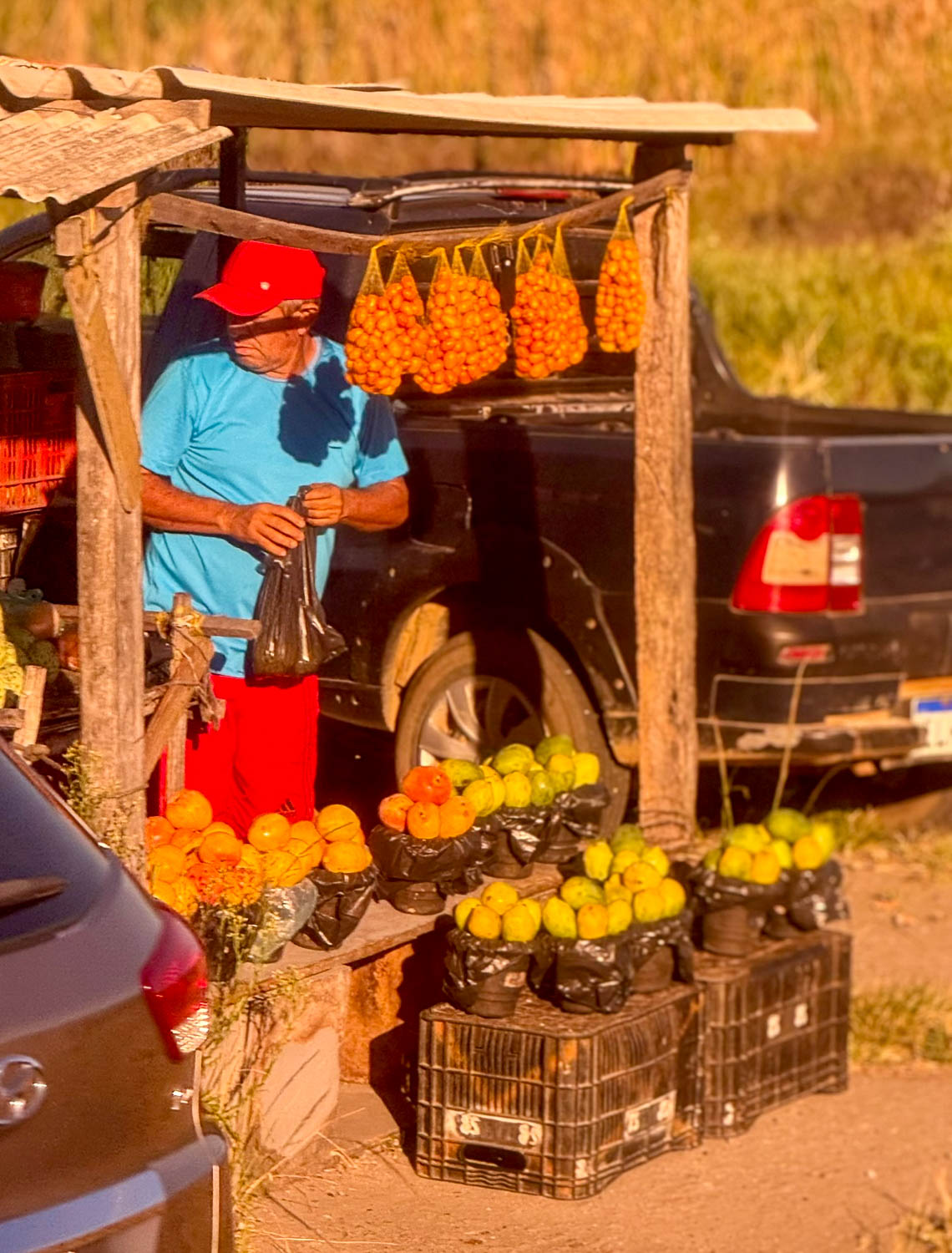
    Paraty sits along Brazil’s stunning Costa Verde, roughly halfway between Rio de Janeiro and São Paulo, and the journey there is part of the experience. Most travelers arrive by bus or car from either city, following a winding coastal road framed by rainforest, waterfalls, and the occasional roadside fruit stand. Dare we fail to mention the spectacular views of a rainforest-meets-the-sea landscape afforded the traveler along the way (especially if you’re arriving from the north)!

    Fun fact. There’s no airport in Paraty, which has helped preserve its small-town feel and slowed the pace of the area in the best possible way.

    Insider tip. We recommend aiming for a daytime arrival into Paraty — not just for the views, but because Paraty’s historic center has some restrictions on vehicular access. Further, wayfinding and navigating luggage drop-offs in a historic district of narrow lanes and cobblestones is simpler in daylight, and often less stressful.

    Peaceful cobblestone street lined with colonial buildings in Paraty historic center, Brazil
    The quiet back streets of the historic center beg to be explored (Paraty, Brazil)

    By Car

    The drive itself from Rio takes around four hours, whilst arriving from São Paulo is slightly longer, but equally scenic. Both routes create a real sense of arrival: a gradual shift from city to coast as Paraty slowly reveals itself beyond the mountains.

    By Bus

    For those who prefer not to drive, buses in Brazil are an easy choice: comfortable, affordable, and reliable (you can even opt in for a leito/cama – a spacious, nearly-lay-flat seat with full amenities that include pillows and blankets. Fancy, right?).

    Buses leave frequently from both Rio de Janeiro and Sao Paulo, arriving directly at the Paraty bus station (Rodoviária de Paraty, officially known as the Terminal Rodoviária Vereador Agilio Ramos – say that three times fast!). The Paraty bus station is located on Rua Jango Padua, just a short stroll from the town centre, and serves as the hub for both intercity as well as regional buses.

    Insider tip. For those of you seeking to use public transportation within Brazil, we highly recommend using Busbud.com. This English-language booking platform allows travellers to search, compare, and book long-distance bus tickets across Brazil (and beyond). We found it incredibly easy to navigate, with excellent customer service when Beck accidentally booked our first bus for the wrong date (woops!).

    Private Transfers

    Another option for reaching Paraty is by private or semi-private vans, a comfortable door-to-door solution that simplifies logistics. This – a shared shuttle from Sao Paulo to Paraty (and back again) is the option we chose, and it turned out to be an excellent one! We used Paraty Tours and wouldn’t hesitate to recommend them to other travelers.

    Boat arriving near the historic waterfront of Paraty Bay in Paraty, Brazil
    Arriving into Paraty by boat is a unique way to enter this historic town

    Something A Little Different

    Adventurers can also choose to arrive by boat from nearby coastal villages, letting the journey become part of the story.


    Getting Around Paraty

    Visitors walking through pedestrian cobblestone streets in Paraty historic center, Brazil
    Paraty’s historic center is best explored on foot

    Once you’ve arrived in Paraty and feel settled in, getting around is refreshingly straightforward.

    Fun Fact. Some of the streets in Paraty’s historic center were intentionally designed to flood at high tide, a clever colonial-era drainage system that still works today. Don’t be surprised if a “street” briefly turns into a shallow canal!

    On Foot

    Paraty’s historic center is compact and largely pedestrian-only, making it easy to explore and navigate on foot for most visitors. That said, the uneven cobblestoned streets can be challenging for those with mobility issues, strollers, or rolling luggage. Many visitors choose to move at a slower pace, taking frequent breaks at cafés, churches, and shaded squares along the way.

    Fun fact. The uneven cobblestones of Paraty aren’t just charming — they were laid that way to slow down horse-drawn carts, long before traffic calming was a concept.

    Insider tip. Paraty’s cobblestoned streets like to challenge those who wear flip-flops. Consider wearing supportive footwear (and leaving wheels behind where possible), as this can make a noticeable difference in Paraty.

    Insider tip. If mobility is a concern, consider staying just outside the historic center, where streets are flatter, vehicle access is easier, and you can still dip into the old town at your own pace. Many pousadas, hotels and tour operators can also help arrange door-to-door transport or recommend routes with fewer cobblestones.

    Cyclist exploring streets and neighborhoods around Paraty, Brazil
    If you’re up for the adventure, renting a bicycle is another great way to get around Paraty

    Taxis and Rideshares

    For travelers who prefer less walking, taxis and rideshares are readily available for trips beyond the historic core, as well as for late-night returns. We found Uber to be incredibly cheap and convenient during our visit to Brazil.

    Boats

    Boat taxis are a popular way to explore the surrounding bays and islands of Paraty, often doubling as scenic mini-tours.

    Fun fact. As in many other parts of coastal Brazil, boat taxis are part of everyday transport here, not just tours. For locals and visitors alike, the sea is a shortcut.

    Insider Tip. Many accommodations will happily help arrange transport or boat outings — sometimes at better rates than booking on the street. 


    When to Visit Paraty

    Colorful tropical flowers blooming in the historic town of Paraty, Brazil
    Due to its tropical climate, flowers bloom in Paraty year-round

    We are a big believer that any global destination can be visited at almost any time of year. In Paraty, however, the seasons shape the town in different ways, and deciding when to visit depends on the kind of experience you’re seeking.

    Winter

    During the winter months (June through August), the air in Paraty is cooler and drier, making it the best time for leisurely strolls through the historic old town or hiking trails in the surrounding area.

    Summer

    Brazil’s summer – from December to February – is the busiest period for tourism, when visiting Paraty means sharing the streets with festival crowds, musicians, dancers, and regular bursts of tropical rain.

    Insider tip. Summer rain rarely lasts all day: showers tend to be short and intense, followed by sunshine. Here, flexibility matters more than forecasts!

    Shoulder Seasons

    Spring brings warmer days, brighter weather and fewer crowds to Paraty, improving conditions for walking and boat trips as the area heads toward summer. By November crowds have started to increase, but it’s still a balanced time to visit before peak-season crowds arrive.

    Blue skies over the coastal colonial town of Paraty, Brazil
    Blue skies and sunshine: how can we not love this place?

    Fun fact. Spring brings clearer skies and longer days, which locals often say is when the town feels most photogenic. Cameras at the ready, folks!

    Autumn (Fall) generally runs from March through May, offering milder weather (still comfortably warm, but with slightly lower humidity), fewer visitors, and a noticeably quieter rhythm. Note that rain is still possible during autumn, especially early in the season, but it becomes less frequent as the weeks progress.

    Insider tip. We feel that March is one of the best times to visit Paraty: summer crowds have faded, but (for example) waterfalls are at their most dramatic after the rainy season.

    Insider tip. Because Paraty sits between the rainforest and the sea, humidity and rain matter more than temperature alone. For example, spring tends to feel fresher and brighter, whilst autumn often feels calmer and more subdued — both excellent times to visit, just with different moods.


    What to See and Do in Paraty

    Colonial architecture and cobblestone streets in the historic center of Paraty, Brazil
    The historic center of Paraty is its cultural and visual anchor

    Paraty affords visitors a well-balanced mix of historic sights, outdoor experiences, and easy coastal escapes. From wandering cobblestoned streets to exploring the surrounding coastline, there’s no shortage of things to see and do. The town rewards slow exploration, with history, nature, and everyday moments best discovered at your own pace.

    Below we share some of the best ways (in our humble opinion, anyway!) to experience the town and its surroundings.

    Paraty’s Historic Center

    Colorful colonial doorways with bougainvillea flowers in Paraty historic center, Brazil
    Colorful doorways framed by bougainvillea are a common sight throughout the old town

    The historic center of Paraty is the town’s cultural and visual anchor, defined by pedestrian-only cobblestoned streets, whitewashed centuries-old buildings, and an unmistakably creative energy. Wandering here feels like entering a painting, with colorful houses framed by bougainvillea and doors painted in every shade of the rainbow. Needless to say, this was photographic paradise for Beck!

    Church of Our Lady of Sorrows in the historic center of Paraty, Brazil
    The Church of Our Lady of Sorrows (Igreja de Nossa Senhora das Dores) (Paraty, Brazil)

    Churches punctuate the old town — from waterfront landmarks to quieter neighborhood chapels — whilst art galleries and workshops appear around nearly every corner, housed inside former homes and trading buildings. Add in small museums, cafés, boutiques, thriving restaurants, and the occasional high-tide flooding of streets, and the result is certainly a district with unique character.

    Not-so-fun (but also important) fact. Inside the colonial buildings, small museums reveal stories of the Gold Rush era, when African slaves were forced to transport gold from Minas Gerais to the port of Paraty (a route of 8-10+ hours by road today).

    Want to learn more about Paraty’s historic center? Be sure to check out our sister article, The Historic Center of Paraty, which provides more detailed insight into this charming colonial town.

    Boat Trips and Paraty Bay

    Traditional tour boats departing from Cais de Paraty in Paraty Bay, Brazil
    Boat tours of all shapes and sizes run out of the long jetty at the end of Cais de Paraty

    We were told by numerous locals during our visit to Paraty that boat trips were the thing to do whilst visiting the area. And indeed, spending time on the water here is a natural extension of any stay in Paraty, offering a different perspective on the town and its surroundings.

    Boat tours leave daily from the port – the far eastern edge of town, just beyond the historic center. These tours through Paraty Bay cover quite the gamut for visitors and locals alike, delivering a fleet of fun options.

    • relaxed group outings aboard traditional wooden boats (escunas)
    • private speedboat trips
    • visits to nearby islands and quieter stretches of sand and water
    • laid-back island-hopping excursions a little farther afield
    • full-day adventures that combine swimming, snorkeling, and secluded beaches
    Colorful tour boats docked in Paraty Bay ready for island excursions in Brazil
    Pick a boat … any boat!

    Insider tip. The highlight of most boat tours departing from Paraty’s small port is a visit to Saco do Mamanguá, Brazil’s only tropical fjord, surrounded by dense jungle and dotted with small islands.

    Insider tip. Some water-based excursions include lunch onboard, whilst others let you dock at restaurants by the shore. Be sure to read all the “fine print” for any tour you choose, so you’re familiar with what’s included and what’s not.

    And of course, choose an option that best matches your pace and style — whether you’re after a boozy, social afternoon, sunset cocktails, or something more low-key and flexible.

    Insider tip. There’s really no need to book a boat tour in advance. As we soon discovered, simply wander along Cais de Paraty and you’ll easily find one that best appeals! Note, however, we didn’t encounter many tours in English, so if you’re looking for one in a language other than Portuguese, you may have to hunt around a little longer.

    The Beaches of Paraty

    Small peaceful beach near the harbor area of Paraty, Brazil
    A quiet beach alongside the main port area in Paraty

    The coastline around Paraty is dotted with more than 60 beaches, each offering a slightly different experience. Below are some of our recommendations, should a beach-day be calling. Together, these beaches show just how varied Paraty’s coastline can be.

    • Sono Beach (Praia do Sono) is known for its emerald-green waters and serene setting, reached either by a short boat ride (30–45 minutes, depending on sea conditions and the type of boat) or a scenic forest trail through lush greenery.

    Fun fact. Many of Paraty’s beaches are accessible only by boat or forest trail, which naturally limits crowds and keeps even the most popular of sandy shores feeling low-key.

    • Trindade Beach, about 25-30km (15-18mi) west of Paraty (up to an hour by road, traffic and weather dependent), has a lively, social atmosphere, with casual bars, hammocks, and a cluster of nearby beaches that create an easygoing, community vibe.
    Praia do Pontal beach within walking distance of Paraty historic center in Brazil
    Praia do Pontal is within easy walking distance from the historic center (Paraty, Brazil)

    Insider tip. On some of the quieter beaches, lunch may come to you — small boats occasionally arrive selling drinks or snacks, turning the shoreline into a floating café. We thought this was pretty cool!

    • Only about 9 miles (15km) south of Paraty you’ll find Paraty Mirim, a quieter and more contemplative beach where gentle waves meet the remains of colonial-era churches.

    Insider tip. Once you arrive, Paraty Mirim feels noticeably removed from the town of Paraty, despite its short distance from it. It’s calmer, flatter, and easier to navigate than some of the other beaches, especially for visitors who prefer a gentler seaside experience.

    • Closer to the Paraty town center, Jabaquara Beach is a convenient option for families, with calm water and easy access.

    Fun fact. Tides can noticeably reshape Brazil’s shoreline during the day, meaning a beach you arrive at in the morning may look completely different by afternoon. Pretty neat, eh?

    Insider tip. Water clarity off-shore varies by location and recent rainfall, so if someone tells you they were at a beach with “emerald-green waters” and that’s not what you experience upon arrival, it’s not that your acquaintance has lied to you: conditions often depend more on weather and runoff than the beach itself (another reason to take online reviews with a grain of salt!).

    Hiking the Gold Trail

    The old Gold Trail  – often referred to as the Caminho do Ouro – once formed part of a vast network of routes linking the gold mines of inland Minas Gerais to the port of Paraty. Today, hiking sections of the trail offer a tangible link to that history, with original stone paving still visible beneath dense Atlantic Forest. The route passes waterfalls, shaded forest corridors, and quiet clearings, whilst tropical birds dart overhead – making it as much a nature walk as a historical one, and affording visitors perspective on how the colonial town of Paraty rose to prominence.

    The most commonly visited access point to the Caminho do Ouro lies approximately 4-5 miles (6-8km) outside of Paraty, typically reached by car, taxi, or as part of a guided tour.

    Insider tip. Because portions of the Gold Trail cross private property and clear signage is limited, visiting with a local guide is strongly recommended. Most guided visits focus on shorter, more manageable sections of the trail rather than the full historic route, often combining the walk with visits to nearby waterfalls or rural stops.


    Beyond the Town Center

    Cultural experience visiting Indigenous communities near Paraty in Brazil
    Learn about traditional crafts and daily life in nearby Indigenous communities

    Although much of visiting Paraty revolves around its historic center, exploring beyond it reveals a broader cultural landscape.

    The surrounding area includes Indigenous communities where guests are welcomed to learn more about traditional crafts, customs and daily life, whilst small art galleries, cultural centers, theaters and other performance spaces highlight the work of contemporary Brazilian painters, sculptors, music, samba, and literary talks. Each of these can add depth to any visit, showcasing how Paraty’s creative and cultural identity extends well beyond its cobblestoned streets.

    Insider tip. Some of Paraty’s most interesting cultural experiences happen without signage — galleries, workshops, and community spaces are often discovered by word-of-mouth or a handwritten sign out front.

    Insider tip. Visits to Indigenous communities are typically organized in advance, often through local guides or cultural associations, rather than as drop-in attractions.


    Day Trips from Paraty

    There’s much to see and do beyond the historic center of Paraty itself
    Local Artwork Paraty Brazil Historic Center

    One of the best (and indeed easiest) ways to enrich your time in Paraty is to venture beyond the town on a few well-chosen day trips. The surrounding region showcases the diversity of Brazil’s southeastern coastline and countryside, revealing quieter beaches, villages, and natural landscapes that feel distinct from Paraty’s historic center, yet remain within easy reach.

    Below are some options you may wish to consider as a day trip from the town. For more detailed information on each attraction, be sure to check out our sister article, Day Trips from Paraty.

    • Angra dos Reis: a larger coastal city known for its historic role as a port and gateway to Brazil’s island-dotted bays (and more beautiful beaches!)
    • Ilha dos Meros: one of many tropical islands just across the water from Paraty, great for snorkelling and diving
    • Serra da Bocaina National Park: a protected park complete with waterfalls, rugged rainforest trails, and misty mountains!
    • The Gold Rush Route: a stunning drive that passes through rural landscapes, small settlements, historic sites, viewpoints, and remnants of colonial-era infrastructure

    Each of these excursions helps to expand the sense that Paraty is part of a larger web of culture and nature, making this historic town along the Brazilian coastline worth visiting for longer than just a day or two.


    Shopping, Dining, and Nightlife

    Artisan shops and boutiques in Paraty historic center, Brazil
    Shopping in Paraty’s old town reveals all sorts of curiosities!

    Beyond its sights and stunning natural scenery, daily life in Paraty unfolds through its network of small shops and artisan boutiques, relaxed dining, and evenings that reflect the town’s easygoing pace. From locally-made finds to local flavors and low-key nightlife, this is where the town’s rhythm really comes into focus.

    Shopping

    Local artist preparing artwork for sale in Paraty, Brazil
    A local artist admires his work, preparing it for sale (Paraty)

    Shopping in Paraty isn’t about glossy malls or brand-name finds, but rather about wandering into small boutiques, galleries, and working studios embedded within the walls of its famous cobblestoned streets.

    Local artisans sell jewelry, ceramics, textiles, and handmade pieces, often crafted just steps away from where they’re displayed. In turn, many shops double as informal workshops, working studios, or exhibition spaces. Browsing here feels more like discovery than retail — a chance to connect with Paraty’s creative community and take home something made with intention rather than mass production.

    Unique clothing designs displayed in boutique shops in Paraty historic center
    Unique clothing designs in Paraty’s historic center

    Fun fact. Opening hours are fluid in Paraty: some boutiques close for lunch, others for rain showers, and others simply for conversation – then quietly reopen later.

    Insider tip. Prices are often less fixed than they appear when shopping in Paraty, especially for handcrafted items — polite conversation and gentle bargaining are not uncommon.

    Dining

    Traditional meal served at a restaurant in Paraty, Brazil
    Chicken kiev, mashed potato and rice – a meal for the whole family! (Paraty, Brazil)

    Food in Paraty is closely tied to place, with menus shaped by the sea, the surrounding countryside, and a strong sense of tradition. You’ll find everything here from simply grilled fish served steps from the water to elegant dining inside restored historical buildings, where atmosphere and the use of fresh ingredients are as much a draw as the meal itself.

    Insider tip. Many restaurants adjust menus based on the morning’s catch, so availability can change from day to day.

    Street vendors selling sweets and snacks in Paraty historic center, Brazil
    Small street stalls tempt passersby with sweets and snacks. Yum!

    In Paraty, fresh seafood dominates menus, often paired with rice, beans, and local accompaniments, whilst classic Brazilian dishes that include feijoada and churrasco provide familiar anchors. Between meals, cozy coffee shops encourage lingering over a warm drink, and small street stalls tempt passersby with sweets and snacks — proof that eating here is as much about pacing as it is about flavor.

    Insider tip. Dessert menus inside restaurants and cafes may be brief, but street vendors and bakeries often fill the gap better than restaurants do.

    For more information on Brazilian cuisine, be sure to check out our detailed article, The Cuisine of Brazil.

    Nightlife

    Evening lights illuminating the cobblestone streets of Paraty historic center at night
    As night falls, the lights within the historic town begin to twinkle (Paraty, Brazil)

    As evening deepens, Paraty’s nightlife gradually unfolds. Many restaurants transition seamlessly into live-music venues, blurring the line between dinner and a night out, and creating an atmosphere that feels both vibrant and intimate. We loved wandering at this time of day: music drifting through the cobblestoned historic center – everything from samba and choro on one corner, to quieter acoustic sets on another – whilst candlelit tables at waterfront restaurants seemed to be calling our name for a pleasantly relaxed evening meal.

    Insider tip. Dinner often starts later in Paraty than visitors expect: arriving too early can mean empty tables and kitchens still warming up.

    Paraty’s town center definitely hums with energy after dark – but it’s not something that ever really feels overwhelming. It just is. Waterfront bars and tucked-away taverns serve caipirinhas and other local drinks, whilst cultural spaces host literary talks, author readings, and artistic performances — particularly during festival periods. And whether you choose to end your night with dancing in a square or with conversation over one final drink, Paraty’s evenings definitely feel grounded in music, conversation, and easy connection.

    Bartender preparing a traditional Brazilian drink at Armazém da Cachaça in Paraty
    A bartender at Armazém da Cachaça prepares a customer’s drink (Paraty, Brazil)

    Insider tip. Many evening performances are free or loosely organized, with opportunities to simply dance in the streets with local buskers.

    Insider tip. It’s common to drift between venues rather than commit to one — evenings here are meant to unfold organically.

    Fun fact. Caipirinhas (Brazil’s national cocktail) vary noticeably in strength and style from place to place. Ordering one at a different place than the first one you tried earlier in the evening often results in a small act of discovery!


    Paraty’s Festivals and Cultural Calendar

    Cultural festival taking place in the historic town of Paraty, Brazil
    There’s always a cultural event happening somewhere around town!

    Festivals are woven into the fabric of Paraty, shaping the town’s rhythm throughout the year. These events draw writers, artists, musicians, and local communities into shared spaces, and often extend beyond formal venues, spilling into streets, squares, cafés, and cultural centers.

    Below we list some of the cultural celebrations you may encounter during your time in Paraty. We hope you’re able to coincide your visit with one of these, as experiencing this historic town during a festival affords visitors additional insight into Paraty’s cultural identity – and indeed into its creative side.

    For more information on each of the following, be sure to head on over to our sister article, The Festivals of Paraty.

    • Paraty International Literary Festival (FLIP): held annually in July, this is Paraty’s best-known event, where writers, readers, and thinkers gather for talks, readings, and debate
    • Faith-Based Festivals: church-based celebrations play an important role in Paraty’s cultural calendar, with feast days, services and processions tied to the town’s historic churches hosted throughout the year
    • Other Celebrations: Paraty also hosts a steady calendar of smaller cultural events that reward curious timing (think seasonal museum openings and local music and dance gatherings, to name but a few)

    Where to Stay in Paraty

    Buffet breakfast served at a traditional pousada in Paraty, Brazil
    Most hotels and pousadas in Paraty will include a free buffet breakfast during your stay

    Accommodations in Paraty reflect the town’s charm, history and relaxed pace, with a strong emphasis on smaller, locally-run properties. Many visitors choose to stay within, or just outside, the historic town center, where boutique hotels and restored pousadas occupy former colonial buildings along cobblestoned streets.

    Insider tip. We highly recommend staying within the “walls” of the historic center, placing you within easy walking distance of shops, restaurants, beaches and cultural sites.

    For a curated list of high-end as well as budget-friendly hotels in Paraty, and even some options for consideration a little farther afield, head over to our more detailed article, Where To Stay in Paraty.


    Respecting the Local Environment

    Natural coastal landscape near Paraty highlighting environmental conservation in Brazil
    Take photos, leave only footprints

    The natural setting around Paraty is fragile and stunning, not to mention central to the town’s identity. From the surrounding Atlantic Forest to the calm bays and island-dotted coastline, and from Paraty’s tropical fjord (Saco do Mamanguá) to its numerous white-sand beaches, protecting (and indeed caring for) these landscapes is imperative – care that should come from visitors, as well as locals.

    Protecting this region relies largely on everyday choices, and travelers can provide support following some basic guidelines, which we provide below (though of course, this list is not exhaustive!).

    • limit single-use plastics
    • refill reusable water bottles

    Insider tip. Bringing with you a reusable water bottle is especially practical in Paraty, as many pousadas and cafés are happy to refill bottles for free upon request.

    • be mindful of waste disposal (especially when exploring beaches, trails, and waterways that may not have trash cans strewn throughout) and recycle wherever possible
    • support locally-run businesses and artisans
    • choose environmentally-conscious tour operators (including eco-friendly boat tours on the bay)
    Where you can, try to choose environmentally-conscious tour operators (Paraty, Brazil)”
    Where you can, try to choose environmentally-conscious tour operators (Paraty, Brazil)

    Insider tip. Many boat operators already operate with unwritten environmental norms, including avoiding certain coves or limiting engine use near shore. Choosing smaller, locally-run tours often aligns naturally with these practices.

    This spirit of sustainability – and the small, thoughtful decisions that go with it – go a long way in helping keep tourism closely tied to Paraty’s community, ensures the economic benefits of tourism stay close to home, and preserves the environment and natural beauty upon which it all depends.

    Fun fact. Freshwater streams in the region flow directly from the mountains to the sea, which means pollution travels quickly: what’s left behind inland doesn’t stay there for long.

    Fun fact. Beach conditions can change after heavy rain, a reminder of how closely land, forest, and sea are connected in this region.


    Staying Safe in Paraty

    Uneven cobblestone streets in Paraty historic center requiring careful footing
    The cobblestoned streets of Paraty can be uneven and slippery at times – be sure to take care with your step!

    Compared with some of Brazil’s larger cities, Paraty is widely regarded as a safe place for visitors. Its historic center is largely pedestrian-only, which makes it pleasant to wander: for us, it definitely added to the relaxed atmosphere and was easy to navigate on foot. We also felt comfortable moving around town at all times of day.

    Insider tip. We recommend wearing sturdy shoes for the uneven cobbled streets within the historic centre. A reminder also that during high tide, the unique phenomenon of Paraty’s flooded streets can make alleyways and roads slippery (even though the water may be shallow). Don’t avoid the area altogether (Beck found it made for superb photography!), but do watch where you step.

    Of course, as with any global destination, a few additional common-sense habits go a long way to ensuring a safe and comfortable visit to Paraty.

    • keep personal belongings close and secure (especially during busy festivals and in crowded spaces)
    • be aware of your surroundings after dark (avoid wandering into isolated alleys late at night)
    • consider using taxis or rideshares for longer distances after dark (rather than walking unfamiliar routes)
    • carry with you during the day only a small amount of cash (rather than everything at once), which helps reduce the impact of loss, theft or misplacement when moving between cafés, shops, and evening venues
    • stick to established paths when hiking (to help protect the environment and respect private property)
    Paraty is generally very safe and welcoming for visitor
    Paraty is generally very safe and welcoming for visitor
    • follow local advice about swimming conditions, boat departures, and trail access, as weather and tides can change quickly
    • be mindful of footing near the waterfront at night, where low light and tidal changes can make surfaces uneven
    • confirm meeting points and return times clearly when joining boat trips or guided outings, as docks and pickup spots can look similar (especially after dark)
    • keep a note of your accommodation’s name and location, as street signage in the historic center can be subtle and easy to miss

    Insider tip. Local residents are used to visitors navigating on foot and are often quick to offer directions or assistance if asked. Don’t be afraid to seek the guidance or support of locals if you’re feeling unsafe, unsure, or simply a bit disoriented.


    Final Thoughts

    View looking back toward Paraty historic center and coastline in Brazil
    View back toward the historic center from near Quiosque Ilha Rasa (Paraty, Brazil)

    There’s no question at all: we fell in love with the historic town of Paraty the moment we landed (or drove in, as it were) – and it was late at night and dark out, so that’s saying something! Paraty brings together history, a vibrant culture, and natural surroundings, with rainforest-covered hills, shifting tides, and the bay all helping to shape everyday life in town. In a country as rich as Brazil, we felt Paraty really stood out and we wouldn’t hesitate to return.

    From walking the cobblestone streets of the historic center, where African slaves once carried gold from Minas Gerais, to sailing across the bay to Brazil’s only tropical fjord, Paraty is a place that invites exploration on many different levels. Days can be spent moving slowly through the town, heading inland toward the rainforest, or venturing along the coast by boat, with each experience closely tied to the town’s past and present.

    Paraty is also shaped by comfort and rhythm — relaxed mornings, good breakfasts, the discovery of secluded beaches, fresh local seafood, and evenings guided by conversation and live music. Paraty’s culture shows up here in everyday moments, history sits quietly in the background, and the town moves at a pace that’s easy for most to follow. Bring comfortable shoes and a sense of curiosity, and this UNESCO World Heritage Site will consistently deliver.

    Are you ready to embrace that curiosity? To move your feet to the slower pace of life (and to beating drums, when you come across some!)? And to experience one of the most charming and colorful colonial towns along Brazil’s magical coastline? Paraty is a rewarding place to start – and we’re happy to help you plan your visit!


    FAQs

    What is Paraty Brazil known for?

    Paraty is known for its beautifully preserved colonial historic center, cobblestone streets, colorful buildings, and vibrant cultural scene. The town is also famous for its tropical coastline, island-filled Paraty Bay, nearby beaches, and access to Brazil’s Atlantic Forest.

    What are the best things to do in Paraty?

    Popular activities in Paraty include exploring the historic center, taking boat tours around Paraty Bay, visiting nearby beaches such as Praia do Sono and Trindade Beach, hiking the historic Gold Trail (Caminho do Ouro), and enjoying local restaurants, shops, and cultural festivals.

    When is the best time to visit Paraty?

    The best time to visit Paraty is generally during the drier winter months from June to August or during the shoulder seasons of spring and autumn. These periods offer pleasant weather for exploring the historic center, hiking nearby trails, and taking boat trips around Paraty Bay.

    Where is Paraty located in Brazil

    Paraty is located along Brazil’s Costa Verde in Rio de Janeiro state, roughly halfway between Rio de Janeiro and São Paulo. The town sits between rainforest-covered mountains and the sea, making it one of the most scenic destinations along Brazil’s southeastern coastline.

    How do you get to Paraty Brazil?

    Most visitors reach Paraty by car or bus from Rio de Janeiro (about 4 hours) or São Paulo (about 5 hours). The town does not have its own airport, which helps preserve its relaxed atmosphere and historic character.


    Explore More Of Brazil


  • Buzios, Brazil Travel Guide: Best Things To See and Do

    Welcome to Búzios! Just a few hours’ drive from the heartbeat that is Rio de Janeiro, this small town on Brazil’s southeast coast is one of those destinations that might just steal your heart instantly. It’s here that natural beauty collides with cosmopolitan charm, and where the rhythm of calming waves is matched only by vibrant nights along pedestrian-only Rua das Pedras and the storybook-pretty Orla Bardot Boardwalk.

    One thing we can definitely say about Buzios (which you might also see written as Armação dos Búzios), without hesitation: it’s the kind of destination that doesn’t try too hard — it simply is. Once a former fishing village, Búzios is today known as the Saint Tropez of Brazil — or, as locals lovingly say, Brazil’s St Tropez — a place where cobbled streets meet chic boutiques, and where sun-drenched beaches curve effortlessly around a peninsula shaped by wind, water, and time. Life here moves at an unhurried pace, inviting visitors to slow their steps, linger a little longer, and soak up the town’s easy coastal elegance.

    It’s also impossible to talk about Búzios without mentioning the famous French actress and singer Brigitte Bardot, who visited the area in the 1960s with her Brazilian boyfriend, musician and producer Bob Zagury. Bardot’s presence in Buzios transformed this quiet seaside escape into an international icon: today, her statue graces the waterfront and numerous restaurants and cafes bear her name, a timeless reminder of how one visit can change everything — for both a traveler and a town.

    But beyond the celebrity sparkle, this idyllic beach town offers something deeper for the visitor: a unique invitation to blend adventure and comfort. Whether you’re seeking some wild surf and cliffside hikes, or wishing to find some relaxing bliss in beachside cafés, charming hotels, and leisurely dinners with waterfront views, Buzios has that little bit of something for everyone.

    Have we piqued your interest? Are you ready to take a wee look and see what Buzios has to offer visitors? Read on, fellow wanderers, as we take you through our travel guide that uncovers some of the best things to do and see in Armação dos Búzios.


    Quick Tips

    Brigitte Bardot statue along the Orla Bardot Boardwalk in Búzios
    The bronze statue of Brigette Bardot (Orla Bardot Boardwalk, Buzios)
    • Located just a few hours from Rio de Janeiro, Búzios is best reached by car, shuttle, intercity bus, or private tour from the city.
    • Buzios is considered safe for visitors, with well-patrolled beaches, a strong police presence, and welcoming locals.
    • The best time to visit Buzios is between December and March, when temperatures are warm and the sea is calm – though this time of year also tends to draw larger numbers of visitors. If you’re looking for a quieter season, consider visiting between April and June.
    • Búzios is best understood as three main areas — Armação, Ossos/João Fernandes, and Manguinhos — each offering a different atmosphere and pace for visitors.
    • Getting around Búzios is straightforward, with walkable central areas supported by taxis, rideshares, minibuses, and water taxis connecting beaches and neighborhoods.
    • The most commonly visited sights in Buzios include Rua das Pedras, the Orla Bardot Boardwalk, Igreja de Sant’Anna, and its beaches (Buzios has 20 of them!).
    • Relaxation and wellness activities play a key role in most visits to Búzios.
    • There are numerous opportunities for shopping and dining within Buzios, especially along Rua das Pedras.
    • Búzios comes alive at night, offering a mix of casual beach bars, elegant restaurants, and dance clubs. 
    • Búzios hosts numerous annual festivals – timing your trip around these events can add a memorable cultural layer to your visit.
    • Expect a range of accommodations in Buzios, from boutique pousadas with free breakfast and free WiFi, to upscale resorts with pools and ocean views.

    Plan Your Trip

    View toward Praia dos Ossos from Igreja de Sant’Anna in Búzios
    View toward Praia dos Ossos from Igreja de Sant’Anna (Buzios)

    Some links below may earn us a small commission at no extra cost to you. We’re truly grateful for your support, as it allows us to continue sharing meaningful travel experiences and practical travel insights with you. Read our full disclosure here.

    Planning your visit? We’ve gathered recommended tours and activities, along with trusted travel tools, to help you explore with confidence and ease.

    Tours & Experiences


    Prefer additional options? Click below to discover more incredible experiences tailored just for you!

    Browse top attractions in Buzios, Brazil.


    Travel Essentials?

    Planning the rest of your trip? These are the platforms we personally use when organizing our travels. For more planning tools, visit our Travel Resources page or browse current promotions on our Travel Deals page.


    Getting There and Away

    Arriving in Búzios from Rio de Janeiro by road
    Most visitors arrive into Buzios directly from Rio de Janeiro

    Located on a peninsula some 170km (105mi) east of Rio de Janeiro, Búzios sits along Brazil’s Costa do Sol, in the state of Rio de Janeiro. Whilst it feels worlds away from the buzz of the big city, getting to Buzios is surprisingly straightforward.

    Most travellers arrive into Armação dos Búzios via Rio’s international or domestic airports, then continue onward by road — typically a three-hour drive (traffic dependent, of course!). Shuttle services, private transfers, and regular intercity buses all connect Rio to Búzios, making it accessible without a car and an easy addition to a broader Brazilian itinerary.

    Fun fact. Búzios has no commercial airport, so everyone arrives by road or sea. This is part of what has helped the town retain its small-scale feel, despite its increased popularity over the years.

    Insider tip. A regular long-distance bus between Rio’s main bus terminal (Novo Rio) and Búzios operates daily. It’s also possible to catch a bus directly from Rio’s Galeão International Airport to Búzios, without first going to the city center bus terminal. Multiple daily departures exist on this route.

    Local transport arriving in Búzios by combi van
    No matter how you choose to get there – even in a rundown combi van – we are confident you’ll love Buzios!”

    Insider tip. For those of you seeking to use public transportation within Brazil, we highly recommend using Busbud.com. This English-language booking platform allows travellers to search, compare, and book long-distance bus tickets across Brazil (and beyond). We found it incredibly easy to navigate, with excellent customer service when Beck accidentally booked our first bus for the wrong date (woops!).


    Getting Around Buzios

    Water taxis used to travel between beaches in Búzios
    Water taxis are commonly used to travel between beaches in Buzios

    Once you arrive, getting around Búzios is relatively simple, due to the town’s compact size. Many areas — including the main streets, beaches, and waterfront — are easily walkable, particularly around the central peninsula.

    Local taxis and rideshare services are widely available for longer distances or evening travel, whilst minibuses and vans operate along the main roads connecting the numerous beaches. Water taxis are also commonly used to travel between beaches, and can be a practical alternative to road transport.

    Fun fact. Within Búzios itself, water taxis are often faster than cars when moving between certain beaches, especially during busy periods. Here, the sea is a legitimate form of local transport!


    When to Visit Buzious

    Sunny weather year round in Búzios, Brazil
    There’s no “bad” time to visit Buzios – it’s open and sunny year-round!

    Buzios is always in season, which means visiting at any time of year is the perfect time! With average temperatures ranging from 70–85°F (21–29°C), its enviable weather is pleasant year-round.

    Note however, some slight differences in the seasons:

    • High season (December–March) is Brazil’s summer, boasting hot days, calm seas, and lively nights. This is when the majority of visitors (Brazilians as well as foreigners) head to Búzios.
    • Low season (April–June) covers Brazil’s winter, and often means fewer crowds and generally lower prices for accommodation and activities.

    Insider tip. Keep in mind that the most rainfall in Buzios occurs in December and January. That being said, rain showers are brief and the sun usually reappears pretty quickly!


    The History of a Sleepy Fishing Village

    Os Três Pescadores sculpture at Praia da Armação in Búzios
    Os Três Pescadores” (The Three Fishermen) by Brazilian artist Christina Motta (Praia da Armação, Buzios)

    Long before it became known as Brazil’s St Tropez, Armação dos Búzios was a tranquil fishing village nestled quietly along the Brazilian coast and shaped by the rhythms of the sea and the daily routines of its small local community. For much of its early history, the town remained largely isolated, accessible mainly by boat or rough coastal roads. Traces of its roots still linger today, particularly in its colonial-style architecture and cobblestone streets, most evident in central Búzios and along Rua das Pedras (we’ll get to more about central Buzios in a bit…).

    This relative anonymity began to change when, in 1964, French actress and singer Brigitte Bardot arrived in Búzios with her then-boyfriend, Brazilian musician Bob Zagury, seeking refuge from the paparazzi in Rio de Janeiro. At the time, Búzios was little known outside the region, but Bardot’s presence — and the international media attention that followed — brought the town onto the global stage. What had once been a sleepy fishing village was suddenly visible to the world, setting in motion the gradual transformation that would see Búzios evolve into the stylish coastal destination it is today.

    Orla Bardot Boardwalk named after Brigitte Bardot in Búzios
    The Orla Bardot Boardwalk, named after French actress and singer Brigitte Bardot (Buzios)

    Fun fact. Búzios had no paved road connection to Rio until the mid-20th century, which helped preserve its isolation — and its fishing-village character — well into the modern era.

    More than half a century later, this chapter of Búzios’ history remains firmly woven into its identity. Today, the bronze statue of Bardot along the Orla Bardot Boardwalk is one of the most photographed places in Buzios — not just for its artistic charm, but for what it represents: the moment a small town became a world-class travel list destination.


    Past Influences, Present-Day Búzios

    Praia João Fernandes beach in Búzios, Brazil
    Praia João Fernandes, Buzios

    Whilst Búzios’ international profile may trace back to a single moment in the 1960s, its culture today reflects something more layered. The town remains a mix of Portuguese heritage and Brazilian vibrancy, shaped by both its fishing-village roots and decades of global influence. Local festivals celebrate music, food, and long-held traditions, whilst contemporary events highlight Búzios’ creative and cosmopolitan side.

    From the Gran Cine Bardot film festival to informal street markets alive with color and local flavors, in Buzios you’ll find yourself immersed in daily life that successfully balances tradition with openness — a place that honors its past, whilst comfortably occupying its role as an international destination.

    Fun fact. Fishing is still part of daily life in Búzios, particularly around Praia dos Ossos, where boats are regularly pulled onto the sand — a visible reminder of the town’s origins.


    Getting Oriented in Búzios

    Open-air Búzios trolley tour around the peninsula
    A great way to see Buzios is on the popular open-air Buzios Trolley Tour

    Over time, the layers of history and influence that have shaped the culture of Búzios have also shaped its physical layout. Indeed, to make sense of the town today – and to help you plan your own visit here – it’s useful to start with how Búzios is organized.

    For visitors, Búzios is easiest to understand when thought of as a division into three main, broad areas, each a historical and administrative settlement with its own distinct character.

    Armação

    Praia da Armação beach in central Búzios
    Praia da Armação is the main beach area in Buzios

    Armação – the “central peninsula” – is the historic and functional heart of Búzios, forming the centre of town. This area includes most of the places visitors recognize immediately: Rua das Pedras, the Orla Bardot Boardwalk, and several smaller beaches (including Praia da Armação and the edge of Praia dos Ossos). Armação also serves as the town’s commercial and social hub, with numerous shops and restaurants, and is therefore the most walkable and commonly visited area: think of this as “central Buzios”.

    Ossos and João Fernandes

    Local bartender serving beach visitors at Praia João Fernandes in Buzios, Brazil
    A local bar tender shares his menu with beach-goers (Praia João Fernandes, Buzios)

    Immediately north of, and just beyond, Armação, you’ll find the Ossos and João Fernandes area, offering a quieter base for visitors whilst remaining close to key sights. This area is residential and resort-oriented, known for calmer waters and a quieter atmosphere: it’s centred around Praia dos Ossos and has strong historical ties to Búzios’ fishing past. This is the place to be if you want proximity without being directly in the centre of all the action.

    Insider tip. Transportation is more often required when choosing to visit, and indeed stay in, the Ossos and João Fernandes area.

    Fun fact. Although Ossos is technically its own settlement, because it is so close to the centre (Armação), these two districts are often grouped together from a visitor’s perspective. A tad confusing, we know!

    Manguinhos

    On the western side of the peninsula you’ll find the Manguinhos settlement, an area with a mix of local neighborhoods, restaurants, and wide beaches. This area is distinct from Armação both geographically and functionally, and is more spread out. As a result, it’s less walkable here, with fewer central amenities, and is ultimately best suited to travellers with a car or a clear beach-focused itinerary.

    Insider tip. It’s in Manguinhos that you’ll find a stronger wind and surf culture, and is great for those prioritizing beach time over nightlife.

    Insider tip. Most travellers — especially first-time visitors like us — will spend the majority of their time in Armação. Ossos works well as a secondary mention, particularly for those interested in history or a quieter base close to the centre.


    Downtown Búzios

    Pedestrian street scene along Rua das Pedras in downtown Buzios
    Rua das Pedras forms the main pedestrian area of downtown Buzios

    If Búzios has a pulse, it beats strongest in downtown Buzios. It’s here that chic boutiques rub shoulders with artisan shops, where locals mix with visitors within the walls of lively bars, and where restaurants serve up everything from freshly caught seafood to global flavors.

    Rua das Pedras

    The iconic Rua das Pedras — a charming pedestrian-only cobblestone street — is the centerpiece of downtown, buzzing day and night with visitors sipping caipirinhas, enjoying live music, or shopping for beachwear and jewelry. Be sure to check out our detailed article on Rua das Pedras to learn more about this iconic street!

    Shops and restaurants lining Rua das Pedras in Buzios, Brazil
    Rua das Pedras: charming, cosmopolitan and pedestrian-friendly (Buzios)

    Fun fact. In coastal areas, caipirinhas – Brazil’s national cocktail – are often stronger than expected, as cachaça is typically poured generously and mixed fresh to order rather than pre-measured. Needless to say, this is something first-time visitors tend to learn quickly!

    Orla Bardot Boardwalk

    Sunset view along the Orla Bardot Boardwalk in Buzios
    Catching a sunset from the Orla Bardot Boardwalk was a highlight of our visit to Buzios

    Just steps away from Rua das Pedras lies the Orla Bardot Boardwalk. Named after Brigitte Bardot, strolling along the water’s edge here feels like walking through a picture postcard: the boardwalk is lined with statues, chic cafés, and open-air restaurants serving delicious seafood. It’s also here you’ll find fishing boats bobbing gently on the shores of Praia da Armação, reminders of the town’s fishing past that remain part of everyday life.

    The Orla Bardot Boardwalk connects the Buzios town center with the unhurried pace of several beaches (including Praia dos Ossos), whilst also providing benches and open stretches that invite unplanned stops throughout the day. Come here to explore: stroll, people-watch, stop for ice-cream, enjoy a leisurely meal by the shore, or simply breathe in the light sea breeze. It’s also a favorite place to catch a sunset in Buzios!

    For a more detailed look at this famous stretch of walkway, be sure to check out our sister article, Orla Bardot Boardwalk.

    Praia da Armação (Armação Beach)

    Calm waters and fishing boats at Praia da Armação in Buzios
    Praia da Armação (Buzios)

    As you stroll along the Orla Bardot Boardwalk, you’ll be walking alongside Praia da Armação, the main beach of the peninsula and an early settlement in Búzios. Here, fishing boats rest close to shore, set against a backdrop of boutique hotels, restaurants, and relaxed seaside bars, offering a clear snapshot of how Búzios’ past and present continue to coexist.

    Want to take a deeper dive into the beaches of Buzios? Be sure to check out our Beaches of Buzios article too!

    Igreja de Sant’Anna (Church of Sant’Anna)

    Igreja de Sant’Anna overlooking the coastline of Buzios, Brazil
    Mother Teresa watches peacefully over Igreja de Sant’Anna (Buzios)

    Perched on a hill overlooking Praia dos Ossos, sits the Igreja de Sant’Anna, dating back to the 18th century – making it one of the oldest surviving structures in Búzios. Built during the town’s early fishing-village days, this small, incredibly picturesque, whitewashed church has long served as a spiritual and communal anchor for local residents, watching over the bay as the settlement below slowly evolved.

    Today, the Church of Sant’Anna remains striking, not for its scale nor its ornamentation, but for its setting. From its elevated position, the sweeping view stretches across the water toward Praia da Armação and the surrounding coastline — a vantage point that feels unchanged by time. It’s an opportunity for a quiet pause above the movement of the town, where history, landscape, and daily life converge in a way that feels both grounded and deeply personal.

    Igreja de Sant’Anna overlooking the coastline of Buzios, Brazil
    Igreja de Sant’Anna (Buzios)

    Fun fact. The hilltop location for Igreja de Sant’Anna wasn’t chosen to be dramatic — it allowed the church to be seen clearly from the water, serving as both a spiritual landmark and a visual point of reference for boats returning to shore.

    Fun fact. Even as Búzios has grown into an international destination over the years, the Igreja de Sant’Anna has remained largely unchanged, preserving its original footprint and sense of scale.


    Beaches of Buzios

    Clear turquoise water at Praia da Azedinha beach in Buzios
    Praia da Azedinha (Buzios)

    Few places on the Brazilian coast rival Búzios when it comes to beautiful beaches. With over twenty (yes, 20!) main beaches along its five-mile (8km) peninsula, each one offers a different vibe — from family-friendly shores to adventurous surf spots. Below we share with you a brief overview of some of the most popular beaches worth considering during your time in Buzios (in no particular order).

    • Geribá Beach: for surf and space
    • João Fernandes Beach: for sheltered swimming
    • Praia da Tartaruga: for easygoing beach days
    • Ferradura Beach: for calm, shallow waters
    • Praia dos Ossos: for history and stillness
    • Brava Beach and Amores Beach: for views and wild coastlines

    If you’re planning to make your visit to Buzios all about the beach (and why not?), be sure to check out our Beaches of Buzios article for a more detailed look into these sand-kissed, palm-fringed waters.


    Relaxation and Wellness

    Frangipani flowers growing in tropical gardens in Buzios, Brazil
    Frangipanis (Plumeria rubra) – strongly associated with relaxation, wellness, and tranquility – thrive in Búzios

    Amid all the energy, the waterfront people-watching, and the beachgoing adventure opportunities spread across the peninsula, Búzios also lends itself naturally to rest and restoration. The pace here feels unforced, shaped by sea air, early mornings, and long stretches of daylight. Quiet beaches, coastal viewpoints, and waterfront paths make it easy to step away from the busier areas and settle into a slower rhythm, whether that means an early-morning swim, a walk along the shore, or simply time spent watching the water.

    And when it comes to wellness? In Búzios, this is all less about structured programs and more about the setting in which you’ll find yourself. Spas, massage studios, and yoga sessions often take advantage of the natural surroundings, with treatments and classes designed to feel integrated into the landscape and everyday life, rather than separate from it. Many visitors find that moments of calm arrive organically — during a seaside yoga class, a massage after a beach day, or an unhurried afternoon by the pool — reinforcing the sense that relaxation here isn’t scheduled, but absorbed.
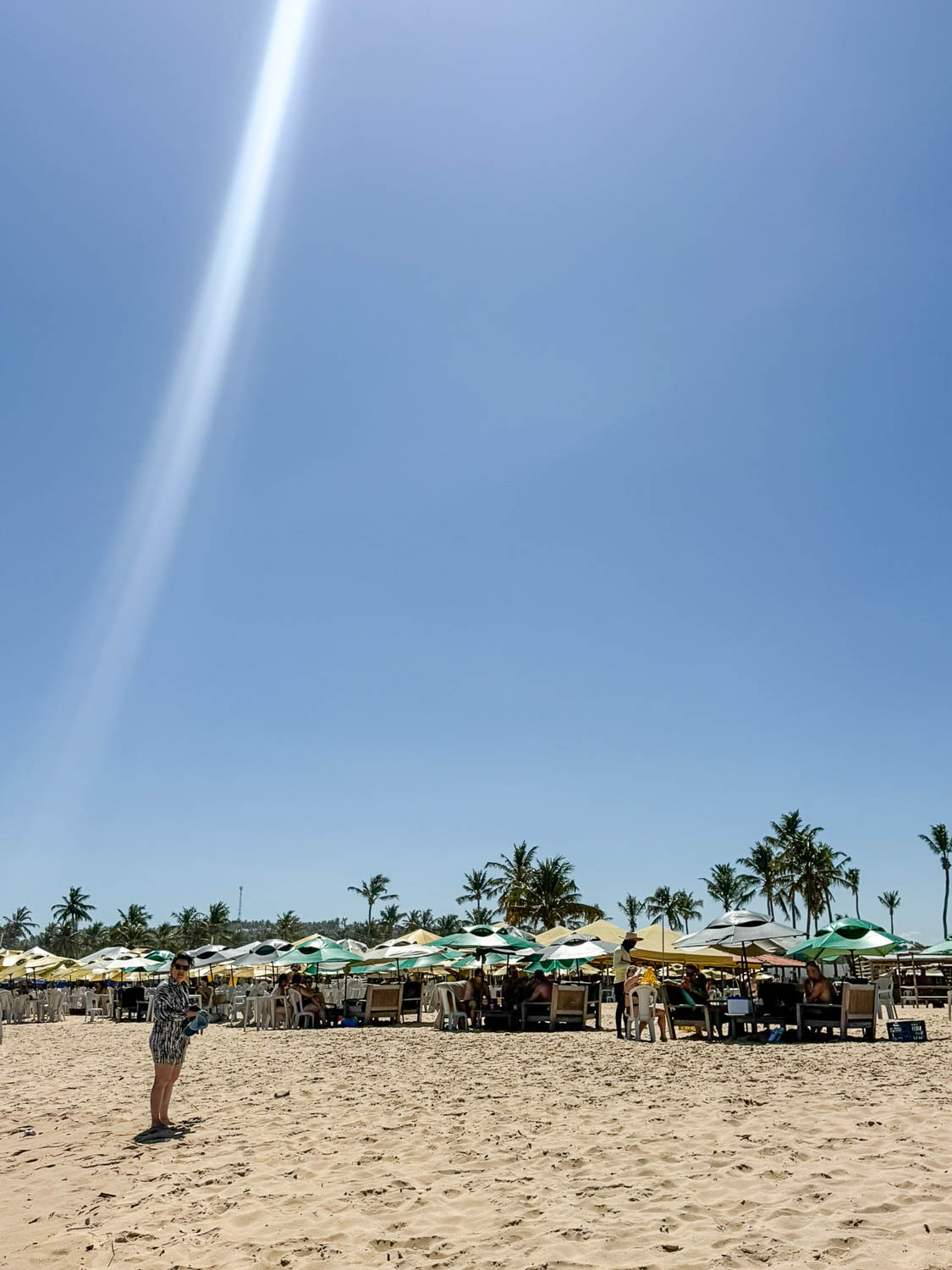
    Relaxed beach atmosphere at João Fernandes Beach in Buzios
    Everywhere you look in Buzios, there’s an opportunity for rest and relaxation (João Fernandes Beach)

    Insider tip. Many accommodations across the peninsula — from small boutique inns to luxury resorts — prioritize tranquility, offering pools, spa services, and adults-only oriented spaces designed specifically for rest. Choosing where you stay can play a significant role in shaping a more relaxed experience overall (we’ll get to accommodation options in a wee bit…).
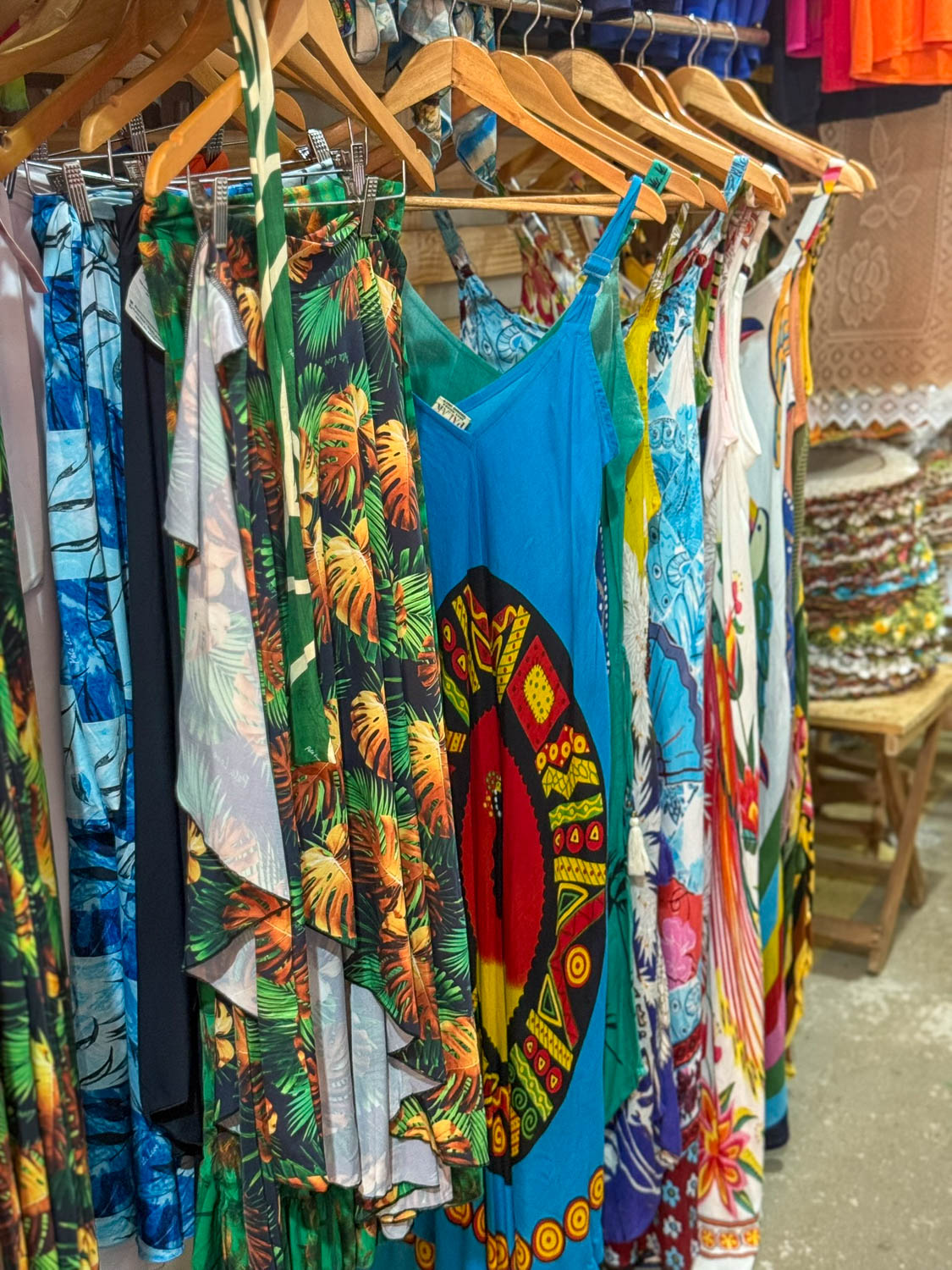


    Shopping in Buzios

    Boutiques and artisan shops in the shopping district of Buzios
    In Buzios, chic boutiques rub shoulders with artisan shops

    Many travel writers might tell you something along the lines of “No trip to Búzios is complete without wandering the boutiques along Rua das Pedras”. And whilst that is partly true (we don’t believe anything is a “must do” or “must see”), you don’t have to actually pull out your wallet to get the most from your exploration! That being said, we also know many travellers like to snag a souvenir or two from their adventures, and Buzios offers plenty of opportunities for this very thing. And yes, Rua das Pedras is perhaps the best place on the peninsula to begin.

    Along streets including Rua das Pedras, high-end fashion boutiques sit alongside smaller shops selling handmade jewellery, pottery, and locally-inspired pieces. The overall feel is polished yet relaxed, and many stores stay open into the evening, making shopping an easy addition to a post-dinner stroll rather than a daytime chore.

    Hand-painted wooden signs at a local market in Buzios, Brazil
    Hand-painted wooden signs for sale at a local market in Praça Eugenio Hanold (Eugenio Hanold Square) (Buzios)

    Local markets (Beck’s favorite, as we know!) add another dimension to the experience, offering everything from crafts and clothing to regional foods and fresh produce. These spaces feel informal and community-driven, and they’re often the best places to find souvenirs or gifts with a clear sense of place — items that feel connected to the peninsula rather than mass-produced, so you can carry the spirit of this small town back home with you.

    Insider tip. Prices at local markets and independent shops in Búzios may be flexible, especially later in the day. Note, however, that any negotiation is usually low-key and friendly, rather than expected.


    Dining in Búzios

    Outdoor dining and restaurant atmosphere in Buzios, Brazil
    Food and drink is central to the experience in Búzios

    Food is central to the experience in Búzios: whether you’re drawn to local flavors or international comfort food, dining here tends to be relaxed, social, and well integrated into the rhythm of the day.

    Whilst fresh seafood – including grilled fish and moquecas (Brazilian fish stew) – features prominently, it’s far from the only option. Menus across the peninsula reflect a wide range of influences, from traditional Brazilian dishes (think grilled meats, rice-and-bean plates, and regional stews) to international cuisines shaped by the town’s long-standing expat community. Italian, Argentine, French, and contemporary fusion restaurants are common, particularly around the town centre, offering everything from simple pastas to more refined, multi-course meals.

    Fun fact. Many coastal restaurants in Búzios adjust their menus subtly depending on what fishermen bring in, meaning seafood offerings can change without much notice.


    Traditional Brazilian coxinha street food served in Buzios
    Don’t forget to try a deep-fried Coxinha – a popular Brazilian street food – during your visit

    Casual eateries, beachside restaurants, and small bistros coexist easily in Buzios, making it just as possible to enjoy an unpretentious lunch by the water as a more polished dinner after dark.

    Insider tip. Lunch menus often offer the best value, with many restaurants serving fixed-price or simplified daytime options that mirror dinner dishes at a lower cost.

    Insider tip. Dinner in Búzios tends to start later than many visitors expect, with restaurants often filling up after 8pm, especially in the town centre.

    Gelateria serving ice cream and desserts in Buzios town center
    Need a little something to help cool you down? You’ll find plenty of gelaterias throughout the town.

    For those of you with a sweet tooth like Mike, sugary delicacies are easy to find across Búzios, where classic Brazilian desserts sit comfortably alongside more international options. Local bakeries and cafés showcase staples that include Brigadeiros, coconut Beijinhos and other pastries, whilst chilled desserts (think delicious açaí bowls) are popular during the warmer hours. Gelaterias (ice-cream shops) and casual seaside stalls round out the scene, making it easy to sample Brazil’s sweet side wherever you find yourself.

    Insider tip. Looking to deepen your culinary connection to the peninsula? Buzios affords visitors numerous opportunities to join a cooking class or wine-tasting.

    For a deeper dive into the culinary delicacies of Brazil, be sure to check out our detailed article on The Cuisine of Brazil!


    Buzios Nightlife

    Evening nightlife scene in Buzios with bars and restaurants
    You’ll never be hard-pressed to find something to do in the evenings in Buzios

    Búzios comes alive at night, offering a mix of casual beach bars, elegant restaurants, and dance clubs. However, the nightlife here unfolds gradually, rather than all at once.

    Evenings often begin with drinks at a beach bar or a relaxed dinner, before energy builds later into the night. Around Rua das Pedras, options range from casual cocktail spots and wine bars to polished restaurants and late-night venues, allowing visitors to move easily between dinner and drinks without committing to a single scene. Looking for a sushi lounge? Check. Steakhouse? Check. Candlelit dinners with ocean views in an open-air setting? Check.

    Bar da Kombi nightlife spot on Rua das Pedras in Buzios
    Bar da Kombi (Rua das Pedras, Buzios)

    Fun fact. In Búzios, nightlife evolved as an extension of evening walks rather than destination clubbing. This is why many people drift between dinner, drinks, and a second stop, rather than settling in one place for the night.

    Insider tip. If you prefer a relaxed night out, arriving early (before, say, 8pm) often means easier seating, softer energy, and more space before venues gradually fill later in the evening.

    Where Should We Go?

    Places that include Rocka Restaurant and Beach Lounge – less than a 30-minute walk or 15-minute drive directly east of Rua das Pedras – get rave reviews from travellers and locals alike, and are known for stylish cocktails and a relaxed crowd. You may also wish to consider a visit to Porto da Barra, a waterfront complex in Manguinhos with a calmer, more laidback, local feel, complete with fine restaurants and bars (and often live music!) with views across the bay toward the mainland.

    Insider tip. Getting from Rua das Pedras to Porto da Barra is easy, though typically requires a short taxi or rideshare. It takes around 10–15 minutes by road (traffic dependent, of course!) and is generally not walkable for most visitors (unless your name is Beck…).

    Whether you’re in the mood for a low-key evening or something livelier, nightlife in Búzios tends to feel social and unforced, rather than high-energy for its own sake. Which we really liked!


    Events and Festivals of Buzios

    Festival atmosphere and evening crowds in Buzios, Brazil
    There’s a festival-like atmosphere in Buzios, no matter the time of year

    If you time your visit to Búzios right, you might catch one of the peninsula’s signature festivals. The three celebrations we highlight below are more than mere events — they’re ways to connect with locals and deepen your appreciation for the cultural heartbeat of Buzios.

    • Búzios Jazz Festival: held in late April or early May
    • Búzios Food Festival: typically held in early July and running for about 10 days
    • Búzios Film Festival: hosted annually in November

    For a deep dive into these events and festivals, be sure to check out our more detailed Events and Festivals of Buzios article.


    Accommodation in Buzios

    Rio Buzios Beach Hotel comes with a cable car
    The well-located, well-appointed Rio Buzios Beach Hotel even has a cable car to reception!

    Accommodation in Búzios reflects the same variety found across the peninsula itself – and with accommodations spread across different neighborhoods and price points, choosing where to stay in Búzios often comes down to the type of experience you want. Ask yourself if you’re looking for proximity to nightlife and dining, or a quieter base designed for rest and relaxation … or something else altogether.

    Buzios offers visitors accommodation ranging from simple, well-located 3-star hotels and smaller pousadas, to boutique properties and high-end hotels. The smaller options generally offer practical comforts that include wifi and parking (if needed), and will often prioritize character, service, and a more personal atmosphere.

    Insider tip. Many locally-run inns are tucked into quieter residential areas in Buzios, making them a popular choice for travellers who value location and tranquillity over scale.

    At the more refined end of the spectrum, boutique properties that include Casas Brancas Boutique Hotel & Spa and Insólito Boutique Hotel & Spa (near Ferradura Beach) focus on privacy, views, and curated experiences, often appealing to couples or adults seeking a slower, more indulgent stay.

    Insider Tips on Where to Stay By Area

    Popular swimming area at João Fernandes Beach in Buzios
    The very popular João Fernandes Beach (Buzios)

    Not sure where to stay? Consider which of the three main areas within Buzios you’d like to spend the most time. Don’t forget, these are separate historical and administrative settlements, each with their own distinct character.

    • Armação is best for walkability, dining, and nightlife, with easy access to Rua das Pedras and the Orla Bardot Boardwalk.
    • Ossos and João Fernandes suit travellers seeking a quieter base close to the centre, though note that transport is usually required (unless you love to walk, like Beck!).
    • Manguinhos works well for those seeking a calmer, beach-focused stay, particularly if you have a car or are prioritizing space over proximity.

    Safety in Búzios

    Sunny beach conditions highlighting strong sun in Buzios, Brazil
    Make sure to take sun protection seriously in Buzios – it gets very hot here, especially during the summer!

    Safety is generally not a major concern for visitors to Búzios, particularly when compared with larger Brazilian cities. The town has low crime rates, is compact and well frequented, beaches are typically staffed by lifeguards, and medical facilities and pharmacies are easy to access if needed.

    As with any destination, basic situational awareness goes a long way, but most visitors find Búzios relaxed and easy to navigate, both by day and after dark. We certainly found Búzios to be easygoing and welcoming, but we’d also like to share the following insider tips to help you feel even more secure in your choice to visit this wonderful part of Brazil.

    • Leave valuables (and anything else you won’t need during the day) at your accommodation, especially when heading to the beach. Carrying less generally means worrying less.
    • Use taxis or rideshares for longer distances or late-night returns – particularly when moving between neighborhoods – rather than walking unfamiliar routes. We found Uber to be incredibly cheap and convenient during our visit to Brazil.
    Changing beach conditions at Praia dos Ossos in Buzios
    Be mindful of beach conditions, which can vary dramatically depending on the weather (Praia dos Ossos, Buzios)
    • Pay attention to posted beach flags and lifeguard guidance, as water conditions can change quickly depending on wind and tide.
    • Stick to well-lit, active areas in the evenings. Places around Rua das Pedras, the Orla Bardot Boardwalk, and busy dining zones, tend to feel the most comfortable after dark.
    • Trust local rhythms (and your gut!): if an area feels quiet or inactive at a certain hour, it’s usually a sign to adjust your plans rather than push on.

    Final Thoughts

    Peaceful coastal scenery along the shoreline of Buzios, Brazil
    Rest and relaxation is what it’s all about here on Brazil’s southeast coast

    For travellers weighing up whether Búzios is worth the visit, its sense of balance is part of the appeal. The town manages to feel lively without being overwhelming, and social without tipping into chaos. Between calm waters and lazy beach days, walkable evenings, a vibrant nightlife, and a welcoming local rhythm, Búzios offers an experience that feels both comfortable as well as engaging — one that invites exploration at your own pace.

    Here, the salty sea breeze carries the hum of boats, conversation, and clinking glasses. There’s an understated ease to daily life, where mornings unfold by the water and evenings linger over simple, well-timed pleasures. It’s a place that feels polished without being pretentious, and relaxed without ever feeling dull.

    What stood out most to us was how naturally Búzios accommodates different ways of travelling. Whether you’re like Beck – drawn to surf breaks at Brava Beach or the pull of a rugged coastal walk – or more like Mike – content with a glass of wine in hand at a waterfront bar on the Orla Bardot Boardwalk and live music as the evening settles in – the town makes space for both.

    In the end, this small town on Brazil’s southeast coast is not about chasing highlights or ticking boxes. It’s about slowing down, wandering without urgency, and letting the rhythm of the coast guide the experience. For us, that balance — between energy and ease, discovery and comfort — is exactly what made Búzios one of the highlights of our visit to Brazil.

    So this is our invitation to you – to pack your bags and your sense of curiosity and add this quietly special corner of Brazil to your South American travel itinerary. Because it’s here on this peninsula you’ll be reminded that the world is wide, beautiful, and far more colorful than you had ever imagined. Let’s help you plan your next travel adventure to Búzios!


    FAQs

    Where is Búzios, Brazil, and how do you get there from Rio de Janeiro?

    Buzios (Armação dos Búzios) is a coastal resort town on Brazil’s Costa do Sol, located about 170 km (105 miles) east of Rio de Janeiro. Most travelers fly into Rio de Janeiro’s Galeão International Airport or Santos Dumont Airport and continue to Buzios by road using a shuttle service, private transfer, rental car, or intercity bus. The journey typically takes about three hours depending on traffic conditions.

    Is Búzios safe for tourists?

    Buzios is generally considered a safe destination for tourists, especially compared with larger Brazilian cities. Popular areas such as Rua das Pedras, the Orla Bardot Boardwalk, and the main beaches are active and well visited both day and night. As with any travel destination, visitors should take normal precautions, including keeping valuables secure, staying in well-lit areas after dark, and using taxis or rideshare services for longer evening trips.

    What is the best time of year to visit Búzios?

    Buzios is a year-round beach destination with warm temperatures throughout most of the year. The most popular time to visit is December through March during Brazil’s summer, when beach conditions are ideal and nightlife is lively, though crowds and prices are higher. Travelers seeking fewer visitors and better accommodation value often prefer April through June, which still offers pleasant weather.

    What are the best things to do in Búzios for first-time visitors?

    First-time visitors to Buzios often begin in the town center exploring Rua das Pedras and walking the scenic Orla Bardot Boardwalk. Popular experiences include visiting Igreja de Sant’Anna, relaxing on nearby beaches such as Praia da Armação or João Fernandes Beach, and enjoying waterfront dining and nightlife in the evening. With more than 20 beaches across the peninsula, many travelers combine sightseeing with beach hopping during their stay.

    What are the main areas of Búzios, and what is the best place to stay?

    Buzios is commonly understood as three main visitor areas. Armação forms the walkable town center near Rua das Pedras and the Orla Bardot Boardwalk. Ossos and João Fernandes offer a quieter, resort-style atmosphere close to calm swimming beaches, while Manguinhos provides a more spacious and beach-focused setting that is easiest to explore with a car. First-time visitors often stay in Armação for convenience and walkability.

    How many beaches are there in Buzios, Brazil?

    Buzios is known for having more than 20 beaches spread across its scenic peninsula, each offering different conditions and scenery. Some beaches, such as João Fernandes and Ferradura, are known for calm swimming waters, while others like Geribá Beach attract surfers and visitors looking for wider stretches of sand and ocean views.


    Explore More Of Brazil

End of content

End of content