Southern Europe

  • Island of Rhodes, Greece: Your Guide for Things To Do

    Some places you simply visit. There are others to which you feel a connection. And then there are those you feel deep in your soul – it grabs at your heartstrings and wont let go. The island of Rhodes, Greece, is one of those places – those rare adventures that stay with you, long after your footprints in the sand have been washed away by the incoming tide.

    Located in the South Aegean region of Greece, Rhodes is the largest island in the Greek Dodecanese island group. It’s here that you’ll find ancient Greek civilizations meet medieval legends, where there’s a modern cosmopolitan vibe that weaves its way through endless natural beauty, and where there are plenty of activities and sights to help fill your days.

    Whether you come here to chase history through stone-paved alleys in the Old Town of Rhodes, choose to savor fresh seafood by a busy, sun-dappled harbor, or wish to simply soak up the stunning views of the Aegean Sea from your beach lounger, Rhodes welcomes you with open arms, and invites you wholeheartedly to spend a little time here, adding to your own life story.

    Permit us, if you will, to guide you through all you need to know – from what to see, where to eat, where to stay … and everything in between! – to help make a visit to Rhodes your next unforgettable adventure. Read on, fellow wanderers!


    Quick Tips 
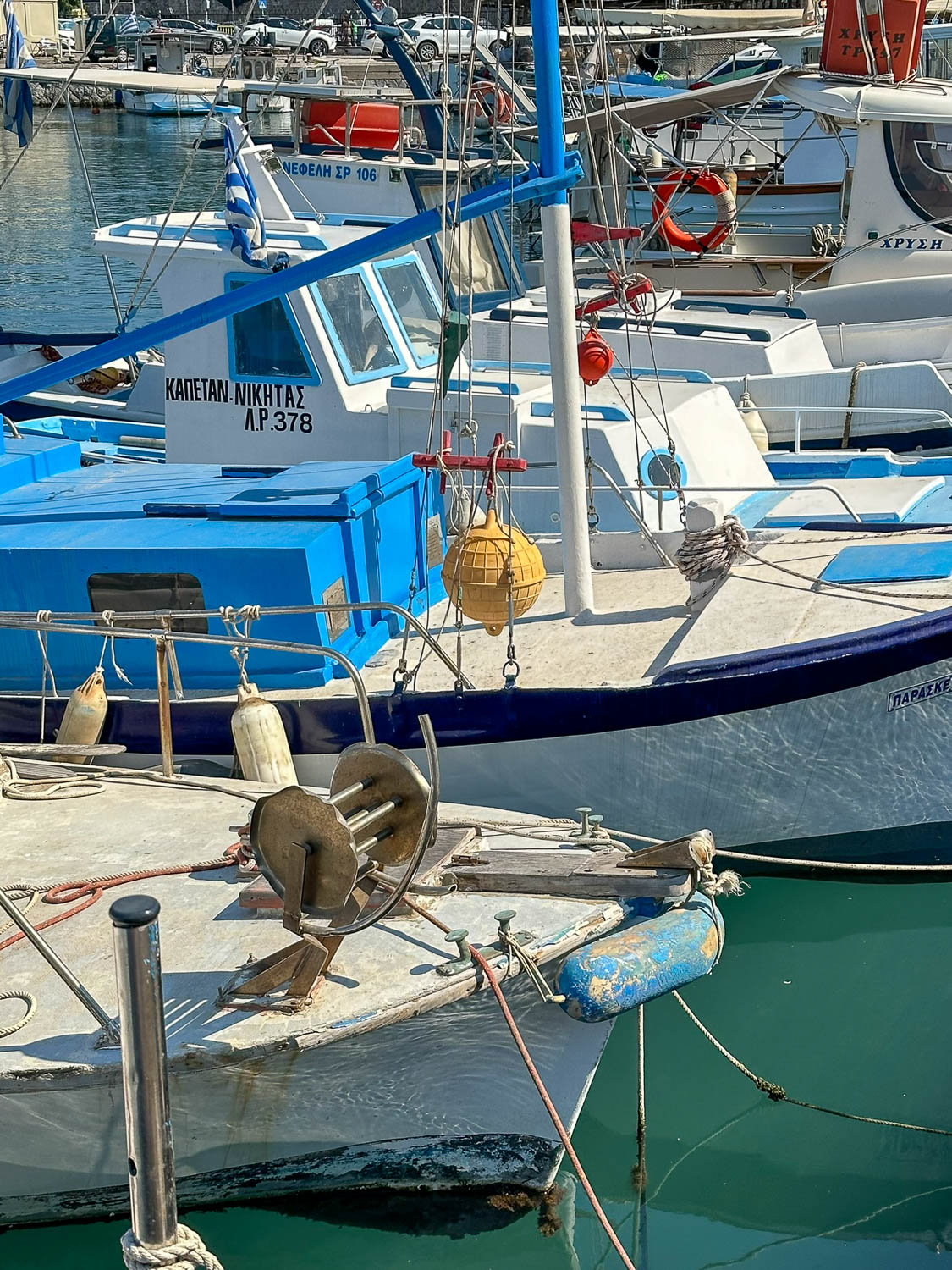
    Fishing boats line Kolona Harbor Rhodes, Greece
    Fishing boats line Kolona Harbor (Rhodes, Greece)

    Here are some insider tips to help you make the most of your visit to the Island of Rhodes, Greece.

    • Rhodes is part of the Greek Dodecanese islands. It’s located 287 nautical miles south-east of Athens.
    • The island of Rhodes is steeped in history, but also affords visitors a vibrant cultural scene.
    • With its warm climate (300 days of sunshine a year!), Rhodes is a popular destination year-round.
    • Numerous famous individuals are associated with Rhodes, including mathematicians, athletes and philosophers. Greek mythology also plays a large part in the island’s stories.
    • Begin your visit to Rhodes in the UNESCO World Heritage Site of Rhodes Town and take in the Old Town, the Palace of the Grand Master, Mandraki Harbor, the Colossus of Rhodes, the Jewish Quarter, and the ancient Acropolis of Rhodes.
    • Visit the island’s popular east coast beaches for warm, calm waters and opportunities to swim, snorkel and sunbathe.
    • Visit the island’s west coast beaches for a little wind in your hair – these are the beaches for water sports enthusiasts.
    • Featuring a mix of lush landscapes, Rhodes offers visitors a range of activities in the outdoors: boat tours, hiking, and biking, to name a few.
    • Beyond Rhodes Town and its beaches, more adventures await. Consider visiting the Acropolis of Lindos, Valley of Butterflies, or Koufos Canyon. Rhodes is also an excellent base for exploring other nearby Greek islands.
    • Additional family-friendly activities on Rhodes include water parks, toy train tours, and interactive museums.
    • Want something a little more romantic? Try a private sunset cruise, a couples’ spa day, a lazy afternoon in a secluded beach cove, or a romantic meal by candlelight at a traditional restaurant.
    • A little further afield, and a little less touristy, you may delight in a visit to the ruins of Ancient Kamiros, the Monastery of Filerimos, Kritinia Castle, or Prasonisi Beach.
    • Additional cultural connection to Rhodes can be gained through visits to the Archaeological Museum, numerous houses of worship scattered throughout the island, the National Theater, and a plethora of vibrant annual festivals.
    • Enjoy shopping and want to take home a special memento of your visit? Rhodes is especially well-known for its handcrafted jewelry, pottery and ceramics.
    • Rhodes offers visitors a lively dining and nightlife scene, especially in Rhodes Town and popular tourist areas that include Lindos and Faliraki.
    • Accommodation options on the island are diverse and plentiful, ranging from luxury beach resorts to boutique hotels, and from family-run hotels in the countryside to backpacker hostels.

    Follow these tips and you’ll be ready to visit the Island of Rhodes, Greece!


    Plan Your Trip
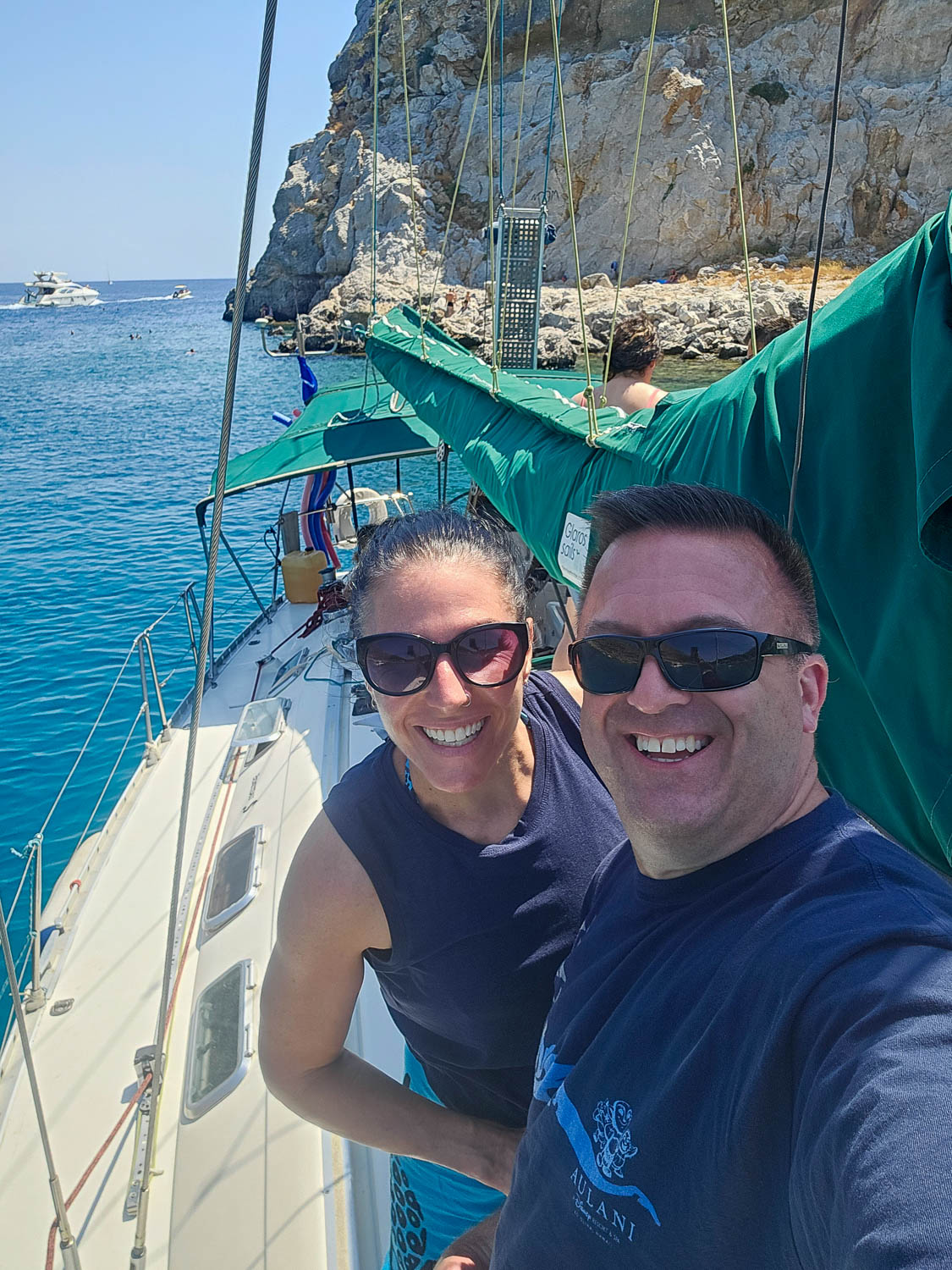
    Aboard the aptly-named Always Somewhere catamaran Anthony Quinn Bay, Rhodes
    Aboard the aptly-named Always Somewhere catamaran (Anthony Quinn Bay, Rhodes)

    Some links below may earn us a small commission at no extra cost to you. We’re truly grateful for your support, as it allows us to continue sharing meaningful travel experiences and practical travel insights with you. Read our full disclosure here.

    Planning your visit? We’ve gathered recommended tours and activities, along with trusted travel tools, to help you explore with confidence and ease.

    Tours & Experiences


    Browse top 15 attractions in Rhodes, Greece.


    Travel Essentials

    Planning the rest of your trip? These are the platforms we personally use when organizing our travels. For more planning tools, visit our Travel Resources page or browse current promotions on our Travel Deals page.


    Discovering the Island of Rhodes
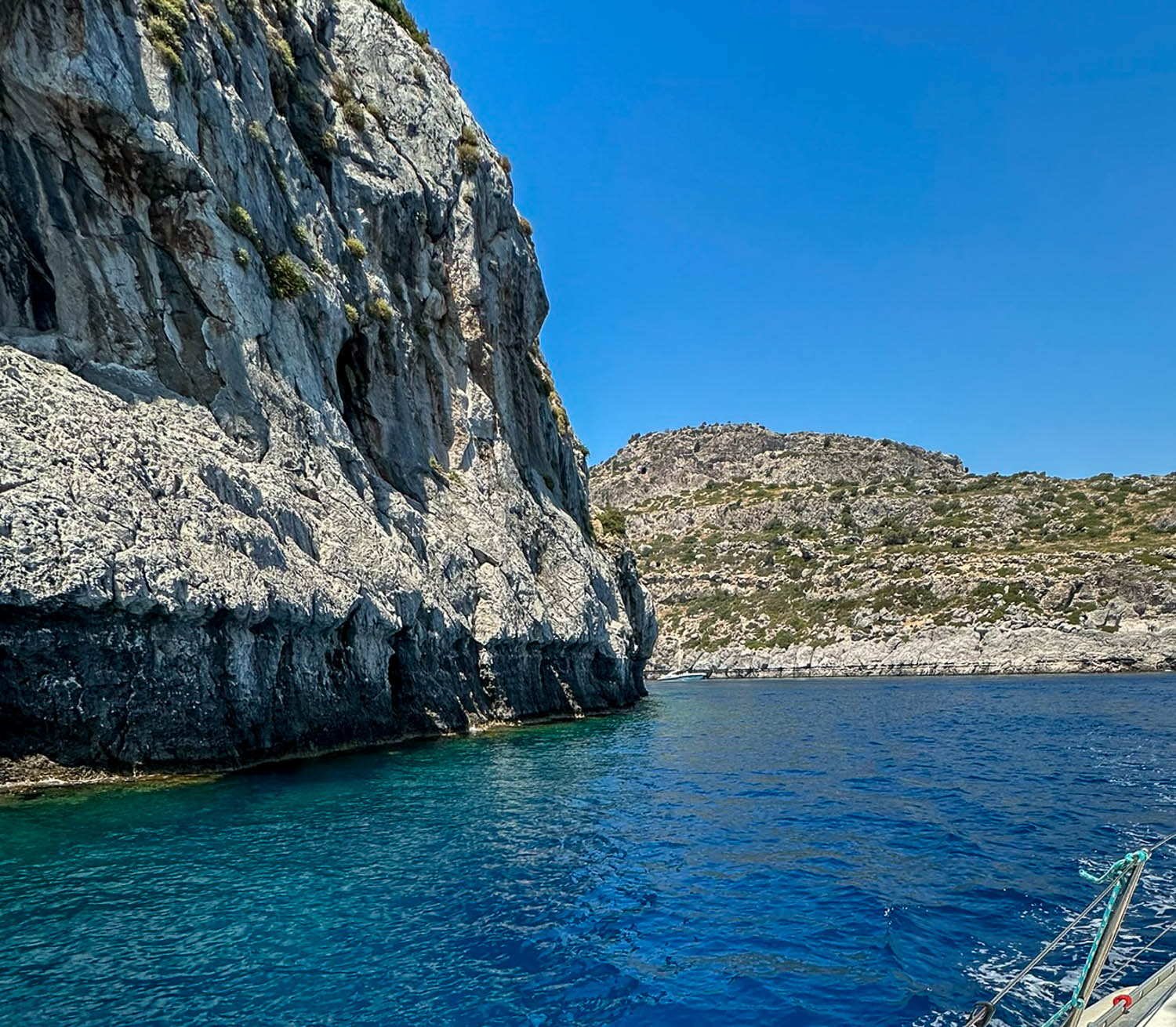
    The serenity of Anthony Quinn Bay Rhodes, Greece
    The serenity of Anthony Quinn Bay (Rhodes, Greece)

    Rhodes Island is the largest – and arguably, the most iconic – of the Dodecanese islands. Throughout the centuries, waves of ancient Greeks, Romans, Byzantines, Ottoman Turks, Dorians and Italians – to name but a few – have left their marks here. The island’s fascinating, colorful history is indeed a layered one, marked by periods of Greek dominance, foreign occupation, and an eventual reunification with Greece in 1947.

    Fun fact. The word “Dodecanese” means “the twelve islands”. However, the Dodecanese island group is actually made up of 15 large islands, and some 150 smaller Greek islands.

    Fun fact. 287 nautical miles south-east of Athens, Rhodes is actually closer to the Turkish mainland than it is to Greece (if you’re a strong swimmer, you could probably make it from Rhodes to Bozukkale in Muğla, Türkiye – there are only 13.7 miles (22km) between the two!).

    Thanks to the island’s strategic location in the Aegean Sea, Rhodes was once an influential city-state: a thriving trading center, a powerful naval force, and a cultural hub within the Mediterranean.

    Fun fact. During the Hellenistic Period (the three centuries beginning 323 BCE) – and then well beyond – Rhodes was also known as a prosperous center of learning, particularly within schools of rhetoric and philosophy.

    Wander the streets of Rhodes today, and you’ll feel echoes of this complex, ancient past: heroic legends around every corner, whispers of maritime empires in every harbor, and an amalgamation of architectural wonders from yesteryear that remain standing to this day.

    Of course, Rhodes isn’t just a history lesson. It’s also a lively island with a vibrant cultural atmosphere, where modern cafes spill out onto cobbled squares, where religious celebrations and annual food and music festivals draw the crowds, where boutique stores sit quietly behind giant fortress walls, and where numerous secluded coves – as well as bustling, luxurious resorts – invite you to stay awhile.

    There’s a rhythm to this island – a quiet, yet thumping, heartbeat. It’s no wonder Rhodes is often described as “The Pearl Island” – a hint to the island’s beauty and deeper value, to its overall charm and allure. Indeed, it’s no wonder at all that Rhodes is one of the most popular tourist destinations in Greece!


    Best Time to Visit Rhodes
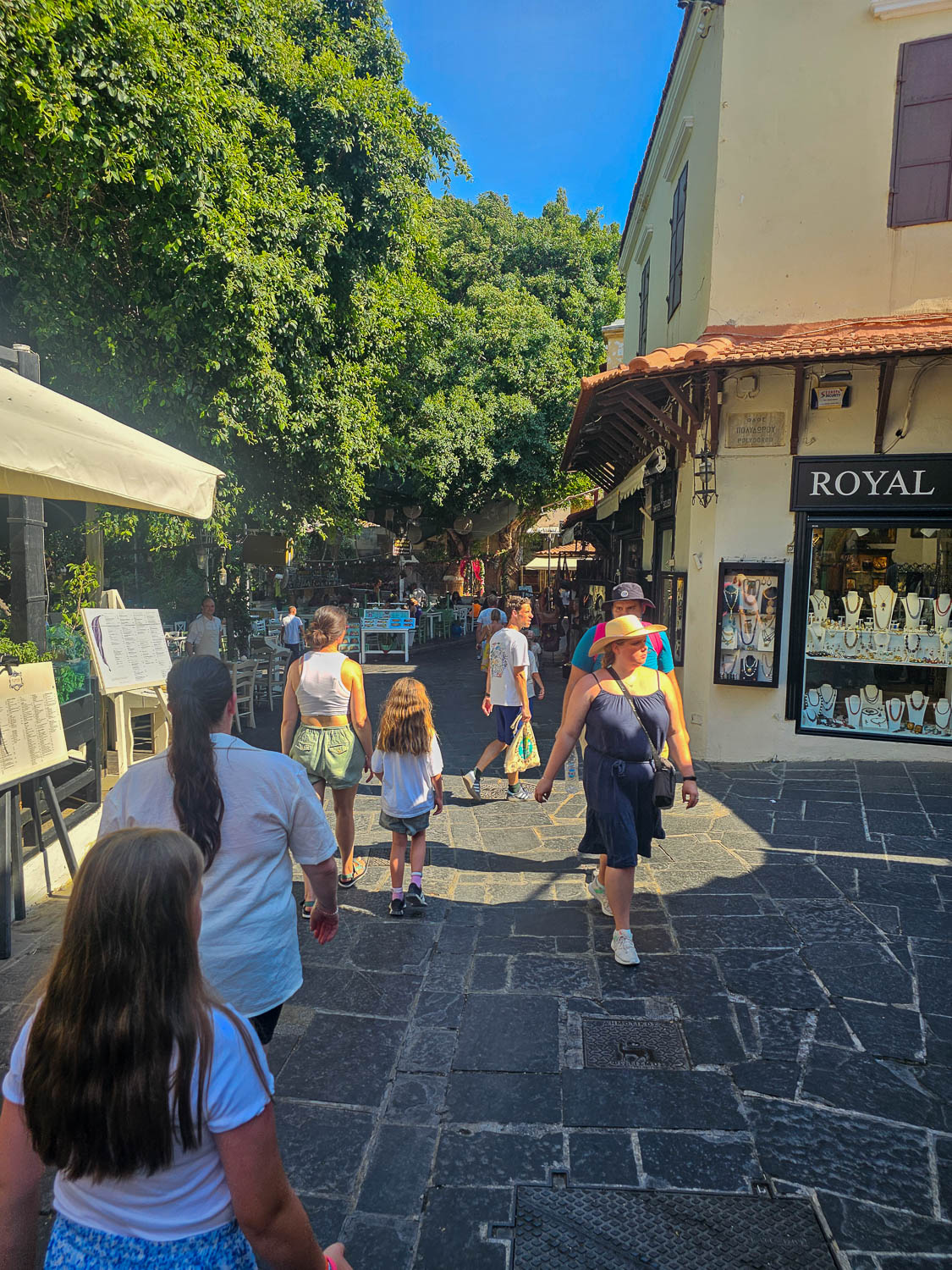
    The picturesque cobblestone streets of the Old Town Rhodes, Greece
    The picturesque cobblestone streets of the Old Town (Rhodes, Greece)

    The best time to visit the Greek islands in general (which of course includes Rhodes!) is when you have time! And with its warm climate, Rhodes is a popular destination year-round.

    Fun fact. Rhodes boasts over 300 days of sunshine a year, giving it the nickname “Island of the Sun”.

    • The Summer months (June through August) are great if you love hot weather and bright sunshine, but it can also get crowded at this time of year. On the plus side, the sea is generally calm and clear during this peak tourist season, most amenities, tours and activities will be open and available, and the general atmosphere on the island is buzzing, bright and alive.
    • Visiting Rhodes during the shoulder or “off” season (April and May, or September and October) can be just as amazing as visiting during the Summer. At this time of year you’ll still find plenty of golden sunshine and warm seas, but also a little more space to breathe and a slightly more relaxed vibe. It’s also a time when you’re more likely to find better deals on accommodations and activities.

    Whether you prefer the hustle and bustle and the heat of Summer, or the tranquility and charm of the off-season, Rhodes really can be visited at any time of year!


    Some Fun Facts to Get You Acquainted With Rhodes
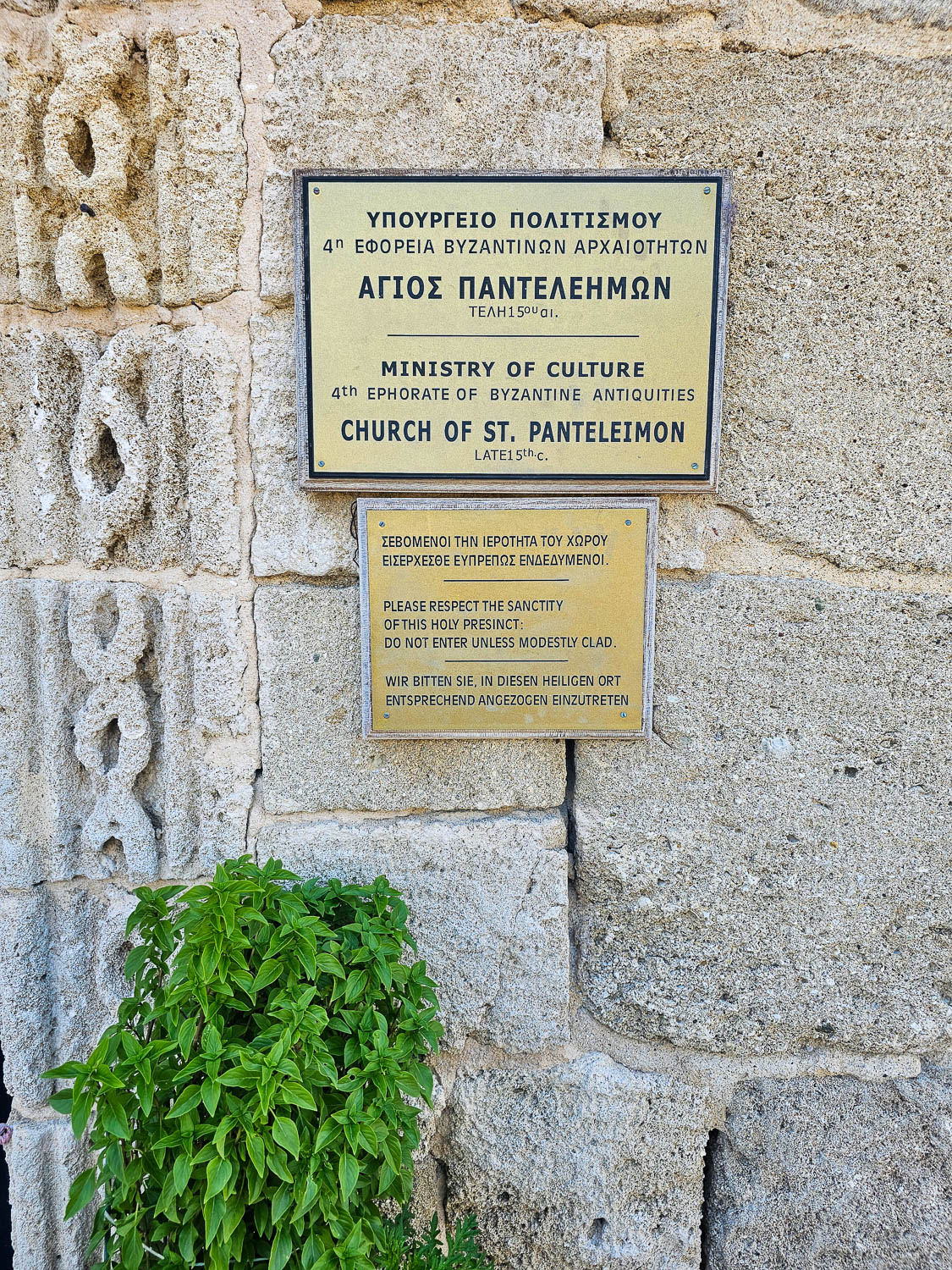
    Rhodes Greece Significant religious history and presence
    Rhodes is an island with a significant religious history and presence

    Notable and Legendary Figures

    Several famous individuals are associated with Rhodes, including mathematicians, athletes and philosophers. Cleobulus, a Greek poet and one of the Seven Sages of Greece, was native to Lindos (a village about an hour south of Rhodes Town). Apollonius of Rhodes, another ancient Greek author, also lived here, as did Chares of Lindos, a celebrated Greek sculptor. Diagoras of Rhodes (a celebrated Olympic boxer from 5th century BCE) and Hipparchus (a Greek astronomer, geographer and mathematician – and the individual credited with the founding of trigonometry) also called Rhodes home.

    Greek Mythology

    Aside those listed above, other ancient names and numerous myths associated with Greek mythology swirl around you everywhere you step in Rhodes. For example, Rhodes is often referred to as the “Island of the Sun”, due in part to its prominent association with Helios, the sun god. Helios is believed to have fallen in love with the sea nymph Rhode, and the island was named after her (awwww). The Telchines – believed to have been the original inhabitants of Rhodes – have been described as mysterious sea-god magicians, as well as skilled craftsmen and inventors: some archaeological sites on Rhodes are linked to their mythical presence.

    Severe Earthquakes

    Not to scare you away, but Rhodes is located in a seismically active zone and is susceptible to earthquakes – in fact, on average, the island experiences moderate or small earthquakes every 2-3 days. But don’t worry, whilst there have been some notable earthquakes over the years (the most significant being almost 550 years ago! – and it lasted for over 10 months!), today most tremors are minor. The resilience of Rhodes and its people shine ever brighter because of this. 


    Rhodes Town: Where the Past and Present Dance
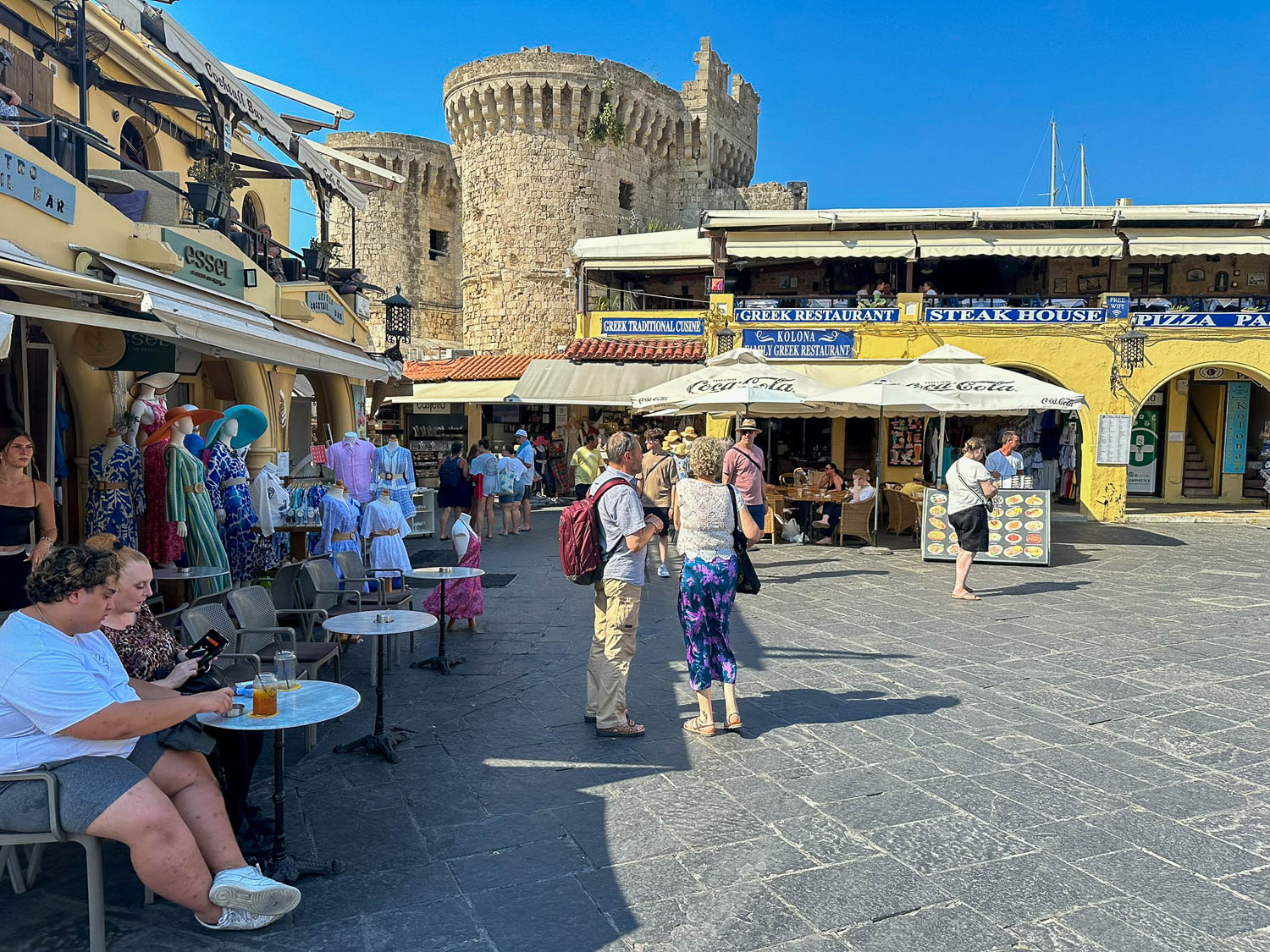
    Hippocrates Square, Rhodes Old Town Greece
    Hippocrates Square, Rhodes Old Town (Greece)

    Most visitors to Rhodes will begin their journey at the island’s northern tip, in the UNESCO World Heritage Site of Rhodes Town (or Rhodes City). The town rises from its cobblestone streets like a living museum wrapped in sea breezes. And trust us when we say you’ll want to linger here as long as you can.

    We’ve written a detailed guide to Rhodes Town, which we encourage you to check out! There you’ll find comprehensive information on visiting the Old Town, the Palace of the Grand Master, Mandraki Harbor, the mighty Colossus of Rhodes, the Jewish Quarter, and learn more about Rhodes’ occupation by Italy, as well as the ancient Acropolis of Rhodes, perched high atop Monte Smith.


    Beaches: Where the Island Shines
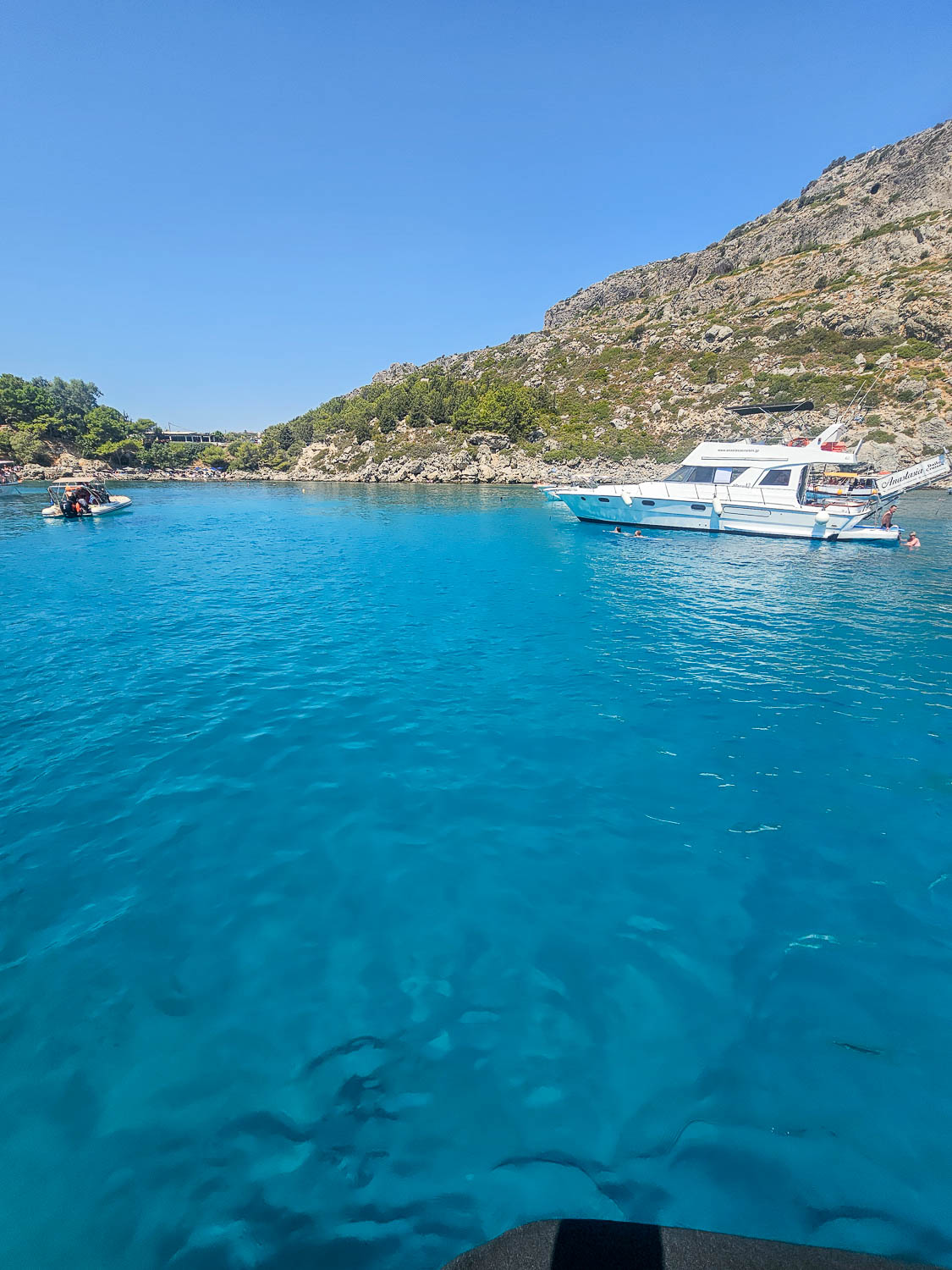
    Ladiko Beach Rhodes, Greece
    Ladiko Beach (Rhodes, Greece)

    If we’re being honest, visiting any Greek island wouldn’t be the same without some serious beach time. In great news, Rhodes has some excellent beaches, known for their diversity: from lively coastal areas to secluded coves.

    East Coast Beaches

    The east coast of Rhodes is where you’ll find the island’s most popular beaches. It’s also where you’ll find its warmest, calmest waters. Consider visiting one of the following during your time in Rhodes – because whether you’re looking to do some sunbathing, swimming, or simply floating in the gentle waves and hoping never to have to return home, the east coast delivers.

    Tsambika Beach

    Are you looking for a picture-postcard-perfect beach? Then head straight to Tsambika Beach, about 40 minutes by road directly south of Rhodes Town. It’s here at Tsambika that you’ll find pristine golden sands that seem to stretch on forever and shallow, crystal-clear waters – literally the perfect place for swimming, snorkeling and sunbathing. Tsambika is also well-organized, with changing rooms, restaurants, and sun loungers and umbrellas available for rent.

    Fun fact. The Tsambika Monastery, a pilgrimage site renowned for its association with fertility and childbirth, adds a stunning backdrop to the beach. The monastery, perched high atop an imposing rock, also offers stunning panoramic views of Rhodes’ eastern coastline.

    Ladiko Beach

    Traditional Greek lunch aboard our boat at Ladiko Beach
    A traditional Greek lunch aboard our boat at Ladiko Beach

    A little bit closer to Rhodes Town – about 25 minutes by road south of the city – you’ll find another picture-perfect cove: Ladiko Beach. Also known as Anthony Quinn Bay, the area is most well-known for its stunning natural beauty – the crystal-clear turquoise waters here are quite unreal … almost like liquid sapphire!

    Insider tip. No need to rent a car to get here. Most boat tours from Rhodes Town make a stop at Ladiko, with the beach also accessible by public bus from the Old Town.

    At Ladiko Beach you’ll be surrounded by rugged cliffs, rocky shores, and lush greenery, all adding to the dramatic, natural beauty of the area. It’s the perfect location for swimming, snorkeling, scuba diving, sunbathing, and even cliff jumping and diving (you know this is Beck’s kinda thing!).

    Note that the beach itself is small – a combination of sand, pebbles and small rocks – offering a more intimate experience compared to some of the other, more popular beaches on the island. Freshwater showers, a beach bar, and a traditional Greek taverna are also available to help make your visit to Ladiko even more comfortable.

    Insider tip. Consider visiting Ladiko in the early morning, when the beach is less crowded.

    Fun fact. Ladiko Beach is also famous for being the filming location for a significant portion of the iconic 1961 movie The Guns of Navarone. The area was given the name Anthony Quinn Bay after the actor of the same name, who reportedly fell in love with it (and who wouldn’t?).

    West Coast Beaches

    If you like a little wind in your hair – or perhaps enjoy partaking in activities that require some wind (Beck still has “take a kitesurfing lesson” on her bucket list!), head to the west coast of Rhodes. It’s the west coast beaches that are a true magnet for water sports enthusiasts.

    Insider tip. Sunset over the west coast beaches of Rhodes is a daily masterpiece – you’ll want to make sure you catch it at least once!

    Ixia Beach

    Just over 10 minutes south-west of Rhodes City, you’ll find the beautiful, family-friendly Ixia Beach. This long, picturesque beach is a mix of sand and pebbles, with the water that stunning turquoise color so famous within the Aegean Sea. The area is also home to numerous bars, restaurants and traditional tavernas: combined with those stunning west coast sunsets, this makes for a very intoxicating, romantic evening indeed! Visit Ixia for swimming, snorkeling, sunbathing, and the lively atmosphere it offers.

    Insider tip. Consistent Summer winds contribute a cool, refreshing breeze to Ixia Beach – just what we love on a hot Summer’s day in Greece! – and makes it a popular place for windsurfing, kitesurfing, jet skiing, banana boat rides, and other water sports. Consider taking a windsurfing lesson from a local whilst you’re visiting!

    Fun fact. Ixia offers stunning views across the water at all hours of the day. You can even see the Turkish coastline from here!

    Alyki Beach

    For something a little different, head 79km (49mi) south-west of Rhodes Town to the tranquil Alyki Beach (sometimes also written as Aliki), with its crystal-clear blue waters and pebbly shore. Nestled in a secluded, protected cove beneath the imposing Castle of Monolithos, and surrounded by high, craggy cliffs and some interesting rock formations, this place is truly something quite special.

    Alyki affords visitors a far less crowded (and less touristy!) beach experience compared to other beaches on the island, and is excellent for swimming and sunbathing. Whilst this beach is primarily pebbly (though there is some sand!) and doesn’t offer any of the typical large-scale activities found at other locations, it does offer a handful of sun loungers and umbrellas for rent.


    Outdoor Adventures
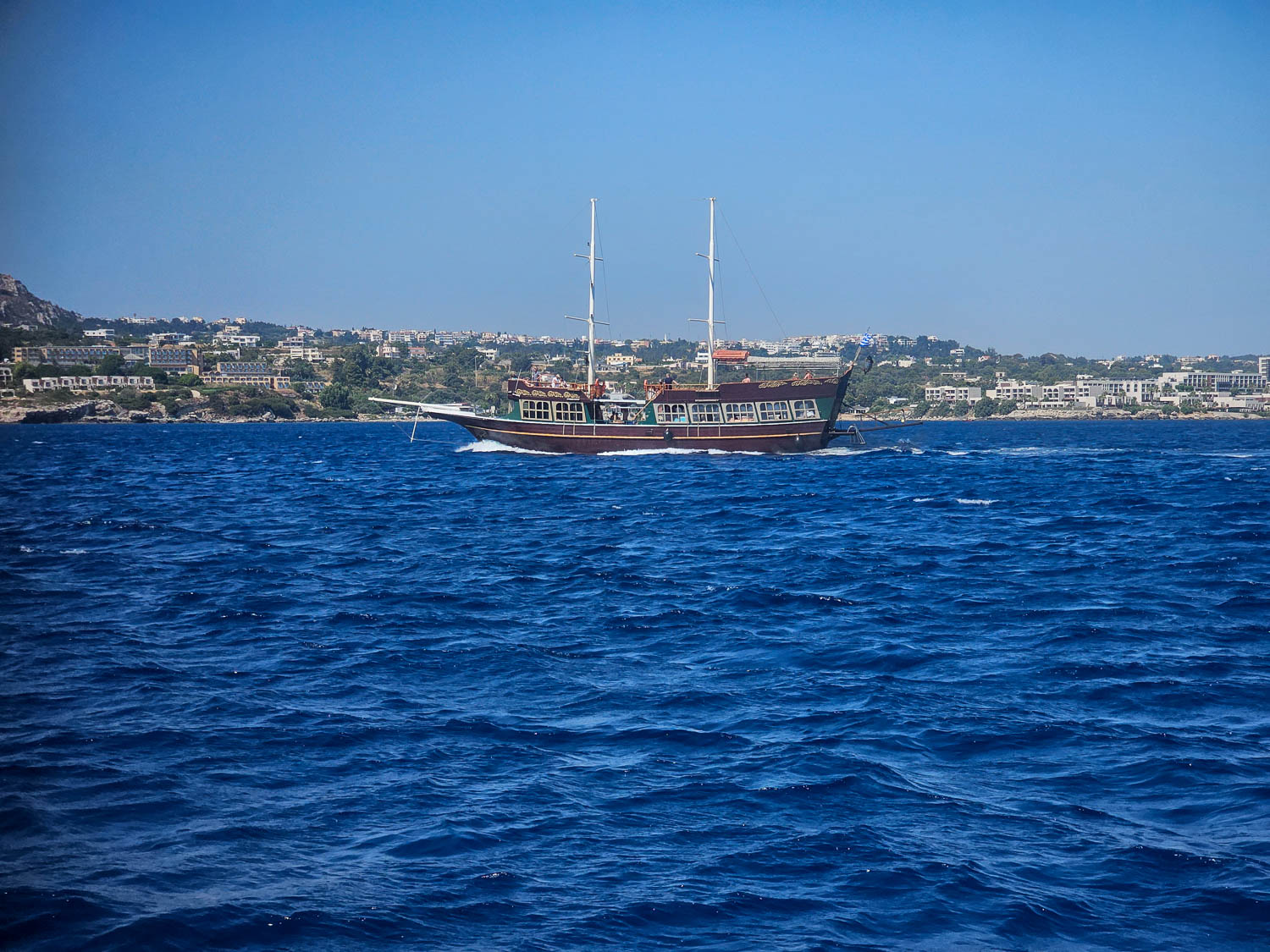
    Take a tour around the island on a traditional wooden boat Rhodes, Greece
    Take a tour around the island on a traditional wooden boat (Rhodes, Greece)

    We’ll be the first to agree, sun lounging on a gorgeous, white sandy beach on a stunning Greek island is something pretty awesome. But we also know it’s not for everyone – and even we don’t want to be on a beach all the time! In great news, that’s perfectly fine – as Rhodes also beckons the explorers and non-beachgoers amongst us.

    Featuring a mix of lush landscapes – think forests, valleys, hills, rugged coastlines and mountain passes – Rhodes offers visitors a range of activities in the outdoors. Of course, there’s the numerous water sports activities and historical sights in and around Rhodes Town we’ve mentioned above. But there’s also so much more! Think sea kayaking, scuba diving, hiking, ATV and quad bike adventures, horseback riding, mountain biking, rock climbing, golfing, eco-tours, and boat tours.

    Boat Tours

    There are a plethora of options for water-based tours on Rhodes, from a few hours on a catamaran to full-day excursions. We chose to partake in a 6-hour sailing yacht excursion along the island’s east coast, taking in Anthony Quinn Bay, Traganou Bay, and then Kallithea Bay (with swimming and snorkelling at each location!), before wandering the Old Town for an hour or two. It was one of the best days of our entire week in the Greek islands!

    Hiking

    Rhodes offers numerous hiking options, from easy coastal walks to more challenging mountain trails. Popular hiking trails include the relatively easy Epta Piges (Seven Springs) loop (this trail traverses through lush greenery and around freshwater springs) and the Monolithos to Mount Akramitis hike (a moderate 6km/3.72mi one-way hike that offers panoramic views and varied terrain, including forests, caves and rocky paths).

    Insider tip. The best time for hiking on Rhodes is typically between September and October. We recommend wearing sturdy hiking boots for some of the longer, more challenging hikes – and always wear sunscreen and carry plenty of water with you!

    Guided hiking tours that focus on specific regions of the island have also become increasingly popular over recent years. For example, hiking around the Lindos Peninsula, in the south-east of the island, where you can explore the ancient Acropolis of Lindos and enjoy stunning coastal views from the top! Guided hiking tours are an excellent choice for those of you new to hiking, or if you’re seeking a more structured experience.

    Other hiking options include the trail through the “Green Heart” of the island, from the village of Salakos to the Profitis Ilias Monastery: a moderate 7.5km/4.67mi (4 hours, on average) hike up Mount Profitis Ilias, the third-highest peak on Rhodes. During this hike – which will see an elevation change of about 500m/1640ft – you’ll be afforded incredible views over the island and beyond, wander along ancient mule tracks, and have the opportunity to see several historical points of interest along the way.

    Insider tip. If you’re heading out hiking, be sure to keep your eye on the weather and be prepared for changing weather conditions, especially in the mountains of Rhodes.

    Biking

    Another option for the active travelers amongst us is biking. There are numerous biking paths along the island’s coastlines, taking in incredible views and ancient roads. Visit secluded coves, remote monasteries, and even hidden waterfalls, along the way!

    Bike rentals are available in Rhodes Town, with rental shops offering visitors a variety of bike types to suit your needs (city bikes, mountain bikes, and even electric bikes!). Both guided tours and self-guided bike rentals are available.

    Insider tip. Some rental companies offer delivery service – how cool to have your bike delivered right to your hotel door! You can also typically book bike rentals online. We’ve heard RodosCycling are particularly fantastic. 


    Day Trips and Excursions

    Captain George, from Half Price Tours Rhodes, Greece
    Captain George, from Half Price Tours (Rhodes, Greece)

    Beyond Rhodes Town and its beaches, even more adventures await. For those of you wishing to see as much of the island as possible – in your own time and on your own terms – we definitely recommend renting a car. Car rentals are readily available throughout the island, and will permit you to easily reach some of the following additional sites, each well worth exploring.

    Lindos: The Imposing Acropolis

    About an hour directly south of Rhodes Town you’ll find the fishing village of Lindos – sometimes called the jewel of the island. It’s here you’ll also find the imposing Acropolis of Lindos, a significant ancient archaeological site, known for its rich history, well-preserved architectural features, and incredible views of the surrounding coastline. This somewhat haunting site almost whispers to you from across the centuries…

    Fun fact. At the bottom of a steep, ancient staircase leading to/from the Acropolis, you’ll find a wonderfully unique feature: an ancient trireme relief. This ancient warship is carved into the rock at the foot of the hill and is believed to be a votive offering to Athena Lindia (the Rhodes’ name for the Greek goddess Athena).

    The Acropolis of Lindos reflects the diverse cultural influences that have helped to shape the history of the region, including the evolution of Greek and Roman cultures, together with the influence of Byzantine and the Knights of St John. Even if you’re not up for taking a deep dive into history, we recommend a visit here simply for its dramatic location, perched high atop a 116-meter/381-foot cliff overlooking the Mediterranean Sea! You may also enjoy wandering through the olive and cypress trees near this ancient site, leading you down into the charming streets of the sugar-cube village of Lindos itself, with its whitewashed houses and amazing views back toward the Acropolis.

    Valley of Butterflies

    A little closer to Rhodes Town, you’ll find the lush Valley of Butterflies, or Petaloudes Valley (also sometimes seen as “Butterflies Valley”). Located less than 30km/19mi south-west of the main port, and wedged between the villages of Paradisi and Theologos, this valley is a natural reserve and popular attraction for visitors.

    The valley boasts a unique microclimate that, following the wet season (late May), attracts thousands of butterflies (most specifically, the island’s subspecies of the Jersey Tiger Moth), drawn to the scent of the resin in the Oriental sweetgum trees that dominate the landscape. This unique natural wonder is the perfect breeding and resting ground for these migratory butterflies.

    Fun fact. Butterflies Valley is the only natural forest of Oriental sweetgums in all of Europe.

    Even if you don’t make it to Rhodes during the Summer and aren’t able to catch a glimpse of all these butterflies, the valley is still a beautiful place to visit and explore, with lush vegetation, well-marked walking trails, streams, waterfalls, diverse plant and animal life, and even its own small museum!

    Koufos Canyon

    For the more adventurous amongst you, or for those seeking a challenging hike, consider a visit to the rocky Koufos Canyon. Something that really stands out about Koufos is its unique blend of geological features: high cliff walls, oddly-shaped pools, forest paths, and stratified layers of rock.

    The 4-hour hike through the canyon itself is considered challenging: 7km/4.35mi in length, with an elevation gain of some 350m/1148ft. It’s open most of the year, except during the heat of the Summer (mid June through mid September).

    Greek Island-Hopping

    Rhodes’ location within the Mediterranean means it’s well situated as a base for island-hopping to neighboring islands. From Rhodes you can reach several other Greek islands by ferry, including Kos, Symi (we think you’ll fall in love with this one in particular – talk about a colorful, picturesque harbor!), Leros and Patmos, to name a few.

    Ferries are also available to take you to islands in the Cyclades, including Santoirini – though be mindful it’s a long ferry ride, taking anywhere from about 11 to 17 hours (but hey, what an amazing way to see other parts of the region as you coast on by!). Another long ferry ride (about 10 hours) from Rhodes and you’ll arrive in Crete, the largest of all the Greek islands.

    Insider tip. Visiting the closer islands makes for a wonderful day trip outside of Rhodes, but make sure to consult the websites of ferry companies operating along these routes, for the most up-to-date information on sailing schedules and ticket prices.

    Family-Friendly Activities
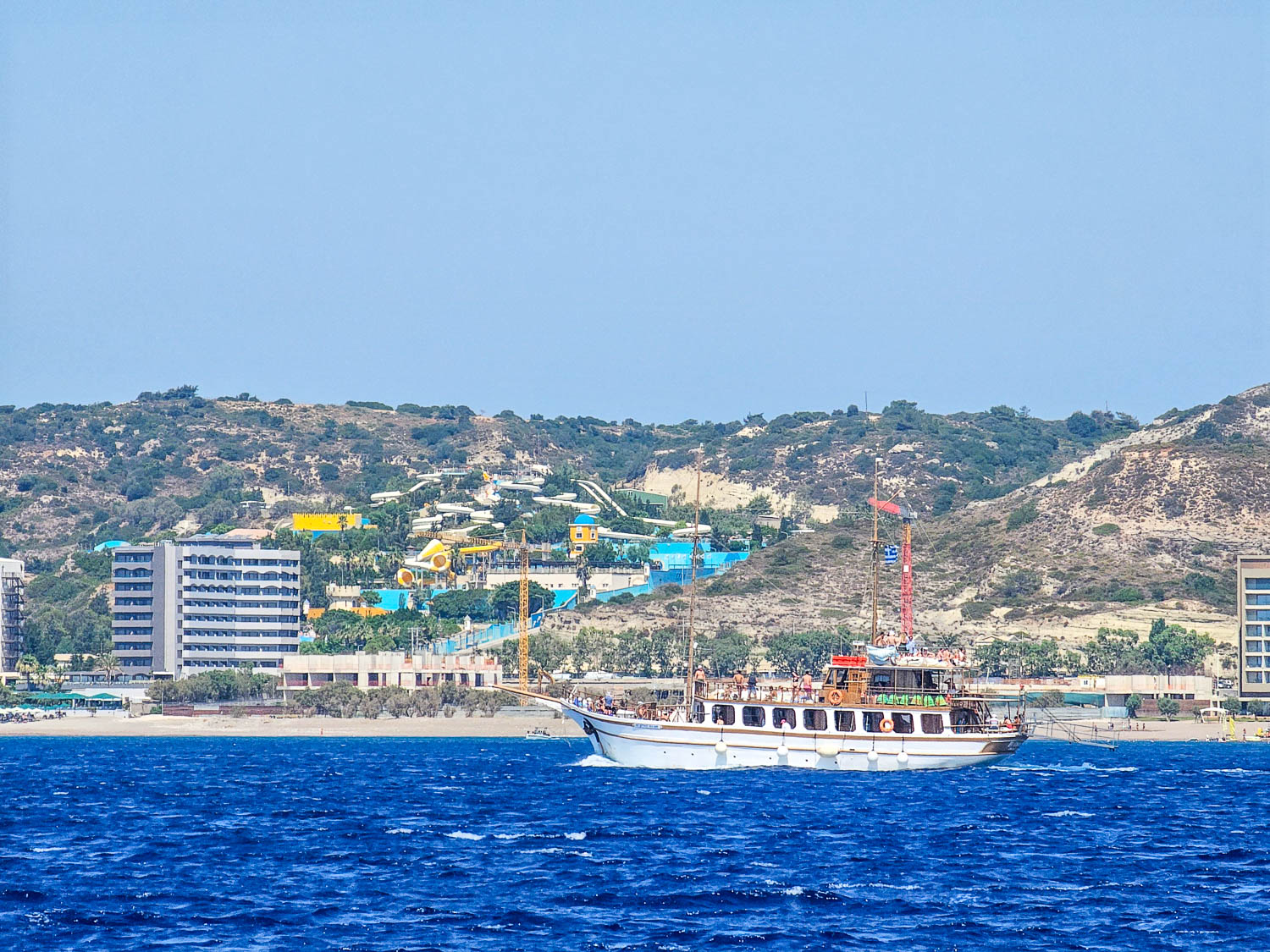
    Faliraki Water Park Rhodes, Greece
    Faliraki Water Park (Rhodes, Greece)

    The island of Rhodes is a playground for all ages. Aside most of the attractions and outdoor adventures we’ve already listed above, Rhodes is also home to the following family-friendly outings.

    • Water Parks. Just a 20-minute drive south of Rhodes Town, Faliraki Water Park is the most popular of the water parks on the island – and also one of the largest in all of Europe!
    • Train Tours. A popular tourist “toy train” tour takes you through Rhodes Town to see all the sights!
    • Interactive Museums. Consider visits to the Bee Museum, the Rhodes Museum of Ancient Greek Technology, or the Rhodes Toy Museum, for some hands-on learning.
    • Pirate-themed Boat Rides. This family-friendly cruise includes opportunities for face-painting, treasure hunts and other games, stops for swimming, healthy snacks, and a bar (for the adults who are really “kids at heart”!).

    Romantic Getaways

    Relaxing aboard a catamaran in the Greek Islands
    Relaxing aboard a catamaran in the Greek Islands – what could be more romantic than this?

    There is plenty to do and see on Rhodes if you’re seeking a romantic experience with a loved one. In fact, we are confident Rhodes is one of those places that will sweep you off your feet!

    Picture private sunset cruises, couples’ spa days at luxurious resorts, lazy afternoons in secluded beach coves, or romantic meals by candlelight on a rooftop terrace at a traditional restaurant. Stroll hand-in-hand through the narrow streets of the historic Old Town, try paddleboarding together (Beck and Mike have got a story for you about that one…), take a scenic road trip through the countryside with your loved one by your side, or head just 15 minutes south of Rhodes Town to the beautiful Kallithea Springs, known for its healing thermal waters.


    Off the Beaten Path

    Getting around Rhodes on a motorbike!
    If Beck had her way, a motorbike would definitely be her choice for getting around Rhodes!

    Are you ready to escape the crowds? Feeling all peopled-out and want to explore a little more off the typical tourist trail? For a wee bit of peace, authenticity, and a deeper connection to this timeless island, consider a visit to one of the following highlights.

    Ruins of Ancient Kamiros

    For a glimpse into an advanced civilization that existed for nearly 3,000 years, visit this well-preserved ancient city-state, located on the north-west coast of Rhodes. Ancient Kamiros sits atop a hill, providing incredible panoramic views of the surrounding landscape (even as far as Turkey!) and affording visitors fascinating insights into the past. Visit Kamiros for a more tranquil, intimate experience than you would find at the likes of the very-popular Lindos Acropolis.

    Fun fact. Kamiros suffered two large earthquakes (226 BCE and 142 BCE), yet remains one of the best-preserved ancient Greek cities.

    Monastery of Filerimos

    Dedicated to the Virgin Mary and nestled in a pine grove, the Monastery of Filerimos is an important archaeological site housing a 15th-century Gothic (unusual for Greece!) monastery, a giant cross overlooking the Aegean Sea, and the remains of the Temple of Athena Polias. The monastery is also famous for housing a copy of the original icon of the Virgin of Filerimos, as well as offering breathtaking panoramic views over Ialyssos Bay and beyond. The monastery is therefore unique in its combination of religious, historical, and scenic attraction.

    Fun fact. The site of the Monastery of Filerimos has been inhabited since the 3rd millennium BCE. During the Byzantine era, it served as a Summer residence for aristocrats.

    Kritinia Castle

    Just over an hour south-east of Rhodes Town, you’ll find Kritinia Castle, yet another special place on the island renowned – thanks to its strategic high perch – for its incredible 360-degree panoramic views. It also just happens to be the ruins of a well-preserved medieval castle, built by the Knights of St John in the 14th century, and showcasing elements of both Venetian and Byzantine architecture. The ruins include a chapel that today still bears the Royal Arms of France.

    Fun fact. The location of Kritinia Castle, and the wide views it affords, made it a prime location for easy, comprehensive monitoring and defense.

    Insider tip. Are you a rock climber? Not only does Kritinia Castle serve as a cultural backdrop, but it’s also an excellent location for both traditional and sport-climbing enthusiasts. The adventure itself involves climbing the castle walls (how cool is that?), as well as a guided 35m/115ft guided rappel (should you so choose!).

    The Meeting of Two Seas

    For something particularly unique, consider visiting Prasonisi Beach, at the complete opposite end of the island to Rhodes Town (about an hour and a half by car). Aside being another stunning white, sandy beach offering numerous water activities, Prasonisi is perhaps most famous for being the location where the Aegean and the Mediterranean Seas meet. The unique narrow, sandy isthmus at Prasonisi is where the two seas converge, creating two very distinct coastal areas – think different winds and different wave conditions – and creates a visually striking landscape.

    Pretty neat, huh?

    Insider tip. Whilst you’re at Prasonisi, consider also visiting the nearby Prasonisi Lighthouse – it’s open 24 hours a day, is free to visit, and is accessible by a 3km/1.86mi (flat!) hike from the beach. Be sure to visit during low tide, when the islet to the lighthouse is most accessible.

    Agios Pavlos Beach

    A hidden gem in Lindos – with a unique and dramatic backdrop – this beach is named after the Apostle Paul, and features a beautiful, quaint chapel dedicated to him, right on the beach itself. The beach’s location to the Acropolis of Lindos does make it a popular spot, but you’ll find most visitors are more interested in the historical significance of the area, so you’ll often find the beach – with its golden sands and calm, turquoise waters – a little quieter than other beaches on the island. 


    Cultural Experiences
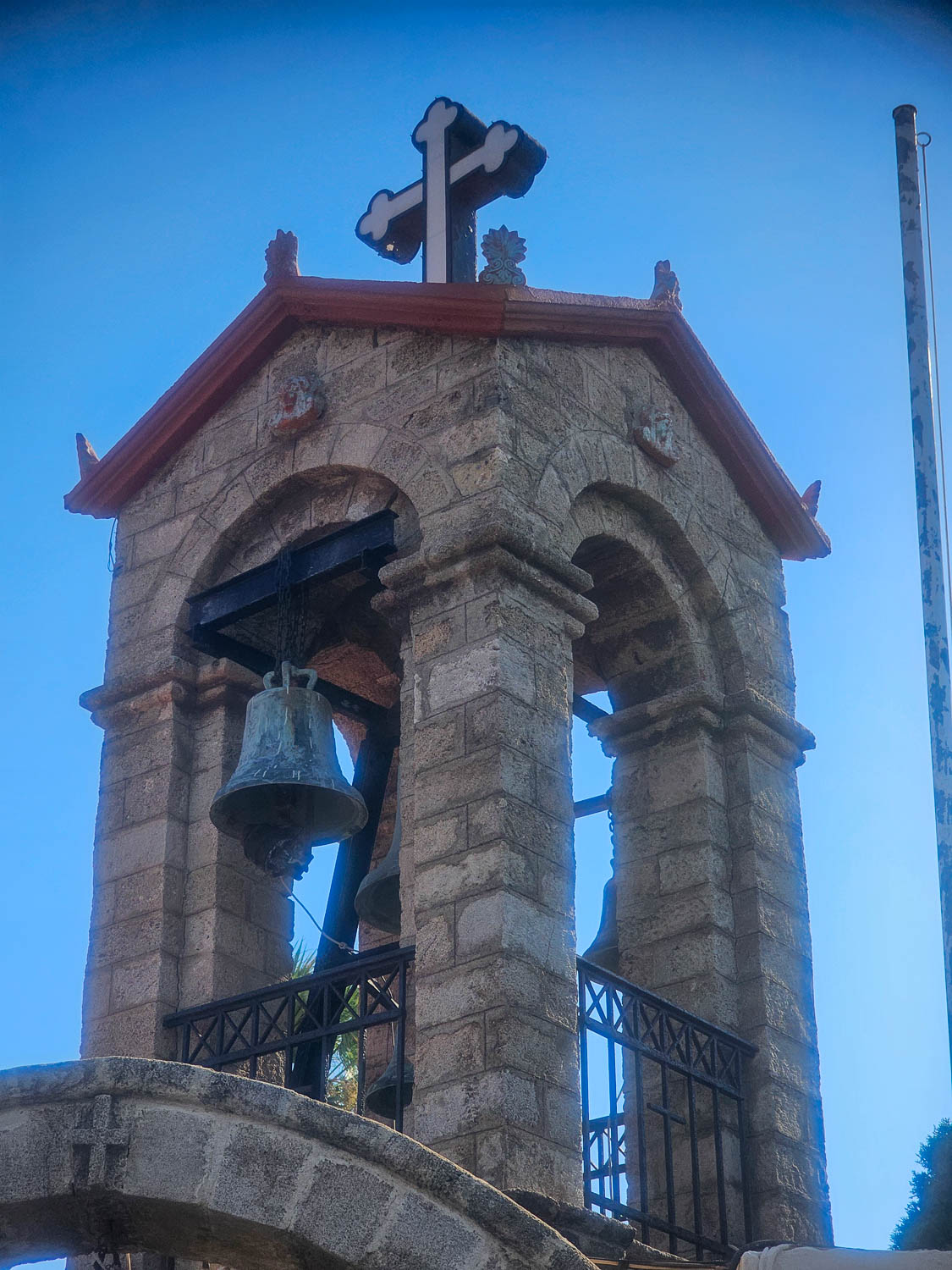
    Bell tower, Rhodes Old Town Greece
    Bell tower, Rhodes Old Town (Greece)

    Wherever you turn, Rhodes feeds your soul, offering a rich tapestry of cultural experiences for locals and visitors alike. Think ancient history (we already know there’s a lot of it here!), medieval architecture (at almost every corner you turn!), traditional cuisine, art, music, theater, and vibrant annual festivals. Rhodes doesn’t just preserve history – it celebrates it.

    Looking for even more cultural experiences during your visit to Rhodes? Aside the Old Town, the Acropolis of Lindos, and the Monolithos Castle, the following may also interest you.

    Archaeological Museum of Rhodes

    Housed within the medieval building of the former Hospital of the Knights in the Old Town of Rhodes, this museum is, simply put, awe-inspiring. Showcasing a rich and diverse collection of artifacts from throughout the island’s history, it is also home to a notable collection of statues, as well as other well-preserved finds from the ancient sites of Ialyssos, Kamiros and Lindos. This is the place to visit for a comprehensive overview of Rhodes’ history.

    Houses of Worship

    Some of you may have heard the phrase “Rhodes, the crossroads of civilizations”. To truly experience what this means, you’ll find the island dotted with countless sacred houses of worship from numerous different faiths, all managing to co-exist throughout the centuries.

    Whilst you’re in the Old Town in particular, be sure to check out several significant places of religious worship, all adding to the various cultural dimensions of the island. Consider visiting the Mosque of Suleiman, and the Kahal Shalom Synagogue (whilst you’re there, also check out the Jewish Museum!). A little further afield you’ll find the Tsambika Monastery, and the Filerimos Monastery and Filerimos Cross, which we mentioned earlier.

    National Theater of Rhodes

    Be sure to check out the unique architecture of the Rhodes National Theater, an historic building near the Platia Antinavarchou Perikli Ioannidi in Rhodes Town. Built in 1937, the National Theater is one of the finest examples of the Fascist style of architecture, and is most well-known for its impressive performance hall and its innovative use of glass bricks.

    Fun fact. The theater was originally named Teatro Giacomo Puccini, and the building itself is sometimes referred to as such.

    Insider tip. Despite it once hosting operas, the theater today is closed due to restoration. Do not let this, however, stop you from admiring the outside! We understand that, once restored, the theater will be transformed into a cultural center for the island.

    Fun fact. The theater was the first to introduce to Greece the architectural technique of “finta pietra”. Finta pietra translates to “faux stone” or “imitation stone” – the glass bricks in the theater are used to mimic the texture and look of natural stone.

    Annual Festivals

    Are you a fan of international or cultural festivals? Try to time your visit to Rhodes with one of the following annual island festivals.

    Medieval Rose Festival

    This multi-day, open-air festival, typically held in May, takes place in the streets of the UNESCO World Heritage listed Rhodes Town. The Medieval Rose Festival aims to transport visitors back in time, by creating the history, traditions, and legends of medieval Rhodes. You may also hear this event referred to as the Medieval Festival of Rhodes.

    At this festival you can expect to participate in a variety of activities, including traditional dancing, juggling, jousting tournaments, archery, stilt walking, horse riding, themed parades, live music concerts and street theater, as well as various workshops. Visitors even have the opportunity to interact with the artists and actors of the recreations, so you actually feel as though you’re right there in the Middle Ages with them!

    Fun fact. The organizers of the Medieval Rose Festival have conducted their due diligence in research, consulting numerous historical resources to ensure the most faithful depiction of the medieval era on the island.

    Rhodes International Festival

    This multifaceted cultural event is hosted each year during the first two weeks in September. The Rhodes International Festival focuses primarily on classical music and opera, but also aims to showcase more broadly diverse artistic expressions from collaborators in Greece and around the world. This is definitely the place to be if you’re keen to learn more about exploring new musical boundaries!

    Fun fact. The Rhodes International Festival actively seeks to engage not just Greek, but also international artists, with the intent to build bridges, and foster cultural exchange and dialogue.

    Other Cultural Festivals

    Other festivals in which you may be interested include the Rhodes and South Aegean International Jazz Festival (a global jazz festival held at the Palace of the Grand Master, typically in late May or early June) and the Rhodes Summer Festival (a music and theater festival featuring a mix of Greek and international artists, typically held during the Summer and early Fall).

    Fun fact. One of the main goals of the Rhodes Summer Festival is to raise awareness around existing and expanding social issues.

    Rhodes also hosts numerous religious festivals throughout the year, many celebrating specific saints. 


    Shopping in Rhodes

    Shopping near Arnaldo Gate, City of Rhodes Greece
    Shopping near Arnaldo Gate, City of Rhodes (Greece)

    Rhodes offers visitors a diverse mix of shopping opportunities, from traditional markets and stores to modern malls, and is especially well-known for its jewelers, potters and ceramic artists. Many stores are family-run and open from early morning until late at night, providing you plenty of time to wander through them after a full day of exploring the sights.

    In the narrow cobblestone streets of the Old Town you’ll easily come across unique souvenirs, handmade jewelry, ceramics, leather goods, locally-produced olive oil and wines, as well as other traditional artisanal products, whilst in the New Town you’ll be treated to more modern stores and sleek, high-end boutiques, featuring popular fashion brands and local designers. The Old Town is also home to numerous art galleries, affording visitors an opportunity to meet with local artisans on their home turf.

    Insider tip. Make sure to visit the highly-rated Olive Corner, near the Saint Athanasios Gate at the south-eastern corner of the Old Town. It’s here you’ll find some wonderfully unique souvenirs, with the chance to even personalize many of them! 


    Dining and Nightlife in Rhodes
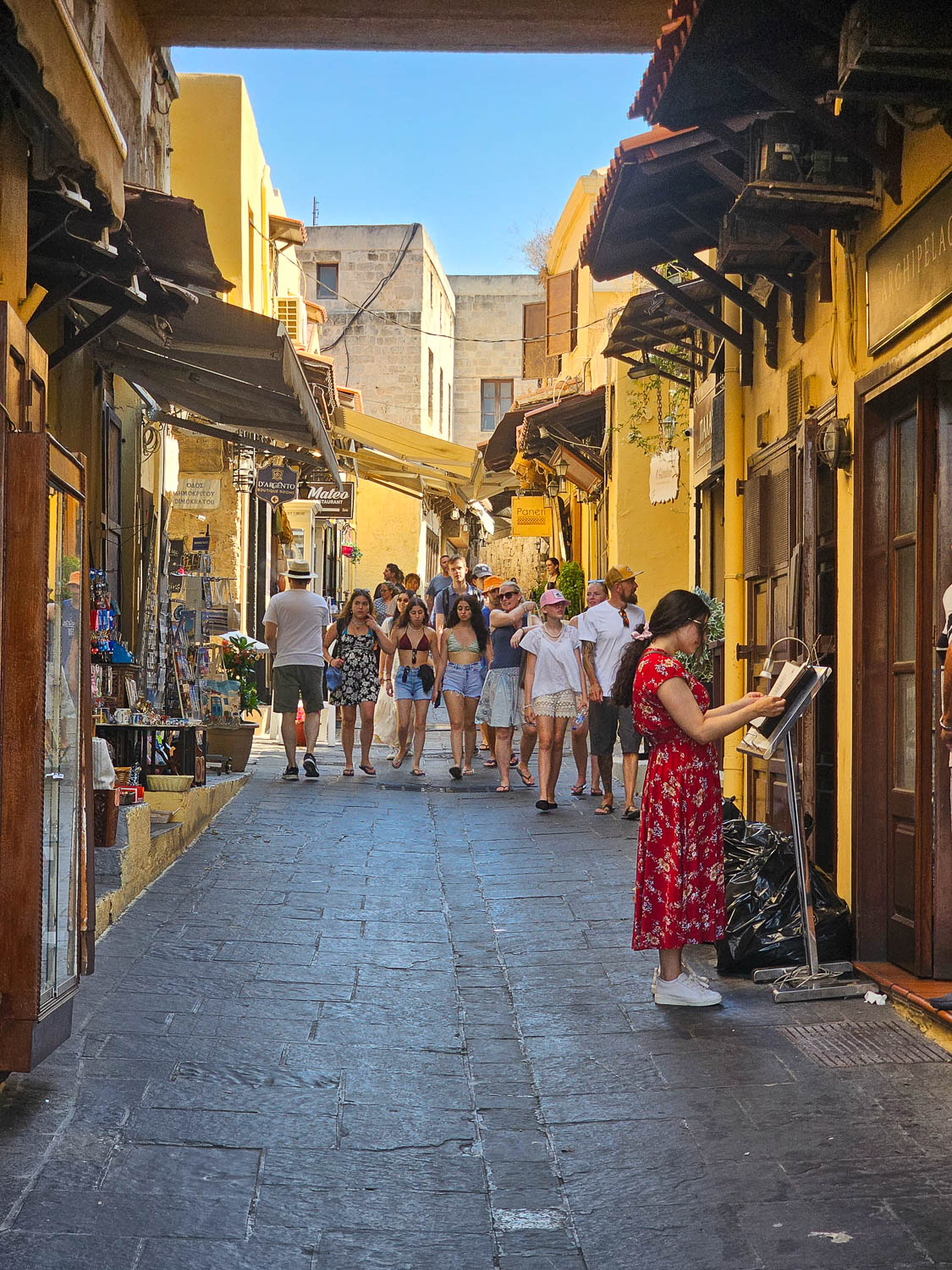
    Perusing menus in the Old Town Rhodes, Greece
    Perusing menus in the Old Town (Rhodes, Greece)

    Rhodes sure does know how to serve up unforgettable flavors — and unforgettable nights – with a vibrant dining and nightlife scene, especially in Rhodes Town and popular tourist areas that include Lindos and Faliraki.

    From beachside tavernas grilling the day’s freshest catch, to fine-dining restaurants boasting excellent wine lists, the island’s dining scene is an eclectic mix indeed. And don’t forget, this is Europe – so many restaurants will offer late-night dining.

    Visit the lively Hippocrates Square in Rhodes Town, a central nightlife hub lined with traditional tavernas, bars and other eateries (it has a little something for all tastes!), or swing by Orfanidou Street, famous for its bars and nightclubs. Socratous Garden and Flaws All Day Bar in particular continue to receive rave reviews from customers.

    Insider tip. A great place for live music is the Colorado Nightclub, on Orfanidou Street. It’s home to multiple rooms with different music styles, so you’re bound to find something here to suit everyone’s taste!

    What about something outside of the Old Town? Perhaps the “ultimate party locale”? As the sun begins to sink into the Aegean Sea, head down to Faliraki – about 20 minutes by road south of Rhodes Town – for a more party-like atmosphere, complete with a wide variety of bars, lounges and dance clubs, catering to different tastes.

    Insider tip. Bar Street is where it all happens in Faliraki, with many bars and clubs open until well into the early morning hours.

    Many beach resorts near Rhodes Town also boast lively nightlife spots, often right on the water’s edge.

    Looking for something a bit more romantic? Consider visiting Lindos and dining by candlelight under the Acropolis, atop one of the many rooftop restaurants, else choosing your favorite beach spot and enjoying a casual meal at a waterfront restaurant.


    Accommodation in Rhodes
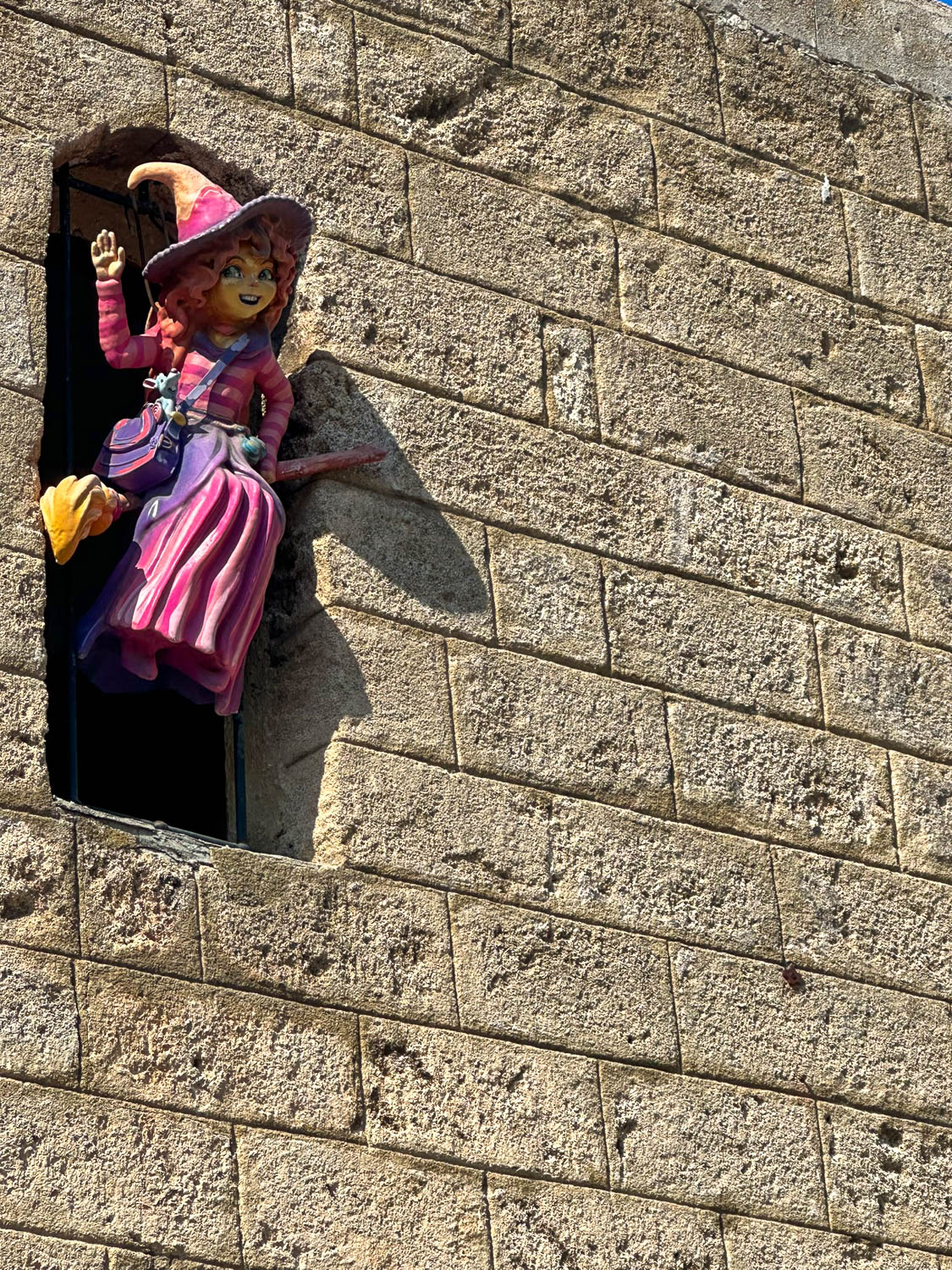
    Hans & Gretel ice-cream shop, Rhodes Old Town Greece
    Hans & Gretel ice-cream shop, Rhodes Old Town (Greece)

    From all-inclusive luxury beach resorts – most of them hugging the north-eastern tip of the island – to charming boutique hotels tucked inside the Old Town, and from family-run 2-star hotels in the countryside to backpacker hostels with shared dorms and private rooms, Rhodes offers a wide variety of accommodation options to suit every budget and taste.

    And one of the best things about staying overnight in Rhodes? Many of the accommodations are just a stone’s throw from major attractions, as well as some of the island’s most beautiful beaches. No matter where you choose to stay, picture this: waking up to warm sea breezes or magnificent medieval views right outside your guest room window. There’s really not much more that can beat that!

    Insider tip. For luxury resorts, consider staying at Atrium Palace Thalasso Spa Resort & Villas in Kalathos (just under an hour south of Rhodes Town), Sentido Port Royal Villas & Spa in Kolymbia (also on the east coast, about 40 minutes south of the Old Town), or the overly-impressive, adults-only, all-inclusive Mayia Exclusive Resort & Spa in Kiotari (just over an hour by road south of Rhodes Town).


    Final Thoughts
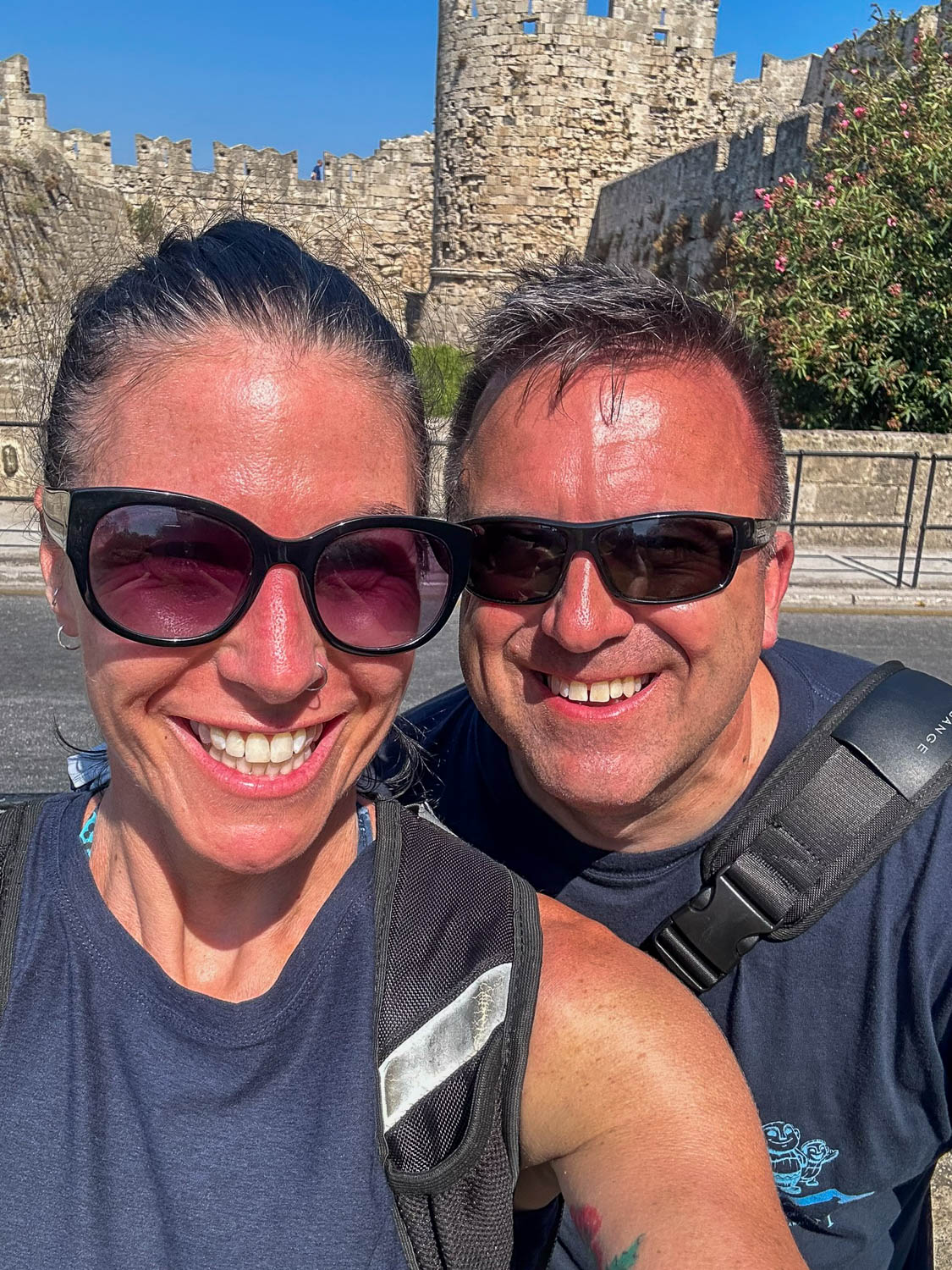
    Just another fabulous day here on the Island of Rhodes Greece!
    Just another fabulous day here on another fabulous Greek island!

    With so many aptly-descriptive nicknames – the Emerald Island, the Pearl Island, the Isle of the Knights, and the Island of the Sun – there really isn’t much not to like about the island of Rhodes. In fact, it feels like more than just a destination – more than just another stop on a Greek island-hopping tour. Rhodes is the sort of place that will continue to live on in your heart and soul well beyond the time you depart its white, sandy shorelines.

    For it’s here in Rhodes that you’ll be treated to an incredible blend of fascinating history, an impressive mix of architecture, stunning beaches, charming villages, a vibrant nightlife scene, mouthwatering cuisine, and diverse natural scenery to keep you busy in the outdoors for days on end. No wonder this island ranks amongst the top destinations in Greece!

    From the soaring Palace of the Grand Master in the well-preserved medieval Old Town, to the soft lapping of its turquoise waters at the meeting of the Aegean and Mediterranean Seas – and certainly everything in between! – Rhodes will welcome you with open arms, timeless stories, and countless adventures. And it absolutely deserves a place on your travel bucket list.

    Rhodes is calling. Will you answer? We think it’s time to pack your curiosity, your sense of adventure, and your swimsuit — and let’s start planning your trip!


    FAQs

    What are the best things to do on the Island of Rhodes, Greece?

    Top things to do in Rhodes include exploring Rhodes Old Town, visiting the Palace of the Grand Master, relaxing at beaches like Tsambika and Anthony Quinn Bay, taking a sailing or catamaran cruise, and day-tripping to Lindos, Prasonisi, or Ancient Kamiros.

    When is the best time to visit Rhodes, Greece?

    The best time to visit Rhodes is April–May or September–October for warm weather with fewer crowds. June–August is peak season with the hottest temperatures, the busiest atmosphere, and the calmest sea for swimming and boat tours.

    How many days do you need in Rhodes, Greece?

    Plan 3–5 days for Rhodes if you want to see Rhodes Town, enjoy multiple beaches, and take at least one major day trip like Lindos or Prasonisi. A week is ideal if you want a slower pace and more time for tours and outdoor adventures.

    Can you visit Rhodes on a cruise and still see the highlights?

    Yes. On a cruise day in Rhodes, focus on Rhodes Old Town (UNESCO), Mandraki Harbor, and one nearby beach or short excursion. If you want Lindos or a full sailing day, that usually works better with an overnight stay.

    What is Rhodes Greece known for?

    Rhodes is known for its UNESCO-listed Old Town of Rhodes, the Palace of the Grand Master, Mandraki Harbor, beautiful beaches, and scenic day trips to Lindos and the Valley of Butterflies.


    Explore More Of Greece

  • Mykonos Greece Travel Guide: Your Ultimate Escape

    Welcome to Mykonos Greece — an iconic destination in the Cyclades, a group of Greek islands set in the sparkling Aegean Sea. Here, whitewashed houses with blue shutters overlook the water, and every cobblestone alleyway of Mykonos Town (Chora) promises charm, beauty, and more photo-worthy moments than your camera roll can handle (trust us, we tried!).

    You’ve probably heard of Mykonos. It’s enchanting. It’s vibrant. It’s often dubbed the “party capital” of Greece for its legendary beach clubs and nightlife. But there’s far more to this island than its cosmopolitan reputation. Beyond the glitz and glamor, you’ll find historic windmills standing guard over the harbor, centuries-old churches tucked into quiet corners, exceptional Greek cuisine, and nearby Delos Island — a UNESCO World Heritage Site rich in myth and history.

    Mykonos is wonderfully versatile. Whether you’re here for beach days, cultural discovery, island-hopping adventures, or simply a laid-back escape with a touch of luxury, this island invites you to make it your own. In this travel guide, we’ll walk you through the best time to visit, how to get to Mykonos, where to stay, what to see and do, and the insider tips that will help you plan your ultimate escape.

    Let’s get this party started!


    Quick Tips 

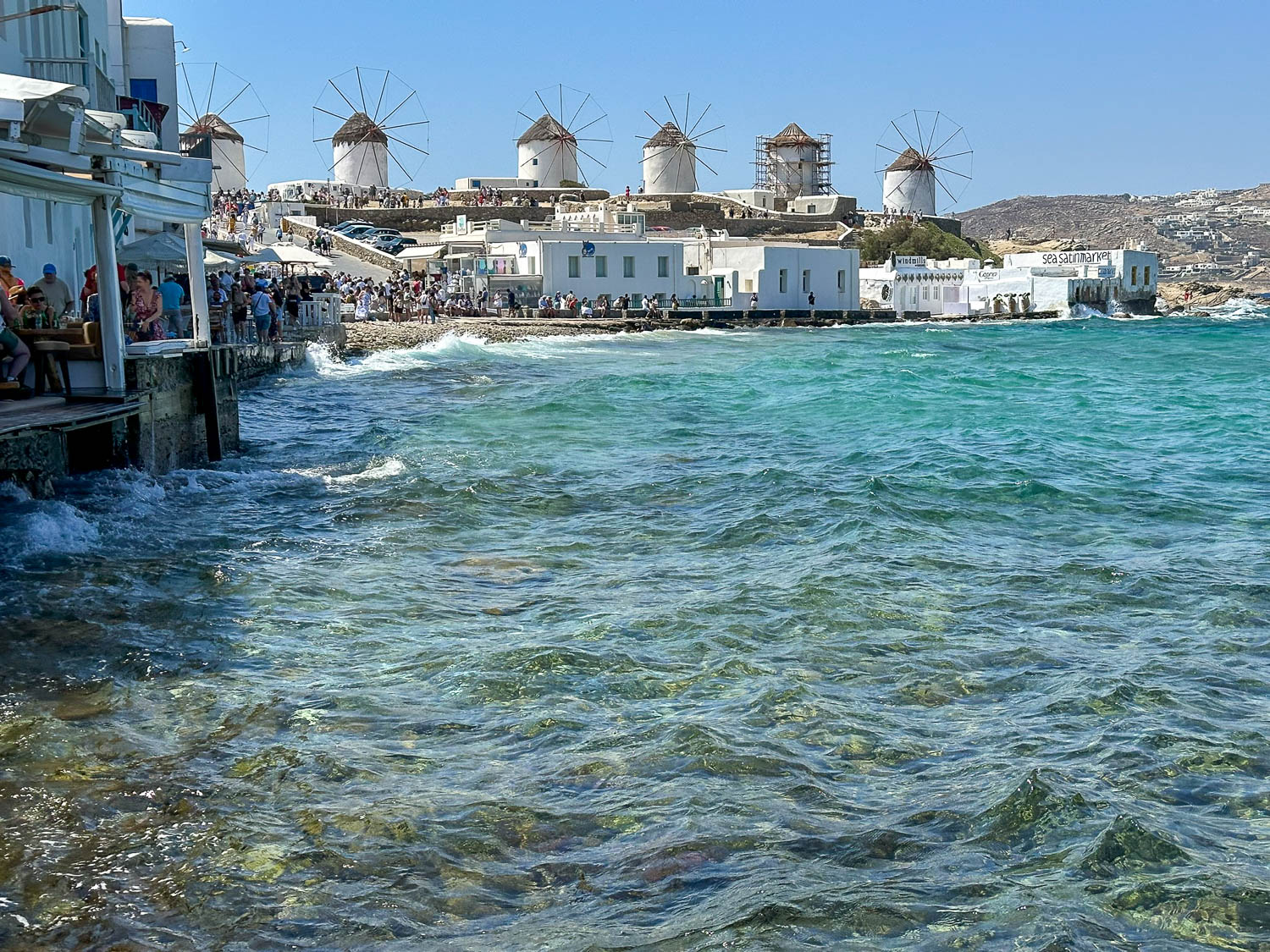
    The famous windmills of Mykonos
    The famous windmills of Mykonos: Kato Mili

    Here are some insider tips to help you make the most of your visit to Mykonos, Greece.

    • Mykonos is a fantastic destination year-round, though can certainly get crowded during the Summer months.
    • The island is considered a safe destination for international visitors.
    • Getting to Mykonos is easy: the island is well-serviced by ferry, international flights, boat tours … and even a helicopter!
    • Mykonos is in prime position for island-hopping adventures throughout the Aegean Sea.
    • Be sure to spend some time exploring Mykonos Town during your visit: from Little Venice to the Kato Mili (windmills), to the Agricultural Museum and the Archaeological Museum of Mykonos … and all the bars, restaurants, boutique shops, whitewashed churches, and stunning waterfront views along the way.
    • Most people choose to walk around Mykonos Town, but to get farther afield you’ll find a comprehensive bus network, as well as rental cars and motorbikes, taxis, and water taxis.
    • Up for some beach time? Consider a visit to Paradise Beach, Super Paradise Beach, Platis Gialos, Psarou Beach or Kalafatis Beach in the south, or to Agios Sostis Beach or Agios Stefanos Beach in the north. All boast crystal-clear turquoise waters and golden sands.
    • If time permits, make sure to include in your itinerary a visit to nearby Delos Island: a UNESCO World Heritage Site and once considered to be “the most sacred of all islands”.
    • Mykonos is renowned for its vibrant nightlife, often dubbed the “party island”: things start to really spice up once the sun goes down.
    • The island also offers visitors a diverse culinary scene, with everything from traditional Greek tavernas serving fresh, local meals to upscale international restaurants. Make sure you arrive hungry!
    • There are numerous accommodation options on Mykonos, from luxury hotels to boutique guesthouses, and from rooms in traditional Greek tavernas to apartments available for rent. Consider staying in Mykonos Town if you want to be in the heart of it all.

    Follow these tips and you’ll be ready to visit Mykonos, Greece!


    Plan Your Trip

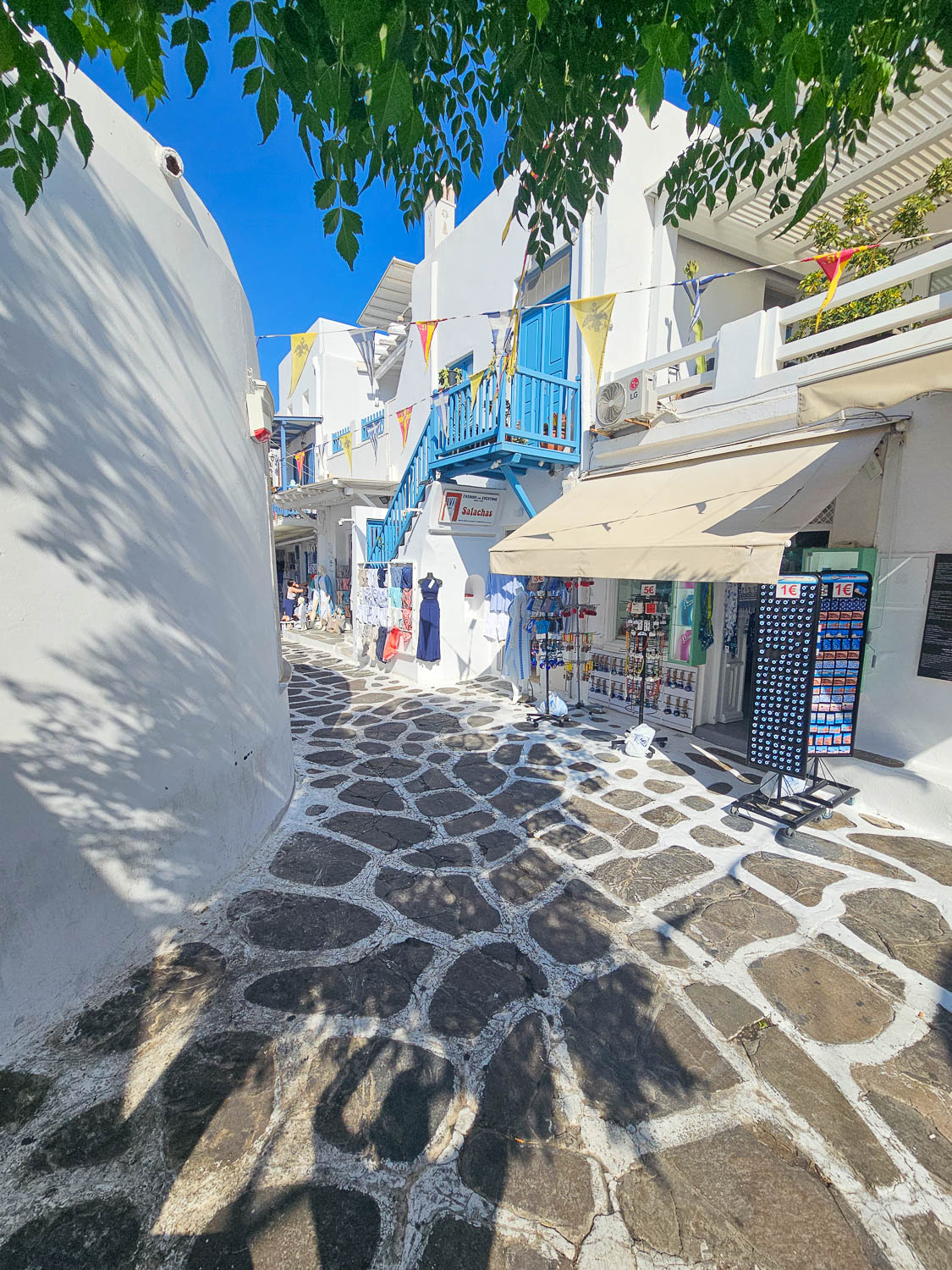
    Whitewashed alleyways of Mykonos Town (Mykonos, Greece)
    The alluring alleyways of Mykonos Town (Mykonos)

    Some links below may earn us a small commission at no extra cost to you. We’re truly grateful for your support, as it allows us to continue sharing meaningful travel experiences and practical travel insights with you. Read our full disclosure here.

    Planning your visit? We’ve gathered recommended tours and activities, along with trusted travel tools, to help you explore with confidence and ease.

    Tours & Experiences


    Browse top 15 attractions in Mykonos, Greece.


    Travel Essentials

    Planning the rest of your trip? These are the platforms we personally use when organizing our travels. For more planning tools, visit our Travel Resources page or browse current promotions on our Travel Deals page.


    Mykonos: The Best Time to Visit

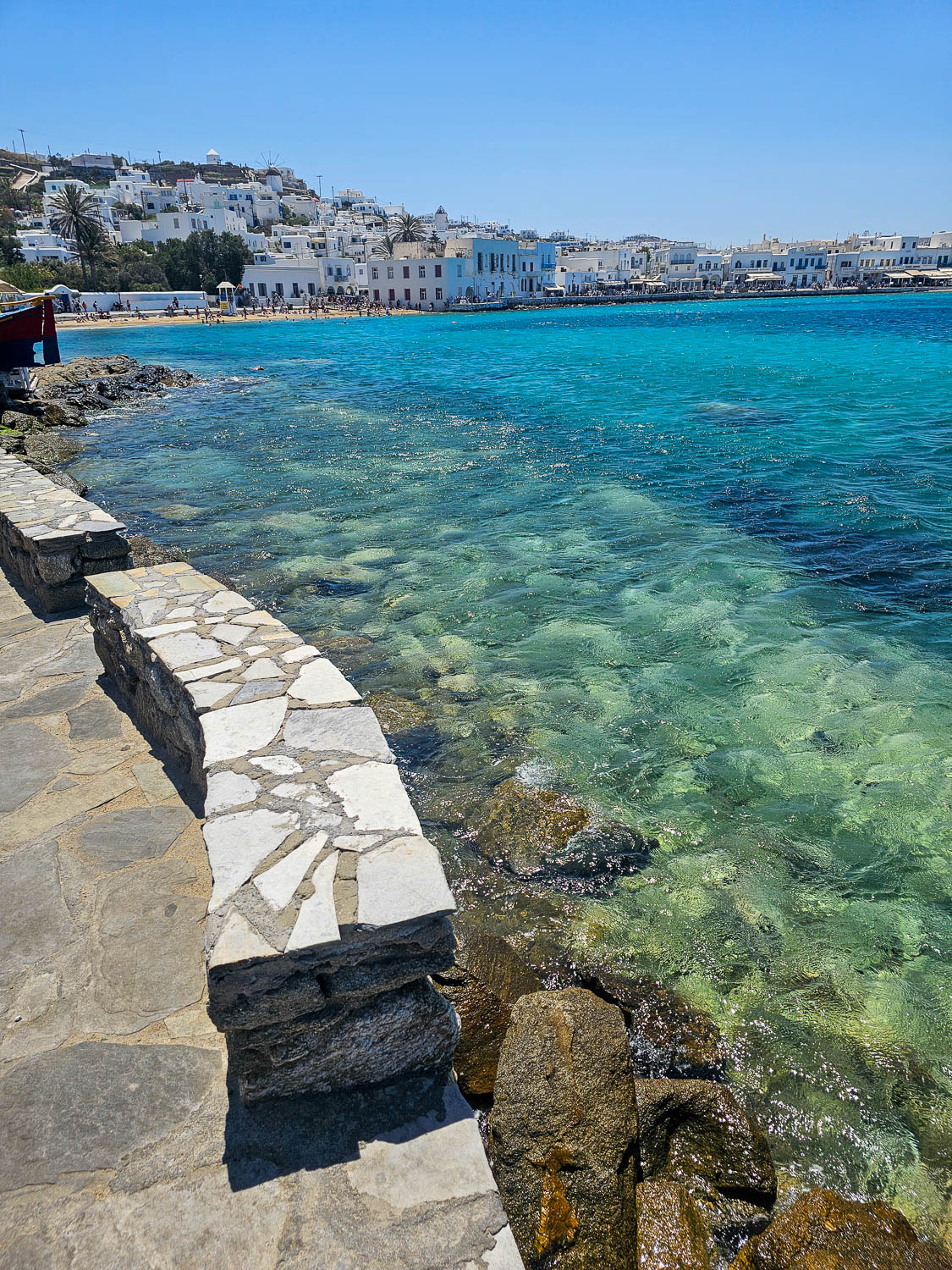
    View toward Old Port Beach near Mykonos Town (Mykonos, Greece)
    View across the water toward Old Port Beach (Mykonos)

    The best time to visit the Greek islands in general (which of course includes Mykonos!) is when you have time!

    • The Summer (June through August) is high season in the Greek islands – and the time when Mykonos truly bursts to life with pure, unadulterated energy. This is a great time to visit if you love hot weather and bright sunshine, beach clubs that pulse with music, and restaurants and bars packed with wall-to-wall visitors. The sea is generally calm and clear during this peak tourist season, most amenities, tours and activities will be open and available, and the general atmosphere on the island is nothing less than electric.
    • Visiting Mykonos during the shoulder or “off” season (April and May, or September and October) can be just as amazing as visiting during the Summer. This time of year affords visitors that sweet spot: the weather and sea water is still warm during the late Spring and early Fall, crowds are lighter, and you’re more likely to find better deals on accommodations and activities. We think this time of year is ideal for those of you who want to experience the best of Mykonos, without the sensory overload.
    • Seeking solitude and introspection during your time in Mykonos? Consider visiting during the low season (November to March), when you’ll discover a quieter, moodier portrait of the island, and opportunities to truly connect with traditional Greek life.

    Whether you prefer the hustle and bustle and the heat of Summer, or the slightly more tranquil feel of the off-season, Mykonos really can be visited at any time of year! 


    Getting to Mykonos

    Boat tour traveling from Athens to Mykonos (Greece)
    Take a one- or multi-day boat tour to get from Athens to Mykonos

    As one of the most popular tourist destinations in the Mediterranean, Mykonos is well-serviced by various modes of transportation, and reaching the island is relatively straightforward.

    • Ferry. Mykonos has direct ferry connections to numerous other islands in the Cyclades, including Andros, Syros, Signos, Paros, Naxos, Tinos and Koufonisia. Other ferries can take you all the way south to Santorini, and there are regular departures from the port of Athens to Mykonos. All ferries arrive at Mykonos’ modern new port in Tourlos (also known as the New Port, located just 3km/1.86mi) from Mykonos Town. The journey from Athens by ferry takes anywhere between 3 and 5 hours, depending upon your choice of company and service type.
    • The Mykonos International Airport welcomes flights from the Greek mainland (there are direct flights from both the Athens International Airport “Eleftherios Venizelos” and the Thessaloniki Airport “Makedonia”), several other major European cities (including London, Paris, Barcelona and Munich, to name but a few), and the Middle East. Both Aegean Airlines and SKY Express offer multiple daily flights between Athens and Mykonos: the flight takes about 40-45 minutes. The Mykonos airport is just 4km/2.5mi from Mykonos Town, which you can reach by local bus, rental car, or taxi.
    • Boat tours make island-hopping easy and scenic. Consider a one- or multi-day boat tour from Athens to make the most of your time in the Cyclades! Many tours will include transportation, accommodation and airport or port transfers. You can also book a boat tour from the nearby islands of Naxos and Paros.
    • Want to arrive in Mykonos in true glitz and glam style? Consider a helicopter transfer from Santorini. Now that’s how to take in the view of the Greek islands!  

    Getting Around Mykonos

    Scooter parked in Mykonos Town (Mykonos, Greece)
    Rent a scooter and whizz around the island!

    Mykonos Island covers an area of just over 40 square miles – about the size of a medium-sized U.S. town or a large village. Mykonos is a relatively compact island, with the most popular ways to get around being by foot or local bus.

    • Aside walking everywhere (as we did!), the most affordable, reliable and popular way to get around Mykonos is by bus – especially during the Summer months. KTEL offer modern and comfortable (complete with air-conditioning!) buses throughout a comprehensive island network (including to and from the airport), though note that the majority of their fleet are not wheelchair accessible. You can purchase tickets directly from the driver (cash only) or at central bus stations: the cost for a single, one-way ride is between 1.5 and 2.5 Euros, depending upon the length of the route you take. KTEL buses operate on a frequent schedule, from early morning through late evening, with extended hours during the peak tourist season.

    Insider tip. There are two central bus stations in Mykonos Town: Fabrika and Old Port. Make sure to check from which terminal your bus originates, depending on your destination.

    Insider tip. Walking really is the most convenient – and generally the most enjoyable! – way to explore Mykonos Town. This is especially the case as Mykonos Town (Chora) is pedestrian-only.

    • Renting a car is another excellent option for sightseeing on Mykonos. Rental cars are available from both the airport and within Mykonos Town. Scooter and motorbike rentals are also possible (Beck’s dream!). These are excellent options if you wish to explore the island at your own pace, on your own time.

    Insider tip. Parking can be challenging in some locations on the island, so be forewarned!

    Insider tip. Be sure to obey local traffic laws and drive carefully on the island, especially during the height of the Summer. There can be a lot of traffic outside of Mykonos Town!

    • Taxis are also available to help you explore Mykonos Town and further afield: they are excellent for shorter trips and can be easily hailed on the streets. All taxi fares in Mykonos are metered: note that from midnight to 5am a surcharge applies, and that excess luggage and airport/port transfers may also incur additional fees.

    Insider tip. Whilst traditional ride-share services like Lyft and Uber are not available in Mykonos, consider downloading either the iMove or DriveMe apps before you arrive on the island. These ride-hailing services offer convenient transportation options for visitors, especially when taxi waits can be lengthy during the peak tourist season.

    • Water taxis are another viable option for getting around the island – not to mention a fun one! Consider a water taxi for getting you to beaches on the southern and western parts of Mykonos. Water taxis operate on regular routes, the majority originating in the Old Port (Mykonos Town).
    • The Mykonos SeaBus connects the New Port (Tourlos) and the Old Port (Chora) of Mykonos Town. It also offers stops along the way at bus and taxi stations. The SeaBus is wheelchair accessible and costs 2 Euros per person, each way.

    Other options for getting around Mykonos include biking (a superb option for those of you who like to focus on sustainable travel) and organized group excursions.


    Exploring Mykonos Town

    Whitewashed buildings with blue accents in Mykonos Town (Mykonos, Greece)
    The whitewashed walls and bright blues of Mykonos Town

    No visit to Mykonos would be complete without spending some quality time wandering the labyrinth of whitewashed alleyways that make up Mykonos Town (also known as Chora). I’m not sure we can really think of anything more picturesque: the cobblestone streets, the bright blue accents, and the bursts of purple and pink bougainvillea all blend seamlessly to create a classic Greek island aesthetic that’s visually striking and instantly recognizable.

    Aside running your phone or camera’s memory close to empty during your visit – simply by wandering the charming streets – you may wish to consider intentionally stopping by some of the following attractions during your time in Mykonos.

    Fun fact. The Greek word “chora” – another word for Mykonos Town – primarily translates to “country”, “land” or “region” in English.

    Little Venice

    Seafront captains’ houses in Little Venice (Mykonos, Greece)
    A view toward the old captains’ houses (Little Venice, Mykonos)

    Without question, Little Venice is a showstopper. Here you’ll not only find a variety of bars, restaurants and shops, but also old captains’ houses with elegant balconies built right on the water’s edge, many perched dramatically overlooking the sea, their terraces almost kissing the waves.

    Unique architecture, picturesque waterfront views of the Aegean Sea, and a lively atmosphere are what make up Little Venice’s allure. Keen to catch a brilliant sunset, perhaps with cocktail in hand? Charming, romantic Little Venice is the place to do it.

    Windmills of Mykonos

    Historic Kato Mili windmills in Mykonos (Mykonos, Greece)
    Kato Mili: the windmills of Mykonos

    A short walk south of Little Venice you’ll find another iconic feature of Mykonos Island: the Mykonos Windmills, or Kato Mili. These windmills stand proudly atop the hill overlooking the Chora, and can be seen from almost every point within Mykonos Town.

    Fun fact. Most of the windmills face north, from where the island sources its strongest winds throughout the year. Did you know Mykonos is nicknamed “Island of the Winds”?

    Fun fact. There were once over 600 windmills on Mykonos. Today, a total of only 16 windmills remain, spread throughout the island. You’ll find 7 windmills on the hill near the Chora – can you seek out the others?

    The windmills were built primarily by Venetians in the 16th century, though construction of them continued through the early 1900s. They were predominantly used for milling wheat, and provided an important source of income for residents of Mykonos. Production of wheat on the island ceased in the mid 1900s, though today the windmills still stand tall and are a strong reminder of the island’s past – not to mention a superb place to catch sweeping views over the Aegean Sea and Mykonos Town!

    Agricultural Museum (Mylos tou Boni)

    Whilst we’re on the subject of windmills … those remaining today have been renovated, with some converted into museums. About a 10-minute walk east of the main set of windmills, you’ll find Boni’s Windmill – perhaps the most famous conversion of them all.

    The 16th-century Boni’s Windmill today houses the Agricultural Museum of Mykonos, open to the public from May 1 through October 15, from 5pm to 9pm. Admission is free.

    The only open-air museum in the Aegean, the Agricultural Museum displays the inner workings of this authentic (and still functioning!) windmill, together with a vast collection of agricultural tools, providing insights into the production of bread, wine and farm products during the pre-industrial era, as well as other aspects of island life at the time. Within the museum site you’ll also find the miller’s house and two small churches.

    Insider tip. A special event – the Feast of the Grape Harvest – is held annually in the Agricultural Museum, on the second Sunday of September. If you time your visit just right, you might be able to catch it!

    And yes, you guessed it – Boni’s Windmill also provides visitors another fantastic viewpoint over the Aegean Sea. It’s especially superb for sunset views!

    Archaeological Museum of Mykonos

    View across the harbor toward the Archaeological Museum (Mykonos, Greece)
    View across the water to the Archaeological Museum (Mykonos)

    For another glimpse into the island’s past, consider a visit to the Archaeological Museum, about half a kilometer (0.33 of a mile) north of Boni’s Windmill, right on the edge of the harbor’s waterfront.

    Established in 1902 and open to visitors Tuesday through Sunday during the Summer (June-October) from 9am to 4pm, and during the Winter (November-May) from 8.30am to 3pm, admission to the museum costs just 4 Euros.

    The Archaeological Museum of Mykonos was originally founded to preserve the findings uncovered from a “purification pit” at the end of the 1800s, a hole that contained historic relics, vestiges, intricately designed urns and vases, and other vessels of offerings dating back thousands of years. Some artifacts on display have been documented as dating back as far as pre-historic times.

    Insider tip. During your visit, make sure you scope out the museum’s most important artifact – the Mykonian Pithos. This ancient burial pot (or urn) once contained bones and, on the outside, artistically depicts scenes from the Capture of Troy. Scholars believe the Pithos dates back to the 7th century BC. It’s really quite something!

    Also be sure to check out the grave stele that honors Glykon, the snake god and son of Protogenis, as well as that honoring Tertia Horariaos, an ancient Roman actress and dancer from the first century. You may also be interested in the Archaic Hydria, another intricately-designed vase recovered from the purification pit – you’ll find it right next to the stature of a flying Nike (no, not the sneaker – rather, the Greek goddess of victory).

    Fun fact. The Archaeological Museum of Mykonos is one of the oldest museums in Greece.

    Other Sites in Mykonos Town

    Agia Anna Church in Mykonos Town (Mykonos, Greece)
    Agia Anna Church (Mykonos Town)

    Mykonos Town is also the island’s heart: a vibrant mix of cultural attractions, shopping, dining and entertainment, all set against the stunning blue backdrop of the Aegean Sea. Simply wandering the boutique-lined cobblestone streets and narrow whitewashed alleyways of Mykonos Town is a joy in and of itself. You’ll no doubt come across the Town Hall, as well as numerous small churches scattered throughout the village.

    Love shopping? You’ll find everything you need (and maybe even some things you didn’t realize you need!) in the Chora: from local shops to high-end boutiques selling everything from designer brands and luxury goods, to handicrafts, souvenir t-shirts and windmills, jewelry, traditional clothing and linens, Mykonos-produced olive oil and soaps, and the famous Mykonos sandals. You’ll no doubt also stumble across an art gallery or two, where you can purchase unique, handmade artwork, ceramics and wood products by local artists.

    Local artisan artwork in Mykonos Town (Mykonos, Greece)
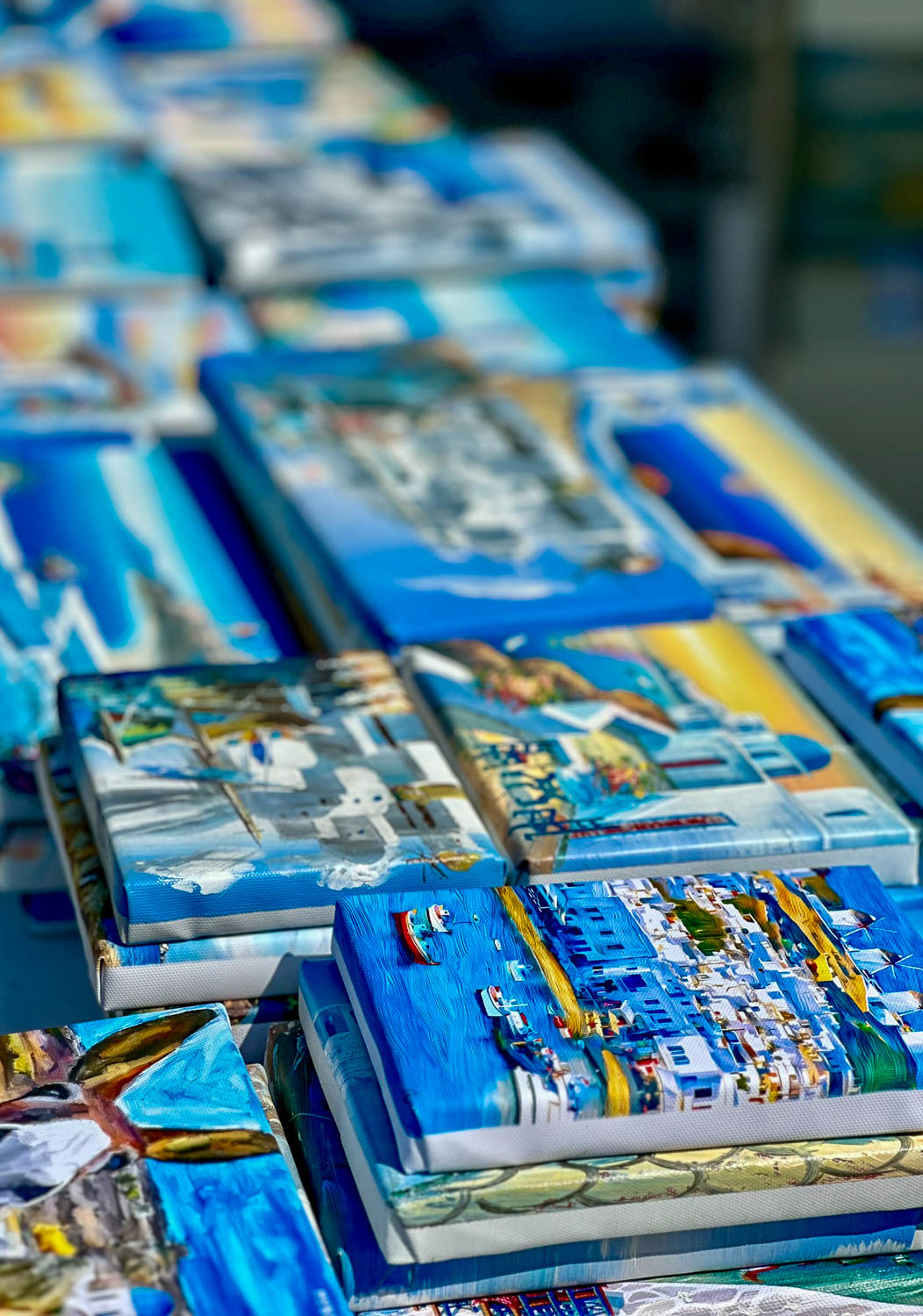
    Local artwork for sale (Mykonos Town)

    Fun fact. Mykonos sandals are known for their quality and unique designs. All Mykonos sandals have three things in common: they must be handmade, they must be made of leather, and they must be Greek. You’ll definitely notice the difference between them and mass-produced sandals!


    The Beaches of Mykonos

    Decorative sea anchor
    “Let’s head to the ocean!”

    The coastline of Mykonos is a vibrantly-colored canvas of crystal-clear turquoise waters, golden sands, lively social scenes, and iconic beach clubs. Whether you’re seeking an hour or a day of peaceful solitude, or an evening participating in a pulsating beach party, Mykonos’ diverse beaches offer something for every type of traveler. And whilst Mykonos Town itself doesn’t have any large, organized beaches, it’s an excellent base to begin exploring the island’s sandy coastline, all just a hop, skip and a jump away.

    Along the southern coast of the island you’ll find the most well-organized tourist beach facilities – think beach accommodations, beach bars, restaurants, and a solid plethora of water sports on offer. A wee forewarning – these southern beaches can get very crowded during peak tourist season!

    Insider tip. If you want to visit several beaches in one day, consider renting a car to get around the island. Alternatively, the most popular beaches are easily reached by water taxi and bus from Mykonos Town.

    Paradise Beach

    Less than 6km (3.73mi) south-east of Mykonos Town you’ll find Paradise Beach, known as one of the island’s main party hotspots. Easily accessible by bus, car or boat, it’s here you’ll find lively beach clubs and a non-stop party atmosphere – especially in the late afternoon and evening. It’s a stunning beach with a long stretch of white sand and tends to be a little quieter during the day.

    Nearby – well, it looks close on a map, but you’ll have to head inland first, along some pretty winding roads – you’ll find the legendary Super Paradise Beach. Another stretch of perfect golden sand where the music meets the sea and the dancing never seems to stop. Dance, swim, drink … rinse and repeat!

    Insider tip. Still want to suss out the party vibe of the southern beaches but aren’t too keen on the crowds? Consider visiting during the shoulder season.

    Family-Friendly Options

    Just a 4-minute drive north-west of Paradise Beach you’ll find the family-friendly Platis Gialos. Although also a lively beach, it doesn’t have the party atmosphere of the beaches further east, and still offers a wide range of activities (think swimming, sunbathing and various water sports) and amenities (think bars, restaurants, and beach chairs and umbrellas available for rent) for visitors.

    The Glitz and The Glamor

    A little further west along the coast (but again, you’ll have to drive inland first to get there) you’ll come across Psarou Beach – the beach to be seen. It’s here that turquoise waters meet golden sand and stylish Greek and international celebrities rub shoulders.

    Beaches for Adrenaline-Seekers

    Kalafatis Beach, on the eastern side of the island (about a 20-minute drive from Mykonos Town) is a rarity amongst Mykonos’ beaches: it’s uncrowded, peaceful, and a mainstay for those seeking a more adventurous beach outing. Due to the strong off-shore breeze, it’s here you’ll find windsurfers, jet-skiers, water-skiers, wakeboarders and tube riders out at sea, enjoying the ride (and you can too!).

    Kalafatis is another large, sandy beach with a relatively clean, unpolluted seabed, as well as toilets, changing rooms and outdoor showers. There are also lifeguards on duty, making it the perfect location for less-confident swimmers or for those with young families seeking a less party-oriented beach experience.

    The Northern Coast

    It’s along the northern coast of Mykonos that you’ll find the more secluded, laidback, tranquil beaches. You may wish to consider a visit to either Agios Sostis Beach or Agios Stefanos Beach, both of which provide visitors a far more serene beach experience. The northern coast does, however, come with a catch: there are not as many amenities on the north coast.

    Insider tip. Whilst the majority of beaches on Mykonos Island offer free access to the public, some facilities – including renting beach chairs and umbrellas, or entering a beach club – may incur additional costs. 


    Greek Island-Hopping and Boat Tours

    Sailing through crystal-clear waters near Mykonos (Greece)
    Join an organized boat tour to sail the crystal-clear waters between different Greek islands

    Another reason you might just fall for Mykonos? Its prime location for island-hopping adventures throughout the Aegean Sea.

    Island-Hopping

    Consider hopping aboard a private boat or a group boat tour to explore neighboring islands that include Paros and Naxos (also famed for its long, sandy beaches, alongside the Temple of Apollo, a giant marble doorway known as the Portara of Naxos – or the Great Door). A group tour will be more budget-friendly, but a private boat tour will afford you a far more personalized experience, with customized itineraries and activities.

    Delos Island: The Sacred Island

    If you have some extra time during your visit, consider a guided tour out to Delos island, south-west of the main island. Delos is an administration of the municipality of Mykonos, and in 1990 was granted UNESCO World Heritage Site status.

    Insider Tip. The only way to get to Delos island is by boat: either a private boat tour or as part of an organized, guided boat tour. The trip takes about 30 minutes from Mykonos Town.

    Though just a small, rocky island, Delos was once considered “the most sacred of all islands” in Greek culture. In fact, despite its small size at just 3.43 square km (1.32 square miles), Delos has always played a key role in the political, mythological and spiritual history of Greece. It was here that the twin Greek gods Apollo (god of light, music, art, healing and poetry – amongst other claims to fame) and Artemis (goddess of wild animals, the wilderness, hunting and childbirth) were born.

    Fun fact. In ancient times, Delos was blessed with what was considered a strategic geopolitical and religious location, right in the middle of the Cycladic islands. “Cyclades” translates into English (roughly) as “those who encircle [Delos]” – the other islands literally form a circle around the sacred island Delos.

    Once a thriving trading port and home to over 30,000 residents – many of them rich merchants, bankers and ship-owners from around the world – Delos is today uninhabited, dedicated instead to archaeological research. On Delos you’ll find the famed, extensive archaeological site (actually, the entire island is an archaeological site!) that conveys the image of a once-great, cosmopolitan Mediterranean port. Excavations began in 1872 and continue to this day, unearthing a significant portion of this civilized Hellenistic town: you’ll see numerous ancient artifacts and significant historical monuments, sure to impress every visitor. Delos is also home to one of the most significant museums in Greece – which is also one of only a handful of modern constructions on the island – complete with a vast collection of mosaics, artifacts and sculptures.

    Fun fact. It was at the beginning of 1,000 BC that Delos first became a destination of worship for ancient Greeks.

    Mykonos Boat Tours

    Boats cruising off the coast of Mykonos (Mykonos, Greece)
    Board a boat – big or small! – to sail around Mykonos

    You may also wish to consider circumnavigating the coastline of Mykonos itself – what a great way to gain a fresh new perspective on the island!

    Local tour operators offer comfortable and spacious half- and full-day catamaran tours, sunset cruises (very romantic – the sunsets off the coast of Mykonos are really quite something!), charming wooden boat tours, and “lounge on the beach for a day” cruises, where you can visit the stunning southern beaches of the island.

    Most tours will include drinks, a meal (often a barbecue or seafood lunch) and/or snacks, beach chair and umbrella rentals, as well as opportunities for snorkelling (all the gear is usually included), scuba diving, and other water sports that may tickle your fancy.

    No matter which option you choose, be sure to carefully select a reputable company – this way you’ll be ensured professional captains and crews, and a safe and comfortable experience. 

    Mykonos Nightlife and Entertainment

    Cocktail bar in Little Venice (Mykonos, Greece)
    One of many charming cocktail bars in Little Venice (Mykonos)

    Mykonos is renowned for its vibrant nightlife – I mean, it’s dubbed the “party island” for a reason, right? When each day’s sunset paints the sky in shades of red, yellow, orange and gold, Mykonos is just beginning to get its day started. This party island comes alive at night, with a vibrancy and urgency that’s both irresistible and unforgettable.

    Whether you’re dancing on tabletops (hey, we’ve all been there, right?), sipping wine by the sea (did you know that Mykonos primarily sources and produces its own wine?), or enjoying a moonlit conversation with your travel partner (love you, babe!), this island delivers endless hours of nightlife magic.

    Insider tip. Mykonos Island offers a gay-friendly scene and is a popular destination amongst the LGBTQ+ community. There are numerous gay bars and clubs spread throughout Mykonos Town.

    Mykonos Town

    Mykonos Town (Chora) is the heart of the island’s nightlife. It’s here you’ll find a plethora of bars, nightclubs and restaurants tucked into the labyrinth of narrow cobblestone alleyways, as well as along the waterfront in the charming neighborhood of Little Venice. The latter offers a more romantic – less party – nightlife experience.

    Mykonos Town is a great place to begin your night out, exploring different spaces with diverse music (from international dance hits to classic Greek music) and equally diverse ambiances to find the one that best suits your style. The bars and restaurants in Chora are also the perfect place for those looking for a more intimate, yet equally electric, evening.

    Super Paradise Beach

    The southern beaches of Mykonos are famous for not only their daytime, but also their nighttime, party atmosphere. Head to Super Paradise Beach for a true party spectacle, where beach clubs and restaurants include live DJs, flowing cocktails, and exhilarating dance floors with the sand right beneath your feet. Not too far away, Paradise Beach continues the same energy well into the early hours of the following day.

    Insider tip. Cavo Paradiso Club Mykonos, located at Paradise Beach, is perhaps the most legendary of all clubs on the island. It’s an open-air nightclub hugging a cliff top overlooking the Aegean Sea. Just wow!

    Other Nightlife Opportunities

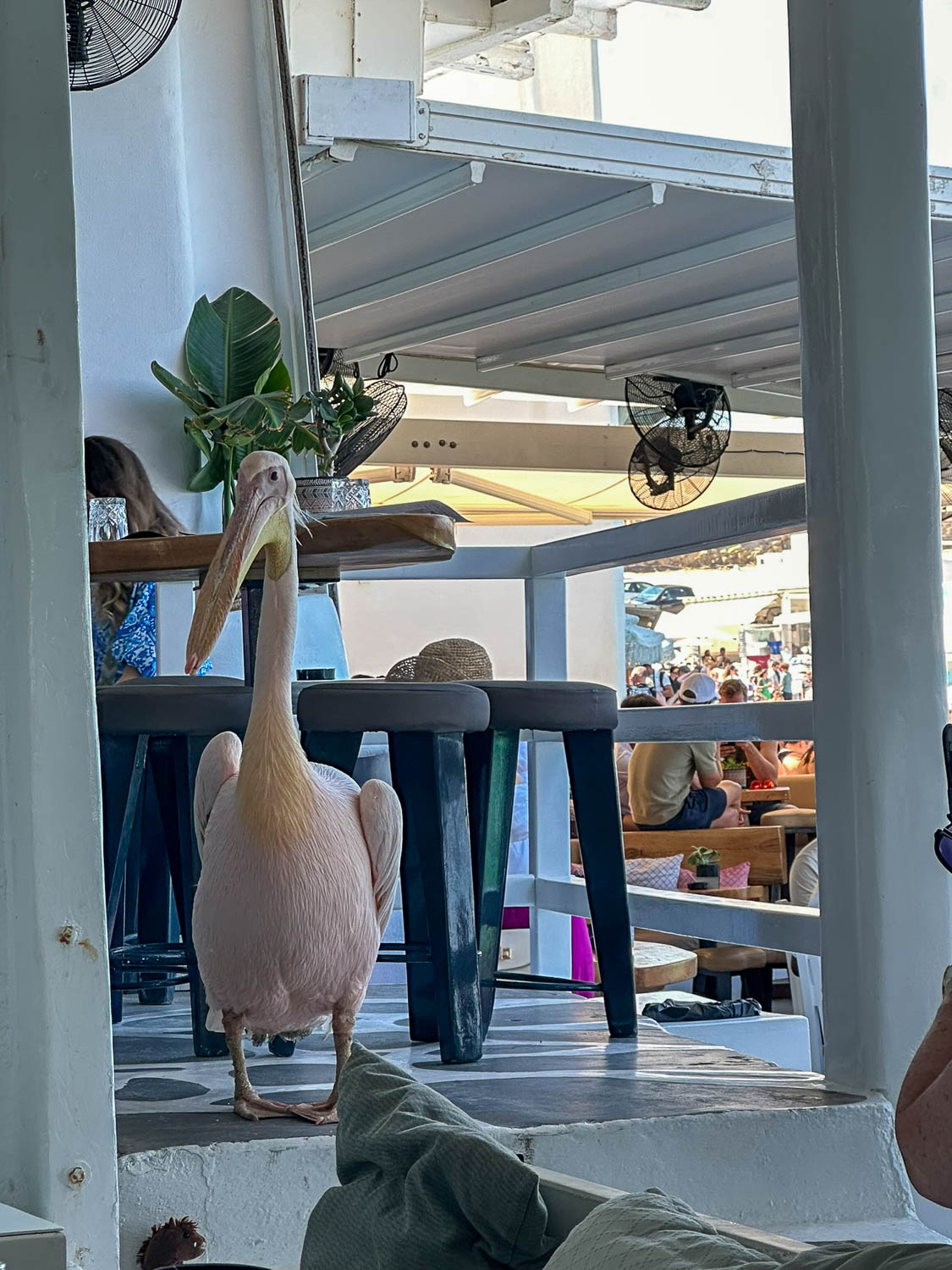
    Peter the Pelican in Little Venice (Mykonos, Greece)
    Peter the Pelican: the official mascot of Mykonos! (Little Venice)

    Mykonos also hosts several high-profile music festivals during the Summer, and even has its own open-air cinema (Cine Manto Mykonos). The 180-seat Cine Manto Mykonos is open from June through the end of September, and is actually part cinema, part botanic gardens. There’s also a restaurant on site, so you can enjoy a Greek souvlaki under the stars partway through the film!

    Fun fact. Cine Manto Mykonos isn’t just home to a large movie screen, but also to a plethora of friendly cats, and a pond full of goldfish, water lilies and koi carp.

    Scorpios – located about a 15-minute drive south of Mykonos Town – is another option that might be of interest to you. This chic, upscale beachfront property is known for its bohemian vibe, offering visitors local cuisine, unique cocktails and regular entertainment.

    Yacht parties are something else you may wish to consider if you’re a night owl. Perhaps charter your own yacht for a party, and enjoy the open waters and scenery of the island’s stunning coastline.


    Food and Drink: A Taste of Mykonos

    Alegro Restaurant in Little Venice (Mykonos, Greece)
    Alegro Restaurant (Little Venice, Mykonos)

    Mykonos offers visitors a diverse culinary scene, with everything from traditional Greek tavernas serving fresh, local meals to upscale international restaurants. The island’s food scene is a flavorful blend of tradition and innovation, with plenty of local Greek pride in every bite. Make sure you arrive hungry!

    Consider trying some of the following during your visit:

    • grilled octopus
    • moussaka (a classic Greek layered casserole featuring eggplant, potatoes, a rich tomato-based meat sauce (usually lamb or beef), and a creamy béchamel sauce)
    • souvlaki (a popular street food of marinated meat – usually lamb, beef or chicken – grilled on a skewer and often served wrapped in pita bread with your choice of sumptuous toppings)
    • baklava (a classic Greek delicacy: a rich, sticky, flaky pastry dessert made with layers of filo dough and filled with chopped nuts (usually walnuts or pistachios) and then soaked in a sweet syrup – oh my!)
    • galaktoboureko (try saying that three times fast!) (another traditional Greek dessert, more like a custard pie)
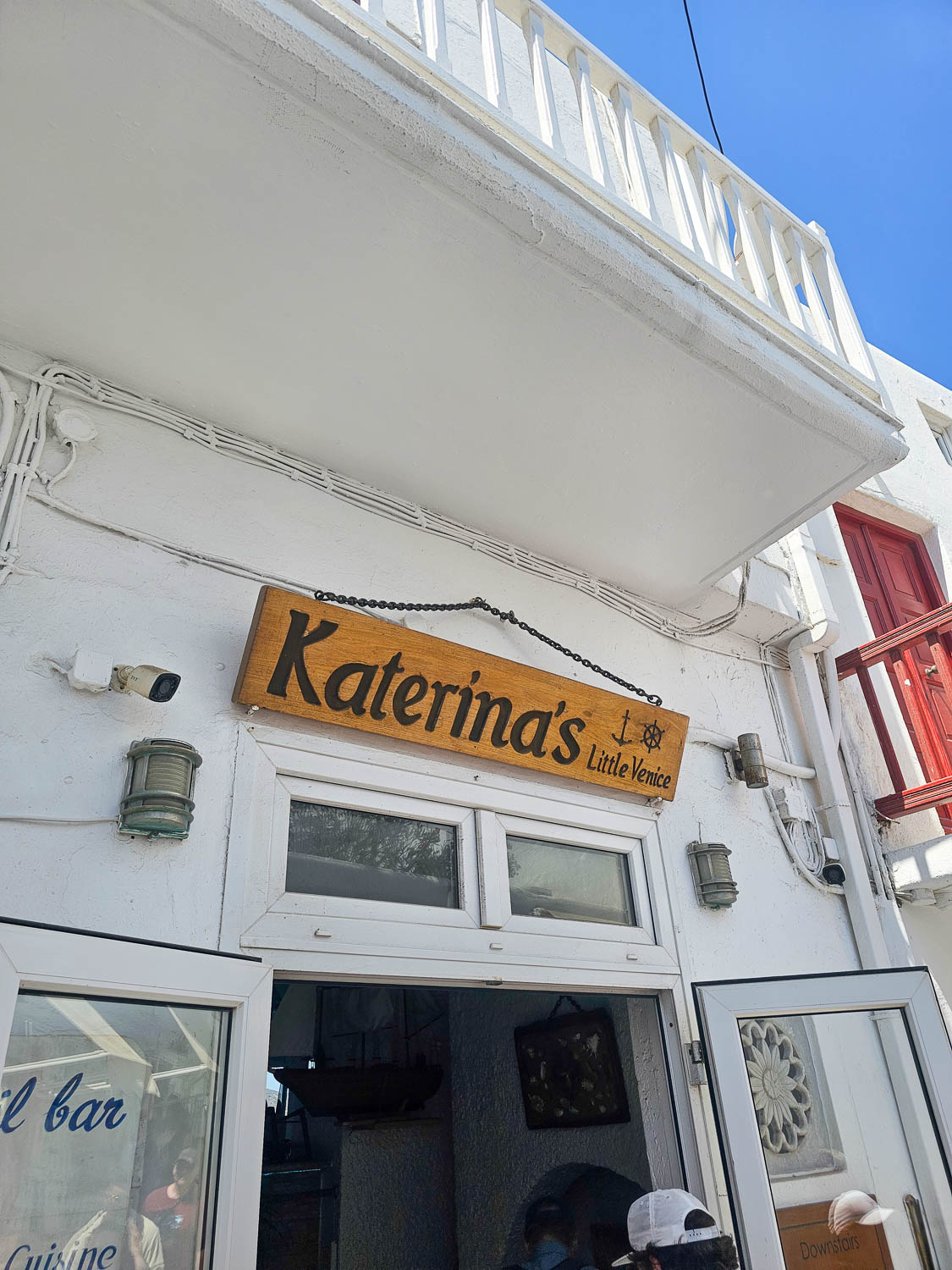
    Katerina’s Restaurant in Little Venice (Mykonos, Greece)
    Katerina’s Restaurant & Cocktail Bar (Little Venice, Mykonos)

    If you’re like Mike and love a good vino, consider pairing your meals with a glass of crisp local wine (a reminder that Mykonos primarily sources and produces its own wine, making it an extra special treat!) or a shot of ouzo (a strong, clear Greek spirit with an anise flavor similar to sambuca – but smoother!).

    Insider tip. For upscale dining experiences on the island, consider dining at Bill&Coo Gastronomy Project Restaurant (about a 6-minute drive south of Mykonos Town, famed for its seafood and local Mediterranean cuisine) or Zuma Mykonos (about a 6-minute drive north of Chora), known for its modern Japanese cuisine and prestigious atmosphere. These are the sort of places Mike really likes!

    Take note, however: dining in Mykonos isn’t just about sustenance and filling one’s belly with good food (though that’s always a bonus!). There’s no need to rush here – linger a little longer, savor a bit more flavor. Enjoy the moment, the view, the company. 


    Where to Stay on Mykonos Island

    Boutique hotel on Mykonos Island (Mykonos, Greece)
    You’ll find charming boutique hotels throughout the island

    If you’re heading to Mykonos for more than just a day trip, you’ll have a lot of fun choosing the perfect place to lay your head for a night or two. Whether you’re seeking sleek, luxury, cozy charm – or anything in between – you’ll find it in Mykonos.

    Insider tip. If you want to be in the heart of it all, consider staying in Mykonos Town, where you’ll be in close proximity to numerous restaurants, bars, cafes, attractions, and shopping opportunities.

    • Luxury hotels. If you’re looking to splurge a little, you might like the indulgent atmosphere at top hotels that include the 5-star Bill&Coo Mykonos, a mere 3-minute walk from Mykonos Town. Other 5-star options include the luxury resort Cavo Tagoo and the Four Seasons, all of which include breathtaking views over the Aegean Sea, world-class amenities, and white-glove service.
    • Budget-friendly options. There are plenty of apartments, boutique guesthouses and traditional Greek tavernas with individual rooms available for rent, spread throughout the island.
    • Peaceful retreats. Keen to find something a little more serene (as Beck might!) for your stay on the island? Consider heading inland or to a beachside location away from the party atmosphere of the southern mainstays. You may wish to stay, for example, in Ano Mera, just 15 minutes by road east of Mykonos Town: it’s in places like Ano Mera that you’ll find a more local, peaceful vibe.

    Safety and Precautions in Mykonos

    Main port of Mykonos near Mykonos Town (Mykonos, Greece)
    The bustling main port of Mykonos (Mykonos Town)

    Overall, Mykonos is generally considered a safe destination for visitors – indeed, it is as safe as any other popular tourist destination in Greece. Violent crime is rare, and the island’s tourism infrastructure is designed to make you feel safe and comfortable.

    Pickpocketing and theft are the most common crimes: we encourage all travelers to be mindful of their belongings and their surroundings, especially in crowded areas, on beaches, or during nights out. We also recommend visitors avoid walking alone in secluded areas, especially late at night (as would be the case anywhere in most places in the world!).

    By exercising caution, and taking note of a few other tips we share below, you will no doubt have a truly safe and enjoyable visit to Mykonos Island!

    • Be mindful of your alcohol consumption: know your limits and avoid accepting drinks from strangers.
    • Exercise caution when renting scooters or other small vehicles, and always wear a helmet.
    • Be aware of potential tourist scams that may include overpriced items, low-quality and fake souvenirs, and taxis overcharging for rides.
    • Protect yourself from the sun and stay hydrated – it can get hot on the island, especially in the midst of the Summer months.
    • Don’t forget that Mykonos is known as the Island of Winds. Some of the island’s winds are strong, dry, and often northerly gusts, affecting the Aegean region, especially during the Summer months. Check local weather updates before planning boat rides or beach outings.

    Fun fact. The strong, dry, northerly gusts are known locally as the Meltemi.

    Insider tip. Don’t be overly paranoid about any of the above precautions! Emergency services and local law enforcement are available throughout the island (and are very responsive!), and locals are more often than not happy to lend a hand.


    Final Thoughts

    “Magical Mykonos” branding sign on Mykonos Island (Mykonos, Greece)
    The island’s official branding: “Magical Mykonos”

    The island of Mykonos, Greece, is more than simply a destination — it’s a vibe, a love letter to the senses, and a celebration of life in all its most colorful forms. From the charming winding alleyways and spirited energy of Mykonos Town to the sun-drenched golden sands of the southern beaches, this “party island” is sure to enchant you (as it certainly did us!).

    It’s on Mykonos Island where you’ll find elegance meets authenticity, where myth and archaeology collide, and where quiet mornings spent in secluded coves transform into animated evenings under star-streaked skies. Whether you’re drawn to the island for the lively ambiance of the southern beaches, the cultural and historical riches of Delos Island, the olive groves and the ancient churches of the countryside, or simply some time out on a sun lounger from the hustle and bustle of your life back home, you’ll find something special around every corner on Mykonos.

    We promise this won’t be your last visit here.

    Let the windmills guide you, the island’s history ground you, and the rhythm of the sea set your pace. Mykonos is calling – will you answer? It’s time to soak up all the magic this stunning island has to offer – let’s start planning your trip!


    FAQs

    Is Mykonos Greece worth visiting?

    Yes. Mykonos Greece is one of the most iconic islands in the Cyclades, known for Mykonos Town (Chora), the Kato Mili windmills, Little Venice, vibrant beach clubs, and nearby Delos Island, a UNESCO World Heritage Site. Visitors come for beaches, nightlife, culture, and island-hopping across the Aegean Sea.

    How do you get to Mykonos Greece?

    You can reach Mykonos Greece by ferry from Athens (Piraeus Port) or by flight into Mykonos International Airport (JMK). Ferries take approximately 3–5 hours depending on the service. The airport offers domestic flights from Athens and seasonal international routes across Europe and the Middle East.

    Is Mykonos a cruise port?

    Yes. Mykonos is a major Mediterranean cruise destination. Cruise ships dock at the New Port in Tourlos, about 3 km from Mykonos Town. From there, visitors can explore Chora, the windmills, beaches, or take a boat excursion to Delos Island during their port stop.

    What is the best time to visit Mykonos Greece?

    The best time to visit Mykonos Greece is during the shoulder seasons of May–June and September–October, when the weather is warm, the sea is swimmable, and crowds are lighter. July and August are peak season with vibrant nightlife but higher prices and heavier tourism.

    What is Mykonos known for?

    Mykonos is known for its whitewashed architecture, iconic windmills, beach clubs, nightlife, and cosmopolitan atmosphere. It is also famous for Delos Island, one of Greece’s most important archaeological sites and a UNESCO World Heritage Site located just 30 minutes away by boat.


    Explore More Of Greece

  • Hydra Town Guide: Harbor Life on Hydra Island, Greece

    Welcome to Hydra Town, the capital and main village of Hydra Island, one of Greece’s most picturesque and culturally-rich destinations. Hydra Town is that charming heartbeat you’ve been seeking – a small town that embodies traditional Greek island life.

    As you meander through the narrow streets of Hydra Town, you’ll be enchanted too by its harbor, lined with fishing boats bobbing gently in the water and colorful cafes beckoning you to take a seat. The red-tiled roofs of the town’s stone buildings add to its timeless beauty, whilst pine trees dominate the backdrop, and the gently sloping hills provide a serene addition to the stunning views of the Saronic Gulf afforded from the town’s harbor.

    So let’s get started! We hope you’ll love Hydra Town’s extraordinary blend of elegance, rich history, and warm Mediterranean hospitality, as much as we did. Because whether you choose to simply browse the boutique shops, wander without direction through the back streets (you know that’s what Beck did!), visit a museum or two, or simply enjoy a leisurely meal at a waterfront taverna, Hydra Town promises to leave you wanting more.


    Quick Tips 

    View from the western side of Hydra harbor
    View from the western side of Hydra harbor across to Kavos Castle and the Miaoulis statue

    Here are some insider tips to help you make the most of your visit to Hydra Town, Greece.

    • Hydra Island is the perfect day trip from mainland Greece – but one can easily also wile away a few days of bliss here.
    • Getting to and from Hydra Island is easy: take a ferry, charter your own boat, or enjoy a day out as part of a larger Mediterranean cruise itinerary.
    • Hydra Town offers accommodation options for all types of traveler, from budget guesthouses to boutique hotels and luxury suites.
    • Hydra was once a major maritime power with a thriving merchant fleet: today life here moves to a slower, more reflective beat.
    • Hydra is a car-free island: to get around Hydra Town, you’ll have to either walk or take a donkey!
    • Hydra has a colorful, vibrant harbor – take some time to wander around the water’s edge and soak up the serene atmosphere.
    • Hydra Town itself is a picture-postcard perfect Greek village that has remained true to its heritage, with traditional stone buildings, boutique shops, quaint cafes and restaurants, and artisan galleries sprinkled throughout its cobblestone streets.
    • Head to the eastern side of the harbor to visit the Miaoulis Statue for your first taste of history and stunning views over the town, harbor and Aegean Sea.
    • Feeling energetic? Hike to the top of the rocky outcrop behind Hydra Town to touch the giant Greek flag and look down at all the teeny tiny people below.
    • Visit the Leonard Cohen House, once home to this legendary Canadian singer-songwriter.
    • Stroll by Hydra’s elegant Town Hall and then take the short walk through the back streets up to one of the oldest pharmacies in Europe: Rafalias.
    • History-lovers will rejoice in the variety of museums open to the public: the Historical Archives (Museum of Hydra), the National Historical Museum (Lazaros Koundouriotis Mansion), and the Ecclesiastical Byzantine Museum of Hydra.
    • Outside of Hydra Town you’ll find plenty of opportunities to swim at beautiful pebble beaches, enjoy boat tours around the rocky coastline, hike mountains, visit other Saronic Gulf islands, and even experience the tranquility and beauty of Hydra on horseback.
    • Don’t leave Hydra without trying a traditional Greek delicacy: whether it be seafood souvlaki, moussaka, baklava, galaktoboureko, or Hydra’s own amygdalota.
    • There are also plenty of opportunities for shopping in Hydra Town – no matter what you’re seeking, you’re bound to find it here!
    • Hydra Town also boasts various options for entertainment and nightlife, albeit a tad quieter than the likes of the famous party-island of Mykonos!

    Follow these tips and you’ll be ready to visit Hydra Town and Harbor, Greece!


    Plan Your Trip

    The stunning natural beauty of Hydra harbor
    The stunning natural beauty of Hydra harbor (Greece)

    Some links below may earn us a small commission at no extra cost to you. We’re truly grateful for your support, as it allows us to continue sharing meaningful travel experiences and practical travel insights with you. Read our full disclosure here.

    Planning your visit? We’ve gathered recommended tours and activities, along with trusted travel tools, to help you explore with confidence and ease.

    Tours & Experiences


    Browse more top-rated experiences in the Saronic Gulf.


    Travel Essentials

    Planning the rest of your trip? These are the platforms we personally use when organizing our travels. For more planning tools, visit our Travel Resources page or browse current promotions on our Travel Deals page.


    Hydra Island: An Introduction

    Quintessential Hydra Town Greece
    Quintessential Hydra Town (Greece)

    Hydra – also sometimes seen written as Ydra or Idra, and pronounced EE-dra (that one caught us non-Greek speakers off guard!) – is a gem of a Greek island in the Saronic Gulf (also known as the Gulf of Aegina). Just a short ferry ride from Athens, Hydra Island is one of those places where once you’re ashore, you may just not wish to leave!

    Full of history, culture, natural beauty, and the vibrant colors for which the Greek islands are so well known, Hydra is something you don’t find too often in the 21st-century: it’s car-free! It’s also full of beautiful stone mansions and quaint villages, stunning 360-degree views, a lively harbor, crystal clear waters, and opportunities for visitors to partake in adventurous outings as well as a simple unwinding of the body and mind.

    Over time, Hydra has become a popular haven for artists, writers, and celebrities, attracting the likes of famous Canadian singer-songwriter Leonard Cohen and renowned American author Henry Miller. The famed Italian actress Sophia Loren, and Maria Callas – one of the 20th century’s most influential and iconic Greek sopranos – were also captivated by Hydra’s spell.

    In the 21st century, Hydra is a popular tourist destination, attracting visitors from around the world throughout the year. Aside international tourism, its location in the Saronic Gulf has also helped the island form robust sponge fishing and shipbuilding industries.

    Hydra Island is the perfect day trip from mainland Greece – but one can easily also wile away a few days of bliss here. If we’ve piqued your interest about this fascinating island, check out our detailed article on some of the top things to do in Hydra.


    Island Life and Hydra’s Culture

    Life moves a little more slowly here on the island of Hydra
    Life moves a little more slowly here on the island of Hydra

    Hydra Island’s rich history reads like an epic novel. Once a major maritime power with a thriving merchant fleet, today life on this beautiful Greek island moves to a slower, more reflective beat.

    Hydra Town is rich with history, art, and a genuine sense of community. Locals take pride in preserving traditions and living in harmony with the island’s natural beauty — from the pine trees that dot the surrounding hills to the fishing boats that bob in the clear waters of the natural harbor.

    Take a moment to dig a little deeper once you arrive. Look a little closer. Linger a little longer. You too will discover the true beauty that lies not only on the surface, but deeper within this magical place.


    Getting To and From Hydra Town

    Sea-faring vessels are the only way to get to Hydra Town
    Sea-faring vessels are the only way to get to Hydra Town

    Getting to the island of Hydra – and then into Hydra Town itself – is part of the fun! There are several ways to get to Hydra, located just 34 nautical miles from Athens, the capital city of Greece.

    • Ferry from Athens. The most common – and perhaps easiest, if you’re travelling independently – way to get to Hydra is by ferry. Ferries depart from the bustling Port of Piraeus in Athens and the short, scenic journey across the Saronic Gulf can take anywhere from just over an hour to two hours, depending on weather conditions, the type of ferry you choose, the route the ferry takes, and the operator itself. Popular ferry operators along this route include Blue Star Ferries, Alpha Lines, Hellenic Seaways, and Magic Sea Ferries.
    • Small sailboats. It’s possible to charter small to medium-sized sailboats, either from Athens or other nearby Greek islands, to get to Hydra.
    • Cruise ships. Many cruise lines will include Hydra Island as a stop on a Greek Island cruise itinerary. If you are visiting Hydra on a cruise, note that your ship will likely anchor out at sea and you’ll be transported by tenders (smaller boats) into the harbor from there. Be prepared for a wait at times, as the incoming ferries always have right of way – and there can be a lot of them during peak season!

    Once you’ve arrived in Hydra harbor, your new adventure begins! 


    Hydra Harbor

    Stunning Hydra Town and harbor
    Stunning Hydra Town and harbor (Greece)

    The very first thing you’ll notice when arriving on Hydra Island is its stunning harbor. The harbor is the heartbeat of Hydra Town and is, without question, a scene-stealer: colorful traditional fishing boats bob in the water, fishermen’s nets dry in the sun, inter-island ferries glide effortlessly through the water, and gleaming yachts anchor against the railings.

    Hydra’s harbor is a vibrant, busy port indeed (especially when a cruise ship or two are in!): a waterfront hub fringed with art galleries, elegant mansions, boutique hotels and shops, inviting cafes and restaurants, and a plethora of museums, all perfect for people-watching and soaking up the waterfront vibe.

    Sit here awhile: watch the fishing boats come and go whilst enjoying the local catch of the day and losing yourself in the beautiful scene that surrounds you. And don’t forget, there are no cars here – the lack of fumes and the addition of donkeys on every corner help add to the harbor’s unspoiled beauty and charm.

    Okay, so you’ve wandered the waterfront and soaked up the harbor vibe for a wee while … let’s dig a little deeper into what else Hydra Town has to offer!  


    Getting Around Hydra Town

    Hydra is a vehicle-free island.
    Hydra is a vehicle-free island: take a donkey or horse instead!

    One of the things we loved most about Hydra (aside its stunning harbor, of course!), is that it’s a car-free island. Whilst you’ll still see small delivery trucks, the island’s police car and ambulance, and small garbage trucks navigating the narrow streets of Hydra Town, it’s donkeys and boats that serve as the island’s primary means of transportation (that’s right, you won’t even find bicycles here!). That is, of course, if you’re not choosing to walk everywhere (as we did!).

    Hydra Town itself is compact and easily walkable, though with cobblestone streets and some steep stairways between laneways, it may pose some challenges for those with mobility concerns. Most of the main attractions for tourists are within walking distance of one another – think the harbor, shops, restaurants, galleries, and museums.

    For something a little different – and certainly something quite traditional – consider taking a donkey ride to see the sights.


    Discovering Hydra Town’s Charm

    The red-tiled roofs of traditional houses Hydra Town, Greece
    The red-tiled roofs of traditional houses (Hydra Town, Greece)

    Hydra Town is a picture-postcard perfect Greek village that has remained true to its heritage. The majority of the island’s residents live within the town limits (close to 2,000 people at last count), enjoying life amongst the traditional stone-built houses with their bright red-tiled roofs, and the quiet, narrow alleyways that snake their way through the nearby hills. Many of the town’s homes – especially the mansions for which the harbor is perhaps most well-known – were built primarily by wealthy Italian merchants and shipowners during the 18th and 19th centuries. These impressive buildings serve as a reflection of Hydra’s prosperity during that time, as well as its strong connection to a maritime way of life, and today remain some of the island’s most defining features.

    At every turn you too will discover the delight in these traditional stone buildings, as well as the boutique shops, quaint cafes and restaurants, and artisan galleries spread throughout the town … and you’ll no doubt also come across the occasional Greek cat lounging in the sun. 


    Exploring Hydra Town’s Attractions

    Take a moment to wander the quiet back streets of Hydra Town
    Take a moment to wander the quiet back streets of Hydra Town

    Ensure you allow at least a few hours to explore the main area that encompasses Hydra Town – there’s certainly plenty to see and do here! 

    Let’s take you on a walking tour of the town.

    The Miaoulis Statue

    Consider starting your visit to Hydra Town at the entrance to the Hydra port, where you’ll find a statue of Admiral Andreas Miaoulis (located on the far eastern side of the harbor, near Kavos Castle). A Greek admiral and politician, Admiral Miaoulis led the naval charge against the Turkish fleet during the Greek War of Independence (1821-1829).

    Erected in the early 1990s, the bronze statue of Miaoulis looking out across the harbor lies atop his remains, and is surrounded by old cannons that once defended the island. The view from this part of the harbor is especially spectacular – some say it’s the best view of the area from the entire island of Hydra.

    Before you start exploring the rest of the town, or perhaps on a day when you’re feeling energetic early and the sun hasn’t yet reached its peak, the next stop you might consider is another viewpoint: this one from atop a rocky outcrop behind Hydra Town.

    Hiking to the Greek Flag

    View of Hydra Harbor
    Beck’s view of Hydra Harbor, Greece

    One of the highlights of our visit to Hydra was when Beck climbed to the top of the rocky outcrop on the western slopes of Hydra harbor (Mike chose to stay at the bottom and take photos). It’s here that a huge Greek flag waves in the wind against a backdrop of pine forests: you can see this hill and the flag from anywhere in the harbor!

    beck top of the mountain hydra town
    Beck made it to the top – and what a view!

    To get to the flag, follow the main coastal path southwest of the harbor, toward Kaminia (it’s well sign-posted … for the most part). Just after the Spilia Beach Bar – and before you get to the Sunset Restaurant – you’ll come across a fork in the path. Take the fork to your left – the path that leads uphill to the old Sophia Loren windmill. From there, you’ll weave your way along cobblestone paths, in between traditional white-washed houses, until you reach a dirt (and quite rocky) path, which will lead you to the back side of the hill – and ultimately to its very top.

    It’s definitely a steep – albeit quick – hike, and oh! the 360-degree views of Hydra Town and beyond from the top are simply breathtaking!

    The Sophia Loren Windmill Hydra, Greece
    The Sophia Loren Windmill (Hydra, Greece)

    Insider tip. Another option for spectacular views over Hydra Town, Hydra harbor and the Aegean Sea, is to hike to one of the various monasteries nestled amongst the hills. The most popular of these is Prophet Elias Monastery – perched at the highest point of Hydra Island – though note it is a solid one-and-a-half hours by foot one way.

    The Leonard Cohen House 

    Once you’re back down near sea level, consider visiting Leonard Cohen’s house, about 15 minutes from the Sunset Restaurant. The home of this legendary Canadian singer-songwriter and poet is where he was inspired (by Hydra’s bohemian atmosphere in general, and by Hydra Town more specifically) to write many of his most well-known songs during the 1960s – so for all you music fans out there, this is a must-do pilgrimage!

    Cohen’s presence, together with that of other famous artists who have called Hydra Town home over the years, has left a lasting impact on the island’s cultural landscape to this day.

    Insider tip. For those of you who are huge Leonard Cohen fans – or simply music fans in general! – there’s also a memorial plaque dedicated to Cohen just west of the harbor (about a 5-6-minute walk past the Sunset Restaurant). The Cohen memorial includes a wooden bench overlooking the Aegean Sea, with an inscribed plaque. We think this is a pretty neat place to watch a sunset or two!

    Hydra’s Town Hall

    Centrally located in the harbor, Hydra’s elegant Town Hall serves as both a civic center (it’s the seat of local government) and a reminder of the island’s proud past. A superb example of neoclassical architecture and, like most places in town, affords visitors a wonderful view of the harbor.

    Rafalias Pharmacy

    Rafalias Pharmacy, Hydra Town
    Rafalias Pharmacy, Hydra Town Greece

    Easily missed by most day-trippers to Hydra Island – but absolutely worth a visit – is one of the oldest pharmacies in Europe: Rafalias Pharmacy. Located an easy 7-minute walk through Hydra Town from the ferry dock, on Rafalia (Street) at the end of Votsi (Street), Rafalias is housed within the historic, neoclassical Rafalias Mansion, and showcases some of Hydra’s traditions in the field of medicine.

    Traditional pharmaceutical recipes passed down through the generations
    Traditional pharmaceutical recipes passed down through the generations

    Founded in 1890 by Evangelos Rafalias (1869-1936), this iconic pharmacy remains family-owned to this day, with little changing over the years. Today, Rafalias continues to reproduce its original lotions, creams, soaps, and perfumes – all made from unique, traditional recipes using natural ingredients – and the well-preserved wooden interior and furniture is incredible.

    Insider tip. If you’re looking for a truly unique accommodation option during your time in Hydra Town, the Rafalias Mansion is not just a pharmacy, but also a guesthouse!

    Fun fact. The pharmacist at Rafalias today is the grandson of the founder, Evangelos Rafalias.

    Museums

    Hydra Town is home to numerous museums, offering visitors an opportunity to learn more about the island’s rich history and culture. Consider visiting at least one of them – especially as these small, intimate museums provide visitors a window into Hydra’s soul.

    The Historical Archives: Museum of Hydra 

    History-lovers should consider starting their museum tour at the Historical Archives (Museum of Hydra), which offers insights into Hydra’s contributions during the Greek War of Independence (1821-1829), its political dominance over the past few centuries, and its contributions to the development of modern day Greece.

    Inside this two-storey stone building (which has a lift and ramps for those with mobility needs) you’ll find artifacts, manuscripts, and numerous exhibits: many of the items housed here (from swords to clothing to replica ships and portraits) were donated by the descendants of families who sat at the top of Hydra’s social hierarchy in the 1800s.

    Insider tip. Regularly throughout the Summer the exhibition halls within this museum host art shows with well-established and highly-regarded artists, complete with opening parties. Stop by for one of the grand openings – no invitation required!

    Insider tip. During the Summer, the huge rooftop terrace of the Archives hosts open-air concerts.

    Fun fact. The Historical Archives also houses the decorated, silver urn that contains the embalmed heart (yes, the actual heart!) of one of Hydra’s most notable heroes: Admiral Miaoulis.

    Fun fact. The material of the archives of the community of Hydra were originally organized and catalogued by Dr Antonios D. Lignos, who served as Hydra’s Mayor for 40 consecutive years.

    There is a gift shop on the ground level of the Archives, offering an excellent array of quality gifts and souvenirs, including books. The Archives are open daily from 9am through 4pm (and also in the evenings during the Summer). Entrance is 5 Euros per person (3 Euros for concessions).

    National Historical Museum (Lazaros Koundouriotis Mansion)

    Wayfinding to the National Historical Museum (Hydra Town, Greece)
    Wayfinding to the National Historical Museum (Hydra Town, Greece)

    The elegant – and somewhat imposing! – three-story mansion that once belonged to Greek naval leader Lazaros Koundouriotis (1769-1852) today houses Hydra’s National Historical Museum. Koundouriotis supported the Greek Revolution by sacrificing most of his family’s fortune and ships to help finance the cause, and used the family home as a meeting point for Greek servicemen and other important dignitaries during the time.

    A descendant of Lazaros – Pantelis Koundouriotis – donated the family mansion to the Historical and Ethnological Society of Greece in 1979, and in 2001 it was opened as the National Historical Museum. Today, the museum offers visitors a glimpse into the island’s history, through preserved artifacts and exhibits that include Koundouriotis family heirlooms, traditional works of folk art and other famous paintings, furniture, pottery, jewelry, and traditional clothing. Make sure you take some time to stop and pause as you wander through the exhibits, quietly reflecting on how it must have been to live here over two centuries ago.

    You’ll find the Lazaros Koundouriotis Mansion less than a half kilometer (.31 miles) down the hill from the Leonard Cohen House, on the western side of the Hydra harbor. It has a gift shop on site and is open Tuesday through Friday from 9am to 4pm, and from 10am to 4pm on weekends (closed on major holidays). The museum also offers extended opening hours (5.30pm-8.30pm) during the Summer months. Entrance fees range from 5 Euros to 20 Euros, depending on the size of your group and what exhibits you’d like to see, with discounted admission for seniors, students and large groups.

    Insider tip. The friendly and welcoming Mrs Annemarie Rabias is the curator of the National Historical Museum. Make sure to ask her for a private tour during your visit.

    Fun fact. Various busts, paintings, plaques and statues pay tribute to Lazaros Koundouriotis throughout Hydra Town. He’s easily recognized, as he lost an eye and is therefore always depicted wearing an eye patch!

    Ecclesiastical Byzantine Museum of Hydra

    Hydra Town’s central clock tower
    Hydra Town’s central clock tower (Cathedral of the Assumption of the Virgin Mary, Hydra)

    Located right in the center of Hydra Town – just a short 5-minute walk north of the Lazaros Koundouriotis Mansion – the small (but mighty!) Byzantine Museum (also known as the Agios Makarios Notaras) is another must-visit for history buffs during your time on the island.

    Nestled inside the old church of the Assumption of the Virgin Mary (also sometimes known as the Church of the Dormition) – the Cathedral of Hydra, built in 1648, and reconstructed in 1774 following an earthquake – this museum is home to a treasure trove of religious artifacts, rare Byzantine icons, holy gospels, musical manuscripts, clerk relics, and other historical treasures. Make sure to check out the incredible frescoes once inside!

    Another stand-out feature of the Cathedral are its two impressive marble bell towers, one of which adorns a large clock face. You’ll also find numerous statues of Greek greats within the main church courtyard, as well as the tomb of Lazaros Koundouriotis and a war memorial paying homage to the Balkan War, both within the grounds of the Cathedral.

    The Ecclesiastical Byzantine Museum is open Tuesday through Sunday from April 1 through November 15, from 10am to 5pm. The museum is open at no cost to visitors.

    Insider tip. You can climb to the top of the Cathedral’s bell towers, which afford visitors an incredible panoramic view over the Hydra harbor, port, and out to the Aegean Sea.

    Fun fact. The Cathedral of the Assumption of the Virgin Mary was once the center of religious life on the island of Hydra. For a short period of time, the Cathedral also operated as a monastery.

    Other Activities and Excursions on Hydra Island

    View toward Avlaki Beach Hydra, Greece
    View toward Avlaki Beach (Hydra, Greece)

    Hydra is a popular stop on many cruise ship itineraries in the Mediterranean, and as such offers a wide range of shore excursions and activities outside of Hydra Town.

    • Beaches and boat tours. Do you prefer water-based activities to land-based? Check out our detailed insight into the main beaches on Hydra, where you can learn more about hiking or taking a water taxi out to Kaminia Beach, Plakes Beach, or Agios Nikolaos! With crystal-clear waters surrounding the island, as well as incredible uninterrupted views of the Aegean Sea, you have to visit at least one beach during your visit! You may also wish to consider a boat tour around Hydra.
    Consider taking a boat tour to see more of Hydra Island.
    Consider taking a boat tour to see more of the island!
    • Hiking. With Hydra’s natural beauty preserved in its rocky terrain, pine trees, and stunning crystal-clear waters, hiking is another popular activity on the island. Our main article – A Day on Hydra Island, Greece – provides visitors some excellent information on hiking opportunities on Hydra, including its fantastic coastal paths that extend west and east from Hydra Town. These coastal paths will take you through small settlements tucked into the hills, radiating with local Greek life and whispering of simpler days. The lack of vehicles on Hydra helps to keep the natural beauty of the island pristine: make sure to listen for the call of chirping birds, and look out for a shy wild goat or two on your hike.
    • Other Saronic Gulf islands. You may also be interested in visiting other Saronic Gulf islands during your time in the region, using Hydra as a jumping-off point. Check out our in-depth review on things to do on Hydra Island for more information on how to explore the likes of Spetses, Poros or Aegina from Hydra.
    • Donkey or horse rides. Another unique option is to take a tour with famed Harriet’s Hydra Horses – experience the tranquility and beauty of this incredible island on horseback!
    • Island festivals. For those of you interested in diving a little deeper into the culture of Hydra, why not time your visit with one of the island’s annual festivals? Our in-depth review of things to do on Hydra Island provides more information on these, highlighting Hydra’s rich history and vibrant local culture.  

    Food and Drink: A Taste of Hydra

    Piato Restaurant Hydra Town, Greece
    Piato Restaurant (Hydra Town, Greece)

    Hydra is most famous for its fresh seafood, as well as numerous traditional Greek dishes available at the island’s many restaurants. Consider trying one (or more!) of the following during your visit.

    • seafood souvlaki (an Hydra take on the more well-known lamb or chicken souvlaki)
    • moussaka (a classic Greek layered casserole featuring eggplant, potatoes, a rich tomato-based meat sauce (usually lamb or beef), and a creamy béchamel sauce)
    • baklava (a classic Greek delicacy: a rich, sticky, flaky pastry dessert made with layers of filo dough and filled with chopped nuts (usually walnuts or pistachios) and then soaked in a sweet syrup – oh my!)
    • galaktoboureko (try saying that three times fast!) (another traditional Greek dessert, more like a custard pie)

    We chose to dine at Piato Restaurant in Hydra Town during our visit, and can’t highly recommend it enough!

    Hydra’s fresh, locally-baked dessert treats.
    Hydra’s fresh, locally-baked dessert treats are a must-try!

    Insider tip. If you’re craving something unique from Hydra, don’t miss out on trying amygdalota (not to be confused with the amygdala – part of our brain’s limbic system!). These traditional Greek almond cookies – also known as almond macaroons, and often shaped like pears or balls – are made with ground almonds and sugar, and then flavored with rosewater or other fragrant spices.


    Shopping in Hydra Town

    There are numerous artisan galleries spread throughout Hydra Town.
    You’ll find numerous artisan galleries spread throughout the back streets of Hydra Town

    With no purpose-built shopping centres or giant air-conditioned malls, Hydra instead boasts quaint boutique shops and traditional stores on the ground floors of the historical buildings that line Hydra harbor and the narrow, back alleyways of Hydra Town.

    In Hydra you’ll find shops selling everything from souvenirs to jewelry, to local handicrafts, pottery and baked goods, to traditional costumes and embroidered cloth. There are also opportunities to shop in small art galleries. And if you need some more batteries, bug repellant, beach toys, or simply a bottle of water, you’ll find those too! We bought some of our favorite t-shirts from our visit to the Greek islands here in Hydra, and the prices were very tourist-friendly!


    Hydra’s Nightlife and Entertainment

    piato traditional greek dinner hydra greece
    A traditional Greek dinner (Piato Restaurant, Hydra Town)

    When the sun sets in Hydra Town, the harbor lights up with a soft, golden glow. And yes, okay, so maybe it’s not quite the party-like atmosphere you’ll find in Mykonos – or even close to it – but Hydra’s nightlife still affords visitors plenty to do after dark … simply with a more relaxed, intimate vibe.

    Yes indeed, things continue to move a little more slowly here on the island once the sun sets, and we loved it this way! Enjoy live music at a local bar tucked away in the back streets of Hydra Town, or sip wine under the stars as you sit on Hydronetta Beach and watch the sun go down over the Aegean Sea. Solitude aside, you’ll still find plenty of bars and clubs along the port, known for their chill music and night-long parties.

    Travelling with a young family or simply not really into the whole bar or clubbing scene (don’t worry, neither are we!)? There are still plenty of opportunities for you to also enjoy life after the sun goes down: for example, dine at one of the numerous atmospheric restaurants within Hydra harbor and feast not only on the incredible food served to you, but also on the incredible views afforded during your island dining experience.  


    Hydra Island: Where to Stay

    “Hello? Is anyone home?” Hydra
    “Hello? Is anyone home?”

    If you plan to stay more than a few hours in Hydra, you’ll be afforded the opportunity to truly experience its serene and charming ambience. Indeed, when the cruise crowds and day-tripping tourists from Athens leave the harbor, Hydra Town’s peace returns.

    Hydra Town offers accommodation options for all types of traveler, from budget guesthouses to boutique hotels and luxury suites – and they’ll come with either stunning views of the sea and countryside, or be resorts and hotels right on the beachfront themselves.

    Consider laying your head in a comfortable place like the Hydra Hotel (located in an historical building overlooking Hydra Town and harbor) or the luxury suites of the Bellevalia Hydra (previously known as Four Seasons Hydra), right on the beach. Or maybe a stay in a traditional Greek stone villa for a truly authentic experience is more your scene – something that combines modern comforts within the walls of the island’s history.

    Staying a night or two in Hydra Town will help you truly experience the magic of this incredible place.


    Final Thoughts

    Enjoy Hydra Town Greece one step at a time.
    Enjoy Hydra Town one step at a time.

    The Greek, car-free island of Hydra — small, yet mighty in character — is one of the true jewels of the Saronic Gulf islands. Hydra punches well above its weight when it comes to charm, history, and an abundance of things to do. And Hydra Town itself cascades down the pine-laden slopes surrounding it, creating an incredibly picturesque amphitheater, with narrow cobblestone streets that whisper welcoming invitations to all visitors, from near and far.

    Whether you’re sailing in from Athens, docking your yacht in the harbor, or are visiting on foot after disembarking your cruise ship’s tender, Hydra Town is more than simply a stop on any Greek island itinerary — it’s a portal to the past, with a vibrant arts scene, and encapsulates a sanctuary of serenity. From its stone-built houses and traditional mansions, to its breathtaking harbor and plethora of historical and cultural sites, and from its rich history to its modern vibe and timeless traditions, Hydra Town is truly a perfect island getaway.

    So grab your ferry ticket, jump atop a donkey (if you please), lace up your walking shoes, and let the spirit of the main village of Hydra – and indeed its surrounding harbor – enchant you. Whether it’s your first time here, or your twentieth, one thing is for sure: this beautiful island will tug at your heart strings and leave you begging for more.

    Let’s start planning your trip, so you too can enjoy Hydra Town’s stunning views of the Saronic Gulf and watch the magic of the world all around you go by at a delightfully leisurely pace. 


    FAQs

    Is Hydra Town the same as Hydra Island?

    Hydra Town is the main harbor village and capital of Hydra Island in Greece. While the island includes small settlements, beaches, and hiking trails beyond the harbor, most visitors spend their time in Hydra Town, where you’ll find museums, historic mansions, restaurants, and the ferry port.

    How do you get to Hydra Town from Athens?

    The easiest way to reach Hydra Town is by ferry from Piraeus Port in Athens. The journey across the Saronic Gulf takes about 1 to 2 hours depending on the ferry type. Cruise passengers typically tender into Hydra harbor, as large ships anchor offshore.

    Is Hydra Town worth visiting on a cruise?

    es, Hydra Town is a popular cruise stop in the Saronic Gulf and is easy to explore on foot. The harbor, museums, historic sites, and scenic walking paths are all within walking distance of the tender dock, making it ideal for a half-day or full-day visit.

    Is Hydra Town really car-free?

    Hydra Town is famously car-free. Private vehicles are not permitted on the island, and transportation is limited to walking, donkeys, water taxis, and small service vehicles. This vehicle-free atmosphere is one of the town’s most distinctive and charming features.

    How much time do you need in Hydra Town?

    Hydra Town can be explored in a few hours as a day trip from Athens or as a cruise stop. However, staying overnight allows you to experience the harbor after day-trippers leave and enjoy a more peaceful, authentic island atmosphere.


    Explore More Of Greece

  • Best Beaches in Hydra, Greece: Island Travel Guide

    Tucked away in the Saronic Gulf, the Greek island of Hydra – just a short ferry ride directly from Athens – is a tranquil destination filled with quaint villages, bright pink hydrangeas, coastal walking paths, crystal-clear waters, 17th- and 18th-century architecture, and a unique car-free atmosphere that without question makes it one of the most beautiful islands in the region. We certainly couldn’t get enough of it and wish we could have stayed longer!

    Some travelers visit Hydra as part of a longer cruise ship itinerary, whilst others stay a little longer, soaking in Hydra’s magic and enjoying days spent on sun-drenched beaches. And whilst Hydra may not be known for the long, white sandy beaches of other Greek islands, its beaches remain a perfect representation of the landscape in the Aegean Sea. Indeed, the island offers visitors numerous secluded coves, hidden beaches, and countless serene spots to sunbathe along its rocky coastline.

    For water sports enthusiasts, there’s also options for snorkeling, kayaking, scuba diving, paddle-boarding and sailing around Hydra Island’s coves and beaches, providing you plenty of opportunities to explore its fascinating marine life in more depth.

    Hydra’s beautiful harbor serves as a key point of access to the island’s beaches. Shall we check out some of them together? Come on, let’s go! 


    Quick Tips 

    avlaki beach hydra greece
    Avlaki Beach (Hydra, Greece)

    Here are some insider tips to help you make the most of your visit to the beaches in Hydra, Greece.

    • Hydra is a car-free island, which means the only way to get to its beaches is to walk, take a water taxi or boat service, or ride a donkey.
    • Hydra’s beaches are a mix of pebbles, sand, and rocky outcrops with large concrete platforms perfect for diving into the crystal-clear waters of the Aegean Sea.
    • The closest beaches to Hydra Town are Spilia Beach, Hydronetta Beach and Avlaki Beach.
    • Consider visiting the small, picturesque fishing village of Kaminia and its adjacent beach, for a truly authentic Greek island feel.
    • The best beaches on Hydra for those who prefer the sand over pebbles, are Mandraki Beach, Plakes Beach and Vlychos Beach.
    • Whilst it’s a longer journey than to most beaches on the island, consider visiting Agios Nikolaos Beach – well worth it for the stunning coastal scenery along the way!
    • For a truly unique experience – and one far from the tourist crowds – visit Limnioniza Beach and its stunning natural harbor.
    • Visit pebbly Bisti Beach for its excellent snorkeling opportunities.
    • Palamida valley is an excellent choice not only for its beach, but also to see the only traditional shipyard still in operation on the island today.
    • There are numerous opportunities for partaking in water activities during your time on Hydra: from jet-skiing to paddle-boarding, from snorkeling to scuba diving, and from sailing to boat tours that circumnavigate the island.

    Follow these tips and you’ll be ready to visit the beaches in Hydra, Greece!


    Plan Your Trip

    Kaminia Beach Hydra, Greece
    Kaminia Beach (Hydra, Greece)

    Some links below may earn us a small commission at no extra cost to you. We’re truly grateful for your support, as it allows us to continue sharing meaningful travel experiences and practical travel insights with you. Read our full disclosure here.

    Planning your visit? We’ve gathered recommended tours and activities, along with trusted travel tools, to help you explore with confidence and ease.

    Tours & Experiences


    Browse more top-rated experiences in the Saronic Gulf.


    Travel Essentials

    Planning the rest of your trip? These are the platforms we personally use when organizing our travels. For more planning tools, visit our Travel Resources page or browse current promotions on our Travel Deals page.


    Swimming Spots Closest to Hydra Town

    The sunsets from the Hydra coastline are worth waiting around for
    The sunsets from the Hydra coastline are worth waiting around for…

    Spilia Beach

    Spilia (meaning “cave”) Beach is the closest beach to Hydra Town and harbor, making it a convenient and accessible outing for most visitors. From the ferry terminal in Hydra Town, Spilia is less than a 10-minute walk around the port, and with direct access to the water, is an excellent spot for sunbathing, snorkeling, diving, and simply soaking up the beauty and charm of the island’s landscape all around you.

    Insider tip. We wouldn’t necessarily call Spilia a “beach”: there is no sand or pebbles here. It’s more of a rocky outcrop with large concrete platforms. In addition, to reach the platforms you must descend down a set of steep stairs – so the area isn’t easily accessible for all.

    The steep stairs and concrete platforms of Spilia Beach Hydra, Greece
    The steep stairs and concrete platforms of Spilia Beach (Hydra, Greece)

    To access the water at Spilia, visitors must jump or dive from the rocks or platforms, else use the small set of iron steps that lead into the water – an excellent choice if you’re feeling more cautious. The water is immediately deep here (there is no gentle shelving as you will find at other beaches on the island), so we do suggest children and those who are not overly confident in the water heed this warning.

    Insider tip. There is no boat access to Spilia. You must walk to this “beach”.

    Insider tip. Spilia Beach is an excellent place to catch the morning sun and jump into the water for an early swim. It’s also one of the most popular places near Hydra Town to catch a stunning sunset.

    Refreshments are available from the cozy Spilia Beach Bar, which provides visitors a shaded place of respite and incredible views out toward the Aegean Sea. Free wi-fi is also available. You can also grab food and drinks from the nearby Sunset Restaurant or Hydronetta Bar, as well as use their restrooms if you have purchased something from these establishments.

    Hydronetta Beach

    Just around the corner from Spilia Beach, on the northern coast of Hydra, you’ll find Hydronetta Beach – but again, we use the term “beach” loosely here. That being said, and unlike Spilia Beach, there is a small strip of pebbles at Hydronetta, and sun beds and sun umbrellas are available for rent.

    Similar to Spilia, at Hydronetta you’ll also find large concrete platforms for sunbathing – also ideal for jumping off and diving into the deep water – and it’s another one of the better places on the island to watch the sunset (very romantic!) and enjoy cocktails at the beach bar at the top of the rocky outcrop. The views over the sea are incredible here.

    Scuba diving and snorkeling are also popular activities at Hydronetta.

    Insider tip. To reach Hydronetta Beach, look for the gap in the seaside wall between some cannons at the Sunset Restaurant. There you’ll find a set of stairs that will take you down to the rocks and platforms near the water.

    Avlaki Beach

    NOTE: Avlaki Beach is closed until further notice, due to safety concerns over access. We provide a basic overview of Avlaki here all the same, should it open to the public in the future.

    Sadly, Avlaki Beach is currently closed to the public
    Sadly, Avlaki Beach is currently closed to the public

    Just two minutes further down the coastal path from Hydronetta Beach you’ll find the very secluded Avlaki Beach. If you’re looking to get away from it all – for some true peace and tranquility – then this could be your place!

    Nestled within a small cove and surrounded by pine trees, this small pebbled beach plunges quickly and steeply into deep water. More stunning views of the Aegean Sea await you here at Avlaki, and nearby you’ll find picturesque local Greek tavernas serving up fresh seafood and other traditional dishes.


    Hydra’s Best Beaches for Sand-Seekers

    Take a water taxi from Hydra harbor to its sandy beaches
    Take a water taxi from Hydra harbor to its sandy beaches

    Whilst Hydra is famed for its pebbled beaches, there are also a few sandy beaches on the island where you can enjoy a softer shoreline – most with organized activities and modern, convenient facilities.

    Mandraki Beach

    1.7 miles (2.8 kilometers) east of Hydra Town you’ll find Mandraki Beach (and the adjacent Mandraki Beach Resort) – the best place on Hydra for those of you seeking some additional comfort and luxury.

    Mandraki Beach is a short water taxi ride from Hydra’s main port, and is the only sandy beach on the island with full amenities: sun loungers, sun umbrellas, restrooms, changing rooms, cold-water showers, a beach bar and restaurant, and opportunities for a variety of different water sports. Here you’ll have the chance to go jet-skiing, paddle-boarding, snorkeling (look out for all the small colorful fish here!) and even sailing in the crystal-clear waters (you’ll no doubt see quite a few yachts anchored in the sheltered, tranquil waters here during your visit!). Note that everything at Mandraki Beach is owned by the resort itself.

    Insider tip. There is a dedicated water taxi route that leaves from the port of Hydra every 30 minutes and goes directly to Mandraki Beach. You can, of course, also reach the beach on foot – simply follow the coastal path east of Hydra Town.

    Insider tip. Visitors to Mandraki Beach can rent sun loungers and umbrellas for a fee – they are otherwise complimentary to resort guests, and are available on a first-come-first-served basis, with resort guests having priority.

    Fun fact. Many claim that Mandraki Beach is the only beach on the island that is made of 100% sand. However, you will definitely still find pebbles in the water, especially near where the waves break.

    Fun fact. We heard from other travelers that guests of the resort are also treated to complimentary beach towels, bottled water in ice buckets, and a welcome ice-cream sorbet. How exquisite!

    Fun fact. Feeling hungry or thirsty? The service at Mandraki is second-to-none: drinks and meals can be served directly to your sun chair. Here you will be truly pampered!

    Plakes Beach

    Boats zip in and out of Hydra harbor to take you wherever you need to go!
    Boats zip in and out of Hydra harbor to take you wherever you need to go!

    Another sandy option – well, really a mix of sand and pebbles – is popular Plakes Beach, on the northern coastline of Hydra. A pleasant 50-minute walk from the Hydra harbor along the well-paved coastal path, you’ll find this long, gently shelving pebble and sand beach with clear waters, suitable for all ages.

    The pretty Plakes Beach has restrooms on site, beach chairs and umbrellas for rent, as well as a restaurant and – big bonus here if you need it – wifi! Water taxis and donkeys, as well as a regular boat service from Hydra harbor, are also available to take you to Plakes to enjoy the stunning views of the Saronic Gulf, as well as peaceful swimming and sunbathing.

    Vlychos Beach

    Half a kilometer (.31 miles) north of Plakes – so a little closer to Hydra Town – you’ll find Vlychos Beach (also sometimes written as Vlichos). Walk, take a water taxi, regular boat service from the harbor, or donkey to get here.

    Also a mix of black pebbles and sand, Vlychos boasts similar swimming conditions and amenities to Plakes Beach (with the added bonus of a fresh water shower, as well as two options for dining), but the wifi can be spotty. Vlychos also tends to be more popular than other beaches on the island, in part because the ratio of sand to pebble is greater here.

    One thing we loved about Vlychos is that the vendor who rents out the beach chairs and umbrellas will also deliver to you hot and cold drinks, right there on the beach. Now that’s what we call service!

    Insider tip. Both Plakes and Vlychos beaches are excellent choices for young children and families.

    Insider tip. If you choose to take a water taxi or boat service to/from either Plakes or Vlychos, don’t be too stressed about the timing: there are regular departures and pick-ups from both locations.


    Hydra’s Pebble Beaches

    View toward Kaminia Beach Hydra, Greece
    View toward Kaminia Beach (Hydra, Greece)

    Hydra Island is also home to some wonderful pebble beaches.

    Kaminia Beach

    During your time on Hydra, a visit to the charming fishing village – and its adjacent beach – of Kaminia are a must. Kaminia Beach (sometimes also known as Kamini Beach, Mikro Kamini or Baby Beach) is a small pebble beach (with some soft sand where the waves break) only half a kilometer (.31 miles) from Hydra Town and is an excellent option for a quiet escape from the crowds.

    Like most beaches on the island, Kaminia Beach is known for its calm, clear waters, with plenty for snorkelers to see underwater (so many beautifully-colored small fish!). There’s also a beach bar nearby – “Castello” – which is actually a restaurant, cafe and bar all rolled into one.

    Fun fact. Castello is located in a building that was converted from the original arsenal (weapons and military equipment) of Hydra. Pretty cool, eh?

    Kaminia Beach is another excellent choice for families and young children, and is accessible on foot from Hydra Town (about a 15-minute walk, at most), by donkey or horse, or by boat service or water taxi from Hydra harbor.

    View out toward the Agios Nikolaos chapel Hydra, Greece
    View out toward the Agios Nikolaos chapel (Hydra, Greece)

    Fun fact. Kaminia Beach is also famed for its charming, picturesque whitewashed chapel. This small chapel – located on a small, rocky islet just off the beach – is dedicated to Agios Nikolaos (St. Nicholas), the patron saint of sailors. We love that, as you look out toward the ocean, this cute little chapel seems to emerge directly from the water itself!

    Insider tip. Whilst you’re visiting Kaminia Beach, be sure to also spend some time wandering around the small, picturesque village and harbor of Kaminia (Kamini) itself.

    Agios Nikolaos Beach

    It’ll take you about 2 hours to walk to Agios Nikolaos from Hydra harbor, or just 30 minutes by boat – the latter being well worth it for the stunning coastal scenery along the way! This gentling shelving pebble beach is located in a secluded cove, and is well equipped with beach chairs and straw-made umbrellas, with the nearby beach bar serving drinks and a variety of well-stocked snacks. Agios Nikolaos is family-friendly, but note there are no restrooms here. 


    East of Hydra Town: A Hidden Gem

    The hike out to Limnioniza Beach Hydra, Greece
    The hike out to Limnioniza Beach (Hydra, Greece)

    Limnioniza Beach

    For a hidden haven on the southeastern coast of Hydra Island, consider heading out to secluded Limnioniza Beach. This truly peaceful beach retreat is another pebble-filled beach with crystal-clear waters and a stunning natural harbor.

    If you’re seeking a bit of solitude and some unspoilt nature during your time on Hydra, this is definitely one of the best places to go! The tall rocks behind Limnioniza Beach provide natural shade for visitors, as well as a stunning backdrop for photography. Note, however, there is no other natural shade at Limnioniza during the peak of daylight hours, so be sure to prepare and pack for your visit accordingly.

    Limnioniza Beach is accessible via boat tours and water taxi, as well as a 5.6-mile (9km) out-and-back “moderately challenging” hike from Hydra Town. The hike is one of the best on the island, affording you some incredible views as you descend toward the beach. The hiking trail, which crosses Mount Karessa, is open year round.

    Insider tip. There are no facilities whatsoever at Limnioniza Beach. Make sure to bring with you everything you’ll need for your visit, and then carry back out everything you brought in.

    Fun fact. Limnioniza Beach is widely believed to be one of Hydra’s most beautiful beaches, especially considering its crystalline waters and isolation, far away from the more popular touristy spots.


    Other Beaches in Hydra Worth Considering

    The coastal path from Hydra Town to numerous beaches Hydra, Greece
    The coastal path from Hydra Town to numerous beaches (Hydra, Greece)

    Other options for beach-goers in Hydra include Bisti Beach and Palamidas Beach.

    Bisti Beach

    A remote beach 10km (6.2mi) from Hydra Town, Bisti Beach is located on the southwestern side of Hydra Island, accessible only by boat or a long hike.

    Bisti boasts another pebble-filled shoreline, and is well-known for its excellent snorkeling opportunities due to its clear, calm, shallow waters (make sure to look out for the large schools of small, colorful fish – and if you look closely enough, you might even spot an octopus or two!). Sun chairs and straw umbrellas are available for visitors to rent, and there’s a small beach bar nearby for drinks and other refreshments. Note, however, there is only a single “restroom” here for all visitors to use.

    Insider tip. Once you’re in the water, you’ll find the seabed at Bisti Beach is made up of small, slippery stones. Water shoes are recommended. This being said, some visitors agree that the pebbly approach to the water here is less difficult than that found at the more popular Vlychos Beach.

    Insider tip. Bisti Beach is one of the few beaches on Hydra that offers plentiful natural shade, thanks to the numerous pine trees that back on to the beach.

    Insider tip. Make sure to take note of the water taxi and boat service schedule to get to, and return from, Bisti Beach. You don’t want to miss the last service of the day, or you’ll have to walk back to Hydra Town!

    Insider tip. Bring cash if you plan to visit Bisti. Credit cards are challenging to use here, due to the limited wifi service and cell connectivity.

    Palamidas Beach

    Just south of Vlychos Beach, you’ll find the hidden gem of Palamida. You’ll know you’ve reached Palamida, as it’s the furthest you can walk along the coastal path from Hydra Town before the road turns inland.

    It’s here – in the relatively large valley of Palamida – that you’ll not only find a sandy beach, but also the only traditional shipyard still in operation on the island, as well as its most productive olive grove. Though far less busy than it once was, this thriving boatyard is where Hydra locals store and repair their boats during the cooler months.

    Insider tip. Swimming in the harbor is most safe on the western side of the beach (see the fun fact below for the main reason as to why!).

    Fun fact. During your time in Hydra you may hear about Harriet’s Hydra Horses. Harriet often takes her horses for a swim in the Palamida harbor and has made a concerted effort to ensure the western end of the beach is clear of garbage and sharp objects.

    Insider tip. Beware of sea urchins at Palamida, especially if using the rocks or jetty to enter the water. Trust us, you do not want to get a sea urchin spine stuck in your foot!

    The beach and harbor are protected on all sides by gentle, rocky hills, with Palamida the gateway to the vastly greener west end of the island.

    Insider tip. Once you pass Vlychos and Plakes Beaches, there is nowhere between there and Palamida Beach to buy water or refreshments if you’re walking. Make sure to prepare and pack accordingly.

    Fun fact. You’ll find the massive farmhouse (some call it a mansion) of the Voulgaris family in Palamida, just to the east of the shipyard. Much of the flat valley area here is dedicated to the family’s working olive grove: you can buy some of their locally pressed olive oil at various shops in Hydra Town.

    Insider tip. If you’re interested in visiting religious sites on the island, you will discover many small chapels within the wider valley of Palamida, many of them worth a quick peek inside.

    Insider tip. If you’re keen to explore more than one beach and some of the island’s secret coves during your time in Hydra, consider chartering a private boat tour.


    Getting To and From Hydra Island

    Tenders to and from the cruise ship Hydra Harbor, Greece
    Tenders to and from the cruise ship (Hydra Harbor, Greece)

    There are several ways to get to Hydra, located just 34 nautical miles from Athens, the capital city of Greece.

    • Ferry from Athens. The most common – and perhaps easiest, if you’re travelling independently – way to get to Hydra is by ferry. Ferries depart from the Piraeus Port in Athens and the short, scenic journey across the Saronic Gulf can take anywhere from just over an hour to two hours, depending on weather conditions, the type of ferry you choose, the route the ferry takes, and the operator itself. Popular ferry operators along this route include Blue Star Ferries, Alpha Lines, Hellenic Seaways, and Magic Sea Ferries.
    • Small sailboats. It’s possible to charter small to medium-sized sailboats, either from Athens or other nearby Greek islands, to get to Hydra.
    • Cruise ships. Many cruise lines will include Hydra Island as a stop on a Greek Island cruise itinerary. If you are visiting Hydra on a cruise, note that your ship will likely anchor out at sea and you’ll be transported by tenders (smaller boats) into the harbor from there. Be prepared for a wait at times, as the incoming ferries always have right of way – and there can be a lot of them during peak season! 

    Hydra Island: Where to Stay

    Private boat service out to the Four Seasons Hydra, Greece
    Private boat service out to the Four Seasons (Hydra, Greece)

    If you plan to stay more than a few hours in Hydra, you’ll be afforded the opportunity to truly experience its serene and charming ambience. Indeed, when the cruise crowds and day-tripping tourists from Athens leave the harbor, Hydra’s peace returns.

    Hydra offers accommodation options for all types of traveler, from budget guesthouses to boutique hotels and luxury suites – and they’ll come with either stunning views of the sea and countryside, or be resorts and hotels right on the beachfront themselves.
    Consider laying your head in a comfortable place like the Hydra Hotel (located in an historical building overlooking Hydra Town and harbor) or the luxury suites of the Bellevalia Hydra (previously known as Four Seasons Hydra), right on the beach. Or maybe a stay in a traditional Greek stone villa for a truly authentic experience is more your scene – something that combines modern comforts within the walls of the island’s history.

    Staying a night or two on Hydra Island will help you truly experience the magic of this incredible place. 


    Final Thoughts

    “Boy on a Dolphin”: A symbol of Hydra’s connection to the sea
    “Boy on a Dolphin”: A symbol of Hydra’s connection to the sea

    Whether you’re after a secluded pebbly cove, an organized sandy beach, or a beautiful hidden piece of shoreline known for its diving and snorkeling allure, Hydra indeed offers a varied coastline with a little something for everyone. For it’s on this picturesque island that you’ll find opportunities for romantic beachside escapes, adventure-filled water activities, and luxury coastal experiences perfect for swimming and sunbathing.

    Are you ready to leave the charm of Hydra’s harbor and explore a little further afield? Hydra’s beaches are waiting for you – we wonder which one you’ll choose to visit first? 

    Let us help you start planning your trip!


    FAQs

    How do you get to the beaches in Hydra, Greece?

    Hydra is a car-free island, so you reach most beaches by walking coastal paths, taking a water taxi or boat service, or occasionally riding a donkey. The closest swimming spots are walkable from Hydra Town (Hydra Harbor), while more remote beaches like Bisti and Limnioniza are best accessed by boat.

    What are the closest beaches to Hydra Town?

    The nearest beaches to Hydra Town are Spilia, Hydronetta, and Avlaki (currently closed due to access concerns). These are mostly rocky platforms and pebble areas rather than sandy beaches, and the water becomes deep quickly — making them better suited for confident swimmers.

    Are there sandy beaches in Hydra?

    Yes — while many beaches in Hydra are pebbly, the best sandy or sand-pebble options include Mandraki Beach, Plakes Beach, and Vlychos Beach. Mandraki offers the most amenities, including sun loungers, umbrellas, dining, and water sports.

    Which Hydra beaches are best for families?

    Plakes, Vlychos, and Kaminia Beach are excellent for families thanks to their calmer waters and more gradual shoreline. They’re also easier to reach by foot or boat and provide organized facilities compared to some of Hydra’s more rugged coves.

    What is the most scenic or secluded beach in Hydra?

    Limnioniza Beach is often considered one of the most beautiful and secluded beaches in Hydra. Located on the southeastern coast of the island, it features crystal-clear waters and a dramatic natural harbor. There are no facilities, so visitors should bring water, shade, and supplies.


    Explore More Of Greece

  • Hydra Island Greece Travel Guide: Best Things To Do

    Hydra – also sometimes seen as Ydra or Idra (and pronounced EE-dra – that one caught us non-Greek speakers off guard!) – is a gem of a Greek island in the Saronic Gulf (also known as the Gulf of Aegina). Just a short ferry ride from Athens, Hydra Island is one of those places where once you’re ashore, you may just not wish to leave!

    Full of history, culture, natural beauty, and the vibrant colors for which the Greek islands are so well known, Hydra is something you don’t find too often in the 21st-century: it’s car-free! It’s also full of beautiful mansions and quaint villages, stunning 360-degree views, a lively harbor, crystal clear waters, and opportunities for visitors to partake in adventurous outings as well as a simple unwinding of the body and mind.

    Hydra Island (yes, you may also see it listed as such!) is the perfect day trip from the mainland – but one can easily also wile away a few days of bliss here.

    Have we piqued your interest? Let’s dive a little deeper into some of the top things to do in Hydra Island Greece. With our guide, you’ll be sure to have a trip that will leave you wanting more! 


    Quick Tips 

    Get around this car-free island is by donkey!
    One of the best ways to get around this car-free island is by donkey!

    Here are some insider tips to help you make the most of your visit to Hydra Island, Greece.

    • Getting to Hydra is easy: consider a ferry from Athens or other nearby Saronic Gulf islands, charter your own boat, or enjoy cruising here as part of a longer Greek Islands cruise.
    • With its Mediterranean climate, you can visit Hydra at any time of year. The peak tourist season is during the Summer (June through August).
    • Consider timing your visit to Hydra with one of its annual festivals: the island’s famed Easter celebrations, the Miaoulia Festival, or the Rebetika Music Conference.
    • Hydra Island is car-free, which means you’ll either have to walk everywhere, else take a water taxi … or donkey!
    • Hydra offers visitors plenty to do, from soaking up the charm of Hydra Town and its lively harbor, to hiking, water activities, boat tours, fishing, and visiting secluded pebbled beaches and coves.
    • For a glimpse into traditional Greek island life, consider visiting the quaint fishing village of Kaminia.
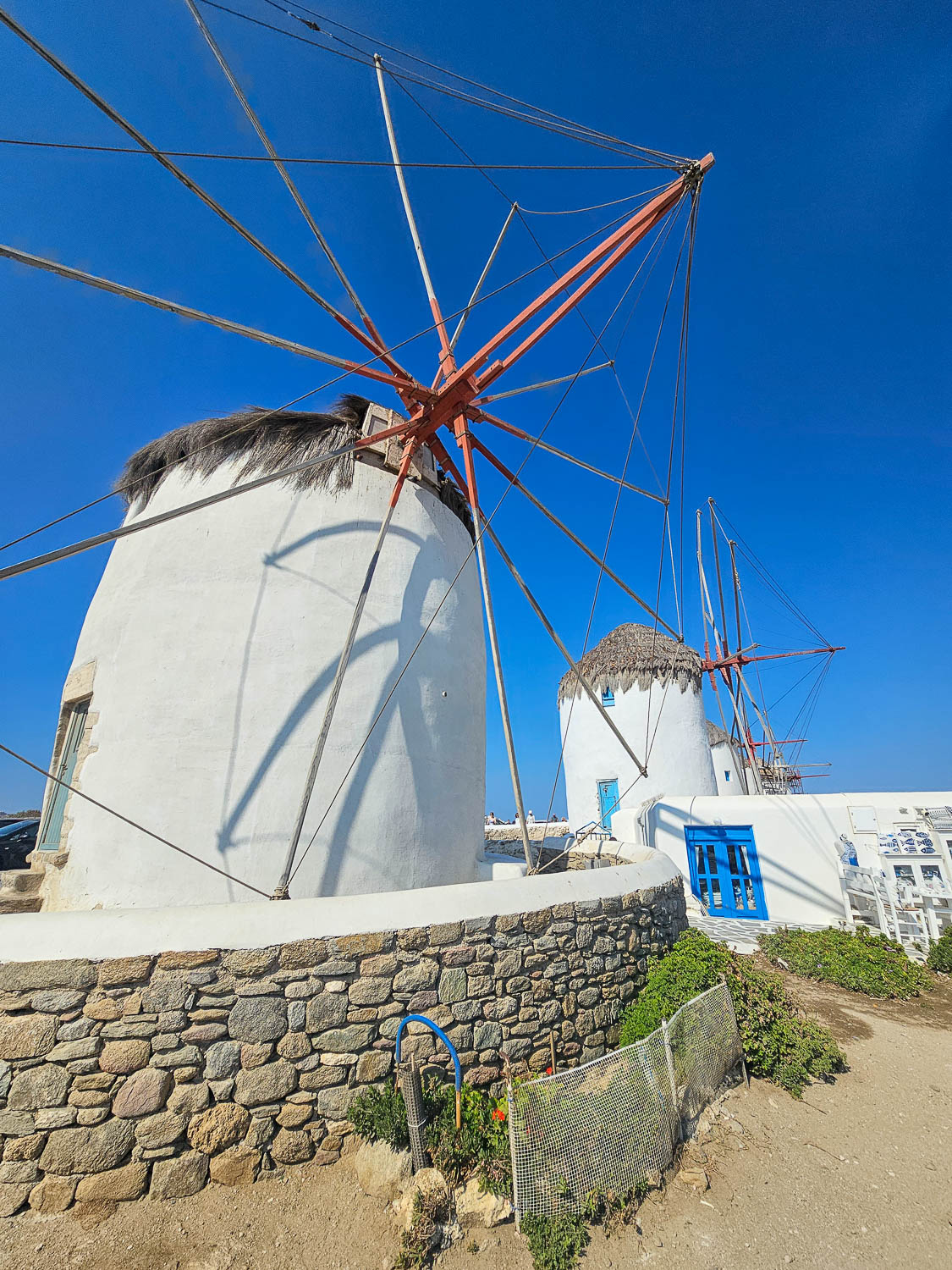
    • It’s also possible to visit other Saronic Gulf islands directly from Hydra.
    • No visit to Hydra would be complete without trying some traditional Greek food – the island is most well-known for its fresh seafood and traditional baked goods.
    • Hydra offers numerous accommodation options for those wishing to stay a little longer. For the most authentic Greek experience, consider staying in a traditional stone villa for a night or two.

    Follow these tips and you’ll be ready to visit Hydra Island Greece!


    Plan Your Trip

    stunning hydra harbor greece
    The stunning natural beauty of Hydra harbor (Greece)

    Some links below may earn us a small commission at no extra cost to you. We’re truly grateful for your support, as it allows us to continue sharing meaningful travel experiences and practical travel insights with you. Read our full disclosure here.

    Planning your visit? We’ve gathered recommended tours and activities, along with trusted travel tools, to help you explore with confidence and ease.

    Tours & Experiences


    Browse more top-rated experiences in the Saronic Gulf.


    Travel Essentials

    Planning the rest of your trip? These are the platforms we personally use when organizing our travels. For more planning tools, visit our Travel Resources page or browse current promotions on our Travel Deals page.


    Getting To and From Hydra Island

    View out toward the Aegean Sea from Hydra's coastal path Greece
    View out toward the Aegean Sea from Hydra’s coastal path (Greece)

    There are several ways to get to Hydra, located just 34 nautical miles from Athens, the capital city of Greece.

    • Ferry from Athens. The most common – and perhaps easiest, if you’re travelling independently – way to get to Hydra is by ferry. Ferries depart from the Piraeus Port in Athens and the short, scenic journey across the Saronic Gulf can take anywhere from just over an hour to two hours, depending on weather conditions, the type of ferry you choose, the route the ferry takes, and the operator itself. Popular ferry operators along this route include Blue Star Ferries, Alpha Lines, Hellenic Seaways, and Magic Sea Ferries.
    • Small sailboats. It’s possible to charter small to medium-sized sailboats, either from Athens or other nearby Greek islands, to get to Hydra.
    • Cruise ships. Many cruise lines will include Hydra Island as a stop on a Greek Island cruise itinerary. If you are visiting Hydra on a cruise, note that your ship will likely anchor out at sea and you’ll be transported by tenders (smaller boats) into the harbor from there. Be prepared for a wait at times, as the incoming ferries always have right of way – and there can be a lot of them during peak season! 

    Best Time to Visit Hydra

    Boats in the crystal-clear waters of Hydra harbor
    Colorful boats bob gently in the crystal-clear waters of Hydra harbor

    The best time to visit the Greek islands in general (which of course includes Hydra!) is when you have time!

    • The Summer (June through August) is great if you love hot weather and bright sunshine, but it can also get very crowded at this time of year. On the plus side, the sea is generally calm and clear during this peak tourist season, most amenities, tours and activities will be open and available, and the general atmosphere on the island is a lively and vibrant one.
    • Visiting Hyda during the shoulder or “off” season (April and May, or September and October) can be just as amazing as visiting during the summer. Whilst you’ll find it a more peaceful and intimate experience, the weather is still warm and pleasant during the late Spring and early Fall (perfect for walking and biking!) – and it’s also the time when you’re more likely to find better deals on accommodations and activities.

    Whether you prefer the hustle and bustle and the heat of Summer, or the tranquility and charm of the off-season, Hydra really can be visited at any time of year! 


    Hydra: History and Culture

    The Greek flag flies proudly atop a rocky outcrop behind Hydra Town Greece
    The Greek flag flies proudly atop a rocky outcrop behind Hydra Town (Greece)

    Hydra is a popular Greek island that boasts a rich history, with evidence dating back to possible Mycenaean roots in the late Bronze Age, and then the Byzantine presence and population explosion of Hydra during this time. Hydra was passed to the Turks in the mid 1400s, and from then on witnessed a large influx of refugees from neighboring lands – including Albania, Crete, and Asia Minor (Anatolia) – many of whom were seeking to escape the Russo-Turkish War during the 18th century.

    Cannons protect the island, just above the Sunset Restaurant Hydra, Greece
    Cannons protect the island, just above the Sunset Restaurant (Hydra, Greece)

    Before too long, Hydra became a maritime power, with a thriving merchant fleet trading between Greece and other countries. The island also played a significant role in the Greek Revolution (1821), with Hydra contributing vessels and seafaring personnel to the Greek cause. Though there has been a steep decline in maritime activities in Hydra since that time, its maritime legacy continues to shape the island’s character today.

    Local artisan gallery Hydra Island Greece
    Local artisan gallery (Hydra Town, Greece)

    Over time, Hydra also became a popular haven for artists, writers, and celebrities, attracting the likes of famous Canadian singer-songwriter Leonard Cohen, who lived on the island for several years and was inspired to write many of his most well-known songs whilst residing here. Hydra’s charm also captivated the renowned American author Henry Miller, who lived on the island during the 1960s and wrote about Hydra’s beauty in his works. Both Cohen and Miller’s presence have left a lasting impact on the island’s cultural landscape to this day.

    Coastal path toward Kaminia Village Hydra, Greece
    Coastal path toward Kaminia Village (Hydra, Greece)

    In the 21st century, Hydra is a popular tourist destination, attracting visitors from around the world throughout the year. Aside international tourism, its location in the Saronic Gulf has also helped the island form robust sponge fishing and shipbuilding industries.


    Getting Around Hydra Island

    Donkeys are a popular way to get around car-free Hydra!
    Donkeys are a popular way to get around car-free Hydra!

    One of the things we loved most about Hydra (aside its stunning harbor, of course!), is that it’s a car-free island. Whilst you will still see small delivery trucks, the island’s police car and ambulance, and small garbage trucks navigating the narrow streets of Hydra Town, it’s donkeys and boats that serve as the island’s primary means of transportation. That is, of course, if you’re not choosing to walk everywhere (as we did!).

    Hydra Town itself is compact and easily walkable, though with cobblestone streets and some steep stairways between laneways, it may pose some challenges for those with mobility concerns. Most of the main attractions for tourists are within walking distance of one another – think the harbor, shops, restaurants, and museums.

    For something a little different – and certainly something quite traditional – consider taking a donkey ride to see the sights. Wanting to head a little further afield? Boat tours are definitely the way to go, and are a great option for getting to some of the island’s beautiful beaches, including Paralia Plakes (Plakes Beach) and Paralia Agios Nikolaos (Agios Nikolaos Beach). 


    Things To Do in Hydra

    Looking down toward harbor, Hydra Island Greece
    Looking down toward Hydra harbor (Greece)

    Hydra Island offers visitors plenty of activities, from hiking along scenic trails and swimming in crystal-clear waters, to adventurous water sports and beachside relaxation, to opportunities to tantalize your taste buds at picturesque waterfront restaurants and bars.

    Hydra Town

    The historic charm of Hydra Town Greece
    Take a moment to explore the historic charm of Hydra Town (Greece)

    Hydra Town, the capital and main village on Hydra, is definitely worth spending a few hours exploring. Wander through the charming, narrow streets to get in touch with the island’s past, passing historic buildings and numerous attractions that provide you a glimpse into Hydra’s famous heritage.

    The narrow cobblestone streets of Hydra Town Greece
    The narrow cobblestone streets of Hydra Town (Greece)

    This delightful village embodies traditional Greek island life, and you’ll find it around every corner. Take in the busy, colorful harbor, lined with fishing boats and vibrant cafes, enjoying the serene backdrop of traditional red-tiled stone buildings with views out to the Saronic Gulf. Shop the souvenir stands and boutique shops, take in a leisurely lunch, visit Leonad Cohen’s house and numerous churches, and stop for a wee peek into the Historical Archives (Museum of Hydra), Hydra Town Hall and the Ecclesiastical Byzantine Museum of Hydra.

    Check out our in-depth guide to Hydra Town and Harbor for more information on all of the above!


    Outside Hydra Town

    Breathtaking views of the Saronic Gulf Hydra, Greece
    Breathtaking views of the Saronic Gulf (Hydra, Greece)

    The Saronic Gulf is the large body of water that surrounds Hydra Island. Consider swimming or snorkelling at one of the island’s beautiful beaches, or take a boat tour around the island, with various stops along the way.

    It is indeed here, outside Hydra Town, that the island’s natural beauty awaits – and it is absolutely worth exploring, whether on foot, by donkey, or even by water taxi.

    Hydra Island: Activities in Nature

    sophia loren windmill avlaki hydra
    The Sophia Loren Windmill (Avlaki, Hydra)

    Hydra is an idyllic location for outdoor enthusiasts and nature-lovers alike, with numerous activities available to visitors that help to showcase the island’s natural beauty.

    Hiking

    The coastal trail from Hydra Town out toward Kaminia Village
    Take the well-paved coastal trail from Hydra Town out toward Kaminia Village

    Hiking is popular in Hydra – indeed, the lack of vehicles makes it a walking paradise! You’ll find numerous trails and paths criss-crossing the hills of the island, many of them leading to stunning viewpoints and others leading to secluded beaches (okay yes, also stunning!).

    One of the most popular and rewarding hikes is to the highest point on Hydra Island – Mount Eros (also known more locally as Mount Ere). At an altitude of 592m (1943ft) above sea level, you’ll find Mount Eros in the center of the island’s mountain range – and once you’re at the summit, you’ll be afforded incredible panoramic views of the island, the Aegean Sea, and other Saronic Gulf islands.

    Other options for hiking include an easy stroll along the coastal path from the Hydra Harbor to picturesque villages that include Kaminia, Vlichos and Palamidas. No matter which way you look from the path, you’ll be afforded incredible views out to sea! Other scenic coastal paths will lead hikers to secluded beaches and charming villages slightly further afield.

    Waving from atop a rocky outcrop near Hydra Town Greece
    Beck waves to Mike from atop a rocky outcrop near Hydra Town (Greece)

    One of the highlights of our visit to Hydra was when Beck climbed to the top of a rocky outcrop behind Hydra Town (Mike chose to stay at the bottom and take photos). You can see this hill from anywhere in the harbor – just look for the huge Greek flag flying atop it! And oh wow, the 360-degree views of Hydra Town and beyond from the top are simply breathtaking! We provide a more in-depth review of this hike in our Hydra Town and Harbor article.

    Insider tip. The best time to hike on Hydra is during the Spring and Fall (shoulder seasons). Whilst you can certainly hike at any time of year, the shoulder season provides milder temperatures and the vivid colors of the island’s vegetation are at their height.

    Insider tip. If you’re hiking in the middle of the Summer, be mindful of the heat in Hydra – and make sure you’re wearing sturdy hiking shoes and sun protection, and carrying plenty of water.

    The Beaches of Hydra

    View toward Kaminia Beach Hydra, Greece
    View toward Kaminia Beach (Hydra, Greece)

    For those of you who may prefer water activities over hiking, there are also numerous opportunities for swimming and sunbathing on Hydra’s beaches. And whilst Hydra’s beaches may not boast the long, white sandy shorelines of other islands, they are a perfect representation of the landscape in the Aegean Sea.

    If you’re a beach-goer, Agios Nikolaos Beach, Plakes Beach and Vlychos (Vlichos) Beach are must-visit spots. As a reminder, there are no vehicles on Hydra, so the only way to get to these beaches is to either walk or take a water taxi. All three beaches boast crystal-clear waters and a serene atmosphere. Other options for beach-goers include Bisti Beach and Kaminia Beach.

    Check out our detailed guide to Hydra’s beaches!

    Insider tip. If you’re keen to explore more than one beach and some of the island’s secret coves during your time in Hydra, consider chartering a private boat tour.

    Water Sports on Hydra

    Water sports enthusiasts can also enjoy numerous opportunities for snorkelling, kayaking, scuba diving, and paddle-boarding around Hydra Island’s coves and beaches – a wonderful chance to explore the island’s fascinating underwater world in more depth. The clear waters and colorful marine life of the Saronic Gulf make for an unforgettable diving or snorkeling experience.

    Fishing also plays a significant role in Hydra’s culture and economy, with a thriving sea fishing industry. If you’re a keen angler, or simply want to try fishing for the first time, why not try your hand at catching some of the island’s famous seafood? Whilst your catch will depend upon the time of year you visit, joining an Hydra fishing tour will provide you a relaxing and culturally enriching experience on the island.

    Fun fact. More than a dozen different families of fishermen and women call Hydra home, often heading out to sea for 2-3 days at a time.

    If you prefer to go at your own pace and you hold a valid boating license, consider renting a boat for a few hours, or even the whole day. Just like renting a car to get around any other island, having access to a boat means you’ll be able to navigate the island’s coastline and the surrounding area in your own time and on your own terms. What a great way to discover some of Hydra’s hidden coves and beaches that are only accessible by water!

    Kaminia Village

    Kaminia Harbor Hydra, Greece
    Kaminia Harbor (Hydra, Greece)

    If you’re up for a short – but absolutely stunning – walk along the coastal path, head southwest from Hydra Harbor for about 20 minutes (less than a mile) and you’ll come across the charming fishing village of Kaminia.
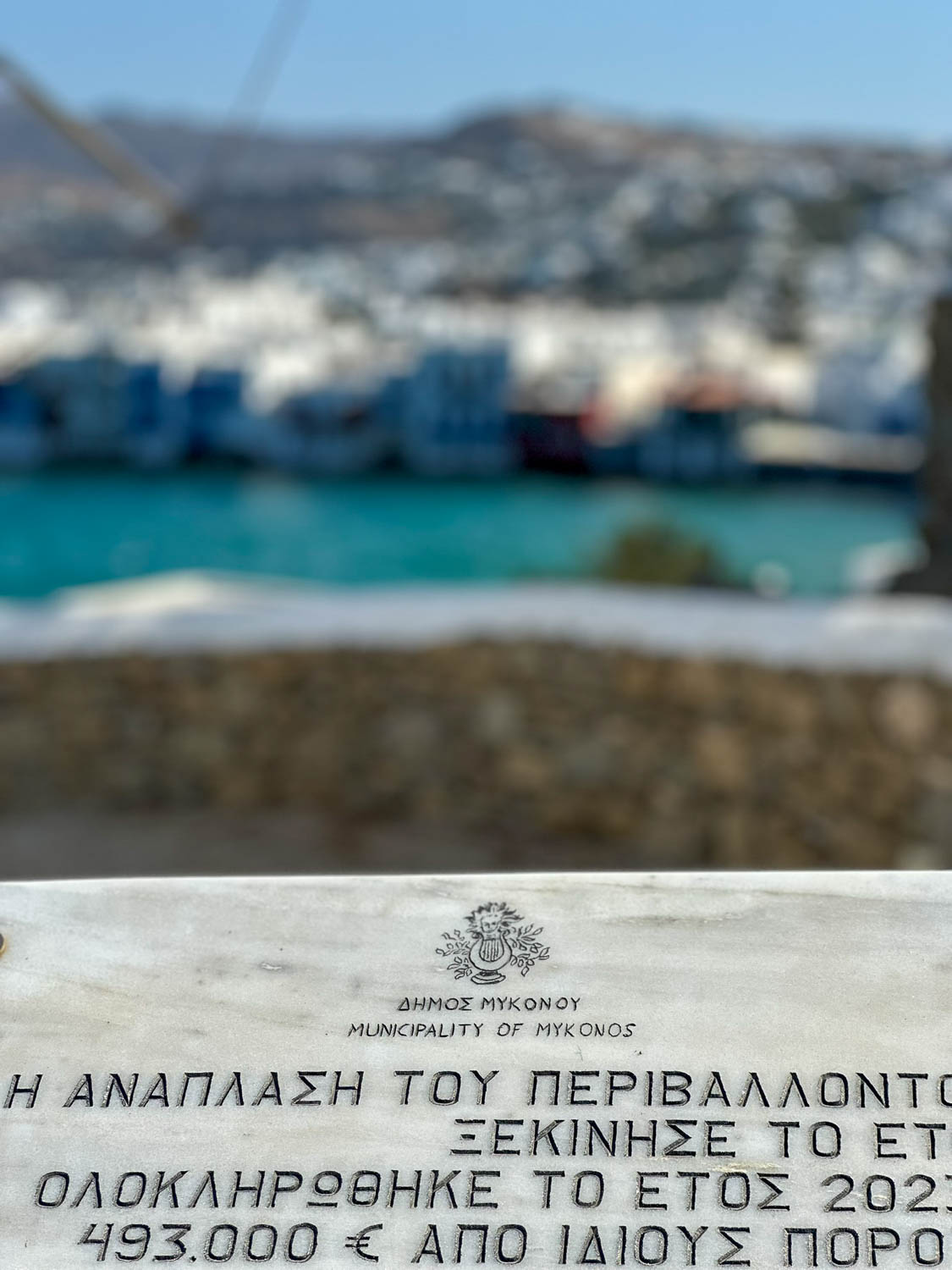
    Kaminia, although nowadays certainly a popular tourist destination, provides visitors a wee glimpse into traditional Greek island life. The small village is well-known for its beautiful little fishing harbor where small colorful wooden boats bob in the water, for its narrow streets fringed with pine trees and lined with traditional buildings, and for its small pebbled beach, which is uncrowded and a great place for relaxing.

    Fishing boats in Kaminia Harbor Hydra, Greece
    Fishing boats in Kaminia Harbor (Hydra, Greece)

    Kaminia is the place to be for a tranquil retreat, with unspoilt beauty and clear views out toward the Saronic Gulf. Enjoy a leisurely lunch at one of the local tavernas, savoring some of the freshly-caught local seafood and completing your meal with freshly-baked baklava, whilst soaking in the serene seaside ambience all around you.

    If you’re in Hydra for a few days, there are also several accommodation options in Kaminia.
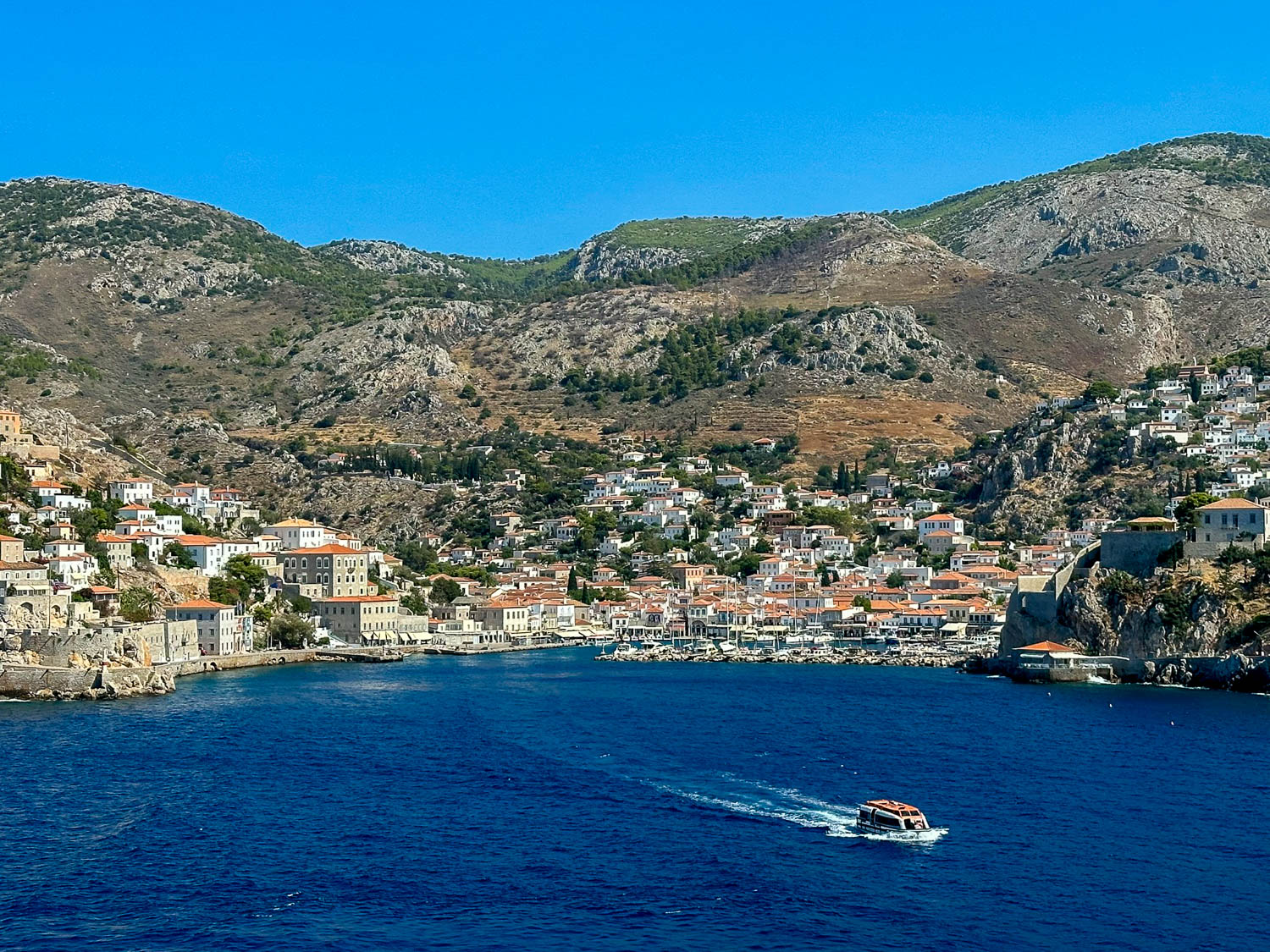
    Insider tip. If you’re not up for the walk, you can also take a water taxi from Hydra Town to Kaminia. The water taxi trip will take around 15-20 minutes.
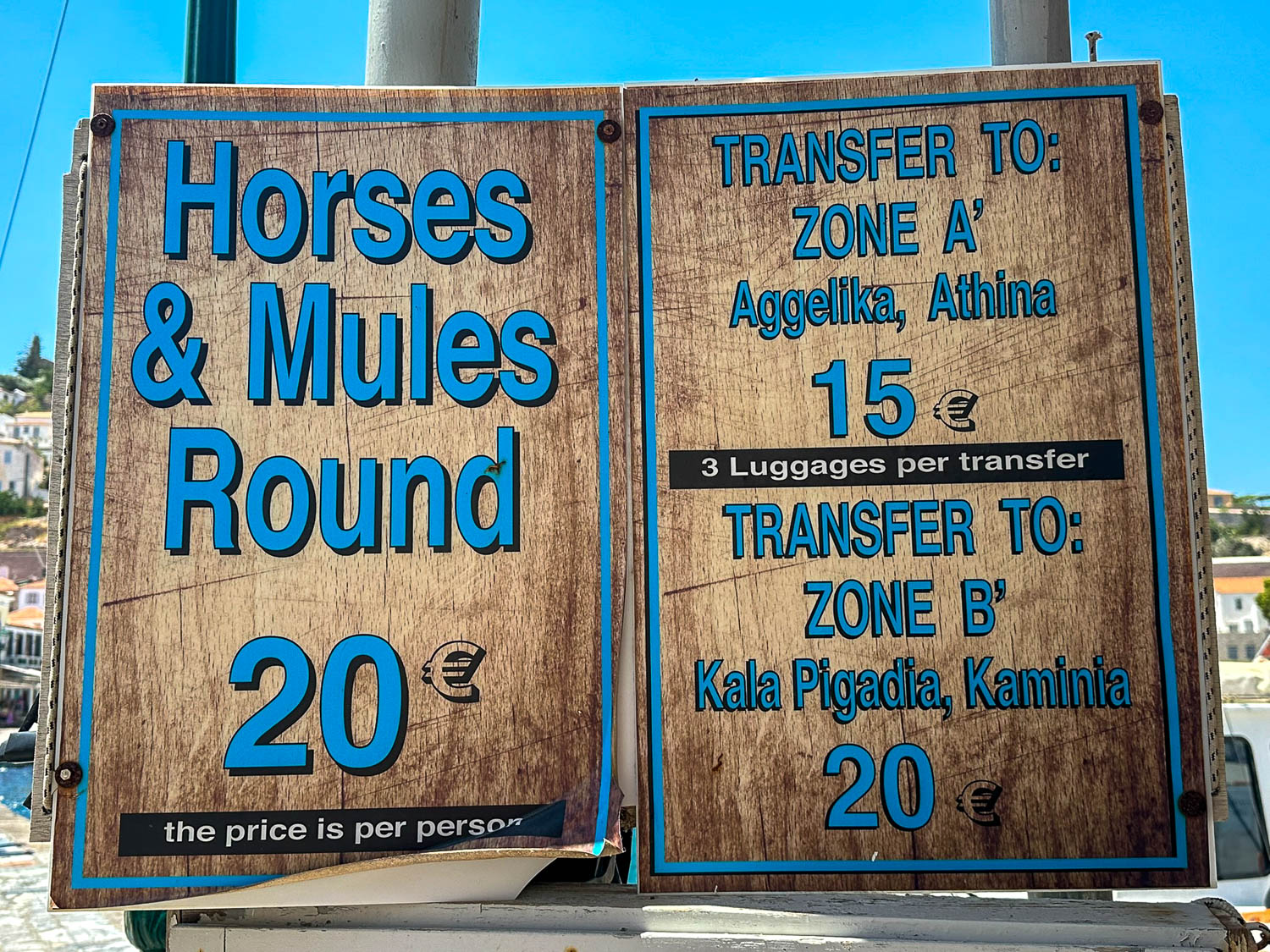
    Insider tip. If you happen to be visiting Hydra during Easter, make sure to visit Kaminia: it’s here that one of the most spectacular customs on the island takes place, the Procession of the Epitaph. On Good Friday you’ll witness young Greek men carrying the Epitaphios (a large, embroidered cloth depicting Christ’s body lying in the tomb) into the sea, blessing the waters and sailors for safe journeys.

    Fun fact. You can see the stunning natural harbor of Kaminia all the way from the top of Mount Eros!


    Visiting Other Islands in the Saronic Gulf

    Water taxis are readily available in Hydra harbor Greece
    Water taxis are readily available in Hydra harbor (Greece)

    Hydra’s location within the Saronic Gulf means it’s well situated as a base for island-hopping to neighboring islands. From Hydra Harbor you can board a ferry direct to Spetses (a 35- to 75-minute crossing), Poros (30 minutes) and Aegina (50-55 minutes from Hydra). These make for wonderful day trips outside of Hydra, but make sure to consult the websites of ferry companies operating along these routes (Blue Star Ferries, Alpha Lines, Magic Sea Ferries, to name a few) for the most up-to-date information on sailing schedules and ticket prices.

    Boat service out to the Four Seasons Hydra, Greece
    Boat service out to the Four Seasons (Hydra, Greece)

    Whilst not directly accessible from Hydra, you may also wish to consider day trips to the island of Milos or Crete. To get to these islands, you’ll have to first take a ferry to Piraeus (Athens), which can take between one and two hours one way.

    Boat tours are another great way to see Hydra from the water, as well as other parts of the Saronic Gulf. Several operators offer tours that circumnavigate Hydra Island, affording visitors a unique perspective of the island and the surrounding region. 


    Food and Drink: A Taste of Hydra

    Traditional Greek appetizers from Piato Hydra Town, Greece
    Traditional Greek appetizers from Piato (Hydra Town, Greece)

    Hydra is most famous for its fresh seafood, as well as numerous traditional Greek dishes available at the island’s many restaurants. Consider trying one (or more!) of the following during your visit.

    • seafood souvlaki (an Hydra take on the more well-known lamb or chicken souvlaki)
    • moussaka (a classic Greek layered casserole featuring eggplant, potatoes, a rich tomato-based meat sauce (usually lamb or beef), and a creamy béchamel sauce)
    • baklava (a classic Greek delicacy: a rich, sticky, flaky pastry dessert made with layers of filo dough and filled with chopped nuts (usually walnuts or pistachios) and then soaked in a sweet syrup – oh my!)
    • galaktoboureko (try saying that three times fast!) (another traditional Greek dessert, more like a custard pie)

    We chose to dine at Piato Restaurant in Hydra Town during our visit, and can’t highly recommend it enough!

    Dining at Piato Restaurant Hydra Town, Greece
    Dining at Piato Restaurant (Hydra Town, Greece)

    Insider tip. For the largest range of restaurants and diversity of menus, consider dining on the waterfront in Hydra Town.

    Insider tip. For a quieter, less touristy experience, consider dining in Kaminia, just a short walk or water taxi ride from Hydra Town. Beachside taverna dining at its finest!


    Shopping in Hydra

    Souvenir-hunting in Hydra Town
    Souvenir-hunting in the back streets of Hydra Town

    With no purpose-built shopping centres or giant air-conditioned malls, Hydra instead boasts quaint boutique shops and traditional stores on the ground floors of the historical buildings that line Hydra Harbor and the narrow, back alleyways of Hydra Town.

    In Hydra you’ll find shops selling everything from souvenirs to jewelry, to local handicrafts, pottery and baked goods, to traditional costumes and embroidered cloth. There are also opportunities to shop in small art galleries. And if you need some more batteries, bug repellant, beach toys, or simply a bottle of water, you’ll find those too! We bought some of our favorite t-shirts from our visit to the Greek islands here in Hydra, and the prices were very tourist-friendly! 


    Annual Events in Hydra

    Greek culture is alive and well in Hydra Town, Greece
    Greek culture is alive and well on the island (Hydra Town, Greece)

    Interested in learning more about Greek culture during your time in Hydra? Consider timing your visit with one of the following annual events.

    • Easter celebrations are perhaps the largest and most spectacular on the island of Hydra. You can learn more about the various events and festivals at this time of year here. These events generally include firework displays and traditional processions.

    • The Miaoulia Festival commemorates the Greek War of Independence (1821-1829), and more specifically honors the life and military role of Admiral Andreas Miaoulis, a key figure in the war. The festival, generally held in late June (around the anniversary of the Admiral’s death), includes historical reenactments, fireworks, exhibitions, lectures, torchlight processions, and numerous cultural performances, including traditional dances, theatrical performances, and musical events. Religious wreath-laying ceremonies and special church services are also a highlight of the Miaoulia Festival.
    • The Rebetika Music Conference is an annual celebration of rebetiko music (nope, we’d never heard of it before either!). Rebetiko is a genre of Greek music that emerged in the early 20th century and is associated with the Greek urban underworld. Musicians and fans of rebetiko music flock from around the world to Hydra for this yearly conference, usually hosted in October. The conference includes musical performances, open discussions, and opportunities for new and upcoming artists to showcase their talent. 

    Hydra Island: Where to Stay

    “Hello? Is anyone home?”
    “Hello? Is anyone home?”

    If you plan to stay more than a few hours in Hydra, you’ll be afforded the opportunity to truly experience its serene and charming ambience. Indeed, when the cruise crowds and day-tripping tourists from Athens leave the harbor, Hydra’s peace returns.

    Hydra offers accommodation options for all types of traveler, from budget guesthouses to boutique hotels and luxury suites – and they’ll come with either stunning views of the sea and countryside, or be resorts and hotels right on the beachfront themselves.

    Consider laying your head in a comfortable place like the Hydra Hotel (located in an historical building overlooking Hydra Town and harbor) or the luxury suites of the Bellevalia Hydra (previously known as Four Seasons Hydra), right on the beach. Or maybe a stay in a traditional Greek stone villa for a truly authentic experience is more your scene – something that combines modern comforts within the walls of the island’s history.

    Staying a night or two on Hydra Island will help you truly experience the magic of this incredible place.


    Essentials For Your Visit To Hydra

    Donkeys play an important role in daily life on the island Hydra Town, Greece
    Donkeys play an important role in daily life on the island (Hydra Town, Greece)

    To help you make the most of your visit to Hydra Island, we’ve provided below a handful of additional insider tips and recommendations.

    • Packing. Hydra is best explored on foot, so make sure you pack sturdy, comfortable walking shoes. As the weather in Hydra is a typical Mediterranean climate (Summers can get very hot indeed!), ensure to also take with you sunscreen, sunglasses, and other sun protection. Also carry water with you wherever you venture on the island. If you’re visiting during the off-season, evenings can be cool, so make sure to bring a light sweater or long-sleeved shirt. A lightweight waterproof jacket is also handy, as it can get windy on the island, especially if you’re out hiking.
    • Currency. The official currency of Greece – and therefore of Hydra – is the Euro (€). Make sure to bring some Euros with you in cash, as some of the smaller restaurants, bars and shops may not accept credit cards. ATMs are available in Hydra Harbor, though note that these local banks will charge a service fee (in Euros) for each transaction, and your home banking institution may also charge a foreign currency exchange fee.
    • Hydra is not the cheapest of destinations, though it is certainly possible to visit on a budget. Be sure to consult restaurant menus before taking a seat at the table, and confirm prices of items in stores before making a purchase, to ensure they fit within your budget.
    • Don’t forget that Hydra is a car-free island (one of the many, many things we loved about it!), so be sure to plan accordingly. Consider researching your ferry options and buying ferry tickets in advance.
    • Take some time to learn a few basic Greek phrases. You’ll often hear locals passing by saying “Kalimera” (good morning) to everyone they see, and “Efharistó” (thank you) will go a long way, no matter where on the island you find yourself. Whilst many locals on the island will speak at least some English, learning a few Greek words or phrases will certainly help to enhance your visit. 

    Final Thoughts

    Make sure to stop and smell the hydrangeas during your visit!
    Make sure to stop and smell the hydrangeas during your visit!

    There’s no denying it: we absolutely loved our time in Hydra. It’s certainly one of the most picturesque islands we’ve ever visited and we wouldn’t hesitate to return. It’s an island full of history, as well as opportunities for exploration and some quality downtime.

    From its scenic coastal paths to its beautiful harbors and secluded beaches with clear waters, Hydra delivers. Enjoy the rarity of a car-free island, with elegant mansions rising above the colorful main town, museums waiting to be explored, and donkeys ready to take you on an adventure through its narrow alleyways. You’ll find true peace here, whether it be at a local taverna or a traditional coffee shop, or in a quaint fishing village. And with its close proximity to Athens, Hydra makes for the perfect getaway from the hustle and bustle of the Greek mainland.

    I think it’s time to grab those sturdy walking shoes and sunscreen, book that ferry ticket, and soak up the atmosphere of Hydra … don’t you? Let’s start planning your visit to this quintessential island! 


    FAQs

    How do you get to Hydra Island Greece?

    Hydra Island does not have an airport. Most visitors fly into Athens International Airport (ATH) and then travel to Port of Piraeus to catch a ferry. The ferry ride across the Saronic Gulf typically takes 1 to 2 hours, depending on the vessel. During peak summer months, booking ferry tickets in advance is recommended. Hydra is also a cruise port of call, with some small-ship and luxury itineraries docking directly in Hydra Harbor.

    Is Hydra Island Greece a good day trip from Athens?

    Yes. Hydra Island Greece is one of the most popular day trips from Athens. Ferries depart from Piraeus and reach Hydra in about 1–2 hours. Visitors typically spend the day exploring Hydra Town, walking the scenic coastal paths, enjoying waterfront dining, and swimming before returning to Athens in the evening.

    What are the best things to do on Hydra Island Greece in one day?

    If you have one day, focus on exploring Hydra Town and its lively harbor, walking the coastal path toward Kaminia, hiking to a scenic viewpoint such as Mount Eros, and visiting beaches like Plakes or Agios Nikolaos by water taxi.

    Is Hydra Island Greece really car-free and walkable?

    Yes. Hydra Island Greece is famously car-free for visitors. Hydra Town is compact and walkable, though cobblestone streets and hills can be steep. For longer distances, travelers use water taxis, boat tours, or donkeys for transport and luggage.

    Can you visit Hydra Island Greece on a cruise stop?

    Yes. Cruise ships typically anchor offshore and use tender boats to bring passengers into Hydra Harbor. Because ferries have right of way, allow extra time for tender transfers. If visiting on a cruise, prioritize Hydra Town, a short coastal walk, and a waterfront lunch.


    Explore More Of Greece

End of content

End of content