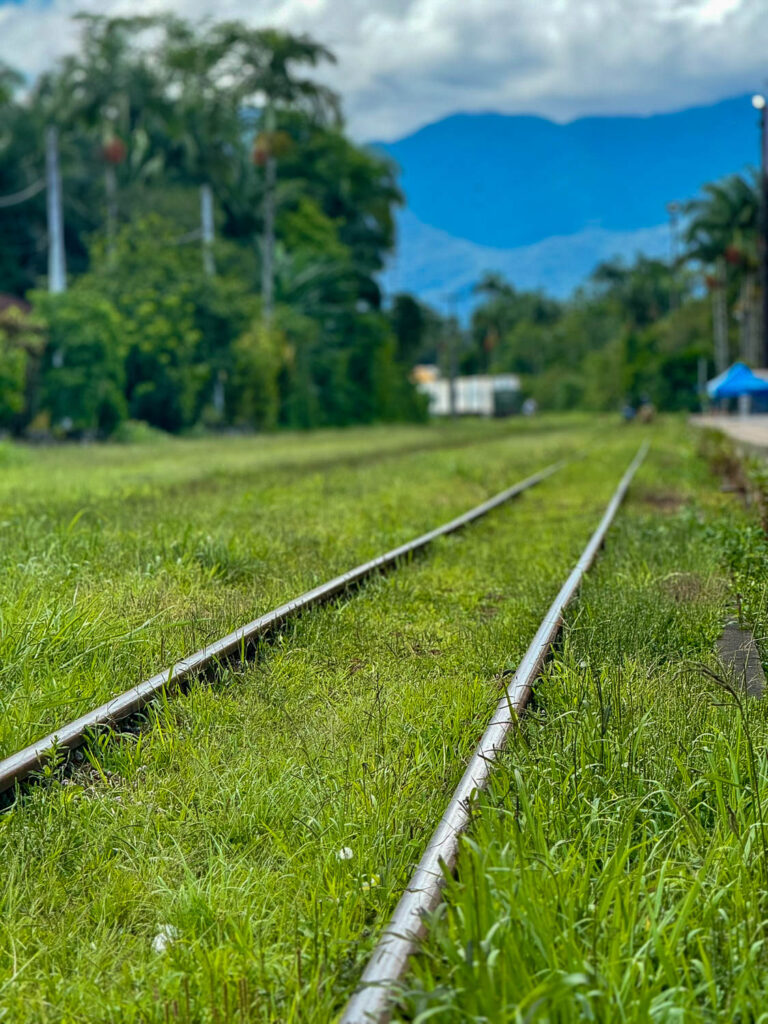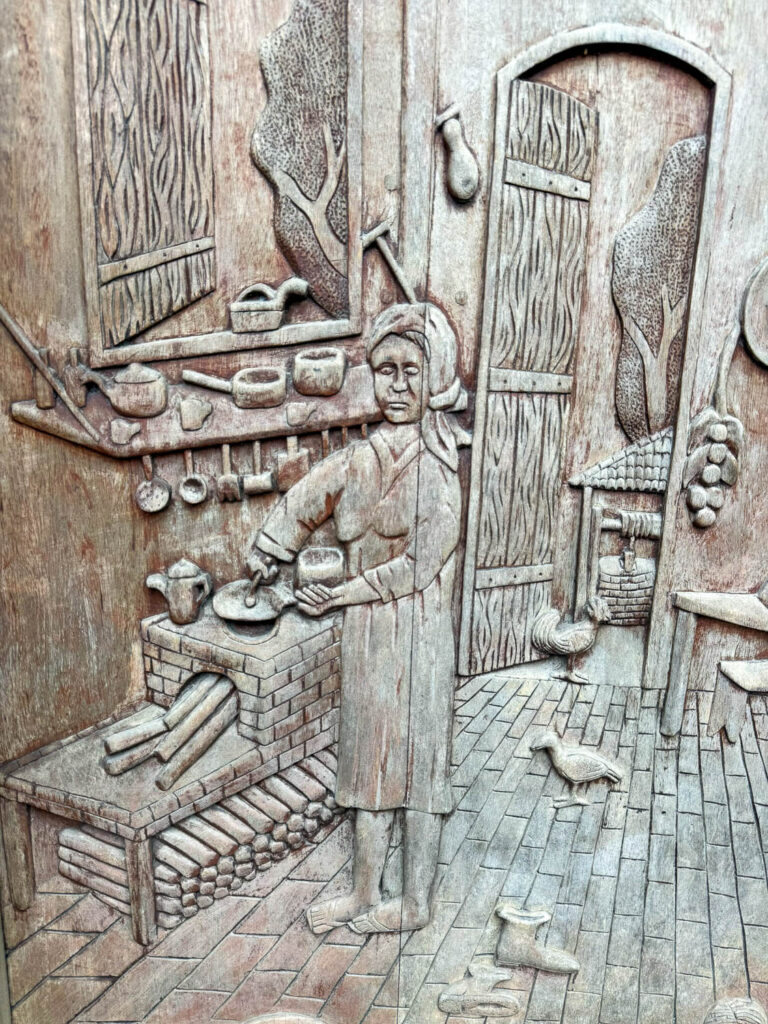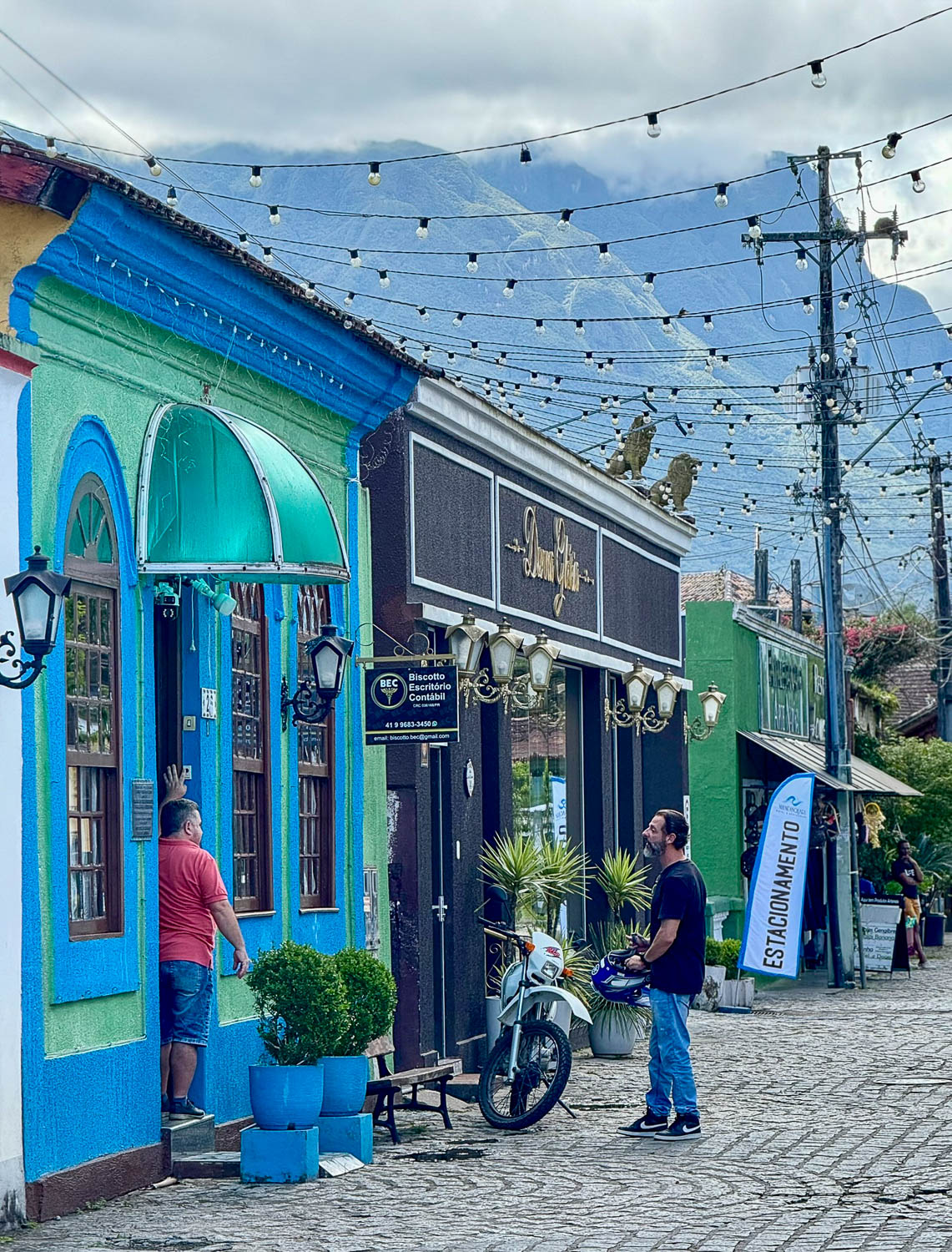
There’s something magical about Morretes — a small historic city tucked into the lush folds of the Atlantic Forest, just over an hour east of the fabulously innovative and green Curitiba, in the Brazilian state of Paraná. Here you’ll discover the instant charm of cobblestone streets meeting riverside cafés: a place where time seems to move at half speed, and where colonial history, natural beauty, and local cuisine come together in an almost too-perfect balance.
For us, Morretes is the kind of place that captures the soul of southern Brazil — a destination that blends simplicity and sophistication, where you can enjoy a scenic train ride through the Serra da Graciosa mountain range in the morning, and savor a slow-cooked dish of barreado by the Nhundiaquara River in the afternoon.
If you’re planning a day trip to Morretes from Curitiba – most people end up here by way of the Serra Verde Express train, returning in the late afternoon or evening – or are planning to stay a night or two to explore a little deeper, this small city affords visitors a wonderful combination of scenic landscapes, colonial architecture, and warm hospitality.
Let’s dive in and see what all the fuss is about, shall we?
Quick Tips
- Founded in 1733, Morretes is one of the oldest cities in the Brazilian state of Paraná.
- The seasons shape Morretes in different ways, and deciding when to visit depends on the kind of experience you’re seeking.
- Most travelers visit Morretes as a day trip from Curitiba, and getting there is half the fun: jump aboard the Serra Verde Express, catch a bus, or take the car along the famous Estrada da Graciosa.
- Getting around Morretes is refreshingly simple, and most visitors won’t need any form of transport beyond their own two feet.
- The majority of visitors focus their time on the compact, easy-to-explore area concentrated around the city’s historic core: colorful colonial streets, churches, riverside walks, and everyday life.
- A day trip is ideal for a visit to Morretes, but there’s also plenty to see and do beyond the city limits, should you wish to extend your stay.
- Throughout the year, Morretes marks its traditions and celebrates community through a small but varied calendar of local festivals and events (think religious celebrations, craft fairs, music, and cultural gatherings).
- There are numerous opportunities for shopping in Morretes, a town characterized by small, colonial-era artisan shops and outdoor markets.
- Dining in Morretes is closely tied to tradition, with the town’s signature dish – barreado – featuring prominently on most menus.
Plan Your Trip
Some links below may earn us a small commission at no extra cost to you. We’re truly grateful for your support, as it allows us to continue sharing meaningful travel experiences and practical travel insights with you. Read our full disclosure here.
Planning your visit? We’ve gathered recommended tours and activities, along with trusted travel tools, to help you explore with confidence and ease.
Tours & Experiences
Prefer additional options? Click below to discover more incredible experiences tailored just for you!
Browse top attractions in Morretes, Brazil.
Travel Essentials?
Planning the rest of your trip? These are the platforms we personally use when organizing our travels. For more planning tools, visit our Travel Resources page or browse current promotions on our Travel Deals page.
History and Overview: A Window into Colonial Paraná
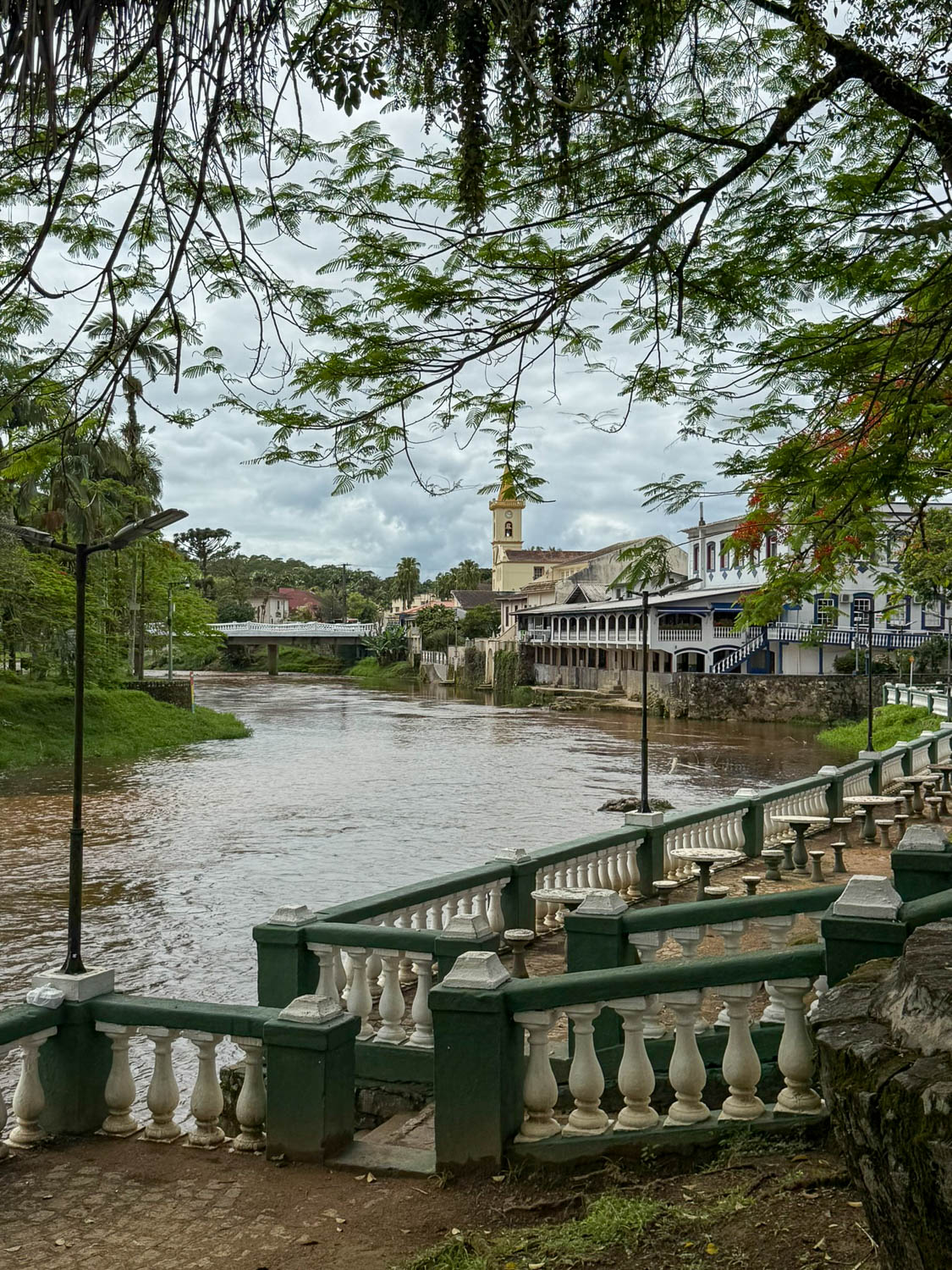
Founded in 1733, Morretes is one of the oldest cities in the state of Paraná and still radiates its colonial aura from the era when merchants and farmers traveled by boat along the Nhundiaquara River. This historic town grew prosperous through sugarcane, coffee, and river trade, leaving behind colonial mansions, old bridges, and other charming architecture that continues to define its streetscapes today.
Considering its age, we found Morretes to be incredibly well-kept. The city center was spotless, the riverside cafés were welcoming, and each turn revealed another pastel-hued façade and another story etched into its colonial buildings. For us, it was the kind of town where even first-time visitors instantly feel at home and every local seems proud to share it.
Insider tip. One of the absolute highlights of our time in Morretes was chatting with the owner of the D’Giopi Sorvetes Artesanais Loja do Rio in the old town. Be sure to take some time to connect with locals during your visit, to learn a little more about the city and its history.
Best Time to Visit
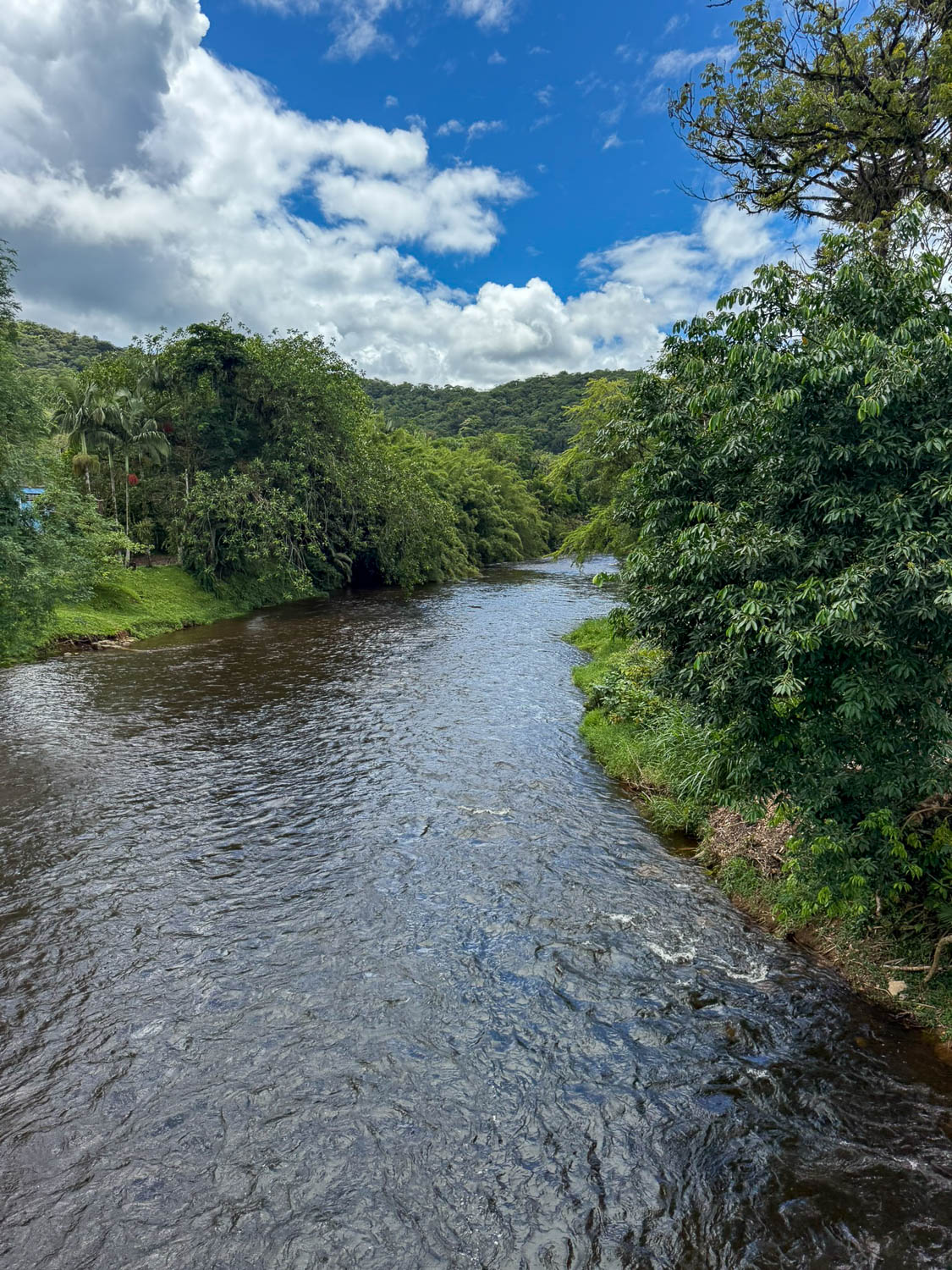
If you’ve had a chance to read other destination articles and guides we’ve written, you’ll know we are big believers that any global destination can be visited at almost any time of year. In Morretes, however, the seasons shape the town in different ways, and deciding when to visit depends on the kind of experience you’re seeking.
For many, the best time to visit is during the drier, cooler months (anywhere from April through October, with most visitors choosing June through September), when the Atlantic Forest is at its greenest and the Serra Verde Express runs under clear skies. This time of year also sees fewer crowds, cooler evenings, and less rain, ideal for hiking and exploring the nearby mountains and rivers without the intense heat of the summer.
Brazil’s summer (and also its wet season) runs from November through March. These are the warmest months in Morretes, but also expect heavier rainfall (especially in the afternoons).
Insider tip. Morretes is located in a rainforest region of Brazil, so expect some rain year-round.
Insider tip. If you’re planning to take the popular Serra Verde Express (see below for more information on this incredible train journey), be sure to book your tickets well in advance – especially if travelling in November or during holidays or long weekends. Planning ahead also permits you to time your visit outside the region’s heaviest rainy period, making it easier to enjoy both the lush rainforest and the charming town of Morretes itself.
Another consideration for your visit are local festivals held annually in the region. Check ahead to see if your planned trip to Morretes coincides with any of these, as they can draw larger crowds and increase accommodation expenses – but also offer wonderfully unique cultural experiences!
Getting To Morretes
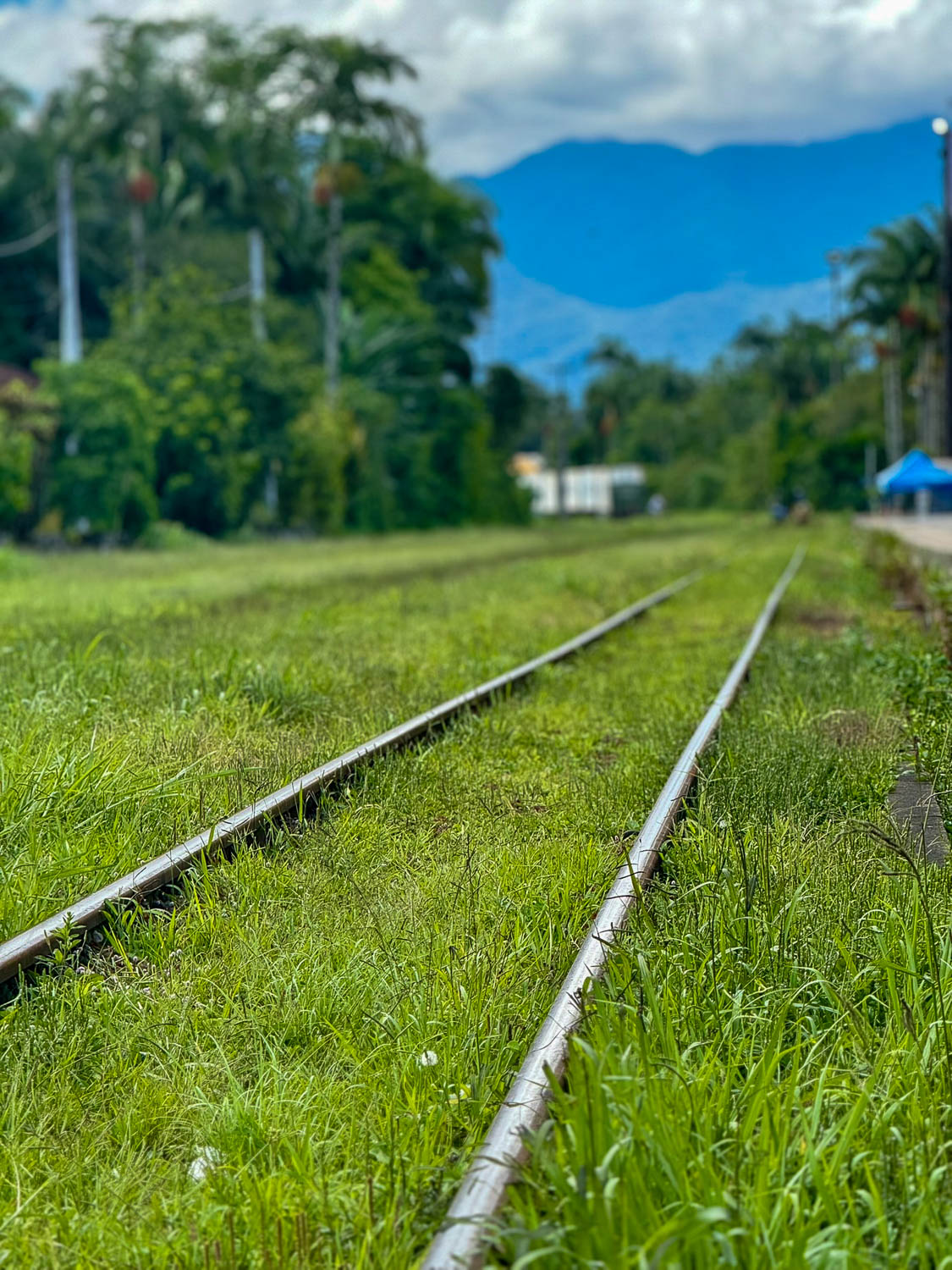
Getting to Morretes is half the adventure, and there are several ways to do so.
The Serra Verde Express
The Serra Verde Express – a scenic train journey through the Atlantic Forest that showcases southern Brazil’s rugged beauty – remains the most iconic and popular route for most travellers. The train departs from Curitiba in the morning and arrives into Morretes around midday, allowing plenty of time to explore before most visitors make the return trip by bus or car.
Insider tip. Unless you choose to arrange everything independently (very doable!), most tour operators will provide transport for your return journey to Curitiba (or to Antonina, if you prefer).
Be sure to check out our article The Serra Verde Express for more detailed information on this incredible train journey!
By Bus
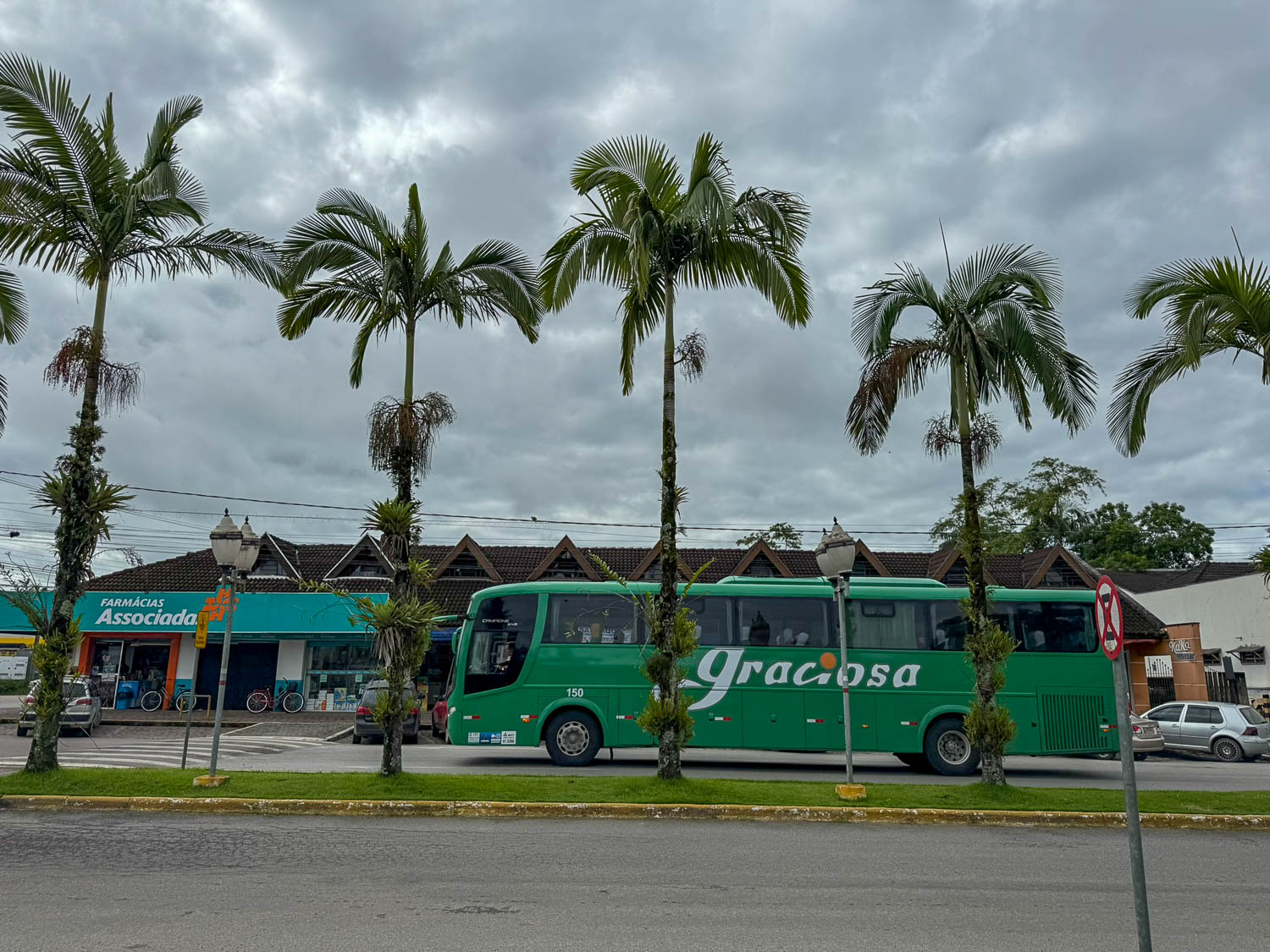
For those who prefer public transport, regular bus services connect Curitiba to Morretes, with the journey taking roughly 75-90 minutes. There are several different bus companies who run this route regularly and we opted to travel with Viação Graciosa, about whom we have no complaints!
The bus from Curitiba leaves from the Rodoviária de Curitiba (main bus station) – less than a 10-minute drive from downtown Curitiba – and arrives at the Rodoviária de Morretes, within walking distance from the town’s main attractions.
Insider tip. For those of you seeking to use public transportation within Brazil, we highly recommend using Busbud.com. This English-language booking platform allows travellers to search, compare, and book long-distance bus tickets across Brazil (and beyond). We found it incredibly easy to navigate, with excellent customer service when Beck accidentally booked our first bus (from Curitiba to Morretes) for the wrong date (woops!).
By Road
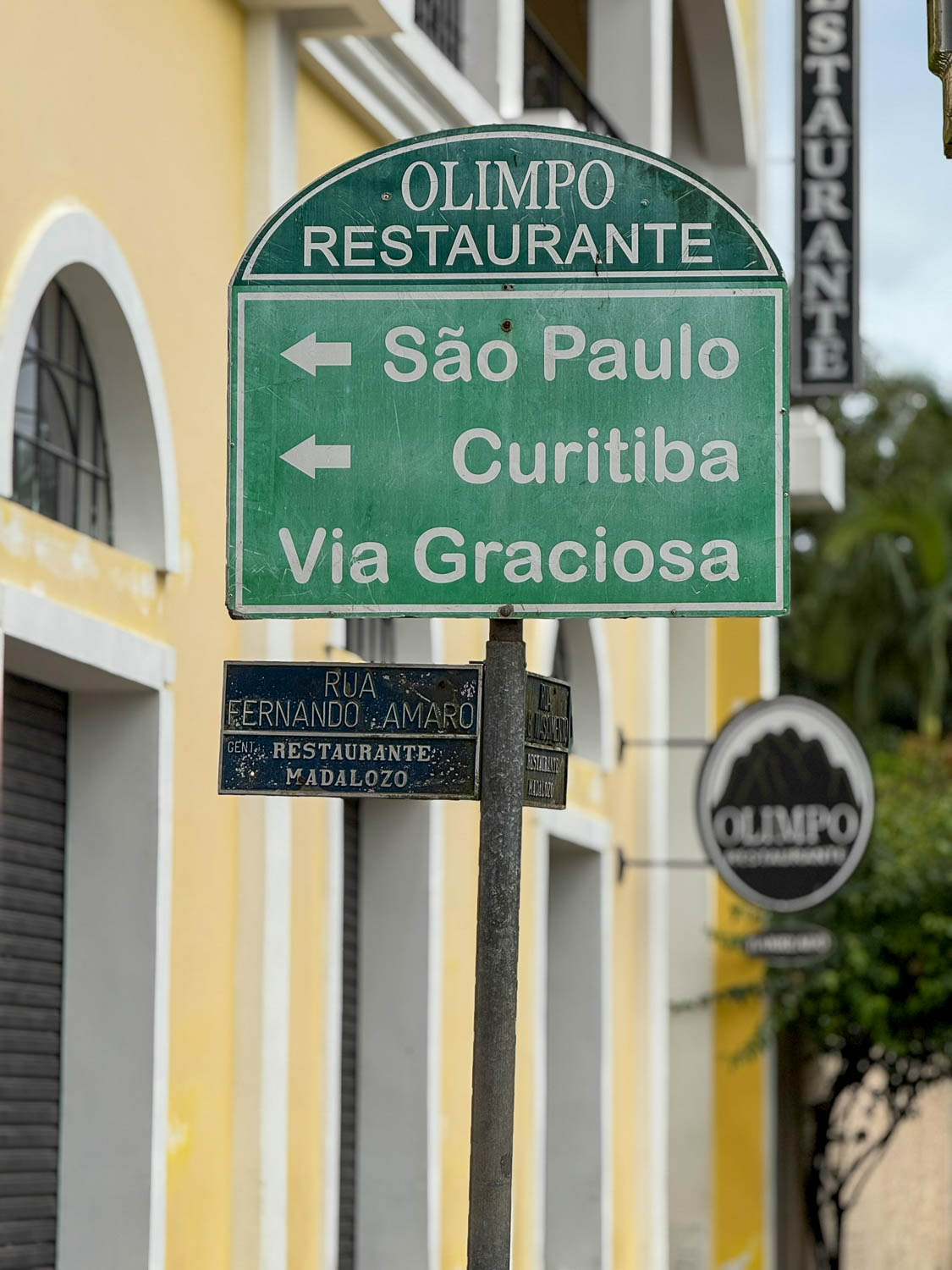
If you prefer to drive, the Estrada da Graciosa (PR-410 – Gracious Road) is an easy choice – though note it’s not the quickest way to get to Morretes and Google Maps may try to steer you along PR-277 instead.
The scenic cobblestone Estrada da Graciosa – dating back to the 19th century – winds through the lush Serra da Graciosa mountains, with breathtaking overlooks, waterfalls, rich biodiversity, and picnic areas shaded by native vegetation. The road itself is a popular attraction – a slow, winding, picturesque drive with sharp bends, stone bridges, and mist rolling over the mountain range: think of it like Brazil’s version of a European alpine drive or North America’s Blue Ridge Parkway.
Fun fact. Parts of the Estrada da Graciosa follow paths first used by Indigenous peoples, long before Europeans arrived in southern Brazil.
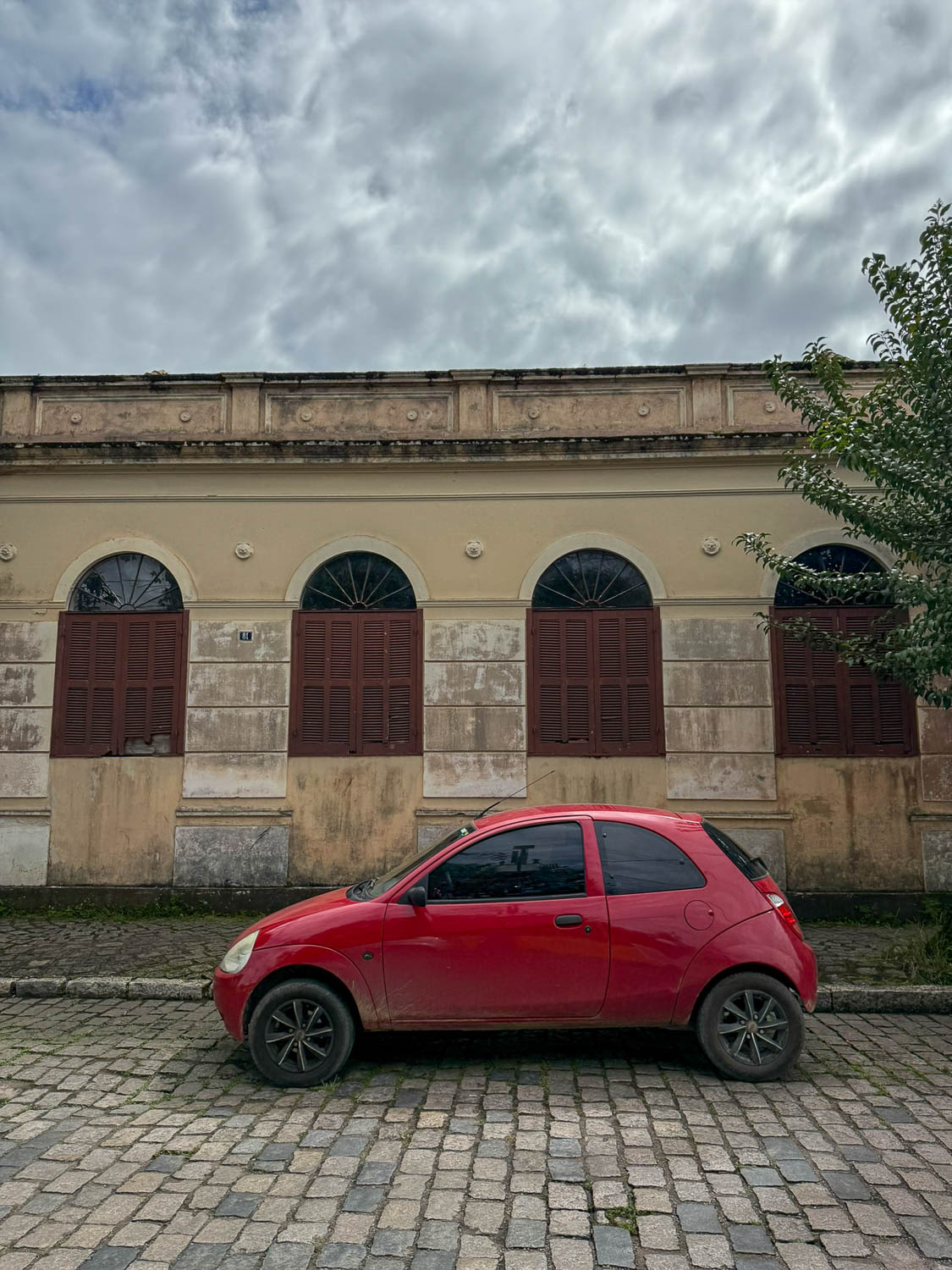
Fun fact. On foggy days, visibility can drop dramatically, with mist and clouds often appearing suddenly. This is in part because the Estrada da Graciosa descends nearly 900 meters (just under 3,000 feet) from the plateau to the coastal plains.
Insider tip. If choosing to travel by car, be sure to check weather and road conditions ahead of time, as rain can make this mountainous road slippery. Also make sure to pack snacks and drinks, especially if you plan to stop at several viewpoints or visit nature trails along the way.
Getting Around Morretes
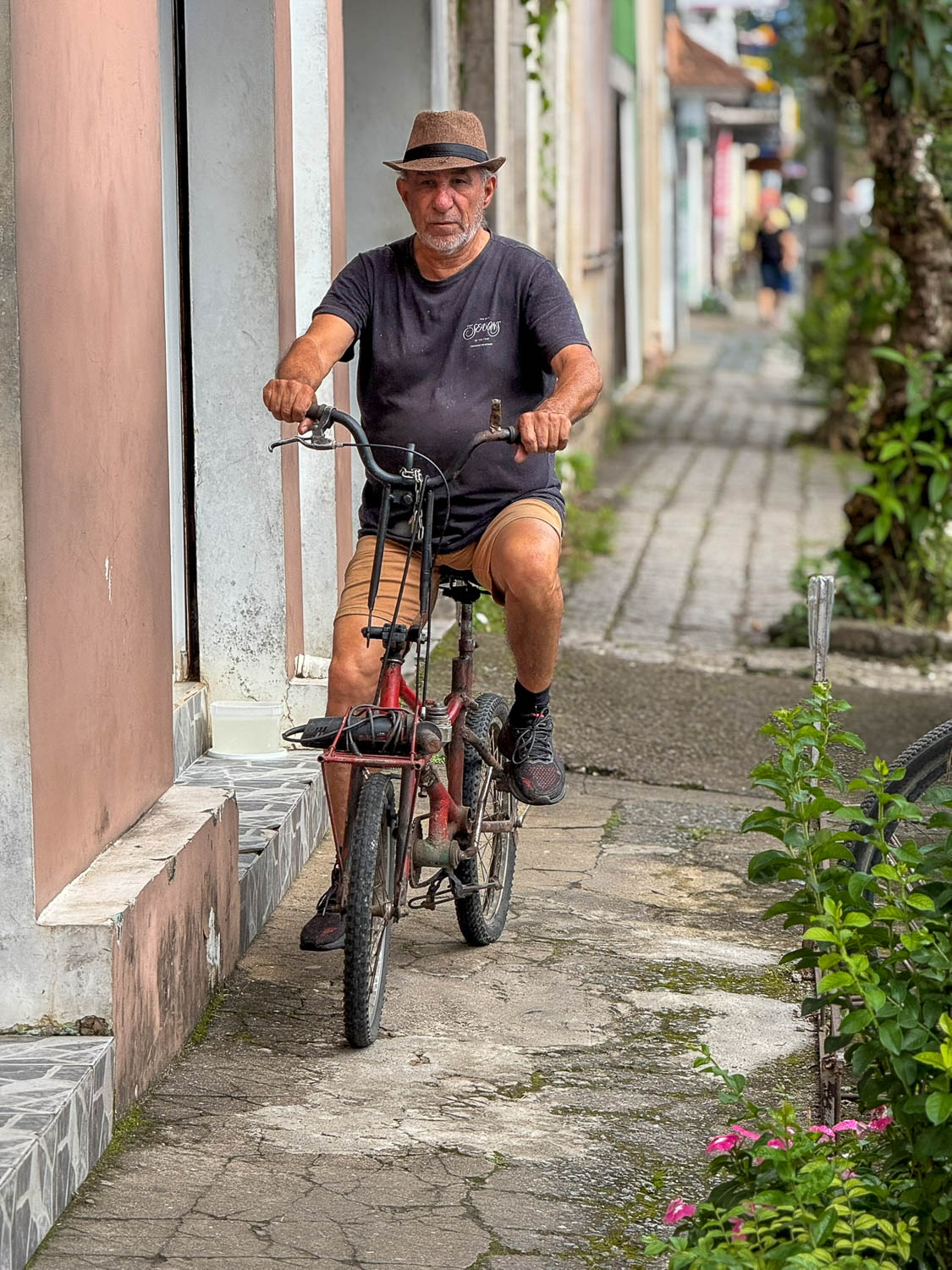
Getting around Morretes is refreshingly simple, and most visitors won’t need any form of transport beyond their own two feet.
Walking
Once you arrive in Morretes, getting around is easy. Both the bus and train stations are within walking distance from the city center, and the charming downtown itself is relatively compact, with most main attractions easily explored on foot.
Taxis, Buses and Bikes
Taxis and rideshares (Uber and 99) are available for slightly longer trips, or for those with mobility concerns, whilst several local tour operators rent bikes (including ecobikes) for those feeling a tad more energetic. Local buses are also available to help take you to attractions outside the city center, though note their timetables can be sporadic.
Along the River
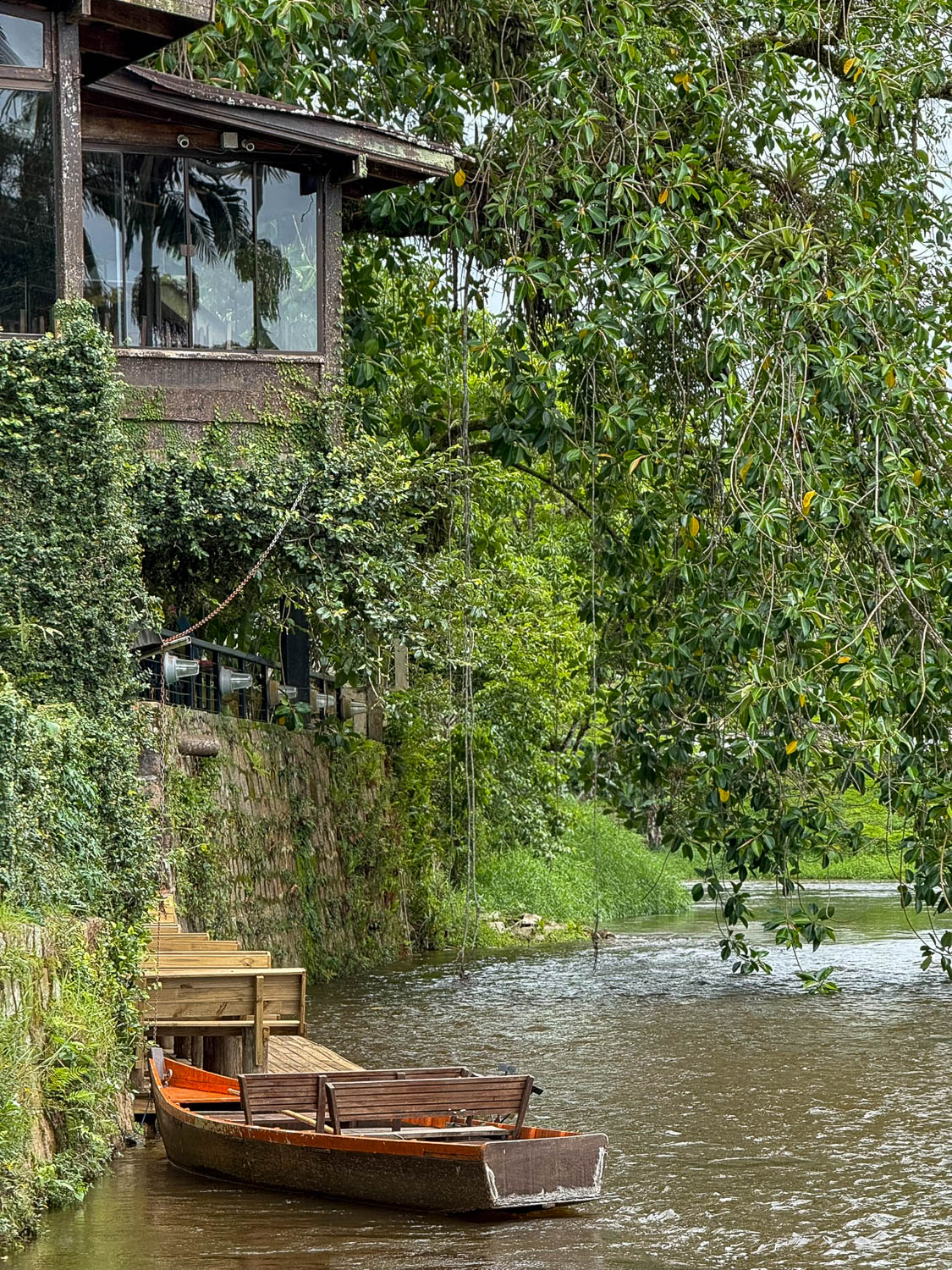
During your visit to Morretes, consider taking a boat trip (passeio de barco) along the Nhundiaquara River – a wonderful way to see the city from a different perspective on a serene and relaxing journey.
Exploring Morretes: Local Highlights
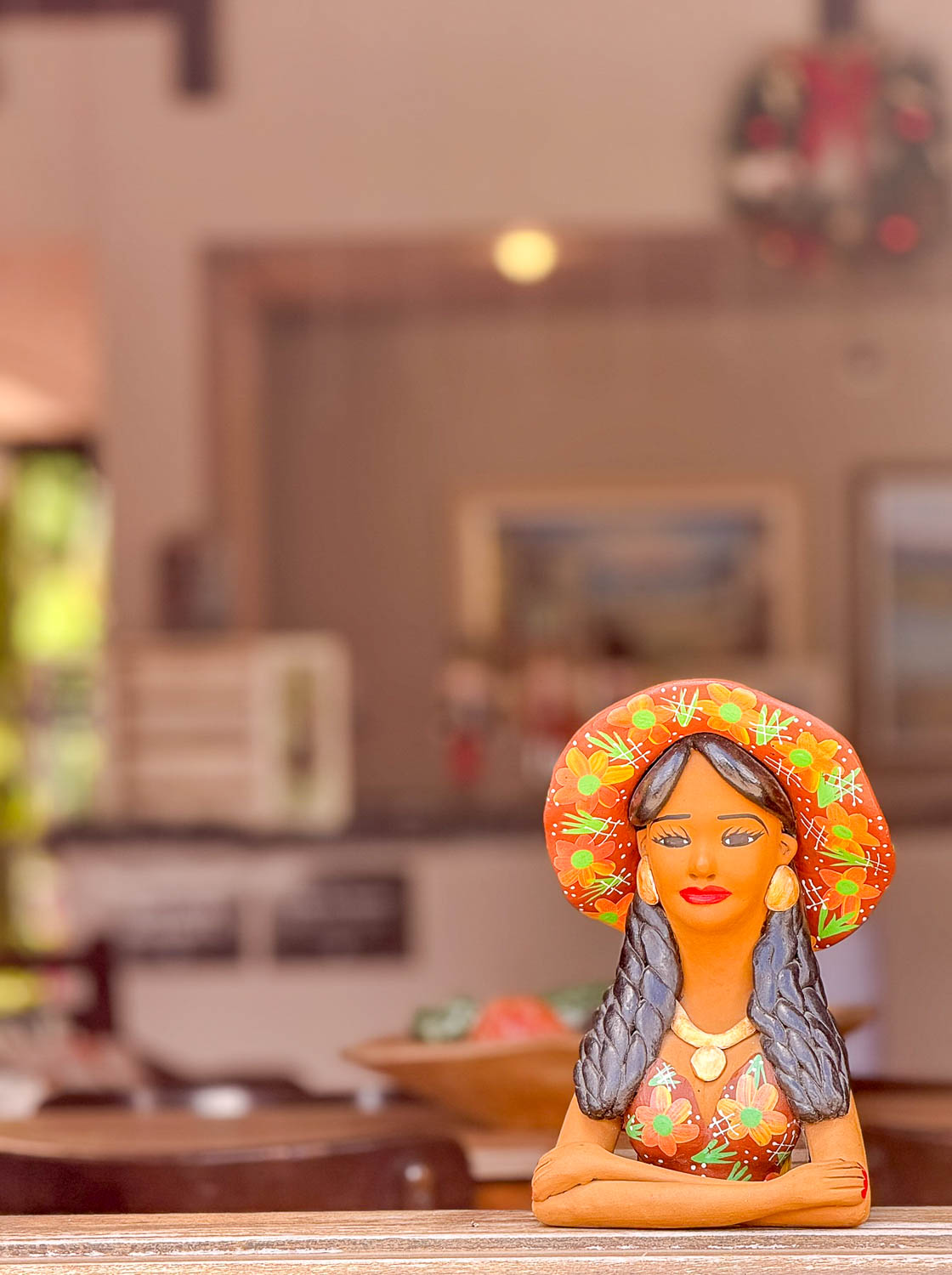
Once you’ve arrived in Morretes, most visitors focus their time on the compact, easy-to-explore area concentrated around the city’s historic core. This is where you’ll find the town’s key sights – colonial streets, churches, riverside walks, and everyday life – all sitting side-by-side and easily explored on foot in a few relaxed hours.
The Historic Center
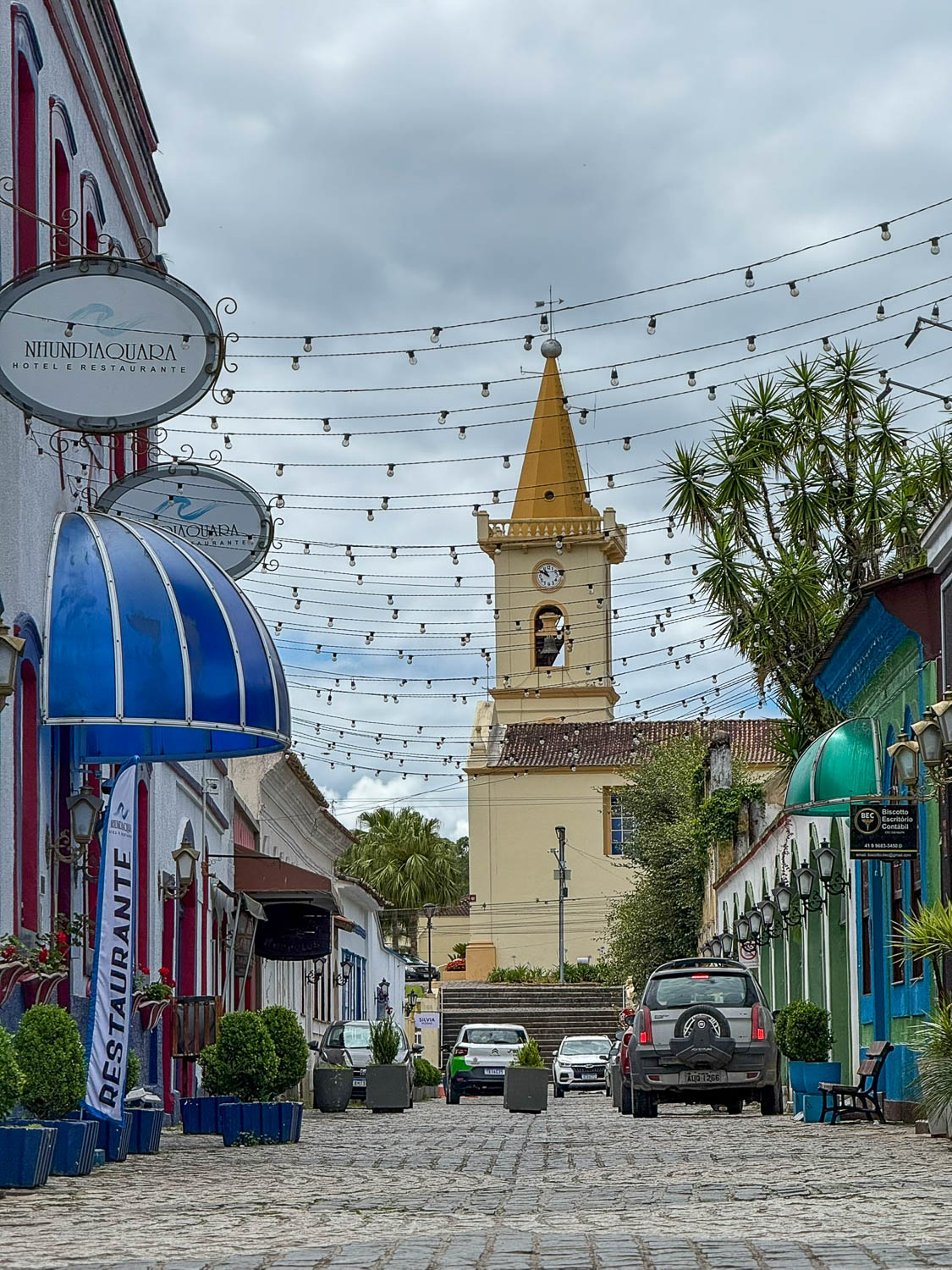
Morretes’ charming downtown is its historic center – a mosaic of colonial architecture, cobblestone alleys, and riverside paths that invite slow exploration. To us, this part of Morretes felt almost like an open-air museum, with old mansions and other buildings dating back to the colonial days when traders navigated the Nhundiaquara River transporting goods between the coast and Paraná state.
Igreja Matriz de Nossa Senhora do Porto
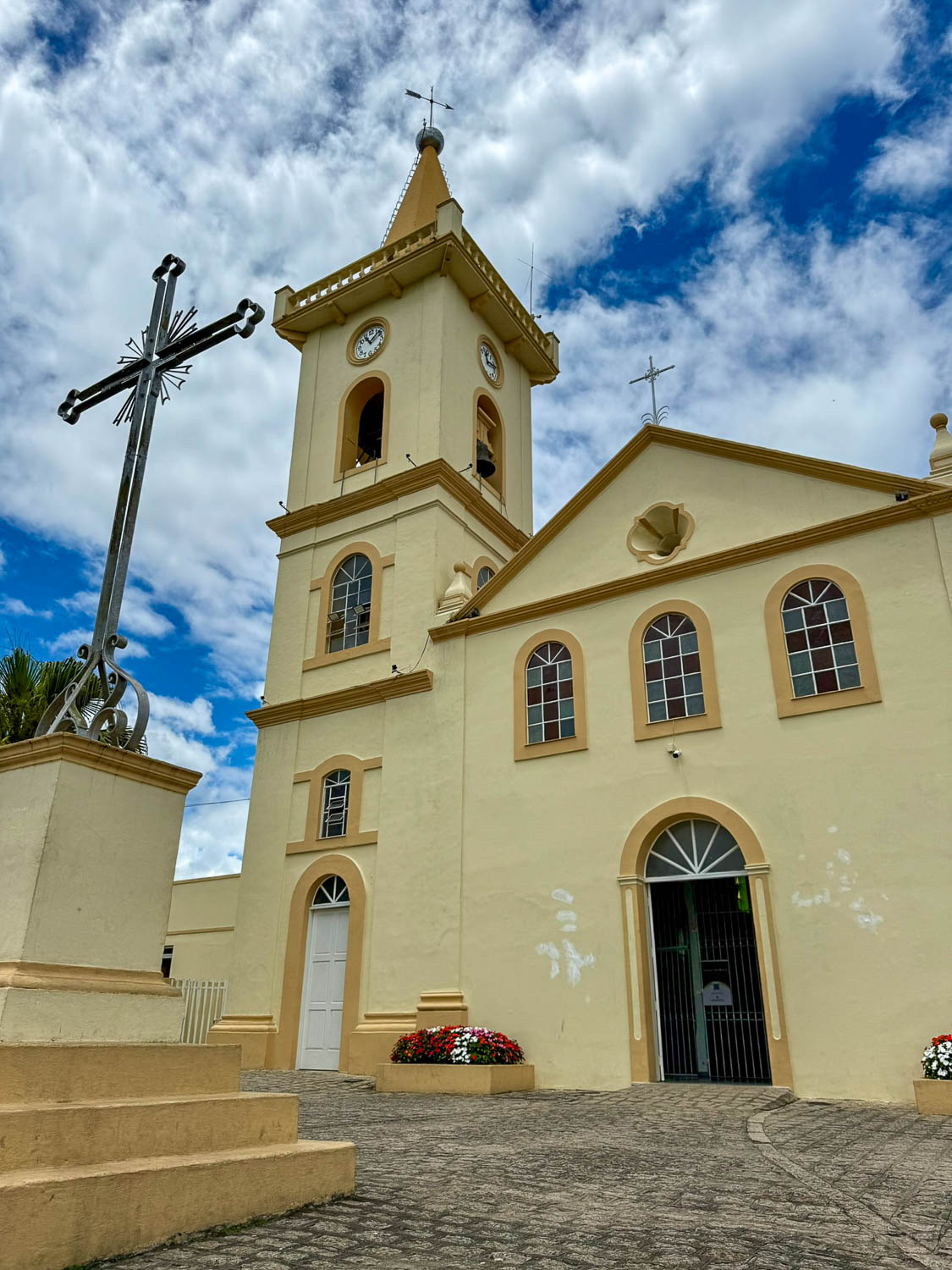
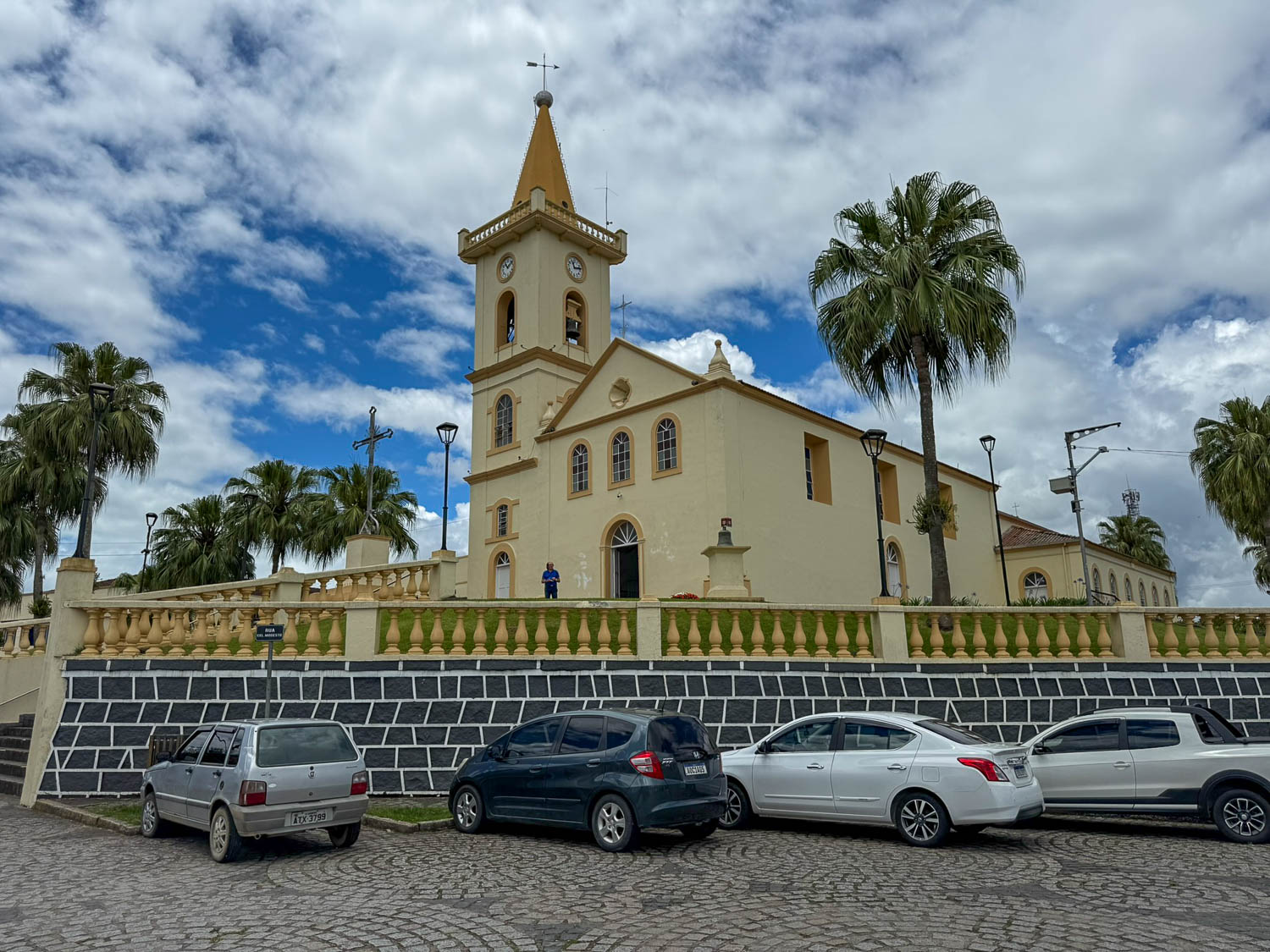
At the center of Morretes’ historic town you’ll find the Igreja Matriz de Nossa Senhora do Porto, which stands proudly as a spiritual and cultural anchor for the community, and one of the city’s most recognizable landmarks. Built during the 18th century, this large church represents architectural beauty, as well as deep faith: indeed its twin bell towers, tiled terracotta roof, and classic whitewashed walls contrast beautifully against the green mountain range just beyond, symbolizing the harmony found between faith and nature that defines this region of southern Brazil. Today, Igreja Matriz de Nossa Senhora do Porto also acts as a central gathering place for community events and religious festivals.
Rua das Flores
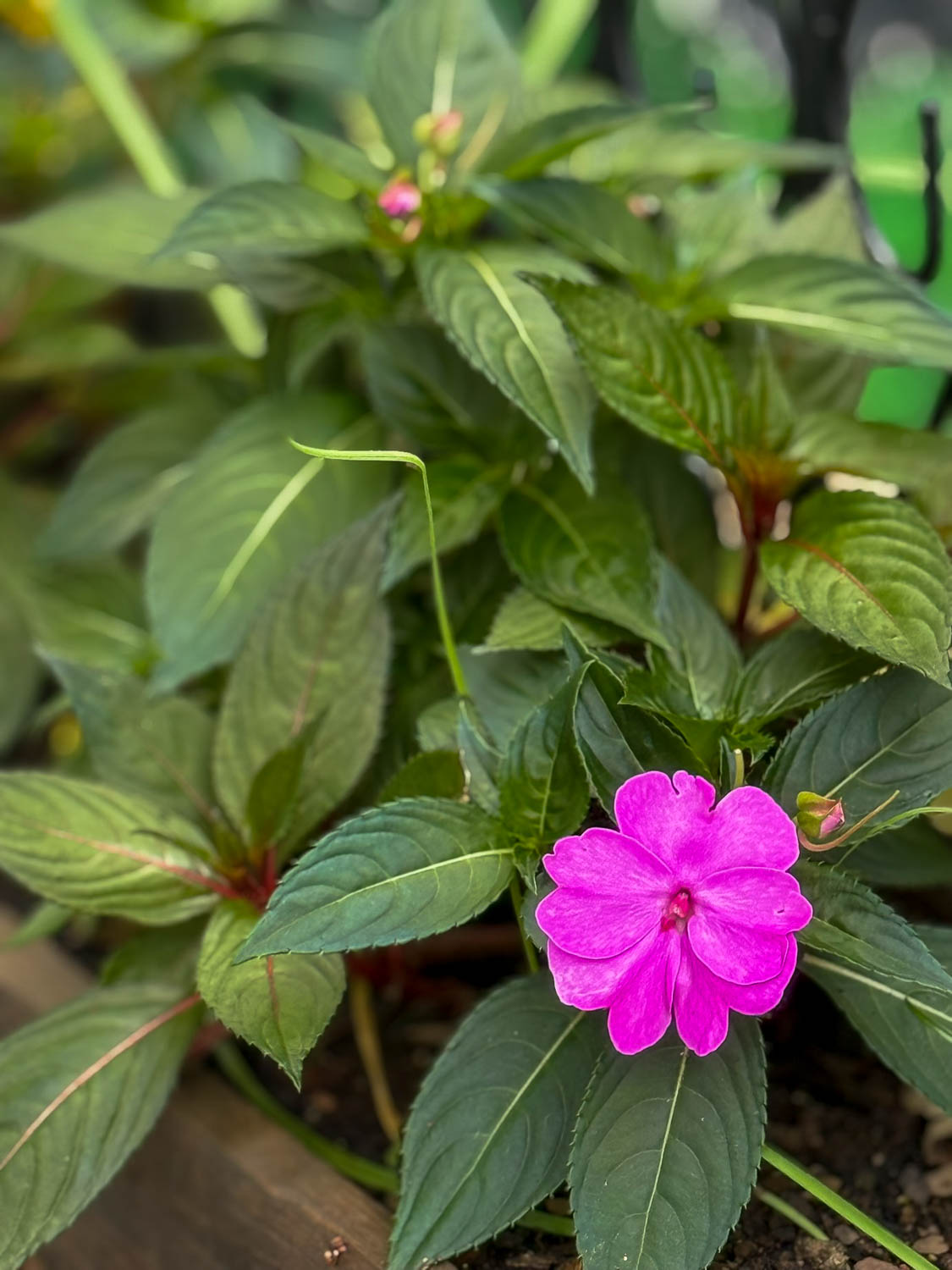
From the main church in town, cross Rod. Dep. Miguel Bufara and continue your exploration west along the famous Rua das Flores (Flowers Street). And whilst this street may not be famous for literal flowers (though you will see potted plants and floral displays lining some doorways and windows), its charm lies in its preserved cobblestoned, pedestrian-only historic character.
Insider tip. We must admit we stumbled upon Rua das Flores by accident, as we wandered without a planned route around the historic center. We loved it so much we returned to this street on four separate occasions, lingering a little longer each time!
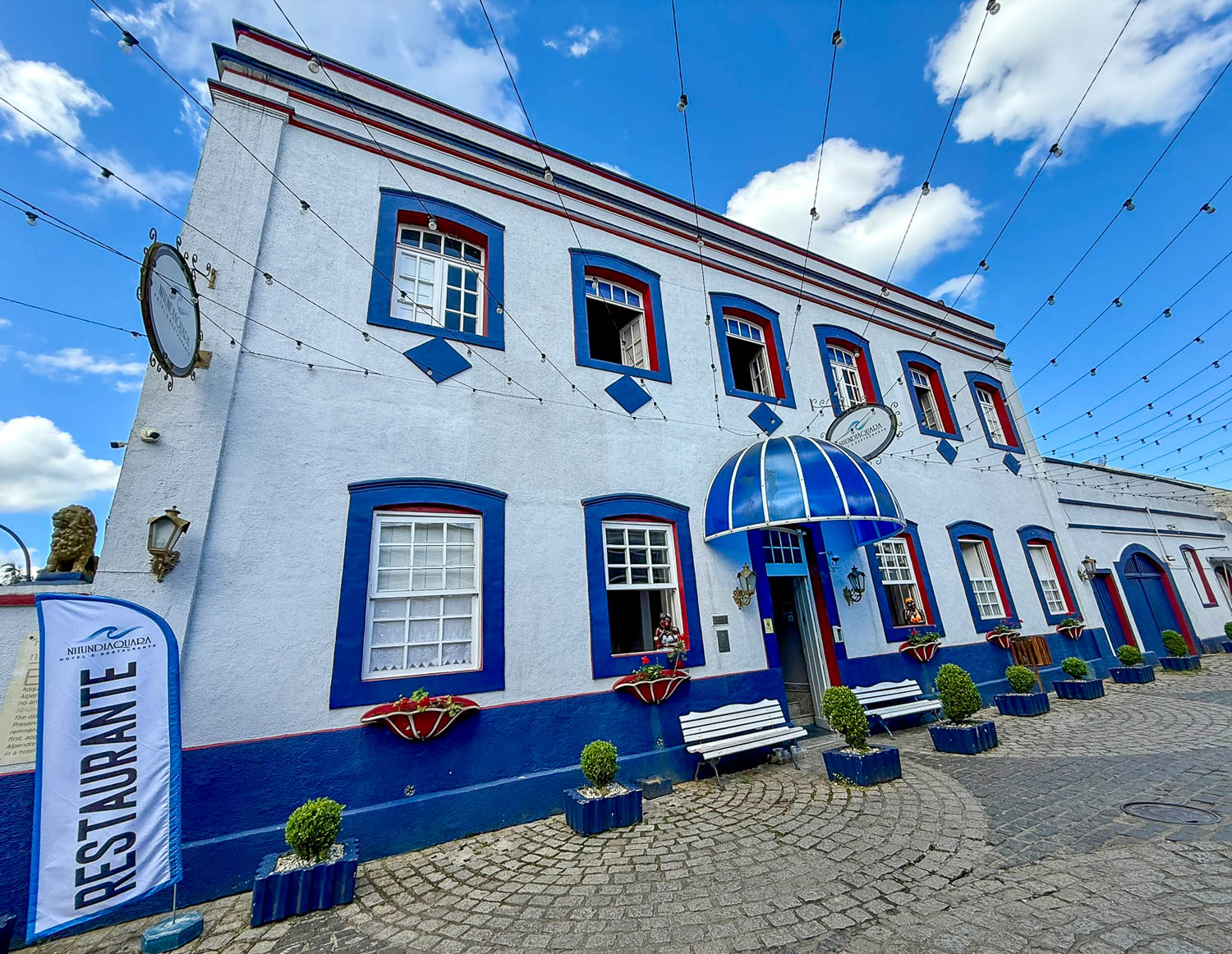
This short, incredibly colorful street is home to a fabulous mix of traditional buildings that today house small shops, cafes and restaurants, artisanal workshops, and private residences, offering visitors a snapshot of everyday life in Morretes and a very “lived in” feel. As you walk along Rua das Flores, you’ll have the Nhundiaquara River to your right (if you started your journey at the main church), and pass by the Nhundiaquara Hotel (the oldest building in town, preserving some of its original walls from the 17th century) and the city’s main square (Largo Theodoro de Namur, surrounded by colonial buildings and restaurants), before arriving at the Coreto Sinibaldo Trombini and Ponte de Ferro.
Fun fact. You’ll often see flowers arranged in recycled containers along Rua das Flores — a small but charming example of everyday creativity in Morretes.
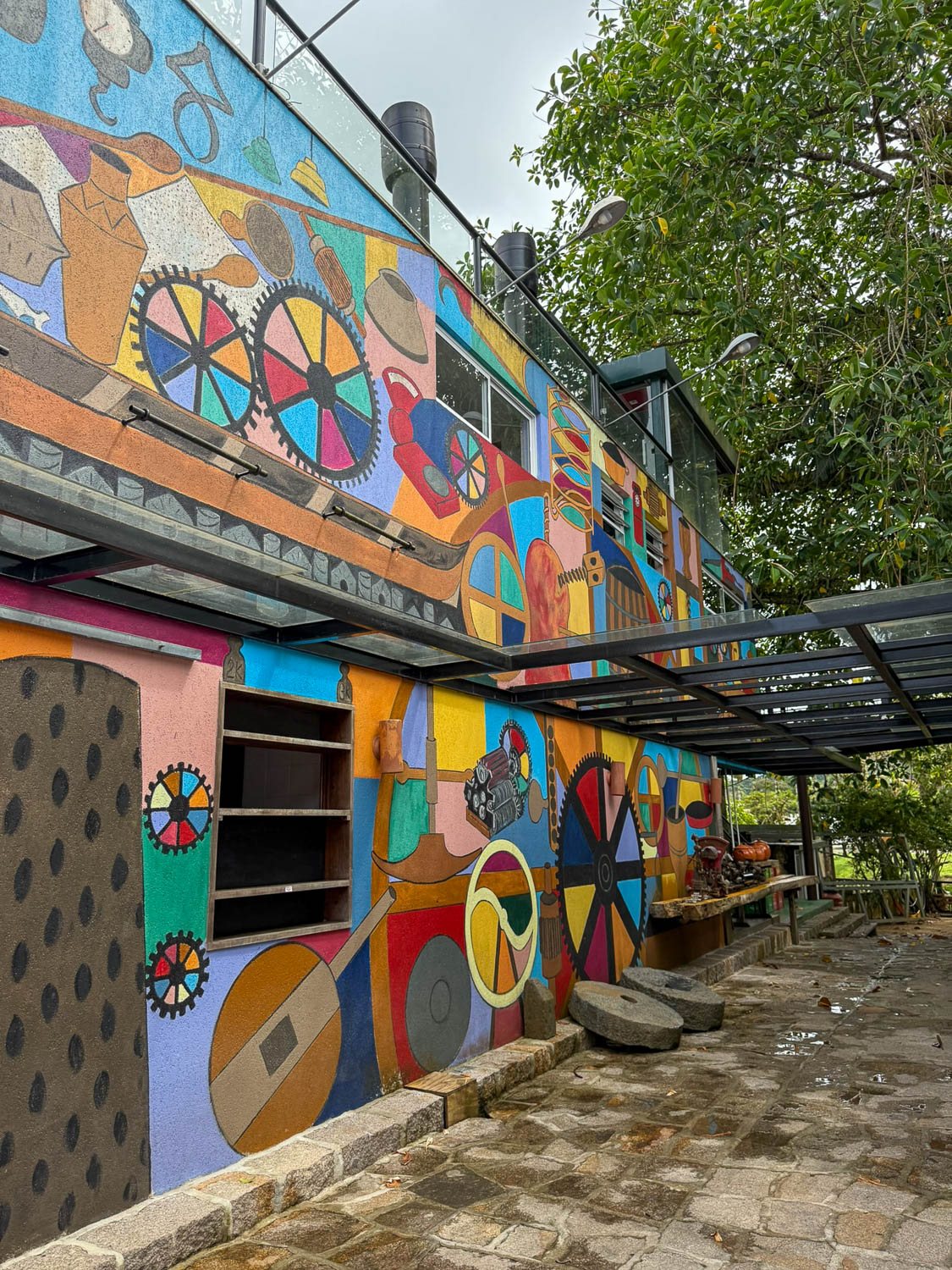
Insider tip. As Rua das Flores runs alongside the picturesque Nhundiaquara River, it affords visitors not only scenic views of the water, but also easy access to riverfront activities.
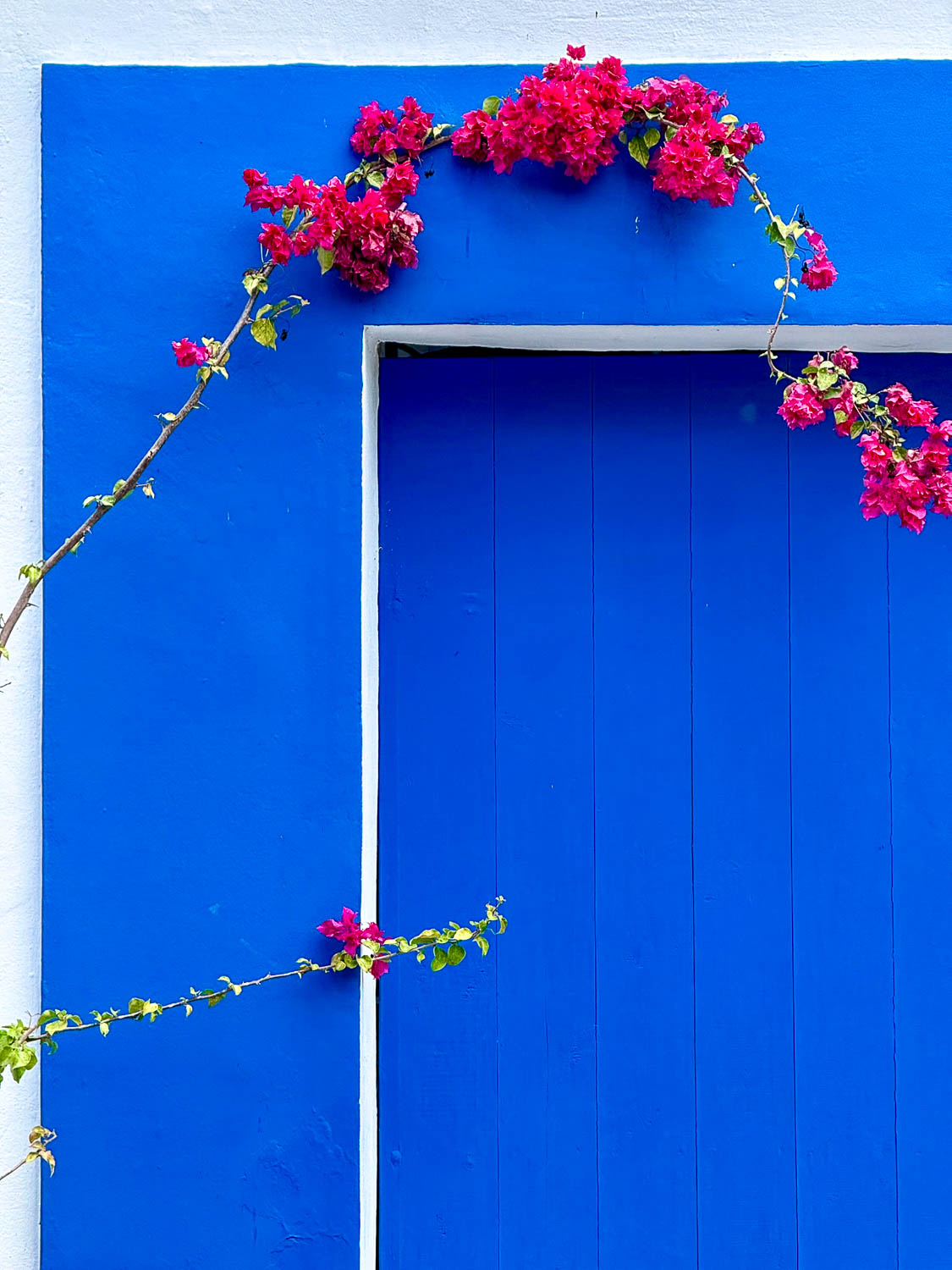
Insider tip. Make sure you have your camera/smartphone ready as you slowly meander down this street. Its brightly painted façades and strategic location against the river make it a superb place to take photos. It’s definitely one of the most photographed streets in town and Beck got very snap-happy here indeed!
Ponte de Ferro
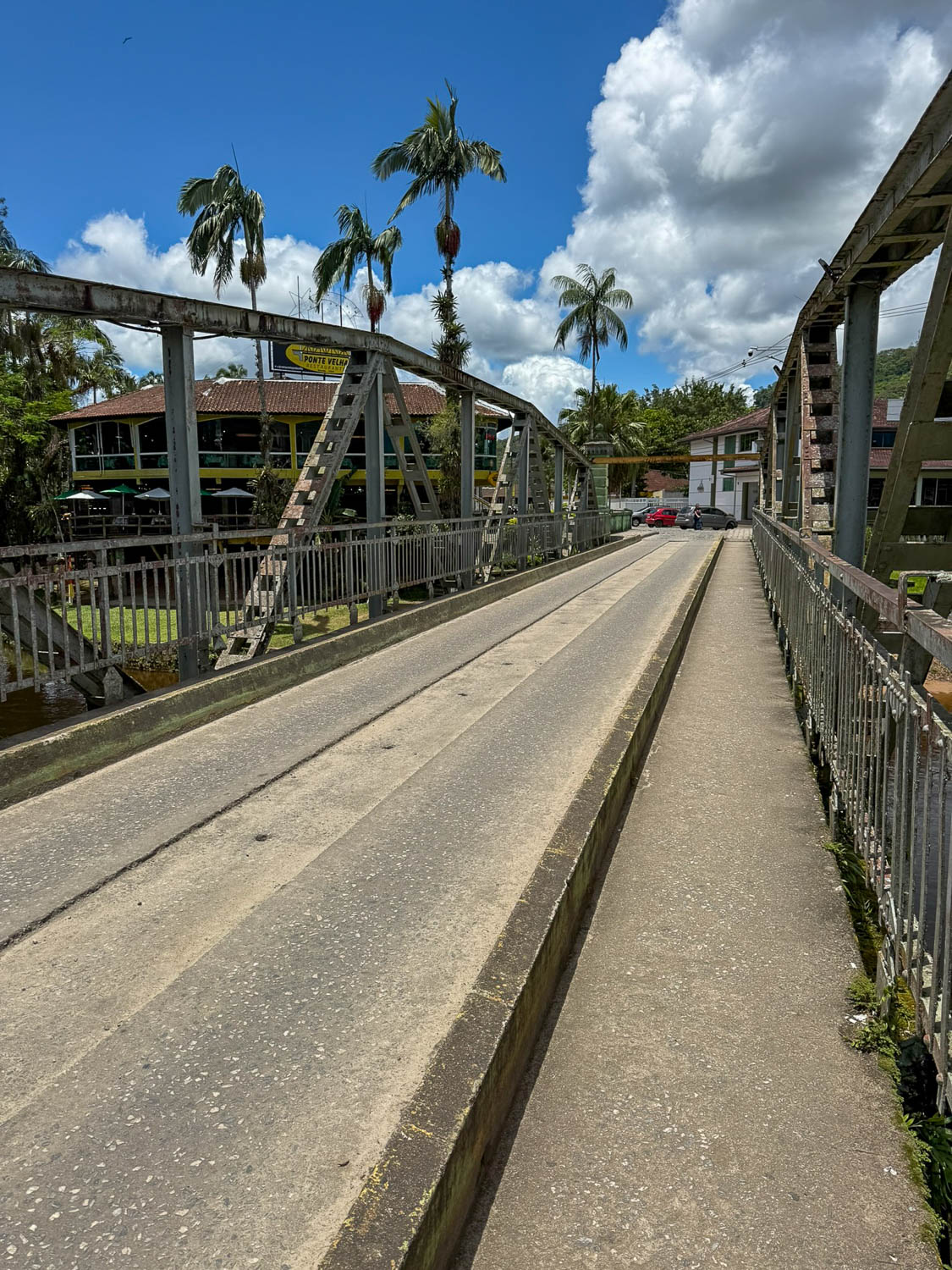
The Ponte de Ferro (Iron Bridge) is one of Morretes’ most iconic landmarks, serving as a picturesque backdrop, as well as a gateway to the natural world beyond. The bridge is also a vital part of the city’s identity, drawing visitors from around the globe to witness an impressive feat of historic engineering – all the while adding to the nostalgic charm of Morretes.
Insider tip. You may see this bridge listed on maps and signs, or referred to by locals, as Ponte Metálica de Morretes (Metal Bridge). These names – Iron Bridge and Metal Bridge – are used interchangeably, but do refer to the same structure.
The Iron Bridge dates back to the late 19th century when Morretes was growing as a river-based trading town, with the Nhundiaquara River playing a central role in transporting goods long before roads and railways dominated the region. Today, the bridge is one of Morretes’ most reliable orientation points, with locals often using it as a meeting or reference spot. For visitors, it’s a great place to stop and take photos, enjoy the peaceful river views, spot canoes and kayaks, and witness young kids jumping off the banks of the river into the cool waters below.
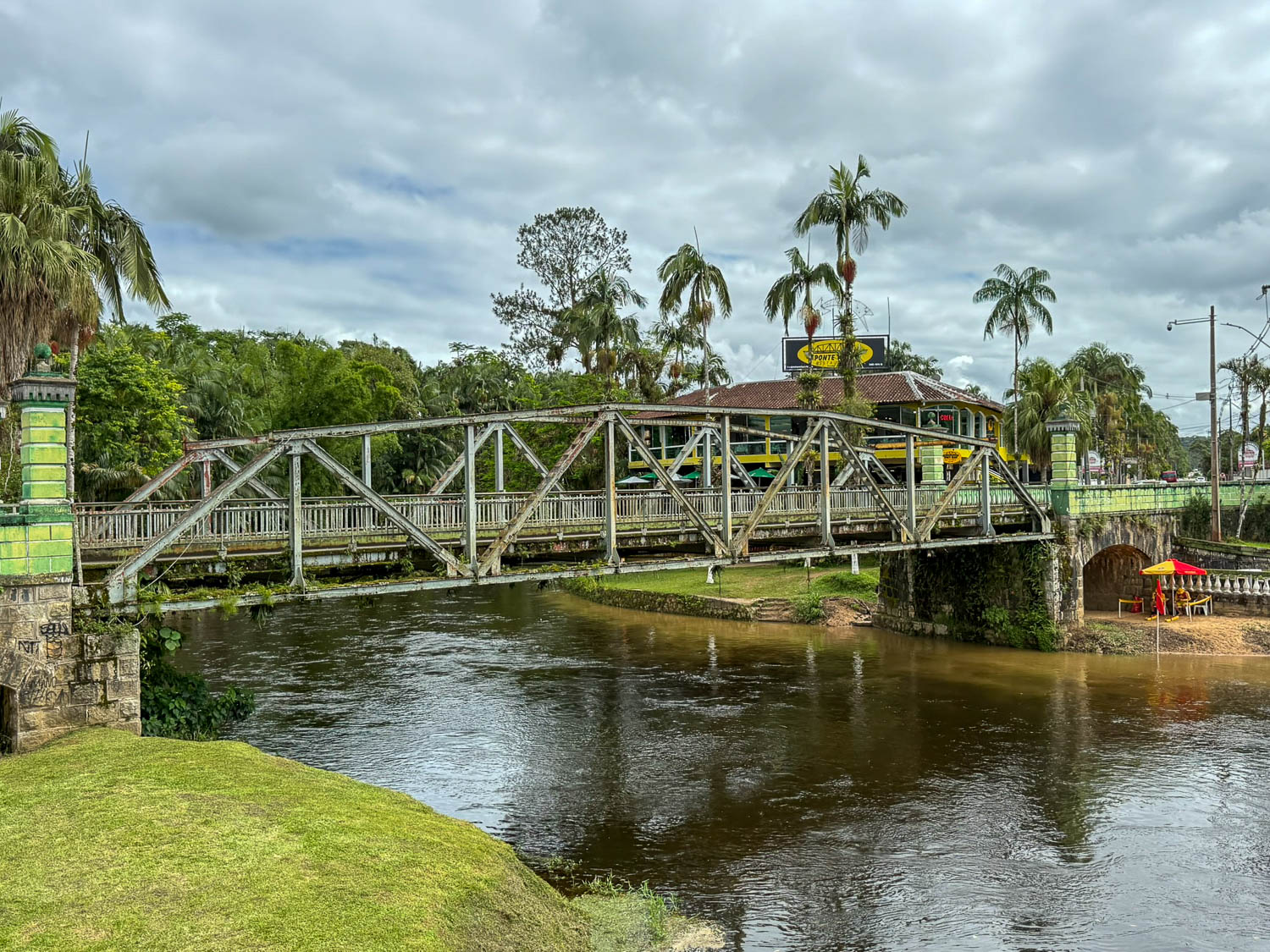
Fun fact. The Iron Bridge was prefabricated and assembled on site, a relatively advanced technique for the era.
Fun fact. Ponte de Ferro is one of the most photographed bridges crossing the Nhundiaquara River.
Igreja de São Benedito
Just a block southwest of Ponte de Ferro you’ll find another delightful church, Igreja de São Benedito (São Benedito Church): another historical site recognized for its simplicity and enduring charm. Whilst Igreja Matriz de Nossa Senhora do Porto is Morretes’ main Catholic church, this smaller church is dedicated to São Benedito, a saint especially revered by Afro-Brazilian communities – it’s therefore traditionally associated with the city’s Black and formerly enslaved populations.
The vibe here is peaceful indeed and we encourage you to take some time to appreciate the intricate wooden altars, frescoes, and small details that bring Igreja de São Benedito to life. Alongside Igreja Matriz de Nossa Senhora do Porto (wow, that really is hard to say three times fast!), these two churches in Morretes’ historic center help tell the story of endurance — of generations who built, rebuilt, and kept their traditions alive.
Downtown Morretes
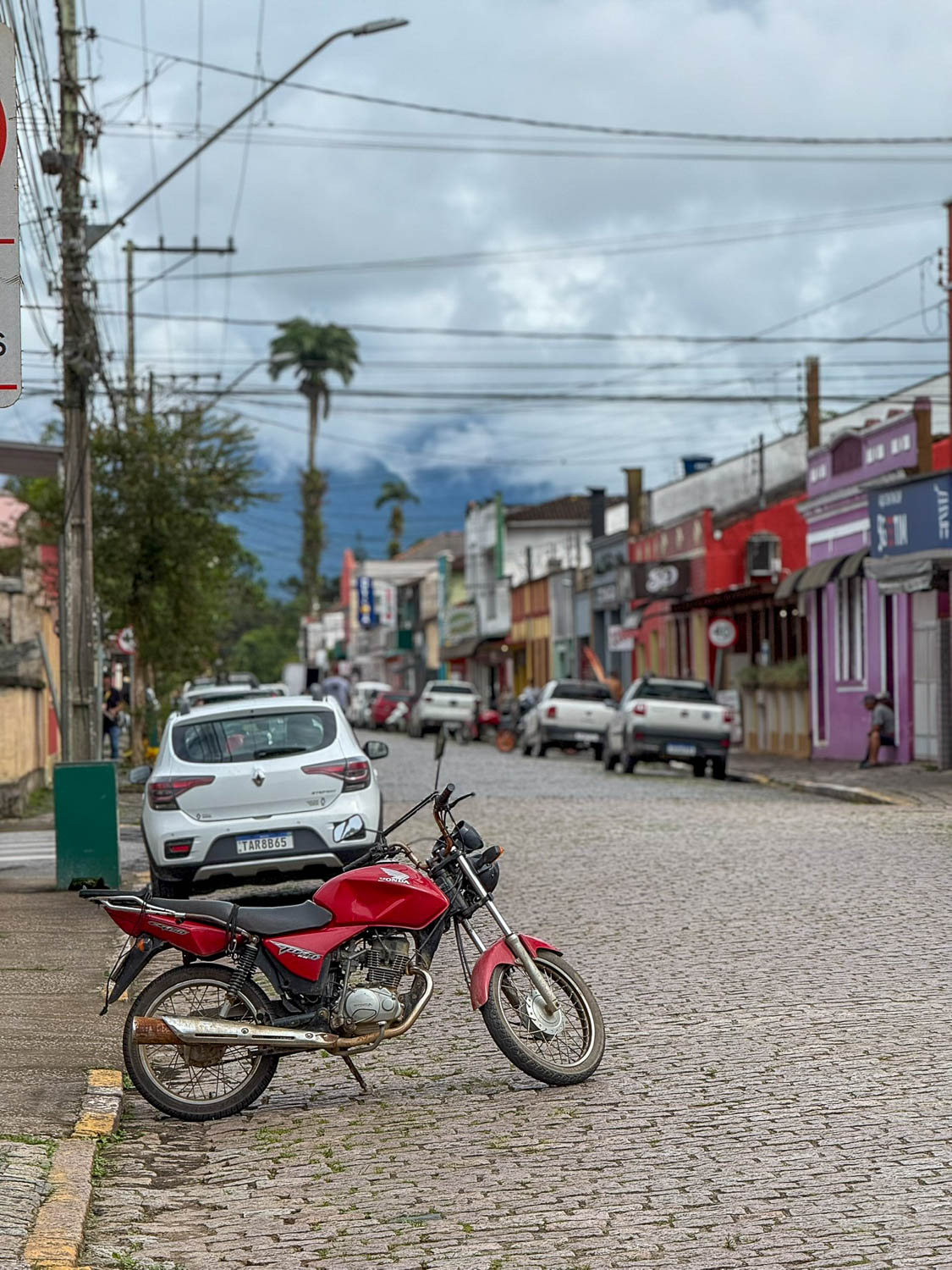
Just outside the main historic center, you’ll no doubt find yourself at some point in “downtown”, with more art galleries, cafes, restaurants (botecos), and small outdoor markets and boutique shops, as well as general, everyday shops lining Rua 15 de Novembro and Rua Conselheiro Sinimbu.
The Nhundiaquara River
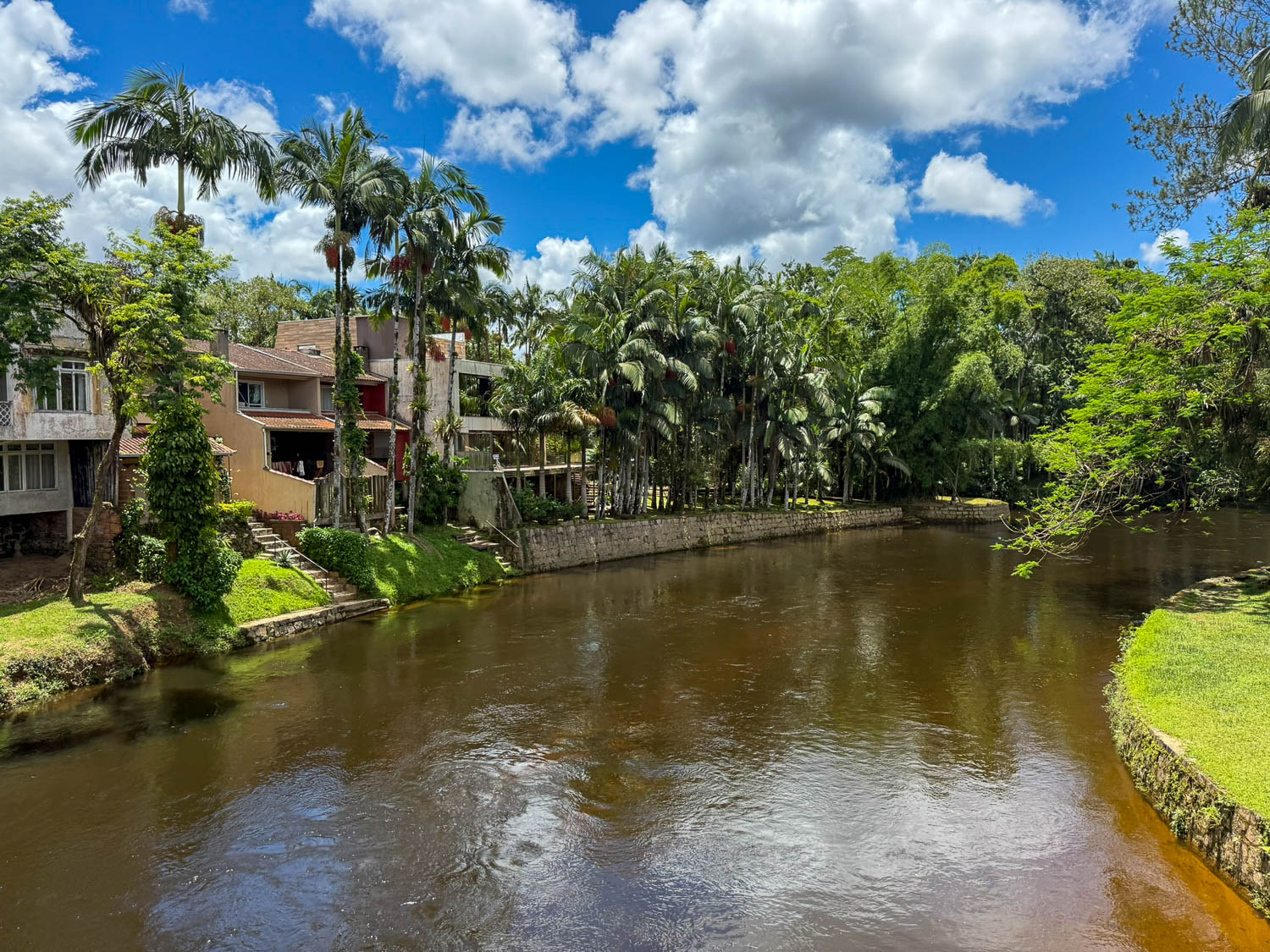
The Nhundiaquara River is the heartbeat of Morretes, winding gently through this small city and helping to shape its rhythm. Once a critical trade route – and Brazil’s first natural highway linking the coast (including towns like Morretes) to the highlands of the Parana plateau – today it serves as a place of recreation and beauty.
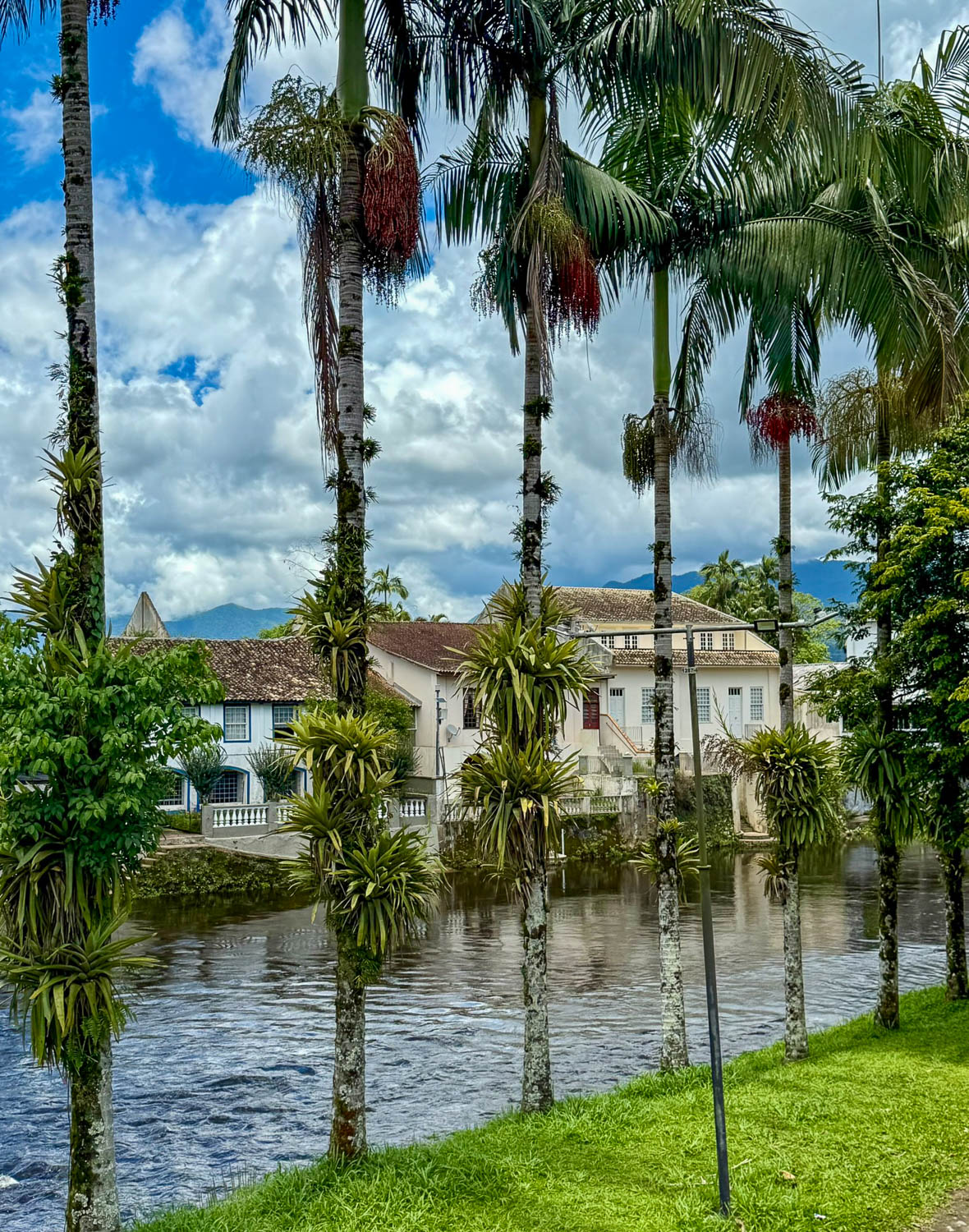
The river’s banks are lined with restaurants, gardens, and walking paths, with its waters offering a refreshing opportunity for a cold-water dip in the warmer summer months. It’s an especially family-friendly option, where it’s possible to enjoy delicious riverside dining before the kids play in the parks and other green spaces nearby.
Fun fact. The Nhundiaquara River was once rich with gold deposits, which helped to drive early settlement in the area.
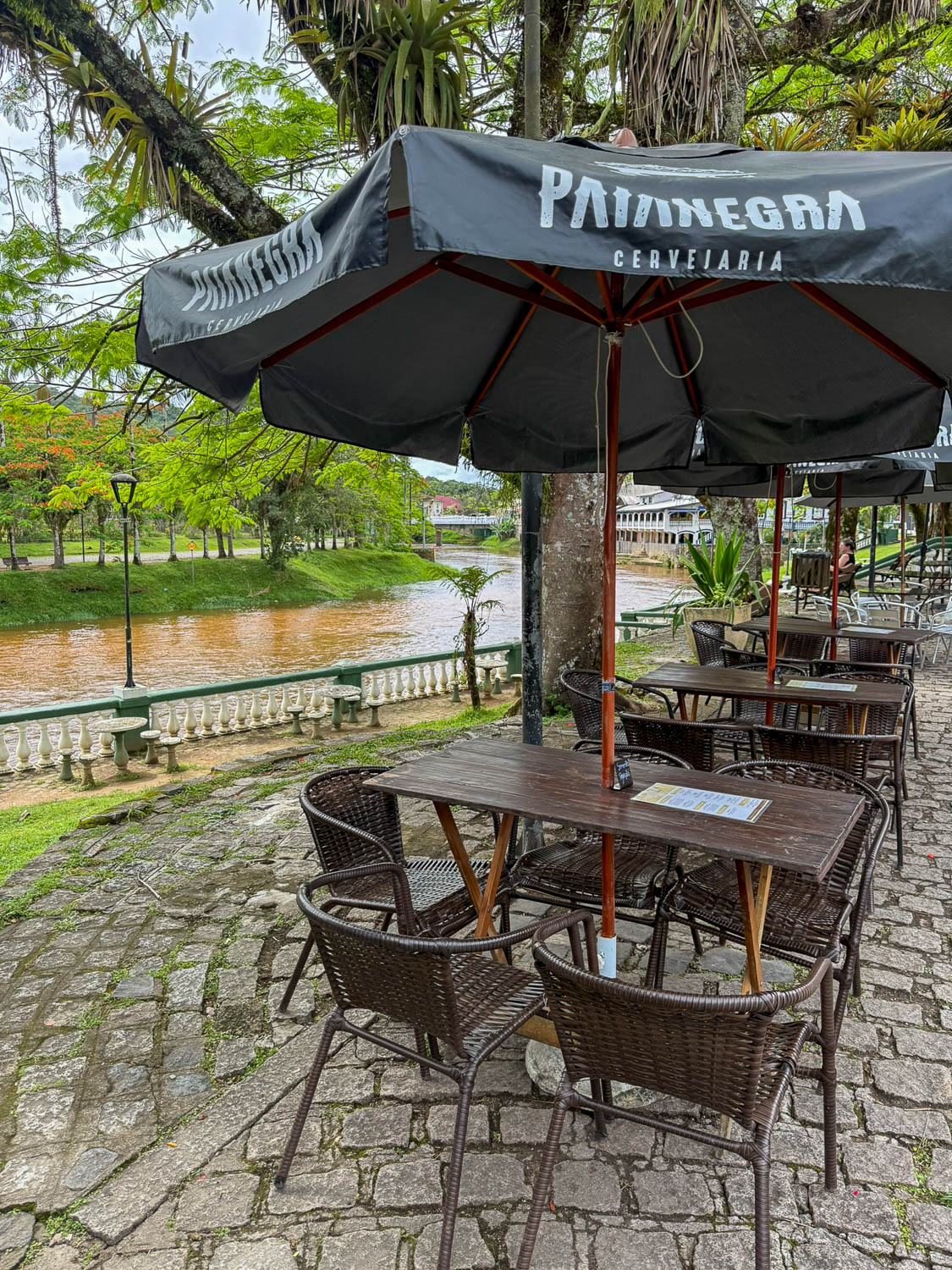
Locals often gather on the banks of the Nhundiaquara River on weekends to socialize, fish, or simply cool off – so it’s an excellent place for people-watching and simply taking in the rhythm of everyday life in Morretes. For those feeling a little more energetic, kayaks are available for rent. Visitors can also take short guided tours along the water, else simply sit by the river on a park bench to relax and take in the natural beauty all around them.
Fun fact. During periods of heavy rain, watching the river level rise beneath one of the bridges that cross the Nhundiaquara River affords the onlooker a true sense of how powerful this river can be.
Insider tip. If you’re staying for longer than a day in Morretes, be sure to wander the banks of the Nhundiaquara River later in the day, when the Ponte de Ferro and the colorful houses of the town are reflected in the water – a scene many visitors find mesmerizing.
Nearby Attractions: Beyond Morretes
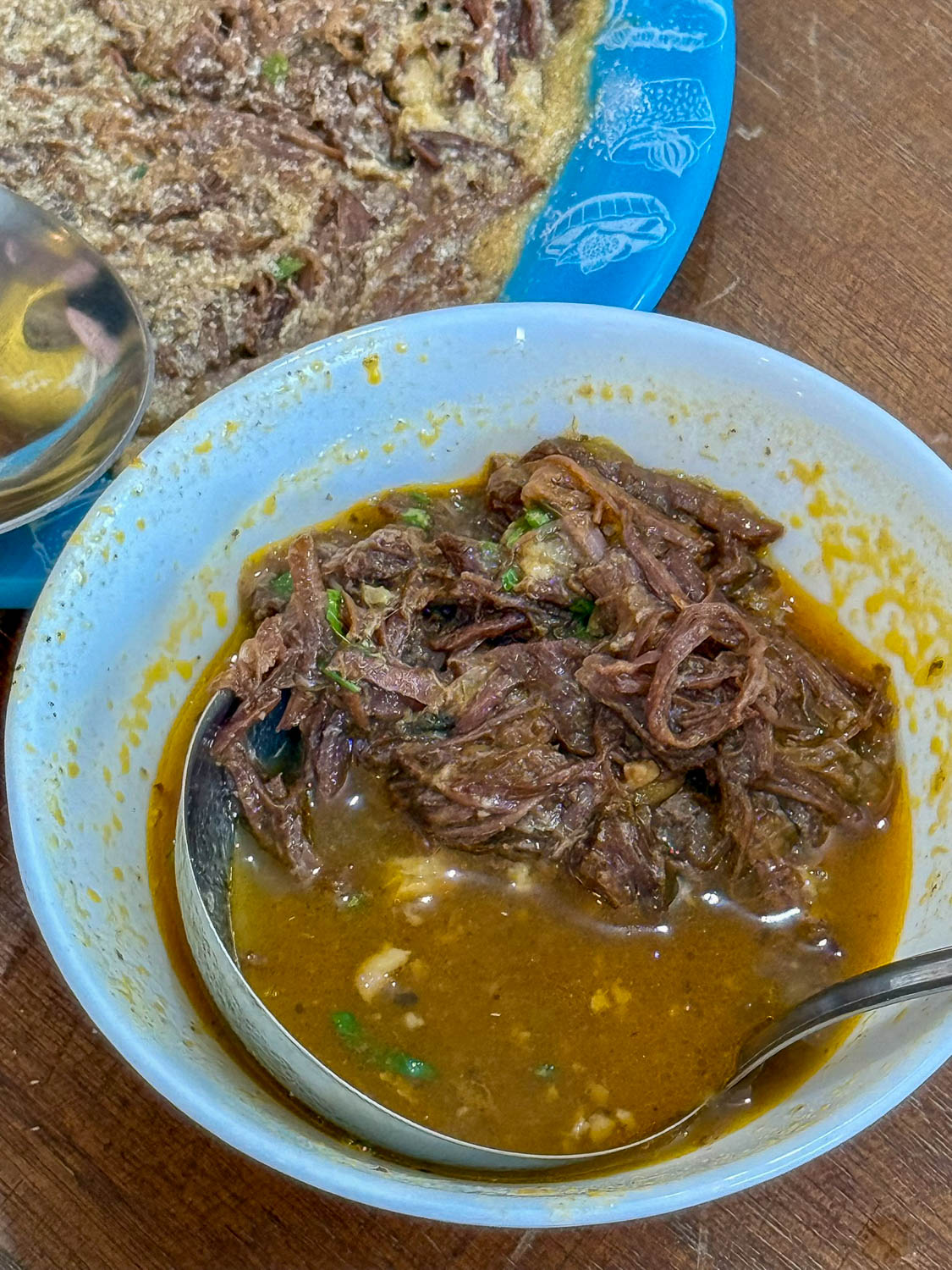
We found the most important attractions within Morretes to be incredibly accessible: everything’s close together, with the city center flat and walkable. You can easily go from a café by the banks of the river to a local art shop or the Igreja de São Benedito within minutes. Indeed, we found a day trip to Morretes ideal, but can absolutely appreciate the appeal in choosing to stay for longer. Staying overnight would permit a more relaxed pace of exploration, the chance to experience the town outside its busiest hours, and provide opportunities to explore some sights beyond the city limits.
Whether you choose to take a scenic drive along the Estrada da Graciosa, explore the biodiverse-rich Ekôa Park, head toward the seaside for a few hours in Antonina, or venture inland toward the trails of Pico do Marumbi State Park, any direction you take from Morretes will afford you the opportunity to feel the deep heartbeat of Paraná.
For detailed insight into any of the above nearby attractions, be sure to check out our sister article, Beyond Morretes.
Local Events and Festivals
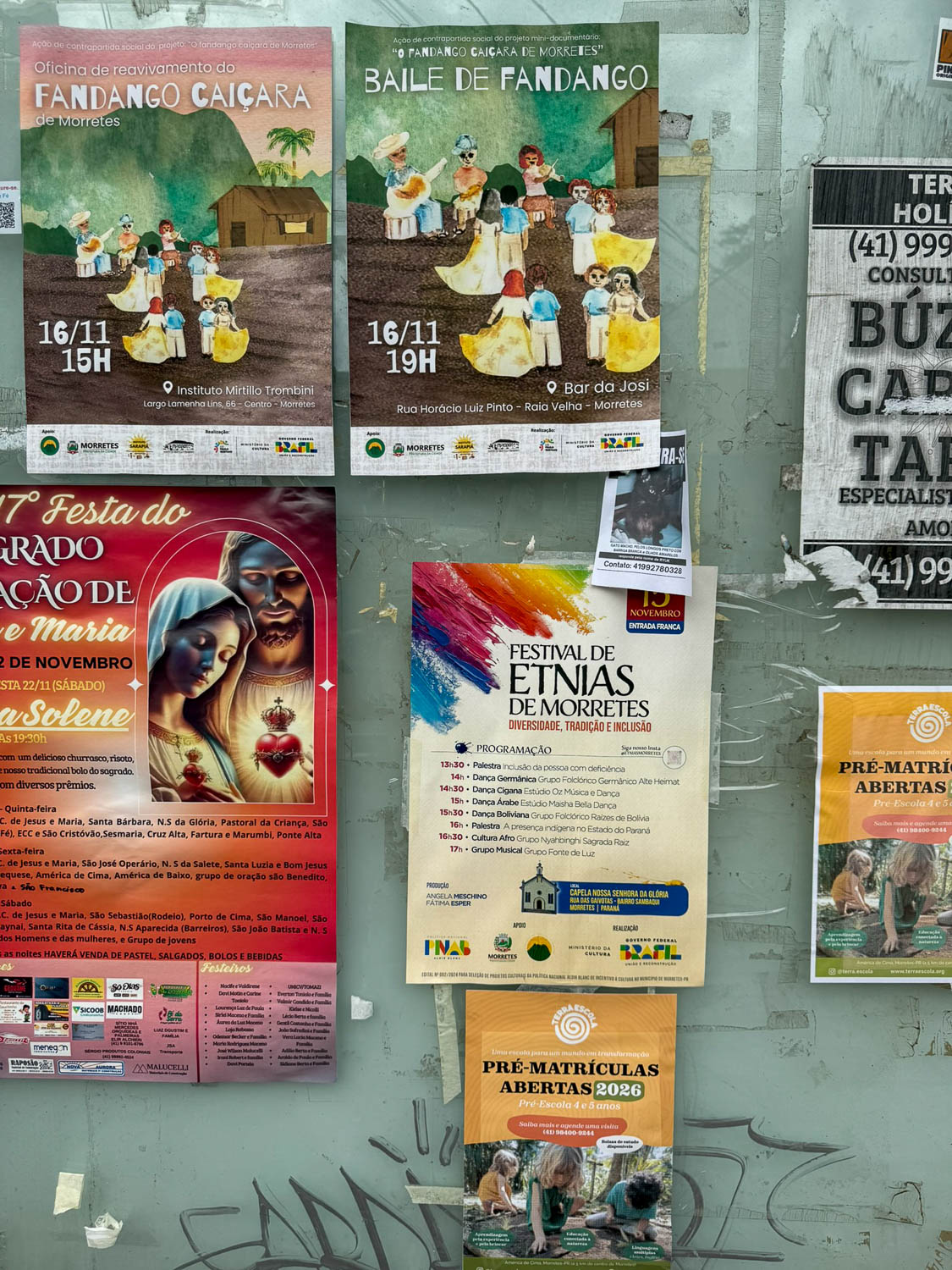
Throughout the year, Morretes marks its traditions and celebrates community through a small but varied calendar of local festivals and events. These festivities range from religious celebrations and craft fairs, to music and cultural gatherings, many of which take place in and around the historic center. Visiting during these times can be a special occasion indeed, offering visitors a glimpse into the true spirit of Morretes’ character, the air filled with music, culture, heritage, dance and color.
Some of the highlights of Morretes’ cultural calendar include the following. For detailed insight into these events, be sure to check out our sister article, Morretes: Local Festivals and Events.
- Adhana Festival: a multi-day music, art, and connection festival, renowned for being a deep, transformative, psychedelic trance gathering.
- Festa de Nossa Senhora do Porto: one of the most cherished events in Morretes, held each September in honor of the town’s patron saint.
- Festa Feira Agrícola e Artesanal (Agricultural and Craft Fair): another multi-day celebration with a strong community focus and an opportunity to experience local crafts and food, live cultural performances and music, and agriculture.
- Litoral Étnico – Mostra Folclórica de Morretes: a folk culture showcase, celebrating the rich ethnic diversity that has helped to shape the Paraná region.
- Morretes Blues Festival: a free, accessible, open-air music festival with live blues performances by both established and emerging artists.
Shopping in Morretes
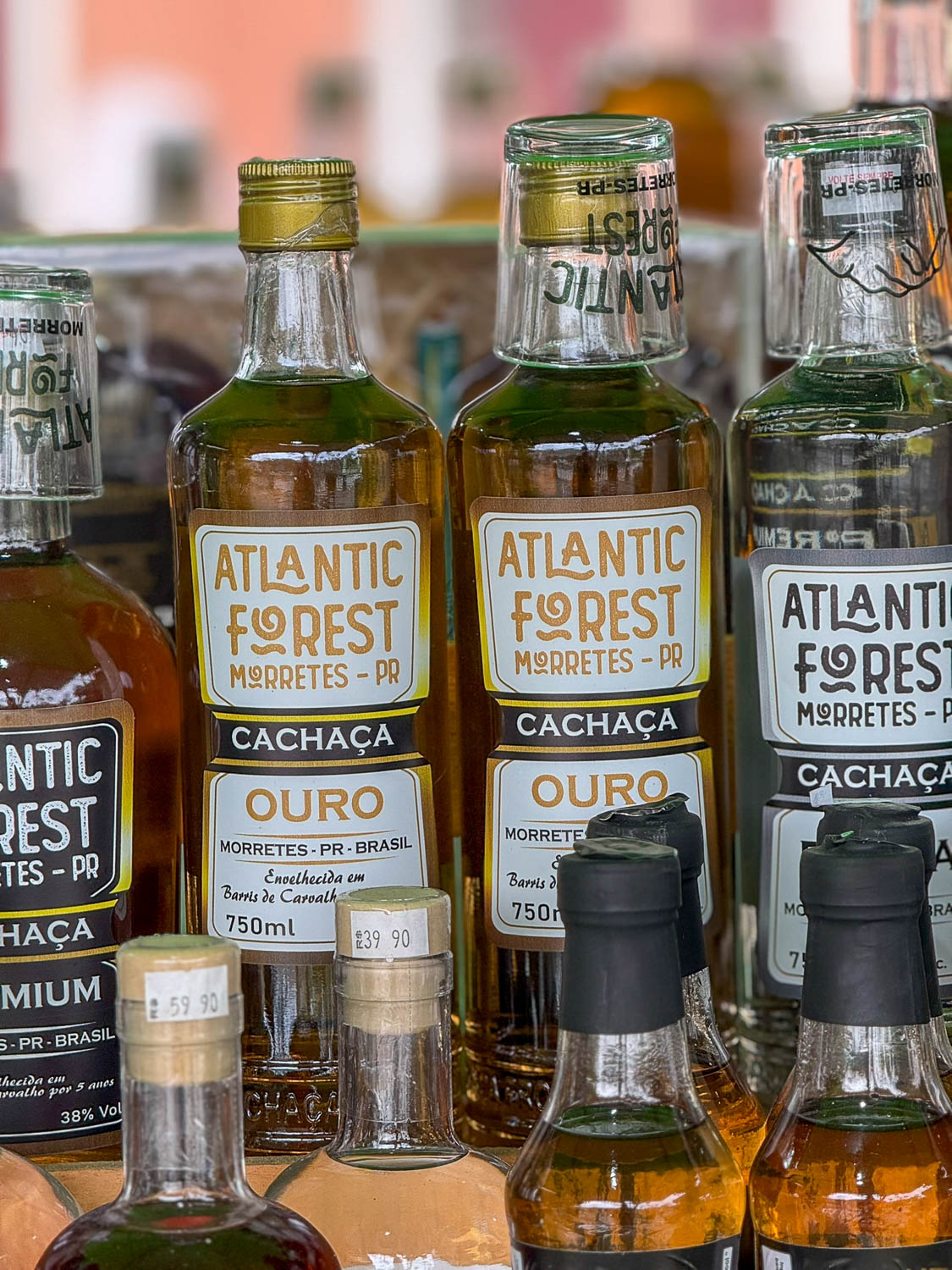
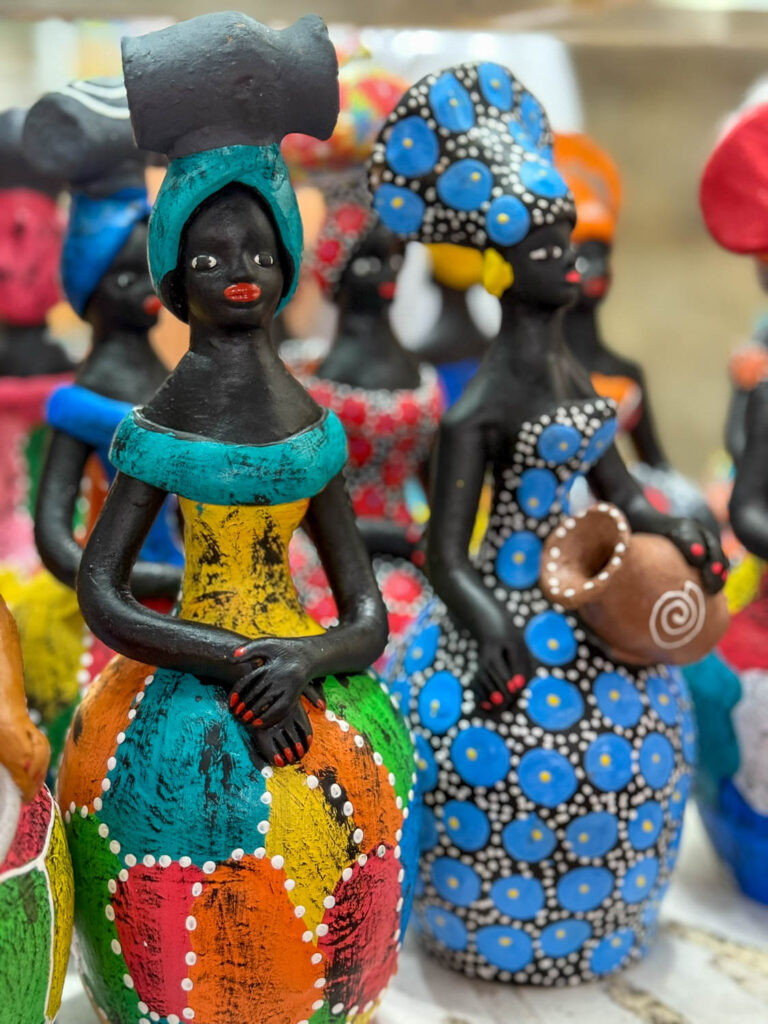
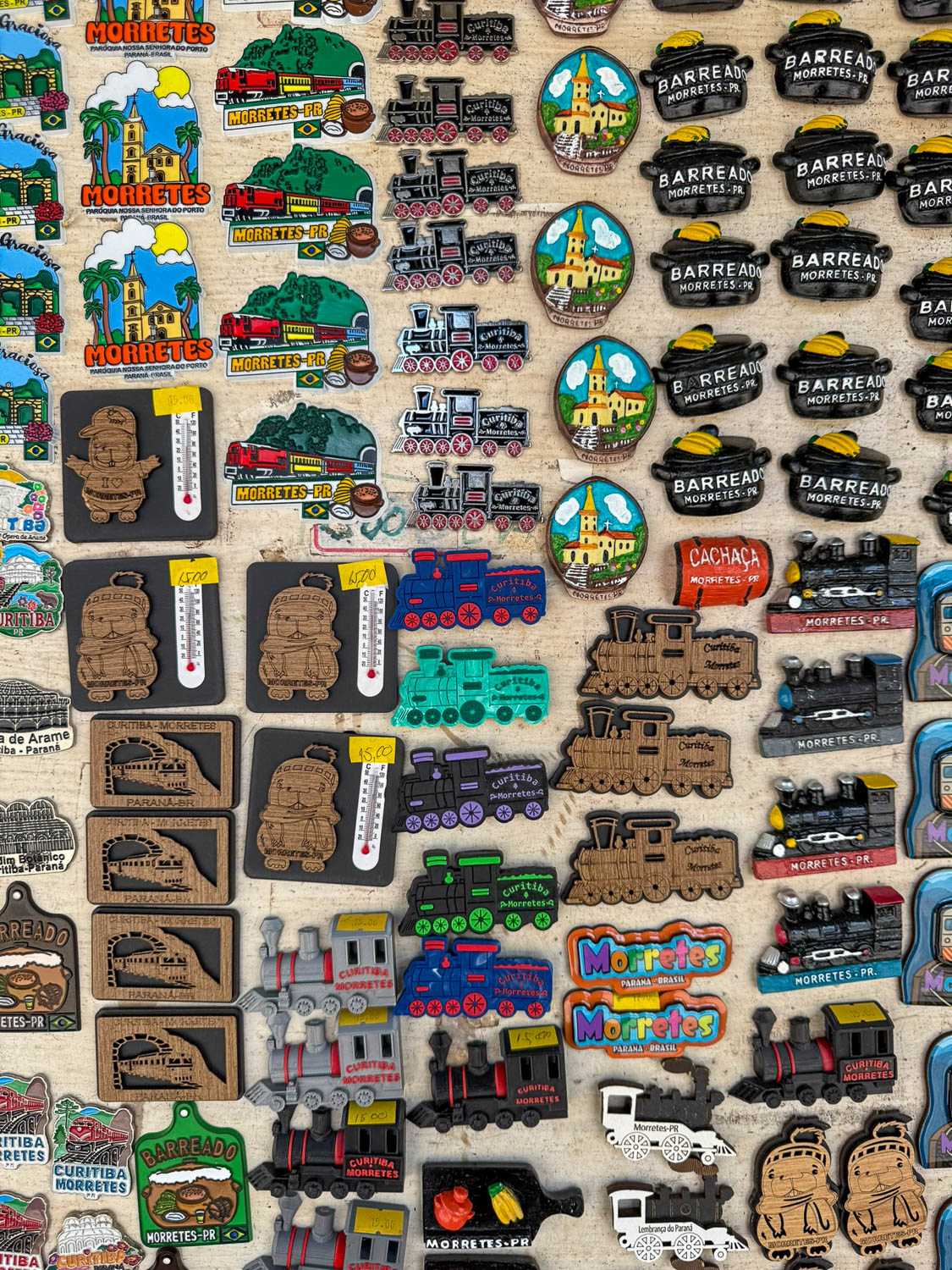
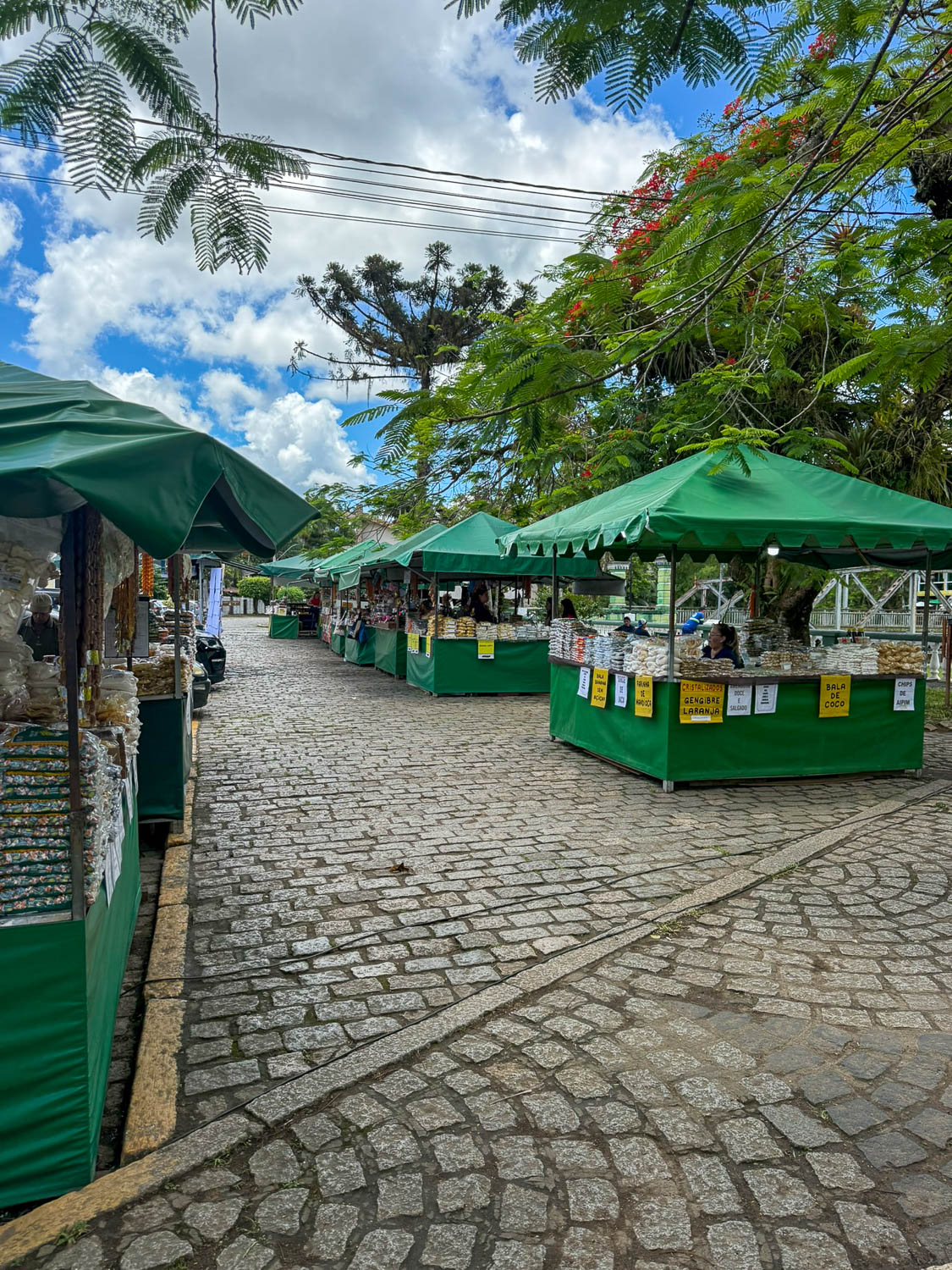
The historic center of Morretes is characterized by small, colonial-era artisan shops where you can buy everything from handcrafted souvenirs (for example, clay pottery (a favorite of Beck’s!), woven baskets, and products made from banana fiber) to regional food products (look out for homemade jams, sweets, cachaça and chocolates). Along the cobblestone streets – and particularly within the small plazas that punctuate Rua das Flores – you’ll also find small market stalls, with locals selling similar wares, whilst outside of the historic center – in what locals refer to as “downtown Morretes” – you’ll find small department stores, selling everyday items ranging from clothing and shoes, to toys and household goods.
Insider tip. Need to buy some water? Maybe some snacks for the bus ride home? Or simply need to use a restroom? There’s a large Supermercado Robassa at the northern end of the bridge that crosses the Nhundiaquara River near the Igreja Matriz de Nossa Senhora do Porto.
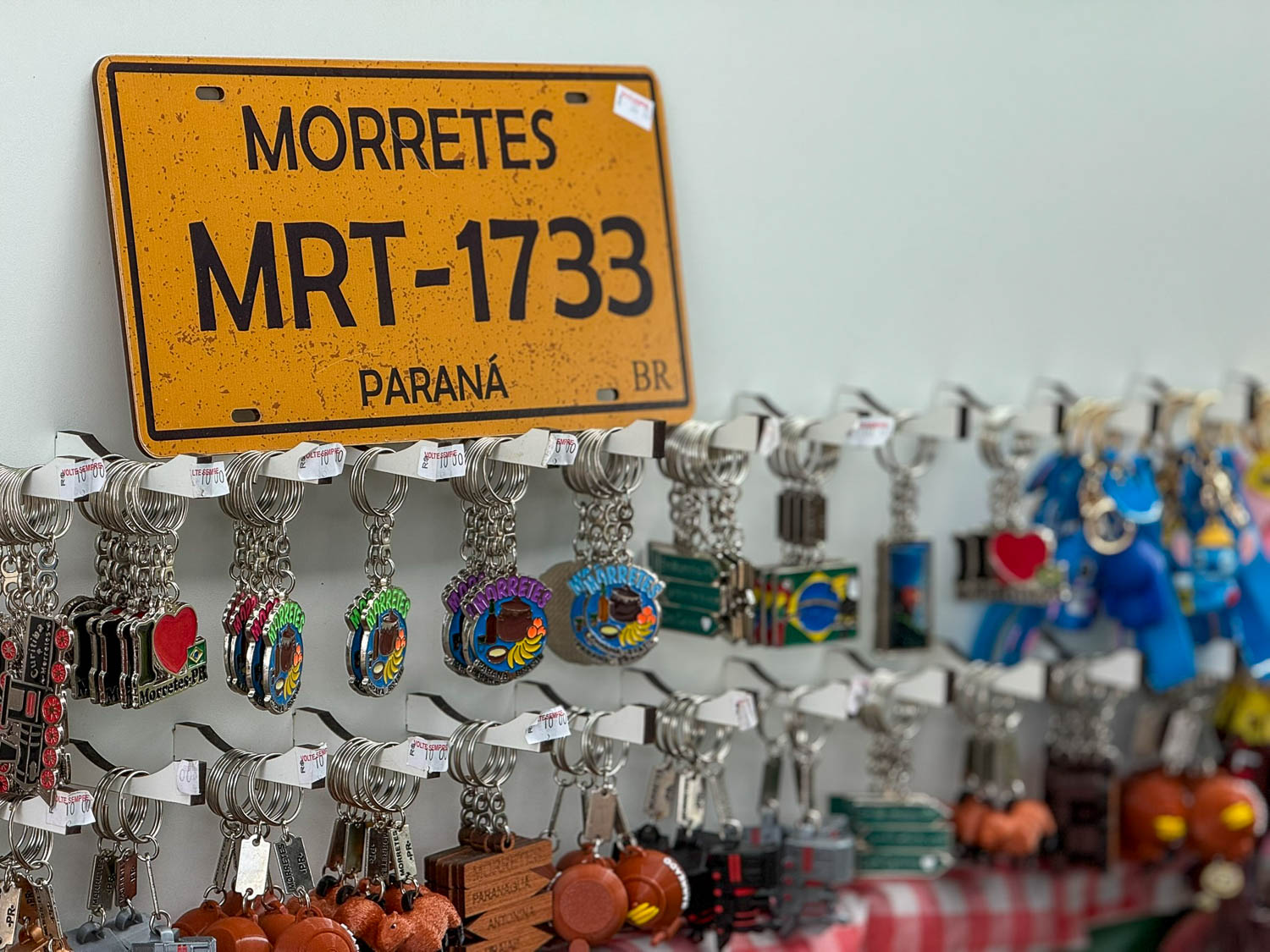
Insider tip. Many shops within the city limits are open daily, with peak activity on the weekends. That being said, many small shops also follow relaxed opening hours, so keep timing flexible in case the store you really want to visit isn’t open the first time you swing by.
Fun fact. When shopping in Morretes, be on the lookout for regional specialities. The town is famous for products made from bananas and ginger (yum!), with bananas showing up in an unexpectedly wide range of souvenirs – banana-flavored cachaça (a traditional Brazilian sugarcane spirit) is especially popular!
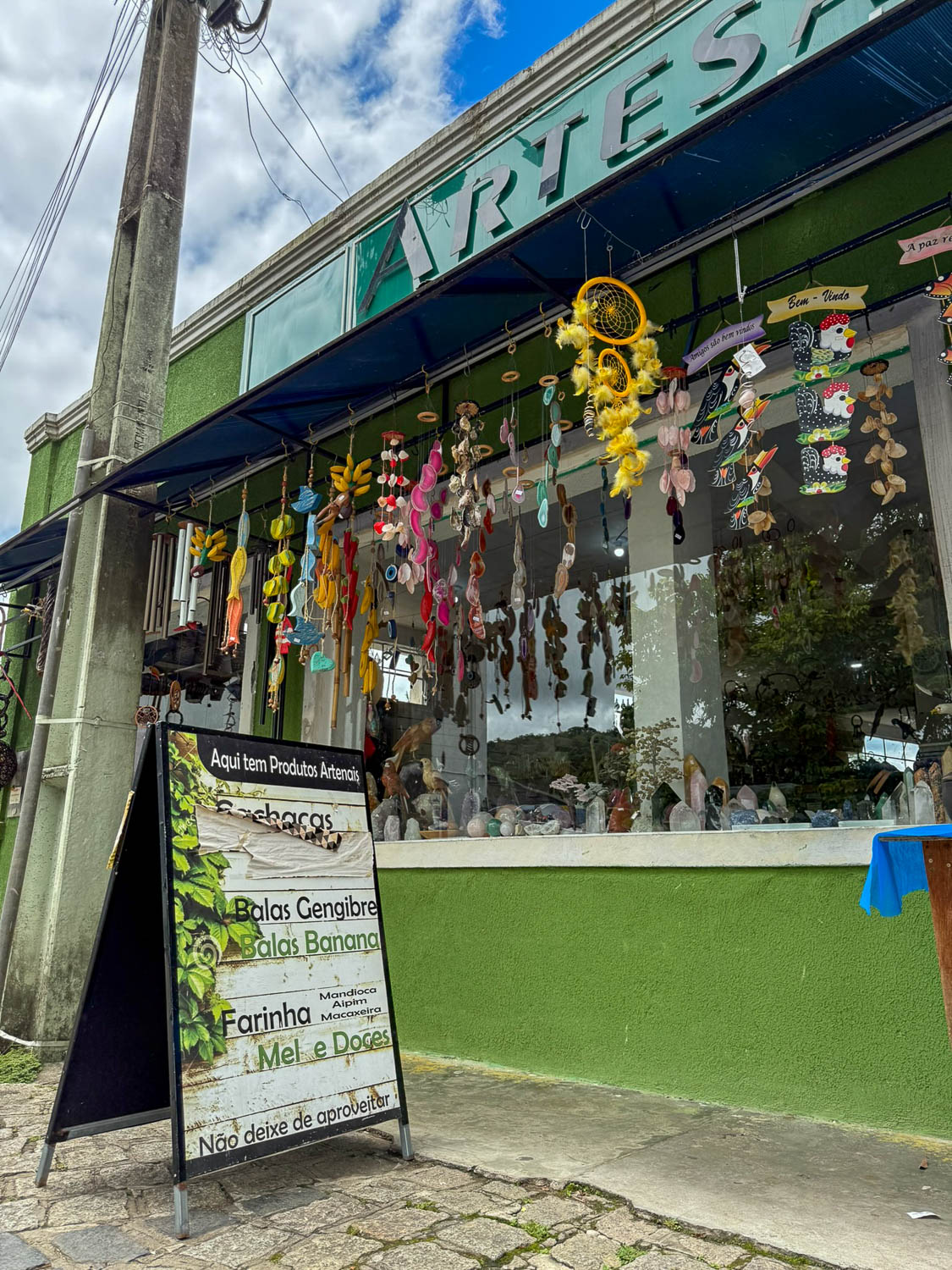
On the weekends, the Feira de Artesanato de Morretes (Handicraft Fair) sets up at Praça dos Imigrantes (Immigrants’ Square), halfway along Rua das Flores. This lively artisan fair features unique local textiles, arts, and handicrafts, alongside handmade jewelry, pottery, and colonial-era replicas. Prices are reasonable, with most artisans accepting cash and credit cards, though it’s always wise to carry some Brazilian Reais for smaller purchases.
Insider tip. We visited Morretes on a Tuesday and were delighted to find several local markets set up throughout the city: one near the southern end of the Ponte de Ferro and another on Rua das Flores, right outside the Pousada da Graciosa.
The Flavors of Morretes: Barreado and Beyond
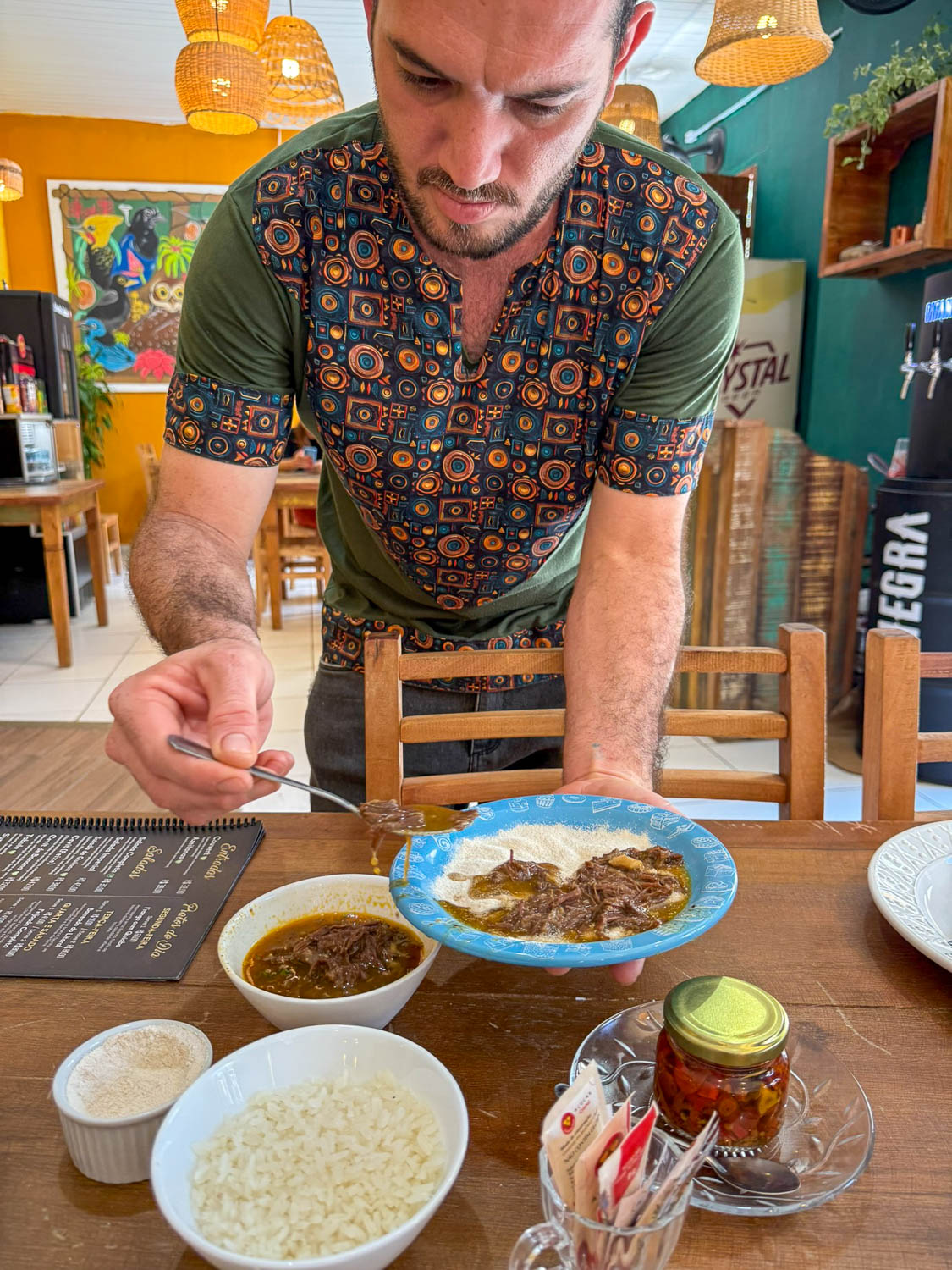
Dining in Morretes is closely tied to tradition, with the town’s signature dish – barreado – at the center of the grand stage. Rooted in colonial history, this slow-cooked beef stew is served leisurely and often shared communally, reflecting the relaxed pace of local life. We encourage everyone who is up for it, to try it at least once!
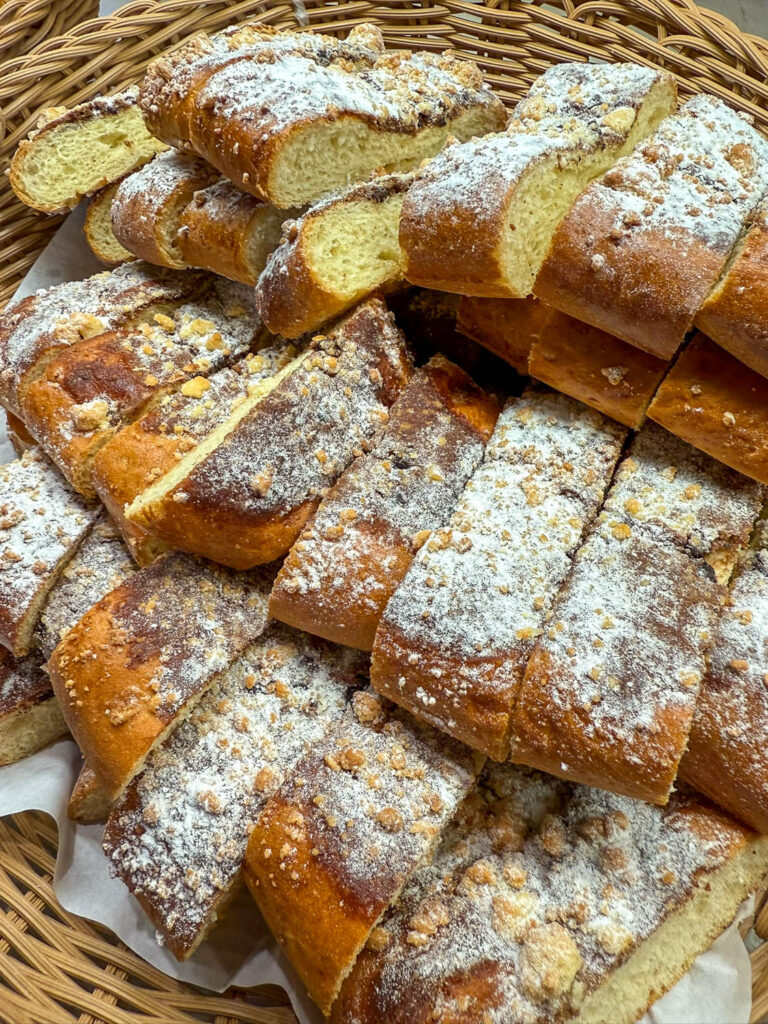
Whilst barreado appears on nearly every menu in Morretes, the town’s culinary scene extends well beyond its most famous dish. Riverside restaurants, neighborhood botecos, and smaller eateries offer fresh fish, regional specialties, local pastries, and banana-infused dishes that highlight the area’s agricultural roots.
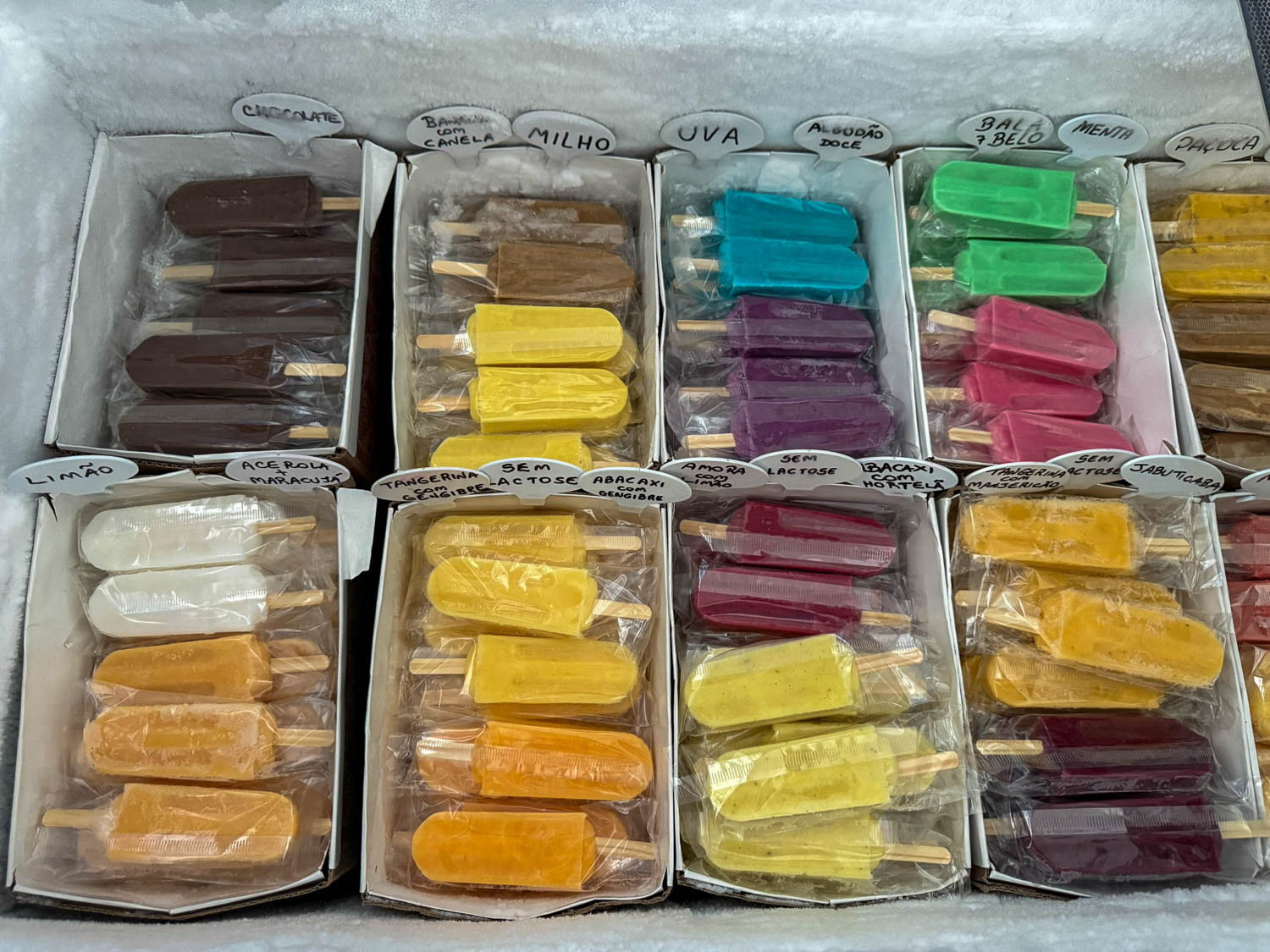
Insider tip. Lunch is the main event in town, making it an ideal time to settle in and enjoy the town’s flavors at an unhurried pace.
For a deeper dive into where and what to eat in Morretes, we explore the food scene in this colonial town in our dedicated article The Flavors of Morretes: Barreado and Beyond. And if you’re looking for more information on Brazilian cuisine in general, be sure to check out our sister article, Brazilian Cuisine.
Practical Information and Safety Tips
Whilst Morretes is an easy place to explore and feels refreshingly low-stress, a few practical pointers can enhance your visit even further. From personal safety awareness to what to pack, the general guidance below can help you feel more comfortable, prepared, and confident as you move around town.
Personal Safety
Despite its popularity, Morretes maintains its relaxed, small-town vibe. It’s a city that’s safe, welcoming, and easy to navigate. Of course, like any historic town that attracts its fair share of tourists – and even though we never once felt at risk – it helps to stay aware of your surroundings, especially at night or near the river.
What To Bring
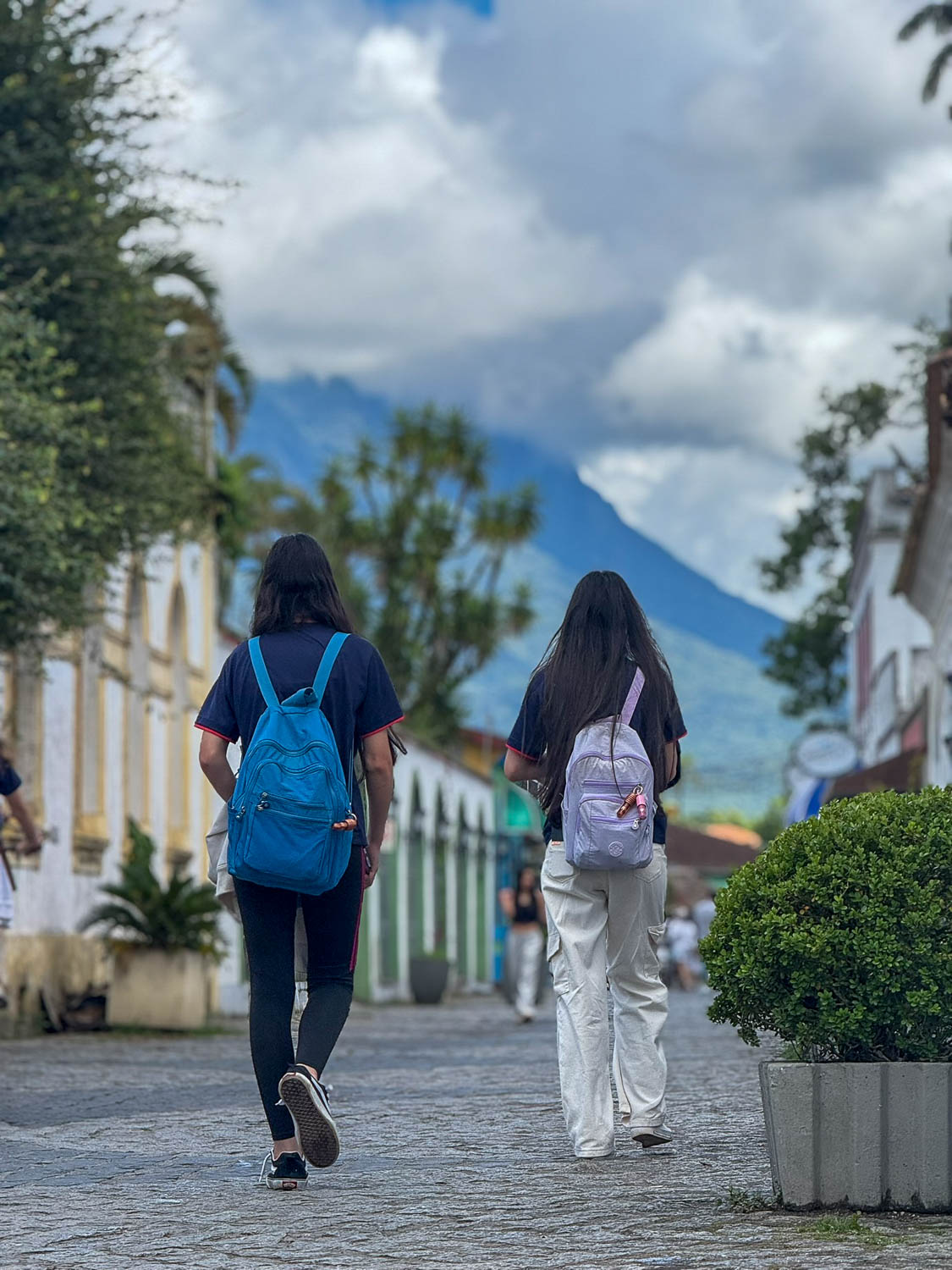
Ensure you wear comfortable shoes during your visit, as you’ll no doubt do lots of walking, often on uneven ground. Don’t forget to also bring sun protection (it sure can get hot in southern Brazil, especially during the summer), a refillable water bottle, and small denominations of Brazilian Reais if you plan to do some souvenir shopping or make purchases at the outdoor market stalls (having cash on hand also makes it’s easier for tipping).
Also consider bringing a map (or a navigation app – we simply used Google Maps and it worked quite well) to find lesser-known attractions tucked between the narrow streets. We found a translation app (our Portuguese kinda sucks) to be also incredibly useful, and highly recommend Translator Go, which allows users to take a photo of signs and menus (for example) in the local language, and translates them in real time into your preferred language. Game-changer!
Final Thoughts

Whether you arrive by train on the Serra Verde Express, wind your way down the scenic Estrada da Graciosa on a day trip, or settle in for a quiet weekend by the Nhundiaquara River, Morretes has a way of gently recalibrating your pace. This is a town that reminds you what travel is really all about: the simple pleasures associated with slowing down, appreciating deeper connections, feeding your curiosity, and looking at things a little more closely.
Set in the heart of the Atlantic Forest, Morretes offers a glimpse into history carved into colorful colonial façades and arched windows, faith expressed in whitewashed churches, and hospitality served with every meal. Historic mansions line cobblestone streets best explored on foot, church bells echo through the valley in the afternoon, and the sounds of birdsong drift in from the surrounding hills. And just when you think this charming town has shown you all it has to offer, the surrounding region quietly surprises you again.
Festivals, artisan fairs, music-filled evenings, authentic food, and community all play central roles here, especially when a clay pot of freshly unearthed barreado arrives at the table with steam curling into the mountain air, the experience lingering long after the first serving. Morretes isn’t just picturesque (though we know it surely has that going for it too!) – it’s very much alive.
There’s an energy here that feels both timeless and current. You sense it as you wander along Rua das Flores, chatting with local artists about their work, or standing amongst neighbors during a celebration where laughter, music, and community pride fill the air. Even brief encounters — a shared smile, a story about an old chapel, a casual explanation of a craft — leave a lasting impression.
If you’re looking to find the soul of this country, you’ll find it alive and well here in Morretes. It’s an energy where everything seems to say “welcome!”. This town doesn’t try to impress. It doesn’t rush. It simply opens its doors and lets you experience life at its own rhythm. It’s the kind of place that doesn’t ask much of you — only that you pay attention. Are you ready to become part of its soul – to listen for whispers of colonial times and breathe in the earthy scent of the Mata Atlântica? If so, it’s time to start planning your trip to the state of Paraná’s very own Morretes!
FAQs
Is Morretes worth visiting?
Yes. Morretes is worth visiting for its colorful colonial architecture, cobblestone streets, riverside restaurants, and lush Atlantic Forest scenery. Many travelers arrive on the Serra Verde Express train from Curitiba and spend the day exploring the historic center and trying the traditional Paraná dish barreado.
What are the best things to do in Morretes?
The best things to do in Morretes include exploring the historic center, walking along Rua das Flores, visiting Igreja Matriz de Nossa Senhora do Porto, crossing the Ponte de Ferro, strolling beside the Nhundiaquara River, browsing artisan markets, and enjoying a traditional barreado meal at a riverside restaurant.
What is the best time of year to visit Morretes?
The best time to visit Morretes is typically during the cooler, drier months from April to October, when the Atlantic Forest is lush and outdoor exploration is comfortable. Summer months (November–March) are warmer and wetter but still popular with visitors.
Is Morretes safe for tourists?
Morretes is generally considered safe for tourists, especially within the historic center where most visitors spend their time. Like anywhere, travelers should stay aware of their surroundings, keep valuables secure, and be cautious at night or in quieter riverfront areas.
Where is Morretes, Brazil?
Morretes is a historic colonial town in Paraná, southern Brazil, located about 70 km (45 miles) east of Curitiba in the Atlantic Forest (Mata Atlântica). The town sits along the Nhundiaquara River and is a popular day trip destination from Curitiba.
Explore More Of Brazil
-
Serra Verde Express Train: Curitiba to Morretes
The Serra Verde Express is a scenic train journey from Curitiba to Morretes in Paraná, Brazil, traveling through the Atlantic Forest and Serra do Mar Mountains. This guide covers tickets, classes, routes, and what to expect along one of Brazil’s most iconic railway experiences.
-
Brazil Regional Cuisine: A Guide to Flavors Across Brazil
Brazil regional cuisine reflects the country’s geography and cultural diversity, with each region offering distinct flavors, ingredients, and traditional dishes shaped by local traditions.
-
Traditional Brazilian Food: Iconic Dishes, Snacks, and Desserts
Traditional Brazilian food blends rich cultural influences with bold, comforting flavors. From feijoada and moqueca to pão de queijo and brigadeiros, this guide highlights Brazil’s most iconic dishes, snacks, and desserts.
-
Brazilian Food: A Guide to Brazil’s Culinary Culture
Brazilian food blends Indigenous, African, and Portuguese influences into one of the world’s most diverse cuisines. From feijoada and churrasco to regional flavors across Bahia and the Amazon, this guide explores Brazil’s food culture, dining traditions, and what to expect.
-
Maceio Brazil: Best Things To Do + Travel Guide
Maceio, Brazil is one of the country’s most beautiful coastal destinations, known for turquoise waters, natural pools, palm-lined beaches, and easy access to the stunning Coral Coast. This guide covers the best things to do, top beaches, day trips, local cuisine, where to stay, and practical travel tips for planning your visit.
-
Best Things To Do in Embu das Artes: Travel Guide
Embu das Artes, just outside São Paulo in Brazil, is a colorful colonial town known as the “City of the Arts.” Famous for its weekend Feira de Artes market, galleries, artisan shops, and museums, it’s one of the most creative cultural day trips from São Paulo.
-
Port Santos, Brazil: Essential Cruise and Travel Guide
Port Santos is the largest port in Latin America and the main cruise gateway to the coastal city of Santos, Brazil. This guide explains how the port operates, what cruise passengers can expect on arrival, and the best things to do nearby — including beaches, museums, historic sites, and day trips to São Paulo.
-
Paraty Brazil Travel Guide: Best Things To Do in Town
Paraty, Brazil is a UNESCO World Heritage colonial town on the Costa Verde known for its cobblestone streets, colorful historic center, tropical islands, and nearby beaches. Visitors can explore Paraty Bay by boat, hike the historic Gold Trail, discover Atlantic Forest landscapes, and enjoy one of Brazil’s most charming coastal destinations.
-
Buzios, Brazil Travel Guide: Best Things To See and Do
Buzios is a coastal resort town in Brazil located about three hours from Rio de Janeiro, known for its beaches, walkable center, and relaxed seaside atmosphere. This Buzios travel guide covers the best things to do, top beaches, Rua das Pedras, the Orla Bardot Boardwalk, where to stay, nightlife, festivals, and practical travel tips.