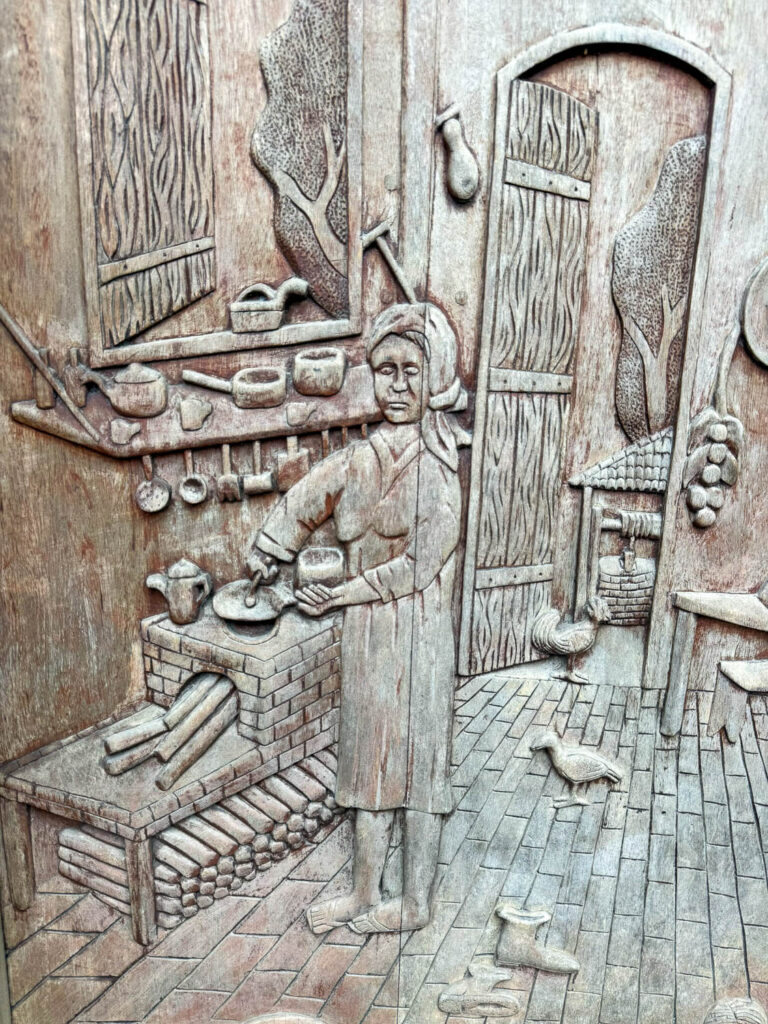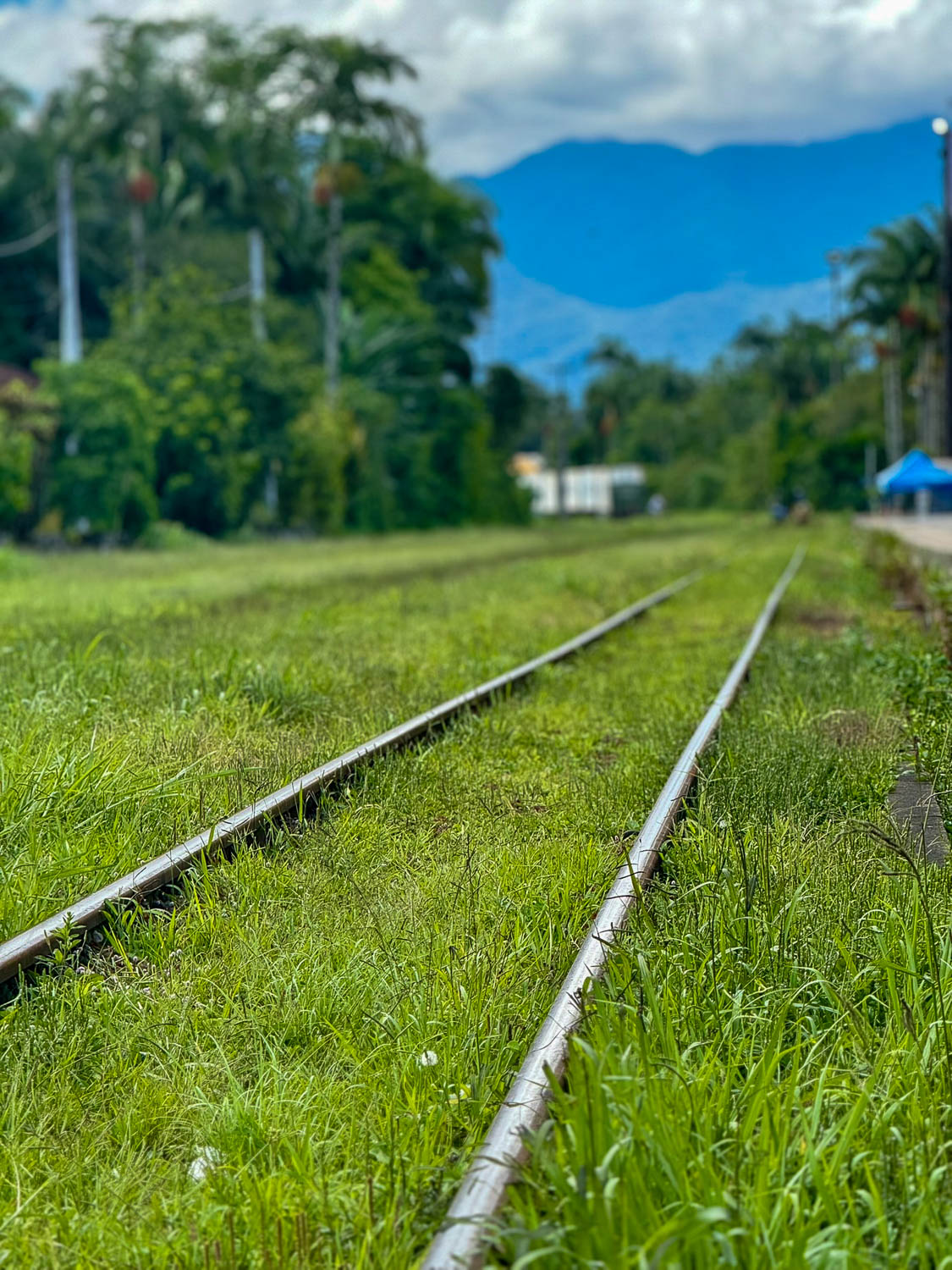
Most train rides are about getting you from point A to point B. And sure, the Serra Verde Express will do that – but this train ride is more about everything in between. After years of flights, ferries, and long-haul bus rides, the Serra Verde Express stands out as one of those rare journeys where the transportation becomes the highlight.
Winding through Atlantic rainforest, mountain tunnels, and historic railway towns, the Serra Verde Express turns a simple transfer into one of Brazil’s most memorable overland journeys. This scenic train journey in southern Brazil winds from the modern city of Curitiba down to the picturesque town of Morretes, weaving through the lush Atlantic Forest and the rugged Mar Mountain Range.
This route, carved through dense jungle by determined engineers over a century ago, is now a living monument to Brazil’s natural beauty and human perseverance. Considered an engineering marvel for the time with 13 tunnels, over 30 bridges, and viaducts that include the impressive Viaduto do Carvalho, the Serra Verde Express is today a popular tourist attraction that offers hours of uninterrupted views of cascading waterfalls, towering canyons, breathtaking mountainous landscapes, and glimpses of local life along each curve of the track. Whether you’re chasing photo opportunities with a wide-angle lens, sampling delicious local food in a charming colonial town, or simply enjoying the relaxed atmosphere of the ride itself, this is a train journey you won’t soon forget.
Read on, fellow adventurers, as we explore everything you need to know about this incredible train ride – one for travelers of all ages and one that will leave you saying “Wow, we can’t believe we did that!”. Because if you have the time, the Serra Verde Express is arguably one of the best (and indeed most exciting!) things to do during any visit to Paraná State.
Quick Tips
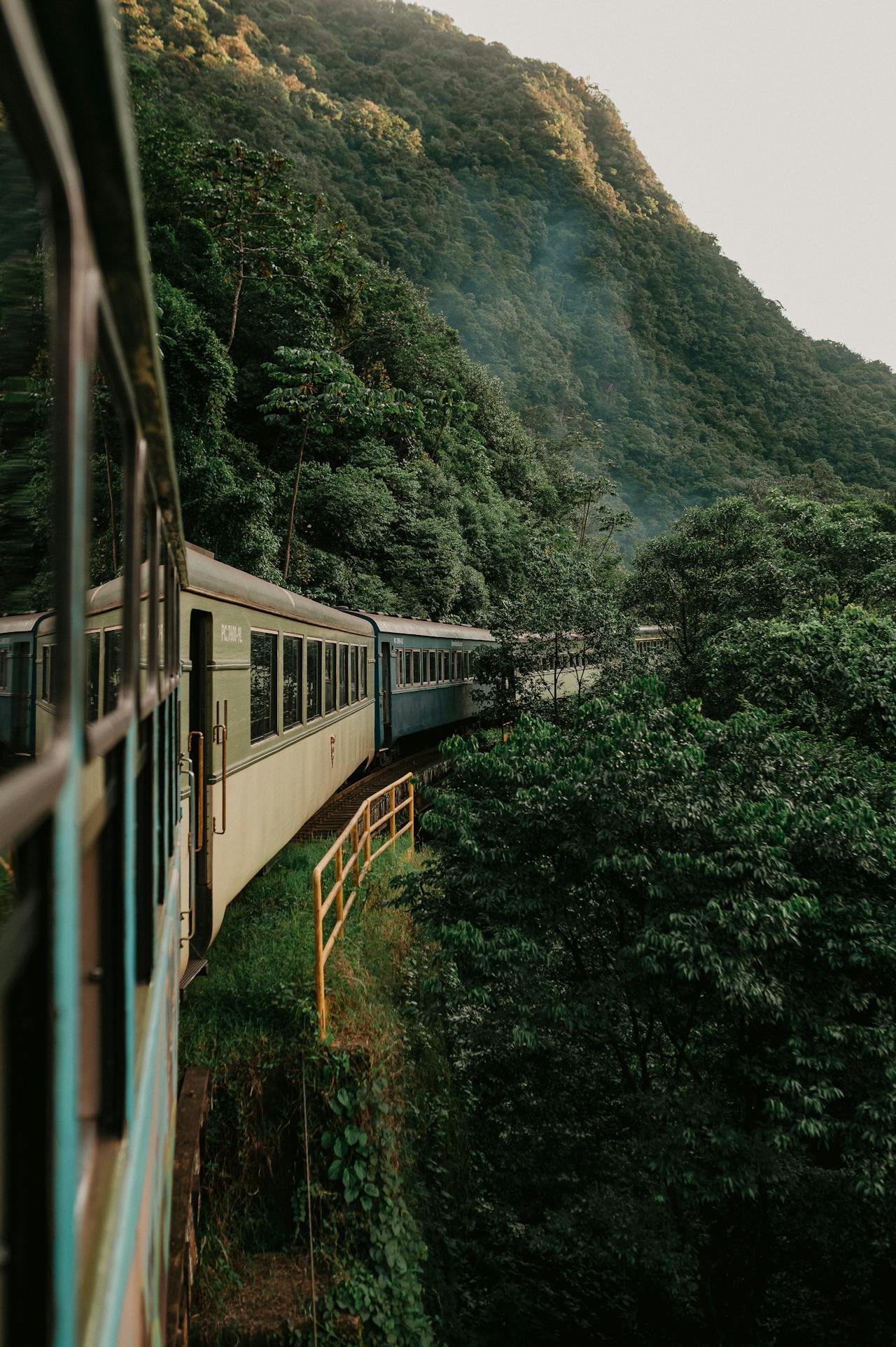
Here are some insider tips to help you make the most of your visit to the Serra Verde Express.
- The Serra Verde Express is one of the most impressive mountain railways in the world, celebrated for its technical ingenuity and the spectacular, breathtaking landscapes through which it passes.
- The best time to visit is during Brazil’s dry winter months (March to September), when visibility and photography are at their finest.
- The Serra Verde Express is one of the most popular attractions in Brazil, and tickets can sell out quickly, especially on weekends and around Brazilian holidays. It’s highly recommended to reserve tickets in advance.
- Ticket prices vary depending on the class (Tourist, Boutique or Luxury), amenities and inclusions, but the booking process itself is simple and straightforward.
- The Serra Verde Express departs daily from the train station in Curitiba, taking passengers on a 3.5-to-4-hour ride through Brazil’s lush Atlantic Forest (Mata Atlântica) to the historic town of Morretes.
- Most travelers choose to take the train one way, and then return to Curitiba either via private transfer or public bus. Another option is to book tickets through a tour operator, who will generally bundle train tickets, transfers, and meals.
- The best views when departing Curitiba are from the left side of the train, where you’ll see waterfalls, canyons, bridges, tunnels, small rural villages, and mountains all unfold beneath you.
- Some of the highlights along the journey include the São João Bridge, the Viaduto do Carvalho and the Roça Nova Tunnel.
- Upon arrival into Morretes, be sure to try a traditional lunch of barreado.
- The Serra Verde Express offers incredible opportunities for photography, with dramatic scenery and ever-changing light throughout the journey.
- Weather can affect some travelers’ experiences of the Serra Verde Experience – but don’t let low clouds or rain also dampen your mood.
Follow these tips and you’ll be ready to visit the Serra Verde Express!
Plan Your Trip

Some links below may earn us a small commission at no extra cost to you. We’re truly grateful for your support, as it allows us to continue sharing meaningful travel experiences and practical travel insights with you. Read our full disclosure here.
Planning your visit? We’ve gathered recommended tours and activities, along with trusted travel tools, to help you explore with confidence and ease.
Tours & Experiences
Prefer additional options? Click below to discover more incredible experiences tailored just for you!
Browse top attractions in Morretes, Brazil.
Travel Essentials?
Planning the rest of your trip? These are the platforms we personally use when organizing our travels. For more planning tools, visit our Travel Resources page or browse current promotions on our Travel Deals page.
An Overview of the Serra Verde Express

For travelers seeking a truly authentic Brazilian experience, the Serra Verde Express train is more than just transportation — it’s a true adventure.
Fun fact. The Serra Verde Express is widely considered one of the most scenic train journeys in the world, often appearing on global “best train rides” lists.
The Serra Verde Express journey begins in Curitiba, the capital city of the state of Paraná, just over 400km (about 250mi) southwest of Sao Paulo and some 932m (almost 3,060 feet) above sea level. From Curitiba, the most popular route taken by this historic train heads southeast from the city, through Brazil’s lush Atlantic Forest (Mata Atlântica) – one of the planet’s most biodiverse ecosystems — and into Morretes, a small colonial town famous for its relaxed pace and regional cuisine — a sharp contrast indeed to the dramatic mountain crossing.
Fun fact. Whilst the core route for the Serra Verde Express is between Curitiba and Morretes, other options include continuing to the historic town of Antonina (another 40km (25mi) toward the Brazilian coastline), as well as special sunset train rides – the latter a much longer, 10-11-hour experience that returns to Curituba during sunset hours.
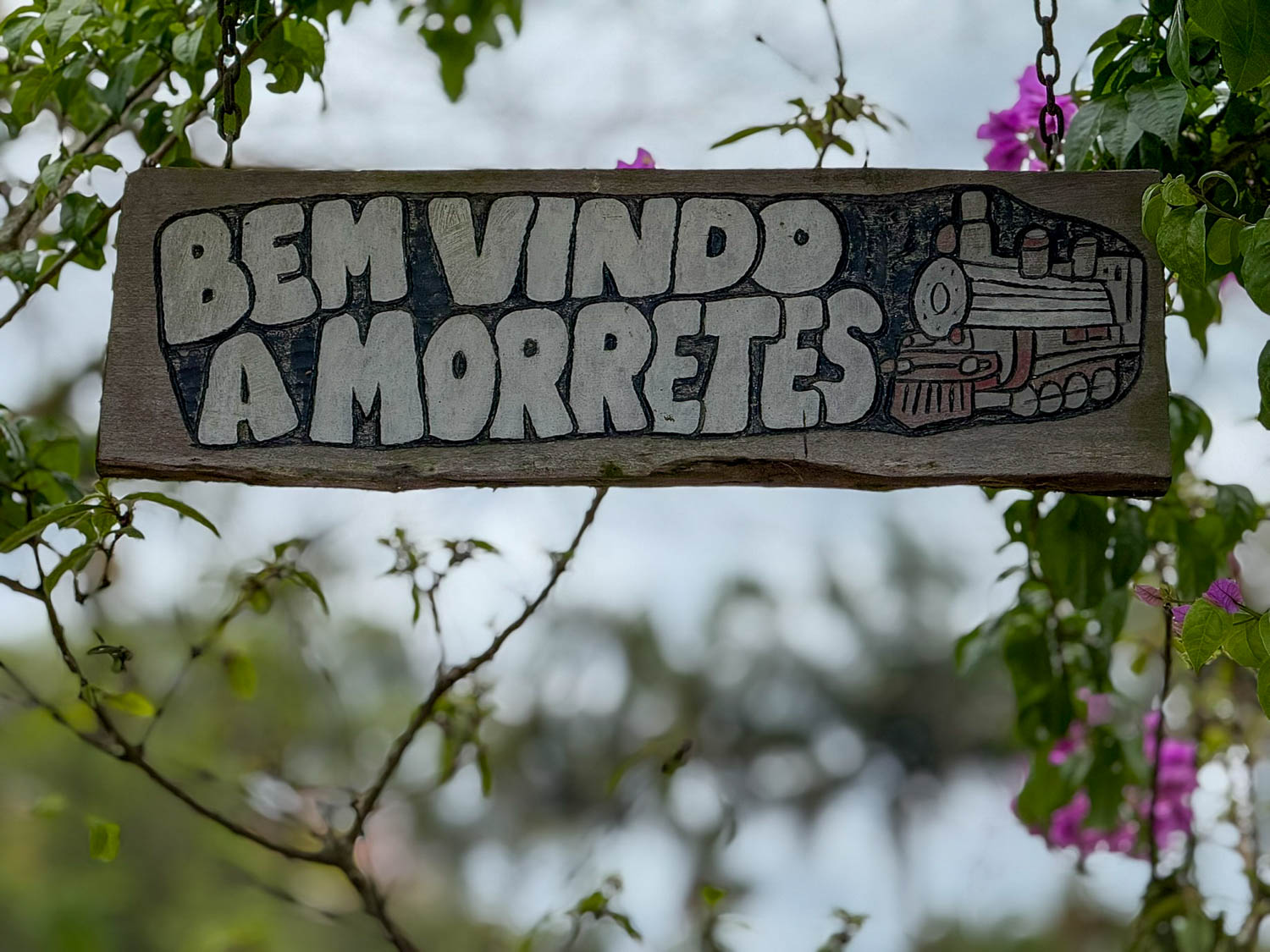
The Serra Verde Express route to the charming, well-preserved colonial town of Morretes spans just under 70km (43mi), with the journey taking anywhere from 3.5 to 4.5 hours. Most travelers choose to take the train one way, and then return to Curitiba either via private transfer or public bus (both of which take about a third of the time). This makes for a fun way to experience two entirely different perspectives of Paraná State in one day!
Fun fact. The Serra Verde Express descends nearly 1,000m (over 3,000 feet) from plateau to coastal plain in just a few hours.
Along this incredibly scenic journey you’ll pass through waterfalls, canyons, and small rural villages, before descending into the green valley where Morretes sits. The descent through the misty forest is particularly inspiring, as you watch the dense canopy open up to reveal tiny villages, the Nhundiaquara River, and finally the small town of Morretes, looking like something from another century.
Without question, jumping aboard the Serra Verde Express is a unique experience: it’s a slow, relaxed way to see a biodiverse region, offers an alternative to other modes of transport, and affords visitors a deep dive into Brazil’s natural and historical heritage.
History and Significance of the Serra Verde Express
Built in the late 19th century, the Serra Verde Express railway was originally built to connect the city of Curitiba with the coastal region of Paraná, linking mountain communities to ports and commerce routes, and helping transport goods (especially coffee, as Mike was excited to learn!), long before it became a tourist experience. This was no simple feat — engineers and workers carved the railway through the steep Mar Mountain Range, bridging deep valleys and cutting through tunnels hidden within the Atlantic Forest.
The railway today remains one of the most impressive mountain lines in the world, celebrated for its technical ingenuity and the spectacular, breathtaking landscapes through which it passes. Indeed, as you journey aboard the Serra Verde Express, you follow the very same path once traveled by these traders and settlers over a century ago, each mile revealing echoes of Brazil’s industrial past and its ongoing respect for its natural environment.
The modern-day Serra Verde Express experience officially launched in 1997, repurposing the historic Curitiba-Paranaguá rail line for tourism. Since then, it has welcomed millions of travelers from around the globe, permitting them the opportunity to journey back in time, tracing this historical route. Each coach has been beautifully restored and updated to offer comfortable seating, airy windows, and a relaxed atmosphere – without losing its vintage charm. From the moment you step aboard at the train station in Curitiba, the sense of nostalgia is palpable — the whistle blows, the train shudders to life, and you begin climbing into a world of emerald-green mountains and misty valleys.
What Makes This Train Ride So Different From Others?

What sets the Serra Verde Express train apart from other unique train rides around the world, is how beautifully it blends Brazil’s natural beauty with cultural heritage. The route itself was declared a UNESCO World Heritage candidate for its importance to ecological preservation: it cuts through the Atlantic Rainforest (Mata Atlântica), one of the world’s most biodiverse ecosystems, and home to hundreds of endemic species. Traveling by train here affords the visitor an opportunity to see this fragile environment without disturbing it — an example of eco-tourism done right.
A Route Shaped by the Landscape
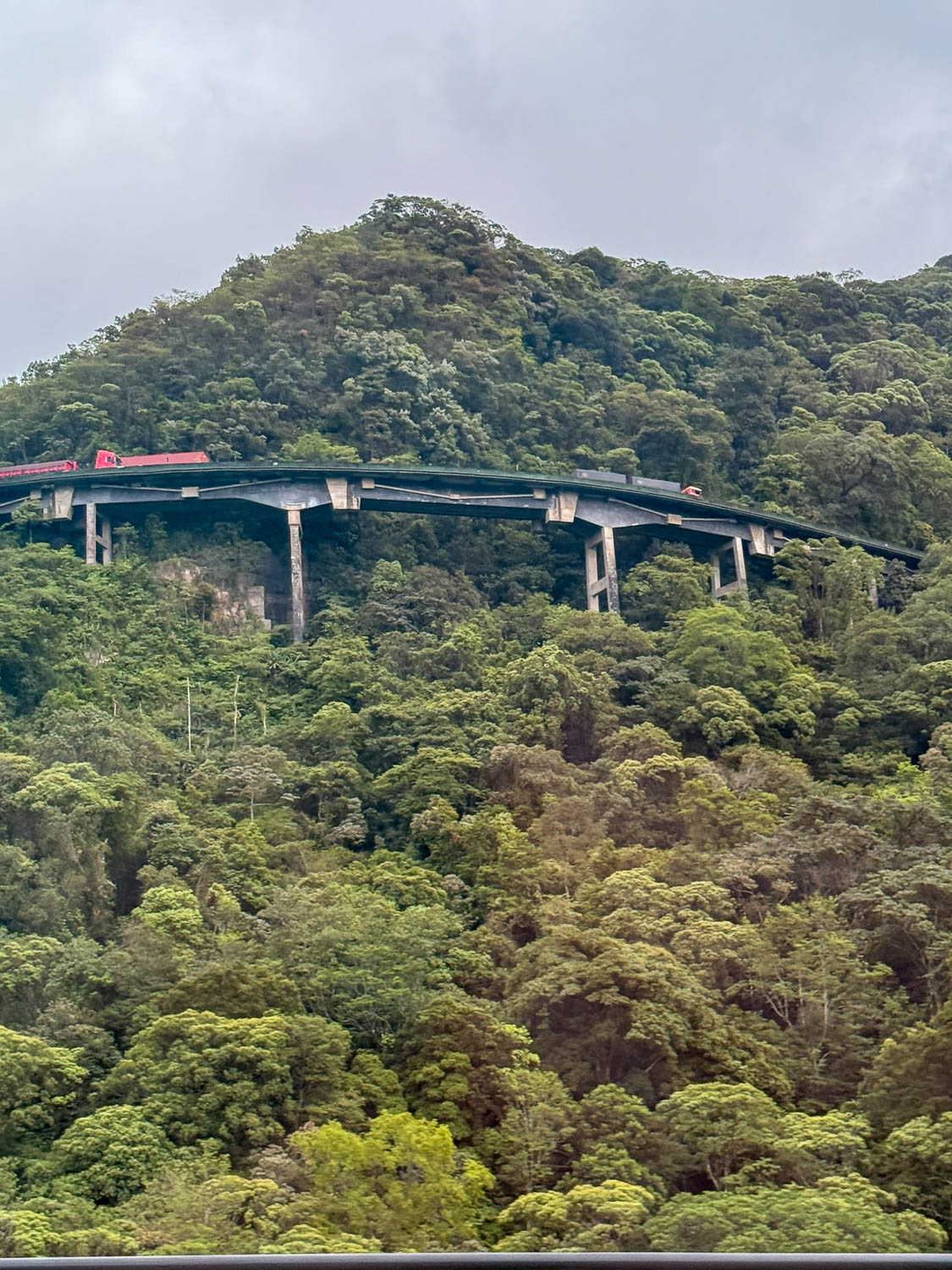
From the moment the Serra Verde Express departs Curitiba, the journey becomes a moving panorama of Brazil’s natural beauty. The route climbs through the Mar Mountain Range, crosses soaring viaducts, some sections of the track clinging so closely to the mountainside that it feels like the train is floating above the forest canopy. The train also snakes through 13 tunnels and crosses over 30 bridges, before descending over 900 meters (over 3,000 feet) through the Serra do Mar mountains, with each turn showcasing dense, lush rainforest, raging rivers, tiny villages, and cascading waterfalls.
Fun fact. Because of frequent mist and cloud cover through the mountains, no two trips on the Serra Verde Express ever look the same, even on consecutive days.
Insider tip. Although it’s tempting, don’t spend the entire train journey behind your camera lens. Without question, take a lot of photos — the breathtaking landscapes absolutely deserve it — but then just be still, letting it all sink in. If you’re like Beck, hang by the open window, permit your hair to be tousled by the mountain air, and keep your camera at the ready.
Halfway through the train ride, you’ll pass some of the route’s most iconic highlights:
- the São João Bridge (Ponte São João, one of the highest railway bridges in the world, standing 113m (370ft) tall and 112m (367ft) long)
Fun fact. The São João Bridge sits so high above the valley floor that early passengers reportedly refused to look out the windows whilst crossing. And on foggy days, the bridge can appear to “float” in mid-air, with the valley completely hidden below. It’s quite trippy!
- the Viaduto do Carvalho (suspending the train over a 305-meter (1,000 foot) sheer drop – yeah, we know Mike’s not the biggest fan of things like this!)
Fun fact. Workers building this section of the railway reportedly camped on narrow ledges carved into the mountains.
Fun fact. The viaduct is one of the most photographed points on the entire route — especially when the train curves and you can see multiple cars suspended over the drop!
- the Roça Nova Tunnel (where the train plunges briefly into darkness before emerging into sunlight over a sea of green)
Fun fact. Early steam locomotives filled the Roça Nova Tunnel with smoke, so passengers had to hold handkerchiefs over their faces whilst passing through.
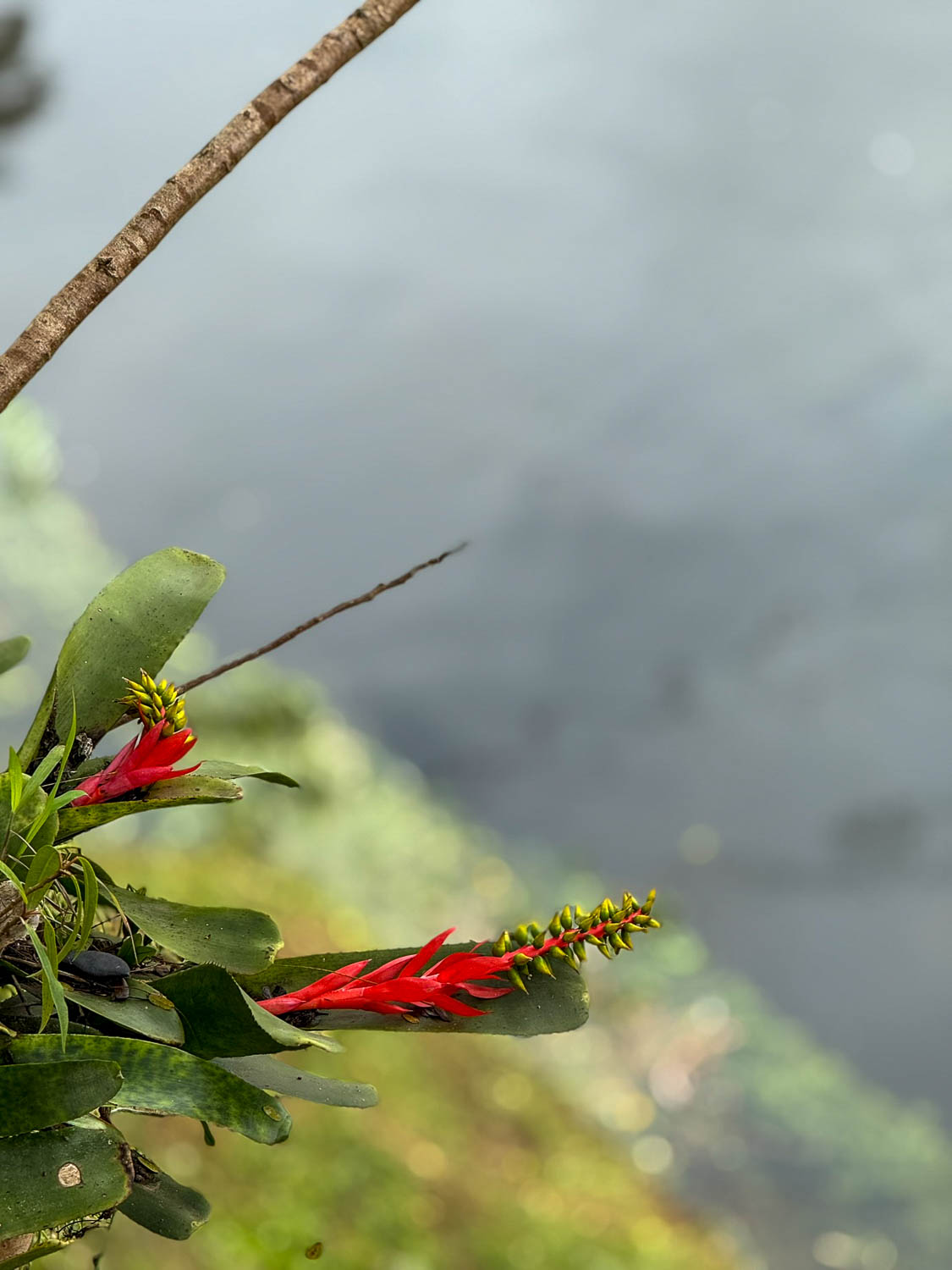
The Serra Verde Express train truly celebrates Brazil’s diverse geography and biodiversity – it’s a wonderfully unique opportunity to feel immersed in an environment that few get to experience so intimately. By the time you descend toward Morretes, the temperature rises, the scent of the forest fades into sea breeze, and the sounds of the jungle are replaced by the local sounds from the town below.
Insider tip. Traveling between March and September will afford visitors the clearest skies and the most uninterrupted, breathtaking landscapes.
Remember, this is a leisurely ride — a journey that’s taken at a slow, scenic pace. It’s little wonder this is often called the most beautiful train journey in Brazil!
Preparing for Your Serra Verde Express Adventure
Booking your Serra Verde Express adventure is straightforward, but a little advance planning ensures your train journey goes smoothly.
Train Departures and Arrivals
Trains depart from the Curitiba train station (the Estação Ferroviária de Curitiba, located at Av. Pres. Affonso Camargo, 306) most mornings, typically around 8.30am. The scenic ride to the historic town of Morretes takes about 3.5-4 hours, arriving into Morretes between 12pm and 12.30pm.
Insider tip. The Serra Verde Express does not run on some Mondays during the low season. Be sure to check out the official Serra Verde Express website for the most up-to-date schedules.
Insider tip. Be mindful of weather conditions. Heavy rains may delay departures or reduce visibility along the route.
We recommend arriving at the Curitiba train station at least 30–45 minutes early to check in, collect your ticket(s), and take some time to watch the crew prepare for departure — an experience that definitely builds anticipation for the beautiful journey ahead!
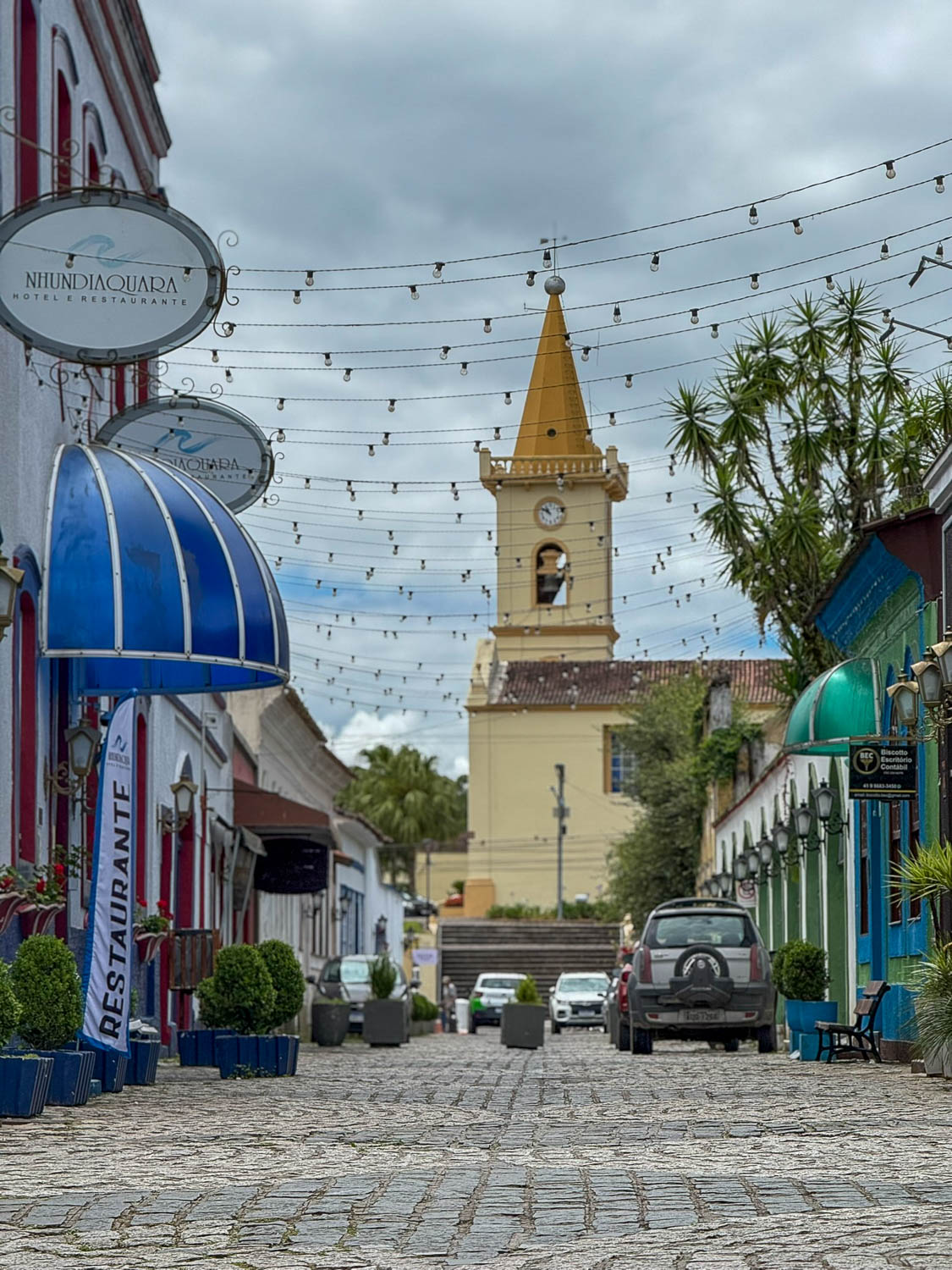
The majority of visitors pair their ride on the Serra Verde Express with a lunch stop and free time exploring the historic town of Morretes before returning back to Curitiba. This makes for the perfect day trip! And as the train glides into Morretes, the rhythm of the journey slows, replaced by the charm of cobblestone streets, colorful colonial façades, and riverside cafes. The picturesque town of Morretes is a highlight of any journey through southern Brazil, a place where history, hospitality, and delicious local food come together in one perfect stop.
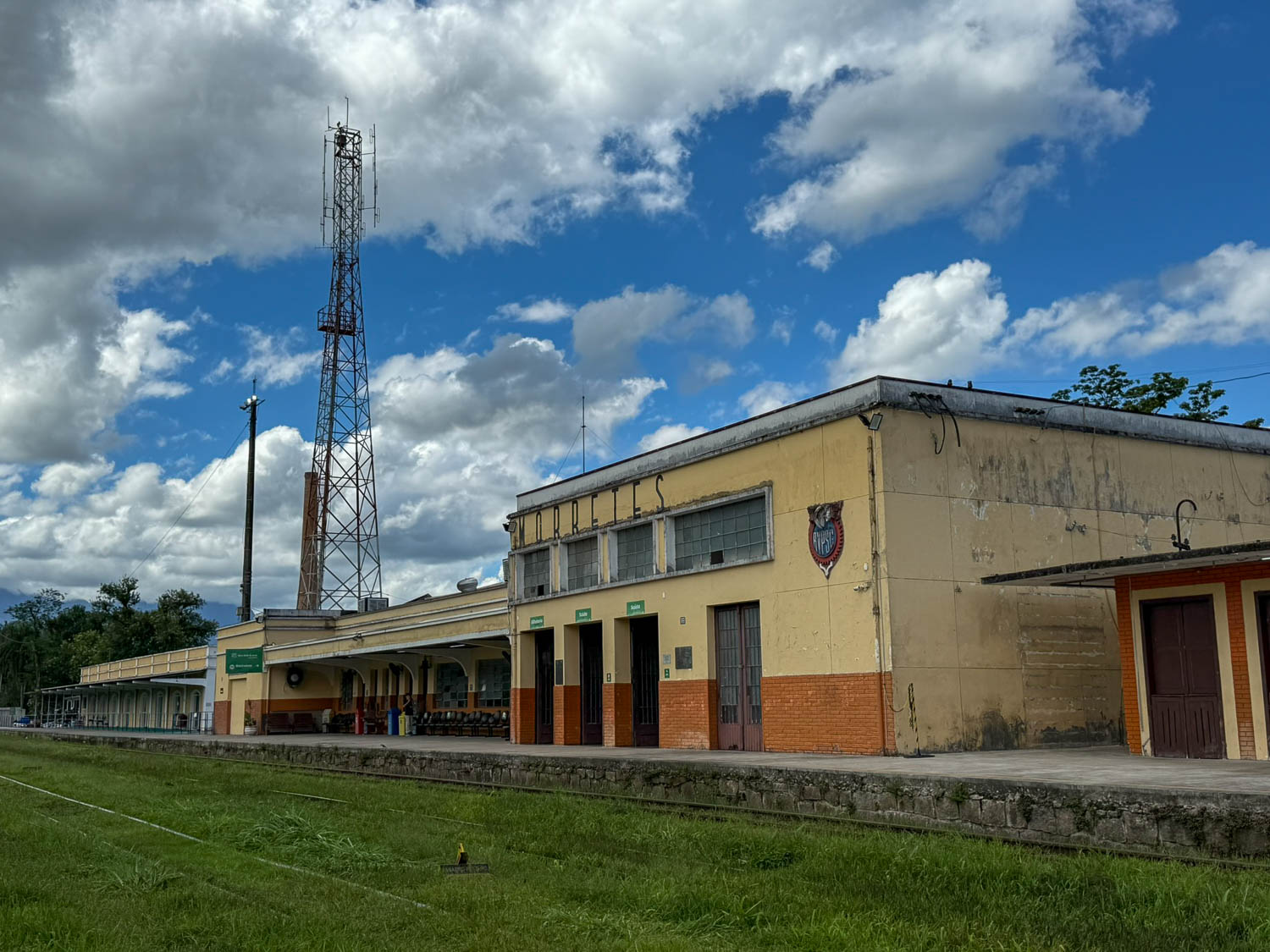
Insider tip. The train station in Morretes is conveniently located near the historic center, making it easy to begin your adventure on foot from the moment you step off the platform.
Want to learn more about visiting Morretes? Be sure to check out our detailed guide to this historic town, Morretes, Brazil: Best Things to See and Do in Paraná’s Gem. In this guide, we provide information on this once-thriving trading post (today a peaceful haven that retains its relaxed atmosphere and charming colonial town appeal), the town’s numerous historic plazas, its pastel-colored colonial buildings, and its small artisan shops and markets. Whilst you’re there, be sure to try the regional barreadostew, dining at a waterside restaurant along the Nhundiaquara River.
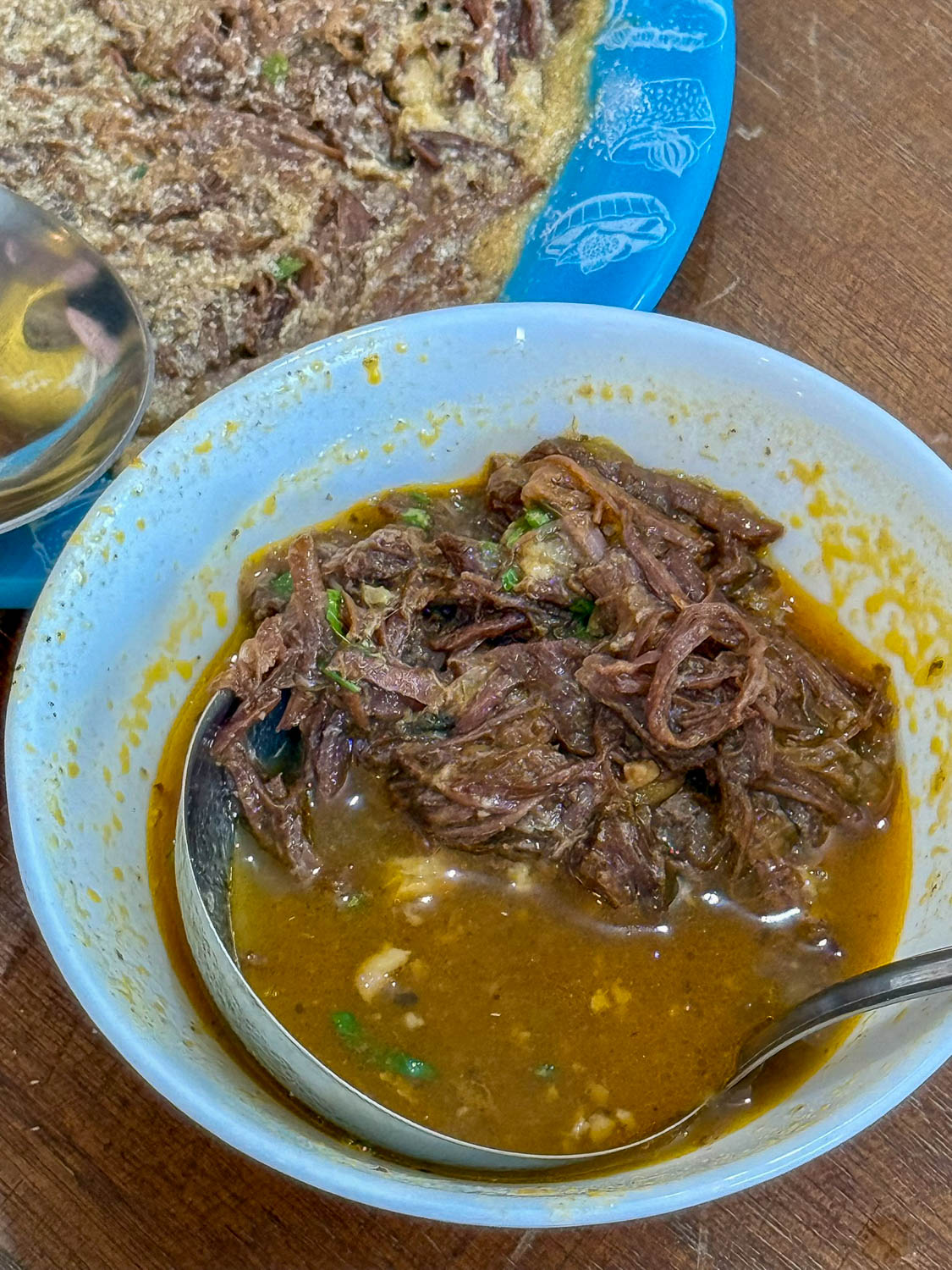
Insider tip. For those of you who choose to join an organized tour package for the Serra Verde Express, lunch in Morretes is often included, offering an easy way to taste barreadoand other regional specialties.
We’ve also written an article featuring the Flavors of Morretes – be sure to check that out too!
The Return Journey

When it’s time for the return journey to Curitiba, there are several options available, including numerous afternoon bus departures (a return journey of about 60-75 minutes), private shuttles (often provided as part of a tour package, and often returning via the incredibly scenic Estrada da Graciosa), or hopping back aboard the Serra Verde Express for another few hours of breathtaking views (yes, again!). Even though the return train trip is the least popular option (unless you’re choosing to stay overnight in Morretes), it does afford travelers another chance to appreciate the Atlantic Forest in changing afternoon light — a photographer’s dream, for sure!
Returning to Curitiba via bus – the most popular option for independent travelers not booking through a tour operator – offers travelers a faster trip through the highway’s scenic curves and a different perspective of the Serra do Mar Mountains. It also permits more time to enjoy Morretes’ cobblestone streets and local cuisine. The main bus station in Morretes is conveniently located (and easy to find!) and tickets can be purchased the same day of travel.

Insider tip. For those of you seeking to use public transportation within Brazil, we highly recommend using Busbud.com. This English-language booking platform allows travellers to search, compare, and book long-distance bus tickets across Brazil (and beyond). We found it incredibly easy to navigate, with excellent customer service when Beck accidentally booked our first bus for the wrong date (woops!). Our bus from Morretes to Curitiba with Viação Graciosa was incredibly comfortable and excellent value-for-money.
Insider tip. Unless you choose to arrange everything independently (very doable!), most tour operators will provide transport for your return journey to Curitiba (or to Antonina, if you prefer).
Whichever way you choose to return to Curitiba, it’s hard not to reflect on the sheer diversity of Brazil’s natural beauty — from cool highland cities to tropical forests and the stunning coastline beyond.
Serra Verde Express Tickets
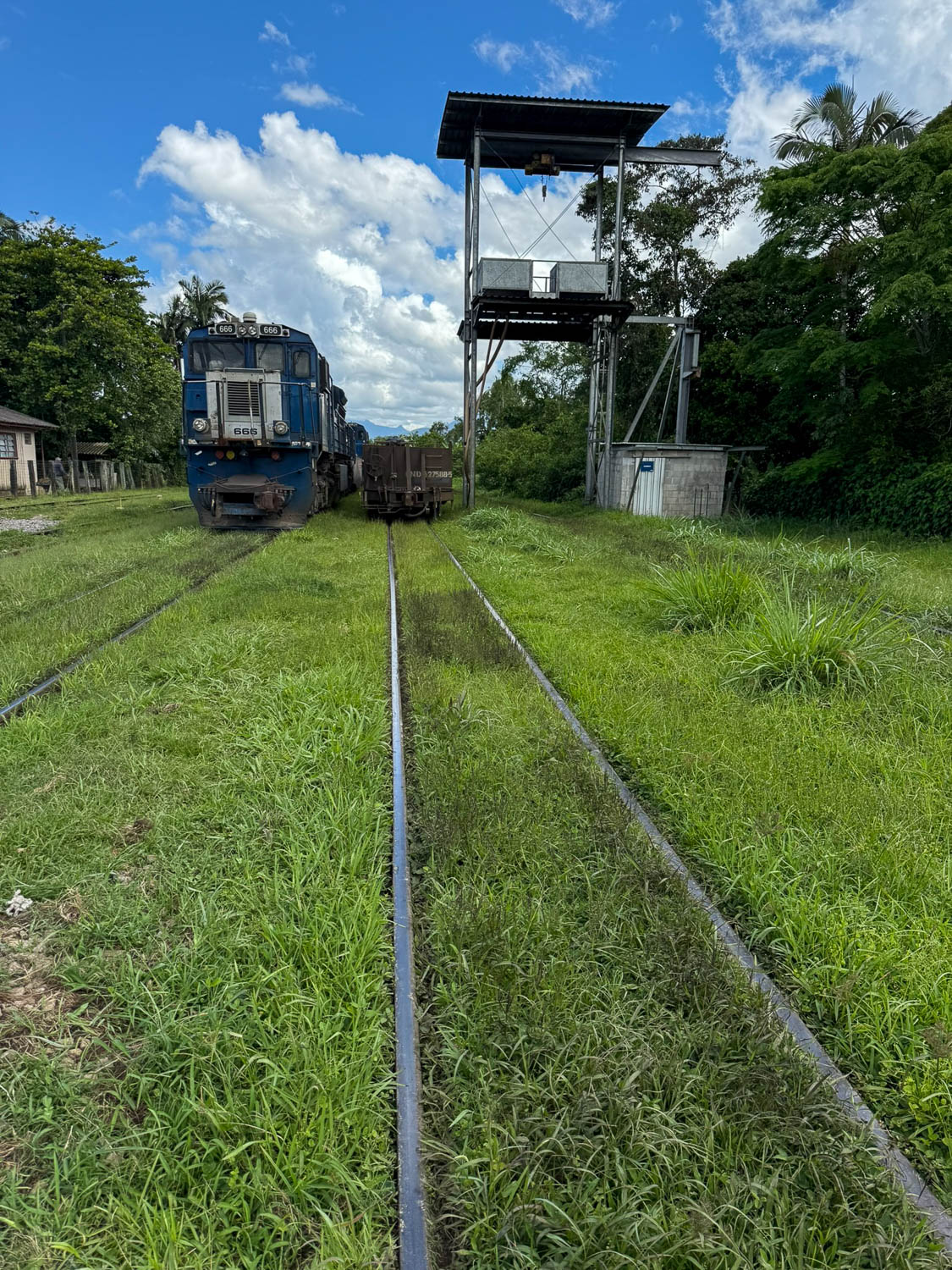
Purchasing Tickets
Ticket prices for the Serra Verde Express vary depending on the class, amenities and inclusions, but the booking process itself is simple and straightforward. You can reserve tickets in advance through the official Serra Verde Express website or purchase them directly at the station.
Insider tip. The Serra Verde Express is one of the most popular attractions in Brazil, and tickets can sell out quickly, especially on weekends and around Brazilian holidays (for example, school holidays – July, and December through February). We highly recommend booking your tickets well in advance through the official Serra Verde Express website, to help guarantee your preferred date, class and seat.
Insider tip. We’ve heard from some travelers that booking tickets from abroad can be challenging, due to payment and ID requirements. We did not, however, find this to be the case, and found reaching out to Serra Verde Express staff directly through WhatsApp was most beneficial – they were quick to respond, very friendly, and incredibly helpful in providing us options for purchasing tickets.
Ticket Prices
At the time of writing, the following one-way ticket prices were available (note that these values are approximate and may fluctuate with currency exchange):
- Tourist Class: R$165-$220 (US$32-$42)
- Boutique Class: R$370-$480 (US$71-$92)
- Luxury Class: R$580-$4720 (US$112-$139)
Insider tip. Many tour packages from Curitiba or São Paulo bundle train tickets, transfers, and meals — a convenient option if you prefer a seamless travel experience and don’t want to have to worry about purchasing train tickets separately.
Choosing Your Class
When booking your Serra Verde Express train tickets, you’ll have several options that can ultimately shape your overall travel experience. For example, there are three main travel classes on the train: Tourist, Boutique and Luxury, each offering a slightly different level of service and comfort (as well as crowd size).
Fun fact. Historically, class divisions on railways weren’t just about comfort — they reflected social hierarchy. Today, it’s much more about experience style.
We provide below an overview of these three train classes.
Tourist Class
Think of this as a “basic scenic train ride” with standard service – nothing fancy here. Tourist class offers travelers standard seating (comfortable yet simple), large windows, an onboard guide (but only in Portuguese), and access to onboard service that includes basic, light snacks and non-alcoholic beverages. This class is the most popular and affordable choice, and the best option for travelers who want to focus on the views rather than the frills: no distractions, just an authentic connection to the breathtaking landscapes beyond your window.
Fun fact. Tourist class most closely mirrors how early passengers would have experienced the Serra Verde Express route — minus the coal smoke and soot.
Boutique (Imperial) Class
Boutique class raises the level of comfort a wee bit, with comfortable seating, larger windows, bilingual guides, and included snacks and drinks. You’ll also find themed interiors and unique, often vintage-inspired carriages. This is an excellent choice if you want a bit more comfort and better views, with boutique cars often described by rail fans as the “sweet spot” — this is where historic charm and modern design quietly shake hands.
Luxury (Premium or Litorina) Class
Luxury class is your highest level of comfort: exclusive, high-end carriages, with comfortable, lounge-style seating, personalized service, and cars that offer open windows, and a complimentary gourmet breakfast or light lunch – oh, and an open bar! Bilingual guides are also available in the Luxury class, and with fewer passengers per compartment, travelers are afforded additional space to move around and mingle. These carriages are an excellent choice for couples, photographers, or anyone seeking a quieter, more intimate setting – and indeed for those who appreciate a little indulgence along the way.
Insider tip. Luxury class on the Serra Verde Express leans more toward heritage elegance than flashy modern luxury — think classic rail romance, not private jet energy.
Insider tip. Having a tour guide onboard who you can understand (for us, that means the Tourist class can be a challenge) is a huge benefit. The guide will narrate the history and natural highlights along the route.
Choosing The Right Seats

Alrighty, so now that you’ve considered all the class options and have selected the best-fit for your travel style, which seat should you choose?
If you’ve boarded the train in search of the best views and the most striking vantage point for photos, always choose seats on the left side of the train when departing Curitiba. This side of the train faces the mountain drop-offs and suspension bridges, and is widely recommended for the most dramatic views of valleys, bridges, tunnels, and rainforest scenery.
Insider tip. Some Tourist class seats can be fixed facing backward in one direction. Be sure to keep this in mind if motion sickness is a concern. Although seats are assigned at the time of booking your tickets, the direction they face often depends on which way your particular train car was coupled (which can change). Mention any motion sickness concerns you may have during booking, or arrive early at the station to ask staff, though note that guarantee of a forward-facing seat is not possible.
For the return trip to Morretes – should you choose it – sit on the right side of the train, for the best panorama back up the Serra do Mar Mountains.
Insider tip. No matter where you end up sitting, keep your wide-angle lens ready to capture the depth of the Atlantic Forest and the grandeur of the mountains spread out below you. In the morning, the sunlight filters through the forest and spectacularly illuminates the valleys below.
The Onboard Experience: A Sense of Community

What makes the Serra Verde Express stand out isn’t just its scenery (though let’s be honest, that is absolutely a highlight!) — it’s the experience onboard. The train has been thoughtfully designed to blend classic railway charm with modern comfort, ensuring every passenger feels at ease during the ride. The comfortable seating is arranged for optimal viewing, and large windows let you fully absorb the scenery.
For many, however, the highlight of the journey is the sense of community aboard this 4-hour train ride. The relaxed atmosphere invites travelers to connect with fellow passengers, exchange stories, listen as local guides bring the region’s history and culture to life, or simply sit quietly as Brazil’s natural beauty unfolds outside. It’s common to see fellow passengers exchanging travel tips, pointing out some of those breathtaking landscapes, or leaning across aisles to take photos together. It’s certainly heart-warming, as the Serra Verde Express has a way of bringing people closer — perhaps because it slows us all down long enough to notice what’s right in front of us.
Tips For Your Serra Verde Express Adventure

The Serra Verde Express is one of those journeys where a little local know-how can elevate the entire experience. Whether it’s understanding the route, planning your timing, or knowing what to expect along the way, preparation helps you settle in and simply enjoy the ride. With that in mind, here are some practical, traveler-tested tips for taking the Serra Verde Express.
- Be sure to pack insect repellentand wear light, comfortable clothing. The lush Atlantic Forest can be lively with bugs during the warmer, more humid months.
- It might seem counter-intuitive, but also pack a light sweater. Curitiba’s mornings can be cool, whilst Morretes is humid and tropical.
- Pack water and snacks, especially if you’ve chosen to travel in Tourist class. Like us, you’ll probably want more food than what’s provided.
- Carry a credit card for onboard services, and for dining and shopping in Morretes. Note, however, cash is still useful at smaller cafés and for local market vendors in town.
- Always keep your camera handy! The middle portion of your train journey offers the best views of cascading waterfalls and breathtaking landscapes — and, as you know, especially from the left side!
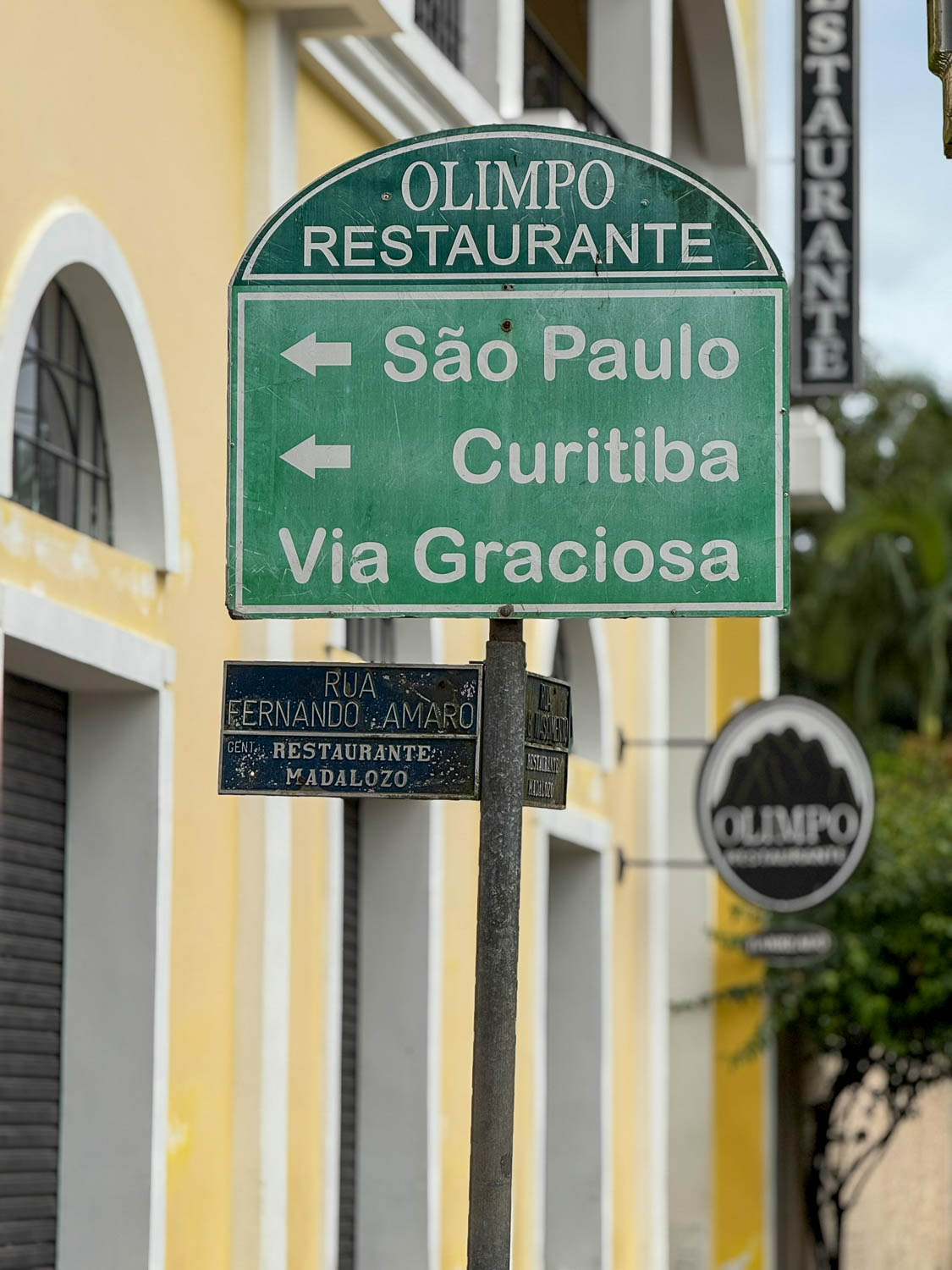
- Consider staying overnight in the charming colonial town of Morretes to truly soak in its relaxed atmosphere, before heading back to Curitiba, or toward São Paulo or the stunning beaches nearby.
- Weather can affect some travelers’ experiences of the Serra Verde Experience – but don’t let low clouds or rain (which can significantly obscure views) also dampen your mood. This is still one incredible train journey!
- Don’t forget that part of what makes this scenic train ride so special is its slower pace. There’s no rush, no traffic, no screen distractions (seriously, unless you’re using it for your camera, put that phone down!) — just nature, gentle conversation, and time to breathe.
Photography Tips
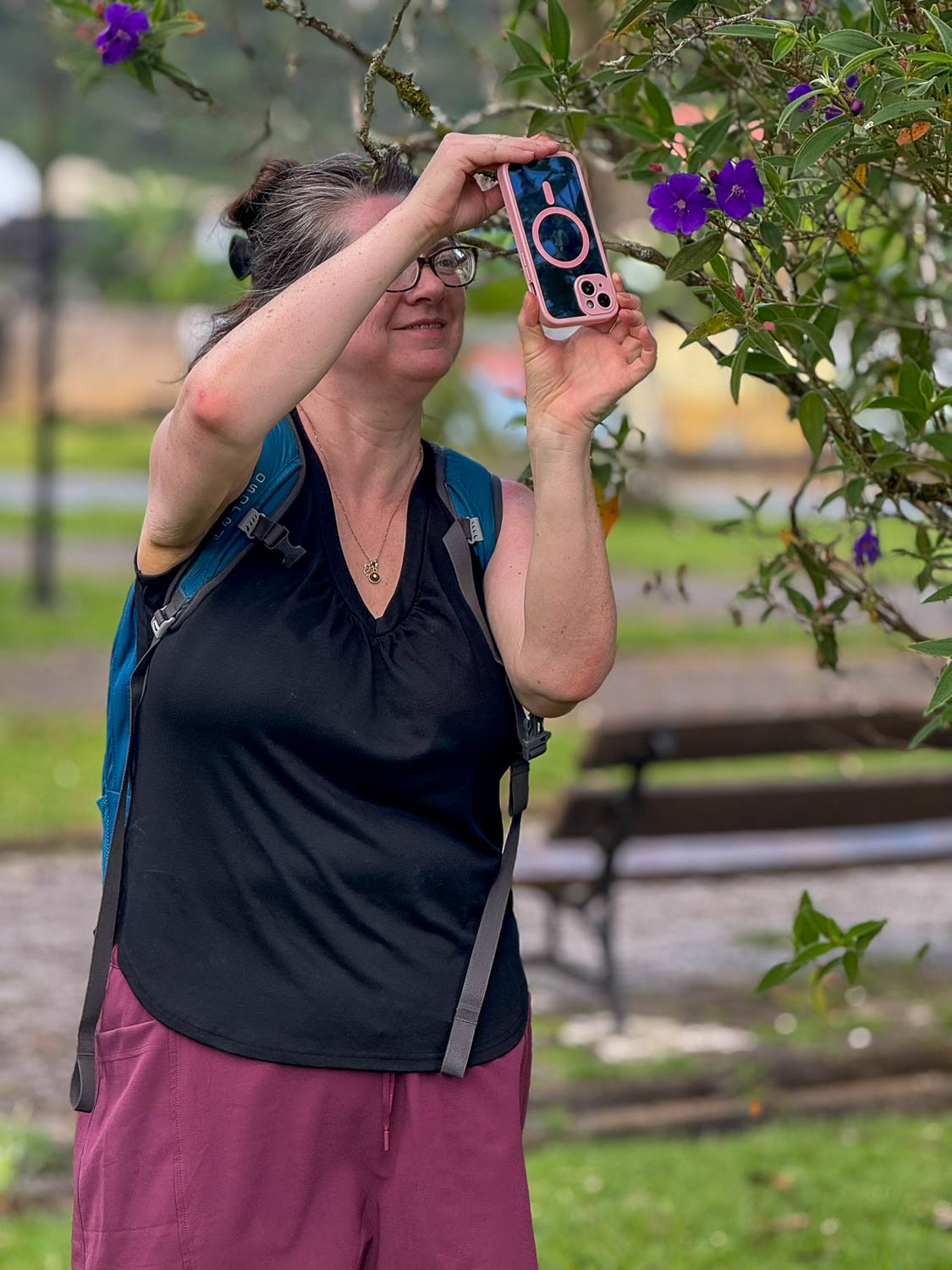
The Serra Verde Express offers incredible opportunities for photography (yes Beck, we’re looking at you, kid!), with dramatic mountain scenery, lush Atlantic Forest, a steady rhythm of tunnels and bridges, and ever-changing light throughout the journey. Because the train is always moving – and landscapes are constantly unfolding outside your window – capturing those postcard-worthy moments can be both challenging and incredibly rewarding. Here are a few simple photography tips to help you make the most of the experience.
Fun fact. Train photography has its own niche community — and scenic heritage routes like the Serra Verde Express are bucket-list routes for rail photographers.
- Keep your camera easily accessible — the best views often appear with very little warning!
- If you’re photographing from inside the carriage, try to clean your window before shooting. Condensation, fingerprints, and dust can soften otherwise incredible shots.
- Morning light tends to be better for photos on the forested slopes. That being said, if you choose to take the return journey on the train during the late afternoon, the changing light paints the Atlantic Forest in gold and shadow.
Fun fact. On misty days, photos taken from the Serra Verde Express can sometimes look more dramatic than on clear days — fog adds depth and contrast in mountain landscapes.
- Bring a camera or phone with plenty of storage — the scenery changes constantly … and just when you think you’ve captured the perfect shot, another one comes into view!
- If possible, sit on the side of the train facing the valley (left side on the way out of Curitiba, right side on the way back). Many of the most dramatic views open outward toward the Atlantic Forest.
- Use burst mode (or live photo mode) when crossing bridges or exiting tunnels. As the light and scenery change quickly in these moments, you’ll be able to capture numerous shots within a few short seconds.
- Consider traveling with a wide-angle lens (or mode) to capture the scale of the mountains and bridges.
- Avoid using flash, as it will reflect off the glass of the windows and potentially wash out the scenery outside.
Fun fact. Somewhat contrary to the last tip above, window reflections sometimes accidentally create double-exposure-style photos. Think “amazing Brazilian forest plus old-style interior carriage lights” layered together.
- If your camera or phone permits it through manual settings, slightly increase your shutter speed (to around 1/125 to 1/250 of a second) to help compensate for train movement and keep your imagery sharp.
- When you’re at the departure and/or arrival stations in Curitiba or Morretes, make sure to step back and capture the train itself — some of the best storytelling images include the train set against the surrounding landscape.
- If you’re into live footage, try shooting a short video clip when crossing major bridges or entering tunnels along the route — movement is part of the story of this journey.
Fun fact. Many passengers end up taking far more photos in the first hour of the journey, then switch to video once they realize how quickly the scenery changes.
Final Thoughts

Whether you’re a seasoned traveler or simply curious about exploring Brazil’s natural beauty in a new (or different) way, the Serra Verde Express delivers an experience that’s as meaningful as it is visually spectacular. This isn’t just your typical train ride: it’s a living timeline of engineering ambition and Brazilian heritage. From the moment the wheels start turning in Curitiba, to the first glimpse of the protected Atlantic Forest, and finally to the colonial charm of Morretes, this is a journey that connects you to the heart and soul of southern Brazil.
Some see this journey — and the engineering feat behind it — as a metaphor for life: a testament to what determination and vision can carve through stone. It’s where nature, history, and curiosity collide. For others, it’s the perfect balance of engineering awe and travel comfort, with windows open to fresh mountain air, snacks served with a smile, and moments of quiet wonder shared with fellow passengers. For some travelers, this becomes their favorite memory of time spent in Brazil – a moment that combines authentic history with the luxury of slowing down … a rare gift in today’s fast-paced world of modern travel.
We often hear that it’s not the destination, but the journey itself – and the Serra Verde Express epitomizes this very ideal. It’s about savoring every moment of the ride. Whether you’re in Tourist class or Luxury class, what matters most is being present (and yes, maybe snapping a few once-in-a-lifetime photos along the way!). This is adventure distilled: wild yet gentle, historical yet alive – and it has a way of making you fall in love with travel all over again.
If you’re looking to add something extra special to your Brazilian itinerary, this is it: a scenic rail journey from Curitiba to Morretes through the Serra do Mar Mountains, perfect for solo travelers, couples, families, and friends alike. Pack your camera, book those train tickets, and get ready for one of the most remarkable rail journeys you might just ever take. The Serra Verde Express is calling — and trust us, you won’t want to miss the boarding call.
FAQs
What is the Serra Verde Express?
The Serra Verde Express is a scenic train journey in Paraná, Brazil, running from Curitiba to Morretes through the Atlantic Forest and Serra do Mar Mountains. It is widely considered one of the most beautiful railway experiences in Brazil.
Is the Serra Verde Express worth it?
Yes, the Serra Verde Express is considered one of the most scenic train journeys in Brazil, offering views of waterfalls, mountains, bridges, and the Atlantic Forest. For many travelers, it is a highlight of visiting Paraná.
How long is the Serra Verde Express train ride?
The train ride from Curitiba to Morretes typically takes between 3.5 and 4 hours, depending on weather conditions and operational factors along the route.
How do you buy Serra Verde Express tickets?
Tickets can be purchased online through the official Serra Verde Express website, through tour operators, or directly at the train station in Curitiba. Booking in advance is recommended, especially on weekends and holidays.
Which side of the train is best on the Serra Verde Express?
When traveling from Curitiba to Morretes, the left side of the train offers the best views of valleys, bridges, waterfalls, and the Atlantic Forest.
Explore More Of Brazil
-
Brazil Regional Cuisine: A Guide to Flavors Across Brazil
Brazil regional cuisine reflects the country’s geography and cultural diversity, with each region offering distinct flavors, ingredients, and traditional dishes shaped by local traditions.
-
Traditional Brazilian Food: Iconic Dishes, Snacks, and Desserts
Traditional Brazilian food blends rich cultural influences with bold, comforting flavors. From feijoada and moqueca to pão de queijo and brigadeiros, this guide highlights Brazil’s most iconic dishes, snacks, and desserts.
-
Brazilian Food: A Guide to Brazil’s Culinary Culture
Brazilian food blends Indigenous, African, and Portuguese influences into one of the world’s most diverse cuisines. From feijoada and churrasco to regional flavors across Bahia and the Amazon, this guide explores Brazil’s food culture, dining traditions, and what to expect.
-
Maceio Brazil: Best Things To Do + Travel Guide
Maceio, Brazil is one of the country’s most beautiful coastal destinations, known for turquoise waters, natural pools, palm-lined beaches, and easy access to the stunning Coral Coast. This guide covers the best things to do, top beaches, day trips, local cuisine, where to stay, and practical travel tips for planning your visit.
-
Best Things To Do in Embu das Artes: Travel Guide
Embu das Artes, just outside São Paulo in Brazil, is a colorful colonial town known as the “City of the Arts.” Famous for its weekend Feira de Artes market, galleries, artisan shops, and museums, it’s one of the most creative cultural day trips from São Paulo.
-
Morretes Brazil: Best Things to Do in Paraná’s Gem
Morretes, Brazil is a charming colonial town in Paraná nestled within the Atlantic Forest. Famous for the scenic Serra Verde Express train, the Nhundiaquara River, and the traditional barreado dish, Morretes offers cobblestone streets, historic churches, and relaxed riverside dining just a short trip from Curitiba.
-
Port Santos, Brazil: Essential Cruise and Travel Guide
Port Santos is the largest port in Latin America and the main cruise gateway to the coastal city of Santos, Brazil. This guide explains how the port operates, what cruise passengers can expect on arrival, and the best things to do nearby — including beaches, museums, historic sites, and day trips to São Paulo.
-
Paraty Brazil Travel Guide: Best Things To Do in Town
Paraty, Brazil is a UNESCO World Heritage colonial town on the Costa Verde known for its cobblestone streets, colorful historic center, tropical islands, and nearby beaches. Visitors can explore Paraty Bay by boat, hike the historic Gold Trail, discover Atlantic Forest landscapes, and enjoy one of Brazil’s most charming coastal destinations.
-
Buzios, Brazil Travel Guide: Best Things To See and Do
Buzios is a coastal resort town in Brazil located about three hours from Rio de Janeiro, known for its beaches, walkable center, and relaxed seaside atmosphere. This Buzios travel guide covers the best things to do, top beaches, Rua das Pedras, the Orla Bardot Boardwalk, where to stay, nightlife, festivals, and practical travel tips.