Africa

  • Best Things To Do In Rwanda: Your Top Travel Guide

    Rwanda, often called the Land of a Thousand Hills, is one of Africa’s most beautiful and compelling destinations. Part of the Great Lakes Region, and nestled in the heart of East Africa, this small, landlocked country has made a name for itself, not only for its breathtaking views, incredible wildlife, and rich biodiversity, but also for its remarkable story of resilience and transformation.

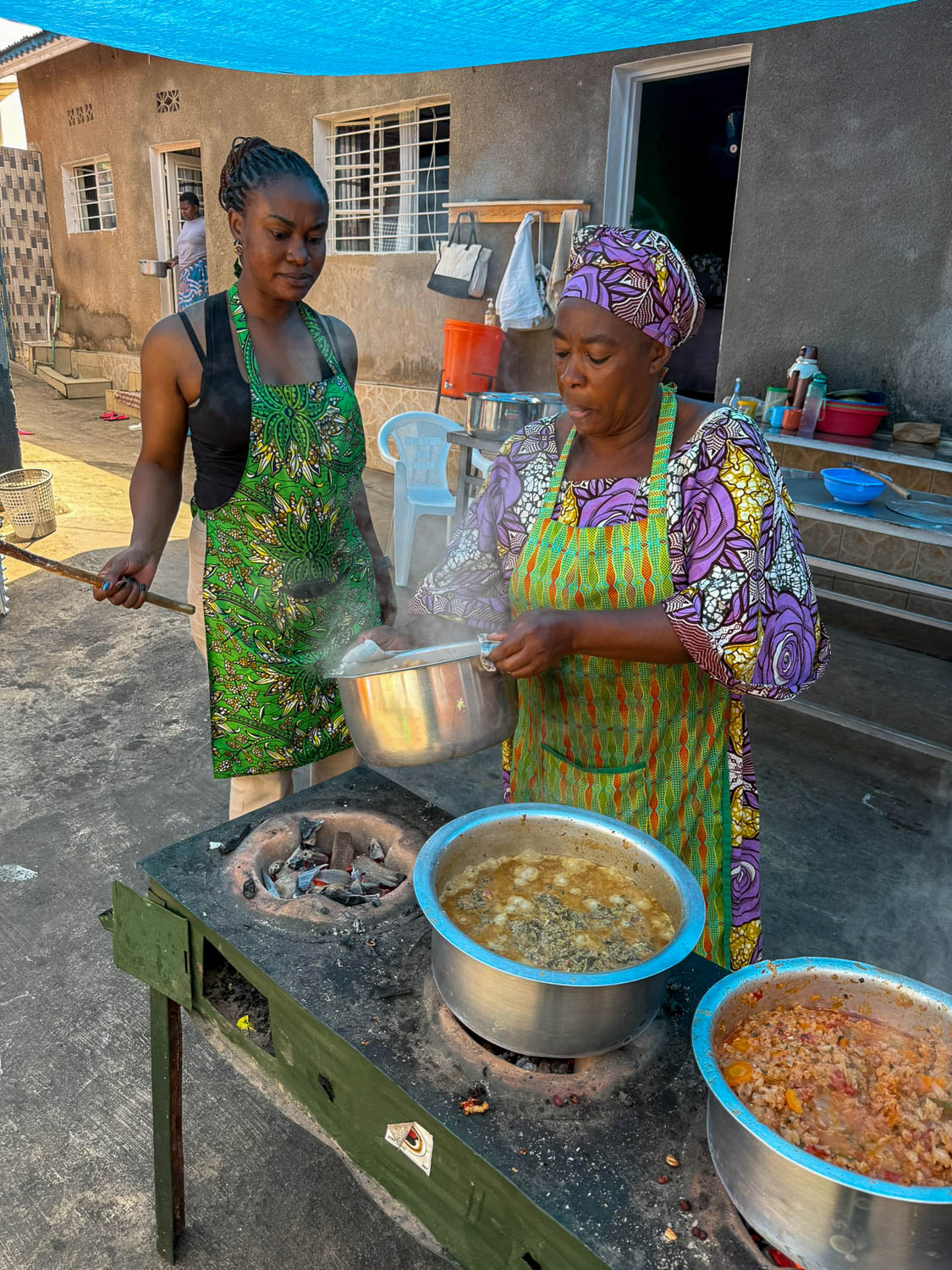
    Whether you’re heading to Rwanda to chase unique experiences (ever trekked to seek out endangered mountain gorillas in their natural habitat?), longing for a deep connection to local communities (we highly recommend taking a cooking class in Kigali with the Nyamirambo Women’s Center), or simply craving an adventure that balances natural beauty with cultural depth (Lake Kivu is a geological wonder in its own right!), there are countless things to do in Rwanda – experiences you’ll be talking about with friends and family well beyond the time you return home. 

    Rwanda is certainly a country of many dimensions, and we want to share with you those that extend beyond the international news headlines: a place of warm hospitality, deep traditions, and a culture that thrives alongside its stunning natural beauty, all of which help to tell a story of resilience that continues to shape the nation today.

    Read on, dear wanderers, as we guide you through some of the very best that Rwanda has to offer. Whether you’re planning your first visit here, or simply curious to learn more, we’ve provided an overview here that we hope will help to inspire your journey.

    Insider tip. No matter where you are in Rwanda, the last Saturday of each month is always dedicated to Umuganda, where residents participate in a nationwide community clean-up. Opening hours and activities on offer may be modified as a result.


    Quick Tips
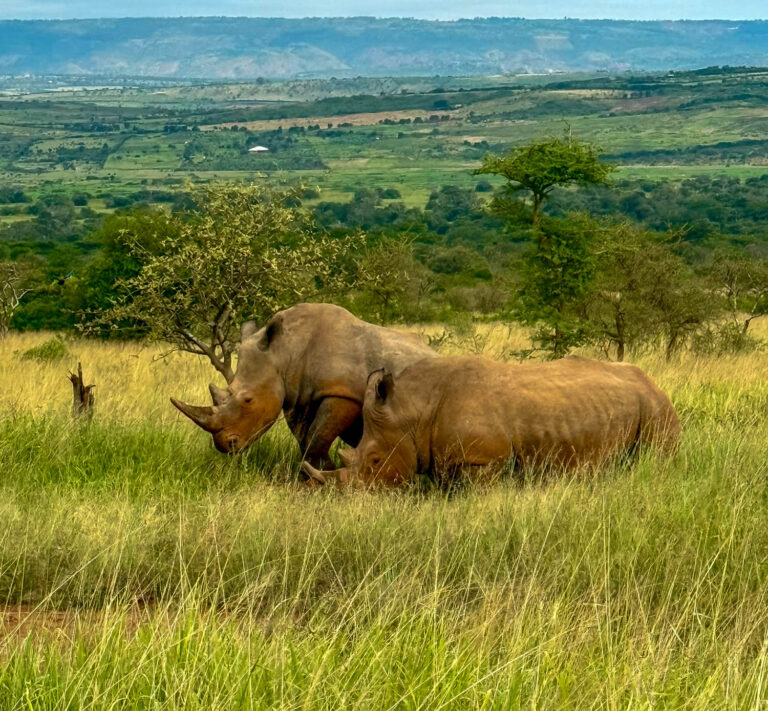
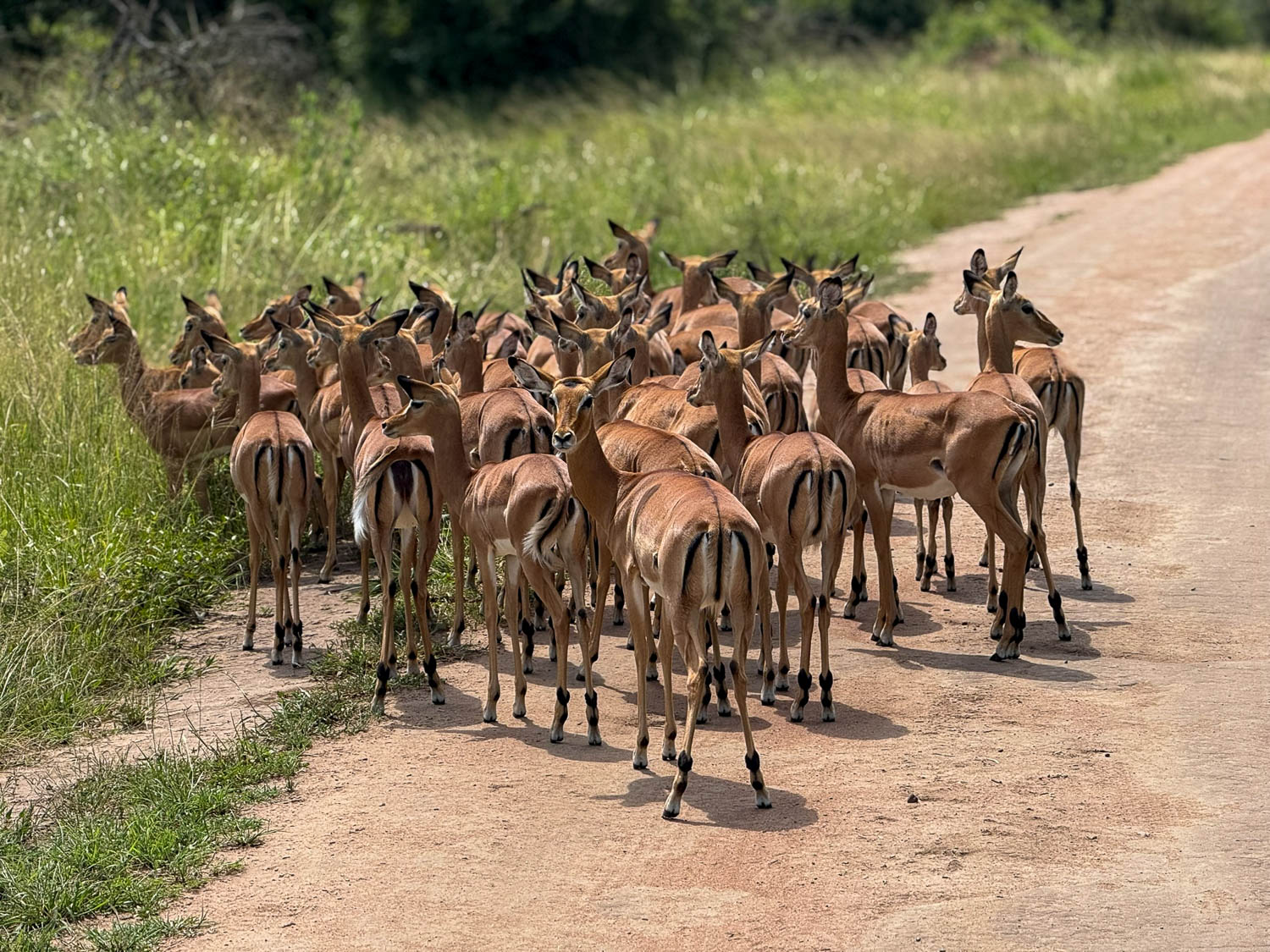
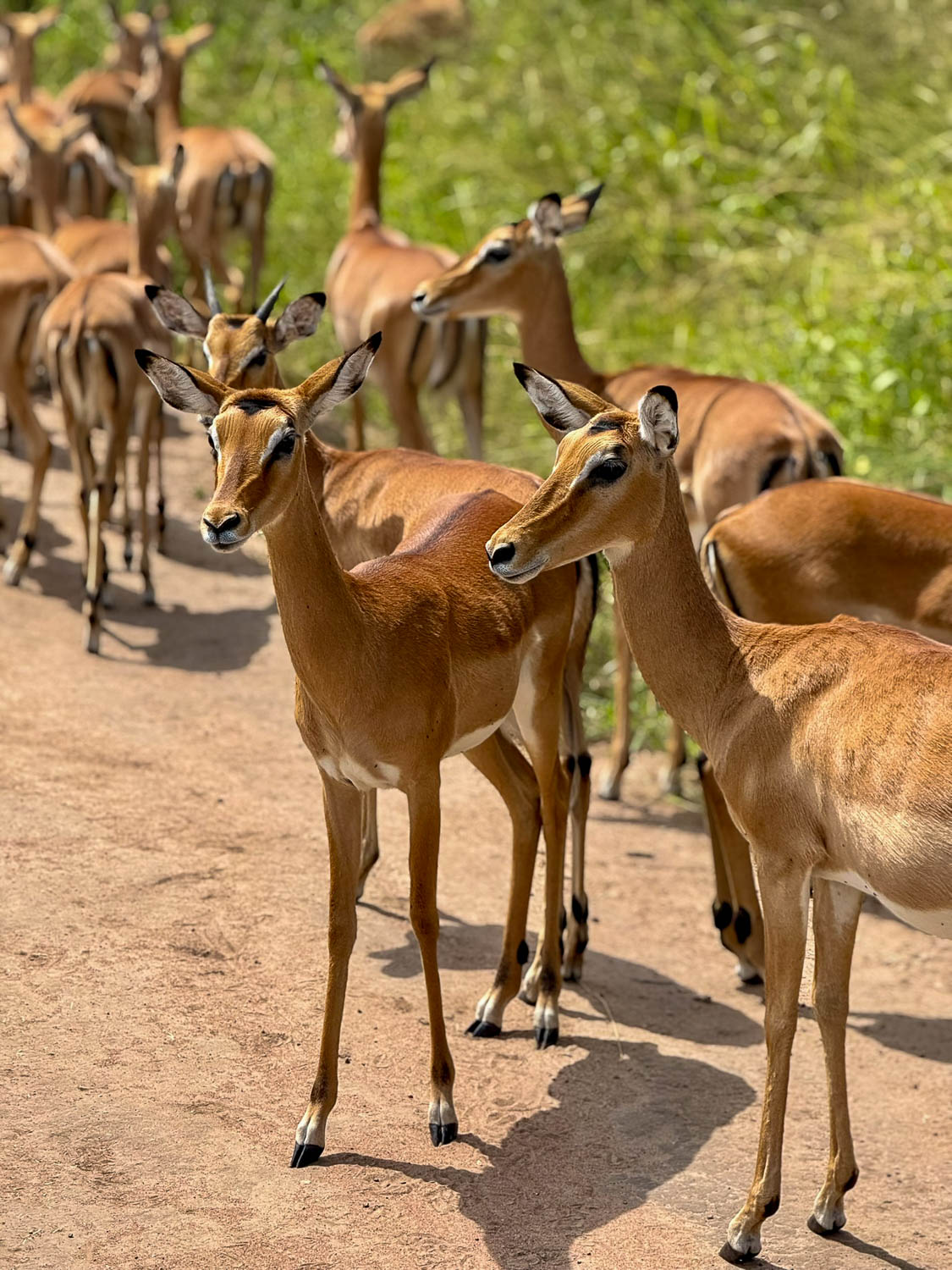
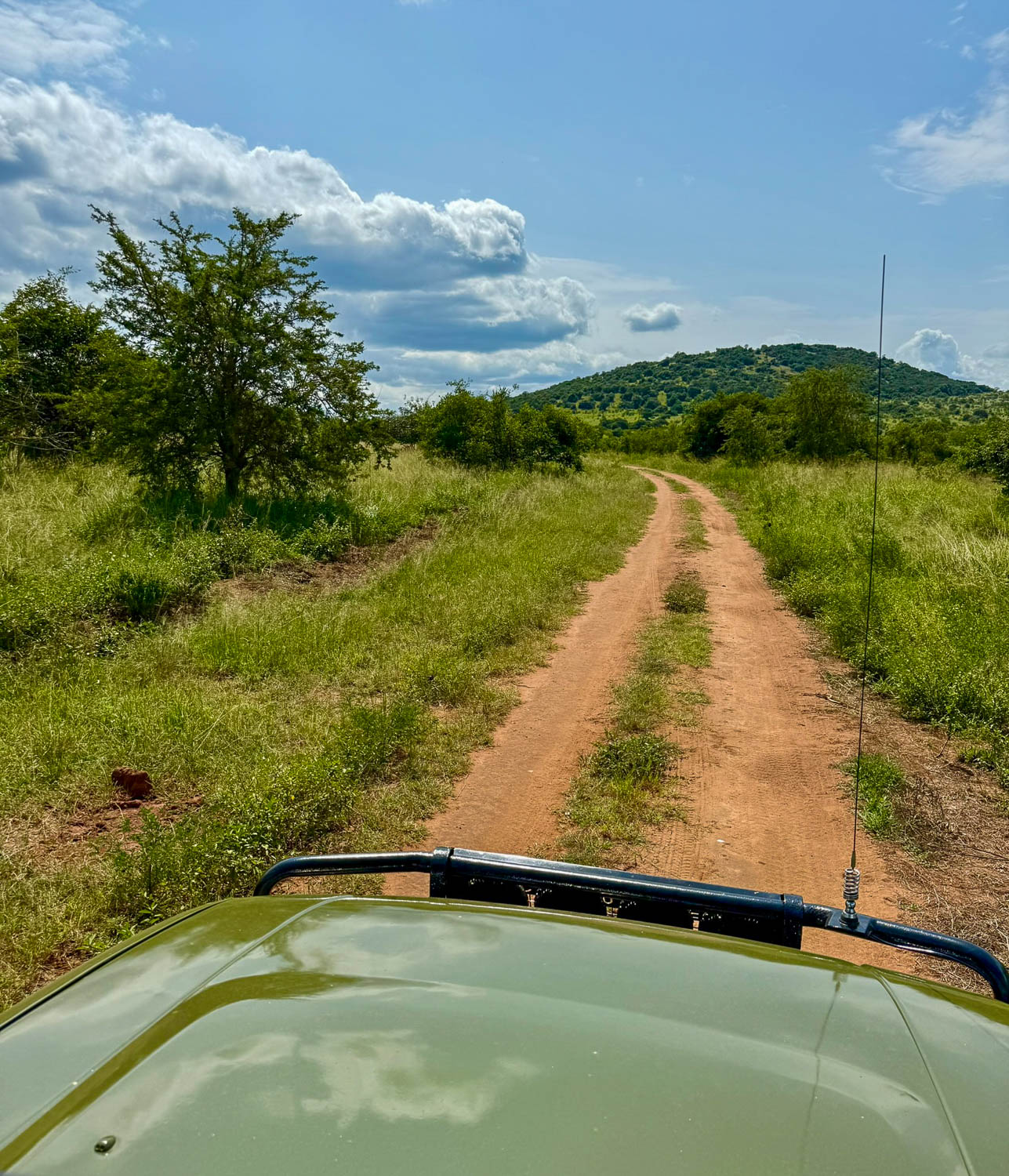
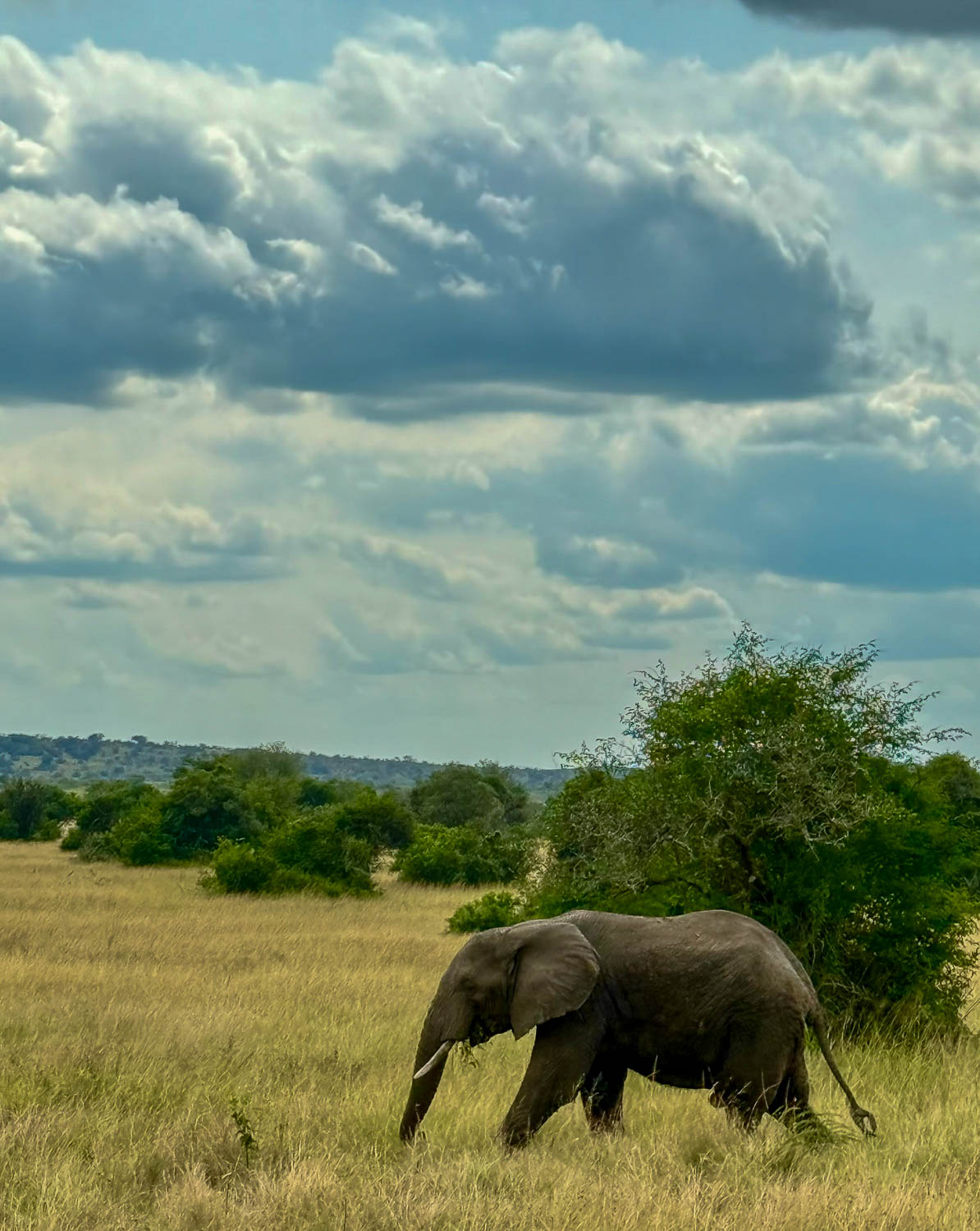
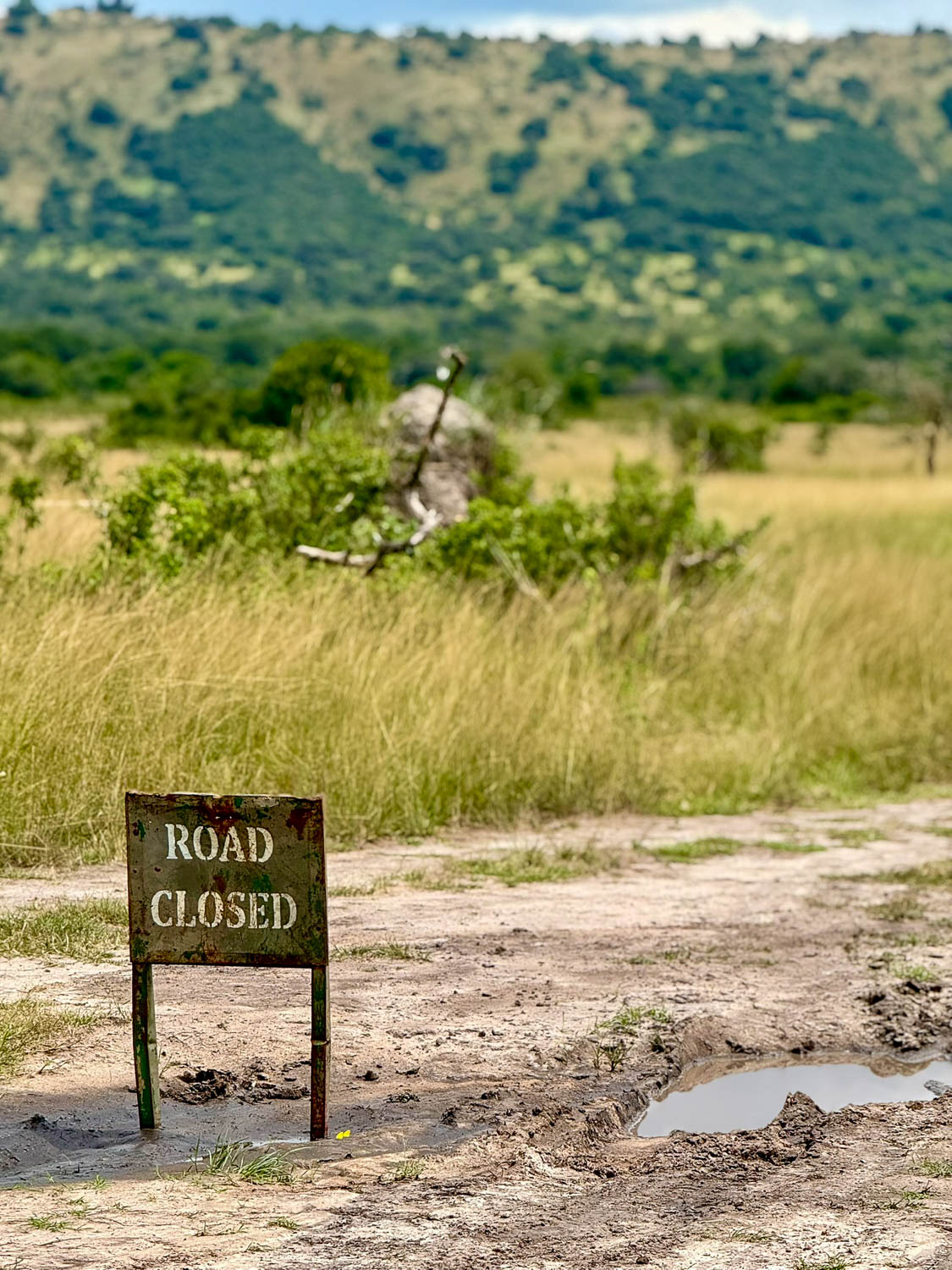
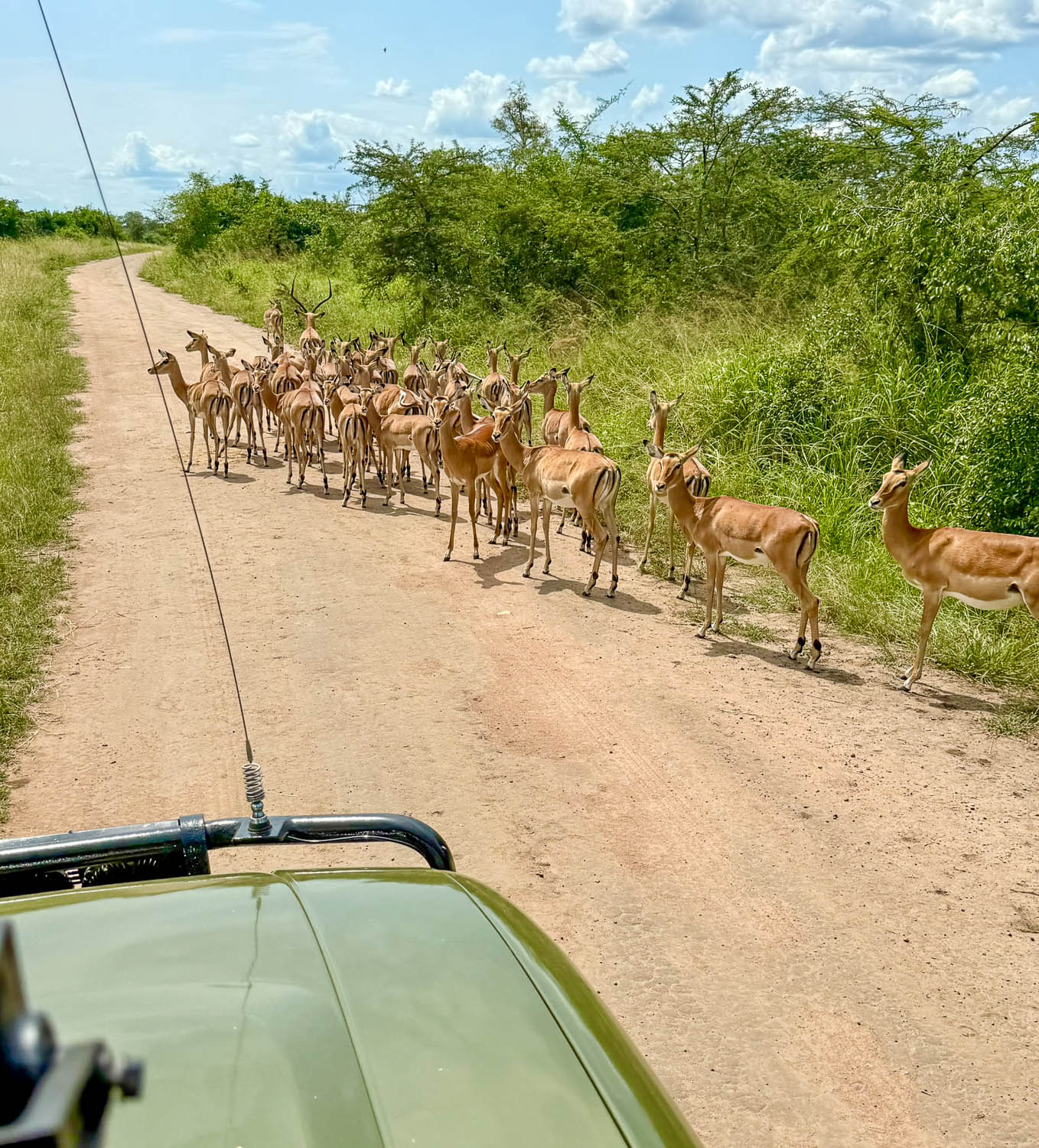
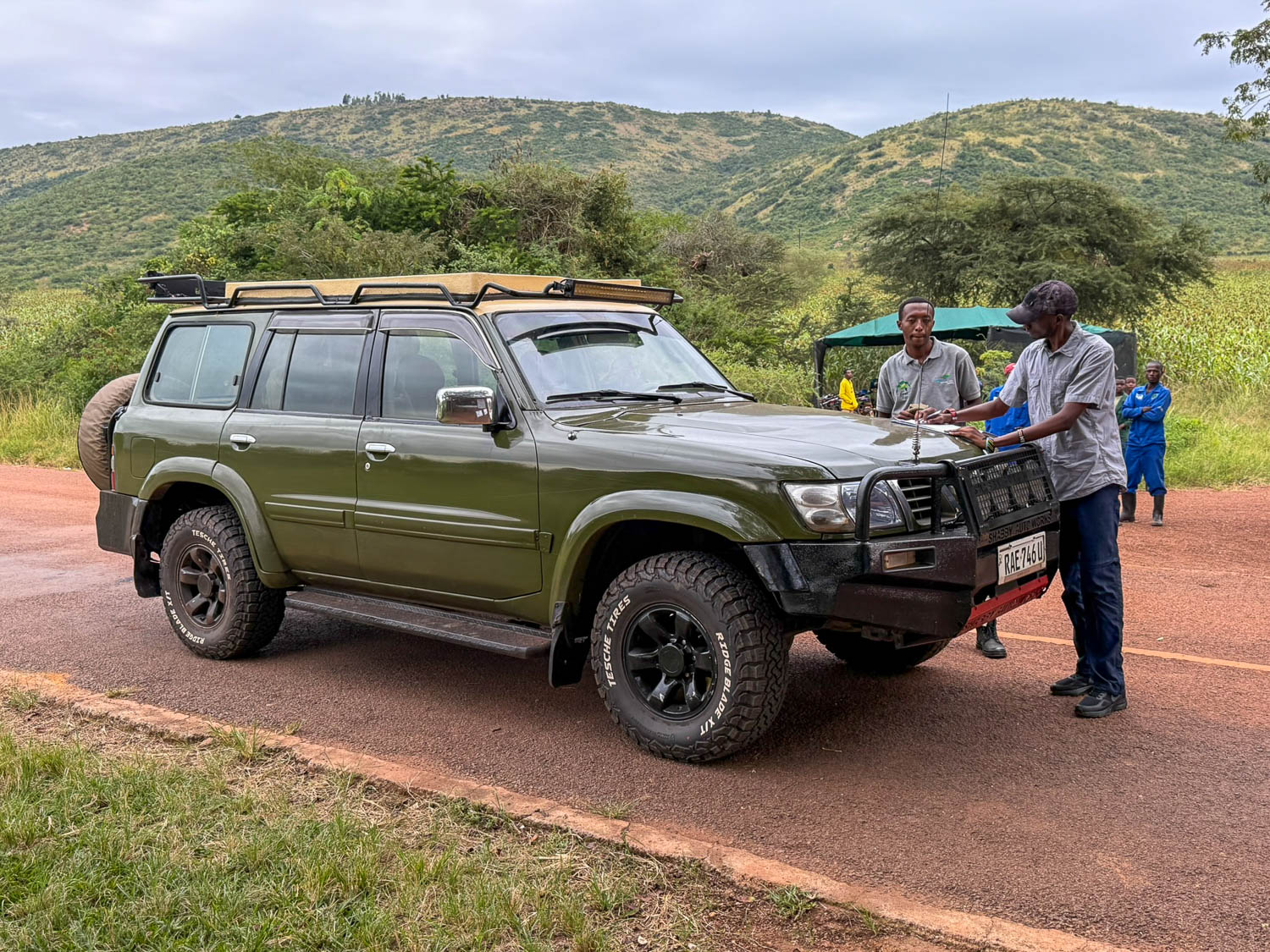
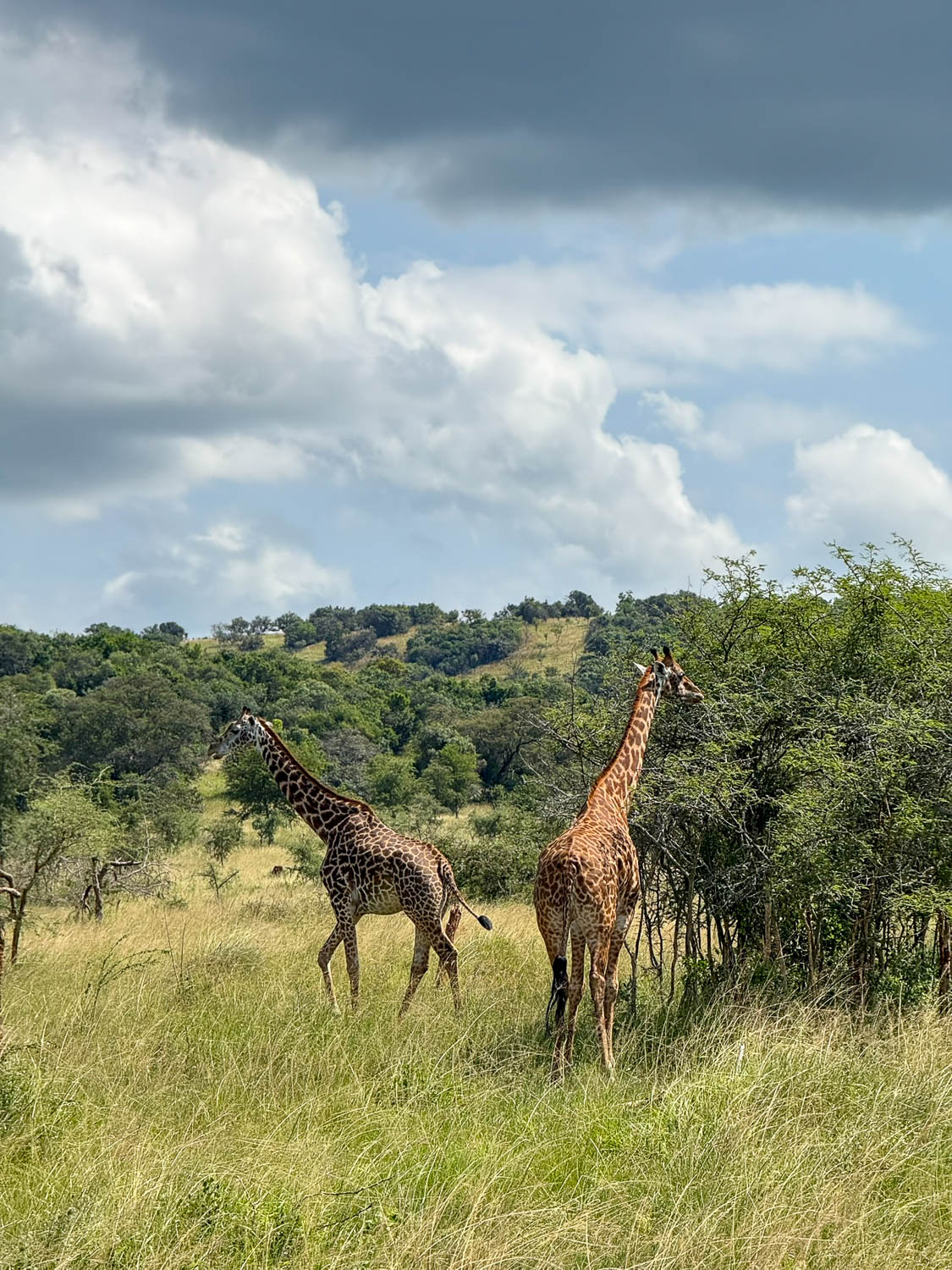
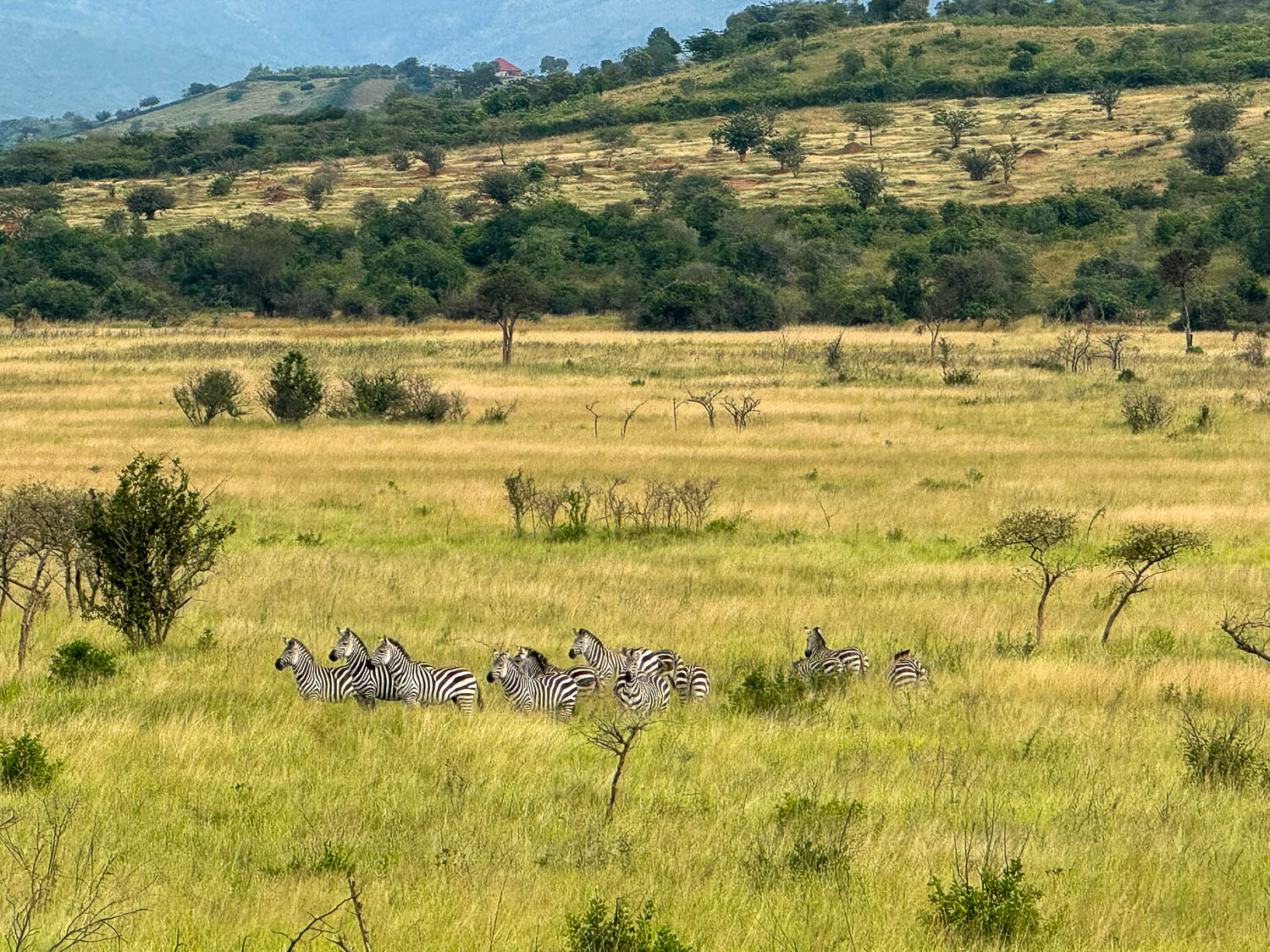
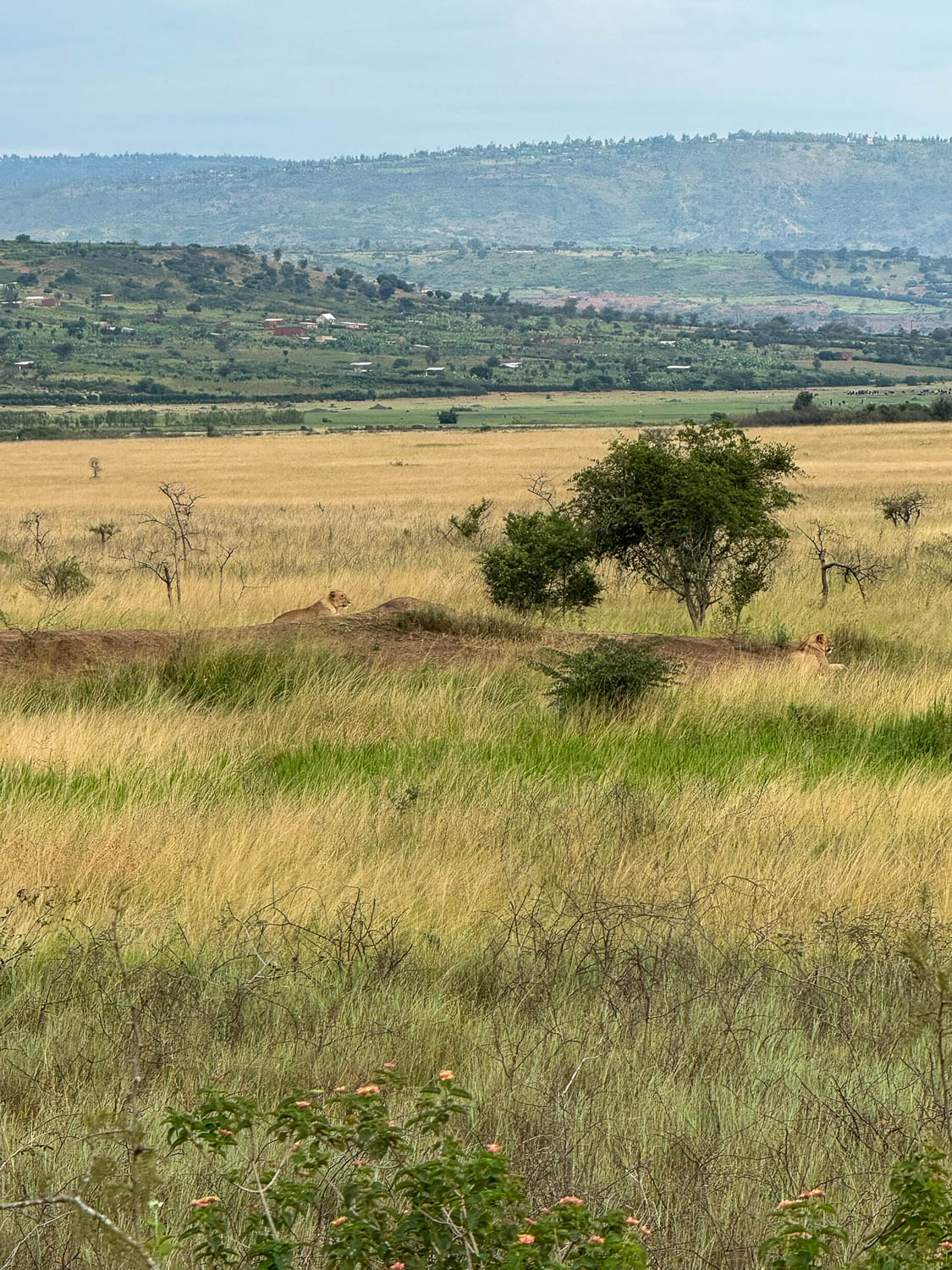
    Safari landscape in Akagera National Park Rwanda home to the Big Five and a top wildlife experience in Rwanda
    Consider heading east to Akagera National Park in search of the Big Five

    Here are some insider tips to help you make the most of your visit to Rwanda.

    • Rwanda is one of Africa’s safest and cleanest countries, with excellent roads, friendly locals, and a sense of calm that makes travel here both easy and rewarding.
    • Begin your journey in Kigali, and consider spending a least a couple of days here to experience both its modern edge and deep cultural roots.
    • Visit the Kigali Genocide Memorial for an essential and moving understanding of Rwanda’s past, resilience, and healing journey.
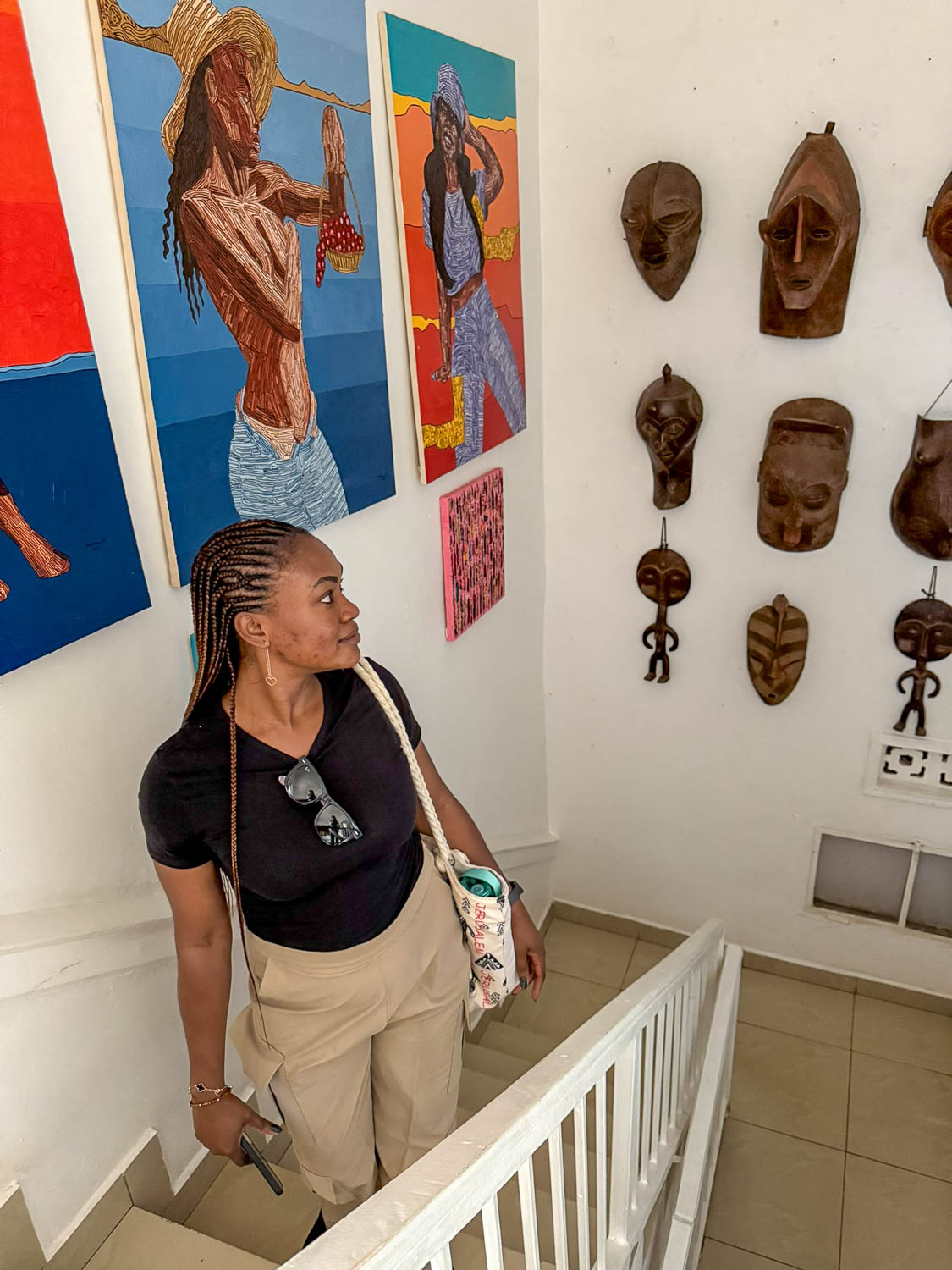
    • Drop by the Inema Arts Center to experience Rwanda’s creative spirit through vivid colors, movement, and design.
    • Consider a day or overnight safari in Akagera National Park to spot the Big Five.
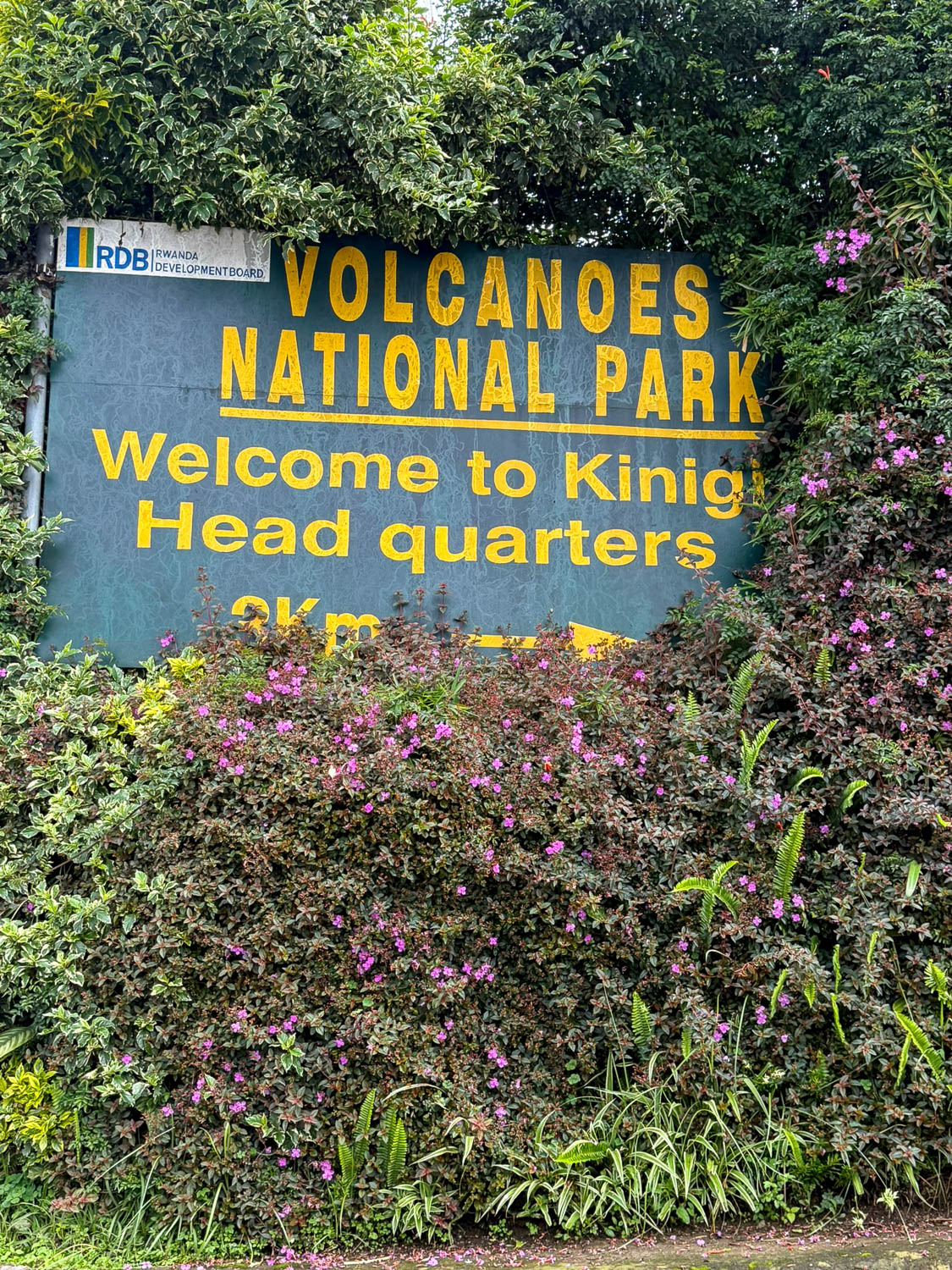
    • Head north to Volcanoes National Park for a life-changing encounter with Rwanda’s endangered mountain gorillas.
    • Take some time to unwind by Lake Kivu, where tranquil waters and laid-back lakeside towns offer the perfect pause between adventures.
    • Explore Rwanda’s rich cultural heritage at the King’s Palace Museum, the Ethnographic Museum, or the Iby’Iwacu Cultural Village.
    • Savor the country’s flavors — from hearty local dishes to world-class coffee grown in the lush highlands.

    Follow these tips and you’ll be ready to visit Rwanda!


    Plan Your Trip
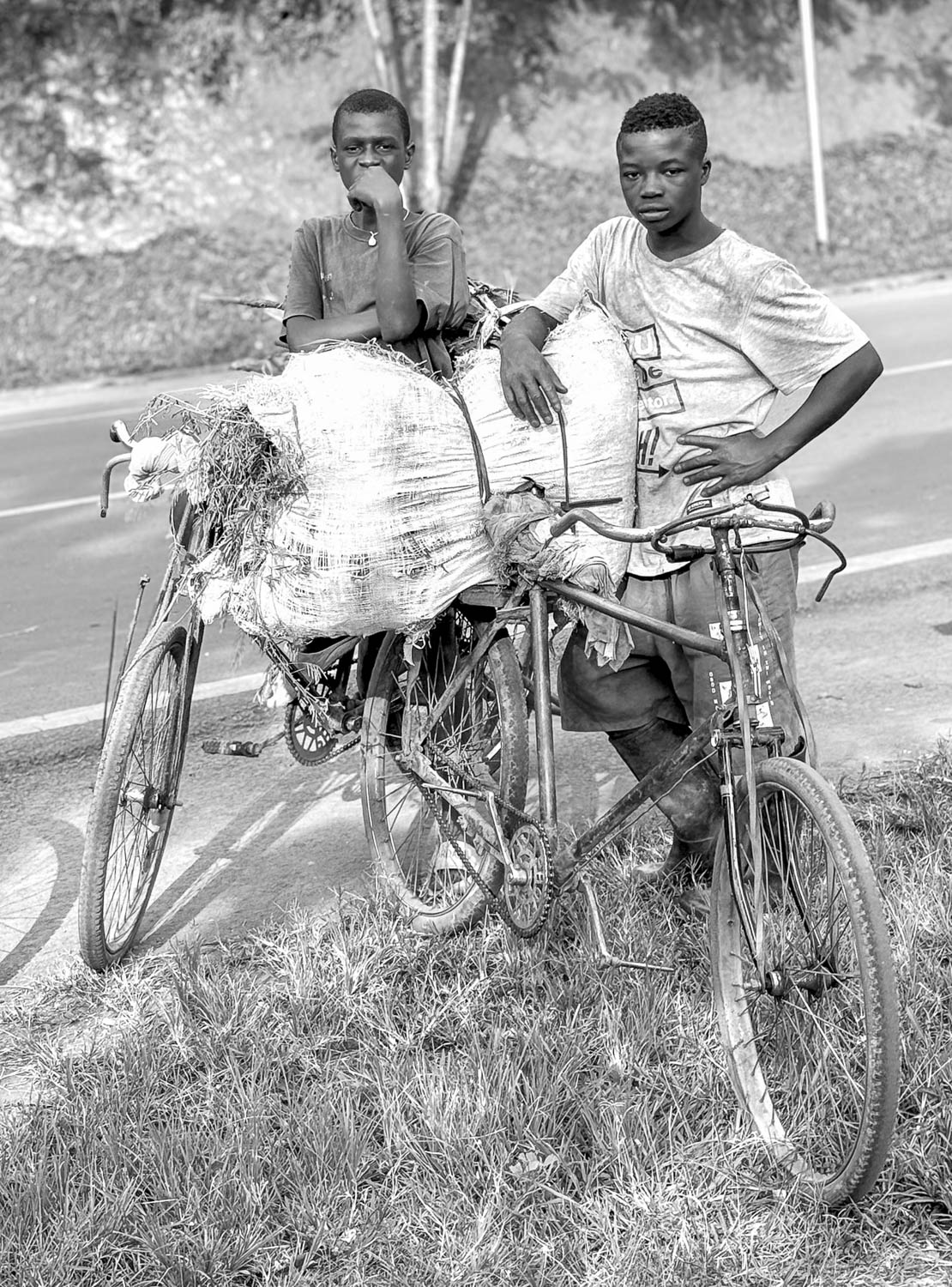
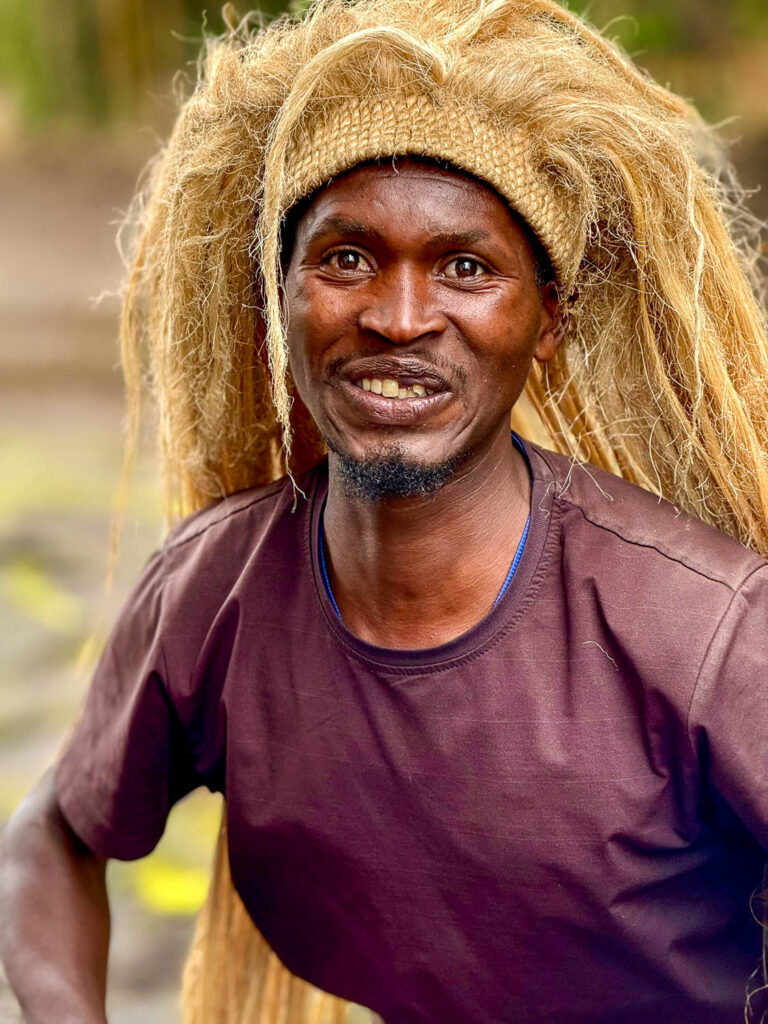
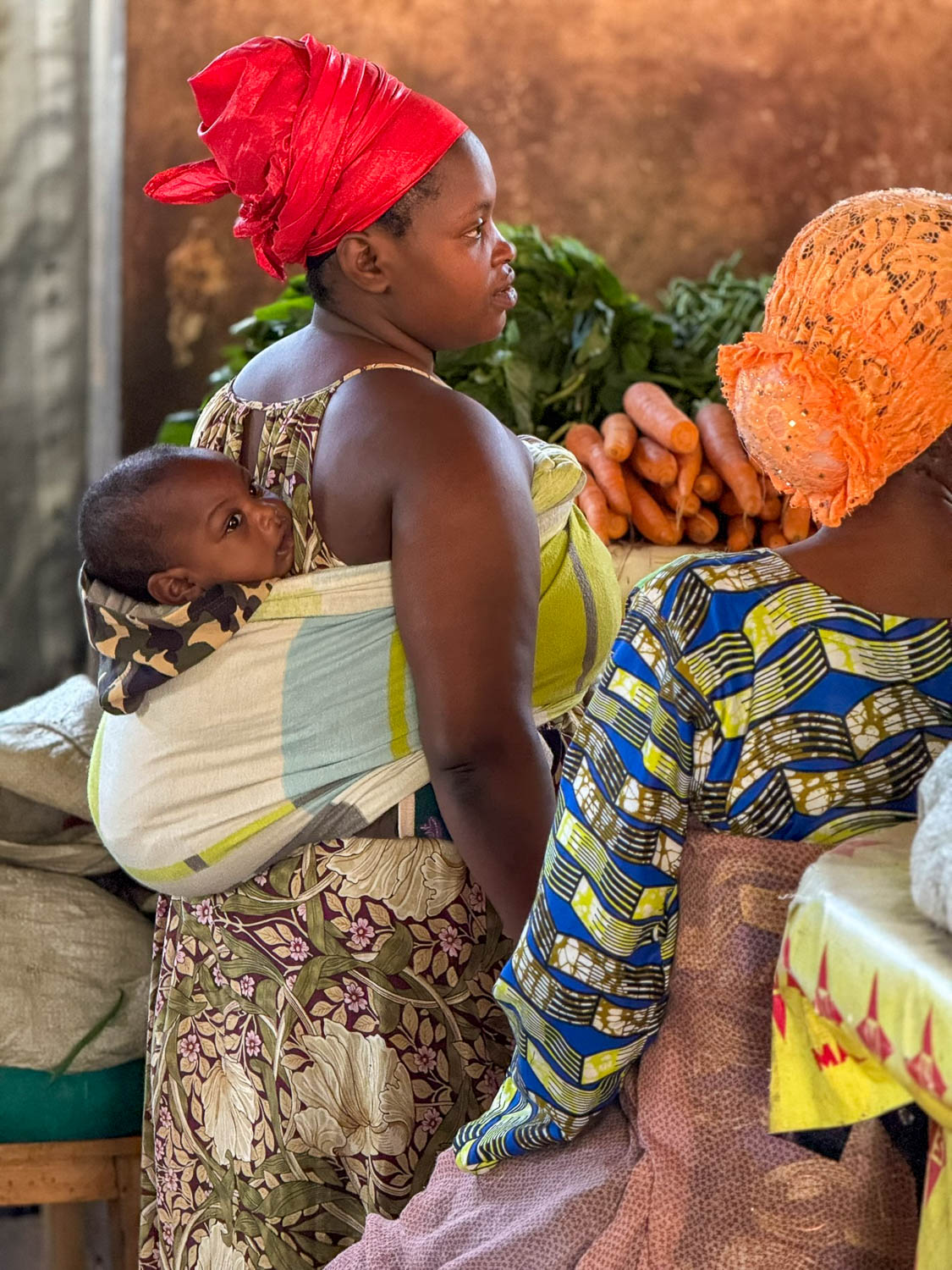
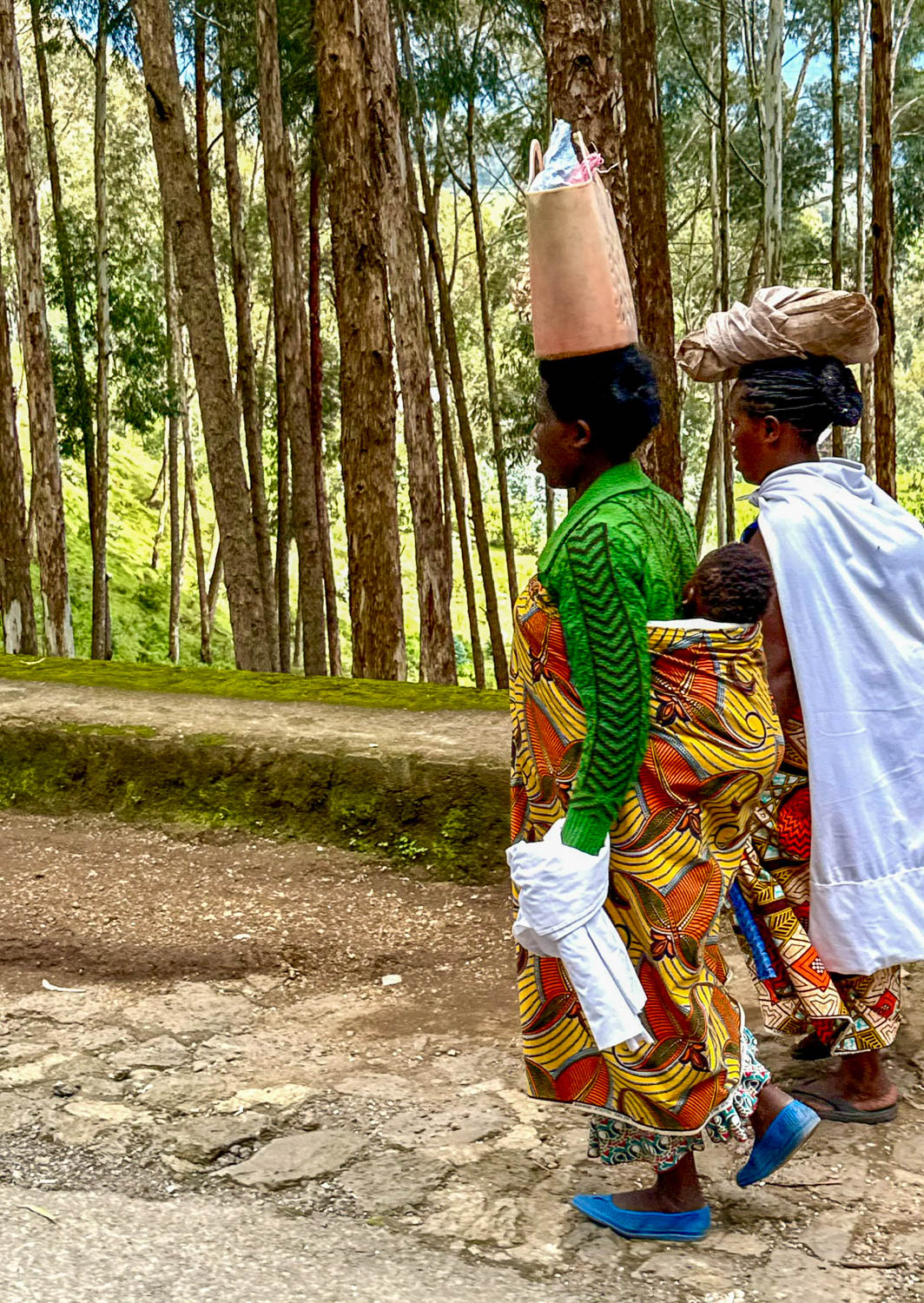
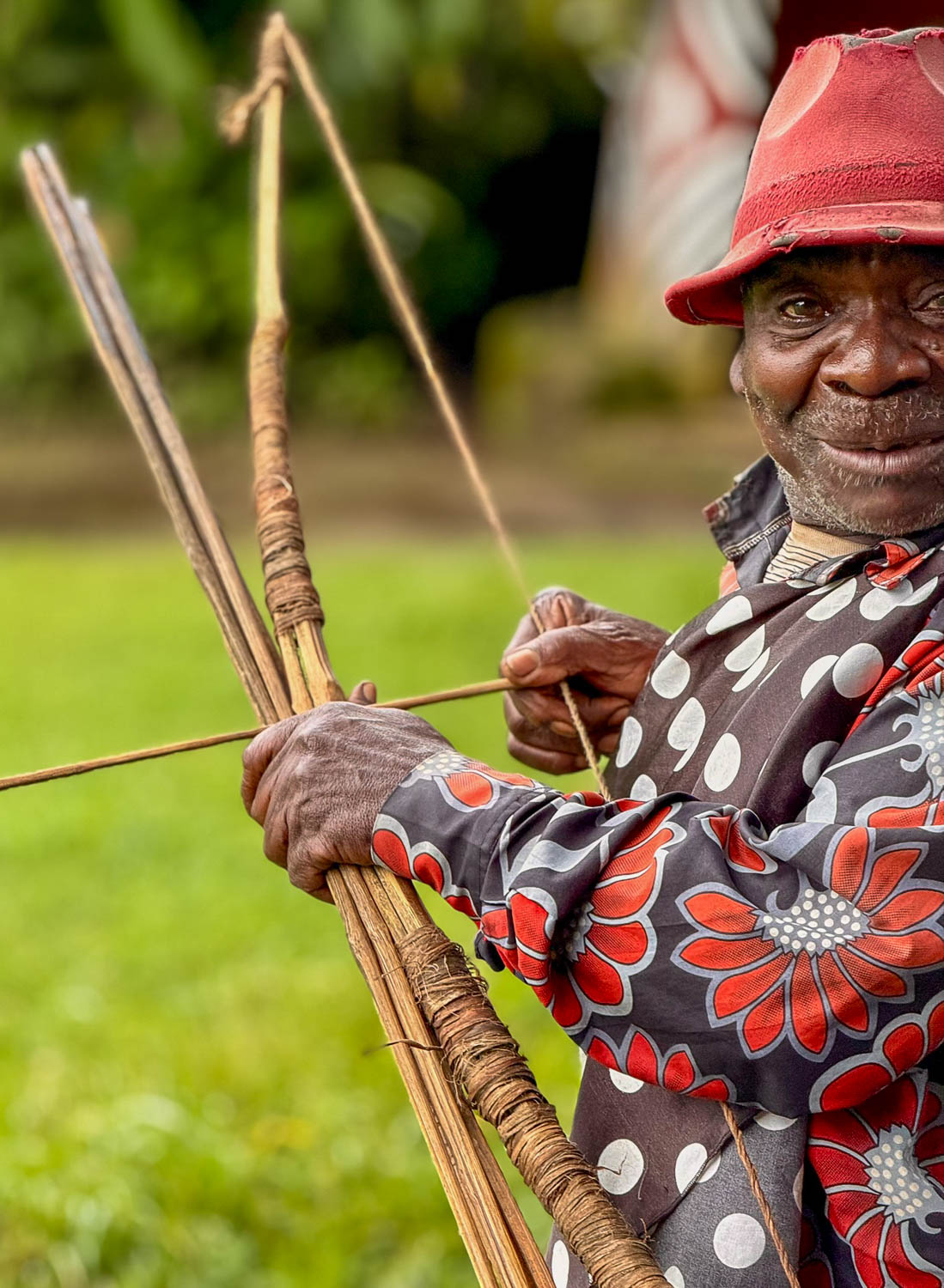
    Local residents in Murambi Rwanda showcasing everyday life and authentic cultural experiences in Rwanda
    Locals in Murambi, Rwanda

    Some links below may earn us a small commission at no extra cost to you. We’re truly grateful for your support, as it allows us to continue sharing meaningful travel experiences and practical travel insights with you. Read our full disclosure here.

    Planning your visit? We’ve gathered recommended tours and activities, along with trusted travel tools, to help you explore with confidence and ease.

    Tours & Experiences


    Prefer additional options? Click below to discover more incredible experiences tailored just for you!

    Choose from top Attractions and Activities in Rwanda


    Travel Essentials

    Planning the rest of your trip? These are the platforms we personally use when organizing our travels. For more planning tools, visit our Travel Resources page or browse current promotions on our Travel Deals page.


    Kigali: Rwanda’s Modern Side and A Model for the African Continent
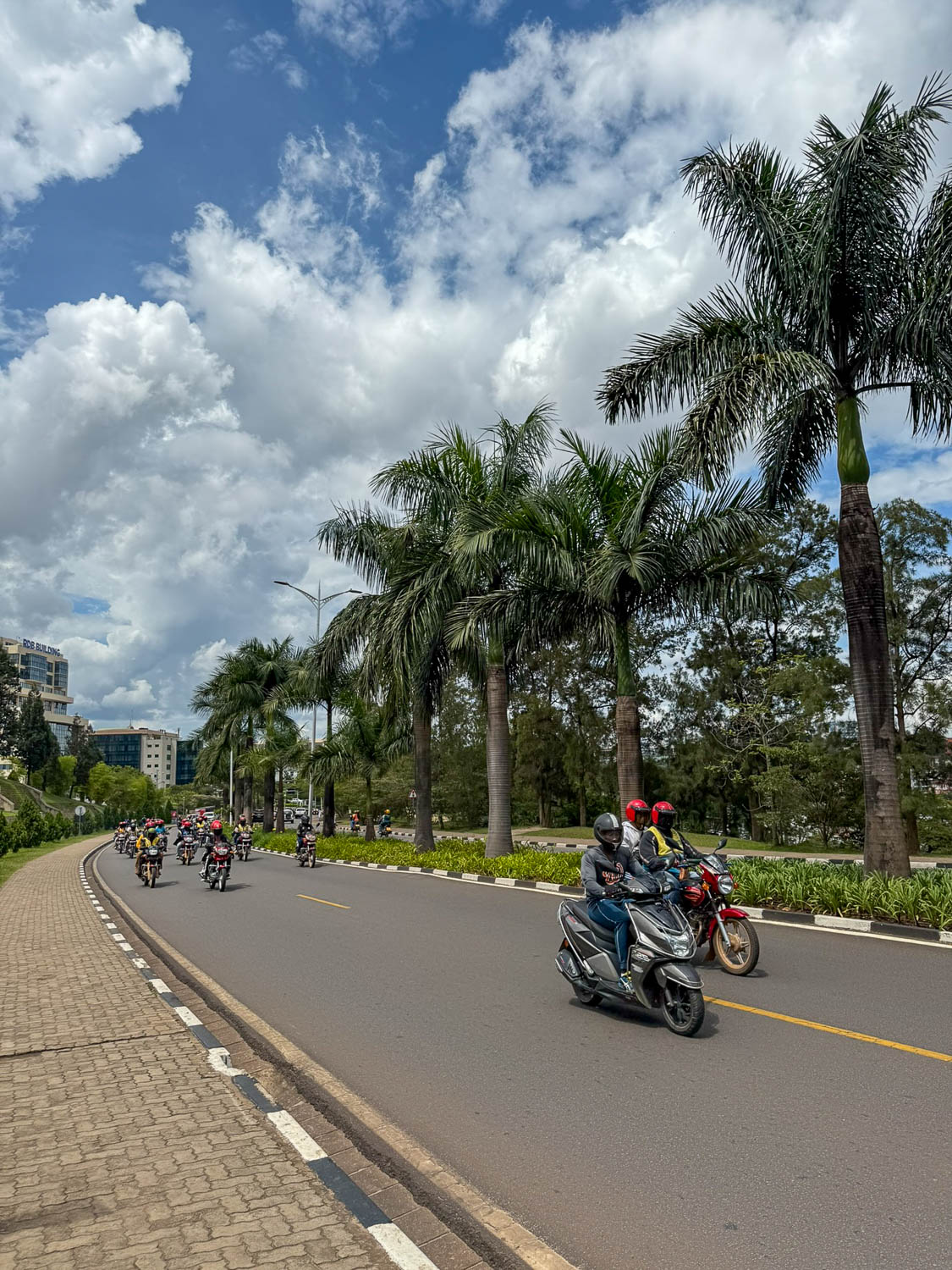
    Clean and modern streets of Kigali Rwanda known as one of the safest and cleanest cities in Africa
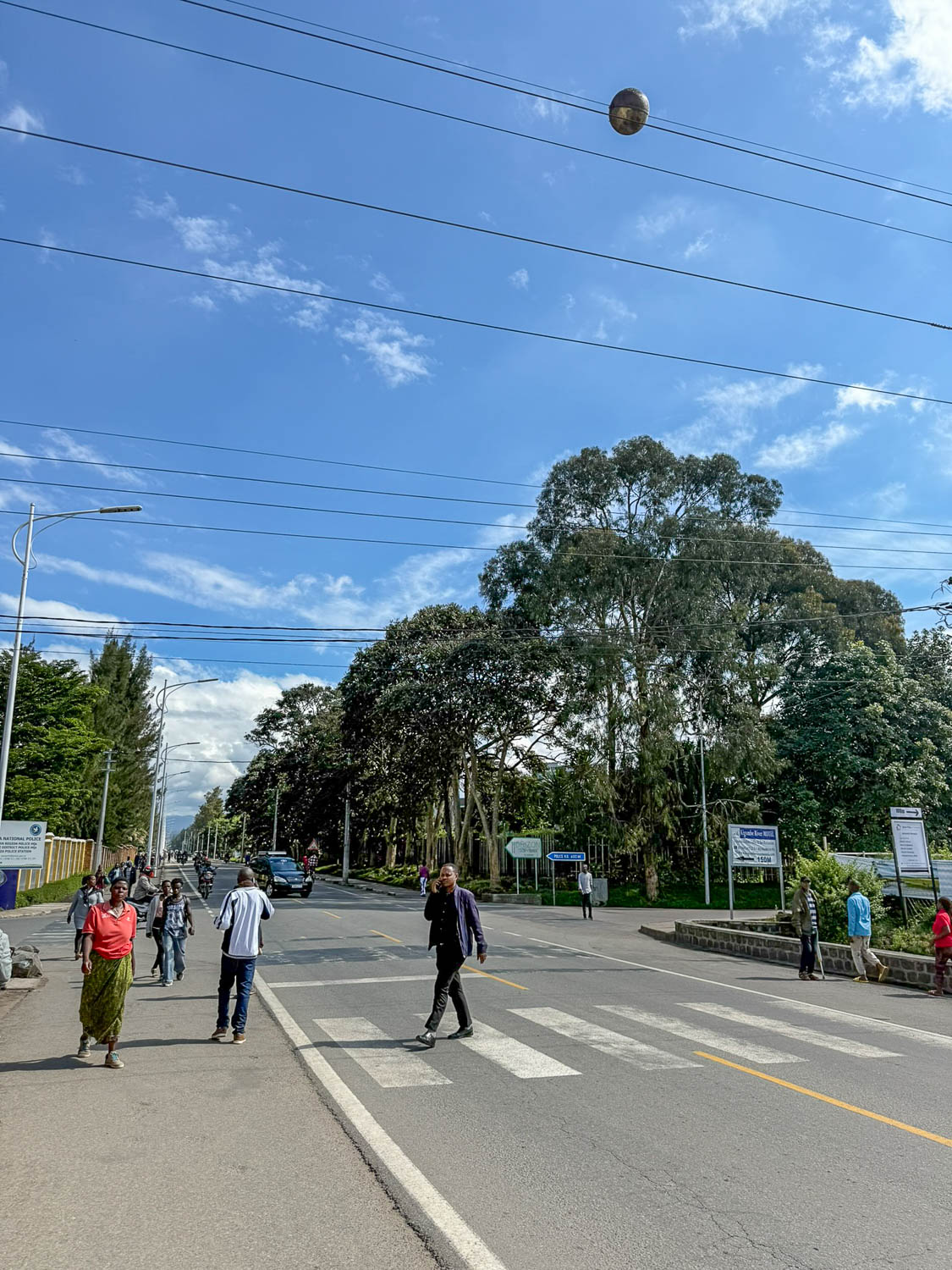
    The wide, clean, open streets of Kigali make for pleasant strolling

    Kigali, Rwanda’s vibrant capital, is a city that blends beautifully modern development with a thriving cultural scene – and it’s definitely worth spending at least a couple of days here.

    Known for its clean streets (we’re talking perhaps the cleanest city we’ve ever encountered – not just the cleanest city in Africa!), rolling hills, and welcoming atmosphere, Kigali offers travelers a gateway to the nation’s history and its contemporary life, as well as the plethora of attractions just beyond its boundaries.

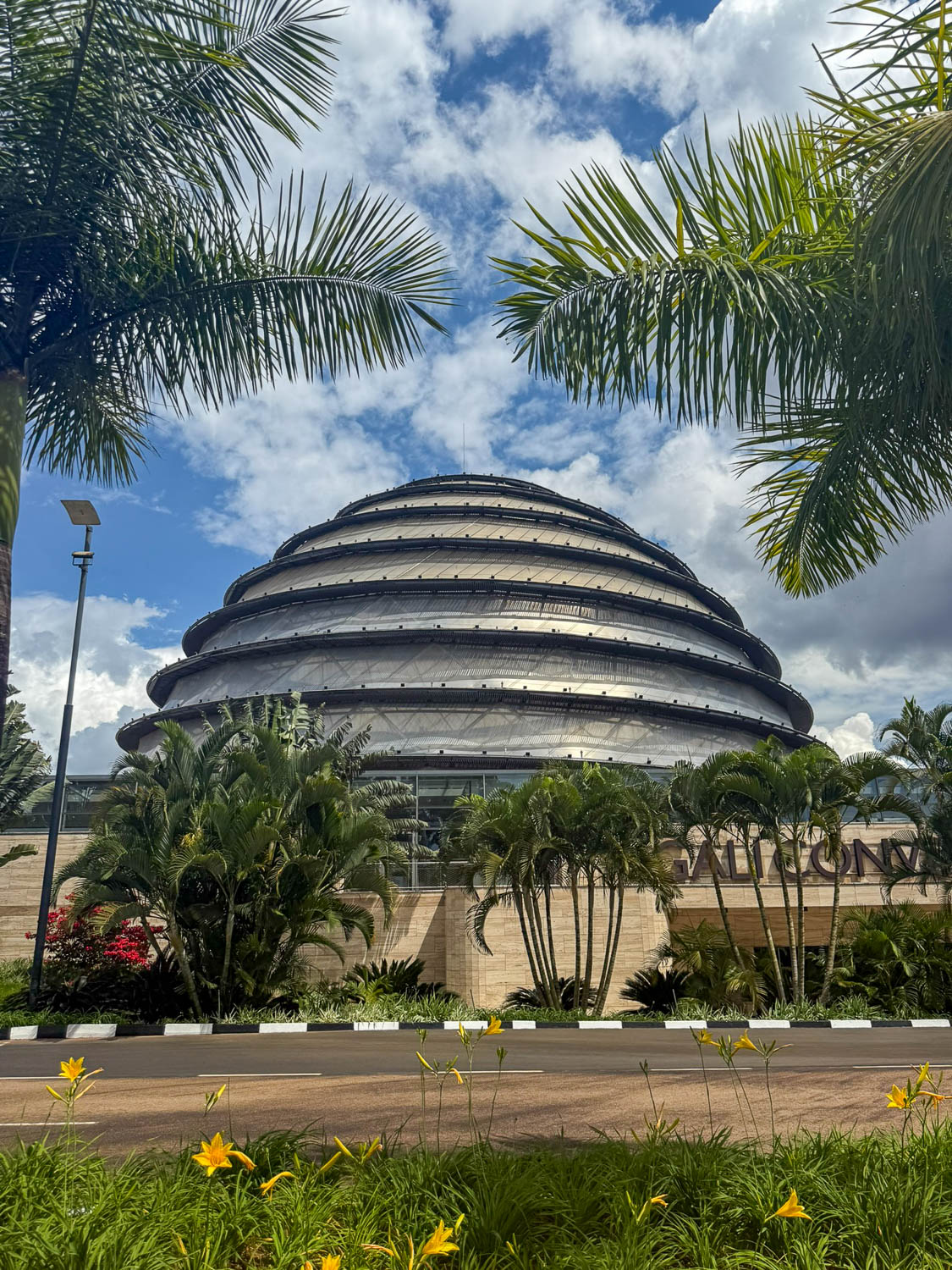
    Of course, Kigali is known not only for its incredible cleanliness, but also for safety and innovation. Highlights of any visit include bustling markets, art galleries, museums, lively cafes, impressive architectural landmarks (including the Kigali Convention Center) and memorials that honor Rwanda’s past. From its dynamic neighborhoods to panoramic city views, the capital certainly provides a unique introduction to Rwanda’s resilience, creativity, and forward-looking spirit.

    Insider tip.Consider taking a Kigali city tour to make the most of your visit to the capital, affording you an opportunity to see both the new and the old faces of Rwanda.

    For a deeper dive into how best to experience Kigali – all our most fabulous recommendations on what to see and do in the capital – be sure to navigate across to our article specifically on Kigali.

    Insider tip. In case you hadn’t heard, plastic bags are banned in Rwanda. In fact, the country has earned global recognition for its strict environmental policies (including the nationwide ban on plastic bags, which was introduced in 2008). This progressive environmental policy reflects the country’s forward-thinking ethos, and is a commitment that has helped keep the country remarkably clean, with Kigali often noted as one of Africa’s greenest and tidiest capitals.


    Discover Rwanda’s Culture and History
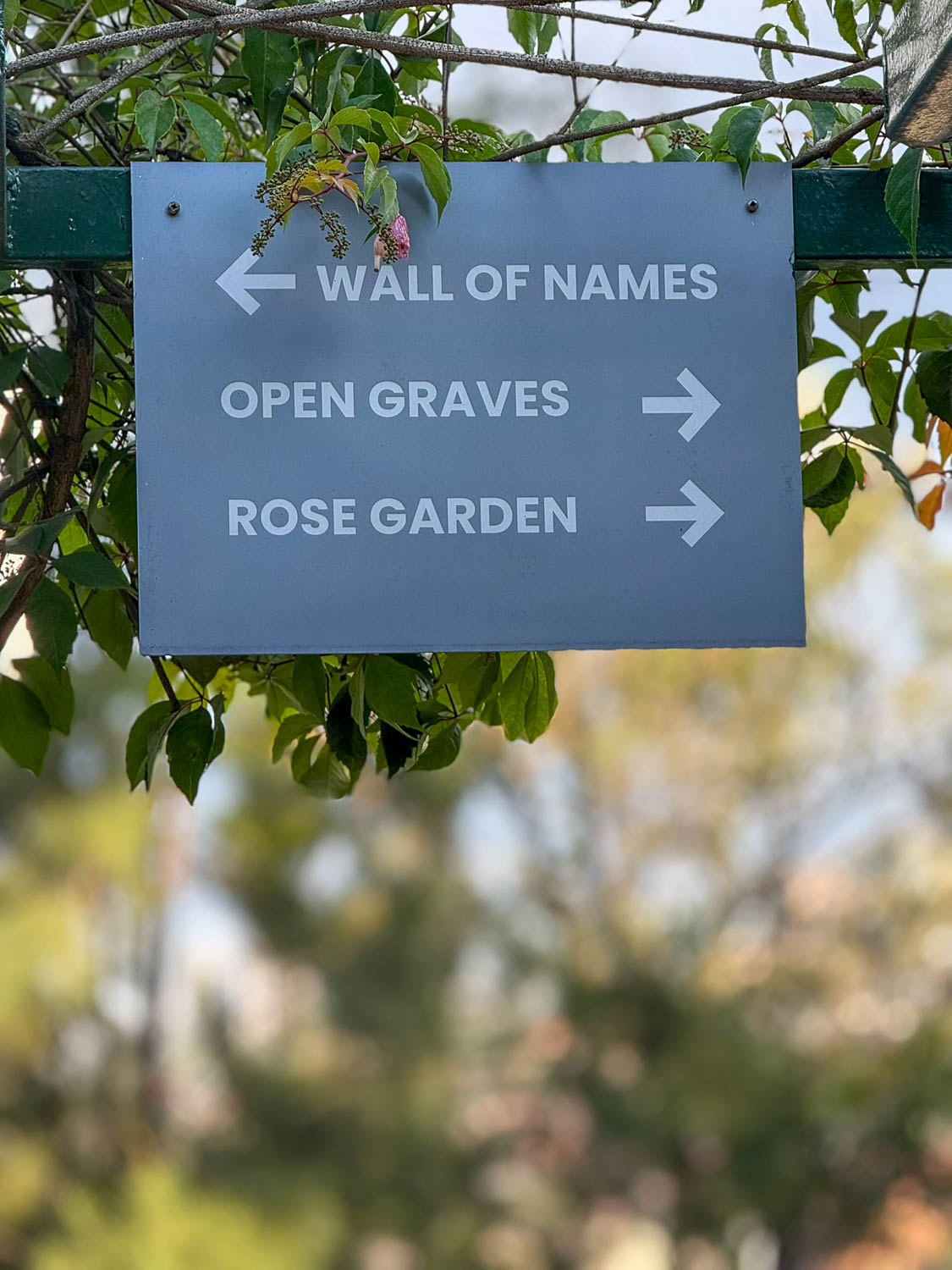
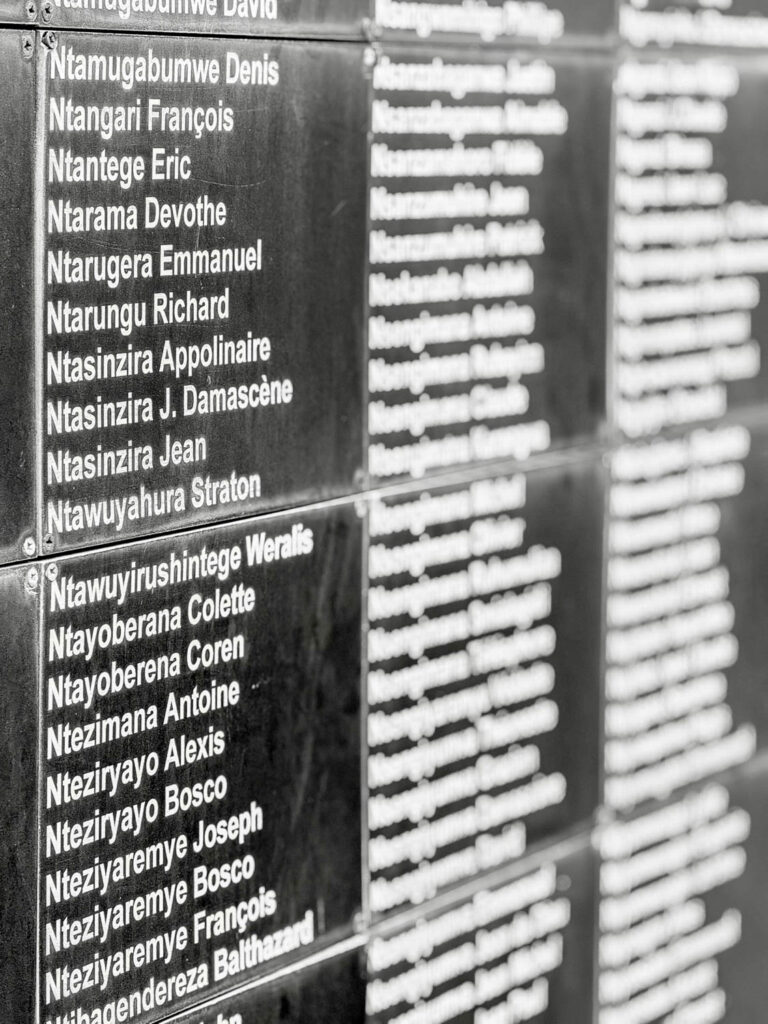
    Walking through Kigali Genocide Memorial reflecting on Rwanda history and resilience
    Wayfinding through the reflective spaces at the Kigali Genocide Memorial

    We feel it’s important to begin the journey into any new place – a city, a country, an experience – by first gaining a deeper understanding of it. For Rwanda, that means diving deeper into its identity, its storied past, its strength, and its creativity. Below we offer a brief glimpse into some of the best ways to gain this deeper understanding, with visits to the poignant Kigali Genocide Memorial, the reconstructed King’s Palace Museum, the engaging Iby’Iwacu Cultural Village, and the colorful Inema Arts Center. Together, these experiences paint a rich picture of a country that treasures its roots, whilst also embracing the future.

    Kigali Genocide Memorial: Rwanda’s Healing Journey
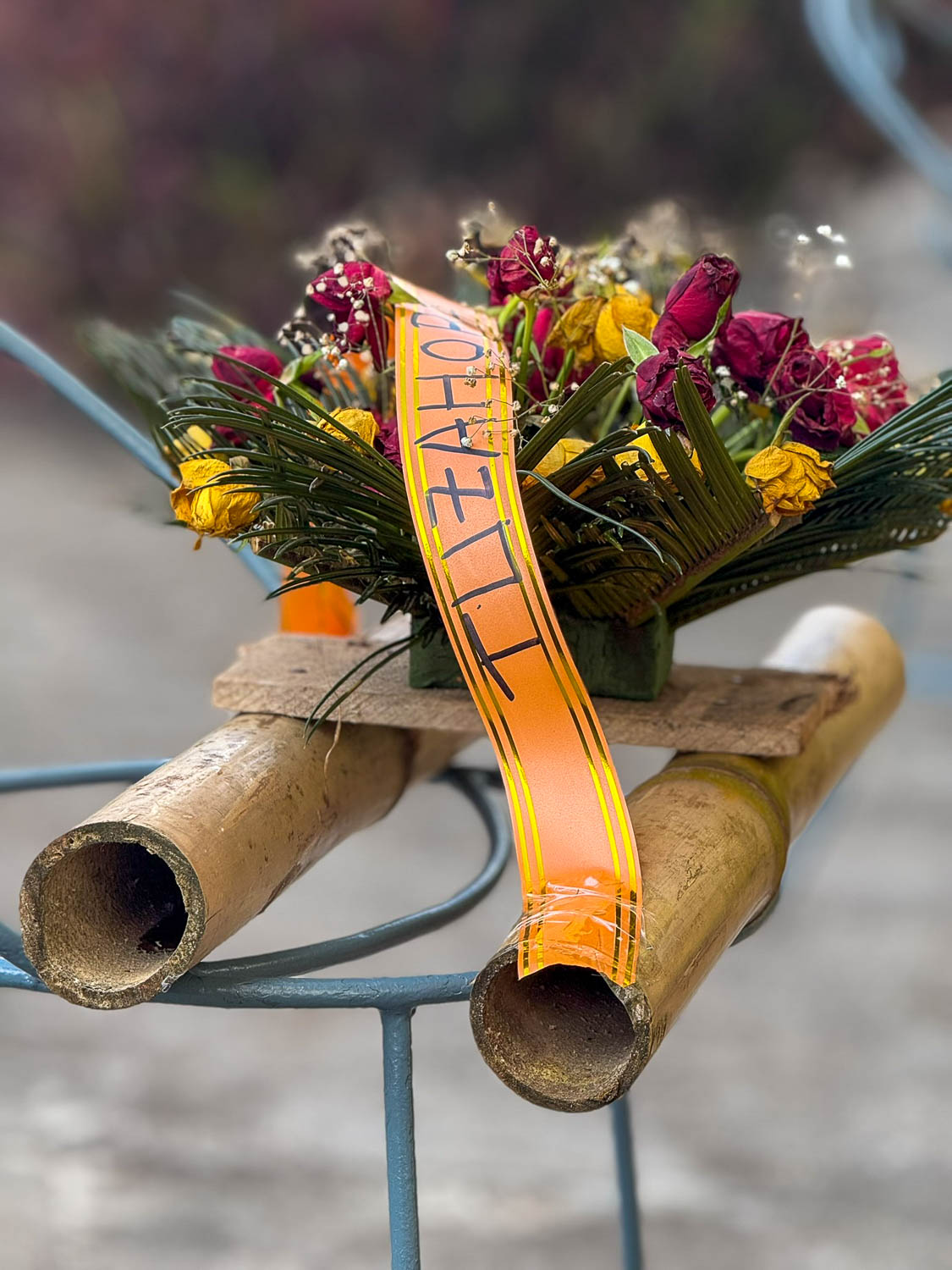
    Flowers placed at Kigali Genocide Memorial honoring victims of the 1994 genocide in Rwanda
    Memorial flowers left in remembrance of those who lost their lives in the 1994 genocide (Kigali Genocide Memorial)

    In case you weren’t yet born, or didn’t watch the news at the time, or were perhaps living under a rock, Rwanda suffered a devastating genocide in the mid 1990s that claimed the lives of hundreds of thousands in just 100 days. It was here in 1994 that extremist Hutu militias killed an estimated 800,000 people, mostly Tutsi and moderate Hutu: needless to say, the impact was profound, and the violence that occurred left deep, penetrating scars. But it’s hard to truly grasp the enormity of this event without a visit to the Kigali Genocide Memorial, where you’ll learn not only about the tragic genocide itself, but also how Rwanda has since focused on healing, reconciliation, remembrance, and rebuilding as a unified, hopeful nation – a resilience visitors can see and feel today.

    As such, a visit to the Kigali Genocide Memorial, located in the Gisozi area of Kigali, is both sobering and essential for truly understanding Rwanda’s history. The memorial tells the story of the Rwandan genocide through exhibits, photos, and mass graves, where today more than 250,000 victims of the genocide are buried. The site offers a profound reflection on the resilience and strength of the Rwandan people, whilst honoring lives lost and still focusing on unity and renewal.

    The Kigali Genocide Memorial is open daily (except Christmas Day and New Year’s Day) from 9am through 5pm, with reduced hours on the last Saturday of the month (1pm-5pm), when Rwandans participate in their national community service day, Umuganda.

    There is no fee to visit the Kigali Genocide Memorial, though a voluntary donation is suggested for all international visitors. Audio guides and tours are available, for an additional fee.

    Inema Arts Center: Rwanda’s Creative Renaissance

    Local guide at Inema Arts Center in Kigali Rwanda highlighting contemporary African art and culture
    Our fabulous local guide at the Inema Arts Center (Kigali)

    Well, if this wasn’t a gem of a find, we aren’t sure what might be! Be prepared to spend at least a solid hour here to gain the most from your visit (and we promise it will be worth it, even for the not-so-arty-lovers out there!).

    Also in Kigali – in the Kacyiru suburb on KG 563 Street – you’ll find the bright and enriching Inema Arts Center, a vibrant hub of Rwanda’s growing art scene. Founded in 2012 by brothers and self-taught local artists Emmanuel Nkuranga and Innocent Nkurunziza, Inema showcases contemporary African art that blends tradition with modernity.

    It’s here you’ll find a quiet indoor and outdoor space that showcases and celebrates innovation and creativity in the heart of the city: admire (and even purchase!) paintings, mixed-media works, sculptures, and handmade crafts, including linens, jewelry, and leather goods. There are numerous galleries throughout, residency space for artists, and a variety of crafts and music workshops. Oh, and there’s also a small cafe onsite!
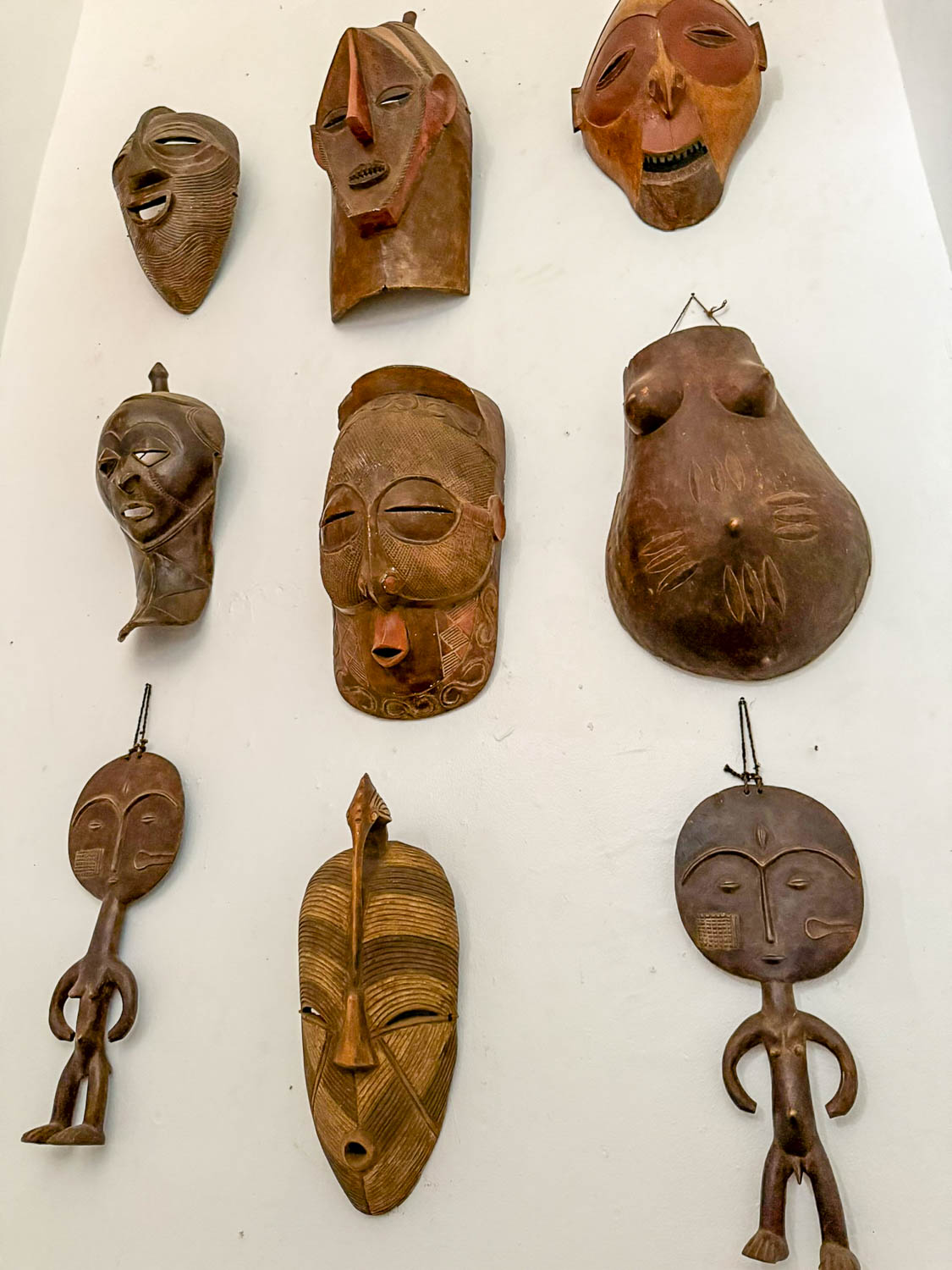
    Colorful contemporary artwork on display at Inema Arts Center Kigali Rwanda showcasing local artists
    Just a small portion of the incredible art on display at the Inema Arts Center

    Fun fact. Inema’s mission is to harness art as a tool for personal, social and economic growth.

    Inema is open daily from 8am through 8pm.

    Insider tip. For something a little different, and if you have the time, consider either catching a show with Inema’s youth cultural dance troupe, Inema Dance, or even joining one of their weekly traditional dance classes. 

    Rwanda Art Museum (Presidential Palace Museum)

    Also located in the capital city of Kigali, you may wish to also consider exploring the Rwanda Art Museum – formerly known as the Presidential Palace Museum until its renaming in May 2018 –  another important cultural center that dives deep into Rwanda’s rich cultural heritage.

    Situated in Kigali’s Kanombe suburb (near the Kigali International Airport), and housed within the former presidential residence of Juvénal Habyarimanathe (say that three times fast!), the Rwanda Art Museum showcases contemporary Rwandan and international art. The museum features the largest collection of post-genocide artworks in Rwanda, and visitors can also view the remains of an aircraft that crashed into the palace in 1994, marking a pivotal moment in the nation’s history.

    For a deeper dive into what to see and do in Kigali, be sure to check out our sister article specifically on Kigali.

    Insider tip. Have you seen the fabulous film Hotel Rwanda? It was famously portrayed in the Hôtel des Mille Collines at KN 6 Avenue. Be sure to check it out during your time in the capital!

    Iby’Iwacu Cultural Village
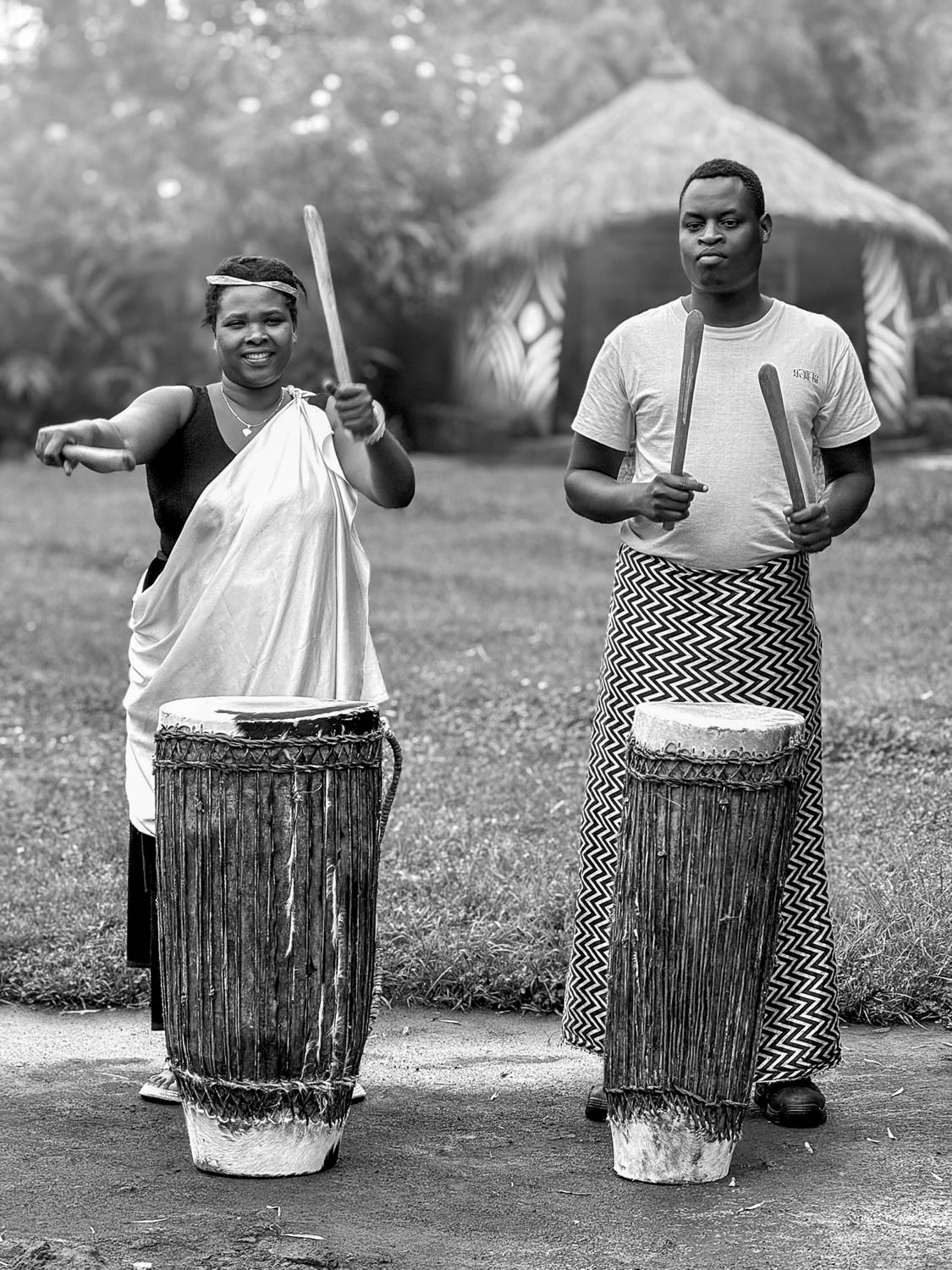
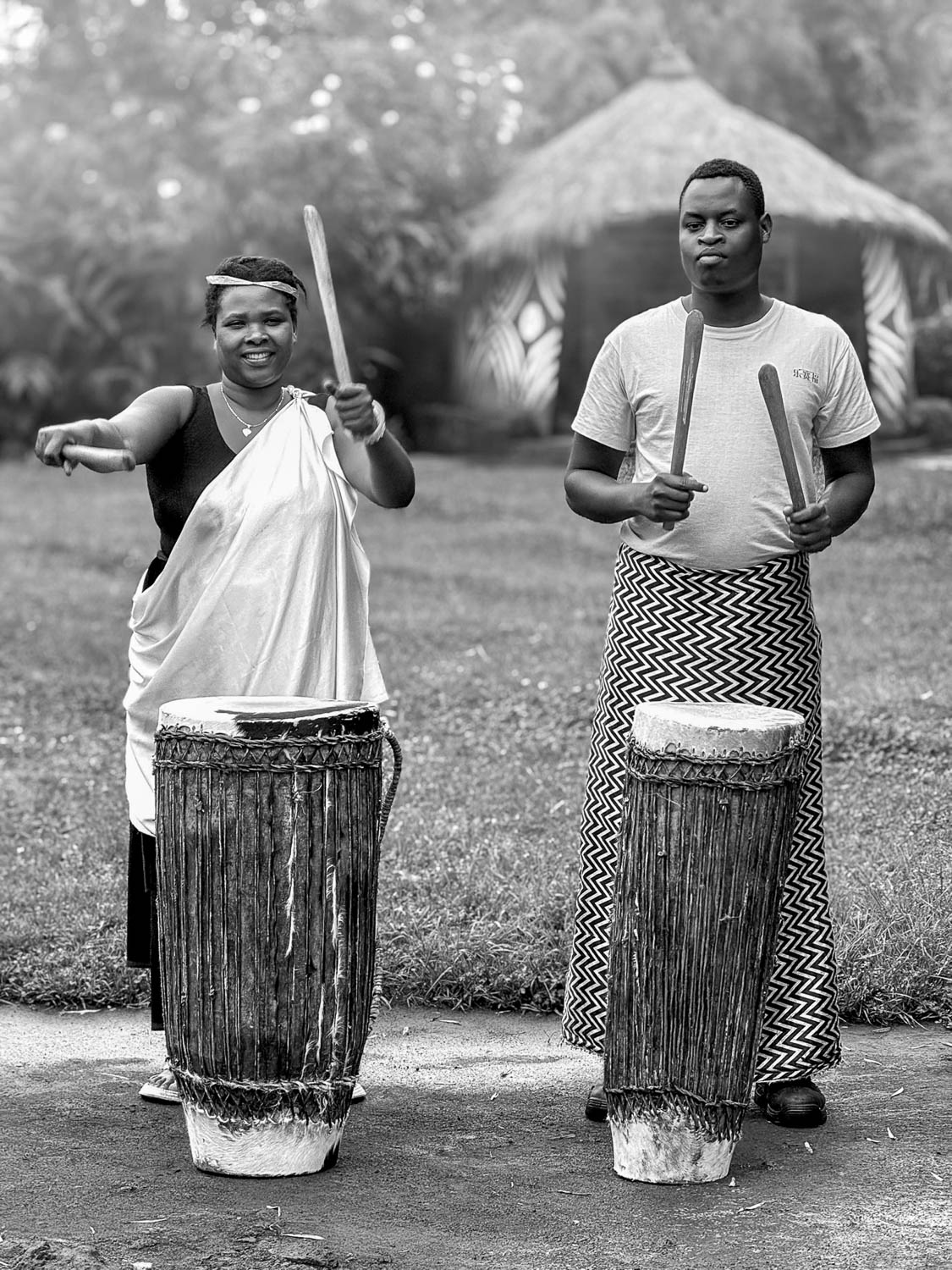
    Traditional drumming performance at IbyIwacu Cultural Village near Volcanoes National Park Rwanda
    Traditional drumming display at Iby’Iwacu Cultural Village

    Another highlight of our trip to Rwanda was a visit to the Iby’Iwacu Cultural Village (also known as the Gorilla Guardians Village), located in Nyabigoma, Kinigi, just over two-and-a-half hours by road north-west of Kigali, and just a short hop, skip and a jump from the famous Volcanoes National Park. It’s here at Iby’Iwacu that you’ll be treated to a truly unique, authentic – and definitely immersive! – experience, showcasing traditional life and the customs of Rwandans, including those of reformed poachers.

    A visit here is a truly educational and fun opportunity. Originally a local project aimed at providing alternative income to former poachers, Iby’Iwacu has today grown into a celebrated cultural tour that truly immerses visitors. Through traditional dances, musical performances, cooking and craft demonstrations, and storytelling – all in which you’ll be able to actively participate – you’ll learn more about local culture and gain wonderful insights into the diverse cultural heritage of Rwanda, its customs, and the significance of various cultural practices – whilst also supporting local communities and conservation efforts.

    Insider tip. You can visit Iby’Iwacu as either part of a larger private or group tour, on your own, or even consider an overnight homestay here.

    For a deeper dive into the fascinating Iby’iwacu Cultural Village, be sure to consult our article on Musanze.

    King’s Palace Museum

    Located just shy of 62 miles (100km) south-west of Kigali, in the southern township of Nyanza, you’ll find the King’s Palace Museum. Established in 2008, this museum offers a fascinating glimpse into pre-colonial Rwandan royalty, showcasing the evolution of the Rwandan monarchy, from traditional royal residences to colonial-era influences.

    Marvel at a replica of the royal palace (it’s actually a meticulously reconstructed beehive-shaped thatched palace, reflecting the architectural style of the 15th-century Rwandan kings – pretty neat, eh?), discover the 1930s-era colonial palace (once home to King Mutara III Rudahigwa), and the Sacred Inyambo Cattle (these revered royal cows are descendants of the king’s herd and have truly massive horns!).

    Fun fact. At the King’s Palace Museum you can experience the unique tradition of caretakers singing to the royal cattle during ceremonial parades.

    The museum also offers cultural performances with traditional music and dance, bringing Rwanda’s royal history to life.
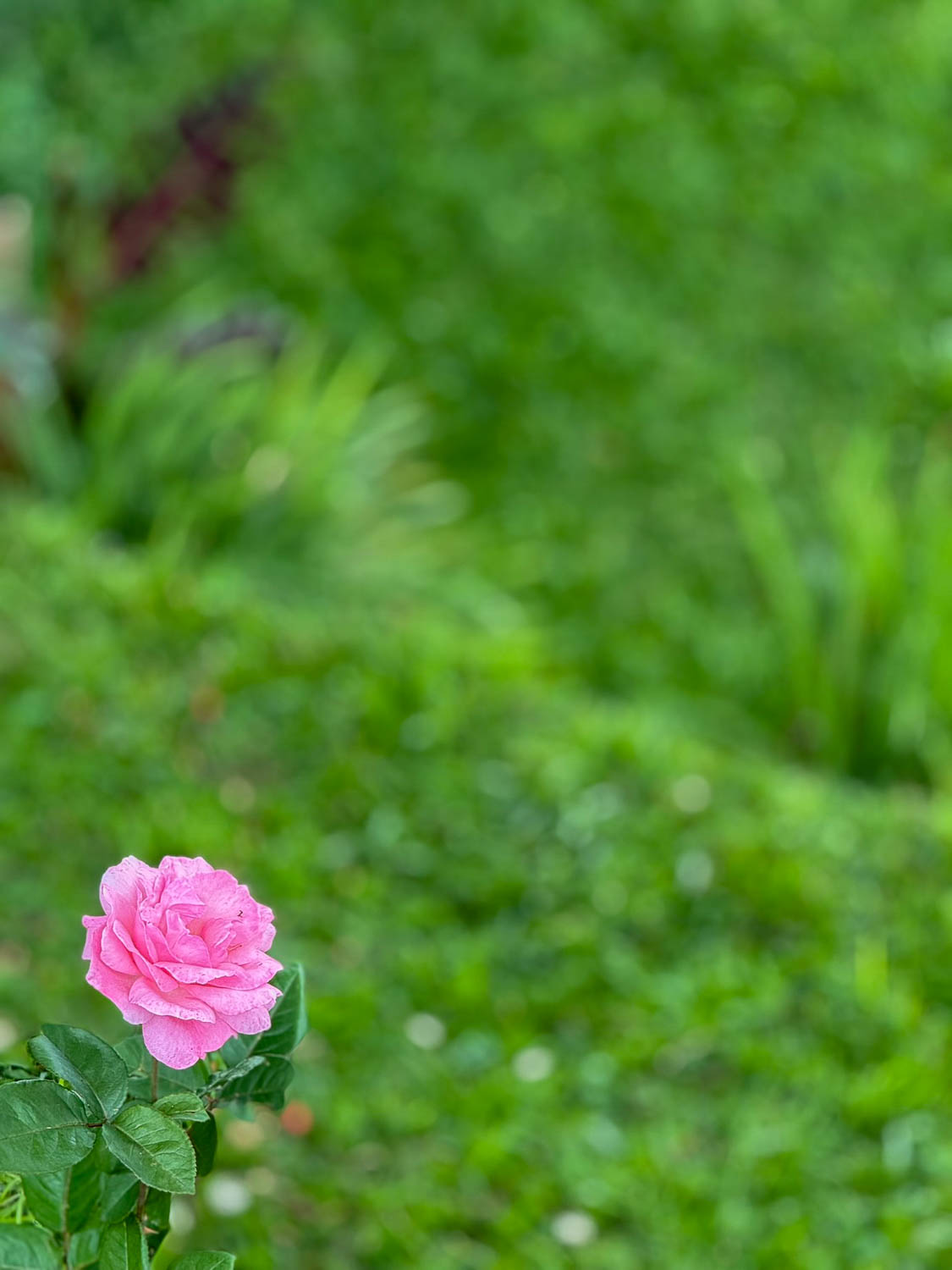
    Lush gardens at Kings Palace Museum in Nyanza Rwanda showcasing royal history and culture
    The lush green gardens of the King’s Palace Museum are also worth exploring

    Insider tip. If you’re truly interested in gaining a profound understanding of Rwanda’s rich cultural and royal history, allow yourself ample time for a visit to the King’s Palace Museum. Aside the museum itself, the site’s grounds and gardens are also worth exploring.

    The King’s Palace Museum is open daily (including Sundays and public holidays) from 9am through 5pm, with reduced hours on the last Saturday of the month (12pm-5pm), when Rwandans participate in their national community service day (Umuganda). The museum is closed on Genocide Memorial Day (April 7).

    The museum’s entrance fee is 6,000-10,000 RWF (between US$4.25 and US$7, depending on your citizenship and residency), which includes a guided tour (1.5-2 hours, available in English, Kinyarwanda and French).

    Insider tip. Interested in seeing an Inyambo royal cow parade? I mean, you’re there, so why not, right? Expect to pay an additional 3,000 RWF (about US$2) for this optional (but super cool) activity.

    Ethnographic Museum of Rwanda
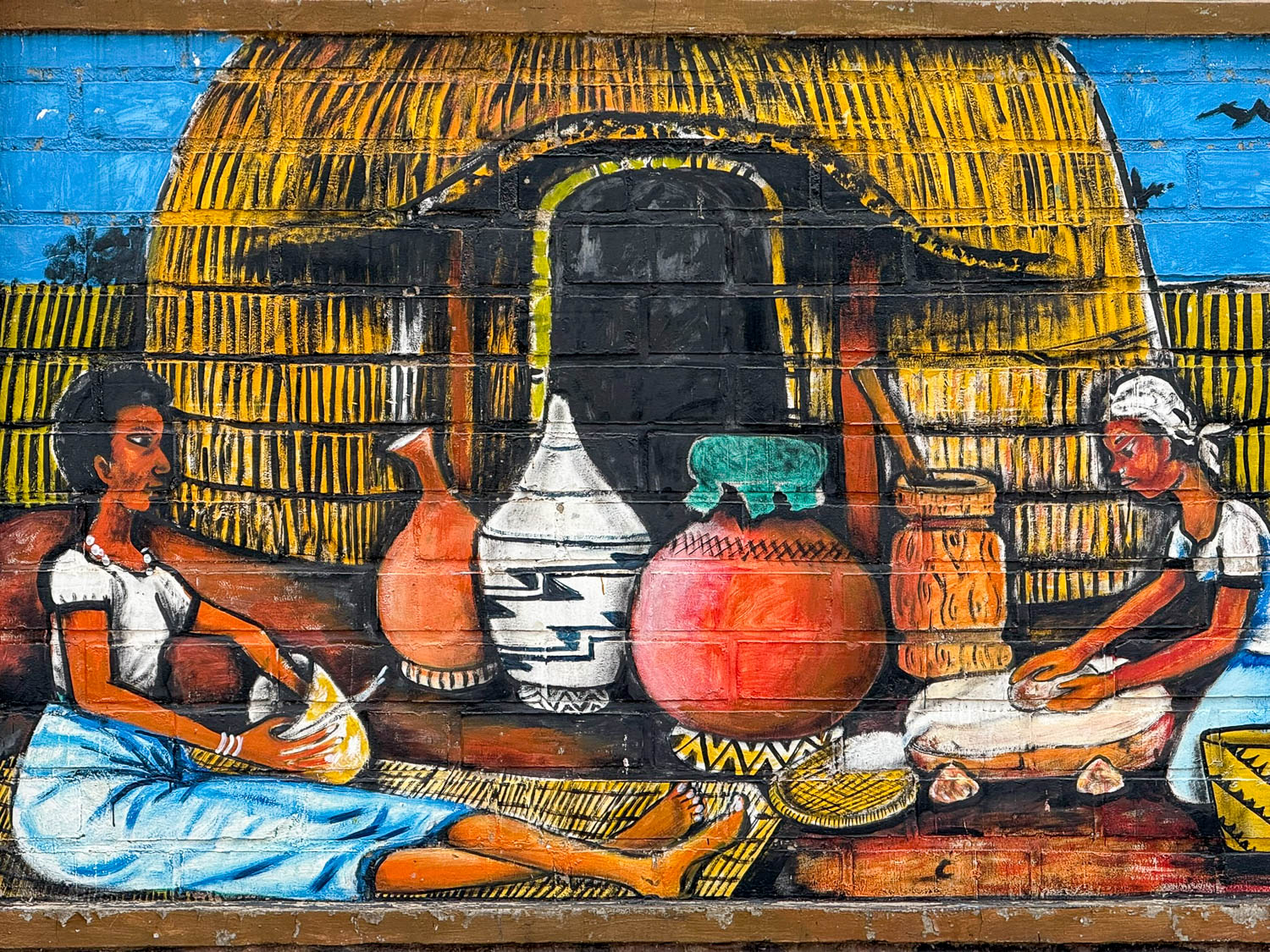
    Artwork depicting traditional Rwandan culture and heritage displayed at Ethnographic Museum Rwanda
    A local artist’s rendition of some of Rwanda’s cultural traditions

    The country’s largest museum, the Ethnographic Museum of Rwanda, is another important cultural center that affords visitors a solid narrative into Rwanda’s rich cultural heritage. Situated in Huye, approximately 81 miles (130km) south of Kigali, it’s also one of Africa’s premier ethnological and archaeological collections.

    Established in 1989 with assistance from the Belgian government, the museum offers a comprehensive journey through Rwanda’s history, culture, and traditions. Its seven galleries display artifacts ranging from traditional crafts and agricultural tools to musical instruments and ceremonial attire. There’s also a gift shop onsite, and a well-maintained outdoor area worth exploring.

    Admission to the museum is approximately 17,000 RWF (US$12), with galleries open from 8am through 6pm. The museum closes early (at 11am) on Umuganda (the last Saturday of each month).


    Rwanda’s Natural Beauty
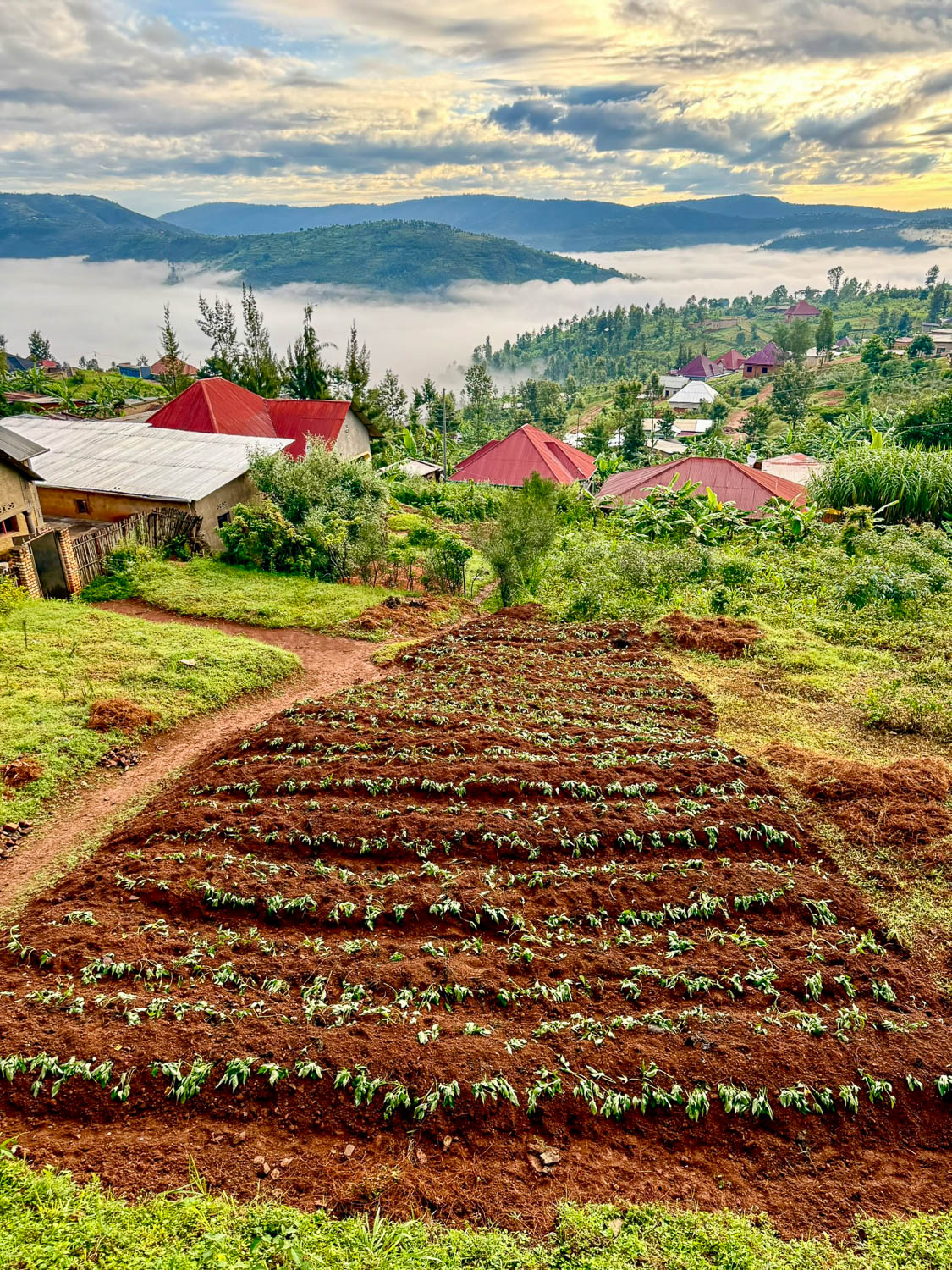
    Rolling green hills in Rwanda near Shyorongi showcasing the country’s natural beauty and landscapes
    Rwanda’s natural beauty will captivate you (Shyorongi, Rwanda)

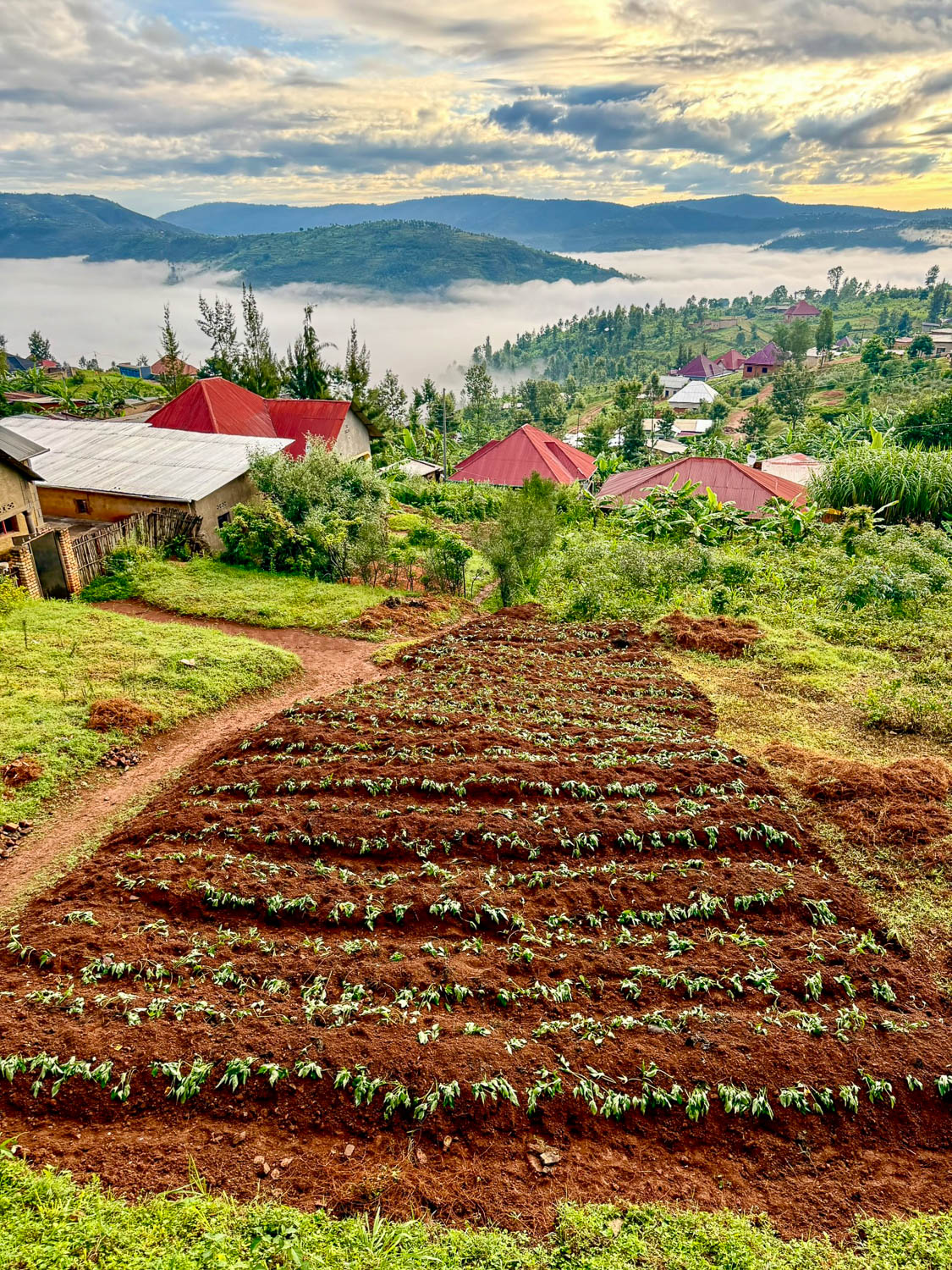
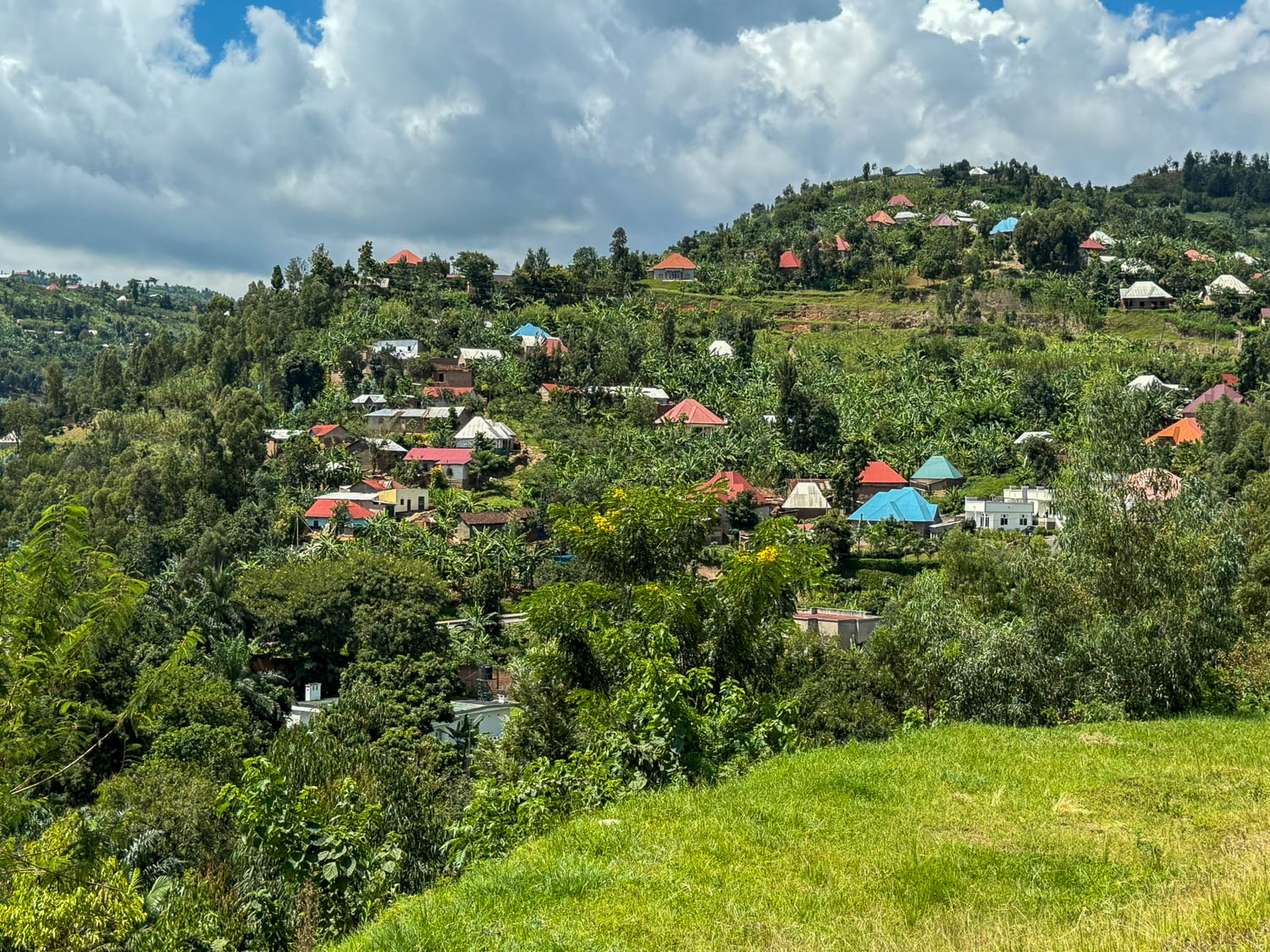
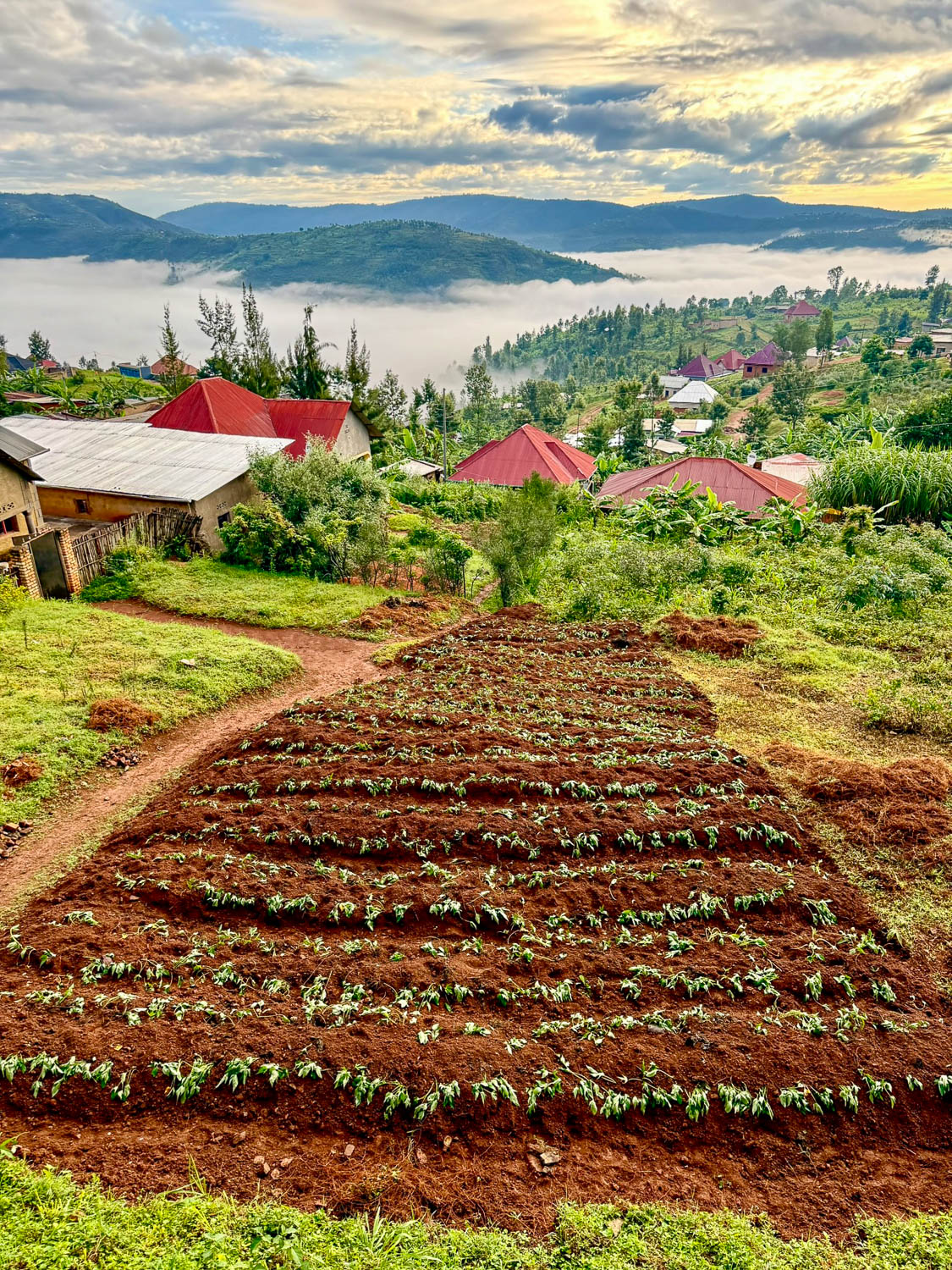
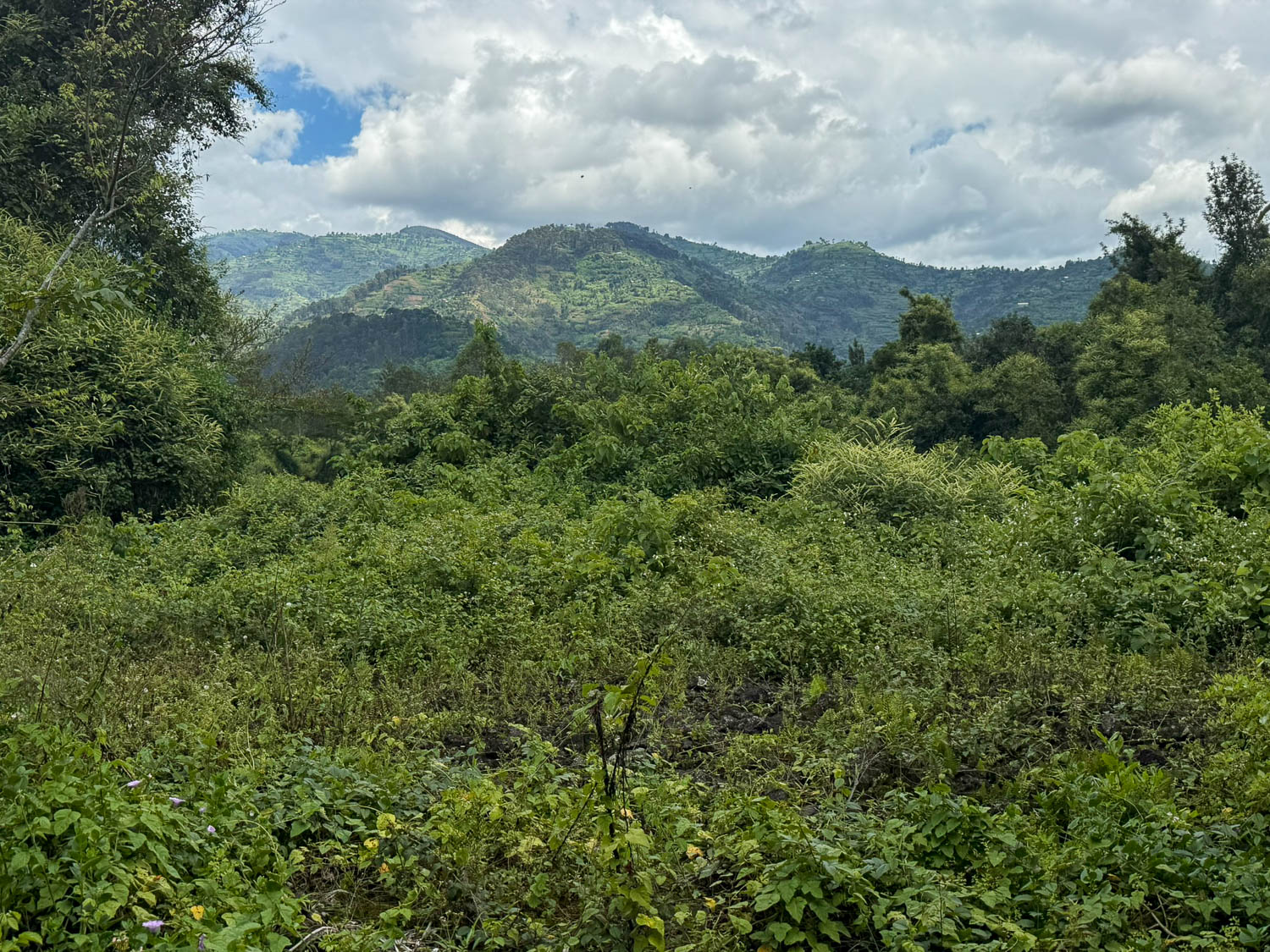
    Rwanda’s natural beauty is defined by its rolling green hills, mist-covered mountains, and crystal-clear lakes – all seeming to appear around every bend in the road. The country’s compact size makes it easy to navigate, yet within its borders you’ll find an incredible range of ecosystems and a rich tapestry of natural attractions just waiting to be explored.

    Volcanoes National Park: Gorilla Encounters in the Mist

    Endangered mountain gorillas in Volcanoes National Park Rwanda a top wildlife experience in Africa
    The endangered mountain gorillas of northern Rwanda

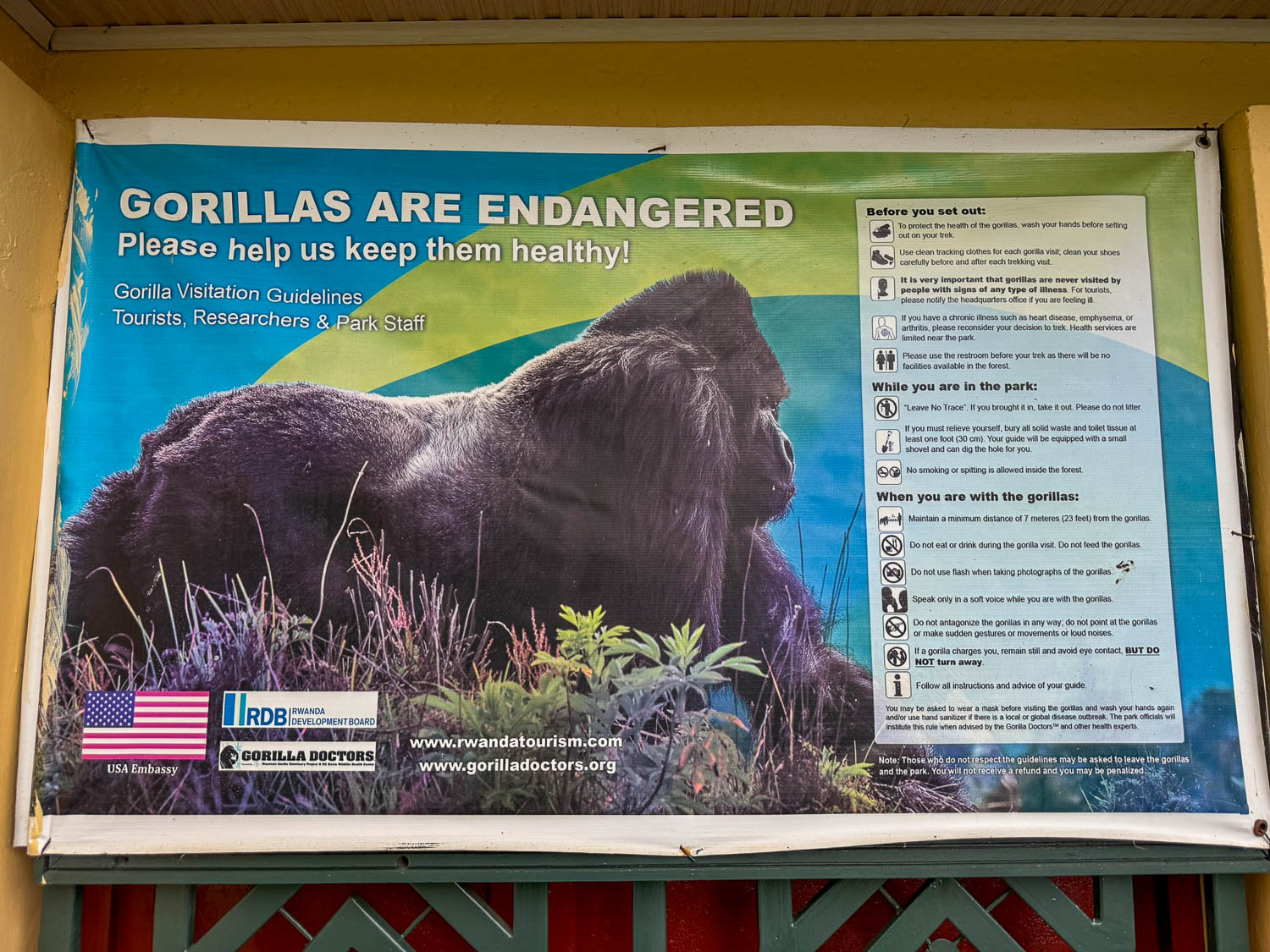
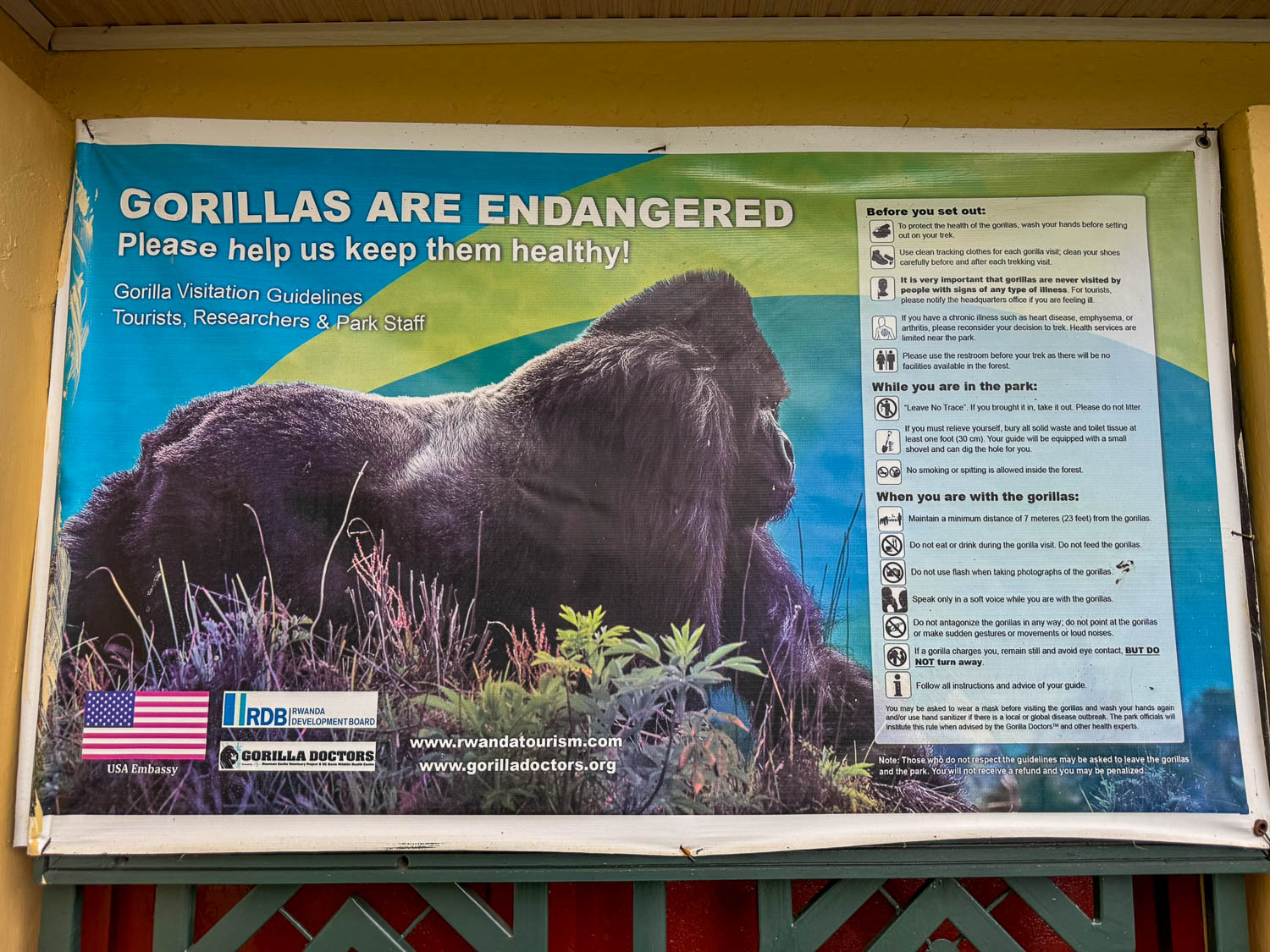
    If you haven’t yet heard, one of the most iconic things to do in Rwanda is to visit Volcanoes National Park, home to the critically-endangered mountain gorillas. Nestled within the Virunga Mountains, this national park offers a once-in-a-lifetime opportunity to embark on a gorilla trekking adventure. Accompanied by a local guide, you’ll hike through dense forests and steep slopes, where you may just find yourself face-to-face with a family of wild gorillas in their natural habitat. We know, pretty awesome, right?

    The experience of a gorilla trek is nothing short of life-changing. As you watch these majestic creatures forage, groom one another, or care for their young, it’s impossible not to feel humbled to simply be in their presence.

    Fun fact. Volcanoes National Park is home to roughly 300 gorillas, and is one of the few places on earth where you can stand eye-to-eye with these majestic creatures.

    Other highlights of Volcanoes National Park include:

    • Looking out for other primates, including golden monkeys.
    • Visiting the Dian Fossey grave and research center at Karisoke, a moving tribute to the woman who devoted her life to saving mountain gorillas from extinction.
    • Hiking any number of the well-maintained trails throughout the park that lead to Mount Bisoke and Mount Karisimbi, offering spectacular views over the region, and a more intense trekking experience.

    For a deeper dive into Volcanoes National Park, be sure to consult our article on Musanze.

    The Twin Lakes of Ruhondo and Burera

    Located just outside Volcanoes National Park, the Twin Lakes of Ruhondo and Burera are volcanic in origin and are absolutely stunning. Here you’ll be surrounded by terraced hills and farming villages, and with both lakes fed by rivers descending from the volcanoes within the Virunga Mountains, the landscape provides breathtaking, postcard-worthy views.

    Insider tip. A boat trip on either lake provides an immersive way to experience rural Rwanda, whilst taking in some of the most incredible views the country has to offer. Not up for a boat ride? No worries, because the lakes also afford visitors plenty of opportunities to bike, canoe, birdwatch, hike, and simply reflect on life as the world quietly passes by.

    Insider tip. A visit to the Twin Lakes is often combined with gorilla trekking itineraries, making them a perfect complement to any adventure in the north of the country.

    Looking for more information on the Twin Lakes? Be sure to check out our article on Musanze!

    Akagera National Park: An African Safari Adventure
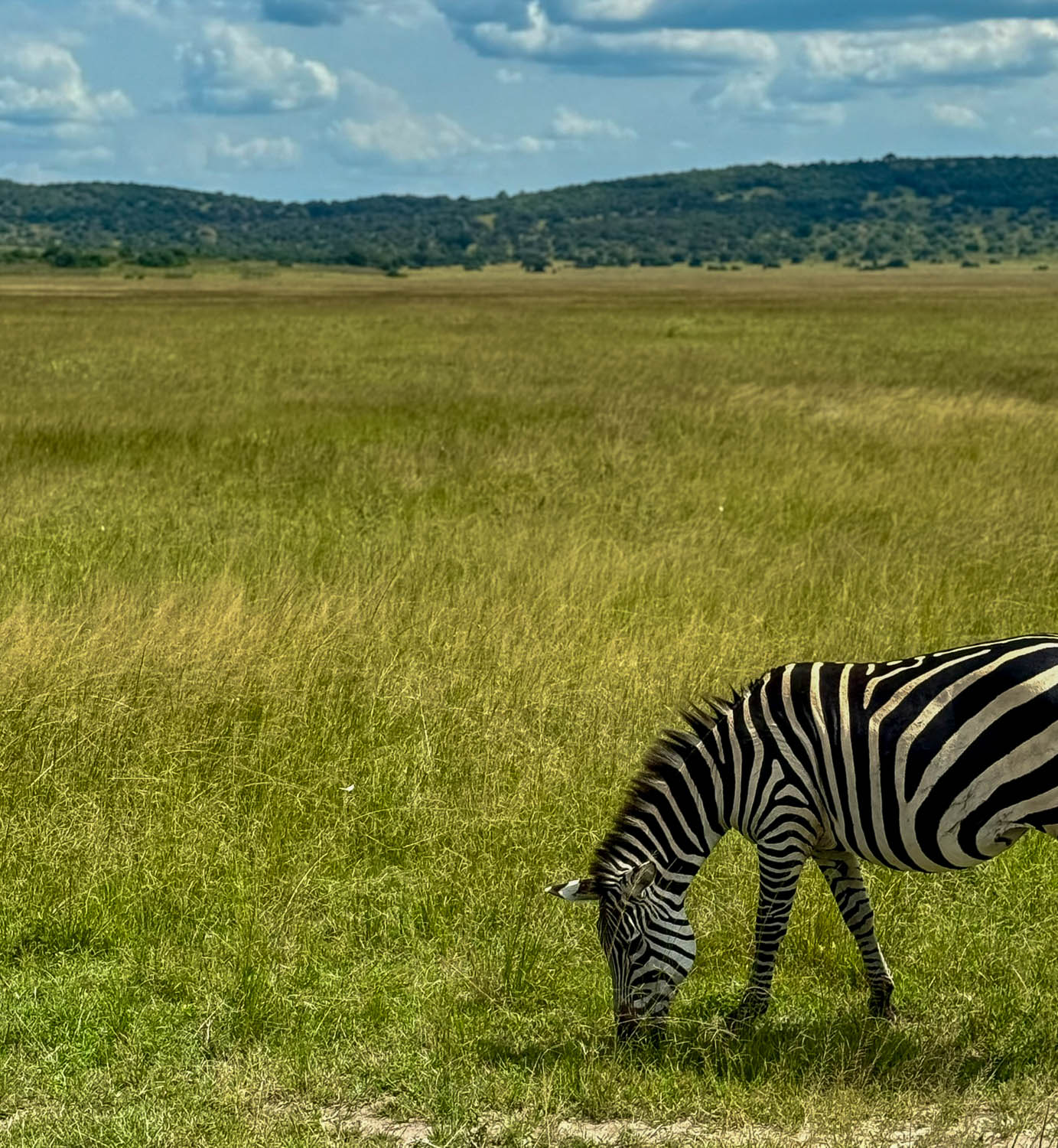
    Savannah landscape in Akagera National Park Rwanda known for safari wildlife and Big Five sightings
    The vast savannah plains of Akagera National Park (Rwanda)

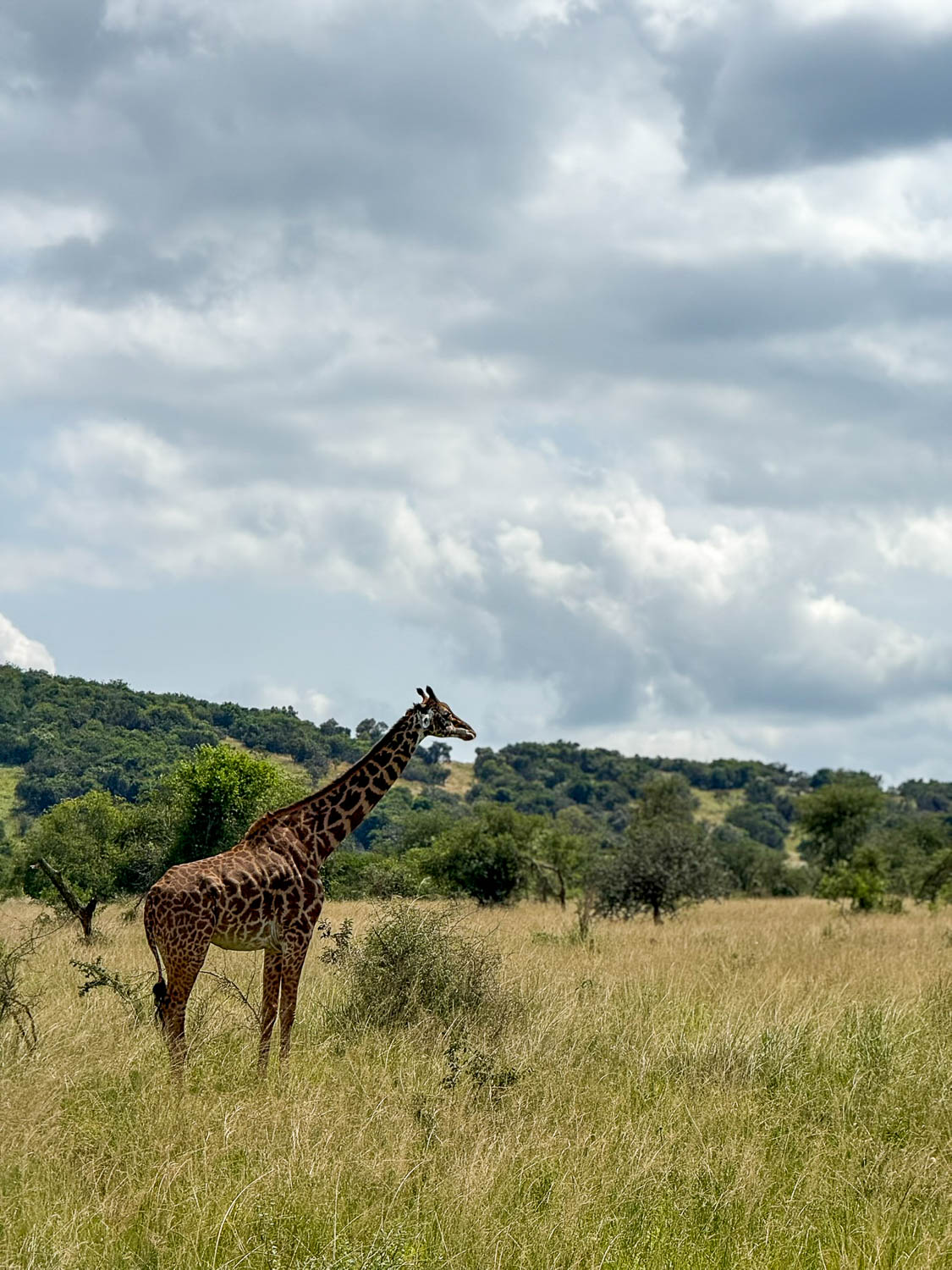
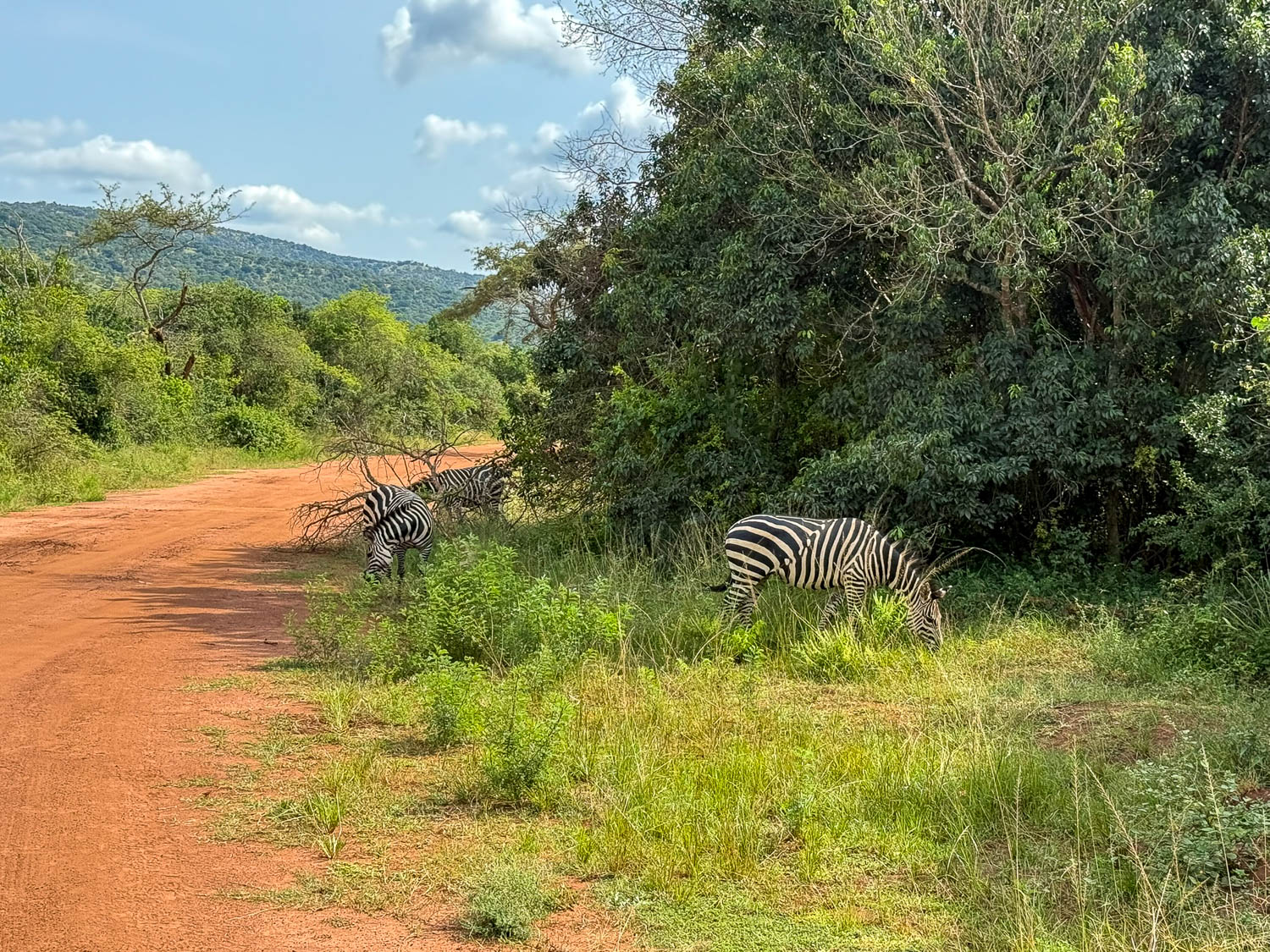
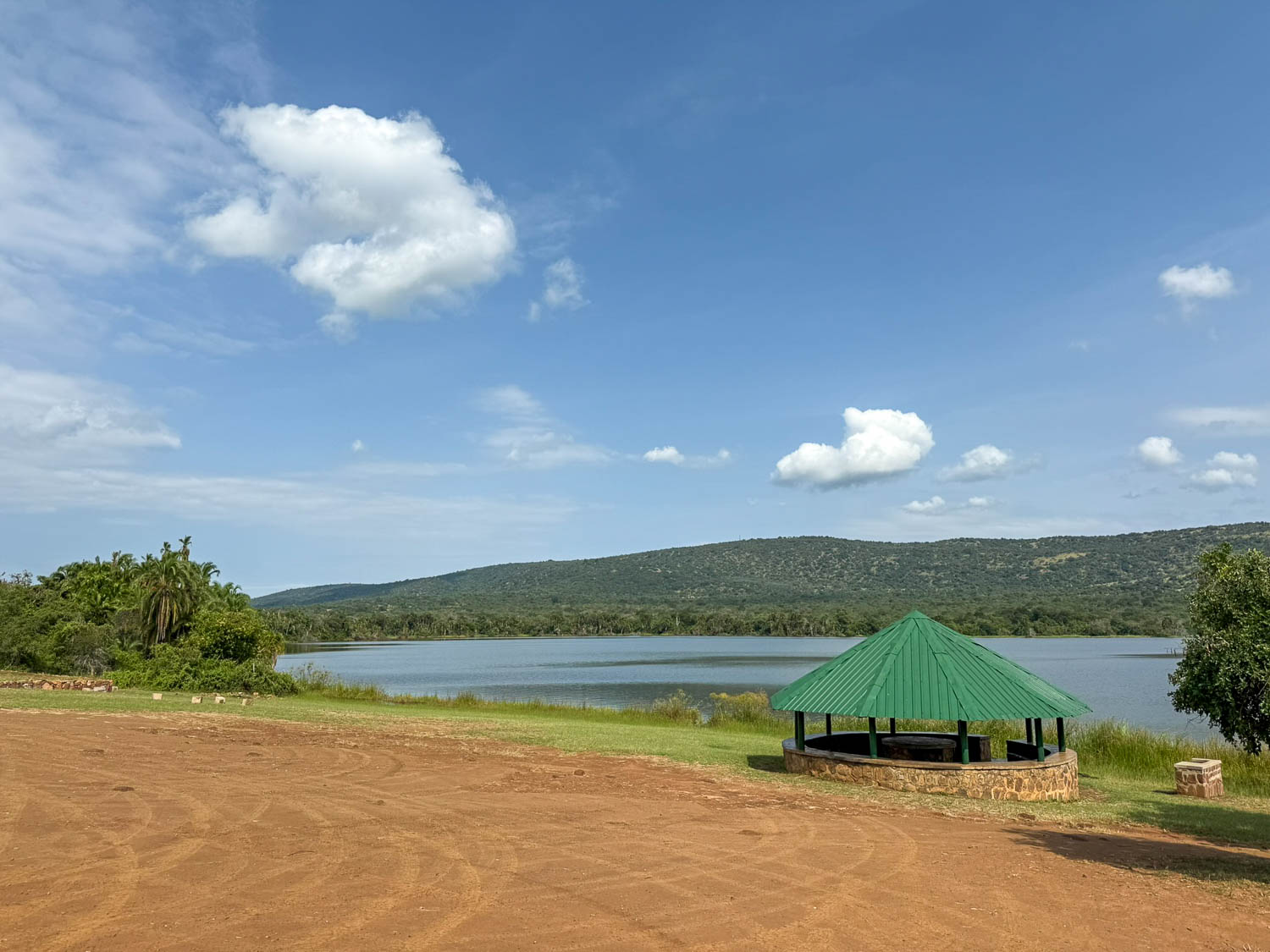
    If you’re dreaming of a traditional safari experience in Rwanda, then head east from Kigali (for about two-and-a-half hours) to Akagera National Park. Akagera is the nation’s only savannah national park, and it has made a stunning conservation comeback. Thanks to successful conservation efforts, the Big Five (lion, leopard, rhino, elephant, and buffalo) roam freely here once again – and you have an opportunity to see them all, up close (but also from the safety of your safari vehicle)!

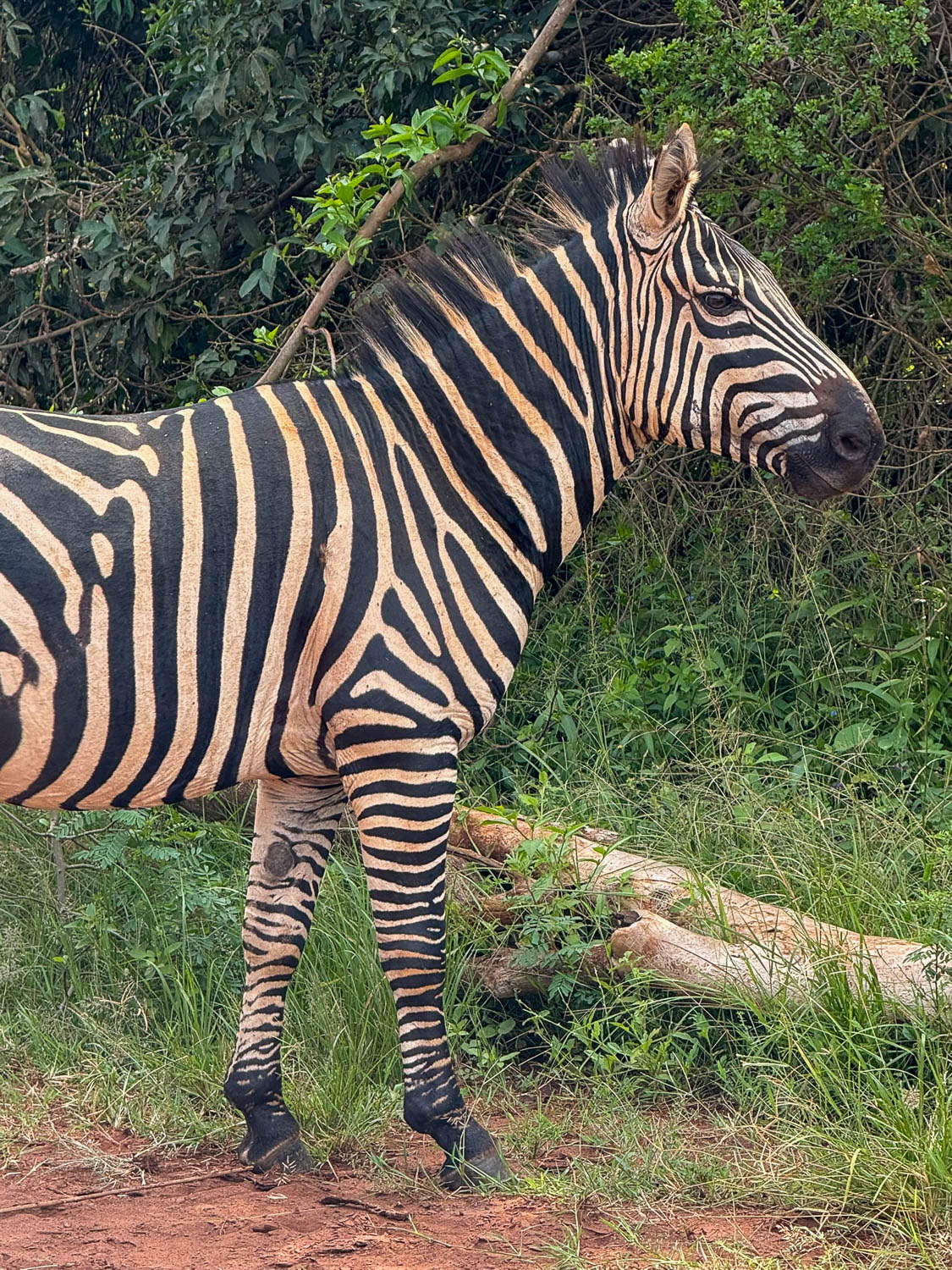
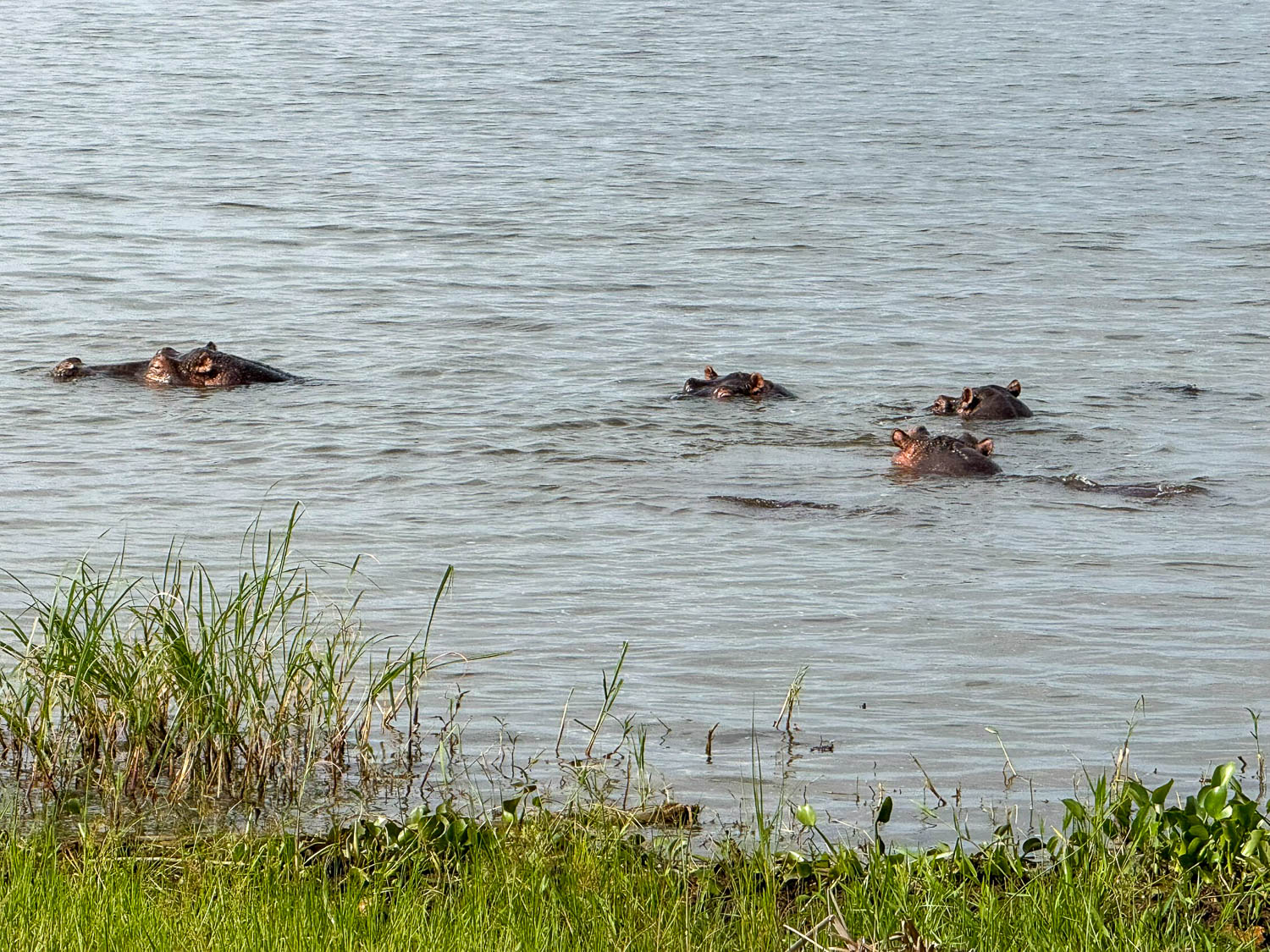
    At Akagera you can enjoy day and/or night game drives, boat trips across Lake Ihema, and even guided bird-watching tours. Zebras, giraffes, and hippos are frequently spotted, along with hundreds of bird species, including the rare Shoebill Stork and the endangered Papyrus Gonolek.

    Insider tip. Akagera combines a classic African safari with Rwanda’s peaceful and organized hospitality. It’s a popular destination for a day trip from the capital (though a very long one!), or for an overnight stay within the park itself.

    For more information on Akagera National Park, be sure to check out our deep dive into this fascinating landscape, Akagera National Park.

    Nyungwe Forest National Park: A Biodiversity Hotspot
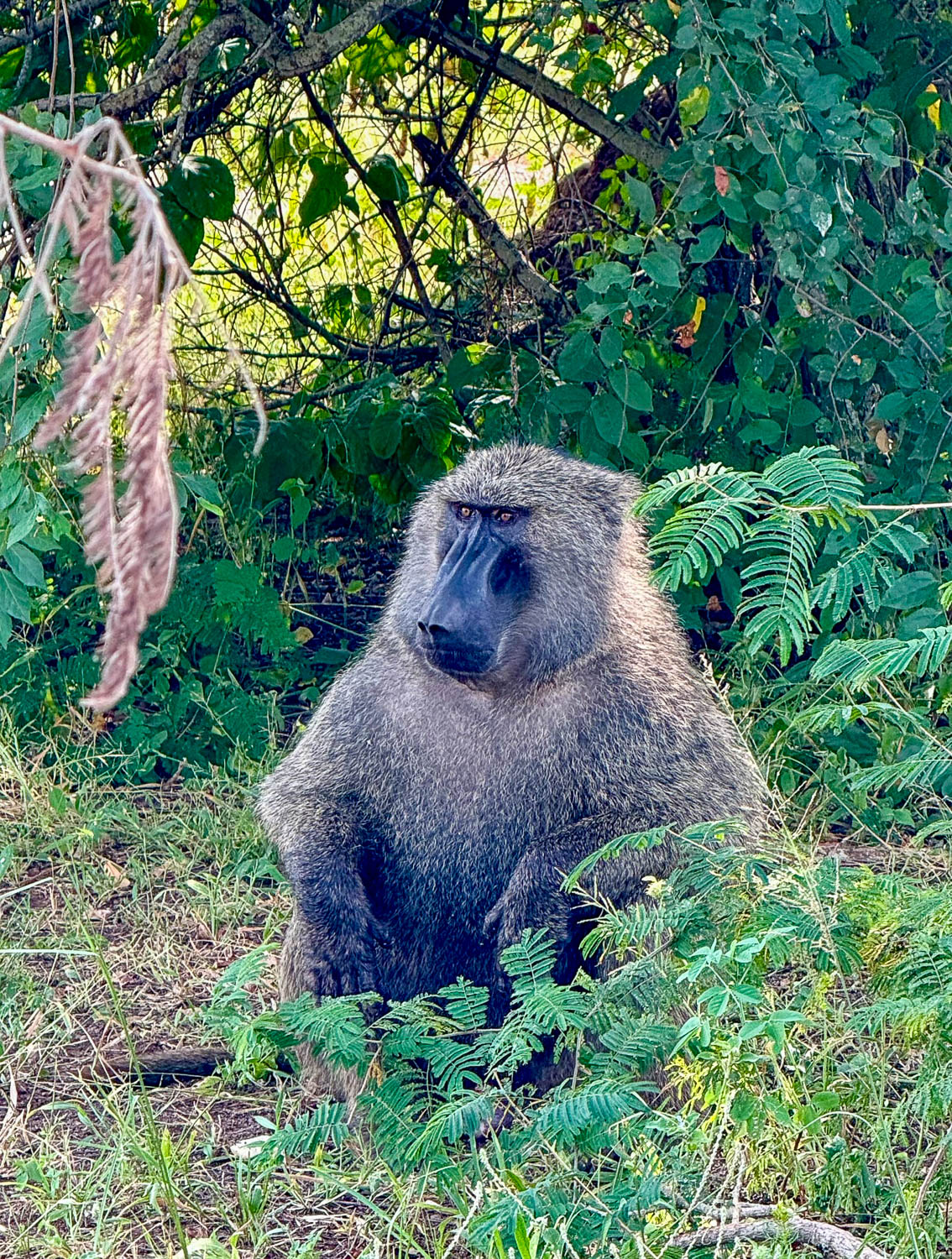
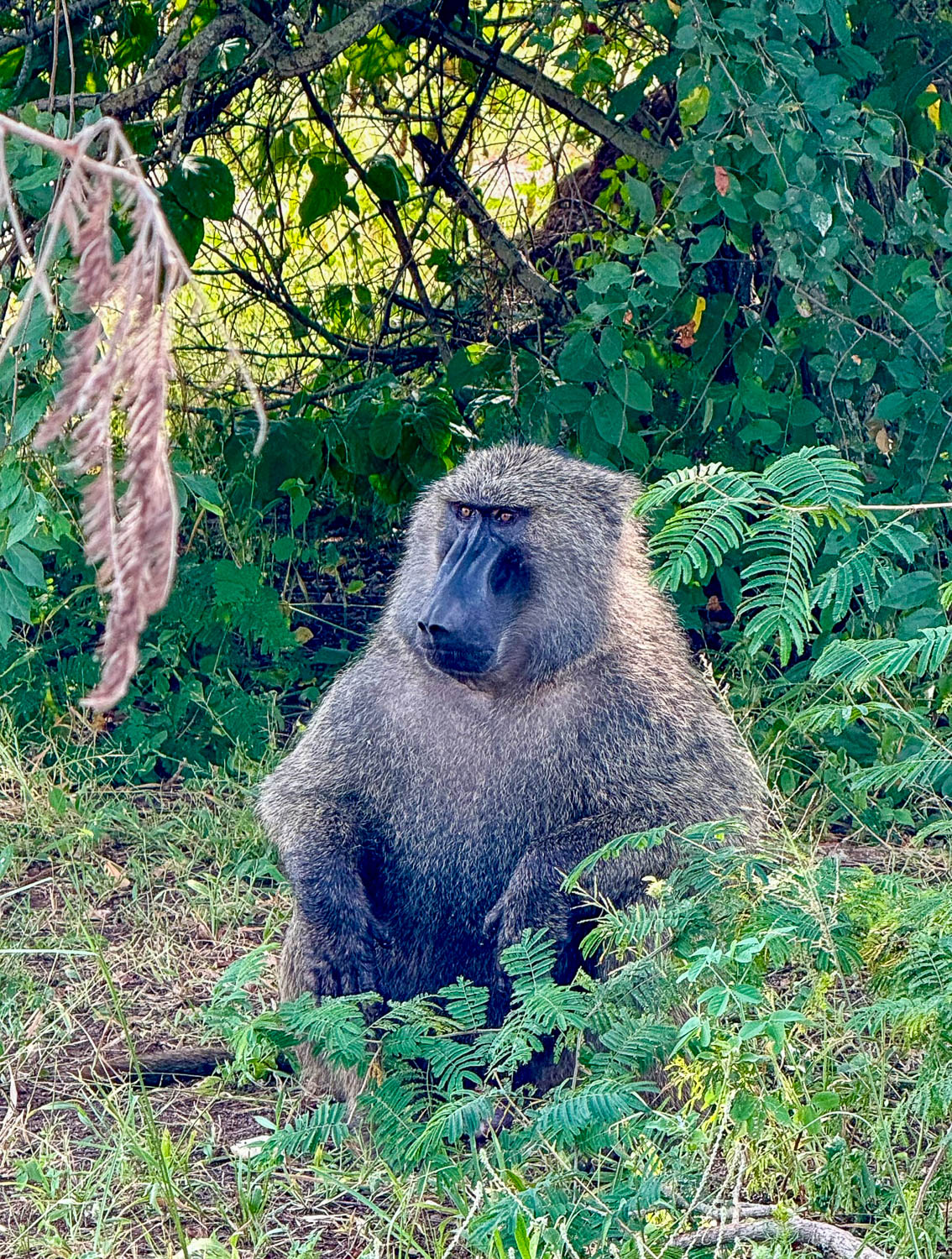
    Olive baboon in Nyungwe Forest National Park Rwanda a biodiversity hotspot for primates
    Olive baboon spotting in Nyungwe

    You may also wish to consider a visit to Nyungwe Forest National Park, a primeval rainforest rich in plant species, rare primates, and birdlife. This national park, located in southwest Rwanda – partly abutting the Burundi border and a solid 4 hours by road from Kigali – is home to colobus monkeys, chimpanzees, and more than 300 bird species, making it a paradise for nature-lovers and bird-watching enthusiasts alike.

    Insider tip. A highlight of Nyungwe is the canopy walk, a suspended bridge that provides panoramic views over the forest and the sort of adrenaline rush we know Beck seeks on a regular basis.

    Since you’re already in the area, you may also wish to consider a visit to the nearby Gisakura Tea Estate, scenic tea plantations where visitors can explore rolling tea fields, learn about sustainable tea production, and enjoy panoramic views of the surrounding hills and forests. This is an opportunity to experience a truly tranquil setting and garner a unique cultural insight into Rwanda’s agricultural traditions.

    Looking for more things to do near Nyungwe Forest National Park? Be sure to check out our article on Lake Kivu. And speaking of Lake Kivu…

    Lake Kivu: Where Unwinding Becomes the National Pastime
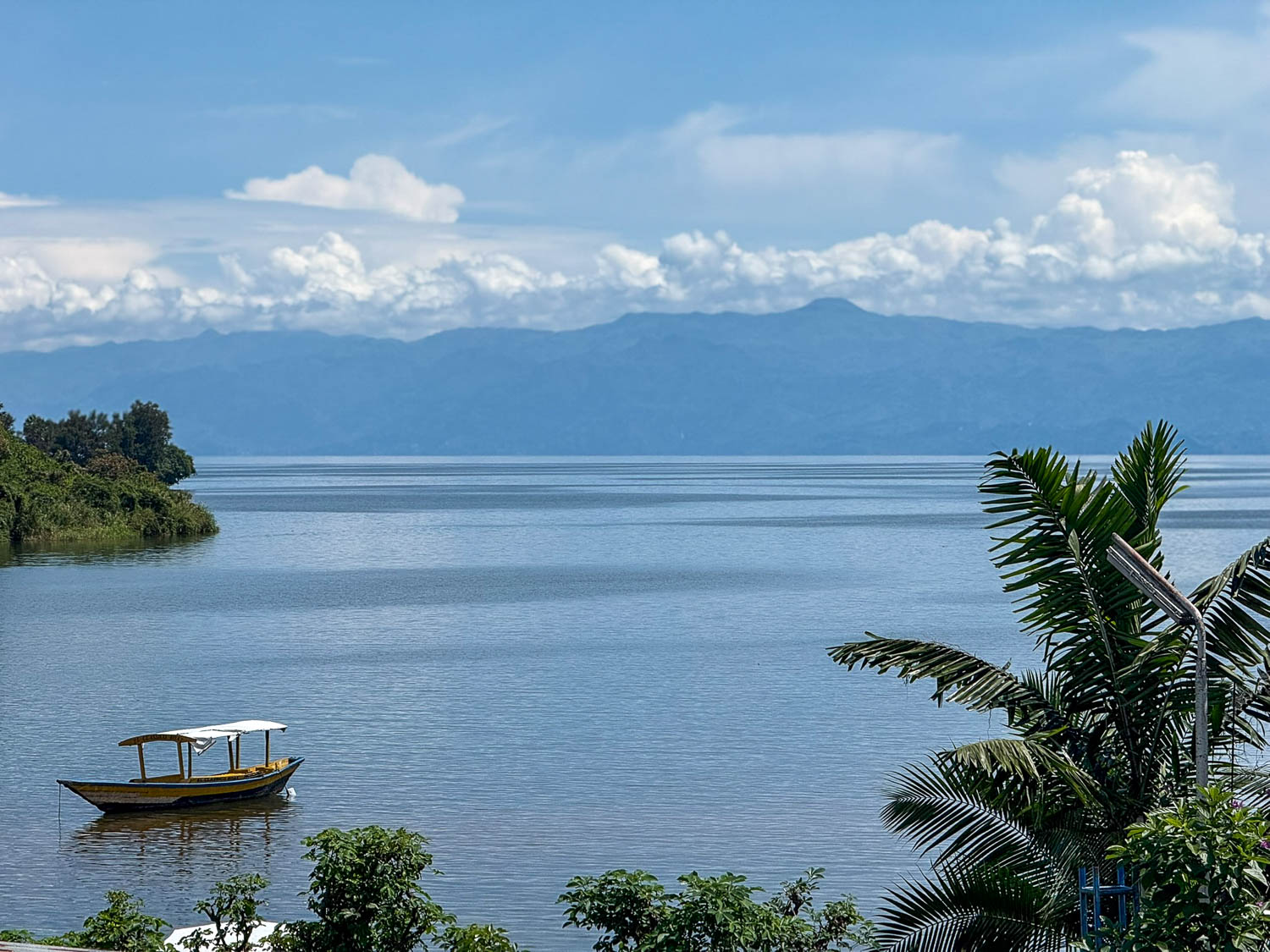
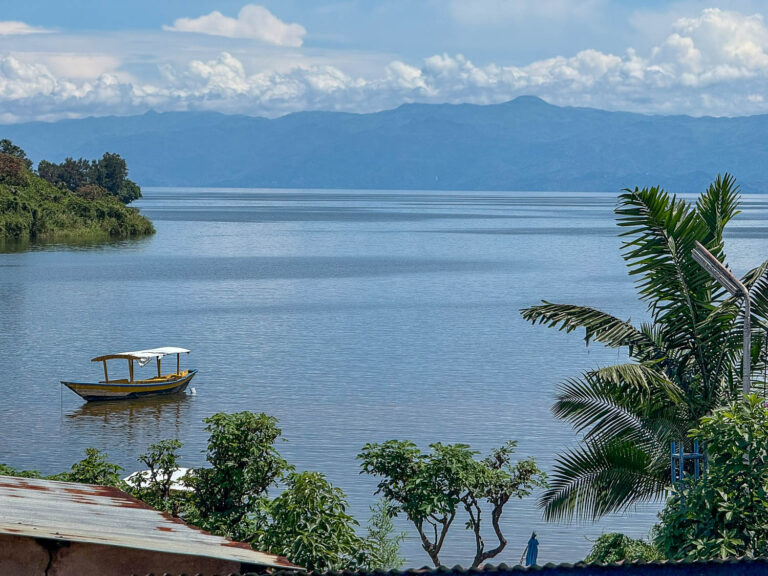
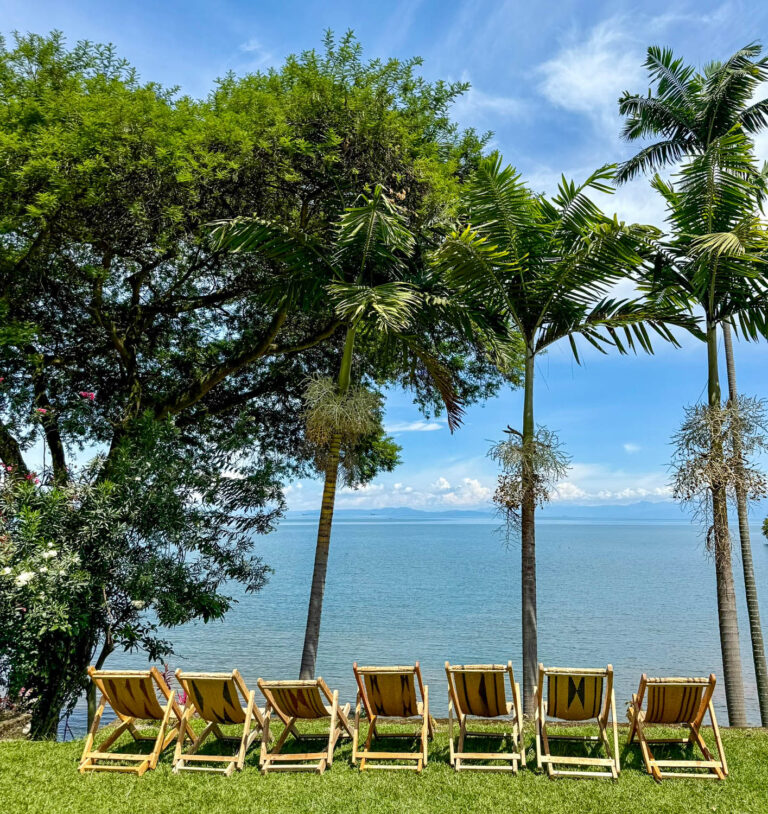
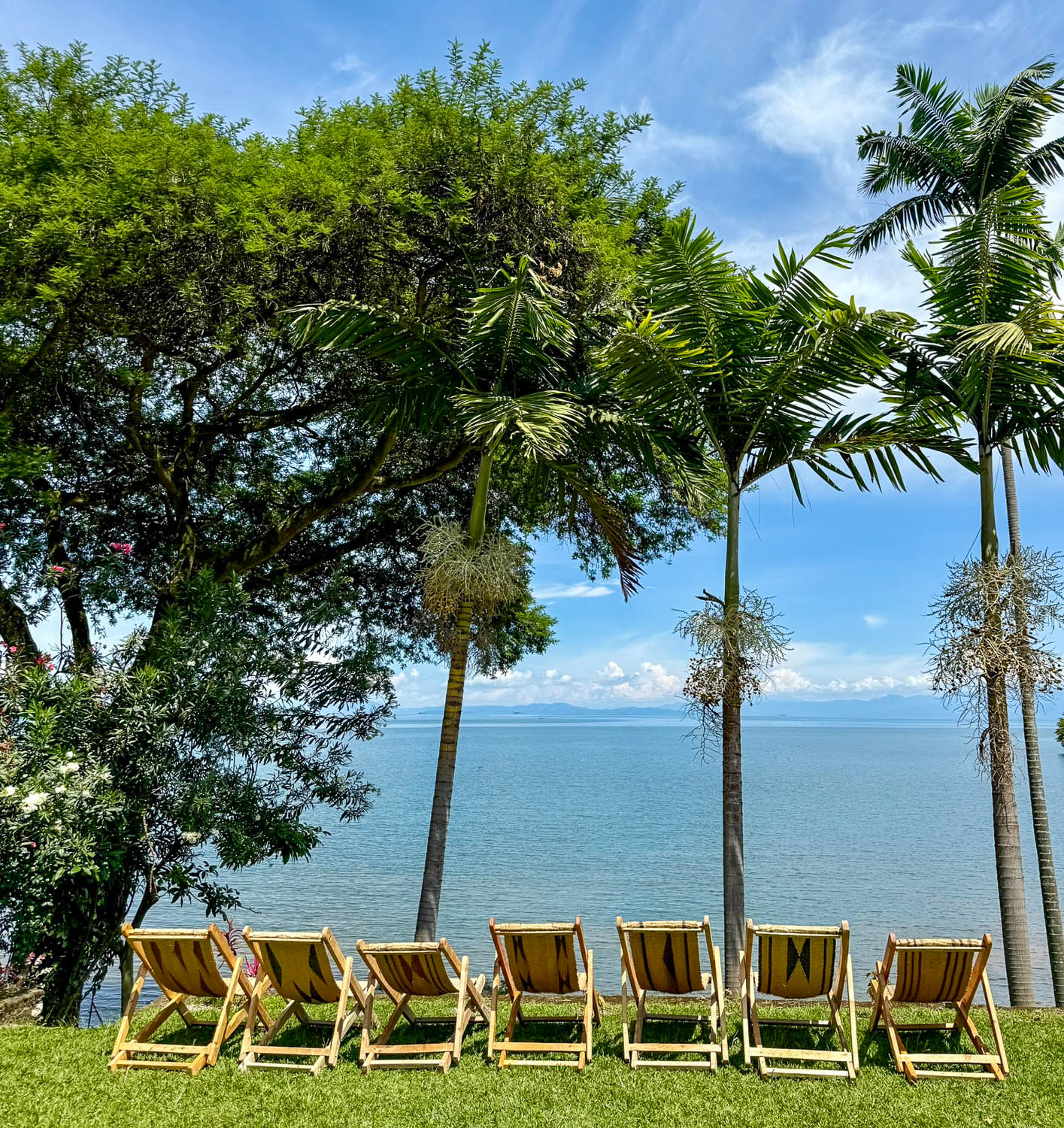
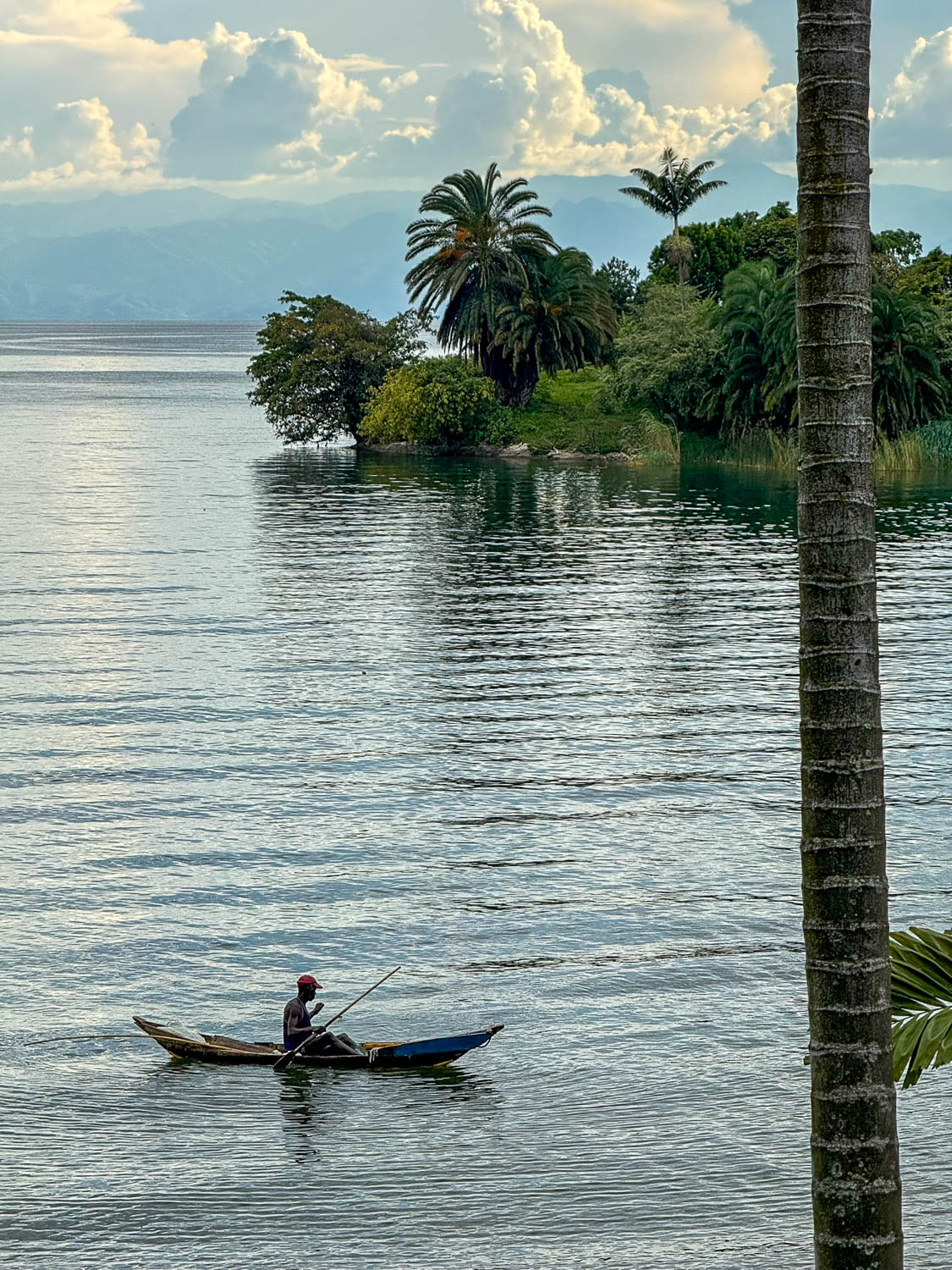
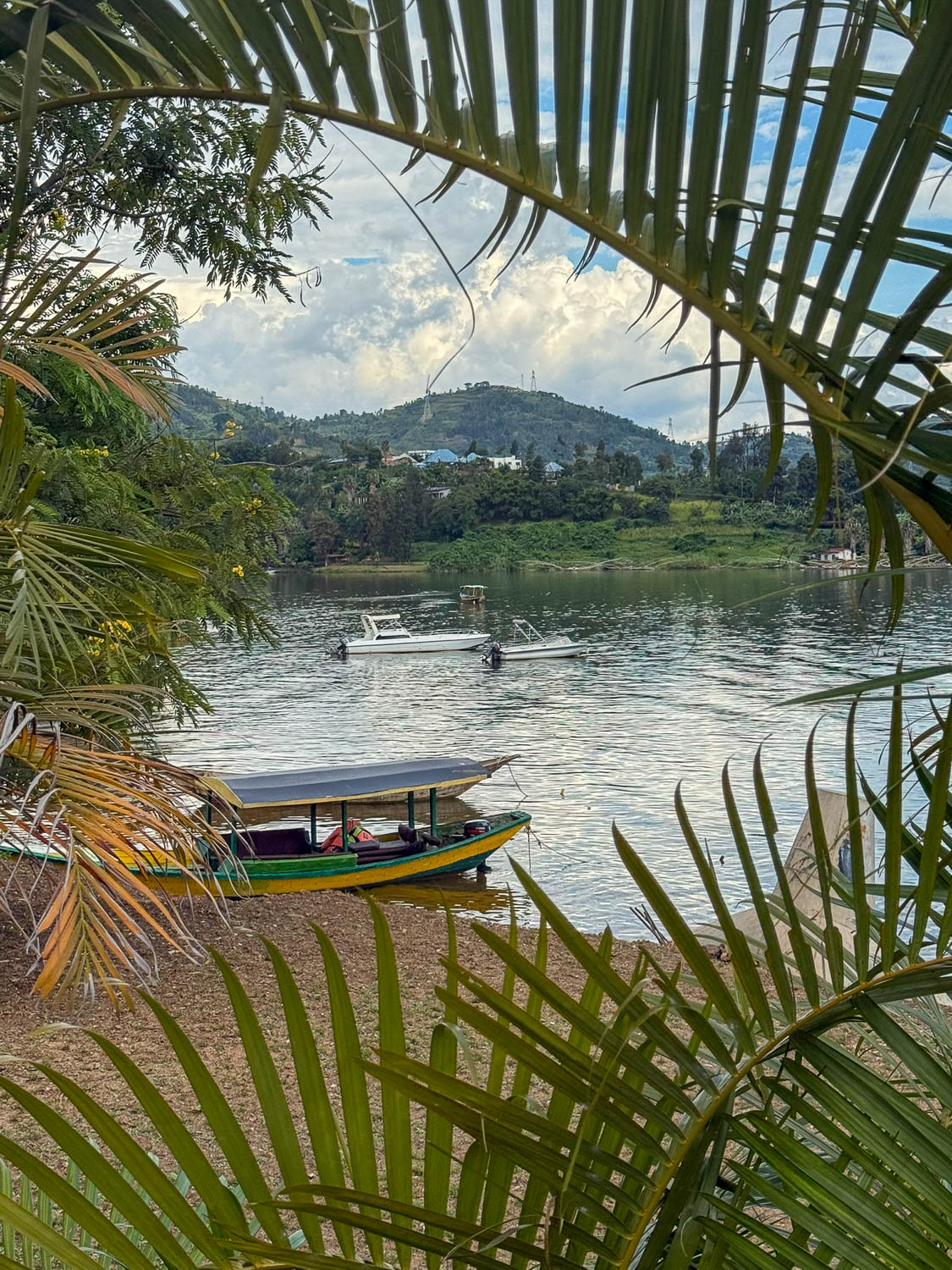
    Scenic view across Lake Kivu from Kigufi Rwanda a relaxing destination for travelers
    View from Kigufi across Lake Kivu (Rwanda)

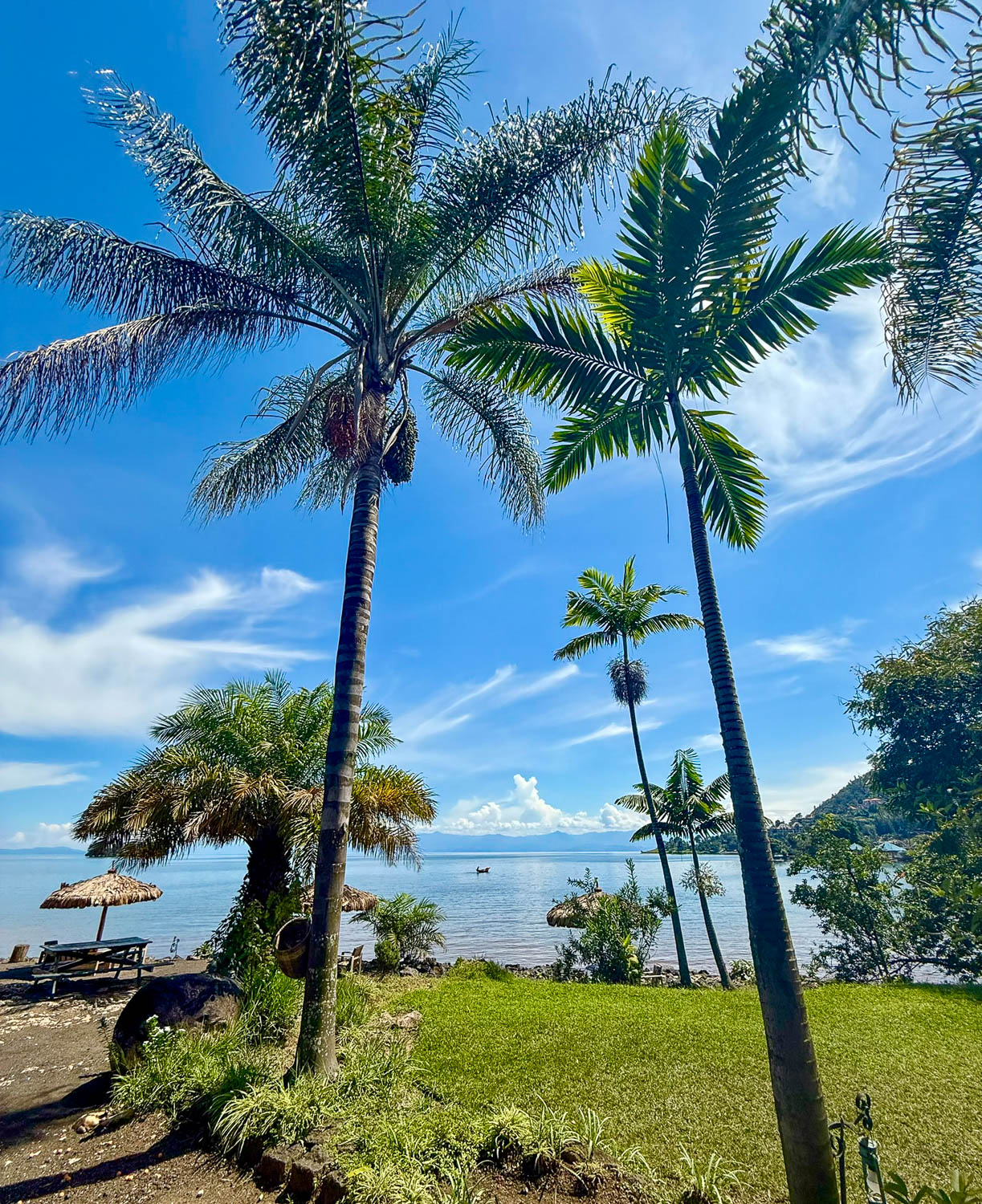
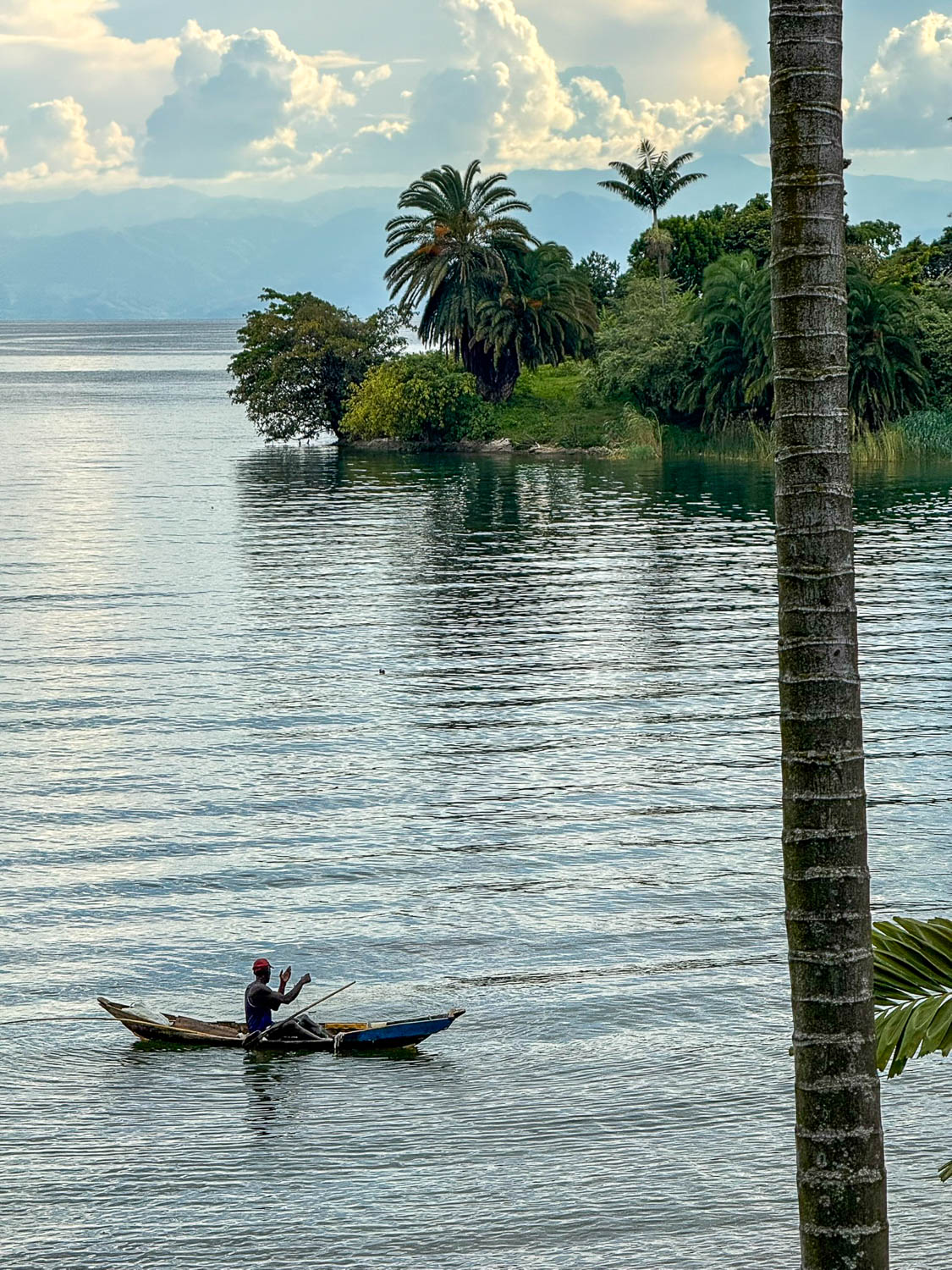
    Looking for somewhere to truly relax for a day or two? Or perhaps you’re seeking to reconnect with nature’s quieter rhythms? Then look no further than Lake Kivu, a 3-hour drive west of Kigali.

    Insider tip. We recommend allowing at least 5-6 hours to get from Kigali to Lake Kivu. The main road is windy (and incredibly scenic!), with numerous stops worth considering along the way.

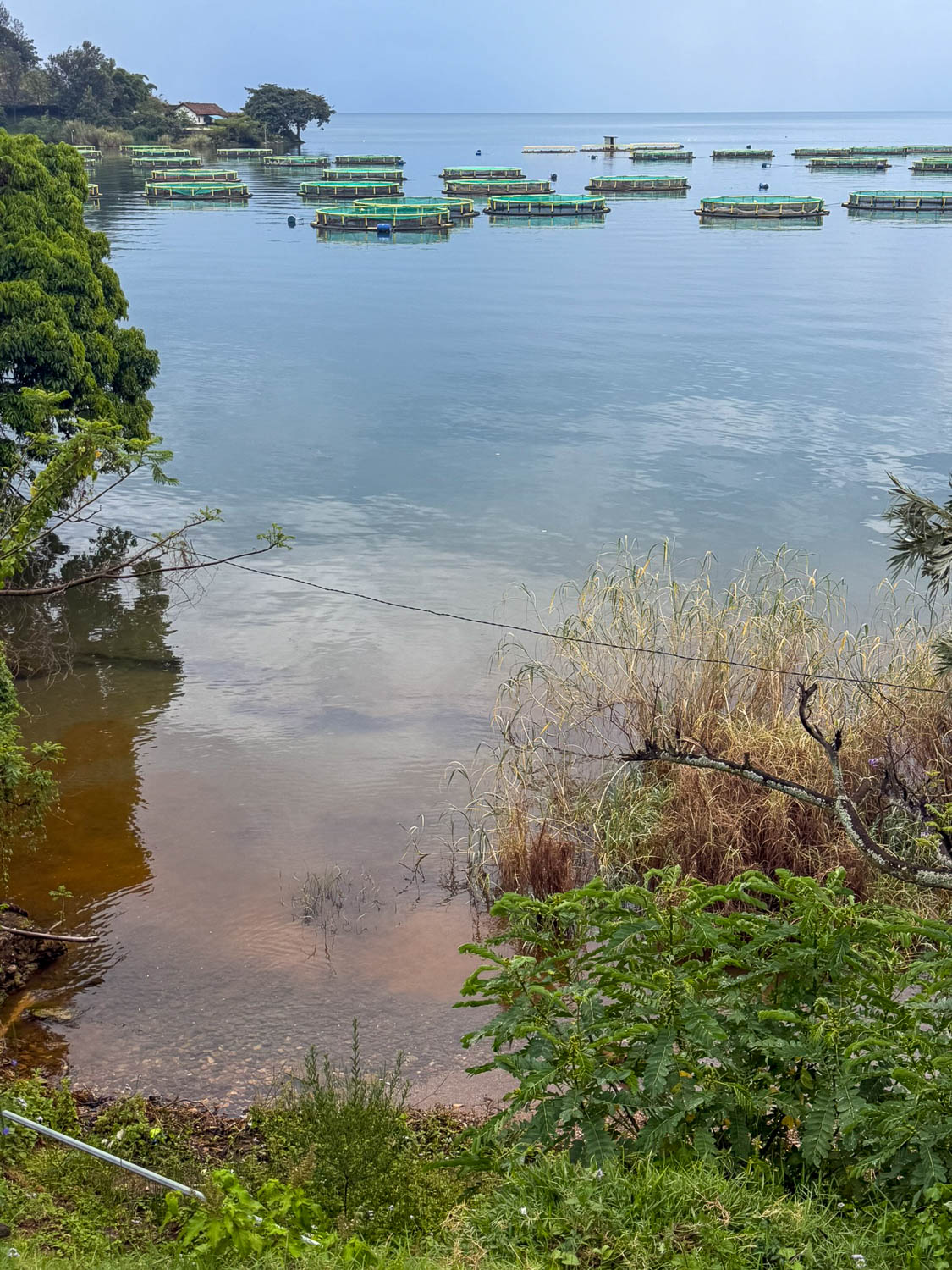
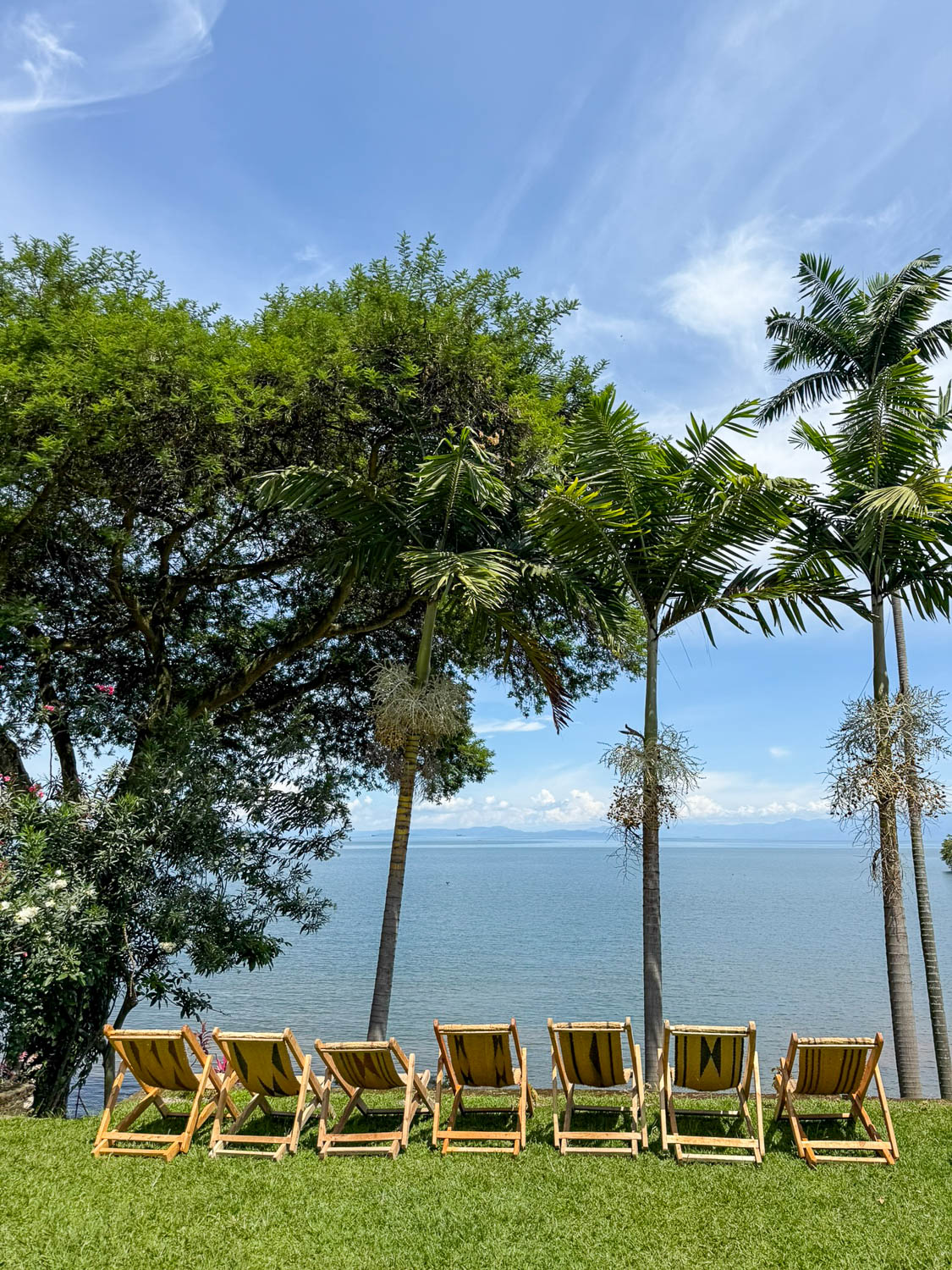
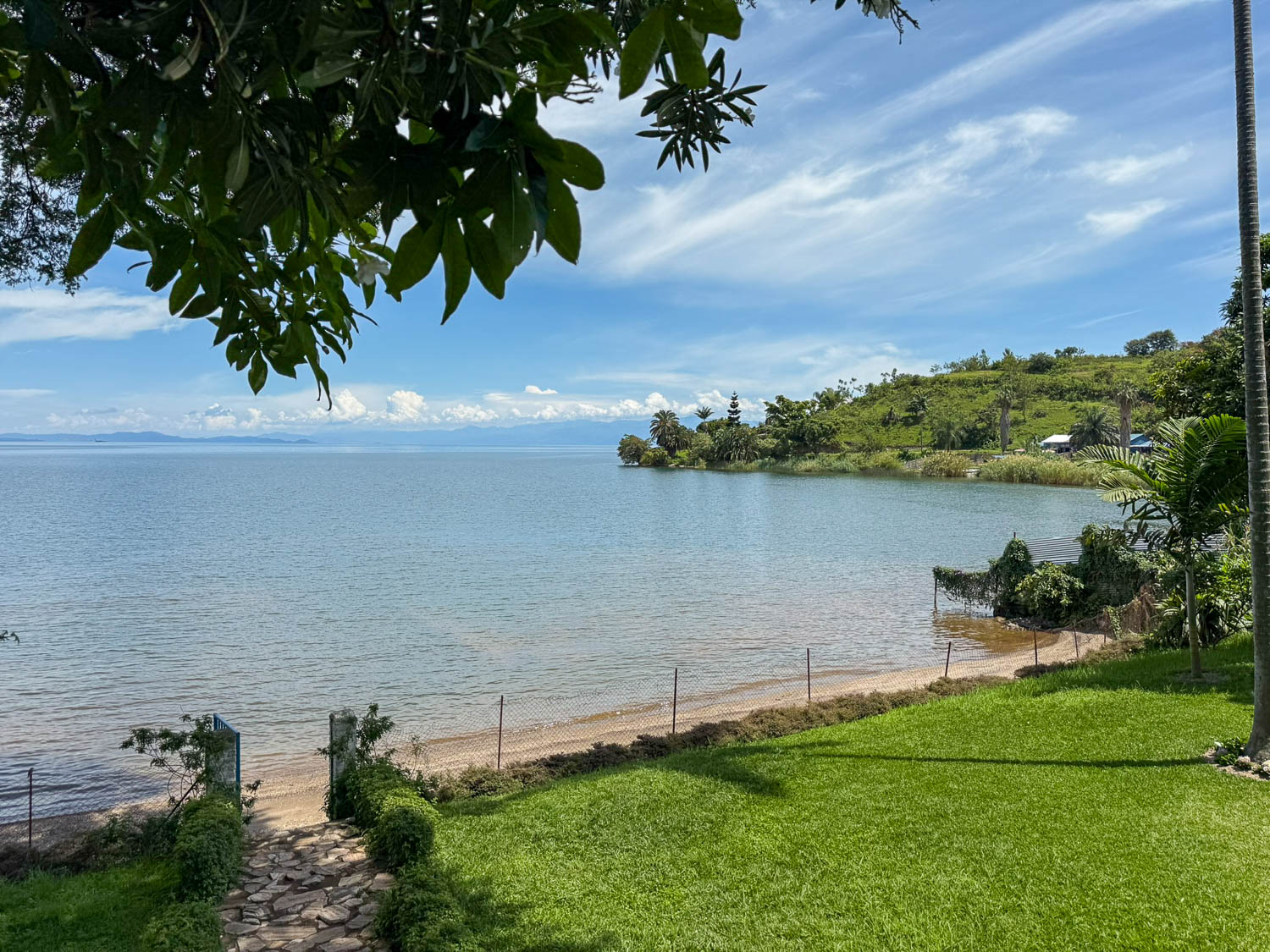
    Majestic, freshwater Lake Kivu borders the Democratic Republic of the Congo, its shores dotted with charming towns that include Rubavu (formerly known as Gisenyi) and Kibuye. No matter where you arrive or choose to stay, you’ll be afforded stunning views of the lake, sandy beaches, and relaxing lakeside accommodations.

    Insider tip. If staying overnight at Lake Kivu, consider basing yourself in the town of Kibuye, located about halfway between the most northern and most southern points of the lake. Kibuye is a wonderfully tranquil spot, perfect for visitors who want to slow down, enjoy fresh Rwandan food at local restaurants, shop at local markets, or simply lounge by the lake’s shores.
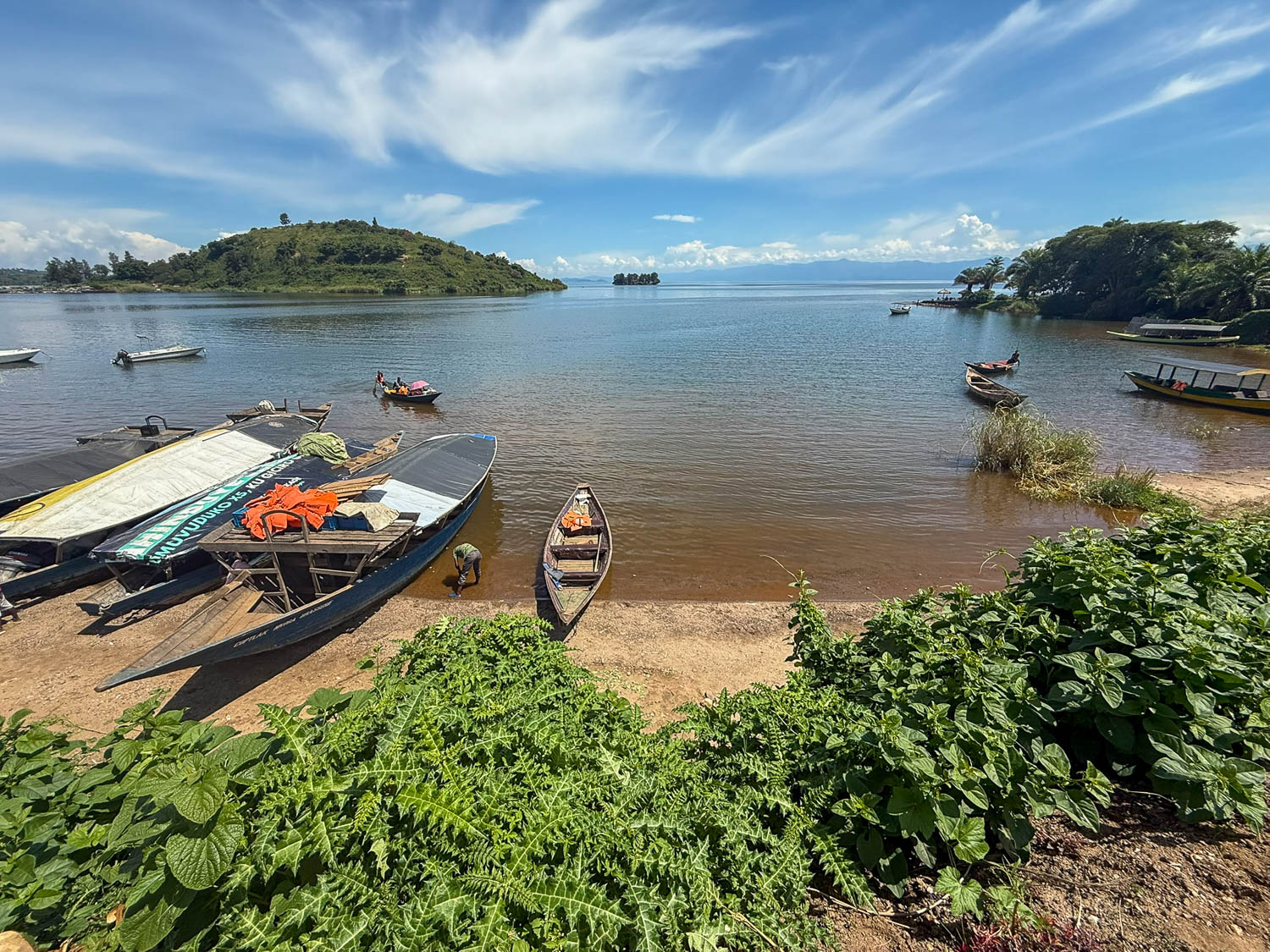
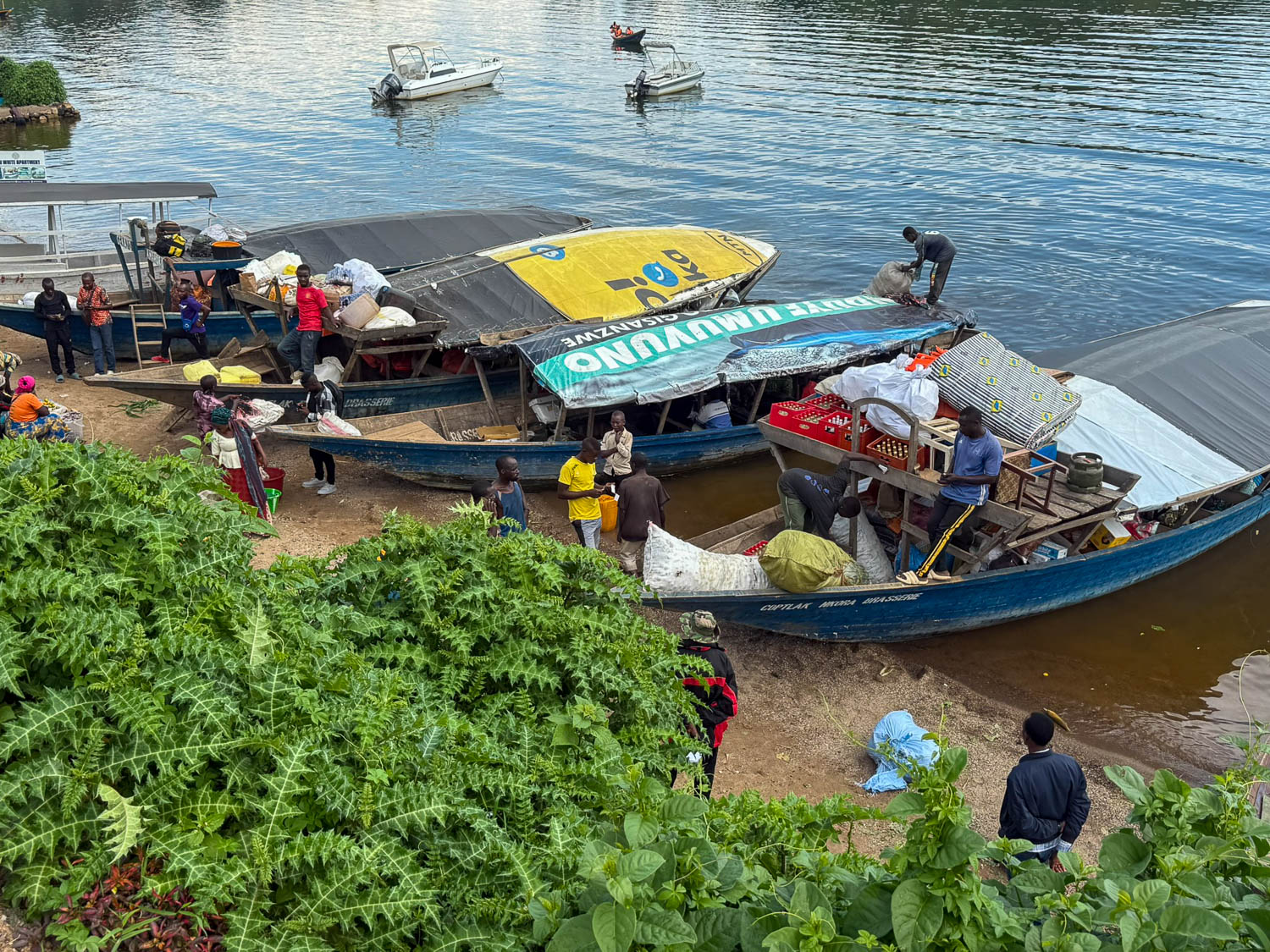
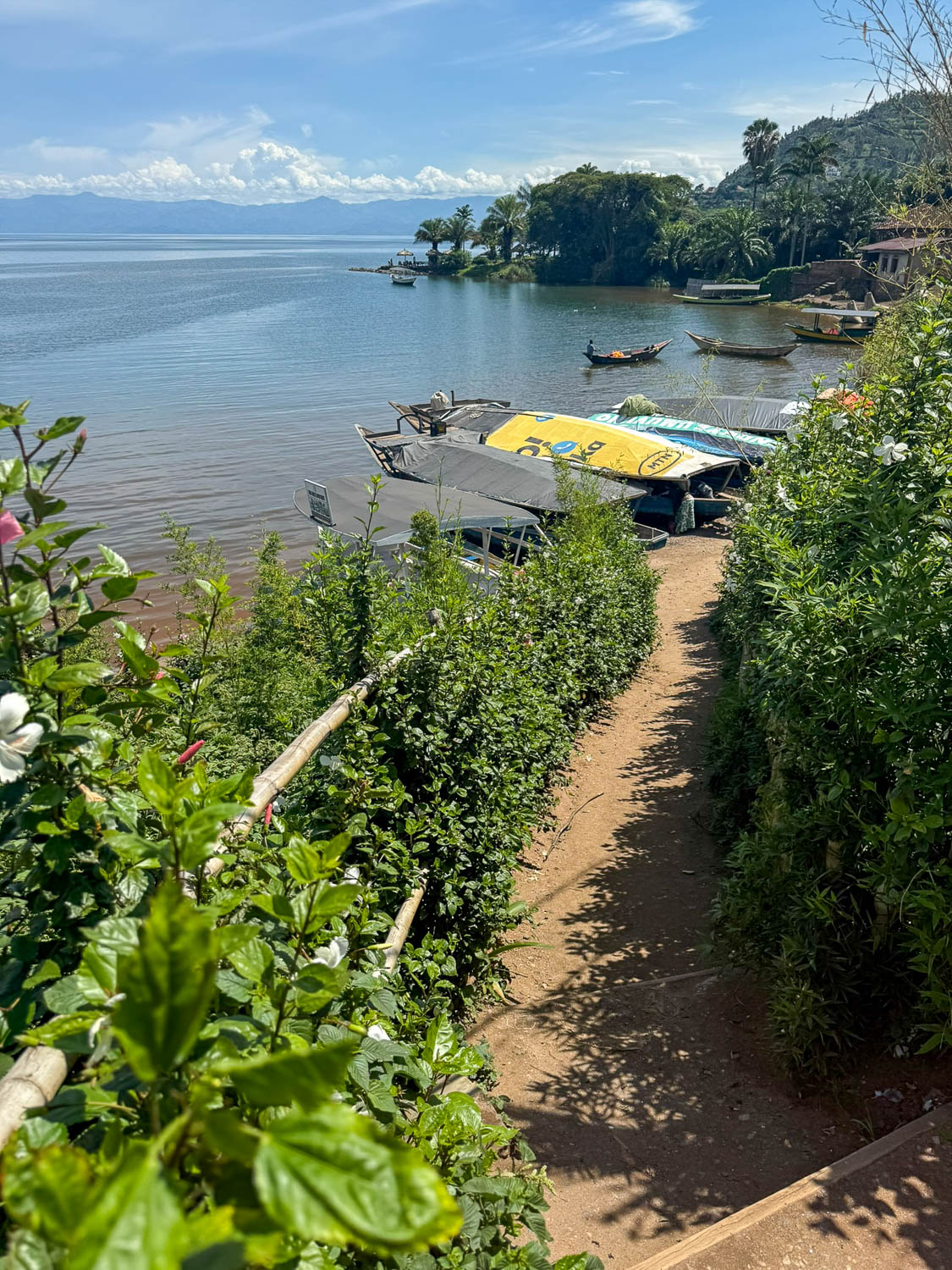
    Boats along Lake Kivu used for local transport and tourism in Rwanda
    Boats ready to take locals and visitors to wherever they need to go!

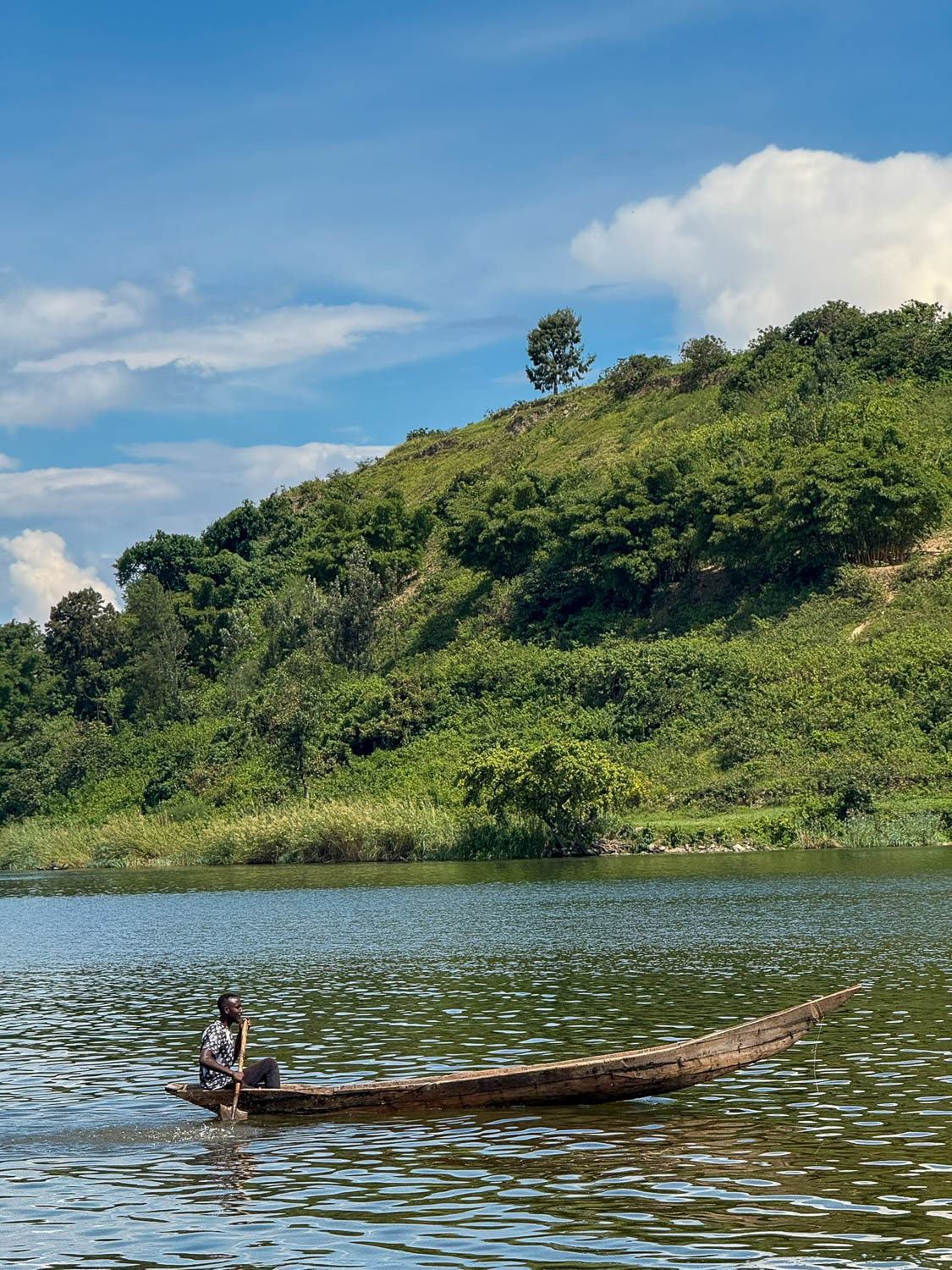
    Take a boat trip across Lake Kivu to explore nearby islands, look for numerous bird species (some of the most colorful we’ve ever seen!), or simply soak in the beautiful scenery. Many visitors opt to kayak or swim, whilst others indulge in the tranquility of the lakeside spas and cafes. You’ll also be afforded front-row seats to magical sunsets over the hills in the distance.

    Looking for more information on Lake Kivu? Don’t worry, we’ve got you covered! Be sure to check out our sister articles Lake Kivu, Rwanda: Top Things to Do And Travel Guide and Is Lake Kivu Safe? Rwanda’s Beautiful African Haven?

    Hiking Rwanda’s Scenic Trails
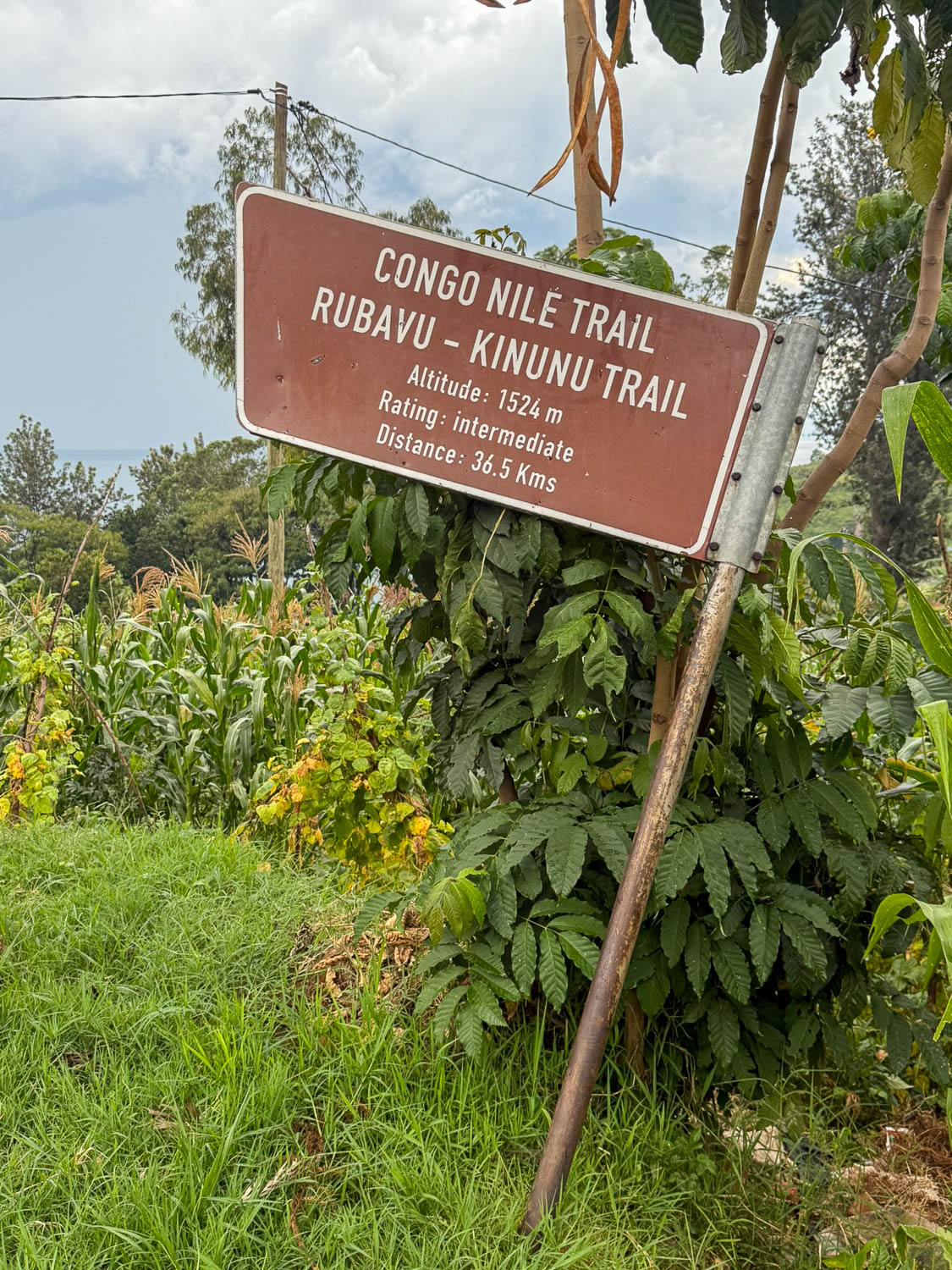
    Congo Nile Trail along the eastern shores of Lake Kivu in Rwanda
    The Congo Trail runs the full length of Lake Kivu’s eastern shores

    Whether you’re an experienced hiker or a casual walker, Rwanda’s well-marked hiking trails offer striking views and a close connection to nature in one of Africa’s most scenic countries.

    With hikes ranging from easy walks to challenging treks, hiking in Rwanda is a wonderful way to experience the country’s stunning landscapes and its diverse ecosystems: trekkers can explore dense rainforests, crater lakes, and rolling hills alive with wildlife. And yet hiking here is more than just a physical activity — it’s a way to deeply connect with the land and its people. 

    Popular hikes include gorilla trekking through the misty peaks of the Virunga Mountains in Volcanoes National Park, chimpanzee tracking along the lush trails of Nyungwe Forest National Park, and scenic walks around, and along Lake Kivu. Some highlights worth considering include the following.

    • The Congo-Nile Trail. Stretching for over 124 miles (200km) along the scenic shores of Lake Kivu, the Congo-Nile Trail offers hikers and cyclists a mix of lush hills, small villages, and panoramic lake views. The trail passes through coffee plantations, banana groves, and local communities, providing a glimpse into rural Rwandan life. It’s a superb way to combine an outdoor adventure with cultural experiences along one of the country’s most picturesque routes.
    • The Virunga Mountains. For thrill-seekers, summiting Mount Bisoke or Mount Karisimbi offers a rewarding challenge with sweeping views of the Great Rift Valley. These hikes are led by experienced local guides and are amongst some of the top things to do in Rwanda for adventurous travelers.

    Coffee and Beekeeping Tours: Two of Rwanda’s Most Beloved Traditions

    Coffee served in Kigali Rwanda known for high quality beans and vibrant café culture
    Kigali serves up some of Rwanda’s finest brews

    Rwanda offers visitors immersive coffee and beekeeping tours, providing you an opportunity to engage directly with two of the country’s most important and thriving industries. But here, coffee and beekeeping are really more than just industries — they are deeply intertwined with the country’s land, its history, and the communities that nurture them.

    In Rwanda, the fertile hills and valleys that define the nation’s landscape are alive with the rhythms of daily life, and nowhere is this more evident than in the cultivation of coffee and honey. Coffee plantations and beekeeping practices in Rwanda are rooted in the land and sustained by generations of local knowledge, reflecting the country’s resilience, creativity, and deep connection to nature. Exploring coffee and honey production affords visitors a subtle, yet meaningful glimpse into everyday life, traditions, and the sustainable ways locals connect with their environment, providing a meaningful backdrop to the country’s rural culture.

    Coffee Plantation Tours
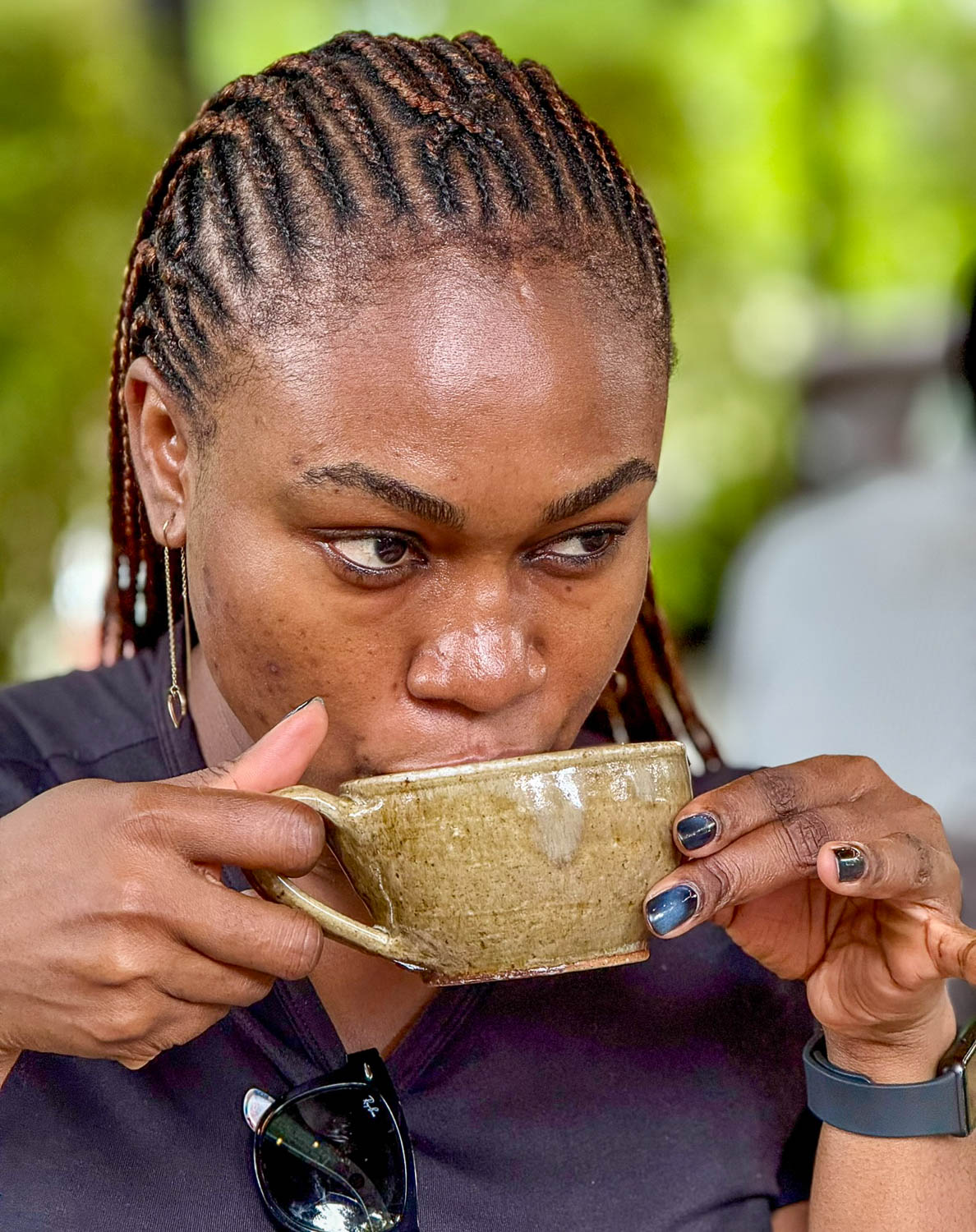
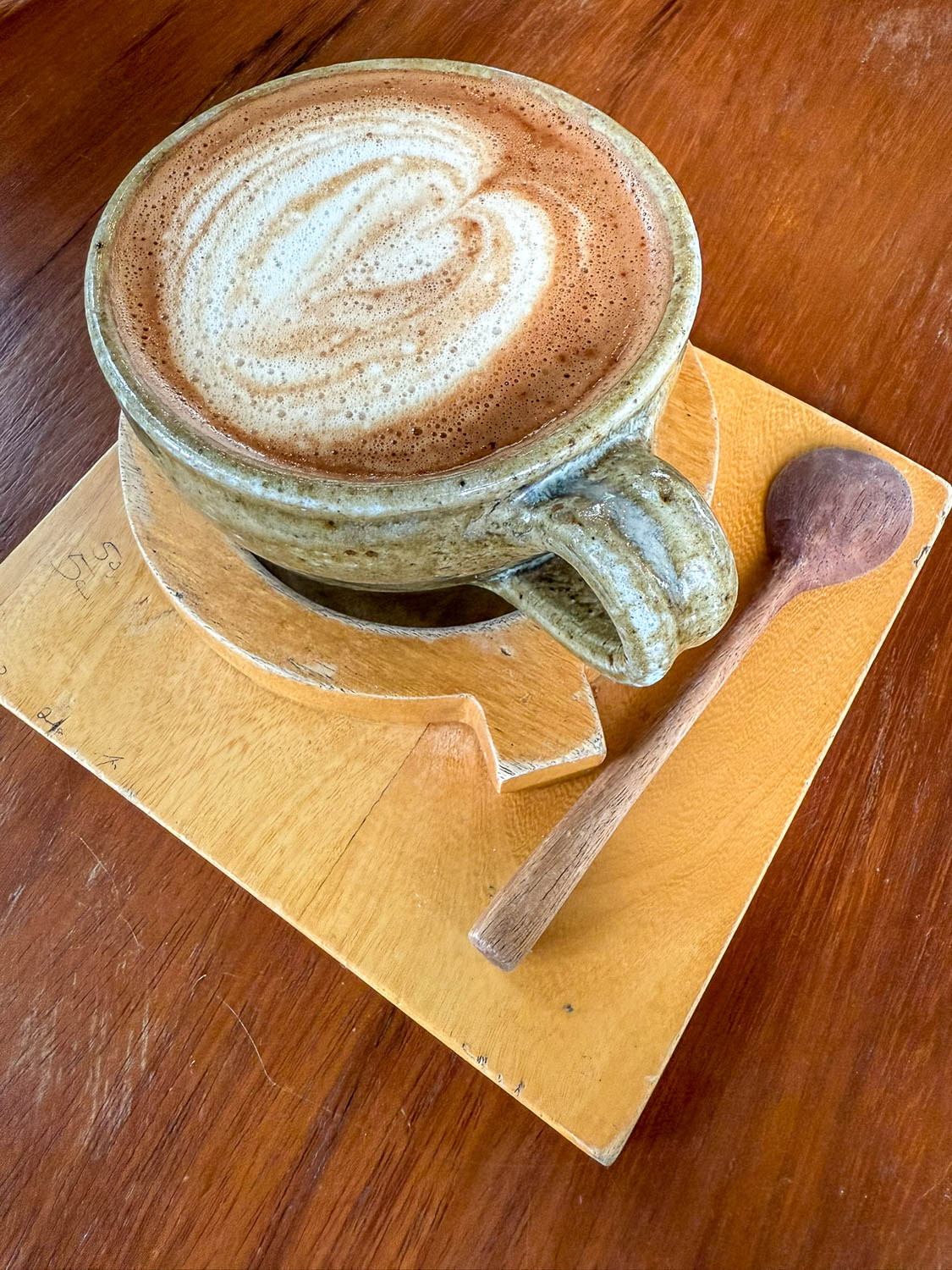
    Freshly brewed Rwandan coffee at Question Coffee in Kigali a must try experience
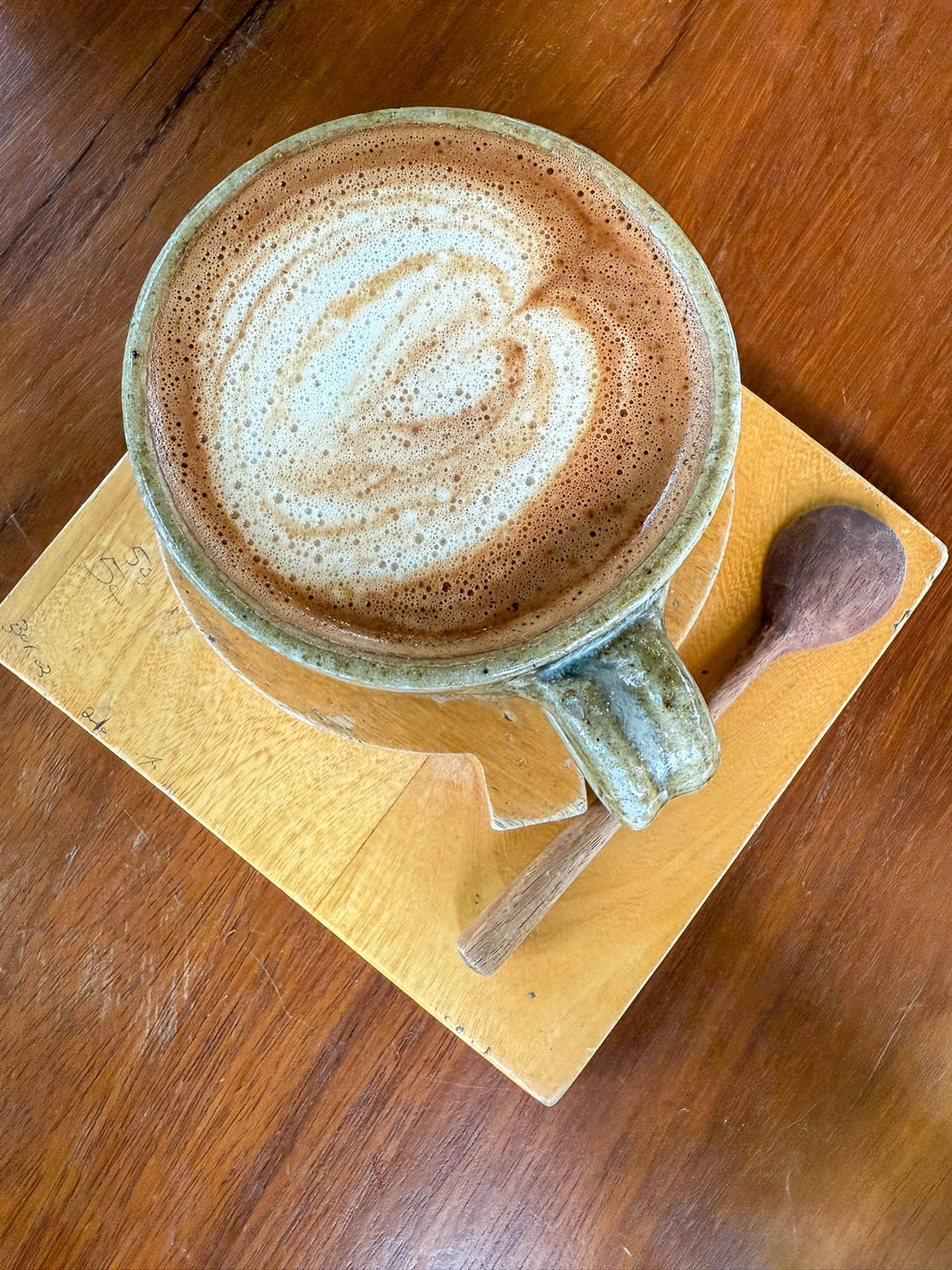
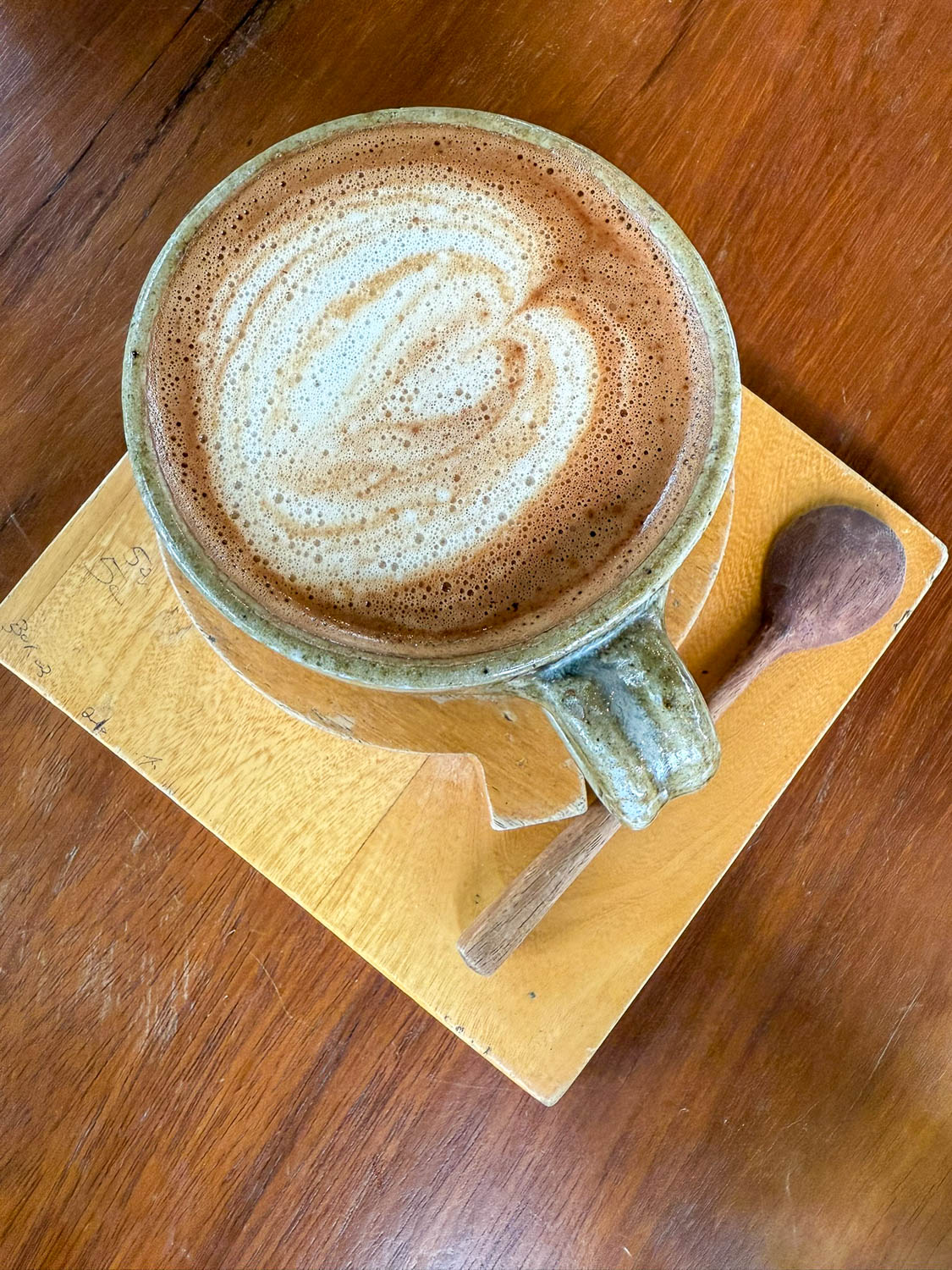
    Sipping the perfect Rwandan coffee (Question Coffee, Kigali)

    Rwanda’s hills produce some of the finest coffee in the world. Consider joining a guided tour of one of the country’s many coffee plantations to explore these vibrant fields, learn how the beans go from bush to brew, observe traditional and modern processing methods, and sample freshly-brewed Rwandan coffee known for its bright, fruity notes. If you’re a coffee-lover like Mike, be sure to savor a cup of Maraba coffee – and don’t forget to bring home a bag or two!

    Fun fact. Some of the country’s best coffee-growing regions are concentrated in the high-altitude, volcanic areas of Rwanda, where there’s consistent rainfall and ideal growing temperatures. Think the lush hills surrounding Kigali, the Virunga Mountains in the north, and the greater Lake Kivu region in the west (be sure to check out Nyungwe in particular).

    Another fun fact. Maraba coffee comes from high-altitude Bourbon Arabica beans grown in the fertile volcanic soils of southern Rwanda. This coffee is prized for its clean, balanced flavor and support of local farmers (many of them women), reinvesting production profits into the community and helping to uphold sustainable farming.

    Beekeeping Tours

    Not really into coffee (fun fact: Beck has never tried it)? Or perhaps you are, but would also like to learn more about Rwanda’s beekeeping traditions? Beekeeping tours in rural areas highlight the country’s growing honey industry, showcasing sustainable apiaries where visitors can see how local farmers care for their hives, learn about the crucial role of bees in the ecosystem, and sample pure, locally-produced honey. This is a wonderful opportunity to also support local communities, whilst experiencing an unexpected taste (see what we did there?) of Rwandan culture.


    Savoring Rwanda’s Culinary Delights
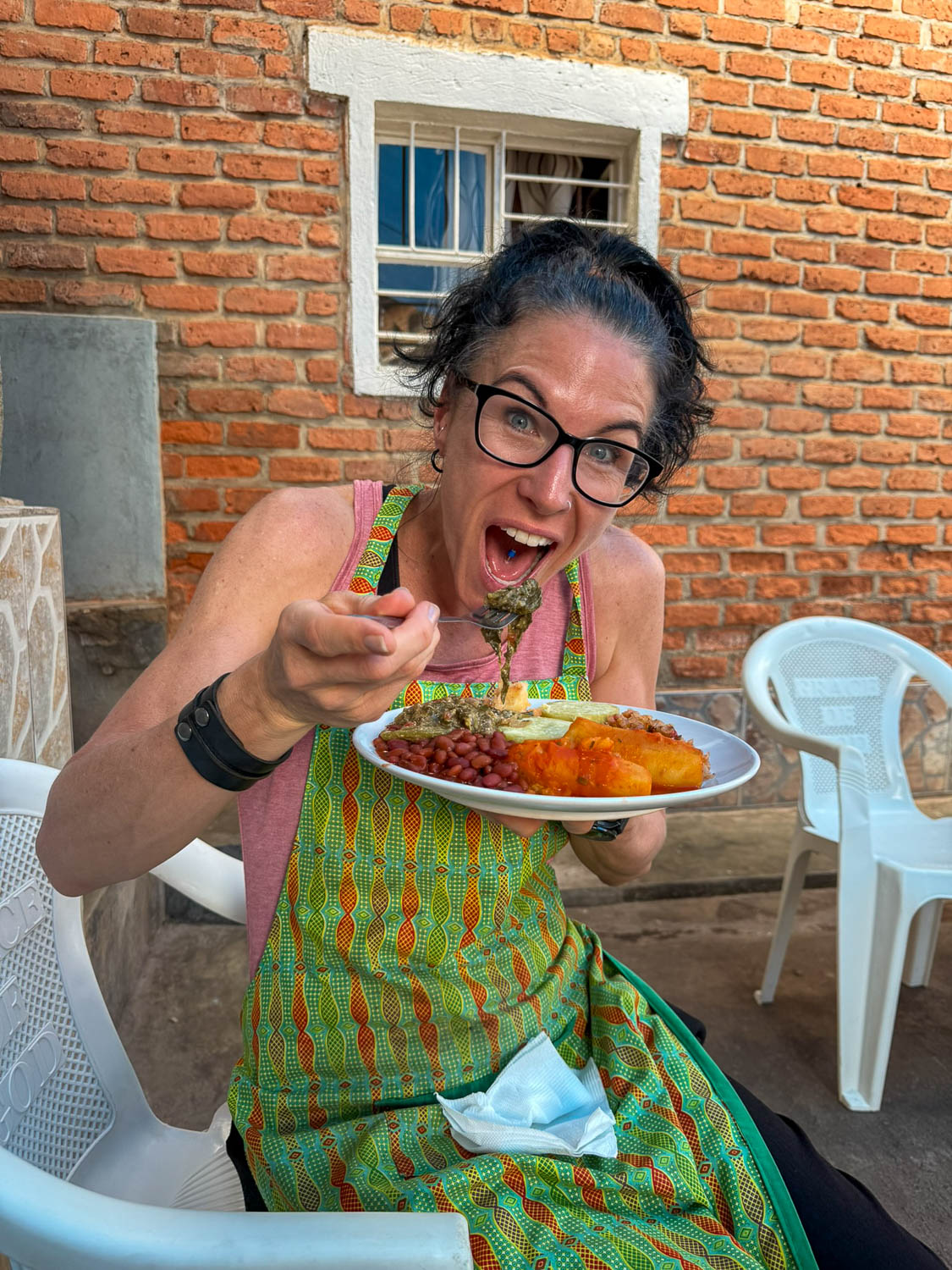
    Traditional Rwandan dish prepared during a cooking class at Nyamirambo Women’s Center Kigali
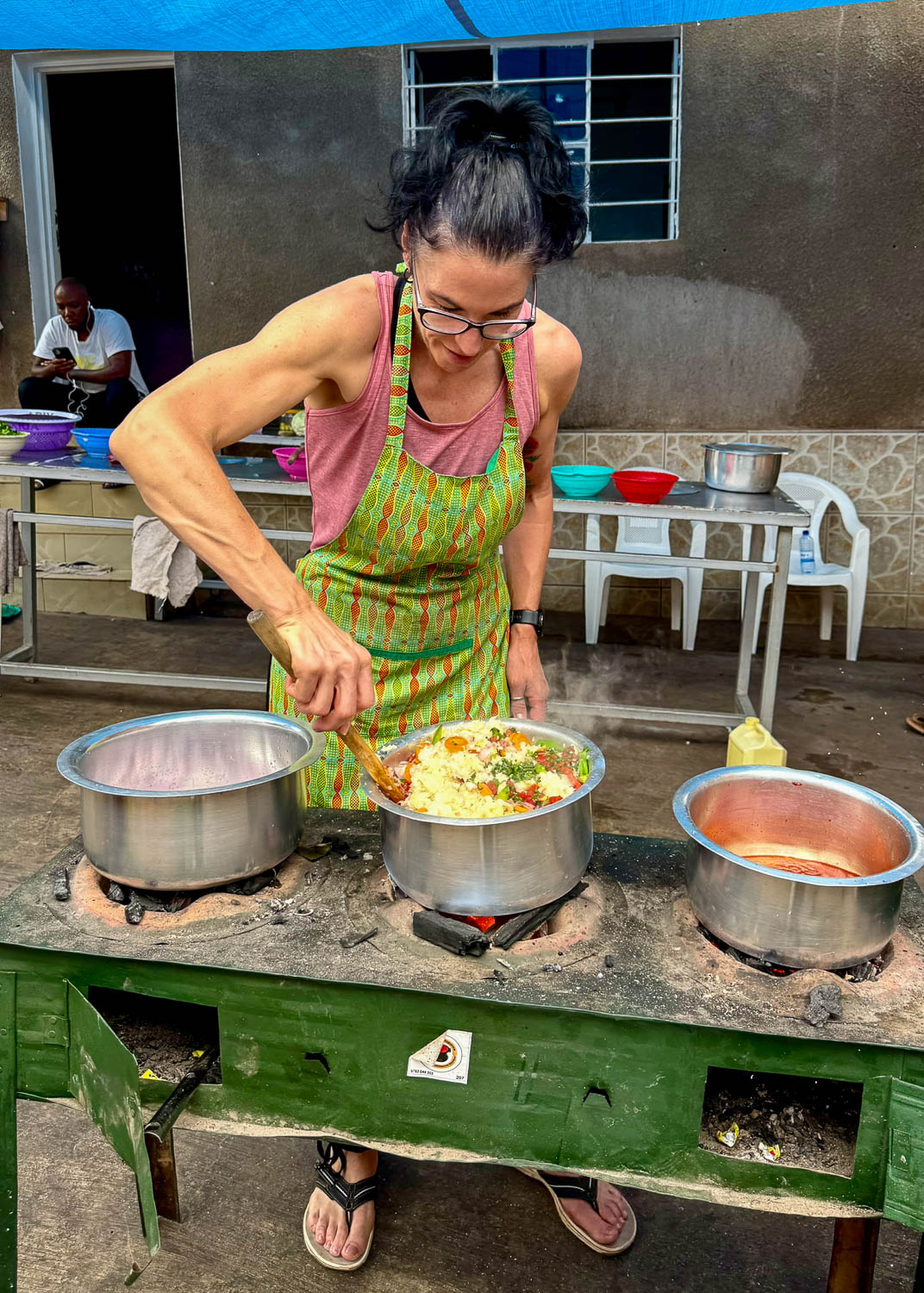
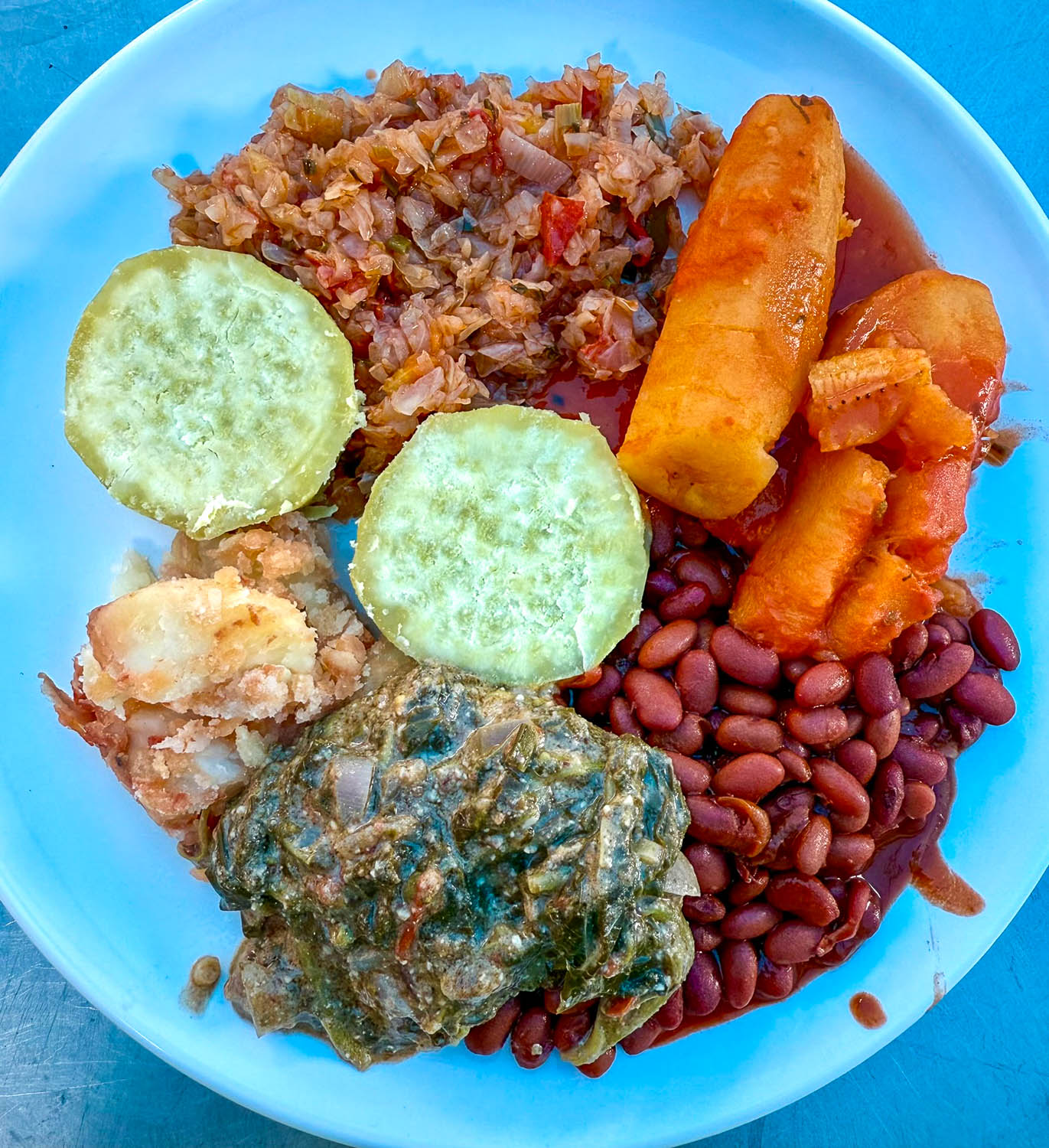
    Our culinary creation is ready to devour! (Nyamirambo Women’s Center cooking class, Kigali)

    Food lovers (yup, that would definitely be us!) will absolutely love sampling traditional Rwandan food . With everything on offer from brochettes to Umutsima, and from Isombe to platters of fresh fruits – served in either local restaurants or cafes, or purchased from street vendors throughout the country – you certainly won’t go hungry.

    Fun fact. Milk is also a cultural staple in Rwanda, and milk bars are popular with locals.

    International cuisine is also widely available, including Kigali’s fine dining options at the likes of Hôtel des Mille Collines, the Kigali Serena Hotel, and Repub Lounge – all known for their fusion offerings, traditional flavors, modern presentation, and upscale settings.

    For a deeper dive into the culinary delights of Rwanda, be sure to navigate across to our article Rwandan Cuisine.


    Final Thoughts
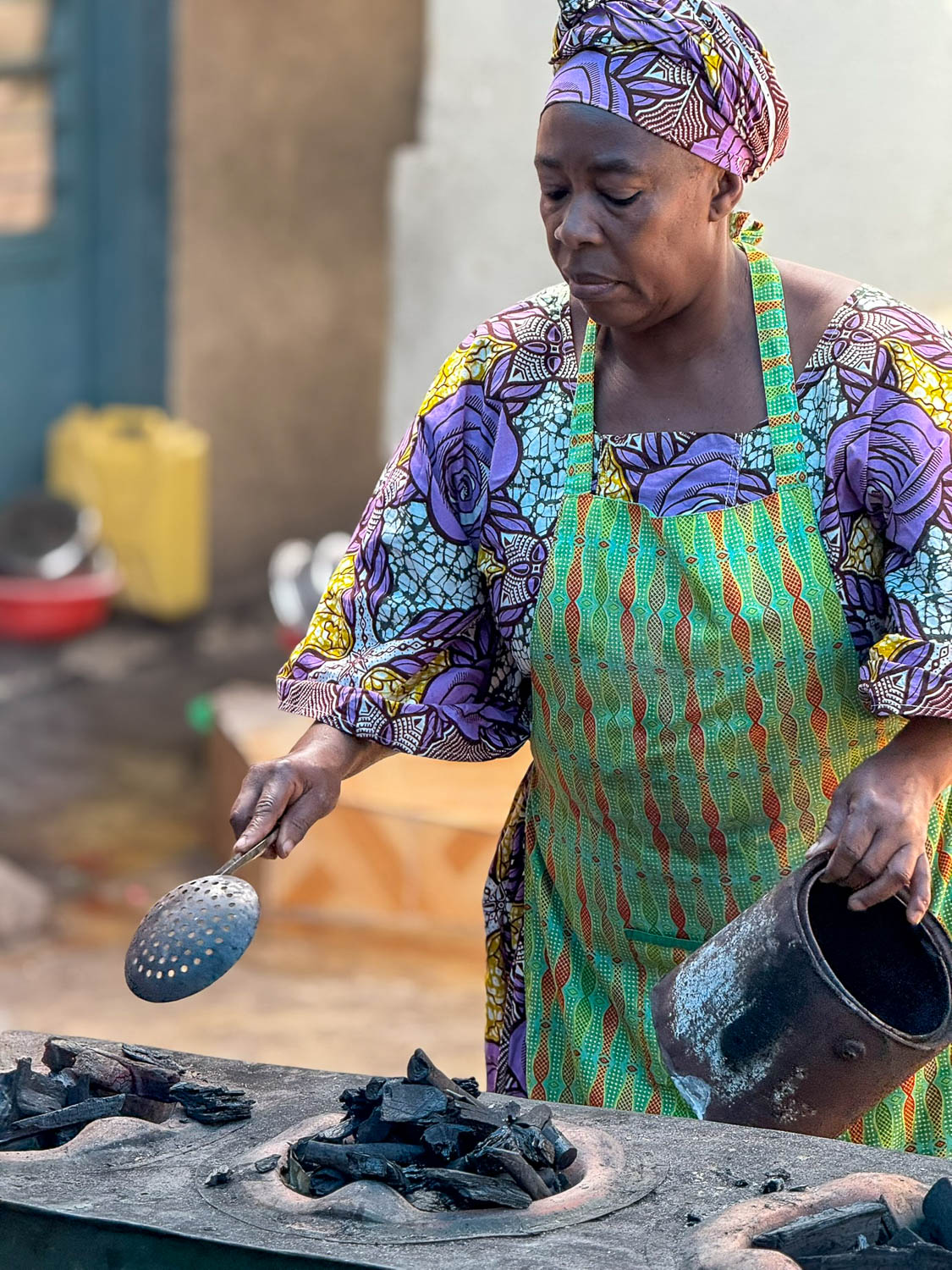
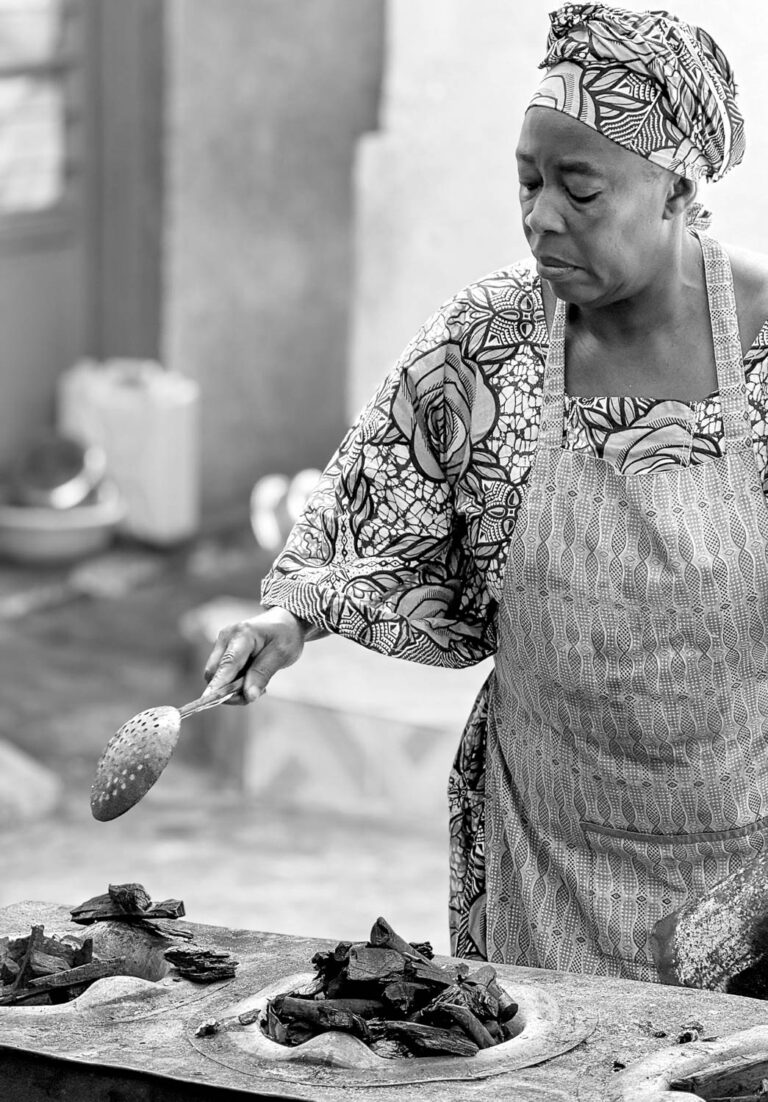
    Cooking class instructor at Nyamirambo Women’s Center Kigali teaching traditional Rwandan cuisine
    Our instructor for the Nyamirambo Women’s Center cooking class (Kigali)

    Rwanda is a country that leaves a lasting impression, not only for its breathtaking landscapes, but also for the warmth, resilience, and spirit of its people. For us, it was a country that touched our hearts: a land of striking contrasts, quiet strength, and unparalleled human connection.

    In Kigali, visitors will be welcomed to a capital city that is clean and modern, yet reflective, with powerful remembrance sites alongside vibrant art galleries, bustling markets, and an evolving culinary scene. Museums, cultural villages, and creative centers that bring Rwandan traditions to life through music, dance, and storytelling – both within, and beyond, the city limits – continue to reveal the layers of Rwanda’s past and present, each one highlighting resilience, innovation, and a deep pride in heritage that continues to shape the nation today.

    Beyond the cityscape of Kigali, Rwanda’s natural beauty unfolds in every direction: from opportunities for incredible wildlife encounters that include gorilla trekking in the misty Volcanoes National Park to birdwatching and chimpanzee tracking in Nyungwe Forest National Park, and from tranquil boat rides on Lake Kivu to searching for the Big Five in Akagera National Park. Further, traditions tied deeply to the land and its local communities afford visitors unique experiences through coffee and beekeeping tours, connecting travelers directly with these local communities and their longheld practices.

    Rwanda has truly transformed itself over the decades — a country once scarred by tragedy, now known for resilience, renewal, and remarkable progress. Each site you visit adds a layer to your understanding of the country’s recent history and its inspiring comeback, and together these Rwandan encounters create for visitors a well-rounded journey that goes far beyond mere sightseeing. Whether you come for the wildlife, the immersive cultural experiences, or the warmth of the people, Rwanda offers travelers an opportunity to connect with a country that is as inspiring as it is beautiful.

    Rwanda will invite you to see the world differently. Are you ready to embark on a transformative journey through one of Africa’s most compelling nations? Let’s help you start planning your adventure to Rwanda!


    FAQs

    What are the best things to do in Rwanda for first-time visitors?

    The best things to do in Rwanda for first-time visitors include exploring Kigali, visiting the Kigali Genocide Memorial to understand the country’s history, going gorilla trekking in Volcanoes National Park, enjoying a safari in Akagera National Park, and relaxing along the shores of Lake Kivu. These experiences offer a powerful mix of culture, wildlife, and natural beauty that define Rwanda.

    Is Rwanda safe for tourists to visit?

    Yes, Rwanda is considered one of the safest countries in Africa for tourists. Cities like Kigali are known for their cleanliness, low crime rates, and well-maintained infrastructure. Travelers can feel comfortable exploring both urban areas and national parks, especially when following standard travel precautions and local guidance.

    How much does gorilla trekking in Rwanda cost?

    Gorilla trekking in Volcanoes National Park requires a permit that costs $1,500 per person as of now. While this is a significant investment, it supports conservation efforts and local communities, and offers a once-in-a-lifetime opportunity to see endangered mountain gorillas in their natural habitat.

    When is the best time to visit Rwanda?

    The best time to visit Rwanda is during the dry seasons, from June to September and December to February. These months provide the best conditions for gorilla trekking in Volcanoes National Park and wildlife viewing in Akagera National Park, with clearer trails and more predictable weather.

    How many days do you need to explore Rwanda?

    Most travelers need 5 to 7 days to experience the top things to do in Rwanda. This allows time to explore Kigali, go gorilla trekking in Volcanoes National Park, enjoy a safari in Akagera National Park, and unwind at Lake Kivu without feeling rushed.


    Explore More Of Rwanda


  • Savor Traditional Rwandan Cuisine: Top Dishes to Try

    Rwanda isn’t just the Land of a Thousand Hills. And it isn’t all about trekking with endangered mountain gorillas (though if we’re being honest here, that’s a pretty darn neat thing to do!). It’s also the land of a thousand flavors.

    Tucked into the heart of East Africa, this small landlocked country quietly delivers some of the most comforting and soulful meals you may ever encounter. Like us, you may find that exploring Rwandan cuisine isn’t just about discovering its traditional dishes and savoring its mouthwatering diversity of flavors: it’s also about sitting elbow-to-elbow with Rwandan people, sharing stories and laughter over bowls of boiled beans, and discovering a deeper sense of connection through food.

    Indeed, if you’re anything like us — a little bit grit, a little bit glam — you’re not just chasing flavors; you’re chasing experiences. And Rwandan cuisine? There’s no question about it: it’s full of heart, history, and home.

    Permit us to share with you our guide to the varying cuisine of Rwanda, served with cultural insight, a splash of inspiration, a whole lot of flavor … and maybe, just maybe, even a cooking class or two.


    Quick Tips

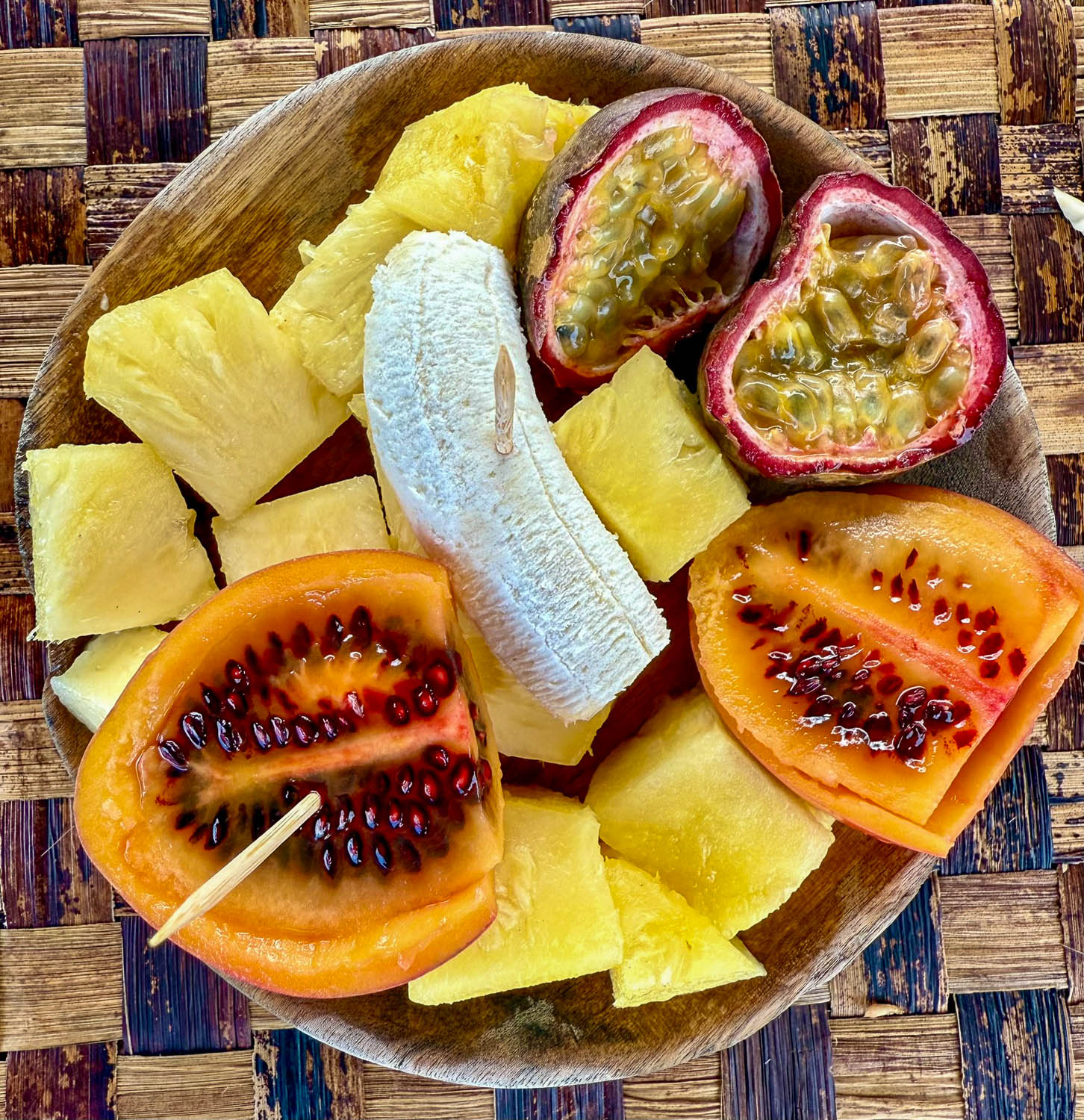
    Fresh tropical fruit from Rwanda near Lake Kivu, commonly used in Rwandan cuisine
    Fresh local fruit (Lake Kivu, Rwanda)

    Here are some insider tips to help you make the most of your visit to Rwanda and fully enjoy its rich and flavorful cuisine.

    • Sharing food is an important cultural custom in Rwanda, and meals are often eaten by hand.
    • Lunch is traditionally the biggest meal of the day, whilst dinner is lighter and often eaten late.
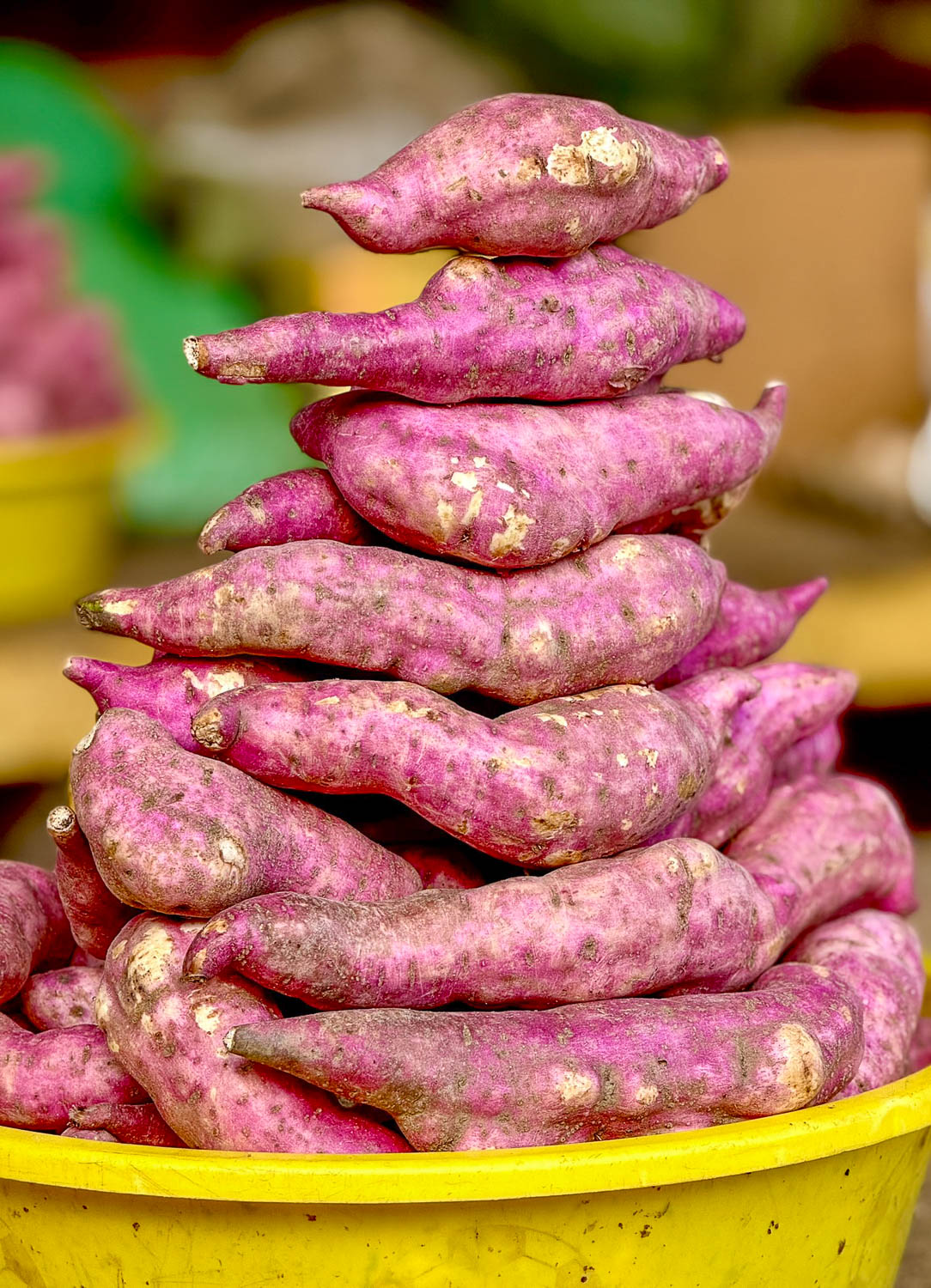
    • The foundation of Rwandan cuisine is fresh, local staples – think beans, cassava, plantains, bananas, peas, and sweet potatoes.
    • Meat is eaten more frequently in larger cities like Kigali, but vegetables and pulses remain the backbone of daily Rwandan meals.
    • Avocados are abundant, delicious, and extremely affordable.
    • Cooking is conducted mostly over wood fires.
    • Must-try dishes include Isombe, Agatogo, brochettes, Akabenzi, and Mizuzu.
    • Popular Rwandan drinks include milk, fruit juices, local teas, and traditional banana or sorghum beers.

    Follow these tips, and you’ll be ready to experience and savor the best of Rwandan cuisine.


    Plan Your Trip

    Local shoppers buying fresh ingredients at Kimironko Market in Kigali for Rwandan cuisine
    Shopping for staples in Kimironko Market (Kigali, Rwanda)

    Some of the links in this post might earn us a small commission if you make a purchase – but don’t worry, it won’t cost you anything extra! Supporting us this way helps us continue sharing our best travel content and tips. See our full disclosures for details. Thanks a million, and happy travels!

    Planning to visit Rwanda? Take advantage of the following resources curated just for you.

    Book Your Rwanda Adventure Now!


    Prefer additional options? Click below to discover more incredible experiences tailored just for you!

    Choose from top Attractions and Activities in Rwanda.


    Looking for more travel essentials?

    Check out our top picks below. For additional trusted tools, gear, and resources we personally use, visit our Travel Resources page to make planning your adventure effortless.


    Rwandan Cooking Ingredients: An Introduction

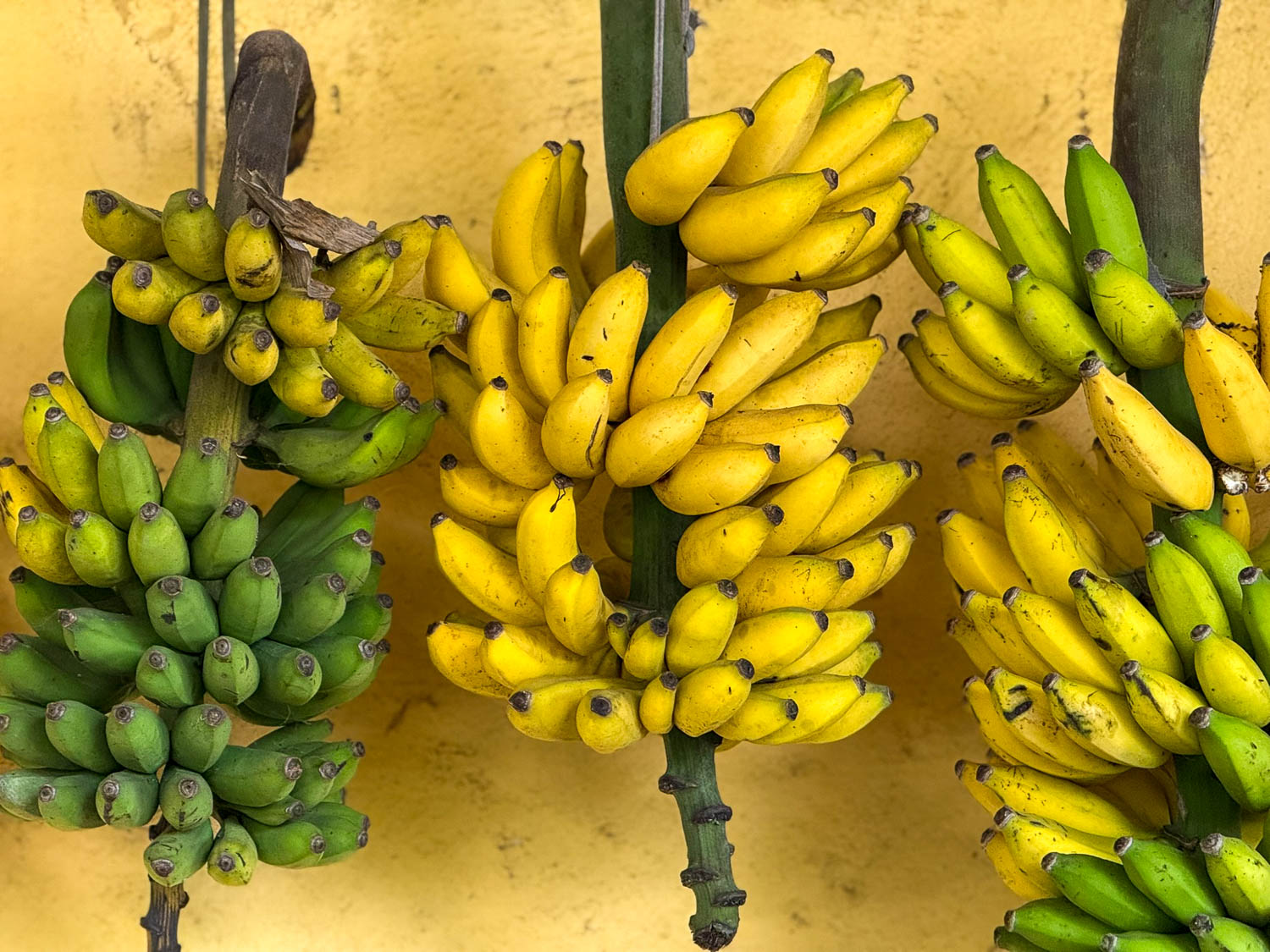
    Bananas displayed at Kinyanda Market, a key staple ingredient in Rwandan cuisine
    Bananas are a staple in Rwandan diets (Kinyanda Market, Rwanda)

    The Staples

    The foundation of the Rwandan diet is beautifully simple: local staple foods produced through traditional subsistence-level farming. In essence, anything and everything that’s grown locally: cassava, corn, bananas and plantains, peas, beans and other pulses, and sweet potatoes. You won’t find overly processed foods in Rwanda — it’s all about fresh vegetables, humble ingredients, and traditional meals passed down through the generations.

    International cuisine served in Kigali restaurants alongside traditional Rwandan cuisine
    Kigali offers a wider range of non-traditional foods to suit all palates (Mukati Na Butta, Kigali)

    Fun fact. In recent times, meat consumption has increased – particularly in urban areas like Kigali, where a much wider variety of international cuisine can now be found.

    Healthy Fats

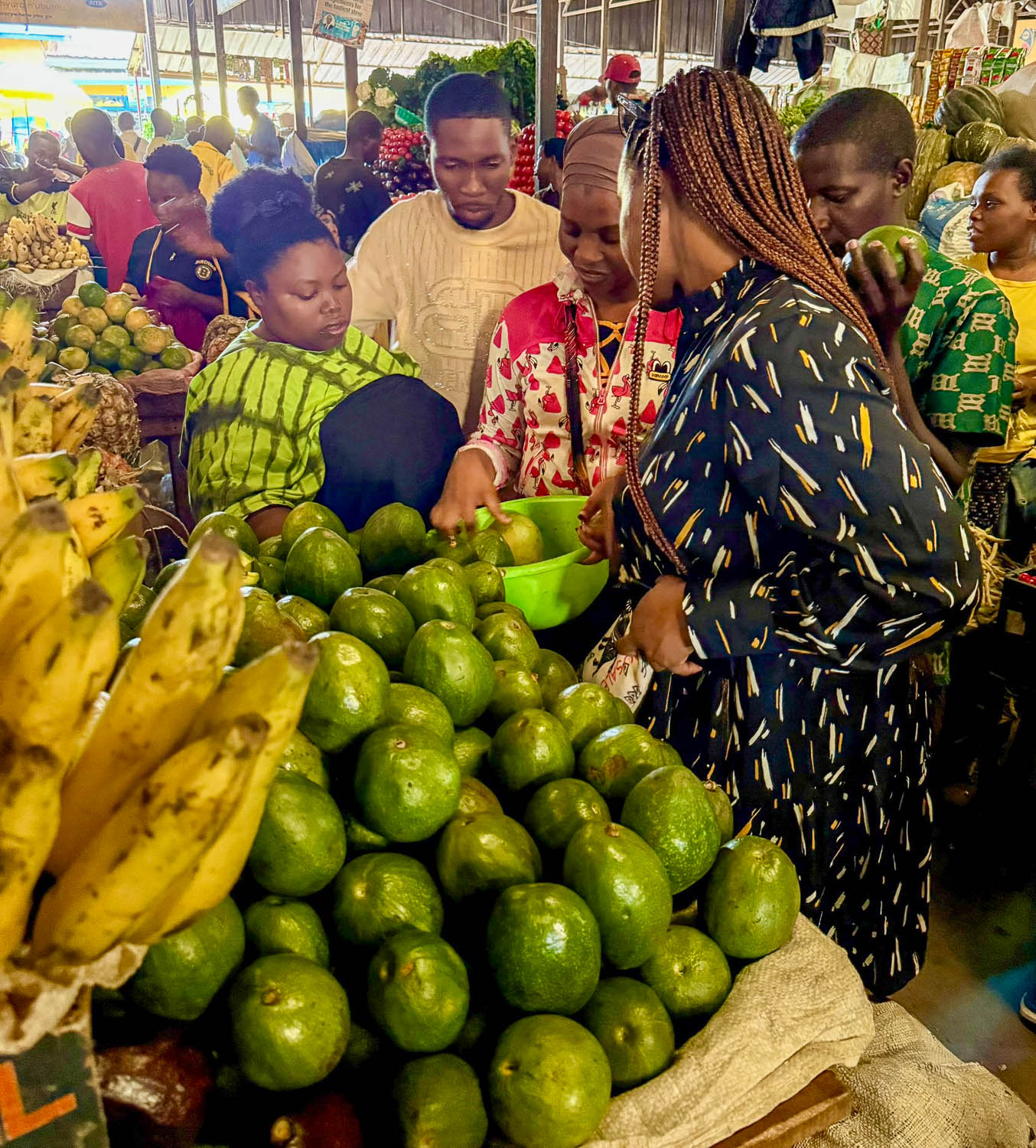
    Fresh avocados for sale at Kimironko Market in Kigali, commonly used in Rwandan cuisine
    Shopping for avocados at Kimironko Market (Kigali, Rwanda)

    We were amazed at how often avocados were served at meals, often sliced into perfect pieces and placed on the side of main dishes. You can also purchase these (often massive!) avocados in local markets for no more than 500 RWF each (about US$0.35 – easily a third the price of any we’ve seen in grocery stores across North America of late!).

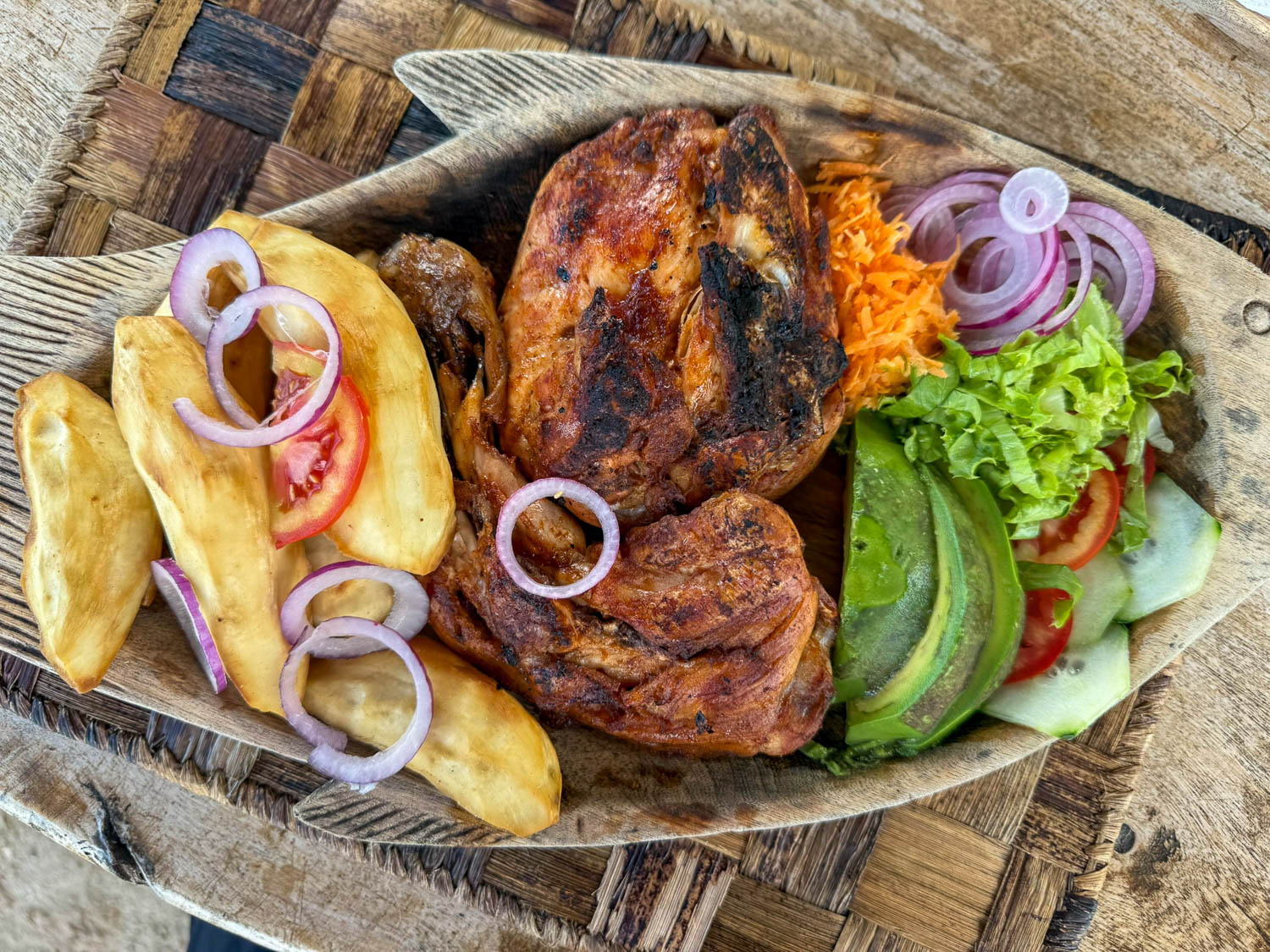
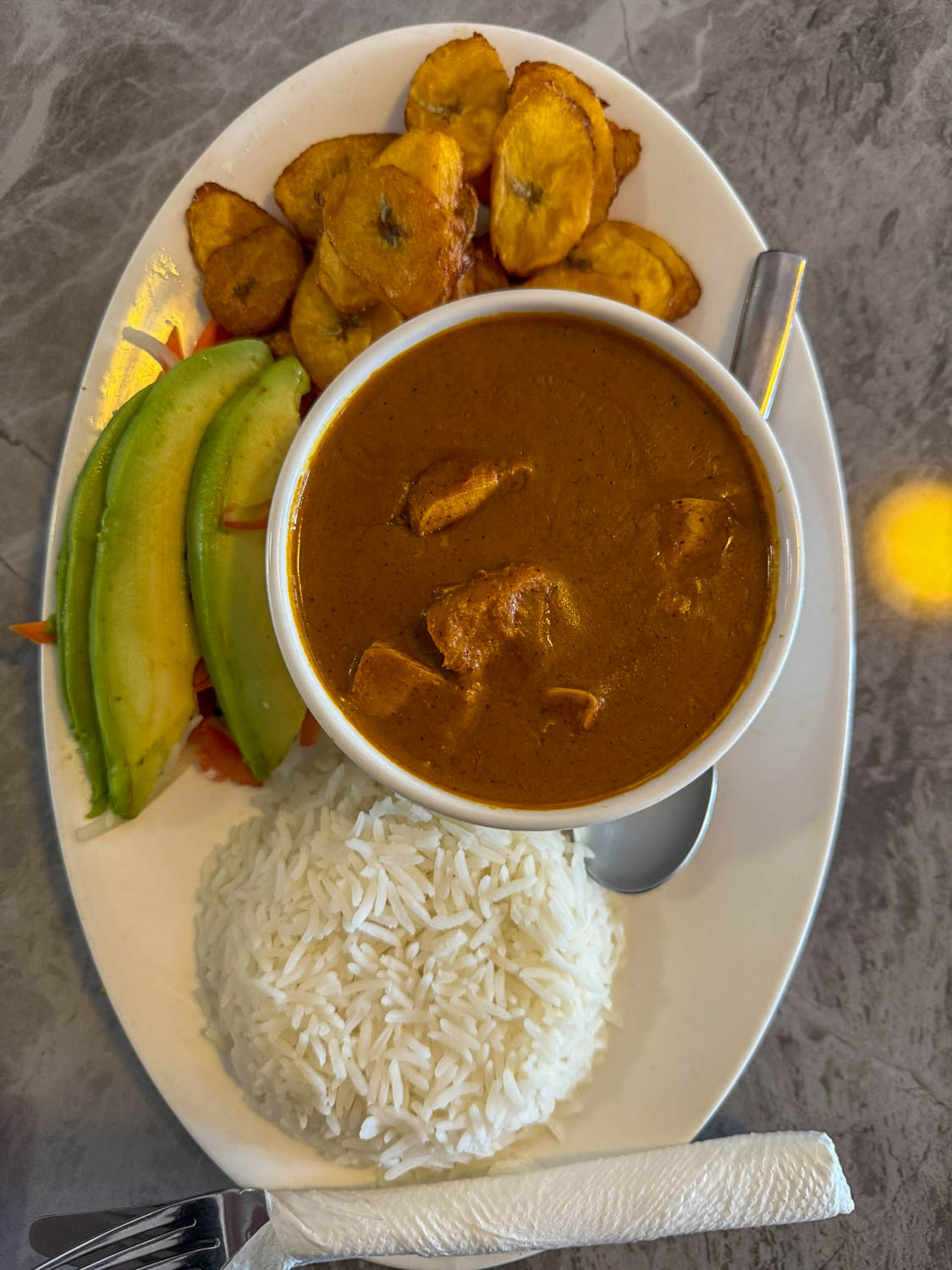
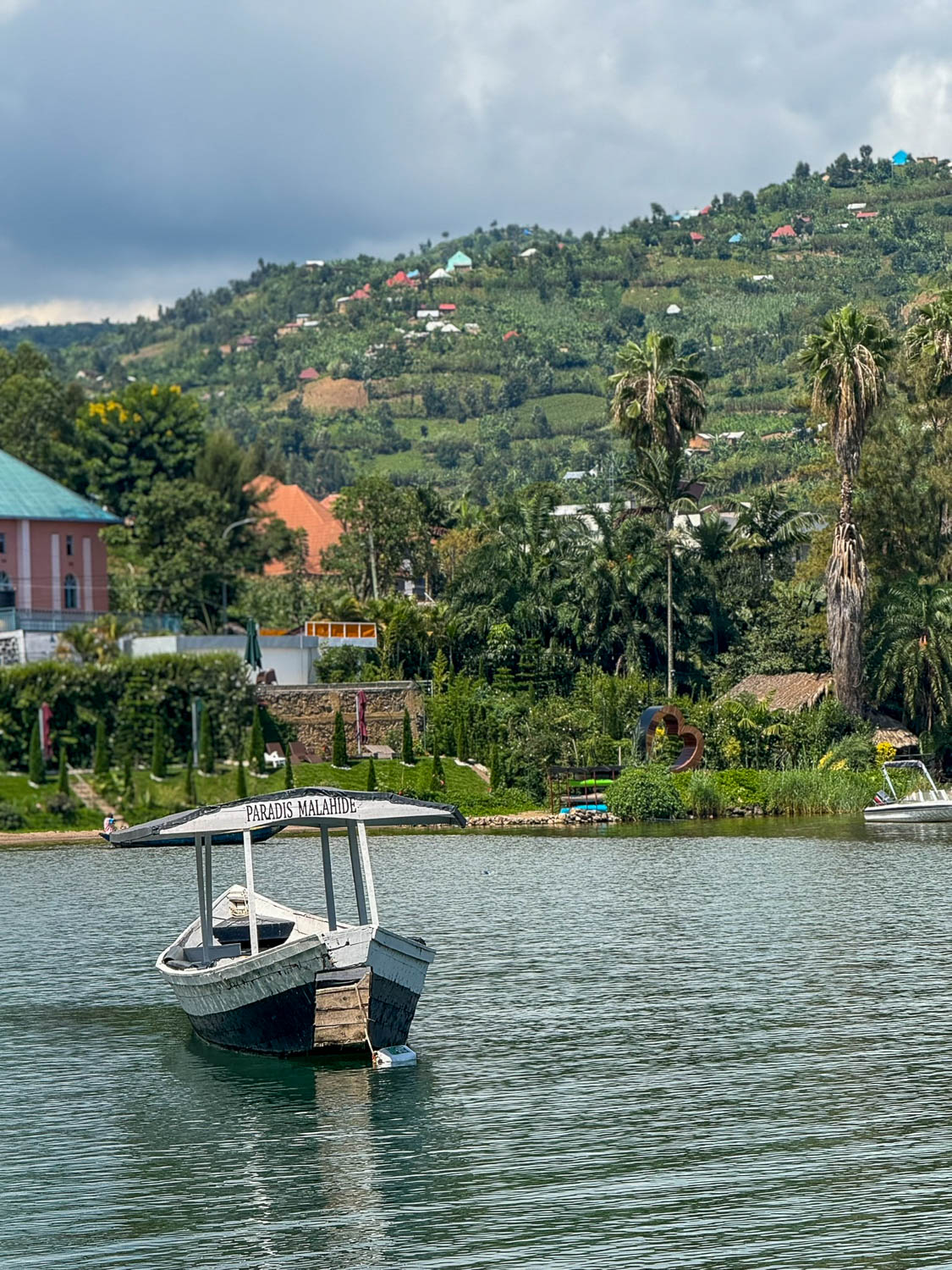
    Traditional Rwandan cuisine meal served at Paradis Malahide in Kigufi featuring local staples
    Main meal offering at Paradis Malahide (Kigufi, Rwanda)

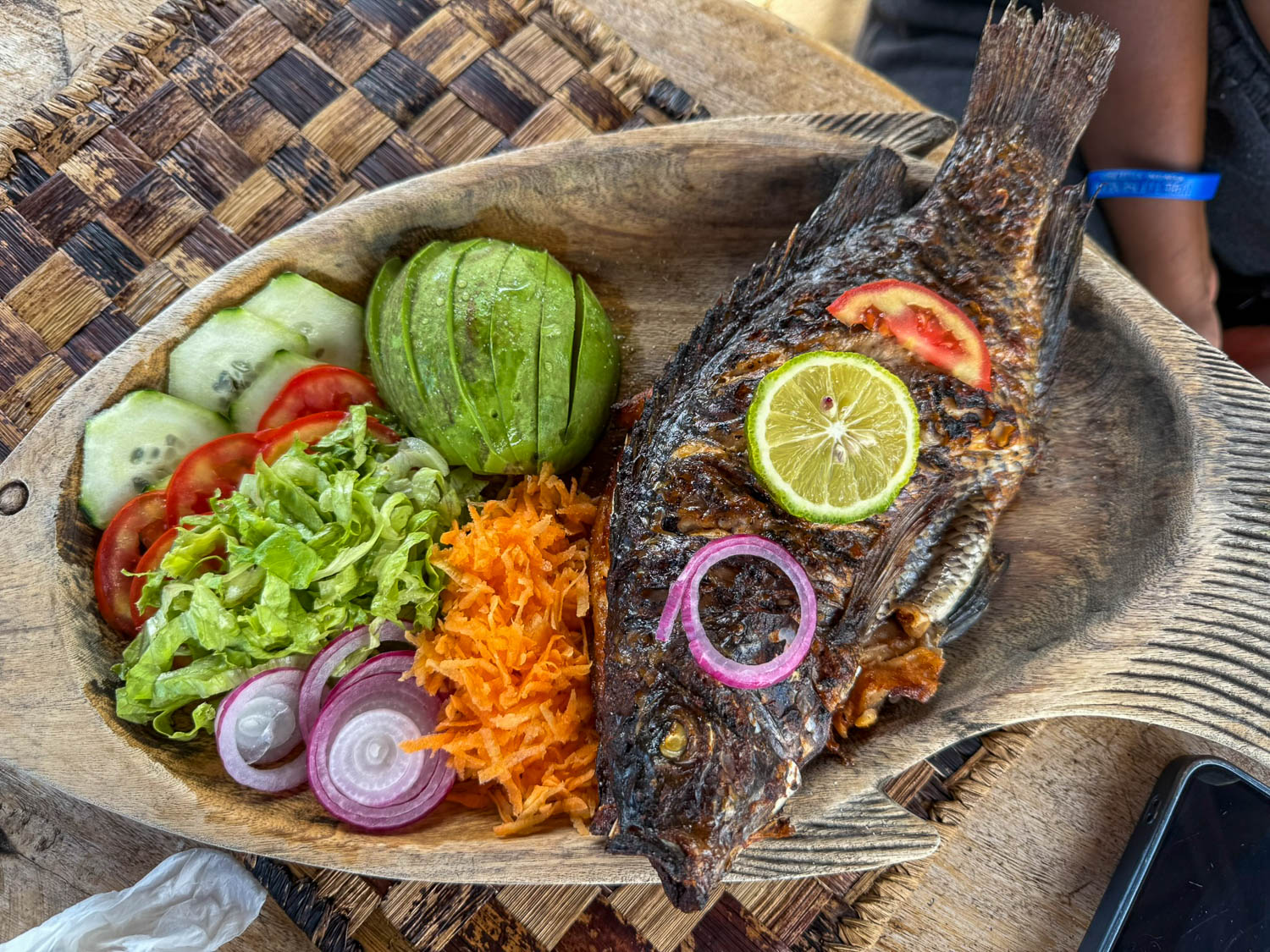
    Despite being a landlocked country, fish is also popular (and indeed plentiful): sambaza (small, sardine-like fish found in Lake Kivu) and tilapia (a freshwater fish, known for its mild flavor and versatility in cooking) are two staples, especially along the shores of Rwanda’s many lakes.

    Exploring Rwandan Food Culture

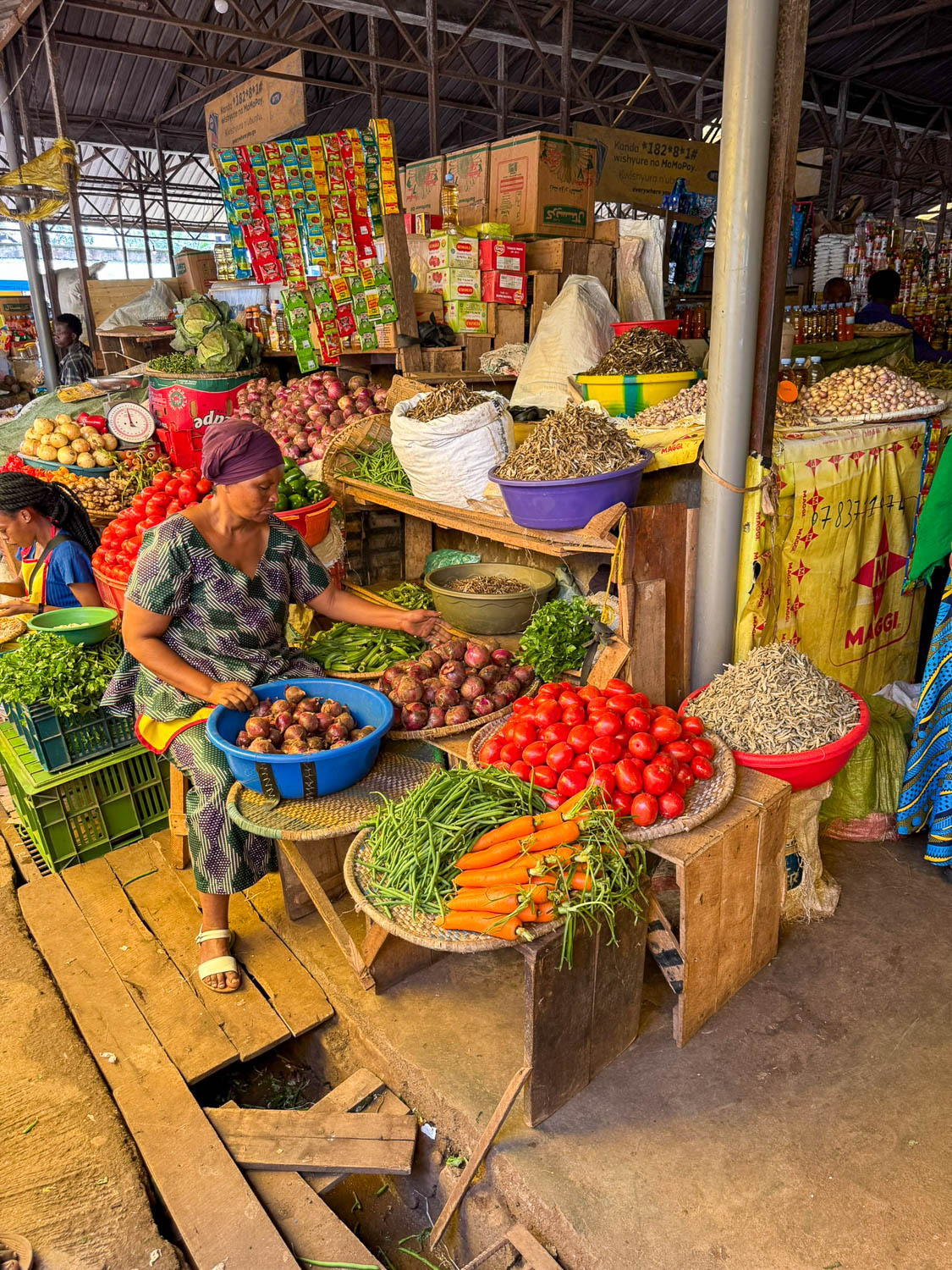
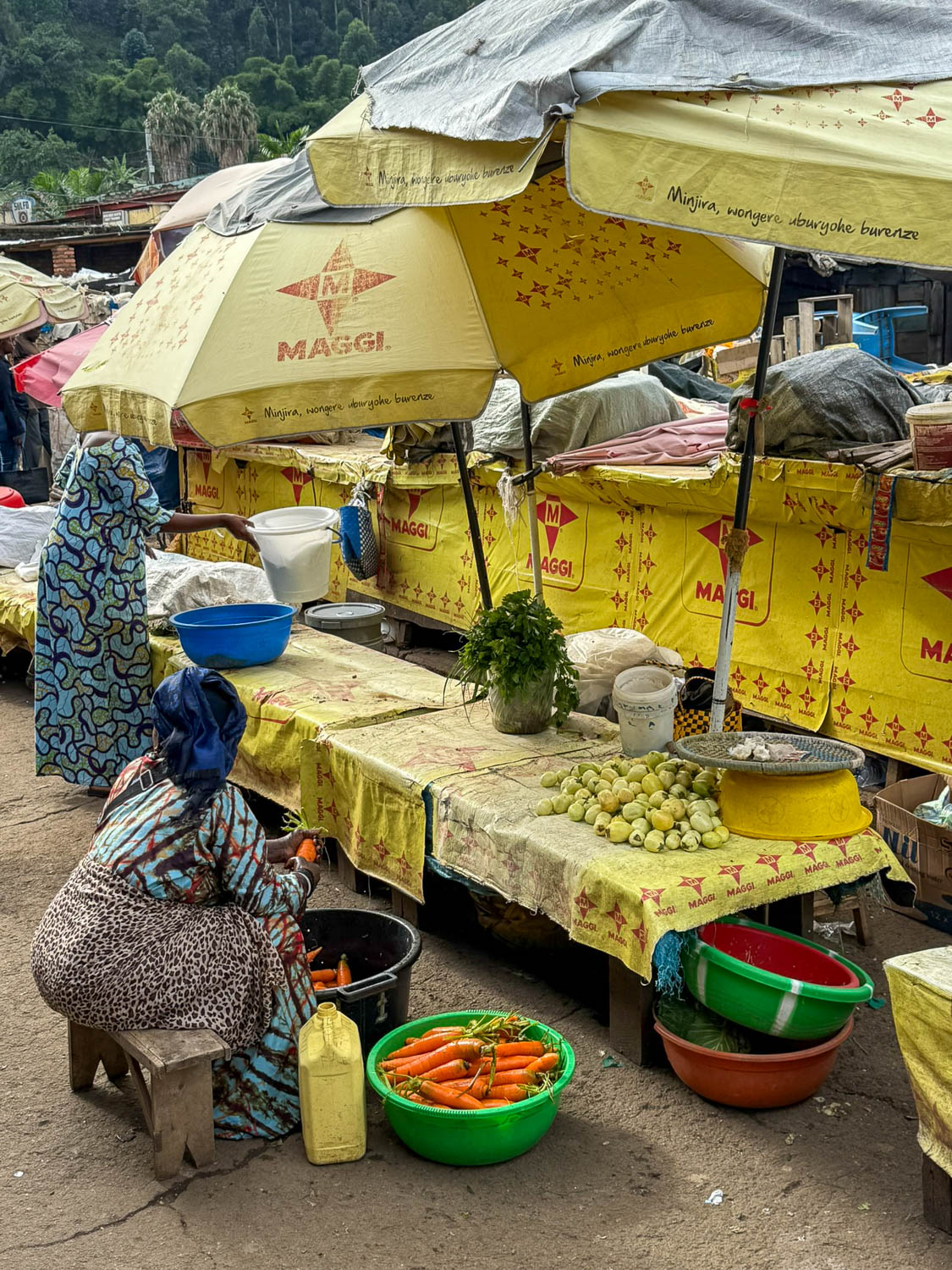
    Fresh vegetables being prepared for sale at Gisenyi Market supporting Rwandan cuisine
    Preparing produce for sale (Gisenyi Market, Rwanda)

    Food in Rwanda is more than fuel — it’s part of the rhythm of daily life.

    Breakfast, Lunch and Dinner

    Typical Rwandan cuisine meal served in a local restaurant in Musanze
    Typical Rwandan restaurant meal (Musanze, Rwanda)

    You may be surprised to learn that breakfast is relatively uncommon for many Rwandans. If they do eat breakfast, it’s often a traditional one, consisting of boiled beans, sweet potatoes, or Igikoma (a type of porridge) with tea.

    A Rwandan’s heaviest meal of the day is usually lunch, typically served in the early afternoon. Lunch often features common dishes (Isombe (a cassava leaf stew), Umutsima (a cassava and corn dish), Agatogo (a traditional Rwandan stew), or brochettes), served with rice, french fries, and a salad or vegetables (and, of course, avocado!). Lunch buffets are especially common.

    Dinner tends to be simpler, and often eaten quite late — a few vegetables, beans, and perhaps some fish and another staple food.

    Dining Etiquette

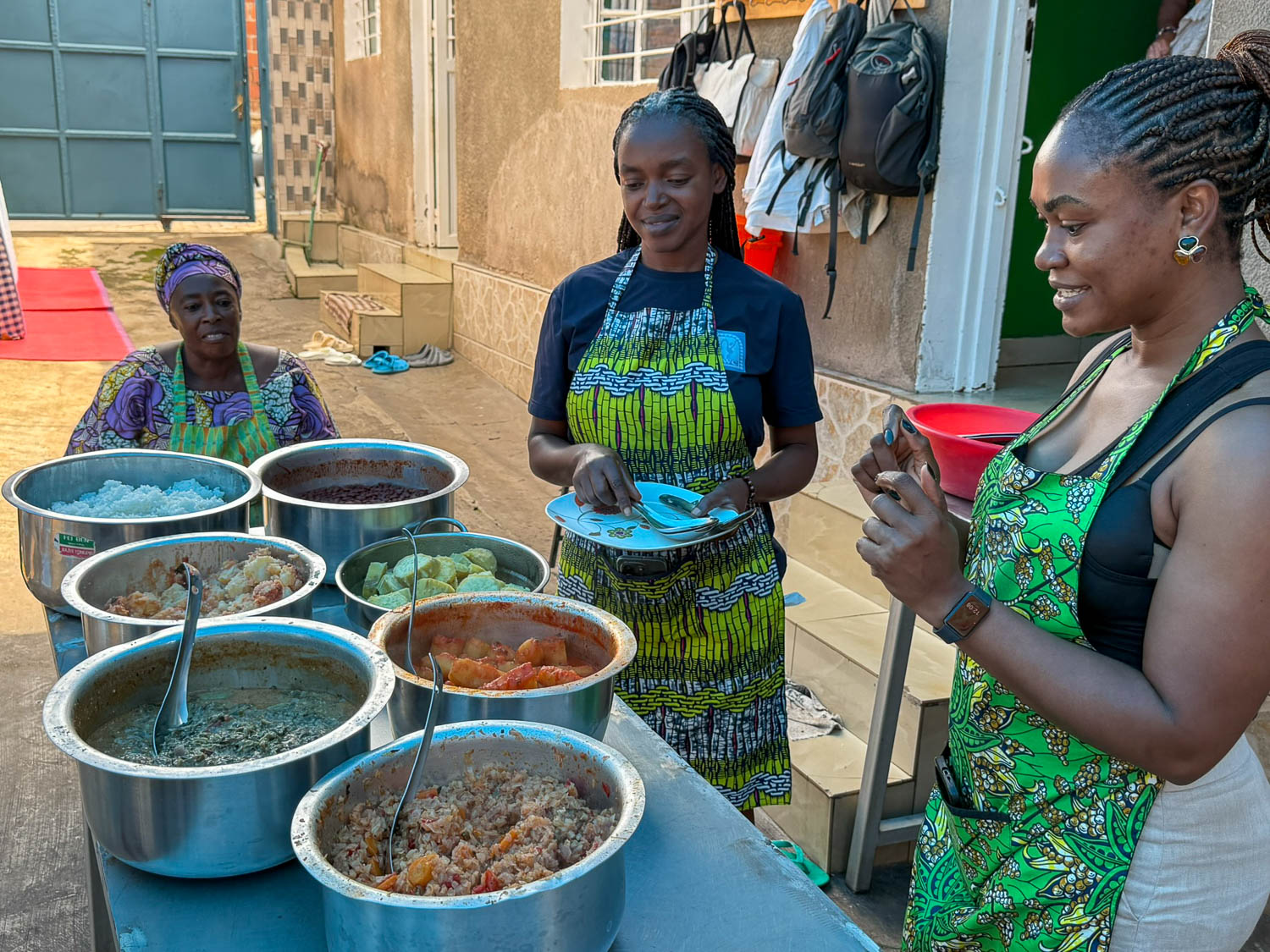
    Family-style Rwandan cuisine meal with shared dishes at Nyamirambo Women’s Center in Kigali
    A fresh, family-cooked meal with shared dishes (Nyamirambo Women’s Center, Kigali)

    Whether you’re dining at a private home in Kigali, or joining a gathering in a countryside village, knowing the customs around food and eating in Rwanda will add definitive meaning to your meal. Eating in Rwanda is as much about community, as it is about flavor.

    • Sharing meals in Rwanda is sacred, and hospitality is a big part of the meal itself.
    • In many places, meals are eaten by hand (only the right hand, to be precise).
    • In rural areas, you might sit on mats to eat your meal, share from communal plates (“family-style eating”), and be invited to feel like family in a matter of minutes.
    • Trying a bit of every dish shows appreciation and respect — and trust us, you’ll want to try a bit of everything! If someone offers you food or drink, the polite answer is always a resounding “yes!” — even if it’s just a small taste.
    • Expect hearty portions and big smiles, especially when dining at restaurants.

    Rwandan Cooking Methods

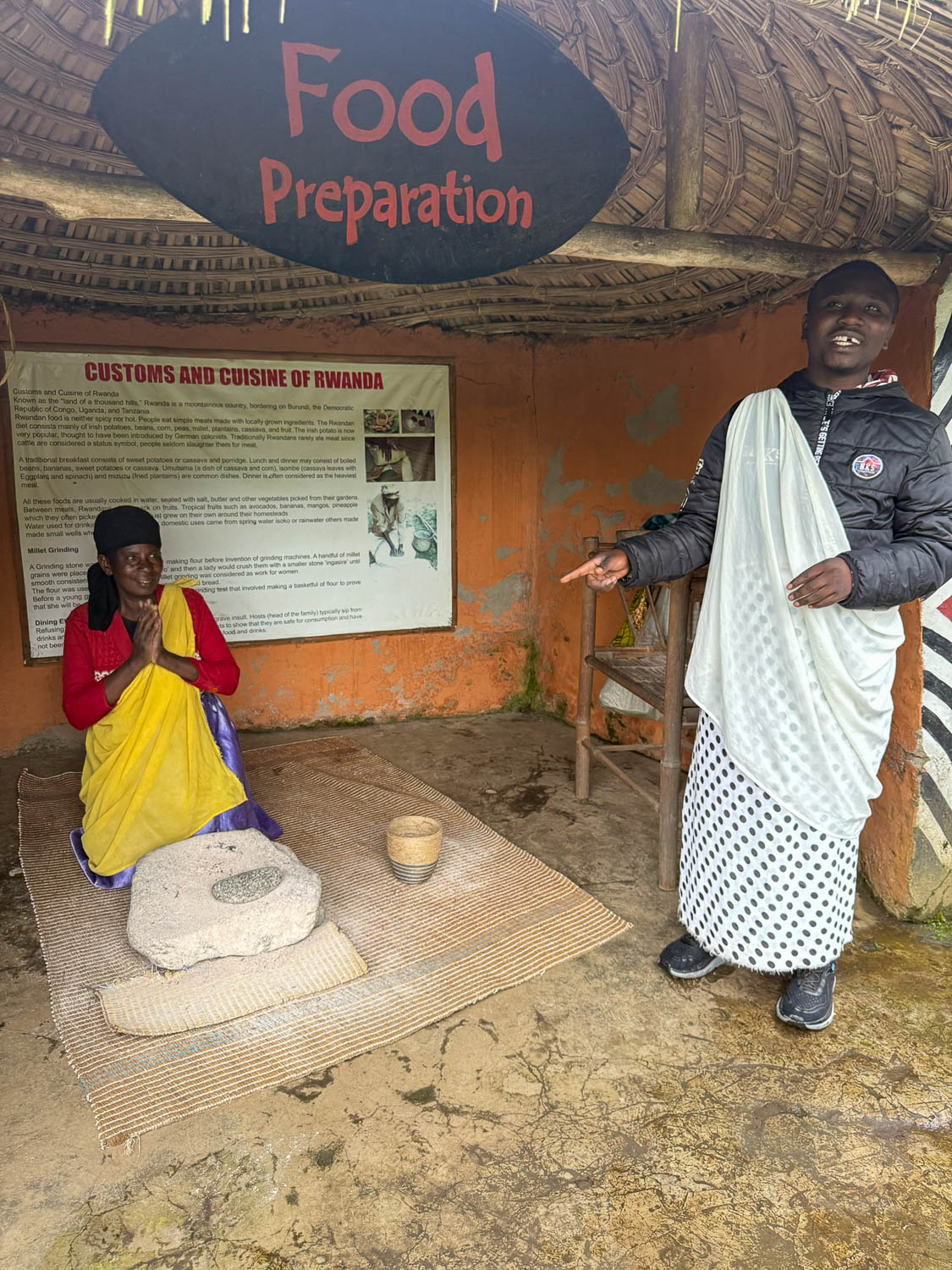
    Traditional Rwandan cuisine cooking demonstration at Iby’iwacu Cultural Village in Kinigi
    Food preparation demonstration at Iby’iwacu Cultural Village (Kinigi, Rwanda)

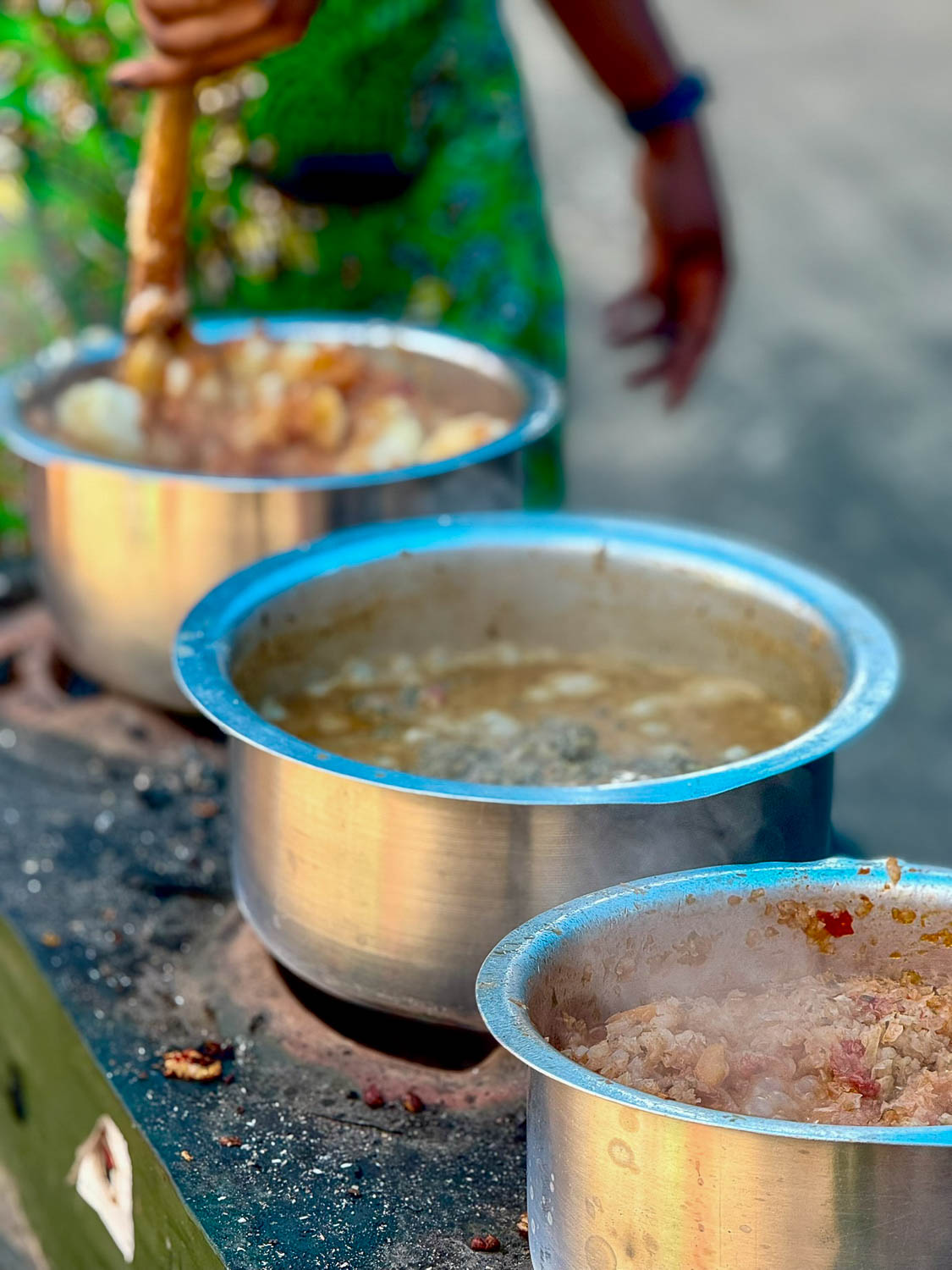
    One thing we loved about traditional Rwandan cuisine was how cooking methods and techniques passed down from generation to generation are still very much alive. Ingredients are prepped from scratch – a lot of hard work goes into each meal, and no detail goes unnoticed.

    Meals in general are often boiled, fried, or grilled over wood fires, especially in more rural areas. Peanuts – a common cooking ingredient in Rwanda – are ground by hand into paste, cassava flour and maize become hearty porridges, giant cabbages are chopped into the finest of pieces, and beans are a go-to for just about everything. There’s very little waste, and there’s an awful lot of heart.

    Hands-on Rwandan cuisine cooking class at Nyamirambo Women’s Center in Kigali
    Traditional Rwandan cooking class (Nyamirambo Women’s Center, Kigali)

    Insider tip. If you decide to take a cooking lesson in Rwanda (and we highly recommend you do!), be prepared to get those fingernails dirty and put some muscle into it!

    Even in urban areas, where restaurants and international cuisine are more common, the essence of Rwandan’s local cuisine remains the same: simple ingredients, prepared with care, and always made to share.


    Traditional Rwandan Dishes

    Common staple ingredients used in Rwandan cuisine including beans, cassava, and plantains
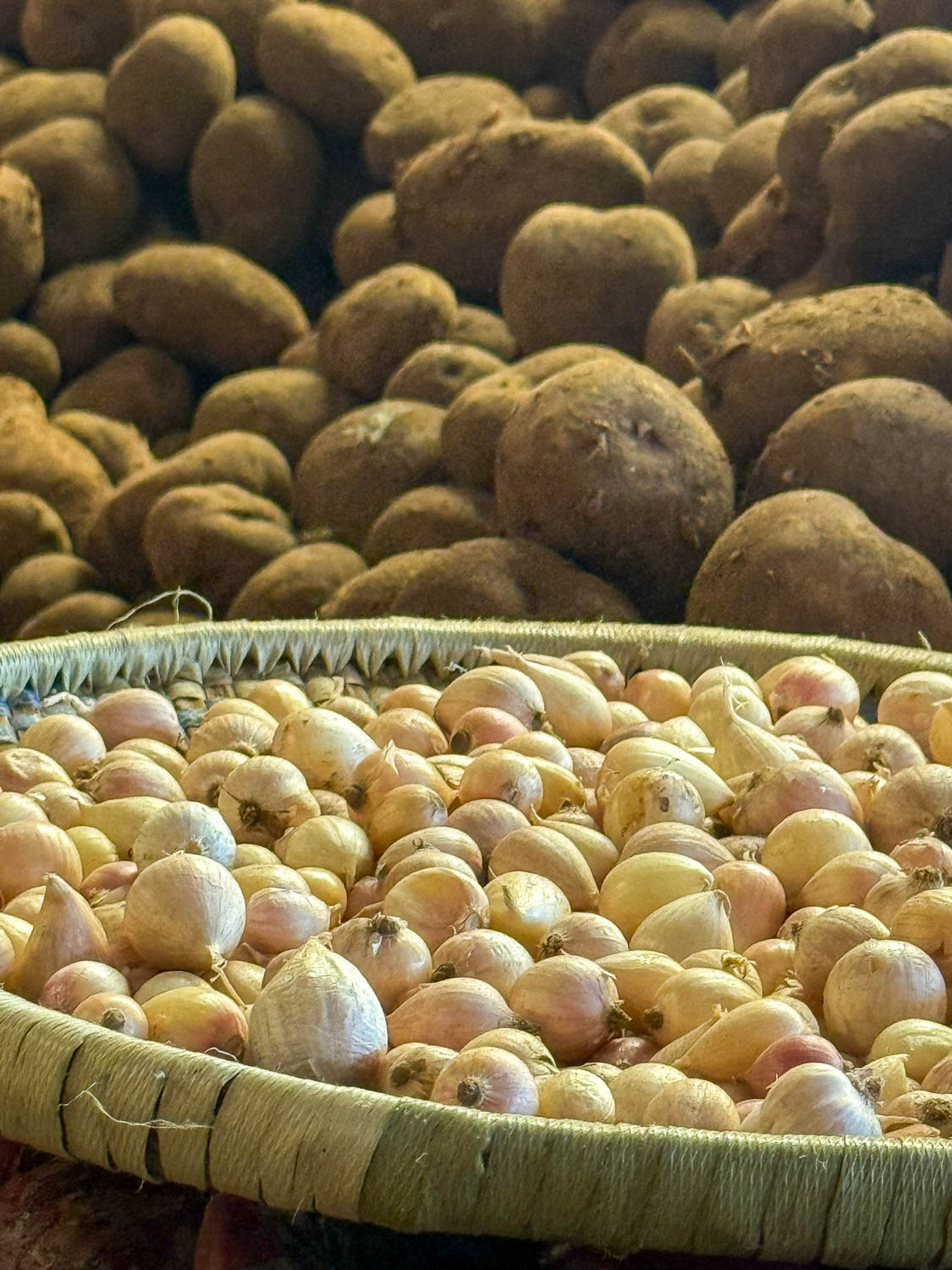
    Staple ingredients in Rwandan cuisine

    Below you’ll find a mouthwatering line-up of some popular Rwandan dishes, each telling its own story of place, tradition, and pride. We can’t say we found a single bad meal during our time travelling around Rwanda!

    Agatogo

    This traditional Rwandan stew is thick and savory, typically made with plantains as the main star, alongside potatoes, cassava leaves, or beans. Agatogo is a versatile dish, and can be made either with or without meat (typically chunks of chicken or goat). Like many traditional Rwandan dishes, this hearty stew is known for its use of tomato paste, and added crushed peanuts for additional flavor and texture. It’s great for breakfast, lunch or dinner!

    Fun fact. The vegetarian version of Agatogo is more common in Rwanda.

    Akabenzi

    In Kinyarwanda (one of the four official languages of Rwanda), “Akabenzi” means pork – more specifically, grilled (choma) or fried (fry) pork cooked to perfection. You’ll find Akabenzi in various forms: ribs, marinated pork, and chops.

    Fun fact. This dish is sometimes known as the “Mercedes-Benz of pork dishes”: Rwandans have a cultural belief that a pig’s snout resembles the Mercedes-Benz logo. And yes, this local favorite is not just any pork dish – it’s something of a status symbol!

    Hearty home-cooked Rwandan cuisine meal with traditional staples in Kigali
    A hearty home-cooked meal with all the classic staples (Nyamirambo Women’s Center, Kigali)

    Brochettes

    Ah, the joy of a sizzling, marinated meat skewer! Typically made from goat (the most traditional), beef, chicken or pork, marinated with garlic, ginger, chili peppers, lemon juice and a fanciful array of spices, and then grilled over an open flame, these delicious, meat skewers are known as brochettes. Brochettes are often served with fried plantains, potatoes, french fries, or spicy tomato sauce – a total flavor bomb.

    Fun fact. The beloved Rwandan brochette can be found almost anywhere in the country. We especially loved snagging them from street vendors. The spicy sauce that accompanies brochettes definitely has a kick!

    Fun fact. The cubed, marinated meat that makes up a brochette is generally alternated on the skewer with pieces of onion. When served with the spicy tomato sauce and roasted tomatoes, the dish is known as “birayi”.

    Isombe

    Beans displayed at Gisenyi Market, a foundational ingredient in Rwandan cuisine
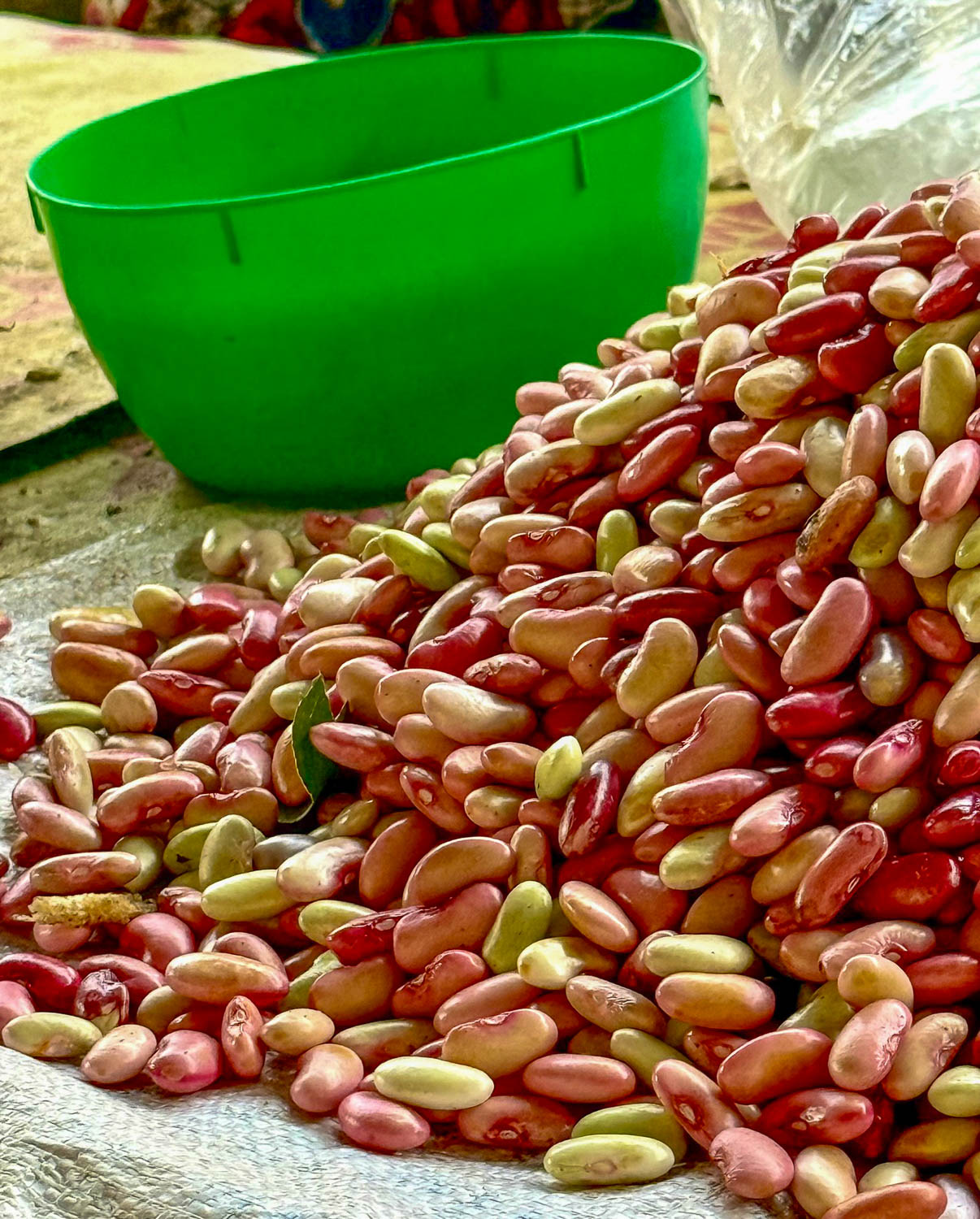
    Beans form a major staple of the Rwandan diet (Gisenyi Market, Rwanda)

    Another traditional Rwandan stew, Isombe is made from mashed cassava leaves, combined with tomatoes, onions, garlic, and then slow-cooked in peanut sauce. This popular dish is typically served with beans, rice, or sweet potatoes. Creamy, comforting, and incredibly satisfying, for many Rwandan families Isombe is the taste of home.

    Kachumbari

    Preparing fresh ingredients for a traditional Rwandan cuisine meal in Kigali
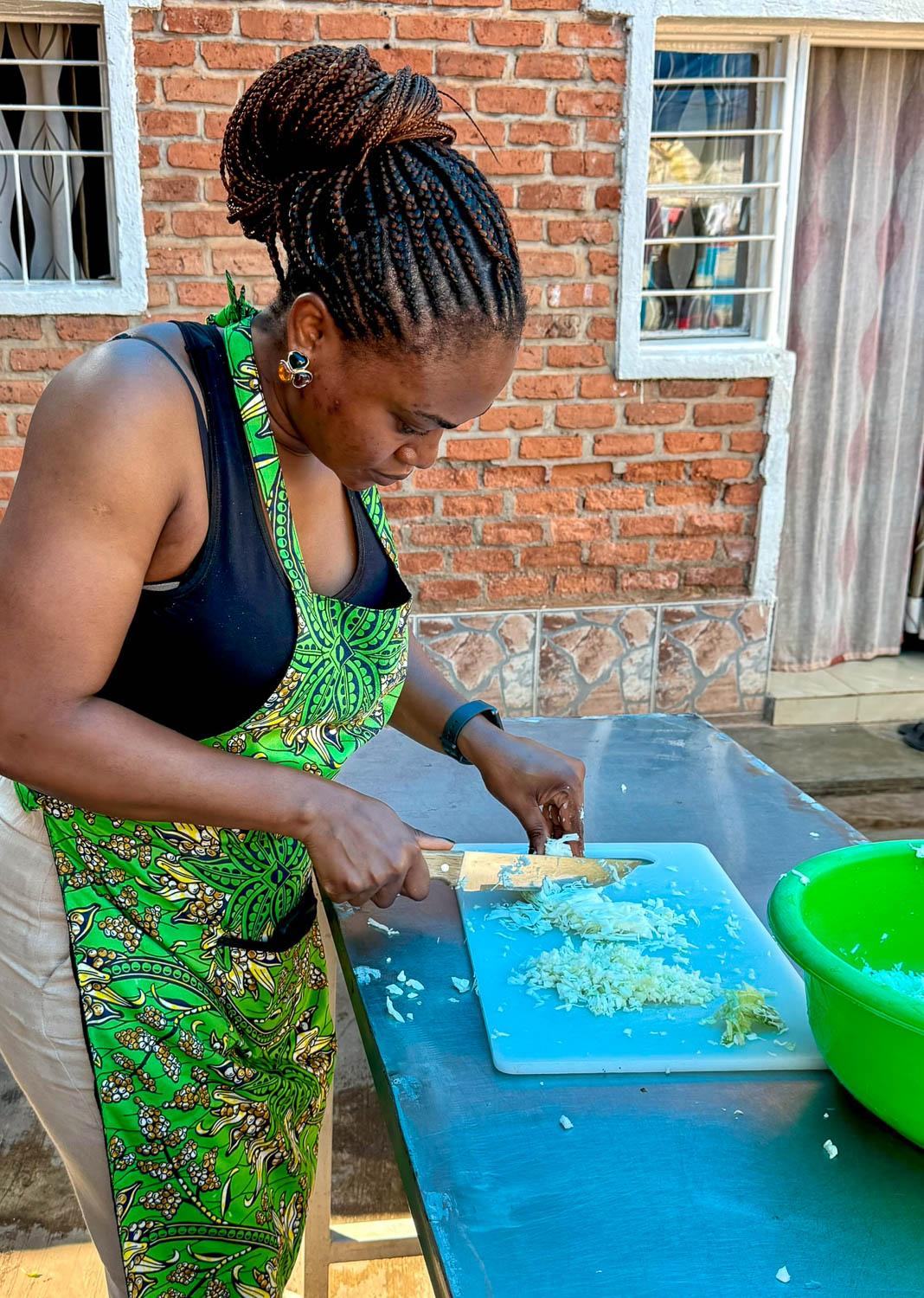
    Chopping ingredients for a hearty meal (Nyamirambo Women’s Center, Kigali)

    Popular throughout the African Great Lakes region, Kachumbari is a tangy, fresh salad of finely chopped tomatoes, onions, and chili peppers (think jalapeno or serrano), often seasoned with lime or lemon juice. It’s commonly served as a side salad or as a salsa with meat dishes and other main meals, and indeed you’ll find this simple, uncooked accompaniment comes with most dishes – we certainly never tired of it!

    Mizuzu

    If there’s something we love, it’s a well-cooked fried plantain (or green banana). Say hello to Mizuzu — slightly crispy, slightly sweet, and absolutely addictive! Mizuzu is generally enjoyed as a snack, and is sometimes glazed with honey, sprinkled with sugar, or splashed with citrus, for that added bit of sweetness. Mizuzu goes really well with Isombe and Umutsuma.

    Umutsima

    Think of Umutsima as Rwanda’s answer to polenta — a soft, communal dish made from millet flour and boiling water, often served at weddings, special occasions, and family gatherings. Its porridge-like consistency makes it nourishing, as well as nostalgic. Note that Umutsima can also be a hearty and comforting stew, combining cassava, corn and beans.

    Insider tip. The porridge-like version of this dish is often called Umutsima w’uboro. The stew-like version of this dish is referred to as Ikijumba n’umutsima. If you see “umutsima” on a menu, make sure to enquire with your server exactly which type you’ll be getting.

    Fun fact. The preparation of Umutsima w’uboro is often a social activity, bringing Rwandans together.


    Rwandan Street Food

    Rwandan street food being cooked fresh in front of customers
    Awaken your senses as street food is cooked right in front of you!

    If you’d like to eat like a local – one of our most favorite things to do when we’re travelling to new places – consider skipping the more touristy sit-down restaurant options, and hit the street instead.

    Street food from roadside vendors includes Rwandan brochettes (often served with fried plantains or potatoes), Akabenzi, Mizuzu, sambaza (small fried fish), and Ugari (cassava dough). Hard-boiled eggs with chili oil, fresh groundnuts, and plantain chips are other go-to snacks you’ll find everywhere. We also loved fresh chapati – a soft, flaky flatbread, often plain but sometimes also served with beans, meat or vegetables.

    You can find all these delights at local markets, bus stops, major intersections, on the way to tourist attractions, and tucked away in neighborhood corners. Street food is quick, cheap, delicious – and unforgettably full of soul! Without question, a favorite amongst food enthusiasts and locals alike.


    Regional Variations in Rwandan Cuisine

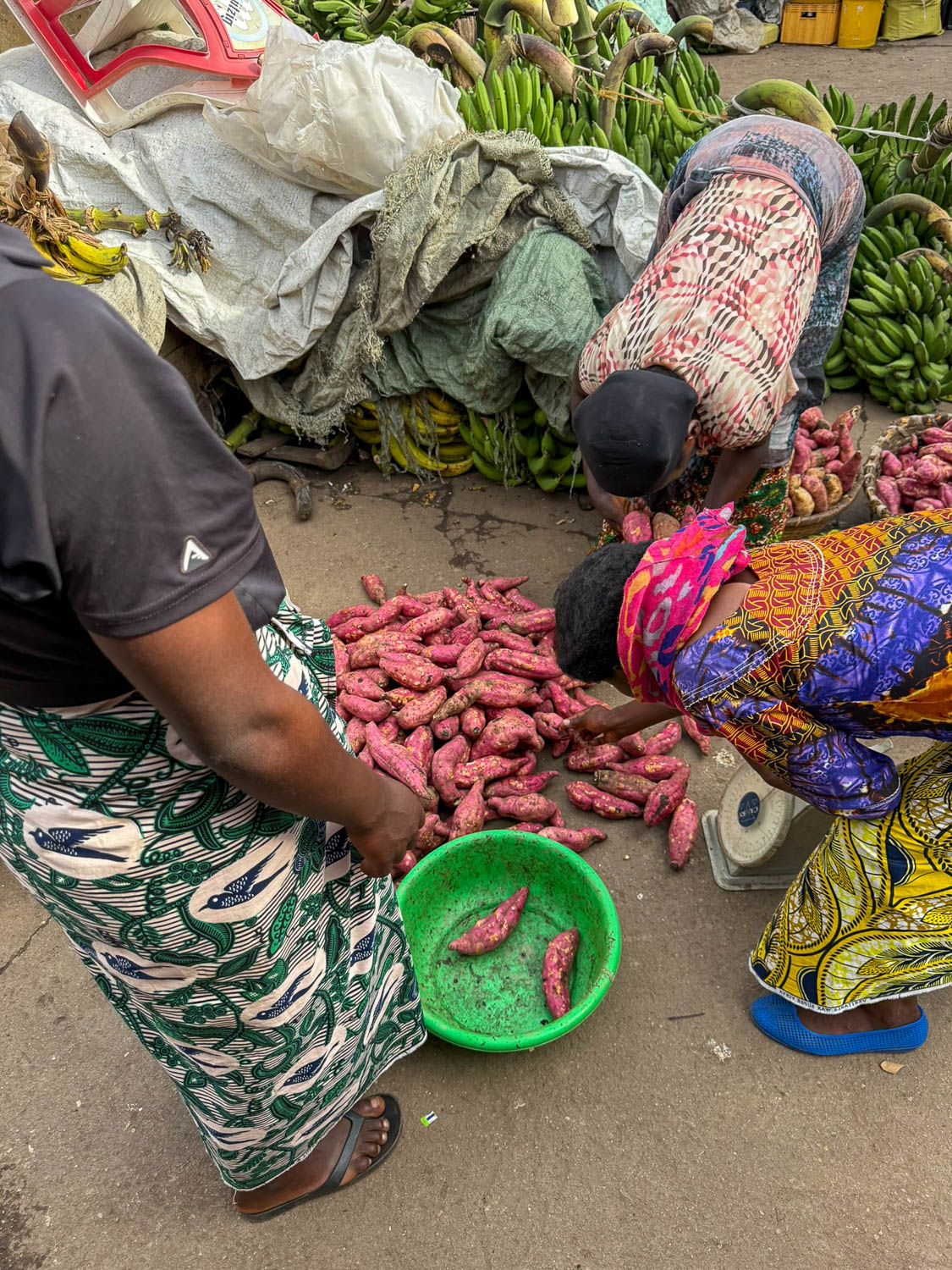
    Sweet potatoes at Kinyanda Market, a staple ingredient in Rwandan cuisine
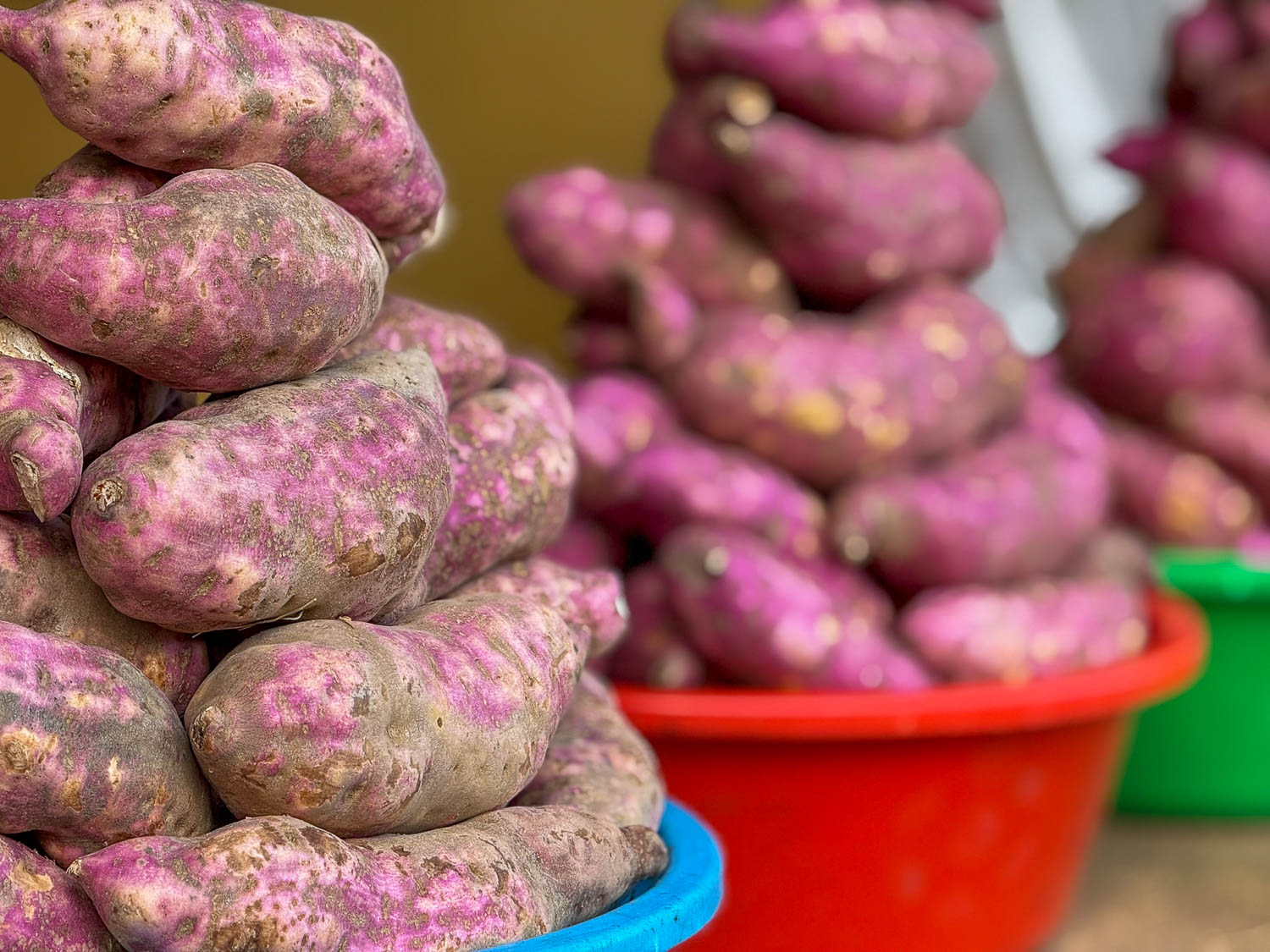
    Sweet potatoes are a staple in Rwandan diets (Kinyanda Market, Rwanda)

    Rwanda is small but indeed mighty when it comes to food diversity. Whilst Rwandan cuisine throughout the country generally relies on a base of common staples (bananas, sweet potatoes, beans and cassava), each of Rwanda’s five regions – Southern, Northern, Eastern, Western and Kigali provinces – offers their own specialties.

    Factors affecting regional variations include the accessibility and availability of certain ingredients, geography, cultural traditions (for example, local preferences and family recipes handed down through the generations), farming and other agricultural practices, and pastoral traditions. If you have the chance to visit different parts of Rwanda, you will likely be exposed to a range of flavors and dishes, each reflecting the diverse culinary landscape of the country.

    • The East and West are known for their fertile land and abundant banana plantations, so here you’ll no doubt find more Agatogo, Matoke, Akabenzi, and a whole host of other dishes made with bananas and plantains.
    • The East also brings bold flavors and a generous use of sorghum crops, used for making banana beer and Umutsima w’uboro.
    • The West also boasts numerous fresh fish dishes, with lakeside offerings including grilled tilapia and Sambaza.
    • Due to the availability of cattle and extensive farming of chili, expect spicier stews, greater variations in meat dishes, and hot pepper in the South.
    • In the North, Isombe and cassava flour reign.
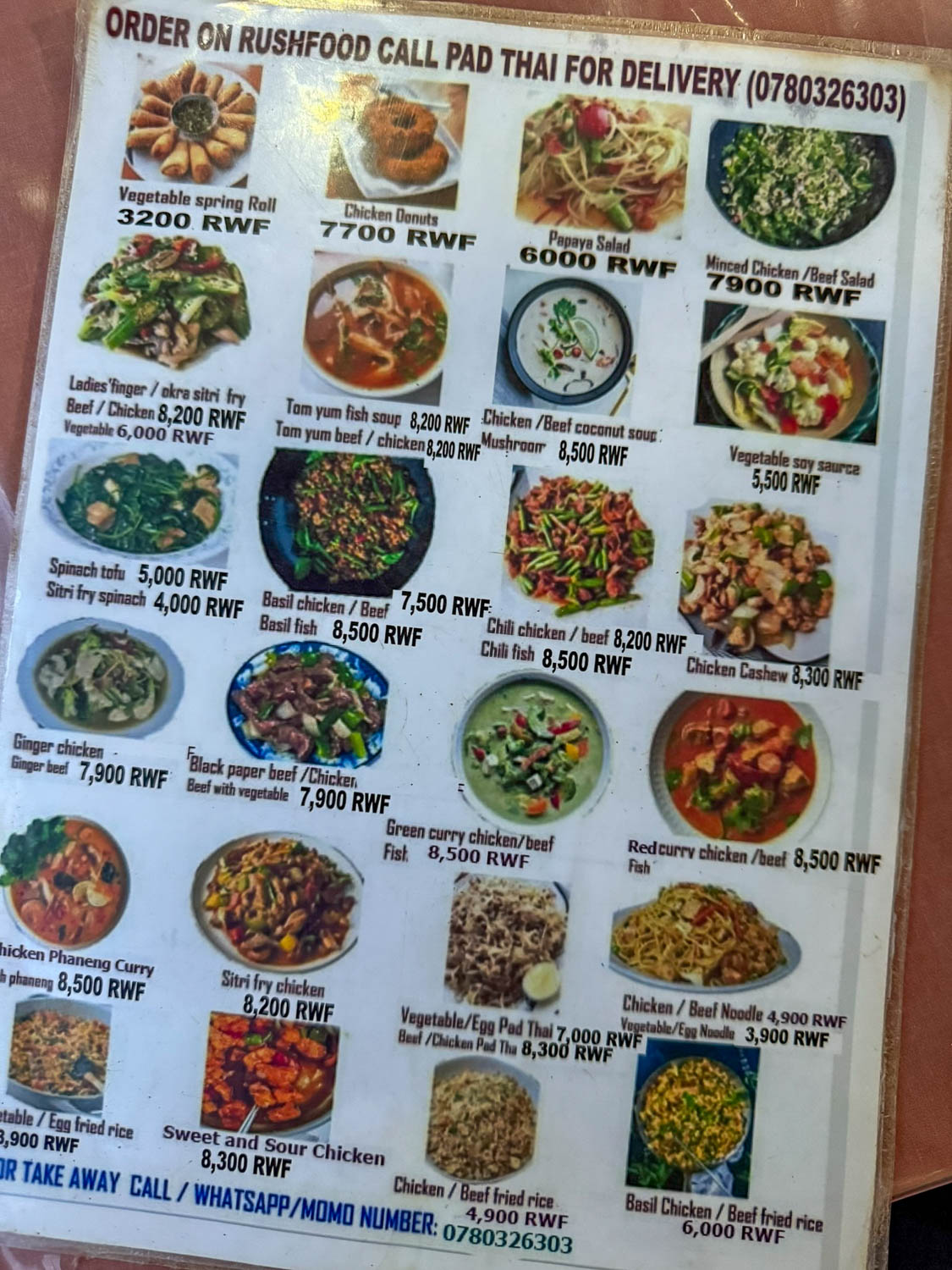
    • It’s in Kigali – Rwanda’s vibrant capital city – where you’ll no doubt find the most culinary diversity, with everything from traditional food to international restaurants (we had some incredible Thai food in the north-east of the city!).
    Thai menu in Kigali highlighting international food options beyond traditional Rwandan cuisine
    Thai menu in Kigali – if you’re looking for some international cuisine

    Historically, diets in Rwanda also varied somewhat between the three main ethnic groups. The Hutus (the majority group, traditionally farmers) ate mostly vegetables (and less animal protein), whilst the Tutsis (a much smaller representation of the population, associated with cattle farming), consumed more meat, milk and other dairy products. The Twas (the smallest ethnic group within Rwanda, indigenous to the region and generally hunters), ate a similar diet to the Hutus.

    Traveler enjoying an authentic Rwandan cuisine experience in Kigali
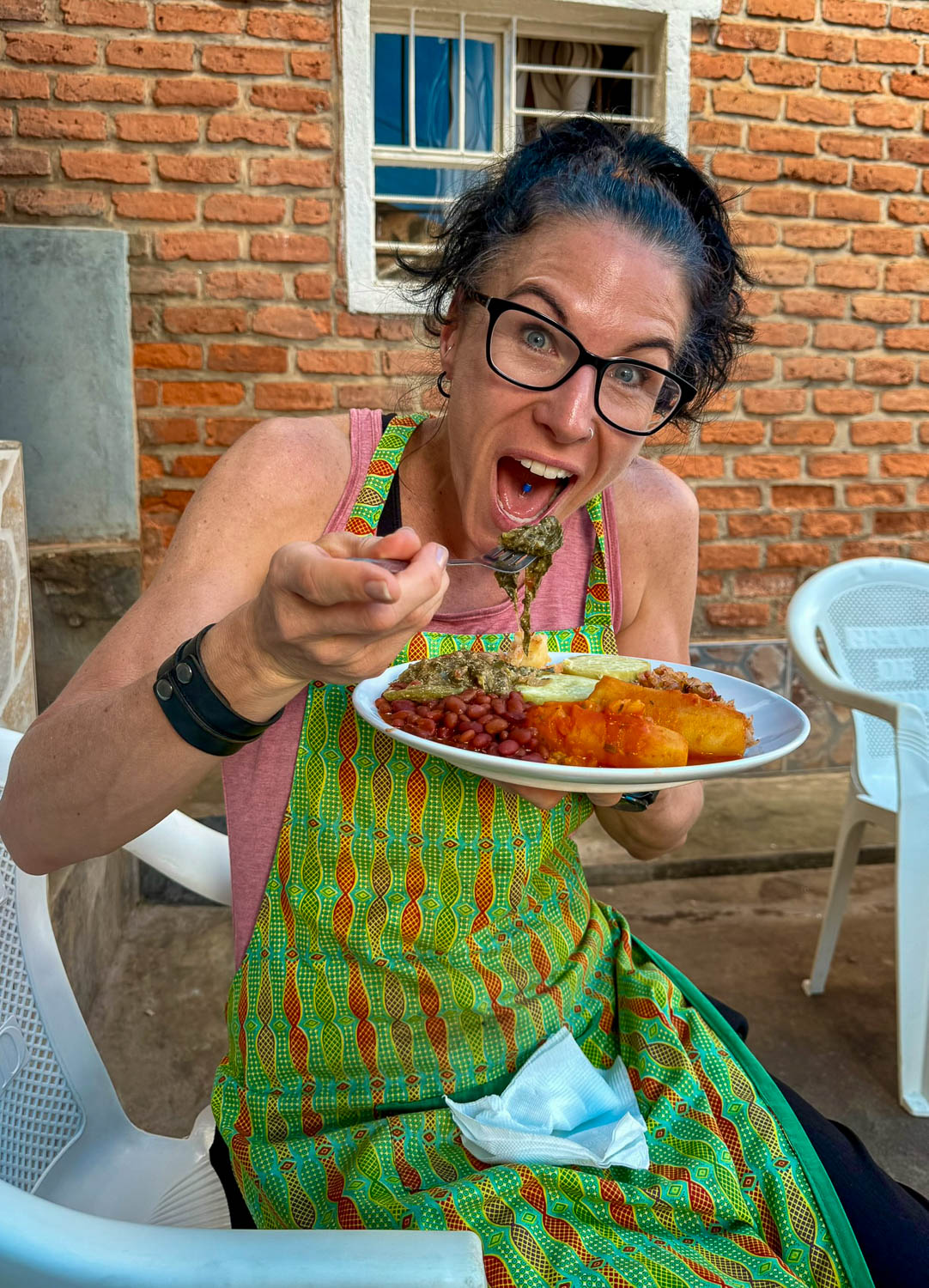
    Beck can’t wait to take that first bite! (Nyamirambo Women’s Center, Kigali)

    Today, everywhere you go, you’ll taste the threads that tie Rwanda’s different cultures together — each bite a blend of place, season, and story.

    Fun fact. There are no major, globally-recognized American fast-food chains in Rwanda. Sorry folks, no McDonald’s or Burger King here, though if you’re hankering for some American-esque fast food, you can try local establishments like Mr Chips for your burger and fries fix.


    Popular Rwandan Beverages

    Traditional banana beer fermentation process used to make urwagwa in Rwanda
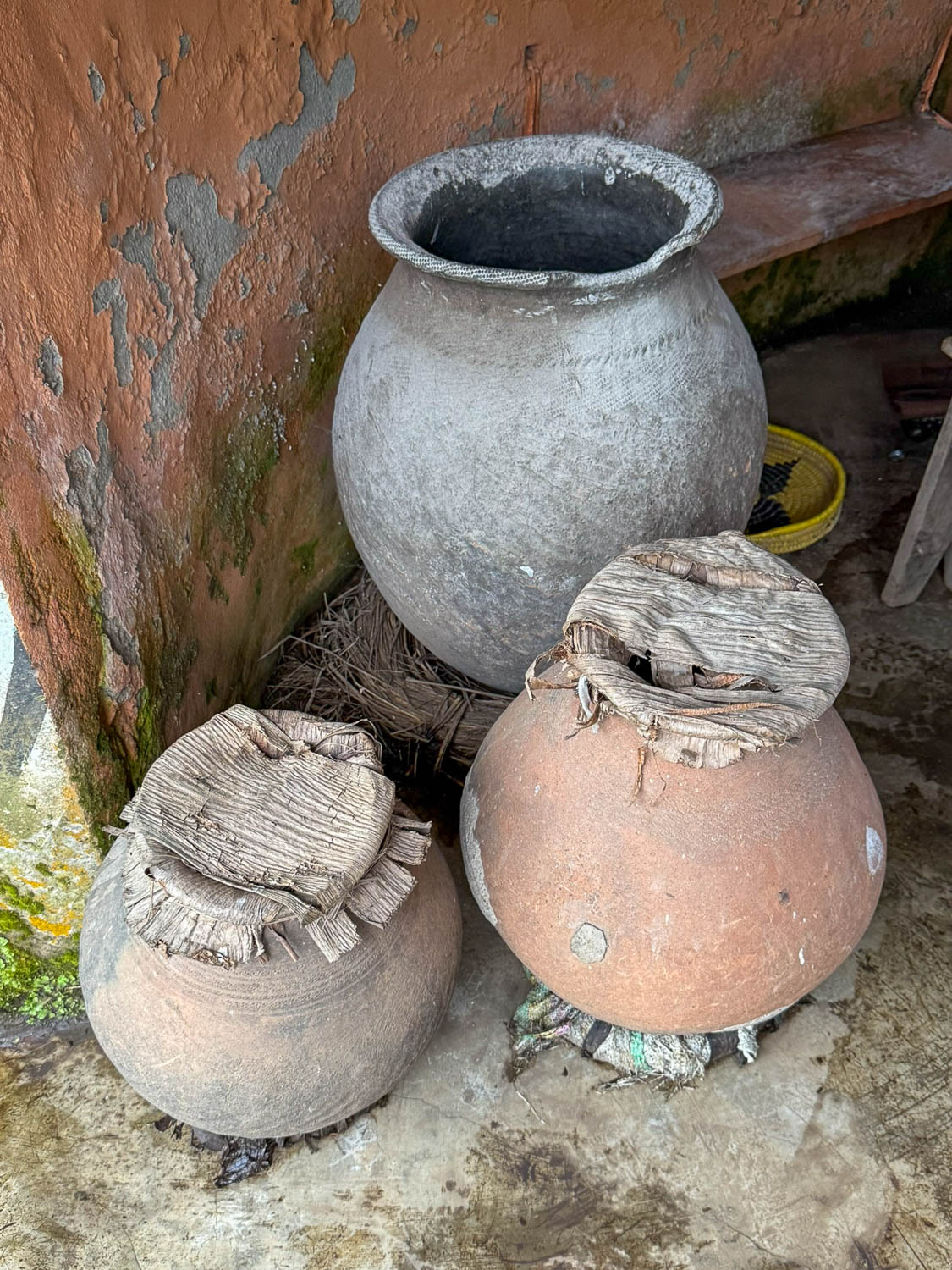
    Banana beer fermentation jars (Iby’iwacu Cultural Village, Rwanda)

    And let’s not forget the drinks! Rwandan beverages include a variety of both non-alcoholic, as well as alcoholic, options. When it comes to drinks, Rwanda keeps things deliciously local.

    Non-Alcoholic

    • Milk is beloved in Rwanda, especially in cattle-rich communities, enjoyed either hot or cold. A common choice amongst locals is Ikivuguto, a traditional Rwandan fermented milk product similar to a yogurt smoothie.

    Fun fact. Throughout Rwanda you’ll come across different types of bars. In some of them, there’s only one thing on tap: milk. Milk bars highlight the significant cultural role that cows and milk have long held within Rwandan society.

    Locally grown fruits at Kimironko Market in Kigali used in Rwandan cuisine
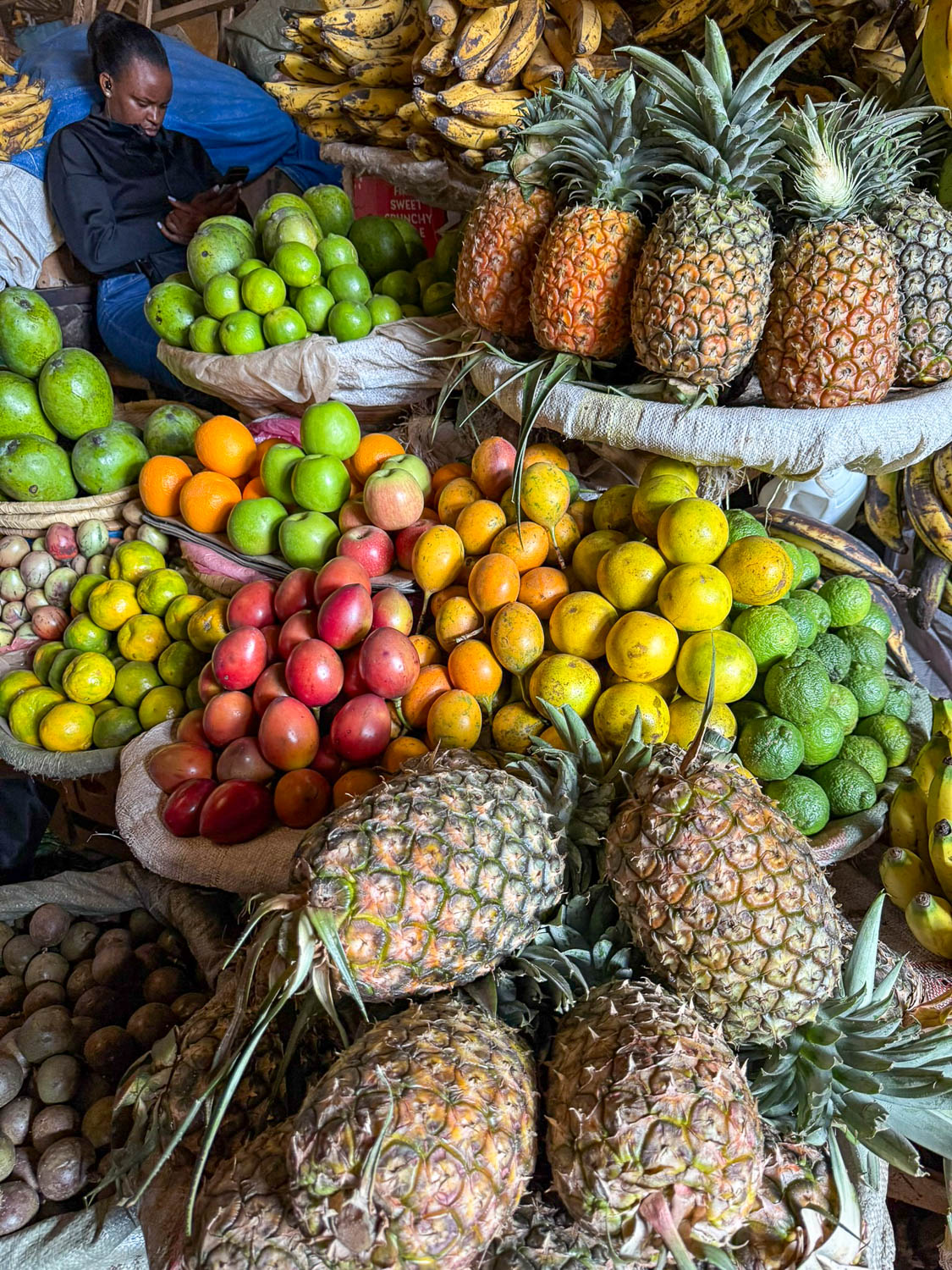
    Locally-grown fruits at Kimironko Market (Kigali, Rwanda)
    • Fresh fruit juices made from locally-grown fruits (think passionfruit, pineapple, mango and avocado) are becoming more popular (and are definitely the perfect thirst-quenchers for hot afternoons!).
    • Locally-grown tea is a daily go-to: sweet (it’s often served with a touch of honey) and served everywhere.
    • Igikoma, although technically a porridge, is a popular drink often consumed at breakfast. It’s especially favored amongst athletes and breastfeeding mothers.
    Freshly brewed Rwandan coffee at Question Coffee in Kigali
    A fresh brew at Question Coffee (Kigali, Rwanda)

    Fun fact. Whilst Rwandan coffee is a prized cash crop – and indeed the country is known for its high-quality coffee, distinguished by its unique flavor profile due to growing conditions in high altitudes, volcanic soil and a temperate climate – it’s more often exported, than sipped locally.

    Alcoholic

    • Banana beer and sorghum beers are cultural staples in Rwanda, also perfect thirst-quenchers for the hotter days – especially in rural areas.

    Fun fact. Urwagwa is the most common traditional Rwandan banana beer. It’s made from fermented bananas and roasted sorghum flour. Ikigage is another option: this sorghum beer is typically made in homes for personal consumption, as opposed to being commercially sold. Both Urwagwa and Ikigage are staples at many social gatherings, including cultural ceremonies and festivals.

    • Banana wine is also a local specialty, brewed and available throughout the country.
    • Popular commercial beers include Mützig (French), Primus (Central African), and Amstel (Dutch).

    Whether you’re toasting with banana beers in local bars in Kigali, or sipping a homemade brew in a rural village, Rwandan drinks are a celebration in a glass.


    Final Thoughts

    Hands-on Rwandan cuisine cooking class experience for travelers visiting Rwanda
    Make sure to take a cooking class during your time in Rwanda!

    The gastronomy in Rwanda is as diverse and as abundant as its landscape – and whilst it may be simple, it’s also rich in flavor and rooted in tradition. Like us, you may find Rwandan cuisine to be more than a surprise — perhaps even a revelation … a reminder that food doesn’t need all the bells and whistles to be powerful: it just needs to be made with love and tenderness.

    There’s no question about it: Rwandan food may be unpretentious, but it’s delicious, and it’s meaningful. A visit to this part of the world will feed your curiosity, your taste buds, and your soul. Every bite of travel tells a story. And Rwanda’s? It’s one story we’ll be telling — and tasting — for years to come.

    Are you ready to pack your appetite and your adventurous spirit? Let’s help you prepare for your trip to Rwanda: to taste traditional foods, to learn from the locals who prepare them, and to share tales over marinated brochettes and locally-brewed banana beers. Just don’t forget to say a polite murakoze(thank you) as you stand up and bid a friendly farewell to your hosts.


    FAQs

    What is traditional Rwandan cuisine?

    Traditional Rwandan cuisine is built around fresh, local staples such as beans, cassava, plantains, bananas, sweet potatoes, peas, and corn. Many classic Rwandan dishes are simple, hearty, and home-cooked, with popular examples including Isombe, Agatogo, brochettes, Akabenzi, and Mizuzu. Across Rwanda, meals are often prepared with seasonal ingredients and shared as an important part of daily life and community.

    What are the most popular foods to try in Rwanda?

    Some of the most popular foods to try in Rwanda include Isombe (cassava leaves cooked in peanut sauce), Agatogo (a plantain-based stew), brochettes (grilled meat skewers), Akabenzi (fried or grilled pork), and Mizuzu (fried plantains). Beans, rice, sweet potatoes, and avocado are also common parts of many meals. These dishes give travelers a strong introduction to the flavors and traditions of Rwandan cuisine.

    Is Rwandan food spicy?

    Rwandan food is usually more comforting and savory than intensely spicy. Many traditional dishes focus on natural flavor from fresh vegetables, legumes, plantains, and slow-cooked stews rather than heavy heat. That said, some meals may be served with chili, hot pepper, or spicy tomato sauce, especially alongside brochettes or certain meat dishes, so spice levels can vary by region and restaurant.

    What do people in Rwanda usually eat for breakfast, lunch, and dinner?

    In Rwanda, breakfast is often light or sometimes skipped, though it may include porridge, boiled beans, or sweet potatoes with tea. Lunch is traditionally the biggest meal of the day and often features dishes such as Isombe, Agatogo, brochettes, rice, beans, vegetables, and avocado. Dinner is usually simpler and may include beans, vegetables, fish, and another staple food served later in the evening.

    Where can travelers experience authentic Rwandan cuisine?

    Travelers can experience authentic Rwandan cuisine in local restaurants, neighborhood eateries, markets, roadside food stalls, and community-based cooking experiences. A cooking class or cultural food experience can be one of the best ways to learn about traditional ingredients, cooking methods, and dining customs. In cities like Kigali, travelers can enjoy both classic Rwandan dishes and a wider range of international cuisine, while rural areas often offer a more traditional food experience.


    Explore More Of Rwanda

  • Your Guide to the Best Things to Do in Kigali, Rwanda

    Welcome to Kigali, Rwanda’s vibrant and resilient capital city – a place where culture, history, and hope rise from the lush rolling hills of East Africa. Characterized by a terrain of green hills, valleys and steep slopes – and therefore known as the “City of a Thousand Hills” – this beautiful city is clean, safe, innovative, and welcoming, and offers a blend of visitor experiences as unique as Rwanda itself.

    Modern, yet deeply rooted in tradition, Kigali is the country’s beating heart, welcoming travelers with warm Rwandan hospitality. From its bustling markets to its thriving arts scene, and from its opportunities for reflection at the Kigali Genocide Memorial and sipping local brews at Question Coffee, Kigali quickly surprises visitors with its unique rhythm and energy.

    Kigali is also the gateway to Rwanda’s natural wonders. Just beyond the city limits the country’s landscapes unfold in breathtaking variety. From the tranquil countryside dotted with traditional villages to the mountain ranges where rare primates dwell, Kigali sits at the center of it all. Whether you choose to set out toward the volcanoes in the north, the savannas in the east, or the shimmering waters of the west, the capital serves as the perfect starting point for discovering Rwanda’s diverse natural beauty.

    Without question, Kigali is a place that invites you to explore, to connect, and to experience Rwanda from its vibrant center. Linger here a little – we’re pretty confident you’ll like it. And with this guide in tow, we hope that you too will be able to experience some of the incredible energy this city has to share. Follow us, dear wanderers, as we reveal some of the top things to do in Kigali!

    Insider tip. No matter where you are in Rwanda, the last Saturday of each month is always dedicated to Umuganda, where residents participate in a nationwide community clean-up. Opening hours and activities on offer may be modified as a result.


    Quick Tips

    Wide, clean streets in Kigali Rwanda showcasing the city’s modern infrastructure and safety
    The wide, clean streets of Kigali

    Here are some insider tips to help you make the most of your visit to Kigali, Rwanda.

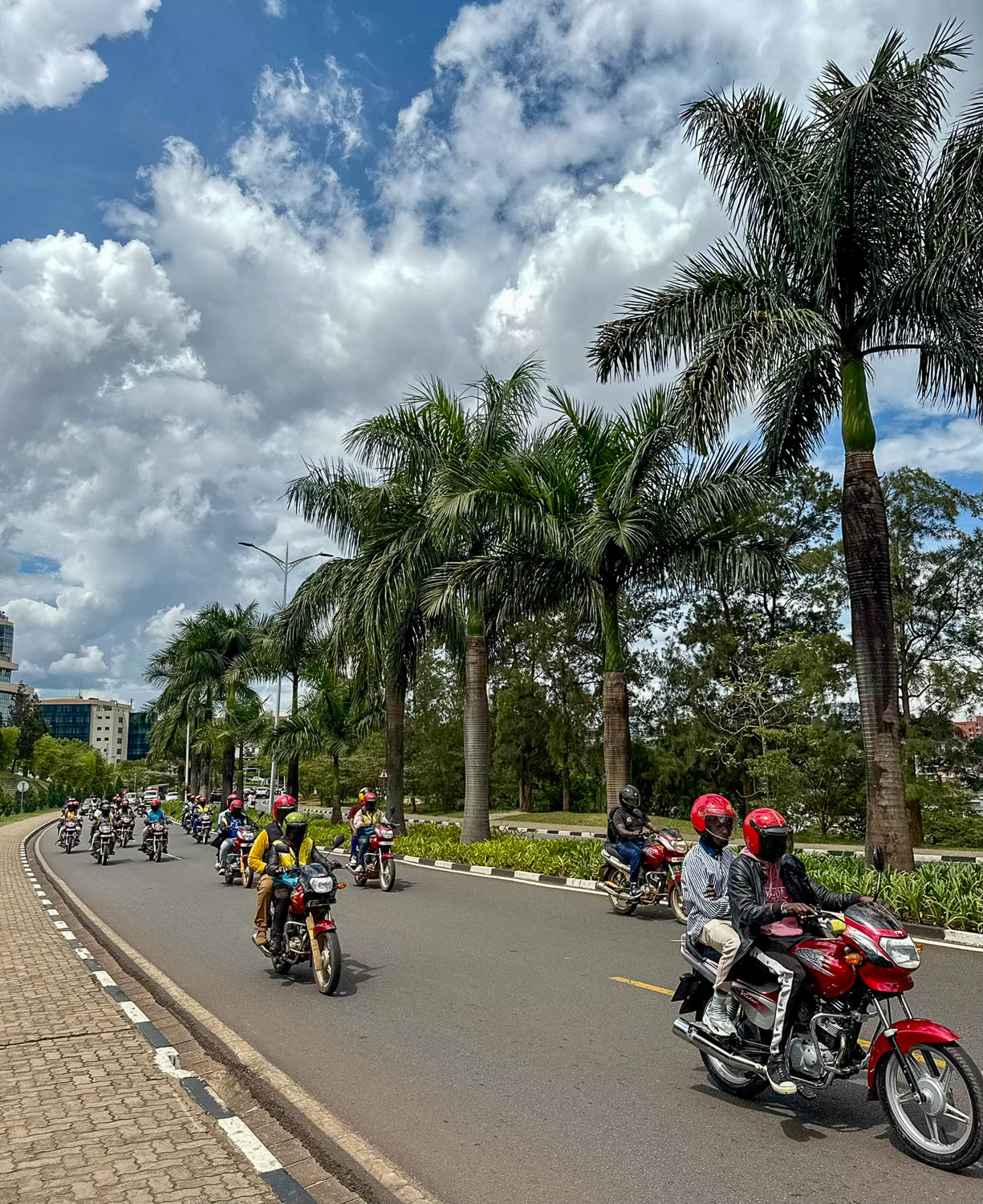
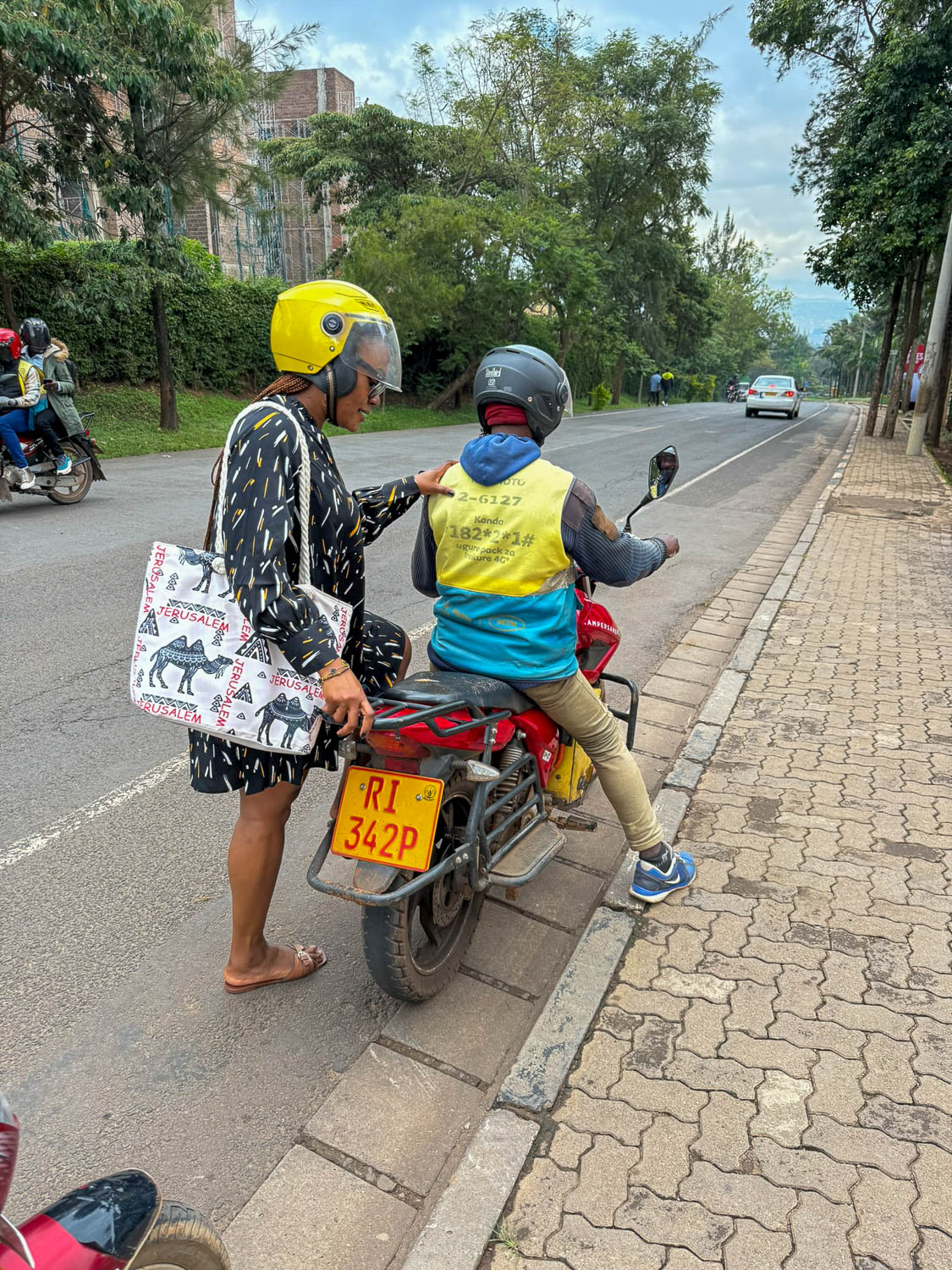
    • Getting around Kigali is easy: use private taxis, ride-hailing apps, or moto-taxis for short trips, and consider hiring a car with a driver for comfort or longer excursions.
    • Kigali is a wonderfully clean, safe and very walkable city: we recommend walking whenever you can, to fully experience the sights and sounds of local life.
    • Kigali is full of wonderfully diverse neighborhoods. Explore Nyamirambo for culture and markets, Kimihurura for dining and nightlife, and Kiyovu or Nyarutarama for quieter, scenic streets.
    • No visit to Kigali is complete without visiting the Kigali Genocide Memorial.
    • Be sure to check out the Inema Arts Center or Rwanda Art Museum for contemporary and traditional art.
    • Sample Rwandan coffee at Question Coffee and browse local crafts at Kimironko Market.
    • Consider day trips outside the city to Volcanoes National Park, Akagera National Park, or Lake Kivu.
    • Kigali’s dining scene is fantastic, and includes everything from traditional Rwandan dishes to international and fusion restaurants. The street food is also delicious!
    • With a plethora of options available, choose from accommodations that suit your style and budget.

    Follow these tips and you’ll be ready to visit Kigali, Rwanda!


    Plan Your Trip

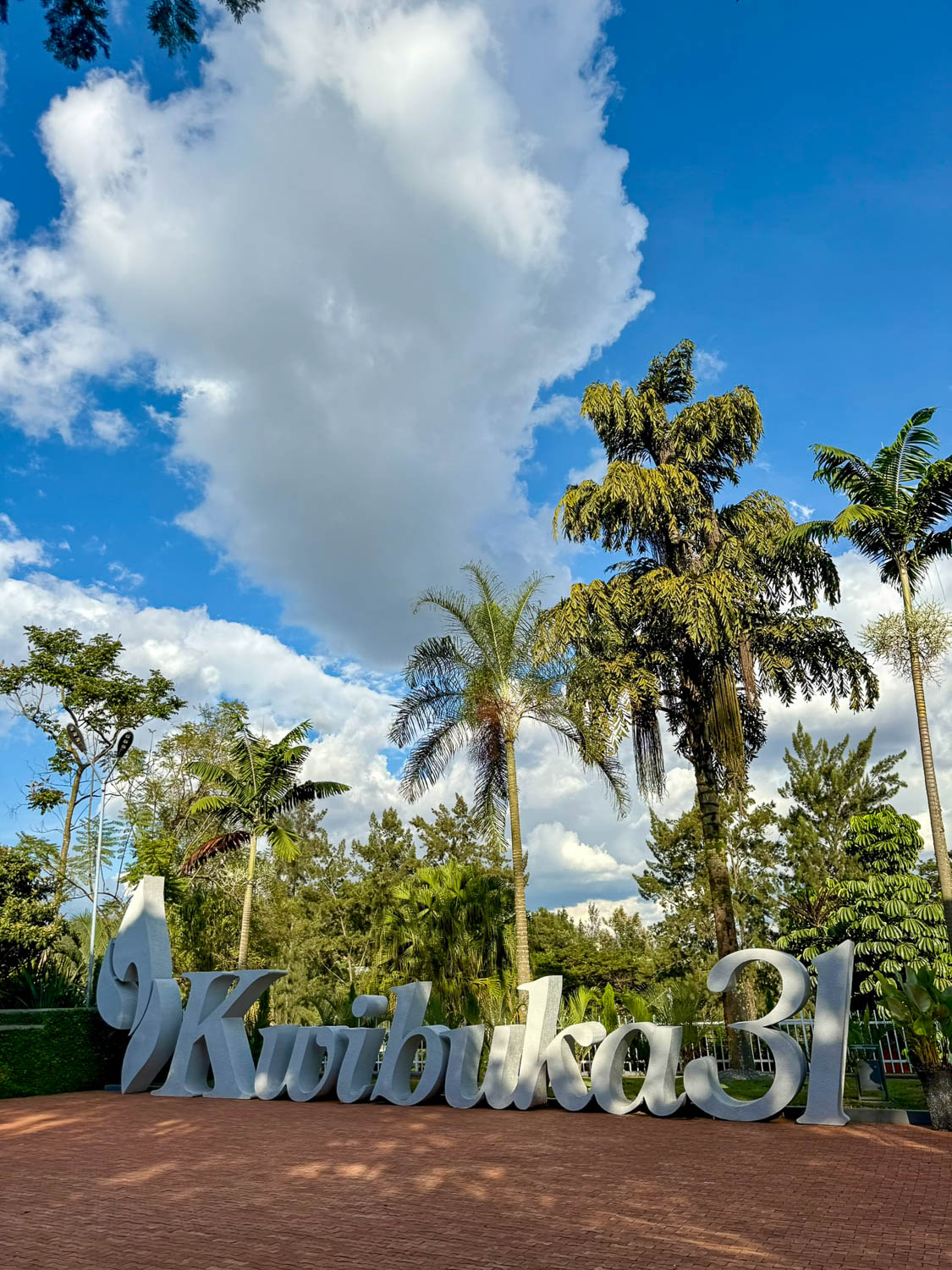
    Kwibuka remembrance message at Kigali Genocide Memorial symbolizing reflection and unity in Rwanda
    “Kwibuka” means “to remember” in Kinyarwanda, the official language of Rwanda (Kigali Genocide Memorial)

    Some links below may earn us a small commission at no extra cost to you. We’re truly grateful for your support, as it allows us to continue sharing meaningful travel experiences and practical travel insights with you. Read our full disclosure here.

    Planning your visit? We’ve gathered recommended tours and activities, along with trusted travel tools, to help you explore with confidence and ease.

    Tours & Experiences


    Prefer additional options? Click below to discover more incredible experiences tailored just for you!

    Browse more things to do in Kigali, Rwanda.


    Travel Essentials

    Planning the rest of your trip? These are the platforms we personally use when organizing our travels. For more planning tools, visit our Travel Resources page or browse current promotions on our Travel Deals page.


    Best Things to Do in Kigali, Rwanda

    Rolling green hills of Kigali Rwanda known as the City of a Thousand Hills
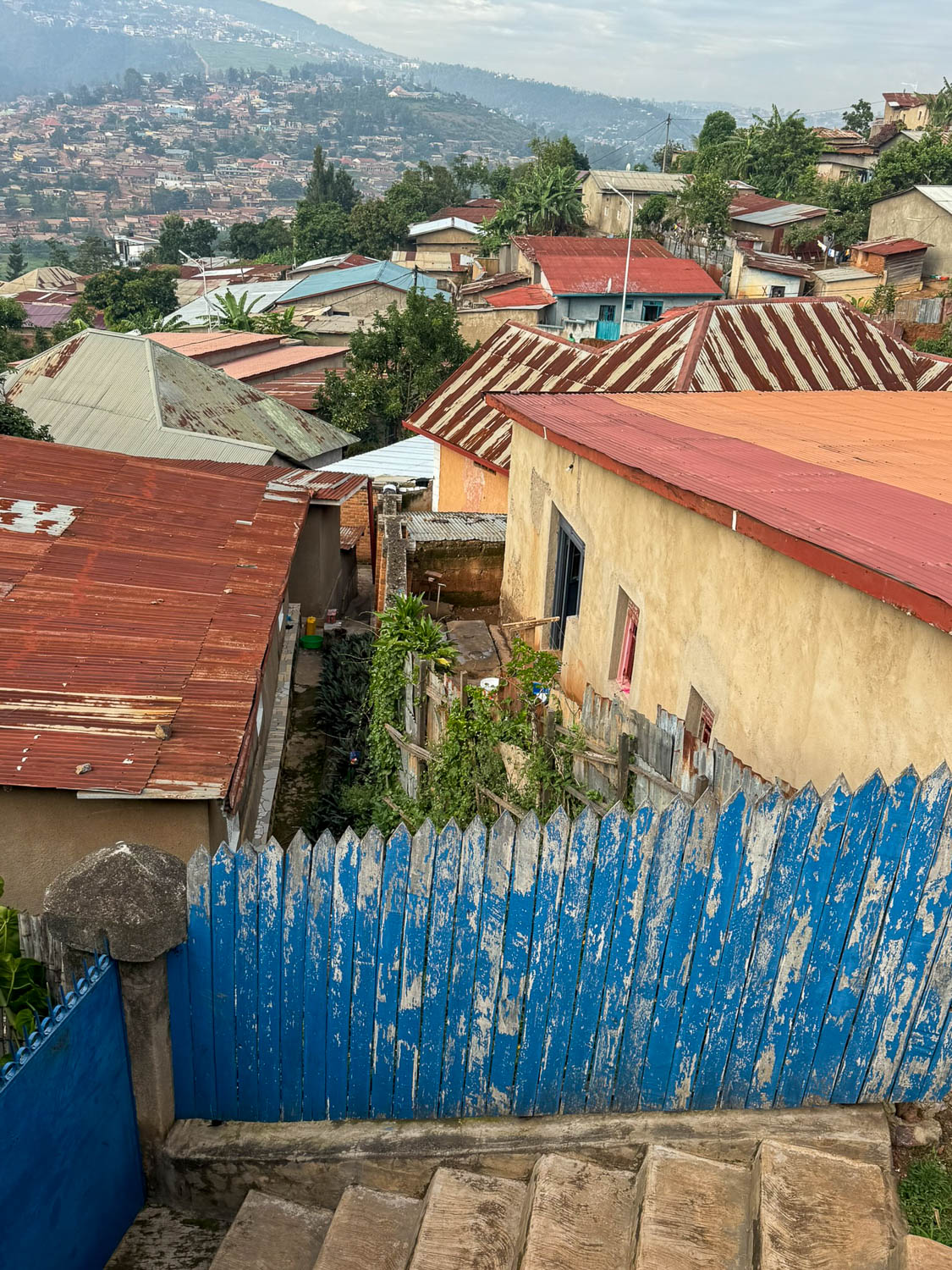
    Kigali is known as the City of a Thousand Hills

    A Warm Welcome to Kigali

    As you arrive into Kigali, it’s clear you’ve landed somewhere special. The streets are pristine (seriously, Kigali is perhaps one of the cleanest cities we’ve ever visited – not just in Africa, but anywhere!), the air is fresh, and the sense of purpose is palpable. From the absence of plastic bags to the presence of community gardens and public art, Kigali leads by example among African cities. It’s a bonus that it often ranks as one of the safest cities in Africa. There are so many things to do in Kigali, whether you’re interested in history, culture, food, or exploring beyond the city.

    Here are the best things to do in Kigali, from powerful cultural landmarks to vibrant local experiences.

    Top 10 Things to Do in Kigali (Quick List)

    • Visit the Kigali Genocide Memorial
    • Explore Kigali’s neighborhoods (especially Nyamirambo)
    • Discover local art at Inema Arts Center
    • Visit the Rwanda Art Museum
    • Experience Kimironko Market
    • Enjoy Kigali’s coffee culture at Question Coffee
    • See the Kigali Convention Center
    • Explore Kigali Heights
    • Enjoy Kigali’s dining scene
    • Take a day trip to Volcanoes National Park

    Visit the Kigali Genocide Memorial: A Sacred Space of Remembrance

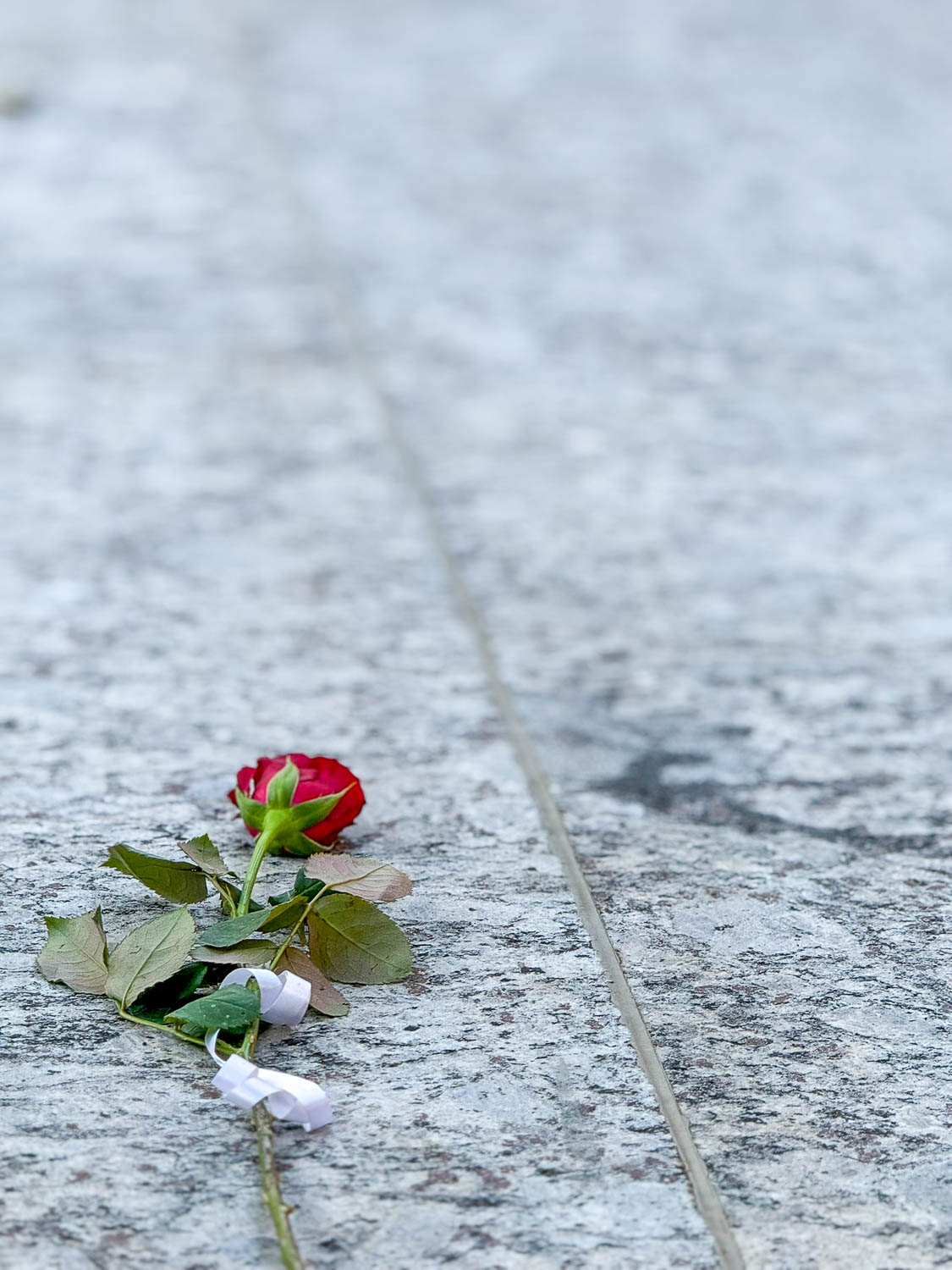
    Single rose placed on a grave at Kigali Genocide Memorial symbolizing remembrance and loss
    A lone rose on a grave site at the Kigali Genocide Memorial says it all

    No visit to Kigali is complete without spending time at the Kigali Genocide Memorial, one of the most significant and important sites in the country.

    In case you weren’t yet born, or didn’t watch the news at the time, or were living under a rock at some point, Rwanda suffered a devastating genocide in the mid 1990s that claimed the lives of hundreds of thousands in just 100 days. It was here in 1994 that extremist Hutu militias killed an estimated 800,000 Rwandans, mostly Tutsi and moderate Hutu: needless to say, the impact was profound, and the violence that occurred left deep, penetrating scars. But it’s hard to truly grasp the enormity of this event without a visit to the Kigali Genocide Memorial, where you’ll learn not only about the tragic genocide itself, but also about how Rwanda has since focused on healing, reconciliation, remembrance, and rebuilding as a unified, hopeful nation – a resilience visitors can see and feel today.

    As such, a visit to the Kigali Genocide Memorial, located in the Gisozi area of Kigali, is both sobering and essential for truly understanding Rwanda’s history. The memorial tells the story of the Rwandan genocide through exhibits, photos, and mass graves, where today more than 250,000 victims of the genocide are buried. The site invites silence, reflection on the resilience and strength of the Rwandan people, and honors lives lost whilst still focusing on unity and renewal.

    Kigali Genocide Memorial in Rwanda recognized as a UNESCO World Heritage Site
    Today the Kigali Genocide Memorial is a UNESCO World Heritage listed site

    The Kigali Genocide Memorial is open daily (except Christmas Day and New Year’s Day) from 9am through 5pm, with reduced hours on the last Saturday of the month (1pm-5pm), when Rwandans participate in their national community service day, Umuganda.

    There is no fee to visit the Kigali Genocide Memorial, though a voluntary donation is suggested for all international visitors. Audio guides and tours are available, for an additional fee.

    Explore Kigali’s Best Neighborhoods

    Colorful neighborhoods in Kigali Rwanda with vibrant streets and local daily life
    Navigating your way through the colorful neighborhoods of Kigali is relatively easy

    Kigali’s character comes alive through its diverse neighborhoods, each offering a distinct slice of the city’s personality. From bustling markets and nightlife hubs to leafy residential areas and diplomatic quarters, these districts reveal the many layers of the nation’s capital.

    Exploring these neighborhoods – especially on foot – affords travelers a chance to move beyond the city center and discover the local rhythms, flavors, and stories that make Kigali such a dynamic place to visit.

    Insider tip. Not sure where to start with your exploration? Consider joining a self-guided or group walking tour to explore the likes of Nyamirambo, Kigali Heights, Kacyiru, Nyarutarama or Kimi … and then head back later to the ones you’d like to explore a little bit more!

    Downtown Kigali and Kigali Heights

    Green park space at Kigali Centenary Park near Kigali Heights for relaxation and recreation
    Lush green spaces for recreation and relaxation at Kigali Centenary Park (Kigali Heights)

    In downtown Kigali, skyscrapers and rooftop bars blend with wide avenues and palm trees. Stroll through Kigali Heights, a sleek shopping and dining complex, for boutiques, brunches, and people-watching.

    Insider tip. Looking for a decent supermarket to stock up on some of the essentials? Be sure to stop by Simba, located within the Kigali Heights shopping mall. We also found this an excellent place to purchase last-minute souvenirs (especially food items for cooking Rwandan food back home) the day before we left Rwanda.

    Kacyiru

    With a polished, international feel, Kacyiru is a diplomatic and business hub, home to embassies, NGOs, and the Kigali Public Library. It’s a quieter area to explore, and offers insight for the visitor into the city’s professional side.

    Kimihurura

    Often known simply as “Kimi”, this is Kigali’s hotspot for dining and nightlife, packed with some of the best restaurants, bars, and cafés in the capital. Kimi is an easy neighborhood to enjoy by day or night, with a friendly, cosmopolitan vibe.

    Kiyovu

    One of Kigali’s oldest neighborhoods, Kiyovu mixes leafy, tree-lined residential streets with charming boutique guesthouses and cafés. Its central location makes it a convenient base for visitors wishing for easy access to the city center.

    Nyamirambo

    Handmade crafts at Nyamirambo Women’s Center in Kigali supporting local artisans
    Locally made handicrafts for sale at the Nyamirambo Women’s Center

    Nyamirambo is Kigali’s most vibrant and culturally-diverse district, often called the “heartbeat of Kigali”. Known for its energy, colorful streets, and cultural tours that showcase daily Kigali life, you’ll want to head here to meet locals, shop at the Nyamirambo Women’s Center, take a cooking class, join a sisal basket weaving workshop, or join a community-led walking tour.

    Insider tip. The cooking class with the Nyamirambo Women’s Center was one of the absolute highlights of our visit to Rwanda!

    Nyarutarama

    Known as one of the city’s upscale areas, peaceful and modern Nyaritarama comes with luxury homes, international schools, and the Kigali Golf Course, appealing to those seeking a more refined vibe (Mike, are you listening?).

    Remera

    Remera is a bustling neighborhood with shops, restaurants, and the BK Arena, Kigali’s main sports and entertainment venue. Head to Remera for all the action – it’s a great place to soak in the city’s nightlife and contemporary culture.

    Discover Kigali’s Art and Cultural Scene

    Inema Arts Center

    Handmade crafts at Nyamirambo Women’s Center in Kigali supporting local artisans
    Local artists display their work at the Inema Arts Center (Kigali, Rwanda)

    Well, if this wasn’t a gem of a find, we aren’t sure what might be! Be prepared to spend at least a solid hour here to gain the most from your visit (and we promise it will be worth it, even for the not-so-arty-lovers out there!).

    In the Kacyiru suburb on KG 563 Street you’ll find the bright and enriching Inema Arts Center, a vibrant hub of Rwanda’s growing art scene. Founded in 2012 by brothers and self-taught local artists Emmanuel Nkuranga and Innocent Nkurunziza, Inema showcases contemporary African art that blends tradition with modernity.

    It’s here you’ll discover a quiet indoor and outdoor space that showcases and celebrates innovation and creativity in the heart of the city: admire (and even purchase!) paintings, mixed-media works, sculptures, and handmade crafts, including linens, jewelry, and leather goods. There are numerous galleries throughout, residency space for artists, and a variety of crafts and music workshops. Oh, and there’s also a small cafe onsite!

    Fun fact. Inema’s mission is to harness art as a tool for personal, social and economic growth.

    Artist studio space at Inema Arts Center in Kigali for resident creatives
    Space at the Inema Arts Center is set aside for resident artists

    Inema is open daily from 8am through 8pm.

    Insider tip. For something a little different, and if you have the time, consider either catching a show with Inema’s youth cultural dance troupe, Inema Dance, or even joining one of their weekly traditional dance classes. 

    Rwanda Art Museum (Presidential Palace Museum)

    Visitors may also wish to consider exploring the Rwanda Art Museum – formerly known as the Presidential Palace Museum until its renaming in May 2018 –  another important cultural center that dives deep into Rwanda’s rich cultural heritage.

    Situated in Kigali’s Kanombe suburb (near the Kigali International Airport), and housed within the former presidential residence of Juvénal Habyarimanathe (say that three times fast!), the Rwanda Art Museum showcases contemporary Rwandan and international art. The museum features the largest collection of post-genocide artworks in Rwanda, and visitors can also view the remains of an aircraft that crashed into the palace in 1994, marking a pivotal moment in the nation’s history.

    Experience Local Markets in Kigali

    Kimironko Market

    Fresh fruits and vegetables for sale at Kimironko Market in Kigali Rwanda
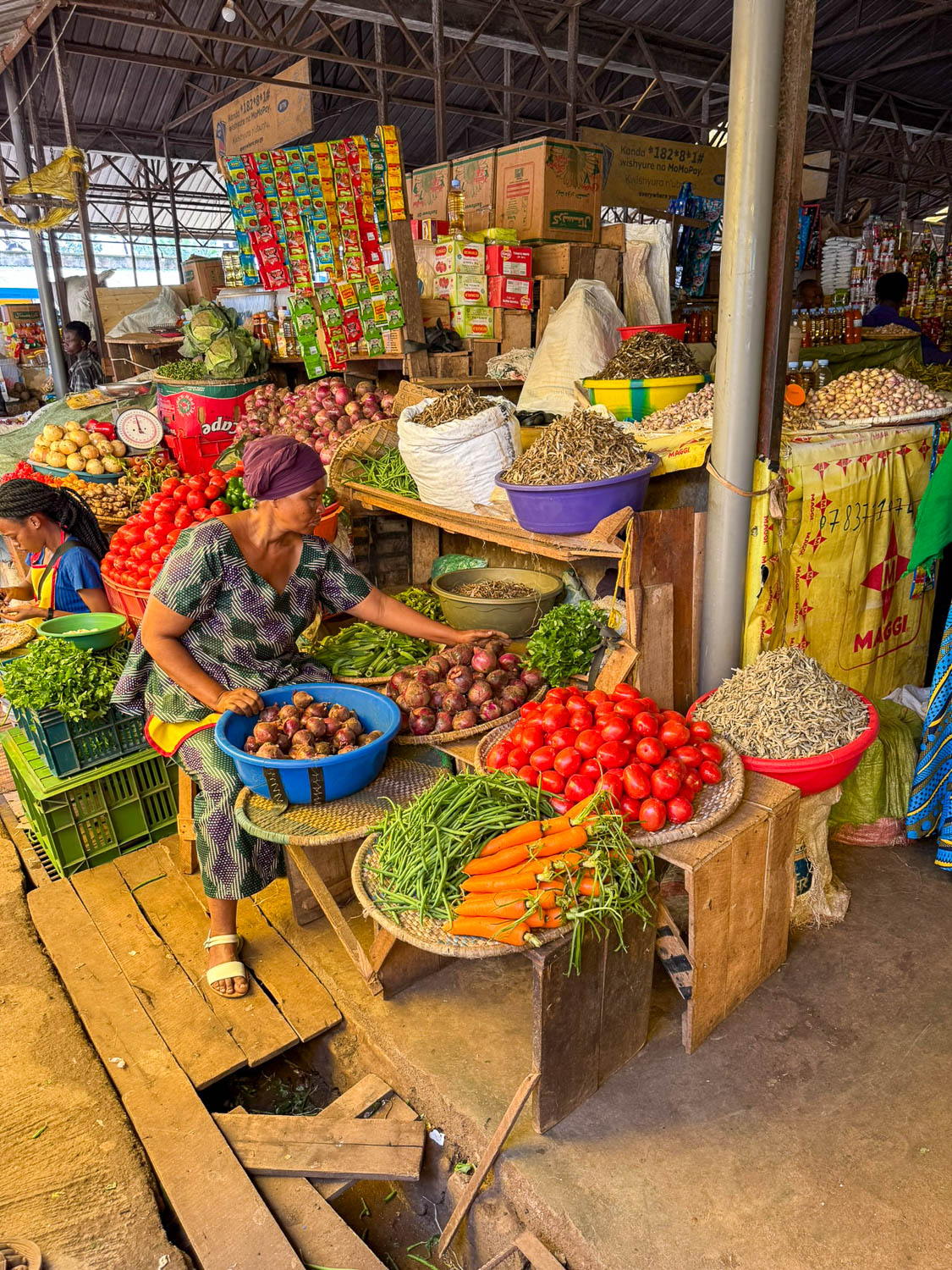
    Fresh fruit and vegetables at the Kimironko Market

    Beck’s favorite thing to do when visiting a new place is to hit up one of the local markets as soon as possible – what better way to gather an authentic glimpse into the daily lives of locals up close and personal in a new-to-her country? And there’s no better place to do that in Kigali than at Kimironko, the capital’s largest and most vibrant marketplace.

    Located in the Kimironko neighborhood, this bustling market is a sensory-rich explosion of color, sound and flavor, where visitors can explore aisles brimming with fresh produce, spices, textiles, clothing, traditional cow dung paintings (Imigongo) and household goods. The market is organized into sections (by product type), making it easy to navigate. Beyond shopping, Kimironko Market is a cultural hub, offering a chance to engage with local vendors and immerse yourself in Kigali’s bustling urban energy.

    Insider tip. Look out for handmade Agaseke baskets during your visit. Also known as Rwandan Peace Baskets, these traditionally-woven baskets are used for holding gifts, grains and other items (we use ours for holding unripe avocados on our kitchen countertop back home!), but since the 1994 genocide have also become a powerful symbol of peace, reconciliation, unity and hope.

    Insider tip. It’s okay to haggle for prices at Kimironko, but ensure you’re doing so respectfully and with a smile: shopping here is most certainly a shared experience.

    Colorful spices, seeds, and nuts at Kimironko Market in Kigali Rwanda
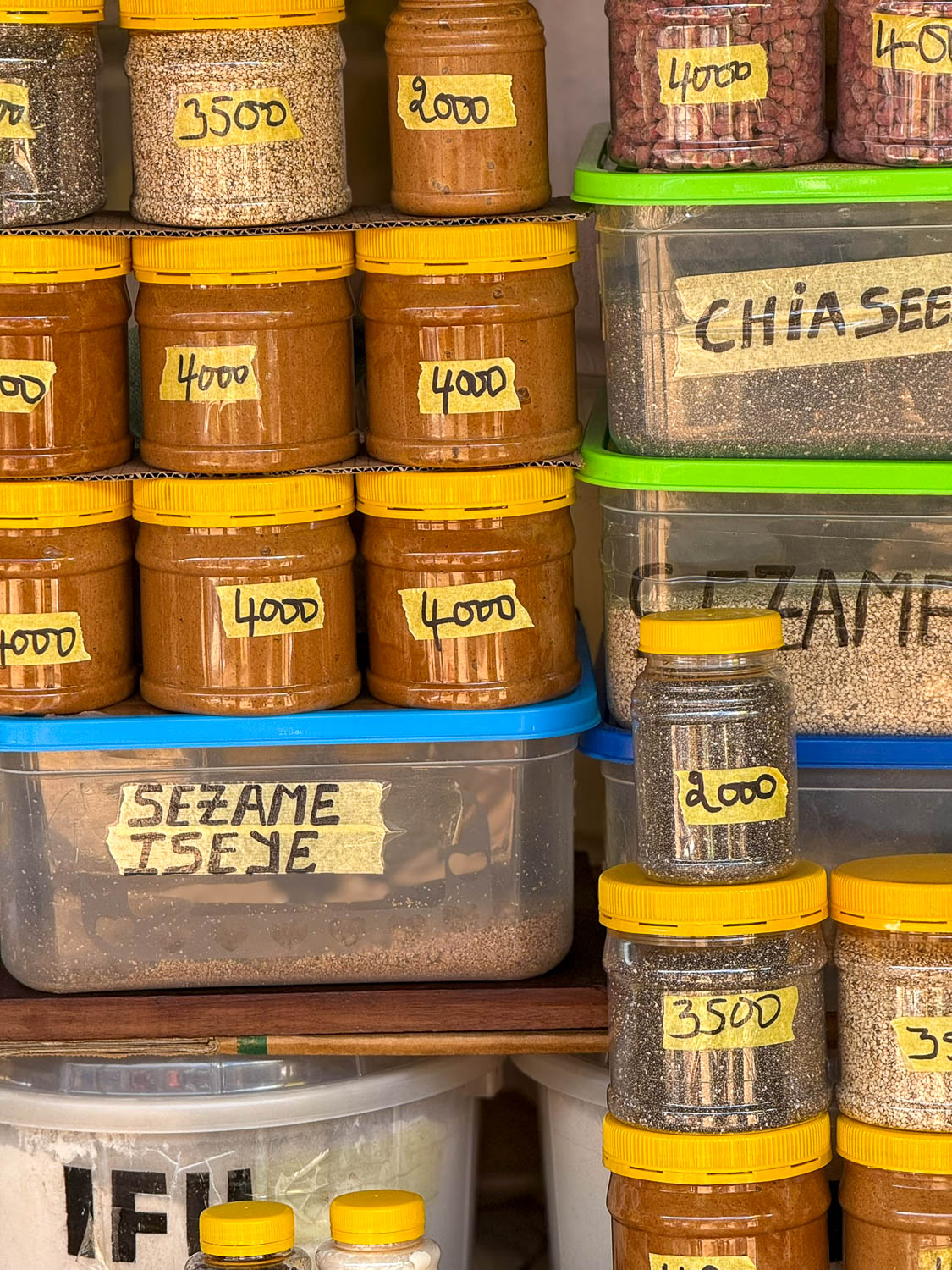
    Spices, seeds and nuts for sale (Kimironko Market, Kigali)

    Kimironko Market is open daily from 8am and 8pm. We recommend taking a moto-taxi to get here and, if you haven’t purchased too many items, can assure you that you won’t be hard-pressed to find a moto-taxi to take you wherever you need to go next.

    Insider tip. Kimironko Market is busiest on weekdays, especially Mondays. Head here during the week for the true market experience, or consider visiting on Sundays, when the market is quieter (but also when you won’t find as many stalls open).

    Enjoy Kigali’s Coffee Culture and Cafés

    Question Coffee Cafe

    Freshly brewed Rwandan coffee at Question Coffee café in Kigali
    Ready to sip a fresh brew from Question Coffee (Gishushu, Kigali)

    Did you know that Rwanda’s hills produce some of the finest coffee in the world? And you might not find any finer than at Question Coffee, with two locations of this popular cafe within the Kigali city limits (Gishushu and Kiyovu).

    Known for its expertly brewed specialty coffee and commitment to social impact, this women-led enterprise sources high-quality Rwandan beans and offers a variety of drinks in its beautifully-designed cafes – from single-origin espresso to unique seasonal cold brews – providing a refreshing twist on traditional coffee flavors. Beyond serving coffee, the café supports rural, low-income female coffee farmers through training programs, helping to empower communities across Rwanda: it truly is a symbol of sustainable tourism.

    Ethical, local, and delicious, visitors to Question Coffee can enjoy tasting sessions and educational tours, making it a place to savor exceptional coffee, whilst also learning about the stories and people behind each cup. We can assure you this was one of Mike’s favorite stops during our wanderings through Kigali!

    See Kigali’s Top Landmarks

    Visitors admiring artwork inside Inema Arts Center gallery in Kigali Rwanda
    Admiring the numerous works of art at the Inema Arts Center (Kigali, Rwanda)

    Kigali’s skyline is dotted with striking modern landmarks that showcase the city’s rapid growth and forward-looking spirit. Sleek architecture, contemporary cultural centers, and state-of-the-art venues reflect Rwanda’s ambition, whilst blending seamlessly with local design influences. Exploring these sites gives visitors a glimpse into Kigali’s dynamic energy, where tradition and innovation coexist in a vibrant urban landscape.

    Kigali Convention Center

    Dome-shaped Kigali Convention Center inspired by traditional Rwandan design
    The dome-shaped main hall of the Kigali Convention Center, inspired by traditional Rwandan hut design

    The Kigali Convention Center has become one of the city’s most recognizable landmarks and a symbol of Rwanda’s modern growth. After construction began in 2009, it was finally opened in 2016, and today plays a central role in Kigali’s reputation as a hub for international conferences, cultural events, and business gatherings.

    Housing state-of-the-art meeting facilities, exhibition spaces, a five-star hotel, and several dining options, the Kigali Convention Center and its striking futuristic dome reflects Rwanda’s ambition to position Kigali as a leading destination for business, innovation, and tourism in Africa.

    Fun fact. The dome-shaped main hall of the convention center was inspired by traditional Rwandan hut design, beautifully blending cultural heritage with cutting-edge architecture.

    Fun fact. At night, the dome glows with colorful LED lights – usually lit up in the colors of the Rwandan national flag – making it a standout feature of the city skyline and a statement of national pride.


    Best Day Trips From Kigali

    Scenic view of Lake Kivu in Rwanda ideal for relaxing overnight stays
    Consider a relaxing overnight stay at Lake Kivu, west of Kigali

    If you’re an outdoor enthusiast, or someone looking for more adventures beyond Kigali’s city limits, you’re in for a treat: the capital makes for a perfect jumping-off point for even more standout experiences in Rwanda.

    Volcanoes National Park

    If you haven’t yet heard, one of the most iconic things to do in Rwanda is to visit Volcanoes National Park, home to the critically-endangered mountain gorillas. Nestled within the Virunga Mountains, about 2-3 hours by road from Kigali, this national park offers a once-in-a-lifetime opportunity to embark on a gorilla trekking adventure. Accompanied by a local guide, you’ll hike through dense forests and steep slopes, where you may just find yourself face-to-face with a family of wild gorillas in their natural habitat. We know, pretty awesome, right?

    The experience of a gorilla trek is nothing short of life-changing. As you watch these majestic creatures forage, groom one another, or care for their young, it’s impossible not to feel humbled to simply be in their presence.

    Fun fact. Volcanoes National Park is home to roughly 300 gorillas, and is one of the few places on earth where you can stand eye-to-eye with these majestic creatures.

    Gorilla trekking experience in Volcanoes National Park Rwanda with endangered mountain gorillas
    Trekking in search of endangered mountain gorillas is a once-in-a-lifetime opportunity

    Other highlights of Volcanoes National Park include:

    • Looking out for other primates, including golden monkeys.
    • Visiting the Dian Fossey grave and research center at Karisoke, a moving tribute to the woman who devoted her life to saving mountain gorillas from extinction.
    • Hiking any number of the well-maintained trails throughout the park that lead to Mount Bisoke and Mount Karisimbi, offering spectacular views over the region, and a more intense trekking experience.

    For a deeper dive into Volcanoes National Park, be sure to consult our article on Musanze, Rwanda.

    Akagera National Park

    Herd of impala in Akagera National Park Rwanda on African safari
    A large herd of impala in Akagera National Park

    On the eastern border of Rwanda, just a 2-2.5-hour drive from Kigali (depending on the route you take, as well as road and weather conditions on the day), lies Akagera National Park, a sprawling savanna filled with zebras, giraffes, elephants, buffalo — and, yes, even lions. It’s an excellent option for a classic African safari just a few hours from the city.

    Want to learn more about this national park’s inspiring and successful conservation story, its remarkably diverse ecosystems, and its status as the only place in Rwanda to find all of the Big Five? Be sure to check out our detailed guide to Akagera National Park!

    Lake Kivu

    Local fisherman on Lake Kivu in Kigufi Rwanda reflecting daily life
    A local fisherman on Lake Kivu (Kigufi, Rwanda)

    Nestled between Rwanda and the Democratic Republic of the Congo, Lake Kivu – a 3-hour drive west of Kigali – is nothing short of stunning. This vast lake offers everything from beach relaxation to boat tours, and from kayaking to coffee plantation visits. Consider staying in the towns of either Gisenyi or Kibuye for the perfect overnight getaway from the city.

    Insider tip. We recommend allowing at least 5-6 hours to get from Kigali to Lake Kivu. The main road is windy (and incredibly scenic!), with numerous stops worth considering along the way.

    Looking for more information on Lake Kivu? Don’t worry, we’ve got you covered! Be sure to check out Lake Kivu, Rwanda: Top Things to See and Do and Lake Kivu: Is It Safe To Visit This Beautiful African Haven?


    Getting Around Kigali

    Moto-taxi transportation in Kigali Rwanda as a fast and affordable way to get around
    Jumping aboard a moto-taxi is the quickest and cheapest way to get around Kigali

    Getting around Kigali is part of the fun!

    • Hire a private taxi. Both traditional cabs and ride-hailing apps (like Yego, Move, or Uber alternatives) are common and convenient for short trips.

    Insider tip. We did have some issues using the Move app, though it is quite popular with locals.

    • Moto-taxis (motos). Motorcycle taxis are definitely the fastest way to get around the city. They’re regulated, drivers provide helmets, and fares are usually very affordable. And let’s be honest, they’re a super fun way to get around!
    • Car hire / Private drivers. For comfort and flexibility, especially if you plan to explore areas just outside of Kigali, consider hiring a car with a driver – this is a popular option, even amongst locals.
    • Bicycles and e-bikes. In some areas of Kigali you can find bike rentals and even e-bikes, both great as an eco-friendly (and sporty!) transportation option.
    • Public buses and minibuses. Public buses connect different districts within the city and are very inexpensive. Note, however, they can be crowded and tricky for first-time visitors to navigate (but hey, where’s growth going to occur if we’re not getting outside our comfort zones, right?).
    • Group and private tours.There are numerous local tour operators throughout Kigali who offer guided tours with transportation included. These tours can be a wonderfully relaxed way to experience the city’s highlights, as well as meet other like-minded travelers.
    • Walk. Kigali is one of the cleanest and safest capital cities in Africa, and many central neighborhoods are very walkable. The city is hilly, however, so be prepared for some uphill treks!

    Insider tip. As you may already know, Beck likes to walk everywhere. She explored much of Kigali on foot, which permitted her to absorb all the wonderful local sounds, colors, sights and smells of everyday Rwandan life.


    Where To Eat in Kigali

    Fresh salad served at Mukati na Butta Cafe in Kigali Rwanda
    Fresh salad from Mukati na Butta Cafe (Kibagabaga, Kigali)

    Food lovers (yup, that would definitely be us!) will absolutely love sampling traditional Rwandan food in Kigali. The city’s dining scene is a celebration of Rwandan culture, international flavors, and creativity.

    With everything on offer in the capital from brochettes to Umutsima, from Isombe to platters of fresh fruits, and from handmade pasta to big, fat, juicy burgers – served in either local restaurants or cafes, or purchased from street vendors throughout the city – you certainly won’t go hungry.

    Insider tip. Feeling a little homesick? Hankering for some food from home? International cuisine is widely available in the capital, including Kigali’s fine dining options at the likes of Hôtel des Mille Collines, the Kigali Serena Hotel, and Repub Lounge – all known for their fusion offerings, traditional flavors, modern presentation, and upscale settings.

    Some other dining options that may be of interest to visitors include the following:

    • Heaven Restaurant. A Kigali classic, known for its upscale vibe, panoramic views of the city, and fusion menu. The food is fresh and locally-sourced, and the ambiance is just right for a sunset dinner or special night out.
    • Green Corner. A lively, open-air eatery located in Kigali’s Nyamirambo neighborhood and renowned for its authentic Rwandan barbecue. The vibe is casual, the beer is cold, and the crowd is always buzzing.
    • Delizia Italiana. Craving a change of pace? Delizia Italiana brings authentic Italian dishes and house-made gelato to the hills of Rwanda.
    • Borneo Indonesian Restaurant. Located in Kimihurura, this simple restaurant with welcoming staff became one of our staple go-tos during our Rwandan trip. It serves up large, incredibly fresh curries, as well as a buffet lunch on weekdays.
    Chicken curry and rice at Borneo Indonesian Restaurant in Kigali Rwanda
    Fresh chicken curry and rice at Borneo Indonesian Restaurant (Kimihurura, Kigali)

    Insider tip. As we were staying in the area, we also fell for Pad Thai Restaurant and Mukati na Butta Cafe in Kibagabaga. Pad Thai is a cute little homey place, with only a handful of tables, but the food and prices were both incredible! Mukati na Butta was recommended to us by a local Rwandan, and once inside (off a busy main road), we felt worlds away from everything outside. Food and service were both superb here too.

    So whether you’re looking for grilled skewers from a street vendor or a fancy plated meal at a posh restaurant, Kigali delivers (actually, it literally does deliver: try using Vuba Vuba for meal deliveries).

    For a deeper dive into the culinary delights of Rwanda, be sure to navigate across to our article on Rwandan Cuisine.


    Where To Stay in Kigali

    Kigali hotel accommodations with swimming pool and balcony views over the city
    Most accommodations in the city have swimming pools and balconies with views (Kibagabaga, Kigali)

    No matter your style or budget, Kigali offers a wide range of accommodation options, providing a welcoming base from which to explore the city’s vibrant streets and surrounding attractions. Whether you’re splurging or saving, you’ll find everything from luxury hotels to cozy guesthouses, and from stylish bed-and-breakfasts to budget-friendly hostels. Many hotels include breakfast, swimming pools, rooftop lounges, and evening entertainment.

    We’ve provided below some options you may wish to consider, depending upon your preference and budget, but of course this list is far from exhaustive.

    Budget-Friendly Accommodation

    Budget-conscious travelers and backpackers are well-catered to in Rwanda, with hostels, guesthouses, and small inns scattered across the capital city. These accommodations offer basic yet comfortable lodging and a chance to meet fellow travelers, often with communal spaces and easy access to public transport, markets, and cultural sites.

    • Five to Five Hotel. Located near Amahoro Stadium in Remera, this is one of Kigali’s cheapest hotels. It offers comfortable amenities for guests, including free wifi and a free breakfast buffet, an airport shuttle (also free!) and a terrace.
    • 2000 Hotel. Located in downtown Kigali, this hotel provides basic accommodations at budget-friendly prices. It’s also the highest hotel in the city, offering mountain and city views.
    • Gloria Hotel. A full-service hotel in the heart of the city center, this hotel offers basic yet comfortable lodging, with easy access to local attractions, public transport, and numerous dining options.

    Insider tip. For a rare gem, consider staying at Yambi Guesthouse. Situated in the Nyamirambo neighborhood, Yambi provides a cozy environment with a rooftop terrace offering views of the city. Dorms and private rooms are available, in the middle of a beautiful green, natural space.

    Mid-Range Accommodation

    Laini art gallery and boutique accommodation in Kimihurura Kigali Rwanda
    We stayed a few nights at Laini, an art gallery and accommodation option in Kimihurura

    For mid-range budget travelers, Kigali has an abundance of boutique hotels, serviced apartments, and charming lodges. These options often combine local character with modern comforts, providing a warm, inviting atmosphere without breaking the bank: they’re ideal for visitors who want a balance of style, convenience, and affordability, often located in central neighborhoods that include Kiyovu, Nyarutarama and Kimihurura.

    • Hotel Chez Lando.Situated in the bustling Remera business suburb – and less than 2mi (3.2km) from the Kigali International Airport – this hotel provides a homely atmosphere with comfortable rooms in a central location, making it a great value-for-money option. Bonus: every room has a balcony with superb views.
    • Four Points by Sheraton Kigali.In the heart of Kigali, this 4-star Marriott hotel combines comfort and elegance with stylish rooms, a rooftop lounge, a pool, and convenient access to business centers and cultural attractions. Floor-to-ceiling windows are a bonus!
    • Park Inn by Radisson Kigali.Situated in the business area of Kiyovu, this contemporary Radisson staple offers modern rooms, a well-equipped gym, a stylish bar, a swimming pool, and world-class service, making it an excellent choice for both business and leisure travelers.
    • ONOMO Hotel Kigali.Most everyone loves a good infinity pool, and you’ll find one here – with sweeping, unobstructed views of the city and surrounding hills – at ONOMO. So what’s not to love? Conveniently located near Kigali’s commercial district, ONOMO features stylish accommodations with a rooftop bar, offering a solid balance between comfort, coziness and affordability.

    Luxury Accommodation

    Radisson Blu Hotel in Kigali Rwanda luxury accommodation near convention center
    The Radisson Blu Hotel (Kigali)

    For those seeking extra comfort and high-end amenities, Kigali boasts several five-star properties with modern design, spa services, fine dining, and convenient locations near major landmarks and business districts. Many of these upscale hotels also cater to international and business guests, offering conference facilities and concierge services.

    • Kigali Serena Hotel.Although at certain times of the year this hotel definitely fits within the mid-range price category, it’s still a five-star hotel offering elegant rooms, a spa, and fine dining. Its central location is a bonus, providing a luxurious experience for travelers seeking top-tier amenities.
    • Kigali Marriott Hotel.An all-suite hotel located near the Rwanda Art Museum and Kigali Convention Centre (and a whole host of other central attractions), this Marriott is known for its exceptional service and facilities. It includes a pool and multiple dining options, with large, well-equipped rooms.
    • Radisson Blu Hotel & Convention Centre.If you’re feeling especially extravagant, then this is theplace to stay in Kigali. This five-star hotel features modern rooms, a spa, and extensive conference facilities, catering to both business and leisure travelers seeking a premium stay. Exceptional service and rooms with stunning city views.

    Insider tip. Have you seen the fabulous film Hotel Rwanda? It was famously portrayed in the Hôtel des Mille Collines at KN 6 Avenue. Be sure to check it out during your time in the capital!


    Final Thoughts

    Colorful artwork at Inema Arts Center representing community and creativity in Kigali
    This piece of artwork sums up everything we found in Kigali: connection, community, color and creativity (Inema Arts Center, Kigali)

    Kigali is a city that rewards exploration, offering visitors a vibrant mix of culture, history, and modernity in a compact, walkable setting. It’s also a city of contrasts and charm, where its clean streets, vibrant neighborhoods, and welcoming atmosphere make it easy to navigate, and the city remains an inviting gateway to Rwanda’s broader landscapes and cultural treasures.

    Whether passing through or lingering to soak in its energy, the city’s warmth and vitality leave a lasting impression, offering travelers a wide range of standout experiences that reveal the spirit of Rwanda in a uniquely urban setting. From bustling markets to contemporary landmarks, and from food, coffee, and local crafts that provide glimpses into local Rwandan life, we felt we almost couldn’t get enough of this city.

    Whether you visit to understand the gravity of Rwanda’s history, to support the country’s growing art scene, to sample its famous coffee, or to simply enjoy the view of the hills that surround the city, Kigali is a city that is safe, moving, soulful, and brimming with beauty and innovation.

    Are you ready to explore this colorful capital city? To pause here a wee while, soak it all in, and let the people of Rwanda – their culture and their stories – invite you in to learn even more? To utilize Kigali as a base to explore the country’s rolling hills, nearby natural wonders, and vibrant urban life? We say let’s do it – so don’t be shy, let us help you plan that visit to the City of a Thousand Hills!


    FAQs

    What are the best things to do in Kigali, Rwanda?

    The best things to do in Kigali, Rwanda include visiting the Kigali Genocide Memorial, exploring vibrant neighborhoods like Nyamirambo, discovering contemporary art at Inema Arts Center, browsing Kimironko Market, enjoying local brews at Question Coffee, seeing the Kigali Convention Center, and using the city as a base for day trips to Volcanoes National Park, Akagera National Park, and Lake Kivu. Kigali offers a mix of history, culture, food, art, and easy access to some of Rwanda’s most memorable experiences.

    Is Kigali worth visiting?

    Yes — Kigali is absolutely worth visiting. Rwanda’s capital is clean, safe, organized, and welcoming, with a strong mix of cultural, historical, and modern attractions. Many travelers visit Kigali for its important historical sites, growing art scene, excellent coffee culture, lively neighborhoods, and convenient location for exploring the rest of Rwanda. It is also one of the easiest East African capitals to navigate, making it a strong introduction to the country.

    How many days do you need in Kigali?

    Most travelers should plan to spend 2 to 3 days in Kigali. That gives you enough time to visit the city’s major highlights, including the Kigali Genocide Memorial, key neighborhoods, markets, coffee shops, art centers, and restaurants, without rushing. If you also want a slower pace, deeper cultural experiences, or plan to use Kigali as a jumping-off point for day trips, adding an extra day can make the visit even more rewarding.

    Is Kigali safe for tourists?

    Kigali is widely considered one of the safest and cleanest cities in Africa for travelers. Visitors often find it easy to get around using private taxis, ride-hailing apps, moto-taxis, guided tours, or on foot in many neighborhoods. As with any city, it is still wise to stay aware of your surroundings, use common sense, and plan transportation carefully at night, but overall Kigali is known for being orderly, secure, and visitor-friendly.

    What is Kigali best known for?

    Kigali is best known for being the capital of Rwanda and for its reputation as a clean, safe, and forward-looking city built across lush hills. It is also especially known for the Kigali Genocide Memorial, which helps visitors understand Rwanda’s history and resilience. Beyond that, Kigali is known for its arts scene, coffee culture, modern landmarks, walkable neighborhoods, and its role as the main gateway to Rwanda’s top natural attractions, including Volcanoes National Park, Akagera National Park, and Lake Kivu.


    Explore More Of Rwanda

  • Is Lake Kivu Safe? Rwanda’s Beautiful African Haven

    Located on the border between the Democratic Republic of the Congo and Rwanda, Lake Kivu is one of the most breathtaking and complex bodies of water in East Africa. Its mirror-like surface, flanked by emerald hills and ancient volcanic activity, hides both remarkable beauty and untold power. As one of the African Great Lakes – and one of the seven largest lakes in Africa – this awe-inspiring natural wonder calls to the adventurous, as well as to the curious. But with stories of methane gas, carbon dioxide, and the potential for limnic eruptions, travelers often wonder: is Lake Kivu safe to visit?

    Let us take you beyond the headlines and into the heart of one of Africa’s most enigmatic lakes. We’ll unpack the science, the history, and the risks – and we’ll share with you the remarkable strides made by Rwanda toward safety and sustainability in the region.
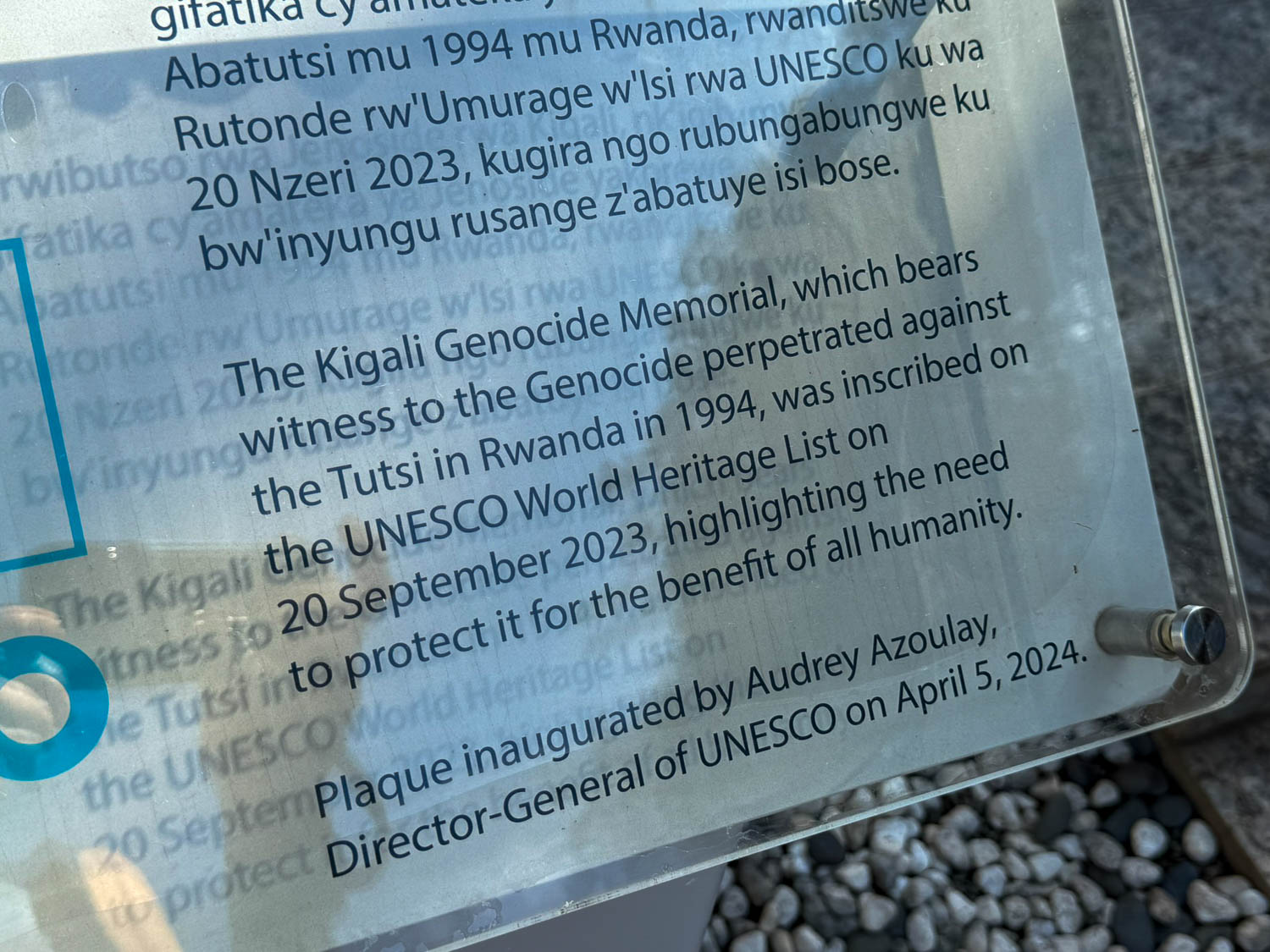
    Whether you’re chasing geothermal wonders, planning a serene lakeside escape, or diving deep into global environmental narratives, Lake Kivu has a story worth discovering.

    Note: We’ve also written an in-depth article on things to see and do in and around Lake Kivu – make sure to check it out!


    Quick Tips

    Lush green hills surrounding Lake Kivu in western Rwanda
    The lush green hills that surround Lake Kivu, Rwanda

    Here are some insider tips to help you make the most of your visit to Lake Kivu, Rwanda.

    • Lake Kivu sits within the Albertine Rift in western Rwanda, surrounded by mountains, fault lines, and active volcanoes.
    • Lake Kivu is one of only four lakes in the world that can experience a rare limnic eruption.
    • Constant monitoring of the lake means the risk for such an eruption is currently very low.
    • Swimming, boating, and other watersports are safe on Lake Kivu’s surface.
    • Lake Kivu’s methane gas is currently being harvested through various sustainable energy projects.
    • Enjoy a speedboat ride from Kibuye to see the unique floating methane gas extraction platform.
    • Lake Kivu supports a major fishing industry within Rwanda, with sardines and tilapia amongst the most important catches for local communities.
    • Other wildlife abounds within and around the lake, including birds, mammals, invertebrates, reptiles, amphibians and plants, each depending on the lake’s ecosystem for survival.
    • Various conservation groups are actively working to protect and preserve Lake Kivu’s delicate ecosystem.

    Follow these tips and you’ll be ready to visit Lake Kivu, Rwanda!


    Plan Your Trip

    Scenic view of Lake Kivu with calm waters hiding deep geological activity
    It’s hard to believe the dangers that lie beneath the waters within this stunning scene

    Some links below may earn us a small commission at no extra cost to you. We’re truly grateful for your support, as it allows us to continue sharing meaningful travel experiences and practical travel insights with you. Read our full disclosure here.

    Planning your visit? We’ve gathered recommended tours and activities, along with trusted travel tools, to help you explore with confidence and ease.

    Tours & Experiences


    Prefer additional options? Click below to discover more incredible experiences tailored just for you!

    Browse top Attractions and Activities in Rwanda.


    Travel Essentials

    Planning the rest of your trip? These are the platforms we personally use when organizing our travels. For more planning tools, visit our Travel Resources page or browse current promotions on our Travel Deals page.


    The Science and Geology Behind Lake Kivu’s Mystery

    Local boatman heading out across Lake Kivu waters in Rwanda
    A lone local boatsman heads out on Lake Kivu’s waters

    A Lake Born of Fire and Rift

    The Albertine Rift is the western branch of the East African Rift Valley. It’s here you’ll find one of the most geologically active areas on earth, where tectonic plates continue to shift, and have reshaped the landscape over millennia.

    Lake Kivu lies within the Albertine Rift, occupying its own rift basin, surrounded by mountains, fault lines, and active volcanoes – including the infamous Mount Nyiragongo. Unlike the majority of lakes on our planet, Lake Kivu is one of only four lakes in the world capable of experiencing rare, catastrophic limnic eruptions (the other three are Lake Nyos and Lake Monoun (both in Cameroon), and Lake Albano (in Italy, just southeast of Rome)): these events involve the sudden release of dissolved carbon dioxide and methane from within the deeper layers of the lake. The fear for human settlements lies in the silent build-up of these gases, which could – under the right conditions (for example, an earthquake or other volcanic activity) – become unstable, releasing large amounts of deadly gases into the atmosphere in a single, explosive moment (sounds intense, we know!).

    What Makes Lake Kivu So Different To Other Lakes?

    Okay, so we know Lake Kivu is susceptible to limnic eruptions, separating it from most other lakes on earth. But what does this really mean?

    Lake Kivu has an average depth of 220m (722ft). Its deep waters are naturally stratified (that is, the water within the lake can separate into distinct layers with different properties), trapping carbon dioxide and methane into cubic miles of pressure beneath the surface. Unlike the short rains and seasonal changes that stir shallower lakes, Lake Kivu’s depth and geothermal features create a long-term separation of these stratified layers. Add volcanic hot springs, organic matter, and sediment from erosion, and you have the perfect ingredients for gas accumulation.

    Scientists from the University of Minnesota Duluth, including Belarusian limnologist Sergei Katsev, have studied this unusual balance extensively. Their work, along with institutions that include the Swiss Federal Institute of Aquatic Science and Technology (Eawag), helps monitor the gas concentrations within Lake Kivu, including tracking any potential signs of instability.


    The Risk Factors: Should You Be Concerned?

    Fishing nets on Lake Kivu with underlying methane gas layers in Rwanda
    Deadly gases lie just beneath these all-important fishing nets (Lake Kivu, Rwanda)

    Understanding Limnic Eruptions and Gas Release

    A limnic eruption – as rare as they are – could, in theory, displace the oxygen in the air (because dissolved carbon dioxide is heavier than air), spreading across the land, and in turn suffocating wildlife and people caught anywhere in the path of this deadly gas cloud – including along the lake’s shores.

    The Risk to Locals and Visitors

    This being said, experts emphasize that the current risk for such an eruption at Lake Kivu is low, due mainly to consistent monitoring and controlled methane extraction projects. This explains the ongoing stench of methane gas we noticed at several points along the lake’s shoreline!

    The Rwandan government, in conjunction with international scientists, are working to avoid any compromise of safety to local communities and visitors within the Lake Kivu region. Surveillance systems are constantly recording the depths, temperature, and pressure at the bottom of the lake to predict any potential gas release. The primary possible triggers for an eruption are a landslide, earthquake, or a volcanic eruption within close proximity to the lake (or indeed within the lake itself).


    KivuWatt and the Promise of Renewable Energy

    Communities around Lake Kivu relying on fishing and local resources in Rwanda
    Lake Kivu holds immense value for the surrounding communities

    Projects that include the KivuWatt Project are leading the charge in a power generation initiative that is turning Lake Kivu’s methane into clean energy. First envisioned by South African engineer Philip Morkel (the Founder and CEO of Hydragas Energy) many years ago, this project extracts methane from the lake, transports it via submerged pipeline to an onshore power plant, converts it to electricity, and then returns degassed water to the lake to ensure balance is maintained.

    Insider tip. Interested in seeing the large, unique floating gas extraction platform on Lake Kivu? It’s located less than 14km (8.7mi) from the shore of Kibuye and can be reached by a 20-minute speedboat ride from the shore.

    Fun fact. The onshore power plant provides a significant amount of electricity to the Rwandan grid. The first phase generated 26MW of electrical power, with aspirations to produce electricity on an even grander scale.

    Another fun fact. The extracted gas from Lake Kivu was once used to fuel boilers at the Bralirwa Brewery in Gisenyi, a town on the north shore of the lake, and the second largest city in Rwanda.

    Whilst this may sound like a project in commercial exploitation, it’s actually a vital solution. This unique project is, in essence, turning a potential environmental hazard into a source of renewable energy – and, in turn, helping to mitigate the risk of a potential natural disaster through limnic eruption. The gas extraction prevents pressure build-up and repurposes the gas as a renewable energy source, reducing regional reliance on fossil fuels and stabilizing the country’s electrical grid.

    Whilst some expansions of the KivuWatt project remain on hold at this time due to fluctuating demand, small scale projects continue to contribute meaningfully to energy stability in the region.


    Climate Change, Population and Environmental Concerns

    lake kivu fishing industry rwanda
    Lake Kivu is the largest local source of fish for Rwanda

    Like many ecosystems across Africa, Lake Kivu is also under pressure from climate change, population growth rates, and unsustainable development. The shores of Lake Kivu have some of the highest population densities in Africa, with almost 6 million people relying directly on the lake for their livelihoods. Lake Kivu is the largest local source of fish for the country, and a key energy source for the region (thank you, smelly methane gas!).

    Intensive agriculture and deforestation (including the introduction of eucalyptus trees), together with poor land management, have caused soil erosion and sedimentation. In turn, heavy rains contribute to rivers carrying more debris into the lake, altering its fragile chemistry. The deciduous evergreen forests around Lake Kivu also face threats from expanding farmland and development.


    The Economic and Ecological Importance of Lake Kivu

    Plant biodiversity around Lake Kivu with lush vegetation and natural habitat
    There are over 140 plant species in and around Lake Kivu

    Beyond its geological fame, Lake Kivu holds immense value for the surrounding communities. The lake’s fish populations support a vibrant fishing economy, with locals harvesting over 21,000 tons (that’s more than 19 million kilos!) of fish annually. The most common catch from the lake are Lake Kivu sardines (an introduced species, caught using lift nets), Nile tilapia (caught using gill nets), and Kivu giant catfish.

    Other wildlife abound within and around the lake, including birds (the wider region is home to over 400 different species, whilst Lake Kivu itself has a recorded 80 species), mammals (including endemic rodents and various squirrel species), invertebrates (over 50 different species), reptiles (lots of beautiful snakes!), amphibians (including the Kivu Clawed Frog – that’s right folks, you heard it correctly … a frog with claws!), and plants (just over 140 species) – each depending on the lake’s ecosystem for survival.


    The Ongoing Role of Science and Conservation

    Conservation efforts protecting the ecological balance of Lake Kivu in Rwanda
    Conservation efforts are critical in maintaining Lake Kivu’s delicate ecological balance

    The effort to actively protect Lake Kivu continues through the work of organizations that include the Lake Kivu Advisory Group, the Albertine Rift Conservation Society, and the Living Lakes Biodiversity and Climate Project. The restoration activities performed by these all-important institutions – particularly in the Koko River basin (the Koko River in Rwanda’s Rutsiro District is a major inflow to Lake Kivu) – focus on the intersection of biodiversity, community needs, and long-term resilience.

    Weekly monitoring and scientific analyses of the lake are used to examine Lake Kivu’s dynamics, optimize gas extraction efficiency, and ultimately ensure the lake’s stability is maintained. As more data becomes available from additional profiles and further studies, international bodies can better assess how climate change and gas harvesting affect the critical ecosystem found within, and around, Lake Kivu – as well as ecosystems similar to it.

    Ongoing research and monitoring, including that carried out by the aforementioned organizations, are a testament to what can happen when science, local leadership, and sustainable development come together as one. The hope is that Lake Kivu will remain not just safe, but also a global model for the balancing of technological advancement, economic development, and natural preservation.


    Things to See and Do Around Lake Kivu

    Relaxing lakeside setting in Kigufi along Lake Kivu in Rwanda
    Ready to relax by Lake Kivu (Kigufi, Rwanda)

    The shores of Lake Kivu provide plenty of activities for visitors during their time in the region. We’ve written an in-depth article on things to see and do in and around Lake Kivu, which provides a more detailed overview of the following:

    • the old colonial mansions that adorn the resort town of Gisenyi (Rubavu)
    • peace and quiet in Kibuye (Karongi)
    • boat rides (why not take a boat ride out to Napoleon Island, known for its large fruit bat population?)
    • water sports
    • swimming (see more below on this…)
    • fishing
    • natural hot springs
    • hiking (including along a section of the Congo Nile Trail)
    • local markets
    • lakeshore hotels and trendy bars
    • relaxation and simply taking in the stunning views
    Congo Nile Trail along the eastern shores of Lake Kivu in Rwanda
    The Congo Trail runs the full length of Lake Kivu’s eastern shores

    There’s plenty to help fill more than a day or two on the shores of Lake Kivu: in this fascinating part of Rwanda you’ll receive a recipe for low-key adventure, even as geothermal science churns below.

    Is It Safe to Swim in Lake Kivu?

    Small beach along the shores of Lake Kivu in Kigufi Rwanda
    One of many small beaches along the shores of Lake Kivu (Kigufi, Rwanda)

    This is one of the biggest questions – and, perhaps even fears – visitors have when visiting Lake Kivu. I mean, it’s a very legitimate question, right? Considering all you’ve just learnt about the geothermal gases bubbling right below the surface – gases that could potentially explode at any given moment…

    But fear not, fellow travellers, you can absolutely swim in Lake Kivu! And indeed we did, several times. The surface of Lake Kivu is entirely safe for swimming, boating, and other water-based recreational activities. The danger lies in its deep, stratified layers — which isn’t where you’ll need to venture any way!

    And okay, so yes, there are several different species of reptiles found within Lake Kivu’s vibrant ecosystem – six in total, to be precise, including bitis nasicornis (a viper snake, which Beck thinks is truly beautiful, but Mike isn’t so sure…), various amphibians and invertebrates … but don’t worry, there aren’t any crocodiles anywhere near Lake Kivu!

    Insider tip. If you do choose to swim in the lake, make sure you’re heeding local advice on currents. We wouldn’t want anyone to be dragged away by an unforeseen current and taken further out (or down) as is safe.

    Final Thoughts

    Calm waters of Lake Kivu near Kigufi in Rwanda
    The calm waters around Kigufi, Lake Kivu (Rwanda)

    The magnificent body of water that is Lake Kivu is more than a scientific curiosity or an environmental case study: it’s a lifeline, a legend, and a legacy in motion. It is also an essential player in the future of Africa’s energy production, a haven for biodiversity, and a place where the natural world and human innovation are learning to coexist.

    If you are considering visiting Lake Kivu, know this: the lake’s surface is serene, the communities are welcoming, and the experience in and around the lake is unforgettable. Whether you’re soaking in hot springs, exploring the shores of old colonial towns, sipping cool drinks beneath swaying palm trees, or simply marveling at the lake’s beauty, you’re stepping into one of the most unique environments on earth.

    So to answer the big question? Yes, Lake Kivu is safe to visit. Sure, Lake Kivu might erupt one day … and there’s a fragile balance between harnessing potentially deadly methane gases for good and protecting local communities … but it’s also here that you’ll find a country dedicated to building a model of resource utilization and risk management, aimed at turning a potential hazard into a sustainable energy source and a strong driver of economic development in the area.

    Just as we did, don’t be afraid to head out west from Kigali to the stunning Lake Kivu – just make sure to pack your curiosity and your camera, and get ready to experience a place where adventure, science, and serenity meet in harmony.


    FAQs

    Is Lake Kivu safe to visit?

    Yes, Lake Kivu is considered safe to visit. The lake is continuously monitored by scientists and authorities, and current conditions make it safe for travelers to enjoy activities like swimming, boating, and lakeside stays.

    Is it safe to swim in Lake Kivu?

    Yes, it is safe to swim in Lake Kivu. The lake’s surface waters are stable and widely used for swimming and recreation, with no crocodiles and minimal risk when following local guidance.

    Can Lake Kivu erupt or explode?

    Lake Kivu is one of a few lakes in the world capable of a rare limnic eruption, but the risk is currently very low. Ongoing monitoring and methane extraction projects help maintain stability and reduce any potential danger.

    Why does Lake Kivu contain methane gas?

    Lake Kivu contains methane gas due to its volcanic geology and deep, layered waters. Natural processes trap gases beneath the surface, which are now safely managed and even used as a renewable energy source.

    What precautions should travelers take when visiting Lake Kivu?

    Travelers should follow standard local advice, especially when swimming or boating, and stay informed through guides or accommodations. Beyond that, visiting Lake Kivu is no different from enjoying any major lake destination.


    Explore More Of Rwanda

  • Akagera National Park: A Must Visit When In Rwanda

    Welcome to one of Africa’s most awe-inspiring wildlife destinations — Akagera National Park. If Rwanda is on your travel radar, then make no mistake: this remarkable national park – one of four national parks within the boundaries of this wee African nation – belongs at the top of your itinerary.

    Located in the eastern region of Rwanda, bordering Tanzania, Akagera National Park is the country’s last remaining refuge for savannah-adapted species, and the largest protected wetland in Central Africa. Today it abounds with diverse ecosystems (think rolling highlands, vast plains, and swamp-fringed lakes) and rich wildlife (think everything from the Big Five to giraffes, from Pumbas to zebras, and from Impala to over 500 bird species), offering visitors a variety of experiences that include game drives, boat safaris, and bird-watching. In fact, Akagera is known for being one of the best locations in East Africa for a safari.

    From the thrill of spotting the Big Five (lions, black rhinos, buffalo, leopard and elephants) on a full-day game drive, to cruising past pods of wading hippos on a boat trip across Lake Ihema, Akagera National Park is a feast for the senses. This 1,122 square-kilometer (433 sq mi) national park is also a place where the conservation story isn’t just moving — it’s transformative. Indeed, Akagera’s inspiring conservation narrative is what sets it apart from so many other parks throughout the African continent (don’t worry, we’ll get to all this a little later on…).

    Let’s jump aboard a jeep, complete with driver and guide (sometimes one and the same!), strap our binoculars around our necks, and see what all the fuss is about!


    Quick Tips

    Close-up of a zebra in Akagera National Park, Rwanda
    Close-up of a zebra in Akagera National Park, Rwanda

    Here are some insider tips to help you make the most of your visit to Akagera National Park, Rwanda.

    • The best time to visit Akagera National Park is during the dry season.
    • The park is open daily from 6am to 6pm.
    • The cost for foreign visitors is US$100 per day for adults and US$50 per day for children aged 6-12.
    • Entry to the park is through the southern gate; exit from the park is through the northern gate.
    • Most visitors spend a full day in Akagera, but overnight stays are encouraged.
    • There are numerous accommodation options available within the park boundaries, with something to fit every budget and preference.
    • Ensure you pack all the essentials for a safe and comfortable stay in the park, including food and appropriate clothing.
    • Akagera is home to an astounding variety of wildlife, including over 8,000 large mammals, several primate species, and over 500 bird species.
    • The park is made up of a complex mix of savannah, grasslands, wetlands and woodlands.
    • Activities within the park include guided game drives, boat safaris, fishing and hiking.
    • Participating in cultural activities in and around the park help to support local communities.
    • Akagera National Park places a strong emphasis on conservation, sustainability initiatives, and local community engagement: play your part to help support these efforts by practicing sustainable tourism.

    Follow these tips and you’ll be ready to visit the Akagera National Park!


    Plan Your Trip

    Impala in Akagera National Park during a wildlife safari in Rwanda
    Inquisitive, graceful impala (Akagera National Park)

    Some links below may earn us a small commission at no extra cost to you. We’re truly grateful for your support, as it allows us to continue sharing meaningful travel experiences and practical travel insights with you. Read our full disclosure here.

    Planning your visit? We’ve gathered recommended tours and activities, along with trusted travel tools, to help you explore with confidence and ease.

    Tours & Experiences


    Prefer additional options? Click below to discover more incredible experiences tailored just for you!

    Browse more top tours and experiences in Akagera National Park.


    Travel Essentials

    Planning the rest of your trip? These are the platforms we personally use when organizing our travels. For more planning tools, visit our Travel Resources page or browse current promotions on our Travel Deals page.


    A Brief Overview and Abbreviated History

    Wrought iron mural at Imigongo Art Center in Kayonza, Rwanda
    Wrought iron mural (Imigongo Art Center, Kayonza)

    Located on the eastern boundary of Rwanda, Akagera National Park is a relatively small park at just over 1,122 square kilometers (433 sq mi) – but it sure does pack a powerful punch!

    Boasting unmatched biodiversity across its savannah plains, papyrus-lined swamps, and large network of lakes, the park’s name hails from the sinuous bends of the 597km-long (371-mile) Akagera River (also known as Kagera River or Alexandra Nile) as it flows through eastern Rwanda, and ultimately forms the border with Tanzania before emptying into Lake Victoria. The Akagera River is incredibly important for the national park, helping to nourish the land year-round.

    Founded in 1934 by the Belgian colonial government, Akagera is one of the oldest protected areas in the region. Decades later, following the Rwandan Genocide in the mid 1990s, many refugees returned to the area and settled within the park boundaries, leading to significant habitat destruction and a decline in wildlife populations. As a result, the park was significantly reduced in size in 1997 – from its then 2,500 square kilometers (1,553 sq mi) to its much smaller size today – in part to accommodate returnees and their livestock, ultimately reallocating a significant portion of the park’s land for resettlement. Despite these changes, the heart of the park endured.

    Lake Shore Road near the Tanzania border in Akagera National Park, Rwanda
    Lake Shore Road, near the border with Tanzania (Akagera National Park)

    The real turning point for Akagera, however, came in 2009, when African Parks signed a joint management agreement with the Rwanda Development Board. A year later, the Akagera Management Company was created, with its main objectives being to improve management of the national park, restore dwindling wildlife populations, promote sustainable development and conservation, strengthen community ties and drive local economic improvement, and enhance the park’s international profile.

    Over the years, Akagera has certainly faced its fair share of challenges, from poaching to additional refugee resettlement. However, within the past decade the park has seen far more successes than setbacks: the reintroduction of certain species (including lions and rhinos), community-based initiatives, and a thriving tourism industry. As a result, and through positive, ongoing governance from the Akagera Management Company, Akagera National Park is today one of the African continent’s leading models of wildlife conservation, community integration, and eco-tourism success.

    Planning Your Visit

    Southern gate main entrance to Akagera National Park in Rwanda
    The southern gate: main entrance to Akagera National Park

    Entering and Exiting the Park

    Akagera has two main gates: the southern gate (also known as the Giraffe Gate or Mutumba Gate) and the northern gate (also known as the Nyungwe Gate). The official entrance to Akagera National Park is through the southern gate, and you’ll find the park headquarters just a couple of miles beyond this entrance. The park headquarters is your best starting point for organizing a park guide (if you haven’t already arranged one through a tour company in Kigali), permits, and other logistics: you’ll receive a warm welcome and brief introduction to the park from here. The northern gate is used for exiting the park.

    Opening Hours

    Akagera National Park is open daily from 6am to 6pm (that’s right, you can even visit on Christmas Day!). Visitors are welcome to explore the park in their vehicles at their own pace during this time.

    If you’re planning a boat trip on Lake Ihema, these can be pre-arranged and have specific, scheduled departure times (early morning, mid morning, afternoon and sunset).

    Entrance Fees

    Akagera National Park entry fees vary, based on age, citizenship, and residency. Unfortunately, international visitors must be prepared to pay a much higher price than locals:

    • Rwandan citizens and citizens of East African countries: US$16 per day for adults, US$11 per day for children aged 6-12
    • Rwandan residents and residents of East African countries: US$50 per day for adults, US$30 per day for children aged 6-12
    • All other visitors: US$100 per day for adults, US$50 per day for children aged 6-12

    Insider tip. Visiting the park is free for children under the age of 6.

    Insider tip. Entrance fees are not charged beyond 3 nights, for up to one week (that seems like a bargain to us!).

    Other activities within the park may have separate, additional costs associated with them. These may include, but not be limited to, game drives, safari vehicles, boat cruises, guides, accommodation, food, water and souvenirs.

    Male elephant protecting his herd in Akagera National Park during a wildlife safari in Rwanda
    A male elephant protects his herd from potential predators (Akagera National Park)

    Insider tip. If you book a group or private tour to Akagera National park from Kigali, be sure to confirm with the tour operator exactly what the price includes. Most tours will include a guide, driver, appropriate vehicle, fuel, and the guide and/or driver’s entrance fee. Be sure to factor in the actual entrance cost to Akagera on top of the overall tour price.

    Insider tip. You will pay your entrance fee at the park headquarters, a few kilometers inside the park, once you’ve gone through the main entrance. Note that cash is not accepted, so make sure you’re carrying with you a valid credit card.

    When Should I Visit?

    Muddy road conditions during the wet season in Akagera National Park, Rwanda
    During the wet season, roads are often closed due to unsafe driving conditions

    Dry Season

    The best time to visit Akagera National Park is during the dry season, which typically runs from June through September. During these drier months, the skies are clear with bright sunshine, and the park’s terrain is easy to navigate. This time of year also affords visitors the most favorable wildlife viewing conditions, for this is when you’ll find a larger concentration of animals gathering around water holes, as well as less-dense vegetation throughout the park. This time of year also provides the opportunity for additional outdoor activities.

    Wet Season

    The region’s wet (or “rainy”) season – which runs from October through May – typically brings heavy rains, lush scenery, abundant birdlife, and lower prices, but it can also make driving through the park more challenging. When we visited Akagera in May, some of the roads were still closed due to muddy, boggy dirt roads. Wildlife viewing can also be challenging during this time due to dense, overgrown vegetation.

    Insider tip. The altitude and temperate climate of Akagera National Park means the temperature remains moderate year-round. Consider dressing in layers, starting with a light jacket in the early morning hours, or even warmer layers if you plan to spend a night or two in the park.

    How Long Should I Spend in the Park?

    Impala blocking the road near Lake Rwanyakazinga in Akagera National Park, Rwanda
    Impala road block! (Lake Shore Road near Lake Rwanyakazinga)

    Only a few hours’ drive from Kigali, Rwanda’s vibrant capital, most visitors spend a full day in Akagera National Park, generally on a private or group safari (game drive). However, overnight stays in the park are possible, and afford visitors more time to explore, unwind, and see the most elusive of the Big Five (the beautiful African leopard).

    Whilst one-day trips (which we undertook) are certainly feasible, they are a long day (we’re talking 12-16 hours if you’re starting and ending in Kigali) and provide more of a “rushed glimpse” of what the park can truly offer. Multi-day safaris are possible, permitting visitors the opportunity for additional activities (for example, boat rides and nocturnal safaris).

    Insider tip. For the most rewarding experience in Akagera, and for the opportunity to truly appreciate all the park has to offer, consider staying overnight for at least two nights. This permits a full day of exploring the park, complete with wildlife viewing in sections of the park many visitors never have a chance to see.

    When considering how long you wish to spend in Akagera, you may also wish to factor in how many activities you want to undertake (more activities will obviously require more time in the park!), as well as your budget (more activities and overnight stays will obviously cost more!).

    Insider tip. Multi-day safaris, although overall more expensive, may ultimately offer visitors more bang-for-your-water-buck (yes, pun intended!), providing you a solid balance of cost and overall experience – especially as entrance fees to the park are not charged beyond 3 nights, for up to one week.

    What Should I Pack for My Visit to Akagera?

    Safari guide checking visitors in near the southern gate of Akagera National Park, Rwanda
    Our guide checks us in near the southern gate (Akagera National Park)

    We recommend packing the following for your time in Akagera, whether you’re staying for a day or five days:

    • small waterproof backpack
    • light, breathable clothing
    • opt for cotton or linen fabrics, especially during the hotter months
    • consider wearing long sleeves and long pants to protect against the sun, thorns, and potential insect bites
    • neutral colors are recommended
    • opt for cotton or linen fabrics, especially during the hotter months
    • consider wearing long sleeves and long pants to protect against the sun, thorns, and potential insect bites
    • neutral colors are recommended
    • sturdy, comfortable, closed-toe walking shoes or hiking boots (if you have waterproof ones, even better!)
    • poncho or rain jacket (especially if you’re planning to visit during the rainy season)
    • insect repellant
    Tsetse fly traps used for insect control in Akagera National Park, Rwanda
    Tsetse fly traps are spread throughout the park (Akagera National Park)

    Insider tip. The black flies in Akagera are nasty little things! Whilst these particular flies are harmless enough (unlike the more prevalent, and more dangerous, Tsetse fly), they can be a nuisance indeed, and their bite is quite painful! Protect yourself throughout the day from these flies, as well as other insects, with a strong insect repellant. Visitors are especially susceptible to insect bites during boat rides across the lakes within Akagera.

    • sunscreen, a hat and sunglasses (that African sun sure can get hot! – some sort of protective eyewear is also essential to protect your eyes from dust)
    • hand sanitizer
    • binoculars
    • an adequate camera (or smartphone with decent camera and filming capabilities)
    • portable charger for your phone
    • extra memory cards and batteries for your camera
    • snacks

    Insider tip. You can take into the park as much food as you want – so long as you either consume it all whilst in the park or carry out any leftovers with you (no feeding the wildlife!). We recommend high-energy snacks.

    • a non-recyclable water bottle (for example, one made of glass or a Nalgene/Yeti)
    No single-use plastic bottles policy in Akagera National Park, Rwanda
    Single-use plastic water bottles are banned within the confines of Akagera National Park

    Insider tip. With a strong focus on reducing plastic waste (did you know that plastic bags have been banned in Rwanda since 2008?), plastic water bottles are not permitted in Akagera. Take with you a reusable water bottle for your visit: free water refills are available at lodges and camps, and for a small fee (1,000 Rwandan francs at the time of our visit) at the Mihindi Cafe, near Lake Mihindi, in the far north-east of the park.

    Insider tip. If you plan to do some hiking during your time in Akagera, you may wish to also consider packing gardening gloves. These come in very handy to help push back branches and other overgrown tundra, clearing a path and protecting your hands.

    For comfortable and enjoyable overnight stays in the park, you may also wish to consider packing the following:

    • warm sweater or heavier jacket (excellent for the cooler evenings!)
    • first aid kid (hopefully your tour operator, if you’re using one, is also carrying one of these – but don’t rely on it being fully stocked or carrying some of the more “uncommon” items like pain relievers or antiseptic wipes)
    • quick-drying clothes, including socks and underwear
    • swimsuit (if your accommodation has a swimming pool)
    • sandals or another change of shoes (for relaxing at your accommodation)
    • travel pillow
    • earplugs
    • flashlight or headlamp
    • electrical adaptor (Rwanda uses plug types C and J)
    • personal medications and toiletries
    • wet wipes

    No matter how long you plan to stay in the park, also consider carrying with you cash (in local currency), credit cards, and your passport or other ID. And never forget to pack your sense of adventure!


    Wildlife Within the Park

    Masai giraffe mother and calf in the northern region of Akagera National Park, Rwanda
    An adult female Masai giraffe and her calf near the northern end of the park

    Animals

    Akagera National Park is home to an astounding variety of wildlife, including over 8,000 large mammals. It’s here in Akagera you can spot lions, buffalo, Defassa waterbucks, leopards, zebras, elephants, warthogs, and 11 different species of antelope. You also have an excellent chance of seeing endangered species that include eastern black rhinos, southern white rhinos, and Masai giraffes. Without question, Akagera National Park is one of the best places in East Africa to see the Big Five (we saw four of the Big Five, which we didn’t think was too bad! – next time we’ll go on a night safari, for a greater chance of spotting the elusive leopard…).

    Olive baboon near Lake Ihema in Akagera National Park, Rwanda
    Olive baboon near the shores of Lake Ihema (Akagera National Park)

    Akagera is also home to five primate species: vervet monkeys, olive baboons, blue monkeys, greater galagos, and the lesser galagos (also known as bush babies or nagapies).

    Insider tip. For the best chance of seeing bush babies, make sure to partake in an evening safari or night drive through the park.

    Birds

    Birdlife is also abundant in Akagera, with the park boasting over 500 different recorded bird species. Throughout the park you’ll have the chance to spot raptors, wetland birds, and various migratory species, including the endangered Papyrus Gonolek and the rare Shoebill Stork. The park is also home to endemic species that include the Arnot’s Chat and the Sauza’s Shrike (what a fun name!). Akagera National Park is most certainly a haven for birdwatchers!


    Flora: A Variety of Unique Plant Life

    Zebra near Gasumbashyama Road in Akagera National Park, Rwanda
    Zebra near Gasumbashyama Road (Akagera National Park)

    Nature is in full bloom in Akagera National Park. The landscape shifts seamlessly from open plains in the north to woodland savannah and lakes in the south, with its diverse vegetation contributing to the park’s rich biodiversity. The complex mix of savannah, grasslands, wetlands and woodlands also helps provide habitats and ongoing food sources for the park’s abundant wildlife.

    Within Akagera you’ll come across fig trees, acacia trees, mahoganies, ebony, the striking and iconic baobab … and most tree species in between! Akagera’s plant life is almost as diverse as its animals.

    Insider tip. The papyrus swamps form a vital part of Akagera’s ecosystem. These swamps form a large wetland area, with interconnected lakes and rivers, and are visually stunning. Make sure to look out for these tall, reed-like native plants and the incredible abundance of water birds that live within them!

    Adult female Masai giraffe in Akagera National Park, Rwanda
    Adult female Masai giraffe (Akagera National Park)

    Insider tip. Keen to see herds of wild zebras, antelopes and buffalo? Head for the savannah grasslands, where these grazing animals like to congregate. Pods of semi-submerged hippos more your thing? Head for the park’s wetlands, particularly the edges of Lake Ihema.

    Fun fact. The acacia woodlands within Akagera are well-suited to the park’s semi-arid conditions and afford herbivores in particular decent shade and food sources.

    Akagera is also home to several rare and threatened plant species, including the bright yellow Nile Tulip or Nile Trumpet (Markhamia lutea) and the Guinea Eulophia or broad-leaved ground orchid (Eulophia guineensis).

    Insider tip. Keep your camera at the ready — the exceptional views throughout the park and its ever-changing flora make Akagera a photographer’s dream!


    Activities Within the Park

    Zebras grazing along a safari road in Akagera National Park, Rwanda
    Zebras grazing along a roadside in Akagera National Park, Rwanda

    Akagera National Park affords visitors the opportunity to partake in numerous activities, the majority of which are best enjoyed during the dry season.

    Game Drives

    Guided game drives (or safaris) are the most common way to experience the best of Akagera. Nothing beats a safari in an open-top vehicle through the savannah, constantly on the look-out for lions, black rhinos, and the occasional serval cat or leopard. Be prepared to get up early if you’re heading to the park directly from Kigali for your game drive – our guide and driver picked us up from our accommodation at 4am!

    Insider tip. Looking for something unique? Consider joining a night game drive, which offers visitors a glimpse of the park’s nocturnal wildlife. You might even see some bush babies, jackals, and leopards!

    Safari guide assisting visitors during a wildlife experience in Akagera National Park, Rwanda
    Hiring a qualified guide will make all the difference to your time in the park!

    Insider tip. It is highly recommended to book a guide for game drives, as well as a driver. Local guides – often commissioned from within the local community surrounding the park – are generally well-trained and can help provide for visitors a more enriching, informative experience. These guides enhance wildlife spotting through expert knowledge, by offering valuable insights into the park’s history, culture and ecology, and by ensuring you a safe and comfortable visit.

    Boat Safaris

    Submerged hippos in Lake Ihema viewed from Rurama Loop in Akagera National Park, Rwanda
    View of submerged hippos in Lake Ihema from the Rurama Loop (Akagera National Park)

    Best enjoyed if you have more than a day within the park’s boundaries, consider taking a boat ride on Lake Ihema (the largest lake within Akagera National Park, and one of the largest lakes in Rwanda) located in the south-east of the park. At Lake Ihema you’re likely to encounter crocodiles and hippos in the water, as well as buffalos and elephants at the water’s edge. The lake is also a birdwatcher’s paradise.

    We highly recommend a boat ride on Lake Ihema if you’re seeking a more tranquil game viewing experience. Your guided boat tour takes place on a motorized vessel, and typically lasts for 1-2 hours. Pre-arranged tours are offered at scheduled departure times throughout the day.

    Insider tip. Whilst there are a total of 10 different lakes within Akagera National Park, the primary focus for boat tours is Lake Ihema.

    Insider tip. You can book a boat safari directly through a local tour operator or at the Akagera National Park headquarters.

    Fishing

    Scenic view of Lake Shakani in Akagera National Park, Rwanda
    Lake Shakani (Akagera National Park)

    Done with your boat tour on Lake Ihema? Why not head next door to Lake Shakani for some sport fishing (indeed the only place in the park where you can partake in this activity!)? Akagera encourages sustainable fishing practices, where visitors can participate in the occasional catch-and-release tournaments, and learn about different fishing methods (gill nets, cast nets, and traditional spear or arrow techniques) as they fish for tilapia and catfish.

    Insider tip. It’s recommended to book any sport fishing activities within Akagera at least six months in advance, especially if you’re considering entering one of the park’s fishing competitions. It’s also recommended you bring your own fishing equipment with you, as supplies within the park can be limited.

    Insider tip. Looking to stay overnight in Akagera? Lake Shakani also boasts a campsite, offering additional (and certainly scenic!) opportunities for relaxation in and near the water.

    You can also fish on Lake Ihema, but if you remember the section above about boat tours on that particular lake, you may recall there are a lot of hippos and crocodiles in and around the water……..you have been warned!

    Insider tip. You’ll need to obtain a fishing permit if you plan to fish within the park’s boundaries. These permits are issued by the Akagera National Park Authority and cost US$25 per person per day (US$15 for children aged between 6 and 12).

    Hiking

    Yes, there may be lions and elephants and crocodiles and the deadly hippos within the boundaries of Akagera, but it’s also possible to hike in this beautiful national park! In fact, the park offers a variety of hikes and nature walks, permitting visitors to explore and experience Akagera’s diverse landscape and wildlife on foot. Through these activities, you may also have the opportunity to interact with local communities.

    Insider tip. Make sure to pack all the appropriate and necessary hiking gear for any walks you choose to undertake.

    Some of the most popular hikes within Akagera National Park include:

    • Walk The Line Tour. This 2-hour guided hike permits visitors the opportunity to walk along the park’s 7km (4.35mi) perimeter fence, offering a unique glimpse into the life of a park fence attendant and insights into the park’s electric fence and its role in park conservation. On this tour you’ll be afforded views of the savannah plains, woodland forests and rolling hills. The tour costs US$30 for adults and US$20 for children, and is led by a community volunteer guide.
    • Primitive Walking Trail. Also known as Trail de Akagera, this 40km (24.9mi) four-day/three-night, self-guided, exploratory hike affords visitors the opportunity for an immersive walking experience within the park, as well as camping under the stars (without tents!). Think of this hike as a “hunter gatherer” experience of the 21st century: you’ll be required to carry with you all necessary gear, including food and water, as this trail traverses remote areas of Akagera.
    • Guided Nature Walks. Shorter guided walks – anywhere from one to three hours – are offered by Akagera park rangers, and provide visitors insights into the park’s flora and fauna. The length of each walk depends upon your own interest (for example, a specific type of wildlife or flora) and fitness level.
    • Multi-Night Walking Safaris. Looking for a more structured experience than the Primitive Walking Trail? Book yourself a multi-day hike, complete with camping equipment provided, and the opportunity to stay overnight at different campsites within the park.

    Cultural Experiences: Supporting Local Communities

    Imigongo Art Center in Kayonza, Rwanda showcasing traditional cultural artwork
    Imigongo Art Center (Kayonza, Rwanda)

    Taking the time to truly experience all that Akagera has to offer visitors isn’t simply about “visiting” the park and trying to spot the Big Five: it’s also about getting to know the people who live around, and work within, it. Consider participating in one of the cultural experiences below, permitting you to engage with local communities and learn about traditional Rwandan customs and the local way of life. In turn, you’ll not only be enriching your own visit to Akagera, but also supporting nearby local communities, contributing to the economic well-being of these communities, and ultimately playing your role in responsible tourism.

    • Guided community tours. Learn about traditional craft-making, sample local foods, gain insight into local customs, and interact with locals living right on the edge of the park itself.
    • Dairy farms. The area surrounding Akagera is a major cattle-producing region and important for dairy production. Visit one of the local communities who earn their living through dairy farming, and learn more about the importance of cattle and milk in the Eastern Province, with the opportunity for hands-on dairy farming activities, including milking a cow!

    Fun fact. The Akagera wetlands are vital for dairy production in the region, with the lakes providing water for cattle, and the fertile land suitable for growing fodder.

    Fun fact. The Eastern Province of Rwanda supplies nearly half the country’s milk.

    • Imigongo Art Center. On your way out to Akagera National Park from Kigali, consider stopping for an early morning coffee and restroom break in Kayonza, at this large cultural center (most tours will stop here!). At Imigongo you’ll find numerous art galleries and large showcase rooms, many featuring the unique Rwandan artform “Imigongo”, where cow dung (yes, you heard that right!) is used to create intricate patterns on wooden boards and other materials. You can even try it for yourself during your visit!

    Fun fact. In recent times – and particularly following the 1994 Rwandan Genocide – Imigongo has become a symbol of resilience and cultural revival.

    • Humure Refugee Village Tour. Located about 40-45 minutes from Akagera National Park, this village was settled by refugees from Tanzania. Stop by the village for a cultural immersion experience of the unique blend of Tanzanian and Rwandan cultures and the community’s way of life: visit local cooperatives and homesteads, enjoy traditional dances and plays, participate in traditional cooking and food preparation, gain insight into cultural practices, and learn about traditional farming methods. Overnight stays can also be arranged.

    Other cultural experiences near Akagera National Park include opportunities to learn about traditional methods of beekeeping and honey-making, and visiting local beer-brewing houses to learn about the production of Rwanda’s traditional banana brew, “urwagwa”.


    Conservation Efforts and Sustainability Initiatives

    Rules and regulations signage in Akagera National Park promoting conservation in Rwanda
    To help protect the national park, ensure you follow all the posted rules and regulations

    Over the years, Akagera National Park has faced numerous challenges, but the resiliency of the park, and the sustained efforts of local communities, has seen it rebound each and every time. Indeed, Akagera is today far more than a beautiful park — it’s a beacon of long-term success in African conservation.

    One of the biggest challenges the park has faced over the years has come from poachers – in particular, the poaching of rhinos, leading to their extinction within the park for a period of 10 years. Invasive species – including the water hyacinth (Eichhornia crassipes) – have also caused issues, spreading rapidly into some of the park’s lakes, often outcompeting native plants for sunlight, oxygen and other nutrients, and in turn drastically altering wetland ecosystems. Human encroachment due to refugee resettlement following human conflict has also led to habitat destruction and wildlife loss.

    Despite these near-devastating challenges, Akagera has made incredible strides in overcoming each of them, in part thanks to a joint management agreement between African Parks and the Rwanda Development Board. The successful reintroduction of endangered species that include lions and black rhinos, together with significant community efforts to combat poaching, has helped to dramatically restore wildlife populations, which in turn has increased tourism – leading to a thriving tourism industry.

    Fun fact. In 1975, a total of 26 young elephants were relocated to Akagera from the Bugesera region of eastern Rwanda. Their relocation was key to (a) addressing human-elephant conflict in the area, and (b) restoring the species within Akagera.

    Female lions resting near Gasumbashyama Road in Akagera National Park, Rwanda
    Female lions just chilling near Gasumbashyama Road (Akagera National Park)

    Fun fact. Thanks to careful reintroduction programs that began in 2015, the current population of lions within Akagera has grown from near extinction to almost 60.

    Fun fact. In 2019, five black rhinos were relocated to Akagera from European zoos: this was the largest-ever translocation of rhinos from the European continent to Africa. In 2021, 30 southern white rhinos were relocated to Akagera from South Africa: at the time, this was the largest rhino translocation in history. Four years later an additional 70 southern white rhinos were moved from South African to Akagera. This latter relocation – transporting the rhinos over 3,400km (2,112mi) by truck and plane – occurred less than two weeks after our visit!

    Tourism within Akagera National Park doesn’t simply support the park itself — it also helps support local communities surrounding it. Park revenue today funds community guides, local craftsmen and women, schools and other educational initiatives, and health clinics; the park’s fence lines are patrolled by trained fence attendants and anti-poaching units; and solar power, waste reduction, and drinking water projects all help to reduce environmental impact. Local communities are actively involved in these ongoing conservation efforts, contributing further to Akagera’s long-term sustainability.


    Accommodation in Akagera National Park

    Lake Shakani campsite for camping in Akagera National Park, Rwanda
    Lake Shakani campsite (Akagera National Park)

    Looking to stay awhile inside the park? You may wish to consider an overnight stay or two: there are numerous accommodation options available within the park boundaries, with something to fit every budget and preference.

    • For a luxury experience and some extra creature comforts, book a night at the Magashi Camp (located near the northern end of the park), Ruzizi Tented Lodge (a private, comfortable retreat that focuses on sustainability and can host up to 20 guests), or Mantis Akagera Game Lodge (a well-established go-to with spectacular panoramic views of Lake Ihema).
    • Mid-range options within the park include the Akagera Rhino Lodge (a unique eco-tourism experience located at the edge of the park) and Karenge Bush Camp (a true off-grid, charming and scenic bush camp experience, with early-morning access to the Kilala Plains).
    • The most budget-friendly options include the four campsites housed within the park, each offering campers basic facilities in tranquil surroundings: Muyumbu and Shakani in the south, Mihindi in the north-east, and Mutumba in the middle of the park.

    Fun fact. The Muyumbu campsite is situated on a ridge overlooking Lake Ihema and even affords visitors views of Tanzania!

    Insider tip. Stay at the Shakani campsite for the best up-close (but not too close!) viewing of hippos. Stay at the Mutumba campsite – located in the game-rich Mutumba Hills – for the most remote camping experience within the park.

    Insider tip. Although the park’s campsites are open year-round, the best time for camping is during the drier, warmer months (June through September), when the grass (especially around the lake shores) is shorter and wildlife viewing is optimal.

    For an excellent accommodation option near the park (but not within the park’s boundaries itself), consider the Akagera Transit Lodge (a community lodge, about 2km/1.24mi from the park’s main entrance) or the Urugo Eco-Lodge (located about 45 minutes west of the park’s main entrance, and offering simple accommodations as well as dining options, cultural activities and tours).

    Insider tip. Most tour operators can help you coordinate accommodation, as well as private safaris.


    Final Thoughts

    Safari vehicle traveling to Akagera National Park for a game drive in Rwanda
    Safari vehicle on the way to Akagera National Park

    Akagera National Park is a breathtaking mix of spectacular scenery, diverse ecosystems, incredible wildlife, and community-powered conservation. Established in the mid-1930s to protect the vast wetlands and woodlands of the Eastern Province of Rwanda, this once-endangered wilderness now thrives with wildlife and bird species. Without question, this haven for biodiversity and community engagement is a must-visit during your time in Rwanda.

    Over the years, Akagera’s boundaries may have shifted, but its importance has not. The park is now internationally recognized for its resilience, transformation, and conservation innovations: here you’ll discover a more-than-successful, inspiring example of wildlife conservation and restoration that offers real-world benefits. Akagera has created not only a thriving ecosystem, but has also built around it, and within it, strong community engagement that has led to increased employment, revenue-sharing schemes, educational initiatives, infrastructure projects, and other economic opportunities for local communities. Akagera National Park is indeed a symbol of Rwanda’s commitment to protecting Africa’s wild areas and to increasing genuine, grassroots sustainable economic development.

    Whether you’re seeking a soul-stirring journey through Africa’s wild plains, a relaxing day out on Lake Ihema, or a heart-pounding game drive under the stars, Akagera will not disappoint. This wild frontier is not simply one of Rwanda’s national parks — it’s a national treasure. Come for the animals. Stay for the communities.

    What say you? Let’s start planning your visit to Rwanda’s Akagera National Park!


    FAQs

    Is Akagera National Park worth visiting?

    Yes, Akagera National Park is absolutely worth visiting—especially if you’re looking for a classic African safari experience in Rwanda. The park is home to the Big Five, diverse landscapes, and activities like game drives and boat safaris on Lake Ihema, making it one of the best wildlife destinations in East Africa.

    Can you see the Big Five in Akagera National Park?

    Yes, you can see the Big Five—lion, leopard, elephant, buffalo, and rhino—in Akagera National Park. Thanks to successful conservation and reintroduction programs, Akagera is now one of the few places in Rwanda where all five species can be spotted, especially on guided game drives.

    What is the best time to visit Akagera National Park?

    The best time to visit Akagera National Park is during the dry season from June to September. Wildlife is easier to spot as animals gather around water sources, and road conditions are much better for game drives. The wet season offers lush scenery and excellent birdwatching but can make travel more challenging.

    How many days do you need in Akagera National Park?

    Most visitors spend one full day in Akagera National Park, but staying at least 2–3 days is highly recommended. More time allows for multiple game drives, a boat safari on Lake Ihema, and a better chance of spotting elusive wildlife like leopards.

    What can you do in Akagera National Park?

    Top things to do in Akagera National Park include guided game drives, boat safaris on Lake Ihema, birdwatching, fishing, and guided nature walks. Visitors can also take part in cultural experiences with local communities near the park.


    Explore More Of Rwanda

  • Lake Kivu, Rwanda: Top Things To Do and Travel Guide

    Tucked neatly between the towering mountains of western Rwanda and the lush backdrop of the Albertine Rift, Lake Kivu is one of Africa’s Great Rift Valley gems — an enchanting and lesser-known paradise offering a mix of culture, adventure, and serenity.

    This large freshwater lake is as rich in biodiversity and culture as it is in scenic wonder. Whether you’re paddling through its calm waters, exploring different islands that dot its surface, or simply sipping local coffee at a lakeside property, there is no shortage of unforgettable experiences to be had here. If you’re looking to travel with purpose, this is one of those places that captures both the beauty of Rwanda, as well as the soul of East Africa.

    Read on, fellow wanderers, as we guide you through the very best Lake Kivu Rwanda has to offer travelers, drawing on our experience as first-time visitors to Rwanda, and now lifelong admirers of this stunning corner of the globe.


    Quick Tips

    lake kivu plant species
    There are over 140 plant species in and around Lake Kivu

    Here are some insider tips to help you make the most of your visit to Lake Kivu, Rwanda.

    • Lake Kivu is one of Africa’s Great Lakes, shared by both Rwanda and the Democratic Republic of the Congo.
    • Lake Kivu is remarkably deep, with layers of water that trap methane and carbon dioxide, the former currently being harnessed for renewable energy.
    • Rwanda’s dry season (June through September) is the best time to visit, with clear skies, comfortable temperatures, and great conditions for outdoor activities.
    • Gisenyi, Kibuye, and Cyangugu are the main lakeside towns, each with their own personality.
    • Getting around Lake Kivu is easy: take buses, moto-taxis or private taxis, bike or hike, or take a boat cruise to explore the shoreline and nearby islands.
    • Lake Kivu produces over 20,000 tons of fish annually, supporting the livelihoods of more than half a million people in the region.
    • Water sports, including swimming, are popular activities on the lake.
    • Consider a hike along part of the Congo Nile Trail, a visit to the Rubavu Hot Springs or a nearby national park, or simply relax by the lake with a good book in hand.
    • There are plenty of dining options in Gisenyi and Kibuye, and a plethora of accommodation types throughout the region.

    Follow these tips and you’ll be ready to visit Lake Kivu, Rwanda!


    Plan Your Trip

    Stunning views from the restaurant deck at Paradis Malahide, Kigufi
    Stunning views from a restaurant deck on Lake Kivu (Paradis Malahide, Kigufi)

    Some links below may earn us a small commission at no extra cost to you. We’re truly grateful for your support, as it allows us to continue sharing meaningful travel experiences and practical travel insights with you. Read our full disclosure here.

    Planning your visit? We’ve gathered recommended tours and activities, along with trusted travel tools, to help you explore with confidence and ease.

    Tours & Experiences


    Prefer additional options? Click below to discover more incredible experiences tailored just for you!

    Browse top Attractions and Activities in Rwanda.


    Travel Essentials

    Planning the rest of your trip? These are the platforms we personally use when organizing our travels. For more planning tools, visit our Travel Resources page or browse current promotions on our Travel Deals page.


    An Introduction to the African Great Lakes

    Guesthouse with private beach (Kigufi, Rwanda)
    View from our guesthouse with private beach (Kigufi, Rwanda)

    Lake Kivu is one of the most remarkable of the African Great Lakes, nestled on the border of Rwanda and the Democratic Republic of the Congo. What makes it extraordinary is not just its surface area — spanning roughly 2,700 square kilometers (1,042 square miles) — but the unique geological forces at play below its lake bed.

    Lake Kivu sits within Africa’s Great Rift Valley, where tectonic plates slowly drift apart. This shifting earth has created a basin of deep waters, with Lake Kivu ranked the 20th deepest lake in the world by maximum depth (475-480m or 1558-1575 feet, depending on source) and 13th deepest lake in the world by average depth (220-240m or 722-787 feet, depending on source). These deep waters trap massive amounts of methane and carbon dioxide, which are currently being extracted to produce electricity for the region – a growing project central to Rwanda’s economic development.

    You can read more about Rwanda’s concerted efforts at turning a potential environmental hazard (exploding gases) into a source of renewable energy, in another one of our articles, Lake Kivu: Is It Safe To Visit This Beautiful African Haven?


    Lake Kivu’s Geography

    The lush green of Lake Kivu
    The lush green hills that surround Lake Kivu

    Lake Kivu is perched at 1,460m (4,790 ft) above sea level, surrounded by a backdrop of lush green hills, eucalyptus trees, and even fading old mansions from colonial times. On the northern edge of the lake lies Gisenyi (also known as Rubavu), a large town and former colonial beach resort that makes an excellent base for exploration of, and beyond, the lake.

    From here, Lake Kivu’s waters flow southwards into the Ruzizi River, which eventually feeds into Lake Tanganyika, helping to form partial borders between Burundi, the Democratic Republic of the Congo, Tanzania and Zambia.

    Fun fact. Lake Kivu has a unique drainage system: can you believe it actually once drained from south to north? A series of ancient volcanic events (likely some 9,000 to 13,000 years ago, and likely originating from the Virunga Mountains) created a dam on the northern shore: this reversed the lake’s natural outflow, redirecting it from north to south.


    Climate: The Best Time to Visit Lake Kivu

    Lake Kivu after the wet season
    Cloudy but blue skies over Lake Kivu at the end of the wet season

    The Lake Kivu region enjoys a mild climate year-round, with average daily temperatures between 18°C and 22°C (64–72°F).

    The Dry Season

    Rwanda’s dry season runs from June through September, and is ultimately the best time to visit Lake Kivu. At this time of year, roads are in good condition, the weather is favorable (think clear skies, minimal rainfall and warm temperatures), birdlife is active, and it’s an ideal time for water and other outdoor activities that include swimming, fishing, hiking, boat cruises, and exploring the lake’s shores and local communities. There’s also fewer insects during the dry season, helping to make your visit even more comfortable – a huge win, we’d say!

    Insider tip. Are you an avid birdwatcher? Rwanda’s shorter dry season – which generally runs from mid-December through February – is another excellent time to consider visiting, as this is when you’ll have ample opportunity to spot various migratory bird species.

    The Wet Season

    Rwanda’s wet season – which generally runs from October through May (with a short dry spell around the new year) – is lush and scenic, but if you’re a keen hiker (or like to be outdoors in general), it can make trails and sidewalks slippery. That being said, it can also be a great time for cheaper accommodation options, as well as discounted tours within the region.


    Getting Around Lake Kivu

    Consider taking a boat ride with a local fisherman to explore more of Lake Kivu.
    Rent a boat or take a ride with a local fisherman to see more of Lake Kivu

    Without stops, Lake Kivu lies a solid 3 hours directly west of Kigali, Rwanda’s vibrant capital city. We recommend allowing at least 5-6 hours to get there, however, as there’s plenty to see and do along the way!

    Once you’ve arrived at the lake (most visitors will base themselves at Gisenyi, Kibuye or Cyangugu), getting around is surprisingly easy. The Rwandan government has made major improvements to public transportation in the region, helping visitors feel safe and well-supported.

    A scenic road connects these three major towns, offering sweeping views of Lake Kivu and the surrounding hills. If you don’t have your own car (rented or private) during your visit, you can easily use a combination of public and private transportation options.

    • Hire a private taxi.
    • Rent a bicycle.
    • Take short rides on a moto-taxi (we believe this is the fastest and most affordable – and let’s be honest, the most fun! – way to get around).
    • Use public buses to get between larger towns.
    • Rent a small boat or kayak to navigate the lakeshore, and reach hidden beaches and volcanic islands.
    Twegerane bus from Kanama to Gisenyi
    Waiting for a twegerane from Kanama to Gisenyi

    Insider tip. For the most authentic travel experience, hop aboard a local minibus – a public van used as a shared taxi. These minibuses are known as a matatu, or more locally, as twegerane.

    Fun fact. In Kinyarwanda (one of the four official languages of Rwanda), “Twegerane”, literally means “let’s sit together”. Once you board one of these local public minibuses, you’ll soon come to learn how apt a name it is!

    Insider tip. The Congo Nile Trail, a 227km (141mi) trail that traverses the edges of Lake Kivu from top to bottom, affords visitors a fantastic opportunity for cycling.

    No matter which option you choose for getting around, be prepared for a mix of paved and unpaved roads, each of varying quality (though we did find the paved roads to be, in general, of excellent standard). As you venture further from major towns and cities, the roads will generally worsen.


    Local Communities and Culture

    Local community on the shores of Lake Kivu
    A local community on the eastern shores of Lake Kivu

    Roughly two million people live in Lake Kivu’s basin, which spans both the Democratic Republic of the Congo, as well as Rwanda. These communities rely on the lake for fishing, agriculture, and tourism.

    Lake Kivu’s Fishing Industry

    Lake Kivu is the largest local source of fish in Rwanda, yielding over 20,000 tons of fish annually, including several endemic species: the most notable of these is the Kivu Cichlid. Other unique species include the blue-spotted tilapia, the Nile tilapia, and the Lake Tanganyika sardine.

    Local communities rely on Lake Kivu for their income.
    Numerous local communities rely on Lake Kivu for income and sustenance

    Lake Kivu’s fishing industry plays a significant role in supporting the livelihoods of numerous local communities – over half a million people in Rwanda and the Democratic Republic of the Congo rely on it for income and sustenance.

    Fun fact. The Kivu Cichlid is also known as the “pearl of the lake”, and is found nowhere else in the word.

    Various fishing methods on Lake Kivu
    One of many different fishing methods on Lake Kivu

    During your visit you may have the fortune to meet local fishermen preparing nets at dawn, and will no doubt see fishing boats bobbing in the lake’s calm waters at sunset.

    Fun fact. Lake Kivu’s fishermen have a unique method of attracting fish at night: they use gas lights, which create a visually striking scene once the sun goes down!

    Cultural Insights from Lake Kivu

    Learn Rwandan customs and traditions through interactions with local communities on the shores of Lake Kivu.
    Learn more about Rwandan customs and traditions through local communities on the shores of Lake Kivu

    Scattered around the shores of Lake Kivu you’ll find vibrant local communities with rich cultural traditions. Music, dance, and artisan crafts are deeply ingrained in daily life, and visitors can join coffee tours on the neighboring coffee plantations, discovering how local beans are grown, harvested, and roasted.

    Insider tip. Nyamirundi Island, an island in Lake Kivu near Gisenyi, is known for its coffee plantations and its “crop-to-cup” coffee tours.


    Things To Do Around Lake Kivu

    The Congo-Nile Trail
    The Congo Nile Trail runs the length of Lake Kivu

    The shores of Lake Kivu provide plenty for visitors to see and do during their time in the region. From historic attractions to old colonial towns, from natural hot springs to paddle sports, and from hiking trails to boat rides across the lake’s serene surface, Lake Kivu provides a recipe for low-key adventure, even as geothermal science churns below.

    Lakeside Towns Worth Exploring

    Shopping with locals at Gisenyi Market
    Shopping with locals at the Gisenyi Market

    Gisenyi

    Many travelers to Rwanda begin their visit to Lake Kivu in the resort town of Gisenyi (also known as Rubavu) – in fact, it’s a favorite amongst visitors. With its relaxed vibe, lakefront cafes, and panoramic views of the water and surrounding hills, Gisenyi is the perfect place to unwind: walk along the palm-lined beach, rent a kayak, or take a sunset boat cruise.

    Insider tip. Gisenyi makes for the perfect base if you’re also wishing to explore the likes of nearby Volcanoes National Park during your time in Rwanda.

    Kibuye

    Just under 2 hours south of Gisenyi you’ll find Kibuye (also known as Karongi) – and wow, what a stunning drive it is between these two peaceful lakeside towns! Complete with more scenic vistas and tranquil boat rides, the views from Kibuye are breathtaking, and the hospitality from the local people is warm and welcoming.

    Insider tip. From Kibuye you can take a boat out to nearby islands, including Napoleon Island, known for its large fruit bat population.

    Hot Springs and Wellness

    moto-taxi to the Rubavu Hot Springs
    Take a moto-taxi out to the Rubavu Hot Springs

    Back near Gisenyi you’ll find the Rubavu Hot Springs, also known as the Nyamyumba Hot Springs. These volcanic hot springs, right on the edge of Lake Kivu, can be accessed by moto-taxi, boat, or on foot – and a visit here can be wonderfully relaxing! The hot springs can also be one of the most memorable ways to connect with the geothermal nature of the region – especially if you’re not feeling 100% comfortable taking a swim in the lake itself (though it is perfectly safe to do so … we’ll get to that in a bit).

    Many local lodges around the lake also offer spa treatments, yoga, and meditation classes, making Lake Kivu the perfect place to recharge body, mind and spirit.

    Fun fact. The Kubavu Hot Springs are used by locals, as well as visitors, not just for relaxation – they’re also believed to have therapeutic, healing benefits. Take a dip and see what you think!

    Water Sports

    Small beaches along the shores of Lake Kivu, Kigufi, Rwanda
    One of many small beaches along the shores of Lake Kivu (Kigufi, Rwanda)

    If you’re feeling a little more adventurous (yes Beck, we know we’re talking about you!), partaking in some water sports on Lake Kivu might just be your thing! Popular options range from water skiing and kayaking, to sport fishing and paddleboarding, and from canoeing to boat cruises. The calm waters and limited commercial traffic within Lake Kivu make it ideal for first-timers and seasoned water sports enthusiasts alike.

    Local boatsman navigating Lake Kivu
    A lone local boatsman heads out on Lake Kivu’s waters

    Insider tip. Interested in fishing? Perhaps want to dig a little deeper into the Rwandan fishing industry and its deep cultural ties to Lake Kivu? Visitors are welcome to join local fishermen on early morning trips, to learn more about how fish are harvested from the lake’s waters.

    Swimming in Lake Kivu

    Fancy a dip in the lake? We often get asked, “But wait … is it actually safe to swim in Lake Kivu? I mean, considering all that geothermal activity beneath the water? Those gases could potentially explode at any given moment!” This is certainly one of the biggest questions – and, perhaps even fears – visitors have when visiting Lake Kivu. And indeed, it’s a very legitimate question! But fear not, fellow travellers, you can absolutely swim in Lake Kivu! And indeed we did, several times.

    The calm waters of Lake Kivu offer great swimming opportunities.
    The calm waters of Lake Kivu provide excellent swimming conditions near the shoreline

    The surface of Lake Kivu is entirely safe for swimming, boating, and other water-based recreational activities – it’s also clean and calm, especially near Gisenyi and Kibuye. The dangers lie in the deep, stratified layers of the lake’s waters — which isn’t where you’ll need to venture any way!

    And okay, so yes, there are several different species of reptiles found within Lake Kivu’s vibrant ecosystem – six in total, to be precise, including bitis nasicornis (a viper snake, which Beck thinks is truly beautiful, but Mike isn’t so sure…), various amphibians and invertebrates … but don’t worry, there aren’t any crocodiles, and Lake Kivu is predator-free!

    Insider tip. If you do choose to swim in the lake, make sure you’re heeding local advice on currents. We wouldn’t want anyone to be dragged away by an unforeseen current and taken further out (or down) as is safe.

    Hiking and Mountain Biking

    Rent a bike along the shores of Lake Kivu
    Rent a bike and consider pedaling between communities along the shores of Lake Kivu

    Hiking and mountain biking trails wind through Lake Kivu’s nearby hills, offering impressive views of the lake, and up-close encounters with a variety of wildlife. As you’re walking or biking, it’s very likely you’ll encounter a variety of different bird species (the wider region is home to over 400 different species, whilst Lake Kivu itself has a recorded 80 species), mammals (including endemic rodents and various squirrel species), invertebrates (over 50 different species), reptiles (lots of beautiful snakes!), amphibians (including the Kivu Clawed Frog – that’s right folks, you heard it correctly … a frog with claws!), and plants (just over 140 species).

    For bird-watchers in particular, make sure to look out for White-crested Cormorants, Pied Kingfishers, Ospreys, the Spotted Yellow-throated Greenbul, Common Waxbills, Malachite Kingfishers (so pretty!), and the Chin-Spot Batis. Along trails in forested areas, you may encounter Cardinal Woodpeckers, African Pied Wagtails, and Double-toothed Barbet. Beck, who’s not usually into bird-watching, was particularly impressed at the bright colors and beautiful sounds of the birds around the lake!

    The Congo Nile Trail

    During a visit to Lake Kivu, it’s possible to hike part of the Congo Nile Trail, a 227km (141mi) scenic trail that traverses the edges of the lake from top to bottom. Hike it, bike it, or simply wander along a small portion of it – either way, you’ll be afforded stunning views as the trail makes its way through small villages, coffee plantations, and scenic overlooks, offering a truly immersive experience of rural Rwanda.

    Boat Cruises and Island Exploration

    Rent a boat or take a scenic boat cruise
    Rent a boat or take a scenic boat cruise across the lake

    You may wish to consider a scenic boat cruise across Lake Kivu during your visit to the area. Glide across the lake’s calm, emerald waters to explore different islands, including Napoleon Island, famous for its bat colony and panoramic views, and the small Amahoro Island (also known as Peace Island), a tranquil haven for those seeking a piece (see what we did there?) of serenity.

    Fun fact. Lake Kivu is home to some 250 islands: 56 of these islands are located in Rwanda’s portion of the lake.

    No matter which direction you choose to head, each boat ride is a chance to witness the incredible beauty of Lake Kivu. And don’t forget to look up, as African Fish Eagles and Sacred Ibises take flight over the lake, whilst on the lake’s shores you’ll no doubt spot various kingfishers, cranes, herons, and egrets, fishing for food or drying their wings.

    Inside tip. Ask around before boarding just any old boat. You may find boat tours that will not only take you to nearby islands, but also include cultural stops and opportunities to sample fresh grilled fish from local markets. Yum!

    Local Markets and Souvenirs

    Produce for sale at Gisenyi Market Lake Kivu Rwanda
    Prepping produce for sale at Gisenyi Market

    One of Beck’s most favorite things to do when visiting a new place is to wander through the local markets: what a wonderful opportunity to truly experience local life in full color!

    Gisenyi (or Rubavu) Market – although closed briefly in early 2025 for supposed illegal trading – is a great place to start, offering a variety of goods including fresh produce (think giant avocados and plenty of fresh fish), everyday household items, clothing, electronics and a few handicrafts. If you’re staying in the far south of the lake, consider visiting the Rusizi Market in Cyangugu, where you’ll have the opportunity to sample local delicacies and connect with the local community.

    Insider tip. At some of the markets spread throughout the Lake Kivu region you will no doubt also be afforded the opportunity to pick up some local, natural honey, Rwandan fabrics, and even small bags of volcanic soil (for the garden-lovers out there).

    Fresh brewed Rwandan coffee
    Freshly-brewed Rwandan coffee

    Visiting nearby coffee plantations affords visitors another occasion to purchase locally-sourced and locally-made products. And we don’t just mean the hand-roasted beans, ground coffee or infused teas for which Rwanda is famous (though these are certainly worth taking home with you!). Some coffee cooperatives and plantations in the Lake Kivu region also have small gift shops onsite, selling local crafts and products made by community members.

    Insider tip. We highly recommend a visit to Kinunu Guest House, well known for its coffee tours and stunning views over the lake. You’ll find Kinunu, and the fantastic ecotourism experience that goes with it, halfway between Gisenyi and Kibuye.

    Insider tip. From wherever you choose to purchase any goods or souvenirs, be sure to ask about local community involvement. Will your purchase directly benefit local farmers, local artisans, local families, and the wider community?

    By supporting small enterprises and visiting local markets in the Lake Kivu region, you’re helping to preserve local heritage and contributing to Rwanda’s economic development.

    Other Attractions Near Lake Kivu

    • Visit methane facilities – including the large, unique floating gas extraction platform and the onshore power plant – to see how scientists are extracting methane gas from Lake Kivu to help prevent pressure build-up and repurposing the gas as a renewable energy source.
    • Participate in cultural workshops featuring local drumming, dance, and handicrafts.

    Okay, okay, we know some of this (methane extraction, shifting tectonic plates…) may sound somewhat intimidating (perhaps even the 1986 limnic eruption in Cameroon’s Lake Nyos comes to mind?), but rest easy. Methane extraction at Lake Kivu is not only well-managed, but also consistently monitored – in turn reducing the risk to humans and wildlife. Phew!


    Nearby National Parks

    Volcanoes National Park is nearby Lake Kivu.
    Volcanoes National Park is just a hop, skip and a jump away from Lake Kivu

    Aside from visiting a nearby coffee plantation for a tour and tasting, or taking a boat trip across the lake, numerous tour operators offer additional curated experiences around Lake Kivu. If you’re basing yourself at the lake for a few days – or even more! – you may wish to consider a guided tour to one of the following national parks, easily reached from Lake Kivu.

    Volcanoes National Park

    One of the top Lake Kivu regional highlights is a visit to Volcanoes National Park, located less than a 2-hour drive north-east of Gisenyi. Surrounded by the misty peaks of the Albertine Rift, and famous for its rare opportunity to trek to witness the endangered mountain gorillas and golden monkeys in their natural habitat, this is without question a once-in-a-lifetime experience. You can read more about a visit to Volcanoes National Park in our article on Musanze.

    Nyungwe Forest National Park

    One of the oldest and best-preserved montane rainforests in Africa, and the largest forest in Rwanda at 393 square miles (1,018 square km), Nyungwe Forest National Park lies less than an hour directly east of Cyangugu, at the southern end of Lake Kivu. This biodiversity hotspot provides a dearly contrasting experience to Volcanoes National Park, with dense forests, bamboo slopes, wetlands, and canopy walks. In 2023, Nyungwe Forest National Park was officially designated a UNESCO World Heritage Site.

    Fun fact. Nyungwe Forest National Park is known as the “water tank of Rwanda”, providing 70% of the country’s water supply.

    Despite these contrasts, Ngungwe also boasts a remarkable ensemble of plant and animal life, including a large primate population: it’s here in Ngungwe that visitors are afforded the opportunity to go chimpanzee trekking. Here you’ll also find over 300 bird species and over 1,000 plant species.

    Fun fact. Ngungwe is home to 13 primate species, including the L’Hoest’s monkey, which is endemic to the Albertine Rift.


    Conservation and Sustainability

    Conservation efforts are critical in maintaining Lake Kivu.
    Conservation efforts are critical in maintaining Lake Kivu’s delicate ecological balance

    As Rwanda’s largest lake, Lake Kivu is vital for regional biodiversity. The effort to actively protect Lake Kivu continues through the work of organizations that include the Lake Kivu Advisory Group, the Albertine Rift Conservation Society, and the Living Lakes Biodiversity and Climate Project. The restoration activities performed by these all-important institutions – particularly in the Koko River basin (the Koko River in Rwanda’s Rutsiro District is a major inflow to Lake Kivu) – focus on the intersection of biodiversity, community needs, and long-term resilience.

    Weekly monitoring and scientific analyses of the lake are used to examine Lake Kivu’s dynamics, optimize gas extraction efficiency, and ultimately ensure the lake’s stability is maintained. As more data becomes available from additional profiles and further studies, international bodies can better assess how climate change and gas harvesting affect the critical ecosystem found within, and around, Lake Kivu – as well as ecosystems similar to it.

    Ongoing research and monitoring, including that carried out by the aforementioned organizations, are a testament to what can happen when science, local leadership, and sustainable development come together as one. The hope is that Lake Kivu will remain not just safe, but also a global model for the balancing of technological advancement, economic development, and natural preservation.

    Lake Kivu's towering eucalyptus trees
    Lake Kivu is surrounded by towering eucalyptus trees

    Other conservation programs are actively working to protect Lake Kivu’s flora and fauna, including birds, fish, mammals, invertebrates, reptiles, amphibians, and plants – each depending on the lake’s ecosystem for survival.

    Fun fact. Part of Lake Kivu’s conservation efforts include protecting the near-threatened Congo clawless otter (Aonyx congicus). These otters appear to have reduced aquatic adaptation compared to other otter species: but that’s about all the research can tell us, as they are a relatively unstudied species, and little is actually known about their ecology and biology.

    Visitors to Lake Kivu can play their role in supporting conservation and sustainability efforts by choosing to stay in eco-lodges, following leave-no-trace practices, respecting local communities and wildlife, and ensuring they follow Rwanda’s strict ban on plastic bags and other single-use plastics.

    Insider tip. There are severe penalties for violations of Rwanda’s plastic ban, including jail time. Be prepared for strict enforcement, including inspections at borders and airports.


    Dining at Lake Kivu

    Paradis Malahide Kigufi, Rwanda
    Lakefront dining at Paradis Malahide (Kigufi, Rwanda)

    Dining along Lake Kivu’s shores is a celebration of East African flavors [link to Rwandan cuisine article]. You’ll find delicious fresh fish dishes featuring Nile tilapia, blue-spotted tilapia, and grilled Lake Tanganyika sardines, often served with Ugali (a type of porridge or dough made from maize flour) or fried plantains.

    Brochettes (meat skewers) are a must-try for carnivores, matoke (steamed green bananas) goes with almost anything, and fresh fruit smoothies made from locally-harvested produce help cool you down on a hot sunny day. For a deeper dive into food options you’ll find throughout the Lake Kivu region, be sure to check out our guide to Rwandan cuisine.

    Staying in Gisenyi? Try one of the following restaurants or trendy bars.

    • Jikoni Spice Restaurant & Bar
    • KFP Restaurant
    • Portico Bar Resto
    • Wazi Wine Garage

    Insider tip. If you’re up for a long walk, want to hitch a ride with a moto-taxi, or have your own vehicle, you can’t go wrong with Paradis Malahide, less than 7km (4.3mi) south of Gisenyi. We could have eaten our meals here every day – the food and service were 5-star, and oh! the view!

    And for Kibuye?

    • Classic Resto Bar
    • Inn on the Lake
    • The Mirror Restaurant
    Classic Rwandan chicken dish Paradis Malahide, Kigufi
    Classic Rwandan dish: grilled chicken, cassava, salad and avocado (Paradis Malahide, Kigufi)

    Perhaps you’re staying all the way in the far south, in Cyangugu? Unfortunately, food establishments are slim pickings here, unless you’re able to cross the border into the city of Bukavu in the Democratic Republic of the Congo, where you’ll find some superb selections. Otherwise, we would recommend Vitamino in Cyangugu.

    Ultimately, any lakeside establishment along the eastern shores of Lake Kivu will provide you with friendly, welcoming smiles and fresh, locally-sourced meals. Take a moment to sit, sip a cold Primus beer or freshly-pressed fruit juice, and watch the sun dip below the horizon over one of the most beautiful lakes Africa has to offer.


    Accommodation Options at Lake Kivu

    Local guesthouse Lake Kivu Kigufi, Rwanda
    Local guesthouse on the shores of Lake Kivu (Kigufi, Rwanda)

    From eco-lodges to boutique hotels, Lake Kivu offers a wide range of accommodation types for every kind of traveler. Guesthouses in the main towns of Cyangugu, Kibuye and Gisenyi generally offer an intimate experience, often run by local people eager to share with visitors stories about Lake Kivu. Many accommodations will also help organize activities for you, including boat rides, cultural tours, fishing trips, and even gorilla trekking, providing you relaxation, adventure and cultural immersion all in one.

    The following are some recommendations for accommodations along the lakeshore.

    • Mantis Kivu Marina Bay Hotel, Cyangugu: a unique blend of luxury, tranquility, and cultural immersion
    • Maravilla Kivu Eco Resort, Kagano: camp on the resort’s lawns, rent tents, stay in the rooms, or bring your own camper van
    • Cleo Lake Kivu Hotel, Kibuye: excellent service, an array of activities, and breathtaking views over the lake
    • Inn on the Lake, Kibuye: a tranquil ambiance, nestled within natural beauty; many rooms feature balconies with lake views
    • Rushel Kivu Resort, Kibuye: comfortable accommodations with a private white sand beach
    • Cormoran Lodge, Kibuye: perched above the lake, this small resort boasts seven charming individual chalets for additional privacy and peace
    • Lake Kivu Serena Hotel, Gisenyi: plenty of activities, swimming pool, and within close proximity to Volcanoes National Park
    • Inzu Lodge, Gisenyi: a budget-friendly tented safari camp with a colorful garden

    Final Thoughts

    Local artwork Lake Kivu, Rwanda
    Local artwork (Lake Kivu, Rwanda)

    We absolutely loved our time at Lake Kivu, and are confident most other visitors will too.

    As with many places in Rwanda, Lake Kivu is not just a scenic stopover — it’s an opportunity for some no doubt much-needed relaxation before or after the more adventurous activities available to visitors throughout the country, and an opportunity to immerse yourself in Rwandan culture.

    From the quiet hum of fishing boats on the lake, to the thrill of seeing mountain gorillas in their natural habitat, and from the healing warmth of volcanic hot springs to swimming in the unique geological wonder that is Lake Kivu, this region of Rwanda invites you to both rest and explore.

    This is your call to the great lakes of Africa. Come for the fresh waters and the scenery – stay for the stories. And like us, you will hopefully leave with another small piece of Rwanda’s soul wedged in your heart.

    Lake Kivu is waiting for you. It’s time to pack your spirit of wonder (and your swimsuit!) and head to the far western province of Rwanda. We’ll see you there!


    FAQs

    Is Lake Kivu safe to visit and swim in?

    Yes, Lake Kivu is safe to visit, and swimming is considered safe in designated areas near the shoreline. While the lake contains methane and carbon dioxide in its deeper layers, these gases remain trapped far below the surface and are carefully monitored. The lake is also free of crocodiles and hippos, making it one of the few large African lakes where swimming is widely enjoyed.

    What are the best things to do at Lake Kivu, Rwanda?

    The best things to do at Lake Kivu include taking boat cruises to nearby islands, relaxing in lakeside towns like Gisenyi and Kibuye, hiking or biking sections of the Congo Nile Trail, visiting coffee plantations, and enjoying water activities such as kayaking and swimming. Many visitors also use Lake Kivu as a relaxing base between safari and gorilla trekking experiences.

    When is the best time to visit Lake Kivu?

    The best time to visit Lake Kivu is during Rwanda’s dry season from June to September, when the weather is sunny, roads are in good condition, and outdoor activities are ideal. A shorter dry season from mid-December to February is also a good time, especially for birdwatching. The wet season offers lush scenery but can bring muddy trails and more limited accessibility.

    Which towns are best to stay in around Lake Kivu?

    The most popular towns to stay in around Lake Kivu are Gisenyi (Rubavu), Kibuye (Karongi), and Cyangugu (Rusizi). Gisenyi is the most developed and accessible, Kibuye offers some of the most scenic and peaceful views, and Cyangugu provides access to Nyungwe Forest National Park for chimpanzee trekking and rainforest experiences.

    How do you get to Lake Kivu from Kigali?

    Lake Kivu is about a 3-hour drive from Kigali to Gisenyi, though many travelers allow 5–6 hours to enjoy scenic stops along the way. You can reach the lake by private car, taxi, or public bus. Once there, it’s easy to travel between towns like Gisenyi, Kibuye, and Cyangugu by road, boat, or moto-taxi.


    Explore More Of Rwanda

  • Musanze, Rwanda: Explore the Best Things To Do

    Nestled in the heart of the northern province of Rwanda, the beautiful town of Musanze offers far more than that for which it is best known: the main gateway to the legendary Volcanoes National Park, home of the world-famous endangered mountain gorillas.

    Though today the town is known as Musanze, it was previously called Ruhengeri – and you’ll no doubt still hear locals and visitors alike fondly refer to it as such, a name that resonates with adventure, resilience, and discovery. It is here, just over 2 hours from Rwanda’s capital, Kigali, and framed by five of the eight majestic volcanoes that make up the Virunga Mountain Range, that you’re invited to look beyond the obvious. Today, Musanze is a lively tourism hub that boasts a rich culture, dramatic landscapes, and warm-hearted, welcoming locals.

    Whether you’re chasing the thrill of mountain gorilla trekking through misty rainforests, standing in awe before the Virunga Mountains, exploring ancient lava-formed cave systems, or seeking a cultural experience with locals that connects you to Rwanda’s tender soul, Musanze certainly has something to ignite your wanderlust and expand your perspective.

    Join us as we guide you through the best things to do in Musanze, and help you build your own unforgettable adventure in this small central African nation.


    Quick Tips

    On the way to Musanze Shyorongi, Rwanda
    Striking scenes on the way to Musanze (Shyorongi, Rwanda)

    Here are some insider tips to help you make the most of your visit to Musanze, Rwanda.

    • Musanze town is just a two-hour drive from Kigali, making it easy to reach for both short trips and longer stays.
    • The town’s climate is cool and temperate.
    • Visitors will find a lively atmosphere in Musanze, with bustling markets, local restaurants, and a welcoming community.
    • Musanze, formerly known as Ruhengeri, is the main base for gorilla trekking in Rwanda’s Volcanoes National Park.
    • Gorilla trekking permits must be arranged in advance, as availability is limited and demand is high.
    • Beyond gorilla trekking, Musanze offers attractions such as the Musanze Caves, the Twin Lakes of Burera and Ruhondo, and the Iby’Iwacu Cultural Village.
    • Outdoor activities in the area include hiking, canoeing, birdwatching, and exploring the surrounding countryside.
    • A wide range of lodging and dining options are available in Musanze, from budget guesthouses to luxury lodges.

    Follow these tips and you’ll be ready to visit Musanze, Rwanda!


    Plan Your Trip

    Buhanga Eco-Park, Rwanda
    Buhanga Eco-Park, just outside Musanze

    Some links below may earn us a small commission at no extra cost to you. We’re truly grateful for your support, as it allows us to continue sharing meaningful travel experiences and practical travel insights with you. Read our full disclosure here.

    Planning your visit? We’ve gathered recommended tours and activities, along with trusted travel tools, to help you explore with confidence and ease.

    Tours & Experiences


    Prefer additional options? Click below to discover more incredible experiences tailored just for you!

    Choose from top Attractions and Activities in Ruhengeri

    or

    Choose from top Attractions and Activities in Rwanda


    Travel Essentials

    Planning the rest of your trip? These are the platforms we personally use when organizing our travels. For more planning tools, visit our Travel Resources page or browse current promotions on our Travel Deals page.


    Getting to and Around Musanze

    The quiet main street of Musanze Rwanda
    The quiet main street of Musanze, Rwanda

    From Kigali to Musanze

    Musanze lies approximately 2 to 2.5 hours by road north-west of Kigali, the vibrant capital of Rwanda. The scenic drive winds through the most mountainous part of the country, offering a stunning preview of the beauty that awaits: you’ll weave past hillsides blanketed in banana trees, tea plantations, and views of distant volcanic peaks.

    The main road is well-paved, and most visitors drive to Musanze, either with a rental car or with a local (as we did!). Buses are also available with regular departures every 30 minutes from the main bus station in Kilagi (the Nyabugogo Taxi Park, also known as the Kigali Central Bus Terminal). Several different recommended bus companies operate along this route, with Virunga Express the most popular and most comfortable option. Tickets cost approximately 2,000 RWF (less than US$1.50).

    Insider tip. Bus tickets from Kigali to Musanze can be purchased at the bus station itself – there is no need to purchase tickets in advance.

    Insider tip. Though the typical ride to Musanze takes just over 2 hours, it may take up to a half hour longer if your bus makes stops, or if you’re travelling during peak times. Plan accordingly!

    Buses from Kigali arrive at the Musanze (or Ruhengeri) Bus Station, just a five-minute walk from the main Kigali-Ruhengeri Road.

    You can also reach Musanze from Kigali with a private transfer or in a shared taxi. Onward transportation to Volcanoes National Park and other attractions within the region can be easily arranged from Musanze.

    Getting Around Town

    Moto-taxis Musanze, Rwanda
    Moto-taxis await their next client (Musanze, Rwanda)

    Musanze is a relatively compact town, easily explored on foot. It also offers visitors a good public transit system that includes buses, taxis and moto-taxis.

    The most common, fast and affordable – and let’s be honest, the most fun! – way to get around is by moto-taxi. These motorcycle taxis are a popular mode of transport throughout Rwanda, and you’ll never be hard-pressed to find one – believe us when we say they’ll find you! Simply tell the driver where you’re headed, negotiate a reasonable price (we never paid any more than 1,000 RWF (less than US$1) for any ride), jump atop the bike behind the driver (helmets are mandatory!), and away you go! We found all the moto-taxi drivers to be incredibly safe and courteous, and they somehow seemed to know every nook and cranny of the town!

    Insider tip. Always be sure to agree on a price before donning your helmet and getting on the back of a moto-taxi.

    walking is an option musanze rwanda
    Walking is always an option (Musanze, Rwanda)

    Taxis are also readily available, and are great for longer distances or for those who prefer a more comfortable ride (Mike, we’re looking at you, princess!). Taxis are available at designated taxi stands, or can be hailed directly on the street.

    Public buses are also available to take you to other nearby towns, and are another cost-effective option for visitors, not to mention a wonderful way to experience local life up close and personal (and sometimes it’s very close, depending upon how full the bus might be!).


    Musanze’s Climate: The Best Time to Visit

    Challenging road conditions may exist in and around Musanze, especially during the wet season
    Challenging road conditions may exist in and around Musanze, especially during the wet season

    Musanze boasts a mild, temperate climate due to its high altitude. The dry season, which runs from June to September, is considered the best time to visit, especially if you’re considering going gorilla trekking and hiking. This time of year offers the most favorable trekking conditions, with less rainfall and more sunshine, making forest trails less slippery and easier to navigate. The one major drawback to visiting at this time is the higher demand for trekking permits and accommodations, potentially leading to higher prices.

    Insider tip. There is often a dry spell between mid-December and February, which may also be worth considering for your visit.

    Whilst it’s still possible to visit during Rwanda’s rainy season (generally October through May) – with lower prices, lush landscapes, and the additional benefit of the chance to spot chimpanzees during this time – trails are often slippery and muddy, creating far more challenging trekking conditions. Cave access can also be difficult during this time.

    Insider tip. For photographers like Beck, the post-rain mist during the rainy season offers a truly magical backdrop for superb photos.

    No matter when you choose to visit Musanze, ensure you plan accordingly. Pack sturdy shoes, waterproof clothing, and layers.


    Discover Musanze Town

    Outdoor art galleries at Crema Cafe Musanze, Rwanda
    Outdoor art galleries at Crema Cafe (Musanze, Rwanda)

    The bustling city of Musanze, capital of the Musanze District and the largest town in the area, has an estimated population of around 90,000, and serves as a key urban center, and one of the most popular tourist destinations in Rwanda’s northern province. This beautiful town sits at the edge of the Volcanoes National Park, making it a key jumping-off point for this treasured park: but Musanze is a small town with plenty to offer in its own right.

    Musanze is safe, welcoming, and full of character. With its combination of stunning landscapes, comfortable accommodations, and easy access to iconic natural and cultural experiences, you’ll have plenty to help wile away a day or two here.

    Musanze Local Market

    Musanze Central Market
    Colorful offerings at Musanze Central Market

    Visit the daily Musanze Local Market (also known as the Musanze Central Market) to interact with locals, taste fresh produce, or pick up handmade crafts and textiles. Whilst you’re at it, grab a seat in one of the numerous cafés around town, and enjoy taking in the view of daily life in motion.

    Musanze, Community and Conservation

    The Rwanda Development Board handles tourism throughout Rwanda
    The RDB handles tourism throughout Rwanda

    If you’re curious to learn more about the area’s role in conservation, stop by the Rwanda Development Board (RDB) office or chat with guides from local tour companies. The RDB handles tourism throughout Rwanda, and will happily share with you updates on local projects and community-driven eco-tourism.

    Insider tip. You can find the RDB Tourism and Conservation offices at the prefecture offices in Kinigi, about 10km (6.2mi) north-west of Musanze, near Volcanoes National Park.


    Iby’iwacu Cultural Village: A Cultural Gem

    Local drummers at Iby’iwacu Kinigi, Rwanda
    Local drummers at Iby’iwacu (Kinigi, Rwanda)

    If there’s one thing that’s an absolute must during your time in Musanze, it’s a visit to the Iby’iwacu Cultural Village (also known as the Gorilla Guardians Village). Located in Nyabigoma, Kinigi, less than 20 minutes north-west of Musanze, it’s here you’ll be treated to a truly unique, authentic – and definitely immersive! – experience showcasing traditional life and the customs of Rwandans, including those of reformed poachers.

    A visit here is a truly educational and fun opportunity. Originally a local project aimed at providing alternative income to former poachers, Iby’iwacu has today grown into a celebrated cultural tour that truly immerses its visitors. Through traditional dances, musical performances, cooking and craft demonstrations, and storytelling – all in which you’ll be able to actively participate – you’ll learn more about local culture and gain wonderful insights into the diverse cultural heritage of Rwanda, its customs, and the significance of various cultural practices – whilst also supporting local communities and conservation efforts.

    Insider tip. This is a truly interactive experience. Upon arrival, you’ll be offered the opportunity to practice your drumming skills alongside the Iby’iwacu performers themselves. We highly encourage you to take up this offer – it’s so much fun!

    Visitors can also participate in traditional cooking, beer brewing, and archery – and there’s even an opportunity to stay overnight in one of the traditional huts onsite.

    Try your hand at archery with one of the locals Iby’iwacu Cultural Village
    Try your hand at archery with one of the locals (Iby’iwacu Cultural Village)

    Fun fact. Iby’iwacu Cultural Village is a model for sustainable tourism, with revenue generated from visitors directly supporting local educational initiatives, healthcare, and conservation efforts (including gorilla conservation).

    There’s also a small gift shop on site. Most of the handicrafts for sale are made by reformed poachers who live in nearby villages, and you are welcome to negotiate on prices. We found the artwork to be of an incredibly high quality.

    Fun fact. The local village and the cultural center itself provide former poachers with an alternative livelihood, ultimately helping to protect Rwanda’s wildlife and their habitats.

    The local people at Iby’iwacu are truly welcoming, proud to share with you their heritage by leading you on a cultural tour through the site. Without question, a visit to Iby’iwacu offers a deep appreciation of Rwanda’s rich cultural heritage, and clearly demonstrates how tourism can be a powerful force for positive change.


    Discover Musanze’s Wildlife and National Parks

    Gorilla trekking is a popular activity near Musanze
    Gorilla trekking is a popular activity near Musanze

    The Musanze District is a region known for its lush landscapes and its access to some of Rwanda’s most iconic national park experiences.

    Volcanoes National Park

    At the heart of Musanze’s appeal is Volcanoes National Park, undoubtedly the main attraction for visitors – international and local alike – to the region. This national park is part of the greater Virunga Mountains region, straddling the borders of Rwanda, Uganda, and the Democratic Republic of the Congo – and it’s one of the most renowned natural reserves not only in Rwanda, but across the entire African continent.

    There is plenty to do within Volcanoes National Park, but most people visit for the unforgettable opportunity to go gorilla trekking: a once-in-a-lifetime adventure to track and observe the world-famous endangered mountain gorillas, who dwell in their natural habitat across the lush slopes of the Virunga volcanoes.

    Guided treks — strictly regulated and led by expert trackers — take you through dense forest paths where silverbacks roam and family groups nestle. Park entry must be acquired in advance, and you’ll need to obtain the mandatory gorilla permit, which currently costs US$1,500 per person. Bookings should be made through either an approved tour operator, else directly with the Rwanda Development Board, the latter who manages all activities within the park.

    Volcanoes National Park this way! Musanze, Rwanda
    Volcanoes National Park this way! (Musanze, Rwanda)

    Insider tip. Daily permits to the park are limited and can sell out quickly. We highly recommend booking your gorilla trekking permit well in advance: at least 6-12 months before your intended visit, especially during the peak seasons (June through September and mid-December through February).

    Your gorilla trekking permit fee for Volcanoes National Park includes entrance to the national park, an experienced park ranger guide (who will lead you on the trek), a pre-trek briefing, a one-hour gorilla viewing experience (observing a gorilla family in the wild), and a gorilla trekking certificate (now who doesn’t want that?). Visitors are responsible for their own transportation to and from the national park, accommodation (before and after the trek), food and drinks, porter fees (if assistance in carrying belongings is required) and gratuities.

    Insider tip. Gorilla trekking can be a strenuous activity and treks often include traversing uneven, unstable terrain at altitude. Ensure you are physically prepared before embarking on any hike within Volcanoes National Park.

    But gorillas aren’t the only draw.

    Golden Monkey Visits

    These playful, rare primates are another highlight of any visit to Volcanoes National Park. Golden monkey visits are less strenuous than gorilla treks and provide an excellent, more off-the-beaten-path wildlife experience: an opportunity for up-close photography and memorable moments with these Old World monkeys.

    Insider tip. In good news, a golden monkey trekking permit costs less than 10% of a gorilla trekking permit (phew!), at only US$100 per person for international visitors. So if you’re looking for the opportunity to get up-close-and-personal with primates during your time in East Africa and are on a budget, this could be the winner! As with the gorilla trekking permit, this fee includes park entrance and the services of a professional ranger guide.

    Golden monkey treks generally last 1-3 hours, including the time spent observing the monkeys.

    Fun fact. Volcanoes National Park is one of only four places in the world where you can see these endangered primates in their natural habitat.

    Hiking Volcanoes

    The rolling hills and volcanoes around Musanze
    The rolling hills and volcanoes around Musanze make for perfect hiking terrain

    Volcanoes National Park is home to five of the eight volcanoes within the Virunga Mountains: Mount Karisimbi, Mount Bisoke, Mount Gahinga, Mount Muhabura, and Mount Sabinyo. Each of these five volcanoes affords hikers an intense, yet incredibly rewarding, adventure.

    Each trek begins early in the morning, with visitors required to arrive at the national park entry point with all the appropriate permits and gear. Each hike is considered a full day’s activity and should be booked through an experienced, reputable tour operator or through the Rwanda Development Board.

    Insider tip. The dry season (June through September and mid-December through February) is generally the best time for hiking in Volcanoes National Park, but at these altitudes visitors should be prepared for rain at any time of year.

    Mount Bisoke

    Trekking up the Bisoke volcano, with an impressive elevation of 12,175ft (3,711m) is renowned for its signature crater lake, and is one of Rwanda’s most accessible hikes. If you’re seeking a challenging yet manageable day hike, this is an excellent choice – and is also one of the most breathtaking activities within the entire Musanze District. The view of the Virunga ranges from the summit of Mount Bisoke is, without question, worth the strenuous climb.
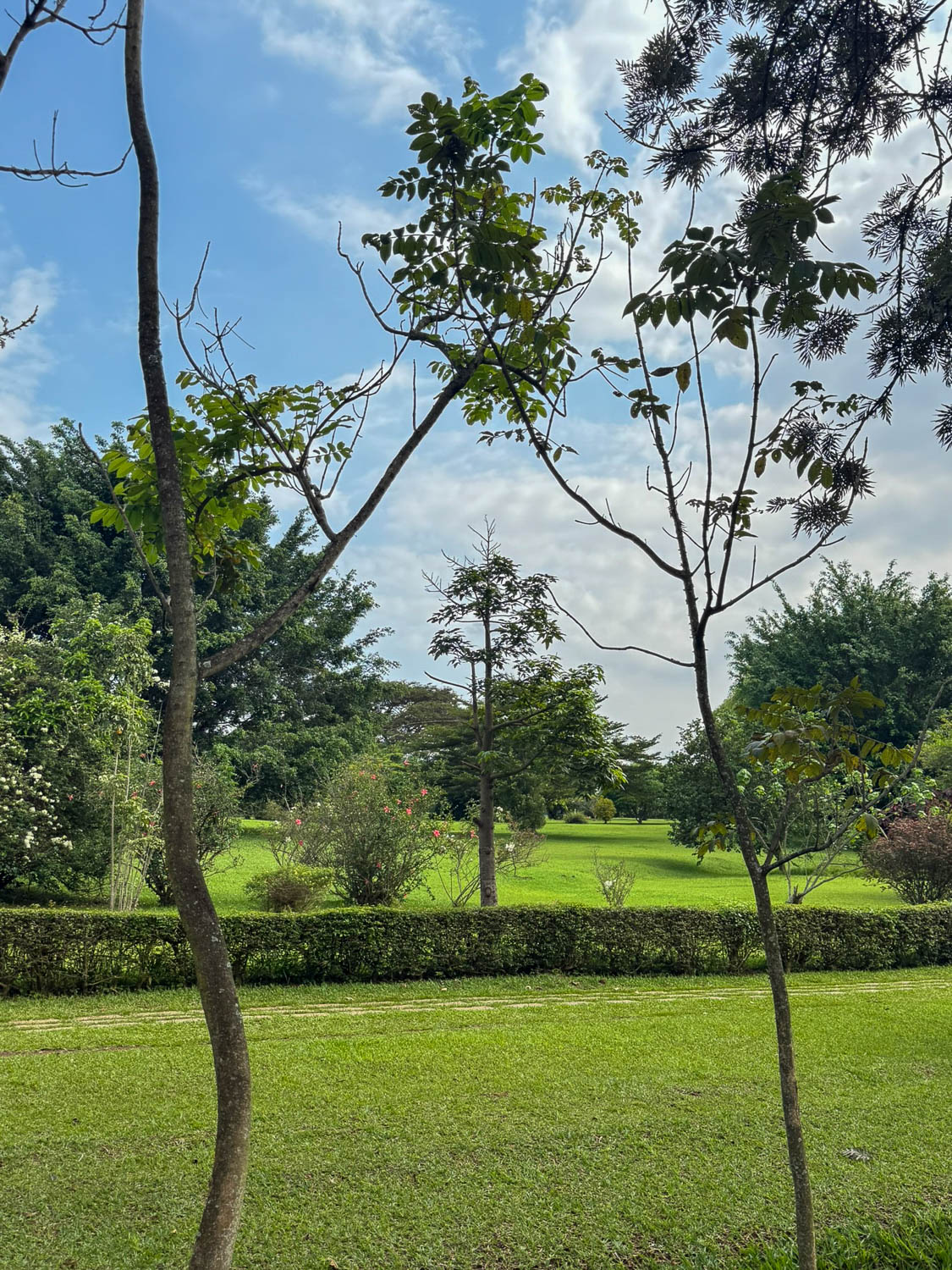
    Mount Karisimbi

    Mount Karisimbi is the highest of the Virunga Mountains in Rwanda, at an elevation of 14,787ft (4,507m). For the more adventurous or seasoned hikers, the Karisimbi volcano hike could be for you: it’s a challenging two-day trek with overnight camping in the forest at 12,139ft (3,700m). The Mount Karisimbi hike usually starts at the base of Mount Bisoke, and along the way to the summit you’ll pass through various vegetation zones, including bamboo forests, open hillside, and hagenia-hypericum forest (typically found at high altitudes in East Africa). This hike affords trekkers stunning panoramic views of other volcanoes within the Virunga range, and a unique experience indeed.

    A hiking permit for Mount Karisimbi costs US$400 per person. You may also need to hire porters to help carry your gear, and provide additional support during the trek.

    Mount Sabyinyo

    Not really into hiking but would love to see some impressive volcanoes all the same? Great news! You don’t have to hike to enjoy the view of Mount Sabyinyo.

    This extinct volcano – the oldest in the Virunga Mountain range – marks the intersection of the borders between Rwanda, Uganda and the Democratic Republic of the Congo. At 12,037ft (3,669m), Sabyinyo holds religious significance for local tribes and carries the local nickname “Old Man’s Teeth”, due to its serrated summit. You can see Mount Sabyinyo from various points within the Musanze District – simply step outside your lodge, or walk a trail near the national park’s edge, and you’ll catch stunning glimpses of this jagged peak.

    Other Activities Within Volcanoes National Park

    Opportunities for wildlife photography abound Musanze, Rwanda
    Opportunities for wildlife photography abound (Musanze, Rwanda)

    Not into hiking? Don’t have the budget or the inclination to trek with mountain gorillas? No worries, as there’s plenty of other things to do within Volcanoes National Park, including birding, with over 100 different bird species recorded within the park.

    You can also visit the grave of Dian Fossey, the famous primatologist who dedicated her life to protecting the majestic gorillas. The walk to the grave, as well as her former research camp (Karisoke Research Center, in between Mount Bisoke and Mount Karisimbi), takes about 2-3 hours, with plenty to see along the way. Dian Fossey is buried alongside the gorillas to whom she had given her all to protect.

    Insider tip. Permits are required to hike to the Dian Fossey grave. We recommend securing your permit at least several months in advance: it will set you back US$75, but does include the services of a guide.


    Buhanga Eco Park

    Our guide at Buhanga Eco Park
    Our guide at Buhanga Eco Park (Nyakinama, Rwanda)

    Located less than 10km (6.2mi) directly south of Musanze, you’ll find Buhanga Eco-Park, a small but sacred forest. Known for its unique blend of ecological, spiritual and cultural significance, Buhanga is a lush forest steeped in history, and home to rich biodiversity that includes ancient trees, beautiful gardens, molten lava rock formations, small mammals, and diverse birdlife.

    Guided walks through Buhanga along lava stone trails reveal royal Rwandan coronation sites and caves where other important rituals took place (including the king’s ritual bath!) and permit visitors to explore these historical sites and learn more about the traditional ceremonies associated with them.

    Gihanda, Buhanga Eco-Park
    Gihanda, Buhanga Eco-Park (Nyakinama, Rwanda)

    Fun fact. Buhanga is home to a small natural spring – Gihanda – that is believed to be named after the first Rwandan king, and is associated with blessings and rituals.

    Buhanga Eco-Park makes for an excellent half-day activity, especially for those interested in a combination of nature and culture: a peaceful oasis amongst towering trees and the simple sounds of nature, and an opportunity for a reflective counterpoint to the thrill of the volcanoes just steps away.


    Musanze’s Lava Caves

    Cave exploration near Musanze
    Cave exploration near Musanze

    Underneath the lush terrain of the Musanze District, hidden beneath the volcanic hills, lies a fascinating subterranean world: the Musanze lava caves. Located just off the Ruhengeri-Gisenyi main road and easily accessible from Musanze town, this sprawling underground world of tunnels was formed centuries ago through volcanic activity, and is worth a visit for their unique geological formation, ecological role, and historical significance.
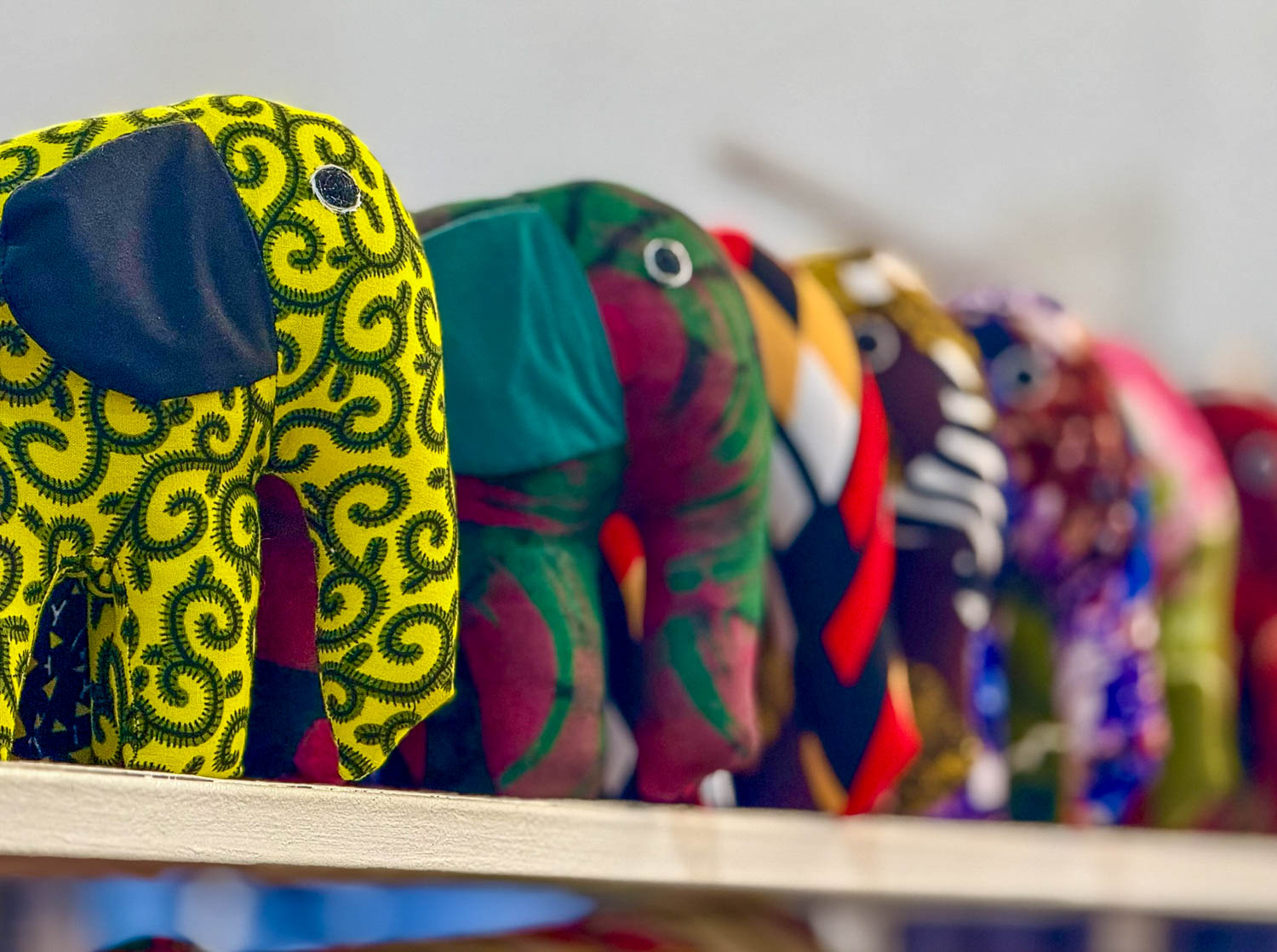
    Extending for over 2km (1.24mi) and featuring 31 different entrances, the Musanze Caves proves a unique glimpse into the earth’s geology. A product of lava flows from volcanic eruptions in the Virunga Mountains, the molten lava drained away, leaving behind a network of tunnels and caves (pretty neat, eh?).

    Insider tip. Some of the entrances to the caves were created by roof collapses that now allow light to stream into the dark, echoing chambers. The play of light and the greenery at these locations make for excellent photo opportunities.

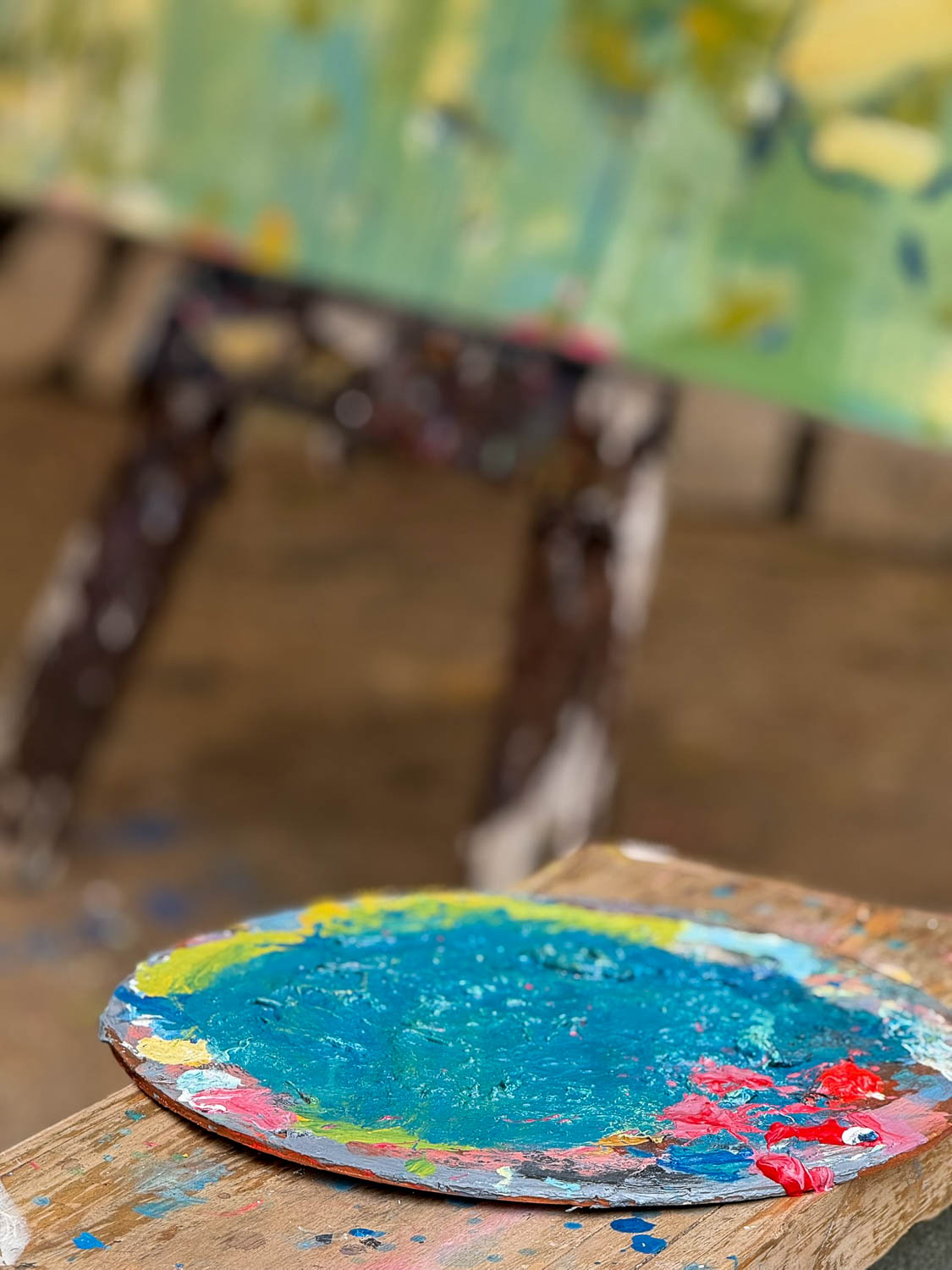
    Insider tip. The Musanze lava caves also offer unique views of the surrounding Virunga volcanoes.
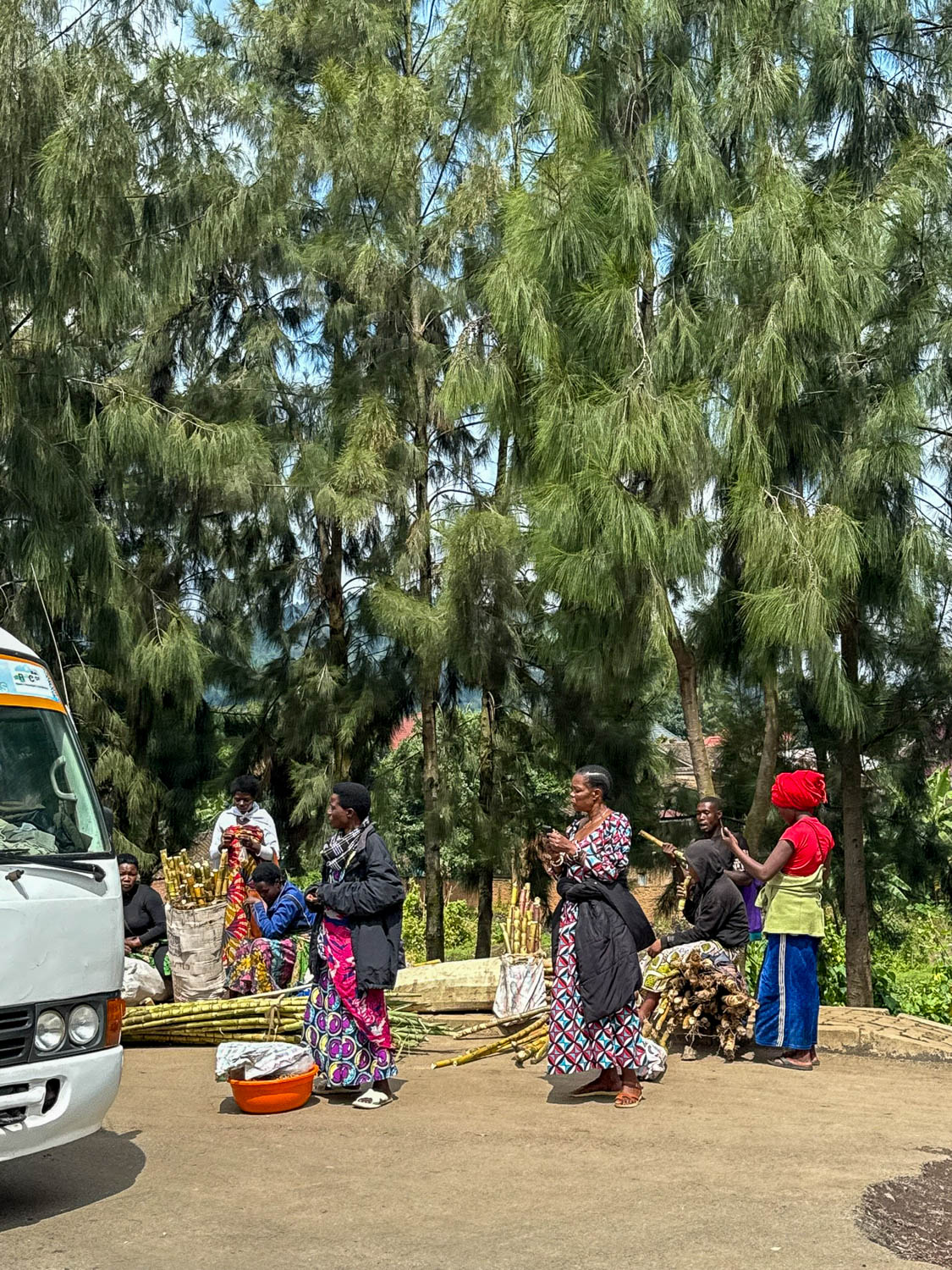
    The ecological value of the caves is also significant. The unique environment within them supports various wildlife, and are home to a large bat colony. The Musanze Caves also have great historical and cultural importance for Rwandans, as they were historically:

    • used for ancient ceremonies, including the crowning of new kings
    • a place of refuge during human conflict (for example, the caves were used as shelter for thousands of people during wartime, including during the Rwandan Genocide)

    Today, the caves remain an important connection to Rwanda’s past, and a symbol of the country’s resilience through challenging times, highlighting the historical importance of this geological wonder.

    Protected by the Rwanda Development Board, visitors are welcome to explore the caves as part of a guided tour, arranged through local tour companies or your accommodation. Tours generally last 2-3 hours, and you’ll be provided with helmets, gloves, and flashlights for safe exploration of the caves. The experience can be both eerie and awe-inspiring — especially as you reflect on the human presence these caves once harbored.
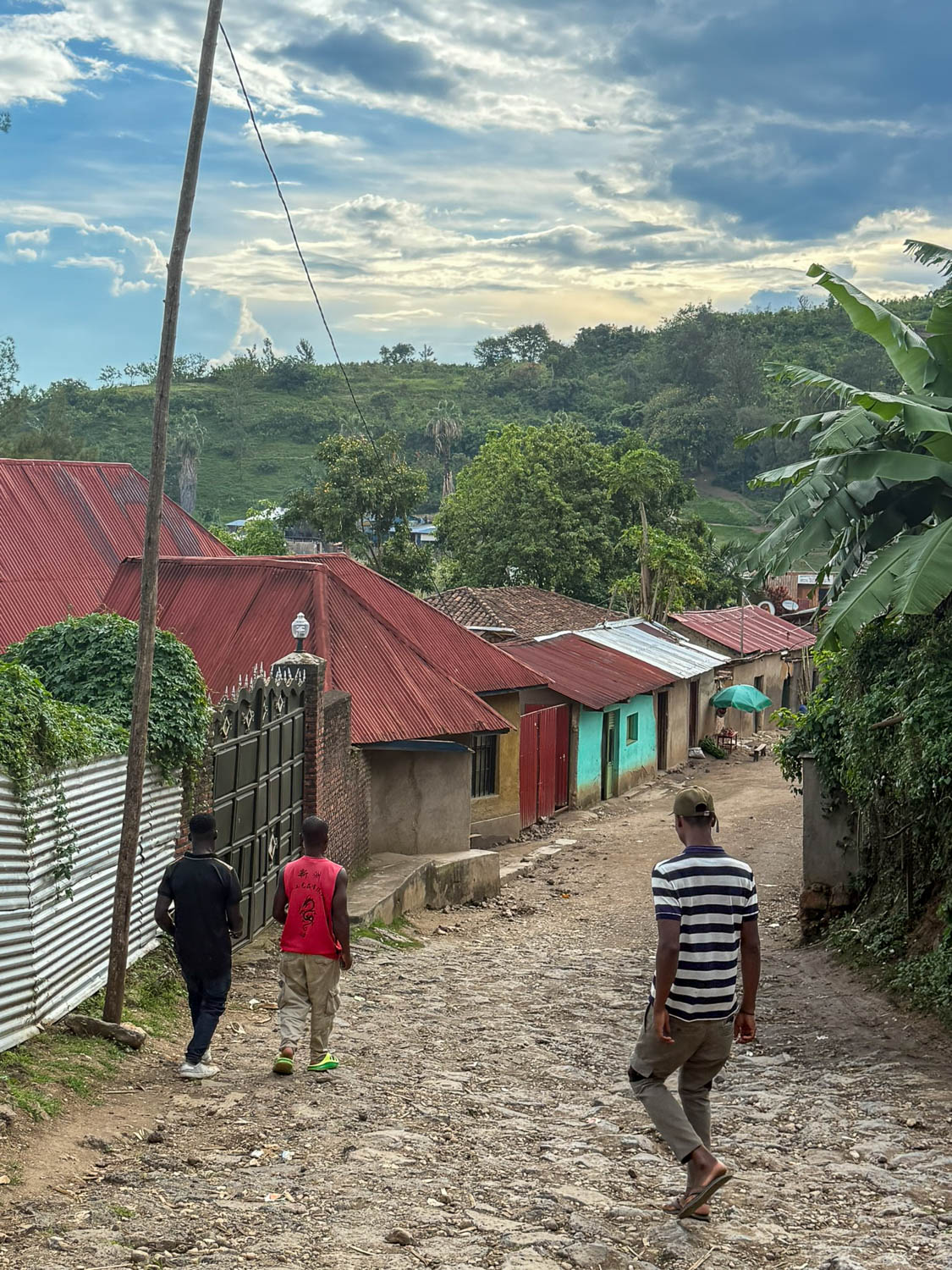
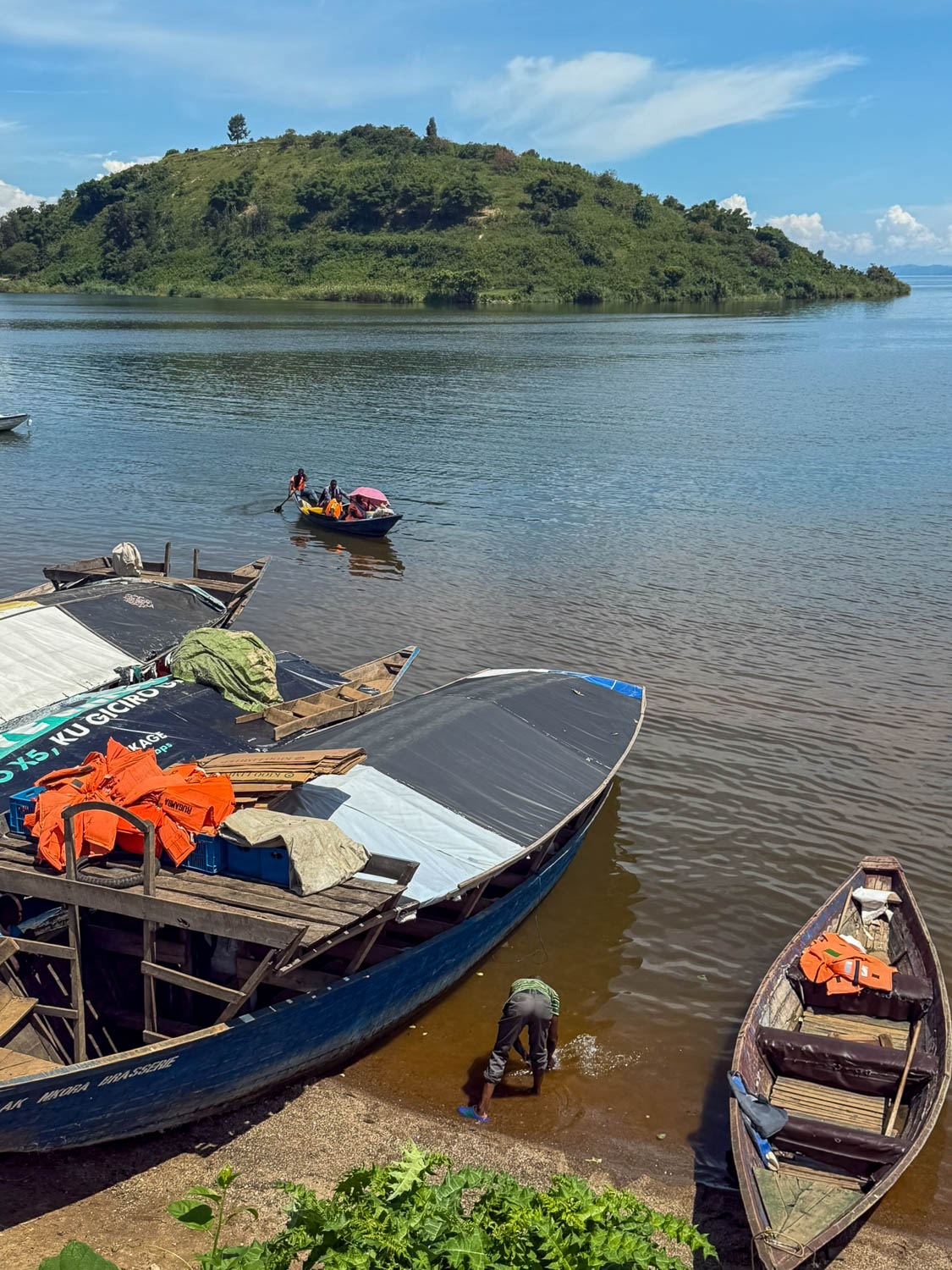
    Insider tip. We recommend making sure your phone and/or camera also has a flashlight attached, and is fully powered, should a flashlight of your own also be required during the tour. We also recommend wearing sturdy, closed-toed shoes.

    Insider tip. As the Musanze Caves are located within close proximity to Volcanoes National Park, consider combining a visit here with some gorilla trekking.


    Lake Burera and Lake Ruhondo: The Twin Lakes

    Local fisherman in northern Rwanda
    Local fisherman in northern Rwanda

    On the outer edges of the Musanze District you’ll find the beautiful twin lakes of Lake Burera and Lake Ruhondo. With varying access points and stunning, windy roads to get you there, Lake Ruhondo is the closest to Musanze, a mere 13km (8.1mi) to the east. The lakes are separated by a narrow strip of land, with Lake Burera right next door – both lakes ultimately offer serene beauty and opportunities for visitors to partake in boat rides, biking, canoeing, birding, hiking, and reflection.

    Both lakes are fed by rivers descending from the volcanoes within the Virunga Mountains, and the landscape provides breathtaking, postcard-worthy views of the Virunga volcanoes and lush green hills in the background. With the dark blue waters of the lakes reflecting the stunning volcanic landscape that surrounds them, this is truly a photographer’s paradise!

    Insider tip. For those on a tight budget, relaxing by one of the twin lakes offers an incredible immersive experience into nature, without the high cost of permits or guided treks. Who doesn’t want to wile away a day or two relaxing at a lakeside lodge?

    Lake Ruhondo

    Colorful wildlife abounds in northern Rwanda
    Colorful wildlife abounds in northern Rwanda

    Lake Ruhondo – sometimes also called Luhondo – is particularly accessible to visitors, and is known for its stunning scenery and abundant birdlife. For bird lovers, the area provides excellent opportunities to spot various endemic species, including the Grauer’s Swamp Warbler, the Ruwenzori Turaco, and the Handsome Francolin.

    Insider tip. The small villages near Lake Ruhondo afford visitors opportunities to learn more about Rwandan culture, and to interact with local communities. Why not stop by one on your way to or from the lake?

    Lake Burera

    If you’re visiting Lake Burera – the larger of the twin lakes – consider taking a boat ride out to La Paillotte Cyuza Island. This beautiful, self-sufficient island offers a tranquil, relaxing escape for visitors, with opportunities to connect with nature and support local communities. On Cyuza Island you’ll even find various accommodations (including basic safari tents and cozy cottages): considering the location (surrounded by lush greenery, with stunning views of the Virunga Mountain Range), it may be worth considering staying a night or two!

    Fun fact. Cyuza Island is privately owned. The island staff are known for their friendly and welcoming nature, and the island is a community-run initiative that supports employment and on-the-job training for locals. By visiting Cyuza Island, you’ll be helping to support a revenue stream generated by sustainable travel.


    Dining in Musanze

    migano cafe musanze rwanda
    Migano Cafe is a fabulous dining option in Musanze

    In great news, there are plenty of decent dining options in Musanze town. Most cafes and restaurants focus on using fresh, locally-sourced ingredients, and whether you’re in the mood for traditional Rwandan cuisine or something with a more international flavor, you’ll find it here in Musanze.

    Below are some recommendations to help satisfy your hunger during your time in the region.

    • Migano Cafe. We are big fans of this small chain, found in several cities throughout Rwanda. The service is excellent, the menu is extensive, the prices are budget-friendly, and the food is fresh and delicious. Their coffees and chicken curries are especially fabulous!
    • La Paillotte Gorilla Place. Located in the center of town, this beloved cozy restaurant and bakery is known for its delicious meals and warm hospitality. Here you can enjoy some of the best chicken dishes in town, traditional Rwandan cuisine, and even wood-fired pizzas. The inside decor is particularly inviting.

    Delicious meals await you in Musanze, Rwanda!
    Delicious meals await you in Musanze!
    • Crema Cafe. Another popular hangout amongst locals and international visitors alike, this large open-air cafe recently moved to a much larger space to accommodate its increasing popularity. An excellent choice for coffee lovers, visitors can expect delicious food (light snacks and full meals) made from fresh, locally-sourced ingredients. There’s also an outdoor art gallery and small handicraft store onsite.
    • Amikus Coffee & Pizza. Located on the main Kigali-Ruhengeri Road, and associated with the hotel of the same name, this is another fantastic option, serving up large, fresh meals, as well as their famous baked goods in a clean, welcoming space. But the biggest highlight for most visitors? Their rooftop terrace, with breathtaking panoramic views of Musanze and the Virunga volcanoes.

    Staying in Musanze

    Traditional hut at Iby’iwacu Cultural Village
    Consider an overnight stay in a traditional hut at Iby’iwacu Cultural Village

    Most visitors stay at least a night or two in Musanze, in between gorilla trekking, boating on the twin lakes, and participating in various cultural activities. In great news, there is a range of accommodation options in town to suit your needs and preferences, from budget hostels to charming guesthouses to upscale lodges. Most of the hotels are located close to the main road, and many also offer shuttles to the Volcanoes National Park and other attractions.

    Some of our favorite accommodation options include the following.

    • Five Volcanoes Boutique Hotel. Located on the road north to Kinigi with easy access to Volcanoes National Park, this upscale hotel offers several different room types (each with an ensuite), an outdoor pool and restaurant, and beautiful gardens for a relaxing stay. Airport pick-ups and free wifi are also available.
    • Tiloreza Volcanoes Ecolodge.Located just a minute south of Five Volcanoes Boutique Hotel, this mid-scale lodge has it all – including an onsite masseuse and unparalleled service. Rooms are spacious and clean, and the restaurant serves up excellent food.
    • Virunga Hotel.Located in the center of town, this friendly hotel offers free bike rentals, free private parking, a terrace, a shared kitchen, and a restaurant.
    • The Garden Place Hotel. On a tight budget? Then this could be the place for you! Located right in the center of town, close to Migano Cafe and the Musanze Bus Station, this spacious and comfortable hotel gets rave reviews from travelers. Want the best room? Ask for one with a view of the volcanoes!

    Insider tip. Have a bit of cash to splash and want to experience the best accommodation that Musanze can offer? Don’t look any further than One&Only Gorilla’s Nest. A night’s stay here will set you back a pretty penny, but we hear it’s absolutely worth it for the personalized service, focus on sustainability and community-driven practices, and gourmet dining experience.

    Final Thoughts

    Gorilla trekking is where it’s at in Musanze Rwanda
    Gorilla trekking is where it’s at in Musanze

    Whether you find yourself in northern Rwanda to trek through bamboo forests in search of endangered mountain gorillas, to explore ancient lava-formed caves, to wile away a few hours at a lakeshore property, or to connect with local people through meaningful cultural experiences and community-driven initiatives, Musanze is an unforgettable destination. And it’s certainly a popular tourist destination for good reason: it offers both thrill (for those of you more like Beck) and tranquility (for those of you more like Mike) in equal measure.

    Most foreign visitors come to Musanze for the unforgettable opportunity to encounter mountain gorillas in their natural habitat: but this small town offers far more than what a typical guidebook can tell you. And it’s the tourism industry in this part of Rwanda that helps create a large revenue stream that helps local communities thrive.

    From the bustling bus station at the edge of town to the tranquil beauty of Lake Ruhondo, and from adrenaline-filled adventures in the wild to dining in local cafes on Swahili curries – and everything in between! – this corner of Rwanda is a rich blend of nature, tradition, and warm hospitality. It’s a place where every moto-taxi ride becomes a story. Indeed, Musanze represents what we love most about travel: a place where community, history, culture, and adventure intertwine. Wander the streets, visit the markets, hike the trails, and sip the famous Rwandan coffee – all with local communities who will make you feel like more than just a tourist.

    If you’re planning a trip to this part of Africa, be sure to set aside time on your itinerary to visit Musanze. Pack your curiosity, your hiking boots, your sense of adventure, and let’s help prepare you to visit one of the most inspiring places in East Africa!


    FAQs

    Is Musanze worth visiting?

    Yes, Musanze is one of the most worthwhile destinations in Rwanda. Beyond gorilla trekking, visitors can explore cultural villages, hike volcanoes, visit lava caves, and enjoy the peaceful landscapes of northern Rwanda, making it ideal for both adventure and relaxed travel.

    Is Musanze also called Ruhengeri?

    Yes, Musanze was formerly known as Ruhengeri. Today, Musanze is the official name used in maps, government, and tourism, but many locals and transport routes still commonly refer to the town as Ruhengeri.

    What is Musanze known for?

    Musanze is best known as the gateway to Volcanoes National Park, home to the endangered mountain gorillas. It is the main base for gorilla trekking in Rwanda and offers access to hiking, lava caves, cultural experiences, and the scenic twin lakes of Burera and Ruhondo.

    What are the best things to do in Musanze?

    The best things to do in Musanze include gorilla trekking in Volcanoes National Park, visiting the Iby’iwacu Cultural Village, exploring the Musanze lava caves, hiking volcanoes, and relaxing at the twin lakes of Burera and Ruhondo.

    When is the best time to visit Musanze?

    The best time to visit Musanze is during the dry seasons from June to September and mid-December to February. These months offer the best conditions for gorilla trekking and hiking, with less rain and easier trail access.


    Explore More Of Rwanda

End of content

End of content