Welcome to one of Africa’s most awe-inspiring wildlife destinations — Akagera National Park. If Rwanda is on your travel radar, then make no mistake: this remarkable national park – one of four national parks within the boundaries of this wee African nation – belongs at the top of your itinerary.
Located in the eastern region of Rwanda, bordering Tanzania, Akagera National Park is the country’s last remaining refuge for savannah-adapted species, and the largest protected wetland in Central Africa. Today it abounds with diverse ecosystems (think rolling highlands, vast plains, and swamp-fringed lakes) and rich wildlife (think everything from the Big Five to giraffes, from Pumbas to zebras, and from Impala to over 500 bird species), offering visitors a variety of experiences that include game drives, boat safaris, and bird-watching. In fact, Akagera is known for being one of the best locations in East Africa for a safari.
From the thrill of spotting the Big Five (lions, black rhinos, buffalo, leopard and elephants) on a full-day game drive, to cruising past pods of wading hippos on a boat trip across Lake Ihema, Akagera National Park is a feast for the senses. This 1,122 square-kilometer (433 sq mi) national park is also a place where the conservation story isn’t just moving — it’s transformative. Indeed, Akagera’s inspiring conservation narrative is what sets it apart from so many other parks throughout the African continent (don’t worry, we’ll get to all this a little later on…).
Let’s jump aboard a jeep, complete with driver and guide (sometimes one and the same!), strap our binoculars around our necks, and see what all the fuss is about!
Quick Tips
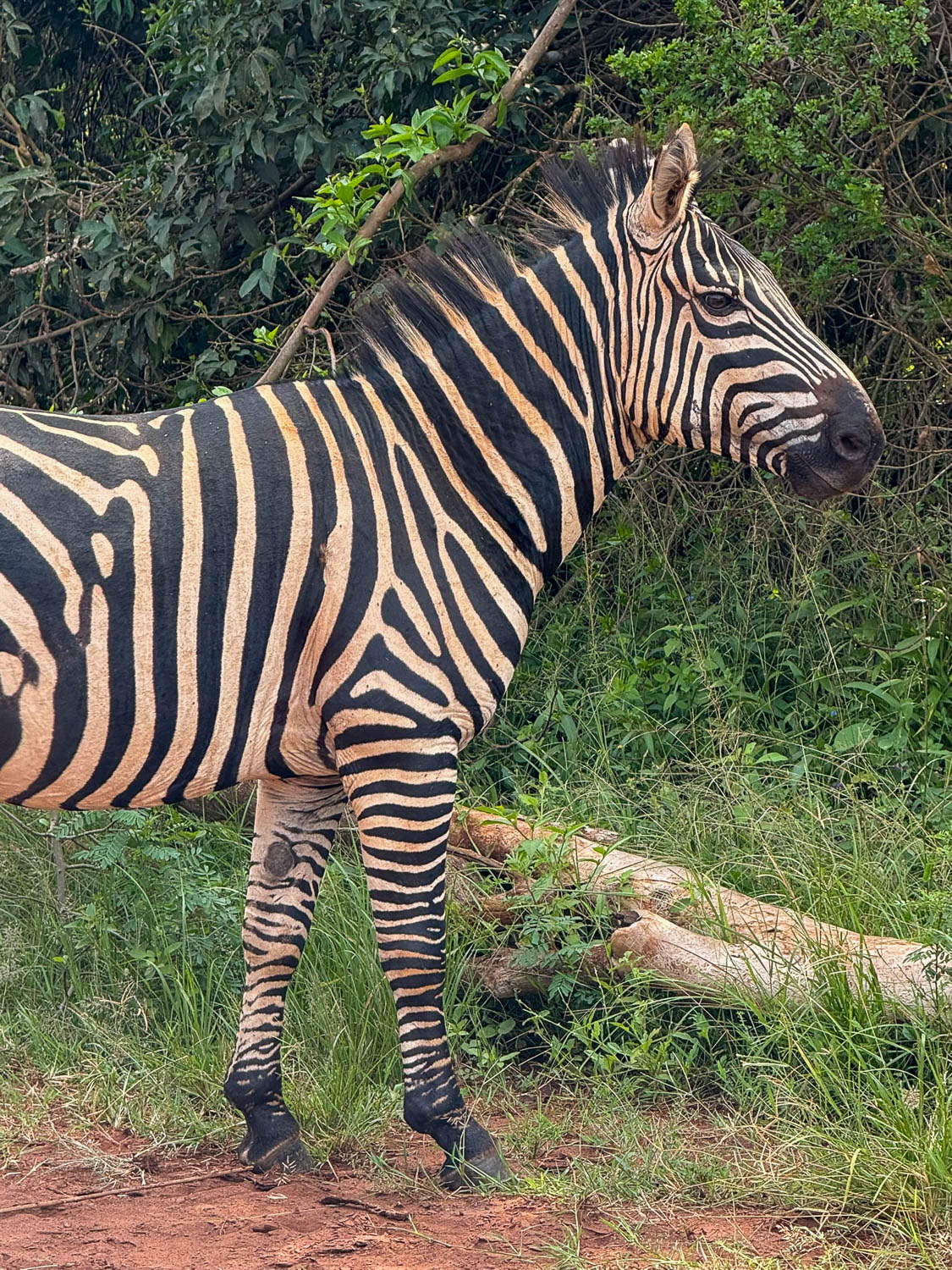
Here are some insider tips to help you make the most of your visit to Akagera National Park, Rwanda.
- The best time to visit Akagera National Park is during the dry season.
- The park is open daily from 6am to 6pm.
- The cost for foreign visitors is US$100 per day for adults and US$50 per day for children aged 6-12.
- Entry to the park is through the southern gate; exit from the park is through the northern gate.
- Most visitors spend a full day in Akagera, but overnight stays are encouraged.
- There are numerous accommodation options available within the park boundaries, with something to fit every budget and preference.
- Ensure you pack all the essentials for a safe and comfortable stay in the park, including food and appropriate clothing.
- Akagera is home to an astounding variety of wildlife, including over 8,000 large mammals, several primate species, and over 500 bird species.
- The park is made up of a complex mix of savannah, grasslands, wetlands and woodlands.
- Activities within the park include guided game drives, boat safaris, fishing and hiking.
- Participating in cultural activities in and around the park help to support local communities.
- Akagera National Park places a strong emphasis on conservation, sustainability initiatives, and local community engagement: play your part to help support these efforts by practicing sustainable tourism.
Follow these tips and you’ll be ready to visit the Akagera National Park!
Plan Your Trip
Some links below may earn us a small commission at no extra cost to you. We’re truly grateful for your support, as it allows us to continue sharing meaningful travel experiences and practical travel insights with you. Read our full disclosure here.
Planning your visit? We’ve gathered recommended tours and activities, along with trusted travel tools, to help you explore with confidence and ease.
Tours & Experiences
Prefer additional options? Click below to discover more incredible experiences tailored just for you!
Browse more top tours and experiences in Akagera National Park.
Travel Essentials
Planning the rest of your trip? These are the platforms we personally use when organizing our travels. For more planning tools, visit our Travel Resources page or browse current promotions on our Travel Deals page.
A Brief Overview and Abbreviated History
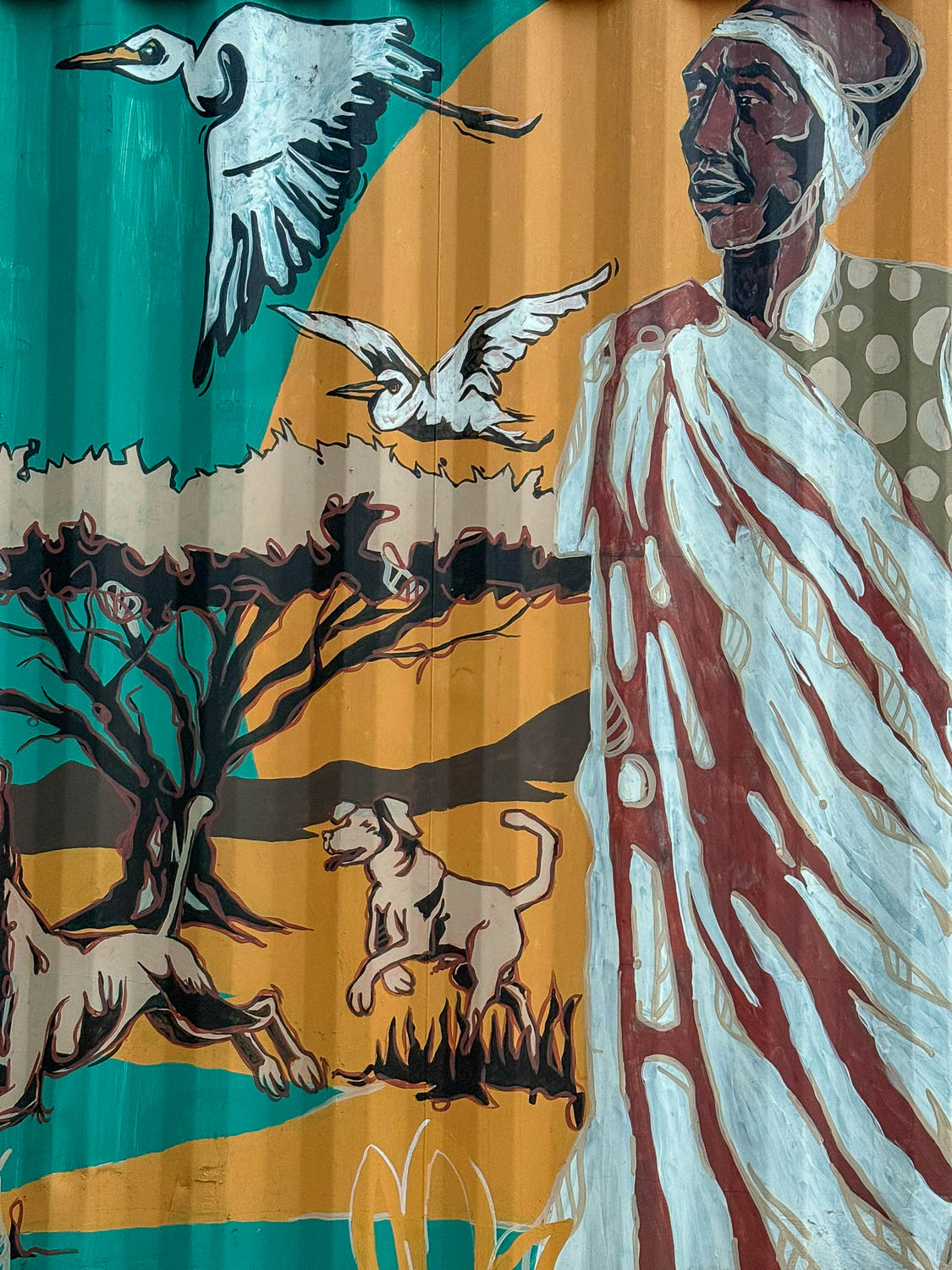
Located on the eastern boundary of Rwanda, Akagera National Park is a relatively small park at just over 1,122 square kilometers (433 sq mi) – but it sure does pack a powerful punch!
Boasting unmatched biodiversity across its savannah plains, papyrus-lined swamps, and large network of lakes, the park’s name hails from the sinuous bends of the 597km-long (371-mile) Akagera River (also known as Kagera River or Alexandra Nile) as it flows through eastern Rwanda, and ultimately forms the border with Tanzania before emptying into Lake Victoria. The Akagera River is incredibly important for the national park, helping to nourish the land year-round.
Founded in 1934 by the Belgian colonial government, Akagera is one of the oldest protected areas in the region. Decades later, following the Rwandan Genocide in the mid 1990s, many refugees returned to the area and settled within the park boundaries, leading to significant habitat destruction and a decline in wildlife populations. As a result, the park was significantly reduced in size in 1997 – from its then 2,500 square kilometers (1,553 sq mi) to its much smaller size today – in part to accommodate returnees and their livestock, ultimately reallocating a significant portion of the park’s land for resettlement. Despite these changes, the heart of the park endured.
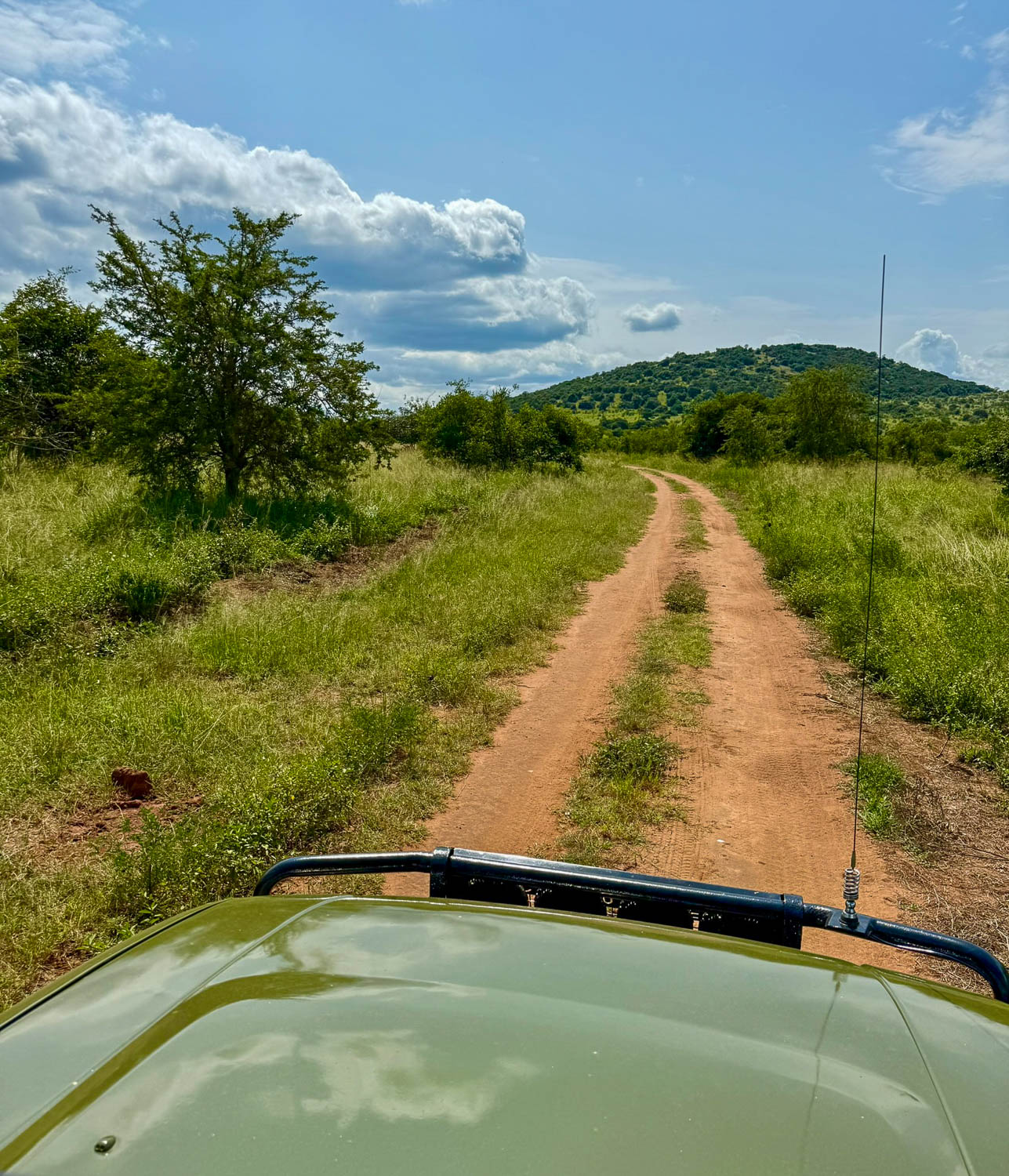
The real turning point for Akagera, however, came in 2009, when African Parks signed a joint management agreement with the Rwanda Development Board. A year later, the Akagera Management Company was created, with its main objectives being to improve management of the national park, restore dwindling wildlife populations, promote sustainable development and conservation, strengthen community ties and drive local economic improvement, and enhance the park’s international profile.
Over the years, Akagera has certainly faced its fair share of challenges, from poaching to additional refugee resettlement. However, within the past decade the park has seen far more successes than setbacks: the reintroduction of certain species (including lions and rhinos), community-based initiatives, and a thriving tourism industry. As a result, and through positive, ongoing governance from the Akagera Management Company, Akagera National Park is today one of the African continent’s leading models of wildlife conservation, community integration, and eco-tourism success.
Planning Your Visit
Entering and Exiting the Park
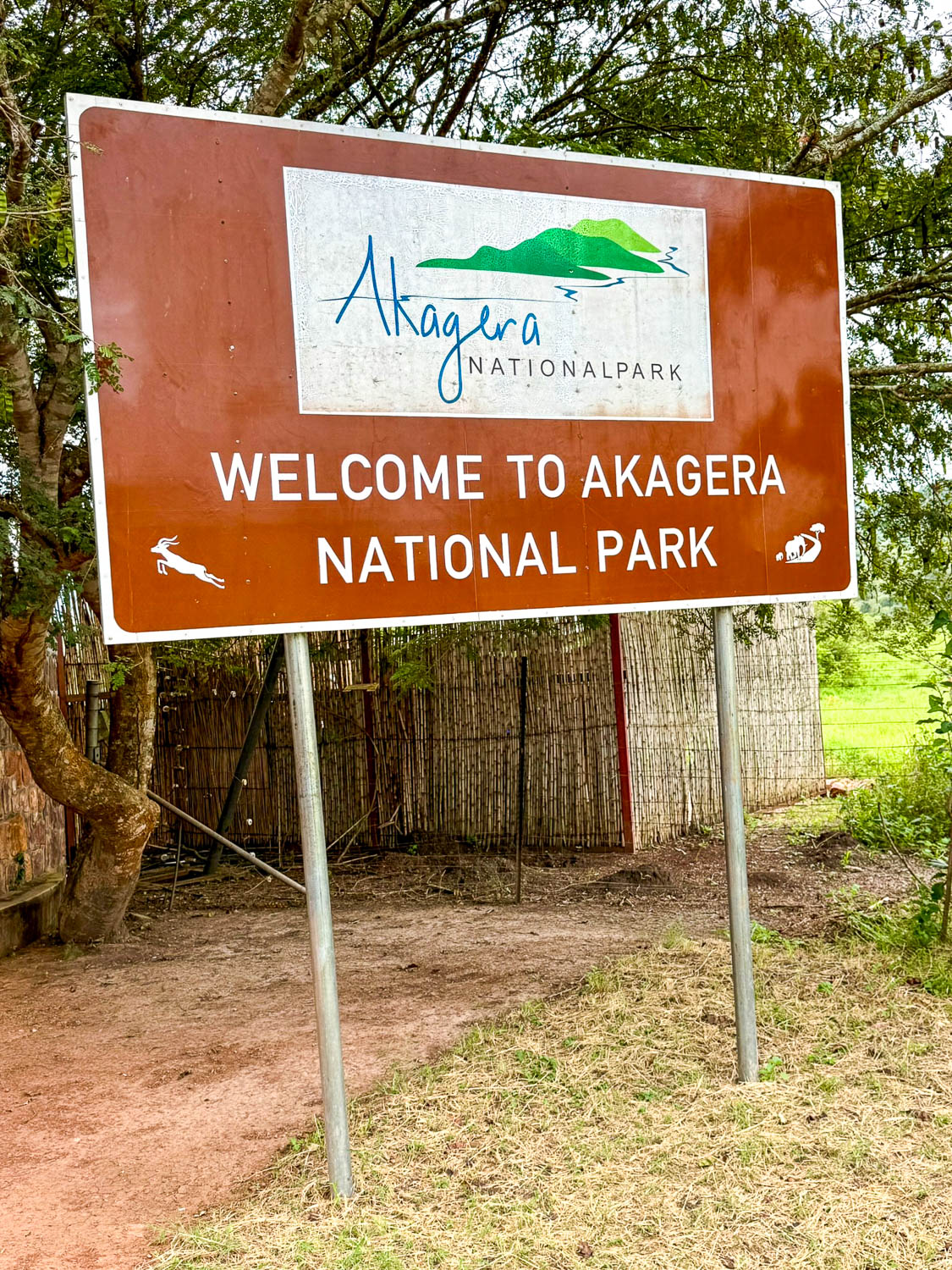
Akagera has two main gates: the southern gate (also known as the Giraffe Gate or Mutumba Gate) and the northern gate (also known as the Nyungwe Gate). The official entrance to Akagera National Park is through the southern gate, and you’ll find the park headquarters just a couple of miles beyond this entrance. The park headquarters is your best starting point for organizing a park guide (if you haven’t already arranged one through a tour company in Kigali), permits, and other logistics: you’ll receive a warm welcome and brief introduction to the park from here. The northern gate is used for exiting the park.
Opening Hours
Akagera National Park is open daily from 6am to 6pm (that’s right, you can even visit on Christmas Day!). Visitors are welcome to explore the park in their vehicles at their own pace during this time.
If you’re planning a boat trip on Lake Ihema, these can be pre-arranged and have specific, scheduled departure times (early morning, mid morning, afternoon and sunset).
Entrance Fees
Akagera National Park entry fees vary, based on age, citizenship, and residency. Unfortunately, international visitors must be prepared to pay a much higher price than locals:
- Rwandan citizens and citizens of East African countries: US$16 per day for adults, US$11 per day for children aged 6-12
- Rwandan residents and residents of East African countries: US$50 per day for adults, US$30 per day for children aged 6-12
- All other visitors: US$100 per day for adults, US$50 per day for children aged 6-12
Insider tip. Visiting the park is free for children under the age of 6.
Insider tip. Entrance fees are not charged beyond 3 nights, for up to one week (that seems like a bargain to us!).
Other activities within the park may have separate, additional costs associated with them. These may include, but not be limited to, game drives, safari vehicles, boat cruises, guides, accommodation, food, water and souvenirs.
Insider tip. If you book a group or private tour to Akagera National park from Kigali, be sure to confirm with the tour operator exactly what the price includes. Most tours will include a guide, driver, appropriate vehicle, fuel, and the guide and/or driver’s entrance fee. Be sure to factor in the actual entrance cost to Akagera on top of the overall tour price.
Insider tip. You will pay your entrance fee at the park headquarters, a few kilometers inside the park, once you’ve gone through the main entrance. Note that cash is not accepted, so make sure you’re carrying with you a valid credit card.
When Should I Visit?
Dry Season
The best time to visit Akagera National Park is during the dry season, which typically runs from June through September. During these drier months, the skies are clear with bright sunshine, and the park’s terrain is easy to navigate. This time of year also affords visitors the most favorable wildlife viewing conditions, for this is when you’ll find a larger concentration of animals gathering around water holes, as well as less-dense vegetation throughout the park. This time of year also provides the opportunity for additional outdoor activities.
Wet Season
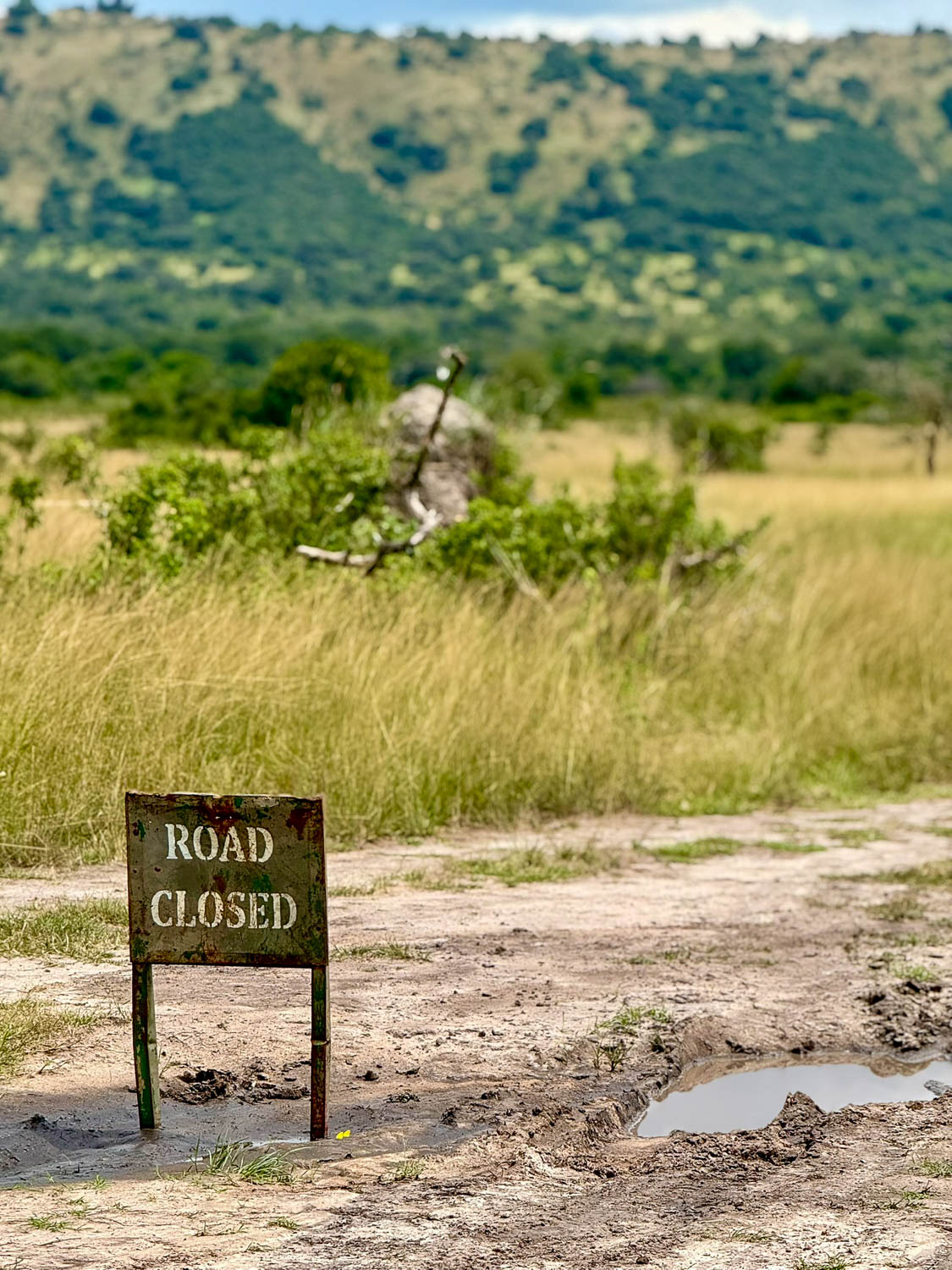
The region’s wet (or “rainy”) season – which runs from October through May – typically brings heavy rains, lush scenery, abundant birdlife, and lower prices, but it can also make driving through the park more challenging. When we visited Akagera in May, some of the roads were still closed due to muddy, boggy dirt roads. Wildlife viewing can also be challenging during this time due to dense, overgrown vegetation.
Insider tip. The altitude and temperate climate of Akagera National Park means the temperature remains moderate year-round. Consider dressing in layers, starting with a light jacket in the early morning hours, or even warmer layers if you plan to spend a night or two in the park.
How Long Should I Spend in the Park?
Only a few hours’ drive from Kigali, Rwanda’s vibrant capital, most visitors spend a full day in Akagera National Park, generally on a private or group safari (game drive). However, overnight stays in the park are possible, and afford visitors more time to explore, unwind, and see the most elusive of the Big Five (the beautiful African leopard).
Whilst one-day trips (which we undertook) are certainly feasible, they are a long day (we’re talking 12-16 hours if you’re starting and ending in Kigali) and provide more of a “rushed glimpse” of what the park can truly offer. Multi-day safaris are possible, permitting visitors the opportunity for additional activities (for example, boat rides and nocturnal safaris).
Insider tip. For the most rewarding experience in Akagera, and for the opportunity to truly appreciate all the park has to offer, consider staying overnight for at least two nights. This permits a full day of exploring the park, complete with wildlife viewing in sections of the park many visitors never have a chance to see.
When considering how long you wish to spend in Akagera, you may also wish to factor in how many activities you want to undertake (more activities will obviously require more time in the park!), as well as your budget (more activities and overnight stays will obviously cost more!).
Insider tip. Multi-day safaris, although overall more expensive, may ultimately offer visitors more bang-for-your-water-buck (yes, pun intended!), providing you a solid balance of cost and overall experience – especially as entrance fees to the park are not charged beyond 3 nights, for up to one week.
What Should I Pack for My Visit to Akagera?
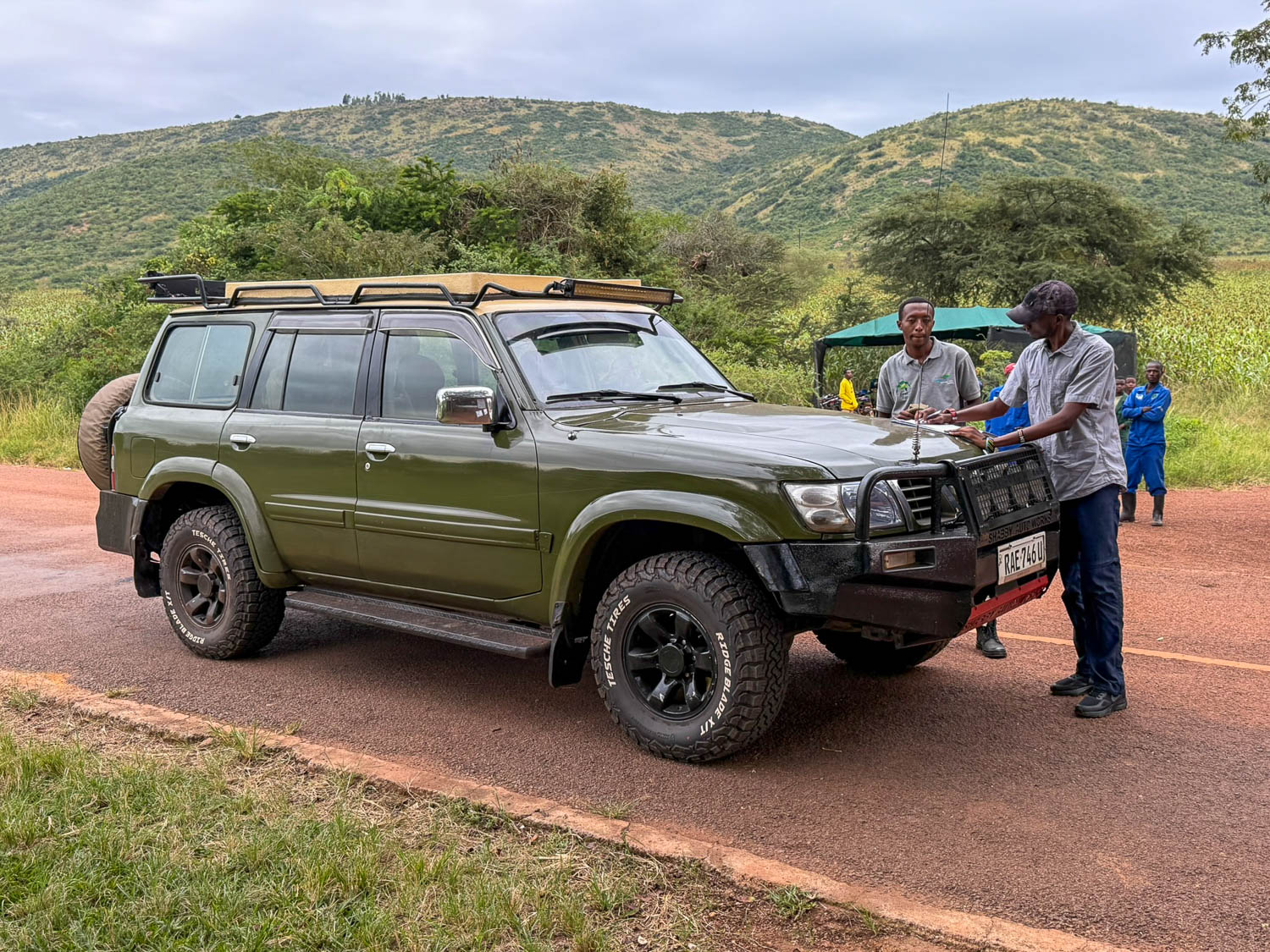
We recommend packing the following for your time in Akagera, whether you’re staying for a day or five days:
- small waterproof backpack
- light, breathable clothing
- opt for cotton or linen fabrics, especially during the hotter months
- consider wearing long sleeves and long pants to protect against the sun, thorns, and potential insect bites
- neutral colors are recommended
- opt for cotton or linen fabrics, especially during the hotter months
- consider wearing long sleeves and long pants to protect against the sun, thorns, and potential insect bites
- neutral colors are recommended
- sturdy, comfortable, closed-toe walking shoes or hiking boots (if you have waterproof ones, even better!)
- poncho or rain jacket (especially if you’re planning to visit during the rainy season)
- insect repellant
Insider tip. The black flies in Akagera are nasty little things! Whilst these particular flies are harmless enough (unlike the more prevalent, and more dangerous, Tsetse fly), they can be a nuisance indeed, and their bite is quite painful! Protect yourself throughout the day from these flies, as well as other insects, with a strong insect repellant. Visitors are especially susceptible to insect bites during boat rides across the lakes within Akagera.
- sunscreen, a hat and sunglasses (that African sun sure can get hot! – some sort of protective eyewear is also essential to protect your eyes from dust)
- hand sanitizer
- binoculars
- an adequate camera (or smartphone with decent camera and filming capabilities)
- portable charger for your phone
- extra memory cards and batteries for your camera
- snacks
Insider tip. You can take into the park as much food as you want – so long as you either consume it all whilst in the park or carry out any leftovers with you (no feeding the wildlife!). We recommend high-energy snacks.
- a non-recyclable water bottle (for example, one made of glass or a Nalgene/Yeti)
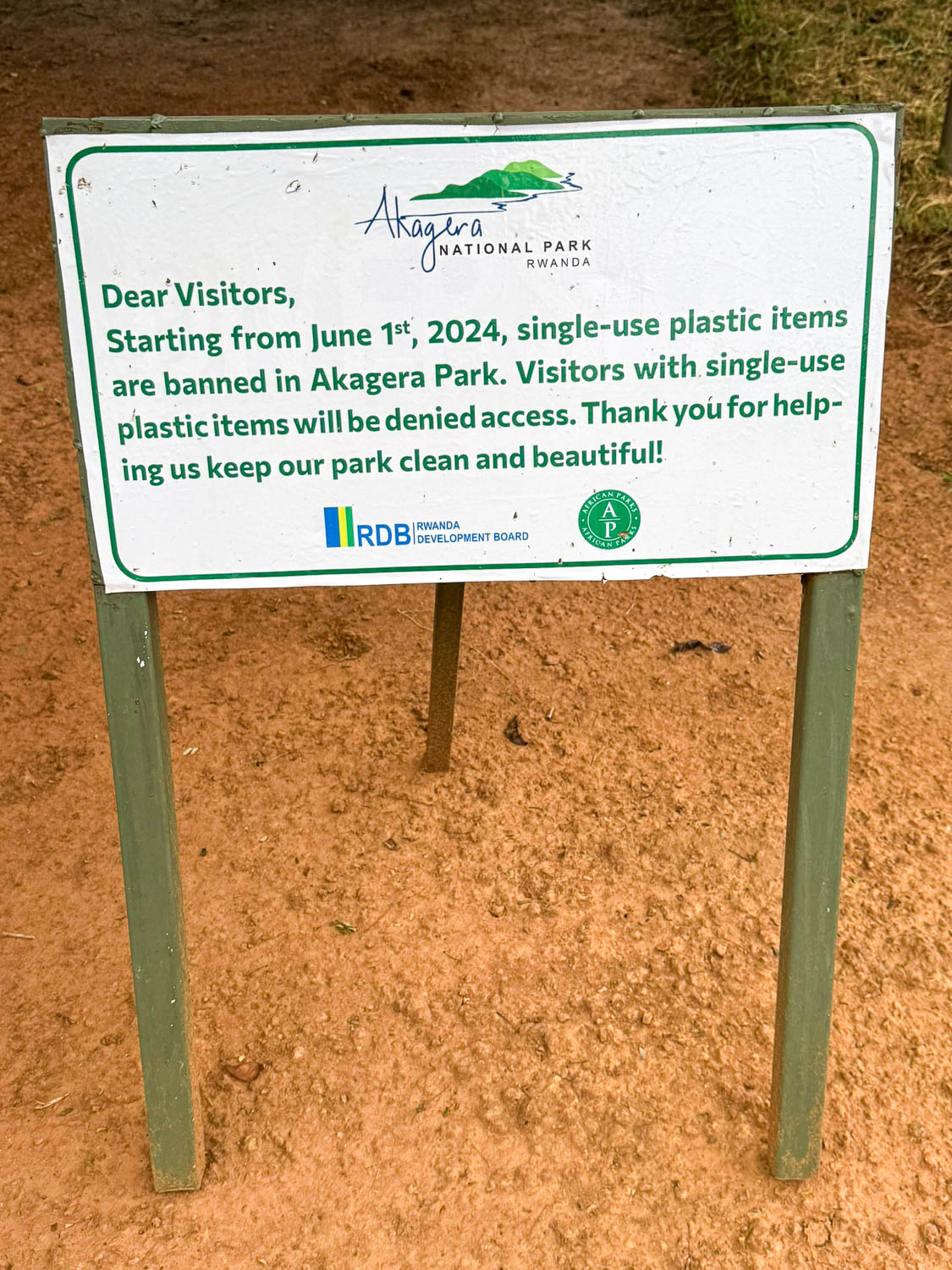
Insider tip. With a strong focus on reducing plastic waste (did you know that plastic bags have been banned in Rwanda since 2008?), plastic water bottles are not permitted in Akagera. Take with you a reusable water bottle for your visit: free water refills are available at lodges and camps, and for a small fee (1,000 Rwandan francs at the time of our visit) at the Mihindi Cafe, near Lake Mihindi, in the far north-east of the park.
Insider tip. If you plan to do some hiking during your time in Akagera, you may wish to also consider packing gardening gloves. These come in very handy to help push back branches and other overgrown tundra, clearing a path and protecting your hands.
For comfortable and enjoyable overnight stays in the park, you may also wish to consider packing the following:
- warm sweater or heavier jacket (excellent for the cooler evenings!)
- first aid kid (hopefully your tour operator, if you’re using one, is also carrying one of these – but don’t rely on it being fully stocked or carrying some of the more “uncommon” items like pain relievers or antiseptic wipes)
- quick-drying clothes, including socks and underwear
- swimsuit (if your accommodation has a swimming pool)
- sandals or another change of shoes (for relaxing at your accommodation)
- travel pillow
- earplugs
- flashlight or headlamp
- electrical adaptor (Rwanda uses plug types C and J)
- personal medications and toiletries
- wet wipes
No matter how long you plan to stay in the park, also consider carrying with you cash (in local currency), credit cards, and your passport or other ID. And never forget to pack your sense of adventure!
Wildlife Within the Park
Animals
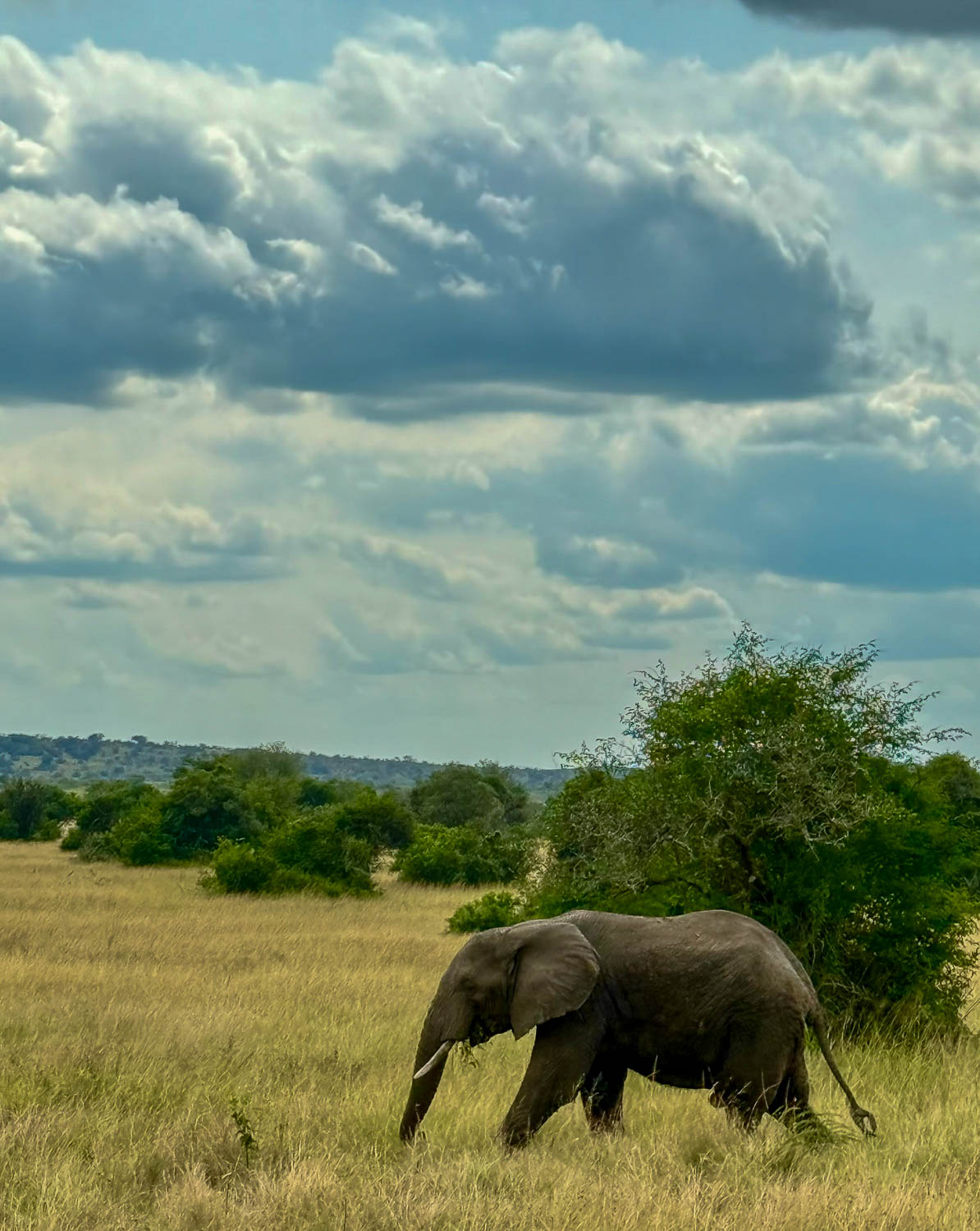
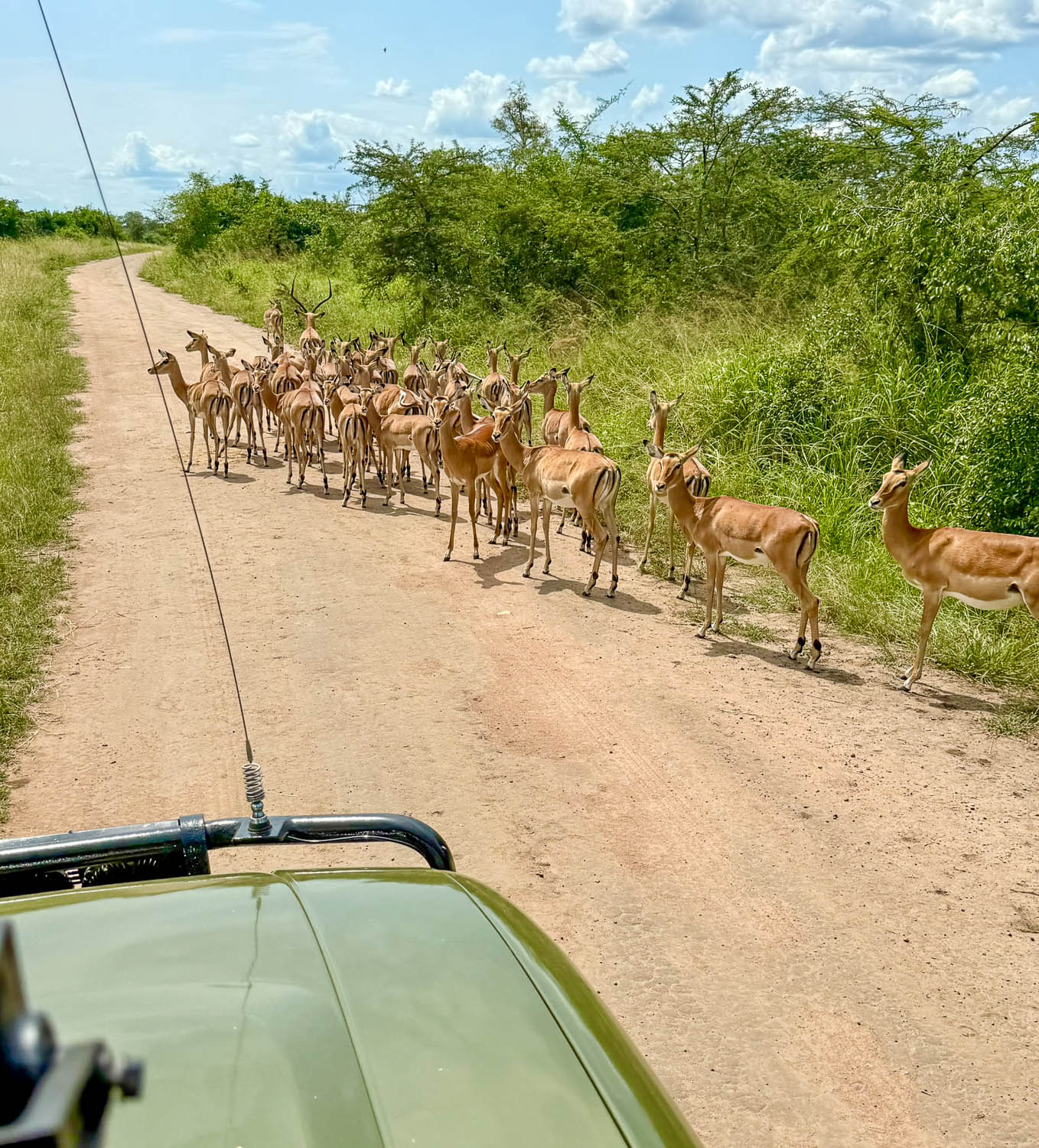
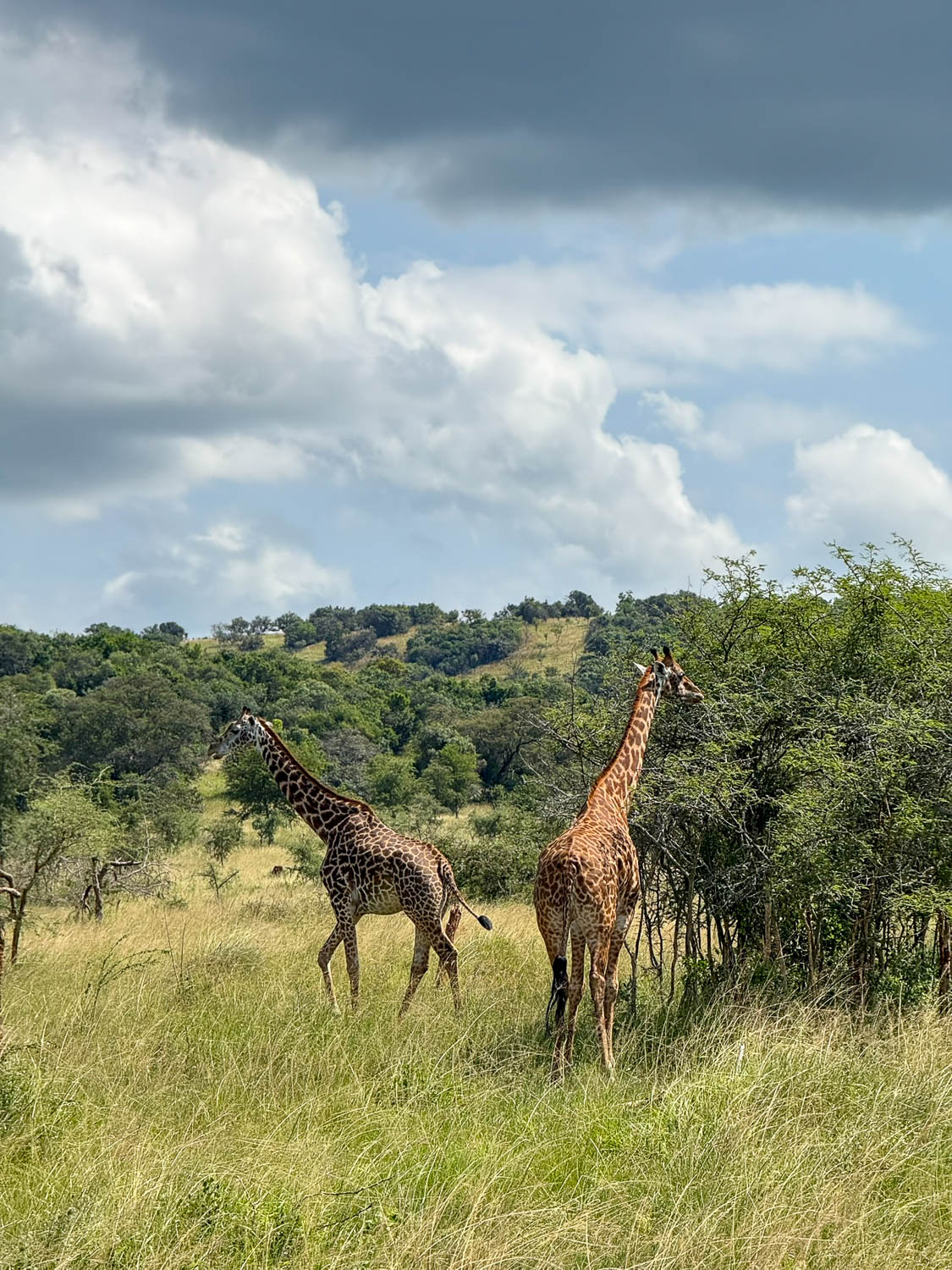
Akagera National Park is home to an astounding variety of wildlife, including over 8,000 large mammals. It’s here in Akagera you can spot lions, buffalo, Defassa waterbucks, leopards, zebras, elephants, warthogs, and 11 different species of antelope. You also have an excellent chance of seeing endangered species that include eastern black rhinos, southern white rhinos, and Masai giraffes. Without question, Akagera National Park is one of the best places in East Africa to see the Big Five (we saw four of the Big Five, which we didn’t think was too bad! – next time we’ll go on a night safari, for a greater chance of spotting the elusive leopard…).
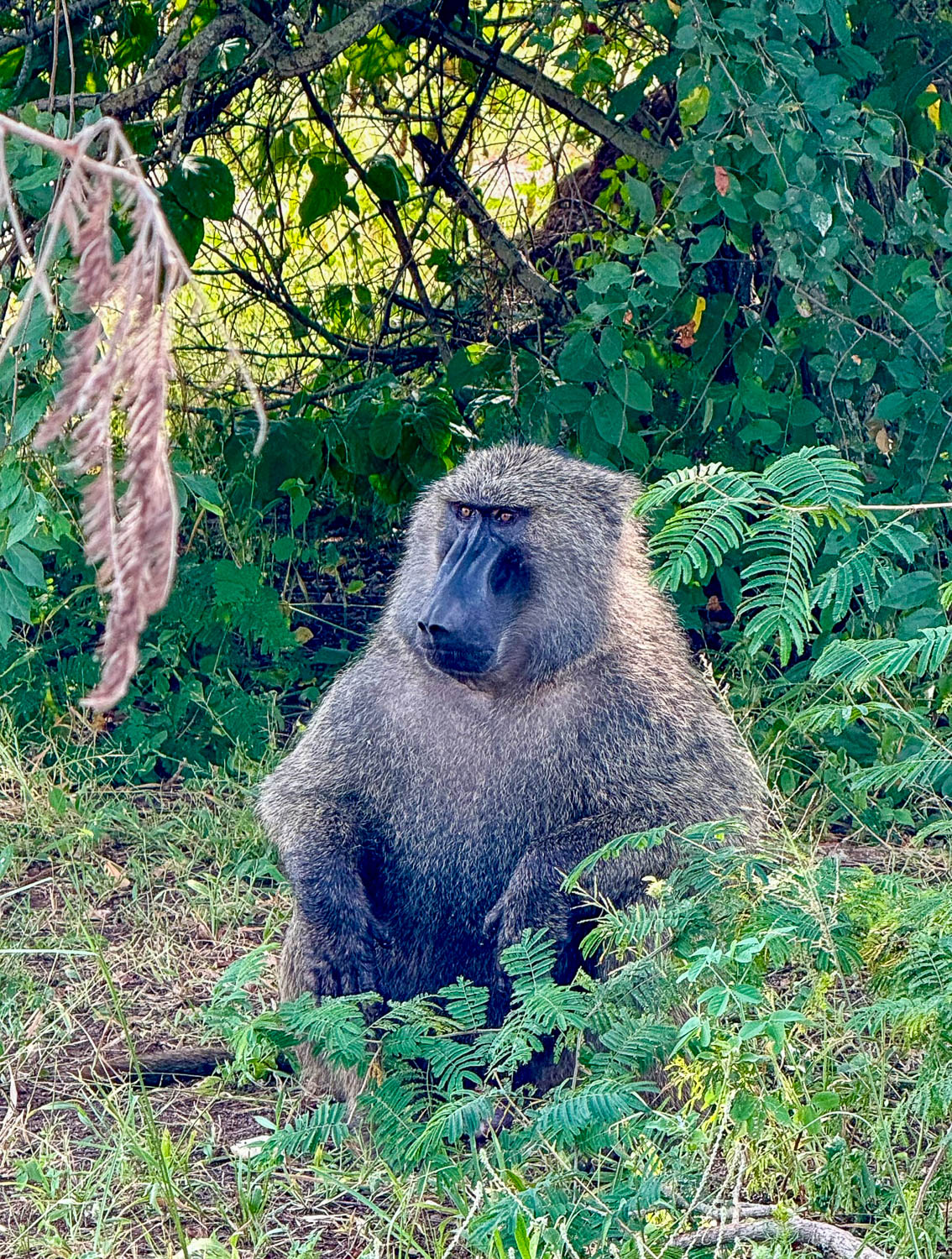
Akagera is also home to five primate species: vervet monkeys, olive baboons, blue monkeys, greater galagos, and the lesser galagos (also known as bush babies or nagapies).
Insider tip. For the best chance of seeing bush babies, make sure to partake in an evening safari or night drive through the park.
Birds
Birdlife is also abundant in Akagera, with the park boasting over 500 different recorded bird species. Throughout the park you’ll have the chance to spot raptors, wetland birds, and various migratory species, including the endangered Papyrus Gonolek and the rare Shoebill Stork. The park is also home to endemic species that include the Arnot’s Chat and the Sauza’s Shrike (what a fun name!). Akagera National Park is most certainly a haven for birdwatchers!
Flora: A Variety of Unique Plant Life
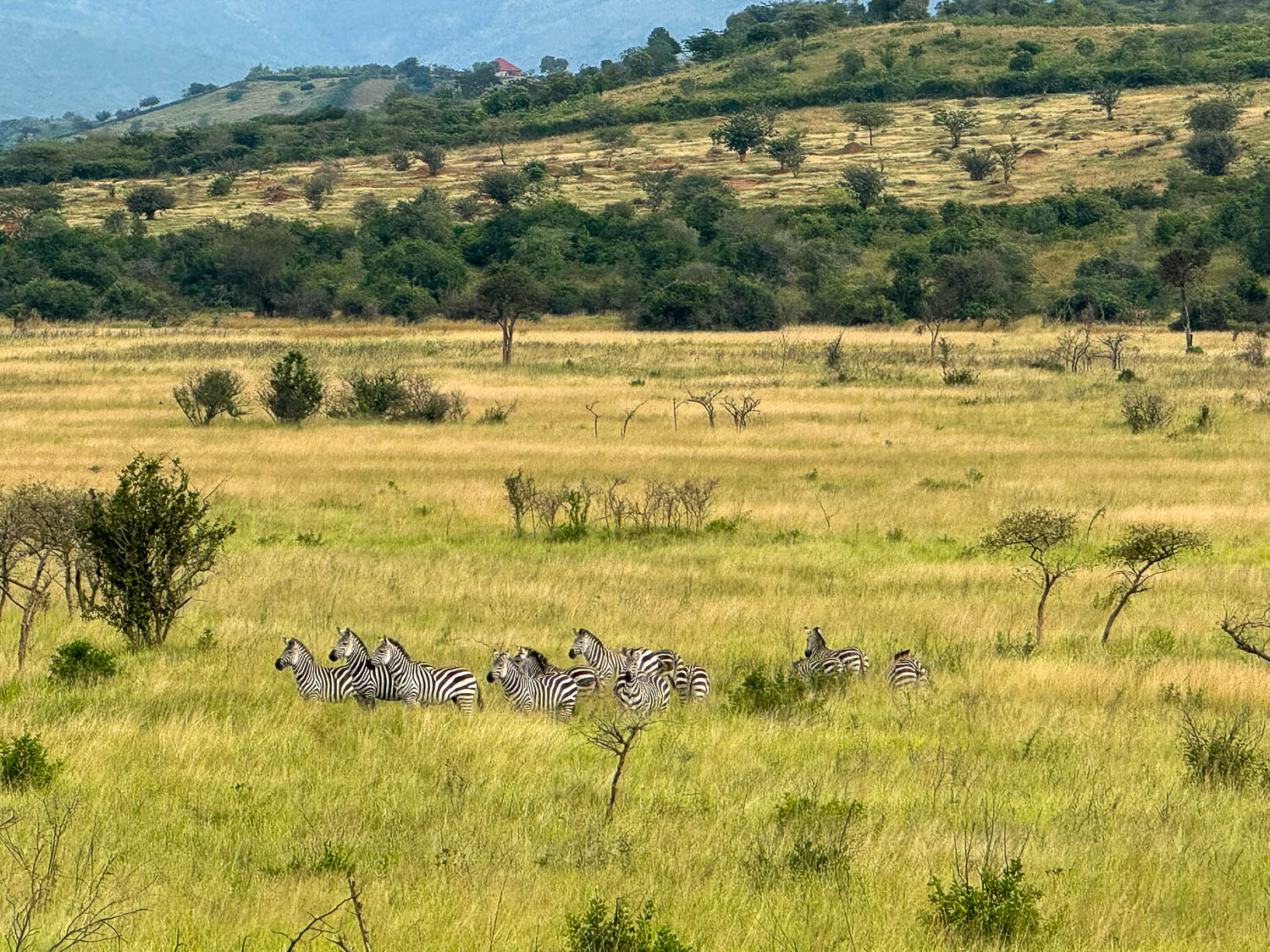
Nature is in full bloom in Akagera National Park. The landscape shifts seamlessly from open plains in the north to woodland savannah and lakes in the south, with its diverse vegetation contributing to the park’s rich biodiversity. The complex mix of savannah, grasslands, wetlands and woodlands also helps provide habitats and ongoing food sources for the park’s abundant wildlife.
Within Akagera you’ll come across fig trees, acacia trees, mahoganies, ebony, the striking and iconic baobab … and most tree species in between! Akagera’s plant life is almost as diverse as its animals.
Insider tip. The papyrus swamps form a vital part of Akagera’s ecosystem. These swamps form a large wetland area, with interconnected lakes and rivers, and are visually stunning. Make sure to look out for these tall, reed-like native plants and the incredible abundance of water birds that live within them!
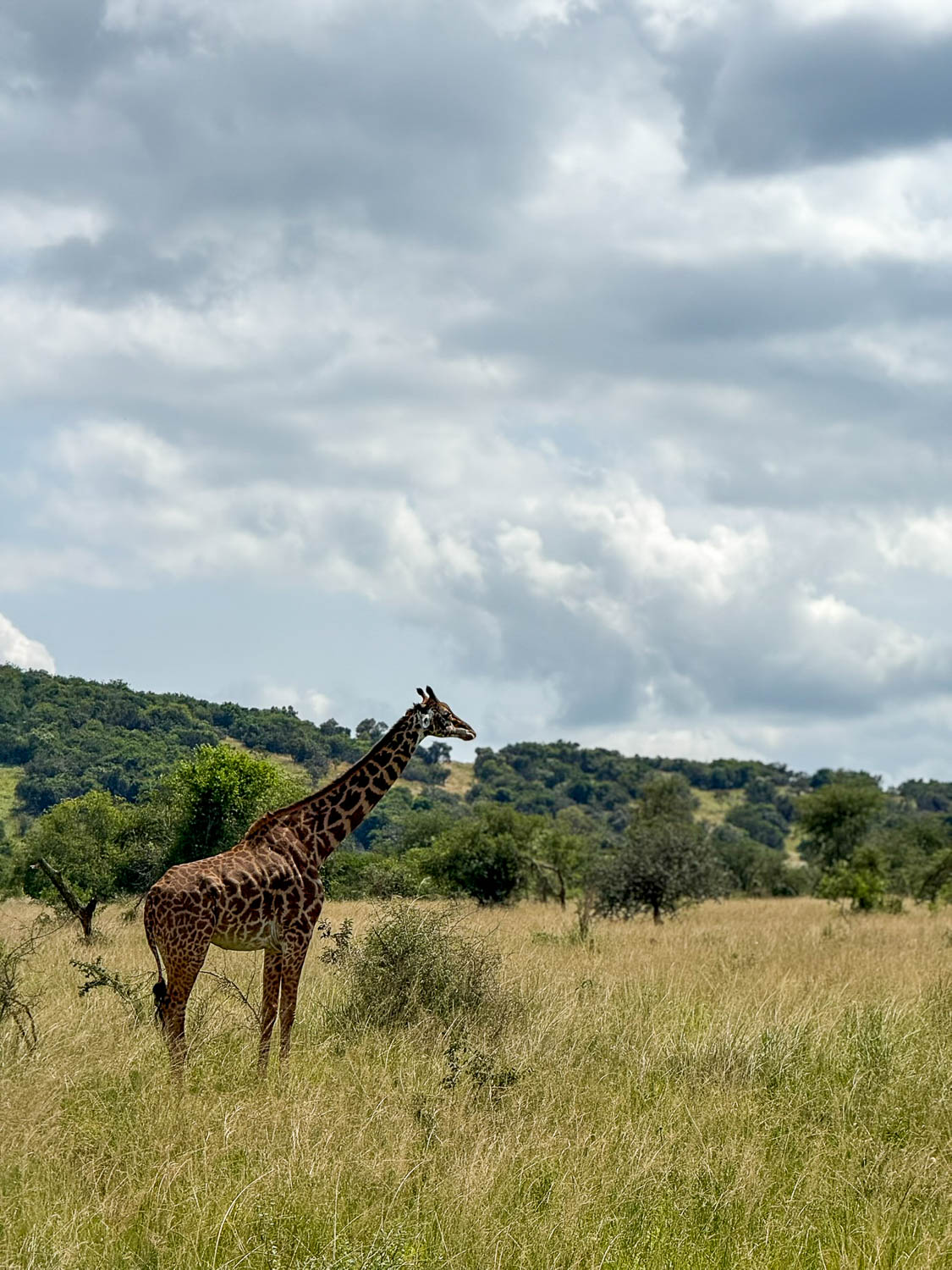
Insider tip. Keen to see herds of wild zebras, antelopes and buffalo? Head for the savannah grasslands, where these grazing animals like to congregate. Pods of semi-submerged hippos more your thing? Head for the park’s wetlands, particularly the edges of Lake Ihema.
Fun fact. The acacia woodlands within Akagera are well-suited to the park’s semi-arid conditions and afford herbivores in particular decent shade and food sources.
Akagera is also home to several rare and threatened plant species, including the bright yellow Nile Tulip or Nile Trumpet (Markhamia lutea) and the Guinea Eulophia or broad-leaved ground orchid (Eulophia guineensis).
Insider tip. Keep your camera at the ready — the exceptional views throughout the park and its ever-changing flora make Akagera a photographer’s dream!
Activities Within the Park
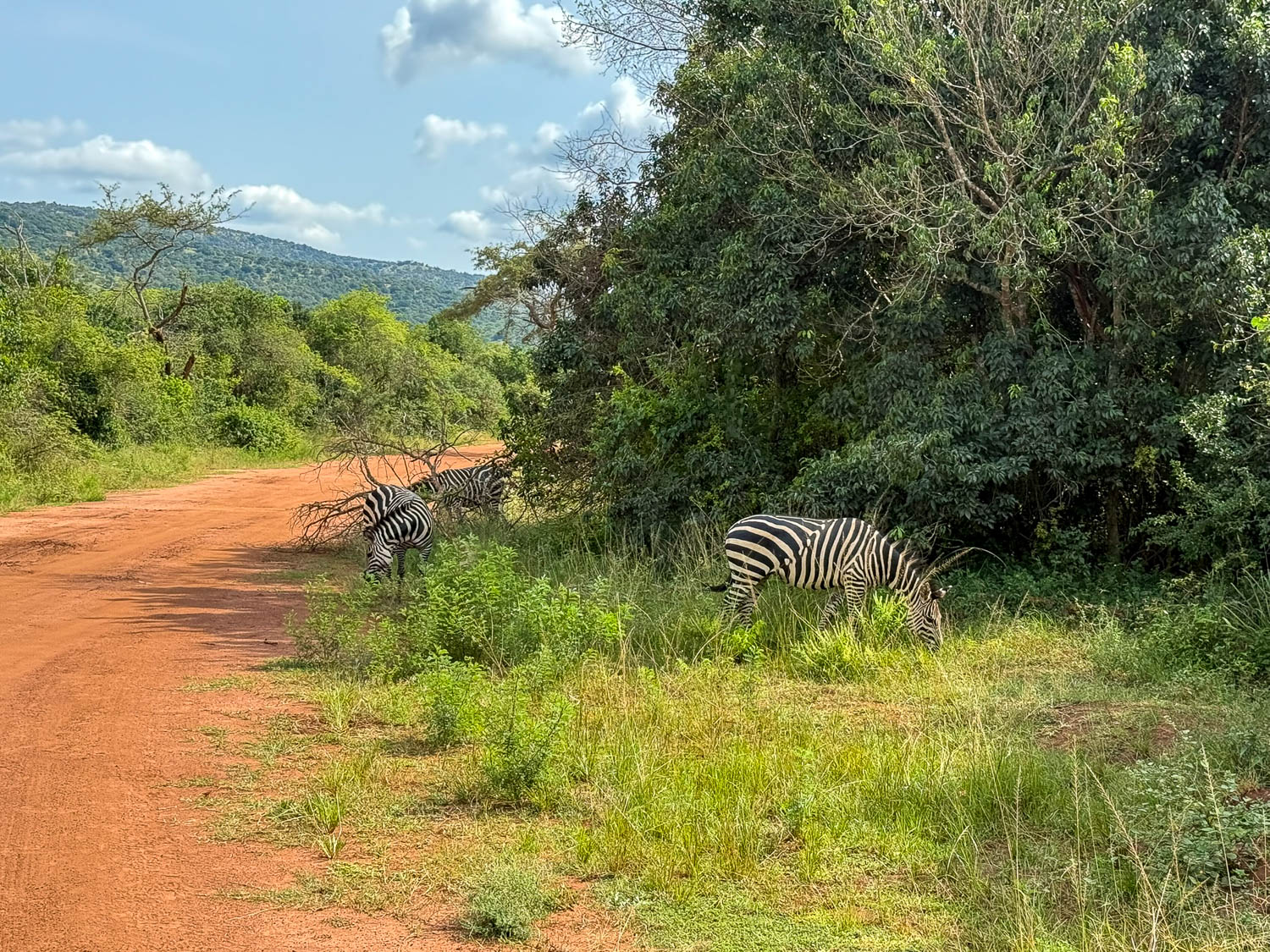
Akagera National Park affords visitors the opportunity to partake in numerous activities, the majority of which are best enjoyed during the dry season.
Game Drives
Guided game drives (or safaris) are the most common way to experience the best of Akagera. Nothing beats a safari in an open-top vehicle through the savannah, constantly on the look-out for lions, black rhinos, and the occasional serval cat or leopard. Be prepared to get up early if you’re heading to the park directly from Kigali for your game drive – our guide and driver picked us up from our accommodation at 4am!
Insider tip. Looking for something unique? Consider joining a night game drive, which offers visitors a glimpse of the park’s nocturnal wildlife. You might even see some bush babies, jackals, and leopards!
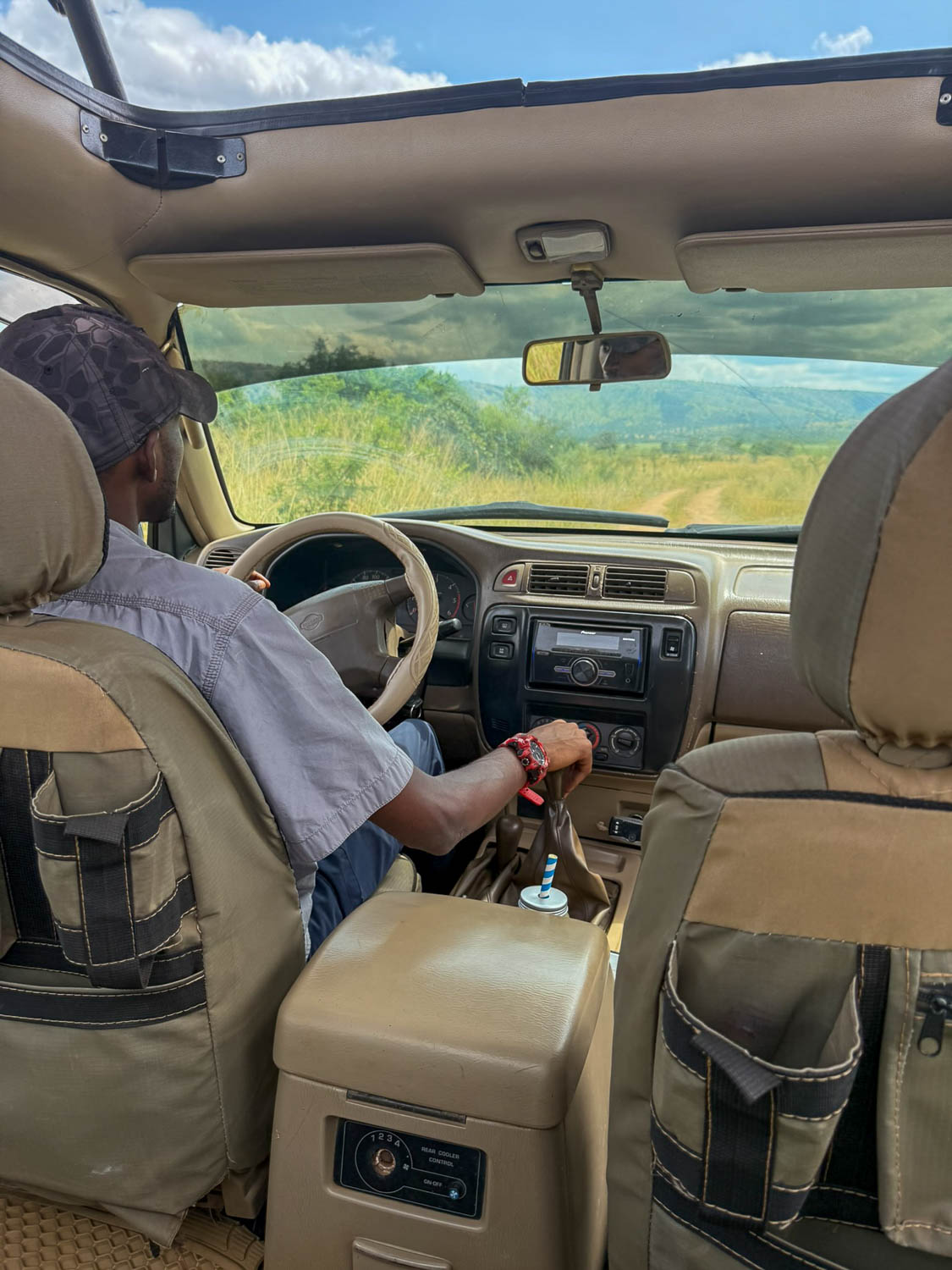
Insider tip. It is highly recommended to book a guide for game drives, as well as a driver. Local guides – often commissioned from within the local community surrounding the park – are generally well-trained and can help provide for visitors a more enriching, informative experience. These guides enhance wildlife spotting through expert knowledge, by offering valuable insights into the park’s history, culture and ecology, and by ensuring you a safe and comfortable visit.
Boat Safaris
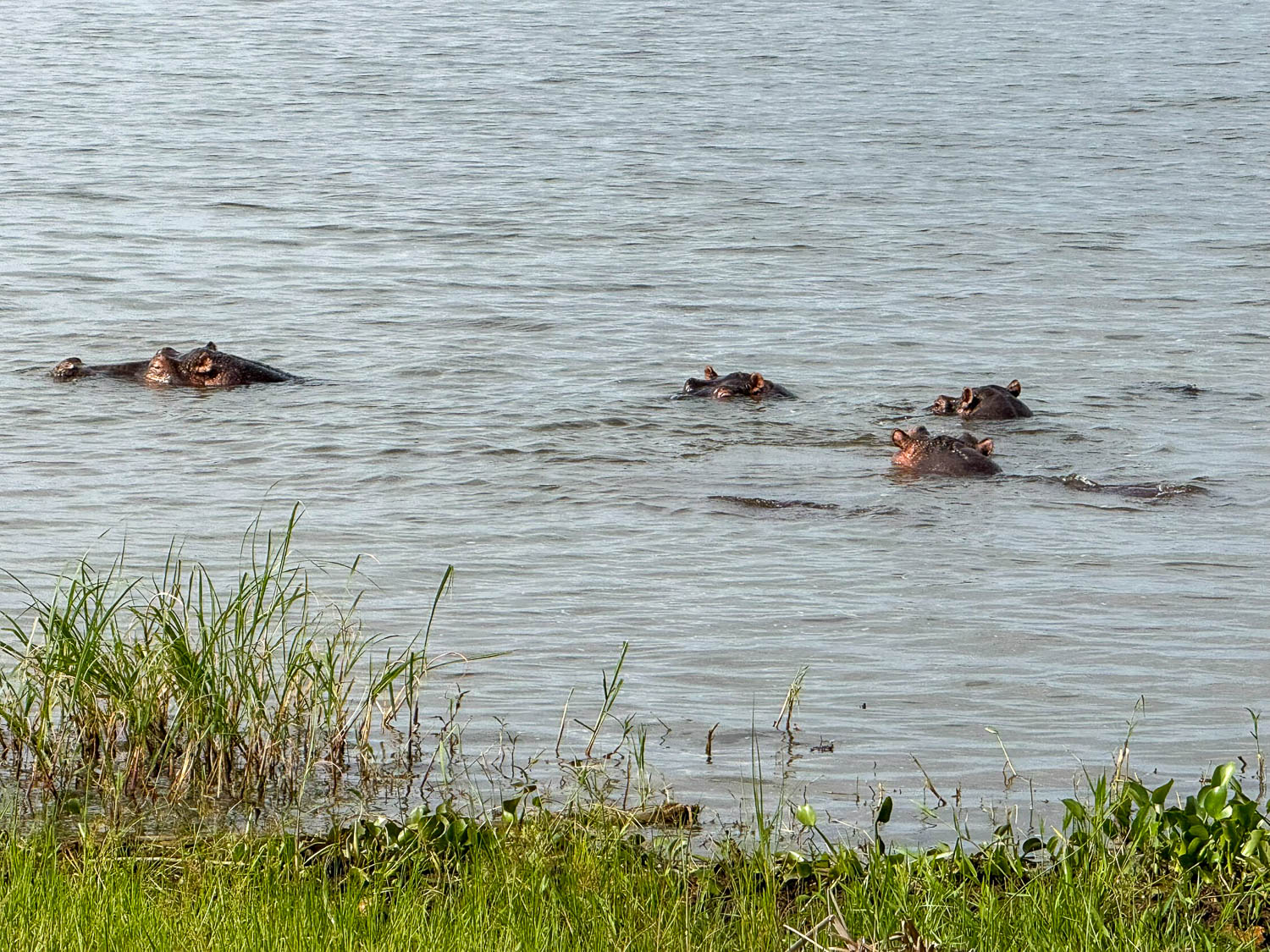
Best enjoyed if you have more than a day within the park’s boundaries, consider taking a boat ride on Lake Ihema (the largest lake within Akagera National Park, and one of the largest lakes in Rwanda) located in the south-east of the park. At Lake Ihema you’re likely to encounter crocodiles and hippos in the water, as well as buffalos and elephants at the water’s edge. The lake is also a birdwatcher’s paradise.
We highly recommend a boat ride on Lake Ihema if you’re seeking a more tranquil game viewing experience. Your guided boat tour takes place on a motorized vessel, and typically lasts for 1-2 hours. Pre-arranged tours are offered at scheduled departure times throughout the day.
Insider tip. Whilst there are a total of 10 different lakes within Akagera National Park, the primary focus for boat tours is Lake Ihema.
Insider tip. You can book a boat safari directly through a local tour operator or at the Akagera National Park headquarters.
Fishing
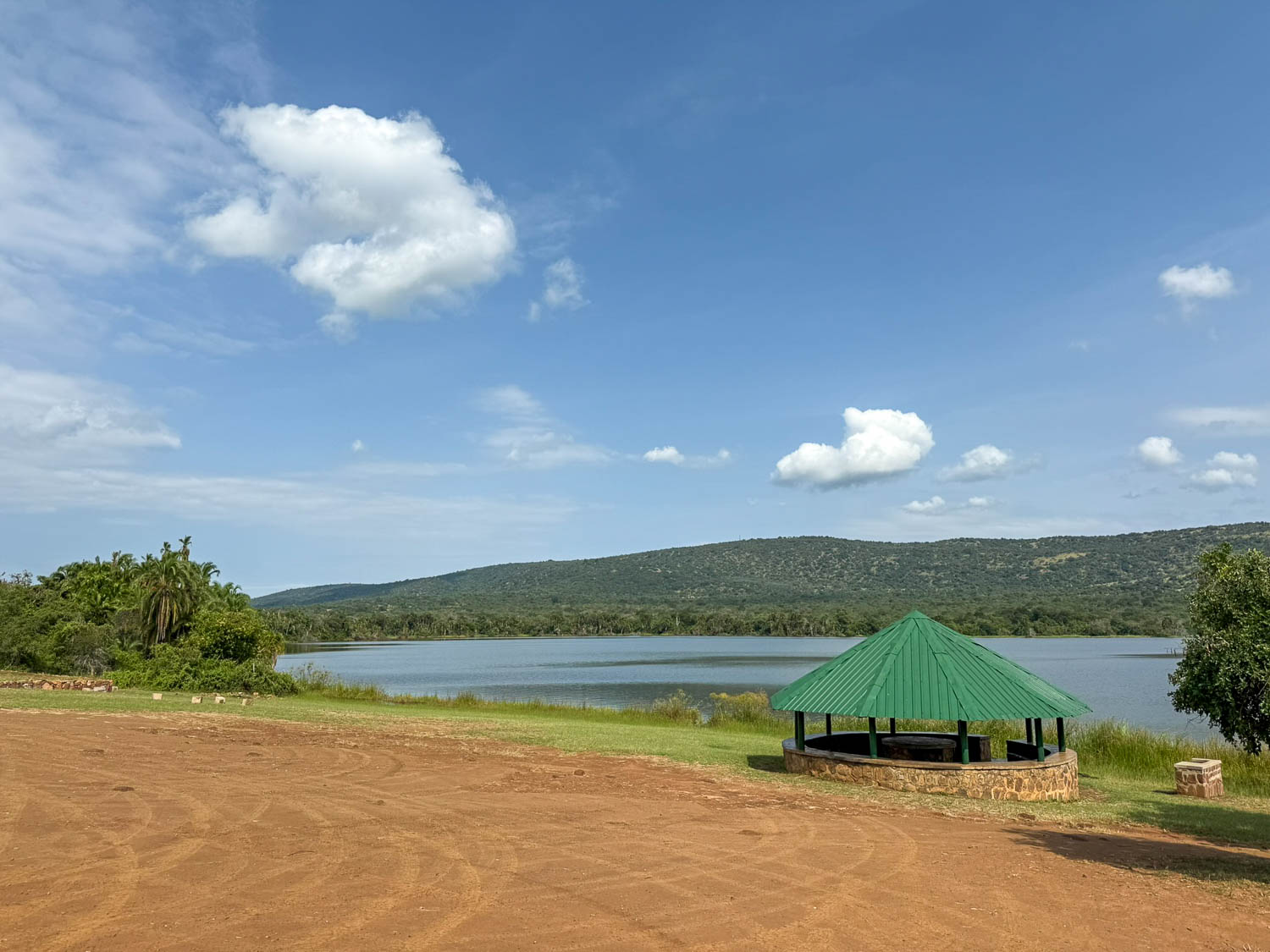
Done with your boat tour on Lake Ihema? Why not head next door to Lake Shakani for some sport fishing (indeed the only place in the park where you can partake in this activity!)? Akagera encourages sustainable fishing practices, where visitors can participate in the occasional catch-and-release tournaments, and learn about different fishing methods (gill nets, cast nets, and traditional spear or arrow techniques) as they fish for tilapia and catfish.
Insider tip. It’s recommended to book any sport fishing activities within Akagera at least six months in advance, especially if you’re considering entering one of the park’s fishing competitions. It’s also recommended you bring your own fishing equipment with you, as supplies within the park can be limited.
Insider tip. Looking to stay overnight in Akagera? Lake Shakani also boasts a campsite, offering additional (and certainly scenic!) opportunities for relaxation in and near the water.
You can also fish on Lake Ihema, but if you remember the section above about boat tours on that particular lake, you may recall there are a lot of hippos and crocodiles in and around the water……..you have been warned!
Insider tip. You’ll need to obtain a fishing permit if you plan to fish within the park’s boundaries. These permits are issued by the Akagera National Park Authority and cost US$25 per person per day (US$15 for children aged between 6 and 12).
Hiking
Yes, there may be lions and elephants and crocodiles and the deadly hippos within the boundaries of Akagera, but it’s also possible to hike in this beautiful national park! In fact, the park offers a variety of hikes and nature walks, permitting visitors to explore and experience Akagera’s diverse landscape and wildlife on foot. Through these activities, you may also have the opportunity to interact with local communities.
Insider tip. Make sure to pack all the appropriate and necessary hiking gear for any walks you choose to undertake.
Some of the most popular hikes within Akagera National Park include:
- Walk The Line Tour. This 2-hour guided hike permits visitors the opportunity to walk along the park’s 7km (4.35mi) perimeter fence, offering a unique glimpse into the life of a park fence attendant and insights into the park’s electric fence and its role in park conservation. On this tour you’ll be afforded views of the savannah plains, woodland forests and rolling hills. The tour costs US$30 for adults and US$20 for children, and is led by a community volunteer guide.
- Primitive Walking Trail. Also known as Trail de Akagera, this 40km (24.9mi) four-day/three-night, self-guided, exploratory hike affords visitors the opportunity for an immersive walking experience within the park, as well as camping under the stars (without tents!). Think of this hike as a “hunter gatherer” experience of the 21st century: you’ll be required to carry with you all necessary gear, including food and water, as this trail traverses remote areas of Akagera.
- Guided Nature Walks. Shorter guided walks – anywhere from one to three hours – are offered by Akagera park rangers, and provide visitors insights into the park’s flora and fauna. The length of each walk depends upon your own interest (for example, a specific type of wildlife or flora) and fitness level.
- Multi-Night Walking Safaris. Looking for a more structured experience than the Primitive Walking Trail? Book yourself a multi-day hike, complete with camping equipment provided, and the opportunity to stay overnight at different campsites within the park.
Cultural Experiences: Supporting Local Communities
Taking the time to truly experience all that Akagera has to offer visitors isn’t simply about “visiting” the park and trying to spot the Big Five: it’s also about getting to know the people who live around, and work within, it. Consider participating in one of the cultural experiences below, permitting you to engage with local communities and learn about traditional Rwandan customs and the local way of life. In turn, you’ll not only be enriching your own visit to Akagera, but also supporting nearby local communities, contributing to the economic well-being of these communities, and ultimately playing your role in responsible tourism.
- Guided community tours. Learn about traditional craft-making, sample local foods, gain insight into local customs, and interact with locals living right on the edge of the park itself.
- Dairy farms. The area surrounding Akagera is a major cattle-producing region and important for dairy production. Visit one of the local communities who earn their living through dairy farming, and learn more about the importance of cattle and milk in the Eastern Province, with the opportunity for hands-on dairy farming activities, including milking a cow!
Fun fact. The Akagera wetlands are vital for dairy production in the region, with the lakes providing water for cattle, and the fertile land suitable for growing fodder.
Fun fact. The Eastern Province of Rwanda supplies nearly half the country’s milk.
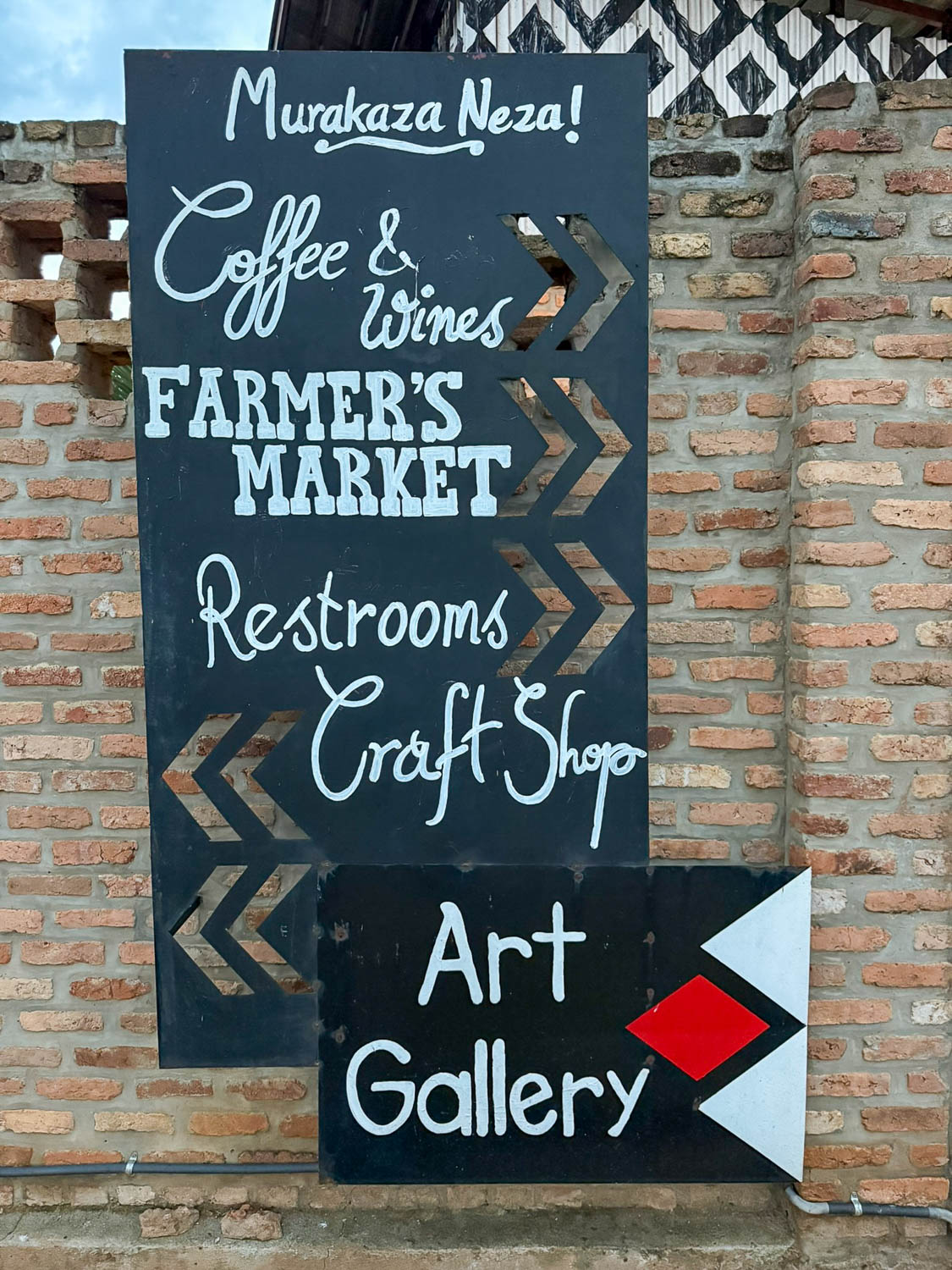
- Imigongo Art Center. On your way out to Akagera National Park from Kigali, consider stopping for an early morning coffee and restroom break in Kayonza, at this large cultural center (most tours will stop here!). At Imigongo you’ll find numerous art galleries and large showcase rooms, many featuring the unique Rwandan artform “Imigongo”, where cow dung (yes, you heard that right!) is used to create intricate patterns on wooden boards and other materials. You can even try it for yourself during your visit!
Fun fact. In recent times – and particularly following the 1994 Rwandan Genocide – Imigongo has become a symbol of resilience and cultural revival.
- Humure Refugee Village Tour. Located about 40-45 minutes from Akagera National Park, this village was settled by refugees from Tanzania. Stop by the village for a cultural immersion experience of the unique blend of Tanzanian and Rwandan cultures and the community’s way of life: visit local cooperatives and homesteads, enjoy traditional dances and plays, participate in traditional cooking and food preparation, gain insight into cultural practices, and learn about traditional farming methods. Overnight stays can also be arranged.
Other cultural experiences near Akagera National Park include opportunities to learn about traditional methods of beekeeping and honey-making, and visiting local beer-brewing houses to learn about the production of Rwanda’s traditional banana brew, “urwagwa”.
Conservation Efforts and Sustainability Initiatives
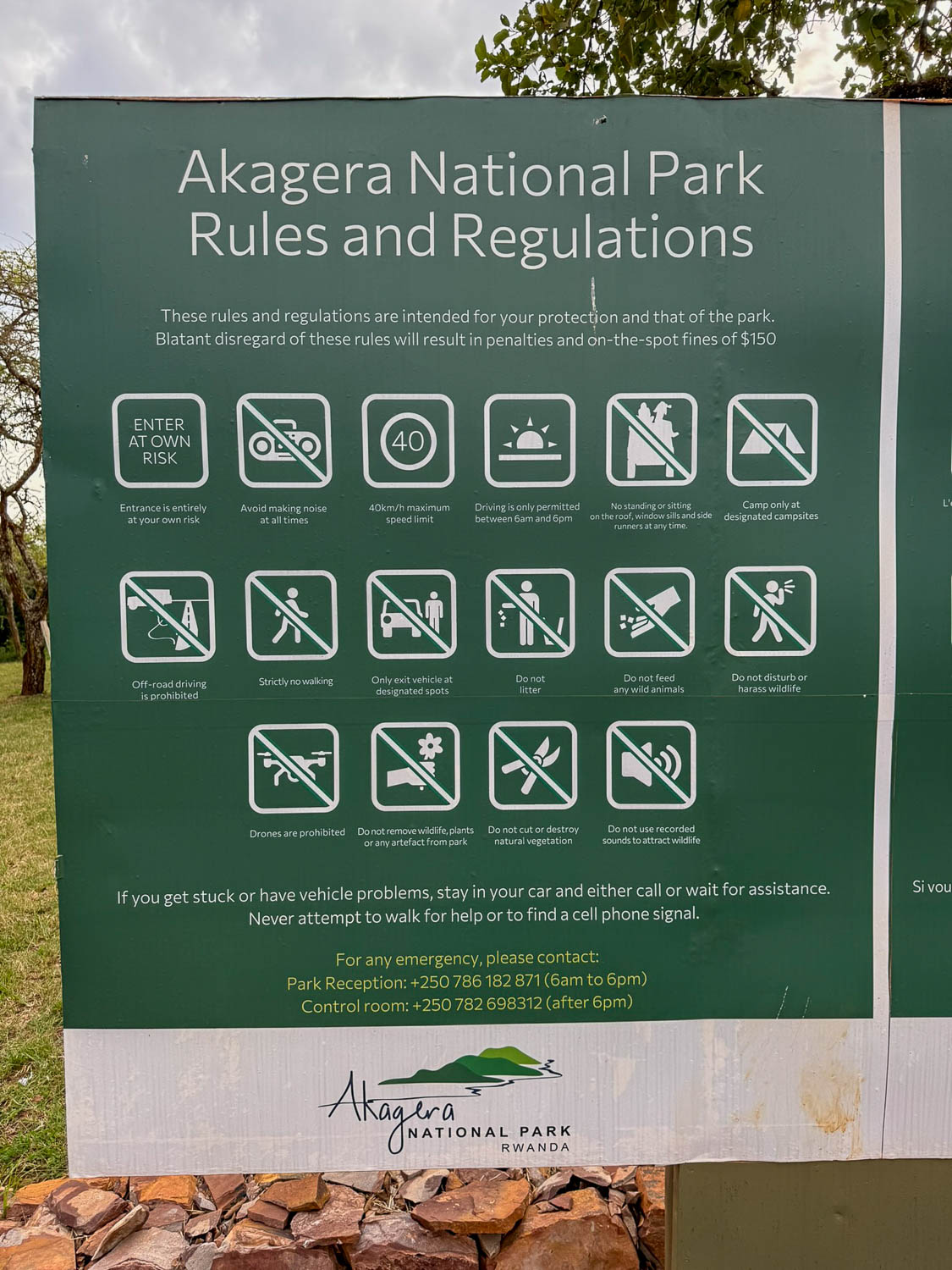
Over the years, Akagera National Park has faced numerous challenges, but the resiliency of the park, and the sustained efforts of local communities, has seen it rebound each and every time. Indeed, Akagera is today far more than a beautiful park — it’s a beacon of long-term success in African conservation.
One of the biggest challenges the park has faced over the years has come from poachers – in particular, the poaching of rhinos, leading to their extinction within the park for a period of 10 years. Invasive species – including the water hyacinth (Eichhornia crassipes) – have also caused issues, spreading rapidly into some of the park’s lakes, often outcompeting native plants for sunlight, oxygen and other nutrients, and in turn drastically altering wetland ecosystems. Human encroachment due to refugee resettlement following human conflict has also led to habitat destruction and wildlife loss.
Despite these near-devastating challenges, Akagera has made incredible strides in overcoming each of them, in part thanks to a joint management agreement between African Parks and the Rwanda Development Board. The successful reintroduction of endangered species that include lions and black rhinos, together with significant community efforts to combat poaching, has helped to dramatically restore wildlife populations, which in turn has increased tourism – leading to a thriving tourism industry.
Fun fact. In 1975, a total of 26 young elephants were relocated to Akagera from the Bugesera region of eastern Rwanda. Their relocation was key to (a) addressing human-elephant conflict in the area, and (b) restoring the species within Akagera.
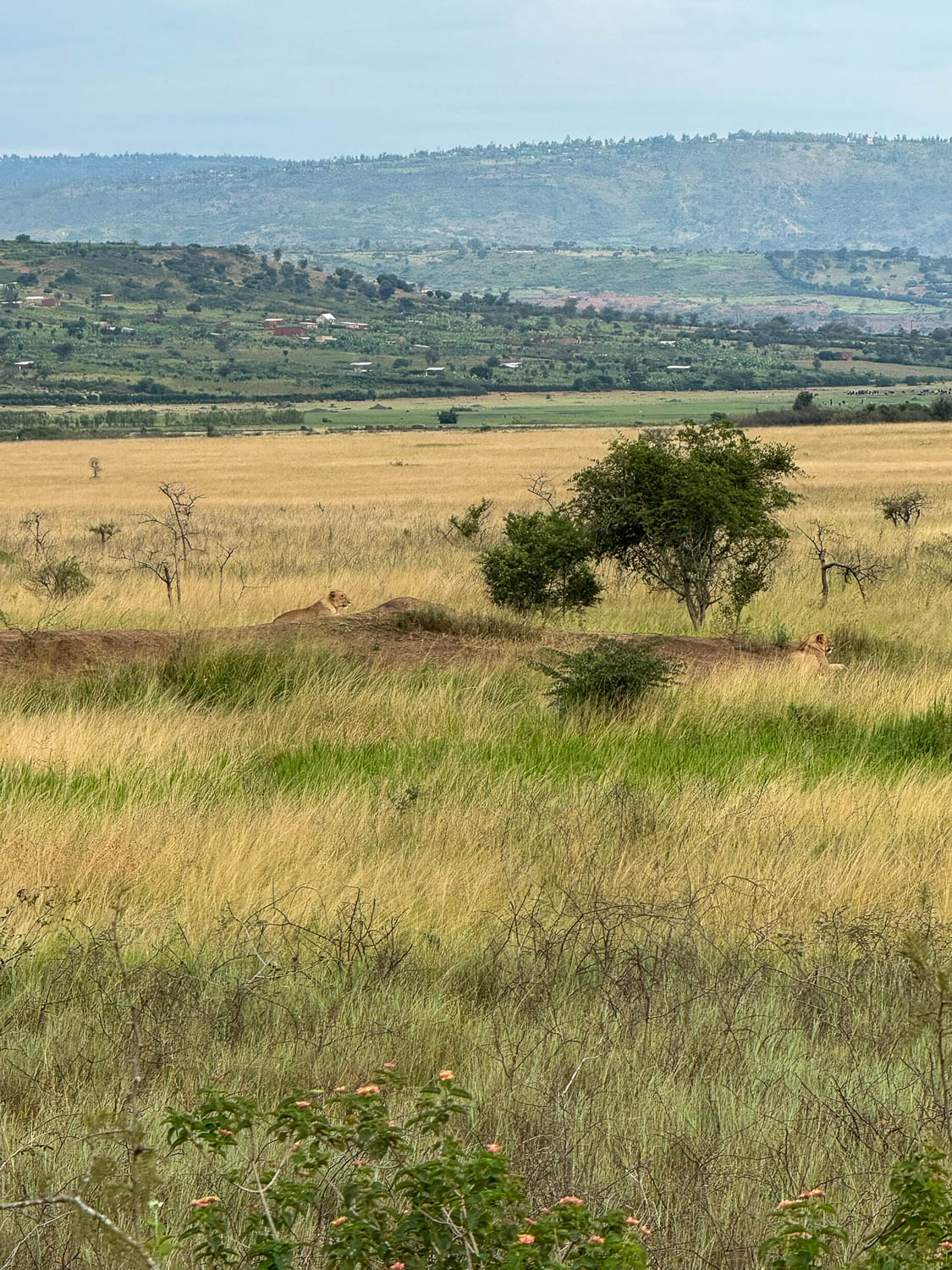
Fun fact. Thanks to careful reintroduction programs that began in 2015, the current population of lions within Akagera has grown from near extinction to almost 60.
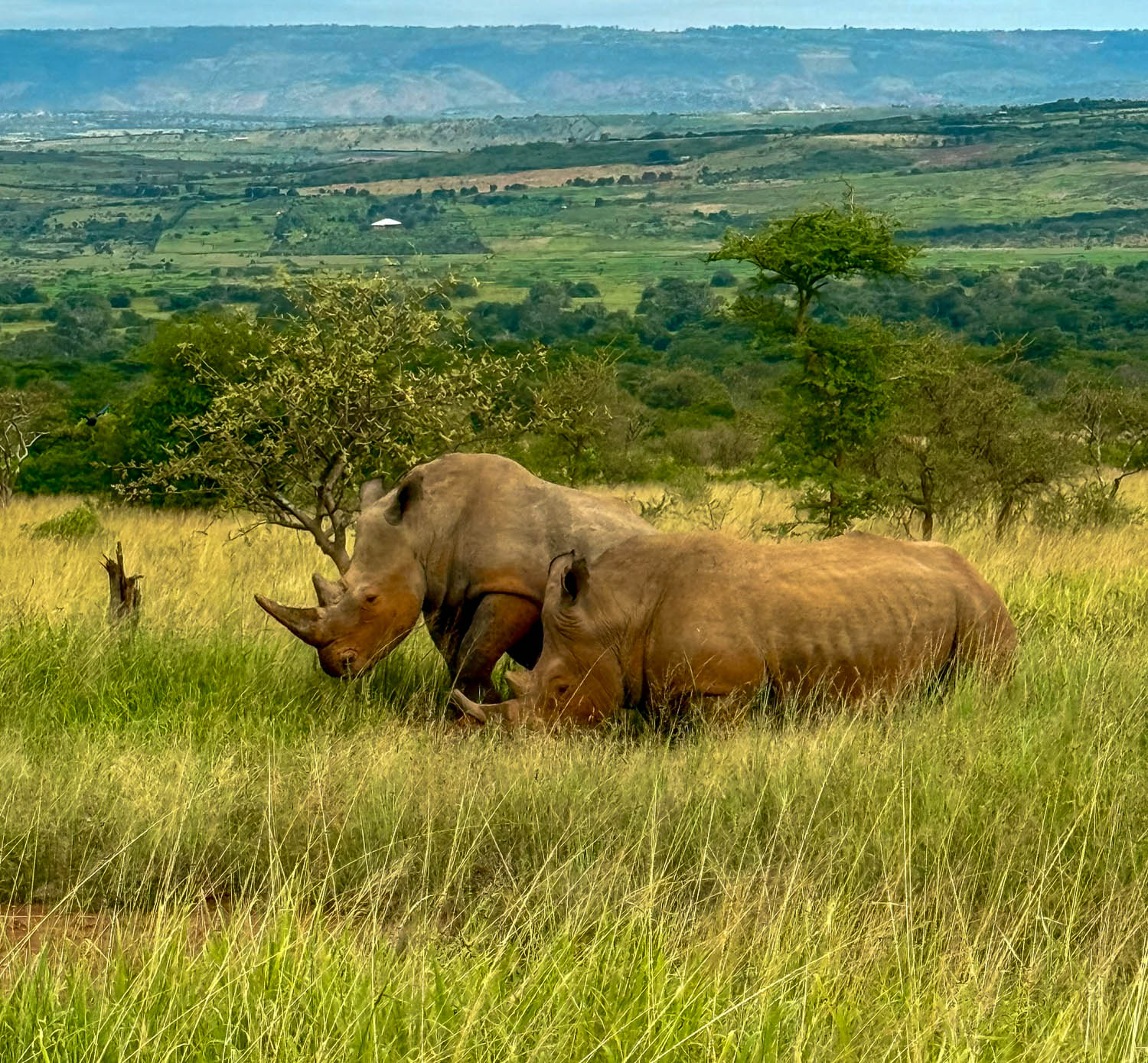
Fun fact. In 2019, five black rhinos were relocated to Akagera from European zoos: this was the largest-ever translocation of rhinos from the European continent to Africa. In 2021, 30 southern white rhinos were relocated to Akagera from South Africa: at the time, this was the largest rhino translocation in history. Four years later an additional 70 southern white rhinos were moved from South African to Akagera. This latter relocation – transporting the rhinos over 3,400km (2,112mi) by truck and plane – occurred less than two weeks after our visit!
Tourism within Akagera National Park doesn’t simply support the park itself — it also helps support local communities surrounding it. Park revenue today funds community guides, local craftsmen and women, schools and other educational initiatives, and health clinics; the park’s fence lines are patrolled by trained fence attendants and anti-poaching units; and solar power, waste reduction, and drinking water projects all help to reduce environmental impact. Local communities are actively involved in these ongoing conservation efforts, contributing further to Akagera’s long-term sustainability.
Accommodation in Akagera National Park
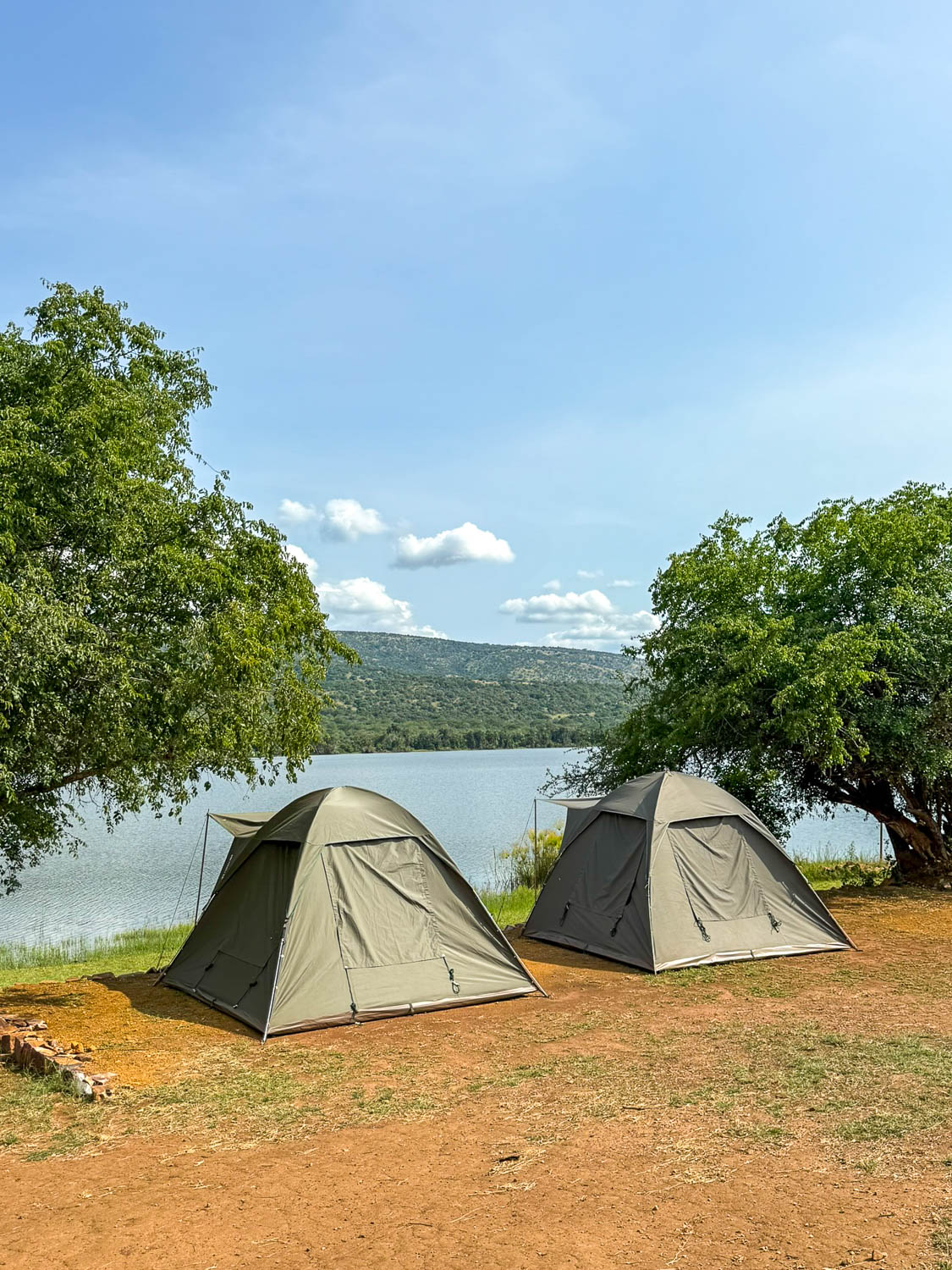
Looking to stay awhile inside the park? You may wish to consider an overnight stay or two: there are numerous accommodation options available within the park boundaries, with something to fit every budget and preference.
- For a luxury experience and some extra creature comforts, book a night at the Magashi Camp (located near the northern end of the park), Ruzizi Tented Lodge (a private, comfortable retreat that focuses on sustainability and can host up to 20 guests), or Mantis Akagera Game Lodge (a well-established go-to with spectacular panoramic views of Lake Ihema).
- Mid-range options within the park include the Akagera Rhino Lodge (a unique eco-tourism experience located at the edge of the park) and Karenge Bush Camp (a true off-grid, charming and scenic bush camp experience, with early-morning access to the Kilala Plains).
- The most budget-friendly options include the four campsites housed within the park, each offering campers basic facilities in tranquil surroundings: Muyumbu and Shakani in the south, Mihindi in the north-east, and Mutumba in the middle of the park.
Fun fact. The Muyumbu campsite is situated on a ridge overlooking Lake Ihema and even affords visitors views of Tanzania!
Insider tip. Stay at the Shakani campsite for the best up-close (but not too close!) viewing of hippos. Stay at the Mutumba campsite – located in the game-rich Mutumba Hills – for the most remote camping experience within the park.
Insider tip. Although the park’s campsites are open year-round, the best time for camping is during the drier, warmer months (June through September), when the grass (especially around the lake shores) is shorter and wildlife viewing is optimal.
For an excellent accommodation option near the park (but not within the park’s boundaries itself), consider the Akagera Transit Lodge (a community lodge, about 2km/1.24mi from the park’s main entrance) or the Urugo Eco-Lodge (located about 45 minutes west of the park’s main entrance, and offering simple accommodations as well as dining options, cultural activities and tours).
Insider tip. Most tour operators can help you coordinate accommodation, as well as private safaris.
Final Thoughts
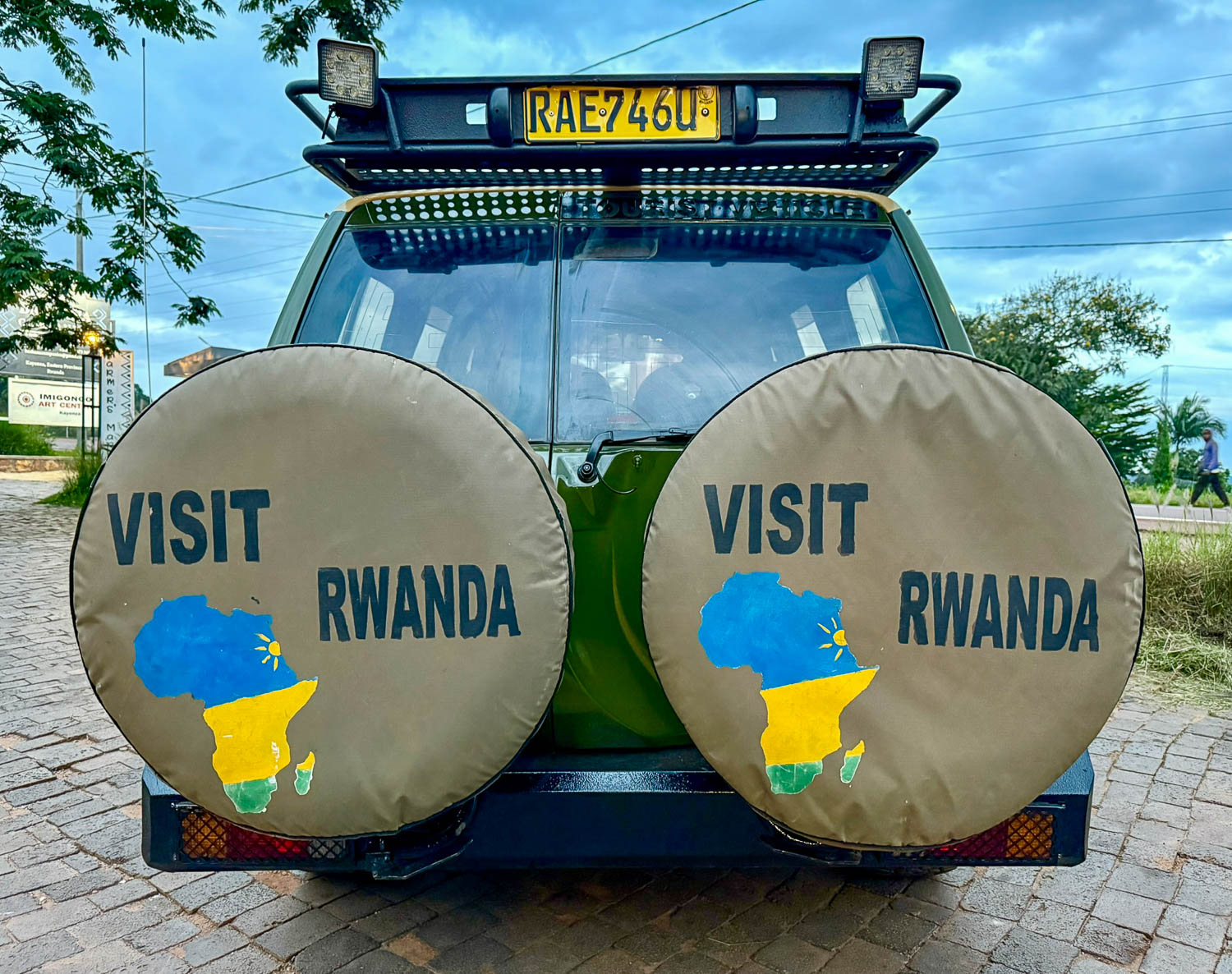
Akagera National Park is a breathtaking mix of spectacular scenery, diverse ecosystems, incredible wildlife, and community-powered conservation. Established in the mid-1930s to protect the vast wetlands and woodlands of the Eastern Province of Rwanda, this once-endangered wilderness now thrives with wildlife and bird species. Without question, this haven for biodiversity and community engagement is a must-visit during your time in Rwanda.
Over the years, Akagera’s boundaries may have shifted, but its importance has not. The park is now internationally recognized for its resilience, transformation, and conservation innovations: here you’ll discover a more-than-successful, inspiring example of wildlife conservation and restoration that offers real-world benefits. Akagera has created not only a thriving ecosystem, but has also built around it, and within it, strong community engagement that has led to increased employment, revenue-sharing schemes, educational initiatives, infrastructure projects, and other economic opportunities for local communities. Akagera National Park is indeed a symbol of Rwanda’s commitment to protecting Africa’s wild areas and to increasing genuine, grassroots sustainable economic development.
Whether you’re seeking a soul-stirring journey through Africa’s wild plains, a relaxing day out on Lake Ihema, or a heart-pounding game drive under the stars, Akagera will not disappoint. This wild frontier is not simply one of Rwanda’s national parks — it’s a national treasure. Come for the animals. Stay for the communities.
What say you? Let’s start planning your visit to Rwanda’s Akagera National Park!
FAQs
Is Akagera National Park worth visiting?
Yes, Akagera National Park is absolutely worth visiting—especially if you’re looking for a classic African safari experience in Rwanda. The park is home to the Big Five, diverse landscapes, and activities like game drives and boat safaris on Lake Ihema, making it one of the best wildlife destinations in East Africa.
Can you see the Big Five in Akagera National Park?
Yes, you can see the Big Five—lion, leopard, elephant, buffalo, and rhino—in Akagera National Park. Thanks to successful conservation and reintroduction programs, Akagera is now one of the few places in Rwanda where all five species can be spotted, especially on guided game drives.
What is the best time to visit Akagera National Park?
The best time to visit Akagera National Park is during the dry season from June to September. Wildlife is easier to spot as animals gather around water sources, and road conditions are much better for game drives. The wet season offers lush scenery and excellent birdwatching but can make travel more challenging.
How many days do you need in Akagera National Park?
Most visitors spend one full day in Akagera National Park, but staying at least 2–3 days is highly recommended. More time allows for multiple game drives, a boat safari on Lake Ihema, and a better chance of spotting elusive wildlife like leopards.
What can you do in Akagera National Park?
Top things to do in Akagera National Park include guided game drives, boat safaris on Lake Ihema, birdwatching, fishing, and guided nature walks. Visitors can also take part in cultural experiences with local communities near the park.
Explore More Of Rwanda
-
Savor Traditional Rwandan Cuisine: Top Dishes to Try
Discover the rich flavors of Rwandan cuisine — from comforting staples to must-try dishes like Isombe, Agatogo, brochettes, and Mizuzu.
-
Your Guide to the Best Things to Do in Kigali, Rwanda
Kigali, Rwanda’s capital, blends history, culture, and modern energy. This guide to the best things to do in Kigali covers top attractions, vibrant neighborhoods, local markets, coffee culture, and day trips across Rwanda.
-
Is Lake Kivu Safe? Rwanda’s Beautiful African Haven
Is Lake Kivu safe to visit? Yes — this beautiful Rwanda lake is safe for swimming, boating, and relaxing, with expert monitoring ensuring a secure and enjoyable experience.
-
Lake Kivu, Rwanda: Top Things To Do and Travel Guide
Lake Kivu, Rwanda is one of Africa’s most scenic Great Lakes, known for its calm waters and lush hills. Discover the best things to do, from boat cruises and island visits to exploring lakeside towns like Gisenyi and Kibuye.
-
Musanze, Rwanda: Explore the Best Things To Do
Discover Musanze, Rwanda’s gateway to Volcanoes National Park. This guide covers gorilla trekking, the best things to do in Musanze, cultural experiences, lava caves, hiking, and the twin lakes.