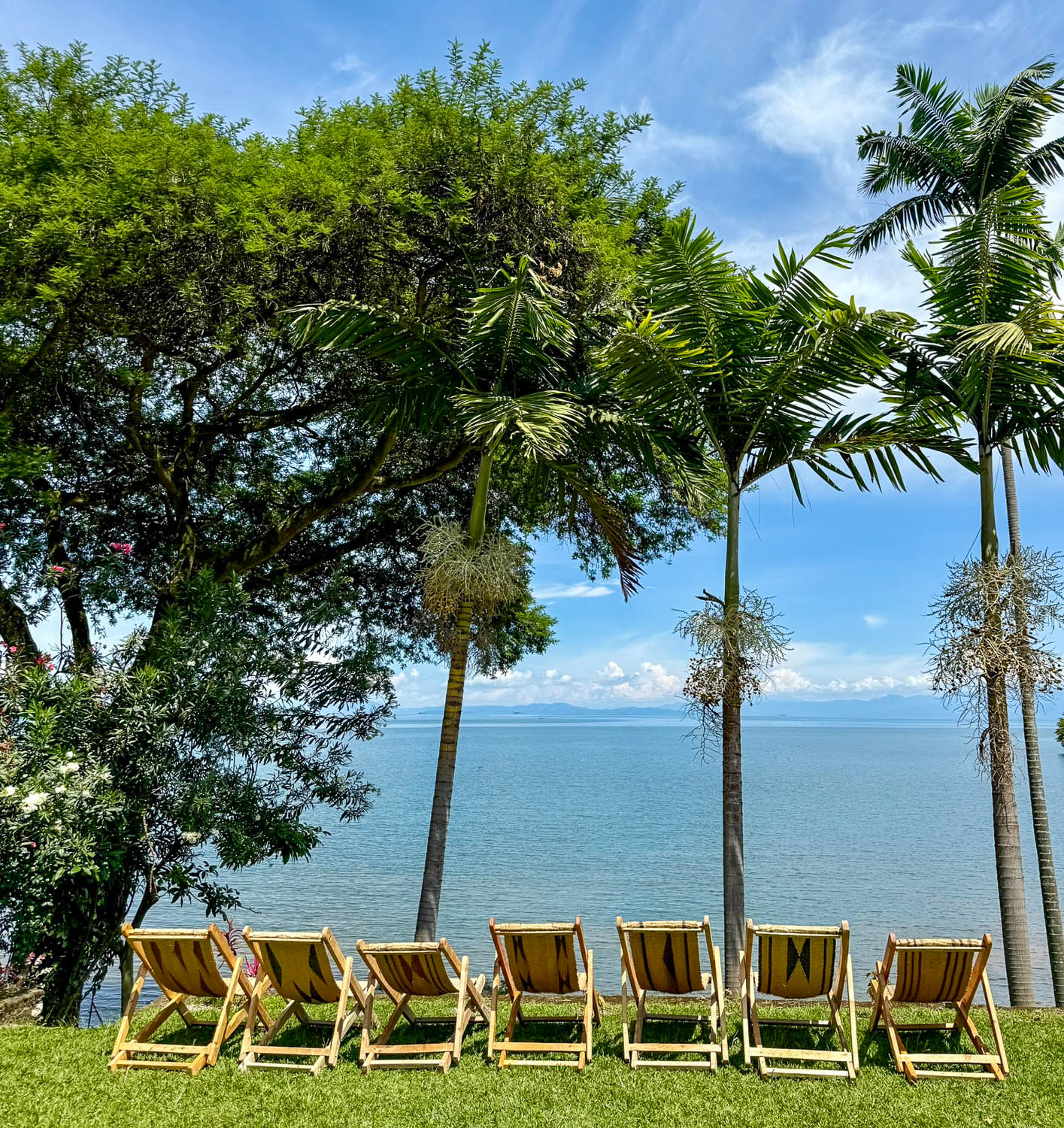
Tucked neatly between the towering mountains of western Rwanda and the lush backdrop of the Albertine Rift, Lake Kivu is one of Africa’s Great Rift Valley gems — an enchanting and lesser-known paradise offering a mix of culture, adventure, and serenity.
This large freshwater lake is as rich in biodiversity and culture as it is in scenic wonder. Whether you’re paddling through its calm waters, exploring different islands that dot its surface, or simply sipping local coffee at a lakeside property, there is no shortage of unforgettable experiences to be had here. If you’re looking to travel with purpose, this is one of those places that captures both the beauty of Rwanda, as well as the soul of East Africa.
Read on, fellow wanderers, as we guide you through the very best Lake Kivu Rwanda has to offer travelers, drawing on our experience as first-time visitors to Rwanda, and now lifelong admirers of this stunning corner of the globe.
Quick Tips
Here are some insider tips to help you make the most of your visit to Lake Kivu, Rwanda.
- Lake Kivu is one of Africa’s Great Lakes, shared by both Rwanda and the Democratic Republic of the Congo.
- Lake Kivu is remarkably deep, with layers of water that trap methane and carbon dioxide, the former currently being harnessed for renewable energy.
- Rwanda’s dry season (June through September) is the best time to visit, with clear skies, comfortable temperatures, and great conditions for outdoor activities.
- Gisenyi, Kibuye, and Cyangugu are the main lakeside towns, each with their own personality.
- Getting around Lake Kivu is easy: take buses, moto-taxis or private taxis, bike or hike, or take a boat cruise to explore the shoreline and nearby islands.
- Lake Kivu produces over 20,000 tons of fish annually, supporting the livelihoods of more than half a million people in the region.
- Water sports, including swimming, are popular activities on the lake.
- Consider a hike along part of the Congo Nile Trail, a visit to the Rubavu Hot Springs or a nearby national park, or simply relax by the lake with a good book in hand.
- There are plenty of dining options in Gisenyi and Kibuye, and a plethora of accommodation types throughout the region.
Follow these tips and you’ll be ready to visit Lake Kivu, Rwanda!
Plan Your Trip
Some links below may earn us a small commission at no extra cost to you. We’re truly grateful for your support, as it allows us to continue sharing meaningful travel experiences and practical travel insights with you. Read our full disclosure here.
Planning your visit? We’ve gathered recommended tours and activities, along with trusted travel tools, to help you explore with confidence and ease.
Tours & Experiences
Prefer additional options? Click below to discover more incredible experiences tailored just for you!
Browse top Attractions and Activities in Rwanda.
Travel Essentials
Planning the rest of your trip? These are the platforms we personally use when organizing our travels. For more planning tools, visit our Travel Resources page or browse current promotions on our Travel Deals page.
An Introduction to the African Great Lakes
Lake Kivu is one of the most remarkable of the African Great Lakes, nestled on the border of Rwanda and the Democratic Republic of the Congo. What makes it extraordinary is not just its surface area — spanning roughly 2,700 square kilometers (1,042 square miles) — but the unique geological forces at play below its lake bed.
Lake Kivu sits within Africa’s Great Rift Valley, where tectonic plates slowly drift apart. This shifting earth has created a basin of deep waters, with Lake Kivu ranked the 20th deepest lake in the world by maximum depth (475-480m or 1558-1575 feet, depending on source) and 13th deepest lake in the world by average depth (220-240m or 722-787 feet, depending on source). These deep waters trap massive amounts of methane and carbon dioxide, which are currently being extracted to produce electricity for the region – a growing project central to Rwanda’s economic development.
You can read more about Rwanda’s concerted efforts at turning a potential environmental hazard (exploding gases) into a source of renewable energy, in another one of our articles, Lake Kivu: Is It Safe To Visit This Beautiful African Haven?
Lake Kivu’s Geography
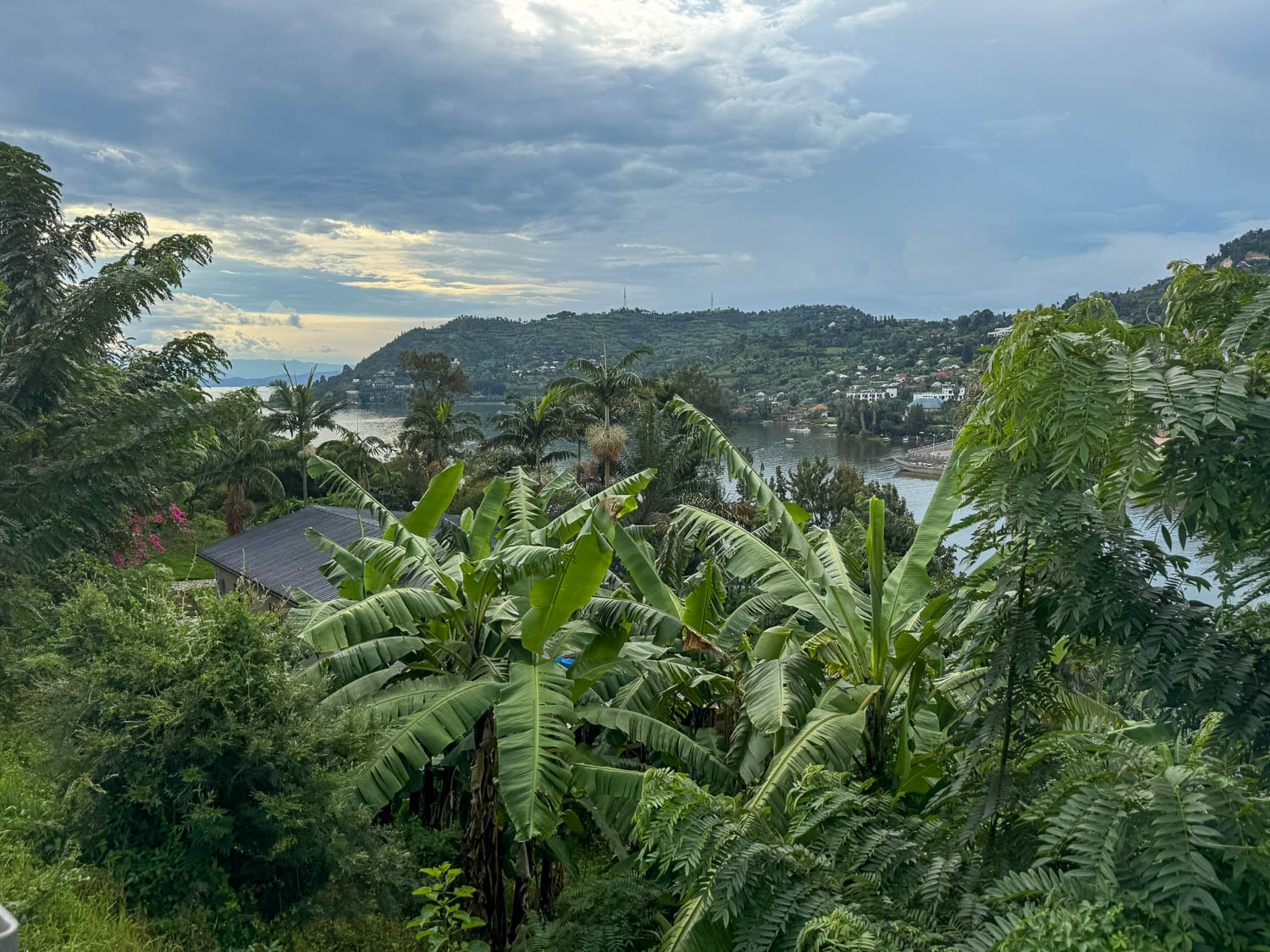
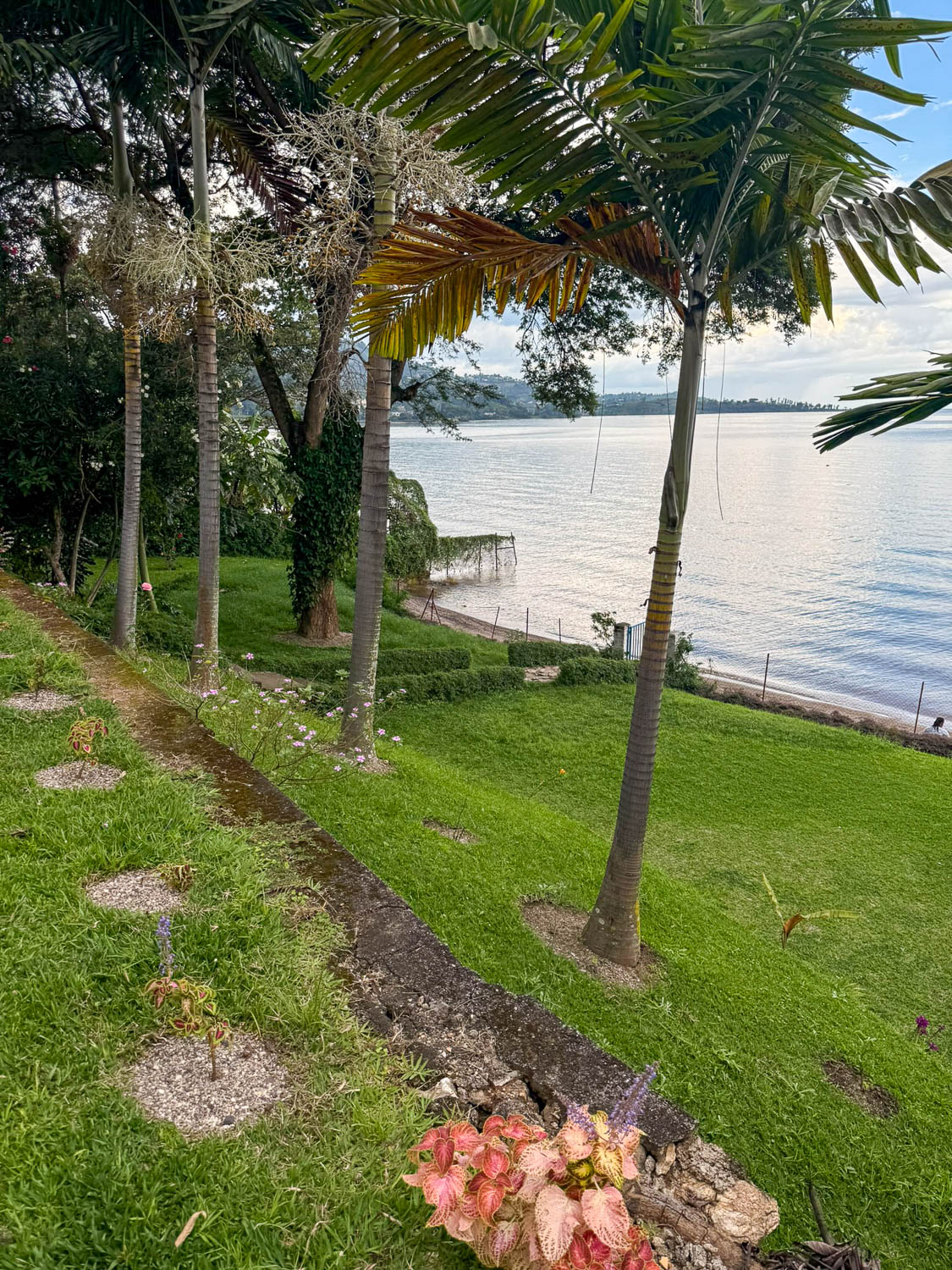
Lake Kivu is perched at 1,460m (4,790 ft) above sea level, surrounded by a backdrop of lush green hills, eucalyptus trees, and even fading old mansions from colonial times. On the northern edge of the lake lies Gisenyi (also known as Rubavu), a large town and former colonial beach resort that makes an excellent base for exploration of, and beyond, the lake.
From here, Lake Kivu’s waters flow southwards into the Ruzizi River, which eventually feeds into Lake Tanganyika, helping to form partial borders between Burundi, the Democratic Republic of the Congo, Tanzania and Zambia.
Fun fact. Lake Kivu has a unique drainage system: can you believe it actually once drained from south to north? A series of ancient volcanic events (likely some 9,000 to 13,000 years ago, and likely originating from the Virunga Mountains) created a dam on the northern shore: this reversed the lake’s natural outflow, redirecting it from north to south.
Climate: The Best Time to Visit Lake Kivu
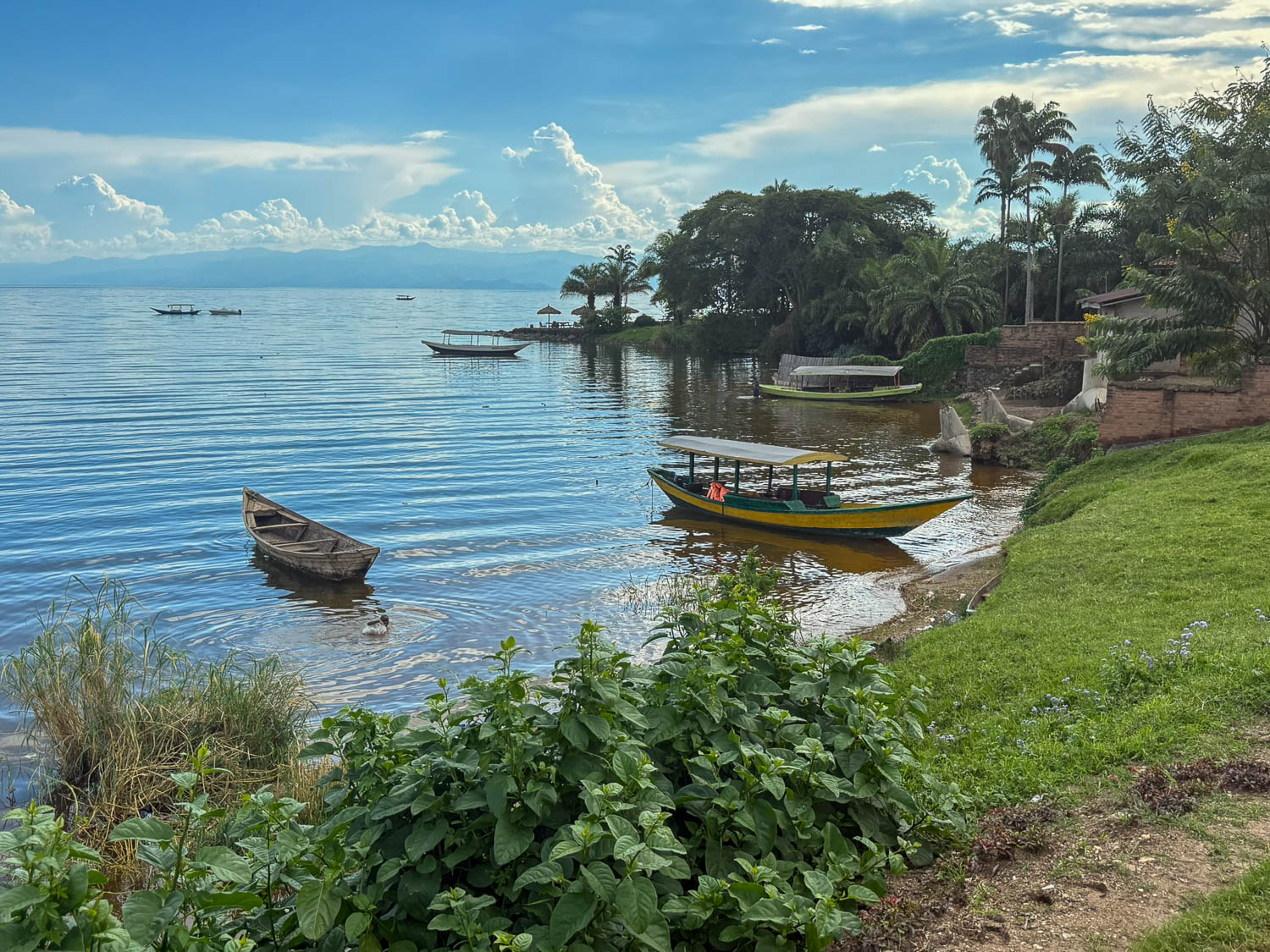
The Lake Kivu region enjoys a mild climate year-round, with average daily temperatures between 18°C and 22°C (64–72°F).
The Dry Season
Rwanda’s dry season runs from June through September, and is ultimately the best time to visit Lake Kivu. At this time of year, roads are in good condition, the weather is favorable (think clear skies, minimal rainfall and warm temperatures), birdlife is active, and it’s an ideal time for water and other outdoor activities that include swimming, fishing, hiking, boat cruises, and exploring the lake’s shores and local communities. There’s also fewer insects during the dry season, helping to make your visit even more comfortable – a huge win, we’d say!
Insider tip. Are you an avid birdwatcher? Rwanda’s shorter dry season – which generally runs from mid-December through February – is another excellent time to consider visiting, as this is when you’ll have ample opportunity to spot various migratory bird species.
The Wet Season
Rwanda’s wet season – which generally runs from October through May (with a short dry spell around the new year) – is lush and scenic, but if you’re a keen hiker (or like to be outdoors in general), it can make trails and sidewalks slippery. That being said, it can also be a great time for cheaper accommodation options, as well as discounted tours within the region.
Getting Around Lake Kivu
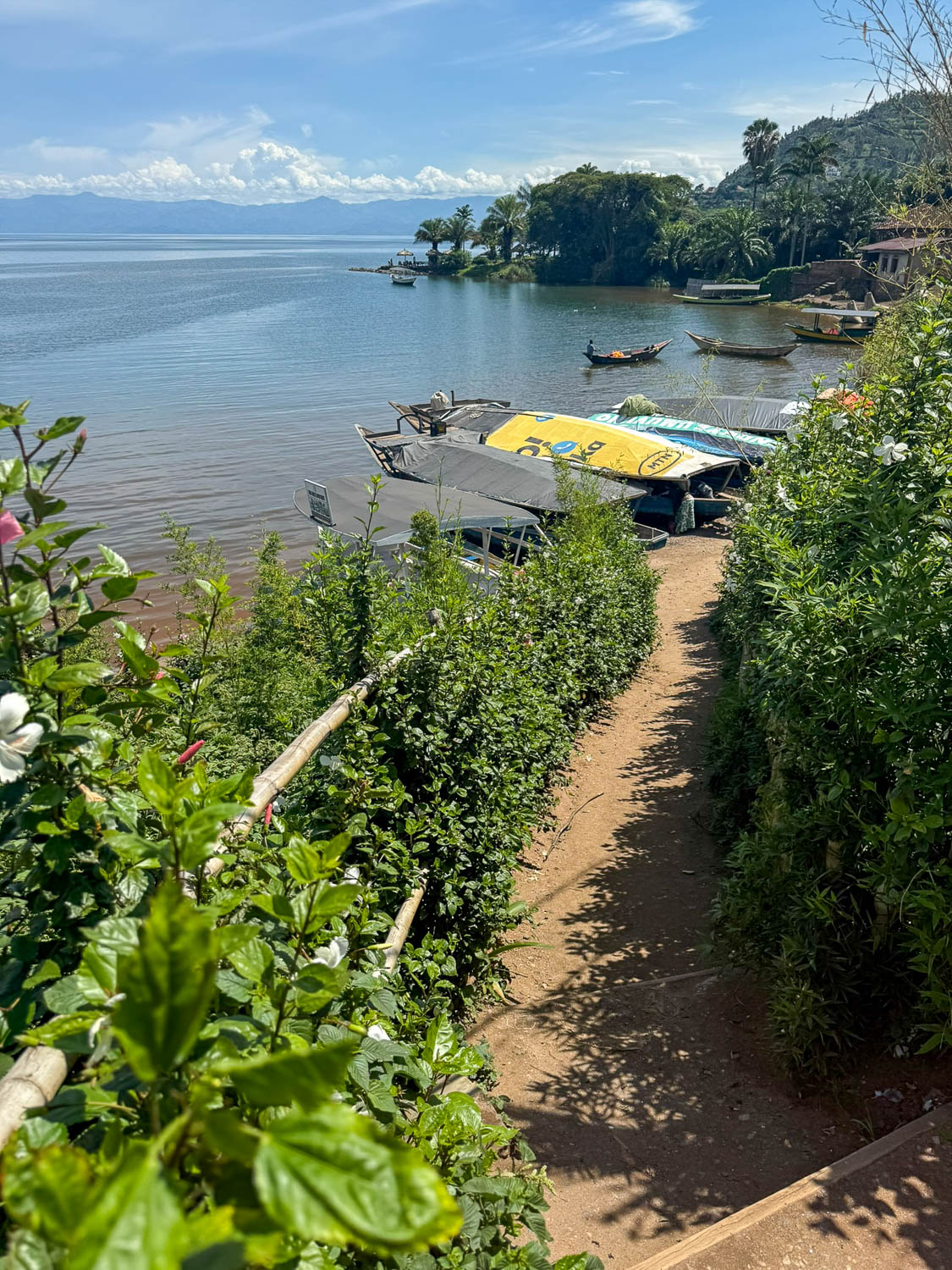
Without stops, Lake Kivu lies a solid 3 hours directly west of Kigali, Rwanda’s vibrant capital city. We recommend allowing at least 5-6 hours to get there, however, as there’s plenty to see and do along the way!
Once you’ve arrived at the lake (most visitors will base themselves at Gisenyi, Kibuye or Cyangugu), getting around is surprisingly easy. The Rwandan government has made major improvements to public transportation in the region, helping visitors feel safe and well-supported.
A scenic road connects these three major towns, offering sweeping views of Lake Kivu and the surrounding hills. If you don’t have your own car (rented or private) during your visit, you can easily use a combination of public and private transportation options.
- Hire a private taxi.
- Rent a bicycle.
- Take short rides on a moto-taxi (we believe this is the fastest and most affordable – and let’s be honest, the most fun! – way to get around).
- Use public buses to get between larger towns.
- Rent a small boat or kayak to navigate the lakeshore, and reach hidden beaches and volcanic islands.
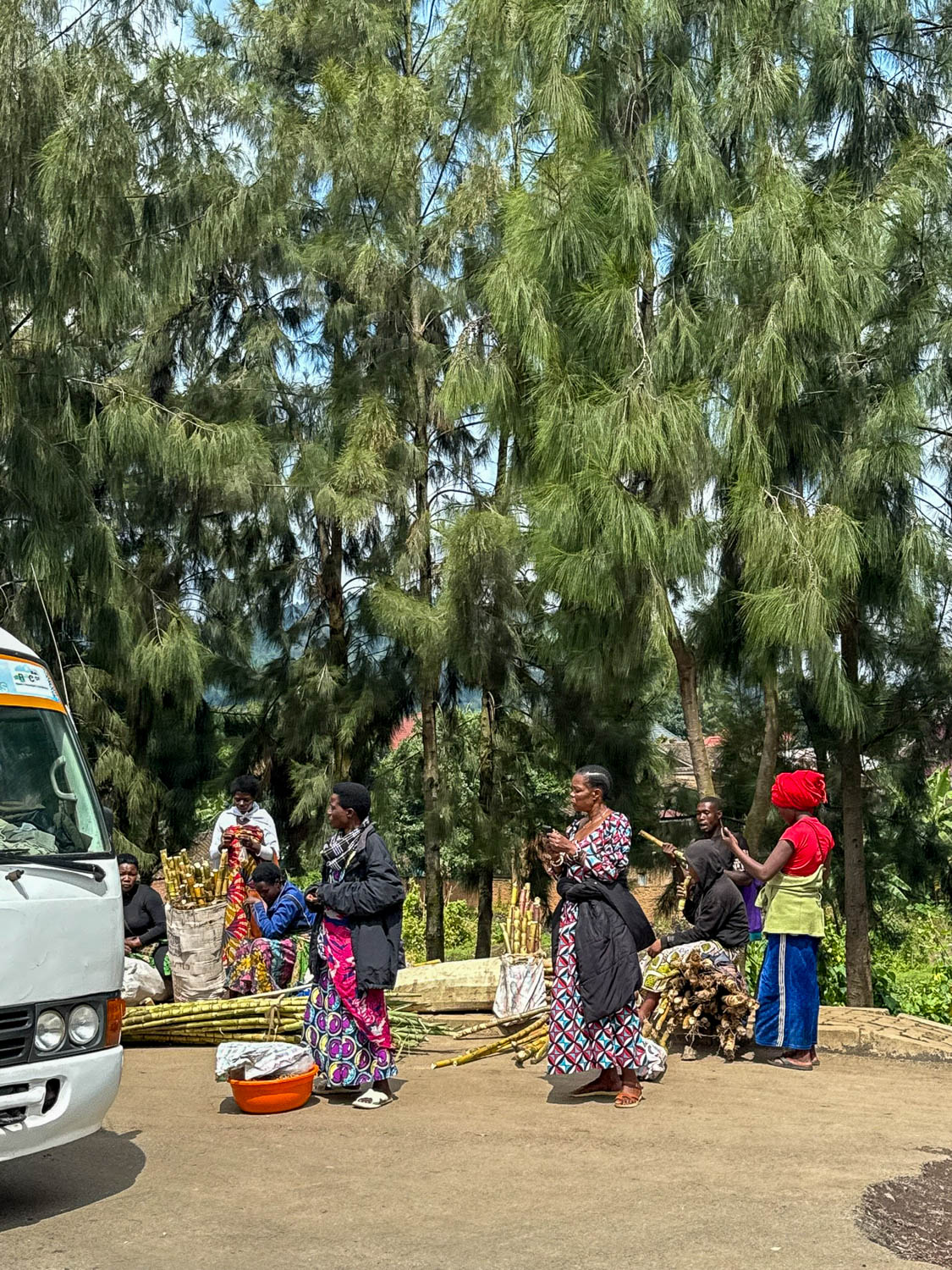
Insider tip. For the most authentic travel experience, hop aboard a local minibus – a public van used as a shared taxi. These minibuses are known as a matatu, or more locally, as twegerane.
Fun fact. In Kinyarwanda (one of the four official languages of Rwanda), “Twegerane”, literally means “let’s sit together”. Once you board one of these local public minibuses, you’ll soon come to learn how apt a name it is!
Insider tip. The Congo Nile Trail, a 227km (141mi) trail that traverses the edges of Lake Kivu from top to bottom, affords visitors a fantastic opportunity for cycling.
No matter which option you choose for getting around, be prepared for a mix of paved and unpaved roads, each of varying quality (though we did find the paved roads to be, in general, of excellent standard). As you venture further from major towns and cities, the roads will generally worsen.
Local Communities and Culture
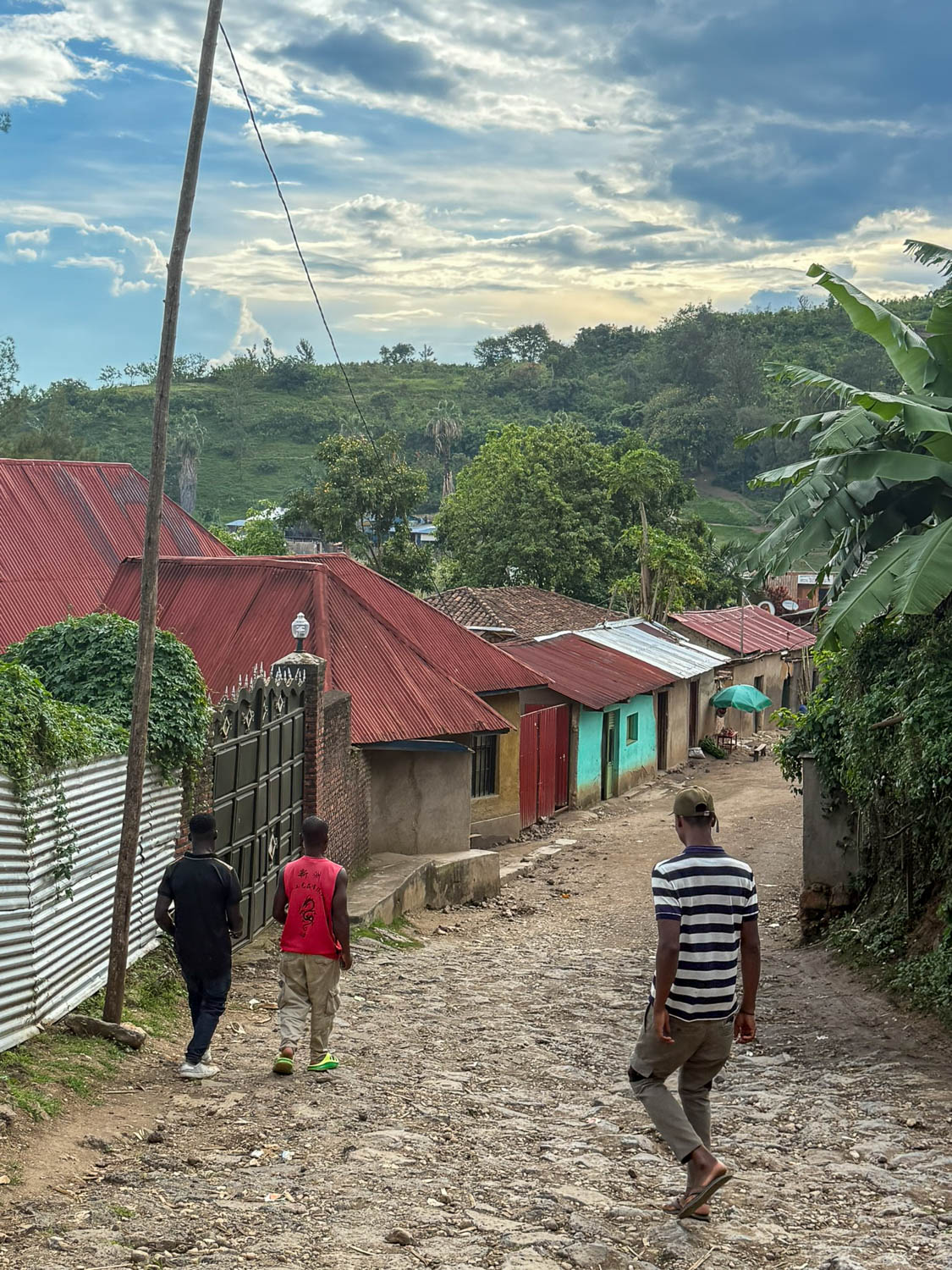
Roughly two million people live in Lake Kivu’s basin, which spans both the Democratic Republic of the Congo, as well as Rwanda. These communities rely on the lake for fishing, agriculture, and tourism.
Lake Kivu’s Fishing Industry
Lake Kivu is the largest local source of fish in Rwanda, yielding over 20,000 tons of fish annually, including several endemic species: the most notable of these is the Kivu Cichlid. Other unique species include the blue-spotted tilapia, the Nile tilapia, and the Lake Tanganyika sardine.
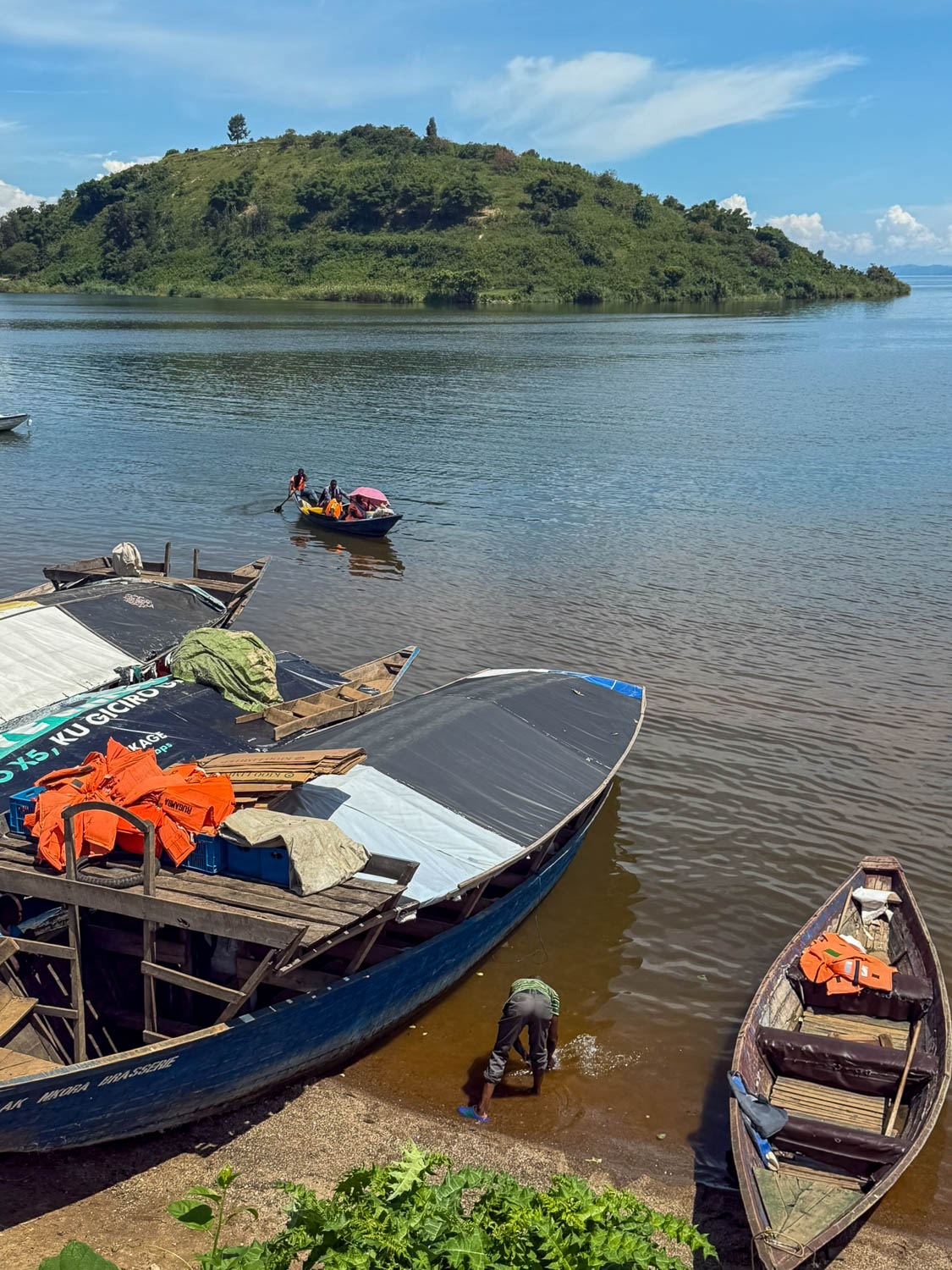
Lake Kivu’s fishing industry plays a significant role in supporting the livelihoods of numerous local communities – over half a million people in Rwanda and the Democratic Republic of the Congo rely on it for income and sustenance.
Fun fact. The Kivu Cichlid is also known as the “pearl of the lake”, and is found nowhere else in the word.
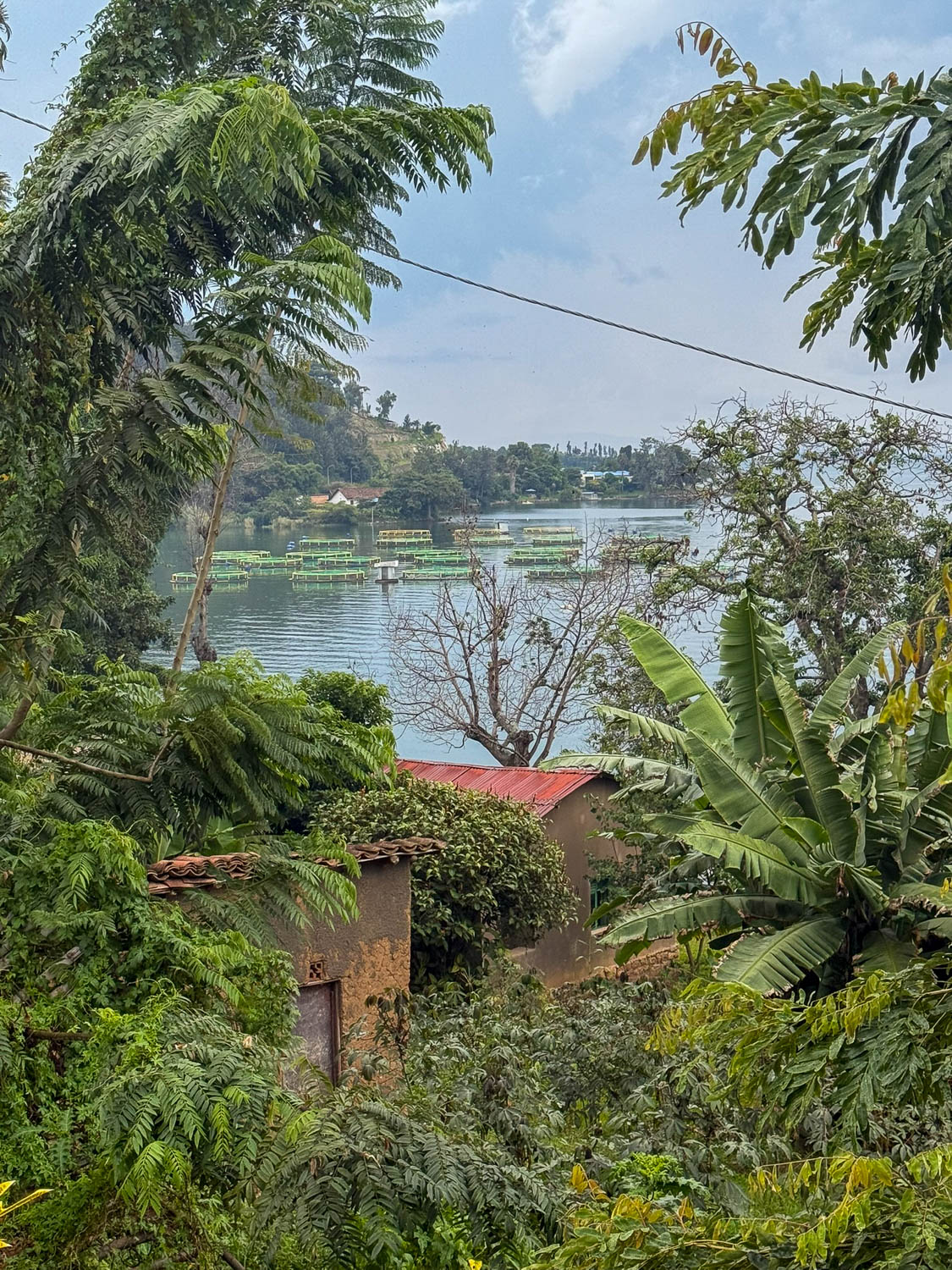
During your visit you may have the fortune to meet local fishermen preparing nets at dawn, and will no doubt see fishing boats bobbing in the lake’s calm waters at sunset.
Fun fact. Lake Kivu’s fishermen have a unique method of attracting fish at night: they use gas lights, which create a visually striking scene once the sun goes down!
Cultural Insights from Lake Kivu

Scattered around the shores of Lake Kivu you’ll find vibrant local communities with rich cultural traditions. Music, dance, and artisan crafts are deeply ingrained in daily life, and visitors can join coffee tours on the neighboring coffee plantations, discovering how local beans are grown, harvested, and roasted.
Insider tip. Nyamirundi Island, an island in Lake Kivu near Gisenyi, is known for its coffee plantations and its “crop-to-cup” coffee tours.
Things To Do Around Lake Kivu
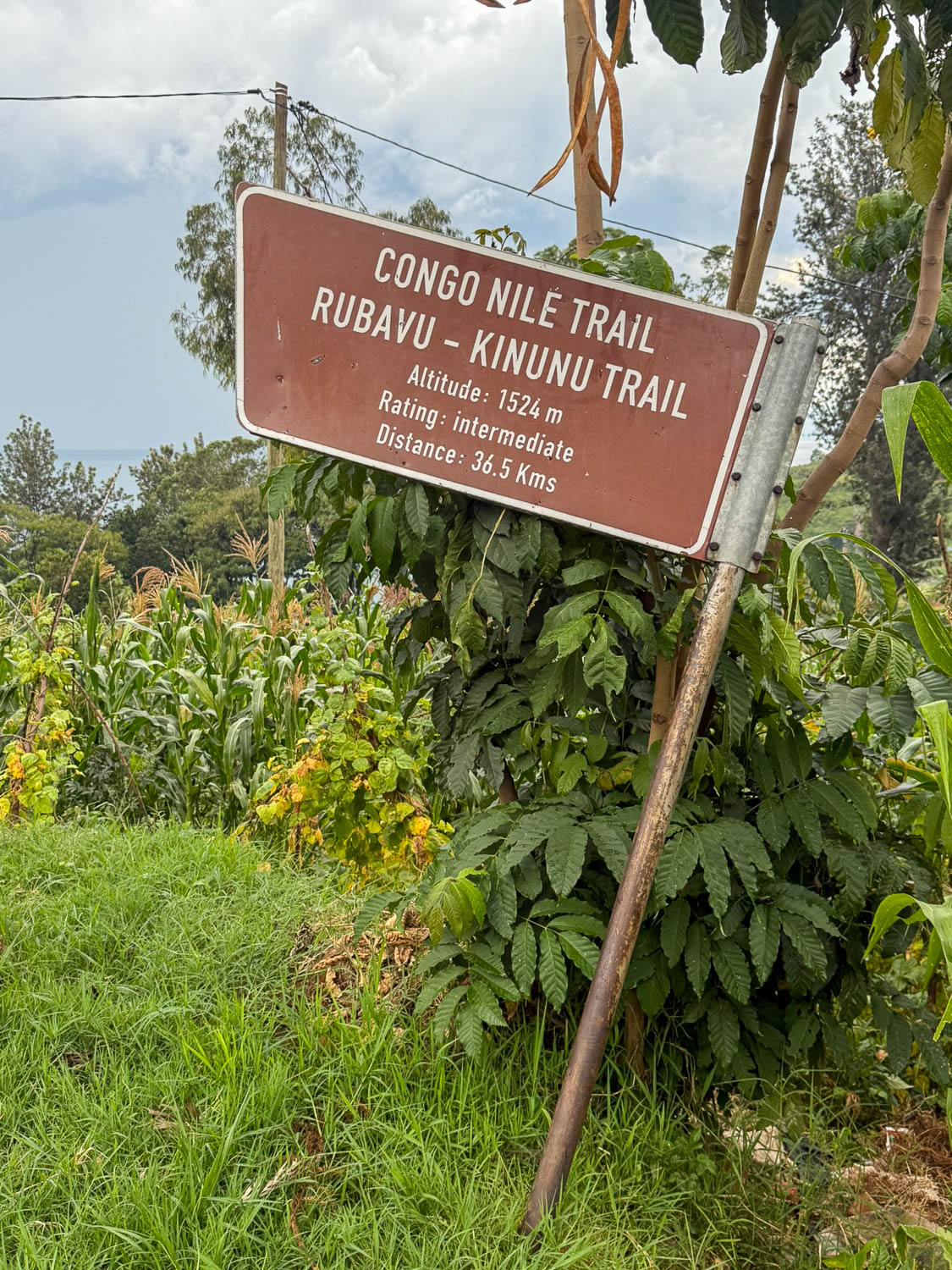
The shores of Lake Kivu provide plenty for visitors to see and do during their time in the region. From historic attractions to old colonial towns, from natural hot springs to paddle sports, and from hiking trails to boat rides across the lake’s serene surface, Lake Kivu provides a recipe for low-key adventure, even as geothermal science churns below.
Lakeside Towns Worth Exploring

Gisenyi
Many travelers to Rwanda begin their visit to Lake Kivu in the resort town of Gisenyi (also known as Rubavu) – in fact, it’s a favorite amongst visitors. With its relaxed vibe, lakefront cafes, and panoramic views of the water and surrounding hills, Gisenyi is the perfect place to unwind: walk along the palm-lined beach, rent a kayak, or take a sunset boat cruise.
Insider tip. Gisenyi makes for the perfect base if you’re also wishing to explore the likes of nearby Volcanoes National Park during your time in Rwanda.
Kibuye
Just under 2 hours south of Gisenyi you’ll find Kibuye (also known as Karongi) – and wow, what a stunning drive it is between these two peaceful lakeside towns! Complete with more scenic vistas and tranquil boat rides, the views from Kibuye are breathtaking, and the hospitality from the local people is warm and welcoming.
Insider tip. From Kibuye you can take a boat out to nearby islands, including Napoleon Island, known for its large fruit bat population.
Hot Springs and Wellness
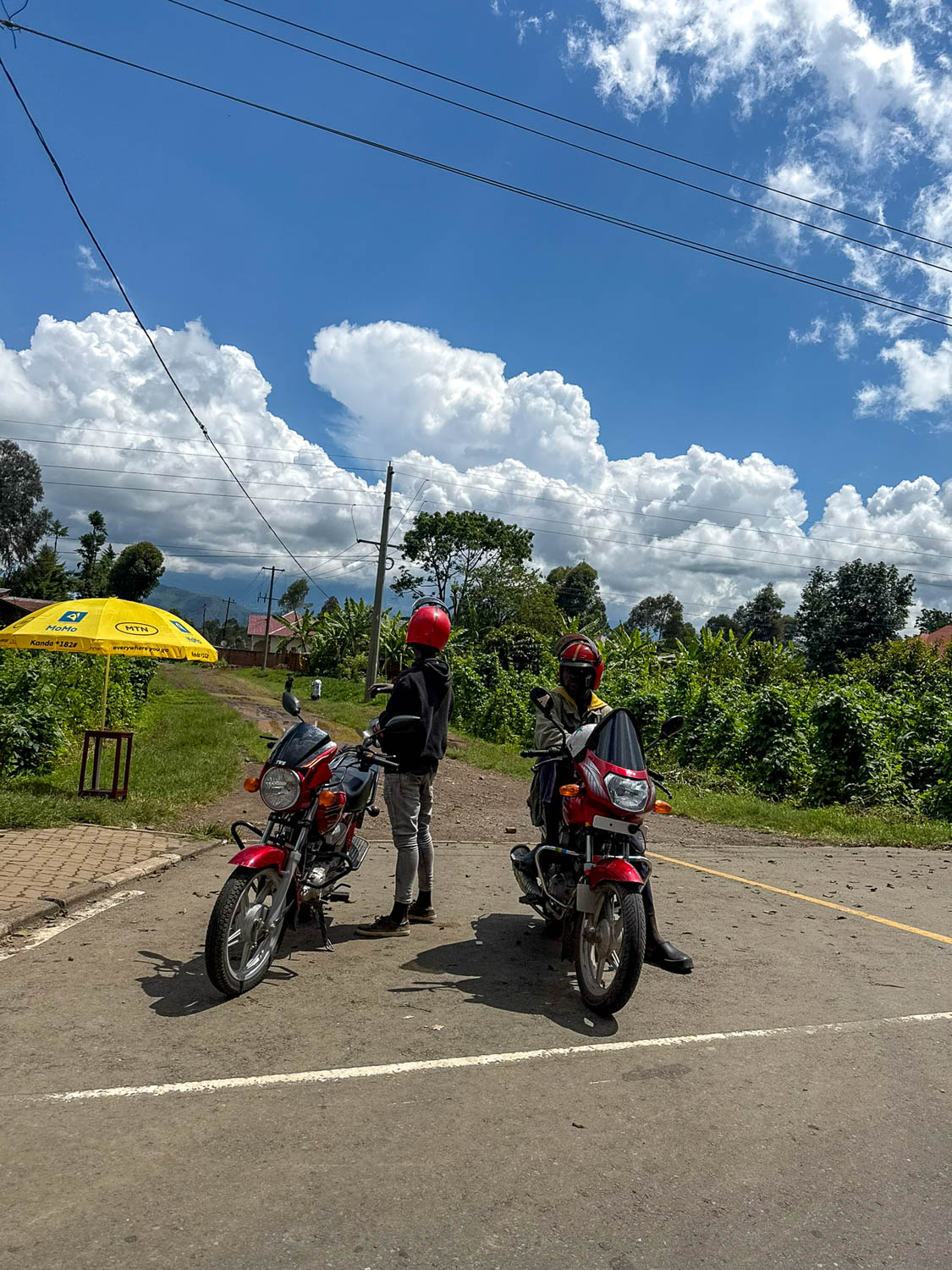
Back near Gisenyi you’ll find the Rubavu Hot Springs, also known as the Nyamyumba Hot Springs. These volcanic hot springs, right on the edge of Lake Kivu, can be accessed by moto-taxi, boat, or on foot – and a visit here can be wonderfully relaxing! The hot springs can also be one of the most memorable ways to connect with the geothermal nature of the region – especially if you’re not feeling 100% comfortable taking a swim in the lake itself (though it is perfectly safe to do so … we’ll get to that in a bit).
Many local lodges around the lake also offer spa treatments, yoga, and meditation classes, making Lake Kivu the perfect place to recharge body, mind and spirit.
Fun fact. The Kubavu Hot Springs are used by locals, as well as visitors, not just for relaxation – they’re also believed to have therapeutic, healing benefits. Take a dip and see what you think!
Water Sports
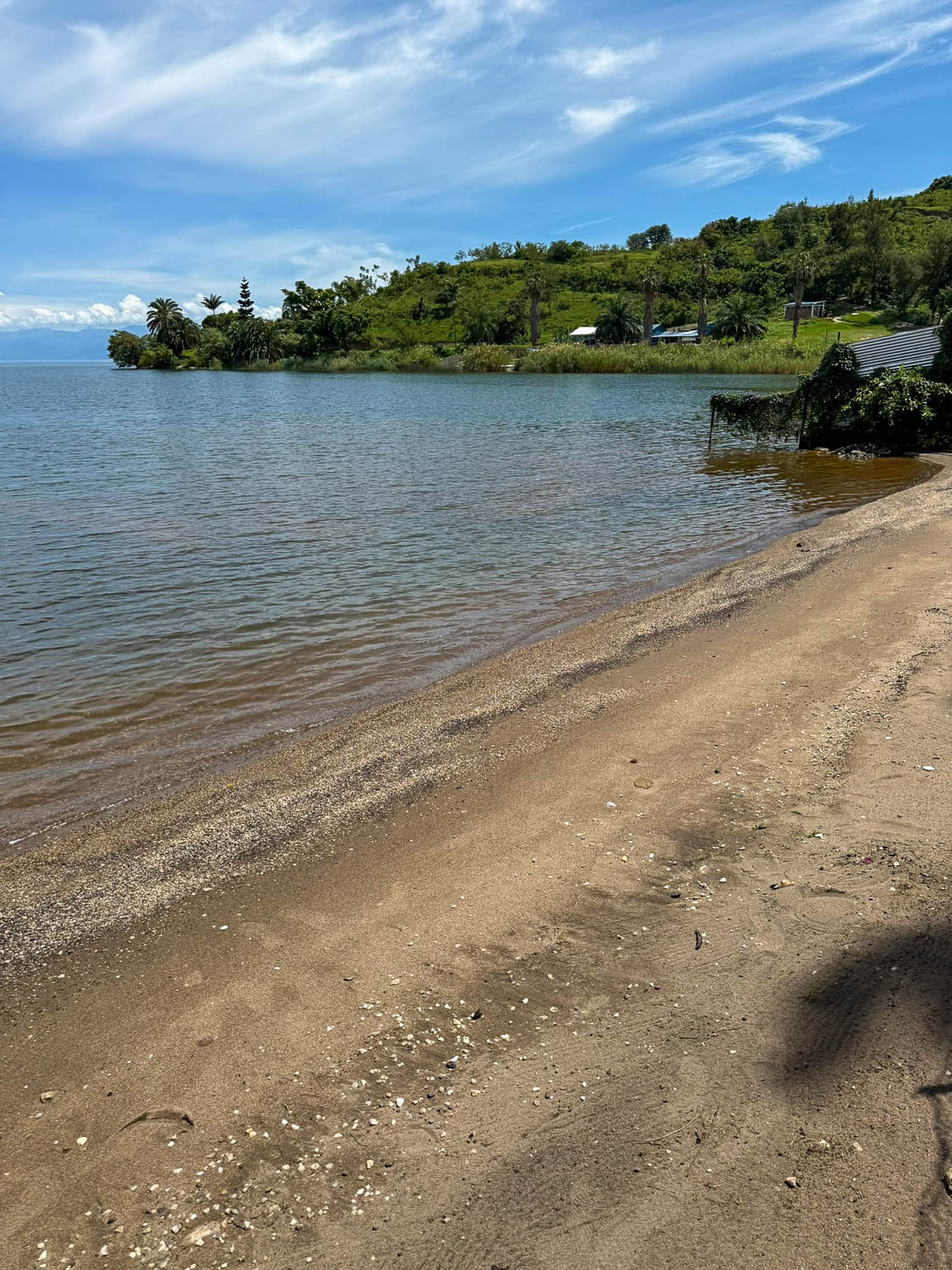
If you’re feeling a little more adventurous (yes Beck, we know we’re talking about you!), partaking in some water sports on Lake Kivu might just be your thing! Popular options range from water skiing and kayaking, to sport fishing and paddleboarding, and from canoeing to boat cruises. The calm waters and limited commercial traffic within Lake Kivu make it ideal for first-timers and seasoned water sports enthusiasts alike.
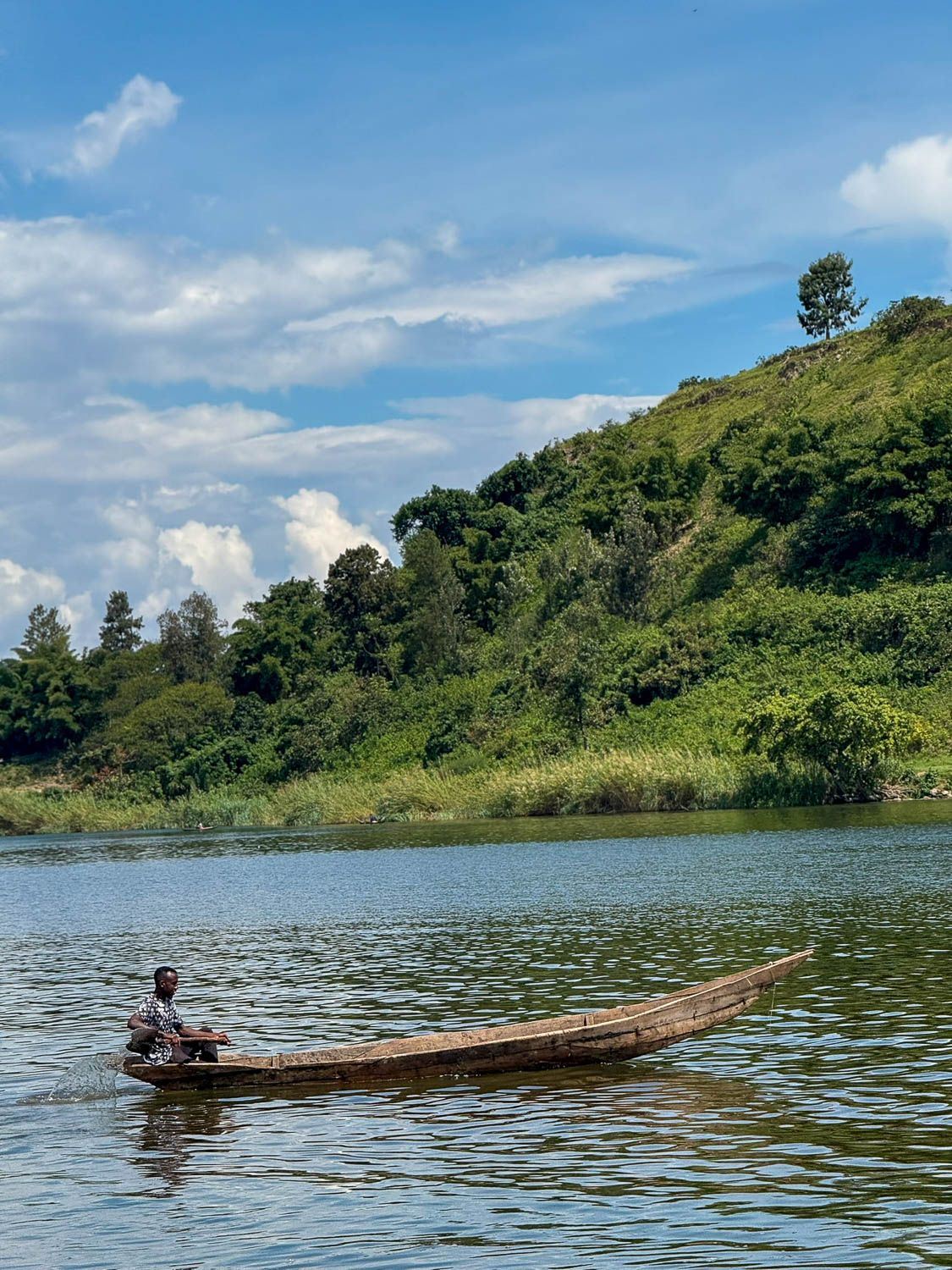
Insider tip. Interested in fishing? Perhaps want to dig a little deeper into the Rwandan fishing industry and its deep cultural ties to Lake Kivu? Visitors are welcome to join local fishermen on early morning trips, to learn more about how fish are harvested from the lake’s waters.
Swimming in Lake Kivu
Fancy a dip in the lake? We often get asked, “But wait … is it actually safe to swim in Lake Kivu? I mean, considering all that geothermal activity beneath the water? Those gases could potentially explode at any given moment!” This is certainly one of the biggest questions – and, perhaps even fears – visitors have when visiting Lake Kivu. And indeed, it’s a very legitimate question! But fear not, fellow travellers, you can absolutely swim in Lake Kivu! And indeed we did, several times.
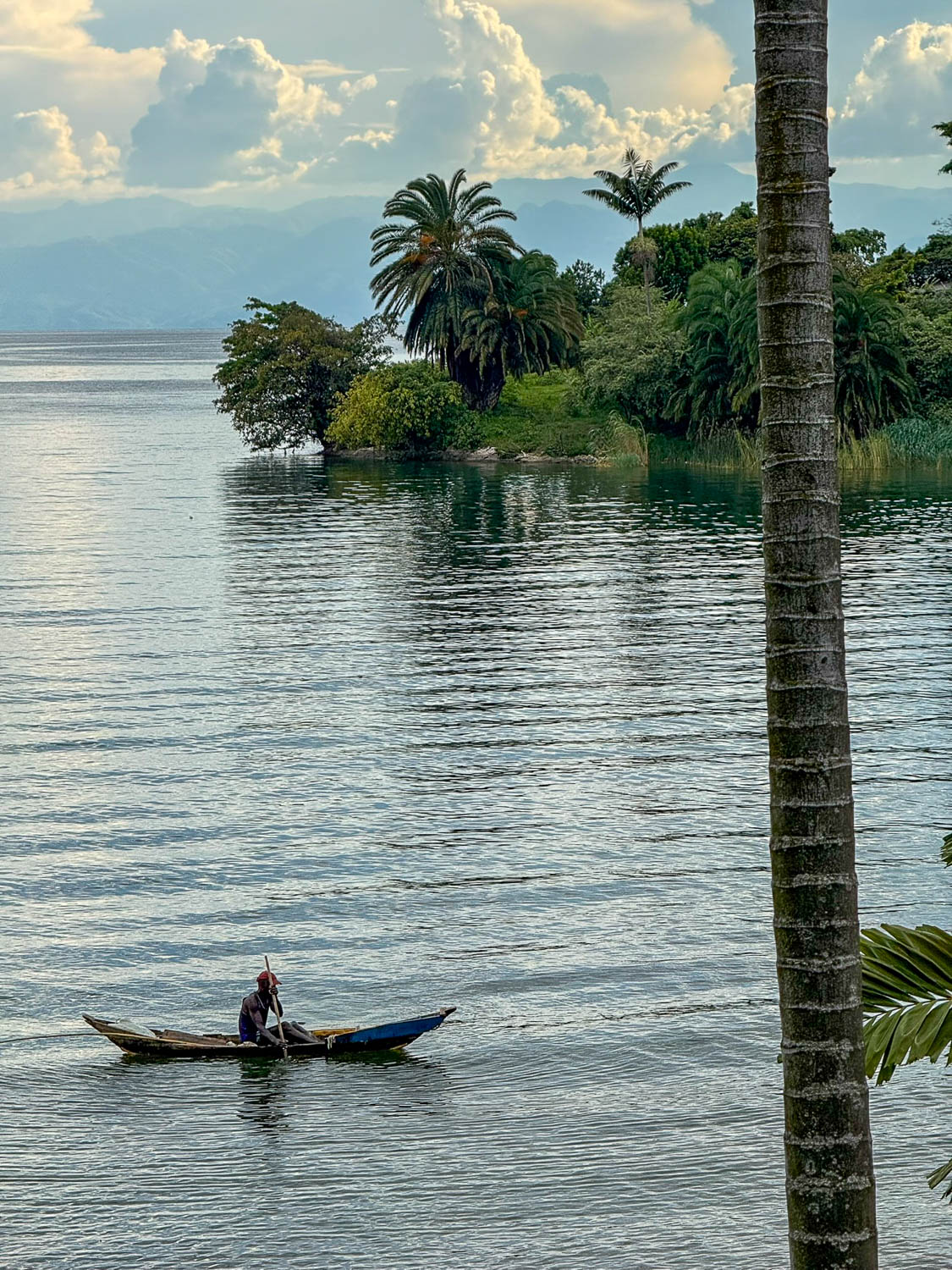
The surface of Lake Kivu is entirely safe for swimming, boating, and other water-based recreational activities – it’s also clean and calm, especially near Gisenyi and Kibuye. The dangers lie in the deep, stratified layers of the lake’s waters — which isn’t where you’ll need to venture any way!
And okay, so yes, there are several different species of reptiles found within Lake Kivu’s vibrant ecosystem – six in total, to be precise, including bitis nasicornis (a viper snake, which Beck thinks is truly beautiful, but Mike isn’t so sure…), various amphibians and invertebrates … but don’t worry, there aren’t any crocodiles, and Lake Kivu is predator-free!
Insider tip. If you do choose to swim in the lake, make sure you’re heeding local advice on currents. We wouldn’t want anyone to be dragged away by an unforeseen current and taken further out (or down) as is safe.
Hiking and Mountain Biking

Hiking and mountain biking trails wind through Lake Kivu’s nearby hills, offering impressive views of the lake, and up-close encounters with a variety of wildlife. As you’re walking or biking, it’s very likely you’ll encounter a variety of different bird species (the wider region is home to over 400 different species, whilst Lake Kivu itself has a recorded 80 species), mammals (including endemic rodents and various squirrel species), invertebrates (over 50 different species), reptiles (lots of beautiful snakes!), amphibians (including the Kivu Clawed Frog – that’s right folks, you heard it correctly … a frog with claws!), and plants (just over 140 species).
For bird-watchers in particular, make sure to look out for White-crested Cormorants, Pied Kingfishers, Ospreys, the Spotted Yellow-throated Greenbul, Common Waxbills, Malachite Kingfishers (so pretty!), and the Chin-Spot Batis. Along trails in forested areas, you may encounter Cardinal Woodpeckers, African Pied Wagtails, and Double-toothed Barbet. Beck, who’s not usually into bird-watching, was particularly impressed at the bright colors and beautiful sounds of the birds around the lake!
The Congo Nile Trail
During a visit to Lake Kivu, it’s possible to hike part of the Congo Nile Trail, a 227km (141mi) scenic trail that traverses the edges of the lake from top to bottom. Hike it, bike it, or simply wander along a small portion of it – either way, you’ll be afforded stunning views as the trail makes its way through small villages, coffee plantations, and scenic overlooks, offering a truly immersive experience of rural Rwanda.
Boat Cruises and Island Exploration
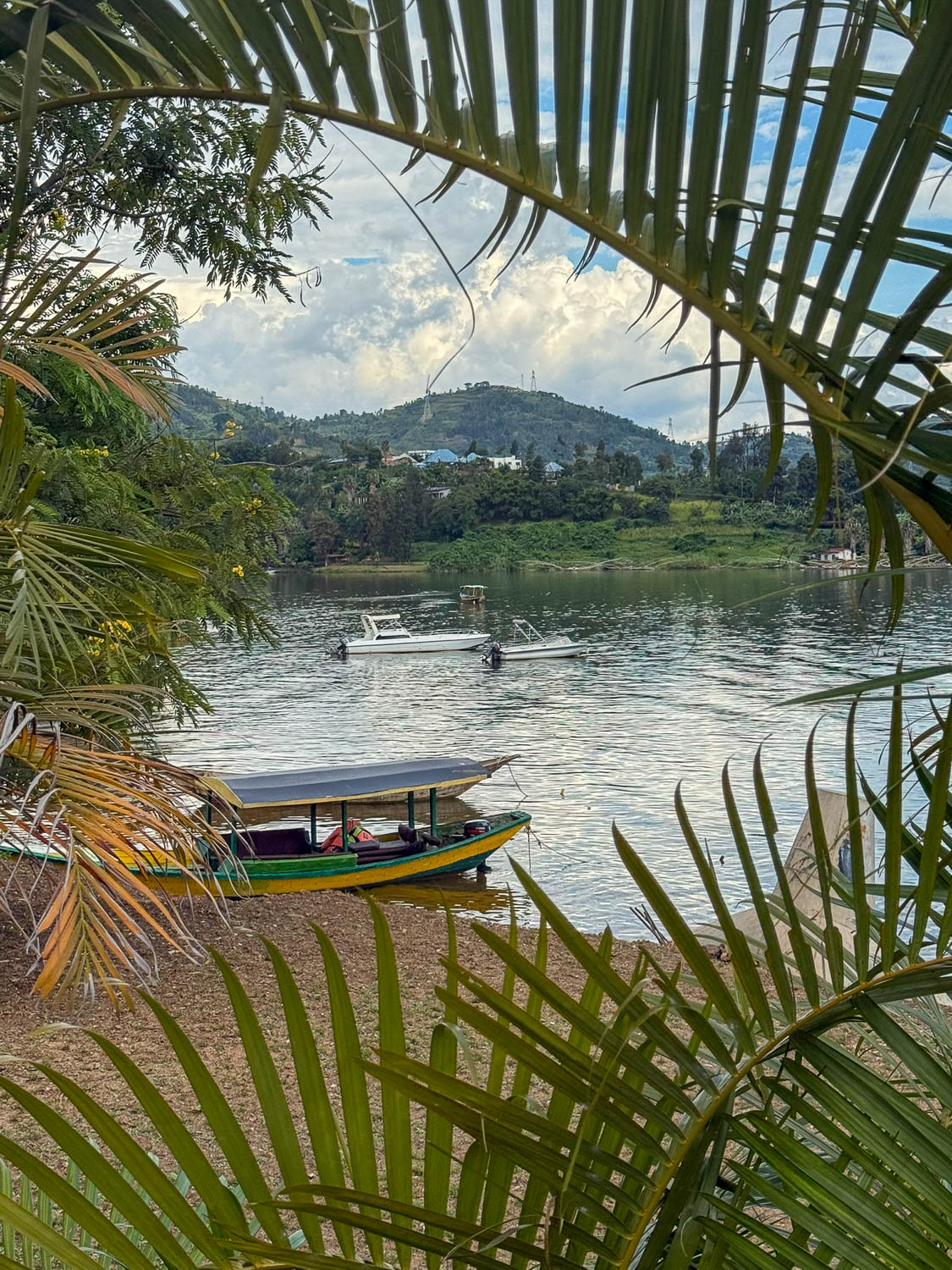
You may wish to consider a scenic boat cruise across Lake Kivu during your visit to the area. Glide across the lake’s calm, emerald waters to explore different islands, including Napoleon Island, famous for its bat colony and panoramic views, and the small Amahoro Island (also known as Peace Island), a tranquil haven for those seeking a piece (see what we did there?) of serenity.
Fun fact. Lake Kivu is home to some 250 islands: 56 of these islands are located in Rwanda’s portion of the lake.
No matter which direction you choose to head, each boat ride is a chance to witness the incredible beauty of Lake Kivu. And don’t forget to look up, as African Fish Eagles and Sacred Ibises take flight over the lake, whilst on the lake’s shores you’ll no doubt spot various kingfishers, cranes, herons, and egrets, fishing for food or drying their wings.
Inside tip. Ask around before boarding just any old boat. You may find boat tours that will not only take you to nearby islands, but also include cultural stops and opportunities to sample fresh grilled fish from local markets. Yum!
Local Markets and Souvenirs
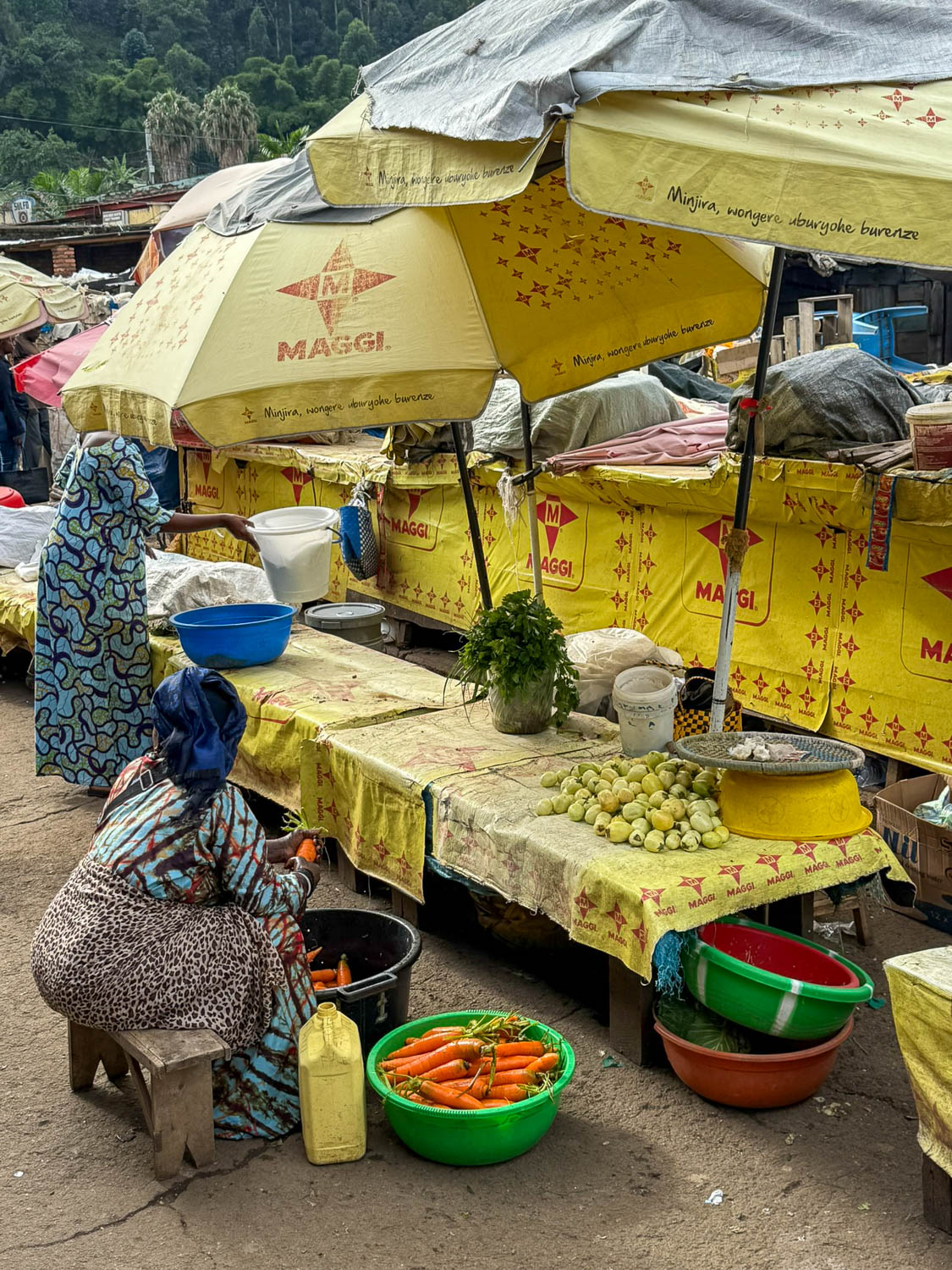
One of Beck’s most favorite things to do when visiting a new place is to wander through the local markets: what a wonderful opportunity to truly experience local life in full color!
Gisenyi (or Rubavu) Market – although closed briefly in early 2025 for supposed illegal trading – is a great place to start, offering a variety of goods including fresh produce (think giant avocados and plenty of fresh fish), everyday household items, clothing, electronics and a few handicrafts. If you’re staying in the far south of the lake, consider visiting the Rusizi Market in Cyangugu, where you’ll have the opportunity to sample local delicacies and connect with the local community.
Insider tip. At some of the markets spread throughout the Lake Kivu region you will no doubt also be afforded the opportunity to pick up some local, natural honey, Rwandan fabrics, and even small bags of volcanic soil (for the garden-lovers out there).
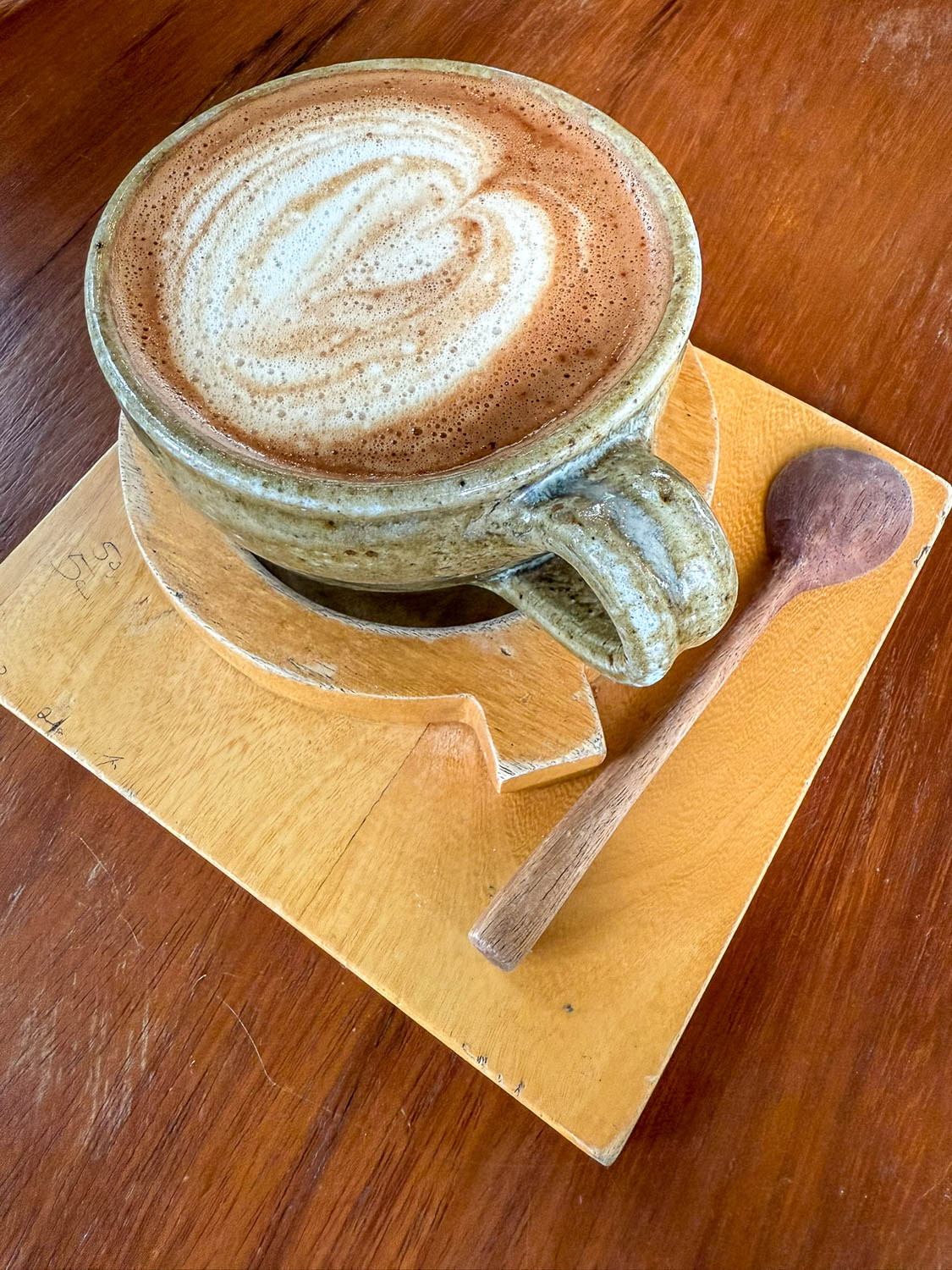
Visiting nearby coffee plantations affords visitors another occasion to purchase locally-sourced and locally-made products. And we don’t just mean the hand-roasted beans, ground coffee or infused teas for which Rwanda is famous (though these are certainly worth taking home with you!). Some coffee cooperatives and plantations in the Lake Kivu region also have small gift shops onsite, selling local crafts and products made by community members.
Insider tip. We highly recommend a visit to Kinunu Guest House, well known for its coffee tours and stunning views over the lake. You’ll find Kinunu, and the fantastic ecotourism experience that goes with it, halfway between Gisenyi and Kibuye.
Insider tip. From wherever you choose to purchase any goods or souvenirs, be sure to ask about local community involvement. Will your purchase directly benefit local farmers, local artisans, local families, and the wider community?
By supporting small enterprises and visiting local markets in the Lake Kivu region, you’re helping to preserve local heritage and contributing to Rwanda’s economic development.
Other Attractions Near Lake Kivu
- Visit methane facilities – including the large, unique floating gas extraction platform and the onshore power plant – to see how scientists are extracting methane gas from Lake Kivu to help prevent pressure build-up and repurposing the gas as a renewable energy source.
- Participate in cultural workshops featuring local drumming, dance, and handicrafts.
Okay, okay, we know some of this (methane extraction, shifting tectonic plates…) may sound somewhat intimidating (perhaps even the 1986 limnic eruption in Cameroon’s Lake Nyos comes to mind?), but rest easy. Methane extraction at Lake Kivu is not only well-managed, but also consistently monitored – in turn reducing the risk to humans and wildlife. Phew!
Nearby National Parks
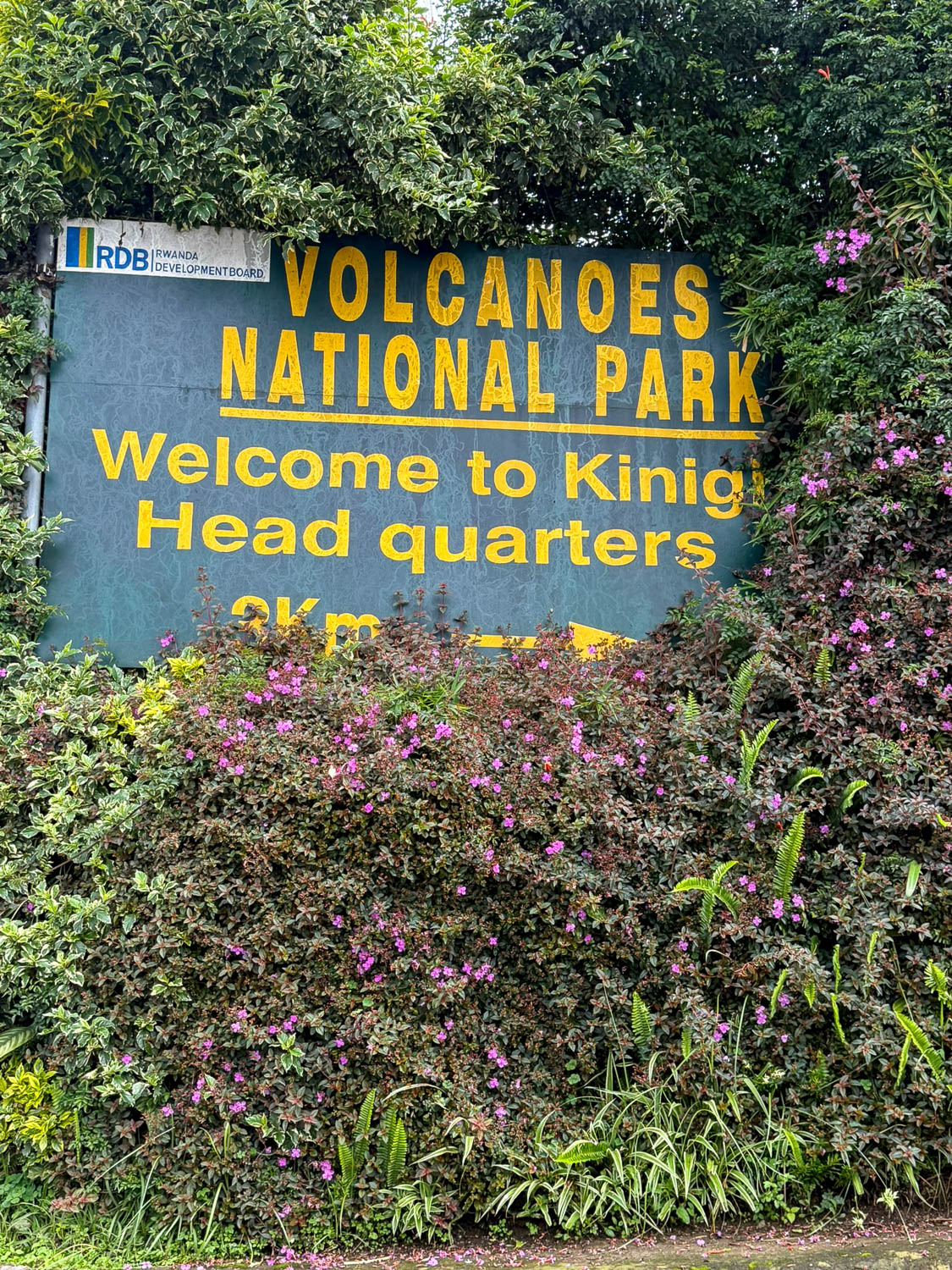
Aside from visiting a nearby coffee plantation for a tour and tasting, or taking a boat trip across the lake, numerous tour operators offer additional curated experiences around Lake Kivu. If you’re basing yourself at the lake for a few days – or even more! – you may wish to consider a guided tour to one of the following national parks, easily reached from Lake Kivu.
Volcanoes National Park
One of the top Lake Kivu regional highlights is a visit to Volcanoes National Park, located less than a 2-hour drive north-east of Gisenyi. Surrounded by the misty peaks of the Albertine Rift, and famous for its rare opportunity to trek to witness the endangered mountain gorillas and golden monkeys in their natural habitat, this is without question a once-in-a-lifetime experience. You can read more about a visit to Volcanoes National Park in our article on Musanze.
Nyungwe Forest National Park
One of the oldest and best-preserved montane rainforests in Africa, and the largest forest in Rwanda at 393 square miles (1,018 square km), Nyungwe Forest National Park lies less than an hour directly east of Cyangugu, at the southern end of Lake Kivu. This biodiversity hotspot provides a dearly contrasting experience to Volcanoes National Park, with dense forests, bamboo slopes, wetlands, and canopy walks. In 2023, Nyungwe Forest National Park was officially designated a UNESCO World Heritage Site.
Fun fact. Nyungwe Forest National Park is known as the “water tank of Rwanda”, providing 70% of the country’s water supply.
Despite these contrasts, Ngungwe also boasts a remarkable ensemble of plant and animal life, including a large primate population: it’s here in Ngungwe that visitors are afforded the opportunity to go chimpanzee trekking. Here you’ll also find over 300 bird species and over 1,000 plant species.
Fun fact. Ngungwe is home to 13 primate species, including the L’Hoest’s monkey, which is endemic to the Albertine Rift.
Conservation and Sustainability
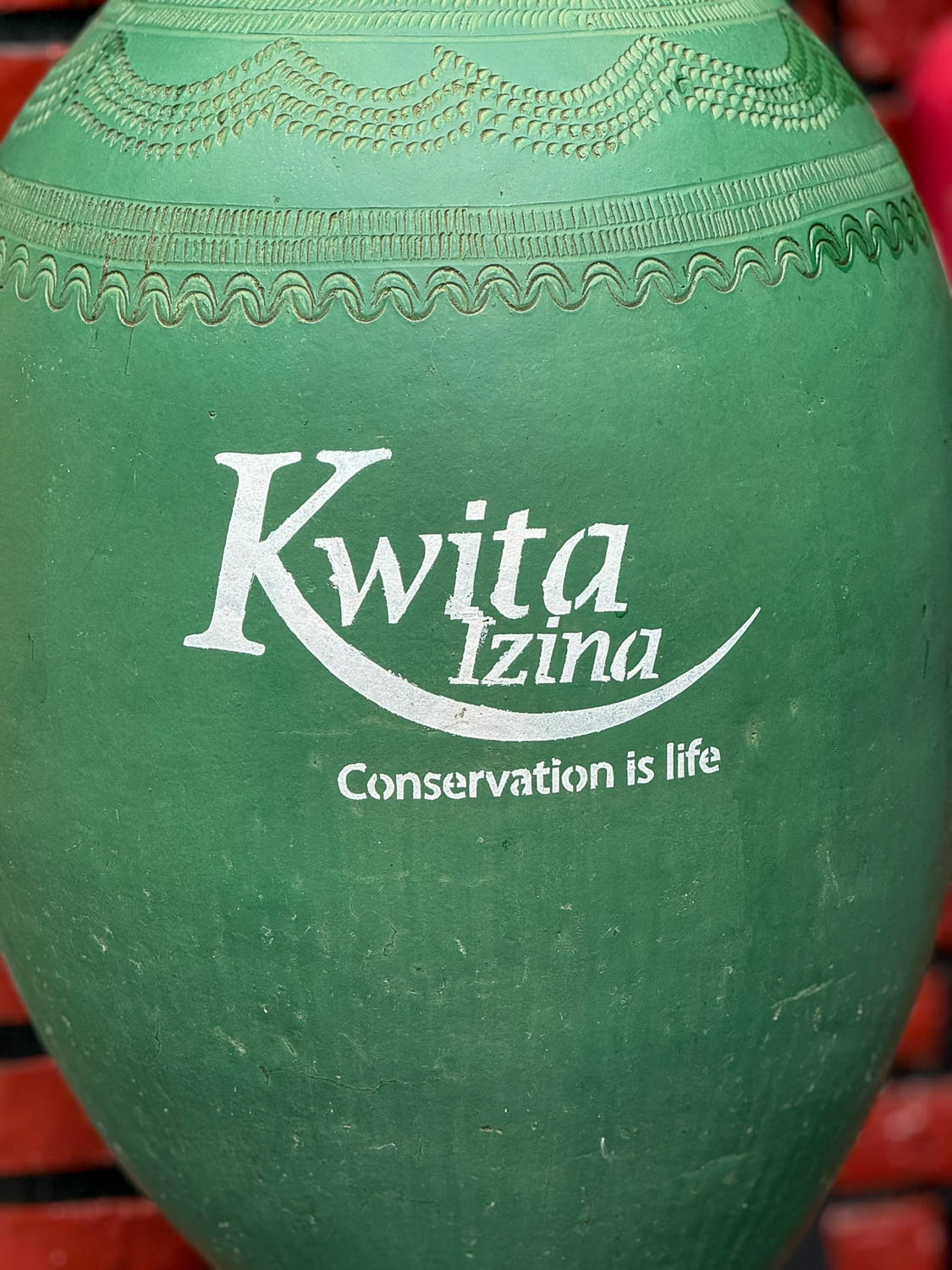
As Rwanda’s largest lake, Lake Kivu is vital for regional biodiversity. The effort to actively protect Lake Kivu continues through the work of organizations that include the Lake Kivu Advisory Group, the Albertine Rift Conservation Society, and the Living Lakes Biodiversity and Climate Project. The restoration activities performed by these all-important institutions – particularly in the Koko River basin (the Koko River in Rwanda’s Rutsiro District is a major inflow to Lake Kivu) – focus on the intersection of biodiversity, community needs, and long-term resilience.
Weekly monitoring and scientific analyses of the lake are used to examine Lake Kivu’s dynamics, optimize gas extraction efficiency, and ultimately ensure the lake’s stability is maintained. As more data becomes available from additional profiles and further studies, international bodies can better assess how climate change and gas harvesting affect the critical ecosystem found within, and around, Lake Kivu – as well as ecosystems similar to it.
Ongoing research and monitoring, including that carried out by the aforementioned organizations, are a testament to what can happen when science, local leadership, and sustainable development come together as one. The hope is that Lake Kivu will remain not just safe, but also a global model for the balancing of technological advancement, economic development, and natural preservation.
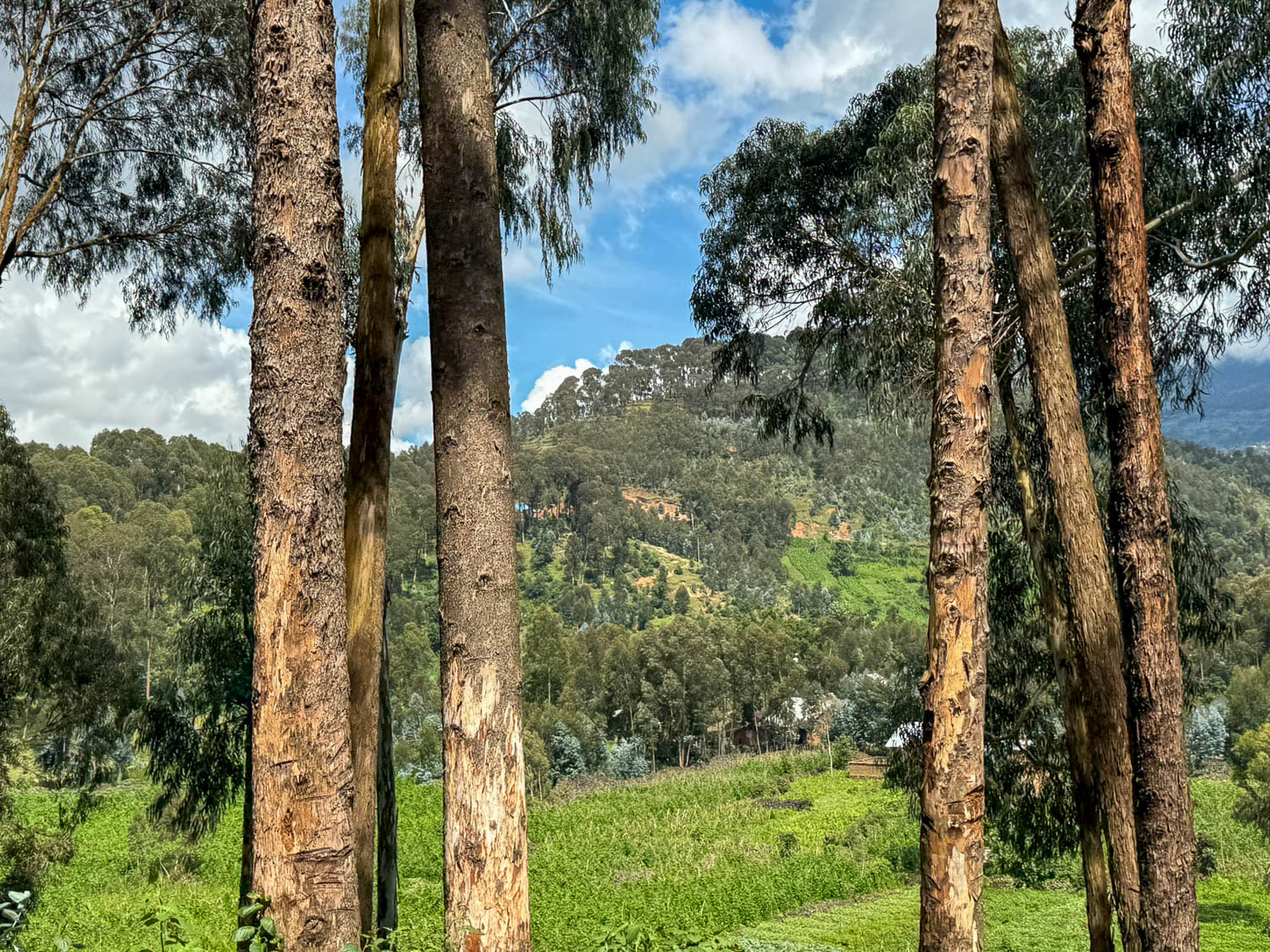
Other conservation programs are actively working to protect Lake Kivu’s flora and fauna, including birds, fish, mammals, invertebrates, reptiles, amphibians, and plants – each depending on the lake’s ecosystem for survival.
Fun fact. Part of Lake Kivu’s conservation efforts include protecting the near-threatened Congo clawless otter (Aonyx congicus). These otters appear to have reduced aquatic adaptation compared to other otter species: but that’s about all the research can tell us, as they are a relatively unstudied species, and little is actually known about their ecology and biology.
Visitors to Lake Kivu can play their role in supporting conservation and sustainability efforts by choosing to stay in eco-lodges, following leave-no-trace practices, respecting local communities and wildlife, and ensuring they follow Rwanda’s strict ban on plastic bags and other single-use plastics.
Insider tip. There are severe penalties for violations of Rwanda’s plastic ban, including jail time. Be prepared for strict enforcement, including inspections at borders and airports.
Dining at Lake Kivu
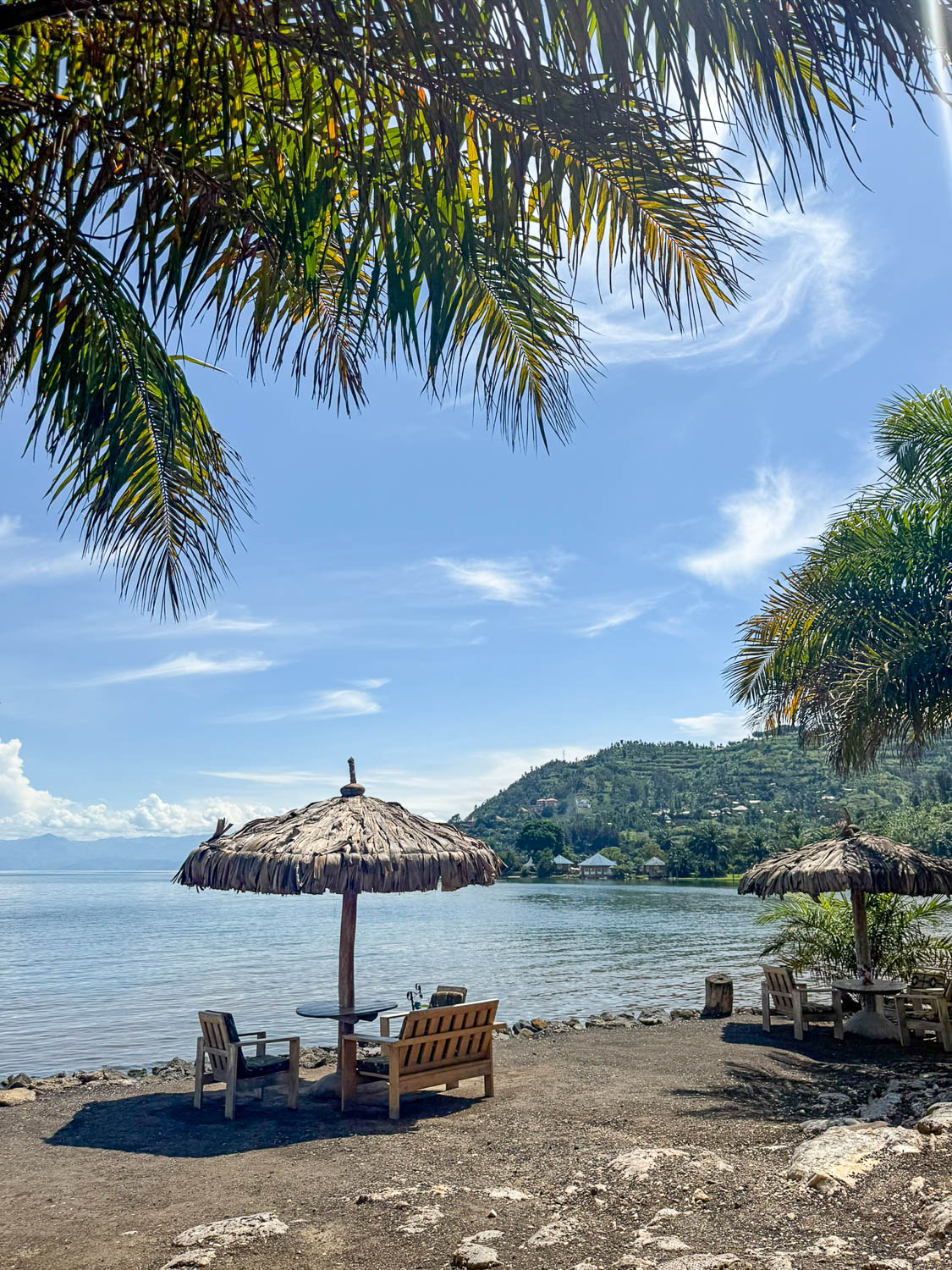
Dining along Lake Kivu’s shores is a celebration of East African flavors [link to Rwandan cuisine article]. You’ll find delicious fresh fish dishes featuring Nile tilapia, blue-spotted tilapia, and grilled Lake Tanganyika sardines, often served with Ugali (a type of porridge or dough made from maize flour) or fried plantains.
Brochettes (meat skewers) are a must-try for carnivores, matoke (steamed green bananas) goes with almost anything, and fresh fruit smoothies made from locally-harvested produce help cool you down on a hot sunny day. For a deeper dive into food options you’ll find throughout the Lake Kivu region, be sure to check out our guide to Rwandan cuisine.
Staying in Gisenyi? Try one of the following restaurants or trendy bars.
- Jikoni Spice Restaurant & Bar
- KFP Restaurant
- Portico Bar Resto
- Wazi Wine Garage
Insider tip. If you’re up for a long walk, want to hitch a ride with a moto-taxi, or have your own vehicle, you can’t go wrong with Paradis Malahide, less than 7km (4.3mi) south of Gisenyi. We could have eaten our meals here every day – the food and service were 5-star, and oh! the view!
And for Kibuye?
- Classic Resto Bar
- Inn on the Lake
- The Mirror Restaurant
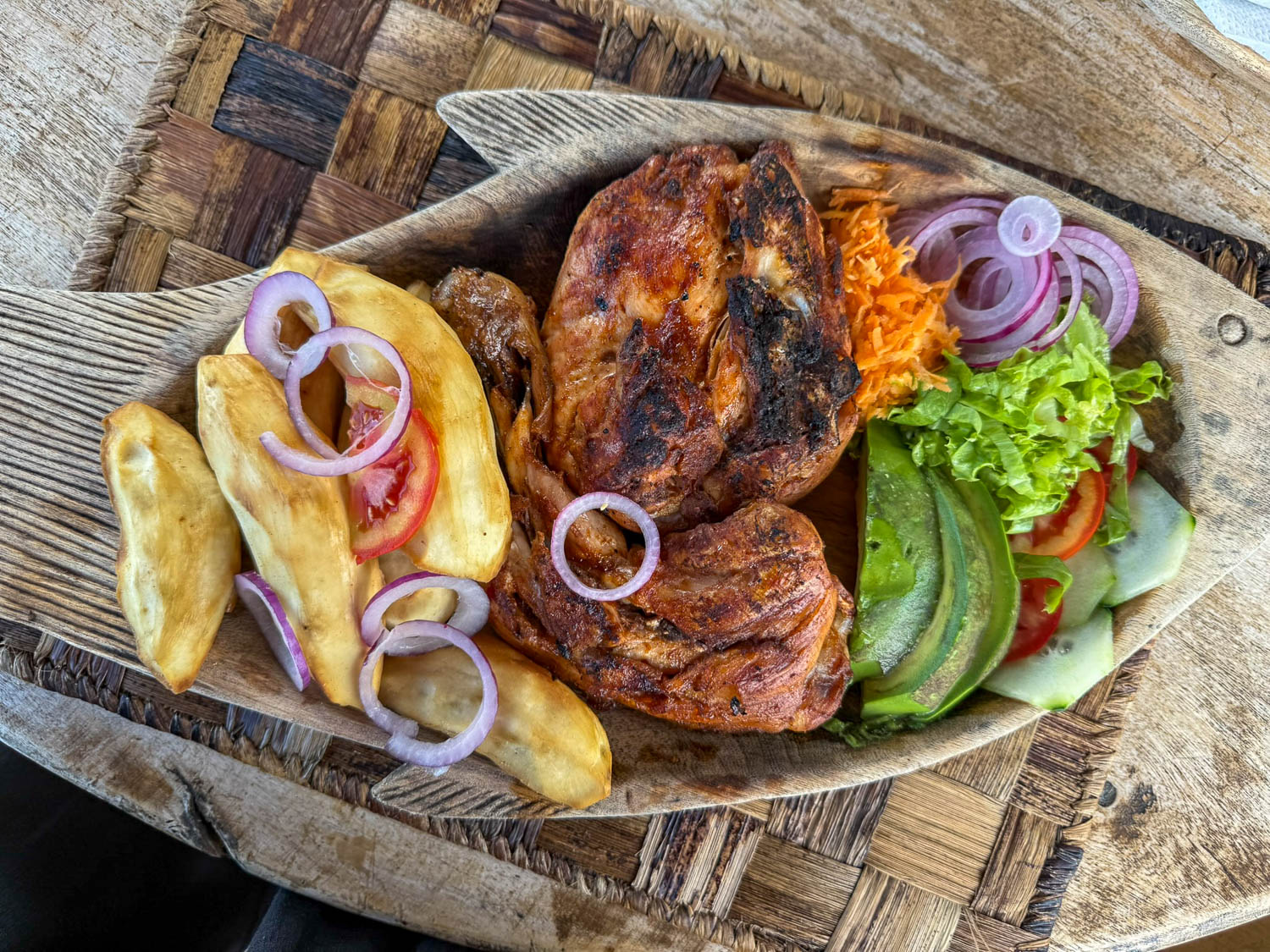
Perhaps you’re staying all the way in the far south, in Cyangugu? Unfortunately, food establishments are slim pickings here, unless you’re able to cross the border into the city of Bukavu in the Democratic Republic of the Congo, where you’ll find some superb selections. Otherwise, we would recommend Vitamino in Cyangugu.
Ultimately, any lakeside establishment along the eastern shores of Lake Kivu will provide you with friendly, welcoming smiles and fresh, locally-sourced meals. Take a moment to sit, sip a cold Primus beer or freshly-pressed fruit juice, and watch the sun dip below the horizon over one of the most beautiful lakes Africa has to offer.
Accommodation Options at Lake Kivu
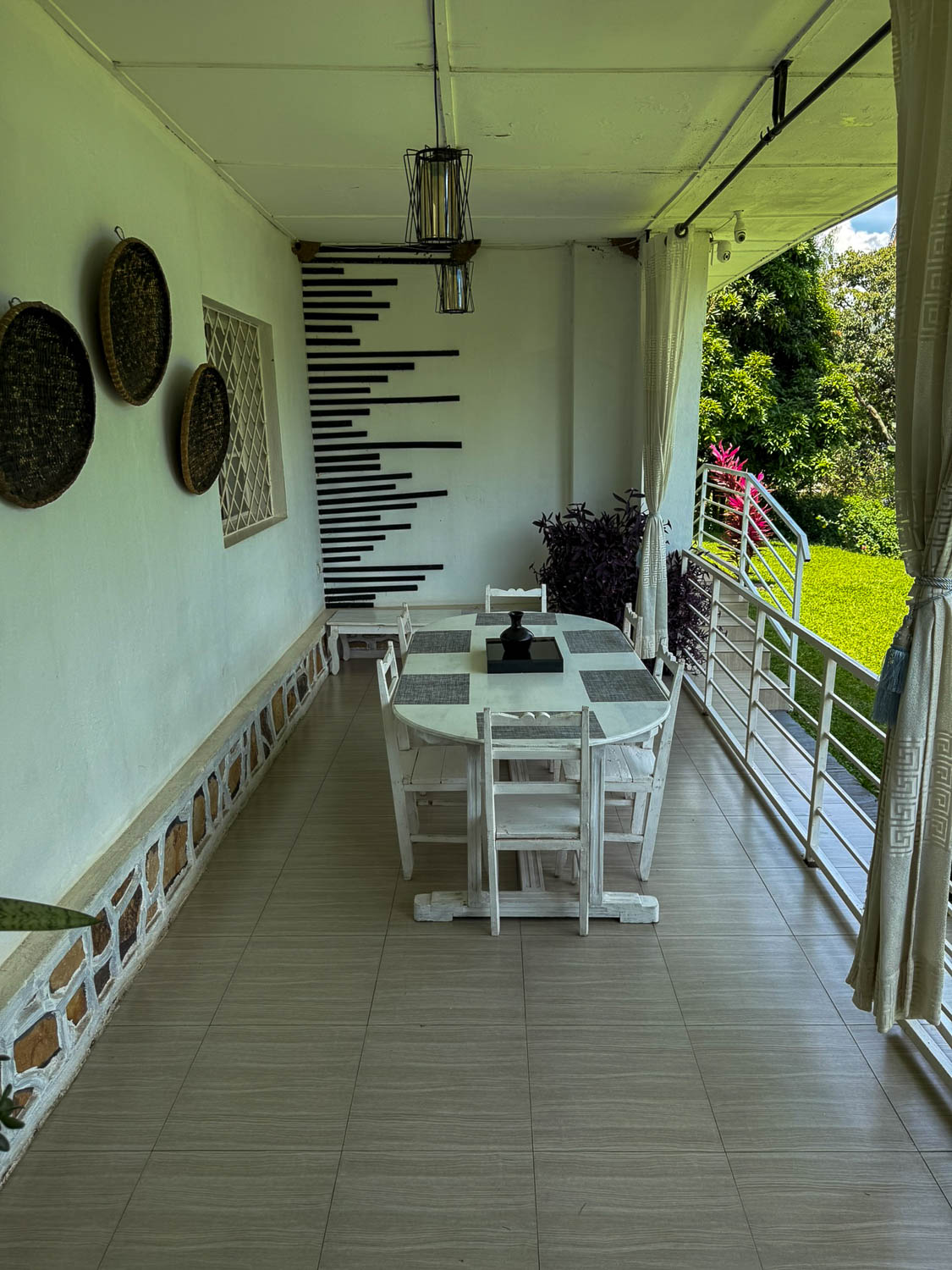
From eco-lodges to boutique hotels, Lake Kivu offers a wide range of accommodation types for every kind of traveler. Guesthouses in the main towns of Cyangugu, Kibuye and Gisenyi generally offer an intimate experience, often run by local people eager to share with visitors stories about Lake Kivu. Many accommodations will also help organize activities for you, including boat rides, cultural tours, fishing trips, and even gorilla trekking, providing you relaxation, adventure and cultural immersion all in one.
The following are some recommendations for accommodations along the lakeshore.
- Mantis Kivu Marina Bay Hotel, Cyangugu: a unique blend of luxury, tranquility, and cultural immersion
- Maravilla Kivu Eco Resort, Kagano: camp on the resort’s lawns, rent tents, stay in the rooms, or bring your own camper van
- Cleo Lake Kivu Hotel, Kibuye: excellent service, an array of activities, and breathtaking views over the lake
- Inn on the Lake, Kibuye: a tranquil ambiance, nestled within natural beauty; many rooms feature balconies with lake views
- Rushel Kivu Resort, Kibuye: comfortable accommodations with a private white sand beach
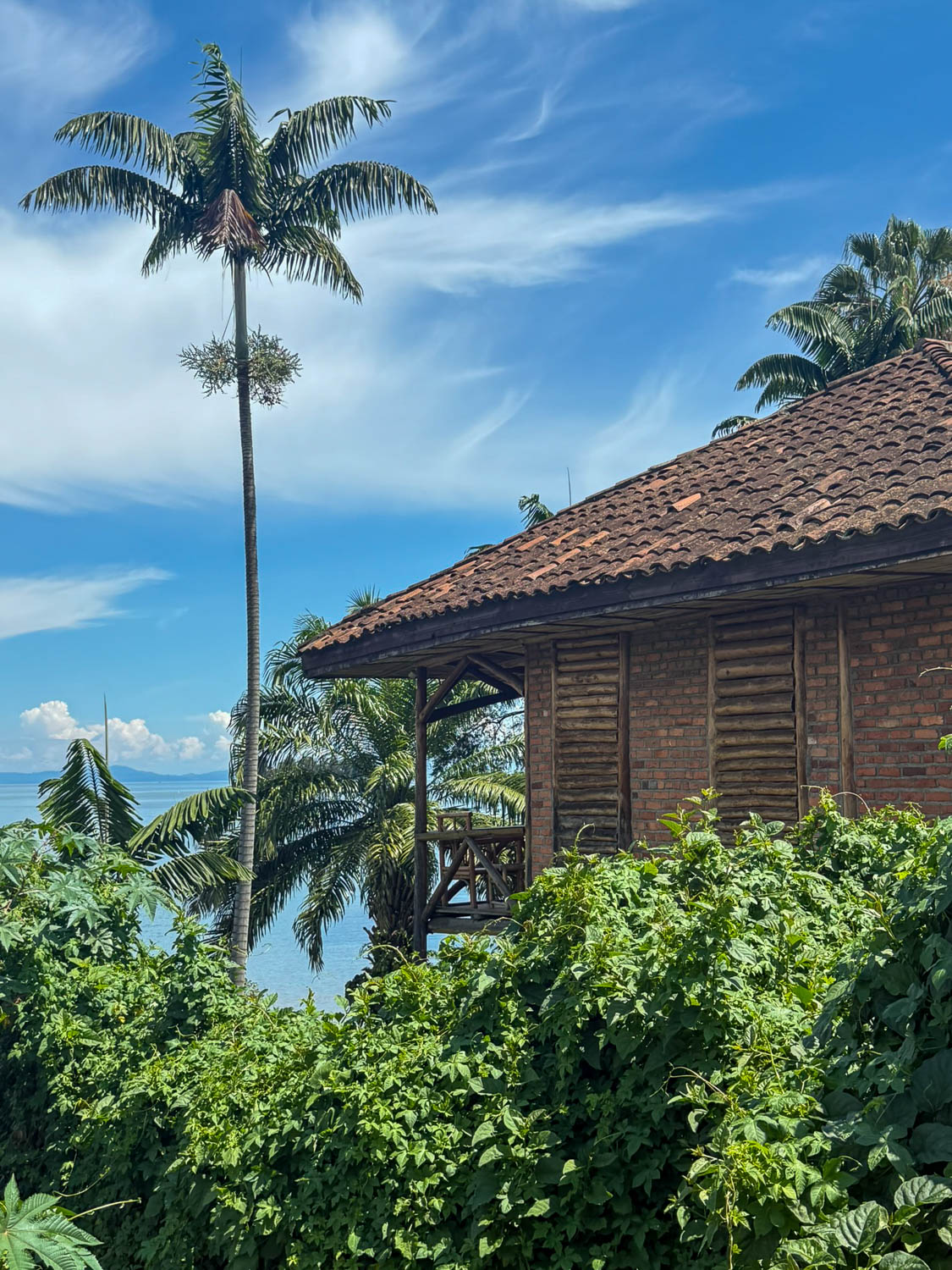
- Cormoran Lodge, Kibuye: perched above the lake, this small resort boasts seven charming individual chalets for additional privacy and peace
- Lake Kivu Serena Hotel, Gisenyi: plenty of activities, swimming pool, and within close proximity to Volcanoes National Park
- Inzu Lodge, Gisenyi: a budget-friendly tented safari camp with a colorful garden
Final Thoughts

We absolutely loved our time at Lake Kivu, and are confident most other visitors will too.
As with many places in Rwanda, Lake Kivu is not just a scenic stopover — it’s an opportunity for some no doubt much-needed relaxation before or after the more adventurous activities available to visitors throughout the country, and an opportunity to immerse yourself in Rwandan culture.
From the quiet hum of fishing boats on the lake, to the thrill of seeing mountain gorillas in their natural habitat, and from the healing warmth of volcanic hot springs to swimming in the unique geological wonder that is Lake Kivu, this region of Rwanda invites you to both rest and explore.
This is your call to the great lakes of Africa. Come for the fresh waters and the scenery – stay for the stories. And like us, you will hopefully leave with another small piece of Rwanda’s soul wedged in your heart.
Lake Kivu is waiting for you. It’s time to pack your spirit of wonder (and your swimsuit!) and head to the far western province of Rwanda. We’ll see you there!
FAQs
Is Lake Kivu safe to visit and swim in?
Yes, Lake Kivu is safe to visit, and swimming is considered safe in designated areas near the shoreline. While the lake contains methane and carbon dioxide in its deeper layers, these gases remain trapped far below the surface and are carefully monitored. The lake is also free of crocodiles and hippos, making it one of the few large African lakes where swimming is widely enjoyed.
What are the best things to do at Lake Kivu, Rwanda?
The best things to do at Lake Kivu include taking boat cruises to nearby islands, relaxing in lakeside towns like Gisenyi and Kibuye, hiking or biking sections of the Congo Nile Trail, visiting coffee plantations, and enjoying water activities such as kayaking and swimming. Many visitors also use Lake Kivu as a relaxing base between safari and gorilla trekking experiences.
When is the best time to visit Lake Kivu?
The best time to visit Lake Kivu is during Rwanda’s dry season from June to September, when the weather is sunny, roads are in good condition, and outdoor activities are ideal. A shorter dry season from mid-December to February is also a good time, especially for birdwatching. The wet season offers lush scenery but can bring muddy trails and more limited accessibility.
Which towns are best to stay in around Lake Kivu?
The most popular towns to stay in around Lake Kivu are Gisenyi (Rubavu), Kibuye (Karongi), and Cyangugu (Rusizi). Gisenyi is the most developed and accessible, Kibuye offers some of the most scenic and peaceful views, and Cyangugu provides access to Nyungwe Forest National Park for chimpanzee trekking and rainforest experiences.
How do you get to Lake Kivu from Kigali?
Lake Kivu is about a 3-hour drive from Kigali to Gisenyi, though many travelers allow 5–6 hours to enjoy scenic stops along the way. You can reach the lake by private car, taxi, or public bus. Once there, it’s easy to travel between towns like Gisenyi, Kibuye, and Cyangugu by road, boat, or moto-taxi.
Explore More Of Rwanda
-
Musanze, Rwanda: Explore the Best Things To Do
Discover Musanze, Rwanda’s gateway to Volcanoes National Park. This guide covers gorilla trekking, the best things to do in Musanze, cultural experiences, lava caves, hiking, and the twin lakes.