Some journeys to South America begin with a city, others with the arrival at a port. For many travelers arriving by cruise ship, their first glimpse of Brazil interestingly comes not through sun-drenched Rio de Janeiro or the colonial-era Salvador, but by docking at Port Santos — the country’s busiest commercial port.
Today, the Port of Santos is a large, high-volume port central to Brazil’s maritime trade – think of it as the beating heart of Brazil’s global trade, and its connection to the wider world. But whilst Santos is a port city where commercial operations remain front and center, for cruise passengers it’s a place where modern commerce collides with seaside relaxation, and where the bustling city of Santos itself greets you with beaches, museums, and warm hospitality. All this, with the cosmopolitan energy of São Paulo just a short hop, skip and jump away.
In this article we share with you more about the Port of Santos and how to make the most of your time here: from walking the cruise docks where history shaped trade and culture across Latin America, to discovering cruise excursions for different travel styles, tasting Brazil’s legendary coffee at its source, and exploring the city and beyond. Follow us, fellow wanderers, as we guide you through Santos!
Quick Tips
- The Port of Santos, located about 45 miles (70km) directly south of São Paulo, is the largest port in Latin America — and one of the busiest in South America.
- The port operates 24/7 and is equipped with modern terminals designed to handle a steady flow of vessels, passengers, and cargo simultaneously.
- The best time to visit Santos is during Brazil’s summer (December–February), when the port hosts the majority of its cruise traffic.
- Inside the cruise passenger terminals you’ll find clean restrooms, security, ATMs, small souvenir shops and cafes, and ground transportation options.
- Most people arriving into Santos choose to either explore the city and the port area itself, else take a day trip to São Paulo.
- Santos offers visitors an historic center, beaches, museums, shopping, adventure activities, lighthouses, historic tram rides, and several open green spaces.
- Always carry with you at least a small amount of local currency (Brazilian Reais) when going ashore.
- Santos’ port operations include strong security measures, and the city and port area are generally considered safe and welcoming for tourists.
Plan Your Trip
Some links below may earn us a small commission at no extra cost to you. We’re truly grateful for your support, as it allows us to continue sharing meaningful travel experiences and practical travel insights with you. Read our full disclosure here.
Planning your visit? We’ve gathered recommended tours and activities, along with trusted travel tools, to help you explore with confidence and ease.
Tours & Experiences
Prefer additional options? Click below to discover more incredible experiences tailored just for you!
Browse top attractions in Santos, Brazil.
Travel Essentials?
Planning the rest of your trip? These are the platforms we personally use when organizing our travels. For more planning tools, visit our Travel Resources page or browse current promotions on our Travel Deals page.
The Strategic Role of Port Santos
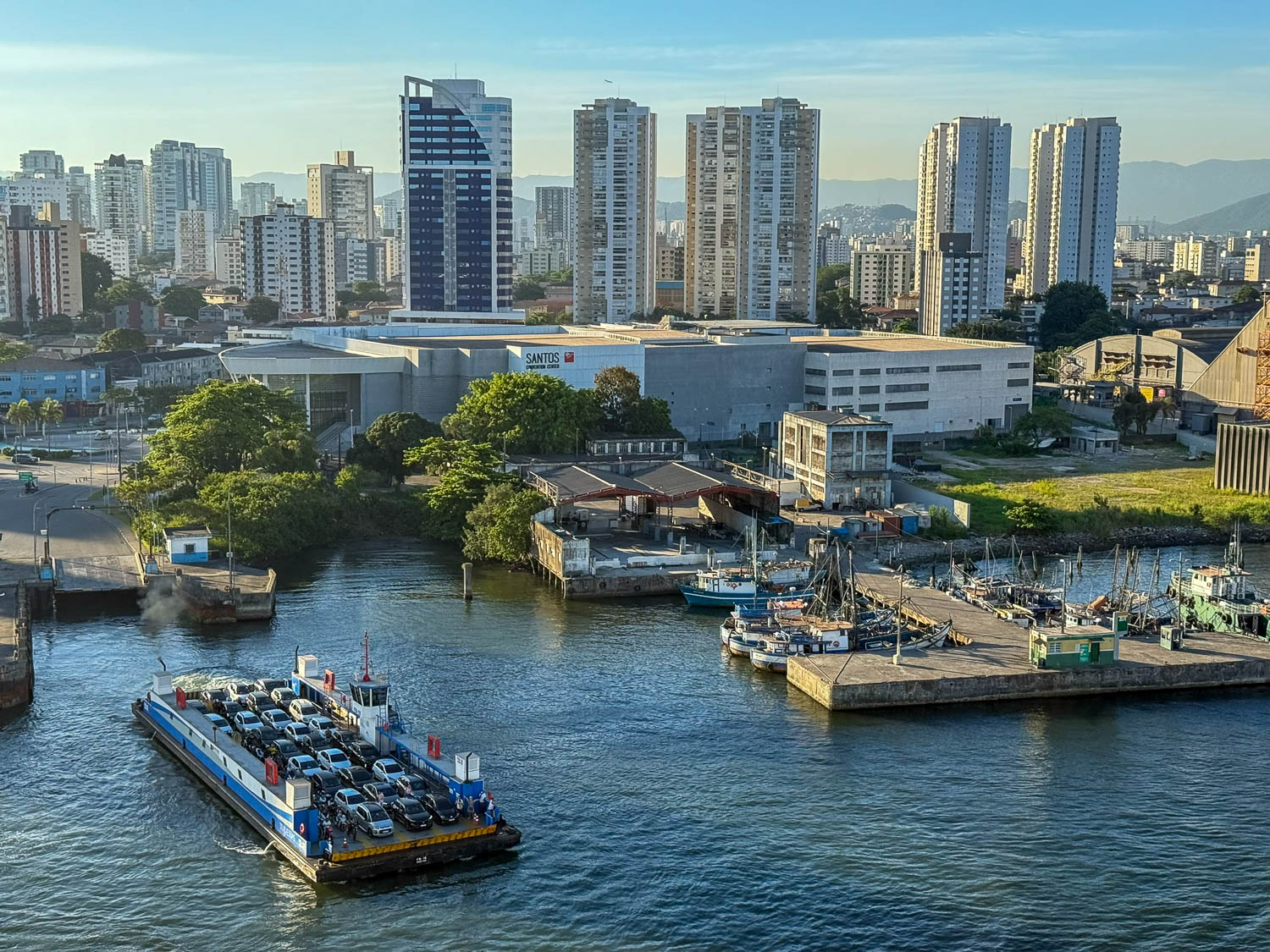
When your cruise ship glides into the Port of Santos, you’re docking at the largest port in Latin America — and one of the busiest in South America. Port Santos isn’t just a major maritime facility: it’s a symbol of Brazil’s strategic importance in world trade, an identity shaped by movement on an industrial scale.
Fun fact. Santos is the busiest port in Latin America by cargo volume, operating across dozens of terminals spread along several kilometers of waterfront.
A Hub of History and Trade
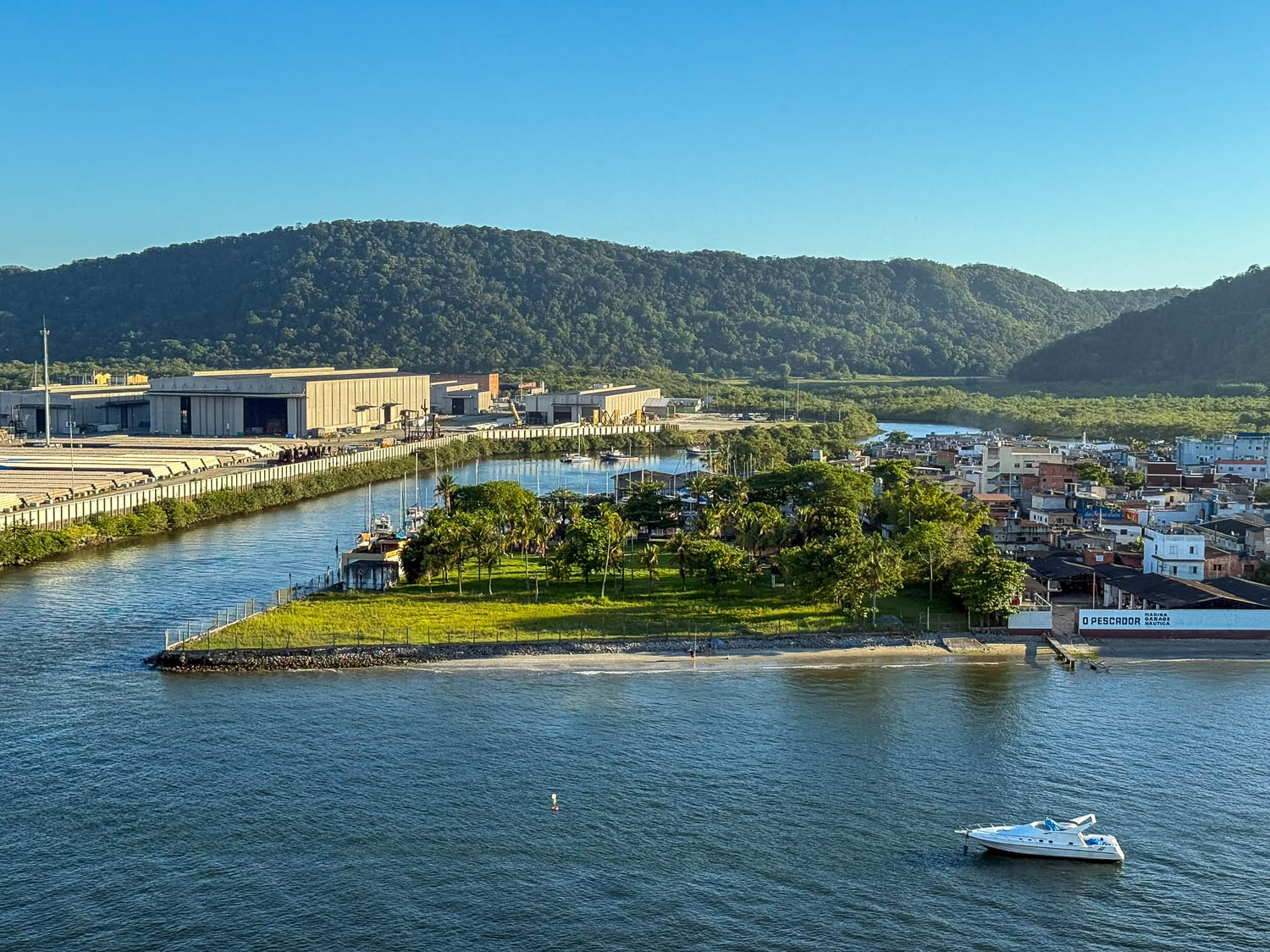
Located in the state of São Paulo along Brazil’s southeastern Atlantic coastline, the Port of Santos lies about 45 miles (70km) directly south of the city of Sao Paulo, Brazil’s largest metropolitan area. And indeed, this sheltered estuary occupies a long-established strategic coastal position.
Since the 19th century, the Port of Santos has been central to Brazil’s coffee trade (a huge draw for Mike!), funneling beans from the interior through the Serra do Mar mountain crossing, before being shipped onward to international markets.
Fun fact. The Serra do Mar crossing was once one of the most challenging parts of the coffee production journey, requiring engineered rail solutions to move heavy coffee loads down to the coast.
The expansion of coffee production in the early 1800s helped shape both the port’s growth and its long-standing role in global trade. Santos soon became Brazil’s primary point of export, with warehouses, rail links, and port infrastructure evolving to support the trade – a role that continues to influence its scale and layout today.
Fun fact. Coffee warehouses once lined large sections of the port. Today, some historic structures still reflect the storage and inspection needs of the trade — think wide doors, high ceilings, and proximity to rail lines.
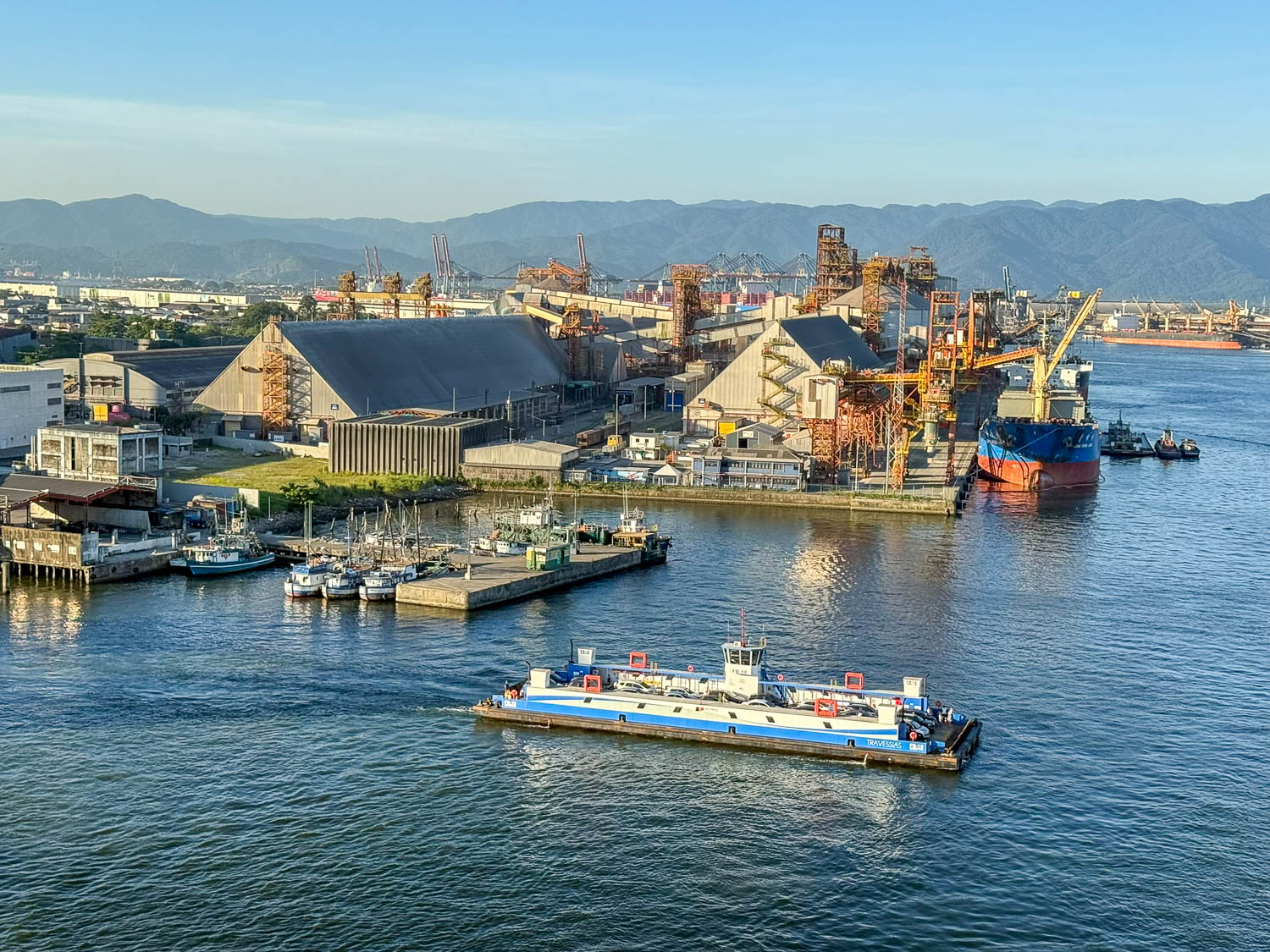
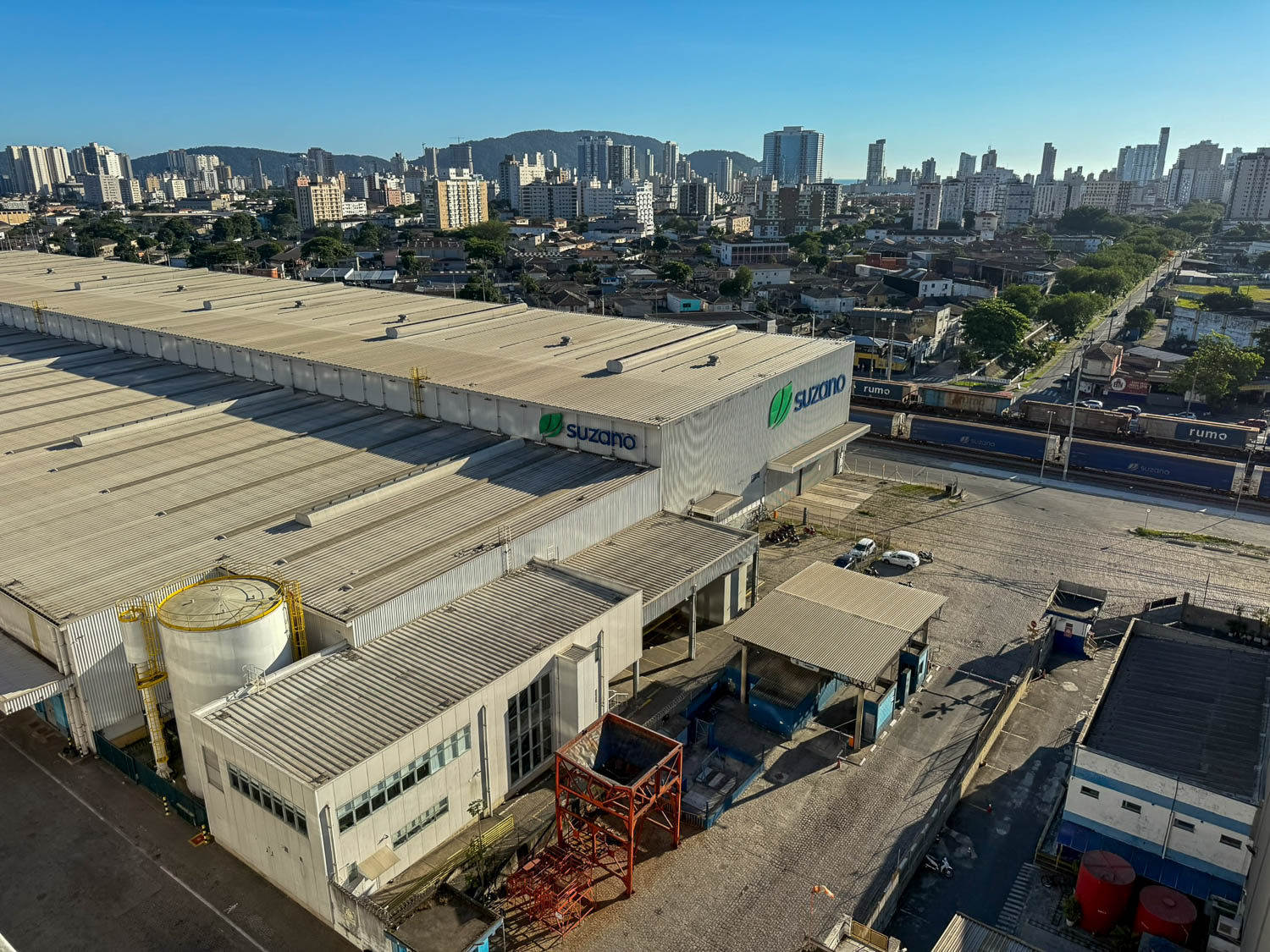
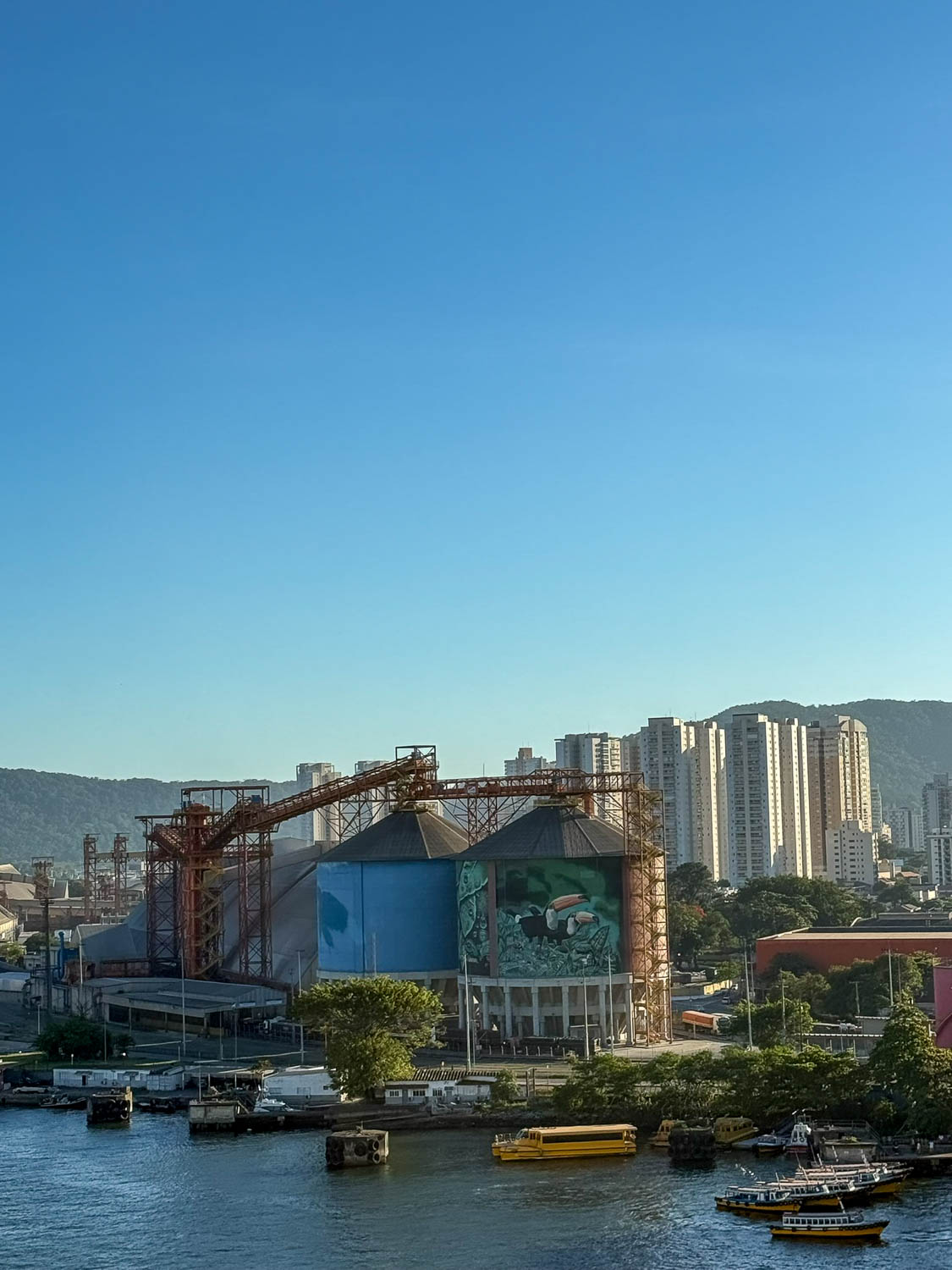
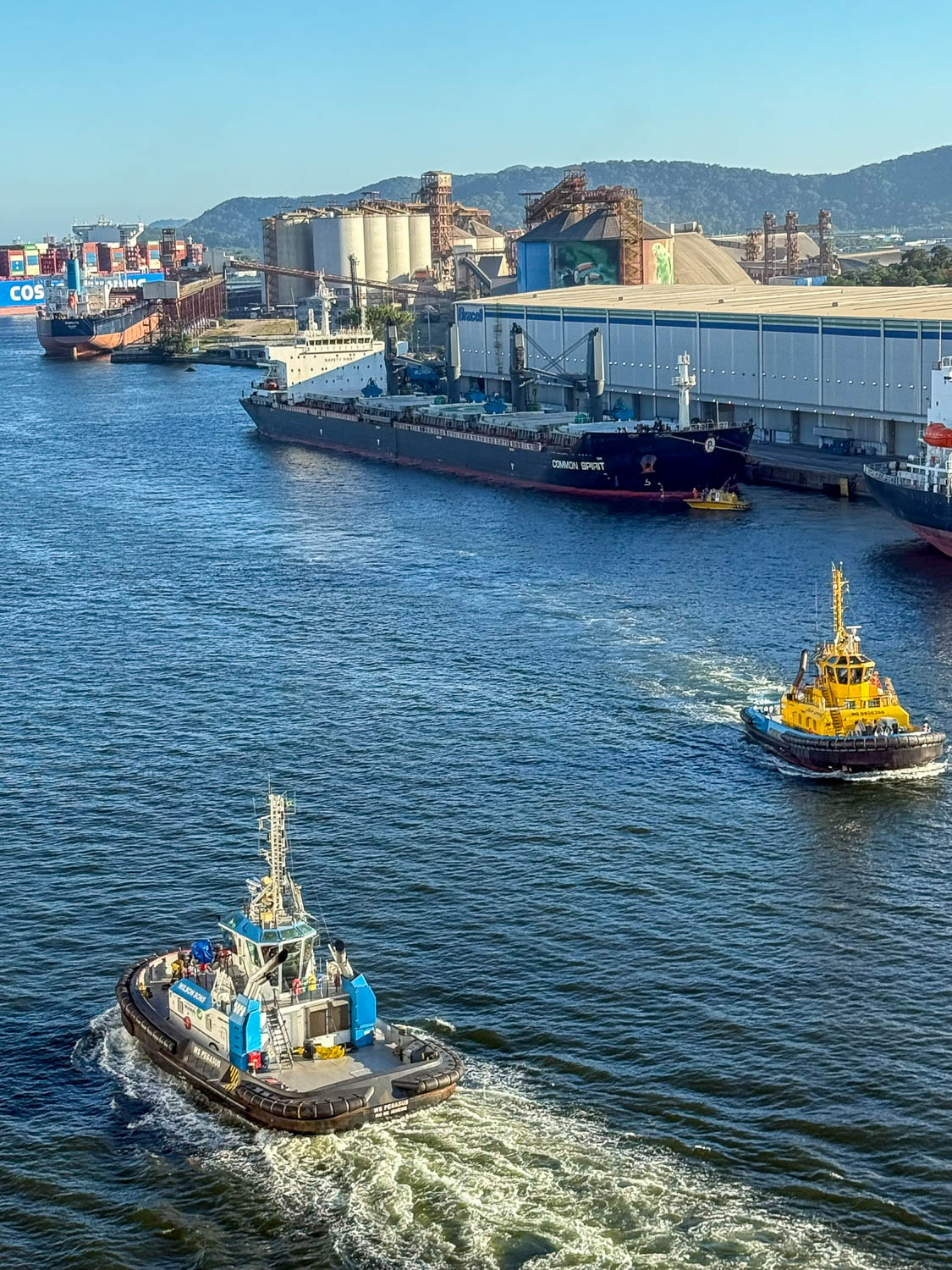
Today, the Port of Santos handles everything from general cargo, container traffic, and liquid bulk, to automobiles, dry bulk (including agriculture commodities), fertilizers, paper and cellulose (to name but a few of its imports and exports!), all whilst welcoming modern cruise passengers eager to explore.
Fun fact. Much of the port’s bulk cargo today arrives and departs via rail, a legacy of the same transportation corridors first developed for the coffee trade.
What Does All This Mean for Cruise Passengers?
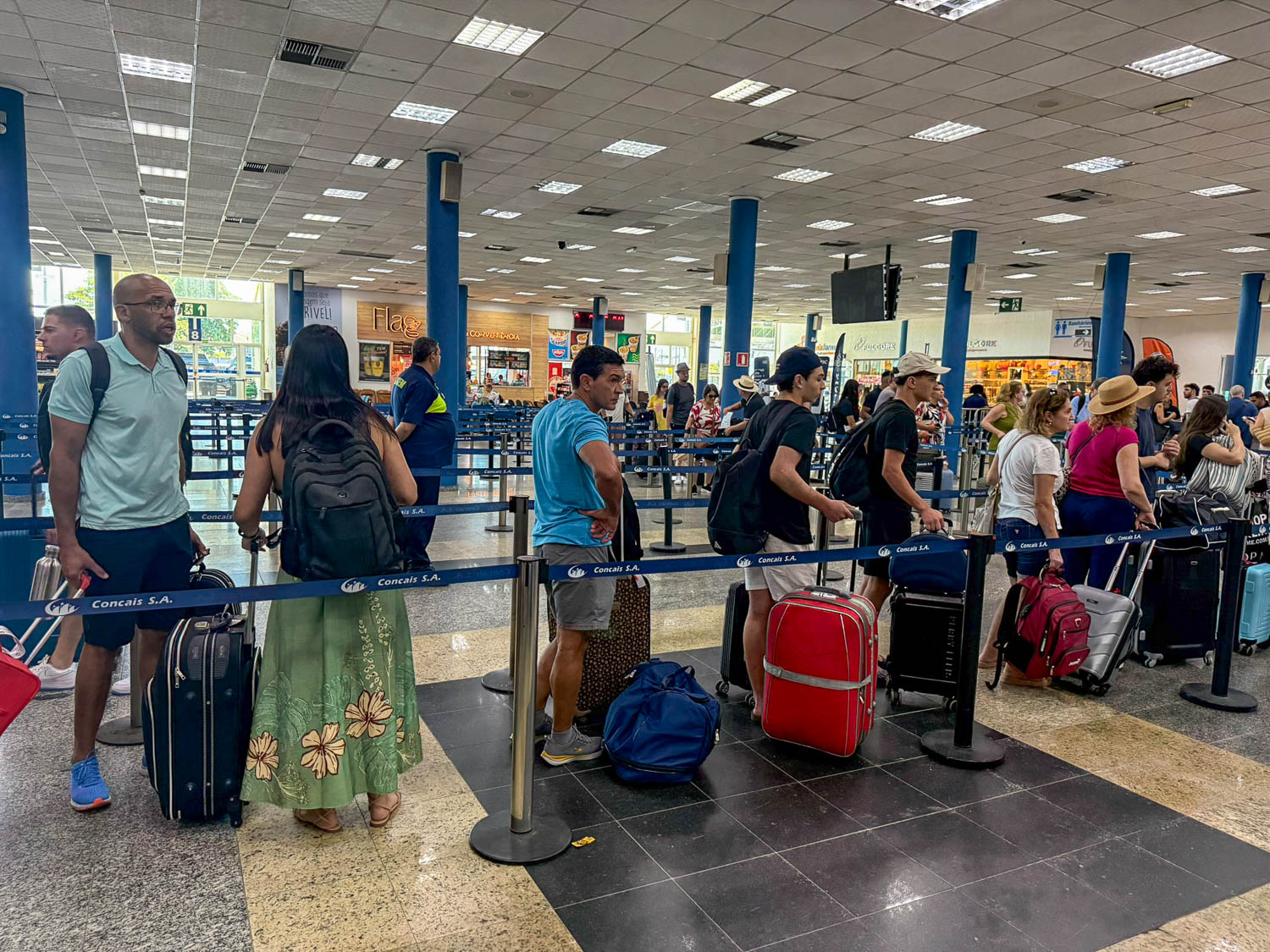
For cruise passengers like us, the scale and diversity of operations at the Port of Santos translate into a port environment that is purpose-built for volume and efficiency. Infrastructure here is extensive, the port equipped with modern terminals designed to handle a steady flow of vessels, passengers, and cargo simultaneously.
As a result, cruise ship arrivals and departures tend to feel orderly and well-managed (this was certainly our experience!), with clearly defined processes and an ease-of-flow shaped by decades of high-volume maritime activity. From the moment you disembark (or begin your embarkation), it’s evident this is a port accustomed to moving people and goods smoothly and professionally through a complex, working environment.
Fun fact. Despite its industrial scale, cruise ships dock at Port Santos within the same active port zone as commercial vessels, which means passengers arrive amid the day-to-day cargo operations (it’s pretty cool to watch from the deck of your ship!).
Port Infrastructure, Operations and Logistics
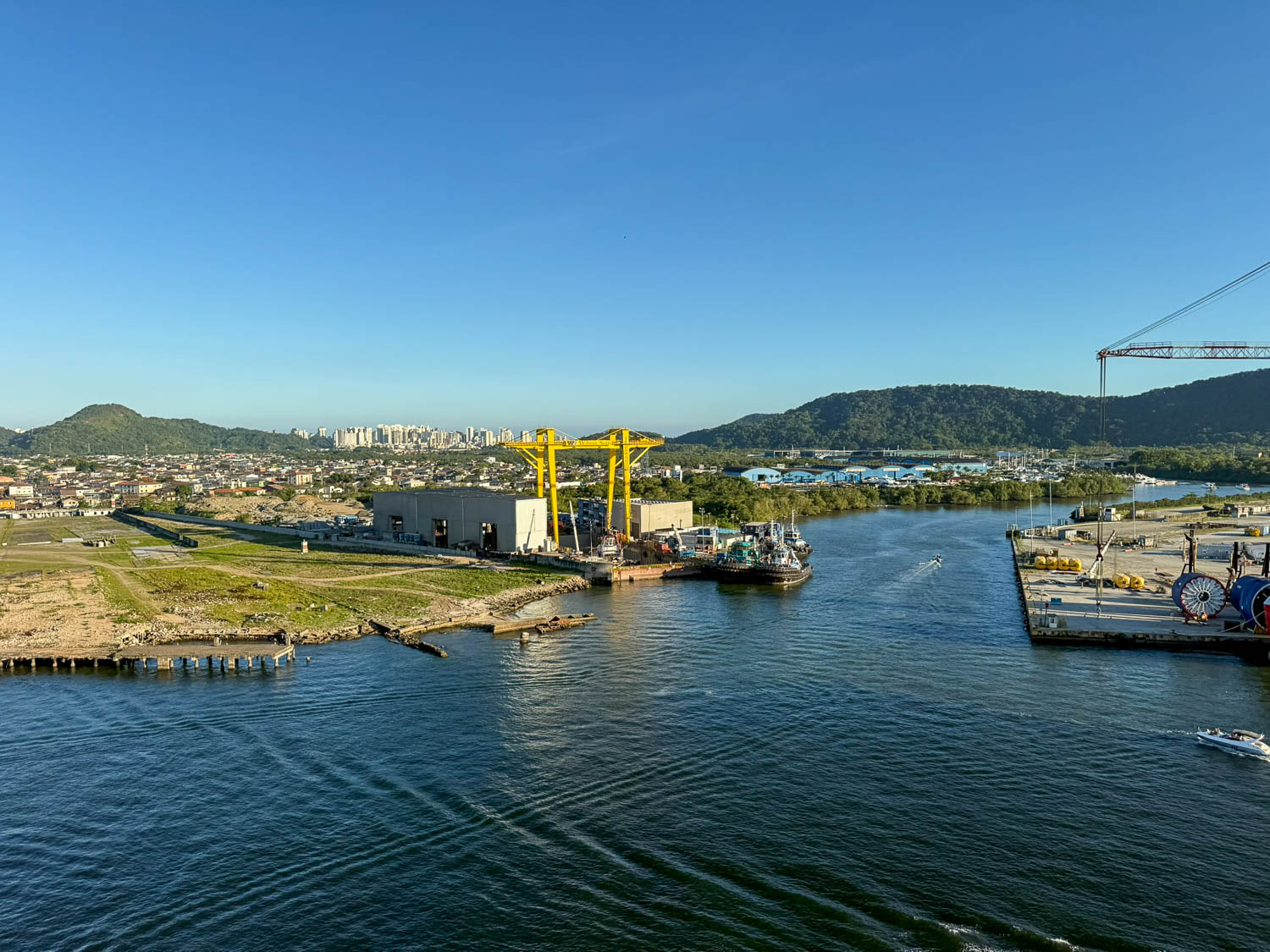
Behind the scenes, port operations at Santos are orchestrated with precision. The port is home to multiple terminals – including those for ship containers, liquid and dry bulk, and cruise ships – ensuring separate, yet coordinated operations, whilst specialized equipment throughout the port ensures loading and unloading moves at competitive speed.
Fun fact. Operations at the Port of Santos run 24/7.
Santos Port Authority
At the core of efficiency – and indeed much of Santos’ day-to-day port-side rhythm – is the Santos Port Authority, a dedicated governing team responsible for every detail of the port’s operations, from long-term infrastructure planning and projected growth, to security, environmental management, and operational coordination. In managing the daily flow of vessels and enforcing rigorous control protocols, the Santos Port Authority ensures that visitors — from major shipping companies to cruise passengers — experience reliability, comfort and safety. Safety in particular is prioritized, with modern processes and risk management systems in place.
The role of the Santos Port Authority also extends beyond the docks themselves, accounting for the port’s impact on regional commerce, transportation networks, and daily life in Santos.
The Cruise Terminals
Arriving at the modern cruise passenger terminals in Santos – the Concais Passenger Terminals – you’ll immediately see why this is Brazil’s largest port. The port itself stretches for kilometers along a sheltered estuary, with specialized docks, railway lines, warehouses and heavy machinery supporting the constant flow of both industrial cargo operations and passenger arrivals.
For cruise travelers, the oversight of the port by the Santos Port Authority translates into a port environment that operates with structure and intent, balancing the demands of large-scale industry with the steady movement of passenger cruise ships.
Fun fact. There are two cruise passenger specific terminals in Santos, operating simultaneously to allow multiple cruise ships to dock at the same time during peak season.
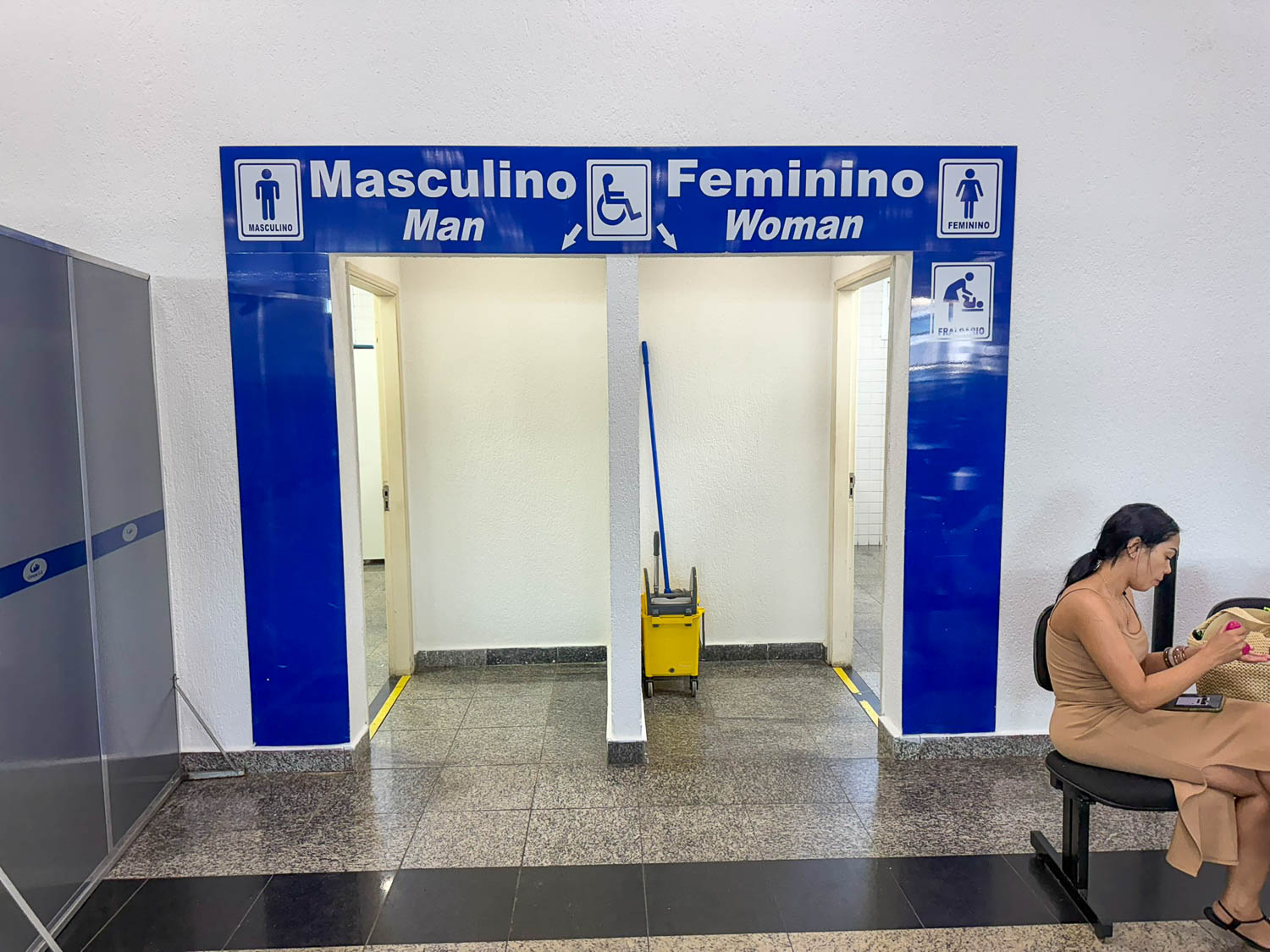
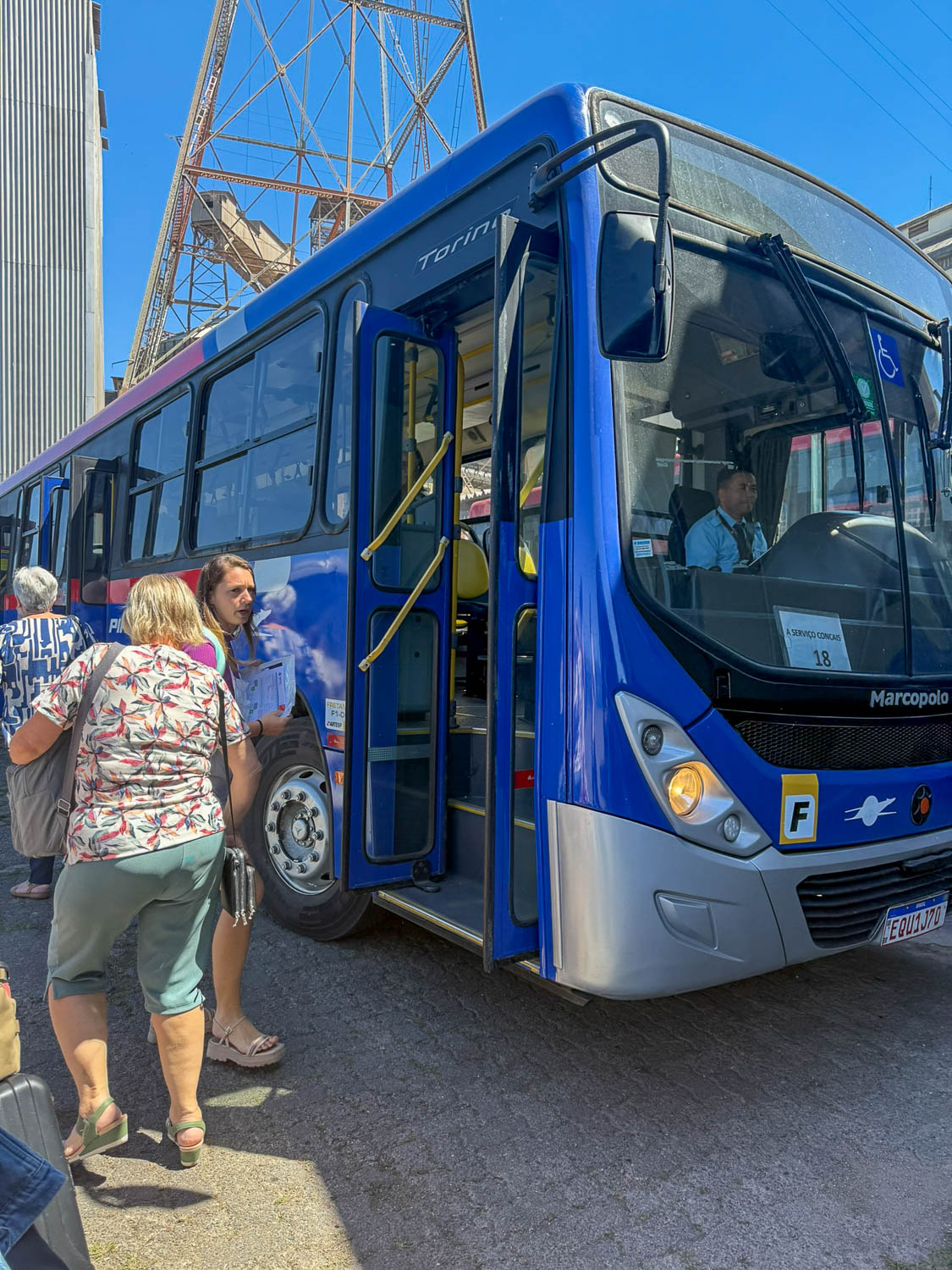
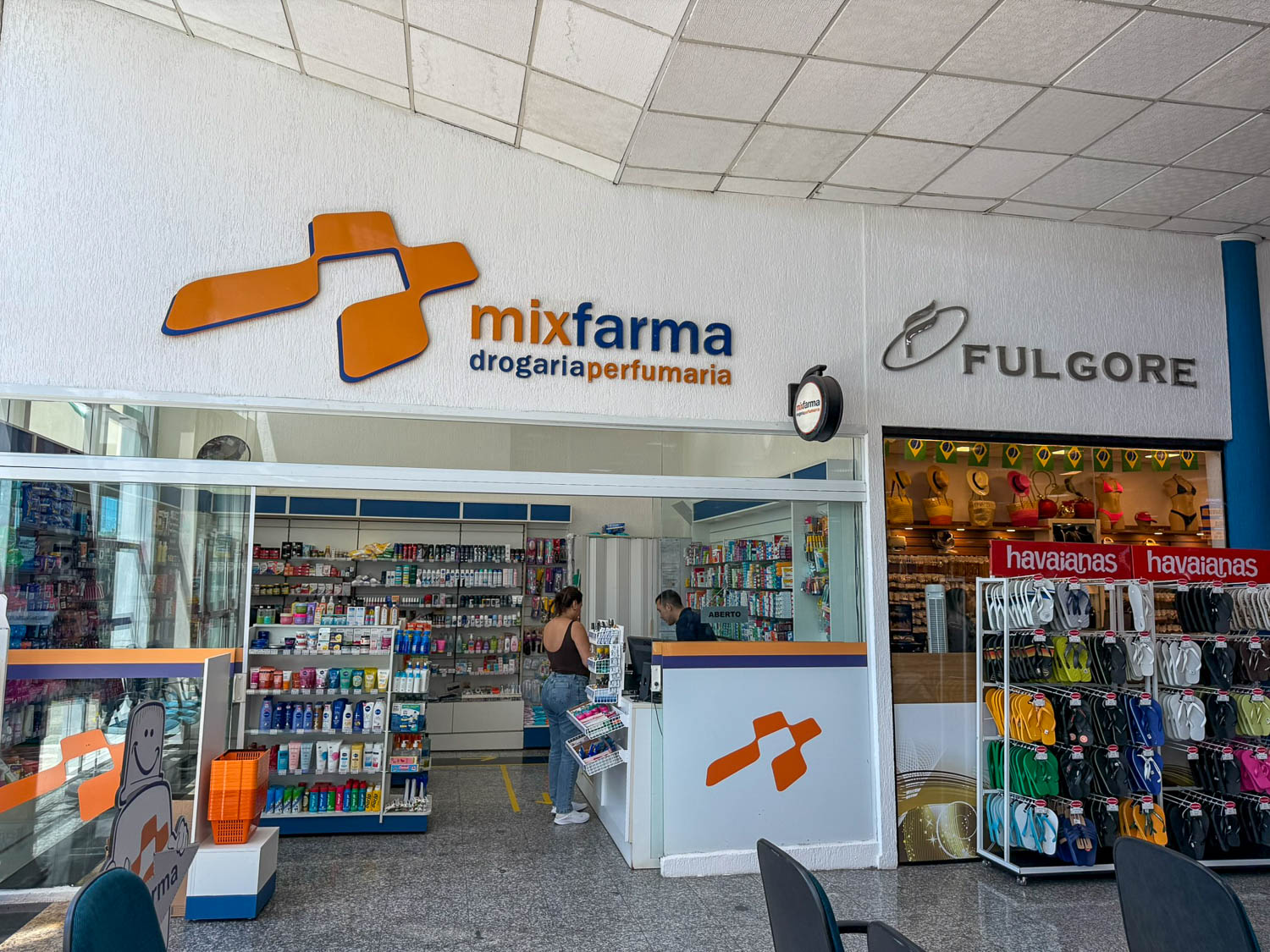
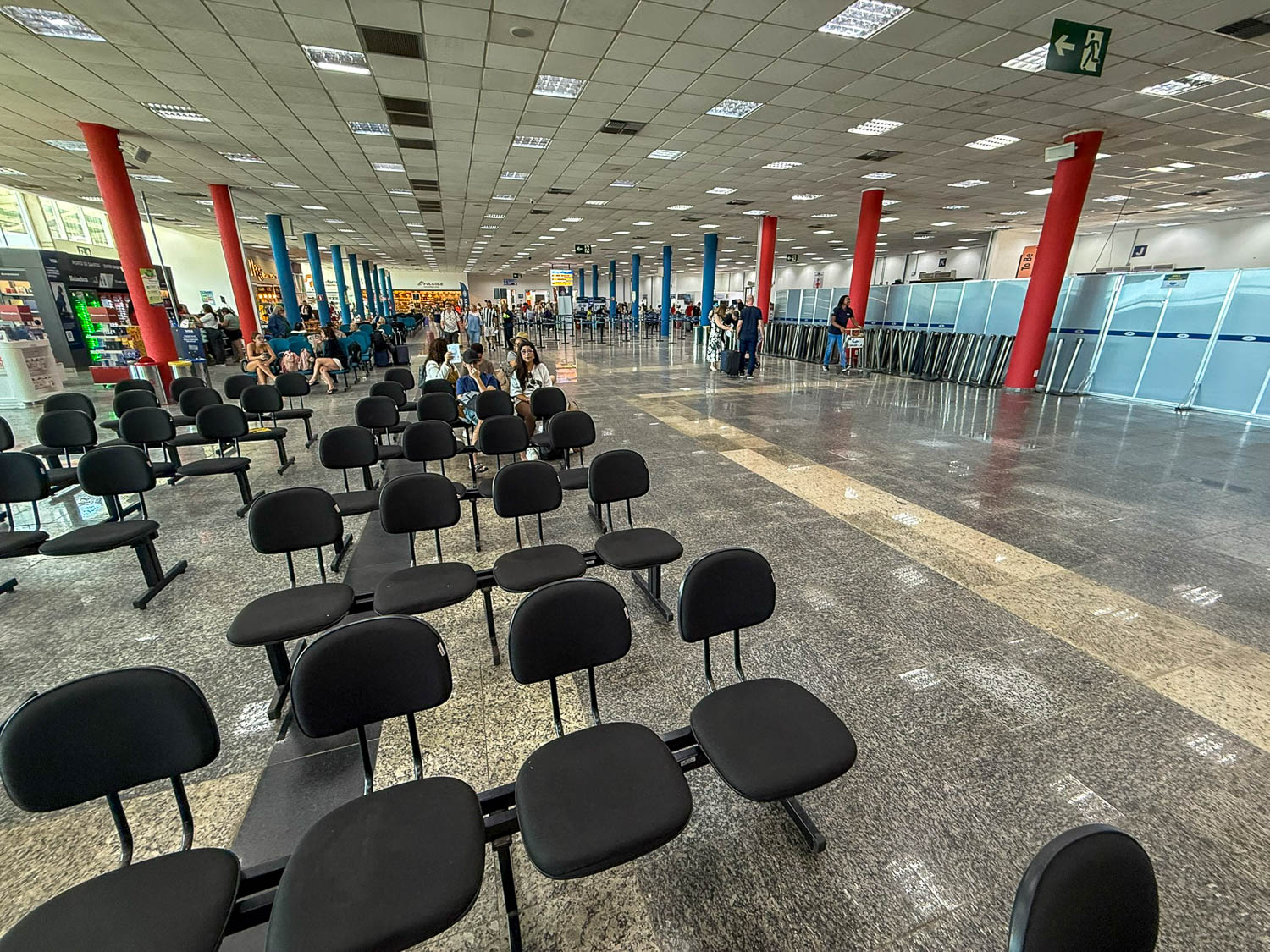
For visitors, it’s easy to notice the operational efficiency throughout the port, which made us feel incredibly confident as we sailed through (‘scuse the pun!) from the front door to the ship’s gangway. Inside the terminals you’ll find clean restrooms, security, ATMs, small souvenir shops and cafes, and reliable ground access to buses, taxis, private transfers and cruise excursions.
Fun fact. The emphasis on operational efficiency at the Port of Santos means cruise ships dock and disembark on time, minimizing delays. Luggage is whisked off to your ship with a short but friendly exchange, lines move quickly, and everything feels … well … very organized.
History and Cultural Importance of Santos
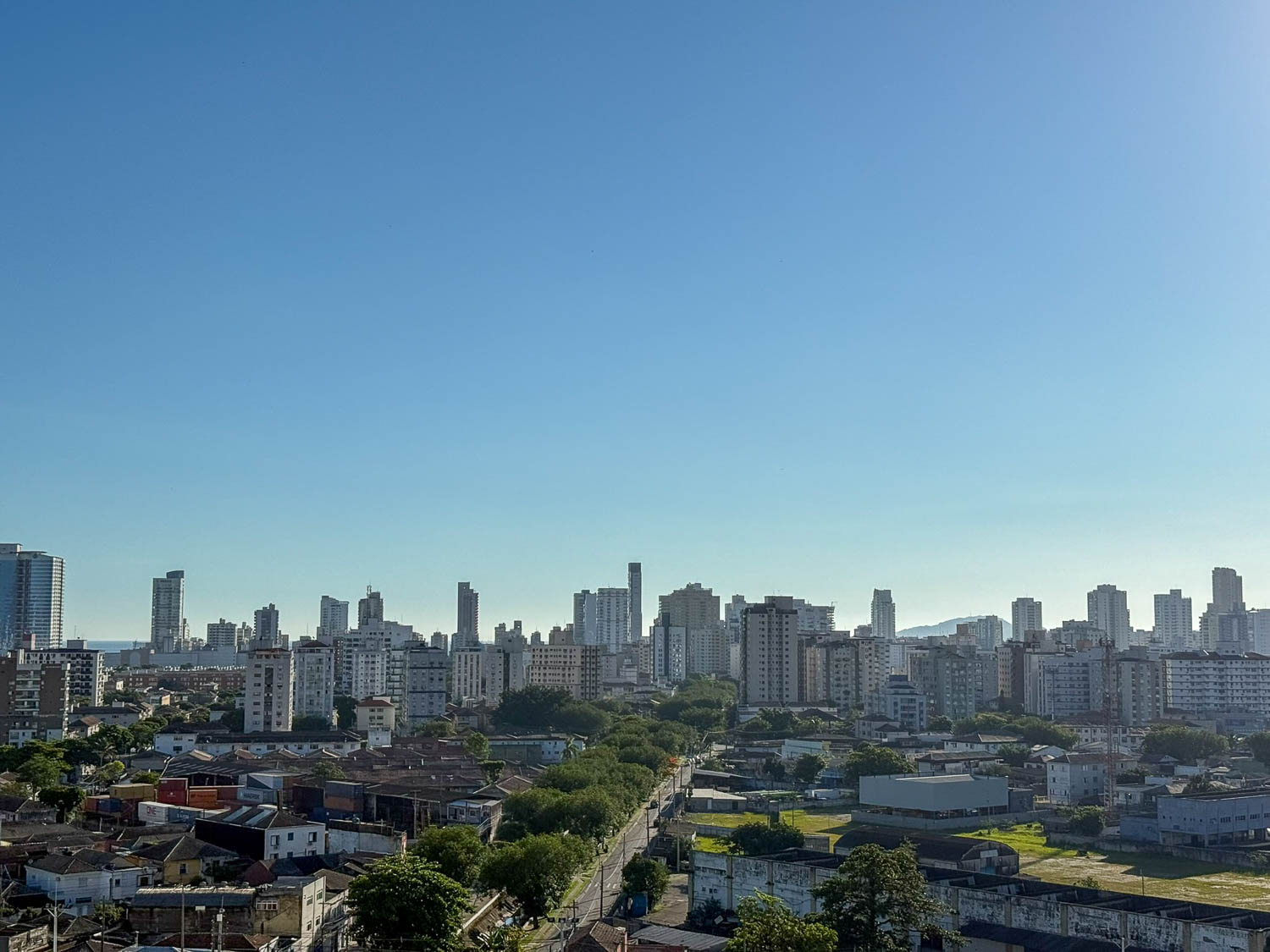
Beyond its role as a high-volume commercial trade port, Santos has a deep cultural identity, with the unique blend of maritime operations and a vibrant city: Santos truly is a living chapter in Brazil’s story. Today, football clubs, cultural festivals, and street art all contribute to the life of the local community.
However, like many large working ports, the Port of Santos has certainly faced its share of challenges in the past, forced to navigate periods of change shaped not only by trade and infrastructure, but also by the very people who kept the port running with labor-intensive, physically demanding work. In days gone by, the port faced significant battles with yellow fever, workers had to adapt to shifting labor conditions and roles, disputes and strikes, and the introduction of new technologies and economic and political shifts added additional stressors.
Fun fact. Yellow fever epidemics notoriously plagued the port in the 19th century, earning it the nickname “port of death”: as a result, ships often chose to avoid docking in Santos.
Despite these periods of significant change and demands, dock workers adapted well, playing a steady role in port operations – and what visitors see in today’s modern port environment reflects this adaptation, and indeed the resilience of the individuals who helped to shape this efficient, high-volume port.
Economic Impact & Global Markets
Some visitors often ask why Santos – and indeed the port itself – matters so much. “Why all the hub-hub?” Indeed, the city’s influence stretches far beyond the paved roads and the leaning beachfront apartment towers: it serves as Sao Paulo’s economic powerhouse.
As we know, Santos is Latin America’s largest port, and today handles almost 30% of Brazil’s trade (both export and import), which significantly boosts the country’s economy (think job creation and connecting South America to other global markets). Here are some other interesting facts – some of them even a little quirky! – that can help put your visit to the Port of Santos into even greater perspective.
- The Port of Santos connects Brazil to over 200 ports in 80 different countries, with especially strong trade links to Japan, China, Europe and the U.S.
- The port regularly competes with major U.S. and European ports for volume. It handles well over 170 million tons of cargo annually: this total outweighs every commercial passenger aircraft in the world combined … many times over!
- Santos is the world’s leading coffee export hub. It’s very possible your morning coffee began its international journey here!
- Whilst soybeans are Brazil’s largest agricultural export by volume (who knew?), the Port of Santos also ships orange juice concentrate on such a grand scale that it ends up playing a role in global breakfast prices, especially in the U.S. and across Europe (share this one with the kids next time you’re sitting down to a fresh glass of OJ together!).
- Delays of fertilizer imports in Santos can have a direct effect on global food supply chains beyond the continent, as these shipments directly influence Brazil’s agricultural output.
- The port is not just about cranes and containers: workers here are employed within port cafes, are hired as regional tour operators and customs officials, and work within trucking companies and even ship chandlers (we must admit we had to look that one up – these are businesses who supply ships with everything they’ll need whilst in port).
Expansion projects associated with the port – including upgraded infrastructure, zoning, sustainability and technology – will continue to be a major driver of new jobs over the coming years, reinforcing Santos’ role as a long-term economic anchor for the region.
Of course, all this isn’t to say the city of Santos itself isn’t worth a wee bit of exploration – because it is! And we appreciate that’s probably one of the reasons you chose to read this article in the first place…
What To Do In the Port of Santos
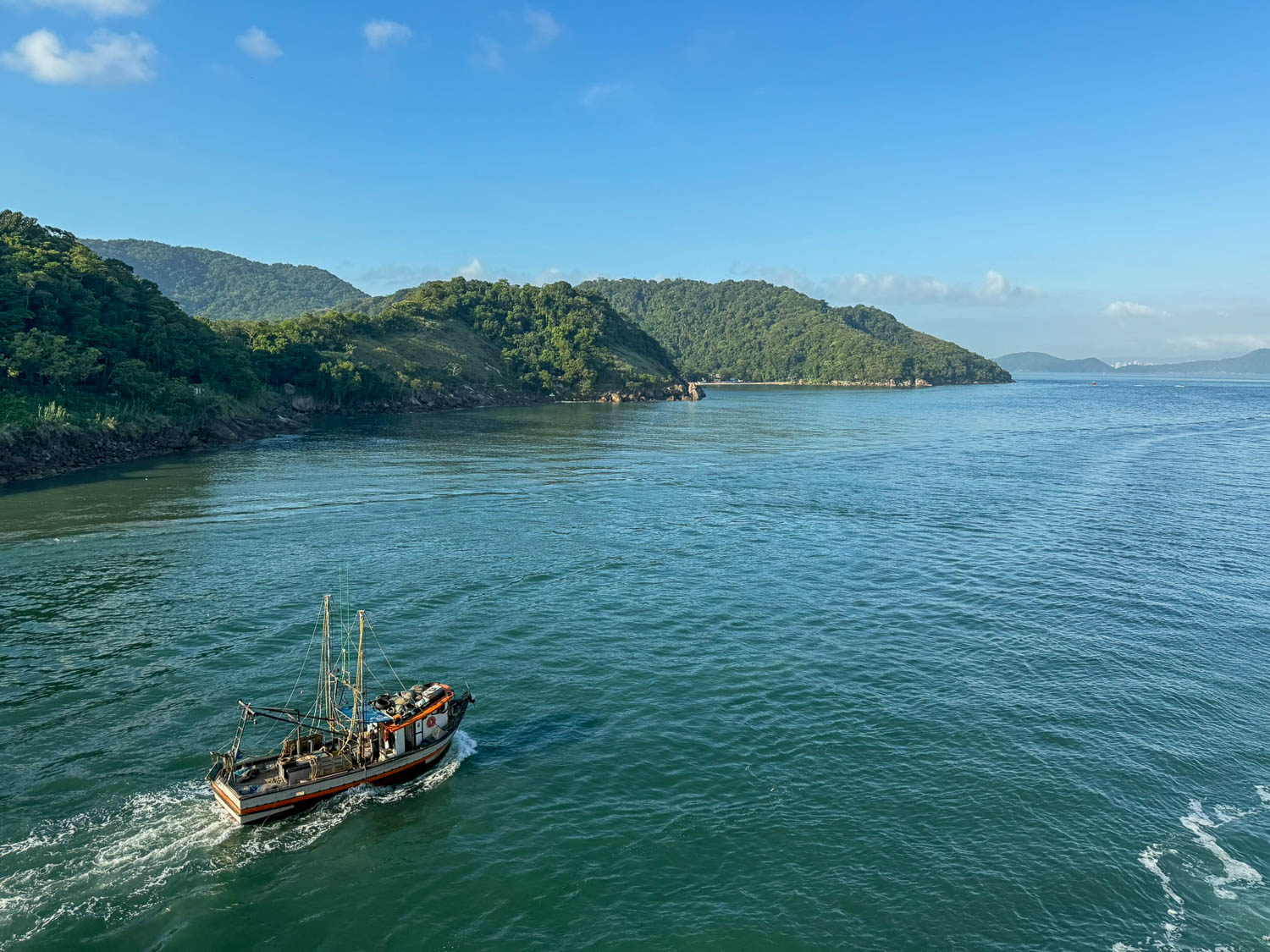
Most people arriving into Santos – especially by cruise ship – choose to either explore the city and the port area itself, else take a day trip to Sao Paulo.
For those of you keen to stay close to the ship, the following Santos sights are worth considering during a day of exploration. With a bit of pre-planning and a solid map (or guide!) by your side, you’ll be able to take in many of these in one day, creating for yourself a surprisingly diverse shore experience.
Insider tip. Your cruise ship will dock right at the edge of the Santos port, with many key historic attractions just a short walk or quick taxi (or Uber) ride away.
For an in-depth look at each of the attractions below, be sure to check out our sister article, Things To Do and See in Santos.
- Beaches: Santos is also known for its long, continuous stretch of urban beaches (you might see it listed elsewhere as a “beachfront garden” or “seaside garden”)
- Guarujá: come here for beaches, shopping, hang gliding, lookouts, and steam trains.
- Ilha da Moela Lighthouse: the oldest lighthouse in the State of São Paulo, dating back to 1830.
- Ilha Porchat (Porchat Island): come here for stunning coastal views and famous hilltop monuments.
- Linha Turística do Bonde: take a ride on this historic tourist tram, offering guided tours through the city’s historic center and port area.
- Monte Serrat: rising above the historic center, this city hilltop provides a high-level view over the port, city, and coastline (hike or take the funicular to the top!).
- Museu do Café (Coffee Museum): explore exhibits that focus on coffee production, export, and the infrastructure that supported Brazil’s coffee industry’s boom.
- Pantheon of the Andradas: the mausoleum for the Andrada brothers, key figures in Brazil’s fight for independence from Portugal.
- Parque Valongo: an evolving family-friendly public space that highlights recent urban revitalization efforts in Santos.
- The Pelé Museum: a comprehensive, interactive tribute to the late legendary Brazilian football (soccer) player Edson Arantes do Nascimento.
- Santos’ historic center: wander cobbled streets and see colonial, imperial and early industrial-era architecture with restored facades.
- Santos Municipal Aquarium: a compact, well-organized museum featuring native Brazilian marine life and displays speaking to its pioneering efforts in marine conservation.
- São Vicente: one of Brazil’s oldest European-settled cities, founded in 1532.
Insider tip. With more to see and do in Santos than one might expect, you may wish to consider joining a half- or full-day tour of the city, to help maximize your time on shore.
A Day Trip To São Paulo
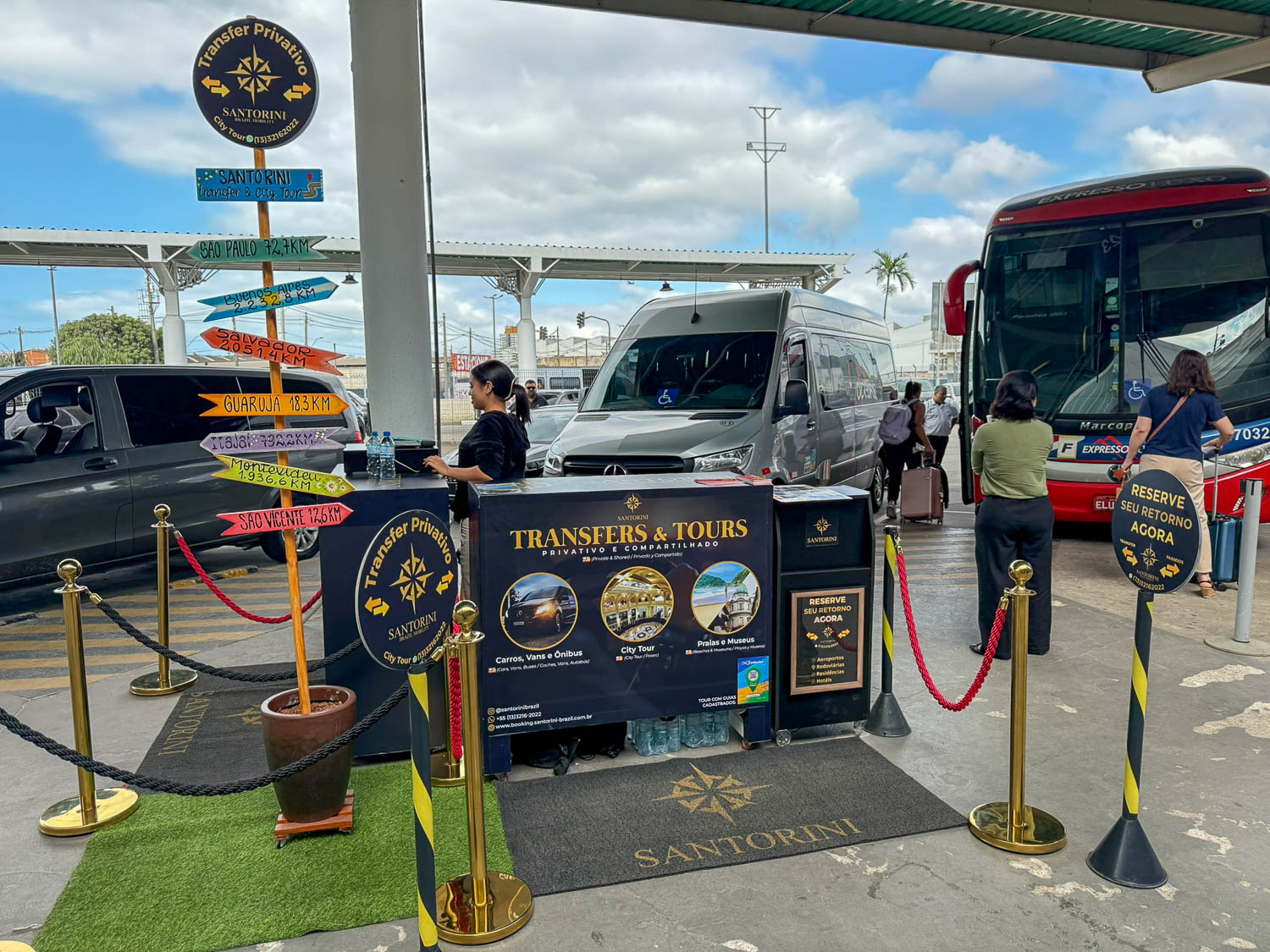
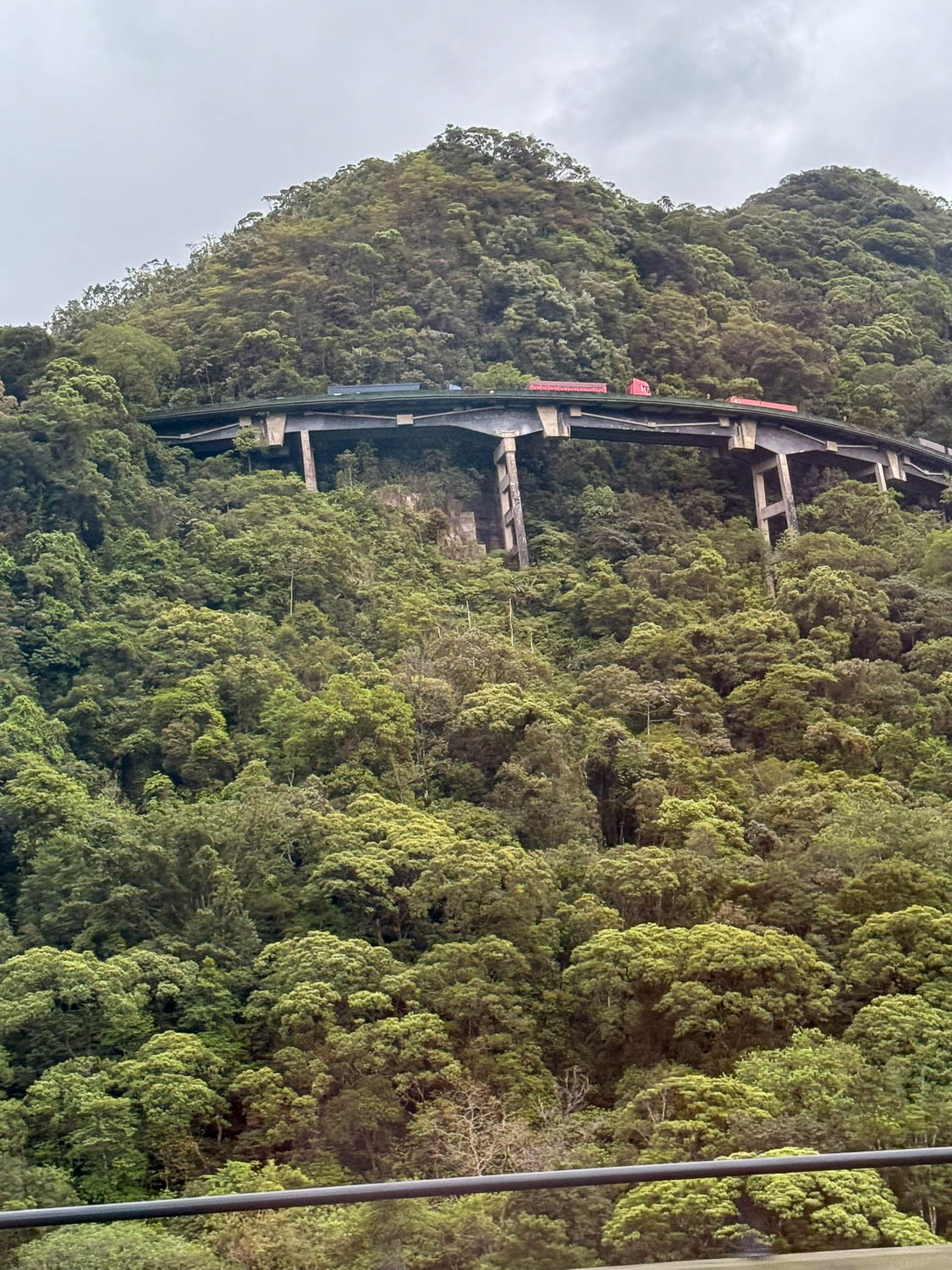
As we know, Santos is not only South America’s busiest port, but also the gateway to Sampa: the affectionate nickname given to São Paulo. And if your itinerary permits it, we highly recommend considering a day trip here.
For more information on how to include a side trip to São Paulo during your time on shore in Santos, don’t forget to check out our in-depth guide to Santos, Things To Do and See in Santos.
Making the Most of Your Shore Time in Santos
To make the most of your time exploring all that Santos has to offer — from cultural highlights to coastal escapes — a little advance planning can go a long way.
Unlike many other cruise ports around the world, Santos is an active – and very busy! – working port, so keeping a few practical details in mind, and knowing what to expect before stepping off the ship, can help ensure your day runs smoothly and remains stress-free.
- Expect a working port environment in Santos. This is an active commercial port, so you’ll no doubt see trucks, cranes, cargo terminals, and industrial areas before reaching more scenic spots — in good news, it’s all part of the experience!
- Some attractions in Santos may be a little farther from the port than you originally anticipated (we know we’re not all like Beck, who prefers to walk everywhere!). Plan ahead for your transportation needs, including downloading the Uber app and knowing how to contact local taxis if needed.
- If your ship departs late afternoon, or even in the early evening, consider staying close to Santos when you head ashore, or choose a half-day excursion to avoid feeling rushed to get back to the ship on time.
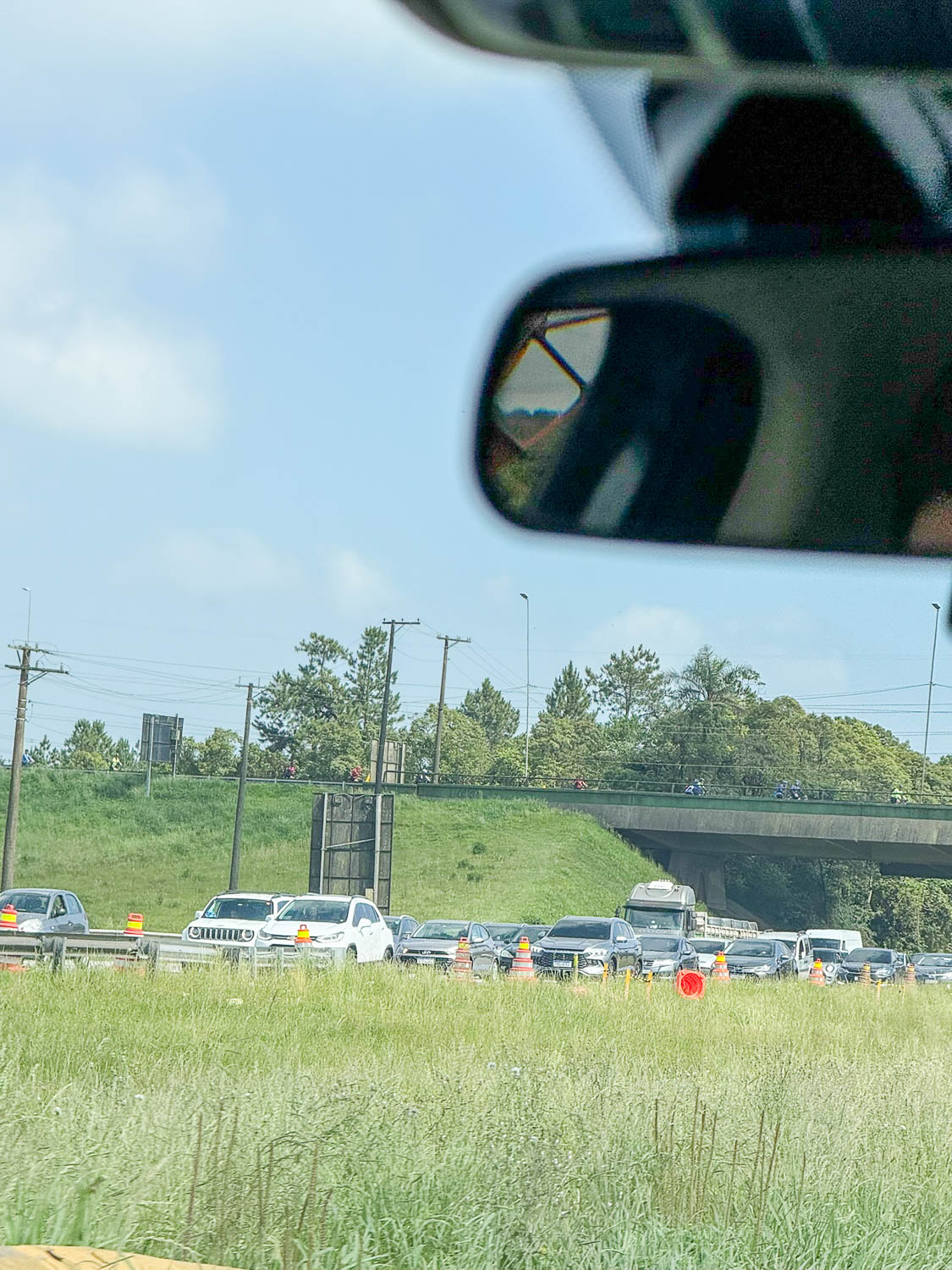
- Plan your timing carefully. Whilst exploring Santos can be wonderfully relaxed, if you choose to leave the city limits (even briefly), make sure to allow extra buffer time for traffic and port security upon your return.
- Consider booking through your cruise line an organized shore excursion. These excursions offer peace of mind with ship-guaranteed returns, which can be especially reassuring if you’re heading a little farther afield.
- Know exactly where you’re docking. The Port of Santos is large, spread out, and can be confusing upon first arrival. If you choose to use an independent tour operator or arrange your own transport during your time ashore, confirm in advance exact pick-up and drop-off times and locations, as well as contact details and how best to reach the tour operator in case of delay or emergency.
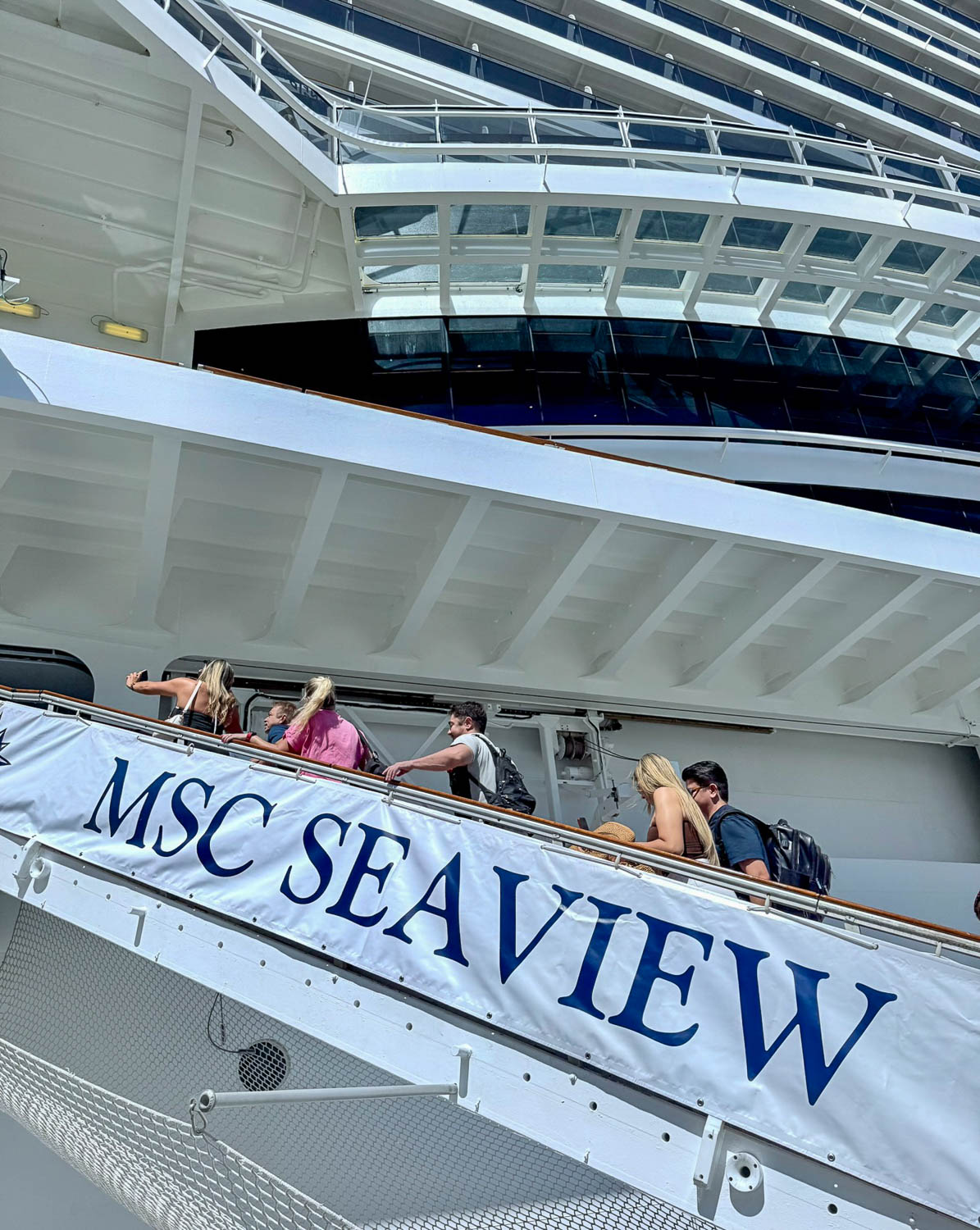
- Factor in embarkation procedures when you return to the ship. Re-boarding can take time due to additional security checks and long lines (especially if you’re like Beck and like to make the most of your time ashore, returning to the ship mere seconds before the final all-aboard call!).
- Carry only what you need for the day in a small bag. There’s no need to carry with you your passport, excess cash or valuables – all these can be stored securely on the ship or in your hotel room’s safe.
- Dress appropriately – it can get very hot and humid in Santos! We recommend wearing lightweight clothing, sun protection, and comfortable walking shoes during your time ashore.
- Always carry with you at least a small amount of local currency when going ashore (or at the very least know where you can obtain some). Small cafés and shops, kiosks, souvenir stands, museums and taxis/rideshares may prefer cards or cash in Brazilian Reais (BRL or R$), especially outside of the city center.
- Embrace flexibility. Weather, traffic, tourist numbers, and port operations can all influence the day. Ensure you have a loose plan rather than a packed checklist of things to do and see.
These are just a few cruise-savvy, practical tips designed to help you get the most out of your shore day in Santos. We hope they’ll assist you in navigating the port, planning your timing, and enjoying your Santos experience with confidence!
Safety in Santos
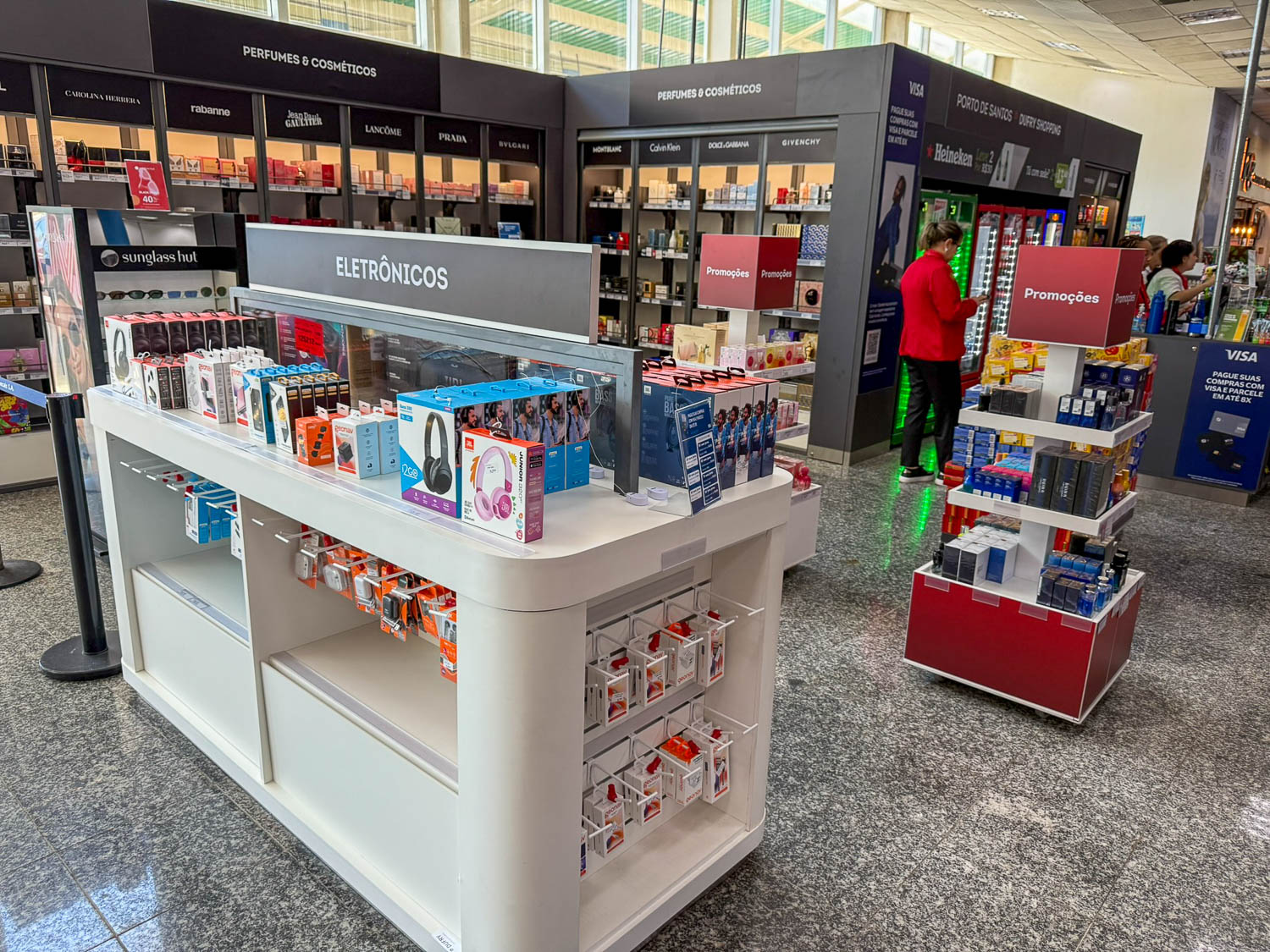
Many travelers have asked us if Santos is safe for visitors. We never once had any issues in the city and understand Santos is generally safe for tourists. Certainly, Santos’ port operations include strong security measures, with staff onsite experienced in supporting over a million cruise passengers each year.
However, like any major city, we remind travelers to stay aware and exert caution – but there’s also no need to be anxious. Basic situational awareness and common-sense precautions will go a long way during your time ashore. We also recommend keeping in mind the following snippets of advice, which we take with us on all adventures, locally as well as internationally.
- Stick to well-traveled and well-lit areas, especially after dark.
- Don’t walk alone at night and avoid isolated beaches after dark.
- The beach areas of Santos – especially the beachfront gardens – are generally considered safer than other parts of the city.
Insider tip. The historic center of Santos is considered more dangerous than other parts of the city due to homelessness and drug-related crime.
- Follow guidance from local guides and/or cruise staff.
- Carry only what you need for the day and keep any valuables close at all times (especially in the historic area of Santos or if you find yourself away from touristy areas).
- Use reputable (and official, where possible) transportation options.
- Keep an eye on your food and drinks, and don’t accept food or drinks from strangers.
For us, Santos ultimately felt comfortable, welcoming, and easy to navigate – and indeed no more challenging than many other port cities we’ve visited around the globe. With a little awareness and sensible precautions, most travelers will be able to explore the city with confidence and ease, focusing fully on enjoying their time ashore.
Final Thoughts
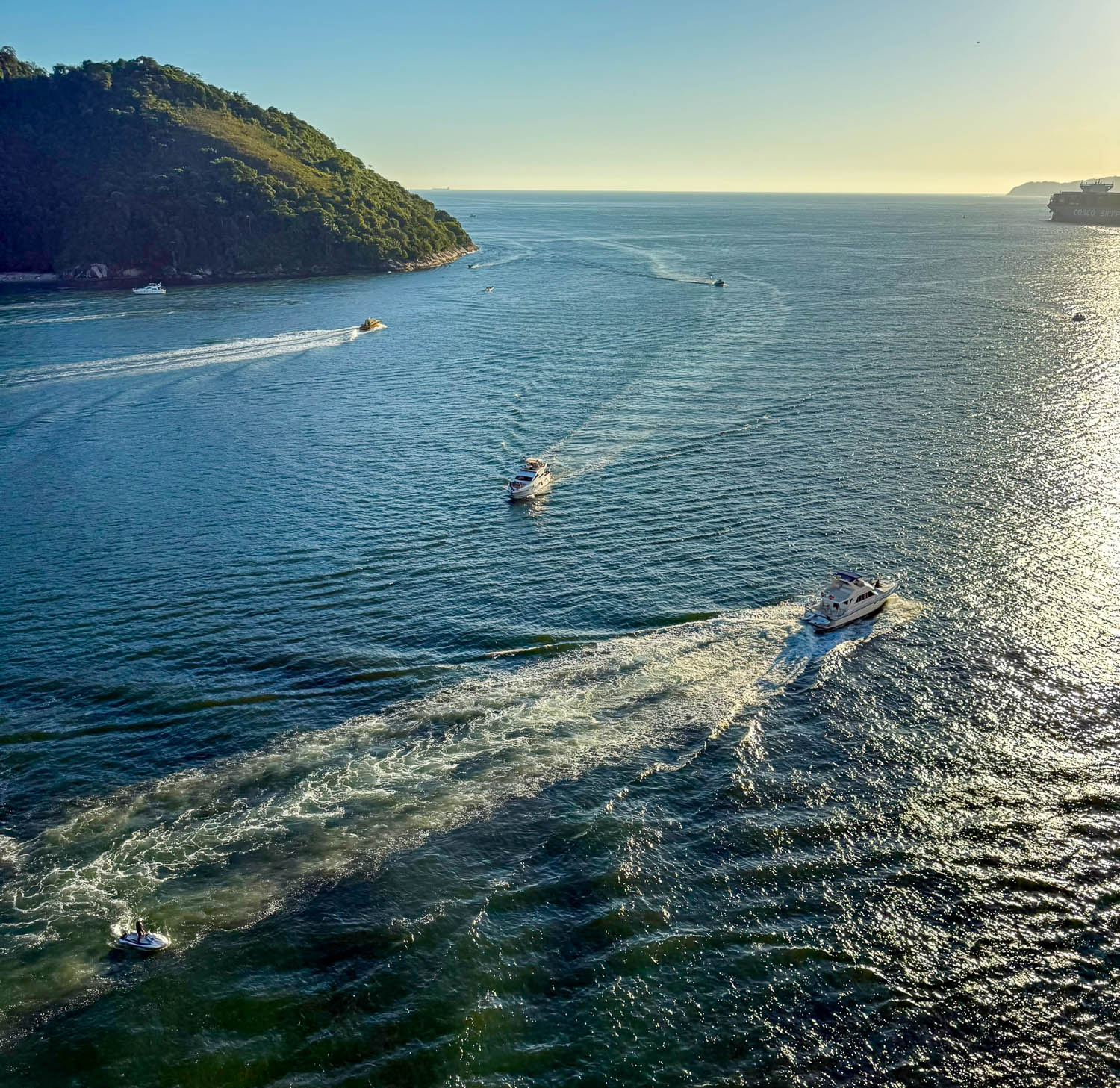
As Brazil’s – indeed South America’s! – largest working maritime hub, the Port of Santos is worth some attention. The port itself is buzzing with cargo, ships of all shapes and sizes, and business is conducted around the clock. It’s here that you’ll uncover the story behind Santos’ strategic location, its resilience, and its central role in Brazil’s global trade.
And of course, whether you’re stepping ashore for just a few hours to explore the beaches or historic center of Santos, or planning a full-day inland adventure, this port city offers a genuine taste of Brazilian coastal life. Here, the industrial scale of port operations somehow coexists seamlessly with the intimate charm of sipping coffee inside the Museu do Café; and even with the adrenaline of heading north to the economic and cultural powerhouse of São Paulo, there’s balance to be found in the serenity of a seaside stroll.
We invite you once again to explore. To pack those comfortable shoes. To leave your jewelry and fancy handbag (you know the one) in your ship’s cabin. To taste Brazil’s legendary coffee at its source. And to jump all in – grit, glam and everything in between – to see what Santos is truly all about. Are you ready to let us guide you in planning your adventure to the Port of Santos?
FAQs
Where is Port Santos located, and how far is it from São Paulo?
Port Santos is located in the coastal city of Santos in São Paulo state, Brazil. It sits about 45 miles (70 km) south of São Paulo city, and travel time typically ranges from 1.5 to 3 hours depending on traffic and your transfer method.
What can cruise passengers expect when docking at Port Santos?
Port Santos is a high-volume working port with modern cruise facilities at the Concais Passenger Terminal(s). Expect organized disembarkation, strong security, and clear passenger flow. Inside the terminal you’ll typically find restrooms, ATMs, small shops, cafés, and ground transportation options like taxis, rideshares, and cruise buses.
What are the best things to do near Port Santos on a shore day?
Top options near Port Santos include exploring Santos’ beaches and beachfront gardens, riding the Linha Turística do Bonde (historic tram), visiting the Museu do Café (Coffee Museum), enjoying viewpoints from Monte Serrat, and exploring the historic center for colonial-era architecture and cultural attractions.
Is Santos, Brazil safe for tourists and cruise visitors?
Santos is generally considered safe and welcoming for tourists, especially around the beachfront areas and popular attractions. As with any major city, use common-sense precautions: keep valuables secure, avoid isolated areas after dark, and stay aware in the historic center, where safety can be more variable.
Can you do a day trip to São Paulo from Port Santos?
Yes — a day trip to São Paulo (often called “Sampa”) is one of the most popular shore excursions from Port Santos. It’s best done with a pre-booked private transfer or cruise-organized tour to manage traffic and timing, especially if your ship departs in the late afternoon or early evening.
Explore More Of Brazil
-
Paraty Brazil Travel Guide: Best Things To Do in Town
Paraty, Brazil is a UNESCO World Heritage colonial town on the Costa Verde known for its cobblestone streets, colorful historic center, tropical islands, and nearby beaches. Visitors can explore Paraty Bay by boat, hike the historic Gold Trail, discover Atlantic Forest landscapes, and enjoy one of Brazil’s most charming coastal destinations.
-
Buzios, Brazil Travel Guide: Best Things To See and Do
Buzios is a coastal resort town in Brazil located about three hours from Rio de Janeiro, known for its beaches, walkable center, and relaxed seaside atmosphere. This Buzios travel guide covers the best things to do, top beaches, Rua das Pedras, the Orla Bardot Boardwalk, where to stay, nightlife, festivals, and practical travel tips.