Traditional Brazilian food reflects a rich blend of regional influences and everyday comfort across this vast country.
Across this vast country, Brazil’s regional cuisines may differ widely, yet several dishes have emerged as beloved staples nationwide. From slow-simmered stews and comforting plates of rice and beans, to crispy street-food favorites, these classics appear everywhere — from family kitchens and neighborhood bakeries, to bustling markets and casual eateries. Together, they form the backbone of Brazil’s rich and varied culinary identity.
Many of Brazil’s best-known dishes are notably meat-forward, reflecting the country’s strong barbecue traditions and its love of pork, beef, and sausage. That said, vegetarians need not feel left out: Brazil’s abundant fresh produce, cheeses, and plant-based staples ensure there are still plenty of satisfying options to enjoy.
Read on, fellow wanderers, as we introduce you to some of Brazil’s most beloved specialties — the iconic meals, snacks, and desserts that bring the country’s culinary traditions to life and afford a glimpse into the comforts of Brazilian home cooking.
Note: For a detailed dive into Brazil’s food culture and traditions, how to “dine like a local”, and the benefits of taking a food tour in Brazil, be sure to check out our sister article, Brazilian Food: A Guide to Brazil’s Culinary Culture. And if you’re looking for more information on regional variations in Brazil’s cuisine, be sure to head over to Brazilian Food: Regional Flavors Across Brazil!
Quick Tips
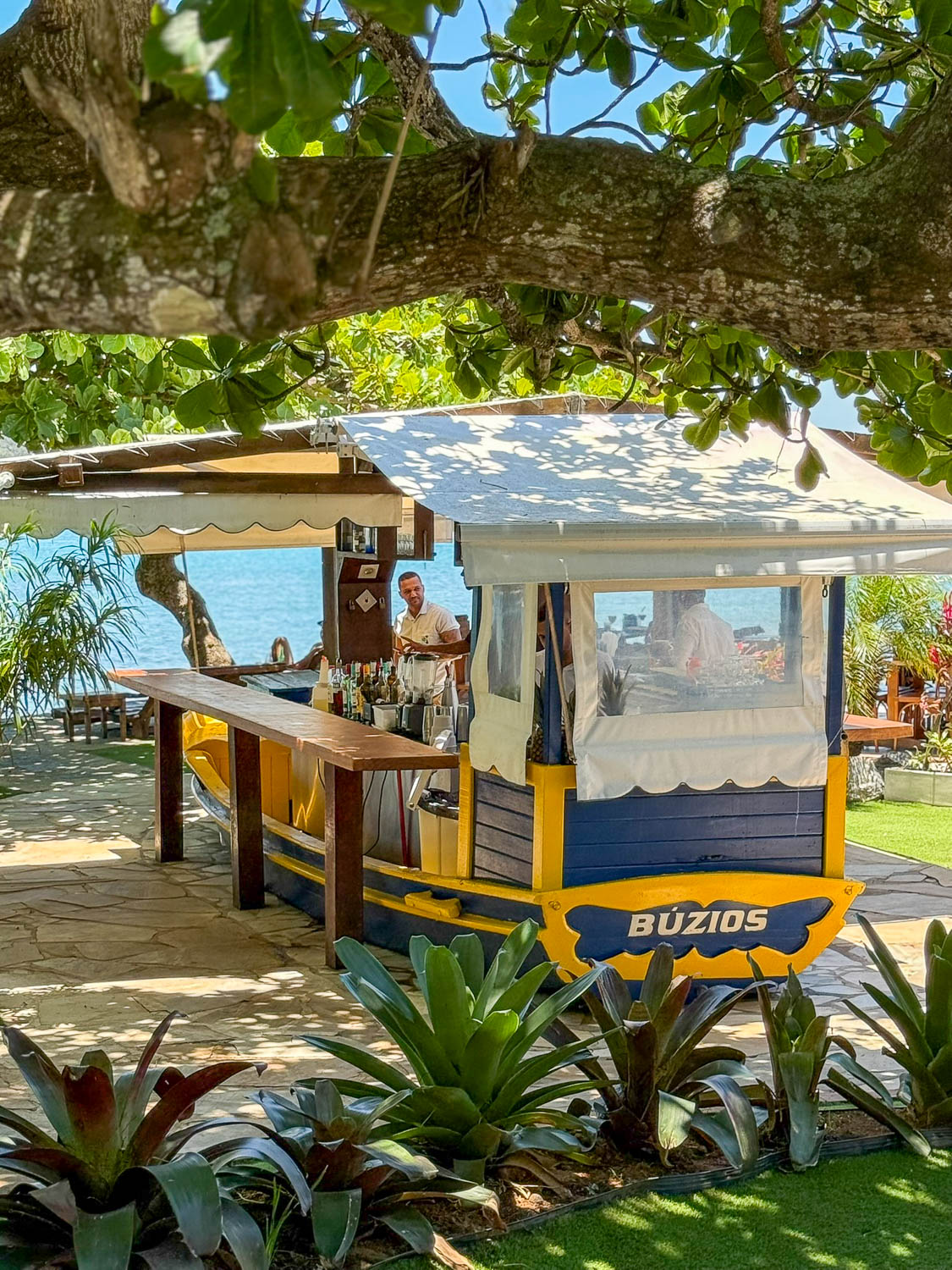
- Across Brazil’s vast culinary landscape, a handful of dishes have become enduring national favorites.
- Brazil’s national dish is feijoada, a rich, thick, slow-cooked stew of black beans simmered with a variety of salted pork cuts.
- Other national favorites include moqueca, churrasco (Brazil’s legendary barbecue), and pão de queijo (Brazil’s beloved cheese bread).
- Popular Brazilian snacks include coxinhas, pastéis, queijo coalho, and beiju.
- The Brazilian sweet tooth is legendary, with desserts playing a celebrated role in everyday life. Don’t be shy in trying brigadeiros, beijinhos, a slice of bolo de cenoura, some pão de mel, quindim, a plate of Romeu e Julieta, or simply some of the country’s incredibly fresh and colorful tropical fruits.
Plan Your Trip
Some links below may earn us a small commission at no extra cost to you. We’re truly grateful for your support, as it allows us to continue sharing meaningful travel experiences and practical travel insights with you. Read our full disclosure here.
Planning your visit? We’ve gathered recommended tours and activities, along with trusted travel tools, to help you explore with confidence and ease.
Tours & Experiences
Prefer additional options? Click below to discover more incredible experiences tailored just for you!
Browse top Brazil food tours.
Travel Essentials?
Planning the rest of your trip? These are the platforms we personally use when organizing our travels. For more planning tools, visit our Travel Resources page or browse current promotions on our Travel Deals page.
Brazil’s Signature Dishes
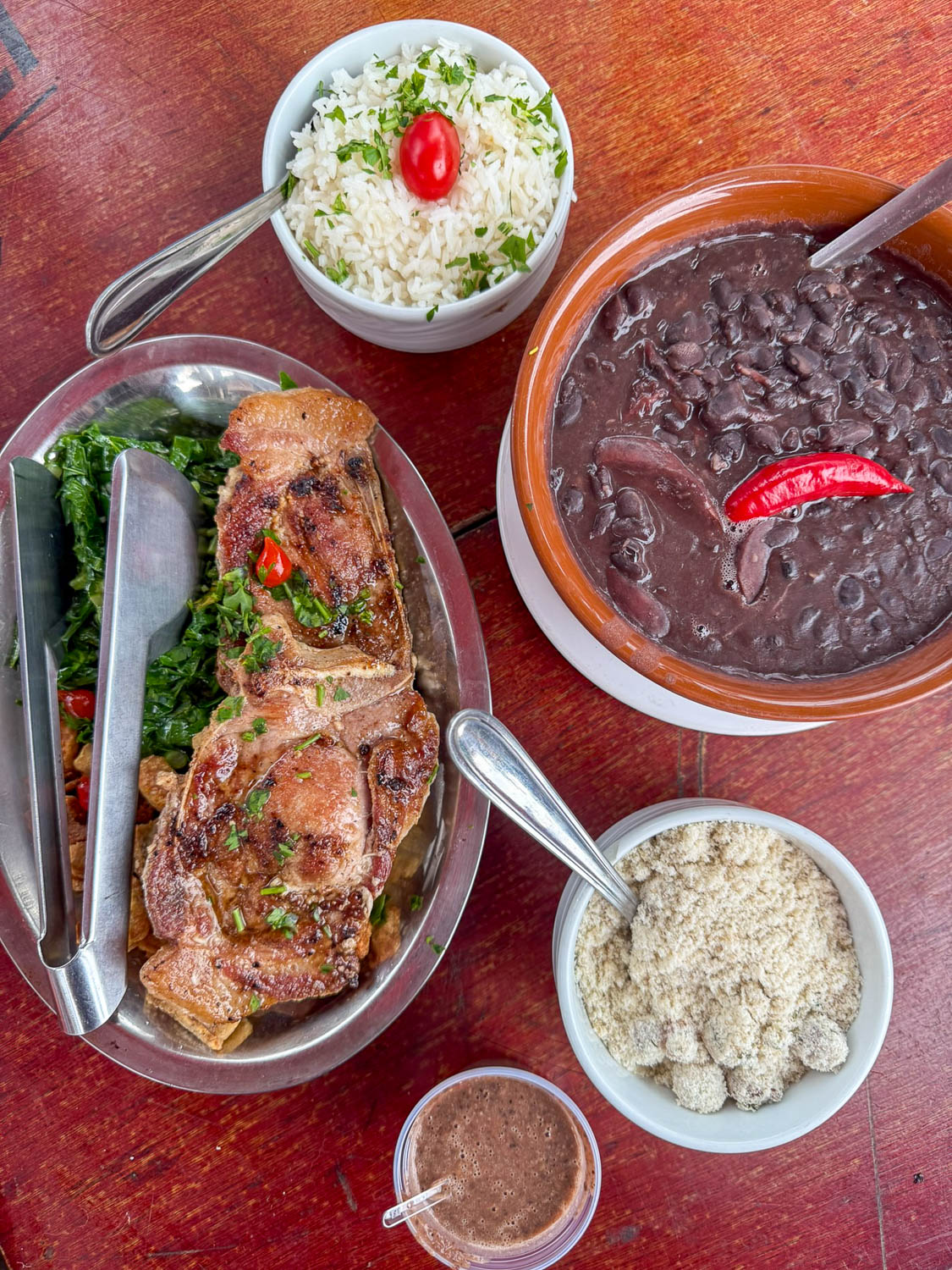
Across Brazil’s vast culinary landscape, a handful of dishes have become enduring national favorites. Shaped by regional traditions and deeply rooted in diverse cultural influences, these specialties are enjoyed across Brazil: in private homes, in big-city restaurants, and in neighborhood cafes alike.
Below are a few of the best-known Brazilian dishes you’re likely to encounter during your travels.
Feijoada
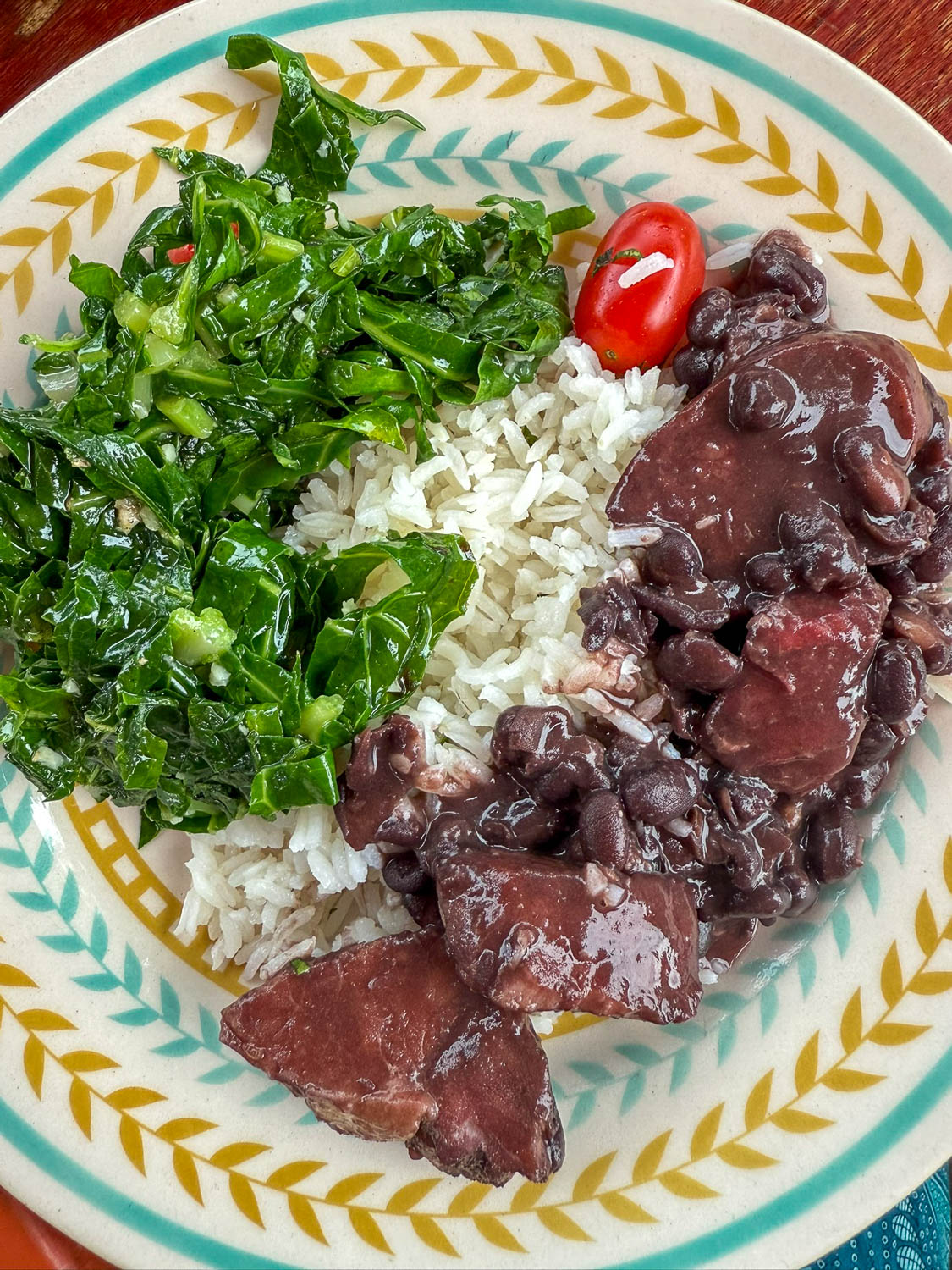
Travellers often wonder about the national dish of a country they’re visiting or planning to visit. And although recipes vary slightly from region to region, Brazil’s national dish is feijoada.
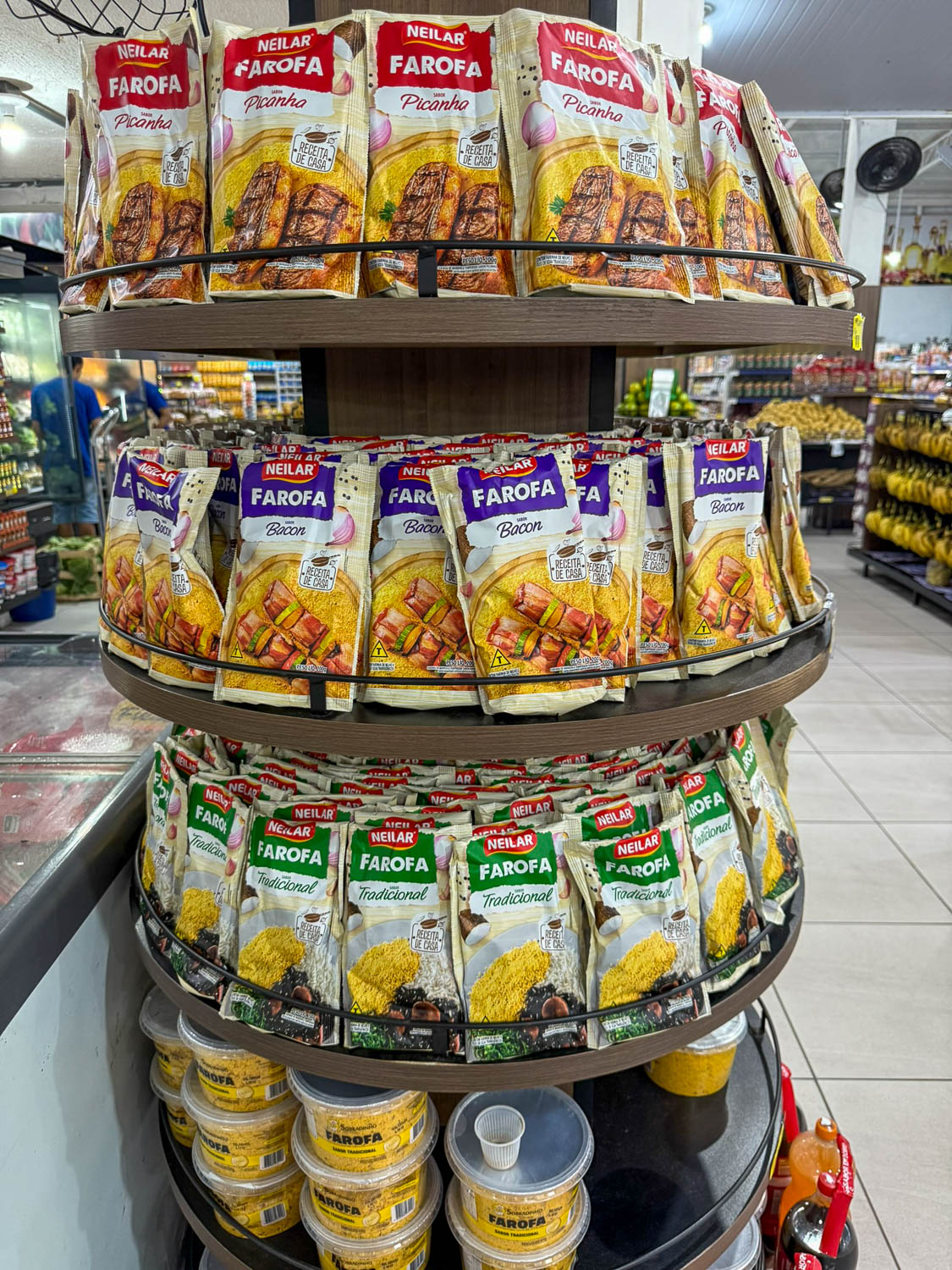
Pronounced fay-jwa-da (it took us awhile to say it properly!), this rich, thick slow-cooked stew of black beans simmered with a variety of salted pork cuts – including sausage, bacon and ribs, and sometimes even pig ears or trotters! – reflects the deep influence of African, Portuguese, and Indigenous traditions on Brazilian cuisine. Typically seasoned with garlic, onions, bay leaves and cumin, and traditionally accompanied by white rice, sautéed collard greens, orange slices, and crispy farofa (a toasted cassava flour side dish), feijoada is more than food — it’s a cultural ritual in the form of a “stick-to-your ribs” comfort food.
Fun fact. Feijoada is such a famously heavy meal that many Brazilians jokingly claim the best post-feijoada activity is a nap.
Fun fact. Orange slices aren’t just for decoration – they’re served with feijoada to help aid digestion.
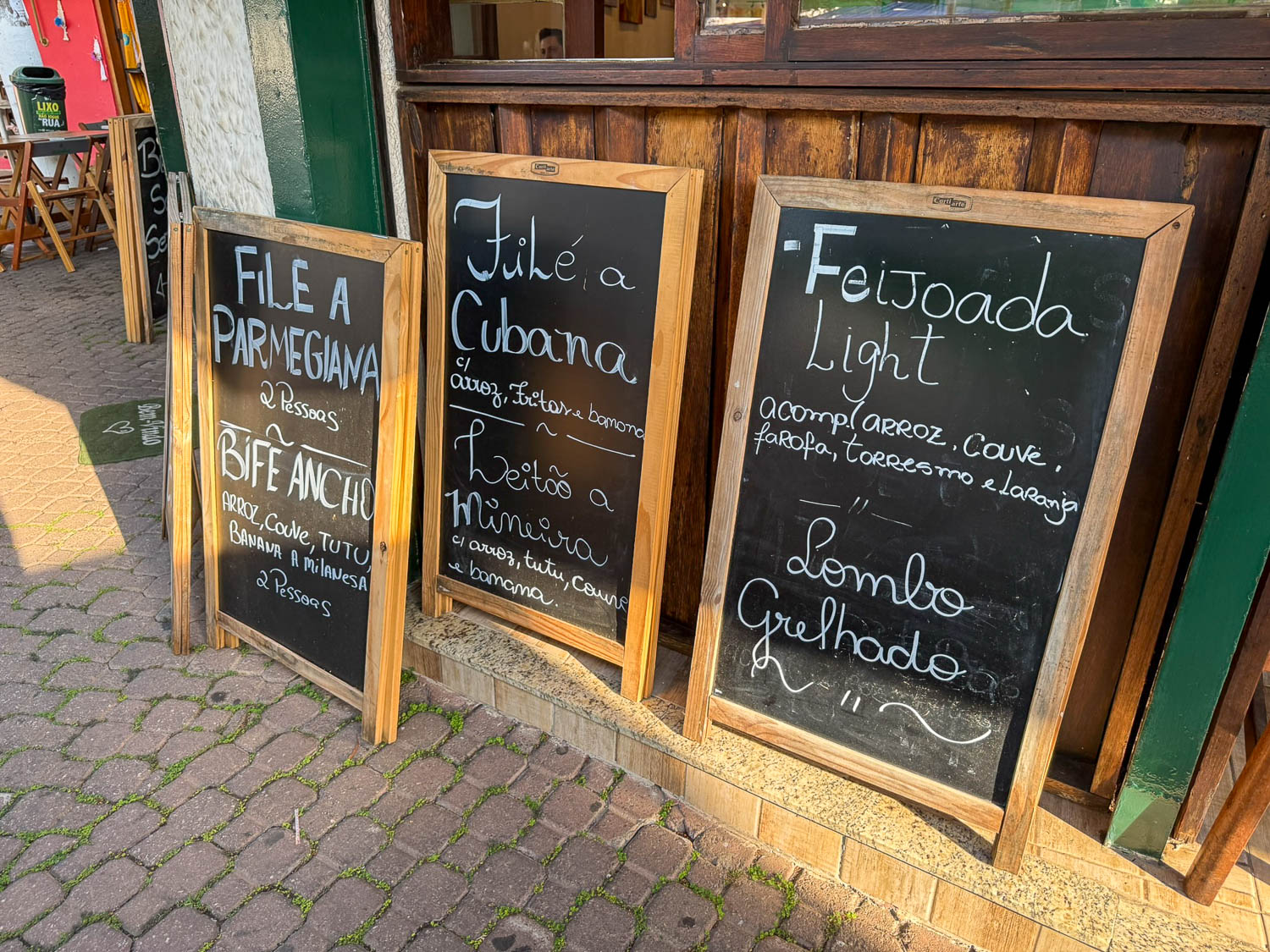
Often served in social settings with family and friends, feijoada is traditionally a weekend meal, most commonly eaten on Saturdays. In fact, feijoada is so beloved that some restaurants host “Feijoada Saturdays” as a weekly event, often accompanied by live samba music and caipirinhas.
Insider tip. In many traditional Brazilian restaurants, feijoada is served buffet-style, alongside dozens of side dishes. This permits diners to customize their plate with everything from farofa and kale, to hot sauce and fried bananas.
Insider tip. Ready to try feijoada but aren’t too sure you can handle the incredibly rich flavor? In good news, some restaurants offer “feijoada light”, made with leaner cuts of pork. You’ll still get the flavor, but it won’t be as intense. Great for first-timers!
Moqueca
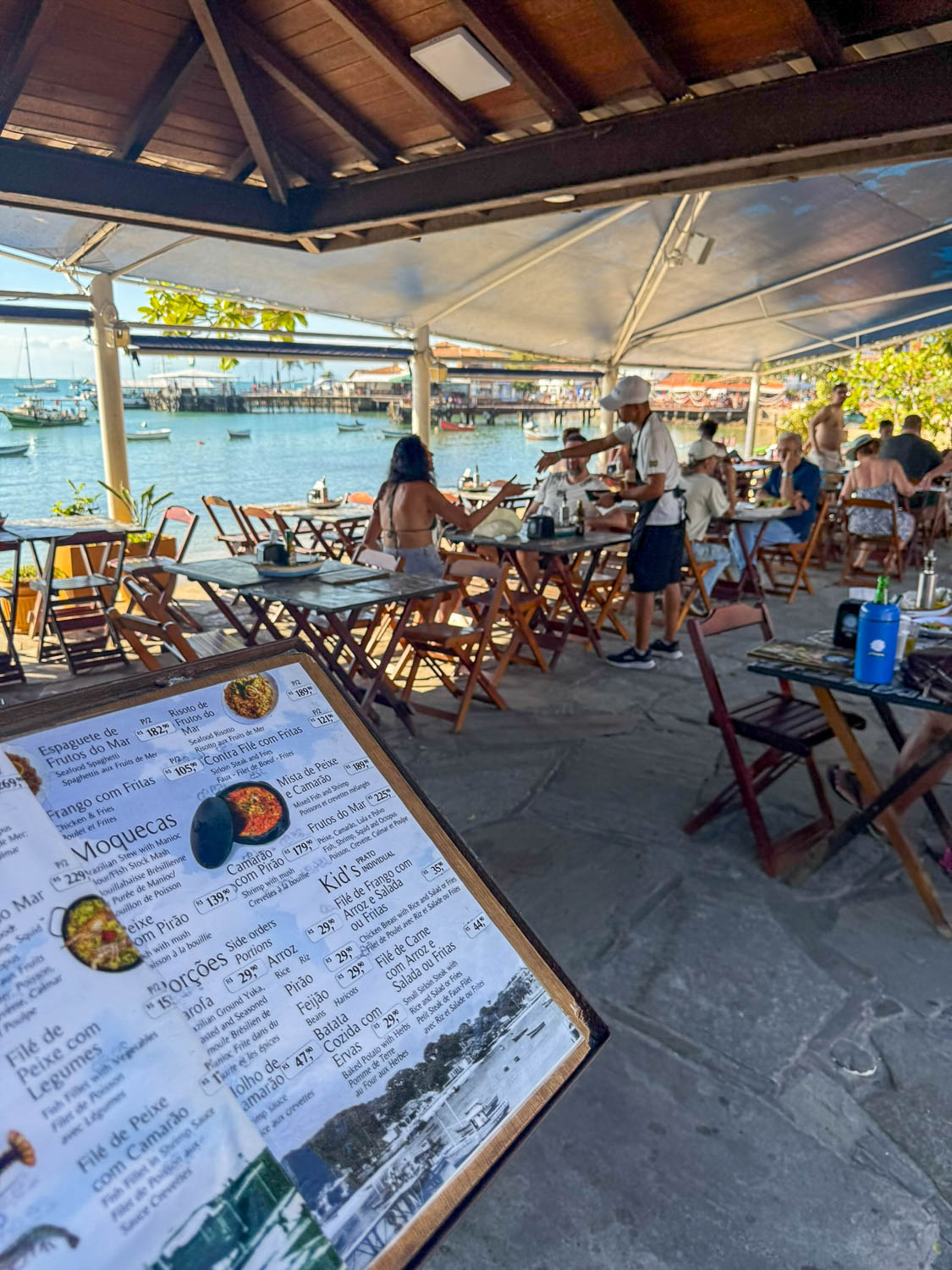
Had your fill of feijoada? Next, you may wish to consider trying moqueca (pronounced mo-KEH-kah), another national culinary symbol of Brazil.
A traditional seafood stew often slow-cooked in a clay pot, moqueca is creamy, fragrant, and infused with coconut milk, tomatoes, onions, garlic, and cilantro. The most commonly used seafood are firm white fish (for example, snook or halibut), shrimp, mussels, clams, or lobster. In coastal areas of Brazil, moqueca is sometimes made with whatever seafood was caught that morning – so exact ingredients can vary from day to day. But no matter what ultimately goes into it, think of moqueca as one of those traditional Brazilian dishes that feels both exotic and comforting, all at the same time!
Fun fact. Because the stew cooks quickly and the fish is delicate, many chefs gently shake the clay pot instead of stirring it. This helps the ingredients combine without breaking the fish apart (clever!).
Fun fact. The traditional black clay pots used to cook moqueca – called panelas de barro – are often seasoned before first use, by rubbing them with oil and heating them repeatedly. This tradition is believed to strengthen the pot and enhance the flavor of the stew.
There are generally considered two different versions of moqueca, each from a different region of Brazil: Moqueca Baiana(from Bahia, in the northeast), a slightly richer version using dendê oil (red palm oil), which gives it a bright orange color, and Moqueca Capixaba (from Espírito Santo, in the southeast), a slightly lighter version that omits the coconut milk and the palm oil, instead utilizing olive oil and annatto to produce the stew’s vibrant color. Apparently moqueca is one of the few Brazilian dishes where locals will passionately debate which version is superior – a long-running culinary rivalry.
Fun fact. In Espírito Santo, the artisans who make the iconic panelas de barro are almost exclusively women from the town of Goiabeiras, continuing a craft that dates back centuries.
Moqueca is most commonly served with white rice (which helps to soak up the broth), pirão (a thick, creamy porridge), or farofa (which adds texture). Other popular side dishes include lime wedges, cilantro, fried plantains, and stir-fried collard greens. You will also notice that moqueca is often served still bubbling in the pot at the table, creating a dramatic presentation and filling the air with the aroma of coconut milk, herbs, and seafood.
Fun fact. The name “moqueca” most likely originates from the word pokeka, an Indigenous term for cooking fish wrapped in leaves.
Churrasco
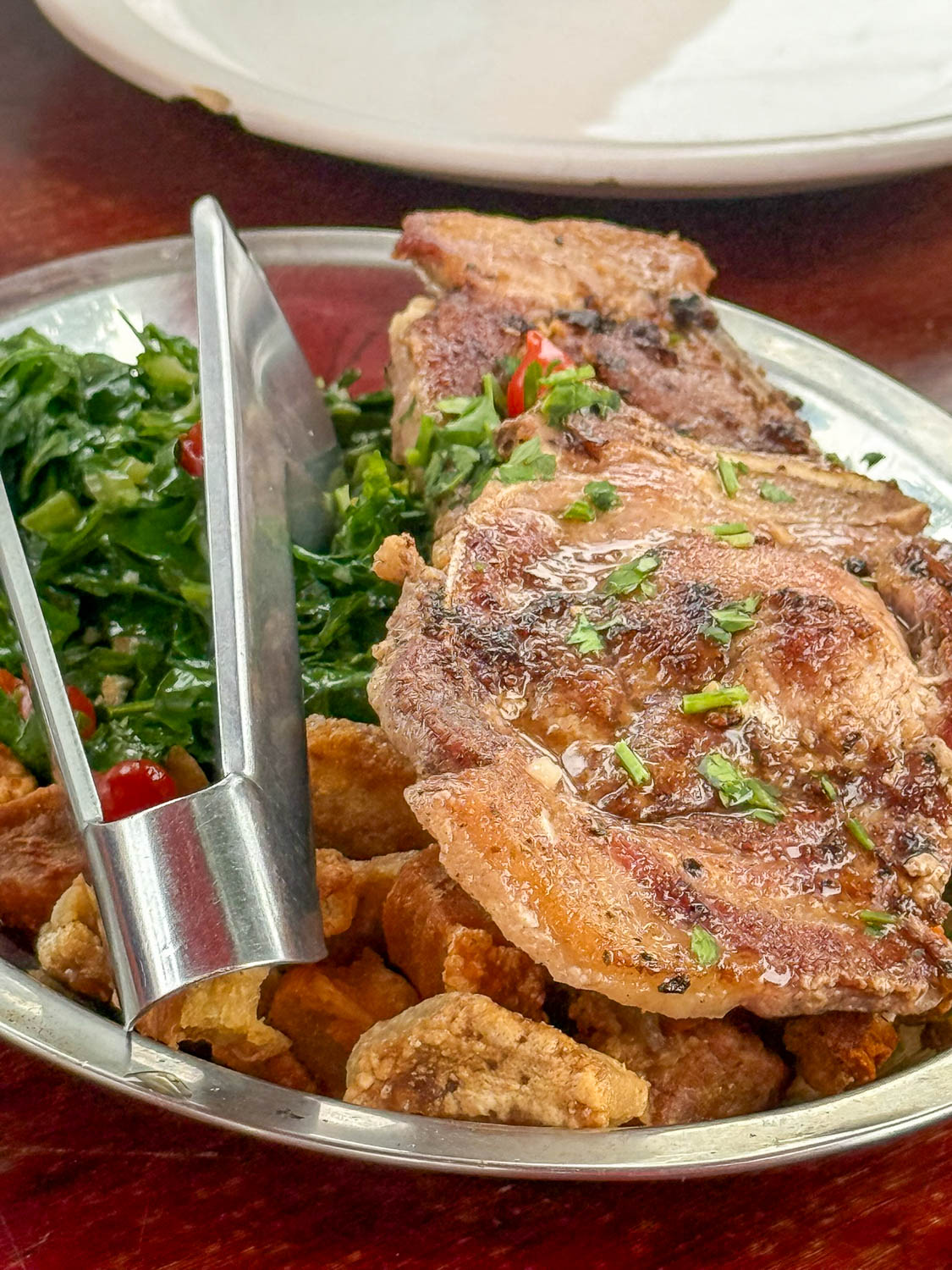
If you haven’t yet had your fill of meat – or if pork ears and seafood stews simply aren’t perhaps your thing (we know, Beck, we know!) – fear not, as there’s always churrasco, the legendary Brazilian barbecue.
Churrasco is, at its simplest, a method of grilling – referring primarily to skewers (espetos) of seasoned beef, chicken, pork, and even chicken hearts, grilled over open flames or hot coals. Especially in southern Brazil, where gaúcho – South American cowboy – traditions run strong, churrasco is a cornerstone of regional cuisine, often served in steakhouses (churrascarias).
Amongst the most celebrated and popular cuts of churrasco meat is picanha (rump or sirloin cap), which is typically seasoned with little more than coarse salt, permitting the meat’s natural flavor shine. Other common churrasco cuts include skirt steak, flank steak, and sausage.
Fun fact. In traditional churrasco, thick picanha slices are often folded into crescent shapes on large skewers, with the fat cap facing outward so it slowly bastes the meat as it cooks.
Inside many churrascarias, waiters – known as passadores – will circulate throughout the dining room, bringing large skewers of meat directly to your table. The passadores will then slice the meat directly onto your plate … and then return when it’s time for more. These all-you-can-eat churrascarias are known as rodízios.
Insider tip. Many churrascarias use a red-and-green card system, where flipping the card at your table to green signals “bring more meat,” whilst a red card politely tells the servers to pause.
Fun fact. Because the skewers of meat in rodízio churrascarias can be truly enormous, the meats are often carried by the waiters upright through the restaurant, a bit like edible swords.
Brazilian Snacks
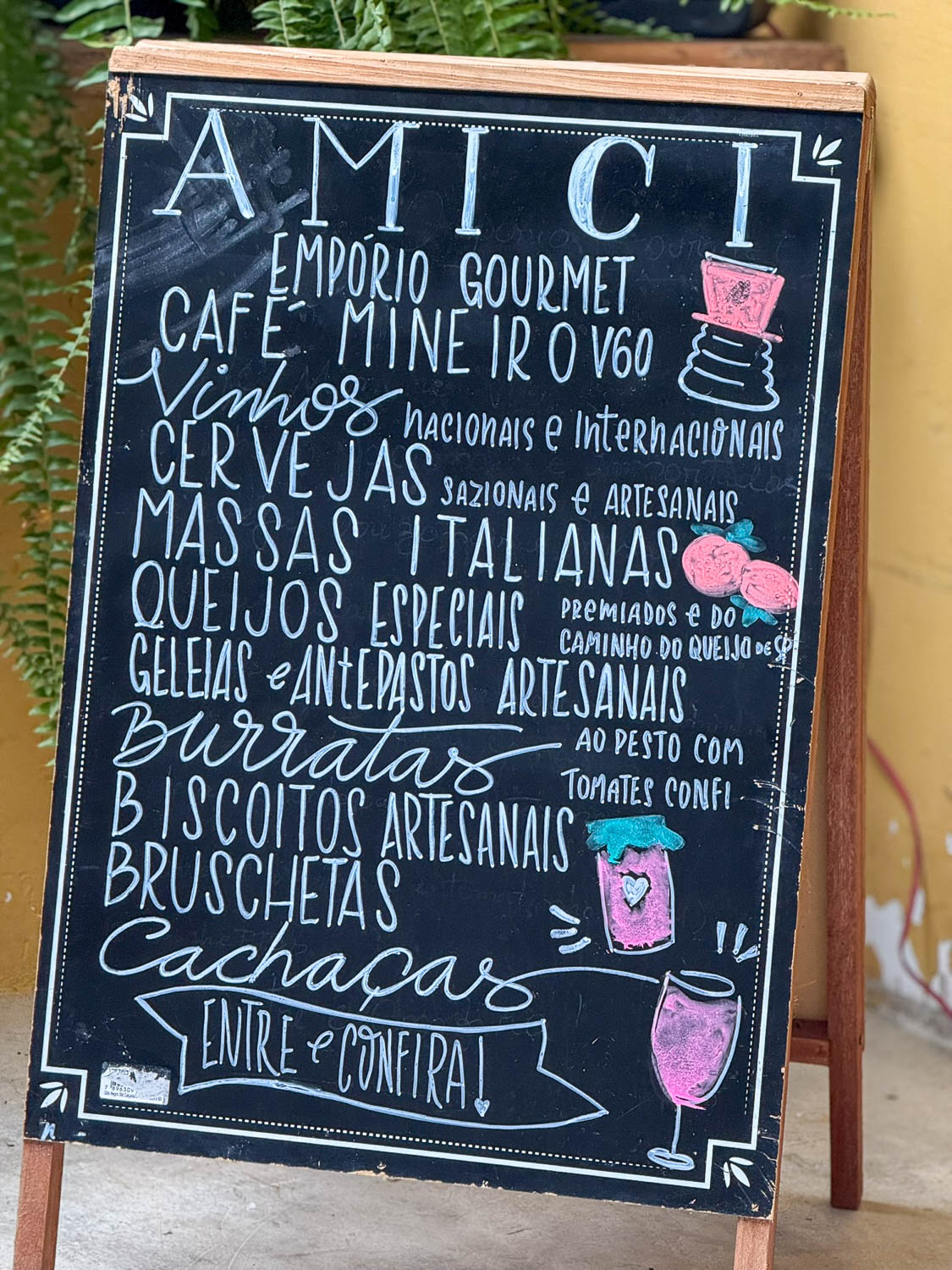
Beyond the main plates, Brazilian recipes also include an irresistible array of beloved snacks. These small bites are as varied as they are delicious, ranging from savory street-food favorites to tempting treats found in neighborhood bakeries and cafés, often enjoyed alongside a cup of coffee, or shared with friends and family throughout the day. No matter which you ultimately choose to try, know they too play an important role in Brazil’s vibrant culinary scene.
Below we share with you a few of the most popular Brazilian snacks you’re likely to encounter during your travels.
Pão de Queijo
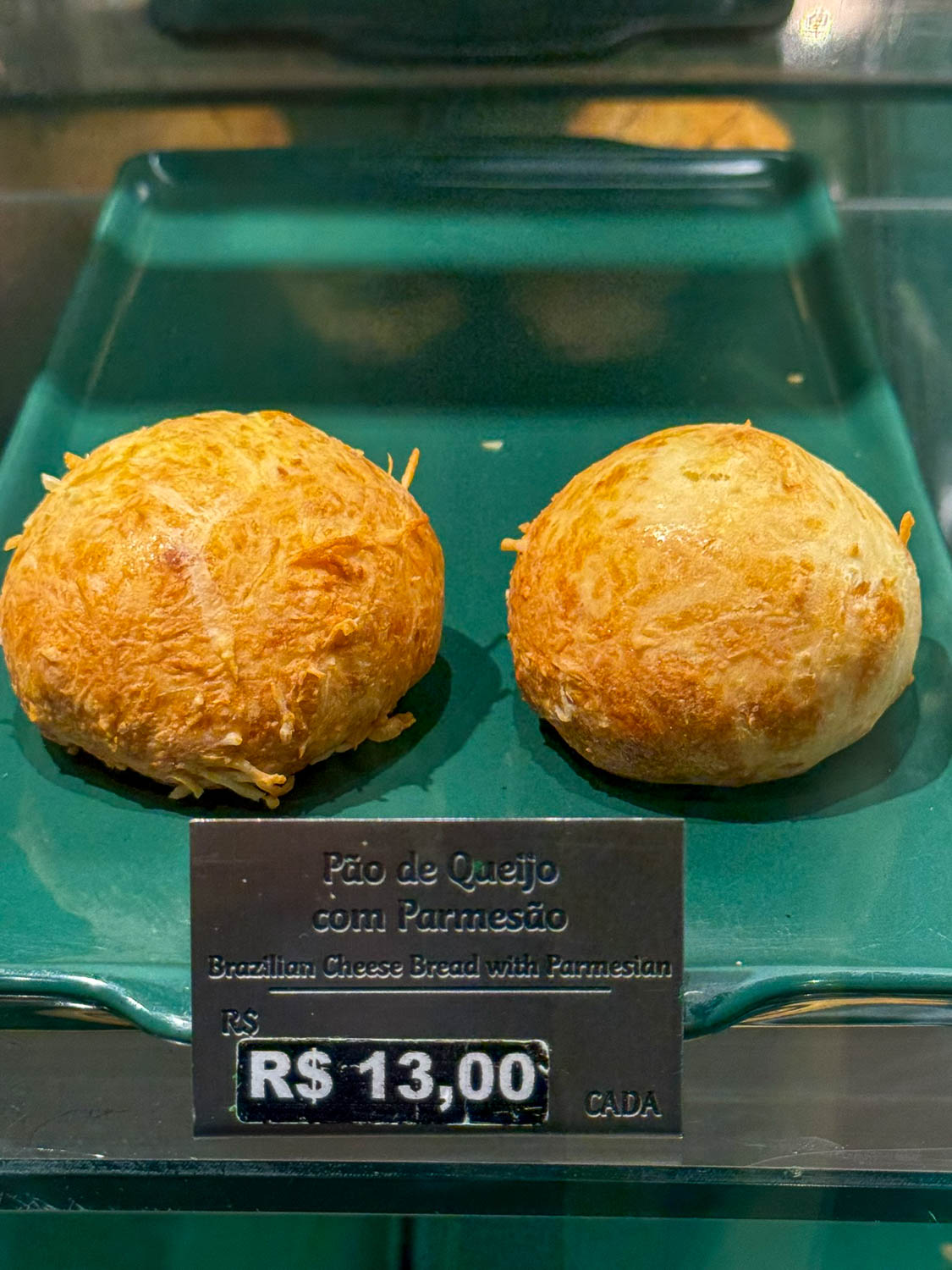
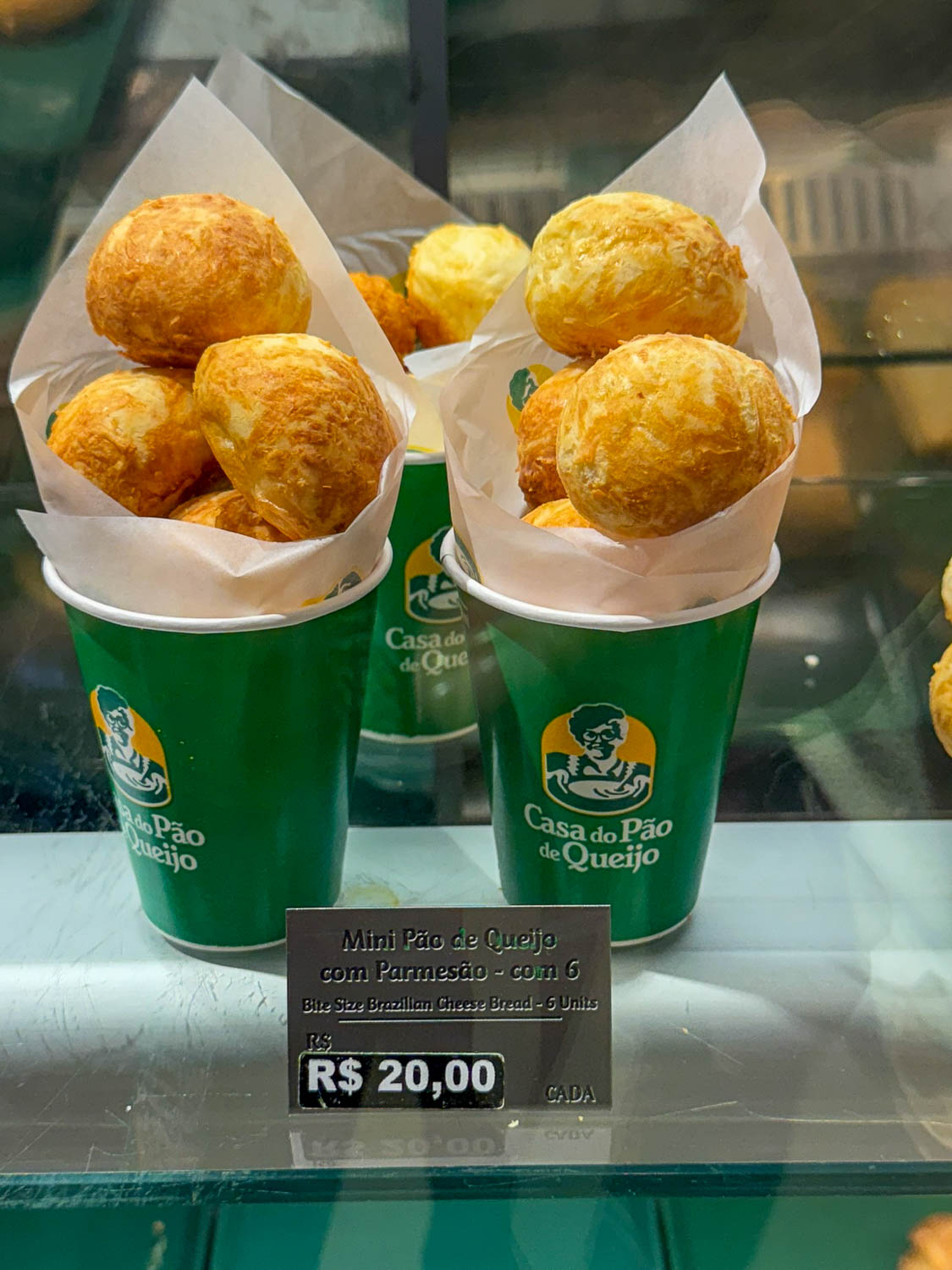
Pão de queijo is Brazil’s beloved cheese bread. Although it originated in the state of Minas Gerais (in southeastern Brazil) and dates back to the 18th century, today pão de queijo is enjoyed nationwide and has become one of Brazil’s most recognizable and beloved foods.
Naturally gluten-free, these bite-sized, warm snacks are made primarily from tapioca flour (cassava or manioc starch), eggs, milk, and locally-produced cheese — typically Parmesan and a mild, salty cheese like mozzarella. The small bread rolls – which aren’t technically bread at all – are baked to a crispy, golden-brown perfection, with a chewy, soft, and elastic interior. Needless to say, you’ll probably find them quite addictive after you try your first one!
Insider tip. You’ll soon discover that pães de queijo have a slightly tart, and yet also savory, salty flavor. It’s quite unique indeed!
Fun fact. Enslaved Africans first made pão de queijo using cassava (tapioca) flour instead of wheat flour, the latter being scarce and far more expensive at the time.
Fun fact. Minas Gerais is famous for its dairy farms and for producing some of Brazil’s best cheeses — including queijo minas, a mild fresh cheese — which helped shape the pão de queijo recipe and cement this classic snack as a regional specialty before it spread across the rest of Brazil.
Pães de queijo are today a staple in Brazilian cuisine – be sure to look out for them in bakeries, cafes, supermarkets, and street food stalls across the country. They make an excellent snack or breakfast item, and Mike discovered they pair really well with coffee!
Insider tip. Tapioca dough freezes exceptionally well, which is why bags of frozen pão de queijo are commonly sold in Brazilian supermarkets.
Coxinha
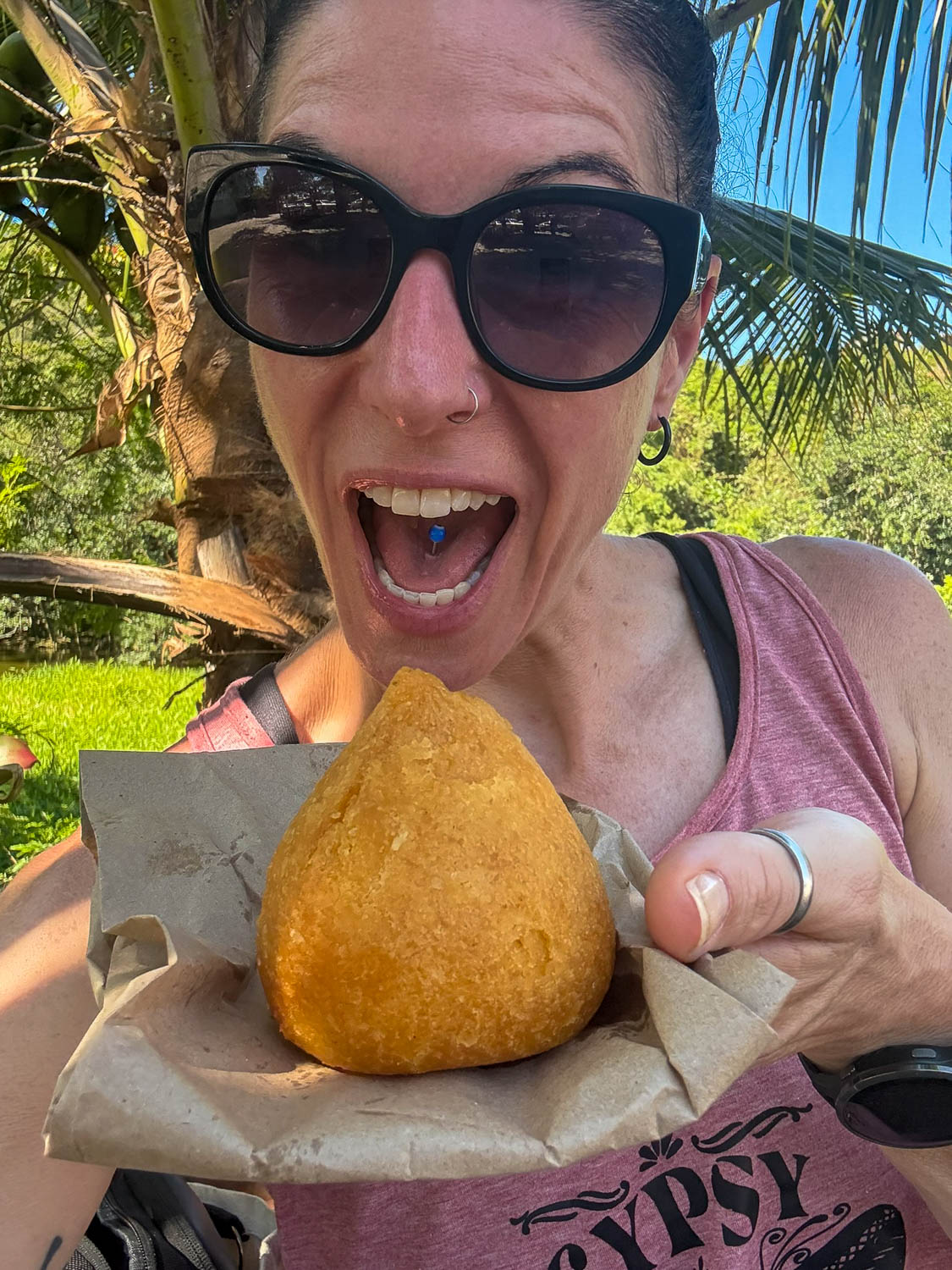
Shaped like a teardrop, this popular Brazilian street food (pronounced koh-SHEEN-yah – that took us awhile to nail!) is made from a wheat flour dough filled with seasoned shredded chicken and/or cream cheese (requeijão) or catupiry, then breaded and deep fried until golden. Variations on the traditional coxinha sometimes swap in ground beef or even sweet fillings, and you’ll find them in bakeries, restaurants, and at street food stands across Brazil. They’re also a popular savory party snack (salgadinhos).
Fun fact. Coxinhas are shaped to resemble a chicken drumstick or thigh – and indeed the name literally means “little thigh”.
Fun fact. According to a popular Brazilian legend, coxinhas were invented for a royal prince who refused to eat anything but chicken drumsticks, prompting a cook to recreate the shape using shredded chicken and dough.
Pastéis
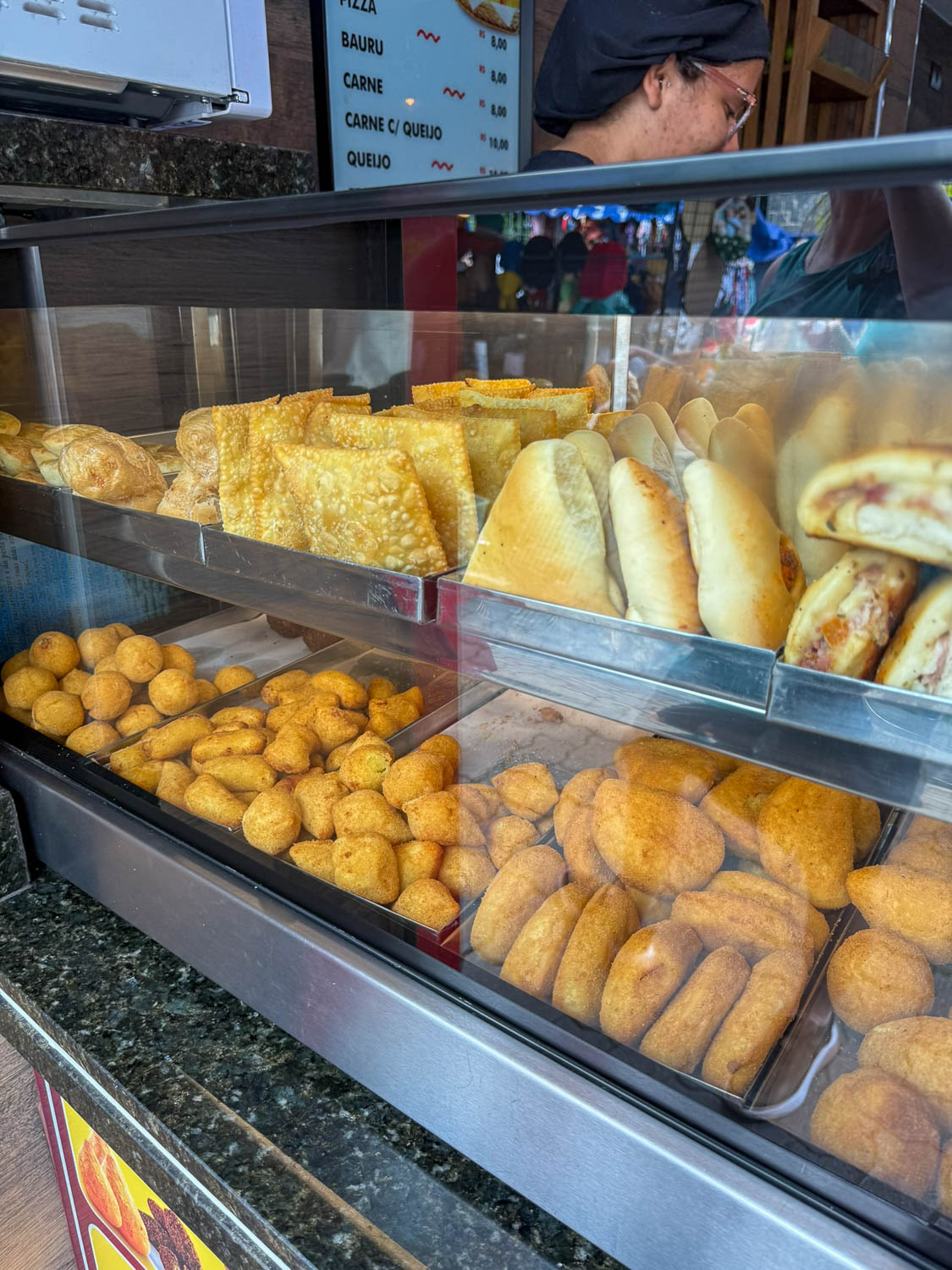
Brazilian pastéis (pastel, for singular) are another popular street food: a thin, crispy (and usually bubbly) pastry pocket – deep fried like a coxinha – usually shaped like a rectangle or half-circle and served hot. They’re stuffed with everything from ground meat to cheese (mozzarella or cream cheese), and from guava jam (goiabada) to hearts of palm. Found at fairs, Brazilian pastelarias and open-air street markets (where vendors fry the pastries fresh to order in large bubbling vats of oil), pastéis are often enjoyed with a cold glass of sugarcane juice (caldo de cana) – we especially enjoyed the Romeu e Julieta pastel, a mix of guava paste and cheese. Yum!
Fun fact. Pastéis were created by Chinese/Japanese immigrants in the 1940s, adapting traditional Asian spring rolls to Brazilian tastes.
Insider tip. You might hear locals using the term “pastel de vento”. This is a colloquial term for a poorly-filled pastel that’s mostly air.
Queijo Coalho

As simple as grilled cheese on a stick, queijo coalho is a firm Brazilian grilling cheese from the northeast, often seared over hot coals and finished with oregano, garlic sauce, chili flakes, or even a drizzle of honey or sugarcane syrup (mel de engenho). This particular cheese – made from cow’s milk – is known for its high melting point (it can hold its shape particularly well when grilled!), mild acidity, and distinctive “squeaky” (and slightly elastic-y!) texture. Think of queijo coalho as similar to halloumi in Mediterranean cuisine – and as a snack best enjoyed piping hot.
Complete with a golden, caramelized crust once heated, queijo coalho is especially popular on beaches and is a common component of churrasco (barbecues). In fact, queijo coalho is so popular along Brazil’s coastline that many beachgoers consider it an essential part of the beach experience – much like ice-cream or hot dogs in other parts of the world.
Fun fact. On many Brazilian beaches, especially in the northeast, you’ll see vendors walking along the sand carrying portable charcoal grills which they use to toast queijo coalho skewers to order. Listen out for “Olha o queijo!” (“Look at the cheese!”).
Beiju
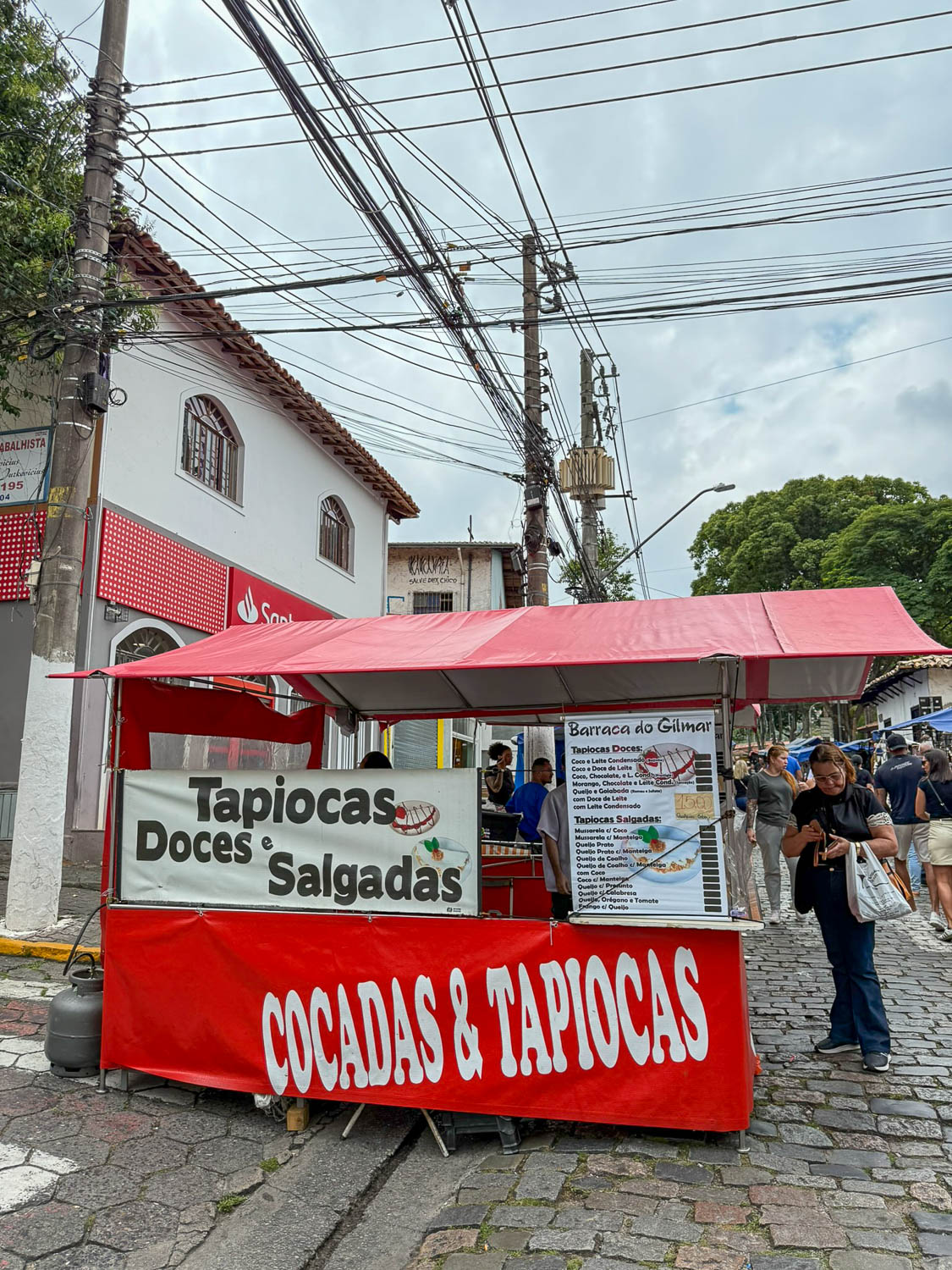
Traditionally, beiju referred to an Indigenous cassava flatbread that predates modern Brazilian cuisine. Over time, the term has come to encompass several cassava-based preparations. In much of modern Brazil, particularly in the northeast, the crepe-style snack made from hydrated cassava (manioc) starch is known as beiju or beiju de tapioca, but is also commonly known simply as tapioca. To make a beiju crepe, hydrated, wet cassava starch is sprinkled onto a hot griddle, where it melts and quickly binds together to form a thin layer before being folded around sweet (coconut, chocolate, bananas or condensed milk) or savory (cheese, ham or other meats) fillings. Be sure to try a traditional “Romeo & Juliet” – guava paste and Minas cheese – one of our absolute favorites!
Biejus feature a unique chewy – sometimes crunchy – texture, with a neutral, starchy taste (thank goodness for the fillings!), and are popular for a quick breakfast or street food snack. Oh, and they’re fat-free and gluten-free, making an excellent bread substitute!
Fun fact. Beijus originated in the Amazon and northeastern regions of Brazil and have significant Indigenous roots. In 2006 they were recognized as a cultural heritage symbol in Olinda.
Desserts and Sweets
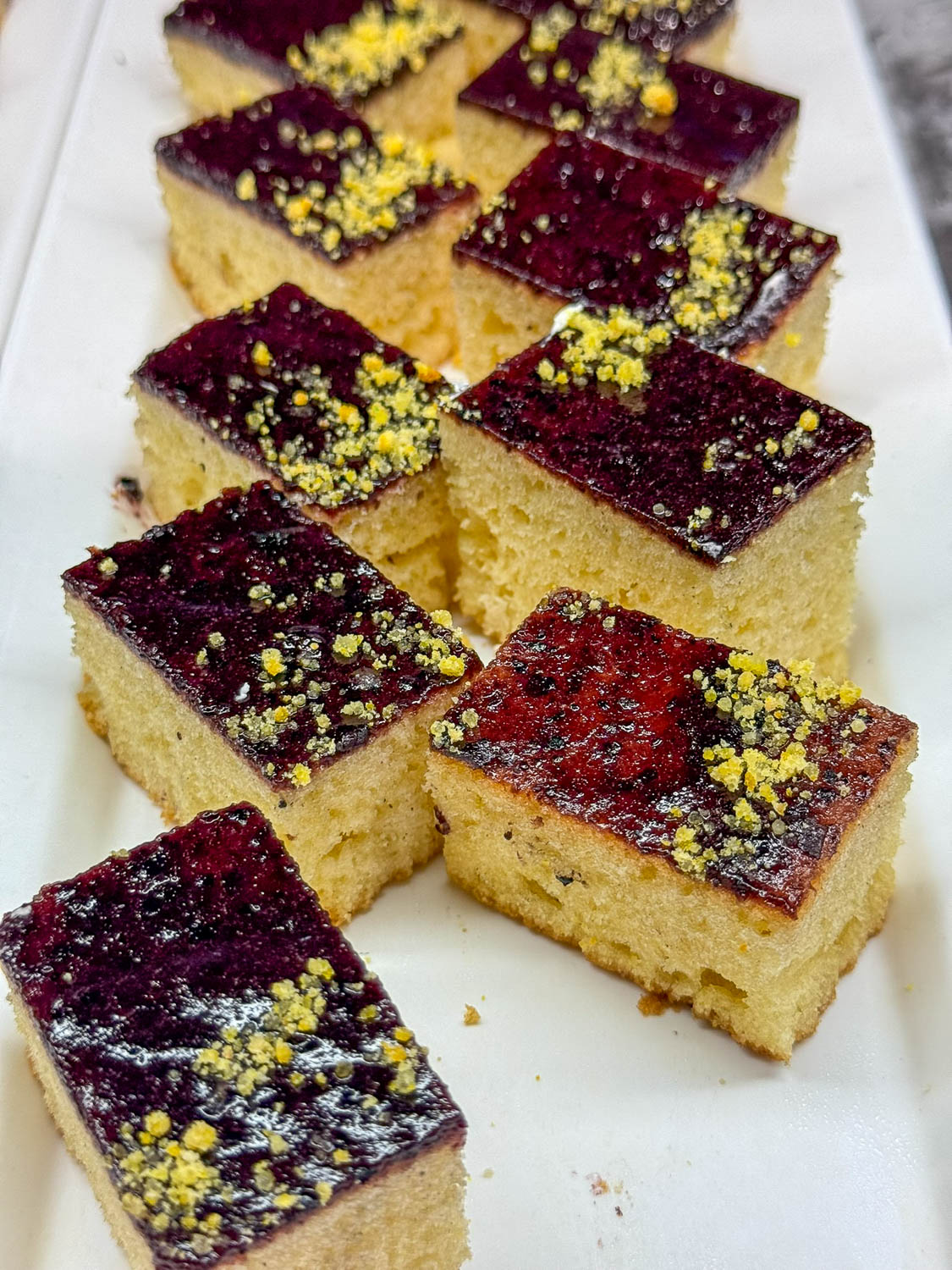
The Brazilian sweet tooth is legendary, and desserts play a celebrated role in everyday life across the country. Many classic Brazilian treats rely on just a few ingredients, yet still manage to deliver bold, comforting flavors that have been loved for generations. From bite-sized confections served at celebrations, to creamy desserts enjoyed in homes and cafés, Brazil’s desserts and sweets are as simple as they are satisfying.
Here are some of the most popular Brazilian sweet treats you’re likely to encounter during your time in the country.
Brigadeiros
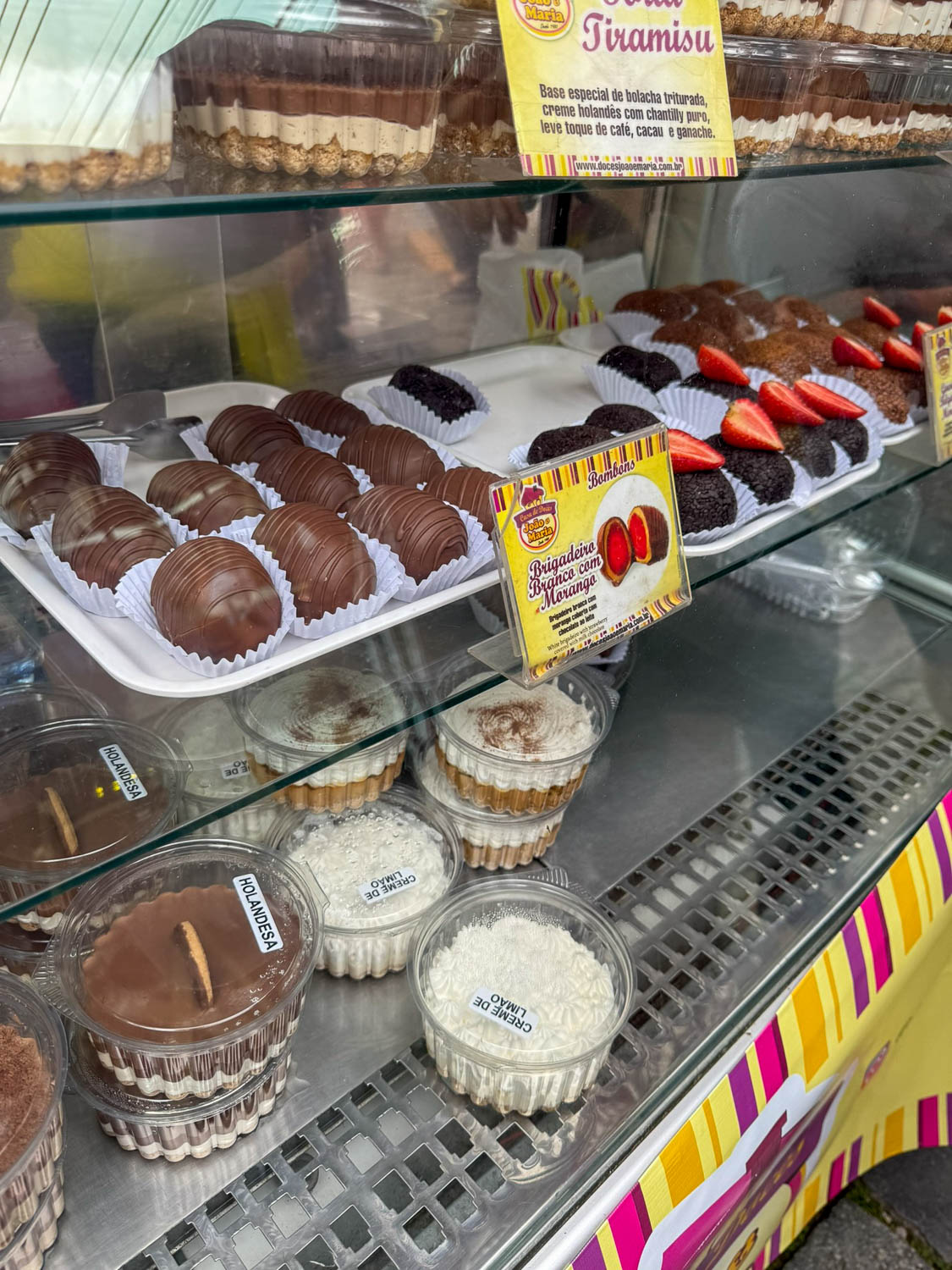
Brigadeiros are iconic Brazilian bite-sized, truffle-like confections, made simply of condensed milk, butter and cocoa powder (and then often rolled in chocolate sprinkles – chocoholics unite!). The traditional brigadeiro is the nation’s favorite sweet: little balls of joys loved for their gooey, fudgy texture and intense, melt-in-your-mouth sweetness. And whilst the classic brigadeiro is covered in chocolate sprinkles, modern gourmet variations include passionfruit, coconut, and pistachio flavors. We even saw some brigadeiros coated in gold dust!
Fun fact. Brigadeiros are the highlight of Brazilian birthday parties. In fact, they’re so essential to birthday parties here that many children grow up measuring celebrations by how many brigadeiros they manage to eat.
Fun fact. Brigadeiros boast a unique history dating back to political campaigns in the 1940s, when they were created to support presidential candidate Brigadier Eduardo Gomes. Brigadeiros were seen as easy-to-make fundraising treats during post-war rationing: supporters (mostly women) sold these sweets to raise funds and promote the slogan, “Vote for the bridagier, who is handsome and single”.
Beijinho
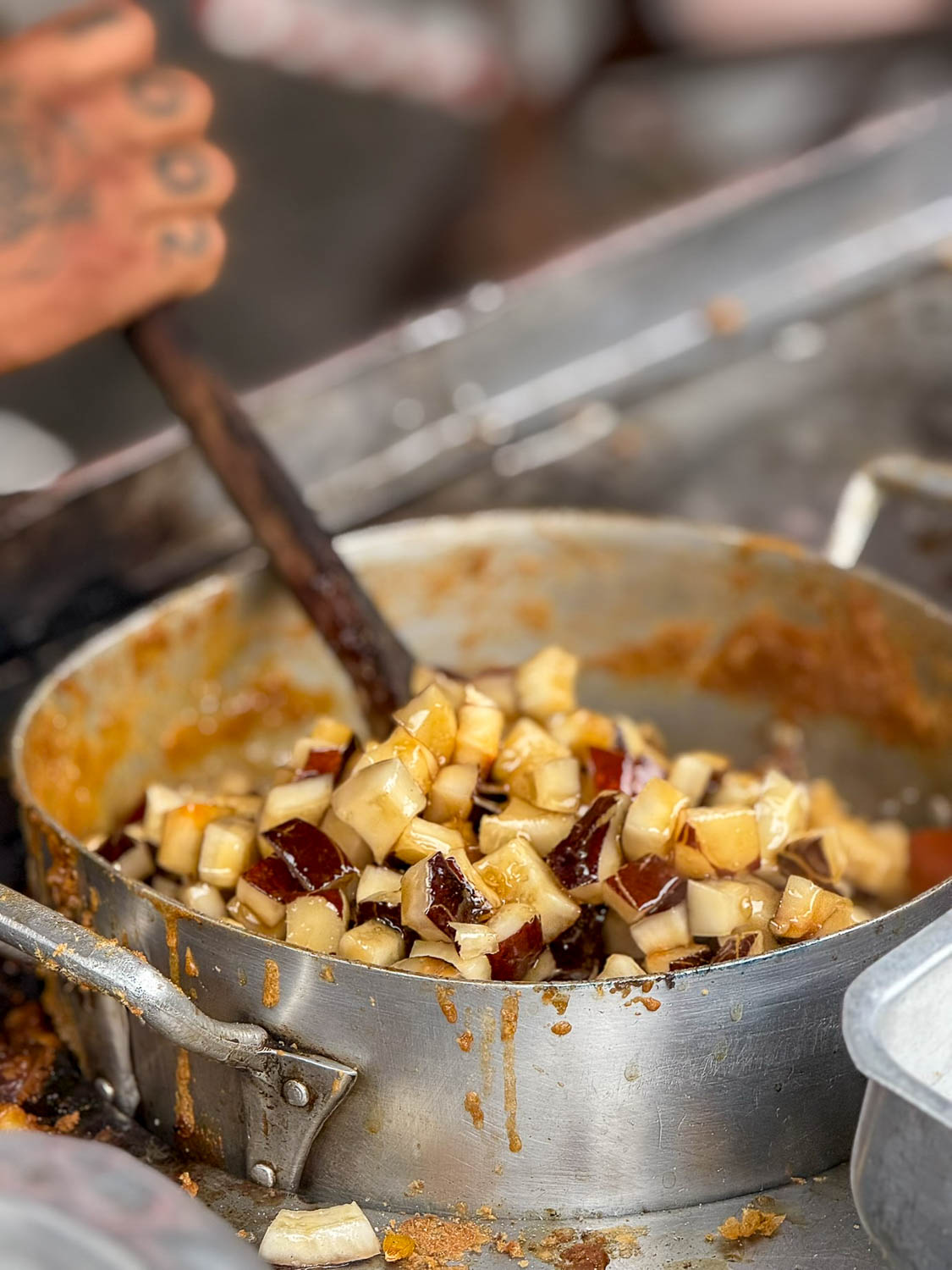
Beijinhos are another beloved Brazilian party staple, similar to brigadeiros, but made with coconut (instead of cocoa powder) and rolled in sugar. These soft (but dense), creamy fudge balls – very tropical in nature – are often topped with a single clove and known affectionately by locals as “little kiss” (which perfectly suits their small, bite-sized shape).
Fun fact. The addition of a whole clove on top of a beijinho provides a warm, slightly spicy (and yet very subtle) aroma that cuts through the tropical sweetness.
As with brigadeiros, beijinhos are considered an essential part of children’s birthday parties, Christmas and New Year’s celebrations in Brazil. In fact, these treats are often served side-by-side at Brazilian parties, giving guests a chocolate option and a coconut option (secretly, we both fell a little more in love with the beijinhos).
Bolo de cenoura
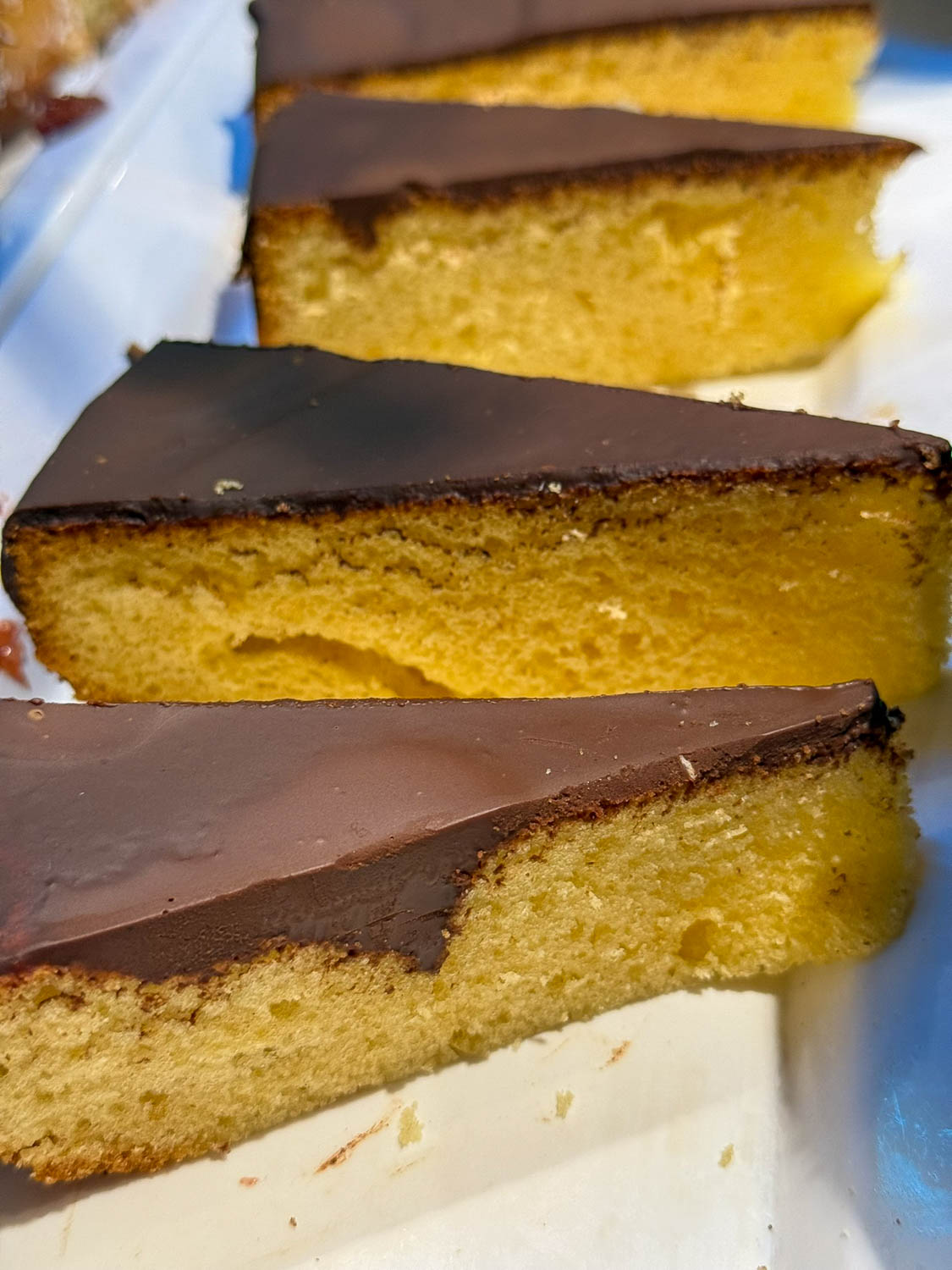
Bolo de cenoura is Brazil’s version of carrot cake, topped with a rich chocolate brigadeiro-style glaze (rather than the cream cheese frosting you might find in other countries around the world). It’s a vibrant orange color, has a light, simple flavor (there’s no traditional carrot cake spices as you might find elsewhere), and it’s characterized by its moist, fluffy texture. The cake’s distinctive orange color comes from blending the carrots directly into the batter – this is why the finished cake is smooth, rather than studded with carrot pieces as one might normally expect.
Fun fact. The chocolate topping on bolo de cenoura is often made with a quick stovetop glaze known as calda de chocolate. This glaze is poured over the cake whilst still warm, so it seeps slightly into the surface. Many Brazilians insist that bolo de cenoura must be topped with chocolate – serving it without this glossy chocolate glaze borders on culinary sacrilege. We also heard some Brazilians jokingly claim the real challenge in making bolo de cenoura at home isn’t baking the cake itself — it’s waiting for the chocolate topping to cool before cutting into it!
Bolo de cenoura is an everyday cake found throughout Brazil, and is often served for breakfast or as an afternoon snack (lanche da tarde) with coffee. It’s also common to see bolo de cenoura in school lunchboxes across Brazil, helping cement its reputation as a nostalgic childhood treat.
Pão de mel
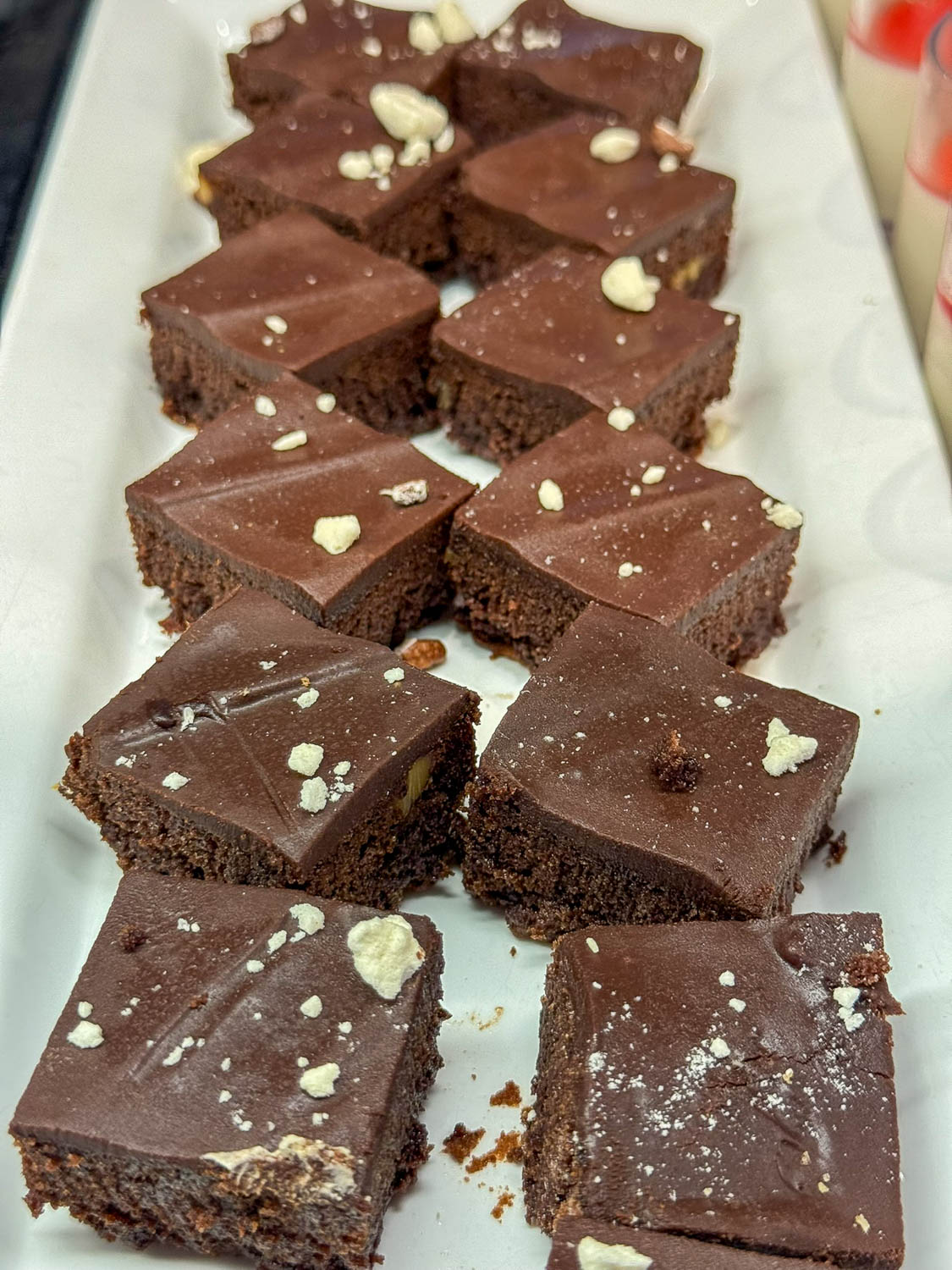
The country’s “honey bread” is a popular Brazilian treat consisting of a soft, spiced cake filled with caramelized milk (doce de elite). These small, round cakes are made with honey, cinnamon, cloves and cocoa, and then dipped in a chocolate coating (we quickly discovered that Brazilians sure do love their chocolate!) – resulting in a fabulous gingerbread-type flavor. Other variations include brigadeiro, coconut or nut fillings.
Fun fact. Pão de mel is believed to be a Brazilian adaptation of European honey cakes or Russian Pryaniki.
Pão de mel is an indulgent dessert often served at parties and during holiday celebrations, but also popular as a coffee-time snack. Look out for them in bakeries and supermarkets across the country!
Insider tip. Pão de mel is also popular as a homemade gift in Brazil, often wrapped individually and given as a sweet present.
Quindim

If anything is colorful in Brazil, it’s definitely the food (as we’ve already seen) – and quindim is no different. This popular, bright yellow Brazilian baked dessert is characterized by a shiny, custard-like top and a chewy, shredded coconut base. Made primarily from egg yolks, sugar, and coconut, this sweet treat is extremely rich and creamy, often likened to a mix between a flan and a macaroon. As a texture eater, Beck was especially happy with the soft top combined with the dense, chewy coconut bottom!
Quindim is usually served as an individual, upturned cup, and to help balance its intense sweetness, it’s often enjoyed with coffee. Although quindim is typically prepared in small portions – making it the perfect bite-sized dessert – there’s also a large ring-mold version, called a quindão.
Fun fact. Quindim has both African and Portuguese roots. The name itself is derived from the word dikende – a word found in Kikongo, a Bantu language that originated from the historical Kingdom of Kongo – and uses African-influenced coconut. However, the heavy use of egg yolks to make quindim is a Portuguese tradition.
Romeu e Julieta

Romeu e Julieta is a simple yet beloved Brazilian dessert that pairs slices of fresh (slightly salty) white cheese (usually queijo minas) with sweet, thick guava paste (goiabada). The perfect combination of savory and sweet, often served by placing a slice of guava paste on a slice of cheese – perfect for a quick snack, else used as a filling for pastries, cakes, ice-cream, brigadeiros, and even on pizza!
Fun fact. Brazil takes pizza seriously — but sometimes with a playful twist. Toppings can get surprisingly creative, and may include corn, peas, hard-boiled eggs, hearts of palm … and yes, even sweet options that might include chocolate and strawberries (dessert pizzas for the win!).
Fun fact. The name “Romeu e Julieta” refers to the Shakespearean couple, where the salty cheese represents Romeo, and the sweet, fruity paste represents Juliet. The perfect pairing indeed, just like these famous lovers!
Fresh Fruit
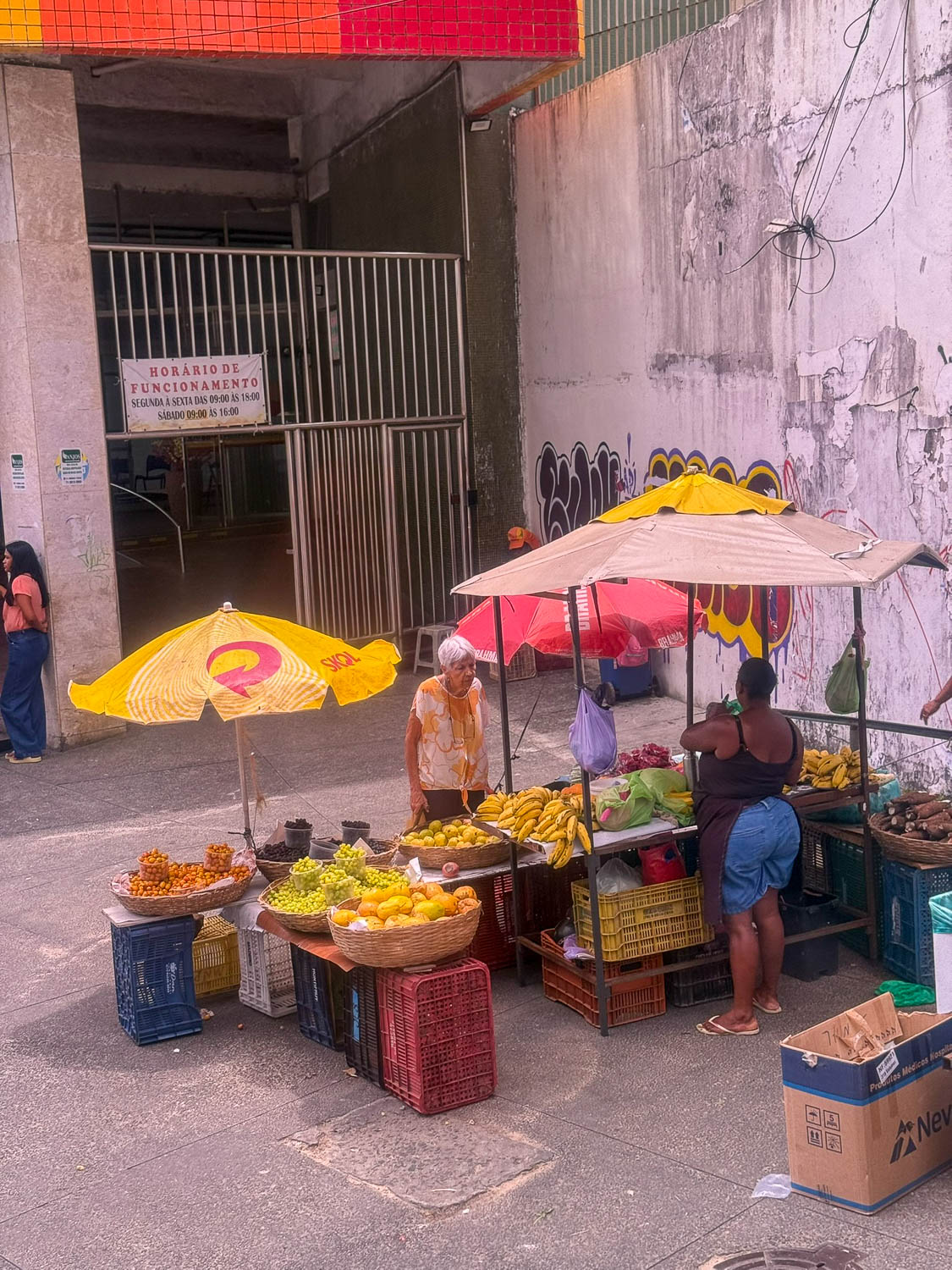
Fresh fruit is enjoyed throughout Brazil, where it plays an important role in everyday cuisine – served as a refreshing snack, a light dessert, fresh juice, an accompaniment to a main meal, as a salad, or as an ingredient in both sweet and savory dishes. Fresh fruit showcases the tropical side of Brazilian dining, with markets overflowing with colorful produce.
And whilst the likes of pineapple, papaya, passionfruit, and hearts of palm are used commonly throughout the country, Brazil’s tropical climate also produces an extraordinary variety of other fruits. Many of these – including açaí, cupuaçu, graviola (soursop), jabuticaba, and acerola – are local favorites, rarely seen outside the country, and often surprising visitors with their unusual flavors.
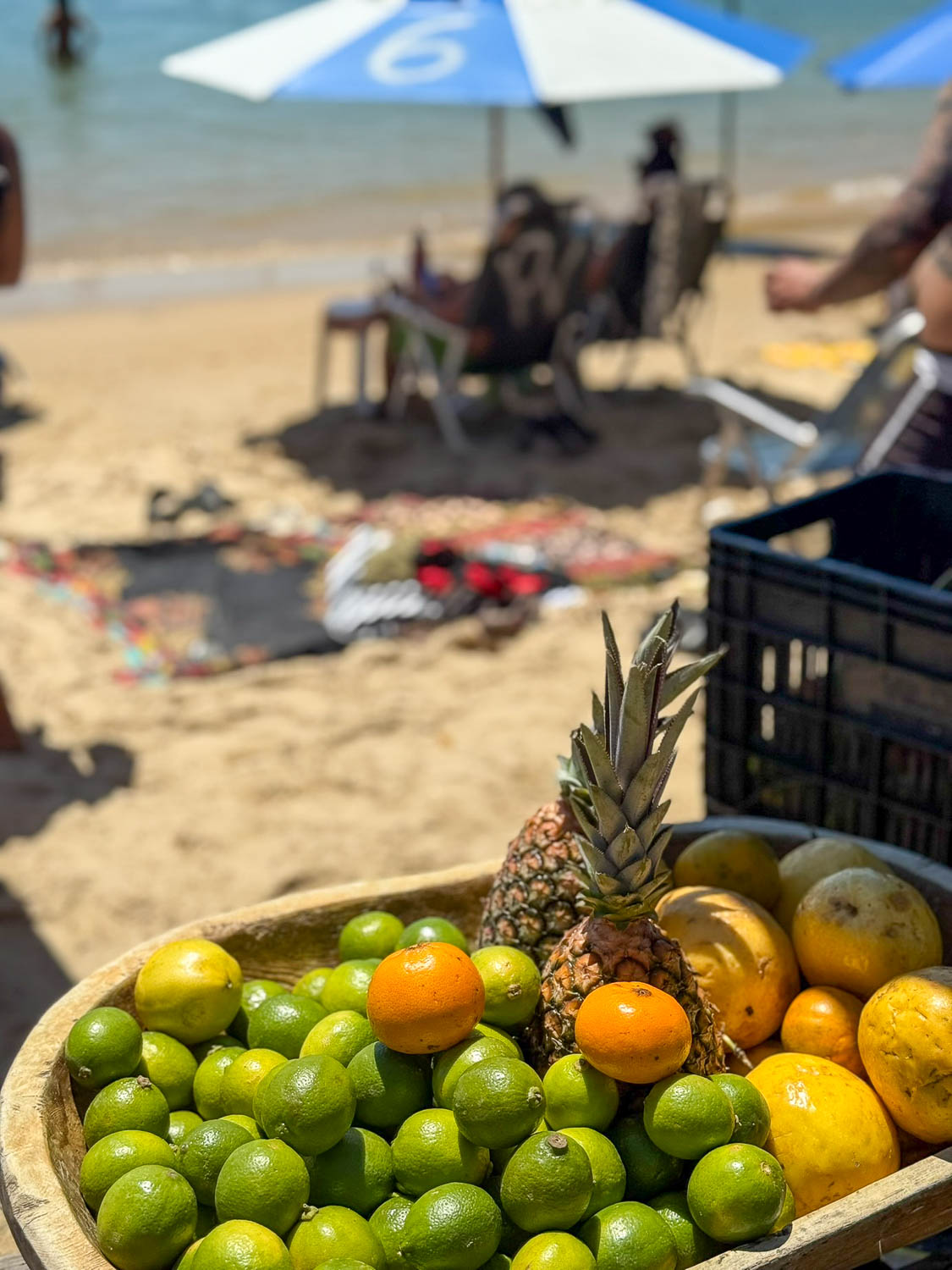
Fun fact. One of Brazil’s most unusual fruits – jabuticaba – grows directly on the trunk and main branches of the tree, rather than at the ends of the branches. This gives the jabuticaba tree the appearance of being covered in clusters of dark purple grapes. It’s pretty neat if you’re able to see one up close!
In many Brazilian homes and restaurants, fresh fruit is just as common a dessert as is cake or candy, especially after a large meal. Across the country, juice bars are also a common sight, serving freshly blended juices and smoothies made from Brazil’s impressive variety of tropical fruits.
Final Thoughts

From hearty favorites that include feijoada and moqueca, to the irresistible simplicity of pão de queijo, Brazil’s most beloved dishes offer a delicious introduction to the country’s vibrant food scene. Add in the endless variety of savory street snacks, decadent sweets, and tropical fruits, and it quickly becomes clear that Brazilian cuisine is as inviting as it is flavorful.
As you travel across Brazil, many of these specialties will appear again and again — on restaurant menus, in bakeries, and at markets and street stalls alike. Some are enjoyed as full meals, others as quick snacks or sweet treats shared with friends – but each ultimately plays a small role in the country’s lively everyday dining culture. The only real challenge is deciding what to try first.
When you’re ready to experience these flavors for yourself, Brazil’s kitchens are open and waiting to welcome you. And we’re here to help you start planning your own journey through Brazil — one delicious discovery at a time.
FAQs
What is the most popular traditional Brazilian food?
Brazil’s most popular traditional food is feijoada, a hearty black bean stew cooked with pork and sausage. Often served with rice, collard greens, orange slices, and farofa, feijoada is considered Brazil’s national dish and is commonly enjoyed as a weekend meal across the country.
What are typical foods eaten in Brazil?
Typical Brazilian foods include feijoada, moqueca (seafood stew), and churrasco (grilled meats), along with staples like rice, beans, and farofa. Popular snacks include pão de queijo, coxinha, and pastéis, while desserts like brigadeiros and quindim highlight Brazil’s love of sweets.
What is a traditional Brazilian snack?
A traditional Brazilian snack is pão de queijo, a small cheese bread made from tapioca flour. Other popular snacks include coxinha (fried chicken croquettes), pastéis (crispy filled pastries), and queijo coalho (grilled cheese), commonly found in bakeries, street markets, and beach stalls.
What desserts are popular in Brazil?
Popular Brazilian desserts include brigadeiros (chocolate truffles), beijinhos (coconut sweets), and quindim (a coconut custard dessert). Cakes like bolo de cenoura and treats like Romeu e Julieta (guava paste with cheese) are also widely enjoyed across Brazil.
Is Brazilian food spicy or mild?
Brazilian food is generally mild rather than spicy, focusing more on rich, savory flavors than heat. Dishes are typically seasoned with garlic, onions, herbs, and spices, while hot sauces are often served on the side, allowing diners to adjust the level of spice to their preference.
Explore More Of Brazil
-
Brazilian Food: A Guide to Brazil’s Culinary Culture
Brazilian food blends Indigenous, African, and Portuguese influences into one of the world’s most diverse cuisines. From feijoada and churrasco to regional flavors across Bahia and the Amazon, this guide explores Brazil’s food culture, dining traditions, and what to expect.
-
Maceio Brazil: Best Things To Do in Alagoas Paradise
Maceió, Brazil is the vibrant coastal capital of Alagoas in northeast Brazil, known for turquoise waters, coconut-lined beaches, natural pools, and relaxed Brazilian culture. This guide explores the best things to do in Maceió, including historic landmarks, famous beaches like Pajuçara and Ponta Verde, day trips to Maragogi and São Miguel dos Milagres, local cuisine, and practical travel tips for visiting one of Brazil’s most beautiful coastal destinations.
-
Best Things To Do in Embu das Artes: Travel Guide
Embu das Artes, just outside São Paulo in Brazil, is a colorful colonial town known as the “City of the Arts.” Famous for its weekend Feira de Artes market, galleries, artisan shops, and museums, it’s one of the most creative cultural day trips from São Paulo.
-
Morretes Brazil: Best Things to Do in Paraná’s Gem
Morretes, Brazil is a charming colonial town in Paraná nestled within the Atlantic Forest. Famous for the scenic Serra Verde Express train, the Nhundiaquara River, and the traditional barreado dish, Morretes offers cobblestone streets, historic churches, and relaxed riverside dining just a short trip from Curitiba.
-
Port Santos, Brazil: Essential Cruise and Travel Guide
Port Santos is the largest port in Latin America and the main cruise gateway to the coastal city of Santos, Brazil. This guide explains how the port operates, what cruise passengers can expect on arrival, and the best things to do nearby — including beaches, museums, historic sites, and day trips to São Paulo.
-
Paraty Brazil Travel Guide: Best Things To Do in Town
Paraty, Brazil is a UNESCO World Heritage colonial town on the Costa Verde known for its cobblestone streets, colorful historic center, tropical islands, and nearby beaches. Visitors can explore Paraty Bay by boat, hike the historic Gold Trail, discover Atlantic Forest landscapes, and enjoy one of Brazil’s most charming coastal destinations.
-
Buzios, Brazil Travel Guide: Best Things To See and Do
Buzios is a coastal resort town in Brazil located about three hours from Rio de Janeiro, known for its beaches, walkable center, and relaxed seaside atmosphere. This Buzios travel guide covers the best things to do, top beaches, Rua das Pedras, the Orla Bardot Boardwalk, where to stay, nightlife, festivals, and practical travel tips.